Published online 2014 August 25. Research Article
Differential Effects of Sildenafil (Viagra) on Processing Steps of Spatial
Learning and Memory in Rat
Siamak Shahidi
1,*; Mahdi Arjipour
1; Alireza Komaki
1; Minoo Mahmoodi
21Neurophysiology Research Center, Hamadan University of Medical Sciences, Hamadan, IR Iran 2Department of Biology, Islamic Azad University, Hamadan Branch, Hamadan, IR Iran
*Corresponding author: Siamak Shahidi, Neurophysiology Research Center, Hamadan University of Medical Sciences, Hamadan, IR Iran, Tel: +98-8138380462, Fax: +98-8138380208, E-mail: [email protected]
Received: March 02, 2012; Accepted: April 19, 2014
Background: Sildenafil (Viagra) has been introduced to treat erectile dysfunction by acting as phosphodiesterase 5 inhibitor and hence accumulation of guanosine cyclic monophosphate (cGMP). On the other hands, the nitric oxide/cGMP signaling pathway has crucial role in synaptic plasticity processes like long-term potentiation (LTP) in the central nervous system considered as a model of learning and memory.
Objectives: The aim of the present study was to determine the effects of sildenafil on different stages of spatial learning and memory of rat using radial maze.
Materials and Methods: The effects of pre-training, pre-retrieval oral administration or post-training i.p. injection of sildenafil (10 mg/kg) in radial maze task were investigated.
Results: Pre-training and post-training administration of sildenafil impaired radial maze task. Pre-retrieval injection of sildenafil decreased reference memory and working memory errors. Therefore, sildenafil impaired acquisition and consolidation of spatial learning and memory but improved retrieval of spatial memory in radial maze.
Conclusions: Sildenafil has differential effects on the spatial learning and memory processing. It seems this result is due to accumulation of cGMP in the neural structures related to learning and memory processing. As different neural structures are involved in different learning and memory tasks, these results might be due to the different actions of cGMP in different structures of brain.
Keywords:Sildenafil; Spatial Learning and Memory; Rat
Implication for health policy/practice/research/medical education:
Sildenafil is an inhibitor of phosphodiesterase (PDE) which is the first oral drug approved by the United States Food and Drug Administration for the ther-apeutic treatment of erectile dysfunction. Inhibition of PDE increases cGMP levels. cGMP involves in learning and memory processing. The result of pre-sent study indicated that sildenafil improves retention of memory but impairs acquisition and consolidation stages of learning and memory processing. Copyright © 2014, Hamadan University of Medical Sciences. This is an open-access article distributed under the terms of the Creative Commons Attribution License, which permits unrestricted use, distribution, and reproduction in any medium, provided the original work is properly cited.
1. Background
It has been confirmed that glutamate as a neurotrans-mitter which bind to its specific receptors has a critical role in learning and memory processing (1-4) and long-term potentiation (LTP) (4-6). Activated glutamate NMDA receptor stimulates an influx of calcium, which in turn activates multiple cascades. One of these pathways in-volves the production of nitric oxide (NO) (7-10) which stimulates guanylyl cyclase (sGC) and formation of the second messenger, 3́5́ guanosine cyclic monophosphate (cGMP) in the presynaptic terminal (8, 9, 11). Increased cGMP levels stimulate further release of glutamate (11, 12) and hence may constitute a presynaptic mechanism contributing to early phase of long-term potentiation of excitatory neurotransmission and perhaps some forms of learning and memory (13-15). Then, cGMP was degrad-ed by phosphodiesterase (PDE). Sildenafil is an inhibitor of PDE type 5 (PDE5) which is the first oral medicine ap-proved by the United States Food and Drug Administra-tion for the therapeutic treatment of erectile dysfuncAdministra-tion
(16). The mRNA of PDE5 has been demonstrated in several brain areas of adult rat including brain cortex and hippo-campus (17). Several lines of evidence indicate that silde-nafil may offer novel strategy in therapeutic treatment of age related memory impairment, pain, pulmonary hypertension and multiple sclerosis (18).
2. Objectives
report-ed that sildenafil consumption causes temporary amne-sia (25-27). As different neural circuits involve in different types of learning and memory, the aim of this study was to evaluate the effects of sildenafil as a PDE5 inhibitor on acquisition, consolidation and retrieval of Y-maze spatial learning and memory in normal young rats.
3. Materials and Methods
3.1. Animals
Sixty-two three-month-old male Wistar rats weighting 250 - 300 g were used in this study. Rats were housed three per cage. They were maintained at 20 ± 2 °C on a 12:12-hour light–dark photocycle (lights on 07:00 a.m.). Water and food were available ad libitum. All rats were ac-climatized to the environment for at least ten days prior to initiation of behavioral testing. Body weights were re-duced to about 85-90% of the primary weights by reduc-tion of daily food.
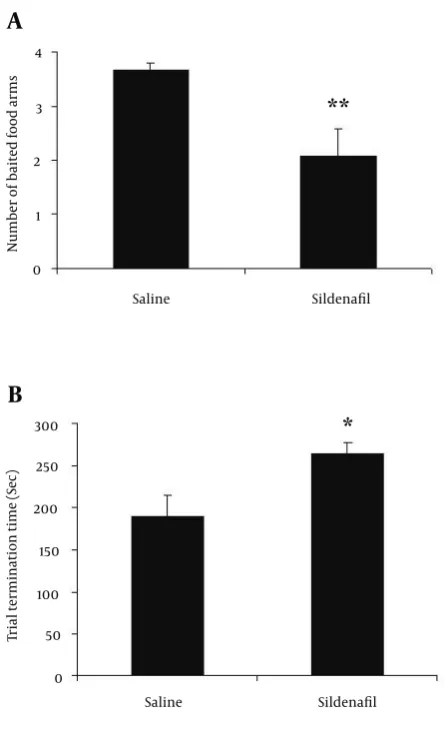
Figure 1. Effect of Sildenafil on Acquisition of Spatial Learning
B
A
Saline Sildenafil
Saline Sildenafil
Number of
baited food arms
0 50 100 150 200 250 300
Tr
ial termination time (Sec
)
0 1 2 3 4
*
*
*
The effects of daily pre-training oral administration of sildenafil or saline on the number of baited food arms (A), and the trial termination time (B) on sixth day of training. *: P < 0.05, **: P < 0.01, Ordinate: Mean ± SEM.
3.2. Radial Maze
The rats were tested in an 8-arm radial maze. The appa-ratus consisted of one central compartment and eight arms radiated from it in equal intervals. The central part of the radial-maze was 20 cm in diameter. Its arms (50 cm long, 15 cm high, 10 cm wide) were closed and made of transparent Plexiglas and their entrance was blockade by transparent Plexiglas guillotine doors. There was a cup at the end of each arm filled with food pellets. Four arms were baited randomly (arms number: 1, 4, 5, 7). The sequence never changed through the experiments. The maze was always oriented in space in the same way. Sever-al extra-maze cues were provided close to the arms. All of experiments were performed between 12:00 to 15:00 p.m. In each trial, the rat was placed into central compartment (start position) closed off by door. After 15 seconds to navi-gate central compartment, guillotine doors were raised and were allowed to find the food pellets in arms until all 4 pellets arms had been eaten or 5 minutes was elapsed.
Figure 2. Effect of Sildenafil on Consolidation of Spatial Memory
Number of
baited food arms
0 2 3 4
1
* * *
* * *
Saline Sildenafil
B
A
0 50 100 150 200
Tr
ial termination time (Sec)
250 300
Saline Sildenafil
Number of
baited food arms
0 2 3 4
1
* * *
* * *
Saline Sildenafil
B
A
0 50 100 150 200
Tr
ial termination time (Sec)
250 300
Saline Sildenafil
All rats were trained 3 trials per day for 6 consecutive days. The interval between trials was 5 minutes. In the last day, the trial termination time and number of baited food arms were recorded. If rat learns to find baited food arms, numbers of memory errors were calculated. The number of entries into never baited arms was regarded as reference memory errors (RME), while the number of re-entries into the arms where the pellet had already been eaten was re-garded as working memory errors (WME) (28).
3.3. Effects of Pre-Training Sildenafil
Administra-tion on AcquisiAdministra-tion in Radial Maze
The rats were randomly divided into two experimental groups: saline (n = 11) and sildenafil (n = 11) treated groups which were given saline or sildenafil (10 mg/kg) orally by gavage 1 hour prior to the daily training trials.
3.4. Effects of Post-Training Sildenafil
Administra-tion on ConsolidaAdministra-tion of Memory in Radial Maze
Immediately after the end of the first day of training trials, the rats were randomly divided into two groups which were received intra-peritoneal (i.p.) injection of saline (n = 12) or sildenafil (10 mg/kg, n = 9), respectively. This procedure was continued after the daily training.
3.5. Effects of Pre-Retrieval Sildenafil
Administra-tion on RetenAdministra-tion of Memory in Radial Maze
The rats were trained for 6 consecutive days. Then after 2 days, retention test was performed. The rats were ran-domly divided into saline (n = 11) or sildenafil (n = 8), (10 mg/kg) which were given orally by gavages 1 hour prior to the retention test.
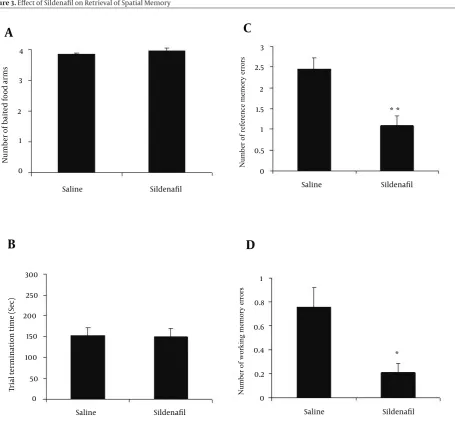
Figure 3. Effect of Sildenafil on Retrieval of Spatial Memory
B
A
Number of
baited food arms
0 2 3 4
1
Saline Sildenafil Saline Sildenafil
50 100 150 200
Tr
ial termination time (Sec
) 250
300
0
D
C
Saline Sildenafil Saline Sildenafil
* * *
Number of reference memory errors
Number of working memory error
s
0 0.2 0.4 0.6 0.8 1 0 0.5 1 1.5 2 2.5 3
3.6. Statistical Analysis
The data of each experiment was analyzed using stu-dent t-test. P < 0.05 was considered statistically signifi-cant. All data was represented as mean ± SEM.
4. Results
4.1. Effects of Pre-Training Sildenafil
Administra-tion on AcquisiAdministra-tion in Radial Maze
As shown in Figure 1, in last day of training the number of baited food arms in sildenafil group was significantly fewer than the saline group [t (20) = -3.06; P = 0.006]. In addition, sildenafil group of rat took more time to get foods in the arms [t (20) = -2.57; P = 0.01].
4.2. Effects of Post-Training Sildenafil
Administra-tion on ConsolidaAdministra-tion of Memory
The results of second experiment showed that silde-nafil treated group significantly found and ate less arms food [t (19) = -6.98; p < 0.0001] and took more time than control group [t (19) = 5.17; p < 0.0001] (Figure 2).
4.3. Effects of Pre-Training Sildenafil
Administra-tion on RetenAdministra-tion of Memory
As indicated in Figure 3. A & B, there were no significant differences in the number of baited food arms [t (17) = 0.94; P = 0.35] and trial termination times [t (17) = 0.13; P = 0.89] between the two groups of rats on sixth day of training. On the other hands, the number of reference [t (17) = 3.87; P = 0.0015] and working memory errors [t (17) = 2.67; P = 0.016] in the treated group of rat, which received sildenafil 1 hour before retention, were significantly few-er than the control group (Figure 3 C and D).
5. Discussion
The present findings demonstrated that systemic ad-ministration of sildenafil (Viagra) could influence differ-ent phases of spatial learning and memory of rats in radi-al maze task. Briefly, our results showed that pre-training administration of sildenafil attenuated learning of radial maze task. In addition, post-training administration of sildenafil impaired consolidation of spatial memory. On the other hand, pre-retrieval administration of sildenafil enhanced retrieval of spatial memory by decreasing the number of working memory and reference memory er-rors. Pre-retrieval administration of sildenafil could im-prove both spatial reference and working memory. There-fore, sildenafil has differential effects on different steps of spatial learning and memory. Several lines of evidence indicated that sildenafil improves learning and memory (2, 19, 20, 22-24, 29-32). Some of these were resulted in memory deficit conditions. Devan et al. reported that pre-training i.p. administration of L-NAME, scopolamine or intracerebroventricular infusion of nitric oxide
syn-thase inhibitor impaired 14-unit T-maze performance and that pre-training i.p. administration of sildenafil significantly attenuated this impairment (23, 33, 34). Er-ceg et al. reported that in rats with chronic liver failure or hyperammonemia, the brain glutamate-NO-cGMP was impaired. chronic treatment with sildenafil restored the ability of rats to learn a conditional discrimination task (32). There are some reports indicating beneficial effects of sildenafil on learning and memory in some types of learning and memory tests in normal animals. For in-stance, administration of sildenafil directly into the hip-pocampus after the first trail in object recognition task, improved memory in mice (19, 35) and enhanced the processes of consolidation of object information (20). Prickaerts et al. reported that post trial oral administra-tion of sildenafil (0.3, 1, 3 mg/kg) improved the object discrimination performance of Swiss mice at a dose of 1 mg/kg (30). Prickaerts et al. reported that sildenafil given before or immediately after the first trial improved the memory performance of object recognition task after 24 hours (31). Singh et al. reported that, sildenafil (2, 4, 8 mg/ kg, i.p.) administered immediately after training on first day led to a dose-dependent improvement of memory in mice in elevated plus maze test (2).
rats (13, 14). Devan et al. reported that different doses of sildenafil (1, 1.5,3, 4.5 mg/kg) alone did not significantly alter complex maze performance (23). The decreasing effects of sildenafil on consolidation and acquisition of spatial learning and memory in our study might be due to the inhibition of PDE5 within other brain structures and/or may inhibit other PDE ribozymes (e.g. the recently cloned PDE10A enzyme). Sildenafil has a beneficial role in preventing the decline of learning and memory in dif-ferent tasks. It had no beneficial effects on acquisition and consolidation of learning and memory of healthy subjects in more complex tasks such as radial maze task, but it could be considered as an enhancer of memory re-trieval of such a complex task in normal young rats. In addition, effects of sildenafil in normal subjects are var-ied which might be due to the type of memory test or the genius of the subjects. Furthermore, as different neu-ral pathways involve in different types of learning and memory task, sildenafil may acts and accumulates cGMP in other neural structures in addition to hippocampus. Further researches with local cerebral infusions of silde-nafil are suggested to determine the site(s) of drug action within different brain regions contributing learning and memory processing using behavioral and electrophysi-ological methods.
Acknowledgements
This research was supported by a grant from Hamadan University of Medical Sciences. The authors wish to thank Mahdi Eftekharian for technical assistance.
Authors’ Contributions
Study concept and design: Shahidi, Arjipour, Komaki, Mahmoodi; Acquisition of data: Shahidi, Arjipour; Anal-ysis and interpretation of data: Shahidi, Komaki, Mah-moodi; Drafting of the manuscript: Shahidi, MahMah-moodi; Critical revision of the manuscript for important intel-lectual content: Shahidi, Arjipour, Komaki, Mahmoodi; Statistical analysis: Shahidi, Mahmoodi; Administrative, technical, and material support: Shahidi, Komaki; Study supervision: Shahidi.
Financial Disclosure
There was no conflict of interests.Funding/Support
This research was supported by a grant from Hamadan University of Medical Sciences.
References
1. Perez-Otano I, Ehlers MD. Learning from NMDA receptor traffick-ing: clues to the development and maturation of glutamatergic synapses. Neurosignals. 2004;13(4):175–89.
2. Singh N, Parle M. Sildenafil improves acquisition and retention of memory in mice. Indian J Physiol Pharmacol. 2003;47(3):318–24. 3. Traverso LM, Ruiz G, Camino G, De la Casa LG. Ketamine blocks
the formation of a gustatory memory trace in rats. Pharmacol Biochem Behav. 2008;90(3):305–11.
4. Zorumski CF, Izumi Y. Modulation of LTP induction by NMDA receptor activation and nitric oxide release. Prog Brain Res.
1998;118:173–82.
5. Bortolotto ZA, Fitzjohn SM, Collingridge GL. Roles of metabo-tropic glutamate receptors in LTP and LTD in the hippocampus.
Curr Opin Neurobiol. 1999;9(3):299–304.
6. Cain DP. LTP, NMDA, genes and learning. Curr Opin Neurobiol.
1997;7(2):235–42.
7. Schuman EM, Madison DV. A requirement for the intercellu-lar messenger nitric oxide in long-term potentiation. Science.
1991;254(5037):1503–6.
8. Hawkins RD, Son H, Arancio O. Nitric oxide as a retrograde mes-senger during long-term potentiation in hippocampus. Prog Brain Res. 1998;118:155–72.
9. Garthwaite J. Glutamate, nitric oxide and cell-cell signalling in the nervous system. Trends Neurosci. 1991;14(2):60–7.
10. Bohme GA, Bon C, Stutzmann JM, Doble A, Blanchard JC. Possible involvement of nitric oxide in long-term potentiation. Eur J Phar-macol. 1991;199(3):379–81.
11. Garthwaite J, Charles SL, Chess-Williams R. Endothelium-de-rived relaxing factor release on activation of NMDA receptors suggests role as intercellular messenger in the brain. Nature.
1988;336(6197):385–8.
12. Haley JE, Dickenson AH, Schachter M. Electrophysiological evi-dence for a role of nitric oxide in prolonged chemical nocicep-tion in the rat. Neuropharmacology. 1992;31(3):251–8.
13. Shahidi S, Komaki A, Mahmoodi M, Lashgari R. The role of GA-BAergic transmission in the dentate gyrus on acquisition, con-solidation and retrieval of an inhibitory avoidance learning and memory task in the rat. Brain Res. 2008;1204:87–93.
14. Mahmoodi M, Shahidi S, Hasanein P. Involvement of the ventral tegmental area in the inhibitory avoidance memory in rats.
Physiol Behav. 2011;102(5):542–7.
15. Bon CL, Garthwaite J. On the role of nitric oxide in hippocampal long-term potentiation. J Neurosci. 2003;23(5):1941–8.
16. McCullough AR. Four-year review of sildenafil citrate. Rev Urol.
2002;4 Suppl 3:S26–38.
17. Van Staveren WC, Steinbusch HW, Markerink-Van Ittersum M, Re-paske DR, Goy MF, Kotera J, et al. mRNA expression patterns of the cGMP-hydrolyzing phosphodiesterases types 2, 5, and 9 during development of the rat brain. J Comp Neurol. 2003;467(4):566–80. 18. Uthayathas S, Karuppagounder SS, Thrash BM, Parameshwaran
K, Suppiramaniam V, Dhanasekaran M. Versatile effects of silde-nafil: recent pharmacological applications. Pharmacol Rep.
2007;59(2):150–63.
19. Rutten K, Vente JD, Sik A, Ittersum MM, Prickaerts J, Blokland A. The selective PDE5 inhibitor, sildenafil, improves object memory in Swiss mice and increases cGMP levels in hippocampal slices.
Behav Brain Res. 2005;164(1):11–6.
20. Prickaerts J, de Vente J, Honig W, Steinbusch HW, Blokland A. cGMP, but not cAMP, in rat hippocampus is involved in early stages of object memory consolidation. Eur J Pharmacol. 2002;436(1-2):83–7. 21. Patil CS, Singh VP, Kulkarni SK. Modulatory effect of sildenafil
in diabetes and electroconvulsive shock-induced cognitive dys-function in rats. Pharmacol Rep. 2006;58(3):373–80.
22. Devan BD, Duffy KB, Bowker JL, Bharati IS, Nelson CM, Daffin LW Jr, et al. Phosphodiesterase type 5 (PDE5) inhibition and cogni-tive enhancement. Drugs Future. 2005;30(7):725.
23. Devan BD, Bowker JL, Duffy KB, Bharati IS, Jimenez M, Sierra-Mercado D Jr, et al. Phosphodiesterase inhibition by sildenafil citrate attenuates a maze learning impairment in rats induced by nitric oxide synthase inhibition. Psychopharmacology (Berl).
2006;183(4):439–45.
24. Baratti CM, Boccia MM. Effects of sildenafil on long-term reten-tion of an inhibitory avoidance response in mice. Behav Pharma-col. 1999;10(8):731–7.
25. Shihman B, Auriel E, Bornstien NM. [Two cases of transient global amnesia (TGA) following sildenafil use]. Harefuah.
2006;145(9):656–7. 703.
27. Gandolfo C, Sugo A, Del Sette M. Sildenafil and transient global amnesia. Neurol Sci. 2003;24(3):145–6.
28. Huang YW, Hu WW, Chen Z, Zhang LS, Shen HQ, Timmerman H, et al. Effect of the histamine H3-antagonist clobenpropit on spatial memory deficits induced by MK-801 as evaluated by radial maze in Sprague-Dawley rats. Behav Brain Res. 2004;151 (1-2):287–93.
29. Prickaerts J, van Staveren WC, Sik A, Markerink-van Ittersum M, Niewohner U, van der Staay FJ, et al. Effects of two selective phos-phodiesterase type 5 inhibitors, sildenafil and vardenafil, on ob-ject recognition memory and hippocampal cyclic GMP levels in the rat. Neuroscience. 2002;113(2):351–61.
30. Prickaerts J, Sik A, van Staveren WC, Koopmans G, Steinbusch HW, van der Staay FJ, et al. Phosphodiesterase type 5 inhibition improves early memory consolidation of object information.
Neurochem Int. 2004;45(6):915–28.
31. Prickaerts J, Sik A, van der Staay FJ, de Vente J, Blokland A. Dis-sociable effects of acetylcholinesterase inhibitors and phos-phodiesterase type 5 inhibitors on object recognition memory: acquisition versus consolidation. Psychopharmacology (Berl).
2005;177(4):381–90.
32. Erceg S, Monfort P, Hernandez-Viadel M, Rodrigo R, Montoliu C, Felipo V. Oral administration of sildenafil restores learning
abil-ity in rats with hyperammonemia and with portacaval shunts.
Hepatology. 2005;41(2):299–306.
33. Devan BD, Sierra-Mercado D, Jr., Jimenez M, Bowker JL, Duffy KB, Spangler EL, et al. Phosphodiesterase inhibition by sildenafil ci-trate attenuates the learning impairment induced by blockade of cholinergic muscarinic receptors in rats. Pharmacol Biochem Behav. 2004;79(4):691–9.
34. Devan BD, Pistell PJ, Daffin LW, Jr., Nelson CM, Duffy KB, Bowker JL, et al. Sildenafil citrate attenuates a complex maze impair-ment induced by intracerebroventricular infusion of the NOS inhibitor Nomega-nitro-L-arginine methyl ester. Eur J Pharmacol.
2007;563(1-3):134–40.
35. Monfort P, Munoz MD, Kosenko E, Llansola M, Sanchez-Perez A, Cauli O, et al. Sequential activation of soluble guanylate cyclase, protein kinase G and cGMP-degrading phosphodiesterase is nec-essary for proper induction of long-term potentiation in CA1 of hippocampus. Alterations in hyperammonemia. Neurochem Int.
2004;45(6):895–901.