International Journal of Scientific & Technology Research Volume 1, Issue 2, March 2012 ISSN 2277-8616
1
A DCT-based Local Feature Extraction
Algorithm for Palm-print Recognition
Hafiz Imtiaz , Shaikh Anowarul Fattah
Abstract-- In this paper, a spectral feature extraction algorithm is proposed for palm-print recognition, which can efficiently capture the detail spatial
variations in a palm-print image. The entire image is segmented into several spatial modules and the task of feature extraction is carried out using two dimensional discrete cosine transform (2D-DCT) within those spatial modules. A dominant spectral feature selection algorithm is proposed, which offers an advantage of very low feature dimension and results in a very high within-class compactness and between-class separability of the extracted features. A principal component analysis is performed to further reduce the feature dimension. From our extensive experimentations on different palm-print databases, it is found that the performance of the proposed method in terms of recognition accuracy and computational complexity is superior to that of some of the recent methods.
Index Terms--Feature extraction; classification; discrete cosine transform; dominant spectral feature; palm-print recognition; modularization
————————————————————
1 I
NTRODUCTIONConventional ID card and password based identification methods, although very popular, are no more reliable as before because of the use of several advanced techniques of forgery and password-hacking. As an alternative, biometrics, such as palm-print, finger-print, face and iris being used for authentication and criminal identification [7]. The main advantage of biometrics is that these are not prone to theft and loss, and do not rely on the memory of their users. Moreover, they do not change significantly over time and it is difficult for a person to alter own physiological biometric or imitate that of another person's. Among different biometrics, in security applications with a scope of collecting digital identity, the palm-prints are recently getting more attention among researchers [3], [9]. Palm-print recognition is a complicated visual task even for humans. The primary difficulty arises from the fact that different palm-print images of a particular person may vary largely, while those of different persons may not necessarily vary significantly. Moreover, some aspects of palm-prints, such as variations in illumination, position, and scale, make the recognition task more complicated [6]. Palm-print recognition methods are based on extracting unique major and minor line structures that remain stable throughout the lifetime.
In this regard, generally, either line-based or texture-based feature extraction algorithms are employed [13]. In the line-based schemes, generally, different edge detection methods are used to extract palm lines (principal lines, wrinkles, ridges, etc.) [12], [10]. The extracted edges, either directly or being represented in other formats, are used for template matching. In cases where more than one person possesses similar principal lines, line based algorithms may result in ambiguous identification. In order to overcome this limitation, the texture-based feature extraction schemes can be used, where the variations existing in either the different blocks of images or the features extracted from those blocks are computed [1], [2], [14]. In this regard, generally, principal component analysis (PCA) or linear discriminant analysis (LDA) is employed directly on the palm-print image data or some popular transforms, such as Fourier and discrete cosine transforms (DCT), are used for extracting features from the image data. Given the extracted features, various classifiers, such as decision-based neural networks and Euclidean distance based classifier, are employed for palm-print recognition [12], [10]. Despite many relatively successful attempts to implement face or palm-print recognition system, a single approach, which combines accuracy, robustness, and low computational burden, is yet to be developed. In this paper, the main objective is to extract precisely spatial variations from each segment of the entire palm-print image instead of considering a global variation pattern. An efficient feature extraction scheme using 2D-DCT is developed, which operates within those spatial modules to obtain dominant spectral features. It is shown that the discriminating capabilities of the proposed features, that are extracted from the sub-images, are enhanced because of modularization of the palm-print image. Moreover, the improvement of the quality of the extracted features as a result of illumination adjustment has also been analyzed. Apart from considering only the dominant spectral features, further reduction of the feature dimension is obtained by employing the PCA. Finally, recognition task is carried out using a distance based classifier.
________________________________
Hafiz Imtiazis currently an Assistant Professor with the Dept.
of EEE, Bangladesh University of Engineering and
Technology, Dhaka-1000, Bangladesh. PH-+8801677103153. E-mail: [email protected]
Shaikh Anowarul Fattah, Ph.D. is currently an Associate
2
B
RIEFD
ESCRIPTION OF THEP
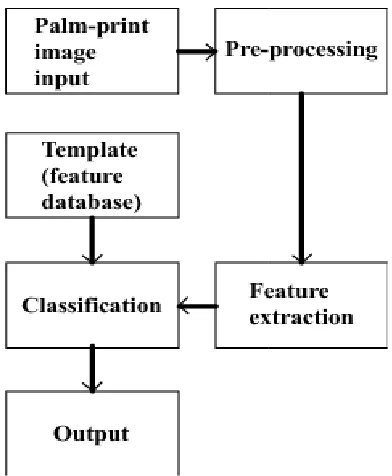
ROPOSEDA typical palm-print recognition system consists of some major steps, namely, input palm-print image collection, pre processing, feature extraction, classification and template storage or database, as illustrated in Fig. 1. The input palm print image can be collected generally by using a palm scanner. In the process of capturing palm images, distortions including rotation, shift and translation may be present in the palm images, which make it difficult to locate at the correct position. Pre-processing sets up a coordinate system to align palm-print images and to segment a part of palm-print image for feature extraction. For the purpose of classification, an image database is needed to be prepared consisting template palm-images of different persons. Th recognition task is based on comparing a test palm image with template data. It is obvious that considering images themselves would require extensive computations for the purpose of comparison. Thus, instead of utilizing the raw palm-print images, some characteristic features are extracted for preparing the template. It is to be noted that the recognition accuracy strongly depends upon the quality of the extracted features. Therefore, the main focus of this research is to develop an efficient featur
algorithm. The proposed feature extraction algorithm is based on extracting spatial variations precisely from local zones of the palm-print image instead of utilizing the image as a whole. In view of this, a modularization technique is employed first to segment the entire palm-print into several small segments. It should be noted that
illumination of different palm-print images of the same person may affect their similarity. Therefore, prior to feature extraction, an illumination adjustment step is included in the proposed algorithm. After feature extraction, a classifier compares two palm-print features and a database is used to store registered templates and also for verification purpose.
3
P
ROPOSEDM
ETHODFor any type of biometric recognition, the most important task is to extract distinguishing features from
data, which directly dictates the recognition accuracy. In comparison to person recognition based on face or voice biometrics, palm-print recognition is very challenging even for a human being. For the case of palm-print recognition, obtaining a significant feature space with respect to the spatial variation in a palm-print image is very crucial. Moreover, a direct subjective correspondence between palm-print features in the spatial domain and those in the frequency domain is not very apparent. In what follows, we are going to demonstrate the proposed feature extraction algorithm for palm-print recognition, where spatial domain local variation is extracted from frequency domain transform.
ROPOSED
S
CHEMEprint recognition system consists of some print image collection, pre-processing, feature extraction, classification and template storage or database, as illustrated in Fig. 1. The input
palm-e collpalm-ectpalm-ed gpalm-enpalm-erally by using a palm-print scanner. In the process of capturing palm images, distortions including rotation, shift and translation may be present in the palm images, which make it difficult to locate sets up a coordinate print images and to segment a part of print image for feature extraction. For the purpose of classification, an image database is needed to be prepared images of different persons. The recognition task is based on comparing a test palm-print image with template data. It is obvious that considering images themselves would require extensive computations for the purpose of comparison. Thus, instead of utilizing the some characteristic features are extracted for preparing the template. It is to be noted that the recognition accuracy strongly depends upon the quality of the extracted features. Therefore, the main focus of this research is to develop an efficient feature extraction algorithm. The proposed feature extraction algorithm is based on extracting spatial variations precisely from local print image instead of utilizing the image as a whole. In view of this, a modularization technique is print into several small segments. It should be noted that variation of print images of the same person may affect their similarity. Therefore, prior to feature djustment step is included in the proposed algorithm. After feature extraction, a classifier print features and a database is used to store registered templates and also for verification
tric recognition, the most important from the template data, which directly dictates the recognition accuracy. In comparison to person recognition based on face or voice challenging even print recognition, obtaining a significant feature space with respect to the print image is very crucial. Moreover, a direct subjective correspondence between eatures in the spatial domain and those in the frequency domain is not very apparent. In what follows, we are going to demonstrate the proposed feature extraction print recognition, where spatial domain frequency domain
Figure 1: Block diagram of the proposed method
3.1 DCT-based feature extraction from spatial modules
For biometric recognition, feature extraction can be carried out using mainly two approaches, namely, the spatial domain approach and the frequency domain approach [11]. The spatial domain approach utilizes the spatial data directly from the palm-print ima
statistical measure of the spatial data. On the other hand, frequency domain approaches employ some kind of transform over the palm-print image for feature extraction. In case of frequency domain feature extraction, pixel pixel comparison between palm
domain is not necessary. Phenomena, such as rotation, scale and illumination, are more severe in the spatial domain than in frequency domain
we intend to develop a feature extraction al on frequency domain transformation. It is well Fourier transform based
palm-involve complex computations. In contrast, discrete cosine transform (DCT) of real data avoids complex arithmetic and offers ease of implementation in practical applications. Moreover, DCT can efficiently handle the phase unwrapping problem and exhibits a strong energy compaction property, i.e., most of the signal information tends to be concentrated in a few low
components of the DCT. Hence, we intend to develop an efficient feature extraction scheme using 2D
function with dimension of also has dimension
2 Block diagram of the proposed method
based feature extraction from spatial
For biometric recognition, feature extraction can be carried out using mainly two approaches, namely, the spatial domain approach and the frequency domain approach [11]. The spatial domain approach utilizes the spatial data print image or employs some statistical measure of the spatial data. On the other hand, frequency domain approaches employ some kind of print image for feature extraction. In case of frequency domain feature extraction,
pixel-by-ison between palm-print images in the spatial domain is not necessary. Phenomena, such as rotation, scale and illumination, are more severe in the spatial frequency domain. Hence, in what follows, we intend to develop a feature extraction algorithm based on frequency domain transformation. It is well-known that -print recognition algorithms involve complex computations. In contrast, discrete cosine transform (DCT) of real data avoids complex arithmetic and ase of implementation in practical applications. Moreover, DCT can efficiently handle the phase unwrapping problem and exhibits a strong energy compaction property, i.e., most of the signal information tends to be concentrated in a few low-frequency ents of the DCT. Hence, we intend to develop an efficient feature extraction scheme using 2D-DCT. For a with dimension of , the 2D-DCT
International Journal of Scientific & Technology Research Volume 1, Issue 2, March 2012 ISSN 2277-8616
3 ( , )
= ( , ) (2 + 1)
2
(2 + 1)
2 ,
(1)
where=
⎩ ⎪ ⎨ ⎪
⎧ ; = 0
; 1≤ ≤ −1
(2)
=
⎩ ⎪ ⎨ ⎪
⎧ ; = 0
; 1≤ ≤ −1
(3)
Palm-prints of a person possess some major and minor line structures along with some ridges and wrinkles. A person can be distinguished from another person based on the differences of these major and minor line structures. Fig. 2 shows sample palm-print images of two different persons. The three major lines of the two persons are quite similar. They differ only in minor line structure. In this case, if we considered the line structures of the two images locally, we may distinguish the two images.
Figure 2: Sample palm-print images of two persons. Square block contains portion of images (a) without any minor line (b) with a minor line
For example, if we looked closely within the bordered regions of the palm-print images in Fig. 2, they would seem are different. Moreover, it is evident that a small block of the palm-print image may or may not contain the major lines but will definitely contain several minor lines. These minor lines may not be properly enhanced or captured when operating on an image as a whole and may not contribute to the feature vector. Hence, in that case, the feature vectors of the palm-prints shown in Fig. 2 may be similar enough to be wrongfully identified as if they belong to the same person. Therefore, we propose to extract features from local zones of the palm-print images. Figures 3(a) and (b) show the 400 lowest frequency coefficients of the 2D-DCT transforms of the palm-print images of Person 1 and Person 2 considered as a whole, respectively. From these
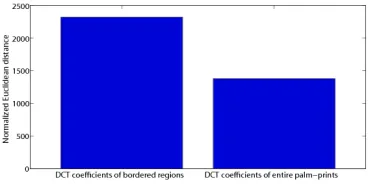
figures, it is evident that there exists no significant difference between the two transforms and hence, they are difficult to distinguish, although the palm-print images differ in the bordered region (Fig. 2). On the other hand, Figs. 4(a) and (b) show the 400 lowest frequency coefficients of the 2D-DCT transforms of the bordered regions of the palm-print images of person 1 and person 2, respectively (shown in Fig. 2). In these two figures, the spatial difference in the images are clearly signified in the spectral domain. Next, we compute the Euclidean distance between the DCT coefficients shown in Figs. 3(a) and (b) as a measure of similarity. Similarly, the Euclidean distance is computed for the DCT coefficients shown in Figs. 4(a) and (b). Fig. 5 shows a comparison between these Euclidean distances. In the former case, where the palm-print image is considered as a whole, the value of the Euclidean distance is smaller than that obtained in the later case, where only the DCT coefficients of the bordered regions are considered. This clearly indicates that better distinguishable features are extracted from smaller modules than from the entire palm-print image as a whole.
4 Figure 4: (a) 400 lowest frequency 2D-DCT coefficients of
the segment of palm-print of Person 1, corresponding to the square block shown in Fig. 2(a) and (b) 400 lowest frequency 2D-DCT coefficients of the segment of palm-print of Person 2, corresponding to the square block shown in Fig. 2(b)
Figure 5: Comparison of Euclidean distances of the 2D-DCT coefficients of separate palm-prints shown in Fig. 2
3.2 Effect of illumination
It is intuitive that palm-images of a particular person captured under different lighting conditions may vary significantly, which can affect the palm-print recognition accuracy. In order to overcome the effect of lighting variation in the proposed method, illumination adjustment is performed prior to feature extraction. Given two palm-print images of a single person having different intensity distributions due to variation in illumination conditions, our objective is to provide with similar feature vectors for these two images irrespective of the difference in illumination conditions. Since in the proposed method, feature extraction is performed in the DCT domain, it is of our interest to analyze the effect of variation in illumination on the DCT-based feature extraction. In Fig. 6, two palm-print images of the same person are shown, where the second image (shown in Fig. 6(b) is has a slightly lower average
illumination level. 2D-DCT operation is performed upon each image, first without any illumination adjustment and then after performing illumination adjustment. Considering all the 2D-DCT coefficients to form the feature vectors for these two images, a measure of similarity can be obtained by using correlation. In Figs. 7(a) and (b), the cross-correlation values of the 2D-DCT coefficients obtained by using the two images without and with illumination adjustment are shown, respectively. It is evident from these two figures that the latter case exhibits more similarity between the DCT coefficients indicating that the features belong to the same person. The similarity measure in terms of Euclidean distances between the 2D-DCT coefficients of the two images for the aforementioned two cases are also calculated and shown in Fig. 8. It is observed that there exists a huge separation in terms of Euclidean distance when no illumination adjustment is performed, whereas the distance is very small when illumination adjustment is performed, as expected, which clearly indicates that a better similarity between extracted feature vectors.
Figure 6: Two sample palm-print images of the same person under different illumination
International Journal of Scientific & Technology Research Volume 1, Issue 2, March 2012 ISSN 2277-8616
5 Figure 8: Euclidian distance between 2D-DCT coefficients
of sample palm-print images shown in Fig. 6
3.3 Proposed dominant spectral feature
In the proposed method, instead of taking the DCT coefficients of the entire image, the DCT coefficients obtained form each module of an image are considered to form a feature vector. However, if all of these coefficients were used, it would definitely result in a feature vector with a very large dimension. One advantage of working in the DCT domain is that, because of its energy compaction property, a few DCT coefficients with higher magnitudes would be sufficient to represent a portion of an image. Hence, in view of reducing the feature dimension, we propose to utilize the magnitudes corresponding to the dominant DCT coefficients as spectral features. The 2D-DCT coefficient corresponding to the maximum magnitude is treated as the dominant coefficient (D1) and the corresponding 2D-frequencies are termed as the dominant frequencies. Considering the magnitudes of the 2D-DCT coefficients in descending order, magnitude values other than the dominant one may also be treated as possible candidates for desired features. In accordance with their magnitude values, these dominant magnitudes are termed as second-dominant (D2), third-dominant (D3), and so on. If the magnitude variations along all the segments for the case of different dominant magnitudes remain similar, it would be very difficult to select one of those dominant magnitudes as a desired feature. In order to demonstrate the characteristics of the dominant magnitudes in different modules, sample palm-print images of two different persons are shown in Fig. 9. In Fig. 10, four dominant magnitudes (D1, D2, D3, and D4) obtained from all the modules of the sample palm-print image of Person 1 appeared in Fig. 9(a) are shown. In this figure, the sample palm-print image is divided into 30 segments. It is found that different dominant magnitudes obtained from the spatial modules exhibit completely different characteristics. However, the magnitude value for the first dominant (D1) is found reasonably higher than other dominant magnitudes. An analogous behavior is obtained for Person 2 of Fig. 9(b). It is evident from Fig. 10 that D1 is the most significant among all the dominant magnitudes and thus, it is sufficient to consider only D1 as a desired feature, which also offers an advantage of reduced feature dimension. Computing D1 in each segment of the palm-print image, the proposed feature vector is obtained. For a palm-print image of dimension N × N with M number of segments (with
dimension n × n), considering only D1will reduce the length of feature vector from M × n × n to M, an order of n reduction.
Figure 9: Sample palm-print images of two persons
Figure 10: Proposed dominant magnitude-features corresponding to palm-prints shown in Fig. 9
It is observed that a significant variation may occur in the palm-print images of a single person taken under different conditions. In view of demonstrating the effect of such variations on the proposed dominant features, we consider five sample palm-prints for each of the two persons as appeared in Fig. 9. In Fig. 11, the proposed dominant features obtained from different segments of all the sample palm-prints of two different persons are shown. For each person, the centroid of the proposed feature vectors is also shown in the figure (in thick continuous lines). It is to be noted that the feature centroids of the two different persons are well-separated even though the major lines of the two palm-print images are quite similar considering the pattern and position. It is also observed that a low degree of scattering exists among the features around their corresponding centroids. Hence, the dominant features extracted locally within a palm-print image offer not only a high degree of between-class separability but also a satisfactory within-class compactness.
Figure 11: Variation of dominant features with segments for
6 3.4 Feature dimensionality reduction
For the cases where the acquired palm-print are of very high resolution, even after selection of dominant features from the small segments of the palm-print image, the feature vector length may still be very high. Further dimensionality reduction may be employed for reduction in computational burden. Principal component analysis (PCA) is a very well-known and efficient orthogonal linear transformation [8]. It reduces the dimension of the feature space and the correlation among the feature vectors by projecting the original feature space into a smaller subspace through a transformation. The PCA transforms the original p-dimensional feature vector into the L -dimensional linear subspace that is spanned by the leading eigenvectors of the covariance matrix of feature vector in each cluster (L < ). PCA is theoretically the optimum transform for given data in the least square sense. For a data matrix, X , with zero empirical mean, where each row represents a different repetition of the experiment, and each column gives the results from a particular probe, the PCA transformation is given by:
Y = X W = VΣ (4)
where the matrix Σ is an m × n diagonal matrix with nonnegative real numbers on the diagonal and WΣV is the singular value decomposition of X. If q sample palm-print images of each person are considered and a total of M dominant DCT coefficients are selected per image, the feature space per person would have a dimension of q × M. For the proposed dominant spectral features, implementation of PCA on the derived feature space could efficiently reduce the feature dimension without loosing much information. Hence, PCA is employed to reduce the dimension of the proposed feature space.
3.5 Distance based classifier
In the proposed method, for the purpose of recognition using the extracted dominant features, a distance-based similarity measure is utilized. The recognition task is carried out based on the distances of the feature vectors of the training palm-images from the feature vector of the test palm-image. Given the m-dimensional feature vector for the k-th sample image of the j-th person be {γ (1),γ (2), . . . ,γ (m)} and a test sample image f with a feature vector {v (1), v (2), . . . , v (m)}, a similarity measure between the test image f of the unknown person and the sample images of the j-th person, namely average sum-squares distance, Δ, is defined as
Δ = ∑ ∑ | ( )− ( )| , (5)
where a particular class represents a person with q number of sample palm-print images. Therefore, according to (5),
given the test sample image f, the unknown person is classified as the person j among the p number of classes when
Δ ≤Δ , ∀ ≠ ∀ {1,2, . . . , }
4
E
XPERIMENTALR
ESULTSExtensive simulations are carried out in order to demonstrate the effectiveness of the proposed method of palm-print recognition using the palm-print images of several well-known databases. Different analyses showing the effectiveness of the proposed feature extraction algorithm have been shown. The performance of the proposed method in terms of recognition accuracy is obtained and compared with those of some recent methods [2], [4].
4.1 Palm-print databases used in simulation
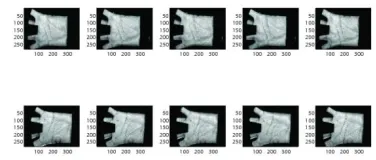
Figure 12: Sample palm-print images from the IITD database
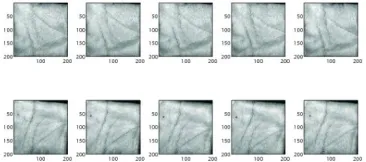
Figure 13: Sample palm-print images from the IITD database after cropping
International Journal of Scientific & Technology Research Volume 1, Issue 2, March 2012 ISSN 2277-8616
7 Figure 15: Sample palm-print images from the PolyU
database after cropping
In this section, palm-print recognition performance obtained by different methods has been presented using two standard databases, namely, the PolyU palm-print database (version 2) [15] and the IITD palm-print database [5]. In Figs. 12 and 14, sample palm-print images from the PolyU database and the IITD database are shown, respectively. The PolyU database (version 2) contains a total of 7752 palm-print images of 386 persons. Each person has 18 to 20 different sample palm-print images taken in two different instances. The IITD database, on the other hand, consists a total of 2791 images of 235 persons, each person having 5 to 6 different sample palm-print images for both left hand and right hand. It can be observed from Figs. 12 and 14 that not all the portions of the palm-print images are required to be considered for feature extraction [3]. The portions of the images containing fingers and the black regions are discarded from the original images to form the regions of interest (ROI) as shown in Figs. 13 and 15.
4.2 Performance comparison
In the proposed method, dominant spectral features (magnitudes and frequencies) obtained from all the modules of a palm-print image are used to form the feature vector of that image and feature dimension reduction is performed using PCA. The recognition task is carried out using a simple Euclidean distance based classifier as described in Section 3.5. The experiments were performed following the leave-one-out cross validation rule. For simulation purposes, the module size for the PolyU database and the IITD database has been chosen as 20 × 20 pixels and 15 × 15 pixels, respectively. For the purpose of comparison, recognition accuracy obtained using the proposed method along with those reported in [2] and [4] are listed in Table 1. It is evident from the table that the recognition accuracy of the proposed method is comparatively higher than those obtained by the other methods. The performance of the proposed method is also very satisfactory for the IITD database (for both left hand and right hand palm-print images). An overall recognition accuracy of 99.92% is achieved.
Table 1: Comparison of recognition accuracies
Method PolyU database
Proposed method 99.97%
Method [2] 97.50%
Method [4] 98.00%
5
C
ONCLUSIONSIn the proposed palm-print recognition scheme, instead of operating on the entire palm-print image at a time, dominant DCT-based features are extracted separately from each of the modules obtained by image-segmentation. It has been shown that because of modularization of the palm-print image, the proposed dominant spectral features, that are extracted from the sub-images, attain better discriminating capabilities. The proposed feature extraction scheme is shown to offer two-fold advantages. First, it can precisely capture local variations that exist in the major and minor lines of palm-print images, which plays an important role in discriminating different persons. Second, it utilizes a very low dimensional feature space for the recognition task, which ensures lower computational burden. For the task of classification, an Euclidean distance based classifier has been employed and it is found that, because of the quality of the extracted features, such a simple classifier can provide a very satisfactory recognition performance and there is no need to employ any complicated classifier. From our extensive simulations on different standard palm-print databases, it has been observed that the proposed method, in comparison to some of the recent methods, provides excellent recognition performance.
A
CKNOWLEDGMENTSThe authors would like to express their sincere gratitude towards the authorities of the Department of Electrical and Electronic Engineering and Bangladesh University of Engineering and Technology (BUET) for providing constant support throughout this research work.
R
EFERENCES[1] T. Connie and A.T.B. Jin and M.G.K. Ong and D.N.C. Ling. An automated palmprint recognition system. Image and Vision Computing, 23:501--515, 2005.
[2] Manisha P. Dale and Madhuri A. Joshi and Neena Gilda. Texture Based Palmprint Identification Using DCT Features. Proc. Int. Conf. Advances in Pattern Recognition, pages 221--224, 2009.
[3] Adams Kong and David Zhang and Mohamed Kamel. A survey of palmprint recognition. Pattern Recognition, 42:1408-1418, 2009.
[4] J. Lu and Y. Zhao and J. Hu. Enhanced Gabor-based region covariance matrices for palmprint recognition. Electron. Lett., 45:880-881, 2009.
[5] IIT Delhi Touchless Palmprint Database.
8 Personal authentication using palm-print features. Pattern
Recognition, 36:371--381, 2003.
[7] Jain, A.K. and Ross, A. and Prabhakar, S. An introduction to biometric recognition. IEEE Trans. Circuits and Systems for Video Technology, 14(1):4 - 20, 2004. [8] I.T. Jolloffe. Principal Component Analysis. Springer-Verlag, Berlin, 1986.
[9] A. Kong and D. Zhang and G. Lu. A study of identical twins palmprint for personal verification. Pattern Recognition, 39:2149-2156, 2006.
[10] Kung, S.Y. and Shang-Hung Lin and Ming Fang. A neural network approach to face/palm recognition. Neural Networks for Signal Processing [1995] V. Proceedings of the 1995 IEEE Workshop, pages 323 -332, 1995.
[11] Li, W. and Zhang, D. and Zhang, L. and Lu, G. and Yan, J. 3-D Palmprint Recognition With Joint Line and Orientation Features. IEEE Trans. Systems, Man, and Cybernetics, Part C, 41(2):274 -279, 2011.
[12] X. Wu and K. Wang and D. Zhang. Fuzzy direction element energy feature (FDEEF) based palmprint identification. Proc. Int. Conf. Pattern Recognition, pages 95--98, 2002.
[13] Xiangqian Wu and Zhang, D. and Kuanquan Wang. Palm line extraction and matching for personal authentication. IEEE Trans. Systems, Man and Cybernetics, Part A: Systems and Humans, 36(5):978 -987, 2006.
[14] H. Imtiaz and S. A. Fattah. A DCT-based feature extraction algorithm for palm-print recognition. Proc. IEEE Int. Conf. Communication Control and Computing Technologies (ICCCCT), pp. 657-660, Dec 2010.