R E S E A R C H A R T I C L E
Open Access
Challenges to implementation of developmental
screening in urban primary care: a mixed
methods study
Deanna L Morelli
1†, Susmita Pati
2, Anneliese Butler
3, Nathan J Blum
4, Marsha Gerdes
1, Jennifer Pinto-Martin
5,6and James P Guevara
1,6*†Abstract
Background:Research is needed to identify challenges to developmental screening and strategies for screening in an urban pediatric setting.
Methods:Parents of young children and clinicians at four urban pediatric practices participated in focus groups prior to implementation of screening. Participants were queried regarding attitudes, social norms, and barriers to developmental screening. Using information from the focus groups, workflow strategies were developed for implementing screening. Referral rates and satisfaction with screening were gathered at the conclusion.
Results:Six focus groups of parents and clinicians were conducted. Major themes identified included 1) parents desired greater input on child development and increased time with physicians, 2) physicians did not fully trust parental input, 3) physicians preferred clinical acumen over screening tools, and 4) physicians lacked time and training to conduct screening. For the intervention, developmental screening was implemented at the 9-, 18-, 24-, and 30-month well visits using the Ages & Stages Questionnaire-II and the Modified Checklist for Toddlers. 1397 (98% of eligible) children under 36 months old were enrolled, and 1184 (84%) were screened at least once. 1002 parents (85%) completed a survey at the conclusion of the screening trial. Most parents reported no difficulty completing the screens (99%), felt the screens covered important areas of child development (98%), and felt they learned about their child’s strengths and limitations (88%).
Conclusions:Developmental screening in urban low-income practices is feasible and acceptable, but requires strategies to capture parental input, provide training, facilitate referrals, and develop workflow procedures and electronic decision support.
Keywords:Child development, Primary care, Screening, Hospitals, Urban, Developmental assessment
* Correspondence:[email protected]
†Equal contributors
1Policylab: Center to Bridge Research, Practice, & Policy, The Children’s Hospital of Philadelphia, 34th and Civic Center Boulevard, CHOP North, Room 1531, 3535 Market Street, Philadelphia, PA 19104, USA 6
Center for Clinical Epidemiology and Biostatistics, Perelman School of Medicine, University of Pennsylvania, 8th Floor, Blockley Hall, 423 Guardian Drive, Philadelphia, PA 19104, USA
Full list of author information is available at the end of the article
Background
The rates of detection of developmental delays are cur-rently low. Approximately 12 to 16% of children are esti-mated to have developmental disorders [1,2]. However, only 30% of children with developmental delays are diag-nosed before school entrance [3]. Low-income children are at greater risk for developmental delays, with increased rates of developmental delays reported in lower income children compared to higher income children [4]. More specifically, single-parent households and households in poverty have an increased rate of children with develop-mental problems [4,5]. Additionally, children with public health insurance are more likely to have special health care needs including developmental delays, and are at in-creased risk for long-term disability compared to children of higher socioeconomic status [6].
The identification of children with developmental de-lays before school entrance is vital to the well being of children. The adaptability of a child’s brain in the first 3 years of life makes identification of developmental delays and treatment with physical and psychosocial stimuli at a young age the foundation to a child’s developmental and behavioral outcomes [7,8]. Lower income children treated with early intervention programs from birth to age 5 years old have been shown to score significantly higher in reading and mathematics by age 15, as well as had fewer instances of grade retention and special edu-cation requirements compared to those children treated from ages 5 to 8 years old [9]. The readiness of children for school, especially low income children, may also help circumvent the consequences of early academic failure and school behavior problems including high school drop-out rates, delinquency, unemployment, and mental health issues in young adulthood [8].
Due to the need for diagnosing developmental delay early in a child’s life and improving detection rates, rec-ommendations for developmental screening in young children were made in 2006 by the American Academy of Pediatrics (AAP) and the Maternal Child Health Bur-eau (MCHB) [10]. These recommendations encouraged primary care clinicians to provide developmental surveil-lance at all well child visits and institute developmental screening with validated tools at critical developmental periods in childhood (i.e., at 9, 18, and 30 months of age). An additional recommendation included autism-specific screening at the 18 and 24-month visits [11].
Screening was defined as the use of brief standardized tools that have relatively high sensitivity and specificity for the specific population’s risk status, are reliable, and focus on all developmental domains at specific age inter-vals to identify developmental delays [10]. Surveillance was defined as the process of recognizing children at risk for developmental delays through maintaining accurate documentation for the child’s developmental history in
the child’s medical record, asking parents about their child’s development, and observing the child’s develop-ment in addition to the physical exam without the use of a standardized screening tool [10]. Surveillance was more closely defined as“unstructured surveillance,”which relies on clinical acumen as opposed to“structured surveillance” that screening experts define as use of periodic screening tools [12]. The AAP’s recommendation emerged from the growing concern that primary care physicians under-identify young children with developmental delays [13].
The AAP’s recommendation regarding screening was made with limited information regarding the feasibility or broad acceptance of this policy, especially in urban settings that may have the most at-risk children [14,15]. Previous studies have suggested that few clinicians have implemented developmental screening into their prac-tices despite the dissemination of recommendations sup-porting their use [16-20]. It is currently estimated that nearly half of pediatricians do not routinely use develop-mental screening tools for children under the age of 36 months [21]. This limited implementation of screening is not surprising given studies that have shown that phy-sicians prefer to rely on developmental surveillance ra-ther than developmental screening. However the limited implementation of screening is problematic as develop-mental surveillance alone may identify fewer than half of children with developmental delays [22,23].
A growing body of literature suggests developmental screening is both effective and feasible if potential bar-riers are addressed adequately [24]. Barbar-riers to screening that have been identified previously include lack of clin-ician knowledge and training, lack of adequate reim-bursement for conducting screening, and the need to develop clinical workflow plans carefully [14]. In order to provide clinicians in urban low-income primary care settings with the information to undertake screening, we sought to contribute to the knowledge base by identifying challenges for developmental screening in these settings, developing strategies for conducting screening, and asses-sing the feasibility and acceptability of implementing a screening strategy. Specifically, we sought to employ a mixed methods study consisting of focus groups to identify the beliefs, practices, and perceived challenges that would contribute to poor adoption of developmen-tal screening, and to use that information to inform im-plementation of developmental screening, rates of screening, and levels of satisfaction among parents and clinicians.
Methods
Setting
than 86,000 annual visits (22,500 under the age of five years). Children were eligible to participate if they were younger than 30 months old at the time of a visit, were greater than 36 weeks estimated gestational age, had no major congenital anomalies or genetic syndromes, were never placed in out-of-home foster care, and were not cur-rently receiving Early Intervention Part C services. Clini-cians were eligible if they were attending pediatriClini-cians, nurse practitioners, or pediatric residents at any of the participating practices. Medical students were excluded. The study was approved by the Institutional Review Board at the Children's Hospital of Philadelphia. Eligible partici-pants including both parents and clinicians completed written informed consent. This study was a prelude to a clinical trial [25].
Focus groups
Prior to implementation of screening, we conducted two focus groups with parents and four focus groups with clinicians to identify perceptions related to developmental screening. Parents of children under the age of 5 were re-cruited to participate, as well as clinicians at the four par-ticipating practices. We used the Theory of Planned Behavior as a conceptual framework to guide our inquiry [26,27]. This model proposes that the strength of an indi-vidual’s intentions to adopt a new behavior, developmental screening in this case, is dependent on their attitudes to-ward the behavior, the subjective norms and beliefs of those around them, and their perceived behavioral control (i.e., challenges they believed prevented them from con-ducting developmental screening) [26,27].
Each focus group meeting consisted of four to eight participants [28]. Meetings lasted for approximately one hour and were led by trained facilitators. Each meeting consisted of open-ended questions followed by a sum-mary of responses. The questions sought to identify per-ceptions related to the importance of developmental screening, current screening practices, and challenges to implementing universal screening in order to more ac-curately identify these challenges for implementation of developmental screening. For example, one question used in the focus groups for pediatricians was, “In the care of young children less than five years old in primary care settings, how important is periodic screening of the child’s development compared with other aspects of well child care?”Similar questions were adapted for the parent focus groups. To improve the validity of our findings, we summarized the main ideas and sought participant feed-back at the conclusion of each meeting. An investigator (J.G.) was present at all meetings to record field notes.
All focus group meetings were audiotaped and tran-scribed. Transcripts were entered into Ethnograph 6.0 (Qualis Research Associates, Thousand Oaks, CA), a qualitative software program that allows users to code,
organize, and conduct searches for themes across tran-scripts. Field notes compiled at the meetings were used to supplement information from the transcripts. Tran-scripts were initially read by seven investigators (D.M., S.P., A.B., N.B., M.G., J.P., J.G.) to identify major themes. This team of investigators included a diverse array of indi-viduals from general pediatrics, developmental-behavioral pediatrics, psychology, and qualitative research methods. Reliability in the selection of themes was ensured during an investigator meeting that achieved consensus on the overall themes and code lists. Based on this list of themes, investigators (D.M. and A.B.) independently reread and coded all transcripts. The themes were coded using the constant comparative approach, and any differences were settled by consensus [29].
Implementation procedures
We developed an implementation strategy that encom-passed the challenges identified in the focus groups in-cluding selection of developmental screening tools, clinician training methods, development of clinical work-flow patterns, use of electronic decision support tools, and building a collaborative relationship with local early inter-vention (EI) agencies to share data. We garnered clinician input on the selection of screening tools through meetings at all four participating practices. After selection of tools, we developed an in-person training session to provide cli-nicians with an overview of the tools, information on ad-ministration and scoring of the tools, suggested text for interpreting positive screens with parents, and recom-mended referral procedures. Finally, we held meetings with staff from our local EI agency to develop agreements to share data on the status of EI referrals.
Measures
Research Electronic Data Capture (REDCap) database at the Children’s Hospital of Philadelphia [30].
We collected information from our electronic health records (EHR) on the number of patient well child visits, developmental screening and surveillance tools com-pleted, and the number of EI referrals made during the study period. We obtained EI referral data from the par-ticipating EI agency and merged it with EHR data using personal identifying information (medical record num-bers, child name, child date of birth). Once data were merged, all personal health information was deleted prior to analysis. Prior to the screening intervention, re-ferral to EI was approximately less than 10%, but no exact data existed at the local EI agency or at the Chil-dren’s Hospital of Philadelphia for accurate comparison.
Analysis
We completed summary statistics on parent and clin-ician satisfaction surveys as well as EHR and EI referral data. The parents were not the same parents that were involved in the focus groups, however many of the same clinicians participated in both the focus groups and the satisfaction questionnaires. We categorized parent and clinician responses of“satisfied,” “very satisfied,”or“yes” as indicating agreement with each statement. We aggre-gated the proportion of patients who had a well visit, completed a developmental screening tool, had an EI re-ferral, and completed an EI referral that included a multi-disciplinary evaluation during the study period.
Results
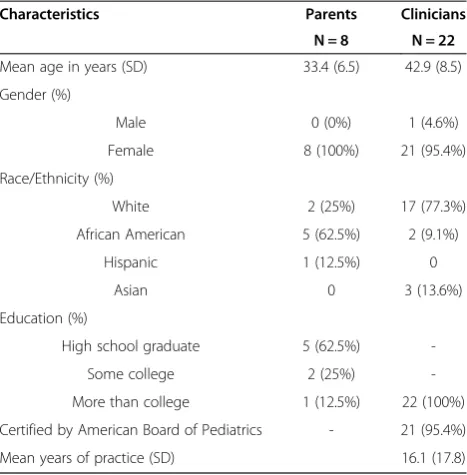
Six focus groups (two parent and four clinician groups) were conducted, involving a total of 8 parents and 22 primary care clinicians. The parents that participated were female and predominantly African-American, reflecting the population from which they were drawn (Table 1). Clinician participants were mostly female and Caucasian, and had been in practice an average of 16 years (Table 1). All except one clinician were Board Certified in Pediatrics. Themes derived from the focus groups were categorized using the Theory of Planned Behavior [26,27]. We used three major categories to categorize themes according to the theoretical model: attitudes towards development, sub-jective norms towards screening, and perceived behavioral control towards implementing screening practices in the primary care setting.
Attitudes towards development
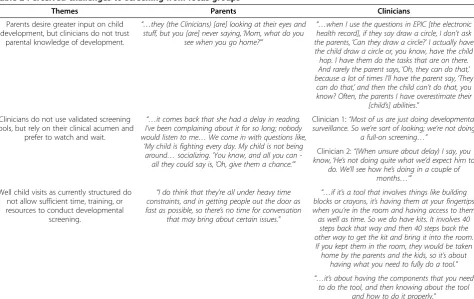
Both parents and clinicians endorsed the importance of discussing the child’s development during the well visit. However, parents felt pediatricians undervalued parental knowledge and concerns about child development (Table 2). Parents voiced a desire to provide greater input on their child’s development and share in treatment decisions.
Conversely, clinicians perceived that parents in their practice lacked knowledge of normal development. They reported that they routinely did not rely solely on parental report of development, but utilized a combination of par-ental report, clinician observation, and clinician expertise to assess development (Table 2).
Subjective norms towards screening
In these urban practices prior to this study, clinicians ac-knowledged that they frequently employed surveillance to assess development, relying on a set of age-specific milestones that were incorporated into the electronic health record to identify delays at well child visits. Clini-cians reported validated developmental screening tools were used sporadically and only when parents raised concerns (Table 2). Likewise, parents felt clinicians did not spend adequate time to assess their children’s devel-opment. They desired more information on development for their children (Table 2). Parents preferred clinicians to be more proactive in referring their children to devel-opmental services rather than using a watch-and-wait approach for screening and referral.
Perceived behavioral control toward implementing screening practices
Clinicians identified the following challenges to screening: lack of time to conduct screening, lack of reimbursement for completing developmental screening tools, and lack of training in the use of developmental screening tools. Time constraints within busy well child visits were recognized, and clinicians perceived that they could not eliminate important aspects of well childcare to accommodate
Table 1 Characteristics of focus groups participants
Characteristics Parents Clinicians
N = 8 N = 22
Mean age in years (SD) 33.4 (6.5) 42.9 (8.5)
Gender (%)
Male 0 (0%) 1 (4.6%)
Female 8 (100%) 21 (95.4%)
Race/Ethnicity (%)
White 2 (25%) 17 (77.3%)
African American 5 (62.5%) 2 (9.1%)
Hispanic 1 (12.5%) 0
Asian 0 3 (13.6%)
Education (%)
High school graduate 5 (62.5%)
-Some college 2 (25%)
-More than college 1 (12.5%) 22 (100%)
Certified by American Board of Pediatrics - 21 (95.4%)
screening (Table 2). At the time of this study, develop-mental screening was not reimbursed in these four prac-tices. Clinicians acknowledged that additional funding might help facilitate screening by paying clinic staff to as-sist with screening procedures or allotting extra time dur-ing well visits to conduct screendur-ing. Finally, clinicians perceived a lack of training on the administration, scoring, and interpretation of tools.
Strategy for implementing screening
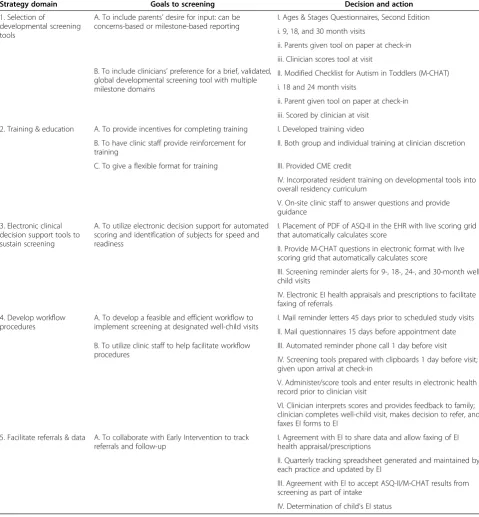
Using the information gathered from the focus groups, namely parents’ desire for more input on development and clinicians’ preference for a brief, validated, and glo-bal developmental screening tool, we made a list of vali-dated screening tools for consideration in this urban clinic setting (Table 3). Table 3 illustrates our implemen-tation of developmental screening strategy that includes suggestions from our focus groups. We convened an additional meeting with clinicians from participating practices in order to review the AAP recommendations for developmental screening and to provide an overview of a number of tools. Based on feedback from that meet-ing, we selected the Ages & Stages Questionnaires, Second Edition (ASQ-II) as a general developmental screener at the 9-, 18-, and 30-month well visits [31]. The ASQ-II accommodated parental self-report, clinicians’
preference for a milestone-based instrument, and adequate speech and language assessment that could also provide an educational tool for house staff, residents, and parents (Table 3). It was also recognized that the local EI agency used the ASQ-II as a first-stage screening tool for the evaluation of children with possible delays. We also se-lected the Modified Checklist for Autism in Toddlers (M-CHAT) at the 18- and 24-month well visits as it was a similarly validated parent self-report tool and was the only brief autism screener available in this age group [32].
We provided training and education of Pediatric Resi-dents and Attendings at their discretion in order to meet the clinicians’desires from the focus groups of providing sufficient training and resources on developmental screen-ing (Table 3). Group meetscreen-ings were conveniently sched-uled at each participating practice to conduct clinician training. At these meetings, we reviewed developmental screening recommendations, provided an overview of the screening tools selected, and gave hands-on instruction in the administration, scoring, and interpretation of the tools. For those who could not attend a group training, a train-ing video was developed that could be reviewed at their leisure. Continuing medical education credits were pro-vided to Attendings as an incentive to complete training, and the developmental screening tools were incorporated
Table 2 Perceived challenges to screening from focus groups
Themes Parents Clinicians
Parents desire greater input on child development, but clinicians do not trust
parental knowledge of development.
“…they (the Clinicians) [are] looking at their eyes and stuff, but you [are] never saying,‘Mom, what do you
see when you go home?’”
“…when I use the questions in EPIC [the electronic health record], if they say draw a circle, I don’t ask the parents,‘Can they draw a circle?’I actually have the child draw a circle or, you know, have the child hop. I have them do the tasks that are on there. And rarely the parent says,‘Oh, they can do that,’ because a lot of times I'll have the parent say,‘They
can do that,’and then the child can’t do that, you know? Often, the parents I have overestimate their
[child’s] abilities.”
Clinicians do not use validated screening tools, but rely on their clinical acumen and
prefer to watch and wait.
“…it comes back that she had a delay in reading. I've been complaining about it for so long; nobody would listen to me…We come in with questions like,
‘My child is fighting every day. My child is not being around…socializing.’You know, and all you can
-all they could say is,‘Oh, give them a chance.’”
Clinician 1:“Most of us are just doing developmental surveillance. So we’re sort of looking; we’re not doing
a full-on screening…”
Clinician 2:“(When unsure about delay) I say, you know,‘He’s not doing quite what we’d expect him to
do. We’ll see how he’s doing in a couple of months…’”
Well child visits as currently structured do not allow sufficient time, training, or resources to conduct developmental
screening.
“I do think that they’re all under heavy time constraints, and in getting people out the door as fast as possible, so there’s no time for conversation
that may bring about certain issues.”
“…if it’s a tool that involves things like building blocks or crayons, it’s having them at your fingertips when you’re in the room and having access to them as well as time. So we do have kits. It involves 40
steps back that way and then 40 steps back the other way to get the kit and bring it into the room. If you kept them in the room, they would be taken home by the parents and the kids, so it’s about
having what you need to fully do a tool.”
“…it’s about having the components that you need to do the tool, and then knowing about the tool
into the overall residency curriculum. For additional assistance, on-site clinic staff was available in each clinic to assist clinicians with screening.
We developed and incorporated electronic clinical de-cision support tools to support developmental screening at recommended well visits in order to include the clini-cians’ request to have better access to developmental screening resources (Table 3). Alerts were automatically generated to remind clinicians that screening was due at
a particular well visit. For the ASQ-II, an age-specific portable document format (PDF) was available through a link within the EHR that could be printed and pro-vided to parents to complete. Clinicians could transfer parent responses to the EHR by selecting the appropriate radio buttons conforming to responses on a scoring grid, and an automated scoring algorithm would tally the re-sponses and provide an overall score to minimize errors. For the M-CHAT, an electronic interactive version of
Table 3 Implementation strategy for developmental screening
Strategy domain Goals to screening Decision and action
1. Selection of
developmental screening tools
A. To include parents’desire for input: can be concerns-based or milestone-based reporting
I. Ages & Stages Questionnaires, Second Edition
i. 9, 18, and 30 month visits
ii. Parents given tool on paper at check-in
B. To include clinicians’preference for a brief, validated, global developmental screening tool with multiple milestone domains
iii. Clinician scores tool at visit
II. Modified Checklist for Autism in Toddlers (M-CHAT)
i. 18 and 24 month visits
ii. Parent given tool on paper at check-in
iii. Scored by clinician at visit
2. Training & education A. To provide incentives for completing training I. Developed training video
B. To have clinic staff provide reinforcement for training
II. Both group and individual training at clinician discretion
C. To give a flexible format for training III. Provided CME credit
IV. Incorporated resident training on developmental tools into overall residency curriculum
V. On-site clinic staff to answer questions and provide guidance
3. Electronic clinical decision support tools to sustain screening
A. To utilize electronic decision support for automated scoring and identification of subjects for speed and readiness
I. Placement of PDF of ASQ-II in the EHR with live scoring grid that automatically calculates score
II. Provide M-CHAT questions in electronic format with live scoring grid that automatically calculates score
III. Screening reminder alerts for 9-, 18-, 24-, and 30-month well child visits
IV. Electronic EI health appraisals and prescriptions to facilitate faxing of referrals
4. Develop workflow procedures
A. To develop a feasible and efficient workflow to implement screening at designated well-child visits
I. Mail reminder letters 45 days prior to scheduled study visits
II. Mail questionnaires 15 days before appointment date
B. To utilize clinic staff to help facilitate workflow procedures
III. Automated reminder phone call 1 day before visit
IV. Screening tools prepared with clipboards 1 day before visit; given upon arrival at check-in
V. Administer/score tools and enter results in electronic health record prior to clinician visit
VI. Clinician interprets scores and provides feedback to family; clinician completes well-child visit, makes decision to refer, and faxes EI forms to EI
5. Facilitate referrals & data A. To collaborate with Early Intervention to track referrals and follow-up
I. Agreement with EI to share data and allow faxing of EI health appraisal/prescriptions
II. Quarterly tracking spreadsheet generated and maintained by each practice and updated by EI
III. Agreement with EI to accept ASQ-II/M-CHAT results from screening as part of intake
the questions was available within the EHR. Similarly, cli-nicians could transfer parent responses to an automated scoring grid, which would provide an overall score.
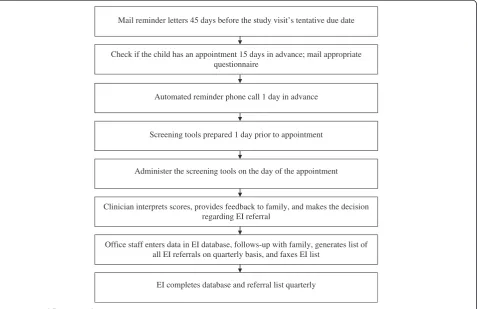
To facilitate implementation and improve clinician ef-ficiency as identified in the focus groups, we developed a workflow procedure for the implementation of screening (Figure 1, Table 3). According to the workflow, 15 days prior to scheduled well visits, parents were mailed the age-appropriate screening tools with instructions to complete the tools and bring them to their child’s up-coming well visit. Automated phone calls were made one day prior to scheduled visits to remind parents of the visit and to complete the screening tools. On the day of the visit, front desk staff took completed screeners from parents at check-in. If parents did not bring their pre-mailed screening tool completed, office staff pro-vided parents with available screeners. Parents com-pleted or had assistance from office staff to complete screening tools. Completed screening tools were either provided to clinicians or results were entered into the EHR by office staff prior to clinicians seeing the patients. We developed a letter of agreement with the county EI agency preceding the study to permit information on referral status to be faxed to EI agency staff (Table 3). The clinic staff maintained a monthly tracking spread-sheet that early intervention agencies would update on a
quarterly basis. This spreadsheet included information on the child’s date of assessment, referral date, medical record number, age, the status of enrollment in EI ser-vices, and the scheduling and evaluation results of multi-disciplinary evaluations (MDE). The EI agency agreed to accept the ASQ-II/M-CHAT results as part of their in-take for developmental evaluations. EI staff reported on the status of all referrals: referral intake, completion of referrals, scheduling of MDE, and results of MDE and status of services.
Screening results
One thousand three hundred ninety-seven eligible chil-dren under 31 months old were enrolled and followed for up to 18 months, and 1,184 (84.8%) parents/care-givers completed a developmental screening tool at least once during the study period (Table 4). Most children were male, African American, had mean family incomes of less than $30,000, and had a parent with greater than a high school education (see Additional file 1). There were no differences (p > 0.05) in demographic characteris-tics by practice site. Comparing the focus group caregiver participants to the screening intervention participants, the screening intervention parents were of slightly higher edu-cation levels, but of similar race and ethnicity (Table 1 and Additional file 1). Developmental screening resulted in
Mail reminder letters 45 days before the study visit’s tentative due date
Check if the child has an appointment 15 days in advance; mail appropriate questionnaire
Automated reminder phone call 1 day in advance
Screening tools prepared 1 day prior to appointment
Administer the screening tools on the day of the appointment
Clinician interprets scores, provides feedback to family, and makes the decision regarding EI referral
Office staff enters data in EI database, follows-up with family, generates list of all EI referrals on quarterly basis, and faxes EI list
EI completes database and referral list quarterly
348 (24.9%) children being identified with developmental delays (Table 4). Two hundred fifty one children (18.0%) were referred for EI services, and 128 (9.2%) completed an EI referral (Table 4).
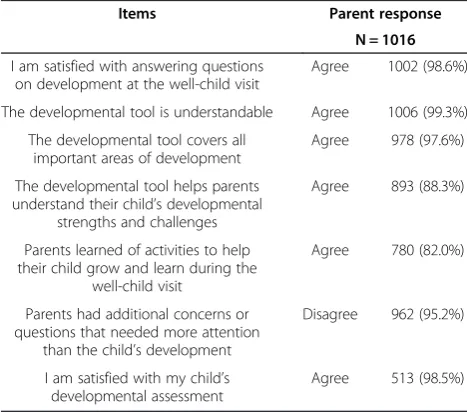
Once a parent completed a developmental screening visit, parents and clinicians were asked to complete sat-isfaction questionnaires, which typically occurred be-tween one and 12 months after the well-child visit. Of the 1,184 who completed a developmental screen at a well visit and were eligible to participate in the survey, 1,016 parents (85.8%) completed the phone survey at the conclusion of the study. Most parents reported no diffi-culty completing the screens (98.6%), the screens cov-ered important areas of child development (97.6%), and that the developmental screening tools helped them learn about their child’s strengths and challenges (88.3%) (Table 5). Of the 208 Attendings, Nurse Practitioners, and Residents, 123 (59.1%) completed the on-line sur-vey. One-hundred sixteen clinicians (94.3%) felt that de-velopmental assessment was an important part of well-child care (Table 6). Only 67 (54.5%) felt caregivers have a good understanding of typical child development. However, 120 (97.6%) valued the importance of seeking
parental input regarding child development. Overall, most parents (98.5%) and clinicians (70.8%) reported sat-isfaction with developmental screening.
Discussion
Many of our findings are consistent with other research, including our focus group finding that parents desired a greater input on developmental decisions [33]. Prior research with parents of developmentally delayed chil-dren found that parents raised concerns about their child’s development more than a year before clinicians recognized a problem [34,35]. These and other studies document that raising simple questions of concern with parents about a child’s development and learning may yield important information leading to identification of a problem [10,36], have a positive impact on timely diag-noses of delays in young children [36-39], and increase referral rates in developmentally delayed children as opposed to clinicians using a watch-and-wait approach to referring children to early intervention programs [14,39,40]. Thus, we sought to incorporate parent-report measures in our selection of appropriate screening tools.
Clinicians in this study perceived challenges to devel-opmental screening including insufficient time and lack of training on developmental screening tools that have been noted in earlier reports [7,41]. A study on two
Table 5 Caregiver satisfaction with screening
Items Parent response
N = 1016
I am satisfied with answering questions on development at the well-child visit
Agree 1002 (98.6%)
The developmental tool is understandable Agree 1006 (99.3%)
The developmental tool covers all important areas of development
Agree 978 (97.6%)
The developmental tool helps parents understand their child’s developmental
strengths and challenges
Agree 893 (88.3%)
Parents learned of activities to help their child grow and learn during the
well-child visit
Agree 780 (82.0%)
Parents had additional concerns or questions that needed more attention
than the child’s development
Disagree 962 (95.2%)
I am satisfied with my child’s developmental assessment
Agree 513 (98.5%)
Table 4 Results of developmental screening
Outcome Eligible children
N = 1397
Number attended Well Visit (%) 1363 (97.6%)
Number screened at Visits (%) 1184 (84.8%)
Number identified with Delays (%) 348 (24.9%)
Number referred to Early Intervention (%) 251 (18.0%)
Number completed Early Intervention referrals (%) 128 (9.2%)
Table 6 Clinician satisfaction with screening
Items Clinician response
N = 123
Assessment of development is an important part of well-child care
Agree 116 (94.3%)
Caregivers have a good understanding of typical child development
Agree 67 (54.5%)
It is important to seek caregiver input regard their children’s development
Agree 120 (97.6%)
The ASQ-II or M-CHAT is easy for parents/caregivers to complete
Agree 74 (71.2%)
The ASQ-II or M-CHAT is easy to score in EHR Agree 75 (82.4%)
The ASQ-II or M-CHAT is quick to complete Agree 59 (55.7%)
The ASQ-II & M-CHAT are helpful in my clinical decision-making
Agree 92 (84.4%)
Developmental screening (with the ASQ-II/M-CHAT) disrupts
my clinical workflow
Agree 46 (42.2%)
I have received sufficient training on how to administer the ASQ-II/M-CHAT
Agree 61 (56.0%)
The clinic staff provides helpful developmental support to families
Agree 108 (93.9%)
The clinic staff is helpful with Early Intervention referral and tracking
Agree 92 (82.9%)
I am satisfied with the developmental screening process (i.e. using the ASQ-II and M-CHAT) at my clinic
urban primary care practices found routine screening to be more feasible than expected when they addressed is-sues of time and training as we did in our screening strategy [24]. Clinicians in our study also identified workflow plans as an important factor in efficiently in-corporating developmental screening, which has been found in other studies [24,42]. When clinicians were de-ciding on an appropriate screening tool for their urban practices, the ASQ-II and M-CHAT were selected based on concurrent use by the local early intervention agency, their basis in milestones and parent report, and their ability to reinforce teaching on child development to res-idents and parents. Prior research has similarly shown decisions regarding screening tools are based on clinical flow, acceptance by local outreach programs or early inter-vention, and their ability to teach typical child development [42]. By addressing these challenges and implementing screening within current workflow parameters, participat-ing practices showed a high rate of screenparticipat-ing (84.8%). This is comparable to findings from other studies that have im-plemented screening strategies [42], but higher than that achieved by other urban clinics that have implemented screening [24].
Despite our high rate of screening, only 9.2% of chil-dren completed referrals to Early Intervention. Three-hundred forty eight children (24.9%) were identified with developmental delays through screening, but only 251 (65.4%) of those children were referred to Early Inter-vention. This may imply a higher reliance by pediatri-cians on clinical acumen and structured surveillance than on developmental screening tools, but more study is needed to assess this assertion. A greater proportion of those referred were male (p < 0.0001) or of African American race (p < 0.001). Of those referred to Early Intervention, 128 (51%) completed the referral. We do not fully understand why only half of parents completed the referral to Early Intervention with their child. We speculate that barriers to referral completion may be present. For example, in the satisfaction questionnaires given to parents after the implementation of screening, 236 parents answered, “Yes” to their child being recom-mended for Early Intervention. However, of those 236, only 189 (80%) agreed with the recommendation for re-ferral. In addition there may be other factors that limit this urban population from completing referrals includ-ing lack of knowledge on the need for seekinclud-ing Early Intervention services, lack of time, and limited resources such as disconnected phone numbers. In a study by Garg et al. that researched the impact of a family help desk at an urban clinic for low-income children, a dis-parity existed between the initial contact of parents and their receipt of community resources [43]. The barriers faced by low-income families including time constraints, childcare, and transportation issues were mentioned as
possible reasons for this disconnect, but more research is needed on the subject [43]. Although a greater propor-tion of referred children were male or of African American race, we could not identify children for screening based on demographic characteristics. Moreover, our results show that once a clinician makes an EI referral in this high-risk population, additional care coordinator resources may be needed to facilitate the referrals [25].
Limitations to our findings exist. First, this study was conducted in a single geographical area using a non-random sample of participants from four practices. Thus, our findings may not be generalized to other geographic areas or other practices in the same geographic area. Sec-ond, our utilization of clinical work staff for dispersing screening tools to parents, screening children, entering screening tool results into the EHR, and keeping a quarterly-updated spreadsheet for EI referrals and corres-pondence on follow-up may not be feasible at other clinics. However, many of the patients participating in our study did not avail themselves of assistance from clinic staff and were still able to complete developmental screen-ing [42]. Third, parents and clinicians were given satisfac-tion quessatisfac-tionnaires between one and 12 months after their screening visit, which may have resulted in recall is-sues in answering satisfaction questions about the devel-opmental screening. However, few parents and clinicians reported that they were unable to recall screening.
Despite these limitations, we believe that our findings have valuable implications for pediatric practices. Our re-sults show that developmental screening is feasible in a high-risk, low-income population. By utilizing the input of parents and providers from urban primary care practice, we were able to create a workflow for screening that fit our practices, and received feedback in the form of satis-faction surveys to establish the acceptability of our strat-egy. Our results also suggest that clinicians in urban settings can utilize parental report from developmental screening tools to screen for developmental delays, pro-vided sufficient practice-based resources are available such as clinician training and point-of-care electronic re-minders. Other studies have found referral-tracking ef-forts to be too labor-intensive for clinic staff [42]. However, we have found that forming an agreement with an early intervention agency to share referral data and maintaining a referral spreadsheet by clinic staff was a successful way to track referrals.
screening is an important strategy for identifying and helping children with delays as recommended by the AAP. This is especially true in urban clinics that serve a predominantly low socioeconomic population.
Conclusions
In this mixed methods study, parents and clinicians per-ceived developmental screening favorably, but a number of challenges to screening were identified. These included lack of agreement on whether parents could give accurate assessments of child development, clinician preference to rely on their clinical acumen, and limited time, insurance reimbursement, and training on screening. With know-ledge of these perceived challenges, we utilized clinician input to select parent-reported screening tools, developed workflow procedures to enhance screening efficiency, pro-vided clinician training using flexible formats, implemented electronic decision tools to support screening, and made collaborative arrangements with EI agencies to share data on the results of screening and referrals. These strategies resulted in 84.8% of children being successfully screened. In addition, parents and clinicians reported overall satis-faction with screening procedures.
Additional file
Additional file 1:Characteristics of children screened.A demographic comparison of children who were screened for
developmental delay, identified with delay, referred to early intervention, and completed the early intervention referral. P-values were reported to show significance.
Abbreviations
AAP:American academy of pediatrics; ASQ-II: Ages & stages questionnaires, second edition; CME: Continuing medical education; EHR: Electronic health record; EI: Early intervention; M-CHAT: Modified checklist for autism in toddlers; MDE: Multidisciplinary evaluations; PDF: Portable document format.
Competing interests
No competing interests have been identified with any of the authors.
Authors’contributions
JG conceived of the study, wrote the grant and protocol, acquired the data, analyzed and interpreted the data, and drafted and revised the manuscript. DM helped conduct the study, interpreted and analyzed the data, and drafted and revised the manuscript. SP helped critically revise the manuscript and interpret the data. AB helped conduct the study, interpret and analyze the data, and critically revise the manuscript. NJB helped critically revise the manuscript and interpret data. MG helped conceive of the study, conduct the study, and critically revise the manuscript. JPM critically revised the manuscript and analysis. All authors read and approved the final manuscript.
Acknowledgments
We wish to thank the parents, clinicians, and office staff who participated in our focus groups at The Children’s Hospital of Philadelphia. We also wish to thank Yuan-Shung Huang for her statistical analysis.
Funding
This study was financially supported by grant R18DD000345 from the Centers for Disease Control and Prevention (principal investigator: Dr. Guevara).
Author details
1
Policylab: Center to Bridge Research, Practice, & Policy, The Children’s Hospital of Philadelphia, 34th and Civic Center Boulevard, CHOP North, Room 1531, 3535 Market Street, Philadelphia, PA 19104, USA.2Department of Pediatrics, State University of New York at Stony Brook and Long Island Children’s Hospital, Health Sciences Center T11-020, Stony Brook, NY 11794, USA.3Philadelphia Veterans Medical Center, 3900 Woodland Avenue, Philadelphia, PA 19104, USA.4Division of Child development, Rehabilitation, and Metabolic Disease, Children’s Hospital of Philadelphia, 3550 Market Street, 3rd Floor, Philadelphia, PA 19104, USA.5School of Nursing, University of Pennsylvania, 418 Curie Boulevard, Philadelphia, PA 19104, USA.6Center for Clinical Epidemiology and Biostatistics, Perelman School of Medicine, University of Pennsylvania, 8th Floor, Blockley Hall, 423 Guardian Drive, Philadelphia, PA 19104, USA.
Received: 18 March 2013 Accepted: 14 January 2014 Published: 21 January 2014
References
1. Boyle CA, Decoufle P, Yeargin-Allsopp M:Prevalence and health impact of developmental disabilities in US children.Pediatrics1994,93(3):399–403. 2. Rosenberg SA, Zhang D, Robinson CC:Prevalence of developmental
delays and participation in early intervention services for young children.Pediatrics2008,121(6):e1503–e1509.
3. Tomblin JB, Records P, Buckwalter P,et al:Prevalence of specific language impairment in kindergarten children.J Speech Lang Hear Res1997, 40(6):1245–1260.
4. Fujiura G, Yamaki K:Trends in demography of childhood poverty and disability.Ambul Child Health2000,6(4):286–286.
5. Emerson E:Poverty and children with intellectual disabilities in the world’s richer countries.J Intellect Dev Disabil2004,29(4):319–338. 6. Peters CP:EPSDT: Medicaid’s critical but controversial benefits program
for children.NHPF Issue Brief2006,20(819):1–24.
7. Sices L:Developmental screening in primary care: the effectiveness of current practice and recommendations for improvement.2007 [http://www. commonwealthfund.org/~/media/Files/Publications/Fund%20Report/2007/Dec/ Developmental%20Screening%20in%20Primary%20Care%20%20The% 20Effectiveness%20of%20Current%20Practice%20and%20Recommendations% 20f/1082_Sices_developmental_screening_primary_care%20pdf.pdf] 8. Anderson LM, Shinn C, Fullilove MT, Scrimshaw SC, Fielding JE, Normand J,
Carande-Kulis VG:The effectiveness of early childhood development programs: a systematic review.Am J Prev Med2003,24(3, Supplement):32–46. 9. Campbell FA, Ramey CT:Cognitive and school outcomes for high-risk
african-american students at middle adolescence: positive effects of early intervention.Am Educ Res J1995,32(4):743–772.
10. American Academy of Pediatrics, Council on Children with Disabilities, Section on Developmental Behavioral Pediatrics, Bright Futures Steering Committee, Medical Home Initiatives for Children with Special Needs Project Advisory Committee:Identifying infants and young children with developmental disorders in the medical home: an algorithm for developmental surveillance and screening.Pediatrics2006,118(1):405–420.
11. Gupta VB, Hyman SL, Johnson CP,et al:Identifying children with autism early?Pediatrics2007,119:152–153.
12. Marks KP, Page Glascoe F, Macias MM:Enhancing the algorithm for developmental-behavioral surveillance and screening in children 0 to 5 years. Clin Pediatr2011,50(9):853–868.
13. Palfrey J, Singer J, Walker D, Butler J:Early identification of children’s special needs: a study in five metropolitan communities.J Pediatr1987, 111(5):651–659.
14. Earls MF, Hay SS:Setting the stage for success: implementation of developmental and behavioral screening and surveillance in primary care practice–the north Carolina assuring better child health and development (ABCD) project.Pediatrics2006,118(1):e183–188. 15. Moyer V, Butler M:Gaps in evidence for well-child care: a challenge to
our profession.Pediatrics2004,114(6):1511–1521.
16. Minkovitz C, Mathew M, Strobino D:Have professional recommendations and consumer demand altered pediatric practice regarding child development?J Urban Health1998,75(4):739–750.
18. Scott FG, Lingaraju S, Kilgo JL, Kregel J, Lazzari A:A survey of pediatricians on early identification and early intervention services.J Early Interv1993, 17(2):129–138.
19. Sices L, Feudtner C, McLaughlin J, Drotar D, Williams M:How do primary care physicians identify young children with developmental delays? A national survey.J Dev Behav Pediatr2003,24(6):409–417.
20. Sand N, Silverstein M, Glascoe FP, Gupta VB, Tonniges TP, O’Connor K: Pediatricians’reporting practices regarding developmental screening: do guidelines work? Do they help?Pediatrics2005,116:174–179.
21. Radecki L, Sand-Loud N, O’Connor KG, Sharp S, Olson LM:Trends in the use of standardized tools for developmental screening in early childhood: 2002–2009.Pediatrics2011,128(1):14–19.
22. Glascoe F:Evidence-based approach to developmental and behavioural surveillance using parents’concerns.Child Care Health Dev2000,26(2):137–149. 23. Dworkin PH:Detection of behavioral, developmental, and psychosocial
problems in pediatric primary care practice.Curr Opin Pediatr1993,5:531–536. 24. Schonwald A, Huntington N, Chan E, Risko W, Bridgemohan C:Routine
developmental screening implemented in urban primary care settings: more evidence of feasibility and effectiveness.Pediatrics2009,123:660–668. 25. Guevara JP, Gerdes M, Localio R, Huang YV, Pinto-Martin J, Minkovitz CS,
Hsu D, Kyriakou L, Baglivo S, Kavanagh J,et al:Effectiveness of developmental screening in an urban setting.Pediatrics2013,131(1):30–37.
26. Ajzen I:Attitudinal vs. normative messages: an investigation of the differential effects of persuasive communications on behavior.Sociometry1971,34:263–280. 27. Ajzen I:The theory of planned behavior.Organ Behav Hum Decis Process
1991,50:1–17.
28. Kreuger R, Casey M:Focus groups: a practical guide for applied research, 3rd ed.3rd edition. Thousand Oaks, CA: Sage Publications; 2000.
29. Glaser B:The constant comparative method of qualitative analysis. Soc Probl1965,12(4):436–445.
30. Harris PA, Taylor R, Thielke R, Payne J, Gonzalez N, Conde JG:Research electronic data capture (REDCap)—a metadata-driven methodology and workflow process for providing translational research informatics support.J Biomed Inform2009,42(2):377–381.
31. Bricker D, Squires J, Mounts L, Potter L, Nickel R, Twombly E, Farrell J:Ages & stages questionnaires: a parent-completed child-monitoring system.Edition ednth edition. Baltimore, MD: Paul H. Brookes Publishing Co.; 1999. 32. Robins D, Fein D, Barton M:The Modified Checklist for Autism in Toddlers
(M-CHAT).Storrs, CT: University of Conneticut; 1999.
33. Halfon N, Regalado M, Harvinder S, Inkelas M, Peck Reuland C, Glascoe F, Olson L:Assessing development in the pediatric office.Pediatrics2004, 113(6):1926–1933.
34. Bailey D, Skinner D, Hatton D, Roberts J:Family experiences and factors associated with the diagnosis of fragile X syndrome.Dev Behav Pediatr
2000,21(5):315–321.
35. Lock T, Shapiro B, Ross A, Capute A:Age of presentation in developmental disability.J Dev Behav Pediatr1986,7(6):340–345.
36. Glascoe F:The value of parents’concerns to detect and address developmental and behavioural problems.J Paediatr Child Health1999, 35:1–8.
37. Glascoe F, MacLean W, Stone W:The importance of parents’concerns about their child’s behavior.Clin Pediatr1991,30(1):8–11.
38. Pless C, Pless B:How well they remember the accuracy of parent reports. Arch Pediatr Adolesc Med1995,149(5):553–558.
39. Glascoe F, Altemeier W, MacLean W:The importance of parents’concerns about their child’s development.Am J Dis Child1989,143(8):955–958. 40. Hix-Small H, Marks K, Squires J, Nickel R:Impact of implementing
developmental screening at 12 and 24 months in a pediatric practice. Pediatrics2007,120(2):381–389.
41. Miller J:Screening children for developmental behavioral problems: principles for the practitioner.Prim Care Clin Prac2007,34(2):177–201.
42. King TM, Tandon D, Macias MM, Healy JA, Duncan PM, Swignonski NL, Skipper SM, Lipkin PH:Implementing developmental screening and referrals: lessons learned from a national project.Pediatrics2010,125:350–360. 43. Garg A, Sarkar S, Marino M, Onie R, Solomon BS:Linking urban families to
community resources in the context of pediatric primary care.Patient Educ Couns2010,79(2):251–254.
doi:10.1186/1471-2431-14-16
Cite this article as:Morelliet al.:Challenges to implementation of developmental screening in urban primary care: a mixed methods
study.BMC Pediatrics201414:16.
Submit your next manuscript to BioMed Central and take full advantage of:
• Convenient online submission
• Thorough peer review
• No space constraints or color figure charges
• Immediate publication on acceptance
• Inclusion in PubMed, CAS, Scopus and Google Scholar
• Research which is freely available for redistribution