_____________________________________________________________________________________________________
*Corresponding author: E-mail: [email protected];
(Past name: American Chemical Science Journal, Past ISSN: 2249-0205)
Improving the Rheological Properties of Water
Based Mud with Moringa oleifera Leaves
Tecla C. Biwott
1,2*, Onyewuchi Akaranta
1,3, Ambrose K. Kiprop
2,4and
Oriji Boniface
1,31Port Harcourt University, Nigeria. 2Department of Chemistry and Biochemistry, Moi University, Eldoret, Kenya.
3Africa Center of Excellence in Oil Field Chemicals and Research, Nigeria. 4
Africa Center of Excellence in Phytochemicals, Textile and Renewable Energy (ACEII-PTRE), Moi University, Eldoret, Kenya.
Authors’ contributions
This work was carried out in collaboration among all authors. Author TCB designed the study, performed the statistical analysis, literature searches, wrote the protocol and wrote the first draft of the manuscript. Authors OA, AKK and OB managed the analyses of the study. All authors read and approved the final manuscript.
Article Information
DOI: 10.9734/CSJI/2019/v28i430144 Editor(s): (1) Dr. Ho Soon Min, Professor, Centre for Green Chemistry and Applied Chemistry, INTI International University, Malaysia. (2)Dr. T. P. West, Professor, Department of Chemistry, Texas A&M University-Commerce, USA. (3) Dr. Yunjin Yao, Professor, Department of Chemical Engineering, School of Chemistry and Chemical Engineering, Hefei University of Technology, Tunxi Road 193, Hefei 230009, China. Reviewers: (1)Abdu Muhammad Bello, Kano University of Science and Technology, Nigeria. (2)Haruna Ibrahim, National Research Institute for Chemical Technology, Nigeria. Complete Peer review History:http://www.sdiarticle4.com/review-history/53038
Received 01 October 2019 Accepted 05 December 2019 Published 11 December 2019
ABSTRACT
This paper aimed at improving the water-based drilling mud using Moringa oleifera (M. Oleifera) plant leaves. The rheological properties (plastic viscosity (PV), yield point (YP), and gel strength) of the mud were measured using standard procedures. The mud weight was not affected by M. oleifera concentration (10.03-10.63 pounds per gallon (ppg)). pH of the formulated mud decreased by 28% with increasing concentration of the M. oleifera leaves. The highest PV (33cP) was recorded by mud with 1% M. oleifera leaves at 50ºC while the least value (22cP) was given by control mud at 70ºC temperature. Highest YP (57 1b/100ft2) was recorded by mud sample with 4% concentration of M. oleifera leaves while 1% gave the lowest YP value of 91b/100ft2 at 30ºC and
49ºC respectively. Gel strength at 10 seconds showed improvement with 2% concentration of leaves by recording maximum of 5 1 b/100 ft2 at 70ºC while the lowest gel strength was recorded by 1% leaves concentration at 49ºC. A good gel strength (30.21 b/100 ft2) at 10 minutes was recorded by mud sample with 3% leaves of M. oleifera at temperature of 30ºC. The results indicated that the M. oleifera leaves significantly improved the rheological properties of the mud. It was also observed that the mud weight of formulated muds with M. oleifera leaves were not affected which leads to stability of the wellbore if the formulation is used. These great result calls for the need to use M. oleifera leaves to improve rheological properties of the drilling mud. An investigation of M. oleifera as fluid loss control should be done as well as need to carry out isolation and characterization of the active ingredients from M. oleifera leaves so as to establish the compound (s) associated with its activity in drilling mud.
Keywords: Moringa oleifera; drilling mud; rheology.
1. INTRODUCTION
Drilling mud is one of the important components of the drilling process and it forms significant part of drilling operations and should be formulated and controlled so as to achieve its functions in the well. Among the factors considered in proper fluid selection are drilling performance, expected well conditions, mud cutting disposals and safety of the personnel [1]. Some of the properties to be improved in drilling mud are rheological properties; pH, mud weight, fluid loss and thermal stability. When drilling into deeper formation, drilling mud has to endure elevated pressures and temperatures. Effect of temperature and pressure on the drilling mud rheological properties is complicated and leads to difficult challenges and mechanical concerns [2]. Rheology of the drilling mud has to be stable after aging in order for it to withstand downhole conditions. If the rheological properties decreases considerably, it means that the mud additives are not stable at the conditions down hole [3].
There are a variety of mud additives used in designing a drilling fluid system so as to meet its purpose like good density, mud rheology and fluid loss control property [4]. In the process of searching these mud properties, preservation of environment is a global concern and many organizations are advised to use nontoxic drilling mud additives. Pollution of the environment has been a serious threat while drilling wells that are complex with high temperatures which are managed by use of high performance water based mud and oil based mud [5].
Plants-based material have been reported to be used in drilling mud formulations [6], from their research on cassava concluded that cassava starch improves the rheological properties of water based mud at 4% being the optimum
concentration. Another research was also done by Omotioma, et al. [7] and they found out that cashew and mango leaves extract improved rheological properties in water based mud because it showed suitable results as mud additives. Of the two plants, mango showed higher improvement than cashew nut [8]. Found out that cellulose from ground nuts shells could do better than polyanionic cellulose (PAC) when used to formulate the drilling mud. The results showed that mud density and specific gravity of the mud were higher than that of the standard mud. The results also showed that cellulose from ground nuts husk can significantly reduce fluid loss hence it can be used as fluid loss control agent. In their studies [9] compared the performance of cassava starch to polyanionic cellulose (PAC) as a fluid loss control agent and they found out that there is close similarity between cassava starch and PAC. It is therefore important to search for more bioactive materials which are plant-based because they are believed to be biodegradable and not harmful to life and can be utilized in petroleum industry. This research introduces a naturally available material (Moringa oleifera) which is believed to be nontoxic additive and can be used to formulate drilling mud. The need for using such material will go a long way in addressing the environmental concerns. This research aimed at improving the water-based drilling mud using
Moringa oleifera (M. Oleifera) plant leaves.
2. MATERIALS AND EXPERIMENTAL PROCEDURES
2.1 Plant Material
The plant leaves were collected from Choba area in Port Harcourt, Rivers states, Nigeria. The geographical coordinates of Choba is 4.8941ºN,
Table 1. Water based mud formulation
Products Formulation 1 (Standard mud)
Formulation 2 (Standard + plant)
Function
Water 318.74 mL 318.74 mL Base fluid
Bentonite 17.50 g 17.50 g Viscosifier & Fluid loss control
Caustic Soda 0.25 g 0.25 g pH control
KCl 10.70 g 10.70 g Inhibitor
Hydro PAC LV 3.00 g 3.00 g Fluid loss control & viscosifier
Barite 68.72 g 68.72 g Weighting agent
Plant extract - 1%, 2%, 3% and 4% Mud property modifier
taxonomically identified at the Department of Plant Science and Biotechnology, University of Port Harcourt.
2.2 Mud Preparation
The formulated water-based mud had the following ingredients: water as a base fluid, bentonite, barite, hydro-polyanionic cellulose (PAC) low viscosity (LV), caustic soda, potassium chloride and plant material (Moringa Oleifera). The samples were mixed in Hamilton mixer for 45 minutes with five minute interval after each additive.
The formulation of each mud is indicated in Table 1.
All the chemicals used were purchased from Scientific Laboratory Suppliers, U.K. They were all of analytical grade (AG).
2.3 Experimental Procedures
2.3.1 Mud weight and pH
Mud weight was measured using mud balance [10] which was measured for all the mud formulated with different concentration of
Moringa oleifera leaves. pH meter was used to determine the change in pH due to different concentration of M. oleifera according to Adesina,et al.[11].
2.3.2 Rheological properties
The rheological properties of the formulated mud was measured according to the American Petroleum Institute (API) standard procedures [12]. Plastic viscosity (PV), yield point (YP) and gel strength were measure using FANN viscometer [13]. For gel strength testing, two readings were taken, gel strength at 10 seconds and gel strength after 10 minutes [14]. All the rheological properties were measured at all test
temperatures (30ºC-93ºC) and at all concentrations (1% - 4%) of the plant sample.
2.3.3 Aging process
The thermal stability tests involved heating the drilling mud from ambient temperature to a testing temperature for 16 hours with roller oven and then cooling it to ambient temperature [15] before testing the drilling mud properties.
Temperatures chosen for aging were 38ºC which is believed to be subsurface temperature, 65ºC is the temperature between surface temperature and bottom hole temperature and 93ºC is the maximum permissible temperatures for water based mud to perform rheological test so as to avoid degradation of polymers [16,17]. Temperature of 49ºC was taken as standard temperature to measure rheological properties of the mud [18] after aging.
3. RESULTS AND DISCUSSION
3.1 Mud Weight and pH
The results of mud weight and pH of the formulated drilling mud is as shown in Table 2. The mud weight did not change significantly after adding different concentrations of the M. oleifera
leaves. The pH of control mud was more basic than the pH of the test mud. This could be due to the contents in the plants which could be acidic in nature. Some of the plants are believed to be acidic in nature and that is why when there is increase in plant percentage in the mud, the mud pH was decreasing [19].
3.2 Rheological Properties
which calculates the plastic viscosity and yield point as follows:
( ) = 600 − 300 (i)
( )1 /100 = 300 − (ii) [20].
The gel strength readings were taken after 10 seconds and 10 minutes from the Fann viscometer.
Table 2. Mud weight and pH of the formulated mud
Mud weight (1b/gal) pH
0% 10.3 10.44
1% 10.03 8.6
2% 10.63 8
3% 10.6 7.45
4% 10.6 7.63
Key: b/gal: barrel per gallon
The dial reading results of the drilling mud with and without M. oleifera leaves are presented in Table 3.
3.2.1 Plastic viscosity
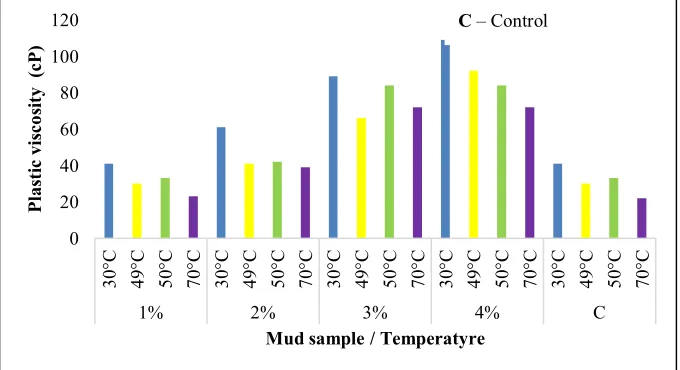
Fig. 1 shows the effect of temperature on PV of the formulated mud with different concentrations of M. Oleifera leaves at different temperatures. When concentration of M. oleifera leaves was increased, there was increase in PV while increase in temperature decreased the PV of the mud. High temperatures degrade some mud additives [21]. The same result was observed, where increased temperature, ended with reduced PV of the drilling mud which had mango
and cashew extracts [22]. The PV of the control mud (mud without M. oleifera powder), recorded lower values of PV (41-22 cP) compared to the drilling mud with M. oleifera powder at higher concentrations (2-4%). Comparing the PV values of the mud with plant material at different concentrations, the mud with 4% concentration recorded the highest PV of 109cp at 30ºC while the lowest PV value was recorded by the mud with 2% which had 23cP at 70ºC. Decrease in viscosity is observed because flocculation increased. This leads to the general reduction in solid volume which allows the free movement of aggregates in the aqueous phase leading to reduction of internal friction [23].
3.2.2 Yield point
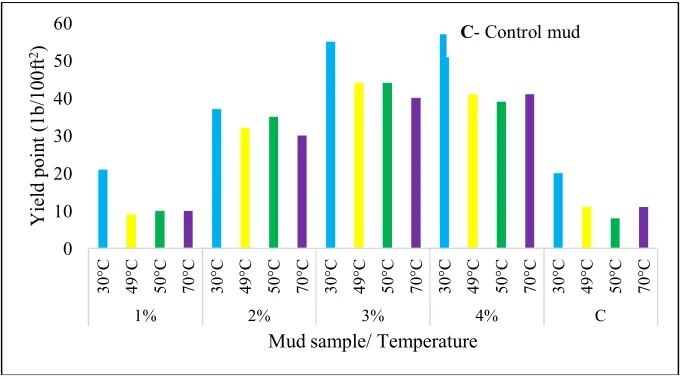
Fig. 2 shows the effect of YP with increase in temperature and concentration of M. oleifera.
The obtained yield point showed that after addition of M. oleifera leaves powder, there was increase in YP when compared with control without the M. oleifera leaves powder. There was general decrease in the YP when the temperatures were increased which is in agreement with the trend observed by other researchers [7]. The highest YP (57 1 b/ft2) was
recorded by the sample having 4%
concentration of M. oleifera leaves powder which could be attributed to the interaction of active additives that can lead to reduction in electrostatic forces between the additives [24]. The lowest YP (8 1 b/ft2) was recorded by control sample at temperature of 50ºC. Comparing the temperatures, it shows that the lowest YP is recorded by mud tested at high temperature.
Fig. 1. Effect of temperature and concentration on PV
0 20 40 60 80 100 120 3 0 °C 4 9 °C 5 0 °C 7 0 °C 3 0 °C 4 9 °C 5 0 °C 7 0 °C 3 0 °C 4 9 °C 5 0 °C 7 0 °C 3 0 °C 4 9 °C 5 0 °C 7 0 °C 3 0 °C 4 9 °C 5 0 °C 7 0 °C
1% 2% 3% 4% C
P la st ic v is c o si ty (c P )
Mud sample / Temperatyre
5
Table 3. Dial readings of the formulated mud with different concentrations of M. oleifera leaves at different temperatures
Temp/ RPM
1% 2% 3% 4% C
30°C 49°C 50°C 70°C 30°C 49°C 50°C 70°C 30°C 49°C 50°C 70°C 30°C 49°C 50°C 70°C 30°C 49°C 50°C 70°C 600 102 71 74 55 169 113 119 108 233 176 207 184 275 225 207 183 76 65 55 54
300 61 41 41 33 104 72 77 69 144 110 123 112 166 133 123 112 46 43 33 33
200 45 30 30 24 79 54 57 55 107 82 95 87 125 99 96 87 35 25 24 25
100 26 18 18 14 50 35 37 37 66 50 61 56 77 62 61 56 20 15 14 15
6 3 2 2 2 9 7 8 12 12 13 12 18 14 12 13 18 2 1 1 2
3 2 1 1 1 8 6 8 11 11 9 11 17 13 12 11 17 1 1 1 2
Fig. 2. Effect of temperature and concentration on YP
3.2.3 Gel strength
Fig. 3 shows the effect of temperature, concentration and time on gel strength.
Gel strength of the formulated mud with different concentration of M. Oleifera at different temperatures varied from 0.9 to 17.2 1b/100 ft2 for 10 seconds gel strength and 1- 47 1b/100 ft2 for 10 minute gel strength. Increase in temperatures decreased the gel strength significantly as it can be seen from Fig. 3.
The gel strengths showed that there was a progressive gel strength for the muds with 4% concentration of M. Oleifera leaves. Control mud had flat gel strength at 10 seconds. As seen in Fig. 3, 10 minute gel strength profile shows the flat gel strength where there is an increase in gel strength at the beginning of the profile and
becomes steady for the samples with 2 % concentration of M. Oleifera. The same trend was observed by Igwilo, et al. (2016). For the muds with plants extracts, 1% showed the least of all. There was progressive gel strengths as the concentrations of the samples increased. Progressive gel strength is not desirable because it makes the circulation of the drilling mud to be hard. Similar trend of results was observed by [25] where increase in concentration of SnO2
nanoparticles resulted in progressive gel strength.
3.3 Effect of Aging
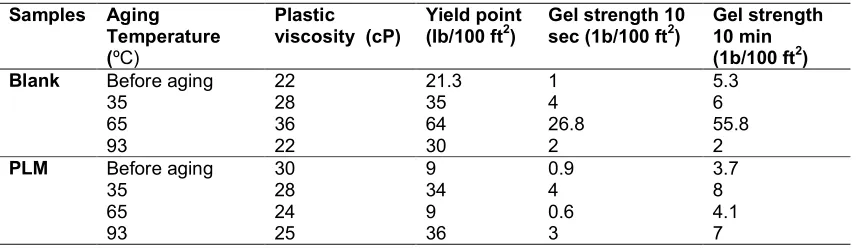
Table 4 shows the results of the rheological properties after aging. Mud sample with 2% concentration were aged at three different temperatures (35ºC, 65ºC and 93ºC) and their
Fig. 3. Effect of temperature, concentration and time on gel strength
0 10 20 30 40 50 60 3 0 °C 4 9 °C 5 0 °C 7 0 °C 3 0 °C 4 9 °C 5 0 °C 7 0 °C 3 0 °C 4 9 °C 5 0 °C 7 0 °C 3 0 °C 4 9 °C 5 0 °C 7 0 °C 3 0 °C 4 9 °C 5 0 °C 7 0 °C
1% 2% 3% 4% C
Y ie ld p o in t (1 b /1 0 0 ft 2)
Mud sample/ Temperature
0 10 20 30 40 50 60 3 0 °C 4 9 °C 5 0 °C 7 0 °C 3 0 °C 4 9 °C 5 0 °C 7 0 °C 3 0 °C 4 9 °C 5 0 °C 7 0 °C 3 0 °C 4 9 °C 5 0 °C 7 0 °C 3 0 °C 4 9 °C 5 0 °C 7 0 °C
1% 2% 3% 4% C
G el s tr eg th ( 1 b /1 0 0 ft 2 )
Mud sample / Temperature
10 sec 10 min
C- Control mud
Table 4. Rheological properties of the developed mud formulation with 2% of M. oleifera leaves before and after aging
Samples Aging Temperature (ºC)
Plastic viscosity (cP)
Yield point (Ib/100 ft2)
Gel strength 10 sec (1b/100 ft2)
Gel strength 10 min (1b/100 ft2)
Blank Before aging 22 21.3 1 5.3
35 28 35 4 6
65 36 64 26.8 55.8
93 22 30 2 2
PLM Before aging 30 9 0.9 3.7
35 28 34 4 8
65 24 9 0.6 4.1
93 25 36 3 7
rheological properties tested at 49ºC [26]. The thermal stability test was done as per API recommended procedures and the results before and after aging are shown in Table 4. It was observed from the data that the PV were decreasing with increase in aging temperatures for mud with 2% concentration of M. Oleifera. However all the PV were within the recommended values after aging at all temperatures [27].
It is evidence that viscosity of the drilling mud is more of a function of temperature than pressure [28] hence very important to measure the viscosity at elevated temperatures. The YP of the formulated mud increased drastically (9-36 Ib/100 ft2) for the drilling mud with M. Oleifera
leaves. The YP for control sample after aging at 65°C recorded the highest YP of 64 Ib/100ft2. The increase on YP values can be due to flocculation of clay and degradation of polymer (Gumfekar,et al. 2017). Gel strengths shows that there was an increase in gel strength as the aging temperatures increased. Control mud showed a higher increase after aging at 65ºC by recording high value of 26 Ib/100 ft2. Observed gel strengths indicated that control mud had progressive gel strength which is undesirable (Mohmoud, et al. 2011), while the mud with M. Oleifera leaves had flat gel strength.
4. CONCLUSION
Test conducted in this work shows that most of the properties (plastic viscosity, yield point, and gel strength) of water based drilling mud are affected by temperature and concentration. It can be concluded that plastic viscosity of the mud without M. oleifera leaves was lower than that of the mud with M. oleifera leaves especially at higher concentrations (4 and 3%). However, the control mud PV was stable at varying temperatures i.e. PV decrease drastically. Yield
point of the control mud reduced by 25% with increasing temperature while the test mud decreased with higher percentage despite recording high value of PV.
Gel strength of the control mud had progressive gel strength while that of test mud had flat gel strength. The rheological properties of the test mud increased with increase in concentration of
M. oleifera. In conclusion M. oleifera can be used to improve rheological properties of the drilling mud. In this study, the investigation done shows that the rheological properties of the formulated mud were affected by aging.
ACKNOWLEDGEMENT
The authors thank Shell Petroleum Development Company (SPDC), Port Harcourt, Nigeria for facilitating the work.
COMPETING INTERESTS
Authors have declared that no competing interests exist.
REFERENCES
1. Cobb M, Irvine M, Fichera M, Jeter J. Document title Midia gas development document subtitle drill cuttings disposal-best practicable environmental option ERM Project No. 0497814 Date 2 April 2019 Version 2.0; 2019.
2. Ponmani S, Nagarajan R, Sangwai JS. Effect of nanofluids of CuO and ZnO in
polyethylene glycol and
polyvinylpyrrolidone on the thermal, electrical and filtration-loss properties of water-based drilling fluids. SPE Journal. 2016;21(02):405-415.
oxide nanoparticles to enhance rheological and filtration properties of water based muds at HPHT conditions. Colloids and Surfaces A: Physicochemical and Engineering Aspects. 2018;537:361-371. 4. Amanullah M, Ramasamy J, Al-Arfaj MK,
Aramco S. Application of an indigenous eco-friendly raw material as fluid loss additive. Journal of Petroleum Science and Engineering. 2016;139:191-197.
5. Talukdar P, Kalita S, Pandey A, Dutta U, Singh R. Use of tannate derived from tea waste as drilling fluid additive. International Journal of Applied Engineering Research. 2018;13(16):12463-12468.
6. Tiskatine R, Oaddi R, El Cadi RA, Bazgaou A, Bouirden L, Aharoune A, Ihlal A. Suitability and characteristics of rocks for sensible heat storage in CSP plants. Solar Energy Materials and Solar Cells. 2017;169:245-257.
7. Omotioma M, Ejikeme P, Mbah G. Comparative analysis of the effects of cashew and mango extracts on the rheological properties of water based mud. Journal of Engineering Research and Applications. 2014;4:56-61.
8. Al-Hameedi ATT, Alkinani HH, Dunn-Norman S, Al-Alwani MA, Alshammari AF, Albazzaz HW, Alkhamis MM, Rusul A, Al-Bazzaz WH. Proposing a new eco-friendly drilling fluid additive to enhance the filtration properties of water-based drilling fluid systems. Paper presented at the SPE Gas & Oil Technology Showcase and Conference; 2019.
9. Nmegbu CGJ, Bekee B. Evaluation of corn cob cellulose and its suitability for drilling mud formulation. International Journal of Engineering Research and Applications. 2014;4(5):112-117.
10. Ihenacho P, Burby M, Nasr G, Enyi G. 50/50 oil-water ratio invert emulsion drilling mud using vegetable oil as continuous phase. International Journal of Chemical, Molecular, Nuclear, Materials and Metallurgical Engineering. 2016;10(3):239-242.
11. Adesina F, Gbadegesin A, Olalekan O. Formulation and environmental impact evaluation of walnut and soya bean oil based drilling fluid. Current Journal of Applied Science and Technology. 2016;1-9.
12. Tchameni A, Zhao L, Frimpong I, Nagre R. Investigating the effect of high thermal– saline conditions on the rheological
properties of waste vegetable oil biodiesel-based emulsion mud. Journal of Petroleum Exploration and Production Technology. 2018;8(1):155-164.
13. Mohideen AAM, Saheed MSM, Mohamed NM. Multiwalled carbon nanotubes and graphene oxide as nano-additives in water-based drilling fluid for enhanced fluid-loss-control & gel strength. Paper presented at the AIP Conference Proceedings; 2019.
14. Khamehchi E, Tabibzadeh S, Alizadeh A. Rheological properties of Aphron based drilling fluids. Petroleum Exploration and Development. 2016;43(6):1076-1081. 15. Lifton V, Gorka J, Parrish D, Davidson J.
Dry liquids on silica as secondary emulsifiers for drilling mud applications. Paper presented at the SPE Annual Technical Conference and Exhibition; 2017.
16. González LML, Reyes IP, Romero OR. Anaerobic co-digestion of sugarcane press mud with vinasse on methane yield. Waste Management. 2017;68:139-145.
17. Mao H, Qiu Z, Shen Z, Huang W. Hydrophobic associated polymer based silica nanoparticles composite with core– shell structure as a filtrate reducer for drilling fluid at utra-high temperature. Journal of Petroleum Science and Engineering. 2015;129:1-14.
18. Chen L, Junhui X, Juntian H, Zhijun S, Yaoxing C, Cuiting L. Method for preparing organic environment friendly snow-melting agent by using salt mud from two-alkali method. In: Google Patents; 2019.
19. Lukowska M, Józefaciuk G. Osmotic stress induces severe decrease in cation exchange capacity and surface groups of medium acidity in roots of cereal plants. Acta Physiologiae Plantarum. 2016;38(1): 31.
20. Gallagher MT, Wain RA, Dari S, Whitty JP, Smith DJ. Non-identifiability of parameters for a class of shear-thinning rheological
models, with implications for
haematological fluid dynamics. Journal of Biomechanics. 2019;85:230-238.
21. Akpan EU, Enyi GC, Nasr G, Yahaya AA, Ahmadu AA, Saidu B. Water-based drilling fluids for high-temperature applications and water-sensitive and dispersible shale formations. Journal of Petroleum Science and Engineering; 2019.
resources in nigeria: An integration of hydrocarbon recovery with bioresource utilization. NSCHE Journal. 2018;33(1):86-86.
23. Dong X, Wang L, Yang X, Lin Y, Xue Y. Effect of ester based lubricant SMJH-1 on the lubricity properties of water based drilling fluid. Journal of Petroleum Science and Engineering. 2015;135:161-167.
24. Elochukwu H, Sia LKS, Gholami R, Hamid MA. Data on experimental investigation of
methyl ester sulphonate and
nanopolystyrene for rheology improvement and filtration loss control of water-based drilling fluid. Data in Brief. 2018;21:972-979.
25. Zoveidavianpoor M, Samsuri A. The use of nano-sized tapioca starch as a natural
water-soluble polymer for filtration control in water-based drilling muds. Journal of Natural Gas Science and Engineering. 2016;34:832-840.
26. Luo Z, Pei J, Wang L, Yu P, Chen Z. Influence of an ionic liquid on rheological and filtration properties of water-based drilling fluids at high temperatures. Applied Clay Science. 2017;136:96-102.
27. Elkatatny S. Assessing the effect of micronized starch on rheological and filtration properties of water-based drilling fluid. Paper presented at the SPE Middle East Oil and Gas Show and Conference; 2019.
28. Yunita P, Irawan S, Kania D. Optimization of water-based drilling fluid using non-ionic and anionic surfactant additives. Procedia Engineering. 2016;148:1184-1190. _________________________________________________________________________________
© 2019 Biwott et al.; This is an Open Access article distributed under the terms of the Creative Commons Attribution License (http://creativecommons.org/licenses/by/4.0), which permits unrestricted use, distribution, and reproduction in any medium, provided the original work is properly cited.
Peer-review history: