S Y S T E M A T I C R E V I E W
Open Access
Effectiveness and safety of dipeptidyl
peptidase 4 inhibitors in the management
of type 2 diabetes in older adults: a
systematic review and development of
recommendations to reduce inappropriate
prescribing
Gisela Schott
1*†, Yolanda V Martinez
2†, R. Erandie Ediriweera de Silva
2,3, Anna Renom-Guiteras
4,5, Anna Vögele
6,
David Reeves
2, Ilkka Kunnamo
7, Minna Marttila-Vaara
7and Andreas Sönnichsen
4Abstract
Background:Preventable drug-related hospital admissions can be associated with drugs used in diabetes and the benefits of strict diabetes control may not outweigh the risks, especially in older populations. The aim of this study was to look for evidence on risks and benefits of DPP-4 inhibitors in older adults and to use this evidence to develop recommendations for the electronic decision support tool of the PRIMA-eDS project.
Methods:Systematic review using a staged approach which searches for systematic reviews and meta-analyses first, then
individual studies only if prior searches were inconclusive. The target population were older people (≥65 years old) with
type 2 diabetes. We included studies reporting on the efficacy and/or safety of DPP-4 inhibitors for the management of type 2 diabetes. Studies were included irrespective of DPP-4 inhibitors prescribed as monotherapy or in combination with any other drug for the treatment of type 2 diabetes. The target intervention was DPP-4 inhibitors compared to placebo, no treatment, other drugs to treat type 2 diabetes or a non-pharmacological intervention.
Results:Thirty studies (reported in 33 publications) were included: 1 meta-analysis, 17 intervention studies and 12 observational studies. Sixteen studies were focused on older adults and 14 studies reported subgroup analyses
in participants≥65,≥70, or≥75 years. Comorbidities were reported by 26 studies and frailty or functional status
by one study. There were conflicting findings regarding the effectiveness of DPP-4 inhibitors in older adults. In general, DPP-4 inhibitors showed similar or better safety than placebo and other antidiabetic drugs. However, these safety data are mainly based on short-term outcomes like hypoglycaemia in studies with HbA1c control levels recommended for younger people. One recommendation was developed advising clinicians to reconsider the use of DPP-4 inhibitors for the management of type 2 diabetes in older adults with HbA1c <8.5% because of scarce data on clinically relevant benefits of their use. Twenty-two of the included studies were funded by pharmaceutical companies and authored or co-authored by employees of the sponsor.
(Continued on next page)
* Correspondence:[email protected] †Equal contributors
1Drug Commission of the German Medical Association, Berlin, Germany
Full list of author information is available at the end of the article
(Continued from previous page)
Conclusions:Other than the surrogate endpoint of improved glycaemic control, data on clinically relevant benefits of DPP-4 inhibitors in the treatment of type 2 diabetes mellitus in older adults is scarce. DPP-4 inhibitors might have a lower risk of hypoglycaemia compared to other antidiabetic drugs but data show conflicting findings for long-term benefits. Further studies are needed that evaluate the risks and benefits of DPP-4 inhibitors for the management of type 2 diabetes mellitus in older adults, using clinically relevant outcomes and including representative samples of older adults with information on their frailty status and comorbidities. Studies are also needed that are independent of pharmaceutical company involvement.
Keywords:Systematic review, Dipeptidyl-peptidase IV inhibitors, Type 2 diabetes mellitus, Inappropriate prescribing
Background
Diabetes is a prevalent chronic disease worldwide. The International Diabetes Federation estimated the preva-lence of diabetes to be 8.8% in adults 20 to 79 years old and close to 20% in people aged over 65 years [1]. Dia-betes and its complications are an important cause of morbidity and mortality, and people with diabetes have substantially reduced life expectancy [2]. Duration of diabetes and the degree of metabolic control are impor-tant factors determining the prognosis for people with diabetes [3]. However, drugs used in diabetes are one of the most commonly used drug groups associated with preventable hospital admissions related to adverse drug events and overtreatment, especially in older populations [4]. Furthermore, some studies suggest that strict meta-bolic control may not be advisable for older and frail people, because the benefits may not outweigh the risks of the treatment [5].
Dipeptidyl peptidase-4 (DPP-4) inhibitors are oral agents used for the pharmacological treatment of adults with type 2 diabetes mellitus. The main representatives of this class are sitagliptin, saxagliptin, vildagliptin, lina-gliptin, teneligliptin and alogliptin.
DPP-4 is a protease involved in glucagon-like peptide-1 (GLP-1) inactivation. By inhibiting the enzyme, DPP-4 inhibitors prolong and enhance the activity of GLP-1 [6]. GLP-1 exerts its main effects by stimulating glucose-dependent insulin release, slowing gastric emptying, redu-cing food intake, and decreasing postprandial glucagon excretion.
The approved indications for DPP-4 inhibitors are li-mited to patients for whom diet and exercise do not provide adequate glycaemic control. In addition, first line use of metformin is recommended unless metformin is not tolerated or contraindicated [7], and this is also the case for older populations [8]. In clinical guidelines, DPP-4 inhibitors are recommended only as a second or third line treatment [7, 9, 10].
A systematic review has shown that in patients with type 2 diabetes, who do not achieve the glycaemic targets with metformin alone, DPP-4 inhibitors can lower HbA1c to the same extent as sulfonylureas or
pioglitazone, with neutral effect on body weight [11]. However, this systematic review did not report the age ranges of the participants in the included studies. Furthermore, HbA1c and body weight are arguably only surrogate outcomes for more clinically relevant endpoints such as physical and mental status, quality of life, and life expectancy.
Data on long-term risks and benefits of DPP4-inhibitors are scarce. Only three randomised controlled trials of DPP4-inhibitors have looked at clinically rele-vant endpoints for an observation period of at least
18 months [12–14]. These trials respectively
com-pared saxagliptin, sitagliptin and alogliptin to placebo
(alongside existing therapy) [12–14]. However, all
these trials report only minimal, or no, results specific
to older participants (65 years or more) [12–14]. This
reflects the common problem that older people, des-pite being major users and potentially having a dif-ferent response to pharmaceutical interventions, are under-represented in most drug trials [15, 16], and that clinical guidelines often base their recommenda-tions on evidence mostly from younger popularecommenda-tions [17]. To the best of our knowledge, no systematic re-view has evaluated the specific evidence on the use of DPP-4 inhibitors in older populations.
The objectives of this systematic review (SR) are therefore:
to systematically review the literature on the risks and benefits of the use of DPP-4 inhibitors in the treatment of type 2 diabetes in older adults, to critically assess the quality of the evidence
identified, and
to develop recommendations in relation to discontinuation or dose-adjustment of DPP-4 inhibitors in the treatment of type 2 diabetes in older adults.
Methods
This SR was conducted following an adaption of the methods recommended by both the Cochrane Hand-book for Systematic Reviews of Interventions [19] and the Preferred Reporting Items for Systematic Reviews and Meta-Analyses (PRISMA) [20].
For undertaking this SR, as one of a planned long-term series of SRs on the efficacy and safety of com-monly prescribed drugs in older people, we purposely developed an efficient methodology that does not com-promise quality. A full description of our methods has been published [21], but in brief we developed a four-stage approach by which we initially search for system-atic reviews and meta-analyses (search 1 and 2) and only if necessary move on to searching for individual studies (search 3A and 3B; see Search method below). Each sub-sequent stage is only undertaken if the accumulated evi-dence from the previous stages is deemed not sufficient, or of sufficient quality, to enable evidence based recom-mendations to be made. A specific protocol for the present SR was prepared and is available from the au-thors upon request.
Study inclusion criteria Types of studies
In line with our methodology, in a staged fashion we in-cluded systematic reviews, meta-analyses, controlled interventional studies and observational studies report-ing on risks and benefits of the use of DPP-4 inhibitors in the treatment of type 2 diabetes in older adults. We excluded conference abstracts, pooled analyses, edito-rials, opinion papers, case reports, case series, narrative reviews, letters, and qualitative studies.
Type of participants
We explicitly searched for studies on older people (≥65 years old) with type 2 diabetes. Our specific age cri-teria for inclusion varied according to study design:
For systematic reviews and meta-analyses (any of the following criteria):
Overall mean or median age≥65 years; Overall mean or median age < 65 but subgroup
analysis reporting on participants≥65 years; Overall mean or median age not reported but 80%
or more of the included studies reported a mean or median age≥65 years.
For controlled interventional studies and observational studies (any of the following criteria):
≥80% of participants≥65 years;
<80% of participants≥65 years but subgroup analysis reporting on participants≥65 years.
Types of interventions
We included studies reporting on the efficacy and/or safety of any DPP-4 inhibitor for the management of type 2 diabetes. Studies were included irrespective of DPP-4 inhibitors prescribed as monotherapy or in com-bination with any other drug for the treatment of type 2 diabetes. We included studies comparing DPP-4 inhibi-tors versus placebo, no treatment, other drugs to treat type 2 diabetes or a non-pharmacological intervention.
Types of outcomes
We included studies that used any of the following clin-ically relevant endpoints as primary or secondary out-comes: hypoglycaemia, adverse events, quality of life, mortality, life expectancy, a related hospitalisation, cog-nitive impairment or cogcog-nitive status, functional
impair-ment or functional status, cardiovascular events
including stroke, renal failure, composite end points in-cluding any of the above, any of the above evaluated as safety endpoints. Studies reporting other outcomes con-sidered as clinically relevant were also concon-sidered for in-clusion. We excluded studies evaluating only glycaemic control, changes in HbA1c levels or other endpoints considered to be not clinically relevant. To aid interpret-ation of findings we have classified outcomes into two tiers according to their anticipated impact on longer-term health and quality of life: Tier 1 outcomes generally have shorter-term impact and include hypoglycaemia and adverse events (including serious adverse events); Tier 2 outcomes have longer-term impact and include,
but aren’t limited to, cardiovascular and cerebrovascular
events, related hospitalisations, and death.
Setting
We included any setting reporting on the management of type 2 diabetes using DPP-4 inhibitors.
Language
We did not apply any language restriction to the search but we only included studies that could be read by the research team (languages: English, German, Finish, Ital-ian, and Spanish).
Search method
Database searches were conducted by YVM. We started searching for systematic reviews and meta-analyses (search 1 and 2). During study selection under search 1 and 2, we identified eligible individual studies from ex-cluded systematic reviews and meta-analyses and trans-ferred these to the Search 3A list for potential inclusion. The list of studies in Search 3A was checked for inclu-sion following the procedures described below under
“Selection of studies”. Only one relevant meta-analysis
meta-analysis covered just one type of DPP-4 inhibitor (lina-gliptin). Therefore, we conducted Search 3B for
individ-ual studies published in the last 10 years (2005–2015)
[21]. Detailed information about databases and search dates is summarised below:
Search 1 was conducted on 03 December 2015 in the Cochrane Database of Systematic Reviews (OVID interface, 2005 to November 2015) and the Database of Abstracts or Reviews of Effects (DARE, OVID interface, 1991 to 2nd Quarter 2015). Search 2 was conducted on 03 December 2015 in
MEDLINE (OVID interface, 1946 to November Week 3 2015), EMBASE (OVID interface, 1974 to 2015 December 02), Health Technology Assessment (HTA, OVID interface 2001 to 4th Quarter 2015) and International Pharmaceutical Abstracts (IPA, OVID interface 1970 to November 2015).
Search 3A consisted of controlled intervention and observational studies from systematic reviews and meta-analysis not included in searches 1 and 2 but containing eligible studies.
Search 3B was conducted on 7 December 2015 in MEDLINE (OVID interface, 2005 to November Week 3 2015), EMBASE (OVID interface, 2005 to 2015 December 04), HTA (OVID interface 2005 to 4th Quarter 2015) and IPA (OVID interface 2005 to November 2015).
In addition to database searches, we checked the refer-ences of included reviews and studies following the
pro-cedures described later under “Selection of studies”. A
list of excluded studies after full-text check with reasons for exclusion is provided in Additional file 1.
The PICOS-framework was used to develop the search terms (population: older people with type 2 diabetes, intervention: DPP-4 inhibitors, comparison: any,
out-comes: see list above“Types of outcomes”and study
de-sign: systematic reviews, meta-analyses, controlled
interventional studies and observational studies). We also created search filters specific to different study de-signs and each filter is described in detail in the protocol [21]. Additional file 2 shows the full search terms for each search (i.e. Searches 1, 2 and 3B).
Data management
Literature search results were uploaded to the Endnote X7 reference management software. Endnote was used to import search results and to de-duplicate references.
Selection of studies
First, two independent reviewers assessed titles and ab-stracts from each search and identified studies to in-clude. Second, full manuscripts were obtained for all
titles and abstracts that met the inclusion criteria or where there was any uncertainty for inclusion. GS, AV, YVM and REED were involved in this task. Reviewers agreed on which articles should be included and ARG acted as arbitrator when GS, AV, YVM and REED could not reach a full consensus.
Data extraction
GS, YVM and REED independently conducted data ex-traction from each study using a standardised and piloted data collection form which has been published alongside the protocol [21]. GS, YVM and REED
checked each other’s data extraction to look for
com-pleteness and accuracy. The data extraction form col-lected information related to the study design and aim, characteristics of participants (age, sex, setting, comor-bidities, use of concomitant medications, functional status, frailty, and cognitive status), the intervention (i.e. DPP-4 inhibitors) and comparison, time to follow-up, and reported outcomes. We also collected informa-tion on the involvement of pharmaceutical companies in the included studies.
Quality appraisal
We used three validated assessment tools to assess the quality of the evidence from each included study: for sys-tematic reviews/meta-analyses the Assessment of Multiple Systematic Reviews tool (AMSTAR) [22, 23], for
interven-tion studies the Cochrane Collaborainterven-tion’s tool for assessing
risk of bias [19], and for observational studies the Critical Appraisal Skills Programme (CASP) [24, 25].
An overall rating for each study was made based on study limitations as suggested by Guyatt et al. (2008) [26], starting with high quality for randomised trials without important limitations (such as lack of allocation concealment; lack of blinding, large loss at follow-up, unmet intention to treat analysis, stopping early for benefit; and failure to report outcomes) and low quality for observational studies without important limitations.
Dealing with duplicate and companion publications We included all relevant data from publications relating to a single primary study. Due to our staged approach, it was possible that a publication that was part of an in-cluded systematic review or meta-analysis, would also be included as a separate individual study, resulting in a
risk of“double-counting”. Any such instances have been
identified and reported and taken account of in our syn-thesis of results.
Data synthesis
included studies were highly heterogeneous regarding type of DPP-4 inhibitors, comparison (form of control treat-ment or placebo), length of follow-up and outcome defin-ition (e.g. types of adverse events included); therefore no additional meta-analyses were performed. The quality of the included studies is also reported.
Identification of“references of interest”for the development of recommendations
During the search process, GS, and YVM identified and collected additional material relevant to the development of recommendations according to the methodology de-scribed by Martinez/Renom - Guiteras et al. (2017) [21].
Development of recommendations
Included studies and additional references were sum-marised in a document that was used in team meet-ings to develop recommendations on when the use of DPP-4 inhibitors could be safely discontinued or the dosage reduced in the management of type 2 diabetes in older people [21]. Each recommendation was given a rating for strength (weak or strong) and quality (low, moderate or high) of evidence following the
GRADE methodology [26–28].
Results
Results of the search
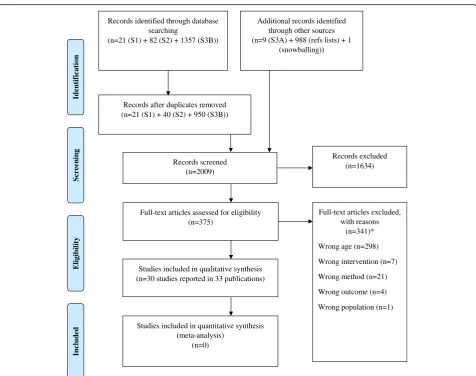
We identified 1460 records through initial database searching (21 from search 1, 82 from search 2, 9 from search 3A and 1357 from search 3B). Additionally, we identified 988 records from reference lists of included studies, and one further study by snowballing. After re-moving duplicates, we screened 2009 records and ex-cluded 1634 records after checking titles and abstracts. We assessed 375 full-texts for eligibility and excluded 341 records. We included 30 studies reported in 33 publica-tions. The PRISMA flow diagram is presented in Fig. 1.
Included studies
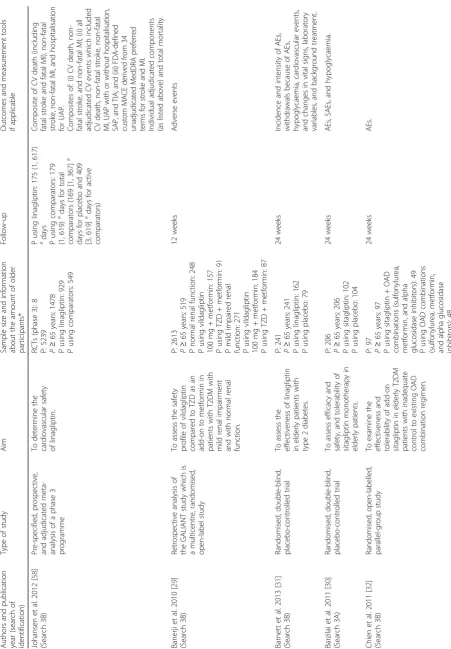
Table 1 shows details of included studies. Thirty studies met our inclusion criteria. These studies included more
than 273,358 participants ≥65 years. The largest had
141,322 participants and the smallest 60 participants.
Study designs
Seventeen of the included studies were interventional de-signs, one was an MA and 12 were observational in na-ture. None of the individual studies were also part of the MA. Length of follow-up varied from 12 weeks to 5 years. Data on outcomes was extracted at the end of follow-up for each included study. In 16 out of 30 studies informa-tion was given about the countries where studies had been conducted: the USA [29, 30], Australia, Canada, Denmark,
the Netherlands and Sweden [31], Taiwan [32–36], 38
countries [13], 13 countries [37], Japan [38], 12 European countries and Mexico [39], 14 European countries [40], 26
countries [12, 41–43], 49 countries [44], UK [45–47], Italy
[48], France [49], Spain [50], and Greece [51].
Participants
Table 1 shows included studies involving older adults (at
least 80% people ≥65 years: 16 studies) or presenting
subgroup analyses in participants ≥65 years (11 studies
including the meta-analysis), ≥75 years (2 studies), and
≥70 years (1 study). Additional file 3: Table S1 shows the characteristics of the participants in the included studies. Age is reported as mean or median years; for the whole sample where available, else for the different treatment groups. Mean age was reported in 27 studies and ranged from 53.1 to 80.2 years. Median age was reported in 3 studies and ranged from 58 to 77 years.
All included studies reported on participant sex (30 studies), though in some cases by treatment group only. The percentage of male participants ranged from 36.7% to 71.6%.
Fourteen studies reported ethnicity with the most com-mon classification being white (range: 53.9 to 98.6%). Information about the care setting was reported by five studies: primary care in the USA [29], primary care in the UK [45], primary care in France [49], hospital department of internal medicine in Greece [51], and primary and hos-pital care in the UK [47]. Information about comorbidities was provided by 26 out of 30 studies. Concomitant di-seases were frequent and hypertension and dyslipidaemia most commonly reported. Eighteen studies reported on concomitant medications with a majority of patients ta-king antihypertensive and lipid-lowering medications. Frailty status was reported by one study [52], with about 10% of patients assessed as frail. One study reported on disability after stroke as the main outcome, but no base-line data on disability were provided [51]. Cognitive status was not reported by any of the studies.
Interventions and outcomes
Most of the included studies addressed only our lower tier endpoints: adverse events and hypoglycaemia. A mi-nority of studies investigated Tier 2 outcomes such as death, hospitalisation, cardiovascular events and, in one case, functional status. We found no studies in older people reporting on the clinically relevant endpoints of: quality of life, life expectancy, cognitive impairment or cognitive status.
Vildagliptin
thiazolidinediones in one trial [29]. Also included were one uncontrolled trial on vildagliptin [56] and two ob-servational studies [50, 57]. The outcomes for these
studies were adverse events [29, 40, 52–56], serious
ad-verse events [52, 54–56], hypoglycaemia [40, 50, 52–57]
and a list of other outcomes by Sicras-Mainar and Navarro-Artieda (2014) (macrovascular complications and cardiovascular events, cerebrovascular disease, all types of peripheral arterial disease and renal disease) [50].
Sitagliptin
Sitagliptin (25 to 100 mg/daily) was examined in five studies: two placebo-controlled [13, 30], one uncon-trolled [32], one active conuncon-trolled [37], and one cohort study [34]. Three of these studies included adverse events as one of their outcomes and their primary end-point was change in HbA1c [30, 34, 37]. The other two
studies reported a composite of cardiovascular events as their primary endpoints [13, 34].
Linagliptin
Linagliptin (5 mg/daily) was compared with placebo in one trial [31]. The outcomes were adverse events, hypoglycaemia, and cardiovascular events [31]. Also, one meta-analysis investigated the cardiovascular safety of linagliptin [58].
Teneligliptin
Teneligliptin (20 mg/daily) was compared to placebo in one study [38], with adverse events and hypoglycaemia as outcomes.
Alogliptin
Alogliptin (25 mg/daily) was compared to glipizide in one study [59] and to placebo in another study [44]. Ad-verse events and hypoglycaemia were the outcomes in
Additional records identified through other sources (n=9 (S3A) + 988 (refs lists) + 1
(snowballing))
Records after duplicates removed (n=21 (S1) + 40 (S2) + 950 (S3B))
Records screened (n=2009)
Records excluded (n=1634)
Full-text articles assessed for eligibility (n=375)
Full-text articles excluded, with reasons
(n=341)*
Wrong age (n=298)
Wrong intervention (n=7)
Wrong method (n=21)
Wrong outcome (n=4)
Wrong population (n=1) Studies included in qualitative synthesis
(n=30 studies reported in 33 publications)
Studies included in quantitative synthesis (meta-analysis)
(n=0)
Ident
if
ica
tion
Screen
ing
E
lig
ibi
li
ty
Records identified through database searching
(n=21 (S1) + 82 (S2) + 1357 (S3B))
Includ
ed
Table 1 Summary of study characteristics (Continued) pat ients with saxa gliptin an d patie nts with pla cebo. Strai n e t al. 2013 [ 52 ] (Search 3B) Multicentre, random ised, double -blind, pla cebo-contro lled study To assess the feas ibility of se tting and achieving inve stiga tor-defined indi vidualised treat ment targ ets for a period of 24 we eks in elderly pat ients with type 2 dia betes (drug-n aive or inadequat ely cont rolled on or al agen ts), with the add ition of a single or al age nt: vildagliptin. P: 278 P ≥ 65 years : 278 P usin g vil daglipti n: 139 P usin g pla cebo: 139 24 we eks AEs , SAEs , and hyp oglyc aemia. Whi te et al. 2013 [ 44 ] (Search 3B) Multicenter, random ised, double -blind placebo-contro lled trial To determ ine whe ther alogliptin is noni nferior to pla cebo with respect to maj or cardiovascular even ts in pat ients with type 2 diabete s who are at very high car diovasc ular risk — thos e with rece nt acu te coron ary syndrom es. P: 5380 P ≥ 65 years : 1907 P usin g alogliptin : 973 P usin g pla cebo: 934 Medi an follow-up 18 mont hs Co mposite of death from car diovascular causes, nonfat al my ocardial infarc tion (MI), or nonf atal st roke. Prin cipal second ary safe ty end point : primary com posite end po int with the add ition of urg ent reva scul arization due to unstable an gina within 24 h after hospi tal adm ission Chang et al. 20 15 [ 33 ] (Search 3B) Nationw ide retrosp ective cohort study To compare C V ris ks ass ociated with second -line oral antidiabetic age nts added to initial me tformin therapy. P: 36,118 Subgroup an alysis by age (<65 vs ≥ 65 years) wit hout num ber of P in each group P usin g DPP -4 inhib itors + metform in: 2242 P usin g SU + metform in:
29,101 Pusin
one study [59]. The other study used a composite out-come of death from cardiovascular causes, nonfatal myo-cardial infarction, or nonfatal stroke [44].
Saxagliptin
Saxagliptin (5 mg/daily) was compared to placebo in one study reported by four publications with the following outcomes: a composite outcome of cardiovascular death, myocardial infarction, or ischemic stroke [41], hospita-lisation for heart failure [12], a composite outcome of cardiovascular mortality, nonfatal myocardial infarction, or nonfatal ischemic stroke with and without hospitalisa-tion for heart failure, coronary revascularizahospitalisa-tion, or un-stable angina as well as the individual components [42], and bone fractures [43]. One randomised trial compared saxagliptin (5 mg/daily) against glimepiride (1 mg/daily) with hypoglycaemia and adverse events as safety out-comes and glycaemic control as the primary outcome.
Any DPP-4 inhibitor
Nine observational studies compared patients treated with DPP-4 inhibitors with patients not receiving DPP-4 inhi-bitors [46]; other antidiabetic drugs [33, 35, 45, 49, 51]; or between cases and controls [36, 47, 48]. These studies re-ported on the following outcomes: hypoglycaemia, frac-tures, disability after stroke (with the modified Rankin scale), cardiovascular events, hospitalisation for heart fai-lure, hospitalisation for sepsis, and mortality.
Excluded studies
Additional file 1 provides the full list of reasons for ex-clusion of studies after full text analysis. The main rea-son for exclusion was that the study population did not
match our age criteria for inclusion (n= 298).
Main findings
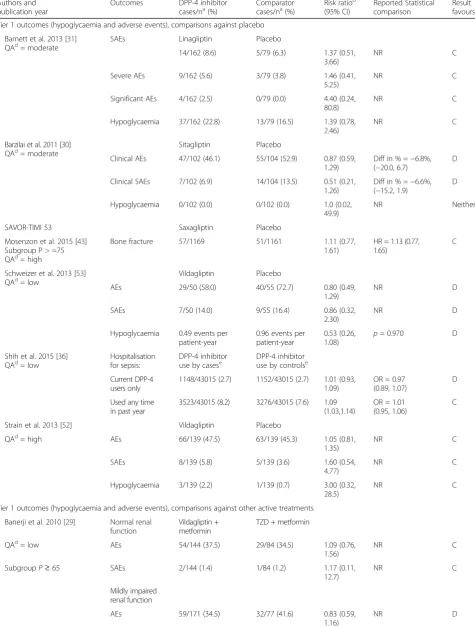
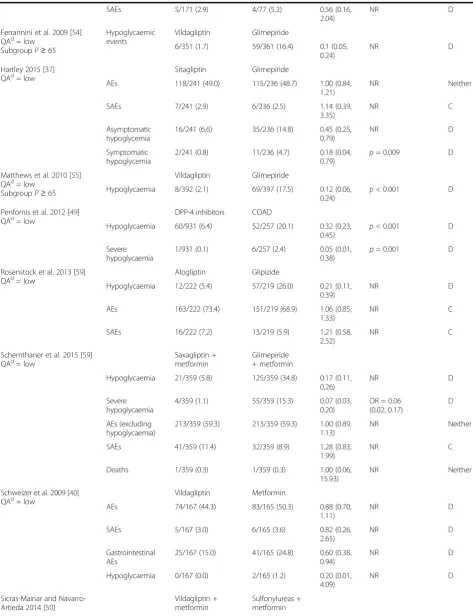
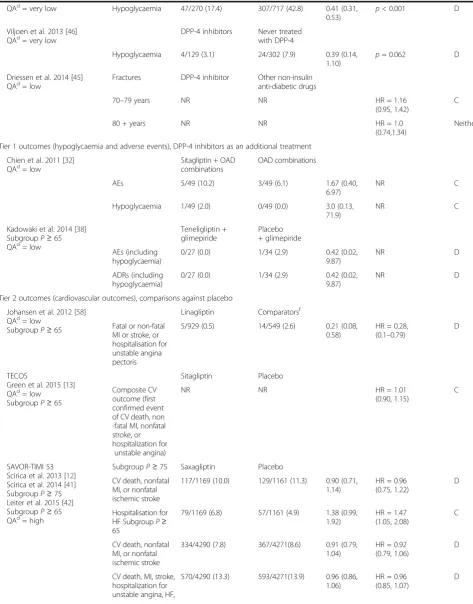
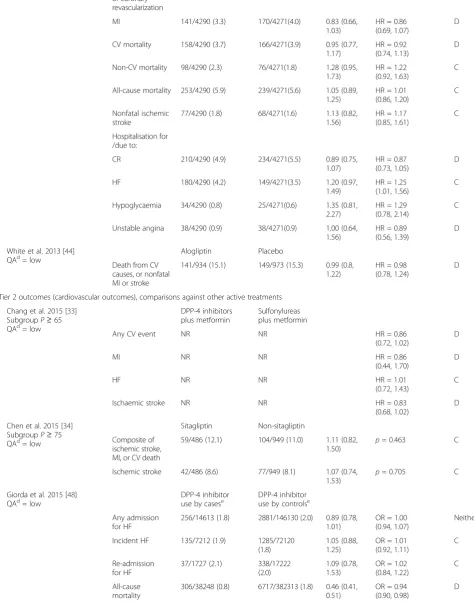
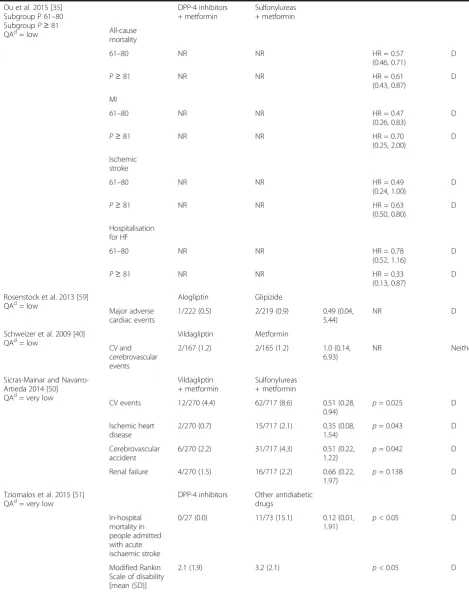
Twenty-eight studies provided evidence on relevant out-comes comparing DPP-4 inhibitors against an alternative (i.e. non-DPP-4) drug regimen or placebo. For each study and outcome Table 2 summarises the results for the DPP-4 inhibitor and comparison groups, provides estimated risk ratios with 95% confidence intervals, and reports any statistical comparisons from the study itself. To help interpretation, Table 2 organises the results first by Tier of outcome (Tier 1 or Tier 2), and then by form of comparison within Tier (DPP-4 inhibitors versus pla-cebo; versus other active treatments; and as an additional treatment). Two further studies (not tabulated) compared between different DPP-4 inhibitor based-treatments: 1) in-sulin plus 100 mg vildagliptin versus inin-sulin plus 50 mg vildagliptin dose [56]; 2) vildagliptin plus metformin ver-sus vildagliptin plus 2 oral antidiabetic agents (metformin, sulfonylureas and/or thiazolidinediones) [57]. Quality of studies is also reported in Table 2.
Comparisons between DPP-4 inhibitors and other drug regimens or placebo
Nineteen studies provided evidence on Tier 1 outcomes. Studies varied in what they classified as adverse events, and as serious, severe, or significant adverse events. Hypoglycaemia was defined by 3 studies as hypoglycaemic symptoms confirmed by self-monitoring of blood glucose
<3.1 mmol/l [29, 40, 52]; another study defined
symptomatic hypoglycaemia as an episode with clinical symptoms without regard to glucose level, asymptomatic hypoglycaemia was defined as an episode of glucose
level≤70 mg/dL without symptoms [37]; another study
de-fined confirmed hypoglycaemia as a symptomatic or asymptomatic event with plasma glucose <3.0 mmol/l with-out requiring external assistance, severe hypoglycaemia was defined as symptomatic event requiring external assistance without regard to plasma glucose level [39]; the other 3 studies did not provide a definition of hypoglycaemia. In 10
studies [37, 39, 40, 46, 49, 50, 53–55, 59] hypoglycaemia
was considerably less frequent in older people treated with DPP-4 inhibitors than in older people on other treatments, on placebo, or when used as an additional medication.
Eleven studies [29–32, 37–40, 52, 53, 59] reported on
adverse events other than hypoglycaemia. All showed only small, non-significant, differences. Two studies re-ported on fractures, one an RCT comparing saxagliptin to placebo [43] and the other a retrospective cohort study comparing DPP-4 inhibitors to other non-insulin anti-diabetic drugs [45]; both finding no significant dif-ference. A nested case-control study reported that hos-pitalisation for sepsis was not significantly different between cases and controls using DPP-4 inhibitors [36].
Table 2Summary of study findings
Authors and publication year
Outcomes DPP-4 inhibitor
cases/na(%) Comparatorcases/na(%) Risk ratio b
(95% CI)
Reported Statistical comparison
Result favoursc
Tier 1 outcomes (hypoglycaemia and adverse events), comparisons against placebo
Barnett et al. 2013 [31] QAd= moderate
SAEs Linagliptin Placebo
14/162 (8.6) 5/79 (6.3) 1.37 (0.51,
3.66)
NR C
Severe AEs 9/162 (5.6) 3/79 (3.8) 1.46 (0.41,
5.25)
NR C
Significant AEs 4/162 (2.5) 0/79 (0.0) 4.40 (0.24,
80.8)
NR C
Hypoglycaemia 37/162 (22.8) 13/79 (16.5) 1.39 (0.78,
2.46)
NR C
Barzilai et al. 2011 [30] QAd= moderate
Sitagliptin Placebo
Clinical AEs 47/102 (46.1) 55/104 (52.9) 0.87 (0.59,
1.29)
Diff in % =−6.8%, (−20.0, 6.7)
D
Clinical SAEs 7/102 (6.9) 14/104 (13.5) 0.51 (0.21,
1.26)
Diff in % =−6.6%, (−15.2, 1.9)
D
Hypoglycaemia 0/102 (0.0) 0/102 (0.0) 1.0 (0.02,
49.9)
NR Neither
SAVOR-TIMI 53 Saxagliptin Placebo
Mosenzon et al. 2015 [43] Subgroup P > =75 QAd= high
Bone fracture 57/1169 51/1161 1.11 (0.77,
1.61)
HR = 1.13 (0.77, 1.65)
C
Schweizer et al. 2013 [53]
QAd= low Vildagliptin Placebo
AEs 29/50 (58.0) 40/55 (72.7) 0.80 (0.49,
1.29)
NR D
SAEs 7/50 (14.0) 9/55 (16.4) 0.86 (0.32,
2.30)
NR D
Hypoglycaemia 0.49 events per patient-year
0.96 events per patient-year
0.53 (0.26,
1.08) p
= 0.970 D
Shih et al. 2015 [36] QAd= low
Hospitalisation for sepsis:
DPP-4 inhibitor use by casese
DPP-4 inhibitor use by controlse
Current DPP-4 users only
1148/43015 (2.7) 1152/43015 (2.7) 1.01 (0.93, 1.09)
OR = 0.97 (0.89, 1.07)
D
Used any time in past year
3523/43015 (8.2) 3276/43015 (7.6) 1.09 (1.03,1.14)
OR = 1.01 (0.95, 1.06)
C
Strain et al. 2013 [52] Vildagliptin Placebo
QAd= high AEs 66/139 (47.5) 63/139 (45.3) 1.05 (0.81,
1.35)
NR C
SAEs 8/139 (5.8) 5/139 (3.6) 1.60 (0.54,
4.77)
NR C
Hypoglycaemia 3/139 (2.2) 1/139 (0.7) 3.00 (0.32,
28.5)
NR C
Tier 1 outcomes (hypoglycaemia and adverse events), comparisons against other active treatments
Banerji et al. 2010 [29] Normal renal function
Vildagliptin + metformin
TZD + metformin
QAd= low AEs 54/144 (37.5) 29/84 (34.5) 1.09 (0.76,
1.56)
NR C
SubgroupP≥65 SAEs 2/144 (1.4) 1/84 (1.2) 1.17 (0.11,
12.7)
NR C
Mildly impaired renal function
AEs 59/171 (34.5) 32/77 (41.6) 0.83 (0.59,
1.16)
Table 2Summary of study findings(Continued)
SAEs 5/171 (2.9) 4/77 (5.2) 0.56 (0.16,
2.04)
NR D
Ferrannini et al. 2009 [54] QAd= low
SubgroupP≥65
Hypoglycaemic events
Vildagliptin Glimepiride
6/351 (1.7) 59/361 (16.4) 0.1 (0.05,
0.24)
NR D
Hartley 2015 [37] QAd= low
Sitagliptin Glimepiride
AEs 118/241 (49.0) 115/236 (48.7) 1.00 (0.84,
1.21)
NR Neither
SAEs 7/241 (2.9) 6/236 (2.5) 1.14 (0.39,
3.35)
NR C
Asymptomatic hypoglycemia
16/241 (6.6) 35/236 (14.8) 0.45 (0.25,
0.79)
NR D
Symptomatic hypoglycemia
2/241 (0.8) 11/236 (4.7) 0.18 (0.04,
0.79) p
= 0.009 D
Matthews et al. 2010 [55] QAd= low
SubgroupP≥65
Vildagliptin Glimepiride
Hypoglycaemia 8/392 (2.1) 69/397 (17.5) 0.12 (0.06,
0.24)
p< 0.001 D
Penfornis et al. 2012 [49]
QAd= low DPP-4 inhibitors COAD
Hypoglycaemia 60/931 (6.4) 52/257 (20.1) 0.32 (0.23,
0.45) p
< 0.001 D
Severe hypoglycaemia
1/931 (0.1) 6/257 (2.4) 0.05 (0.01,
0.38)
p= 0.001 D
Rosenstock et al. 2013 [59]
QAd= low Alogliptin Glipizide
Hypoglycaemia 12/222 (5.4) 57/219 (26.0) 0.21 (0.11,
0.39)
NR D
AEs 163/222 (73.4) 151/219 (68.9) 1.06 (0.85,
1.33)
NR C
SAEs 16/222 (7.2) 13/219 (5.9) 1.21 (0.58,
2.52)
NR C
Schernthaner et al. 2015 [59] QAd= low
Saxagliptin + metformin
Glimepiride + metformin
Hypoglycaemia 21/359 (5.8) 125/359 (34.8) 0.17 (0.11,
0.26)
NR D
Severe hypoglycaemia
4/359 (1.1) 55/359 (15.3) 0.07 (0.03,
0.20)
OR = 0.06 (0.02, 0.17)
D
AEs (excluding hypoglycaemia)
213/359 (59.3) 213/359 (59.3) 1.00 (0.89, 1.13)
NR Neither
SAEs 41/359 (11.4) 32/359 (8.9) 1.28 (0.83,
1.99)
NR C
Deaths 1/359 (0.3) 1/359 (0.3) 1.00 (0.06,
15.93)
NR Neither
Schweizer et al. 2009 [40] QAd= low
Vildagliptin Metformin
AEs 74/167 (44.3) 83/165 (50.3) 0.88 (0.70,
1.11)
NR D
SAEs 5/167 (3.0) 6/165 (3.6) 0.82 (0.26,
2.65)
NR D
Gastrointestinal AEs
25/167 (15.0) 41/165 (24.8) 0.60 (0.38,
0.94)
NR D
Hypoglycaemia 0/167 (0.0) 2/165 (1.2) 0.20 (0.01,
4.09)
NR D
Sicras-Mainar and Navarro-Artieda 2014 [50]
Vildagliptin + metformin
Table 2Summary of study findings(Continued)
QAd= very low Hypoglycaemia 47/270 (17.4) 307/717 (42.8) 0.41 (0.31,
0.53)
p< 0.001 D
Viljoen et al. 2013 [46]
QAd= very low DPP-4 inhibitors Never treatedwith DPP-4
Hypoglycaemia 4/129 (3.1) 24/302 (7.9) 0.39 (0.14,
1.10)
p= 0.062 D
Driessen et al. 2014 [45]
QAd= low Fractures DPP-4 inhibitor Other non-insulinanti-diabetic drugs
70–79 years NR NR HR = 1.16
(0.95, 1.42)
C
80 + years NR NR HR = 1.0
(0.74,1.34)
Neither
Tier 1 outcomes (hypoglycaemia and adverse events), DPP-4 inhibitors as an additional treatment
Chien et al. 2011 [32] QAd= low
Sitagliptin + OAD combinations
OAD combinations
AEs 5/49 (10.2) 3/49 (6.1) 1.67 (0.40,
6.97)
NR C
Hypoglycaemia 1/49 (2.0) 0/49 (0.0) 3.0 (0.13,
71.9)
NR C
Kadowaki et al. 2014 [38] SubgroupP≥65 QAd= low
Teneligliptin + glimepiride
Placebo + glimepiride
AEs (including hypoglycaemia)
0/27 (0.0) 1/34 (2.9) 0.42 (0.02,
9.87)
NR D
ADRs (including hypoglycaemia)
0/27 (0.0) 1/34 (2.9) 0.42 (0.02,
9.87)
NR D
Tier 2 outcomes (cardiovascular outcomes), comparisons against placebo
Johansen et al. 2012 [58] QAd= low
SubgroupP≥65
Linagliptin Comparatorsf
Fatal or non-fatal MI or stroke, or hospitalisation for unstable angina pectoris
5/929 (0.5) 14/549 (2.6) 0.21 (0.08,
0.58)
HR = 0.28, (0.1–0.79)
D
TECOS
Green et al. 2015 [13] QAd= low
SubgroupP≥65
Sitagliptin Placebo
Composite CV outcome (first confirmed event of CV death, non -fatal MI, nonfatal stroke, or hospitalization for
unstable angina)
NR NR HR = 1.01
(0.90, 1.15)
C
SAVOR-TIMI 53 Scirica et al. 2013 [12] Scirica et al. 2014 [41] SubgroupP≥75 Leiter et al. 2015 [42] SubgroupP≥65 QAd= high
SubgroupP≥75 Saxagliptin Placebo
CV death, nonfatal MI, or nonfatal ischemic stroke
117/1169 (10.0) 129/1161 (11.3) 0.90 (0.71, 1.14)
HR = 0.96 (0.75, 1.22)
D
Hospitalisation for HF SubgroupP≥ 65
79/1169 (6.8) 57/1161 (4.9) 1.38 (0.99,
1.92)
HR = 1.47 (1.05, 2.08)
C
CV death, nonfatal MI, or nonfatal ischemic stroke
334/4290 (7.8) 367/4271(8.6) 0.91 (0.79,
1.04)
HR = 0.92 (0.79, 1.06)
D
CV death, MI, stroke, hospitalization for unstable angina, HF,
570/4290 (13.3) 593/4271(13.9) 0.96 (0.86, 1.06)
HR = 0.96 (0.85, 1.07)
Table 2Summary of study findings(Continued)
or coronary revascularization
MI 141/4290 (3.3) 170/4271(4.0) 0.83 (0.66,
1.03)
HR = 0.86 (0.69, 1.07)
D
CV mortality 158/4290 (3.7) 166/4271(3.9) 0.95 (0.77,
1.17)
HR = 0.92 (0.74, 1.13)
D
Non-CV mortality 98/4290 (2.3) 76/4271(1.8) 1.28 (0.95,
1.73)
HR = 1.22 (0.92, 1.63)
C
All-cause mortality 253/4290 (5.9) 239/4271(5.6) 1.05 (0.89, 1.25)
HR = 1.01 (0.86, 1.20)
C
Nonfatal ischemic stroke
77/4290 (1.8) 68/4271(1.6) 1.13 (0.82,
1.56)
HR = 1.17 (0.85, 1.61)
C
Hospitalisation for /due to:
CR 210/4290 (4.9) 234/4271(5.5) 0.89 (0.75,
1.07)
HR = 0.87 (0.73, 1.05)
D
HF 180/4290 (4.2) 149/4271(3.5) 1.20 (0.97,
1.49)
HR = 1.25 (1.01, 1.56)
C
Hypoglycaemia 34/4290 (0.8) 25/4271(0.6) 1.35 (0.81,
2.27)
HR = 1.29 (0.78, 2.14)
C
Unstable angina 38/4290 (0.9) 38/4271(0.9) 1.00 (0.64,
1.56)
HR = 0.89 (0.56, 1.39)
D
White et al. 2013 [44]
QAd= low Alogliptin Placebo
Death from CV causes, or nonfatal MI or stroke
141/934 (15.1) 149/973 (15.3) 0.99 (0.8, 1.22)
HR = 0.98 (0.78, 1.24)
D
Tier 2 outcomes (cardiovascular outcomes), comparisons against other active treatments
Chang et al. 2015 [33] SubgroupP≥65 QAd= low
DPP-4 inhibitors plus metformin
Sulfonylureas plus metformin
Any CV event NR NR HR = 0.86
(0.72, 1.02)
D
MI NR NR HR = 0.86
(0.44, 1.70)
D
HF NR NR HR = 1.01
(0.72, 1.43)
C
Ischaemic stroke NR NR HR = 0.83
(0.68, 1.02)
D
Chen et al. 2015 [34] SubgroupP≥75 QAd= low
Sitagliptin Non-sitagliptin
Composite of ischemic stroke, MI, or CV death
59/486 (12.1) 104/949 (11.0) 1.11 (0.82,
1.50)
p= 0.463 C
Ischemic stroke 42/486 (8.6) 77/949 (8.1) 1.07 (0.74,
1.53)
p= 0.705 C
Giorda et al. 2015 [48]
QAd= low DPP-4 inhibitoruse by casese DPP-4 inhibitoruse by controlse
Any admission for HF
256/14613 (1.8) 2881/146130 (2.0) 0.89 (0.78, 1.01)
OR = 1.00 (0.94, 1.07)
Neither
Incident HF 135/7212 (1.9) 1285/72120
(1.8)
1.05 (0.88, 1.25)
OR = 1.01 (0.92, 1.11)
C
Re-admission for HF
37/1727 (2.1) 338/17222
(2.0)
1.09 (0.78, 1.53)
OR = 1.02 (0.84, 1.22)
C
All-cause mortality
306/38248 (0.8) 6717/382313 (1.8) 0.46 (0.41, 0.51)
OR = 0.94 (0.90, 0.98)
Table 2Summary of study findings(Continued)
Ou et al. 2015 [35] Subgroup P 61–80 SubgroupP≥81 QAd= low
DPP-4 inhibitors + metformin
Sulfonylureas + metformin
All-cause mortality
61–80 NR NR HR = 0.57
(0.46, 0.71)
D
P≥81 NR NR HR = 0.61
(0.43, 0.87)
D
MI
61–80 NR NR HR = 0.47
(0.26, 0.83)
D
P≥81 NR NR HR = 0.70
(0.25, 2.00)
D
Ischemic stroke
61–80 NR NR HR = 0.49
(0.24, 1.00)
D
P≥81 NR NR HR = 0.63
(0.50, 0.80)
D
Hospitalisation for HF
61–80 NR NR HR = 0.78
(0.52, 1.16)
D
P≥81 NR NR HR = 0.33
(0.13, 0.87)
D
Rosenstock et al. 2013 [59] QAd= low
Alogliptin Glipizide
Major adverse cardiac events
1/222 (0.5) 2/219 (0.9) 0.49 (0.04,
5.44)
NR D
Schweizer et al. 2009 [40]
QAd= low Vildagliptin Metformin
CV and cerebrovascular events
2/167 (1.2) 2/165 (1.2) 1.0 (0.14,
6.93)
NR Neither
Sicras-Mainar and Navarro-Artieda 2014 [50] QAd= very low
Vildagliptin + metformin
Sulfonylureas + metformin
CV events 12/270 (4.4) 62/717 (8.6) 0.51 (0.28,
0.94)
p= 0.025 D
Ischemic heart disease
2/270 (0.7) 15/717 (2.1) 0.35 (0.08,
1.54) p
= 0.043 D
Cerebrovascular accident
6/270 (2.2) 31/717 (4.3) 0.51 (0.22,
1.22)
p= 0.042 D
Renal failure 4/270 (1.5) 16/717 (2.2) 0.66 (0.22,
1.97) p
= 0.138 D
Tziomalos et al. 2015 [51] QAd= very low
DPP-4 inhibitors Other antidiabetic drugs
In-hospital mortality in people admitted with acute ischaemic stroke
0/27 (0.0) 11/73 (15.1) 0.12 (0.01,
1.91) p
< 0.05 D
Modified Rankin Scale of disability [mean (SD)]
events, ischemic heart disease, and cerebrovascular accident with vildagliptin plus metformin compared to sulfonylureas plus metformin [50]; but Schweizer et al. (2009) found no difference between vildagliptin and metformin in rates of cardiovascular and cerebrovascular events [40], and Rosen-stock et al. (2013) observed that alogliptin and glipizide did not differ in major cardiac events, though in both of these latter randomised trials samples sizes were small and events rare [59]. A cohort study reported significantly less mortal-ity, myocardial infarction, ischemic stroke and hospitalisa-tion for heart failure with DPP-4 inhibitors plus metformin compared to sulfonylureas plus metformin [35]. A small ob-servational study reported significantly lower in-hospital mortality in people admitted with acute ischemic stroke and better scores on the modified Rankin scale of disability with DPP-4 inhibitors compared to other antidiabetics [51].
We deemed study synthesis by meta-analysis in-appropriate, due to high heterogeneity of treatments, outcome definitions and follow-up periods. However, to gain a global overview and aid interpretation, Table 2 indicates the treatment arm favoured on each out-come in each study, based purely on the reported dir-ection of effect or (where missing) risk ratio point estimate and ignoring statistical significance. Under
this “vote counting” method [19], for the Tier 1
out-comes 8 studies fully favoured the DPP-4 inhibitor, 4 fully favoured the comparator, and 7 were mixed or neutral. For the Tier 2 outcomes, 7 studies favoured DPP-4 inhibitors, 2 favoured comparators, and 4 were mixed or neutral. However, only 2 studies received high overall ratings for quality (see below); both reporting Tier 1 outcomes favouring placebo and one reporting Tier 2 outcomes with mixed results. There was no suggestion for either tier of outcomes of the pattern of results differing according to whether the comparison was a placebo, other active treatment, or DPP-4 inhibitors as an additional treatment.
Comparisons between DPP-4 inhibitor-based treatments Both studies reported that hypoglycaemic events were similar between the groups: 1) 2.1 events per patient-year with insulin plus vildagliptin 100 mg versus 2.3 events per
patient-year with insulin plus vildagliptin 50 mg [56]; 2) no events with vildagliptin plus metformin versus 1 event with vildagliptin plus 2 oral antidiabetic agents [57].
Quality appraisal of included studies Meta-analysis
One meta-analysis was included [58] and it met 4 out of 11 criteria of the AMSTAR tool (Table 3).
Clinical trials
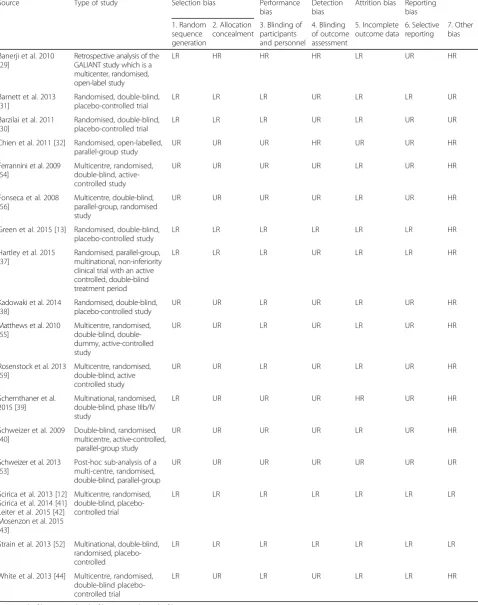
Seventeen clinical trials were included and their quality appraisal is shown in Table 4. Only two studies had a low
risk of bias for all seven items [12, 41–43, 52]. Four RCTs
had reasonable good quality with low risk of selection, performance, and attrition bias [13, 30, 31, 37]. Most stud-ies had low risk of attrition bias. Twelve studstud-ies were at
high risk of “other bias”. One study was a retrospective
analysis of an open-label clinical trial and had a high risk of selection, performance and detection bias [29]. Most of the included clinical trials did not provide enough
infor-mation to fully assess their risk of bias and had“unclear
risk of bias”for at least four of the items.
Observational studies
Quality appraisal of the 12 observational studies is shown in Table 5. Six studies reported insufficiently on most of the CASP items to be considered of high quality [36, 46, 49, 50, 57]. The other six studies reported infor-mation on most of the CASP items to be considered of
high quality [33–35, 45, 47, 48].
Overall ratings of quality
The single meta-analysis was rated as low quality overall because this investigation did not assess the scientific quality of its included studies. The majority of individual studies were rated low or very low overall quality, and only two received a high overall quality rating.
Involvement of pharmaceutical companies in studies Twenty-two studies were funded by pharmaceutical com-panies and authored or co-authored by employees of the sponsor (22 out of 30, 73%). In the remaining eight stud-ies, one study gave no information about funding although
Table 2Summary of study findings(Continued)
Yu et al. 2015 [47] QAd= low
DPP-4 inhibitor use by casese
DPP-4 inhibitor use by controlse
Hospitalisation for HF
54/1118 (4.8) 808/17626 (4.6) 1.05 (0.81, 1.38)
OR = 0.88 (0.63, 1.22)
D
AEsAdverse events,ADRsAdverse drug reactions,CComparator,CIConfidence interval,COADConventional oral antidiabetic drugs,CVCardiovascular,DDPP-4 inhibitor,
DiffDifference,HFHeart failure,HRHazard ratio,MIMyocardial Infarction,CRCoronary revascularization,NRNot Reported,OADOral anti-diabetic agents,PParticipants,SAEs
Serious adverse events,a
number of patients with the outcome/total patients, unless stated otherwise;b
Zero cell adjustment applied where relevant;c
Based on reported com-parison or if not reported, the computed risk ratio;d
QA: quality appraisal based on study limitations suggested by Guyatt et al. (2008) [26];e
Case-control study: cases are patients with the outcome, controls are matched patients without, numerator is count of patients using DPP-4 inhibitors;f
Table
3
Quality
appraisal
for
systematic
reviews/meta-analysis
Source
Ty
p
e
o
f
st
udy
1.
‘
ap
ri
o
ri
’
de
sig
n
2.
D
u
p
lic
at
e
se
lec
ti
on
and
d
at
a
e
xt
ra
cti
o
n
3.
Co
m
p
rehensive
search
4.
Status
of
pu
blic
ation
5.
Li
st
of
st
u
d
ie
s
6.
C
h
ar
acte
ris
tics
pr
ovi
d
ed
7
.
Scie
n
tific
qu
al
ity
asses
sed
8.
Scie
ntific
quality
in
conclusions
9.
Met
hods
to
com
bine
finding
s
10.
Publi
cation
bias
11.
Co
nflict
of
intere
st
Joha
nsen
et
al
.2012
[
58
]
Met
a-ana
lysi
s
NU
U
N
Y
Y
N
N
Y
N
Y
Y
Yes,
N
No,
U
Table 4Quality appraisal for intervention studies
Source Type of study Selection bias Performance
bias
Detection bias
Attrition bias Reporting bias
1. Random sequence generation
2. Allocation concealment
3. Blinding of participants and personnel
4. Blinding of outcome assessment
5. Incomplete outcome data
6. Selective reporting
7. Other bias
Banerji et al. 2010 [29]
Retrospective analysis of the GALIANT study which is a multicenter, randomised, open-label study
LR HR HR HR LR UR HR
Barnett et al. 2013 [31]
Randomised, double-blind, placebo-controlled trial
LR LR LR UR LR LR UR
Barzilai et al. 2011 [30]
Randomised, double-blind, placebo-controlled trial
LR LR LR UR LR UR UR
Chien et al. 2011 [32] Randomised, open-labelled, parallel-group study
UR UR UR HR UR UR HR
Ferrannini et al. 2009 [54]
Multicentre, randomised, double-blind, active-controlled study
UR UR UR UR LR UR HR
Fonseca et al. 2008 [56]
Multicentre, double-blind, parallel-group, randomised study
UR UR UR UR LR UR HR
Green et al. 2015 [13] Randomised, double-blind, placebo-controlled study
LR LR LR LR LR LR HR
Hartley et al. 2015 [37]
Randomised, parallel-group, multinational, non-inferiority clinical trial with an active controlled, double-blind treatment period
LR LR LR UR LR LR HR
Kadowaki et al. 2014 [38]
Randomised, double-blind, placebo-controlled study
UR UR LR UR LR UR HR
Matthews et al. 2010 [55]
Multicentre, randomised, blind, double-dummy, active-controlled study
UR UR LR UR LR UR HR
Rosenstock et al. 2013 [59]
Multicentre, randomised, double-blind, active controlled study
UR UR LR UR LR UR HR
Schernthaner et al. 2015 [39]
Multinational, randomised, double-blind, phase IIIb/IV study
LR UR UR UR HR UR HR
Schweizer et al. 2009 [40]
Double-blind, randomised, multicentre, active-controlled,
parallel-group study
UR UR UR UR LR UR HR
Schweizer et al. 2013 [53]
Post-hoc sub-analysis of a multi-centre, randomised, double-blind, parallel-group
UR UR UR UR UR UR UR
Scirica et al. 2013 [12] Scirica et al. 2014 [41] Leiter et al. 2015 [42] Mosenzon et al. 2015 [43]
Multicentre, randomised, double-blind, placebo-controlled trial
LR LR LR LR LR LR LR
Strain et al. 2013 [52] Multinational, double-blind, randomised, placebo-controlled
LR LR LR LR LR LR LR
White et al. 2013 [44] Multicentre, randomised, double-blind placebo-controlled trial
LR UR LR UR LR LR HR
Table 5 Quality appraisal for observational studies Source Type of study 1. Focused issue 2. Appropria te method 3. R ec ru itm en t 4 . Selection of controls 5. Exposure measured 6. Outcome measured 7. Identifie d confounding factors 8. Conf ounding factors in design/analysis 9. Follow up complete 10. Follow up long 11. Results 12. Precise results 13. Believe results 14. Results be applied 15. Results fit evidence Chang et al. 2015 [ 33 ] Cohort study Y Y Y N A Y Y Y Y Y Y Y Y N Chen et al. 2015 [ 34 ] Cohort study Y Y Y N A Y Y Y Y Y Y Y Y N Driessen et al. 2014 [ 45 ] Re tr os p e ct iv e po p u la ti o n b ased cohor t study YY Y N A Y Y Y Y Y Y Y Y N Giorda et al. 2015 [ 48 ] Case-cont rol study YY Y Y Y Y Y Y Y U Y Y N Mistry et al. 2011 [ 57 ] re tr os p e ct iv e ob se rvational sur vey YU Y N A U Y U U N A N A Y Y Y Ou et al. 2015 [ 35 ] Cohor t study Y Y Y N A Y Y Y Y Y Y Y Y N Penfornis e t al .2012 [ 49 ] Pr o sp e ct iv e cohor t study YY Y N U Y U U Y Y Y U Y Shih et al. 2015 [ 36 ] Nested case-control study Y Y Y Y Y Y U Y NA NA U U N Sicras- Mainar and
Navarro- Artieda 2014
authors stated globally they had no conflict of interest [32]; two studies reported no funding and no conflict of interest [33, 51]; two studies reported funding outside pharmaceuticals and no conflict of interest [36, 48]; two studies reported funding outside pharmaceuticals and conflict of interest from some of the authors receiving fees from pharmaceuticals [34, 47]; one study reported no funding but one author declared receiving fees from phar-maceuticals [35]. The 30 included studies were authored by 219 authors: 29% (63 out of 219) were employees of the pharmaceutical sponsor, and an additional 27% de-clared conflicts of interest (60 out of 219, often consulting fees by the sponsor). Sixty-one authors of 11 publications (61 out of 219, 28%) declared no conflicts of interest. Sup-port by professional medical writers was given in at least 8 publications (8 out of 30, 27%).
Additional references of interest for the development of recommendations
We found four additional references that were taken into consideration for the development of the recommenda-tion: 1 meta-analysis, 1 pooled analysis, 1 observational study, and a report from the FDA. These are shown in Additional file 4: Table S2. These references did not meet our age or study design criteria for inclusion. They were counted as being relevant to recommendations principally because they provided information about clinically rele-vant endpoints not adequately addressed by the 30 in-cluded studies, albeit for younger populations.
One of the additional references reported that there were no statistically significant differences between vil-dagliptin compared to other anti-diabetic treatments or placebo for long-term outcomes including acute coron-ary syndrome, transient ischaemic attack, stroke, myo-cardial infarction, cardiovascular and cerebrovascular death [60]. Two of the additional references reported an increase in the risk of hospitalisations for heart failure and an increase in heart failure outcomes in people under DDP-4 inhibitors compared to people under other anti-diabetic treatments or placebo [61, 62]. These stud-ies concur with that of Scirica et al. (2013) [12] for pa-tients age 75 and over, included in the present SR.
Furthermore, the U.S. Food and Drug Administration (FDA) and the European Medicines Agency (EMA) re-ported that there are still some uncertainties with respect to long-term pancreatic safety with DPP-4 inhibitors and evaluation of these outcomes is ongoing [63]. Although the currently available data are reassuring, pancreatitis will continue to be considered a risk associated with these drugs until more data are available. These additional refer-ences suggest that certain risks like heart failure and re-lated hospitalisation, and pancreatitis, may be increased with the use of DPP-4 inhibitors compared to other anti-diabetic treatments, independently of age group.
Recommendations
Recommendations were developed following a standard-ized schema and reflecting the strength and the quality of the evidence. Two meetings were held by GS (researcher and clinician), YVM (researcher) and ARG (researcher and geriatrician), with AS participating in one of these as a senior clinician and researcher. Subsequent to these meetings we agreed a recommendation which was later confirmed with IK and MMV for its inclusion in the Com-prehensive Medication Review (CMR) tool developed within the PRIMA-eDS project.
From the results of our SR and the additional refer-ences of interest we developed one recommendation in relation to DPP-4 inhibitors use in older people with type 2 diabetes. The recommendation is that the clin-ician should consider discontinuing gliptins where the patient has HbA1c < 8.5%, principally because of the sparse and inconsistent evidence for clinically relevant
benefits, but taking the patient’s symptoms into account
(Table 6). The recommendation was considered as a weak recommendation. The quality was downgraded from high to moderate for indirectness.
We considered glycaemic control in the recommenda-tion although it was not one of our study endpoints. The aim was that clinicians would focus on those patients who may benefit more from the recommendation as they could be already having acceptable glycaemic control. In older people, rigid glycaemic control (<HbA1c 8.0%) has been found to be associated with a higher risk of hypoglycaemia and undesirable long-term outcomes like increased
Table 6Recommendation for DPP-4 inhibitors in older people with type 2 diabetes
Recommendation Strength of the recommendation Quality of the evidence
The patient is taking DPP-4 inhibitors and HbA1c is <8.5% (70 mmol/mol). Please reconsider the use of gliptins for the management of type 2 diabetes in older adults because of scarce data on clinically relevant benefits of their use. Please take the patient’s symptoms into consideration.
Weak
Reason: No trial data supporting long-term clinically-relevant benefits in older people. One RCT pointing at possible adverse long-term effects independently from age.
mortality [64]. The target population in the PRIMA-eDS trial were people 75 years or older with at least eight pre-scribed medications reflecting a high comorbidity burden. An HbA1c <8.5% has been recommended in guidelines as a target goal in older people who have comorbidities, poor
health, dementia, frailty or limited life expectancy [8, 65–
67]. As a general rule, PRIMA-eDS recommends clinicians to take symptoms into consideration as well as the indi-vidual participant characteristics such as frailty level and comorbidities.
Discussion
Thirty studies reported in 33 publications (one MA, 17 interventional studies and 12 observational studies) were identified which evaluated the use of gliptins for the man-agement of type 2 diabetes in older people and reported on clinically relevant outcomes. While the majority of the studies reported participant data on comorbidities, only one presented data on frailty status. In terms of outcomes, most of the included studies reported on adverse events and hypoglycaemia. Fourteen studies reported on cardio-vascular events (such as heart failure, myocardial infarc-tion, and stroke), hospitalisation for heart failure, functional status, cardiovascular mortality, and all-cause mortality either as individual outcomes or combined into a composite outcome. None of these studies evaluated all-cause hospitalisation, quality of life or cognitive status.
In general, studies of DPP-4 inhibitors have shown similar or better safety than placebo and other antidia-betic drugs in older adults with type 2 diabetes, but these safety data are mainly based on short-term out-comes like hypoglycaemic events and acute adverse events. The evidence for longer-term health or quality-of-life benefits is more limited and quite inconsistent, with some studies showing benefits and others increased risks, particularly when the evidence from younger age groups is factored in. In addition, only six studies had reasonably good quality and the results from these pro-vided very little evidence for a benefit in older people from treatment with DPP-4 inhibitors.
DPP-4 inhibitors have been recommended as second line drugs for the management of type 2 diabetes in older adults by several expert groups [68] because of their lower risk of hypoglycaemia. Hypoglycaemia may be very relevant in older people, especially if it is symp-tomatic and has consequences such as falls.
Unfortu-nately, information on the consequences of the
hypoglycaemic events was not clearly reported in most studies. However, the majority of studies included
pa-tients with a mean HbA1c≤8% at baseline. According to
current guidelines, for older patients with these HbA1c levels further treatment may not be recommended, espe-cially in those with functional impairment [8, 10, 69]. Rigid glycaemic control beyond an HbA1c of 8%
achieved by antidiabetic drugs may be associated with a higher risk of hypoglycaemia and undesirable long-term outcome like increased mortality [64]. At present, it is unclear if the decreased risk for hypoglycaemia seen with the use of gliptins would also be seen in popula-tions with less tight glycaemic control. In terms of ef-fectiveness, we did not use glycaemic control as a clinically relevant endpoint. Glycaemic control has often been regarded as a surrogate endpoint without evidence for a direct relationship to longer term outcomes [70]. However, our omission of evidence for good glycaemic control with less adverse events might have introduced a limitation to our systematic review.
Unfortunately, most studies included in this publica-tion did not provide any informapublica-tion on the frailty level and cognitive status of their participants. Data on some comorbidities and the use of some concomitant drugs were provided but the number of drugs used and con-comitant diseases were rarely reported. This limits the interpretation of the results and their applicability to the heterogeneous older population.
Furthermore, with the exception of five studies [32, 33, 36, 48, 51], the rest of the included studies on DPP-4 in-hibitors in older people were sponsored by pharmaceutical companies, authored or co-authored by company em-ployees, or included authors working closely with the pharmaceutical sponsor and receiving consultancy or ad-visory fees (60/219, 28%). A close affiliation between pharmaceutical companies and researchers appears to be a general problem in diabetes research [71] and raises concerns about the independence and integrity of the evi-dence base for the treatment of diabetes.
Five studies were from Taiwan including a randomised
trial [32] and four observational studies [33–36]. All of
these observational studies used the same database from the Taiwan National Health Insurance. Although it seems that populations are different in each of these studies, three of them were on DPP-4 inhibitors [33, 35, 36]. It might have been possible that some of the sam-ples included similar populations.
We conducted this SR following an adaption of the standard methodology recommended by the Cochrane collaboration and the PRISMA statement. The searches were conducted in six biomedical literature databases. We developed a stepwise search as part of the method-ology for this systematic review and included existing systematic reviews and meta-analyses, as well as individ-ual studies. However, this methodology has not been
in-dependently validated. Search 3B was limited to
sitagliptin) was only approved by the FDA in 2006 which gives us confidence that we did not miss relevant studies [72]. Many patients are prescribed combinations of anti-diabetic medications and we have not attempted to modulate our recommendation according to the particu-lar treatments being used alongside DPP-4 inhibitors or when these are the sole treatment. This is an important but complex issue that could not be addressed within the objec-tives of this systematic review, and when re-considering the use of DPP-4 inhibitors with an individual patient, the clin-ician must take into account any additional treatments the patient may be receiving for their diabetes.
The recommendation derived from the results of this SR aims at increasing awareness in clinicians about the evi-dence (and lack of evievi-dence) with regard to the use of DPP-4 inhibitors for the management of type 2 diabetes in older adults. Decisions on the prescription or de-prescription of DPP-4 inhibitors should be made taking the symptoms and individual characteristics of each patient into account, in-cluding any other antidiabetic medications the patient may be taking, and involving the older person themselves in the decision-making process [73]. HbA1c levels should also be taken into consideration as current guidelines recommend no further treatment in older people with functional im-pairment and HbA1c <8% [8, 10, 69]. We developed the recommendation based on the results of this SR and the four additional references (studies without age or study de-sign criteria to be included) which provided information about clinically relevant endpoints not adequately ad-dressed by the 30 included studies. It should be noted that the included studies in this SR only provided evidence of a suspected effect on hospitalisations for heart failure with saxagliptin [41, 42]. However, additional references suggest that certain risks like heart failure and related hospitalisa-tion, and pancreatitis, may be increased with the use of DPP-4 inhibitors compared to other anti-diabetic
treat-ments, independently of age group [60–63].
The results of this SR show that further research is needed on the clinically relevant short and long-term risks and benefits of the use of DPP-4 inhibitors for the management of type 2 diabetes in older adults. Older adults living in different settings including care homes, with comorbidities, polypharmacy, cognitive and func-tional limitations should be represented in the studies.
Conclusions
Evidence for beneficial clinically relevant outcomes regard-ing the usage of DPP-4 inhibitors in older people with type 2 diabetes is ambiguous at best. DPP-4 inhibitors appear to be safer compared to other anti-diabetic medications to treat older people with type 2 diabetes. However, these safety data are based only on short-term surrogate out-comes and standard HbA1c control targets, and the
characteristics of the studied older people in terms of frailty and medical complexity are not described. In addition, there is a lack of studies independent of pharmaceutical company sponsorship. Independently from age, an in-creased risk of heart failure outcomes in adults under DDP-4 inhibitors has been reported [74]. Therefore, at present, DPP-4 inhibitors should be prescribed with caution in older patients with type 2 diabetes, especially if HbA1c is already in the therapeutic range of <8.5% recommended by
experts for frail older people (from expert-based
recommendations).
Additional files
Additional file 1:Excluded studies. List of excluded studies after full-text check with reasons for exclusion. (XLSX 47 kb)
Additional file 2:Search strategy. Full search terms for each search (searches 1, 2 and 3B). (DOCX 185 kb)
Additional file 3:Participant characteristics. Characteristics of the participants in the included studies. (DOCX 60 kb)
Additional file 4:Additional evidence for recommendation. Additional evidence for recommendation. (DOCX 15 kb)
Abbreviations
AMSTAR:A Measurement Tool to Assess Systematic Reviews; CASP: Critical Appraisal Skills Programme; CMR: Comprehensive Medication Review; DARE: Database of Abstracts or Reviews of Effects; GRADE: Grading of Recommendations Assessment, Development and Evaluation; HTA: Health Technology Assessment; IPA: International Pharmaceutical Abstracts; PICOS: Population, intervention, comparison, outcomes and study design; PRIMA-eDS: Polypharmacy in chronic diseases: Reduction of Inappropriate Medication and Adverse drug events in elderly populations by electronic Decision Support; PRISMA: Preferred Reporting Items for Systematic Reviews and Meta-Analyses; RCTs: Randomised controlled trials; SR: Systematic review
Acknowledgements
We would like to thank Adrine Woodham at the University of Manchester for her support conducting the database searches.
Funding
The PRIMA-eDS study was supported by a grant from the European Commis-sion within the 7th Framework Programme (Grant No. 305388–2). The work of YVM was also supported by a grant from the NIHR Greater Manchester Primary Care Patient Safety Translational Research Centre.
Publication of this article was funded by the UK National Institute for Health Research School for Primary Care Research, University of Manchester.
Availability of data and materials
The data supporting the conclusions of this article is included within the article (and its additional files).
About this supplement
This article has been published as part of BMC Geriatrics Volume 17 Supplement 1, 2017: The Evidence Base of Frequently prescribed drugs in older Patients: A series of systematic reviews as a basis for recommendations in the PRIMA-eDS-tool to reduce inappropriate polypharmacy. The full contents of the supplement are available online at https://bmcgeriatr.biomedcentral.com/articles/supplements/ volume-17-supplement-1.
Authors’contributions