http://www.ijcmph.com pISSN 2394-6032 | eISSN 2394-6040
Original Research Article
Reproductive tract infection and health seeking behaviour: a cross
sectional community based study
Kanchan B. Gawande
1, Abhay S. Srivastava
2*, Purushottam Kumar
2INTRODUCTION
Gynaecological morbidities cover any condition, disease or dysfunction of reproductive system that is not related to pregnancy, abortion or childbirth but may be related to sexual behaviour.1 Gynaecological morbidities such as reproductive tract infections are neglected issue mostly among rural women in India. The magnitude of such problem is immense in developing country. These morbidities turn out to be fatal if not treated properly. Women’s health in India faces a magnitude of problem, which ultimately affect the aggregate economic output. The health of Indian women is intrinsically linked to their status in society. Apart from biological factors women’s
literacy, socioeconomic status, lack of decision making in seeking treatment have significant impact on increasing prevalence. There is significant gap in understanding the gynaecological morbidities as well as consequence for women lives. Reproductive health of women is important due to its implications for women's own health, health of their children, family members, socioeconomic development of society, and population. Women have been historically discriminated, they are group whose health concern need to be prioritised, understood and researched. Studying the prevalence of these morbidities helps in identifying the magnitude of such problems in the community. It identifies special at-risk groups to whom interventions should be directed as well as the
ABSTRACT
Background: Women in India have multitude of health problem, which ultimately affect the economic output. The health of Indian women is intrinsically linked to their status in society. There is significant gap in understanding the reproductive tract infections as well as consequence for women lives. The objective of the study was to study the prevalence of reproductive tract infections and sociodemographic factors responsible among ever married women.
Methods: Community based cross sectional study was carried out in the rural area near Mumbai city. List of villages in the study area was obtained from primary health centre (PHC). The prevalence of reproductive tract infections among ever married women was 20.7%. At 95% confidence level and 5% allowable error sample size is 262 (n=4*p*q/l2). So the sample size required to document RTI was 265 ever married women.
Results: Prevalence of reproductive tract infections was 143(53.96%). Most common morbidity found was vaginal discharge 59 (22.26%). There was a significant difference between the proportions of study subjects with reproductive tract infection with respect to their educational status & occupation.
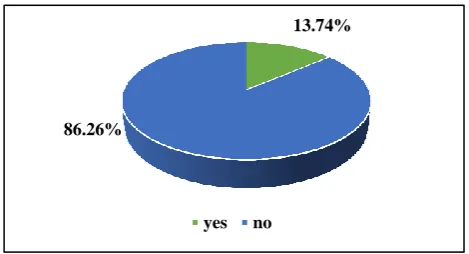
Conclusions: There was high prevalence of reproductive tract infection among study subjects with only 13.74% visited a qualified medical practitioner for their complaints.
Keywords: Reproductive tract infections, Vaginal discharge, Ever married women
Department of Community Medicine, 1Indira Gandhi Government Medical College, Nagpur, 2GMCH, Aurangabad, Maharashtra, India
Received: 23 January 2018
Revised: 05 March 2018
Accepted: 06 March 2018
*Correspondence:
Dr. Abhay S. Srivastava,
E-mail: [email protected]
Copyright: © the author(s), publisher and licensee Medip Academy. This is an open-access article distributed under the terms of the Creative Commons Attribution Non-Commercial License, which permits unrestricted non-commercial use, distribution, and reproduction in any medium, provided the original work is properly cited.
most prevalent or serious problems. A community-based assessment also helps to identify the social context of morbidity.2
To find out the prevalence of reproductive tract infections amongst ever married women in the rural areas near Mumbai city and to co-relate the disease with certain socio demographic variables and to find out the treatment seeking behaviour among the study subjects.
METHODS
The present study was carried out in rural area near Mumbai city over a period of 5 months i.e. from April 2015 to August 2015. The complete list of villages in the study area was obtained from primary health centre (PHC). The prevalence of Reproductive tract infections among ever married women was 20.7%.1 At 95% confidence level and 5% allowable error sample size is 262 (n=4*p*q/l2). So the sample size required to document RTI was 265 ever married women. The 29 villages in the study area has a population of about 8000. The women in the reproductive age group in each of these villages were selected by simple random sampling
method, so that a sample size of 265 was achieved. The number of women selected from each village was proportional to the total number of ever married women in the reproductive age group present in each village. The sampling unit was individual. Pregnant women and unmarried women were excluded from the study. At the end of the survey of 29 villages, total of 265 ever married women of reproductive age group were studied by asking pre-tested structured questionnaire. Data collected during this study was analysed and appropriate test were applied to test the significance of observations.
RESULTS
Table 1 shows that out of 265 women; 53.96% of women reported either one or more symptoms of reproductive tract infections, thus the overall prevalence of reproductive tract infections among study group was 53.96%. Among symptomatic women vaginal discharge (22.26%) was the commonest symptom reported by the study subjects. 2.64% had foul smelling vaginal discharge. Other symptoms were vulval itching (7.92%), low backache (7.16%), burning micturition (6.03%), inguinal swelling (1.50%), cervical prolapse (1.13%), and infertility reported by (00.75%) of study subjects.
Table 1: Prevalence of reproductive tract infections amongst ever married women of rural area of Mumbai city.
Findings (symptoms) Frequency (n=265) Percentage (%)
Symptoms present 143 53.96
Vaginal discharge 59 22.26
Foul smelling vaginal discharge 7 2.64
Vulval itching 21 7.92
Burning micturition 16 6.03
Inguinal swelling 4 1.50
Cervical prolapse 3 1.13
Infertility 2 0.75
Low backache 19 7.16
Multiple responses
Vaginal discharge, low backache 5 1.88
Vaginal discharge, low backache, vulval itching 2 0.75 Vaginal discharge, vulval itching, burning micturition 3 1.13 Vaginal discharge, vulval itching, low backache, burning micturition 2 0.75
Table 2 shows that maximum numbers of symptomatic women were (66.66%) were in 35-45 yrs. age group. There was a significant association between age group women and symptoms were present in them (χ2=2.849, d.f.=2, p>0.05).
There was a significant association between the educational status of women and symptoms found among them (χ2
=15.76, d.f.=3, p<0.001).
Among the symptomatic study subjects, maximum were housewives i.e. 58.79% followed by clerk, shop owner of farm owner i.e. 40.74% followed by unskilled worker/ labourer i.e. 36.36%. (χ2
=3.172, d.f.=1, p<0.05).
There was a significant association between symptoms found in women and their husbands’ education (p<0.001)
Regarding symptoms found in women and their association with their husbands’ occupation 72.22% of symptomatic women with their husbands’ occupation as semi-skilled worker followed by 58.33% of symptomatic women with their husband’s occupation as skilled worker. The husbands of 48.97% of women’s were clerk, shop owner or farm owners. There was a significant association between symptomatic women and their husbands’ occupation (χ2
Table 2: Distribution of symptomatic patients in relation to socio-demographic characteristics.
Socio-demographic characteristics
Total no. of study population (%)
No. of symptomatic patients (with atleast 1 symptom of RTI)
Percentage of symptomatic patients%
P value at 5% significance level
Age group (n=265)
15-24 yrs 76 (28.67) 40 52.63
>0.05
25-34 yrs 102 (38.49) 45 44.11
35-45 yrs 87 (32.83) 58 66.66
Marital status (n=265)
Married 251 (94.71) 139 55.37
>0.05
Widowed 12 (4.52) 4 33.33
Divorcee 2 (0.75) 0 0
Education of woman (n=265)
Illiterate 78 (29.43) 46 58.97
<0.05
Primary 69 (26.03) 49 71.01
Secondary 54 (20.37) 36 66.66
Higher-Secondary and above 64 (24.15) 12 18.75
Occupation of women (n=265)
Housewife 216 (81.50) 127 58.79
<0.05 Clerk, shop owner, farm owner 27 (10.18) 11 40.74
Semi-skilled worker 10 (3.77) 1 10.00 Unskilled worker 11 (4.15) 4 36.36
Skilled worker 1 (00.37) 0 00.00
Profession 0 (0) 0 00.00
Education of husband (n=251)
Illiterate 54 (21.51) 34 62.96
<0.05
Primary 38 (15.13) 21 55.26
Secondary 42 (16.73) 22 52.38
Higher Secondary and above 117 (46.61) 66 56.41
Occupation of husband (n=251)
Professional 11 (4.38) 1 9.09
<0.05 Clerk, shop owner, farm owner 98 (39.04) 48 48.97
Skilled worker 24 (9.56) 14 58.33
Semi- skilled worker 108 (43.02) 78 72.22 Unskilled worker 10 (03.98) 2 20.00
Type of family (n=265)
Nuclear family 145 (54.71) 77 53.10
>0.05 Joint family 105 (39.62) 61 58.09
Extended Joint 15 (5.66) 5 33.33
Socio-economic class (n=265)
Class I 0 (0) 0 00.00
>0.05
Class II 8 (3.01) 2 25.00
Class III 40 (15.09) 19 47.50
Class IV 156 (58.86) 89 57.05
Class V 61 (23.01) 33 54.09
There was no significant association between type of family and number of symptomatic women belongs to them (χ2
=1.11, d.f.=2, p>0.05).
Regarding symptomatic women belong to socioeconomic class; Majority (57.05%) of women belong to socio-economic class IV followed by 54.09% of symptomatic women were found from socio-economic class V;
whereas 47.50% of symptomatic women belong to class III followed by 25.00% of symptomatic women were from class II. There was no significant association between the socio-economic class and number of symptomatic women belongs to it. (χ2
Table 3: Treatment seeking behaviour of the study subjects (subjects reporting single response N=131).
1st preference for treatment seeking among study subjects
Vaginal discharge
Foul smelling vaginal discharge
Vulval itching
Burning micturition
Inguinal swelling
Cervical
prolapse Infertility Low backache
1 Govt. hospital 2 0 1 1 0 0 0 1
2 PHC 9 1 2 4 0 0 0 5
3 Private
practitioner 8 1 3 2 1 1 1 3
4 Ayurveda 7 1 2 3 0 0 0 1
5 Faith healer 2 1 0 1 1 0 1 0
6 Home remedy 31 3 13 6 2 2 0 9
Total 59 7 21 16 4 3 2 19
No. of study subjects ever visited a qualified medical
practitioner
6 2 3 2 1 1 1 2
Figure 1: No. of symptomatic women and their association with their age group.
Figure 2: Proportion of symptomatic subjects ever visited a qualified medical practitioner.
DISCUSSION
Regarding the prevalence of reproductive tract infections 46.04% of women did not report any kind of symptoms of reproductive tract infections; whereas 53.96% of women reported one or other kind of symptoms of
reproductive tract infections. Thus the overall prevalence in our study is 53.96%. The study carried out by Gaash et al shows that the prevalence of RTI’s in rural area was 40.4%.3 The study carried out by Thekdi et al, 56.5% of women reported either one or more symptoms of reproductive tract infections.4 A study conducted in rural Haryana in which prevalence of reproductive tract infection was 61%.5 A study conducted in highlands and coastal region of Peru where 77% of women reported symptoms of reproductive tract infections.6 The prevalence of reproductive tract infections in rural area of Agra was found 49%.7 The reason for such high prevalence of reproductive tract infections was probably due to the low literacy status amongst rural women and lack of awareness regarding reproductive tract infections amongst women.
Vaginal discharge was the commonest symptom reported by the study subject i.e. 22.26% followed by vulval itching (7.92%), low backache (7.16%), burning micturition (6.03%), inguinal swelling (1.50%). 4.52% of women reported more than one symptom of reproductive tract infection. A study carried out by Thekdi vaginal discharge was the most common symptom reported by (26.3%) followed by vulval itching (8.8%), low backache (7.0%), burning micturition (3.3%).4 A study conducted in West Bengal in which 21.8% of women reported vaginal discharge as the commonest symptom followed by vulval itching (17.7%).8 A study conducted by Chellan et al, in South India in which the vaginal discharge was the commonest symptom (32.2%).9
Maximum prevalence of reproductive tract infections (66.66%) was found in the age group of 35-35 years while the study carried out by Thekdi, the maximum prevalence of RTI were found in the age group of 25-34 years i.e. 62.90%.4
0 50 100 150
15-24 25-34 35-45
frequency
Age group
no of symptomatic subjects no of subjects
13.74%
86.26%
Regarding prevalence of reproductive tract infections and literacy, maximum prevalence was found among women with education up to primary class (71.01%) who gradually decreased as the education of women increased. There was a significant association between educational status and women having reproductive tract infections.
Regarding the occupation of women, maximum prevalence of RTI was found among housewives i.e. 58.79%. The reason could be lack of time and poor compliance if even seek any medical care. There was a significant association found with the women having symptoms of reproductive tract infections and educational status of their husbands. Women having reproductive tract infections decreased as their husbands’ educational status increased suggesting the important role of the education in preventing reproductive tract infections.
Majority of symptomatic women were staying in joint family (58.09%) followed by nuclear family (53.10%), extended joint family (33.33%) but the difference was not significant.
Regarding treatment seeking behaviour of the study subjects, out of total study subjects only13.74% of subjects ever visited a qualified medical practitioner for their reported morbidities while 86.26% of subjects either visit government hospital, primary health centre, private practitioner, Ayurveda, faith healer or took home remedies for their problems. Maximum i.e. 45.45% of women took home remedies, followed by 14.68% of women who visited primary health centre, 13.98% of women consulter private practitioner, 9.79% of women consulted in an Ayurvedic clinic; almost equally number of women i.e. 4.19 visited either government hospital or a faith healer. A study conducted in Uganda, almost 60% of women reported that treatment should be taken from faith healers or self-treatment should be done.10
The reason for not seeking treatment among women was mainly social issue such as stigma related to reproductive tract infections. These social issues of the women should be directed mostly for preserving the health status of women in our society.
Funding: No funding sources Conflict of interest: None declared Ethical approval: Not required
REFERENCES
1. Gosalia VV, Verma PB, Doshi VG, Singh M, Rathod SK, Parmar MT. Gynecological Morbidities in Women of Reproductive Age Group in Urban Slums of Bhavnagar City. Natl J Communoity Med. 2012;3(4):657-60
2. Inamdar IF, Sahu PC, Doibale MK. Gynaecological morbidities among ever married women: A community based study in Nanded city, India. IOSR J Dental Med Sci (IOSR-JDMS). 2013;7:5-11. 3. Gaash B, Kausar R, Bhan R, Bashir S. Reproductive
tbacxinfections in kargil: a community based study. Health and Population – Perspectives. 2005;28:1-8. 4. Thekdi KP, Patel KG, Patel NK, Thekdi PI. A cross
sectional study on the prevalence of reproductive tract infections amongst married women in the rural area of Surendranagar district. Int J Res Med Sci. 2014;2(1):215-21.
5. Aggarwal AK, Kumar R, Gupta V. Community based study of reprodcutive tract infections among ever married women of reproductive age in a rural area of Haryana, India. J Community Dis. 1999;8:138-223.
6. Garcia PJ, Chavez S, Feringa B, Chiappe M, Weili Li, Jansen KU, et al. Reproductive tract infections in rural women from the highlands, jungle, and coastal region of Peru. Bull World Health Organization. 2004;82(7):483-92.
7. Nandan D, Misra SK, Sharma A, Jain M. Estimation of prevalence of RTIs/STDs among women of reproductive age group in Distt. Agra. J Med. 2002;37: 100-13.
8. Dawn A, Biswas R. Reproductive tract infection: an experience in rural West Bengal. Indian Journal of Public Health. 2005;49(2):102-3.
9. Ramesh C. Gynaecological morbidity and treatment seeking behaviour in South India: Evidence from the Reproductive and Child Health survey. 1998-1999.
10. Muyinda H, Seeley J, Pickering H, Barton T. Social aspects of AIDS-related stigma in rural Uganda. Health place. 1997;3:143-7.