Original Research Article
A field survey on provision of health care service in a community clinic
of Bangladesh: a case study of Raicho community clinic
Sowrav Barman
1*, Muhammad Abu Nayeem
2INTRODUCTION
Government of Bangladesh in 1996 started Community Clinics to expand Primary health care at the doorsteps of people all over the country. Bangladesh is among the few countries of the world that provides free health services to people at community through various community clinics.Because of change of government in 2001, community clinics were closed and remained neglected
till 2008.1 Bangladesh has been declared by WHO as one of the 58 crisis countries facing an acute human resources for health (HRH) crisis.2 In 2009, government of Bangladesh has taken initiatives of revitalization of community clinics through a project called “Revitalization of Community Health Care Initiatives in Bangladesh” (RCHCIB) to enhance provision of healthcare services at community level. Executive committee of National Economic Council (ECNEC) ABSTRACT
Background: Community clinics have been restarted in 2009 by government of Bangladesh through a project called “Revitalization of Community Health Care Initiatives in Bangladesh” (RCHCIB) to enhance provision of healthcare services at community level. We have conducted a survey on provision of health care service to recognize the availability and extent of health services provided in a community clinic of Bangladesh.
Methods: 25 respondents who usually receive primary health care service from Raicho community clinic situated in Comilla district of Bangladesh were included in the survey.
Results: The highest number of respondents was male (52%) and the majority of them were literate (96%).36% of study population were included in no income group, whereas 20% belong to rich population group. 32% people presented with fever (32%) followed by weakness (24%) in the community clinic. 32% respondents went to community clinic for him/her and that was the highest. The highest number of people were referred to private clinic (32%). 70% respondents think that women are receiving maternal service in the clinic. 88% respondents have participated in EPI vaccination program. 80% respondents use contraceptive method and majority used contraceptive pill. 68% people received sufficient medicine, whereas 32% respondents did not receive medication from the clinic. 75% respondents think that during working hours CHCP and HA are available in the clinic. 48% population mentioned corruption is the most possible responsible factor for heath service inequalities at grass-root level.
Conclusions: Although standards are lacking in providing services, community clinics have opened a new era in health service of Bangladesh.
Keywords: Community clinics, Community health care providers, Health service 1
Department of General Surgery, Blackpool Teaching hospitals NHS trust, Blackpool, United Kingdom 2
Department of Pathology, Comilla Medical College, Comilla, Bangladesh
Received: 25 September 2018
Revised: 21 November 2018
Accepted: 23 November 2018
*Correspondence:
Dr. Sowrav Barman,
E-mail: [email protected]
Copyright: © the author(s), publisher and licensee Medip Academy. This is an open-access article distributed under the terms of the Creative Commons Attribution Non-Commercial License, which permits unrestricted non-commercial use, distribution, and reproduction in any medium, provided the original work is properly cited.
approved this project on September 2009 which was a historic move towards restarting the community clinics in 2009.1,3 Community clinic is one of a network of small clinics at grass-root level including the remote and hard to reach area which provides first level service in primary health care mostly emphasising on maternal and neonatal health. The other role of community clinic is to provide health education, treatment of minor ailments and effective referral of emergency and complicated cases to the higher facilities such as in Union Health Center. Community health service providers in community clinics provide service and distribute medicine for common illnesses.3 These clinics are run by both local government and community. All clinics are built on community land but funds to build the clinic were donated by the government. Medicines and all logistics are supplied by government.4 A committee of 9 to 13 members which includes community health care provider, health assistant/family welfare assistant, owner of the land, members of Union Parishad, and renowned persons of the village looks after the clinic.3 The location of a community clinic should be accessible for 80% of the population within less than 30 minutes walking distance. An ideal clinic should have two rooms with safe drinking water and lavatory facilities and a covered waiting area.4 We have conducted a field survey on provision of health care services in a community clinic of Bangladesh named “Raicho community clinic”. The primary aim of the study was to recognize the availability and extent of health services provided in a community clinic. The secondary objectives of the study were to find out healthcare service inequalities in the community and to explore the opinion of community people regarding good health care service.
METHODS
The study population in this survey included people who usually receive primary health care service from Raicho Community Clinic situated in Comilla district of Bangladesh. People who do not receive healthcare service from the above mentioned community clinic or who were visiting during the study period were excluded from the survey.A total of twenty five respondents were interviewed through a questionnaire from 15th April to 1st May 2015. Data were collected from primary source through direct interview method with questionnaire. Data were compiled, tabulated and analysed using Microsoft Excel according to the objectives of the study.Structural Information of Raicho Community Clinic is as follows-This Community Clinic has been built on the land given by “Raicho Shomobay Shomiti”. This is a one storied building. It has two rooms excluding the EPI corner and patient waiting room. Two rooms are used for reviewing patients and providing services. The clinic is well ventilated as well as well furnished. It has sufficient water supply, a toilet but no electricity.
RESULTS
In our study, participants were interviewed by direct
collected on different parameters. The highest number of study population (52%) was male (Table 1) and the highest number of study population was in between 21-40 years of age group (Table 1).
Table 1: Sex and age distribution of study population.
Number Percentage (%)
Sex
Male 13 52
Female 12 48
Total 25 100
Age (years)
<20 5 20
21-40 10 40
40-60 6 24
>60 4 16
Total 25 100
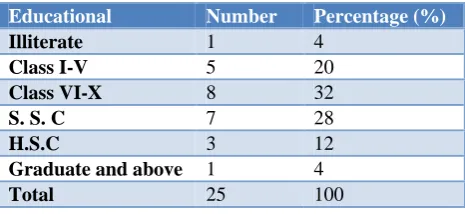
Table 2: Distribution of study population by education.
Educational Number Percentage (%)
Illiterate 1 4
Class I-V 5 20
Class VI-X 8 32
S. S. C 7 28
H.S.C 3 12
Graduate and above 1 4
Total 25 100
Table 2 showed that 20% study population studied up to primary level that is class I-V, whereas 32% study population studied up to class VI-X, 28% of them passed S.S.C (Secondary school certificate exam), 12% respondents passed HSC (Higher Secondary school certificate exam) and 4% respondents are illiterate.
Table 3: Distribution of monthly income of study population.
Level Number Percentage (%)
Very poor <2500 1 4
Poor (2500-5000) 3 12
Medium (5000-10000) 7 28
Rich (>10000) 5 20
No income 9 36
Total 25 100
Table 4: Medical problems faced by study population
Diseases Number Percentage (%)
Fever 8 32
Cough 4 16
Joint pain 1 04
Accidental injury 1 04
Weakness 6 24
Skin disease 2 08
Diarrhoea 8 12
We have asked study respondents about the medical reasons for attending community clinic. Our data showed that most number of people presented to community clinic with fever (32%) followed by weakness which is 24%. 16% respondents attended clinic with cough whereas 12% respondents attended clinic with diarrhoea. Of all respondents, 8% attended with skin disease and 4% with accidental injury and joint pain (Table 4).
Table 5: Distribution of attending population for whom they visit community clinic.
Number Percentage (%)
Himself /Herselff 8 32
Spouse 4 16
Children 6 24
Parents 3 12
Neighbours 1 4
Relatives 2 8
Others 1 4
Total 25 100
Table 5 shows that 32% study population went to community clinic for him/her and that was the highest. However, 24% and 16% study population went to clinic to seek for medical service with their children and spouse
respectively. On the other hand, 12% respondent attended clinic with parents and 4% with their neighbours.
Table 6: Distribution of population got treatment after being referred from community clinic.
Number Percentage (%)
Comilla medical
college 2 8
UH&FWC 7 28
Union sub-center 4 16
Specialist chamber 4 16
Private clinic 8 32
Total 25 100
We have asked respondents regarding the place of treatment when they have been referred to a higher level care in case of emergency or complicated cases not managed in the community clinic. Data shows that highest number of people were referred to private clinic (32%) followed by secondary level care-Upazilla health and family welfare complex (UH&FWC) which is 28%.On the other hand, 16% each was referred to Union sub-centre and specialist chamber and 8% respondents were referred to nearby tertiary medical college hospital (Table 6).
Provision of maternal care in the community is essential to reduce maternal mortality rate. One of the important roles of community clinic is to provide maternal health care. We asked respondents regarding maternal health care and our data showed that 70% of respondents think that women are receiving the service, whereas 30% respondents did not think that women are receiving service. 88% respondents said that either they or their family members have participated in EPI vaccination program (Table 7).
Table 7: Services provided for pregnant women and EPI (Expanded programme on immunization) programme.
Percentage of people getting maternal care Participation in EPI (Expanded programme on
immunization) vaccination program
Criteria Percentage (%) Criteria Percentage (%)
Those who got services 70 Those who participated in EPI
vaccination program 88
Those who did not get
services 30
Those who did not participate in EPI vaccination program 12
Table 8: Contraceptive measures among male and female respondents and use of contraceptive method among women.
Contraceptive measures Contraceptive methods among women
Criteria Percentage (%) Criteria Percentage (%)
Those who do not use
contraceptive methods 20
Contraceptive pill 60 IUCD(intra uterine contraceptive pill) 10
Those who use contraceptive
Table 9: Distribution of population on getting sufficient medicine from community clinic and availability of service providers.
Provision of medicine supply in community clinic Availability of service providers
Criteria Percentage (%) Criteria Percentage (%)
People received sufficient
medicine 68 CHCP and HA available 75
People did not receive
sufficient medicine 32 CHCP and HA not available 25
Data on Table 8 shows that 80% respondents (20 out of 25 respondents) use contraceptive method. Out of 12 female respondents, 10 respondents use contraceptive method and majority of them use contraceptive pill (60%), whereas 30% woman use injectable contraceptives and 10% had intra-uterine contraceptive device.
Community health care providers distribute free medicine to local people for common illnesses. Our data reveals that 68% people received sufficient medicine, whereas 32% respondents did not receive sufficient medication from the clinic.75% respondents think that during working hours CHCP (Community health care providers) and HA (Health assistant) are available in the clinic, whereas 25% respondent did not think they are available during working hours (Table 9).
Table 10: Opinions regarding health inequalities in community.
Opinions Percentage (%)
Corruption among CHCP and HA 48
Lack of MBBS doctor 32
Lack of resources 12
Others 08
We have asked respondents about the possible reason for healthcare service inequalities in the community. Our data showed that 48% population mentioned that corruption is the most possible responsible factor for heath service inequalities, whereas 32% respondents said that lack of MBBS doctors in grass-root level is the main cause. However, 12% respondents said lack of resource is the cause of service inequalities (Table 10).
DISCUSSION
The primary functions of community clinic are provision of maternal and child health which includes registration of pregnant woman and encourage them to attend antenatal services during pregnancy and immunisation of children. Other functions are to provide family planning service and treatment of minor injuries. There is a referral system to higher level care if the patient cannot be managed in the community. Community clinics also provide oral rehydration salt (ORS), vitamin A capsules, anti-helminthic drugs, DOTS for TB, MDT for leprosy,
managing community clinic was regarded as a key to improvement of health services. However, report showed that community involvement in managing community clinics was inadequate.3,4
The study by Mitra et al showed that despite an existing public health system network, Bangladesh demographic and health survey found that along with public health service, people also received medical services from private doctors or clinics, unqualified practitioners and pharmacies/shops.5 Our study also found widespread dissatisfaction among local people in regards to overall performance of community clinic. The government policy says that appropriate referral should be made to nearby secondary or tertiary government hospitals if patients cannot be managed in the community.1,3,4 It is concerning that 32% of study population went to private clinic whereas 28% went to secondary level care (UH & FWC) when referred from the community clinic. It signifies that either people when are very sick they could not rely on treatment provided in a government hospital and prefer to treat in a private hospital or they were referred to attend private hospitals.
One of the most important functions of community clinic is to provide maternal health care.In 2002; maternal health review found that people received government maternal health facilities in only 20% of cases.6Our study showed an improvement in provision of maternal health services. However, 70% of study population received maternal health service whereas 30% respondents did not get maternal health service which still fails to meet the standard of maternal health service.
Expanded programme on immunisation (EPI) has been a great achievement in health system in Bangladesh. It ensures universal access to vaccination and has substantially improved the coverage of vaccines in children. For example, it has increased the percentage of BCG vaccines among children less than 1 year of age from 2% in 1985 to 99% in 2009.7 Our study also reflected the similar trend as most of the respondents participated in EPI vaccination programme.
improvement against national standard. Recent study reported that oral pill is the most widely used (27%) method, followed by injectables (12.4%), condoms (6.4%), female sterilization (4.6%), male sterilization (1.2%), implants (1.7%), and IUDs (0.6%).9 Our study shows similar trend among women in using different types of contraceptive methods.
The government guideline says that community clinics have been established to provide 33 listed health and family planning services and eight domiciliary services. The report from health systems development programme states that only few of this range of services are being provided in community clinics. However, it is concerning that the quality of the service provided is poor and CHCP (community health care providers) do not work during their working hours and therefore clinics are not open when they should be.4 Our study also reflected the similar picture. Data revealed that 75% respondents were satisfied with presence of CHCP in the clinic during working hours, whereas the remaining 25% respondents were dissatisfied. Moreover, 32% respondents did not get sufficient medicine which reflected inadequate service provision. Furthermore, data showed that 88% people participated in the EPI vaccination program which is an indicator of good provision of service.
The report from health systems development programme states that the reasons why community clinics are not functioning properly could be either due to lack of drugs and medical equipment or limited knowledge of service providers.4 Our study population mentioned corruption and lack of MBBS doctors at grass-root level are the two the main causes of limitation of the quality of services.
It is evident from the report that people in the community expected establishment of a hospital with availability of MBBS doctors, nurses and necessary logistics for treatment of all types of diseases at grass root level. However, in reality they have got a small clinic with limited health facilities and treatment which are usually provided by undertrained or untrained and unskilled service providers with inadequate supply of drugs and logistics. There is also an issue with attitude and availability of service providers in clinics.4
Several recommendations can be made to improve the service in community clinics such as 1) regular visit of community clinics by graduate doctors to ensure service standards; 2) provision of simple diagnostic procedures in community clinics; 3) increase supply of free medicines for rural people; 4) increase awareness among local people by organizing awareness program regarding health services; 5) involvement of community groups to ensure accountability in managing community clinics; 6) regular training courses for community health care service providers to increase knowledge and competency.
Limitations
The study has following limitations:
Short duration of the study.
Number of study population was limited.
Conducted in only one community clinic which is not sufficient enough to draw any concrete conclusion.
CONCLUSION
Community clinics aim to provide health and family planning services via a one-stop service with particular emphasis on vulnerable and poor people in community. HPSP (Health and Population Sector Programme (1998-2003) has envisaged that community clinic would be functioning well with involvement of community groups and adequate and effective service provision by service providers.4 However in reality the standard of providing health services is inadequate in most of the sectors.Though, there are some limitations in providing health services, community clinic has opened a new era in the health service of Bangladesh.
ACKNOWLEDGEMENTS
We would like to express our gratitude to Dr. Jillur Rahaman Paul, Deputy Director (Training), course director Mr. Abul Kalam Azad, and associate course director, BARD for their generous support in this field study project.
Funding: No funding sources Conflict of interest: None declared Ethical approval: Not required
REFERENCES
1. Community clinic. Community based health care, 2018. Available at: http://www.communityclinic. gov.bd. Accessed 9 September 2018.
2. Guilbert JJ. The World Health Report 2006: Working Together with Health. Geneva, Switzerland, World Health Organization. Educ Health. 2006;19(3):385-7.
3. Primary healthcare. Revitalization of community clinics. Chapter 4. Health bulletin 2012. Available at www.dghs.gov.bd/licts_file/Health_Bulletin/...CH/ HB2012_CH4_PHC.pdf. Accessed on 9 April 2015. 4. Normand C, Iftekar MH, Rahman SA. Assessment of the community clinics: effects on service delivery, quality and utilization of services. Health Systems Development Programme, Bangladesh. 2002
(NIPORT), Mitra and Associates, and Macro International Inc.1997.
6. Rahman SA, Parkhurst JO, Normand C. Maternal Health Review: Bangladesh. 2003.
7. Islam MD, Alam HSK, Islam MR. EPI programme: An excellent success for prevention of communicable diseases in Bangladesh. DS (Child) H J. 2010;26(2):113-8.
8. Bangladesh Demographic and Health Survey 2014. National Institute of Population Research and Training (NIPORT). Dhaka: Ministry of Health and Family Welfare. 2015.
9. Huda FA, Robertson Y, Chowdhuri S, Sarker BK, Reichenbach L, Somrongthong R. Contraceptive practices among married women of reproductive age in Bangladesh: A review of the evidence. Reprod Health. 2017;14:69.