
Uncovering the roles of long non-coding RNAs in cancer stem cells
Full text
Figure


Related documents
The lncRNA PNKY, which is expressed in the nucleus of dividing neural stem cells (NSCs) in the developing mouse and human brain (Figure 2), controls the balance of self-renewal
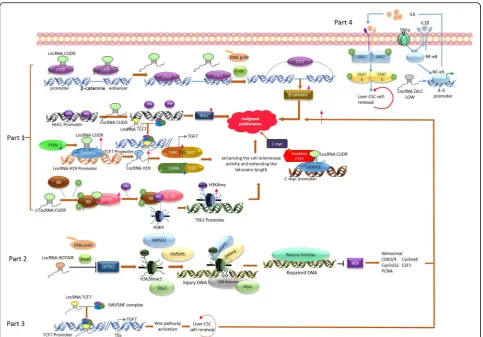
Figure 1 The regulatory functions of oncogenic and tumor suppressor long non-coding RNAs (lncRNAs) in the Wnt/ β -catenin signaling pathway attributed to the pathogenesis of
Cancer stem cells; stem cells; tumor-initiating ability; self-renewal; epithelial-mesenchymal transition; multi-step progression; cellular state; phenotypic plasticity.. Concept
non-coding RNAs (ncRNAs), long non-coding RNA (LncRNA), non-coding RNAs (ncRNAs), overall survival (OS), progression-free survival (PFS), disease-free survival (DFS), hazard ratio
SNP: single nucleotide polymorphisms; ncRNA: non-coding RNAs; HNC: head and neck cancer; miRNAs: micro RNAs; lncRNAs: long non-coding RNAs; HNSCC: head and neck
Cancer stem cells; stem cells; tumor-initiating ability; self-renewal; epithelial-mesenchymal transition; multi-step progression; cellular state; phenotypic plasticity.. Concept
• A substantial proportion of the genome is transcribed into non-coding RNAs, including many long non-coding RNAs (lncRNAs) that are important regulators of endocrine cells. •
This PhD thesis stems on three central considerations: OvCa and BC share a high rate of TP53 mutations and high incidence of tumor metastasis; mut_p53 gain of function regulates
