© 2013 Electronic Journal of Science Education (Southwestern University) Retrieved from http://ejse.southwestern.edu
Which strategy best suits biology teaching? Lecturing, concept mapping, cooperative learning or learning cycle?
O. Patrick Ajaja Delta State University
Abstract
The purpose of this study was to compare the achievement of students taught with concept mapping, cooperative learning, 5E learning cycle and lecture methods with the intention of identifying which one among them could be most suitable for teaching Biology. To guide this study, four research questions were raised and tested at 0.05level of significance. The design of the study was pre-test, post-test, delayed post-test, quasi experimental repeated measures design. The samples of the study consisted of four mixed secondary schools, 259 students and eight Biology teachers. The major findings of the study include: significant effect of the four instructional methods on achievement and retention; students in the 5E learning cycle and cooperative leaning groups significantly outscored those in the concept mapping and lecture groups on achievement and retention tests; students in concept mapping outscored those in lecture group both on immediate achievement and retention tests; students in 5E learning cycle and cooperative learning groups did not significantly differ on achievement and retention tests; males and females in all the four groups did not significantly differ on the achievement tests; and a non-significant interaction effect between sex and method of instruction on achievement. It was concluded that the adoption of either 5E learning cycle or cooperative learning strategies may be appropriate for the teaching and learning of Biology.
Correspondence concerning this manuscript should be addressed to O. Patrick Ajaja, Delta State University Abraka, Nigeria, [email protected]
Keywords. Concept, Mapping, Cooperative Learning, Learning Cycle, Retention.
Introduction
“Since 2000, study after study has made it clear that there is an alarming crisis in relation to students’ interest in science, either as a possible future career, or as an intrinsic interest that will continue after school” (Fensham, 2008, p. 20). In the UKin the late 1960s, the publication of the Dainton report (Department of Education Science (DES), 1968) which examined the flow of candidates in science and technology into higher education documented a swing from science in the school-age population as a whole. The list of countries experiencing declining interest of students in science is on the increase particularly among the developed countries (Fensham, 2008). One factor which has contributed to low interest in science by students is the method adopted for teaching and learning science. Fensham (2008, p. 20-21) listed four views of students which contribute directly to low interest in science:
Electronic Journal of Science Education ejse.southwestern.edu
and (iv) Hence, it is not surprising that many students in considering the senior secondary years are saying: Why should I continue studying science subjects when there are more interactive, interesting and less difficult ones to study?
This unhealthy development in the disposition of students towards science has sparked the search for and development of alternative methods of science teaching and learning which can stimulate students’ interest and guarantee an educational system that offers equal opportunities for all sexes. Science education as a field of study is therefore in dire need of methods with qualities such as lesson clarity, promotion of self-activity, promotion of self-development, stimulation of interest and curiosity and relying on the psychological process of teaching and learning to recommend to science teachers. The methods should encourage science teaching and learning that is better than it is now.
Many students today are learning science in a passive way in classrooms where information is organized and presented to them by their teacher(Moyer, Hackett & Everett, 2007). They noted that “often, the teacher pays little attention to what students already know about science. In this learning model, the information transmitted by the teacher and curriculum materials are assumed to make sense and seem reasonable to the students” (p.4). This model views science from a limited perspective. Science, seen in this way, has been influenced by the manner in which it is taught and studied. With this conception, science is thus viewed as a collection of organized body of information about the natural world. However, another view of science is the dynamic interaction of thought processes, skills and attitudes that help learners develop a richer understanding of the natural world and its impact on society. Moyer et al (2007, p.4)pointed out that “science viewed in this way, sees science as not just a body of knowledge but rather a process for producing knowledge”. This latter view of science therefore calls for a change from the transmission method of presenting science to students to allowing the students to interact with the natural world to create knowledge.
Electronic Journal of Science Education ejse.southwestern.edu Knowledge, which is long lasting and available for use later, is created through the transmission of experience. The expansion of education, creation of new fields of discipline and development of different instructional approaches, calls for detailed assessment of instructional strategies before they are selected to use in science classroom. Also with the increasing emphasis on lesson clarity, promotion of self-activity, stimulation of interest and curiosity, teaching methods associated with subject matter disciplines, instructional variety, retention rates and life-long learning, there is good reason to explore other instructional approaches for teaching science different from the one predominantly used (lecture) for very long time. This exploration is to determine if the methods have varying effects on students’ achievement when compared with the lifelong objectives of teaching science. This indeed formed the rationale for the current study of determining the effects of concept mapping, cooperative learning, 5E learning cycle and lecture instructional strategies on students’ achievement and retention of biological knowledge when used for instruction.
Reviewed Related Literature
Generally, there are several perspectives that address ways in which pupils learn (Bennett, 2003). Four perspectives which have been suggested to particularly influence science education are: transmission of knowledge; discovery learning; developmental view of learning; and constructivism. These are based on different theoretical models of leaning and are outlined below.
Four Theories of Learning
Transmission Method (Traditional Method)
The transmission view of teaching and learning sees teachers as passing over their knowledge to their pupils (Bennett, 2003; Borich, 2004; Trowbridge & Bybee, 1996; Trowbridge, Bybee & Powell, 2000). This view is strongly linked to expository teaching; teachers standing at the front telling their pupils about scientific ideas. The transmission view implies that the pupil’s role in the learning process is largely passive, and that a pupil’s mind is a tabula rasa- a blank state onto which knowledge can be written. The lecture or traditional teaching method has the following advantages:
1. It is easy to create interest in a topic or subject by the teacher.
2. Students easily acquire knowledge, new information, and explanation of events or things.
3. It helps students to clarify and gain better understanding of a subject, topic, matter or event.
4. Students and teachers cover more content materials within a short period of time.
The major limitation of this method is that there is relatively little student activity and involvement (Ajaja, 2009; Bennett, 2003; Borich, 2004; Trowbridge & Bybee, 1996; Trowbridge et al; 2000). Thus, the students are said to be passive .The limitation experienced with the transmission approach led to the development of other views of science teaching and learning.
Discovery Method
Electronic Journal of Science Education ejse.southwestern.edu sees pupils as having a much more active role in their learning. Proponents of this approach argue that the enhanced learning by learners is due to their active participation in learning process.
The use of discovery approach for teaching and learning has been associated with science education for over one hundred years now (Trowbridge & Bybee, 1996; Trowbridge et al, 2000). Ajaja (1998) and Bennett (2003) noted that the school science curricula like Biological Science Curriculum Study (BSCS) (American Institute of Biological Sciences, 1958), Chemical Education Material Study (CEMS) (Campbell, 1961) and Chemical Bond Approach (CBA) (Strong, 1968) which adopted the discovery approach to teaching emphasized the presentation of science to pupils as a way in which they could conduct their own inquiries into the nature of things. Discovery learning in science places a strong emphasis on practical work organized in such a way that pupils make observations, look for patterns, and come up with possible explanation for those patterns.
The discovery method, unlike the lecture method, has the following advantages: 1. It helps the pupil understand the material better by showing him that the concepts
involved are so reasonable that he can discover them himself or herself.
2. It helps a learner to remember concepts, principles and laws better since what is discovered is by far less likely to be forgotten.
3. It helps the individual to learn on his own so that he or she may become increasingly independent of the teacher.
4. It keeps the teacher in touch with his or her class so that he or she knows whether the pupils understand or follow the work.
After a long use of discovery approach for teaching and learning of science, it became apparent that there were limitations with the approach. Bennett (2003) reported that questions were asked about the appropriateness of asking pupils to “discover” things for themselves when both teachers and pupils knew that the answers were already there in the form of currently accepted scientific theories. There was also a question over the nature of the understanding pupils developed when left to their own devices and to what extent pupils “discover” the scientifically accepted explanations of the phenomena they experience. These identified limitations and criticisms levied against discovery learning, paved the way for a shift in research efforts from discovery learning to constructivism.
Developmental views of learning
Research work in the field of psychology of education has examined how children’s abilities to obtain, process and use information develop as they grow and mature. Bennett (2003) noted that the single most influential theory of cognitive development in the twentieth century emerged from the work of Jean Piaget. His theory describes four stages of intellectual development through which children pass:
(i) Sensori-motor stage (0-2years) Children learn through their senses and physical experiences.
(ii) Pre-operational stage (2-7years) Children reason directly from what they perceive and may not be logical.
(iii) Concrete operational stage (7-11years) Thinking characterized by logic and does not require real objectives at hand.
Electronic Journal of Science Education ejse.southwestern.edu Two key processes in learning are central to Piaget’s theory. Piaget viewed learning as an active process in which the learner compares and contrasts modes of thinking about new experiences with those of prior experiences. Moyer et al (2007) noted that often the child realizes that the explanation used for an earlier experience does not fit with a new experience. This is resolved by the learner having to modify his/her way of thinking to come to a conclusion that seems personally reasonable Piaget called this, process of thought adjustment equilibration (Piaget & Inhelder, 1958). This adaptation occurs through the two active thought processes, assimilation and accommodation.
Constructivism
Cognitive psychologists and science educators influenced by the early work of Ausubel (1968), Bruner (1960), Kelly (1955) and Vygosky (1978) are of the view that useful knowledge is not passed along intact from one person to another, nor is it discovered in the external world. The synthesis of the ideas generated from these theorists gave rise to the constructivist perspective. The constructivist insists that knowledge is produced by the learner (Bennett, 2003, Moyer et al, 2007, Trowbridge & Bybee, 1996). Underlying the constructivist perspective is the notion that all people normally try to make sense of their world. Through their own constructive processes, individuals impose order and predictability on phenomena and events of the world. Trowbridge and Bybee (1996) stressed that the constructivists contend that we cannot directly teach a student the principles of science.
Three Instructional Strategies
The notion that learning is influenced by prior experiences and must be constructed by the learner led to the development of what has become the dominant view of learning in science education today (Bennett, 2003; Trowbridge & Bybee, 1996; Trowbridge et al, 2000).The impact and influence of this view of learning gave rise to the development of new strategies of teaching science such as concept mapping, cooperative learning and learning cycle where the emphasis is on the active participation of learners in the learning process.
All three instructional strategies share complimentary objectives of engaging students in the learning process and promoting higher thought processes and more authentic behaviors required for scientific and technological development. Wise and Okey (1983) stated that effective science classroom appears to be one in which students are active, kept aware of instructional objectives and receive feedback on their progress towards the stated objectives. In classroom where elements of constructivism are incorporated in teaching and learning, students get opportunities to physically interact with instructional materials and engage in varied kinds of activities. This position suggests that for effective learning to take place, students must be actively involved in the learning process. The three instructional strategies which employed the principles of constructivism are discussed below.
Concept Mapping
A concept map is a two-dimensional representation of the relationship between key ideas. At first glance, a concept map looks like a flow chart in which key terms are placed in boxes connected by directional arrows. When based on educational psychology theories of how we organize information, concept maps are hierarchical, with broader, more general items at the top and more specific topics arranged in a cascade below them. According to Novak and Gowin (1984), a standard concept map construction methods include the following series of steps:
Electronic Journal of Science Education ejse.southwestern.edu (ii.) list the most important concepts;
(iii.) arrange concepts hierarchically;
(iv.) add links to form a preliminary concept map; (v.) add linking phrases;
(vi.) add cross links; and (vii.) review map.
The principle of a concept map is that it provides a visual means of showing connections and relationships between a hierarchy of ideas ranging from the very concrete to the abstract (Ajaja, 2009; Bennett, 2003). Ajaja (2011) noted that concept maps help in understanding ideas by showing the connections with other ideas.
The benefits of concept mapping are mainly to the individual making the map. The process of simplifying concepts and arranging them on a page forces the learner to think about what is most important. It helps to clarify one’s thought and understanding and makes learning more meaningful. A concept map can be a heuristic device that is a process in which the learner can make discoveries and uncover meanings through trial and error. It helps in the development of critical thinking skills which is a conscious effort to think about thinking.
Ajaja (2011) stated that the development of concept mapping as an instructional tool can be traced to the early work of Ausubel and others in the 1970s. Continuing, Ajaja noted that since its introduction, concept mapping has become a very useful tool in teaching and learning and particularly in science education. Literature on concept mapping indicates that it has been used for instruction, assessment and learning (Johnson & Raven, 1998; Novak & Musonda, 1991; Power & Wright, 1992; Trowbridge & Bybee, 1996; Trowbridge, Bybee & Powell, 2000).
Some studies on the effects of concept mapping when used as an instructional tool for teaching and learning, indicated its relevance in improving the cognitive and affective aspects of learning. A study conducted by Ajaja (2011) determined the effects of concept mapping as a study skill on student’s achievement in Biology. The major findings of this study indicated a significant and consistent improvement in Biology achievement as the period of experience with the use of the method increased. Also, students who used concept mapping as a study skill retained biological knowledge longer than those who used other methods. All the students interviewed in the concept mapping classroom agreed that concept maps helped them not only in the determination of the relationships among the concepts but also shaped their understanding of the concepts and increased their critical thinking. The findings of Hall, Dansereau, and Skaggs (1992), and Kinchin (2000a & 2000b) were similar to these research findings. Kinchin (2000a) found a significant impact of concept mapping on achievement when used for instructing secondary school biology students. Kinchin (2000b) in a study comparing the effect of the use of concept mapping as a study skill on students achievement, found a positive effect on students who used concept maps to revise and summarize the materials given.
Electronic Journal of Science Education ejse.southwestern.edu Okebukola (1989) investigated whether concept mapping alone as an instructional strategy in Biology would enhance meaningful learning when compared with concept mapping in cooperative learning groups. The study found a significantly higher achievement scores in Biology among students in the concept mapping group than those in class, taught with concept mapping and cooperative learning group.
Jegede, Alaiyemola and Okebukola (1992),comparing the effectiveness of concept maps as teaching strategy in Nigeria, and Ezeudu (1998),examining the effect of concept mapping on students’ chemistry achievement in Enugu and Nsukka educational zones, found that students taught with concept mapping significantly performed better on achievement tests than those in the control group. These findings indicate that concept mapping facilitates meaningful learning and understanding of concepts in science. Mensah, Otuka and Ernest (1995), in a similar study in senior secondary schools in Ghana, found that concept mapping can be used as a pre-instructional and post-instructional tool in Biology.
Markwo and Lonning (1998) investigated the use of students’ constructed maps and the effects the maps had on students’ conceptual understanding of Chemistry experiment that they performed. They foundthat learning was enhanced and the construction of the pre and post instruction concept maps did help students understand the concepts in the experiments they performed.
Obianor (1997) and Ezeudu (1998) provided two opposing views on how concept mapping affect students’ of different sexes. Ezeudu (1998), who studied the interaction effect between concept mapping and gender on achievement in Chemistry, found that the male students significantly out-performed the females in the achievement test administered. Obianor (1997) found that there was no significant difference in achievement between males and females taught with concept mapping. This is consistent with the finding of Ajaja, (2011) as earlier reported.
The major limitation of concept mapping is that it taps high cognitive ability and a very good mastery of the subject area. Low ability teachers and learners may not be able to draw and use concept maps for teaching and learning. Bennett (2003) identified two major limitations of the use of concept mapping in instruction. First, concept mapping is not easy to construct, and respondents require training and practice in producing maps. Second, there are difficulties with the interpretation of concept maps in particular with devising appropriate ways of scoring to enable valid comparisons to be made. Thus limitations are found to frustrate low achievers in mastering the techniques required for the use.
Cooperative Learning
Electronic Journal of Science Education ejse.southwestern.edu Cooperative learning has been found to be useful in several areas such as helping learners acquire the basic cooperative attitudes and values they need to think independently inside and outside the classroom (Borich, 2004, Johnson, Johnson & Holubec, 1990); promoting the communication of pre – social behavior; encouraging higher order thought processes; and fostering concept understanding and achievement (Borich, 2004; Johnson et al, 1990; Trowbridge & Bybee, 1996; Trowbridge et al, 2000). Cooperative learning brings together in adult-like settings which, when carefully planned and executed can provide appropriate models of social behavior (Steven & Slavin 1995). Steven and Slavin (1995) noted that if all other benefits of cooperative learning were not enough, the fact that it has been linked to increase in the academic achievement of learners at all ability levels is another reason for its use. Cooperative learning is known to actively engage students in the learning process and seeks to improve the critical thinking, reasoning, and problem solving skills of the learner (Bramlett, 1994; Megnin, 1995; Webb, Trooper & Fall, 1995).
A review of studies on the effects of cooperative learning on students’ achievement indicated that cooperative learning gains are not limited to a particular ability level or sex but to all who engage in it (Ajaja & Eravwoke, 2010; Bramlett, 1994; Crosby & Owens, 1993; Glassman, 1989; Johnson, Johnson & Stanne, 1986; Megnin, 1995; Webb, Tropper& Fall, 1995). Stevens and Slavin (1995) linked cooperative learning to increase in academic achievement of learners at all ability levels. While studies by Glassman (1989) and Johnson, Johnson and Stanne (1986) found cooperative learning to emphasize the status and respect for all group members, regardless of gender. Very importantly, the study by Crosby and Owens (1993) found that different cooperative learning strategies can be employed to help low ability students who had difficulties making success in the traditional classroom to improve achievement.
A more recent study by Ajaja and Eravwoke (2010) reaffirmed the ability of cooperative learning when used as an instructional strategy to bring about significant improvement in students’ achievement in school science subjects. The findings of the study indicated that students in cooperative learning group outscored those in the lecture group in an achievement test and a non – significant difference in achievement scores between male and female students in the cooperative learning group.
The major disadvantages of cooperative learning include:
(i) not all members of a group will participate in solving the problems they are confronted with;
(ii) some very active members of a group may overshadow less active ones; (iii) the method is time consuming; and
(iv) low ability students who solely depend on the teacher for all information may not be able to make any contributions during cooperative learning.
Learning Cycle
Electronic Journal of Science Education ejse.southwestern.edu cycle, popular among these models are the three phase model, four phase model and the five phase model.
Moyer, Hackett and Everett (2007) stated that the learning cycle model of learning and teaching evolved for the past 40 years. The emergence of this model was influenced by the work of Jean Piaget and its application by Robert Karplus and Myron Atkin (1962), who applied cognitive development theory and discovery learning to instructional strategies in elementary science. Karplus and Myron Atkin with the support of the National Science Foundation developed a three phase learning cycle that served as the central teaching/learning strategy in the newly introduced science curriculum improvement study (SCIS) program (Atkin & Karplus, 1962).
The first three phase model of the learning cycle consisted of: Exploration, Invention and Discovery and were first used in the SCIS program (Moyer et al, 2007; Trowbridge et al, 2000). Continuing, they noted that these terms were modified to Exploration, Concept Introduction and Concept Application by Karplus. Moyer et al (2007) reported the observation of Barman and Kofar (1989) and Hackett and Moyer (1991) that the cycle evolved through modification to include additional phases such as engage, explore, explain, elaborate, extend and apply and are used to frame single guided discovery lesson as well as extend experiences such as chapters and units. They noted that a fifth phase, evaluate, was incorporated into an elementary science program developed by the Biological Science Curriculum Study (Biological Science Curriculum Study, 1992). These series of modifications gave birth to the model called 5E learning cycle the model used for this study.
The 5E cycle has even been further modified to show different forms and versions. However, the model specifically adopted for this study is the Bybee’s 5E model which has five stages. The five stages include: Engagement, Exploration, Explanation, Elaboration and Evaluation. At all the stages, evaluation is done by the teacher to determine the level of learning.
Most empirical studies on the effectiveness of learning cycle when used as an instructional strategy found significant improvement in students’ achievement, retention, attitude and correction of misconceptions. Studies by Baser (2008), Pulat (2009), Lee (2003), Lord (1999), Nuhoglu and Yalcin (2006), and Whilder and Shuttleworth (2004) found that students’ achievement improved after the instruction of 5E learning cycle. Specifically, the empirical study by Lee (2003) found out that the students acquired knowledge about plants in daily life easier and understood the concepts better when taught with learning cycle. Pulat (2009) in another study determined the impact of 5E learning cycle on sixth grade students’ Mathematics achievement and attitude towards the subject. The results showed that the students’ mathematics achievement improved after the instruction of learning cycle.
Electronic Journal of Science Education ejse.southwestern.edu The major advantage of 5E learning cycle apart from other advantages associated with constructivist approaches to instruction is the creation of learning opportunities for students (Moyer et al, 2007). The approach offers students the opportunity to perform physical activities designed to answer questions raised by the teacher and students and at the same time engaged mentally. The approach may therefore be very appropriate for teaching for conceptual change.
Two major limitations can be identified with the 5E learning cycle. First, the method is time consuming. A method of instruction which involves as many as five stages may not be very suitable for achieving immediate lesson objectives. Secondly field dependent and low ability students who most often dependent on teachers for all information and directives may experience some difficulties using the approach for learning. However, these two limitations may be reduced through increasing instruction time for science subjects and re-emphasizing strong cooperation among students when the method is used.
Theoretical Framework
This study is grounded on three theories, one on realist epistemology and education and two on pragmatist epistemology and education. The two theories under pragmatism are Piaget’s theory of cognitive functioning development and Vygotsky’s activity theory of learning. The basic principle of philosophic realism is that matter is the ultimate reality. The realists are of the view that the world we perceive is not a world that we have recreated mentally but the world as it is (Kneller, 1972). This epistemological stance suggests that the selection of the learning task for the student should be the responsibility of the school. The initiative in education, therefore, lies with the teacher, not the student, who must decide what subject matter can be made to satisfy the student personal needs and interest (Kneller, 1972). Kneller further stated that to instruct the student in the knowledge that matters most is the true end of education; satisfying the interest is only a means to this end, a useful teaching strategy. This specification and stand is clearly demonstrated in the lecture method of instruction.
Electronic Journal of Science Education ejse.southwestern.edu Vygotsky’s Activity Theory of Learning sees learning as appropriation which resides within the learner. Vygotsky (1978) believed that a student’s learning development is facilitated by social interaction with more sophisticated individuals who provide guidance during the learning process. The theory of zone of proximal development (Vygotsky, 1978) emphasize that children learn best if placed in an environment which requires thinking slightly above their developmental level. Vygotsky believed that learning development in such environment is facilitated by the social interaction among peers and between teachers and learners. Moyer et al (2007, p. 8) stated that from the work of Vygotsky, “it can be seen that the value of students working in small groups to conduct science investigations comes from the discourse that takes place”. This reasonably follows that the skillful intervention of a teacher can elevate the level of students’ thinking and learning. The structure of this theory also agrees with the principle of concept mapping, cooperative learning and 5E learning cycle in part, particularly in the area of skillful intervention of the science teacher to elevate students’ thinking and learning, but more with the cooperative learning and 5E learning cycle because of the existence of social interaction among students in these two models to bring about learning.
Statement of the Problem
A literature review suggests that although concept mapping, cooperative learning, 5E learning cycle, and lecture instructional strategies significantly improve science students’ achievement and retention, the students taught with lecture method performed significantly less well than students taught with all the other three strategies. This development indicates a significant breakthrough in science education research in the identification and creation of alternative learning environments to lecture environment. However, a question may be asked as to whether these four instructional approaches will produce varying effects on students’ achievement when used to teach specific school science subjects. This is a gap in the literature which needs to be filled to enable researchers and science teachers to fully appreciate the roles and effects of these four instructional strategies in the teaching and learning of science.
To guide this study, the following research questions were raised and answered.
1. Will there be any significant effect of concept mapping, cooperative learning, 5E learning cycle and lecture methods of instruction on students' achievement in Biology?
2. Will there be any significant difference in Biology achievement among students taught with concept mapping, cooperative learning, 5E learning cycle, and lecture methods?
3. Will there be any significant difference in Biology achievement between males and females taught with concept mapping, cooperative learning, 5E learning cycle and lecture methods?
4. Will there be any significant difference in the retention of biological knowledge among students taught with concept mapping, cooperative learning, 5E learning cycle and lecture methods?
Research Design and Methodology
Design of the Study
Electronic Journal of Science Education ejse.southwestern.edu design consisted of four treatment groups (concept mapping, cooperative learning, 5E learning cycle and lecture groups), two sexes (male and female) and eight repeated testing (1 pre-test, 6 post-tests and 1 delayed post-test). On this design, only testing was the repeated measure. The repeated testing is shown diagrammatically as O1 x O2 x O3 x O4 x O5 x O6 x O7 O8. O1 stands for the pre-test while O2 – O7 stand for two weekly post-tests given at the end of every two week’s instruction with test items restricted to the two week’s contents covered and drawn from the segment allocated to them in the test instrument called Biology Achievement Test (BAT). O8 stands for the delayed test. For the pre and delayed post-tests, the BAT was administered as a whole without time series testing.
The repeated measures design as shown in this study is appropriate and right considering the fact the same research participants in each of the experimental treatment conditions were involved. Johnson and Christensen (2000) stated that if all participants in a study are repeatedly measured under each treatment condition as in this study, the design is best described as repeated – measures design. They further noted that with the repeated – measures design; the investigator does not have to worry about the participants in the different groups being equated because the same participants participate in all experimental conditions. The participants, therefore, serve as their own control, which means that the participants in the various experimental conditions are matched (Johnson & Christensen, 2000).
The repeated measures design adopted for this study was framed under the interrupted time series design model for four groups – to be:
1. Pre-tested once;
2. Exposed to twelve week treatment;
3. Repeatedly post tested at two weeks intervals, and 4. Delayed posted once.
The single pre-test and repeated post-tests were favored for two major reasons. First, in Nigeria, evaluation of learning outcomes is based on continuous assessment and since the study lasted for twelve weeks, repeated post tests on content covered after two weeks was most appropriate. Second, it was used to establish baseline data through administering one single pre-test to establish confidence in the effectiveness of the methods considered and their treatment procedures. This reason agrees with Wiseman’s (1999) stand that if a group scores approximately the same on each of the pre-test and then, after the treatment, improves significantly on the post-tests, the researcher has grounds for more confidence in the effectiveness of that treatment. Although the pre-test was administered once, each of the contents tested in the series of post-tests were copied from the instrument used for pre-test and the items were restricted to the contents covered in each of the two weeks instruction. It therefore boils down to the same effect which the series of pre-tests would have had.
Electronic Journal of Science Education ejse.southwestern.edu intervening variable into the design of the study shows a potential overlap of sex and teaching method on students’ achievement.
Sample and Sampling Technique
The sample of the study consisted of 259 senior secondary class (SSII) Biology students in eight intact classes from four senior secondary schools in Ika South Local Government Area of Delta State. There are forty (40) public secondary schools in the Local Government Area and from this population, the four selected schools were chosen based on the parameters of comparability and convenience. The parameters included presence of well-equipped laboratory, trained and experienced Biology teacher, mixed-gender school and school located within sixty (60) kilometers from researcher’s place of work. Only the four schools used for the study met the specified conditions.
Eight Biology teachers were used for the study. Before they were selected, they were matched on the five criteria of sex, type of certificate possessed, professional qualification, years of experience and country of training. On the strength of this, only male Biology teachers who were graduates, professionally trained as Biology teachers, with between five to ten years of teaching experience and trained in Nigeria were selected. Two Biology teachers were selected from each school using the criteria stated above.
Intervention
The intervention consisted of a twelve week instructional unit on Biology. During the unit the students 10 topics:
(i) The cell;
(ii) Diffusion and osmosis,
(iii) Feeding definition and types and cellular respiration, (iv) Photosynthesis, chemosynthesis, and heterotrophy, (v) Excretion,
(vi) Growth,
(vii) Cell reaction to its environment, (viii) Types of movement,
(ix) Reproduction and
(x) Tissues and supporting systems.
Instruments
One major instrument was used for the study. The Biology Achievement Test (BAT) consisted of 120 multiple choice test items constructed by the researcher and drawn from the 12 weeks instructional unit. The test items were arranged into six sets of twenty items each for administration at the end of every two weeks instruction. An example of test question is found in Appendix A.
Content Validity
Electronic Journal of Science Education ejse.southwestern.edu independently and forwarded their findings back to the researcher. The returns were collated and reviewed, and items were revised based on recommendations of the jury members.
Construct Validity
A pilot test was conducted to determine the construct validity, quality of individual questions, and estimate reliability of BAT. This involved the administration of BAT to 65 SSII Biology Students (independent group) in St. Charles College, Abavo (a secondary school) that agreed to participate in the pilot study. The characteristics of pilot group was similar to the characteristics of the population of SSII Biology students but were not part of the sample selected for the study.
Factors Analysis. The determination of Construct Validity of measurement of BAT involved a series of Factor Analysis being carried out. This involved the Extraction Method known as Principal Component Analysis and Rotation Method known as Quartrimax with Kaiser Normalization. On analysis of the responses of the 65 respondents the items were reduced from 132 to 120 by selecting only items with initial Eigen values of at least 1.
Item Difficulty. The difficulty of each item was determined with Kuder Richardson 20 procedure for estimating internal consistency of a test. This was accomplished by dividing the number of subjects who answered the item correctly by the number of subjects who made attempts. The range of possibilities is between 0.00 and 1.00 (Wiseman, 1999). The higher the difficulty index, the easier the question. Wiseman specifically stated that items with difficulty indices of 0.00 – 0.2 are too difficult while those with 0.8 – 1 are too easy. Based on this recommendations only item with difficulty indices of 0.3 – 0.7 were selected into the test instrument.
Estimate of Reliability
The reliability of BAT was calculated with Kuder Richardson 21 approach which specifically gives an estimate of the internal consistency of the instrument. This involved the analysis of the responses to items in the instrument to determine the number of items on the test, the arithmetic average (mean), and the variance of the scores (standard deviation squared). All these information were substituted to Kuder Richardson 21. The reliability index obtained was r = 0.86. This result showed that the instrument was reliable and suitable for the study. This agreed with the recommendations of Leedy and Ormrod (2005), Johnson and Christensen (2000), Thorndike and Hagen (1997), and Wiseman (1999) that reliability has to do with accuracy and precision of a measurement procedure, a high reliability value of 0.70 or higher shows that the test is reliable (accurately) measuring the characteristic it was designed to measure. On the strength of the results of content validity, factor analysis, item difficulty and reliability of the instrument, the instrument was used for data collection.
Treatment Procedure
Electronic Journal of Science Education ejse.southwestern.edu and characteristics of the four instructional strategies. On the second day, the instructors were trained using the training manuals developed by the researcher; one manual each for concept mapping, cooperative learning, 5E learning cycle and lecture methods. The training manuals specifically defined the steps and stages involved in using each method and the specific roles teachers and students should play in each stage. The third and fourth days were spent on practice and generation of ideas on how to apply each method in the teaching of the selected concepts. The training came to a close when the researcher and the three other resource persons were convinced that the biology teachers trained can accurately apply the strategies in teaching the selected concepts.
A week before the commencement of treatment, all eight Biology teachers were given extracts which contained the contents in the twelve week instructional unit. The extracts were taken from Modern Biology for Senior Secondary Schools by Ramalingan (2008) and Biology: Principle and Exploration by Johnson and Raven (1998). Lesson plans written on each of the concepts in the 12 week instructional unit using the four methods teaching formats were given to the specific teachers assigned to use for teaching. This was done to ensure that all the instructional presentations followed the recommended formats for the designated classes. The lesson plans specified both the teachers’ and students’ activities during instruction.
Two days before the instruction began, groups were pre-tested with the 120 items on the BAT. This was done to determine the equivalence of the groups before treatment and to be sure that any noticed change later was due to the treatment. On treatment, and in each of the specific classrooms where instructional strategies were applied, the teachers used the methods on with they were trained.
At the end of every two weeks’ instruction a post achievement test of 20 items selected from the BAT instrument and restricted only to contents taught in every two weeks was administered to all the four groups. This was done for the purpose of effecting continuous assessment directive demanded by the Nigerian educational system and determining the effectiveness of treatment as the period of experience with method increased. The students’ test scores were averaged at the end of the 12 weeks of instruction to present a single post – test score. Four weeks after the post-test, a delayed post-test using the full BAT instrument as used in pre-test was administered to the four groups with the intention of estimating the retention of the knowledge taught long after the end of treatment. The data collected are summarized in tables under result.
Result
Electronic Journal of Science Education ejse.southwestern.edu Table 1 comparison of pre and post-test achievement means of concept mapping, cooperative learning, 5E learning cycle and lecture groups and t – test comparison of pre and post-test means
Groups N Pre-test Post-test df t Critical t
X X
Concept mapping 64 25.28 43.42 63 18.07 2.00 Cooperative learning 67 25.40 49.41 66 19.630 1.994 5E Learning cycle 69 25.45 50.21 68 21.90 1.994
Lecture 59 25.39 36.97 58 9.143 2.00
With respect to the pre-test scores, all the participants in four groups were equivalent regarding the knowledge of the concepts taught before the treatment as shown in Table 1. This was demonstrated by comparison of their mean scores and confirmed with the ANOVA test. The ANOVA comparison of groups shown in Table2 indicated non-significant difference F = 2.1752, P > 0.05.
Table 2 ANOVA comparison of pre – test scores of concept mapping, cooperative learning, 5E learning cycle and lecture groups.
Source of variation SS df MS F P – value F crit Between groups 552.6957 3 184.2319 2.175247 0.091233 2.63779 Within groups 23036.96 272 84.69469
Total 23589.65 275
On the post-test scores, Table 1 showed that students taught with 5E learning cycle scored the highest marks. This was followed by students in the cooperative learning, concept mapping and lecture groups respectively. All the students in concept mapping, cooperative learning and 5E learning cycle groups scored higher marks than those in the lecture group. On the t-test comparison of the pre-test and post-test means, the data indicated significant effects of all the instructional methods on achievement.
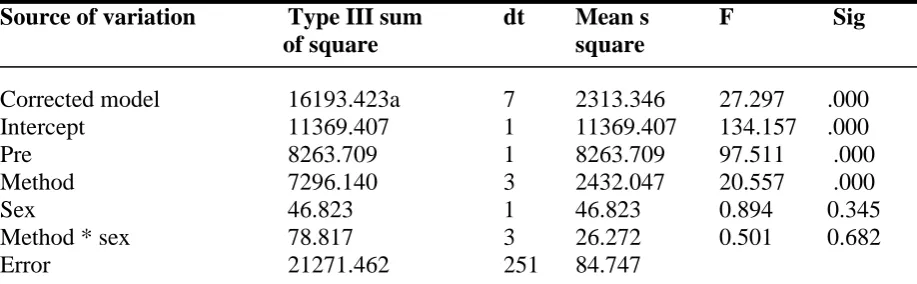
Table 3 ANCOVA summary table comparing concept mapping, cooperative learning, 5E learning cycle and lecture groups on achievement with pre-test as co-variant
Source of variation Type III sum dt Mean s F Sig
of square square
Corrected model 16193.423a 7 2313.346 27.297 .000
Intercept 11369.407 1 11369.407 134.157 .000
Pre 8263.709 1 8263.709 97.511 .000
Method 7296.140 3 2432.047 20.557 .000
Sex 46.823 1 46.823 0.894 0.345
Method * sex 78.817 3 26.272 0.501 0.682
Electronic Journal of Science Education ejse.southwestern.edu
Total 568086.790 259
Table 3 which compared achievement test scores of students in the concept mapping, cooperative learning, 5E learning cycle and lecture groups indicated a significant difference among the groups. The calculated F was found to be greater than the critical F, which implied that F = 20.557, P < 0.05.
With respect to interaction between sex and method of instruction on achievement, a non-significant interaction effect was found, shown in Table 3. This was based on the fact that the calculated F value is less than the critical F value, F = 0.501, P > 0.05. This meant that the sex of the students did not really combine with the methods of instruction to influence their post test scores in the various instructional groups.
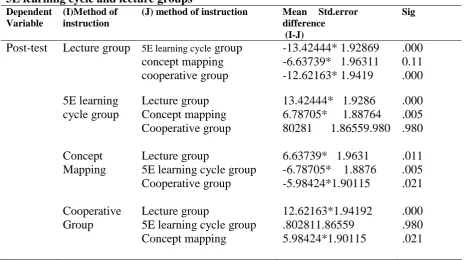
Table 4 Scheffe post – hoc test to compare the concept mapping, cooperative learning, 5E learning cycle and lecture groups
Dependent Variable
(I)Method of instruction
(J) method of instruction Mean Std.error difference (I-J)
Sig
Post-test Lecture group 5E learning cycle group concept mapping cooperative group
-13.42444* 1.92869 -6.63739* 1.96311 -12.62163* 1.9419 .000 0.11 .000 5E learning cycle group Lecture group Concept mapping Cooperative group
13.42444* 1.9286 6.78705* 1.88764 80281 1.86559.980
.000 .005 .980 Concept Mapping Lecture group
5E learning cycle group Cooperative group
6.63739* 1.9631 -6.78705* 1.8876 -5.98424*1.90115 .011 .005 .021 Cooperative Group Lecture group
5E learning cycle group Concept mapping 12.62163*1.94192 .802811.86559 5.98424*1.90115 .000 .980 .021
Electronic Journal of Science Education ejse.southwestern.edu those in the concept mapping group; and (c) students in the cooperative learning and 5E learning cycle groups obtained scores that did not significantly differ.
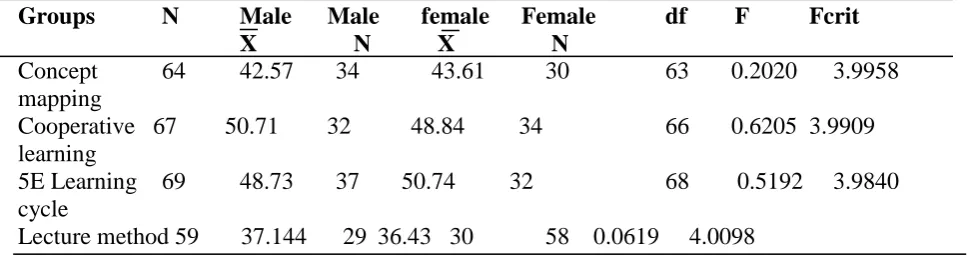
Table 5 Comparison of post-test scores of males and females in concept mapping, cooperative learning, 5E learning cycle and lecture groups by mean and ANOVA.
Groups N Male Male female Female df F Fcrit X N X N
Concept 64 42.57 34 43.61 30 63 0.2020 3.9958 mapping
Cooperative 67 50.71 32 48.84 34 66 0.6205 3.9909 learning
5E Learning 69 48.73 37 50.74 32 68 0.5192 3.9840 cycle
Lecture method 59 37.144 29 36.43 30 58 0.0619 4.0098
On comparison of post-test scores of males and females, all the male and female participants in the concept mapping, cooperative learning, 5E learning cycle and lecture groups did not significantly differ on the knowledge of concepts taught (Table 5). This was determined by comparison of their mean post-test scores and confirmed with ANOVA test. In all the groups, the calculated F values were less than the critical F values (Table 5).
Table 6 comparison of X scores of groups taught with concept mapping, cooperative learning, 5E learning cycle and lecture on retention.
Groups N Average SD
5E learning cycle 69 90.7 4.77
Cooperative learning 64 88.43731 6.14
Concept mapping 67 81.1125 6.55
Lecture method 59 76.1661 6.2009
Table 6which compared the mean estimated retention of students taught with the four methods, indicated that students taught with the 5E learning cycle method retained more of the biological knowledge (90.7%) than those taught with concept mapping, cooperative learning and lecture methods respectively. On ranking of retention, among the groups, the group taught with 5E learning cycle method was followed by the group taught with cooperative method (88.44%), the next was the group taught with concept mapping with (81.11%) while the group taught with the lecture method had the least (76.16%). The noticed difference on retention scores among the students taught with concept mapping, cooperative learning, 5E learning cycle and lecture methods was confirmed with ANOVA test.
Table 7 ANOVA summary table comparing students in concept mapping, cooperative learning, 5E learning cycle and lecture method on retention.
Source of variation SS df MS F P-value F crit
Electronic Journal of Science Education ejse.southwestern.edu Total 17504.12726 258
The ANOVA comparison of the groups (Table 7) indicated a significant difference, F = 80.6477, P<0.05. This was based on the fact that the calculated F-value of 80.64771 is greater than the critical F-value of 2.640001 at 0.05 level of significance.
Discussion
A focus of research in science education is to isolate the appropriate methods and strategies which may lead to effective teaching and cause effective learning by students. A review of literature on instructional methods indicated that new methods and strategies are periodically recommended for science teaching and learning. For each of these new methods convincing proofs of their effectiveness in science teaching and learning are demonstrated. However, it is obvious that not all these strategies and methods are appropriate for all subjects and conditions. In most cases, the science teachers are at cross roads as to which methods are most appropriate for teaching the different science subjects. This study therefore, is not only timely but significant in the sense it will reduce the frustration science teachers, in general, and Biology teachers in particular, face in their choice of the most appropriate method among these four popular methods for effective teaching and learning.
The most significant findings are the large effects of the instructional methods on students’ achievement and retention. The non-significant difference between males and females on achievement and retention in all the instructional methods was expected. The higher achievement of students in the constructive teaching groups (5E learning cycle, cooperative learning and concept mapping) is noteworthy, as is the lower achievement and retention of students in the lecture group. The ANCOVA and ANOVA analyses showed that the method of teaching does predict students’ achievement in groups with varying instructional methods.
However, while the unique and significant effects of 5E learning cycle, cooperative learning and concept mapping on students’ achievement over and above lecture method is applauded, there are several specific observations that were made about the findings in relation to the various instructional methods. First, the analysis indicated that all methods had significant effects on students’ achievement in Biology. Since the post-test scores of all the students in all the groups were significantly greater than their pre-test scores, it therefore follows that the post achievement test scores was earned not by chance but as a result of treatment with the prescribed instructional methods. This implies that all the methods compared have the potential to cause learning to take place but at varying degrees which is the bases for this study. The ability of this study to establish a cause and effect relationship as found, agrees with the principle of experimental research as recommended by Borich (2004), Johnson and Christenson (2000), and Wiseman (1999). They all agreed that in experimental research, a treatment must be confirmed to be responsible for any difference noticed.
Electronic Journal of Science Education ejse.southwestern.edu scores in the achievement test. The post hoc analysis which indicated that all the students taught with concept mapping, cooperative learning and 5E learning cycle strategies outscored those taught with lecture method suggests that the students in these groups may have been more active in the learning process than those in the lecture group and thus contributing to their higher achievement scores. This is hinged on the fact that students learn better by doing. The low achievement scores as found among the students taught with lecture method may not be unconnected with the transmission approach involved, where the teachers pass over their knowledge to their pupils.
The significantly higher achievement of students taught with concept mapping, cooperative learning and 5E learning cycle over those taught with lecture method as found in this study is consistent with the findings earlier researchers made on this same subject matter. Nevertheless, higher achievement of students taught with cooperative learning and 5E learning cycle over those taught with concept mapping, the limitations ascribed to concept mapping may be the possible explanation for the lower score. These limitations may have frustrated the low achievers particularly and resulted in their lower achievement scores to produce the lower mean found with the group. The non-significant difference in the achievement scores between students in the cooperative and 5E learning cycle groups may be explained with the very active participation of students in learning process and the cooperative activities which go on during instruction with the two methods. This may have influenced the students’ effective learning and understanding of the concepts they were exposed to equally.
Thirdly, the analyses also found a non-significant interaction effect between sex and method of instruction on achievement. This simply means that the combination of the sex of students and the methods used for instruction does not influence achievement in Biology. This therefore implies that the noticed significant differences in achievement scores among students taught with concept mapping, cooperative learning, 5E learning cycle and lecture methods may not be linked to sex but entirely to the methods of instruction. It therefore follows that the degree of achievement earned by students in the various instructional groups may be hinged on the effectiveness of the methods. This finding agrees with the intention and recommendation of science education researchers that whatever method that should be adopted for science teaching should be such that enables students to learn equally, irrespective of sex. This disposition is most relevant now that there is a deliberate effort to bridge the gap between males and females on representation in science.
Fourthly, the analyses once again showed that no significant difference exists between the males and females in the concept mapping, cooperative learning, 5E learning cycle, and lecture groups. This finding, therefore, suggests that the four instructional methods are suitable for science teaching and learning. This position is based on the fact that the major objective of science education research is to identify and isolate instructional methods and strategies which will enable all students irrespective of sex and ability to learn equally. This finding is consistent with the findings of researchers in the past on the same issue.
Electronic Journal of Science Education ejse.southwestern.edu sequence: 5E learning cycle group 90.7%, Cooperative learning group 88.44%, Concept Mapping group 81.11% while lecture group 76.16%. The ANOVA comparison of the four groups indicated significant difference among the groups while post hoc analysis on retention indicated that students taught with 5E learning cycle and cooperative learning significantly retained more than those taught with concept mapping and lecture methods. No significant difference was, however, found on retention between students taught with 5E learning cycle and cooperative learning methods. Students taught with concept mapping were found to retain more than the lecture group. Lecture method was the last on ranking of retention among the four methods. The finding of significant retention by students in all the instructional groups agreed with what initial researchers found using the various methods.
The noticed lower retention of biological knowledge by students taught with lecture method and concept mapping than those taught with 5E learning cycle and cooperative learning, may not be unconnected with the earlier identified limitations associated with the two methods. The problem of the difficulties in the construction of concept maps and their interpretation as pointed out by Bennett (2003) may have frustrated particularly the low ability students in the effective learning and retention of the concepts they were exposed to. While in the lecture group, the transmission approach adopted by teachers and the passive role played by students may have made the knowledge they acquired to be easily forgotten after a short period of time. These may have resulted in the lower retention found. The non-significant difference on retention between students in the cooperative learning and 5E learning cycle groups as found in this study may be explained with the very high level of engagement of students in the learning process. To apply cooperative learning in the Biology teaching involved 18 steps while the application of 5E learning cycle in the classroom entails five stages all of which are shown in the treatment procedure. These series of activities may have influenced the internalization of the concepts taught and their eventual retention for a longer time.
Conclusion
Electronic Journal of Science Education ejse.southwestern.edu findings of this study that the better methods for teaching and learning Biology could be either the learning cycle or cooperative learning. These methods will however be very effective only if the laboratory facilities for science teaching and learning are available in schools, considering the numerous steps involved in their use. In schools where laboratory facilities for Biology teaching and learning are not available, a better alternative to the lecture method remains the concept mapping since the method does not essentially demand the use of laboratories for practice. However, before the adoption of the method as an appropriate instructional strategy, both the teachers and students should be well trained to acquire the skills necessary for its use. The efficient acquisition of the skills necessary for its use both by the Biology teachers and students will reduce the limitations associated with the method. Lecture method could still be used to teach very abstract topics to enable students easily acquire knowledge, new information, and explanation of events or things. It will reduce the frustration students will experience with the other methods when dealing with very novel concepts.
References
Ajaja O.P. (1998).An evaluation of differential effectiveness of Ausubel, Bruner and Karplus methods of teaching biology in Nigerian secondary schools. Unpublished PhD Thesis of University of Benin.
Ajaja, O.P. (2005). An evaluation of differential effectiveness of Ausubel, Bruner and Karplus methods of teaching biology in Nigeria secondary schools. African Journal of Interdisciplinary Studies, 6 (1&2), 1 – 9.
Ajaja, O.P. (2009). Teaching methods across disciplines. Ibadan: Bomn Prints.
Ajaja .O.P (2011). Concept mapping as a study skill: Effects on students’ achievement in biology. International Journal of Educational Sciences, 3(1), 49 – 57
Ajaja, O.P., & Eravwoke, O.U. (2010). Effects of cooperative learning strategy on junior secondary school students achievement in integrated science. Electronic Journal of Science Education, 14(1), 1 – 18.
Ajaja, O.P., & Eravwoke, U.O. (2012). Effects of 5E learning cycle on student's achievement in biology and chemistry. Cypriot Journals of Educational Sciences, 7 (3), 244 – 262. American Institute of Biology Sciences (1958).Biological science curriculum study.
Colorado: University of Colorado.
Atkins, J.M., & Karplus, R. (1962).Discovery or invention? The Science Teacher, 29(5), 45. Ausubel, D.P. (1968). Educational psychology: a cognitive view. New York: Holt Rinehart
and Winston.
Barman, C., & Kotar, M. (1989).The learning cycle. Science and Children, 29 (2), 30 – 32. Baser, E.T. (2008).Cited in S.Pulat, (2009).Impact of 5E learning cycle on sixth grade
students’ mathematics achievement and attitude towards mathematics. M.Sc. Thesis of Middle East Technical University.
Bennett, J. (2003). Teaching and learning science London: Continuum.
Biological Science Curriculum Study (BSCS), (1992). Science of life and living. Dubugue I.A: Kendall/hunt.
Borich, G.D. (2004). Effective teaching methods, fifth edition. New Jersey: Merrill, Prentice Hall.
Bramlett, R. (1994). Implementing cooperative learning: A field study evaluating issues of school – based consultant. Journal of School Psychology, 32(1), 67- 84.
Electronic Journal of Science Education ejse.southwestern.edu Bruner, J. (1960). The process of education. Cambridge: Harvard University Press.
Bybee, R.W. (1997). In learning cycle (2010). Retrieved sept.6 2010 from http//books.google.com/books?
Campbell, D.T.,&Stanley, J.C. (1963).Experimental and quasi experimental designs for research. New York: American Educational Research Association.
Campbell, J.A. (1961). The chemical education material study. Journal of Chemical Education, 38 (1), 2.
Crosby, M.S., & Owens, E.M. (1993). The disadvantages of tracking and ability grouping: A look at cooperative learning as an alternative. In National Dropout Prevention Center Bulletin: Solutions and Strategies, 5, 1 - 8.
DES, (1968).Enquiry into the flow of candidates in science and technology into higher education (the DaintonReport). London: HMSO.
Ezeudu, F.O. (1998). The effect of concept mapping on students’ achievement, interest and retention in selected units of organic chemistry. Review of Education, 15(1), 181 – 190. Fensham, P.J. (2008). Science education policy-making: Eleven emerging issues. UNESCO. Glassman, P. (1989). A study of cooperative learning in mathematics, writing and reading in
the intermediate grades: A focus upon achievement, attitudes and self-esteem by gender, race, and ability group. Dissertation, Hofstra University, New York.
Hackett, J.K. & Moyer, R.H. (1991).Science in your world. New York: Macmillan.
Hall, R., Dansereau, D. & Skaggs, L. (1992).Knowledge maps and the presentation of related information domains. Journal of Experimental Education, 61, 5 – 18.
Jegede O.J., Alayemola F., & Okebukola P.A (1992).The effect of concept mapping on students’ anxiety and achievement in biology. Journal of research in science teaching, 27, 951-960.
Johnson, B., & Christensen, L. (2000).Educational research; Boston: Allyn and Bacon. Johnson, D., Johnson, R. & Holubec, E. (1990).Cooperation in the classroom. Edina, M.N:
Interaction Book Company.
Johnson, G.B., &Raven, P.H. (1998).Biology: Principle and explorations. Florida: Holt, Rinehart and Winston.
Johnson, R., Johnson, R. & Stanne, M. (1986). Comparison of computer – assisted cooperative, competitive, and individualistic learning. American Educational Research Journal, 23, 382 – 392.
Kelly, G. (1955). The psychology of personal construct, New York: Norton.
Kinchin, I.M. (2000a). Using concept maps to reveal understanding: A two tie analysis. School Science Review, 81, 41 – 46.
Kinchin, I.M. (2000b). Concept mapping in biology. Journal of biological education, 34, 61 – 68.
King, A. (1998). Transactive peer tutoring: Distributing, cognition and metacognition. Educational Psychology Review, 10 (1), 57 – 74.
Kneller, G.F. (1972). Introduction to the philosophy of education. New York: John Wiley. Lee, C.A. (2003). A learning cycle inquiry into plant nutrition. The American Biology
Teacher, 65(2), 136 – 144.
Leedy, P.D., & Ormrod, J.E. (2005).Practical research: Planning and design. New Jersey: Pearson, Merrill Prentice Hall.
Lord, T.R. (1999). A comparison between traditional and constructivist teaching in environmental science. The Journal of Environmental Education, 30(3), 22 – 28.
Electronic Journal of Science Education ejse.southwestern.edu Markow, P.G., & Lonning, R.A. (1998). Usefulness of concept mapping in college chemistry
laboratories: Students perception and effects on achievement. Journal of Research in Science Teaching, 35(9), 1015 – 1029.
Megnin, J. (1995). Combining memory and creativity in teaching mathematics. Teaching Prek – 8, 25 (6), 48 – 49.
Mensah, J.A., Otuka, J., & Ernest, N.W. (1995). Concept mapping: A Ghanaian secondary school students’ experience. Science Education International I.C.A.S.E, 6(4), 24 – 28. Moyer, R.H., Hackett, J.K., & Everett, S.A. (2007).Teaching science as investigation:
Modeling inquiry through learning cycle lessons. New Jersey: Pearson Merrill? Prentice Hall.
National Research Council, (1996).National Science Education Standards. Washington, DC: National Academy Press.
Novak, J.D., & Gowin, D.B. (1984).Learning how to learn. Cambridge, UK: Cambridge University Press.
Novak, J.D., & Musonda, D. (1991).A twelve – year longitudinal study of science concept learning. American Educational Research Journal, 28, 117 – 153.
Nuhoglu, H, & Yalcin, N. (2006). The effectiveness of the learning cycle models to increase students achievement in the physics laboratory. Journal of Turkish Science Education, 3(2), 28 – 30.
Obianor, E.W. (1997). The use of concept mapping to teach the concept of atom. Unpublished M.Ed. dissertation of Nnamdi Azikiwe University, Awka, Nigeria.
Okebukola, P.O.A. (1989). Concept mapping with co-operative learning flavour. The American Biology Teacher, 54 (4), 218 – 221.
Power, D., & Wright, E. (2008). The effects of hand-on-science instruction on students cognitive structures as measured by concept maps. Paper presented at the annual meeting of the National Association for Research in Science Teaching, Cambridge, M.A.
Piaget, J. (1970). Piaget’s theory. In P. Mussen (Ed), Carmichael’s manual of child psychology (3rd ed., Vol1). New York: Wiley.
Piget, J., & Inhelder, B. (1985).The growth of logical thinking to adolescence. New York: Basic Books.
Pulat, S. (2009).Impact of 5E learning cycle on sixth grade students’ mathematics achievement and attitude towards mathematics. M.Sc. Thesis of Middle East Technical University.
Ramalingan, S.T. (2008). Modern biology for senior secondary schools. Onitsha: African first publishers Ltd.
Stevens, R., & Slavin, R. (1995). The cooperative elementary school: Effects on students’ achievement, attitudes, and social relations. American Educational Research Journal, 32(2), 321 – 351.
Strong, L. (1968). Chemical bonding approach. Richmond: Earldom College
Thorndike, R.L., & Hagen, E.P. (1997).Measurement and evaluation. New York: John Wiley and Sons.
Trowbridge, L.W., & Bybee, R.W. (1996).Teaching secondary school science: Strategies for developing scientific literacy. New Jersey: Prentice Hall. Inc.
Trowbridge, L.W., Bybee, R.W. & Powell, J.C. (2000). Teaching secondary school science. Upper Saddle River, NJ: Merrill/Prentice Hall.
Vygotsky, L.S. (1978). Mind in society. Cambridge, M.A: Harvard University Press.
Electronic Journal of Science Education ejse.southwestern.edu Webb, N., Trooper, J., & Fall, R. (1995). Constructive activity and learning in collaborative
small groups. Journal of Educational Psychology, 89(34), 406 – 423.
Wilder, M., & Shutteworth, P. (2004). Cell inquiry: A 5E learning cycle lesson. Science Activities, 41(1), 25 – 31.
Wise, K., & Okey, J. (1983). A meta – analysis of the effects of various science teaching strategies on achievement. Journal of Research in Science Teaching, 20(5), 434.
Electronic Journal of Science Education ejse.southwestern.edu Appendix A
Sample of Test Items in BAT
Instruction: Answer all questions, each correct answer attracts 1 mark
Each questions is followed by four options Time Allowed: 20 minutes
1. The term cell can best be described by which of the following? Answer: C A. the smallest unit
B. the smallest organism C. the smallest unit of life
D. the smallest indivisible organism
2. Eukaryotic cells differ from prokaryotic cells in that eukaryotic cells ……Answer: D A. lack organelles
B. have DNA, but not ribosomes C. are single-celled
D. have a nuclear membrane
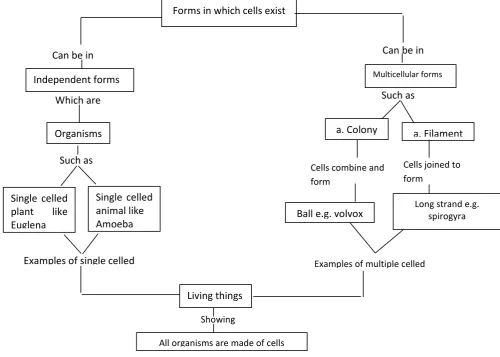
3. Cell exists in the following forms except…. Answer: B
A. independent form B. mass
C. colony D. filament
4. The term “cell” was first used by …. Answer: B A. Robert Hooke in 1628
B. Robert Hooke in 1665 C. Robert Hooke in 1668 D. Robert Hooke in 1672
5. Organelles that are present in plant cells but absent from animals cells include the ….Answer: A
A. Chloroplast and central vacoule B. flagellum and cell wall
C. mitochondria
D. endoplasmic reticulum, cell wall and lysosomes
6. The organelle which packages and distributes proteins and lipids is……Answer: B A. endoplasmic reticulum
B. golgi apparatus C. lysosome
D. nuclear envelope
7. The organelle which acts as the central power house is…….Answer: C A. lysosome
Electronic Journal of Science Education ejse.southwestern.edu D. golgi apparatus
8. Which of the following does the chloroplast do in a cell? ...Answer: D A. Capture water
B. capture carbon dioxide C. capture oxygen
D. capture sunlight
9. In which of the following organelles is protein manufactured in the cell? ………Answer: C A. rough endoplasmic reticulum
B. smooth endoplasmic reticulum C. ribosome
D. vesicle
10. The activities of the cell is directed by …..Answer: C A. Chromosomes
B. mitochondria C. nucleus D. lysosomes
11. The spontaneous movement of any molecule from an area of high concentration to an area of low concentration is…. Answer: B
A. Osmosis B. diffusion C. equilibrium D. active transport
12. Which type of molecules most easily move across a membrane? Answer: A A. Hydrophobic molecules, like N2
B. large polar molecules, like glucose C. ions, like chloride (Cl-)
D. small, uncharged polar molecules, like water
13. Distilled water is ……… relative to a solution containing dissolved salts. Answer: B
A. hypertonic B. hypotonic C. isotonic
D. none of the above
14. A red blood cell placed in distilled water will….. Answer: C A. remain unchanged
Electronic Journal of Science Education ejse.southwestern.edu Appendix B
Concept Mapping Strategy
Concept Mapping Classroom.Subjects in this group were introduced to and trained on how to construc