C o nf e r e n c e 2 0 1 5 : G e o g r a p h i e s of t h e An t h r o p o c e n e , 2-4 S e p t e m b e r 2 0 1 5 , E x e t er, UK. ( U n p u b li s h e d )
Do w n l o a d e d fr o m : h t t p ://i n si g h t . c u m b r i a . a c . u k /i d/ e p ri n t/ 2 2 7 2 /
U s a g e o f a n y i t e m s f r o m t h e U n i v e r s i t y o f C u m b r i a’ s i n s t i t u t i o n a l r e p o s i t o r y ‘I n s i g h t ’ m u s t c o n f o r m t o t h e f o l l o w i n g f a i r u s a g e g u i d e l i n e s .
Any it e m a n d it s a s s o ci a t e d m e t a d a t a h el d i n t h e U niv e r si ty of C u m b r i a ’s in s ti t u ti o n al r e p o si t o r y I n si g h t ( u nl e s s s t a t e d o t h e r wi s e o n t h e m e t a d a t a r e c o r d ) m a y b e c o pi e d , di s pl ay e d o r p e rf o r m e d , a n d s t o r e d i n li n e wi t h t h e JIS C f ai r d e a li n g g ui d eli n e s ( av ail a bl e
h e r e) fo r e d u c a t i o n al a n d n o t-fo r-p r ofi t a c tiviti e s
p r o v i d e d t h a t
• t h e a u t h o r s , ti tl e a n d full bi blio g r a p h i c d e t ail s of t h e it e m a r e ci t e d cl e a rly w h e n a n y p a r t
of t h e w o r k is r ef e r r e d t o v e r b a lly o r i n t h e w ri t t e n fo r m
• a h y p e rli n k/ U RL t o t h e o ri gi n al I n si g h t r e c o r d of t h a t it e m is i n cl u d e d i n a n y ci t a ti o n s of t h e w o r k
• t h e c o n t e n t is n o t c h a n g e d i n a n y w a y
• all fil e s r e q ui r e d fo r u s a g e of t h e it e m a r e k e p t t o g e t h e r wi t h t h e m a i n it e m fil e.
Yo u m a y n o t
• s ell a n y p a r t of a n it e m
• r e f e r t o a n y p a r t of a n it e m wi t h o u t ci t a ti o n
• a m e n d a n y it e m o r c o n t e x t u ali s e it i n a w a y t h a t will i m p u g n t h e c r e a t o r ’s r e p u t a t i o n
• r e m ov e o r a l t e r t h e c o py ri g h t s t a t e m e n t o n a n it e m . T h e full p oli cy c a n b e fo u n d h e r e.
Alt e r n a t iv ely c o n t a c t t h e U niv e r si t y of C u m b ri a R e p o si t o ry E di t o r b y e m a ili n g
Page 1 of 12
HERG Postgraduate Reflective Essay Competition 2015
Essay title: Developing an academic identity: What’s the time Mrs Wolf?
Author Details
Tracy Hayes, Lecturer in Children, Young People and Families and Doctoral Researcher, University of Cumbria
The address to which correspondence should be sent
University of Cumbria Fusehill Street
Carlisle CA1 2HH
Email: [email protected] Phone: 07881 440316
Abstract
The wolf embodies the Anthropocene, the current geological epoch, “…in which human society is acknowledged as having become the greatest force shaping planet earth” (RGS, 2015). Understanding this new epoch demands a ‘more-than-human’ mode of theorising. Utilising metaphors and symbolism, and applying the hermeneutic tradition of
‘questionableness’ (Nixon, 2014), my reflective essay offers a creative interpretation of my life experiences, inviting readers to join in a playful exploration of what it means to become an ‘academic’. I draw on an amorphous body of literature, from diverse sources such as children’s author Enid Blyton; Jungian psychologist, Pinkola Estes; and Children’s
Geographies, long recognised as a place that utilises creative methodologies, resulting in interdisciplinary work that is challenging creative and exciting (Kraftl, Horton and Tucker, 2014). I pay homage to, and further develop that tradition, whilst embracing concepts of playfulness (Bateson and Martin, 2013) and transformational learning (Eyler and Giles, 1999). I have gained a growing awareness of my own identity, of how it has been shaped and influenced by others over the years. This has been accompanied by a flourishing of confidence in my academic abilities. I have learned how to howl.
190 words
Keywords
Page 2 of 12
Setting the scene
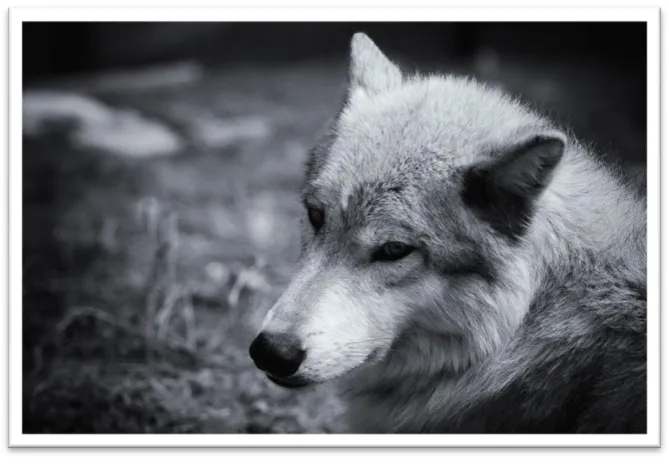
Figure 1: Canis lupus (Nomadic Lass, 2011)
Wolves are some of the world's most charismatic and controversial animals, capturing the imaginations of their friends and foes alike. Highly intelligent and adaptable, they hunt and play together in close-knit packs … Once teetering on the brink of extinction … wolves have made a tremendous comeback in recent years, thanks to legal protection, changing human attitudes, and efforts to reintroduce them to suitable habitats...(Mech and Boitani, 2010)
In many ways, the wolf embodies the impact of the Anthropocene, the current geological epoch, ‘…in which human society is acknowledged as having become the greatest force shaping planet earth’ (RGS, 2015). Understanding this new epoch demands a ‘more-than-human’ mode of theorising, for example by utilising metaphors and symbolism and applying the hermeneutic tradition of ‘questionableness’ (Nixon, 2014). This essay offers a creative interpretation of my life experiences and invites the reader to join in a playful exploration of what it means to become an ‘academic’1. My essay draws on an amorphous body of
literature from a wide range of disciplines including children’s geographies, which itself has a diverse foundation and has long been recognised as a place that utilises creative
Page 3 of 12 For me, the wolf has come to symbolise the development of my academic identity, counter-balanced by my wider identity as embodied within my relational roles of a wife, a parent and as a child (Burke and Stets, 2009). The most recurrent question within this process has been “who am I?” I have often found it easier to say what I am not, than to say what I am. As identified by Eyler and Giles (1999: 133), ‘Transformational learning occurs as we struggle to solve a problem…we are called to question the validity of what we think we know or to critically examine the very premises of our perception of the problem’. What happens when the problem we perceive is ourselves? In this essay I interpret my inner dialogue by linking the emotional and cognitive processes (Mezirow, 1990; Theodosius, 2012) that have occurred as part of the transformational process whereby I have come to be the person I am: ‘It is in relationship – in the interaction of the inner person with the outer world – that experience occurs and it is in and through experience that people learn’ (Jarvis and Parker, 2005: 1). My learning has been troubling and unsettling (Meyer and Land, 2003) and I share this with you as a way of encouraging you to consider how you have come to be the person you are. And then to consider in what ways this may impact on your relationships with the world around you.
To structure this essay I am utilising a Map of Reflective Writing (Moon, 2004) as it effectively captures the ongoing, exploratory nature of my reflections. To paraphrase Owens’ (2010: 25-26) discussions about the work of C.G. Jung, a reflective map is a conceptual tool, useful for signalling the prominent spatial and temporal landmarks, translating what I have learnt from my travels into tools of discovery that may be useful for deciphering human experience. Within the map are key stages: setting the context through description of events; feeding in of additional ideas; reflexive thinking relating reflection to actions; acknowledging learning; moving on to more reflection and review of purpose (Moon, op.cit.). In folklore and mythology the wolf is symbolic2, taken to represent keen intelligence; deep connection with, and expression of instincts; appetite for freedom and a feeling of being threatened, lack of trust in oneself or others. I have often felt silenced by others, unable to express myself through my ‘outer voice’ and as a result have developed the ability to listen and attend to my inner voice; through reflexivity I have learned how to weave these together. Writing this has been an emotional experience, resulting in learning, knowledge and understanding: perhaps most important of all, it has proved empowering.
Page 4 of 12 for my doctorate. Pausing to reflect on my transformation from natural to social scientist raises the question: does there have to be a distinction or is this a false dichotomy based on traditional methodologies? Over the last three years I have found a home within the RGS, particularly the Geographies of Children, Young People and Families sub-group. Does this mean that I am a geographer? Or is this yet another facet of my increasingly complex, identity, something that has always been implicit in my approach to learning and is now becoming explicit as I shine a reflexive light upon it? To understand this I need to go back to my beginnings …
As a young child
I love reading, especially about nature. From a very early age I have buried my nose in a book; however the kinds of books I read, and the knowledge embodied within them has changed over the years. I reflect on my books as I question how did I come to be the person I am? What tales do my books have to tell about me? Where did my fascination for wolves come from, and how does Enid Blyton3 fit in all of this: two apparently disconnected
questions that in my world have become imperceptively intertwined. The second question is one I have been pondering since a conversation with a colleague, getting to know each other through swapping stories of experiences from childhood, growing up into adulthood, failed past relationships and happy current ones. I admitted: “Enid Blyton made my
childhood” in an attempt to explain my approach to outdoor learning – an approach that
embraces thinking like a child, emphasising the concepts of playfulness, imagination and stories (Hayes, 2013b). She responded: “Me too!” We laughed, acknowledging that it was not ‘cool’ to admit this! For her it was the boarding school stories, midnight feasts and mysteries that appealed; for me it was the magical folk, enchanted woods and faraway trees, and the overwhelming sense that life was an adventure. I spent many happy hours playing with my twin sister in our back garden, looking for pixies, pretending to be a fairy, concocting magic potions from petals and rainwater. The world described by Blyton came alive in our garden and in our imaginations; however it was quickly outgrown, and then forgotten as I moved on to more ‘grown-up’ books, with an ever-decreasing focus on nature and an increasing focus on relationships with people (especially boys)…
Growing up
Page 5 of 12 eschewed Blyton’s books in favour of less ‘girlie’ books; along with my dolls they were donated to charity and I began investing in more grown up reading on bird watching, gardening and cookery. My children grew older, providing space for me to begin to study: I registered with the Open University 4and after six years successfully achieved BSc (Hons) in Natural Science – 1st Class! I started volunteering for a local conservation charity, helping with groups designed to encourage families to explore nature; then I was employed to organise the groups. My book collection grew wider: art, crafts, poetry, identification guides and scientific surveys all made their way on to my shelves. A postgraduate certificate in education for sustainability added yet more weighty tomes!
I moved on to environmental youth work, and continued to study: first a certificate, then a Masters in Youth Work and Community Development - more books! And journals and study guides. The children’s books were packed away: the favourites carefully boxed and stored; the others passed on to charity shops and gifted to friends with younger children. Then I started learning to teach, and following an introductory course in ‘Philosophy for Children5’ restarted buying children’s books: I began to understand that these books have an ability to convey important messages in a concise, succinct, understandable way. On holidays to the Lake District I discovered a new love for Beatrix Potter6, and treated myself to a collection of her books, plus toys to match! However it was not just the stories that appealed to me, it was the author herself: I drew many parallels between her life and mine, her experiences resonated with mine. Like Beatrix and her Cumbrian husband, my new husband and I shared a love of being outdoors and especially being outdoors in Cumbria. We holidayed in
Scotland and I encountered wolves – real, live, howling wolves – trapped in a wildlife park. I wanted to set them free…
Becoming an academic
(Hamilton-Page 6 of 12 Lytle, 2007). However, her work still differed from mine in that it seemed to be planned, a result of conscious effort to write, whilst my creative writing felt sub-conscious: it mostly happened when I was not expecting it. Whilst most of my stories were about people, other characters crept in: Boggarts, bunny rabbits and bears (Hayes, 2015) - lots of bears!
I began sharing my stories at conferences, cautiously at first, expecting to be rebuked as non-academic (Hayes, 2014b). That did not happen; instead I was praised for being different, for making my work accessible and understandable; they became part of my methodology (ibid.). But what to do with them next, what was their purpose? And perhaps more importantly (to me anyway) why was my brain working in this way? The first question was relatively easy: I developed a concept called ‘Adventure Bears’9, a small handmade fabric teddy bear designed to be played with outside which I gifted to recipients with a short story making the links to playing outside. One year later I had made over 80 of them and had begun selling them to raise funds for charity. I determined to address the second question, as to why my brain was working this way by using the metaphor of reflection as looking into a mirror whereby I look into myself (Uzat, 1998). I can see me surrounded by my experiences, people, places, objects; my mind is alive with images (Parker, 2013) and metaphors – which help to capture ‘...the essential nature of an experience’ (Lawley and Tompkins, 2000: 6): my book collection becomes a metaphor for the different phases of my life, as I have grown and developed into the person I am now. One book catches my eye: Enid Blyton's Nature Lover's Book (1944); a book purchased with the aim of helping me to develop inspiring and engaging activities for families and young children. I have not looked at it for years. I open it and began to read: the words feel familiar, memories stir deep within me. The lilting, sing-song text speaks to me, calling to the little girl within…
Back to today…
Page 7 of 12 So where do the wolves fit in all this? They crept into my life un-noticed. I remember
reading White Fang10 as a child, but the book was lost as I grew up. My 40th birthday was marked with a gift of a toy wolf (a present from the wildlife park) along with homemade cards decorated with wolves; these were enjoyed, and then quietly packed away in my treasure box. In 2013 I was invited to join a leadership training programme, aligned to my doctoral research. This proved to be a pivotal, threshold moment in my life: surrounded by confident, outwardly more successful professionals, I crumpled into a mass of insecurity; I felt a fraud and a fake, out of my depth. Each night of the four-day course I returned home, howling at my husband “Who am I? What am I doing here? What’s my purpose?” I was deep in the pain of self-doubt, mired in a liminal space… ‘a place of ill-defined purpose … of transition … a state of mind that is blurred such as that between the state of dreaming and being awake’ (Wilson, 2012: 32). This process of self-discovery proved to be a threshold moment, a rite of passage (Norris, 2011). One afternoon we played a game; unseen by the others, we had to choose a picture of an animal to enact in the woods. Without conscious thought I sprang across the room first and silently pocketed the picture of a wolf. I felt myself come alive in the game: one minute I was stalking prey; the next I was leading the others in a hunt; then silently observing the group from a distance. Afterwards the others expressed their surprise and delight at my performance. The week finished with a group exploration of the impact we thought we had had on each other: this was torture for me. Wracked by self-doubt I had been unable to relax and participate fully within the group, something they openly acknowledged: they wanted more of the Tracy they had experienced in the game. I came away with a determination to find her…
Discovering my inner wolf
I bought a book. “Healthy wolves and healthy women share certain psychic characteristics: keen sensing, playful spirit, and a heightened capacity for devotion” (Pinkola Estes, 1992: 2) The words resonated deep within me, but as someone unfamiliar with psychology, this was not an easy read; I lingered over each chapter, using it to reflect on my life and experiences. I gained a growing awareness of my own identity, of how it has been shaped and influenced by others (real and fictional) over the years; this was accompanied by a flourishing of
Page 8 of 12 Parodying the quote that started this essay, wolves can symbolise a group of academics who gather in packs at conferences, in constant need of nourishment and mental stimulation to maintain their academic identity. With recent changes to academic funding, many fear the academic world as we know it, may be teetering on the brink of extinction. I have a role to play in this, as a researcher and as a lecturer I have meaning and purpose. I have learned how to hunt down opportunities, to carefully observe and contemplate the world around me before pouncing into action. I have developed a sense of trust in myself and my abilities. I relish the chance to relax by a fire and recuperate after a long day of work and most of all, I understand the need to folic, play and socialise with others. As I conclude this essay, I imagine Enid playfully asking me the question, “What’s the time Mrs Wolf11?” To which I firmly reply, “It’s MY time.”
Page 9 of 12
References
Bateson and Martin (2013) Play, playfulness, creativity and innovation. Cambridge: Cambridge University Press
Blyton, E. (1944) Nature Lover's Book Reprint, London: Evans Brothers Limited, 2008 Burke, P. and Stets, J. (2009) Identity Theory Oxford: Oxford University Press
Eyler, J. and Giles, D. (1999) Where’s the Learning in Service-Learning? San Francisco, CA: Jossey-Bass
Hamilton-Lytle, M. (2007) The Gentle Subversive: Rachel Carson, SILENT SPRING, and the
Rise of the Environmental Movement Oxford: Oxford University Press
Hayes T. (2015) ‘A playful approach to outdoor learning: Boggarts, Bears and Bunny Rabbits!’, in Horton J and Evans B (eds.) Play, Recreation, Health and Well Being, Vol.9 of Skelton, T. (ed.) Geographies of Children and Young People. Springer, Singapore
Hayes, T. (2014a) ‘The challenges of social inclusion in outdoor education: Can tortoise and hare learn together?’ Being there: Slow, fast, traditional, wild, urban,
natural…Proceedings from the 2nd International Adventure Conference, Sabhal Mòr
Ostaig, Skye, May 2013. Edited by Dr Peter Varley and Dr Steve Taylor. Fort William: University of the Highlands and Islands pp.43-54
Hayes, T.A. (2014b) ‘Methodological Mud Wrestling!’ Oral presentation at Openness and Criticality: Evaluating and Publishing Our Research. Fourth International Conference on Value and Virtue in Practice-Based Research. York St. John University, 22-23 July 2014.
Hayes, T.A. (2013a) ‘The Accidental Youthworker’, Outdoor Learning as a means of promoting healthy and sustainable lifestyles and social inclusion for young people, EUROPEAN OUTDOOR LEARNING SEMINAR, Derwent Hill, 26th – 30th October 2012, Edited by Barbara Humberstone Available at
http://www.eoe-network.eu/conferences/
Hayes, T.A. (2013b) ‘Seeing the world through their eyes. Learning from a 5 ½ year old, a rabbit and a boat ride with aunty’. Horizons 63: pp.36-39
Jarvis, P. and Parker, S. (2005) (Eds.) Human Learning: An holistic approach. Oxon: Routledge Jones, S.R. and McEwen, M.K. (2000) ‘A Conceptual Model of Multiple Dimensions of
Identity’ Journal of College Student Development 41 (4) Pp. 405-414
Kraftl, P., Horton, J. and Tucker, F. (2014) Children's geographies, Oxford Bibliographies Online: Childhood Studies
Lawley, J. and Tompkins, P. (2000) Metaphors in Mind London: The Developing Company Mech, L.D. and Boitani, L. (2010) Wolves: Behavior, Ecology, and Conservation: Behavior,
Ecology, and Conservation Chicago: University of Chicago Press. [This quote is taken from the book cover.]
Meyer, J. and Land, R. (2003) Threshold Concepts and Troublesome Knowledge: Linkages to Ways of Thinking and Practising within the Disciplines. Edinburgh: ETL Project Mezirow, J. (1990) ‘Chapter 1: How Critical Reflection Triggers Transformative Learning’ in
Mezirow, J. and Associates (1990) Fostering Critical Reflection in Adulthood San Francisco, CA: Jossey Bass, pp.1- 20.
Page 10 of 12 Nixon, J. (2014) ‘The ‘questionableness’ of things: beyond method’. Openness and Criticality:
Evaluating and Publishing Our Research. Fourth International Conference on Value
and Virtue in Practice-Based Research. York St. John University, 22-23 July 2014. Available from http://www.yorksj.ac.uk/education--theology/faculty-of-etrs/faculty- news--events/faculty-events/previous-events/value-and-virtue-2014/conference-keynote-speakers.aspx [accessed 08/08/2014]
Nomadic Lass (2011) West Yellowstone, Montana Alpha female of the High Country Wolves [CC BY-SA 2.0 (http://creativecommons.org/licenses/by-sa/2.0)], Available from http://commons.wikimedia.org/wiki/Category:Female_wolves#mediaviewer/File:Ad ara_(Canis_lupus)2.jpg
Norris, J. (2011): ‘Crossing the threshold mindfully: exploring rites of passage models in adventure therapy’, Journal of Adventure Education & Outdoor Learning, 11:2, pp.109-126
Owens, L.S. (2010) “The Hermeneutics of Vision: C. G. Jung and Liber Novus”, Originally published in The Gnostic: A Journal of Gnosticism, Western Esotericism and Spirituality, 3, pp. 23–46 Available from: http://gnosis.org/Hermeneutics-of-Vision.pdf Accessed 08/04/2015
Parker, J.(2013) ‘Imaging, imagining knowledge in higher education curricula: new visions and troubled thresholds’. Teaching in Higher Education, 18(8) pp. 958–970.
Pinkola Estes, C. (1992) Women Who Run with Wolves: Contacting the Power of the Wild
Woman London: Rider
RGS (2015) Excerpt from the RGS-IBG conference theme Geographies of the Anthropocene. Available at:
http://www.rgs.org/WhatsOn/ConferencesAndSeminars/Annual+International+Conf erence/Conference+them e.htm
Theodosius, C. (2012) ‘Feeling a Feeling in Emotion Management’, in Spencer, D., Walby, K. and Hunt, A. (eds.) Emotions Matter: A relational approach to emotions. Toronto: University of Toronto Press. pp.63-85
Tucker, N. and Reynolds, K. eds. (1997) Enid Blyton: A Celebration & Reappraisal, NCRCL papers 2, London: National Centre for Research in Children's Literature
Uzat, S.L. (1998) Cognitive Coaching and Self-Reflection: Looking in the Mirror While Looking
through the Window. Available from: http://files.eric.ed.gov/fulltext/ED427064.pdf
Accessed: 21/04/2015
Page 11 of 12
Appendix I: General Wolf Rules for Life
From Pinkola Estes, (1992: 461)
1. Eat 2. Rest
3. Rove in between 4. Render loyalty 5. Love the Children 6. Cavil in moonlight 7. Tune your ears 8. Attend to the bones 9. Make love
10.Howl often
Appendix II: Endnotes from my essay to provide further information on the
items mentioned.
1
In this essay I am employing ‘academic’ as a noun to represent a teacher or scholar in a university or college of Higher Education. Definition available at
http://www.oxforddictionaries.com/definition/english/academic
2
For more on the symbolism of spirit animals see
http://www.spiritscienceandmetaphysics.com/the-top-5-spirit-animals-what-is-your-spirit-animal/#sthash.j28nCoEZ.dpuf
3
Enid Blyton was an English children’s author; her books have been among the world's best-sellers since the 1930s. More information about her is available from:
http://www.enidblytonsociety.co.uk/index.php
4
The Open University’s mission is to be open to people, places, methods and ideas. More information is available at http://www.open.ac.uk/about/main/
5
Philosophy for Children is a movement that aims to teach debating skills such as reasoning and argumentative skills to children. More information is available from:
http://www.philosophy4children.co.uk/
6
Beatrix Potter was an English author, illustrator, natural scientist and conservationist best known for her imaginative children's books, for example The Tale of Peter Rabbit, which celebrated the British landscape and country life. More information is available from: http://beatrixpottersociety.org.uk/
7
Page 12 of 12
8
Rachel Carson was an American marine biologist and conservationist whose book Silent Spring (1962) and other writings (including Sense of Wonder, published posthumously) are credited with advancing the global environmental movement. More information is available from http://www.rachelcarson.org/
9
Adventure Bears – For Examples: https://www.youtube.com/watch?v=HOn2pOmQw9o
10
White Fang is a novel by American author Jack London first published in 1906. The story explores complex themes including morality, redemption and how animals may view humans. It is predominantly told from the viewpoint of the titular canine character and offers an alternative perspective.
11
What’s the time Mr Wolf? This is a children’s game: it is a form of tag and is played worldwide, under a range of different names including ‘What time is it, Mr Wolf?’, ‘Grandma's Footsteps’, ‘1 2 3 Piano’ and ‘What time is it, Mr. Fox?’ For the basic rules, as well as regional variations see