Interactions of Cosmic Rays in the primary energy range (0.1-1) PeV studied
by the ARGO-YBJ Experiment
A.D’Amone1,2, I.De Mitri1,2, and A.Surdo2,a(on behalf of ARGO-YBJ Collaboration)
1Dipartimento di Matematica e Fisica, "E. De Giorgi", Università del Salento, via per Arnesano, 73100, Lecce, Italy 2Istituto Nazionale di Fisica Nucleare (INFN), Sezione di Lecce, via per Arnesano, 73100, Lecce, Italy
Abstract.The ARGO-YBJ detector layout, features and location offer a unique possibility for a detailed study
of several characteristics of the hadronic component of the cosmic ray flux in an energy range hardly accessed by direct measurements. The proton-air cross section has already been measured by ARGO-YBJ in an energy
region up to∼100 TeV where the primary cosmic ray composition is sufficiently well known for that measure to
be unbiased. The analog readout of the RPC signals now provides new tools to measure the lateral distribution of particle density (LDF) as close as a few meters from the core and to investigate with unprecedented resolution the shower time structure. This allows to extend the hadronic interaction and mass composition studies up to
∼PeV energies in the laboratory rest frame. Moreover, it is shown that the LDF of detected showers can be
properly described, even very close to the shower axis, by a NKG-like function, whose shape parameter is clearly related to the shower age and can be used for studying the mass composition of cosmic rays.
1 Introduction
As known, cosmic rays (CR) can be measured only indi-rectly above E∼1014eV, through the cascades of secondary
particles (EAS) produced by their interactions in the atmo-sphere and detected by surface apparatuses, at sea level or at mountain altitudes. The primary particle parameters are then inferred by simulating the generation of EAS through Monte Carlo (MC) and comparing predictions with mea-surements, so the modeling of hadronic multiparticle pro-duction in air-shower simulations becomes crucial. In-deed, while the electroweak interaction part is well de-scribed, the hadronic interaction processes are relatively poorly known or subject to large theoretical uncertainties. As a consequence, the interpretation of experimental air shower data is highly affected by the uncertainty of the
hadronic interaction generators in MC simulations. The Large Hadron Collider (LHC) at CERN allows for the first time to access the energy region above the knee of the primary CR stectrum (∼3 PeV), so the analysis of LHC
inclusive particle data is particularly interesting for con-straining existing hadronic interaction models and for test-ing possible new mechanisms of hadron production. Nev-ertheless, CR experiments can also play an important role in studying the hadronic interaction features, since they can explore energy ranges not covered by accelerators and investigate kinematic regions hardly accessed by collider experiments.
In this context, the ARGO-YBJ experiment, with its detector features and location, can offer a unique
chance for a detailed study of several characteristics of
ae-mail: [email protected]
the hadronic component of the primary CRs, in an energy range beyond the direct measurement current limits.
A fundamental quantity of all CR interaction models is the total hadronic cross sectionσtot and its elastic and
inelastic (in particular, diffractive) components. Previous
ARGO-YBJ results on hadronic interactions concern the measurement of the proton-air cross section in the en-ergy range 1-100 TeV and, consequently, of the total p-p cross section at center of mass energies √s between 70 and 500 GeV [1]. The ARGO-YBJ result is consis-tent with the general trend of experimental data, favouring an asymptoticln2(s) rise of the cross section. The
analy-sis, based on the flux attenuation at different atmospheric
depths (i.e. zenith angles), used the digital information only (see next section) and exploited the detector capa-bilities of constraining the shower development stage by means of hit multiplicity and spatial concentration.
The analysis presented here is based on the data taken with the RPC analog charge readout that in fact extends the investigable CR energy range and allows to study primary collisions with √sin the TeV region. Further improve-ments in the analysis come from the use of the detailed information on the shower front that ARGO-YBJ is able to record with very high precision. A preliminary analysis using a sub-set of these data has been presented in [2].
2 The ARGO-YBJ experiment
The ARGO-YBJ detector is a full coverage extensive air shower array made by a single layer of Resistive Plate Chambers (RPCs) operated in streamer mode. The array,
EPJ Web of Conferences DOI: 10.1051/
C
Owned by the authors, published by EDP Sciences, 2013 ,
epjconf 201/
07001 (2013) 35207001
52
This is an Open Access article distributed under the terms of the Creative Commons Attribution License 2 0 , which . permits unrestricted use, distributi
and reproduction in any medium, provided the original work is properly cited.
(m) core r
0 5 10 15 20 25
)
-2
(m
part
ρ
1 10 2 10
3 10
StrProf Entries 1939 Mean 16.72 Mean y 14.59 RMS 5.767 RMS y 5.779
StrProf Entries 1939 Mean 16.72 Mean y 14.59 RMS 5.767 RMS y 5.779
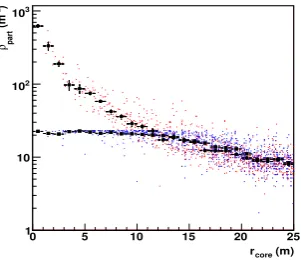
Figure 1.Particle lateral distribution of a real event detected by
ARGO-YBJ. Strips (blue dots) are saturated up to∼15m from the
core, while the particle density measured with the analog RPC charge (red dots) exhibits no saturation also very near to the core.
located in the YanBaJing (Tibet, China) Cosmic Ray Lab-oratory, at an altitude of 4300 m above sea level (corre-sponding to a vertical atmospheric depth of∼606 g/cm2),
was running since November 2007 until February 2013. It was organized in 153 clusters of 12 RPCs. Each RPC was read out by ten 62×56 cm2 pads, which were further
di-vided into 8 strips, thus providing a larger particle count-ing dynamic range [3, 4]. The signals comcount-ing from all the strips of a given pad were sent to the same channel of a multihit TDC. The whole system provided a single hit (pad) time resolution of 1.8 ns, which, together with the size of space pixels (strips) and the full-coverage layout, allowed an event imaging and reconstruction with very high details. A system for the RPC analog charge readout [5] from larger pads (BigPads), 124×140 cm2, each one
covering half a chamber, was implemented and took data since January 2010. This actually extended the detector operating range from about 100 TeV up to PeV primary energies. Moreover, the RPC charge information allows measuring very high particle densities, without the satura-tion at∼23/m2otherwise present by using the detector in digital mode, i.e. by counting the fired strips (see Fig. 1).
The system used a set of dynamic gain scales, with an overlap between digital and analog linearity ranges, thus providing an efficient way to calibrate the system itself
[6, 7]. The different scales of operation also define the
ranges of the maximum number of particles measured by the BigPads, as shown in Fig. 2 which reports the diff
er-ential rate of the maximum for three of that scales. No-ticeably, there is a good overlap for this quantity as mea-sured at the different scales; moreover, no saturation of
the detector response is evident in the plot behaviour; fi-nally, the measurable maximum density of particles cov-ers more than two decades, while the event rate spans over five decades. Apart the data of the first scale, useful for calibration purposes, for this analysis we used two sets of analog data collected with the second and third gain scale, thus accessing particle density values up to∼104/m2.
The peculiar features of the detector, that is full-coverage and charge readout segmentation, joined to the dynamical operating range of the charge readout system
max
P
2
10 103 104
Rate (Hz)
-8
10
-7
10
-6
10
-5
10
-4
10
-3
10
-2
10
-1
10
Full sacel values Gain scales
330 mV 2.5 V 20 V Full scale values
Figure 2.Differential rate of particle maximum on a BigPad for
events with the core inside the central carpet andθ ≤15◦. The
leftmost (most sensitive) scale widely overlaps the digital range.
allow to study the detailed structure of the particle den-sity distribution for∼30m starting from the core at ground.
On the basis of such information, several characteristics of the hadronic interactions could be investigated and diff
er-ent hadronization models compared to check their valid-ity. In particular, the distribution and physical properties of secondary particles produced in the very forward kine-matic region of the primary interaction can be in principle inspected. Even if the lateral distribution of particles at ground is rather determined by multiple Coulomb scatter-ing and by the pT spectra of secondaries at much lower
energies, such a measurement is important for checking the overall physics consistency of soft and hard interaction mechanisms implemented in the models.
3 Analysis strategy and objectives
The detailed study of the lateral particle density profile (LDF) at ground is expected to provide information on the longitudinal profile of the showers in the atmosphere, that is to estimate their development stage, or ’age’, which essentially is expressed byXmax(g/cm2), the atmospheric
depth at which the cascade reaches its maximum size. If true, this implies the possibility of selecting some intervals ofXmaxor, equivalently, ofXdm, the distance between the
shower maximum and the detector. The selection of show-ers withXdmin a given interval for different zenith angles
is an important point for the measurement of p-air cross section using the method of flux attenuation.
)
p8
(N
10
Log 3.4 3.6 3.8 4 4.2 4.4 4.6 4.8 5 5.2 5.4 (E/TeV) 10
Log
1.5 2 2.5 3 3.5
MC p MC He MC Fe
a
Figure 3.Primary energy for p, He and Fe initiated MC showers vs the number of particles detected at ground within 8m from the shower core. Vertical error bars are the RMSs of the energy
distributions, while horizontal ones refer to the adoptedNp8bins.
through the determination of the depth of the shower max-imum. It can only measure the particle density distribu-tion at ground as a funcdistribu-tion of the core distance (LDF) and from the slope of this distribution get information on the longitudinal shower development. Historically, it was shown that the LDF (at least of electrons), as measured by a traditional sampling EAS array at distances of the order of hundred meters from the core, can be described by the Nishimura-Kamata-Greisen (NKG) structure func-tion [8], with parameters reflecting the shower size, the detection altitude and the shower age. The age parame-ter deparame-termined in this way is usually referred to as ’laparame-teral age’, since obtained from the LDF [9]. It, in principle, coincides with the ’longitudinal age’ both for purely e.m. and hadron initiated EAS, but, in an experimental context, they can differ, since most showers come from hadrons and
the two quantities are measured with completely different
techniques. However, they must be strongly related. Other important points for the analysis are then: an estimator of the energy to be assigned to the primary orig-inating the detected shower (at least for well reconstructed events), the capability to reject as many as possible show-ers induced by heavy primary nuclei (starting fromα
parti-cles), using the event characteristics and observables pro-vided by the detector. This would give the possibility of selecting a proton-enriched event sample, thus permitting a reliable measurement of the p-air cross-section. A pos-sible residual contamination will contribute to the overall systematic uncertainty of the measure. For these purposes, a full MC simulation has been employed, including the shower production and transport in the atmosphere, the ARGO-YBJ detector response and the event reconstruc-tion with the same code as for real data.
4 Monte Carlo simulation
Several samples of simulated data were produced and studied with the aim of correlating the experimental ob-servables to the physics parameters of the showers. About 30·106proton, 7·106αparticle and 3.5·106iron
nucleus-initiated showers were generated by the CORSIKA [10]
r(m)
0 2 4 6 8 10 12 14 16
(11)
ρ
(r)/
ρ
1
10 MC pMC He
MC Fe )
o
= (0-15
zen
θ
= (3.7-4.0) -
p8
LogN
∆
LDF -
Figure 4. Reconstructed LDF of the detected particles around the core position at ground for simulated p, He and Fe initiated
showers with 103.7 < N
p8 < 104.0. The three distribution are
normalized to the particle density at 11m of core distance.
code, with zenith angle up to 30◦, energy range between
1 TeV and 3000 TeV and spectral index as given in the re-view [12]. In order to have a better evaluation of system-atics, we produced independent samples of proton show-ers by using two different hadronic interaction models,
namely QGSJET-II.03 [13] and SIBYLL-2.1 [14]. If not differently stated, the results described in this work refer
to QGSJET-II model. The full simulation of the detector response, based on the GEANT package [11], included the effects of time resolution, trigger logic, electronics noise,
etc. Simulated data have been analyzed by using the same reconstruction code as for real data. The simulation re-liability was successfully checked by comparing several simulated and measured quantities.
Events that triggered the analog RPC readout (≥73
fired pads in a cluster) were subsequently selected by re-quiring the core position, reconstructed with a precision of the order of∼1m or less, in a fiducial area 64×64 m2
around the detector center. This cut actually reduces to a negligible value (< 10−3) the fraction of events with
true core outside the detector but mis-reconstructed inside. This preliminary work was also restricted to events with reconstructed zenith angleθ <15◦.
As a first step, various observables were considered and analyzed in order to find a suitable estimator of the primary CR energyE. Among them,Np8, the number of
particles detected at ground within a distance of 8m from the shower core at ground, resulted well correlated withE, not biased by the finite detector size and only slightly af-fected by shower to shower fluctuations. In Fig. 3, the cor-relation betweenEandNp8is shown for simulated proton,
helium and iron-nucleus initiated showers. So, five Np8
intervals have been chosen to select event samples corre-sponding to different primary energies.
Several quantities, such as the LDF of the detected particles around the core, estimated through the analog system simulation, have been checked to investigate the systematics introduced by the used hadronic interaction model. The reconstructed LDF obtained with QGSJET-II and SIBYLL-2.1 are quite similar, their difference being
∆Log(N p8) hEnergyi(TeV) p-s0 He-s0 Fe-s0 DATA-s0
p/He/Fe
3.4-3.7 40/70/200 1.31±0.01 1.47±0.01 1.73±0.01 1.412±0.002
3.7-4.0 70/100/300 1.28±0.01 1.40±0.01 1.66±0.01 1.400±0.003
4.3-4.6 200/300/750 1.20±0.01 1.29±0.01 1.55±0.01 1.391±0.006
4.7-5.0 500/700/1400 1.17±0.01 1.26±0.01 1.47±0.01 1.33±0.01
5.0-5.3 1000/1300/2200 1.12±0.02 1.25±0.02 1.43±0.02 1.32±0.03
Table 1.Summary ofs0values from LDF fit by the function (1) for MC p, He, Fe-initiated shower samples and experimental data.
The errors are only statistical (given by the fits) and do not include the systematic uncertainties due to intrinsic shower fluctuations.
Qcor1P_13 Entries 97853 Mean 2.453 RMS 2.814
r(m)
0 2 4 6 8 10 12
(11)
ρ
(r)/
ρ
1 10
2
10
Qcor1P_13 Entries 97853 Mean 2.453 RMS 2.814 Qcor1P_13 Entries 19334 Mean 3.557 RMS 3.315 Qcor1P_13 Entries 19334 Mean 3.557 RMS 3.315 MC p MC Fe
)
o
= (0-15
zen θ
= (4.7-5.0) -
p8
LogN
∆
LDF -
Figure 5.Fits to the reconstructed LDFs of the detected particles around the axis for simulated proton and iron-nucleus induced
showers with 104.7<N
p8<105.0, by the NKG-like function (1).
As already stated in the previous section, the basic idea is to get information on the shower development stage from the LDF structure around the core. We outline that no other experiment is able to measure the LDF at small dis-tance (a few meters) from the core with great accuracy and try to correlate it with the shower development characteris-tics, as ARGO-YBJ in reverse is capable to do. Firstly, we found a promising correlation between the reconstructed LDF slope in the range 1÷2 m from the core and the
dis-tance of the shower maximum from the detection level,
Xdm, for p and iron initiated showers, as reported in [2].
Then, the whole reconstructed LDFs (up to 10−15m of
distance from the core), for differentNp8intervals and
dif-ferent shower initiating primaries, have been studied in de-tail by fitting their shape with some proper functions.
As an example, Fig. 4 shows the average LDF obtained for a sample of p-induced shower events (’mean event’) in the interval∆Np8=103.7-104.0, corresponding to a
typi-cal energyEp∼70 TeV. In the same plot, the LDFs for the
’mean event’ induced by He and Fe primaries in the same
∆Np8(EHe∼100 TeV andEFe∼300 TeV) are also shown.
The following function has been found to better repro-duce, in the above distance interval, the LDF shape for ARGO-YBJ simulated data:
ρ(r)=A×r r0
s0−2
1−rr
0
s0−4.5
(1)
with only two free parameters, normalization (A) and shape parameter (s0), while r0 is fixed to 32 m. It is
clearly a NKG-like function, that is corresponds to the classical NKG lateral distribution function, with r0∼1/4
the Moliere radius at the YBJ altitude ands0candidate to
play the role of the ’lateral age’ parameter.
)
2
> (g/cm
max
<X 350 400 450 500 550 600
s’
1.1 1.2 1.3 1.4 1.5 1.6 1.7
1.8 MC p
MC He MC Fe
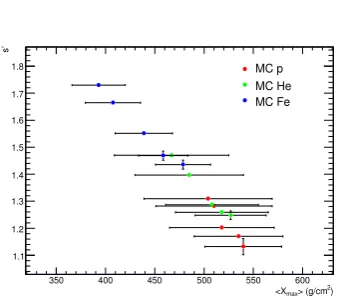
Figure 6. Age parameters0 from the fits to the lateral
distribu-tions of p, He and Fe ’mean event’ by the NKG-like function vs
the averages ofXmax, for the fiveNp8considered intervals.
5 Analysis results and discussion
The LDF of the ’mean event’ for each of the three consid-ered primaries (p, He, Fe) and for eachNp8 interval (i.e.
energy bin) has been fitted by the function (1) to obtain the shape parameter s0. As an example, Fig. 5 shows
the average lateral distribution and the related fit for the p-primary event sample of∆Np8=104.7−105.0
correspond-ing to a typical energyEp∼500 TeV. In the same plot, the
distribution and fit for the ’mean event’ induced by iron-nucleus primaries (EFe ∼1.4 PeV) can also be observed.
Table 4 summarizes the results concerning the shape pa-rameter s0. The typical primary energy is also reported
in the table for the different nuclei and Np8 intervals, as
obtained from the MC simulation after the analysis cuts. The errors on the parameters0are that arising from the
de-scribed fit of the ’mean event’ distribution, so they don’t reflect the spread caused by the shower by shower fluctua-tions. Since such effects could reveal not at all negligible,
they will be taken into account in a future deeper analysis. Nevertheless, from the table we deduce that, for a given primary, thes0value decreases whenNp8(i.e. the energy)
increases, while, for a fixed∆Np8, it increases with the
pri-mary mass: this behaviour is perfectly in agreement with the expectation ifs0 is correlated to the shower age, thus
reflecting its development stage.
This outcome has two important implications: thes0
value (a) can help to constrain the showerXmax position
and (b) can give information on the primary particle na-ture. Concerning the first point, we put in the same plot thes0value as obtained from the LDF fit, for each primary
r(m)
0 2 4 6 8 10 12
(11)
ρ
(r)/
ρ
1 10
2
10
)
o
= (0-15
zen θ
= (4.7-5.0) -
p8
LogN
∆
DATA, LDF -
Figure 7. Reconstructed LDF of the detected particles around
the core for real ARGO-YBJ events with 104.7 < N
p8 < 105.0.
The superimposed fit by the NKG-like function is also shown.
p8
LogN
∆
3.4 3.6 3.8 4 4.2 4.4 4.6 4.8 5 5.2 5.4
s’
1 1.1 1.2 1.3 1.4 1.5 1.6 1.7 1.8
MC p MC He MC Fe ARGO-YBJ data Preliminary
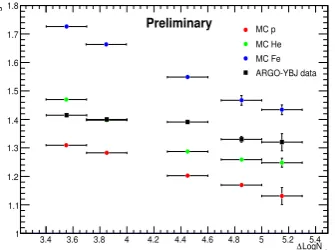
Figure 8. Age parameter s0 values from the fits to the ’mean
event’ lateral distributions from MC simulations (p, He, Fe) and
from experimental data, in the fiveNp8bins.
from MC simulation, as shown in Fig. 6. The two quanti-ties not only are clearly correlated, but also the shape pa-rameters0depends only on the development stage of the
shower, irrespective of the nature of the primary particle and energy. In other words, that plot expresses a sort of universality of LDF of detected EAS particles in terms of the lateral shower age. This implies the possibility to se-lect most deeply penetrating showers and quasi-constant
Xdmintervals when increasing zenith angle, an important
point for correlating the exponential angular rate distribu-tion with the interacdistribu-tion length of the initiating particle. To be noted that the error bars onhXmaxivalues are the RMSs
of the corresponding distributions from the MC samples, so they reflect theXmaxfluctuations which are bigger for
proton than for heavier primaries, as expected.
The second implication is thats0from the LDF fit,
al-though in the distance range up to∼12m of the core
dis-tance, is sensitive to the primary particle nature, thus mak-ing possible the study of primary mass composition and the selection of a proton-enriched CR primary beam.
Similar LDF distributions, in the same Np8 intervals
used for MC data, have been obtained from real event sam-ples and the fit with function (1) has been applied. Also for experimental data, the lateral particle density profiles ap-pear properly described by that function, as shown in Fig. 7 where the fit to the ’mean event’ in a particular∆Np8
is shown as an example. The ARGO-YBJ preliminary re-sults in terms of the fit parameter s0for all Np8 intervals
are summarized in the last column of Table 4. As for MC
data, the error refers to the fit to the average LDF distribu-tion for a sample of events, thus neglecting the shower by shower fluctuations.
The s0 values from data are reported in Fig. 8
to-gether with the corresponding fit results from the diff
er-ent primary shower ever-ents by MC simulation. Once stated the preliminary nature of this result, we observe that the data points lie between the expectations from extreme pure compositions (purely proton or iron content). In a further and more complete analysis, the systematics due to intrin-sic shower fluctuations and their effects on the sensitivity
to the mass composition study will be carefully evaluated.
6 Conclusions
The ARGO-YBJ features and setup allow the study of the shower core region with unprecedented details and the measurement with great accuracy of the radial particle density distribution. This implies the possibility to inves-tigate several characteristics of the hadronic interactions, to extend the previous p-air cross section measurement up to∼PeV proton energies and to get hints on primary mass
composition.
The preliminary results from a first analog data anal-ysis indicate the capability of ARGO-YBJ to reliably es-timate the primary CR energy and put constraints on the detected showerXmax from the particle distribution
struc-ture near the core, parameterized by the lateral ages0 of
the LDF fit. The age parameter is also shown to be sen-sitive to the primary composition, even if its fluctuations, the possible dependence on the core distance and the cor-relations with other quantities have to be carefully stud-ied. In the preliminary analysis presented here, the lateral age values from LDF fit to ARGO-YBJ data consistently lie between predictions from extreme pure proton or iron-nucleus compositions.
References
[1] G. Aielli et al., Phys. Rev. D,80, 092004 (2009) [2] I. De Mitri et al., Proc. 32nd ICRC, HE 3.1 (2011) [3] C. Bacci et al., Astropart. Phys.,17, 151 (2002) [4] G. Aielli et al., NIM A,562, 92 (2006)
[5] S. Mastroianni et al., Nucl. Sci. IEEE Trans.58, 1838 (2011)
[6] M. Iacovacci et al., Proc. 32nd ICRC, HE 1.1 (2011) [7] G. Aielli et al., NIM A,661, S56 (2012)
[8] K. Greisen,Progress in Cosmic Ray Physics, Vol.III (NH Publishing Co, Amsterdam, 1956)
[9] R.K. Dey et al., J. Phys. G: Nucl. Part. Phys. 39, 085201 (2012)
[10] D. Heck et al., Report FZKA 6019, Forschungszen-trum Karlshruhe (1998)
[11] GEANT, CERN Program Library, W5013 (1993) [12] J.R. Hörandel, Astropart. Phys.,19, 193 (2003) [13] S. Ostapchenko, Nucl. Phys. B,151, 143 (2006) [14] R. Engel et al., Proc. of 26th ICRC, Salt Lake City,