Review Paper on Evolution and Need of System Analysis and
Design
Archana Srivastava
Associate Professor
Babu Banarsi Das University, Lucknow, Uttar Pradesh, India Email: [email protected]
Abstract: System Analysis and Design is a methodology to fulfill the requirements of a user according the desired need. In business, System Analysis and Design refers to the process of examining a business situation with the intent of improving it through better procedures and methods. System analysis and design is a crucial phenomenon in development of the information systems. This article encircles the evolution, needs of system development and different steps followed for the development of a system.
Keywords: System, System Analysis and Design, Need of System Design, SDLC.
I. INTRODUCTION
The word system is very broadly used. System may be referred to several set of components, which function in interrelated way for a common cause or goal. System is a word derived from the Greek word ‘Systema’ which means an organized relationship among components.[1] A System may be defined as orderly grouping of interdependent components connected together according to a plan to achieve a specific goal. Each component is a part of total system and it has to do its own share of work for the system to achieve the desired goal.
A system exists because it is designed to achieve one or more objectives. We come into daily contact with the transportation system, the telephone system, the accounting system, the production system, and, for over two decades, the computer system. Similarly, we talk of the business system and of the organization as a system consisting of interrelated departments such as production, sales, personnel and an information system.[2]
Analysis, design, and development systems, products, or services requires answering numerous fundamental questions:
1. WHAT is a system?
2. What is included within a system’s boundaries?
3. WHAT role does a system perform within the User’s organization? 4. What mission applications does the system perform?
5. WHAT results-oriented outcomes does the system produce?
These primary questions are often difficult to answer. If we are unable to clearly and concisely delineate WHAT the system is.
Now add the element of complexity in bringing groups of people working on same problem to convergence and
consensus on the answers. This is a common problem shared by Users, Acquirers, and System Developers, even within their own organizations. [3]
II.DEFINITIONS
Iivari et al. [2005] present a representative definition of SA&D, in which they state that: “Information systems analysis refers to a number of activities in the early stages of information systems development. The main purpose of systems analysis is to identify and document the requirements for an information system to support organizational activities. Information systems design refers to the process of defining the software architecture, components, modules, interfaces, and data for a software system to satisfy requirements specified during systems analysis”
TechWeb.com (2007) defines systems analysis and design as: "The examination of a problem and the creation of its solution. Systems analysis is effective when all sides of the problem are reviewed. Systems design is most effective when more than one solution can be proposed."
Kendall & Kendall (2005) call systems analysis and design a "systematic and complex endeavor."
process and fine-tuned with on-the-job experience. Systems education initially emphasized the technical portion of SA&D skills and now incorporates more interpersonal and planning skills. The goal of systems analysis and design is to make business processes more efficient and effective by improving the design and function of computer systems that drive and support business processes. Systems analysts usually perform the functions related to systems analysis and design and turn user requirements into technology implementations. Analysts must also determine the feasibility of implementing user requirements. Analysts use interviewing techniques and questionnaires to query users and use flow charts and data diagrams to begin to map systems. Over time, various models have been used to conduct the systems analysis and design process. More recently, analysts may opt to use a combination of proven models to provide the best result for a particular organization's needs.”
III.WHATISSYSTEMANALYSIS&DESIGN
Systems Analysis and Design (SAD) is a wide term for defining different methodologies for developing high quality Information System which combines Information Technology, persons and Data to support business prerequisite. The System Analysis & Design procedure is not only restricted to IT, systems and can be used to create just about whatever thing, from a family house to the international space station. But there is no silver bullet in simplifying the development of computer systems. This principle is still true today. In addition, there is no single, easy technique that developers can use to make sure successful Information Technology (IT) projects. However, there are development methodologies that can be followed which will really assist an IT professional in developing and enhancing systems. A methodology is essentially a process to get something completed. A development methodology can be thought of like a roadmap. While a roadmap for a traveler will supply the details from driving from point A to point B, a development methodology will provide the IT professional with guiding principle for taking a system from beginning through implementation and further than.
Systems development can normally be thought of as having two key components: Systems analysis and Systems design. System design is the procedure of planning a new business system or one to reinstate or complement an present system. But earlier than this planning can be done, we should thoroughly understand the existing system and find out how computers can best be used to make its working more efficient. System analysis, then, is the process of gathering and interpreting facts, diagnosing problems, and using the information to recommend improvements to the system. This is the job of the systems analyst.
IV.THEPROCESSOFDESIGN
The design phase focuses on the detailed implementation of the system recommended in the feasibility study. It is the transformation from user-oriented document (system proposal) to a document oriented to the programmers or database personnel. System design goes through two phases of development:
1. Logical design 2. Physical design
LOGICAL DESIGN:
The logical design of a system pertains to an abstract illustration of data flows, inputs, and outputs of a system. This is frequently conducted via modelling, with an abstract model of the real system. Logical design is the graphical demonstration of a system telling the system processes and the flow of data in and out of the processes. It describes what job the system is doing without having to identify how, where and by whom the tasks are accomplished. The logical design covers the subsequent:
a. Review the existing physical system: the data flow, file content, frequencies etc.
b. Prepare output specification: It determines the layout, content and occurrence of reports, as well as terminal specification and location.
c. Prepare input specification, format, content and on the whole of the input functions.
d. Prepare edit, security and control specification. This specifies the rules for revise correction, back up procedures and the controls that make sure the processing and file integrity.
e. Specifies the execution plan.
f. Prepares a logical design walk through of the working flow, output, input, controls and implementation plan.
g. Reviews profits, costs, target dates and system constraints. PHYSICAL DESIGN:
system. The programmer writes essential program or modifies the software package that accepts inputs from the user, performs the essential calculations with the help of existing files or database, produces the report on hard copy or displays it on screen and maintains an updated database at all times.
Physical design of the system consists of the subsequent steps: a. Design the physical system:
i. Define the input/output media
ii. Design the database and state backup procedure.
iii. Design physical information flow via the system and physical design walkthrough.
b. Plan system implementation:
i. Prepare renovation schedule and target date. ii. ii. Decide training procedure and timetable.
c. Create a test and implementation plan and state new hardware/software.
d. Update benefits, cost, conversion date, and system constraints (legal, financial, hardware) etc. [5]
V.BRIEFHISTORYOFSYSTEMANALYSIS&DESIGN
The growth of Software Engineering methodologies started during the year 1950 to 1960. The new technologies and practices which were developed after 1970 -1990 were primarily focused on solving the software issues like software crisis. The major elements used were software tools, formal methods, well defined processes that uses the methodologies like OOP, CASE tools and Structured Programming approaches. The researchers argued that the software crisis was due to the lack of discipline of programmers and Some believed that if formal engineering methodologies would be applied to software development, then production of software would become as predictable an industry as other branches of engineering and they advocated proving all programs correct using models such as the Capability Maturity Model.
In 1986, No Silver Bullet article was published by Fred Brooks which described that no individual technology or practice would ever make a 10 fold improvement in productivity of software within 10 years. So they realized the need for developing the software in a structured manner. However, it could also be said that there are, in fact, a range of silver bullets today, including spreadsheet calculators, lightweight methodologies, in-site search engines, customized browsers, integrated design-test coding-editors, database report generators and each issue in software is related with only a small portion of the entire problem which makes the software engineering approaches too complex for finding complete solution to all problems. [6]
VI.NEEDOFSYSTEMDESIGN
When we are asked to computerize a system, as a requirement of the data processing or the information need, it is important to analyze the system from various angles. While fulfilling such need, the analysis of the system is the fundamental necessity for an efficient and effective system design. The need for analysis stems from the following point of view.
System Objective: It is important that we must define the system objective(s). Most of the times, it is observed that the systems are historically in operation and have lost their main purpose of achievement of the objectives. The users of the system and the persons involved in the system are not in a position to define the objective(s). Because we are going to develop a system based on computer, it is necessary to redefine or rearrange the objective(s) as a reference point in the context of the present business requirement.
System Boundaries: It is important to establish the system limitations which would define the scope and the coverage of the system. This helps to sort out and understand the functional limitations of the system, the department boundaries in the system, and the people who are involved in the system. In addition it helps to identify the inputs and the outputs of the different sub-systems covering the entire system
Nature of the System: The analysis of the system will help the system designer to finish whether the system is the closed type or open, and a deterministic or probabilistic. Such an understanding of the system is essential, prior to design the process to make sure the necessary design architecture.
Figure 1: System Engineering: Bridging the Gap between User Need and System Developers
Role of the System as an Interface: The system, most of the times, works as an interface to the other systems. Therefore through such an interface, it activates or promotes few changes in the other systems. It is essential to understand the present role of the system, as an interface, to preserve the interests of the other systems. Any modifications or changes done must not affect the working or the objective of the supplementary systems.
Participation of Users:The strategic intention of the analysis of the system is to seek out the acceptance of the people to a new development. System analysis procedure provides a sense of participation to the people. This helps in breaking the resistance to the new development and it also make sure the commitment to the new system.
Understanding of Resource Needs: The analysis of the system helps in describing the resource necessities in terms of hardware and software. Hence, if any additional resources are requisite, this would mean an investment. The management wishes to evaluate the investment form the point of view of return on such investment. If the return on the investment is not good enough to attract, the management might drop the project.
Assessment of Feasibility: The analysis of the system guides us to establish the feasibility from various angles. The system should convince the technical, economic and operational feasibility.
Many times, the systems are feasible from the technical and monetary point, but they may be infeasible from the working point of view. The estimation of feasibility will save the investment and the system designer's time. It would also save the embarrassment to the system designer as he is viewed as the key figure in such projects. One can approach the system analysis and design exercise in a systematic manner in steps, as shown in the table below:
Table 1: Steps to Approach System Analysis & Design in Systematic Manner [4]
Steps Elaboration Explanation
Need for information
Describe the nature of information. Also who wants and who uses.
Recognize the users and application of the information for achieving the objectives.
Define the Systems Decide the nature, type of the system and its scope
Helps to determine the system ownership, its benefits and complexity.
Feasibility
Technical success
Hardware and software availability and capability, for implementation
Economic viability
Operational effectiveness
Examine whether the system will perform as desired in terms of time and results. Are the users ready to use the system?
Detailing the requirements
Identify in precise terms, the strategic, functional and operational information needs.
Study the sources of generating the Information. Establish I/O linkages. Modify the existing system to satisfy the needs.
Conceptual system
Determine the inputs, process and outputs, and design a conceptual model.
Conceptualization is necessary to understand the system process.
Detailing the system
Draw the document flow charts and the data-flow diagrams, the data and system hierarchy diagrams, the data information versus its users mapping table.
Helps in bringing a clarity in the data-flow. The responsibility centres and the process centres are
identified.
Structuring the system design Break the system into its hierarchical structure.
Helps in understanding the data-flow from one level to the other and the processes carried out at each level.
Conceptual model of computer system
Define step by step the usage of files, processes and interface. Define the data structures and the validation procedures.
Helps to put down the data
processing flow in the computerized system. Draw the computer system charts.
Break the system in programme modules
Make a physical conversion of the system into the programme structures in a logical order.
Modules will be data entry, data validation, data processing, reporting and storing.
Develop the test data for checking the system ability
Test the modules and the integrity of the system in terms of input versus output. Plan white box and black box testing.
Confirms whether the system design is satisfactory. Suggests the modifications.
Install the system Install on the hardware.
Install, test and run the system before the user is exposed in alive mode.
Implementation
Train the personnel. Run the system in parallel. Prepare a system manual.
Help to identify the problems and provide solutions.
Review and maintenance
Review the system through audit trail and test data, also confirm whether the objective
is fulfilled. Carry out the modifications, if any.
VII.PHASESOFSYSTEMDESIGN/LIFECYCLE
The systems development life cycle (SDLC) is the procedure of consideration how an information system (IS) be able to support business needs by designing a system, building it, and delivering it to users. In numerous ways, building an information system is related to building a house. First, the house (or the information system) starts with a basic idea. Then, this idea is changed into a simple drawing that is exposed to the customer and refined until the customer agrees that the picture depicts what he or she wants. Next, a set of blueprints is designed that presents much more detailed information about the house. Finally, the house is built following the blueprints, habitually with some changes given by the customer as the house is erected.
The SDLC has a similar set of four fundamental phases: planning, analysis, design, and implementation. Various projects might concentrate on different parts of the SDLC or move toward the SDLC phases in special ways, but all projects have elements of these four phases. Each phase is itself composed of a series of steps, which rely upon techniques that produce deliverables (specific documents and files that provide understanding about the project).
In many projects, the SDLC phases and steps proceed in a logical path from start to finish. In other projects, the project teams be in motion through the steps successively, incrementally, iteratively, or in other patterns.
For now, there are two important points to understand about the SDLC. First, we should get a general sense of the phases and steps through which IS projects move and some of the techniques that produce certain deliverables. Second, it is important to understand that the SDLC is a process of gradual refinement. The result produced in the analysis phase gives a general idea of the outline of the new system. These results are used as input to the design phase, which then refines them to produce a set of results that describes in much more detailed terms exactly how the system will be built. These results, sequentially, are used in the implementation phase to produce the actual system. Each phase refines and elaborates on the work done previously.
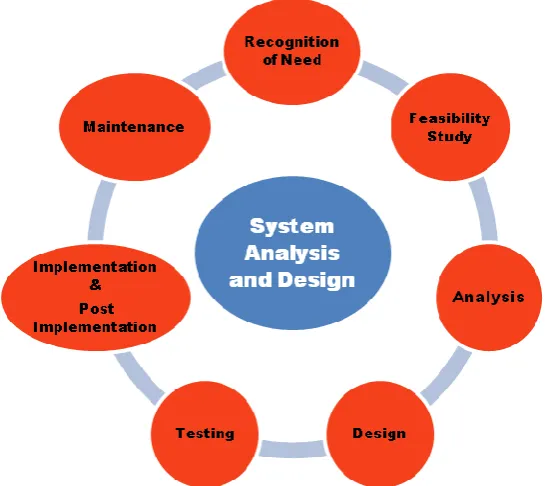
Figure 2: Different Phases of System Development Life Cycle
(i) Recognition of Needs
One must understand what the problem is prior it can be solved. The basis of candidate system is recognition of need for improving the system. The key question is:
What is the problem?
The idea for amendment may originate in the environment or inside the firm. Environment-based ideas originate from customers, vendors, government sources etc. When investigated all of these ideas may lead to a problem definition. Idea for change might also come from within the organization at top administration, the user, the analyst. User-originated ideas also prompt initial investigation.
(ii) Feasibility Study.
Depending on the results of the primary investigations the survey is elaborated to a more feasibility study. We can define feasibility study as a test to a proposed system according to its working, impact on the organization, capability to meet user needs and efficient use of resources. The purpose of a feasibility study is not to resolve the problem but to acquire a sense of its scope. Throughout this study, the problem definition is crystallized and aspects of the problem to be integrated in the system are determined.
The result of the feasibility study is a prescribed proposal. This is like a report. This report summarizes what is well-known and what is going to be completed. It consists of the subsequent.
1. Statement of the problem:- a carefully worded statement of the problem that led to analysis. 2. Summary of findings and recommendations:- a lists of the major findings and recommendations of the study 3. Details of findings:-an outline of the methods and procedures undertaken by the existing system 4.Recommendations and conclusions:-specific recommendations regarding the candidate system, including personnel assignments, costs, project schedules and target dates.
Then the organization reviews this report. After the proposal is reviewed, it becomes a formal contract that paves the way for actual design and implementation.
(iii) Analysis:
The analysis phase answers the questions of who will utilize the system, what the system will perform, and
where and when it will be used. Throughout this phase, the project team investigates any current system(s), identifies opportunities for betterment, and develops a idea for the new system. This phase has three steps:
1.An analysis strategy is developed to express the project team’s efforts. This policy normlly includes an
analysis of the current system (called the as-is system) and its problems and then ways to design a new system (called the to-be system).
2.The preceding step is requirements gathering (e.g., through interviews or questionnaires). The analysis of this information—in conjunction with input from the project guarantor and so many other people—leads to the progress of a concept for a new system. The system concept is then used as a foundation to develop a set of business analysis models, which explains how the business will control if the new system is developed.
3.The analyses, system concept, and models are collectively used into a document called the system proposal,
which is presented to the project sponsor and other key decision makers (e.g., members of the sanction committee) who make a decision whether the project should continue to move forward. The system proposal is the first deliverable that describes what business requirements the new system must meet. Since it is really the first step in the design of the new system, several experts argue that it is inappropriate to use the phrase “analysis” as the name for this phase; few of them argue a better name would be “analysis and initial design”. Large amount organizations continue to use the name analysis for this phase.
(iv) Design:
The design phase decides how the system will function, in terms of the hardware, software, and network infrastructure; the user interface, forms, and reports; and the specific programs, databases, and files that will be wanted. Even if most of the strategic decisions about the system were made in the expansion of the system concept throughout the analysis phase, the steps in the design phase tells exactly how the system will work. The design phase has 4 steps:
1. The design strategy is initially developed. It specifies whether the system will be developed by the company’s own programmers, whether the system will be outsourced to a different firm (usually a consulting firm), or whether the company will buy an existing software package.
how the users will move through the system (e.g., navigation methods such as menus and on-screen buttons) and the forms and reports that the system will use.
3. The database and file specifications are developed. These describes exactly what data will be stored and where they will be stored.
4. The analyst team develops the program design, which defines the programs that require to be written and accurately what each program will do. This compilation of deliverables (architecture design, interface design, database and file specifications, and program design) is the system specification that is given to the programming team for implementation. At the finish of the design phase, the feasibility analysis and project plan are reexamined and revised, and an additional decision is made by the project sponsor & approval committee about whether to finish the project or continue.
(v) Testing:
Prior to actual implementation the new system into working, a test run of the system is made removing all the bugs, if it is there. It is an essential phase of a successful system. After codifying the entire programs of the system, a test plan must be developed and run on a given particular set of test data. The output of the test run must match the desired results. Occasionally, system testing is considered as a piece of implementation procedure. When it is ensured that the system is working error-free, the users are called with their own real data so that the system can be shown running as per their requirements.
(vi) Implementation:
The concluding phase in the System Development Life Cycle is the implementation phase, throughout which the system is really built (or purchased, in the case of a packaged soft ware design). This is the phase that generally gets the most attention, since for most systems it is the longest and most costly single part of the development process. This phase has three steps:
1. System construction is the initial step. The system is built and tested to make sure that it performs as designed. For the reason that the cost of bugs can be immense, testing is one of the major significant steps in implementation. Most of the organizations give additional time and concentration to testing in comparison to writing the programs in the first place.
2. The system is installed. Installation is the procedure by which the previous system is turned off and the new one is turned on. One of the most essential aspects of renovation is the development of a training plan to educate users how to use the fresh system and help manage the changes caused by the fresh system.
3. The analyst team establishes a support plan for the system. This plan generally includes a formal or informal post-implementation review as well as a methodical way for identifying major and minor changes required for the system.
(vii) Maintenance:
Maintenance is essential to remove errors in the system during its working life and to tune the system to any variations in its operational environments. It should meet the scope of any future improvement, future functionality and any other added functional features to cope up with the newest future requirements. It has been observed that there are always few errors found in the systems that must be noted and removed. It also means the examination of the system from point in time. The review of the system is completed for:
Knowing the full capabilities of the system
Knowing the required changes or the additional requirements Studying the performance.
Systems Development Life Cycle puts stress on decision making processes that influence system cost and usefulness. These decisions should be based on full consideration of business processes, practical requirements, and economic and technical feasibility. The major objectives of any SDLC is to convey quality system which meets or go above customers expectations and within cost estimates, work effectively and efficiently inside the existing and planned infrastructure, and is an inexpensive to maintain. SDLC establishes a logical order of events for conducting system development that is controlled, measured, documented, and ultimately improved.
VIII.CONCLUSION:
peripherals required is to be determined. The suitable software has to be selected. For all this SDLC plays very important role.
REFERENCES:
[1]. Mechanical System Design, By R.C. Mishra & Simant.
[2]. http://www.yourarticlelibrary.com/management/information-system/system-in-an-organisation-meaning-characteristics-and-components-mis/70329/
[3]. Systems Analysis, Design and Development, Concept Principal and Practices, By Charles S Wasson.
[4]. http://www.openlearningworld.com/books/System%20Analysis/Chapter%201/The%20Need%20For%20System% 20Analysis.html
[5]. http://www.tutorialbyte.com/academics/SAD/default.aspx
[6]. “Information Technology & Software Engineering”, Ramakrishnan J Inform Tech Soft Engg System Analysis and Design ISSN: 2165-7866 JITSE, an open access journal.
AUTHORS’PROFILES