A Network Perspective on Suicidal Behaviour
Derek de Beurs, [email protected]
Netherlands Institute for Health Services Research Otterstraat 118-124
Utrecht, The Netherlands Type of manuscript: article
Abstract
Although suicide is a major public health issue worldwide, we understand little of the onset
and development of suicidal behavior. Suicidal behavior is argued to be the end result of the
complex interaction between psychological, social and biological factors. Traditional
epidemiological techniques are not able to deal with this complexity. A new technique called
network analysis can help us better understand suicidal behavior as it allows to visualize and
quantify complex association between many symptoms. It moves away from the idea that
symptoms are caused by an underlying common cause such as depression or suicidality.
Instead, symptoms are thought to cause each other. A network perspective has been
successfully applied to the field of depression and psychosis, but not yet to the field of
suicidology. In this perspective article, I will argue that a network perspective on suicidal
behavior can help us to 1) better understand suicidal behavior, 2) develop more sensitive
diagnostic tools for subgroups of patients, and 3) help the personalized treatment of suicidal
behavior. I will provide examples based on real data, and offer directions for future studies.
1. Introduction
Suicide is a major public health issue worldwide[1]. It is the tenth leading cause of death, and in many countries, numbers have been increasing since the economic crisis in 2007[2]. In the past years, many epidemiology studies have been done, and many datasets containing information on suicidal behavior are available. Still, we understand little of the aetiology and development of suicidal behavior, only that it is highly complex interplay between psychological, social and biological factors[3,4].
Traditional epidemiological analysis has resulted mostly in static, general risk factors such as age and gender. This is interesting from a public health care perspective, but not of much use for the individual patient, or his therapist. The notion that older males are at higher risk for suicide then younger females is not specific enough to be of clinical relevance. I propose to re-analyze the existing databases from a network perspective to improve our understanding of suicidal behavior, to develop more specific diagnostic criteria and improve personalized treatment.
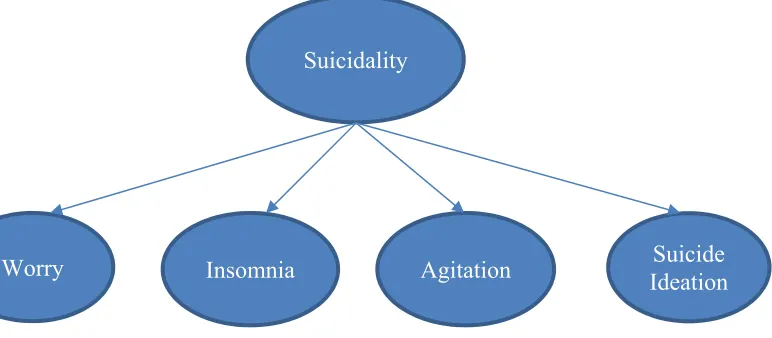
Traditional psychiatric thinking states that there is one latent underlying disorder (depression, or in our case suicidality) that can cause different symptoms (Fig 1)[5,6].
Figure 1: the common cause model. Suicidality causes underlying symptoms such as worrying, insomnia and suicidal ideaton.
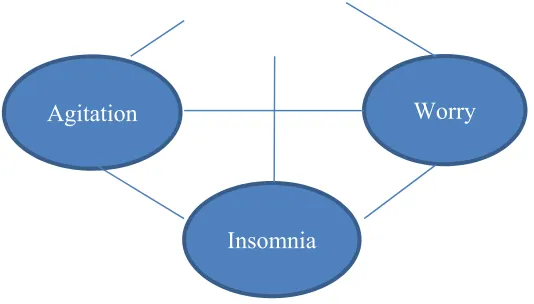
This medical common cause model is recently being questioned. It is argued that in psychiatry, there is no common cause, such as a tumor that causes symptoms (for example coughing). Rather, psychiatric symptoms are thought to cause each other [5,6] (Fig 2).
Suicidality
Suicide
Ideation
Worry
Insomnia
Agitation
Figure 2. A network perspective on the interaction between four symptoms
In figure two, insomnia, worrying, agitation and suicidal thoughts are related to each other, and thereby influence each other. This shift in thinking about psychopathology is called a network
perspective[5,7]. In a network approach to psychopathology, there is no underlying disorder anymore, but only the pairwise interaction between separate symptoms (fig 2). Network analysis makes it possible to analyse how one symptom, such as brooding, is interconnected with other symptoms or with an outcome at follow up. A network perspective has been applied to the field of depression[8], psychosis [9] and Post Traumatic Stress disorder[10] , but not yet to the field of suicidology. As suicidal behavior is argued to be trans diagnostic [11]and the end result of the highly complex interaction between many factors[3], it is highly suited to be analyzed from a network perspective.
2. Materials and Method
In the remainder of this perspective article, I will argue that a network perspective on suicidal behavior can help us to 1) better understand suicidal behavior, 2) develop more sensitive diagnostic tools for subgroups of patients, and 3) help the personalized treatment of suicidal behavior. I will provide examples based on real data, and offer directions for future studies.
3. Results
3.1 Better understanding of the onset and development of suicidal behavior
Despite many years of research and data collection, we are still not able to understand, let alone predict suicidal behavior[4]. Even within a high risk population, such as patients treated in a hospital
Worry
for a suicide attempt, the predictive validity of our current models and assessment tools is only slightly better than change[12]. To help thinking about the complexity of suicidal behavior, the Integrated Motivational Volitional Model (IMV) was developed[3].
The IMV model defines suicidal behavior as a complex interaction between many different (pre)motivational and volitional phase factors. The motivational phase of the model describes the symptoms that are associated with the emergence of suicidal thoughts. By contrast, volitional phase symptoms are defined as those symptoms that govern the transition from suicidal thinking
(ideation/intent) to suicidal behaviour, i.e., when a suicide attempt is more likely. A standard traditional epidemiological analysis will validate the model as follows:
(Suicidal Behavior) = + + + * +
* + *
where Y stands for the independent variable, for the regression coefficient, for the independent variable, and * for the interaction between variable x1 and x2.
Within standard analysis, it is difficult to add more variables, without compromising on the
interpretability of the model. Therefore, any analysis is likely to leave out many different important explanatory variables such as thwarted belongingness, brooding, social support and so on.
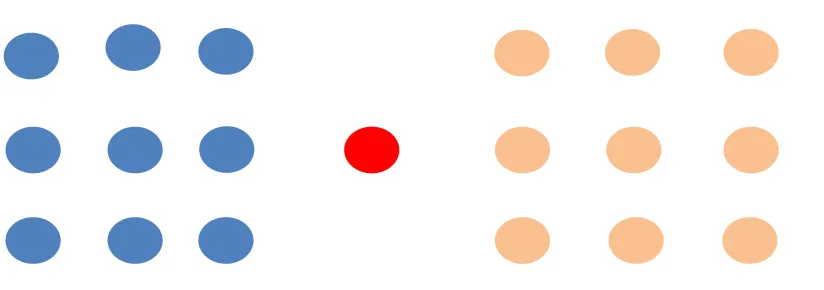
Importantly, as the variables are likely to interact with each other (i.e. are not independent predictors), this further complicates the possibility to use regression techniques as a way of analyzing complex behavior such as suicidal behavior. With regard to more sophisticated modelling, such as path analysis, these analysis state that there must be an underlying common cause, to which all individual variables are linked[13]. As stated earlier, this is unlikely to be a realistic assumption in psychiatry. Within a network perspective, all separate factors, such as sleeping bad, fatigue, desire for suicide, or social support can be viewed upon as nodes in a network (Fig 3).
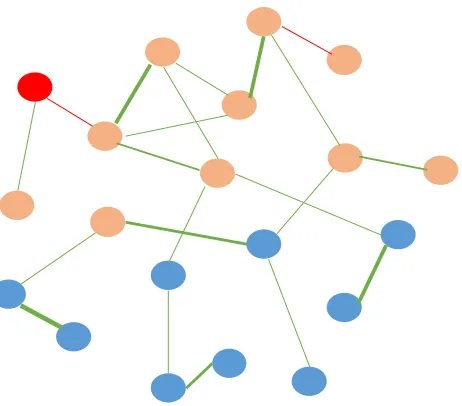
Two nodes are connected by a line if there is any relevant association between the two nodes. Whether there is a relevant association is determined by a partial correlation matrix, in which spurious (non relevant) correlations are set to zero[14]. Additionally, the so-called Fruchterman Reingold Algorithm places nodes that are most central (most important) in the middle, and less connected or important nodes on the edge of the network[15]. The software package qgraph[16] lets you estimate and visualize such a network. This results can result in a graph such as shown in figure 4.
figure 4: Simplified representation of a network of suicidal symptoms of 366 patients treated for a suicide attempt. Placing of the nodes indicate the centrality of the nods. The more central, the more a node is positioned in the middle. Green lines represent positive relationship, red lines a negative association. The thicker the line, the stronger the association.
treatment can focus on this most contagious symptom, as any interventions will likely influence other symptoms, and this symptom may serve as a smoke detector for the start of a (new) suicidal crisis.
3.2 Differences between subgroups of patients
It is widely known that male suicidal behavior differs from female suicidal behavior[11]. After 2007, male suicides have significantly increased, while female suicidal behavior kept on declining[18]. However, in many studies of suicidal behavior, females and males are analyzed as one group (see for example [19]). This results in non-specific risk factors for suicidal behavior, that are of limited use when predicting suicidal behavior. Understanding the difference in symptom structure between subgroups of patients will help develop more sensitive diagnostics. Using the earlier mentioned dataset, I estimated the network of five suicide symptoms (wish to live, wish to die, reasons for living, desire for an attempt, wiliness to save ones live) separate for males (n = 158) and females (n = 258) (Fig 5).
One sees that there are subtle differences in network structure for males and females. The network of females looks denser (strongly connected) when compared to the network of males. In the field of depression research, a more dense network was linked to worse outcome at follow up[8]. Additionally, it is possible to formally test the difference between networks using the R package NCT[8]. In our example the difference was not significant (p = 0.07), indicating that within a sample of hospital treated suicide attempters, the interaction between these five suicide symptoms does not differ between males and females. This quick example gives an insight in the potential of network analysis to better understand differences between subgroups of patients. These insights can then be translated into more calibrated diagnostic criteria to determine if somebody is in risk for suicidal behavior.
3.3 Personalized treatment
When data is collected on multiple time point per patients (for example via a mobile phone[19]) it is possible to form a unique network per patient. Through this unique network, the patient can learn how different psychopathological symptoms interact within himself, and how to recognize the start of a new suicidal crisis. For example, one patient can discover that there is a strong connection between fatigue, worrying and suicidal thoughts. Another patient can be more sensitive to a negative social experience, which results in suicidal ideation. A patient can use his unique network as a tool to improve and personalize treatment. Ideally, the unique network should be shared with professionals and significant others, and the three actors should consider the network structure when discussing therapy and safety planning. Such a research program on mobile phone data and suicidal behavior has just been started at the VU Amsterdam. The program is called CASPAR (Continuous Assessment for Suicide Prevention and Research) and will collect data among 30-60 patients in treatment of
specialized health care. This data will be available end of 2017 and will offer the first opportunity to develop individual networks of suicide symptoms.
4. Discussion
can get insights in their own unique personalized network, making personalized treatment and safety planning much more likely. As suicidal behavior is both trans diagnostic and highly complex, a network analysis of has much to offer to suicidologist, clinicians and suicidal patients.
Future studies
For the application of network analysis on suicidal behaviour, two things are needed: A large enough dataset containing relevant suicidal symptoms, and the software program R. R has a steep learning curve, but R studio offers an intuitive user interface. Additionally, there have been published many tutorial papers, and the R package qgraph offers easy to use syntax[16]. Sites like psychosystems.org offer a lively community of scientists using network analyis within the field of psychiatry.
Together with a international consortium of suicide researchers, I am reanalyzing national and internationally datasets with information on suicidal behavior from a network perspective. In the Netherlands, there are several large databases such as the NESDA (Netherlands study of depression and anxiety[20]). The NESDA is a longitudinal cohort study that collected the depressive, anxiety and suicidal symptoms of about 3000 patients. Within the Scottish Wellbeing study from the Suicidal Behavior Research Laboratory, data is collected among 3500 Scottish adolescents on many different suicidal symptoms such as entrapment, defeat, social exclusion, intrusion of images, perceived
burdensomeness etc. Other datasets of interest are the national inquiry into suicide and homicide of the university of Manchester, and the Belgium self-harm database that contains data on over 15.000 patients treated for a suicide attempt in Belgium hospitals during a 26-year study period[21]. By re-analyzing these large datasets, I expect to better understand the interaction between many different suicidal symptoms, learn about the differences between male and female suicidal behavior, and zoom in on the difference between depressed patients that show suicidal behavior, and depressed patients that do not.
desire for an active attempt was indeed most central, but longitudinal studies have to prove that intervening on these symptoms indeed results in less psychopathology at follow up. Finally, both the theory and software are still being improved. I therefore recommend anyone interested in these kind of analysis to closely follow the papers of the psychosystems.org group.
5. Conclusion
Network analysis can help us better understand suicidal behavior as it allows to visualize and quantify complex association between many symptoms without the assumption of an underlying common cause.
Acknowledgments:
No funding has been received for this paper
Conflict of interest
The author declares no conflict of interest
1. World Health Organization Public health action for the prevention of suicide. Who 2012, Retrieved on 12 Dec 2013 From http://www.who.int/m.
2. Oyesanya, M.; Lopez-Morinigo, J.; Dutta, R. Systematic review of suicide in economic recession.
World J. psychiatry 2015, 5, 243–54.
3. O’connor, R. C. Towards an Integrated Motivational-Volitional Model of Suicidal Behaviour. In International Handbook of Suicide Prevention: Research, Policy and Practice; 2011; pp. 181–198. 4. O’Connor, R. C.; Nock, M. K. The psychology of suicidal behaviour. The Lancet Psychiatry 2014, 1, 73–85.
5. Borsboom, D.; Cramer, A. O. J. Network Analysis: An Integrative Approach to the Structure of Psychopathology. Annu. Rev. Clin. Psychol. 2013, 9, 91–121.
6. Goekoop, R.; Goekoop, J. G. A network view on psychiatric disorders:Network clusters of symptoms as elementary syndromes ofpsychopathology. PLoS One 2014, 9.
Mental disorders as networks of problems: a review of recent insights. Soc. Psychiatry Psychiatr.
Epidemiol. 2016, 58, 7250–7.
8. van Borkulo, C.; Boschloo, L.; Borsboom, D.; Penninx, B. W. J. H.; Waldorp, L. J.; Schoevers, R. A. Association of Symptom Network Structure With the Course of Longitudinal Depression. JAMA
Psychiatry 2015, 1219.
9. Isvoranu, A. M.; van Borkulo, C. D.; Boyette, L. L.; Wigman, J. T. W.; Vinkers, C. H.; Borsboom, D. A Network Approach to Psychosis: Pathways between Childhood Trauma and Psychotic
Symptoms. Schizophr. Bull. 2016, 1–10.
10. McNally, R. J.; Robinaugh, D. J.; Wu, G. W. Y.; Wang, L.; Deserno, M.; Borsboom, D. Mental Disorders as Causal Systems: A Network Approach to Posttraumatic Stress Disorder. Clin. Psychol. Sci. 2011, 1–14.
11. Hawton, K.; van Heeringen, K. Suicide. Lancet 2009, 373, 1372–81.
12. De Beurs, D. P.; Fokkema, M.; O’Connor, R. C. Optimizing the assessment of suicidal behavior: The application of curtailment techniques. J. Affect. Disord. 2016, 196, 218–224.
13. Epskamp, S.; Rhemtulla, M.; Borsboom, D. Generalized Network Psychometrics: Combining Network and Latent Variable Models. Psychometrika 2016.
14. Costantini, G.; Epskamp, S.; Borsboom, D.; Perugini, M.; Mõttus, R.; Waldorp, L. J.; Cramer, A. O. J. State of the aRt personality research: A tutorial on network analysis of personality data in R. J. Res. Pers. 2015, 54, 13–29.
15. Fruchterman, T. M. J.; Reingold, E. M. Graph drawing by force???directed placement. Softw.
Pract. Exp. 1991, 21, 1129–1164.
16. Epskamp, S.; Cramer, A. O. J.; Waldrop, L. J.; Schmittmann, V. D.; Borsboom, D. qgraph. Netw.
Vis. relationships Psychom. data 2012, 48, 1–18.
17. De Beurs, D. P.; van Borkulo, C. D.; O’Connor, R. C. The association between symptom network structure and repeat suicidal behaviour. UNDER Rev.
18. de Beurs, D. P.; Hooiveld, M.; Kerkhof, A. J. F. M.; Korevaar, J. C.; Donker, G. A. Trends in suicidal behaviour in Dutch general practice 1983-2013: a retrospective observational study. BMJ
Open 2016, 6, e010868–e010868.
19. de Beurs, D.; Kirtley, O.; Kerkhof, A.; Portzky, G.; O’Connor, R. C. The role of mobile phone technology in understanding and preventing suicidal behavior. Cris. J. Cris. Interv. Suicide Prev. 2015, 36, 79–82.
20. Penninx, B. W. J. H.; Beekman, A. T. F.; Smit, J. H.; Zitman, F. G.; Nolen, W. A.; Spinhoven, P.; Cuijpers, P.; De Jong, P. J.; Van Marwijk, H. W. J.; Assendelft, W. J. J.; van der Meer, K.; Verhaak, P.; Wensing, M.; de Graaf, R.; Hoogendijk, W. J.; Ormel, J.; van Dyck, R. The Netherlands Study of Depression and Anxiety (NESDA): Rationale, objectives and methods. Int. J. Methods Psychiatr. Res.
2008, 17, 121–140.
in Ghent, Belgium: 1987-2013. PLoS One 2016, 11.
22. Epskamp, S.; Borsboom, D.; Fried, E. I. Estimating Psychological Networks and their Stability: a Tutorial Paper. arXiv Prepr. arXiv 2016, 1–34.
© 2017 by the authors; licensee Preprints, Basel, Switzerland. This article is an open access article distributed under the terms and conditions of the Creative Commons by Attribution (CC-BY) license (http://creativecommons.org/licenses/by/4.0/).