Page 1
INTERNATIONAL STUDENTS PERCEPTION OF HOW ERGONOMIC FACTORS AFFECT ONLINE LEARNING
Paudel Nisha1, Jansz Janis1, Smith Ria1, Walker Rebecca2, Bay Joo Hwa3, Swapan Abu Yousuf4
1School of Public Health, Curtin University, Bentley, Australia
2School of Education, Curtin University, Bentley, Australia
3School of Design and the Built Environment, Curtin University, Bentley, Australia
4Curtin University Sustainability Policy (CUSP) Institute, Curtin University, Bentley, Australia
Abstract
The aim of this exploratory descriptive study was to identify how ergonomic factors affect the learning experiences of international students studying online in higher education. Research had previously been conducted with 130 students studying online from the School of Public Health, School of Education and the School of Design and Built Environment at Curtin University to identify how ergonomic factors affected their online learning. Information was collected from these students using a checklist and questionnaire. The most significant difference in responses was between domestic and international students (0.52 using the 2-sample t-test, p=0.001). The results of ergonomic factors that affected international students were further analysed and a focus group used to identify and qualify international students studying fully online perceptions of how the five ergonomic factors affected their online learning, to identify any specific areas of concern and opportunities for improvements. The study results indicated that international students perceived that physical, cognitive, environmental, organisational and social ergonomic factors all had some impact on their online learning. Although, the international students prioritised physical and environmental ergonomic factors as the most important for successful online learning, there was a 100% agreement that organisational factors hindered their learning effectiveness the most. The significance of this research is that it investigated the impact of all five ergonomic factors (physical, environmental, organisational, cognitive and social) on international student’s learning in an online education environment, which no other known study has investigated.
Keywords: international students, tertiary education, online learning
1. INTRODUCTION
The theme of internationalisation in higher education has gained increasing attention by scholars and policy- makers worldwide [1] [2]. This growing interest has translated into the active development of policies, programmes, and infrastructure at the institutional, local, national, and global levels for international student education. Higher education institutions are striving to internationalise their institutions for economic, political, academic and socio-cultural reasons [1]. Norton & Cakitaki [3] reported that at Australian Universities one fifth of the students are international students. From January to April 2018 the number of new international students who came to Australian Universities to study was 525,000 and in 2016-2017 education exports to overseas countries from Australian were worth A$28 billion according to the Australian Bureau of Statistics [4].
Page 2
Today in education there is a focus on having student centred learning [6]. Ergonomics focuses on fitting the task to the person and the product to the user [7]. Ergonomics is user centred and comprised of five factors; physical (e.g. space the student works in, equipment and furniture used); social (e.g. opportunities for, and the way that students communicate and interact with people in their studies); environmental (e.g. light, air quality, noise, temperature, ventilation); organizational (e.g. course structure, assessments, coordinator and tutor support, university factors such as policies and prodedure); cognitive (e.g. how study materials provided affect student understanding and learning outcomes). For students at tertiary educational institutions, for online learning to be user centred, ergonomic factors that affect student learning should be considered [8].
Very little was previously known about the impact of the physical, cognitive, social, organisational and environmental ergonomic factors on international students’ learning experiences [9]. Previously published literature concerning online learning and international students is mostly on globalisation of education studies, cultural aspects of education [9] [10] [11] [12], the economic aspects [13] [14] [15], student adaptation [16], satisfaction with life and social connectedness among international students [17]. Research conducted by Liu, Liu, Lee, and Magjuka [18] studied the perceptions of international students’ on the impacts of cultural differences on their online learning and highlighted the need for a culturally inclusive learning environment to ensure international students’ effective learning. A study by Thompson and Ku [19] explored international student’s experiences and attitudes towards online learning and highlighted the lack of cultural knowledge as a barrier to online learning.
Ergonomics and learning studies have considered the impact of physical ergonomic factors like school furniture [20], and other physical and psychosocial environments [21] [22]. Similarly, the impact of environmental factors such as lighting, noise, temperature [23], heating and air quality [24] have been studied. For the organisational factors, existing studies have explored the impact of the educational system design on students’ learning [25] and have discussed the increasing trend of online learning transitioning from conventional classroom learning. Studies on cognitive ergonomic factors have covered impact of factors like design of courses, assessments, feedback and collaborative learning [21] [23] [25] [26] [27]. The impact of social factors including presence in the virtual world have been explored [5]. The body of knowledge on online learning includes exploring blended learning in tertiary education [28] and blended learning compared to face-to-face delivery with online delivery of the same course content [29]. However, most of the ergonomics and learning studies mentioned above have focussed on the classroom learning and on the individual ergonomic factors and their impact on student learning.
No published study has been identified that specifically researched how the physical, cognitive, social, organisational and environmental ergonomic factors combined that can affect online learning for international students. Thus, there is inadequate understanding of both the combined and individual impact that all of these five ergonomic factors can have on international students’ leaning in an online platform for tertiary education.
2. METHODS
Page 3
Chronbach’s Alpha was 0.866. NVivo 11 was used to conduct qualitative analysis, to identify common themes in the responses.
3. RESULTS
3.1 Pilot Study results
A pilot study was completed with undergraduate students from the School of Public Health at Curtin University. Most students who answered the Pilot Study Checklist questions were domestic students (n=15, 94%) with only one international student participating (6%). The international student completed the checklist in 21 minutes, which was longer than the average pilot study completion of 13 minutes. In relation to physical ergonomic factors this student stated that although he had a comfortable study desk and chair his work space was inadequate. The domestic students reported generally having good physical workplace conditions for their study and chose an appropriate study location for the type of work they would be performing.
For environmental ergonomics the international student ranked all environmental factors in his online study environment as important and as good. He included having good lighting, a comfortable workplace temperature, good ventilation and a quiet place to study online. In the pilot study the domestic students also reported having good environmental study conditions.
In relation to organisational ergonomic factors the international student was unaware of organisational policies and stated that there was not always enough time provided for learning activities. On the positive side the international student wrote that communication with, and feedback from tutors and lecturers was effective and efficient and that he found the learning platform, Blackboard, easy to use. Domestic students were more aware of organisational policies and found that the implementation of the policies assisted their learning. While the international student did not experience technical issues with using the Blackboard learning platform 25% of domestic students did experience problems. One domestic student wanted more feedback, but the rest of the domestic students, similar to the international student, found that the feedback from their lecturer and tutor was generally quick and helpful.
For cognitive ergonomics the response was positive for questions asking about the ease of understanding of recorded lectures, written study materials and other educational information provided, speed of audio materials, adequacy of information provided and ease of locating study materials. For the question regarding workload, the international student wrote that workload is subjective and depends on how many units the person is studying in one semester. All students found the recorded lectures easy to understand.
The components of social ergonomic factors including opportunity for learning from peers, stress and teamwork were ranked as important with all other social ergonomic factors ranked as very important. The student wrote that he was more focused when doing academic work alone rather than in a group as he found that a language barrier always affect his ability to interact with peers and tutor. He reported that cultural differences always affected his ability to learn. Domestic students reported that each online unit of study has a discussion board, but this is rarely used by students. Pilot study domestic students found it difficult to do team work assignments online, found online learning stressful, but were able to work both alone and with other students for online learning.
As a summary for both physical, environmental and cognitive ergonomic factors there was minimal differences in the response between international and domestic students. For organisational ergonomics the domestic students were more likely to know and use organisational policies and to have problems with their Blackboard learning platform. The international student found working alone the most effective way to study while domestic students were comfortable either working alone or with others, but did find it difficult doing teamwork assignments online. The international student reported that cultural differences affected learning while none of the domestic students reported this.
Page 4
made more descriptive to make them clearer and the wording in some of the questions was changed to make the meaning clearer. A pilot study was also conducted with 18 students for the research questionnaire. The international student’s answers were similar to the domestic students’ answers. Following the pilot study some additional questions were added to gain additional understanding of the factors that affected student online learning and some questions were reworded to make their meaning clearer. The pilot study improved both the validity and reliability of the checklist and questionnaire.
3.2 Checklist results for international students
A total of 117 students completed the checklist through the Qualtrics link provided. Fifteen of the qualitative responses were made in a language other than English so were not used in the data analysis. One international student’s checklist responses were incomplete so were not included. This provided 110 domestic student responses and 7 international student responses to the checklist questions to be analysed. All international students were from the School of Public Health. Four of the international students were male and 3 were female. The international students ranged in age from 18 to more than 46 years old.
For physical ergonomic factors the most common reason that students chose their study location for online learning was because it was a comfortable place to study (19%) followed by the location having the correct set up of equipment and furniture for their study (10%). The ergonomic factor in their learning environment that helped students most to learn was having a comfortable adjustable ergonomic chair (28% domestic students), followed by having enough study space (20%), a comfortable adjustable desk (13%) and having a comfortable dedicated learning space (10%). International student responses indicated that 86% of international students had a comfortable study chair, 71% did not have a comfortable study desk, but 86% of the international students wrote that the workspace on their desk was adequate for their study. International students reported changing study locations to meet task needs. The word cloud generated by NVivo identified that the most commonly used word was ‘comfortable’ indicating that the students focused on being comfortable when studying online.
The physical ergonomic factors that made it difficult for students to learn were also analysed through NVivo. For all students not having a comfortable height adjustable chair (29%), having inadequate study space (16%), having an inadequate desk (15%), not having study area set up correctly (11%), muscle soreness, back pain and injuries (9%) and lap top inefficiencies (5%) made online study difficult. Physical ergonomic factors were perceived as being very important by 57% of international students. In summary having a comfortable chair and a desk with enough room for study materials were the most important physical ergonomic factors for both international and domestic students studying online and without these online study was more difficult.
For environmental ergonomic factors that assisted students with online learning the most important factor was sufficient and appropriate lighting that was adjustable (32%), followed by having a comfortable temperature that could be controlled (23%), good natural ventilation and air quality (18%) and having a quiet area for studying in (12%). The word cloud generated by NVivo identified that the most commonly used word used when describing environmental ergonomic factors was ‘light.’ International students wrote that 57% were able to control the lighting in their online study area with the remainder of international student reporting unsatisfactory lighting in their online study area, 86% had a quiet place to study, 57% studied in a room that had a comfortable temperature and 71% reported having good ventilation and air quality in their study area.
Page 5
(43%) and very important (57%). In summary having good lighting in their online learning environment was the factor that most enabled satisfactory online learning while having too much noise was the environmental ergonomic factor that most hindered online learning.
The influence of organisational ergonomic factors in relation to student online learning was considered with 100% of international students reporting having technical issues with the online learning platform (Blackboard) and 100% reporting that the organisations’ policies facilitated their learning. There was a difference between international and domestic students in that 85% of domestic students agreed that the online learning activities were organised in a way that facilitated their learning while only 57% of international students agreed with this statement. Similarly only 57% of international students thought that they had adequate communication and feedback from their lecturer or tutor in comparison to 77% of domestic students reporting adequate communication and feedback. The most frequently reported organisational factor that made it difficult for online student learning for both international and domestic students was lack of, or delayed or poor communication and feedback from lecturers or tutors followed by having technical issues with their internet access, Collaborate or Blackboard. Organisational ergonomic factors were rated by 43% of the international students as important and by 14% as very important. The organisational factors that most influenced the online learning for international students were communication with their lecturer or tutor and internet and/or Blackboard technical issues. International students most valued having support from competent, flexible, organised, engaging, encouraging and English proficient university staff and wanted more assistance with their online learning activities than did domestic students.
When reporting on the cognitive ergonomic factors that influenced online learning 71% of international students reported that displayed educational information was easy to understand (in comparison to 93% of domestic students); recorded lecture were easy to understand (in comparison to 87% of domestic students); that the information was delivered to maximise information uptake but minimise information overload (in comparison to 84% of domestic students) and that the information provided was easy to locate online and use (in comparison to 79% of domestic students) indicating that some of the international students had barriers in cognitive factors related to their online studies. Forty three percent of international students indicated that they thought that the speed at which audio material was presented was too fast for them to understand, that the presenter did not speak clearly, that written study material was difficult for them to understand and that they did not have enough information provided in the unit outline and study materials for them to make adequate decisions on what to do for the unit of study assignments. With domestic students 85% thought that the presenter spoke clearly, 32% thought that the audio material was presented too fast for them to understand, 82% thought that the written study materials were easy to understand, and 72% thought that they had adequate information in their unit outline and study materials to be able to decide what to do for their assignments. International students had more difficulties with cognitive ergonomic factors than did domestic students. The most frequently used word cloud indicated that the organisational factor that most facilitated online learning was ‘Tutors’ and the organisational factor that most hindered online learning was lack of ‘feedback.’
Page 6
Social ergonomic factors that affected online learning included that only 14% of international students (in comparison to 90% of domestic students) reported that they received sufficient support and guidance with their online studies and 71% of international students (in comparison to 34% of domestic students) documenting that the stress of online learning affected their ability to learn. Opportunities to learn from their peers in online study, ability to participate in teamwork, collaborate with other online students and tutor in order to learn new concepts and acquire different ideas was reported by more than 70% of both international and domestic students. For international students 43% stated that they found that cultural differences affected their ability to learn, a language barrier affected their ability to interact with their peers and tutor on discussion forums and that they did work more effectively when working with peers when doing online learning. Social ergonomic factors that students reported assisted them with online learning were the interaction and collaboration with like-minded peers as this assisted them with developing new ideas (27%); interaction, feedback, communication with and support from their tutor (25%), using collaborate, discussion board and other social media (21%). There were some students however (16%) who preferred to work alone at their own pace and time and who did not like doing group work. The most common social ergonomic barriers to online learning were identified as being limited time for learning due to work, social and family commitments (38%); group assignments with communal provision of marks when some group members did not contribute (14%), lack of interaction, poor communication with and feedback from their tutor (12%). The most frequent word query word cloud indicated that the social ergonomic factors that most facilitated online learning were ‘peers’ and ‘tutor’ while the social ergonomic factor that most hindered their learning was having to do ‘group’ work.
Students’ ranking of the five ergonomic factors for perceived importance was analysed using the mean statistic. This analysis identified that the most important was perceived to be organisational ergonomic factors (mean 12.72) followed by cognitive (mean 14.79); physical (mean 16.92); environmental (mean 16.97) and that the least important factor for online learning was social ergonomics (mean 19.06). As well as completing the check list the students studying online also answered a questionnaire.
3.3 Questionnaire results for international students
A total of 130 students completed the online questionnaire through Qualtric. The questionnaire asked students for their perceptions of ways that were effective in providing them with information for online learning and that helped to engage them. Strategies that were most successful for international students studying online were when the resources in the online learning environment were sufficient to assist the student with their learning (68%); watching videos related to achieving the unit learning outcomes (60%) and being able to see and hear information on power point slides (60%). For international students 60% reported that they liked studying online as this allowed them to pace their learning while 48% of international students in another question answered that they felt isolated by the lack of a classroom with physical proximity and face-to-face interaction with their peers and lecturer.
The mean score was calculated for all the 22 items in the questionnaire, and question scores ranged from 1 (strongly agree) to 5 (strongly disagree). For international students the mean score was 2.73 (standard deviation 0.5) and for the domestic students it was 2.21 (standard deviation 0.37). International students showed significantly more agreement in relation to factors that assisted and engaged them with their online learning compared to domestic students (p=0.001), difference being 0.52 using the 2-sample t-test. To obtain more qualitative information a focus group discussion was held with the international students studying online.
3.4 Focus group results for international students
Page 7
problems were lack of interaction with tutors and peers (75%), procrastination (50%), difficulty finding a consistent place to study (25%) and back pain from sitting too long when studying (25%).
These international students identified that organisational ergonomic factors were the most important factors to them for effective learning and that environmental ergonomic factors (86%) were the factors that influenced their learning most. All focus group international students found that their online study was disturbed by noise that included construction work in their street, children and housemates making too much noise for them to concentrate on their online learning. Other problems were that 75% of these students had too dim light for them to see enough study information and 25% of students had no control over the temperature of their learning environments so that it was sometimes too hot or cold to study effectively. There were no other environmental problems reported.
In relation to physical ergonomics the international students said that it was important for them to have a comfortable seat with back rest support to prevent back pain and to have adequate desk space for their study materials. To have adequate space some students reported going to the university library to do their study while others studied sitting in their bed or on a couch. In relation to cognitive ergonomic factors all of these international students said that the recorded lectures were clearly presented and easy to understand as were the written study materials. The students reported that having examples of what was required for an assignment made it easier for them to format their assignment and include the correct content to answer the assignment question well. Three quarters of the participants said that the work for the unit of study was at an acceptable level and that they found the study information on Blackboard easy to locate.
The international students reported having opportunities to learn from their peers through the Blackboard discussion site, however they reported that student interactions on this site were not prompt and that discussions were held on an inconsistent basis. The international students reported that it was difficult to do team work with other online students as there were no opportunities for face to face discussions. Three quarters of the international students reported that most of their discussions were with their tutor, rather than with other students. Half of the focus group students preferred to do their studies on their own, rather than with other students while the rest were comfortable working with their peers for online learning. In relation to their online study half the international students found that cultural differences affected their ability to learn and that there was a language barrier that affected their ability to interact with their tutor and with their peers in an online environment. In relation to organisational factors that affected their learning it was identified that all of the international students had technical difficulties with Blackboard and half of the international students found Blackboard confusing to use.
4. DISCUSSION
In relation to environmental ergonomic factors the most common barrier to international students’ (86%) online learning was noise. This was in comparison to domestic students where on 51% reported noise as a learning barrier. One of the focus group international students summarised her experiences with noise as follows.
“What’s hard is the noise… I like it to be quiet, and right now at my apartment complex, there is a ton of construction going on so, that’s probably one reason I move, Another reason I move place to place every week, you know. I haven’t found a consistent place just yet, where it is kind of quiet, relaxed”.
External noise is referred to by Higgins et al. [24] as negatively impacting the concentration and impairing cognitive functioning, thereby hindering academic achievements. International students often have to live in changing rented accommodation while domestic students were more likely to have more permanent accommodation. With online learning where students lived affected their ability to study.
Page 8
“Oh temperature… it is ok, but you know for those units, which have just one aircon for the whole unit… If you want to turn on the aircon, others say oh no I don’t want, I have cold… And it is tricky to manage, so I don’t feel comfortable to study”.
The reason behind more international students not having temperature-controlling opportunities could be that international students usually share a house with other people to reduce living costs and it may be difficult for all to agree on the same room temperature. Students’ learning performance can be influenced by the temperature comfort and the ability for the students to control their study space temperature [22] [23] [24]. Another focus group international student agreed with this finding.
“Uhh I guess for that being cool, I need it to be pretty ventilated. So…my place can get really, it can get really hot in the afternoon sun, so I probably wouldn’t listen to a lecture in late afternoon. Do you know what I mean? I would just give up and do it in the morning. Even with the aircon, it can just get stuffy”.
The student responses indicate that the humidity levels could be improved. Key themes analysed showed that good ventilation, access to natural ventilation and good air quality were environmental ergonomic factors that aid student learning. Poor air quality is linked to poor health outcomes and poorer learning outcomes [23].
Key themes of student responses also indicated that inadequate lighting and glare on the computer screen made it difficult for them to learn. Inadequate lighting, glare (e.g. from computers) and flickering lights may cause headaches and eyestrain which may negatively impact learning [21]. There was also a difference in the type of light between different countries as identified by the comments of an international student.
“Maybe regarding the lighting in my room, in Australia here, it’s like that they use orange light, but, back in our country we use white light that are bright. Here the light is dim. It is frustrating”.
With the physical ergonomic factors most of the international students studying online reported having a comfortable study chair, but not a comfortable study desk or enough room to spread out their study materials. Some student responses indicated that they had difficulties with learning due to suffering from muscle soreness, leg cramps, back pain and previous back injuries which made it uncomfortable for some of them to sit in the same position or sit upright for an extended period of time. Some related the cramps in their legs or back pain to sitting in the same position for a long period of time and others due to the poor ergonomic setup of their workstation. For example and international student said that:
“When I use my laptop, I do not sit on the chair or do not use table to keep my laptop. I use soft couch, which creates my back pain”.
Only 29% of international students accessed study materials from a computer while 57% of the international students used mobile phones to access their study materials. Although the laptops, tablets and mobile phones are portable in nature, they may present physical ergonomic challenges, especially when moving to different study locations and not having access to a separate monitor, keyboard and/or mouse. Mobile phones are not designed to align with the optimal ergonomics and can cause eyestrain, neck strain, fingers and elbow discomfort, all of which increase the risk of musculoskeletal disorders including de Quervain tenosynovitis [30]. Key themes analysed showed that having the optimal ergonomic setup of equipment including the use of accessories (such as additional monitor, separate keyboard and mouse, laptop riser, foot rest, document holder and gel pad for wrist support) helped students to learn. Key themes of international student responses indicated that inadequate setup of a study area and equipment, laptop inefficiencies, small screens, mouse use and poor posture make it difficult for students to learn.
Page 9
complete assignments successfully. Explanations of why come from the statements made by some of the focus group international students.
“I think if it was my first semester here and if your first class was online, it could be really challenging, because, even the language is different for things you know, what they may call a unit or module, those language that language is different”. We wouldn’t call it that”.
“English is my second language, so it is better to have an opportunity to interact with other people face to face to explain my opinion. So, sometimes it affects to understand what actually other people are saying”.
In some courses there were units of study that were available for online study only and international students had no choice in their method of study. There was the challenge for online learning of providing the international students with enough information for them to be able to learn and not overloading these students with too much information as international students often had to translate what they read in the online materials to their native language for them to understand the contents. Students need self-motivation, efficient organisational skills, and robust research and critical evaluation skills to be able to cope with the online study workload [25].
What both domestic and international students found useful was the social ergonomic factor of online learning allowing them to learn from their peers, lecturers and tutors to learn new concepts and acquire different ideas. Richardson & Swan [31] described the important of social presence as a significant predictor of students’ satisfaction in online learning and Bula [5] showed increased levels of student engagement and feelings of connectedness with peers and tutors, and improved student satisfaction as their virtual learning environment became more real. So & Brush [27] conducted a study on collaborative learning, social presence and satisfaction in blended learning and found that a collaborative approach in online learning it can provide opportunities for learners gain different perspectives from their peers and support the development of critical thinking skills through the process of judging, valuing, supporting or opposing different viewpoints.
Students studying online were allowed 0.85 of an hour (51 minutes) each for their Tutor or lecture to communicate with them for the full semester. Some international students required much more communication time, particularly students who need additional learning support to understand what was being taught in their unit of study. This can mean that students do not do as well as they should in their studies, or that the Tutor or Lecturer works unpaid overtime. Answering student emails, Blackboard communications and other forms of electronic communications, and talking to students face to face to help them with learning related problems or clarification, took time, but increased student satisfaction with their studies and their learning. Gregory & Lodge [32] stated that there were elevated workloads reported by academics teaching online but that student learning was improved through the academic’s online social interactions, approachability and availability. Kennedy, Laurillard, Horgan & Charlton [33] p.177 wrote that “Teachers’ and learners’ time is the most important resource in the education system.”
For online learning 78% of the domestic students stated that they worked more effectively when working alone rather than working with other students in their class while only 57% of the international students preferred to work alone. Comments from focus group members about their online working with peers provides an explanation of why some international students liked group online learning and why other international students did not.
“I think I’m more efficient when I work by myself like I can check all the boxes, but when I am with my peers my learning goes a bit further”.
“I have may be problems because there is no interaction maybe sometimes you have an idea, especially for an assignment, on that, if you are not interacting with other friends to get maybe a feedback, sometimes may be you can be going in a wrong way.”
Page 10
Steinman [34] found that students only participated in group work if it was mandated and marks were assigned for participation. Kelland [35] and Soroka [36] both indicated that online students have a preference for working alone and that social interaction may be undesirable in the online learning environment for some students.
Focus group international student perceptions showed that the Blackboard discussion board was not an effective platform for communication because of its inability to give response instantly, which makes it difficult for them to learn.
“It’s [discussion board] like the worst thing ever. You’ve to wait forever to get a reply. And I am sure if I were an instructor, I would hate it too, you’ve to check it every day, you know and stay up to date. I just think they’re pretty useless”.
“I mean I get their concept behind it [discussion board], but it is almost a bit behind in technology. Like, it’s not like an i-message or text message where you can get something immediately back and move on, you know, you’re waiting for it… And then you’ve to log on that site, it’s not like you get an email about it, you know, so you’ve to remind yourself to log in and go. I just don’t ever look at the section. The instructor would really have to push that’s their mode of communication, that’s how they want you to communicate, in order to… if and then I would have to change your normal email method of communication”.
In today’s world the international students wanted to receive instant replies to their communication. The insightful statement by Moeglin & Vidal [37] p.284 that “students have discovered the interesting possibility of sending questions to the teacher at any time while expecting speedy answers” was a social ergonomic factor that hindered online teaching.
The most common barrier to international students’ online learning were reported to be organisational ergonomic factors with 100% of the international students (and 50% of domestic students) reporting having technical problems with their online learning platform, Blackboard. It was noted that only 47% of international students though that their computer skills were adequate to manage their online learning where as 76% of domestic students reported adequate computer skills. The international students reported appreciating organisational guidance with their learning with 100% of international students (and 85% of domestic students) reporting that the organisational policies facilitated their learning. The international students (43%) did not perceive that there was adequate communication and feedback from their lecturer / tutor in comparison to 77% of domestic students perceiving that they did have adequate communication and feedback. International students wanted more assistance with their studies than did the domestic students when studying online.
Smith [25] reported that student engagement with their teacher was the most important factor in how well students learnt about the subject as with good engagement the teacher is able to provide students with relevant information and learning experiences related to the topic being studied, to answer students’ questions and to guide their learning. Kauffman [38] wrote that to study fully online students need to be a reflective self-directed learner, however they do need feedback on their learning to ensure that they understand and are competent. In the online learning environment students get much of their critical feedback from their Tutor, and having this promptly is an important factor in students’ perception of the quality of an online course [38].
Page 11
some users due to the need to continually focus on the screen. Abdel-Hamid, Hakim, Elokda and Nayera [45] reported that poor lighting and ventilation conditions caused fatigue in 76.9% of their population, and headaches in 74% of 826 office workers in their cross sectional study.
There were international students who stated that they felt tired after working all day, then trying to study and complete assignments online at night and that not getting enough sleep was negatively affecting their health. Some international student responses indicated that students suffered from muscle soreness, leg cramps and / or back pain which made it uncomfortable to sit in the same position or sit upright for an extended period of time when studying online. Other international students reported getting cramps in their legs or back pain when sitting in the same position for a long period of time and others due to poor ergonomic setup of their workstation. Zhang, Helander and Dury [46] identified that not sitting with the back supported can cause increased spinal disc pressure and back pain; sitting on an uncomfortable seat can cause tissue distortion which may lead to numbness and pain; blood pooling in the lower legs and discomfort of the lower legs is caused by long periods of sitting and “a prolonged static sitting posture, such as that imposed by a computer task, may cause discomfort of the neck, shoulders and back” (p.378).
When studying online some international students identified that they took longer to complete written work, that language barriers affected their ability to interact with their peers, tutors and lecturers and that cultural differences affected their ability to learn. However some international students chose to study online as evidenced by the following international student’s comment.
“I chose to study online because it is convenient to manage on my own time because I am working full time”.
In this study only 20% of international students did not feel isolated by not having a classroom to go to with physical proximity and face to face interactions with peers, their lecturer or tutor. This was in comparison to 42% of domestic students not feeling isolated when studying fully online. Domestic students often had a network of friends that they had previously interacted with while not all international students did. As well as coming to a new country to study the international students had to adapt to a new way of learning as not all countries rely on online learning as much as Australian universities do. One of the international students summarised his feelings about having online study by reporting that:
“English is my second language, so, sometimes it is not very easy to understand about the study materials through online.”
5. CONCLUSIONS
Page 12
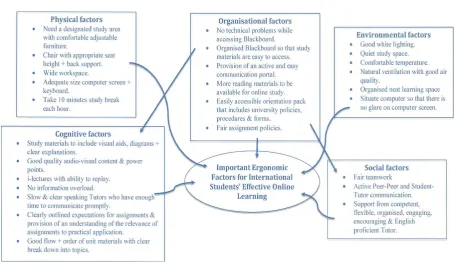
Fig. 1. Important ergonomic factors for international students’ effective online learning
The international students’ answers on the checklist, questionnaire and at the focus group discussion gave insight into the benefits and problems associated with online learning for international students, but they have also enabled some solutions to be provided to assist international students to maximise their online learning opportunities. It is recommended that further research be conducted to identify if international university students in other countries have similar or different experiences with ergonomic factors when learning online.
ACKNOWLEDGEMENTS
This research was supported by a Scholarship of Teaching and Learning research grant from Curtin University.
REFERENCES
[1] Wit, H 2011, Trends, Issues and Challenges in Internationalisation of Higher Education. Amsterdam: Centre for Applied Research on Economics and Management, School of Economics and Management of the Hoge School van Amsterdam.
[2] Knight, J 2004. Internationalization remodelled: Definition, Approaches, and Rationales. Journal of Studies in International Education, vol. 8, no. 1, pp. 5–31
[3] Norton, A & Cakitaki, B 2016, Mapping Australian higher education 2016. Grattan Institute, Melbourne.
[4] Gothe-Snape, J 2018, International students are flocking to Australia but the country’s infrastructure is not ready. ABC News, viewed 27 April 2018, http://www.abc.net.au/news/2018-04-27/international-students-infrastructure-migration-housing/9693256
[5] Bulu, S 2012, Place presence, social presence, co-presence, and satisfaction in virtual worlds.
Page 13
[6] Cacciamani, S, Villani, D, Bonanomi, A, Carissoli, C, Olivari, M, Morganti, L, Riva, G & Confalonieri, E 2018, Factors Affecting Students' Acceptance of Tablet PCs: A Study in Italian High Schools, Journal of Research on Technology in Education. DOI: 10.1080/15391523.2017.1409672. pp 1-15, viewed 26 April 2018, https://doi.org/10.1080/15391523.2017.1409672
[7] Pheasant, S 1994, Ergonomics, Work and Health, Macmillan, London, England.
[8] Jansz, J 2011, Cognitive ergonomics: Getting Started. In Barrett T, Cameron, D & Jansz J, Safe business, good business: a practical guide to occupational safety, health and insurance in Australasia, pp. 107-128. Vineyard Publishing, Guildford, WA.
[9] Meyer, J, Stanley, D, Jackson, T, McInnis, K, Maltin, E & Sheppard, L 2012, Affective, normative, and continuance commitment levels across cultures: A meta-analysis. Vocational Behaviour, vol. 80, no. 2, pp. 225-245. doi:10.1016/j.jvb.2011.09.005
[10] Forst, L 2004, Distance learning in occupational health. International Journal of Occupational and Environmental Health, vol. 10, no. 3, pp. 326-9,
http://search.proquest.com.dbgw.lis.curtin.edu.au/docview/215554997?accountid=10382
[11] Moore, A 2013, Global connections. Nursing Standard (through 2013), 27(21), 22-3. http://search.proquest.com.dbgw.lis.curtin.edu.au/docview/1283947767?accountid=10382
[12] Zepke, N 2015, Student engagement research: thinking beyond mainstream. Higher Education Research & Development, vol. 34, no. 6, pp. 1311-1323, doi: 10.1080/07294360.2015.1024635.
[13] Khawaja, N, & Dempsey, J 2008. A comparison of International and domestic tertiary students in Australia. Australian Journal of Guidance & Counselling, pp. 30-46
[14] Phillimore, J & Koshy, P 2010, A comparative assessment of Australian student visa policy. Public Policy, vol. 5, no. 2, pp. 115-134.
[15] Roberts, P 2011, Support services for international university students: an Australian case study. Retrieved from: http://espace.library.curtin.edu.au
[16] Ruetzler, T, Taylor, J & Hertzman, J 2012, Adaptation and international students' perceptions of on-campus foodservice. British Food Journal, vol. 114, no. 11, pp. 1599-1612.
doi:http://dx.doi.org.dbgw.lis.curtin.edu.au/10.1108/00070701211273081
[17] Rosenthal, D, Russell, J & Thomson, G 2007, Social connectedness among international students at an Australian university. Social Indicators Research, vol. 84, no. 1, pp. 71-82.
doi:http://dx.doi.org.dbgw.lis.curtin.edu.au/10.1007/s11205-006-9075-1
[18] Liu, X, Liu, S, Lee, S & Magjuka, R 2010, Cultural differences in online learning: International student perceptions. Journal of Educational Technology & Society, vol. 13, no. 3, pp. 177-188. http://search.proquest.com.dbgw.lis.curtin.edu.au/docview/1287030706?accountid=10382
[19] Thompson, L & Ku, H 2006, A case study of online collaborative learning. The Quarterly Review of Distance Education, vol. 7, no. 4, pp. 361-375.
[20] Hänninen, O, & Koskelo, R 2003, Adjustable tables and chairs correct posture and lower muscle tension and pain in high school students. Proceedings International Ergonomics
Association/Ergonomics Society Korea/Japan XVth Triennial Congress, pp. 1-6, Seoul, Korea: Ergonomics Society of Korea.
http://link.library.curtin.edu.au/p?pid=CUR_ALMA51112632290001951
[21] Woolner, P, Hall, E, Higgins, S, McCaughey, C & Wall, K 2007, A sound foundation~ What we know about the impact of environments on learning and the implications for building schools for the future. Oxford Review of Education, vol. 33, no. 1, pp. 47-70, doi:10.1080/03054980601094693
Page 14
[23] Yang, Z, Becerik-Gerber, B & Mino, L 2013, A study on student perceptions of higher education classrooms: Impact of classroom attributes on student satisfaction and performance. Building and Environment, vol. 70, pp. 171-188, doi:10.1016/j.buildenv.2013.08.030
[24] Higgins, S, Hall, E, Wall, K, Woolner, P & McCaughey, C 2005, The Impact of School Environments: A literature review. University of Newcastle. The Centre for Learning and Teaching, School of Education, Communication and Language Science. Newcastle, United Kingdom: Design Council, viewed 26 April 2018, http://www.ncl.ac.uk/cflat/news/DCReport.pdf
[25] Smith, T 2007, The ergonomics of learning: educational design and learning performance.
Ergonomics, vol. 50, no. 10, pp. 1530-1546, doi:10.1080/00140130701587608
[26] Gibbs, G & Simpson, C 2004, Conditions under which assessment supports students' learning.
Learning and Teaching in Higher Education, Issue 1, 2004-05, no. 1, pp. 3-31. http://link.library.curtin.edu.au/p?pid=CUR_ALMA51110732610001951
[27] So, H & Brush, T 2008, Student perceptions of collaborative learning, social presence and satisfaction in a blended learning environment: Relationships and critical factors. Computers & Education, vol. 51, pp. 318–336. doi:10.1016/j.compedu.2007.05.009
[28] López-Pérez, V, Pérez-López, C & Rodríguez-Ariza, L 2011, Blended learning in higher education: Students’ perceptions and their relation to outcomes. Computers & Education, vol. 56, no. 3, pp. 818-826, doi:10.1016/j.compedu.2010.10.023
[29] Johnson, S, Aragon, S, Shaik, N & Palma-Rivas, N 2008, Comparative analysis of leader satisfaction and learning outcomes in online and face-to-face learning environments. Journal of Interactive Learning Research, vol. 11, no. 1, pp. 29-49. http://www.editlib.org/p/8371/
[30] Brusin, J 2011, Ergonomics in radiology. Radiologic Technology, vol. 83, no. 2, pp. 141-161.
[31] Richardson, J and Swan, K 2003, Examining social presence in online courses in relation to students’ perceived learning and satisfaction. JALN. Vol. 7, no. 1, pp. 68-88.
[32] Gregory, M & Lodge, J 2015, Academic workload: the silent barrier to the implementation of technology-enhanced learning strategies in higher education. Distance Education, vol. 36, no. 2, pp. 210-230, DOI: 10.1080/01587919.2015.1055056
[33] Kennedy, E, Laurillard, D, Horan, B & Charlton, P 2015, Making meaningful decisions about time, workload and pedagogy in the digital age: the Course Resource Appraisal Model. Distance Education. vol. 36, no. 2, pp. 177-195, DOI: 10.1080/01587919.2015.1055920
[34] Steinman, D 2010, Social interactions within a web 2.0 learning environment: The impact on learner social presence. Northern Arizona University. Ann Arbor, Michigan, USA: UMI Dissertation Publishing, viewed 27 April 2018, http://search.proquest.com/docview/858609092
[35] Kelland, J 2011, Mixing Personal and Learning Lives: How Women Mediate Tensions When Learning Online. University of Alberta, Canada. Ann Arbor, Michigan, United States. Doctoral dissertation, viewed 26 April 2018, http://www.editlib.org/p/122919/
[36] Soroka, M 2015, How ergonomic factors affect learning. Curtin University, Bentley, WA.
[37] Moeglin, P & Vidal, M 2015, Managing time, workload and costs in distance education: findings from a literature review of Distances et Médiations des Savoirs (formerly Distances et Savoirs),
Distance Education, vol. 36, no. 2, pp. 282-289, DOI: 10.1080/01587919.2015.1056335
[38] Kauffman, H 2015, A review of predictive factors of student success in and satisfaction with online learning. Research in Learning Technology. Vol. 23: pp. 1-13.
Page 15
[40] Robertson, M, Larson, N & Huang, Y 2006, A cross-sectional survey of computer workers: examining the relationship of work station design, tasks, psychosocial, work related musculoskeletal and visual discomfort. In Proceedings of the International Ergonomics Association - IEA 2006 Congress. 40-55.
[41] Sen, A & Richardson, S 2007, A study of computer related upper limb discomfort and computer vision syndrome. Journal of Human Ergology, vol. 36, no. 27, pp. 45-50.
[42] Helland, M, Horgen, G, Kvikstad, K, Garthus, T, Bruenech, J & Aaras, A 2008, Musculoskeletal, visial and psychosocial stress in VDU operators after moving to an ergonomically designed office landscape. Applied Ergonomics, vol. 39, pp. 284-295.
[43] Abdelaziz, M, Fahim, S, Mousa, D & Gaya, B 2009, Effects of computer use on visual acuity and colour vision among computer workers in Zaria. European Journal of Scientific Research, vol. 35, pp. 99-105.
[44] Eksioglu, M 2015, Musculoskeletal and visual symptoms among undergraduate students: Individual and computer-use-related risk factors and interference with academic performance.
International Journal of Industrial Ergonomics, pp. 1-9. http://dx.doi.org/10.1016/j.ergon.2015.11.011
[45] Abdel-Hamid, M, Hakim, S, Elokda, E & Mostafa, N 2013, Prevalence and risk factors of sick building syndrome among office workers. Journal of the Egyptian Public Health Association, vol. 88: pp. 109-114.
[46] Zhang, L, Helander, M and Dury, C 1996, Identifying factors of comfort and discomfort in sitting.