QoCS and Cost Based Cloud Service
Selection Framework
Sarvesh Pandey#1, A K Daniel*2,
CSE Department, MMM University of Technology, Gorakhpur, India
Abstract
In this paper, we propose a QoCS and Cost Based Cloud Service Selection Framework based on fuzzy logicIt is a trustworthiness framework which helps in analyzing any cloud service in detail with multidimensional perspectives. It specifically analyze the trustworthiness of cloud service by using a set of parameters as Security, Finance, Maintainability, Reliability, and Usability. These parameters are collectively termed as quality of cloud service (QoCS) parameter. The framework is based on finance parameter as a major characteristic for selection of cloud service. Practical results show that the model improves the QoCS as well as assist the customer in making decision about the selection of cloud service based on their financial constraints from among the different cloud service providers for the same type of services.
Keywords — Quality of Cloud Service (QoCS),
Trustworthiness Measurement, Cloud Service, Cloud Service Cost, cloud service selection, Trust as a service (TaaS), Fuzzy logic.
I. INTRODUCTION
Cloud computing is an emerging field which is an integration of programming methodologies, database techniques, communication network and the internet. In a conventional computing environment, if a client wants to use some resource for a short time interval, then also he/ she has to buy the resource, even if it will be of no use after some time. It was a major problem in last two decades for growing organizations. Cloud computing paradigm provides the solution to this problem. It aims to deliver resources to the end users on demand and enables the user to pay for service based on duration of its requirement [2] [8]. Cloud services are now becoming an important part of every large as well as small IT based industries. This results into the explosive increase in the number of cloud services that are now available in the market. Today, it is common to see that a cloud service with almost similar specification can be by availed be many cloud service providers at varying prices. This leads to the need of a framework that can help us to decide about which cloud service (absolutely cloud service provider too) would be best one for a specific end customer. Trustworthiness is a factor which significantly affects the selection of cloud
service. Audin J. focused on the fact that the measurement of trustworthiness should not rely on reputation degree only but also on various factors [3] [4]. The extensive literature survey shows that the cloud service trustworthiness evaluation techniques developed till now are still not mature enough to give the trustworthy results. Researchers considered varying set of parameters for measuring the trustworthiness of a cloud services. This again create a problem in comparing the results presented by the researchers even though all these works are done to resolve the same trustworthiness issue.
We propose a CSTM model that can be used as a benchmark for trustworthiness evaluation of cloud services. Trustworthiness affects the choice of a cloud service to a large extent. This model considers the following parameters to measure the trustworthiness of cloud services as: Security, Finance, Maintainability, Reliability, Usability, and Scalability. Dynamic trustworthiness measurement is done by considering that the trustworthiness value of a cloud service may be changed with time based on the user's feedback, changes in technology, way to fulfill the new end user requirements etc.
The rest of the paper is as follows:
Section II discusses related work. Section III describes Model Analysis and Validation of the proposed CSTM model using Fuzzy Logic. Performance Evaluation has been done in Section IV. Section V concludes the paper.
II. RELATEDWORK
Trustworthiness is a subjective concept based on the knowledge of observed facts and evidences. The definition of cloud service trustworthiness varies according to the applications & the organizations [5]. A cloud service trustworthiness can be defined as the degree of confidence of cloud service to meet the set of requirements [1]. It is evaluated in terms of degree of confidence and set of requirements.
1. Trustworthiness value depends on management and technical decisions made by individuals/group evaluating the cloud service and is termed as degree of confidence.
2. Trustworthiness value also depends on the selected set of requirements.
literature to identify the need and significance of trustworthiness measurements. Some are as follows: In [6], S. Marsh formalized trust as a computational concept in computer science. The trust value was expressed as real numbers in the range [-1, 1]. The trustworthiness increases with the increase in the trust value.
In [7], Y. Zhang et al. have proposed an evaluation model for trustworthiness of a software service using fuzzy comprehensive evaluation method. They have considered availability, reliability, safety, security and maintainability parameters for the evaluation of trustworthiness.
III.MODEL ANALYSIS AND VALIDATION USING FUZZY LOGIC
We have used a fuzzy comprehensive evaluation model which logically evaluates the trustworthiness of any cloud service [9] [6]. Every parameter has a set of sub parameters to define it precisely. Let us define the attributes Security, Finance, Maintainability, Reliability, and Usability as:
A = {A1, A2, A3, A4, A5}
The first grade index is represented as Ai (i = 1, 2… 5) and second grade indexes Ki may be represented as:
Ai = {Ai1, Ai2… Aij} where i= 1, 2…5 and j= 1, 2… ki
Where, Pij is the jth second grade index of parameter Pi.
I. Determination of the weight distribution
Different cloud service has different requirement of each trustworthiness parameters such as space, military, and aerospace systems have high requirements of security [13]. So experts are needed to determine the weight of each parameter according to their level of importance.
Let wi be weight of Ai and the first grade weight set is:
Let (i = 1, 2…5 and j = 1, 2…ki), be weight of Pij and the second grade weight set is:
(i= 1, 2….5),
II. Determine the result grading
Some sub attributes of different attributes evaluated by quantity while others evaluated by quality. We
use expert evaluation method to combine the two parts. Each evaluation result is divided into five levels: L = {VH, H, M, L, and VL}, where VH (Very High), H (High), M (Medium), L (Low) and VL (Very Low). Consider the levels as, L = {L1, L2, L3, L4, L5} and Lm (m=1, 2, 3, 4, 5) is the mth level.
III. Evaluation Matrix
The membership degrees to the five comment set of
each factor are (dij1, dij2, dij3, dij4, dij5), the evaluation result of Ki factors can be represented by
Ki×5 order fuzzy matrix .
11 12 13 14 15 21 22 23 24 25 31 32 33 34 35
2 2 3 3
1
i i i i i
i i i i i
i i i i i
i i i i i
i
ik ik ik ik ik
d
d
d
d
d
d
d
d
d
d
F
d
d
d
d
d
d
d
d
d
d
where, Fi represents the membership degree of all the sub-parameters of a attribute Ai of a cloud
service in specified trustworthiness levels. is a single factor evaluation matrix of fuzzy comprehensive evaluation for the first grade index of Pi, and dijm is the membership degree of a sub-attribute aij as grade m. The weight set Wi is determinate, fuzzy comprehensive evaluation matrix for the first grade index of Ai can be evaluated using the Min-Max composition as follows:
Let Wi be a fuzzy relation from X to Y and Fi be a fuzzy relation from Y to Z, the composition of Wi and Fi, WioFi, is a fuzzy relation from X to Z and is expressed as:
( , )
i i
i i i W F
B
W
F
d
x z
,
,
i i
i y W F
B d x y d y z
Min-Max composition with
= Maximum and
= Minimum [10]. Different fuzzy operators are applied according to the situation and operation results of cloud service. Bi is a fuzzy comprehensive evaluation matrix for the first grade index.11 12 13 14 15 21 22 23 24 25 31 32 33 34 35
2 3 4 5
1 2 3
1
i i i i i
i i i i i
i i i i i i
i i i i i
i i i i ik
ik ik ik ik ik
d
d
d
d
d
d
d
d
d
d
B w w w
w
d
d
d
d
d
d
d
d
d
d
After Min-Max composition operation, the resultant membership degree of parameter Pi is as:
1 2 3 4 5
i i i i i i
B
b b
b b
b
The resultant matrix Bi will be a matrix of size 1×5 [(1×ki) × (ki×5)].
Bi is computed for every parameter of the cloud service. Bi represents the membership degree of the attributer Ai of a cloud service in specified trustworthiness levels. Computation at the parameter level results into the better evaluation of the trustworthiness of the cloud service. The results represent which parameter(s) is specifically responsible for lower value of trustworthiness of cloud service (if any).
IV. Fuzzy Comprehensive Evaluation Model
We perform following computations for evaluating the overall trustworthiness membership degree of cloud service in different predefined levels:
1 1 1 2 2 2 3 3 3 4 4 4 5 5 5
B W F
B W F
F B W F
B W F
B W F
F is a single factor evaluation matrix of comprehensive evaluation, consists of fuzzy comprehensive evaluation matrix for the first grade index of Bi (i=1, 2, 3, 4, 5):
1 1 1 2 1 3 1 4 1 5 2 1 2 2 2 3 2 4 2 5 3 1 3 2 3 3 3 4 3 5 4 1 4 2 4 3 4 4 4 5 5 1 5 2 5 3 5 4 5 5
b b b b b
b b b b b
F b b b b b
b b b b b
b b b b b
Therefore, the second fuzzy comprehensive
evaluation set may be computed as:
BW F
11 12 13 14 15
21 22 23 24 25
1 2 3 4 5 31 32 33 34 35
41 42 43 44 45
51 52 53 54 55
b
b
b
b
b
b
b
b
b
b
B
w w w w w
b
b
b
b
b
b
b
b
b
b
b
b
b
b
b
By using Min-Max composition, we obtain:
1 2 3 4 5
B
b
b
b
b
b
where, B represents the membership degree of the trustworthiness of overall cloud service in specified trustworthiness levels.
IV.PERFORMANCE EVALUATION OF CSTM MODEL
A random experiment for evaluating a cloud service is performed. Consider the First-grade weight set is as:
W= {w1, w2, w3, w4, w5}= {0.1, 0.2, 0.2, 0.4, 0.1} Second grade weight sets are as:
w1 = {0.1, 0.1, 0.2, 0.3, 0.1, 0.2}, w2 = {0.08, 0.12, 0.14, 0.08, 0.12, 0.14}, w3 = {0.14, 0.14, 0.2, 0.16, 0.16, 0.2}, w4 = {0.16, 0.16, 0.14, 0.2, 0.2, 0.14} and w5 = {0.16, 0.14, 0.16, 0.14, 0.2, 0.2}
The comment set is L = {L1, L2, L3, L4, L5} The membership degree of second grade index is given by experts who are familiar with the functioning of the cloud service. After calculating with these values, we get:
B1 = {0.08, 0.05, 0.12, 0.22, 0.007}, B2 = {0.08, 0.12, 0.14, 0.08, 0.12}, B3 = {0.16, 0.008, 0.2, 0.13, 0.001}, B4 = {0.26, 0, 0.14, 0.2, 0.01}, and B5 = {0.16, 0.14, 0.16, 0.14, 0.2}
1 1 1
2 2 2
3 3 3
4 4 4
5 5 5
B W F
B W F
F B W F
B W F
B W F
where, F is a single factor evaluation matrix of comprehensive evaluation that consists of fuzzy comprehensive evaluation matrix for the first-grade index of Bi:
1 1 1 2 1 3 1 4 1 5 2 1 2 2 2 3 2 4 2 5 3 1 3 2 3 3 3 4 3 5 4 1 4 2 4 3 4 4 4 5 5 1 5 2 5 3 5 4 5 5
b b b b b
b b b b b
F b b b b b
b b b b b
b b b b b
B W F
B represents the membership degree of the specified cloud service in the different predefined trustworthiness levels.
11 12 13 14 15
21 22 23 24 25
1 2 3 4 5 31 32 33 34 35
41 42 43 44 45
51 52 53 54 55
b b b b b
b b b b b
B w w w w w b b b b b
b b b b b
b b b b b
We evaluate the value of B using Min-Max composition, to find the membership value of trustworthiness of a given cloud service as follows:
0.08 0.05 0.12 0.22 0.007
0.08 0.12 0.14 0.08 0.12 0.1 0.2 0.2 0.4 0.1 0.16 0.008 0.2 0.13 0.001
0.26 0 0.14 0.2 0.01
0.16 0.14 0.16 0.14 0.2
B
B= [0.26, 0.12, 0.2, 0.2, 0.12]
should be 1. And, on adding the above membership values, we get:
0.26+0.12+0.2+0.2+0.12 = 0.9
Therefore, after normalization process the final membership representation is:
B= [0.2888, 0.1333, 0.2222, 0.2222, 0.1333]
Table 1. Trustworthiness levels of cloud Service and its distinct parameters
Table 2. Normalized Trustworthiness Levels of Cloud Service and its distinct parameters
Where S, F, M, R, U and CS represents security, finance, maintainability, reliability, usability and cloud service respectively. And, VH, H, M, L, VL represents very high, high, medium, low and very low respectively.
It can be observed from the Table 1 and Table 2 that the security of the cloud service is low, finance is medium, maintainability is medium, reliability is very high, usability is very low, and the overall trustworthiness of the cloud service is very high.
Figure 2. Graphical Representation of Trustworthiness of Cloud Service and its distinct
parameters
The above bar chart shows the comparative trustworthiness values of different cloud service parameters and the cloud service itself. In this diagram, membership degree of all the cloud service parameters and cloud service itself is also shown. Normalized values are used for this bar chart.
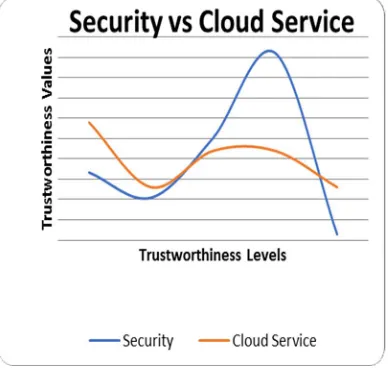
Figure 3a. Comparative Trustworthiness of Cloud Service and Security
In the above line diagram, trustworthiness values of security parameter and the overall cloud service are compared. It is shown that trustworthiness level of security parameter is low while trustworthiness level of overall cloud service is very high. It indicates that the improvements required regarding the security parameter of the above mentioned cloud service.
Figure 3b. Comparative Trustworthiness of Cloud Service and Finance
compared. It is shown that trustworthiness level of finance parameter is medium while trustworthiness level of overall cloud service is very high. It indicates that the budget for the required cloud service lies in medium category.
Figure 3c.Comparative Trustworthiness of Cloud Service and Maintainability
In the above line diagram, trustworthiness values of maintainability parameter and the overall cloud service are compared. It is shown that trustworthiness level of maintainability parameter is medium while trustworthiness level of overall cloud service is very high. It indicates that the maintainability of the overall cloud service lies in the medium category.
Figure 3d. Comparative Trustworthiness of Cloud Service and Reliability
In the above line diagram, trustworthiness values of reliability parameter and the overall cloud service are compared. It is shown that trustworthiness level of reliability parameter is very high while trustworthiness level of overall cloud service is very high. It indicates that no such improvements
required regarding the reliability parameter of the above mentioned cloud service.
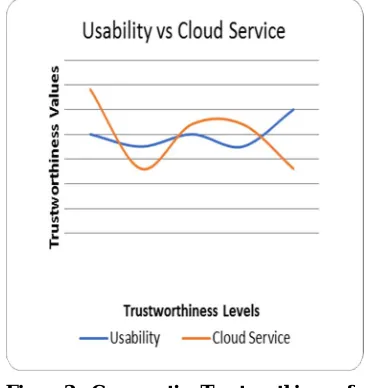
Figure 3e. Comparative Trustworthiness of Cloud Service and Usability
In the above line diagram, trustworthiness values of usability parameter and the overall cloud service are compared. It is shown that trustworthiness level of usability parameter is very low while trustworthiness level of overall cloud service is very high. It indicates that the significant improvements required regarding the usability parameter of the above mentioned cloud service.
Figure 3f. Graphical Representation of Trustworthiness of Cloud Service and its distinct
parameters
(Fig.2 and Fig.3). Fig. 2 and Fig. 3 represent the trustworthiness degree of all the distinct parameters in appropriate levels. The overall trustworthiness of the cloud service is also represented. According to maximum membership degree principle, the trustworthiness level of the cloud service is very high. However, not every parameter gets the result of very high. In the first grade evaluation result, security is low, finance is medium, maintainability is medium, reliability is very high, and usability is very low. Hence the final result is influenced by the very high weight of reliability and medium weight of finance and maintainability. The problems related to security and usability should be resolved specifically in order to improve the trustworthiness of this cloud service.
V. CONCLUSION
We evaluated the trustworthiness of proposed model by using a fuzzy comprehensive evaluation model. This model evaluates a trustworthiness of the overall cloud service and also leads to individual parameter trustworthiness evaluation. This approach can significantly improve the performance of cloud service because of the easy identification of parameters responsible for lower trustworthiness of overall cloud service. Results show that the QoS of cloud service is improved significantly.
ACKNOWLEDGMENTS
This research work is financially supported by the Council of Scientific and Industrial Research, New Delhi, India (No. 1061461137).
References
[1] Pandey, Sarvesh, and A. K. Daniel. "Fuzzy logic based cloud service trustworthiness model." Engineering and Technology (ICETECH), 2016 IEEE International Conference on. IEEE, 2016.
[2] Supriya, M., K. Sangeeta, and G. K. Patra. "Estimation of Trust values for Varying Levels of Trustworthiness based on Infrastructure as a Service." Proceedings of the 2014 International Conference on Interdisciplinary Advances in Applied Computing. ACM, 2014.
[3] Jsang, Audun, and Roslan Ismail. "The beta reputation system." Proceedings of the 15th bled electronic commerce conference. Vol. 5. 2002.
[4] Jøsang, Audun. "Trust and reputation systems." Foundations of security analysis and design IV. Springer Berlin Heidelberg, 2007. 209-245.
[5] Amoroso, Edward, et al. "A process-oriented methodology for assessing and improving software trustworthiness." Proceedings of the 2nd ACM Conference on Computer and communications security. ACM, 1994.
[6] Marsh, Stephen Paul. "Formalizing Trust as a Computational Concept [dissertation]." University of Stirling, Scotland, UK (1994).
[7] Zhang, Youjin, Yanmei Zhang, and Mo Hai. "An Evaluation Model of Software Trustworthiness Based on Fuzzy Comprehensive Evaluation Method." Industrial Control and Electronics Engineering (ICICEE), 2012 International Conference on. IEEE, 2012.
[8] Hao, L. I. U. "Development and method of software availability." Communications World 14 (2005): 46-46.
[9] Wang, Xiuhong, Feng-yuan Sun, and Qing-Yang Ge. "Application of Fuzzy Comprehensive Evaluation Method in Performance Knowledge Management." Journal of Information 4 (2007): 8-10.
[10]Fuzzy systems for information processing. IOS Press, 1995.