Preventing secondary cases of invasive meningococcal capsular group B
(MenB) disease: benefits of offering vaccination in addition to antibiotic
chemoprophylaxis to close contacts of cases in the household, educational
setting, clusters and the wider community
(Version 1.1, Dated 01 April 2014)
Authors:
Shamez N. Ladhani, Rebecca Cordery, Sema Mandal, Hannah Christensen, Helen Campbell, Ray Borrow, Mary Ramsay; and PHE VaPiBi forum members
PHE VaPiBi forum members:
Andrew Earnshaw (Department of Health), Andrew Gorringe (PHE), Caroline Trotter (University of Cambridge), Claire Cameron (Health Protection Scotland), Deborah Wilson (PHE), Ed Kaczmarski (PHE), Judy Hart (Public Health Wales), Louise Coole (PHE), Martin Maiden (University of Oxford), Mary Slack (PHE), Neil Irvine (Health Protection Service Northern Ireland), Paul Heath (St. George’s University of London), Pauline Waight (PHE), Philip Monk (PHE), Rory Care (National Institute for Biological Standards and Control), Simon Kroll (Imperial College London) Steve Gray (PHE).
Document Control Record
For queries relating to this document, please contact: Dr Shamez Ladhani, Immunisation Hepatitis and Blood Safety Department, Public Health England, 61 Colindale Avenue, London NW9 5EQ. Email: [email protected]
Version name
Date of issue
Author Reason for change
1.0 13/12/2013 Shamez Ladhani
First Draft
1.1 01/02/2014 Shamez
Ladhani
Table of Contents
SUMMARY OF CHANGES ... 3
SUMMARY OF RECOMMENDATIONS ... 3
BACKGROUND ... 5
EPIDEMIOLOGY OF MENINGOCOCCAL GROUP B DISEASE ... 6
Incidence ... 6
Outcome ... 7
Morbidity ... 7
Clusters ... 7
MENINGOCOCCAL GROUP B VACCINES ... 9
MenB vaccine immunogenicity ... 9
Molecular characterisation of MenB strains causing IMD ... 12
GUIDELINES ... 13
DEFINITIONS of IMD REQUIRING PUBLIC HEALTH ACTION ... 13
Confirmed Case ... 13
Probable Case ... 14
Possible cases do not require public health action ... 14
Isolation of meningococci from non-sterile sites... 14
Household Contact... 14
Contact in an educational setting ... 15
Clusters in a single educational setting ... 15
Meningococcal B vaccination ... 16
RECOMMENDATIONS FOR BEXSERO® FOR PREVENTING SECONDARY CASES ... 16
Estimating NNV for infants and toddlers in a national immunisation programme ... 18
Vaccinating the index case after MenB disease ... 19
Vaccination of household contact after a single case ... 19
Vaccination of contacts in an educational setting after a single case ... 21
Vaccination of contacts following a MenB cluster ... 22
Bexsero® for managing clusters in the wider community ... 24
CONCLUSIONS ... 25
SUMMARY OF CHANGES
1. Recommendation 1 was added to state that index cases should develop natural immunity after infection and would not benefit from additional MenB vaccination unless at-risk and previously unimmunised or partially immunised.
2. A comment was added to state that there is no accelerated schedule for previously unimmunised or partially immunised at-risk contacts.
3. In the definitions, the term “public health consultant” was re-worded to “an experienced member of the health protection team”
4. RECOMMENDATION 3: “may be considered” was re-worded to “should be offered to”
5. RECOMMENDATIONS 5 and 6 (now recommendations 6 and 7): a note has been added stating that “The aim of immunisation is to provide long-term individual protection against MenB in a background of higher-than-expected disease rates. If Bexsero® is subsequently shown to reduce MenB carriage, then this could provide additional indirect protection by halting on-going transmission within the community.
SUMMARY OF RECOMMENDATIONS
In early 2013, a new vaccine developed specifically to prevent disease caused by group B meningococci (MenB) was licensed in Europe (4CMenB, Bexsero®, Novartis Vaccines, Italy). This vaccine is protein-based and, therefore, is unlike existing meningococcal conjugate vaccines in that it has a different mechanism of action, along with different safety,
reactogenicity and immunogenicity profiles in different age groups. This guidance explored the potential use of MenB vaccine in close contacts of sporadic cases and for management of MenB clusters. Based on available evidence, the following recommendations were made:
Recommendation 1: Index cases should not be immunised with Bexsero® unless they are at-risk and were previously unimmunised or partially immunisedwithBexsero® (INDICATED).
Recommendation 2: After a single case of confirmed or probable IMD, Bexsero® should not be routinely offered to household contacts, even if the strain is subsequently identified as vaccine-preventable (RECOMMENDED).
Recommendation 3: After a single case of confirmed or probable IMD, ensure that any at-risk household contact (asplenia, splenic dysfunction or known complement deficiency) has received both the MenACWY conjugate vaccine and Bexsero® according to national
recommendations (RECOMMENDED). If not immunised or partially immunised, then immunise as soon as possible according to the recommended schedule. There is no accelerated immunisation schedule for Bexsero®.
Recommendation 4: Bexsero® should be offered in addition to chemoprophylaxis for all household contacts after a second MenB case occurs in the same family, even if the interval between the two cases is >30 days and/or the strains are subsequently identified to be different (INDICATED).
Recommendation 5: After a single case of confirmed or probable IMD, Bexsero® should not be routinely offered to contacts in an educational setting, even if the strain is subsequently identified as vaccine-preventable (INDICATED).
Recommendation 6: Following confirmation of a MenB cluster, Bexsero® should be offered to the same group that would receive antibiotic chemoprophylaxis as soon as practically possible unless molecular typing confirms that the cluster is not caused by a vaccine-preventable MenB strain (INDICATED).
Recommendation 7: Bexsero® may be considered in the community if the age-specific attack-rate for a vaccine preventable MenB strain within a defined geographical boundary over a three-month period exceeds 40/100,000 (INDICATED).
BACKGROUND
Neisseria meningitidis is a major cause of septicaemia and meningitis worldwide and is associated with significant mortality as well as serious long term sequelae among survivors [1]. Six meningococcal capsular groups (A, B, C, W, X and Y) distinguished by their
polysaccharide capsule cause almost all invasive infections in humans. The meningococcus commonly colonises the nasopharynx and onward transmission among close contacts can result in secondary cases as well as clusters of infection [2]. Fewer than 2% of invasive meningococcal disease (IMD) cases, however, are considered to result from close contact with a primary case [2, 3].
Close contacts in a “household” setting have the highest risk of secondary infection, where the absolute risk (AR) of developing IMD within 30 days of the index case is 1 in 300 if chemoprophylaxis (CP) is not administered [3]. Administration of antibiotic
chemoprophylaxis to eliminate meningococcal carriage and subsequent transmission among close contacts has been shown to reduce the risk of secondary cases in close contacts by up to 89% (95%, 42-98%) [4]. In such circumstances, the number need to treat (NTT) – i.e. the number of household contacts receiving chemoprophylaxis to prevent one IMD case – is estimated to be 218 (95% CI, 121 to 1135) [4].
There is also some evidence from Danish surveillance that vaccination of close contacts of an index case may also have a role preventing late secondary IMD cases occurring more than 14 days after disease onset in the index case [5]. A systematic review and meta-analysis assessing the added benefit of vaccination with meningococcal capsular group C conjugate (MenC) or a meningococcal quadrivalent (ACWY) polysaccharide vaccine, in addition to antibiotic chemoprophylaxis, estimated the number of household contacts needing vaccination (NNV) to prevent one IMD case to be 1,033 (95% CI, 638 and 1678) [5]. This evidence informs the current UK policy to also immunise close contacts of index cases infected with capsular group A, C, W or Y.
When clusters arise in community settings such as schools or colleges, it is UK policy to offer chemoprophylaxis more widely. Consideration is also given to offering vaccination in
strain. Conjugate vaccines not only provide individual long-term protection but, alsoreduce carriage of the outbreak strain, thus halting transmission to susceptible contacts.
In early 2013, a new vaccine was developed specifically to prevent disease caused by group B meningococci (MenB) and was licensed in Europe (4CMenB, Bexsero®, Novartis Vaccines, Italy). This vaccine is unlike existing MenC and MenACWY conjugate vaccines in that it is protein-based and, therefore, has a different mechanism of action compared with conjugate vaccines along with different safety, reactogenicity and immunogenicity profiles in different age groups [6]. This guidance explores the potential use of MenB vaccine in close contacts of sporadic cases and for management of MenB clusters. It will describe the epidemiology of MenB in England and Wales (E&W), along with the incidence and characteristics of
secondary cases and clusters and whether these differ from IMD caused by other capsular groups. This study also aims to estimate the numbers needed to vaccinate with Bexsero® to prevent secondary cases using recent data on vaccine immunogenicity in different age groups and vaccine strain coverage in E&W.
EPIDEMIOLOGY OF MENINGOCOCCAL GROUP B DISEASE
Incidence
The incidence of IMD and dominance of different capsular groups varies widely across the world [7]. In E&W, routine MenC conjugate vaccination since 1999 has led to virtual
elimination of IMD caused by this capsular group [8]. MenB disease, too, has been declining over the past decade, most likely because of secular trends [9]. During 2006-11, average annual IMD incidence across all age groups was 2.0/100,000. MenB accounted for 87% (4777/5471) cases, with an overall incidence of 1.8/100,000. The highest MenB incidence was observed among infants (38.6/100,000), followed by toddlers (12.6/100,000) and then 15-19 year-old adolescents (3.2/100,000). Cases in infants increased from birth and peaked at 5 months then declined gradually until the age of 12 years, before rising to a second smaller peak at 18 years. Around 26% of MenB cases occur in the first year of life and 59% in children aged <5 years. Other capsular groups rarely caused invasive disease, although
capsular group Y (MenY) cases more than doubled from 35 in 2006/07 to 86 in 2010/11 mainly in older adults with co-morbidities who often developed pneumonia [10].
Outcome
The case fatality ratio (CFR) for MenB disease is low. During 2006-11, in E&W, the CFR was 5.2% for MenB, 9.9% for MenC and 5.3% for the other capsular groups [9]. Although the highest CFR was among ≥ 65 year-olds (28/161; 17.4%), the largest number of deaths (n=125) occurred among <5 year-olds [9].
Morbidity
A retrospective study of confirmed cases (1990-1994) in Quebec, Canada reported
complications associated with MenB and MenC disease [11]. In this study, the CFR was 7% for MenB and 14% for MenC disease. Major complications (including death) were reported for 12% of MenB cases compared to 30% of MenC, while minor complications occurred in 37% and 59% of cases, respectively. The highest case fatality and morbidity rates for MenC were observed in adults (20-59 years) while for MenB, this occurred at the extremes of age. Long-term sequelae (scars, amputations, sensorineural hearing loss and renal failure) were all more common with MenC disease (15% vs. 3%). Whilst long-term outcomes are better for MenB compared to C, they are nonetheless significant. A case-control study in England, comparing survivors of MenB disease and healthy age-matched controls reported long-term deficits in physical, cognitive and psychological functioning as a result of their illness, with cases more likely to require learning support at school [12].
Clusters
Clusters of IMD occur most commonly within households. In a systematic review assessing the effectiveness of vaccinating household contacts in addition to chemoprophylaxis in outbreaks caused by Men A, C, W or Y, six eligible studies reporting a total of 4730 primary cases and 30 household clusters with 40 secondary cases were identified [5]. The attack rate using a fixed effects Poisson model for meta-analysis was 1.08/1000 contacts (95% CI, 0.7-1.7) in the 14-365 days after disease onset in the index case. Using data from the four studies with a follow-up period of >31 days, the secondary attack rate after
chemoprophylaxis was 20-90 per 100,000 household contacts [5]. The authors estimated that between 640 and 1680 household contacts would need vaccinating to prevent a secondary case [5].
IMD clusters can also occur in a variety of community settings, particularly in institutions such as schools and colleges. Enhanced national surveillance suggests that there are approximately 16 IMD clusters annually in school settings and a further 3 in pre-school settings in E&W [13]. During 1995-2001 (prior to and during the introduction of universal MenC conjugate vaccination), the overall risk of a cluster was similar for MenB and MenC. Most MenC cases occurred in secondary schools, while MenB clusters were more common in primary schools [13].
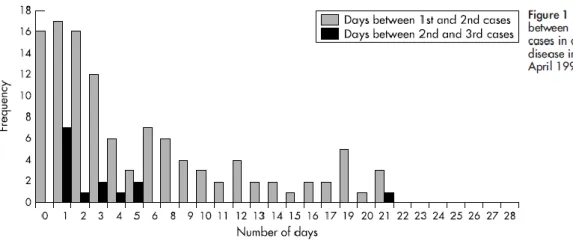
An increase in the relative risk (RR) and absolute risk (AR) of a cluster due to any capsular group following an initial case in these educational settings has been reported, with the risk being highest in pre-school (RR, 27.6; AR, 70/100,000) and lowest in secondary school (RR 3.6; AR, 3/100,000) settings [13]. In most clusters, secondary cases occurred within one week of the index case (29% within 2 days, 68% within 7 days) and, by the end of the third week, the RR of a secondary case was similar to baseline. The majority of clusters (89%) had only 2 cases and, where third cases did occur, 93% were diagnosed within 6 days of a secondary case (although, in one cluster, a third case occurred at 21 days post the second case).
A case-control analysis of school children in the USA (1989-1994) estimated the secondary incidence of IMD as 2.5/100,000 in school children aged 5-18 years, with relative risk of 2.3 [3]. One third of cases occurred within 48 hours of the index case and 75% within 2 weeks. In secondary schools, where 75% of clusters occurred, 73% of secondary cases occurred within 2 weeks of the index case. When more than two cases were identified, in school-based clusters, the mean time between second and third cases was 1.6 days (range 0-5 days). No attempt was made in these studies to estimate any additional benefit of vaccination over chemoprophylaxis in preventing further cases.
MENINGOCOCCAL GROUP B VACCINES
Glycoconjugate vaccines have been very successful in providing protection against
Haemophilus influenzae type b (Hib), pneumococcal and MenC disease, especially in infants. They produce rapid, long term protection and also reduce the acquisition of nasopharyngeal carriage and, therefore, induce herd protection [14]. This is important when using vaccines to manage large-scale outbreaks.
Attempts at producing a MenB glycoconjugate vaccine have been unsuccessful because MenB capsular polysaccharide is similar to polysialylated glycoproteins in the foetal brain. The MenB capsular polysaccharide is, therefore, poorly immunogenic. In addition, there is a risk of inducing autoantibodies, which would potentially interact with these host antigens. As a consequence, MenB vaccines were developed using outer membrane vesicles (OMV) and preserved subcapsular proteins [15]. One such vaccine (4CMenB, Bexsero®, Novartis Vaccines) was licensed in Europe in early 2013 and contains 4 main components: factor H binding protein (fHbp) variant 1.1, Neisserial Adhesin A (NadA), Neisseria Heparin Binding Antigen (NHBA) and the New Zealand OMV incorporating Porin A (PorA) P1.4 [6]. Another vaccine using bivalent fHbp (also known as rLP2086; Pfizer) is currently in phase 1/2 clinical trials in children and adults [16].
MenB vaccine immunogenicity
MenB vaccines containing outer membrane vesicle (OMV) proteins have been used in the management of MenB outbreaks in recent years. “Tailor-made” vaccines have been developed against particular MenB outbreak strains, e.g. MeNZB® which was used in a nationwide programme in New Zealand from 2004-2006 in response to an epidemic of MenB (B:4:P1.7-2,4) disease [17]. The vaccine was rolled out to all children from 6 weeks to 19 years of age. Vaccine effectiveness was 73% (95% CI 52, 85) in fully vaccinated groups (3 dose schedule), with a 3.7-fold higher MenB incidence in unvaccinated compared with vaccinated groups. The duration of protection, however, is unclear and infants required 4 doses of the MenB vaccine for protection. A significant protective effect was demonstrated with partial immunisation (1 or 2 doses), but this was not quantified.
OMV vaccines, however, are only effective against the outbreak strain as the
immunodominant antigen is the PorA and antibodies against specific PorA antigens do not provide protection against heterologous PorA subtypes [18]. The recently licensed Novartis MenB vaccine (Bexsero®) contains multiple immunogenic antigens which are present in variable amounts in the majority of MenB strains. Measuring the effectiveness of such MenB vaccines against the many diverse strains in every geographical area is impractical. A Meningococcal Antigen Typing System (MATS), developed by Novartis, allows quantification of different antigens which can be correlated to serum bactericidal antibody (SBA) assays [19]. Analysis of MenB strains causing IMD in a number of European countries using MATS predicted that 78% of all MenB strains would be killed by post-vaccination sera (95% CI, 63-90%). The proportion of strains killed ranged from 73% in E&W to 87% in Italy, with half of all strains targeted by bactericidal antibodies against more than one vaccine antigen [20]. Analysis by SBA assay of a subset of 40 of the E&W strains above demonstrated that up to 88% of strains may be killed by vaccine-induced antibodies, showing the conservative predictive value of MATS in determining strain coverage [21].
Bexsero® is highly immunogenic in adolescents and young people as measured against reference strains which share the same antigenic variants contained in the vaccine under test. In Chile, a randomised, placebo-controlled trial evaluating the immunogenicity and safety of Bexsero® in adolescents aged 11-17 years, SBA against 3 MenB reference strains was measured to establish protection against the fHBP, NadA and PorA in the NZ OMV components [22]. Over 90% of participants developed protective SBA titres against the three strains after one dose (93% had SBA titres of ≥ 4 for strains specific to fHbp; 96% to NadA and 93% to the PorA in the NZ OMV). This reached 99-100% when 2 doses were
administered at 1, 2 or 6 month intervals. A third dose provided no additional benefit. Waning of antibody titres was evident 2 months after the first dose in those who did not receive a second dose but boosting at 6 months re-established SBA titres in 99-100%. In another clinical trial involving infants receiving routine vaccines with 4CMenB at either 2-3-4 or 2-4-6 months, the vaccine was also immunogenic against three reference strains, with 99% having hSBA titres ≥4 against fHBP and NadA. For NZ-OMV PorA, when administered with routine vaccinations, the proportion was 79% for vaccination at 2, 4, and 6 months and
82% for vaccination at 2, 3, and 4 months [23]. No serology was undertaken following one and two doses of vaccine.
In a previous phase II clinical trial, the same vaccine was administered to UK infants with and without the OMV component at 2-4-6-12 months [24]. At one month after 3 doses, the vaccine containing OMV demonstrated good immunogenicity, with 87%, 85%, 95% and 63% of infants with SBA titres ≥4 against the fHBP, PorA, NadA and for another PorA P1.4-containing strain from E&W , respectively. The vaccine also demonstrated good
immunogenicity after two doses; Bexsero® demonstrated good immunogenicity after 2 doses, with 95%, 74%, 100% and 64% of infants with SBA titres ≥4 against the same four strains [24]. No serology was undertaken following one dose of vaccine in infants. However,
the study did recruit infants who received a single dose of Bexsero® at 12 months of age. In this age group, 73%, 18%, 73% and 5% of infants developed SBA titres ≥4 against the four strains, respectively [24]. The breadth of vaccine protection against IMD is the subject of on-going trials, but there is some evidence to suggest that the immune response in infants may be more specific than that in older children and adults and the vaccine, therefore, may provide less cross-protection against related antigenic variants of meningococci in this age group [25, 26]. Further MATS data will assist with estimates of strain coverage and potential for cross-protection in the near future.
In summary, Bexsero® induces good immunogenicity in 11-17 year-olds, with 93% of
adolescents achieving protective SBA titres against reference strains following one dose and 99% following 2 doses. Immunogenicity is lower in infants, especially after two doses, and there are no data on immunogenicity following a single dose in this age group. Compared with adolescents, antibodies in infants, the age group with the highest MenB incidence and disease related morbidity and mortality, are also less likely to offer cross-protection against related strains. Overall, however, it is likely that the majority of vaccinated individuals across all age groups will acquire some protection if the infecting strain contains at least one of the vaccine antigens.
In addition to vaccine immunogenicity and meningococcal strain coverage, it is important to determine whether Bexsero® will reduce nasopharyngeal carriage, as has been
vaccine effectiveness in the population because it will determine the level of herd protection offered by the vaccine. For MenC, herd protection was achieved mainly by reducing carriage in teenagers, the main reservoirs for transmission [27]. Preliminary data from a recent UK randomised controlled trial demonstrates that Bexsero® impacts on the acquisition of meningococcal carriage in adolescents and young adults. However, further, larger carriage studies are required to determine whether this applies specifically to MenB carriage (http://www.meningitis.org/posters13#Robert_Read).
Molecular characterisation of MenB strains causing IMD
An important factor relating to the use of Bexsero® to prevent secondary cases is the time taken to determine whether the MenB strain causing IMD is vaccine-preventable or not. To identify and characterise N. meningitidis, a combination of traditional and molecular
techniques is used. In general, organisms are cultured from blood, CSF or another sterile site. Strain differentiation is usually performed by Public Health England (PHE) national Meningococcal Reference Unit (MRU) and involves characterisation of capsular
polysaccharide and some outer membrane proteins using a monoclonal antibody-based internationally-recognised typing scheme. This allows phenotypic classification by capsular group, type and subtype. In Europe, PCR is also widely used and this currently mainly allows capsular group determination. Over 50% of IMD cases in England and Wales are now confirmed by PCR only. PorA sequencing is also applied to both cultures and non-culture samples (if there is sufficient DNA) and has the potential for use in outbreak investigation. Relatively high resolution genotypic analysis (e.g., Multilocus Sequence Typing (MLST) and whole genome sequencing) can identify genetic relationships between organisms during outbreaks as they evolve over time. Because isolates are batched for genotypic testing, however, their use in outbreak management is limited because decisions regarding immunisation need to be taken, in practice, within a week to have an impact on disease transmission. MenB characterisation using MATS would be ideal for identification of vaccine-preventable strains, but is yet to be implemented on a real time basis.
GUIDELINES
The following guidelines on prevention of secondary cases have been developed following a review of the epidemiology of invasive meningococcal disease in England and Wales,
outbreak rates and vaccine characteristics. The guidelines have been consulted on with paediatric infectious diseases specialists, microbiologists and public health consultants, and approved by the Public Health England Vaccine Preventable Invasive Bacterial Infections (VaPIBI) forum and the Public Health England Vaccination Programme Board (VPB). The US Centers for Disease Control and Prevention (CDC) grading system [28, 29] was used for all recommendations as follows:
Strongly recommended on the basis of >2 consistent, well-conceived, well-executed studies with control groups or longitudinal measurements.
Recommended on the basis of >1 well-conceived, well-executed, controlled, or time-series study; or >3 studies with more limited execution.
Indicated on the basis of previous scientific observation and theoretic rationale, but case-controlled or prospective studies do not exist.
Not recommended on the basis of published literature recommending against a practice.
DEFINITIONS of IMD REQUIRING PUBLIC HEALTH ACTION
Confirmed Case
Clinical diagnosis of meningitis, septicaemia or other invasive disease (e.g. orbital cellulitis, septic arthritis)* AND at least one of:
Neisseria meningitidis isolated from normally sterile site
Gram negative diplococci in normally sterile site
Meningococcal DNA in normally sterile site
Meningococcal antigen in blood, CSF or urine
* Although not meeting the definition of a confirmed case, meningococcal infection of the conjunctiva is considered an indication for public health action because of the high
Probable Case
Clinical diagnosis of meningitis or septicaemia or other invasive disease where an
experienced member of the health protection team, in consultation with the physician and microbiologist, considers that meningococcal infection is the most likely diagnosis. Some microbiological tests (e.g. rising antibody levels) that are not considered sufficient to confirm the diagnosis of meningococcal disease may change the case category from ‘possible’ to ‘probable’.
Possible cases do not require public health action
Clinical diagnosis of meningitis or septicaemia or other invasive disease where an
experienced member of the health protection team, in consultation with the clinician and microbiologist, considers that diagnoses other than meningococcal disease are just as likely. This category includes cases who may have been treated with antibiotics but whose
probable diagnosis is viral meningitis.
Isolation of meningococci from non-sterile sites
Isolation of meningococci from sputum, nasopharynx or genital tract is not by itself an indication for public health action because asymptomatic carriage is common. However, it may increase the index of suspicion that this is a probable case. Meningococcal pneumonia is not an indication for public health action but may carry a low risk of transmission in healthcare settings especially to the immunocompromised
Household Contact
Household contact is defined as prolonged close contact with the case in a household type setting during the seven days before onset of illness. Examples of such contacts would be those living and/or sleeping in the same household, pupils in the same dormitory,
boy/girlfriends, or university students sharing a kitchen in a hall of residence (INDICATED).
• Students/pupils in same school/class/tutor group • Work or school colleagues
• Friends
• Residents of nursing/residential homes
• Kissing on cheek or mouth (intimate kissing would normally bring the contact into the close, prolonged contact category)
• Food or drink sharing or similar low level of salivary contact • Attending the same social function
• Travelling in next seat on same plane, train, bus, or car.
Contact in an educational setting
Educational settings include pre-schools, primary schools, secondary schools, colleges and universities. The term “pre-school” is used synonymously with child-minders, playgroup, nursery, day care or crèche. Within an educational setting, however, it may be possible to define a group that fulfils the definition of a household contact (e.g. in a child-minder setting) and, therefore, have a higher risk of developing secondary IMD. Such groups might benefit from public health action (INDICATED).
Clusters in a single educational setting
A cluster is defined as two or more confirmed/probable IMD cases occurring in the same pre-school group, school, or college/university within a four-week period who are, or could be, infected by the same MenB strain. It is not necessary to wait for microbiological results on probable cases to define a cluster (INDICATED). Note that if two or more cases occur within a clearly defined social group outside an educational setting, the same principles as for a cluster in an educational setting apply.
The following would not constitute a cluster:
Two confirmed cases caused by different strains (identified through molecular analysis [e.g. PorA, MLST] or MATS) attend the same institution (whatever the interval between cases) - these should be regarded as two sporadic cases.
Meningococcal B vaccination
When recommended, children and adults should be immunised against MenB with the only available licensed vaccine, Bexsero®. It is important that antibiotic prophylaxis remains the key means used to rapidly prevent secondary cases and that the decision to vaccinate should not delay the administration of antibiotics. The immunisation schedule could confer longer term benefit and is summarised below:
Infants aged 2-5 months should receive a 3-dose primary schedule with a 1-2 month interval between doses, followed by a booster at 12-23 months of age
Unvaccinated infants aged 6-11 months should receive a 2-dose primary schedule with a 2-month interval between doses, followed by a booster at 12-23 months of age,
administered at least 2 months after the last dose
Unvaccinated toddlers/children aged 12-23 months should receive a 2-dose primary schedule with a 2-month interval between doses (the recommended booster in the Summary of Product Characteristics [SPC] at 12-23 month after the primary course is unlikely to offer any extra benefit to close contacts)
Unvaccinated children aged 2-10 years should receive a 2-dose primary schedule with a 2-month interval between doses
Adolescents from 11 years of age and adults should receive a 2-dose primary schedule administered one month apart
RECOMMENDATIONS FOR BEXSERO® FOR PREVENTING SECONDARY
CASES
Antibiotic chemoprophylaxis is given to the household contacts of IMD cases toeliminate carriage and onward transmission of a virulent organism within a defined population. However, it is not possible to prevent these strains from re-entering the population, be it a
household or a school, and late secondary cases do occur. No randomised clinical trials or observational studies have assessed attack rates in vaccinated and unvaccinated contacts after antibiotic chemoprophylaxis. There is some evidence that additional immunisation with a vaccine that acts rapidly (within 7 days of administration), with good efficacy (85-95% efficacy; 100% cover), may help to prevent late secondary cases in this setting (number needed to vaccinate [NNV], 638-1678) [5].
Several assumptions were made for these NNV calculations which are not valid for MenB cases or Men B vaccines. The model assumed adequate sero-protection after day 14 from onset of disease in the index case if the vaccine was given to the contact by day 7 and is therefore only pertinent to conjugate MenC and ACWY vaccines. Moreover, conjugate vaccine efficacy was estimated to be high, at 85-95%, for all vaccine-preventable serotypes. An NNV analysis for Men B vaccine can be performed using the data from Hoek’s meta-analysis of attack rates among household contacts [5] and from Davison’s estimates of attack rates in educational settings [13]. Given that Bexsero® effectiveness is not yet known, such analysis would have to be performed for a range of vaccine effectiveness estimates. In addition, because the vast majority of secondary cases occur rapidly after the index cases, a vaccination strategy must be implemented as soon after the index cases is diagnosed as possible.
NNV = (100,000/ secondary attack rate per 100,000) (vaccine efficacy) X (vaccine strain coverage)
Other assumptions
1. The estimated attack rate for household contacts is an average which balances a higher risk for young children and a lower risk in adults
2. The estimated vaccine efficacy is an average which balances a lower
immunogenicity/efficacy in infants and toddlers who are at highest risk and higher immunogenicity/efficacy in adults who are at lower risk of secondary IMD
3. It is possible that vaccine coverage of circulating strains will vary in different age groups, but such data are not yet available. Therefore, the assumption of 73% vaccine coverage of meningococcal strains is an average of strains causing IMD across all age groups
4. Vaccine strain coverage of Bexsero® for non-B meningococcal capsular groups will be similar (i.e. 73% or 88%); this would allow vaccine administration to household contacts as soon as IMD diagnosis is confirmed in the index case (without waiting for capsular group confirmation)
Estimating NNV for infants and toddlers in a national immunisation programme
In order to put the NNV for household contacts, educational settings and clusters into context, we have calculated the NNV to prevent a single case of MenB in a national infant immunisation programme and a combined infant with a toddler catch-up programme over a one-year period. These estimates only consider direct protection offered by the vaccine and do not take into account any indirect protection.
In order to put the NNV for household contacts, educational settings and clusters into context, the NNV to prevent a single case of MenB in a national infant immunisation programme and a combined infant with a toddler catch-up programme over a one-year period was calculated. These estimates only consider direct protection offered by the vaccine and do not take into account any indirect protection. Using data from an updated version of the recently-published cost-effectiveness cohort model, assuming 1,412 IMD cases annually in England based on Hospital Episode Statistics [HES] data for 2008/09-2009/10) 73% strain coverage and 95% vaccine efficacy against disease in those strains [19], vaccinating a single birth cohort could result in 158 cases prevented in one year and 358 cases over the lifetime of the birth cohort. Based on a 2011 birth cohort of 679,102 (equivalent to 2.6 million vaccine doses assuming 94% vaccine uptake in infants), the NNV for an infant
immunisation programme would be 4,035 to prevent a case over the first year and 1,785 to prevent a case over the lifetime of the cohort. An infant programme with a catch-up for 1-4 year-olds
(equivalent to 6.7 million vaccine doses, assuming 94% vaccine uptake in infants and reduced uptake in the catch-up cohorts) could prevent 861 cases, giving an estimated NNV of 3,132 over the lifetime of the cohorts. Using a more favourable estimate of 88% vaccine strain coverage, the NNV would decrease to 3,347 and 1,481 for the infant programme to prevent a case over a 1 year period and a lifetime respectively, 6,907 and 2,598 for an infant programme with a catch-up in 1-4 year olds respectively.
Vaccinating the index case after MenB disease
There are no studies on the immunogenicity or effectiveness of Bexsero® in individuals after they developed invasive MenB disease. Second episodes of MenB disease in index case are rare because most individuals develop natural immunity against infection, unless they belong to a risk group where they may be at risk of recurrent meningococcal infections.
Recommendation 1: Index cases should not be immunised with Bexsero® unless they are at-risk and were previously unimmunised or partially immunisedwithBexsero® (INDICATED).
Rationale: Healthy individuals should develop natural immunity after invasive MenB disease and second episodes in the same individual are rare. Additional vaccination is, therefore, unlikely to afford any added protection after infection.
Vaccination of household contact after a single case
There are no immunogenicity data for 4CMenB less than 4 weeks after administration of the first dose in any age group. Among 11-17 year-olds, >90% had protective SBA titres against at least one vaccine antigen a month after the first dose. A similar level of protection would be expected in 5-10 year-olds and among adults. Immunogenicity after a single dose of Bexsero® administered at 12 months of age, however, is relatively poor, and would be expected to be as poor or worse in infants. Following two doses of Bexsero® administered one month apart in <1 year-olds, however, most will develop protective antibody titres against at least one vaccine antigen.
In order to estimate NNV following a case of MenB, the overall protection offered to household contacts by Bexsero® is assumed to be 50% at 10-14 days after one dose of vaccine. These values are likely to overestimate protection in infants and toddlers and underestimate protection in adolescents and adults.
Among household contacts, therefore, assuming that the vaccine can be administered 0-4 days following IMD diagnosis in the index case (without knowledge of the capsular group of the infecting meningococcal strain or molecular confirmation of whether the strain might be
vaccine-preventable), around 2,500 individuals would need to be vaccinated to prevent one secondary case of IMD ≥14 days later. If the strain coverage by Bexsero® is increased from the initially predicted 73% to the more recent estimates of 88%, then the NNV would fall to 2,104. For comparison, in England and Wales, infants aged <1 year have the highest
incidence of IMD (40/100,000).
Waiting for strain identification (assuming that this would take around 14-21 days) before vaccinating household contacts and assuming similar vaccine efficacy of 50% at >31 days, a higher number of household contacts (around 3,636) would need to be vaccinated to prevent a single case of meningococcal disease among household contacts.
Recommendation 2: After a single case of confirmed or probable IMD, Bexsero® should not be routinely offered to household contacts, even if the strain is subsequently identified as vaccine-preventable (RECOMMENDED).
Rationale: the NNV to prevent a second case among household contacts is very high because, although the risk is higher among household contacts, the total number of secondary cases remains low, especially with effective chemoprophylaxis. More importantly, Bexsero®is unlikely to afford adequate protection rapidly enough after a single dose (especially for young children who are at highest risk) and the vast majority of secondary cases occur within a few days after IMD onset in the index case.
Recommendation 3: After a single case of confirmed or probable IMD, ensure that any at-risk household contact (asplenia, splenic dysfunction or known complement deficiency) has received both the MenACWY conjugate vaccine and Bexsero® according to national
recommendations (RECOMMENDED). If not immunised or partially immunised,, then immunise as soon as possible according to the recommended schedule. There is no accelerated immunisation schedule for Bexsero®.
Rationale: at-risk individuals have a higher risk of developing IMD following
such individuals have been adequately protected through prior vaccination or by vaccinating unimmunised and partially immunised individuals as soon as possible. This should be done irrespective of whether the index case is subsequently diagnosed with IMD or any other illness.
Recommendation 4: Bexsero® should be offered in addition to chemoprophylaxis for all household contacts after a second MenB case occurs in the same family, even if the interval between the two cases is >30 days and/or the strains are subsequently identified to be different (INDICATED).
Rationale: the occurrence of two MenB cases within the same family is rare,
especially after a prolonged interval between the cases, and may indicate increased susceptibility of family members to IMD and/or on-going transmission within the household setting.
Vaccination of contacts in an educational setting after a single case
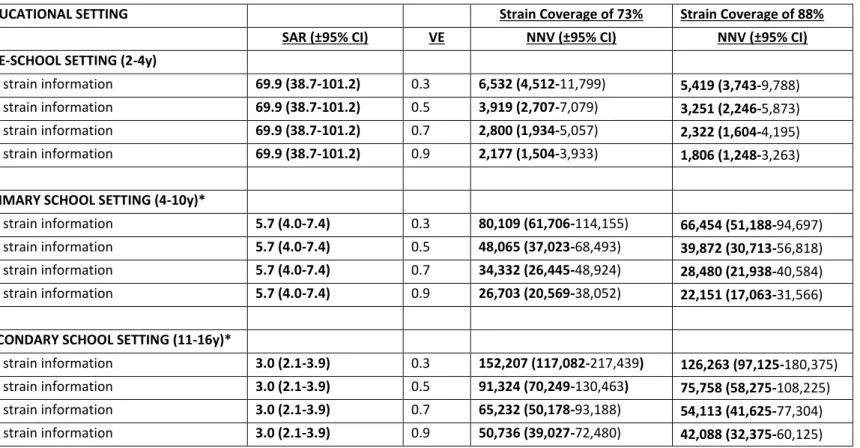
Different educational settings are considered; pre-schools, primary schools, secondary schools and universities. If indicated, vaccination of contacts in the educational setting should be offered as early as possible because the attack rates are much higher within the first week after the index case is diagnosed. If vaccination were offered within 0-4 days of IMD diagnosis in the index case, however, it may not be possible to determine the capsular group of the infecting meningococcal strain or molecular confirmation of whether the strain might be vaccine-preventable. Assuming that the protection offered in the early period after vaccination (when the attack rate is the highest) is 30% in pre-school, 50% in primary school and 70% secondary school children, the corresponding NNV would be 6,352, 48,065 and 65,232, respectively (Table 3). Assuming higher strain coverage of 88% compared to 73% reduces the NNV but not substantially, to 5,419, 39,872 and 54,113, respectively.
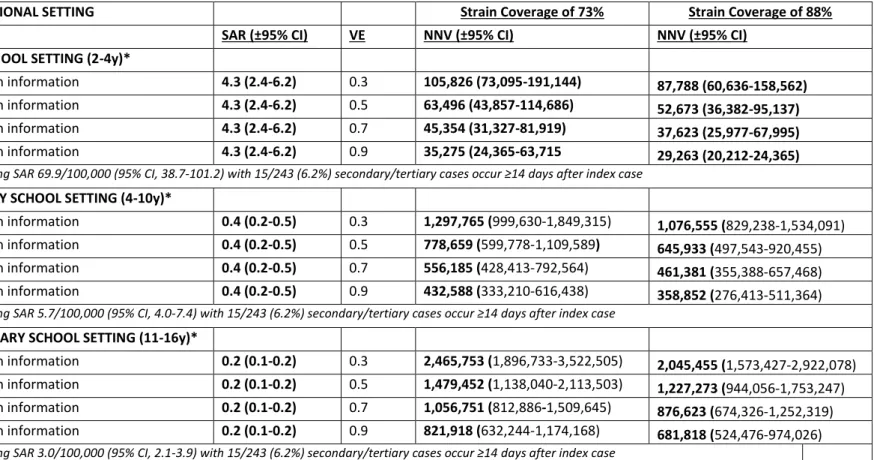
Realistically, however, vaccine response is likely to take at least 14 days from administration of the first dose to offer any protection. From 14 days onwards, the vaccine is likely to offer more protection, but the attack rate for secondary cases drops dramatically, thus requiring much larger NNV to prevent any further cases of IMD (Table 4). Waiting for strain
identification (~14-21 days) prior making a decision to vaccinate contacts in an educational setting is likely to lead to even higher NNV because of the lower attack rates with increasing time interval from diagnosis in the index cases.
Recommendation 5: After a single case of confirmed or probable IMD, Bexsero® should not be routinely offered to contacts in an educational setting, even if the strain is subsequently identified as vaccine-preventable (INDICATED).
Rationale: the NNV to prevent a second case among contacts in an educational setting is very high. More importantly, Bexsero®is unlikely to afford adequate protection rapidly enough after a single dose (especially for young children who are at highest risk) and most secondary cases occur within a few days after onset in the index case.
Following a single case of IMD, there is no role for Bexsero®
for:
• Household contacts• Staff and children attending the same educational setting
• Students/pupils in same class/tutor group/pre-school/school/university/boarding school
• Friends, work or school colleagues
• Residents of nursing/residential homes/military barracks/asylum centres
• Kissing on cheek or mouth (intimate kissing would normally bring the contact into the household contact category)
• Food or drink sharing or similar low level of salivary contact • Attending the same social function
• Travelling in next seat on same plane, train, bus, or car.
Vaccination of contacts following a MenB cluster
When two or more cases of probable/confirmed MenB (with no evidence to suggest that they belong to ACWY) occur in the same educational or residential setting, for example military barracks, asylum centres, nursing/residential homes etc., within a four-week period,
then Bexsero® may be offered to the same group that would be considered for antibiotic prophylaxis provided that that there is no evidence that the cluster is caused by a non-vaccine-preventable MenB strain. This may occur, for example, if the strain responsible for the first case is identified as non-vaccine preventable.
Recommendation 6: Following confirmation of a MenB cluster, Bexsero® should be offered to the same group that would receive antibiotic chemoprophylaxis as soon as practically possible unless molecular typing confirms that the cluster is not caused by a vaccine-preventable MenB strain (INDICATED).
Rationale: since nearly all MenB strains are vaccine-preventable, Bexsero® can be offered as early as possible in clusters (even before typing results become available) in order to prevent further cases. Waiting for typing results is not essential because the benefits of vaccination are likely to outweigh any potential harm.
Note 1: For clusters due to capsular groups other than MenB, the MenC conjugate vaccine should be offered for MenC outbreaks, while for Men A, W or Y outbreaks, the
meningococcal quadrivalent (ACWY) conjugate vaccine should be offered.
Note 2: For clusters following two or more “probable” cases, every attempt should be made to determine the meningococcal capsular group for at least one case before any decision to offer vaccination is made. If this is not possible, then the cluster may be assumed to be caused by MenB (which is currently responsible for 80-90% of all IMD cases in the UK) and, therefore, Bexsero® should be considered.
Note 3: The aim of immunisation is to provide long-term individual protection against MenB in a background of higher-than-expected disease rates. If Bexsero® is subsequently shown to reduce MenB carriage, then this could provide additional indirect protection by halting on-going transmission within the community.
Bexsero® for managing clusters in the wider community
Any decision to offer Bexsero® to a wider communities will require careful assessment of all the available epidemiological information, such as the number of confirmed and probable cases, molecular information on infecting meningococcal strains, dates of onset, links between cases, size of the community, and routine vaccination uptake rates.
In such situations, age-specific attack rates should be calculated. The numerator would be the number of confirmed cases in the population at risk caused by strains of the same capsular group and that are not distinguishable by standard molecular typing. Multiple cases in the same household or in the same institutional setting would be considered as a single case. The denominator would be the population at risk, which must be clearly defined if Bexsero® is to be offered, and make sense to the people who live within and outside the selected boundaries (e.g. a rural town/village, a secondary school with its feeder schools, etc). It may not be easy to define such a population. If the outbreak is mainly in children, the denominator should be based on the age range of children at risk (e.g. 2-4 year olds, 2-16 year olds, etc).
Bexsero® should only be considered if the age-specific attack rate (number of confirmed outbreak strain cases [suggested minimum of four] divided by the number in target age group) in a three-month period is “high”. Although a precise threshold for intervention has not been set, age-specific attack rates among 2 to 16 year olds targeted for intervention in two community outbreaks during the winter of 1995/6 caused by serogroup C strains were over 40/100,000. This is currently the rate of IMD in infants aged <1 year in England and Wales, the age-group with the highest incidence [9].
Recommendation 7: Bexsero® may be considered in the community if the age-specific attack-rate for a vaccine preventable MenB strain within a defined geographical boundary over a three-month period exceeds 40/100,000 (INDICATED).
Rationale: since nearly all MenB strains are vaccine-preventable, Bexsero® can be offered as early as possible in clusters (even before typing results become available) in order to prevent further cases. Waiting for typing results is not essential because
Note 1: The aim of immunisation is to provide long-term individual protection against MenB in a background of higher-than-expected disease rates. If Bexsero® is subsequently shown to reduce MenB carriage, then this could provide additional indirect protection by halting on-going transmission within the community.
CONCLUSIONS
In the UK, the Joint Committee on Vaccination and Immunisation (JCVI) recently concluded an infant MenB immunisation programme may be cost-effective at a reduced 2+1 schedule if Bexsero® could be obtained at a low price [31]. In the meantime, however, Bexsero® may have a role in preventing cases in specific situations, although this is unlikely to have
significant impact on the overall burden of IMD.
When considering the role of Bexsero® for prevention of secondary cases among contacts of an index case, it is not known whether a single dose of vaccine will provide rapid or
sufficient protection against IMD given that most secondary cases occur within a few days after the index case. The licensed schedule for Bexsero® recommending a three-dose primary schedule for young infants and two doses for all other age groups, along with the available immunogenicity data, suggests that the vaccine in unlikely to afford sufficiently rapid protection after a single dose, regardless of age.
Bexsero® may, however, have a role in providing individual protection against IMD following a cluster or outbreak, where there may be on-going transmission within an educational or a wider community setting. If the vaccine is shown to significantly reduce the acquisition of meningococcal carriage, then it may additionally interrupt transmission and offer indirect protection in relatively closed settings. Given that there are currently around 20 IMD
clusters annually in educational settings in England and Wales, each with up to 100 contacts, fewer than five thousand Bexsero® doses would be required for outbreak control, assuming that most contacts will require two doses of vaccine and a small proportion may need three doses. Local health protection teams should liaise with the Meningococcal Reference Unit
(Tel: 0161 276 6757) and the immunisation department at Public Health England Colindale (Tel: 0208 327 7000) when considering the use of Bexsero®.
It is likely that on-going clinical trials, carriage studies and increasing experience with Bexsero® use will provide additional data that will provide a stronger evidence base to inform the current recommendations. In the meantime, however, rapid administration of antibiotic chemoprophylaxis to close contacts remains the most effective method of
preventing secondary IMD cases. At the same time, close contacts should be made aware of the symptoms and signs of meningococcal disease and be advised to seek medical help early if they become unwell.
REFERENCE
LIST
(1) Halperin SA, Bettinger JA, Greenwood B, et al. The changing and dynamic epidemiology of meningococcal disease. Vaccine 2012 May 30; 30 Suppl 2:B26-B36.
(2) Health Protection Agency. Guidance for public health management of meningococcal disease in the UK. 2011.
(3) Zangwill KM, Schuchat A, Riedo FX, et al. School-based clusters of meningococcal disease in the United States. Descriptive epidemiology and a case-control analysis. JAMA 1997 Feb 5; 277(5):389-95.
(4) Purcell B, Samuelsson S, Hahne SJ, et al. Effectiveness of antibiotics in preventing
meningococcal disease after a case: systematic review. BMJ 2004 Jun 5; 328(7452):1339. (5) Hoek MR, Christensen H, Hellenbrand W, Stefanoff P, Howitz M, Stuart JM. Effectiveness of
vaccinating household contacts in addition to chemoprophylaxis after a case of
meningococcal disease: a systematic review. Epidemiol Infect 2008 Nov; 136(11):1441-7. (6) Bai X, Findlow J, Borrow R. Recombinant protein meningococcal serogroup B vaccine
combined with outer membrane vesicles. Expert Opin Biol Ther 2011 Jul; 11(7):969-85. (7) Halperin SA, Bettinger JA, Greenwood B, et al. The changing and dynamic epidemiology of
meningococcal disease. Vaccine 2011 Dec 15.
(8) Campbell H, Andrews N, Borrow R, Trotter C, Miller E. Updated postlicensure surveillance of the meningococcal C conjugate vaccine in England and Wales: effectiveness, validation of serological correlates of protection, and modeling predictions of the duration of herd immunity. Clin Vaccine Immunol 2010 May; 17(5):840-7.
(9) Ladhani SN, Flood JS, Ramsay ME, et al. Invasive meningococcal disease in England and Wales: implications for the introduction of new vaccines. Vaccine 2012 May 21; 30(24):3710-6.
(10) Ladhani SN, Lucidarme J, Newbold LS, et al. Invasive meningococcal capsular group y disease, England and wales, 2007-2009. Emerg Infect Dis 2012 Jan; 18(1):63-70.
(11) Erickson L, De WP. Complications and sequelae of meningococcal disease in Quebec, Canada, 1990-1994. Clin Infect Dis 1998 May; 26(5):1159-64.
(12) Viner RM, Booy R, Johnson H, et al. Outcomes of invasive meningococcal serogroup B disease in children and adolescents (MOSAIC): a case-control study. Lancet Neurol 2012 Sep; 11(9):774-83.
(13) Davison KL, Andrews N, White JM, et al. Clusters of meningococcal disease in school and preschool settings in England and Wales: what is the risk? Arch Dis Child 2004 Mar; 89(3):256-60.
(14) McIntyre PB, O'Brien KL, Greenwood B, van de Beek D. Effect of vaccines on bacterial meningitis worldwide. Lancet 2012 Nov 10; 380(9854):1703-11.
(15) Holst J. Strategies for development of universal vaccines against meningococcal serogroup B disease: the most promising options and the challenges evaluating them. Hum Vaccin 2007 Nov; 3(6):290-4.
(16) Nissen MD, Marshall HS, Richmond PC, et al. A randomized, controlled, phase 1/2 trial of a Neisseria meningitidis serogroup B bivalent rLP2086 vaccine in healthy children and adolescents. Pediatr Infect Dis J 2013 Apr; 32(4):364-71.
(17) Kelly C, Arnold R, Galloway Y, O'Hallahan J. A prospective study of the effectiveness of the New Zealand meningococcal B vaccine. Am J Epidemiol 2007 Oct 1; 166(7):817-23.
(18) Perkins BA, Jonsdottir K, Briem H, et al. Immunogenicity of two efficacious outer membrane protein-based serogroup B meningococcal vaccines among young adults in Iceland. J Infect
Dis 1998 Mar; 177(3):683-91.
(19) Plikaytis BD, Stella M, Boccadifuoco G, et al. Interlaboratory standardization of the sandwich enzyme-linked immunosorbent assay designed for MATS, a rapid, reproducible method for estimating the strain coverage of investigational vaccines. Clin Vaccine Immunol 2012 Oct; 19(10):1609-17.
(20) Vogel U, Taha MK, Vazquez JA, et al. Predicted strain coverage of a meningococcal multicomponent vaccine (4CMenB) in Europe: a qualitative and quantitative assessment. Lancet Infect Dis 2013 May; 13(5):416-25.
(21) Frosi G, Biolchi A, Sapio ML, et al. Bactericidal antibody against a representative epidemiological meningococcal serogroup B panel confirms that MATS underestimates 4CMenB vaccine strain coverage. Vaccine 2013 Oct 9; 31(43):4968-74.
(22) Santolaya ME, O'Ryan ML, Valenzuela MT, et al. Immunogenicity and tolerability of a multicomponent meningococcal serogroup B (4CMenB) vaccine in healthy adolescents in Chile: a phase 2b/3 randomised, observer-blind, placebo-controlled study. Lancet 2012 Feb 18; 379(9816):617-24.
(23) Gossger N, Snape MD, Yu LM, et al. Immunogenicity and tolerability of recombinant
serogroup B meningococcal vaccine administered with or without routine infant vaccinations according to different immunization schedules: a randomized controlled trial. JAMA 2012
Feb 8; 307(6):573-82.
(24) Findlow J, Borrow R, Snape MD, et al. Multicenter, open-label, randomized phase II controlled trial of an investigational recombinant Meningococcal serogroup B vaccine with and without outer membrane vesicles, administered in infancy. Clin Infect Dis 2010 Nov 15; 51(10):1127-37.
(25) Brunelli B, Del TE, Palumbo E, et al. Influence of sequence variability on bactericidal activity sera induced by Factor H binding protein variant 1.1. Vaccine 2011 Jan 29; 29(5):1072-81. (26) Snape MD, Dawson T, Oster P, et al. Immunogenicity of two investigational serogroup B
meningococcal vaccines in the first year of life: a randomized comparative trial. Pediatr Infect Dis J 2010 Nov; 29(11):e71-e79.
(27) Campbell H, Borrow R, Salisbury D, Miller E. Meningococcal C conjugate vaccine: the experience in England and Wales. Vaccine 2009 Jun 24; 27 Suppl 2:B20-B29.
(28) O'Grady NP, Alexander M, Dellinger EP, et al. Guidelines for the prevention of intravascular catheter-related infections. Centers for Disease Control and Prevention. MMWR Recomm
Rep 2002 Aug 9; 51(RR-10):1-29.
(29) Weinbaum C, Lyerla R, Margolis HS. Prevention and control of infections with hepatitis viruses in correctional settings. Centers for Disease Control and Prevention. MMWR Recomm Rep 2003 Jan 24; 52(RR-1):1-36.
(30) Christensen H, Hickman M, Edmunds WJ, Trotter CL. Introducing vaccination against serogroup B meningococcal disease: an economic and mathematical modelling study of potential impact. Vaccine 2013 May 28; 31(23):2638-46.
(31) Joint Committee on Vaccination and Immunisation (JCVI). Position statement on use of Bexsero® meningococcal B vaccine in the UK. 21 March 2014.
Age group Proportion achieving SBA ≥1:4 at 1 month post 1 dose % *
Proportion achieving SBA ≥1:4 at 1 month post 2 doses % *
Proportion achieving SBA ≥1:4 at 1 month post 3 doses (%) * Gossger, 2012 Europe 4CMenB Infant 2,3,4 months + concomitant vaccines No data 44/76-SL (fHBP) (270/272): 99.3% (97.4-99.9%) 5/99 (NadA) (266/266): 100.0% (98.6-100%) NZ98/254 (OMV) (219/268): 81.7% (76.6-86.2%) Gossger, 2012 Europe 4CMenB Infant 2-4-6 months + concomitant vaccines No data 44/76-SL (521/525): 99.2% (98.1-99.8%) 5/99 (517/520): 99.4% (98.3-99.9%) NZ98/254 (417/528): 79.0% (75.2-82.4%) Findlow, 2010 UK rMenB+OMV Infant 2-4 months No data 44/76-SL (35/37): 95% (82-99%) NZ 98/254 (34/40): 74% (57-87%) 5/99 (33/33): 100% (89-100%) M00 242922 (23/36): 64% (46-79%) 44/76-SL (34/39): 87% (73-96%) NZ 98/254 (34/40): 85% (70-94%) 5/99 (35/37): 95% (82-99%) M00 242922 (24/38): 63% (46-78%) Findlow, 2010 UK rMenB+OMV Toddler 12-months 44/76-SL (16/22): 73% (50-89%) NZ 98/254 (4/22): 18% (5-40%) 5/99 (16/22): 73% (50-89%) M00 242922 (1/22): 5% (0-23%) Santolaya 2012 Chile Adolescents (11-17 years)
1 dose (all participants)
44/76-SL (fHBP) (1347/1449): 93% 5/99 (NadA) (1396/1448): 96% NZ98/254 (OMV) (1349/1448): 93% 44/76-SL (fHBP) (1041/1042): >99% 5/99 (NadA) (1040/1044): >99% NZ98/254 (OMV) (1041/1043): >99% Santolaya 2012 Chile Adolescents (11-17 years)
1 dose (only participants with baseline hSBA <4)
44/76-SL (fHBP) (159/183): 87% (81-91%) 5/99 (NadA) (201/210): 96% (92-98%) NZ98/254 (OMV) (186/211): 88% (83-92%) 44/76-SL (fHBP) (202/202): 100% (98-100%) 5/99 (NadA) (230/230): 100% (98-100%) NZ98/254 (OMV) (218/219): 100% (97-100%)
Table 1: Vaccine efficacy published in clinical trials of 4CMenB & rMenB+OMV vaccines (both termed Bexsero® post licensure).
* Where available, data are presented as the reference strain (in bold), number of participants achieving SBA ≥1:4/total no. of participants (in parenthesis), proportion of participants responding to that particular reference strain and 95% confidence interval for the proportion (in parenthesis) if cited
HOUSEHOLD CONTACTS
Strain Coverage of 73%
Vaccine given at 0-4 days; protects from 14 days SAR (±95% CI) * Vaccine
Efficacy NNV (±95% CI) No strain information 108 (70-170) 0.3 4,228 (2,686-6,523) No strain information 108 (70-170) 0.5 2,537 (1,612-3,914) No strain information 108 (70-170) 0.7 1,812 (1,151-2,796) No strain information 108 (70-170) 0.9 1,409 (895-2,174)
Vaccine given at 0-4 days; protects from 14 days Strain Coverage of 88%
No strain information 108 (70-170) 0.3 3,507 (2,228-5,411)
No strain information 108 (70-170) 0.5 2,104 (1,337-3,247)
No strain information 108 (70-170) 0.7 1,503 (955-2,319)
No strain information 108 (70-170) 0.9 1,169 (743-1,804)
Vaccine given at 14-21 days; protects from 31 days Strain Coverage of 100%
Strain known 55 (20-90) 0.3 6,061 (3,704-16,667)
Strain known 55 (20-90) 0.5 3,636 (2,222-10,000)
Strain known 55 (20-90) 0.7 2,597 (1,587-7,143)
Strain known 55 (20-90) 0.9 2,020 (1,235-5,556)
Table 2. Number needed to vaccinate (NNV) to prevent one case of invasive meningococcal disease in a household contact. In the first section, it is assumed that Bexsero® is administered within 0-4 days of the index case being diagnosed and the vaccine protects against 73% of
circulating strains in England and Wales. In the second section, it is assumed that Bexsero® is administered within 0-4 days of the index case being diagnosed and the vaccine protects against 88% of circulating strains in England and Wales. In the third section, it is assumed that
Bexsero® is administered ~ 14-21 days after the index case after laboratory-confirmation that the infecting MenB strain is vaccine-preventable.
EDUCATIONAL SETTING Strain Coverage of 73% Strain Coverage of 88%
SAR (±95% CI) VE NNV (±95% CI) NNV (±95% CI)
PRE-SCHOOL SETTING (2-4y)
No strain information 69.9 (38.7-101.2) 0.3 6,532 (4,512-11,799) 5,419 (3,743-9,788)
No strain information 69.9 (38.7-101.2) 0.5 3,919 (2,707-7,079) 3,251 (2,246-5,873)
No strain information 69.9 (38.7-101.2) 0.7 2,800 (1,934-5,057) 2,322 (1,604-4,195)
No strain information 69.9 (38.7-101.2) 0.9 2,177 (1,504-3,933) 1,806 (1,248-3,263)
PRIMARY SCHOOL SETTING (4-10y)*
No strain information 5.7 (4.0-7.4) 0.3 80,109 (61,706-114,155) 66,454 (51,188-94,697)
No strain information 5.7 (4.0-7.4) 0.5 48,065 (37,023-68,493) 39,872 (30,713-56,818)
No strain information 5.7 (4.0-7.4) 0.7 34,332 (26,445-48,924) 28,480 (21,938-40,584)
No strain information 5.7 (4.0-7.4) 0.9 26,703 (20,569-38,052) 22,151 (17,063-31,566)
SECONDARY SCHOOL SETTING (11-16y)*
No strain information 3.0 (2.1-3.9) 0.3 152,207 (117,082-217,439) 126,263 (97,125-180,375) No strain information 3.0 (2.1-3.9) 0.5 91,324 (70,249-130,463) 75,758 (58,275-108,225)
No strain information 3.0 (2.1-3.9) 0.7 65,232 (50,178-93,188) 54,113 (41,625-77,304)
No strain information 3.0 (2.1-3.9) 0.9 50,736 (39,027-72,480) 42,088 (32,375-60,125)
Table 3. Number needed to vaccinate (NNV) to prevent one case of invasive meningococcal disease in three different educational settings; pre-school,
primary school and secondary school. Protection is assumed to start from the day of vaccination. The SAR is much higher in the pre-school setting,
compared to the others. It is assumed that Bexsero® is administered within 0-4 days of the index case being diagnosed and the vaccine protects against 73% and 88% of circulating strains in England and Wales. Because the vaccine is expected to protect from the day it is administered (hence the assumption of higher attack rates), the estimated vaccine effectiveness is likely to be low. SAR; secondary attack rate. VE; estimated vaccine efficacy. NNV; number needed to vaccinate in order to prevent one case.
EDUCATIONAL SETTING Strain Coverage of 73% Strain Coverage of 88%
SAR (±95% CI) VE NNV (±95% CI) NNV (±95% CI)
PRE-SCHOOL SETTING (2-4y)*
No strain information 4.3 (2.4-6.2) 0.3 105,826 (73,095-191,144) 87,788 (60,636-158,562)
No strain information 4.3 (2.4-6.2) 0.5 63,496 (43,857-114,686) 52,673 (36,382-95,137)
No strain information 4.3 (2.4-6.2) 0.7 45,354 (31,327-81,919) 37,623 (25,977-67,995)
No strain information 4.3 (2.4-6.2) 0.9 35,275 (24,365-63,715 29,263 (20,212-24,365)
* assuming SAR 69.9/100,000 (95% CI, 38.7-101.2) with 15/243 (6.2%) secondary/tertiary cases occur ≥14 days after index case
PRIMARY SCHOOL SETTING (4-10y)*
No strain information 0.4 (0.2-0.5) 0.3 1,297,765 (999,630-1,849,315) 1,076,555 (829,238-1,534,091) No strain information 0.4 (0.2-0.5) 0.5 778,659 (599,778-1,109,589) 645,933 (497,543-920,455)
No strain information 0.4 (0.2-0.5) 0.7 556,185 (428,413-792,564) 461,381 (355,388-657,468) No strain information 0.4 (0.2-0.5) 0.9 432,588 (333,210-616,438) 358,852 (276,413-511,364)
* assuming SAR 5.7/100,000 (95% CI, 4.0-7.4) with 15/243 (6.2%) secondary/tertiary cases occur ≥14 days after index case
SECONDARY SCHOOL SETTING (11-16y)*
No strain information 0.2 (0.1-0.2) 0.3 2,465,753 (1,896,733-3,522,505) 2,045,455 (1,573,427-2,922,078) No strain information 0.2 (0.1-0.2) 0.5 1,479,452 (1,138,040-2,113,503) 1,227,273 (944,056-1,753,247) No strain information 0.2 (0.1-0.2) 0.7 1,056,751 (812,886-1,509,645) 876,623 (674,326-1,252,319) No strain information 0.2 (0.1-0.2) 0.9 821,918 (632,244-1,174,168) 681,818 (524,476-974,026)
* assuming SAR 3.0/100,000 (95% CI, 2.1-3.9) with 15/243 (6.2%) secondary/tertiary cases occur ≥14 days after index case
Table 4. Number needed to vaccinate (NNV) to prevent one case of invasive meningococcal disease in three different educational settings; pre-school,
primary school and secondary school. Protection is assumed to start at least 14 days from the day of vaccination. The SAR is much higher in the pre-school setting, compared to the others. In this scenario, it is assumed that Bexsero® is administered 0-4 days after the index case is diagnosed but the vaccine only prevents secondary cases occurring at least 14 days after the last diagnosed case. Because contacts are vaccinated as soon as the index case is diagnosed, it would not be possible to determine whether the infecting strain is vaccine-preventable or not In this scenario, because there is a lag period of 14 days before the vaccine starts preventing cases, vaccine effectiveness is estimated to be higher, but the SAR significantly lower for all three educational settings after 14 days. SAR; secondary attack rate. VE; estimated vaccine efficacy. NNV; number needed to vaccinate in order to prevent one case.