July 1998
DOE-Wide
Perspective
Independent Oversight Evaluation of
E
MERGENCY
M
ANAGEMENT
P
ROGRAMS
A
CROSS
THE
DOE C
OMPLEX
E
MERGENCY
M
ANAGEMENT
P
ROGRAMS
A
CROSS
THE
DOE C
OMPLEX
Volume 1
1
Volume 1
TABLE OF CONTENTS
Volume 1 – DOE-Wide Perspective
Executive Summary ... 1
1.0 Introduction ... 4
2.0 Background ... 9
3.0 Overview of Progress and Status... 12
Overall Status ... 12
Noteworthy Practices ... 13
Weaknesses and Impacts ... 15
Response to the Secretarial Direction Following
the Hanford Accident ... 18
4.0 Summary Assessment of Emergency Management
Performance at Each Organizational Level ... 22
DOE Headquarters Level ... 22
DOE Operations Offices ... 27
Assessment of Status and Progress: Contractors... 31
Interfaces with Stakeholders ... 36
5.0 Opportunities for Improvement in DOE Headquarters
Program Management ... 39
APPENDIX A: Generic Weaknesses and Opportunities
for Improvement ...41
Generic Weakness #1: Hazards Assessments and
Protective Actions ... 41
Generic Weakness #2: Classification of Events ... 44
Generic Weakness #3: Worker Protection
During Accidents and Emergencies ... 47
Generic Weakness #4: Assessments and
Continuous Improvement ... 50
Generic Weakness #5: Training and Competencies ... 53
Generic Weakness #6: Interfaces and Coordination
with Stakeholders ... 56
Generic Weakness #7: DOE Emergency Management ... 59
This independent oversight evaluation of U.S. Department of Energy (DOE) emergency management was chartered as a part of a number of directives from the Secretary of Energy following the May 1997 chemical explosion at the Hanford Site. These directives also included developing or upgrading emergency hazards assessments and emergency action levels, improving training for emergency response personnel, ensuring effective medical treatment for affected workers, and evaluating radiological and chemical vulnerabilities. Under these initiatives, the DOE Headquarters Office of Emergency Management (NN-60) has performed an evaluation of emergency action levels and provided training on conservative emergency classification extending throughout the DOE complex.
The Secretarial initiatives have contributed to increased management attention and some specific and ongoing improvements in emergency management programs. However, the overall conclusion of the independent oversight evaluation is that DOE emergency management programs, as a whole, are still in need of substantial improvement and management attention. Some sites did not make sufficient improvements in response to the Secretary’s initiatives because they did not realistically assess their own performance and use the feedback and lessons learned from other DOE sites to benchmark performance. The weaknesses across the complex identified during this evaluation were similar to those evident over a year ago in the response to the Hanford explosion, indicating that the problems in emergency response could still be repeated today at many DOE sites.
Generic weaknesses, applicable to multiple DOE sites, are evident in several emergency management elements, including classification of events, hazards and consequence assessments, protective actions and medical response, and interfaces and coordination with external organizations and the public. During 1998 emergency exercises, for example, weaknesses were evident in many areas, including delays and errors in classification, emergency responders traversing radiological or chemical plumes, inadequate consequence assessments and protective actions, significant delays in medical treatment of victims, and a failure to provide dose or exposure information to participating hospitals.
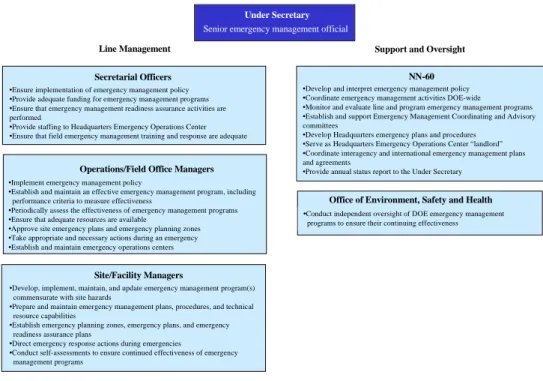
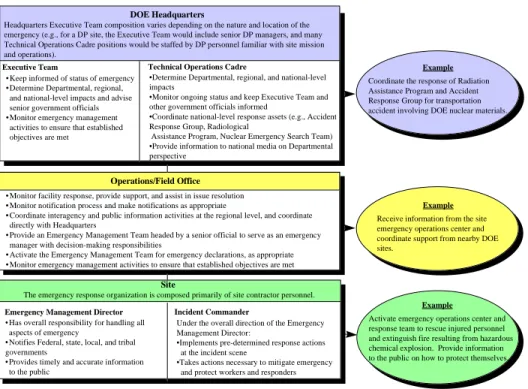
Except for the recent Secretarial initiatives, DOE Headquarters commitment, support, and participation in monitoring and improving emergency management have been very limited. In accordance with the ongoing DOE initiatives to empower the field, various responsibilities and authorities have transitioned from Headquarters to the field, including some of the responsibilities for emergency management programs. The restructuring of responsibilities, combined with continuing Headquarters reorganizations and turnover of leadership, has exacerbated a longstanding lack of clarity and understanding of Headquarters roles, responsibilities, and authorities for emergency management. Previous concerns with multiple emergency plans across the separate program offices remain unresolved, and the two committees formed to address generic emergency management issues have not been effective. In some instances, program offices have not been active in monitoring emergency preparedness and performance at sites and facilities for which they have responsibility. Additionally, the Headquarters Executive Team and program offices have not routinely participated in training and exercises to ensure proficiency in supporting the field and interfacing with other agencies.
A number of DOE operations offices have not been adequately engaged in monitoring and assessing contractor emergency response programs and assuring accountability for performance. Notable exceptions include the Rocky Flats Field Office, Savannah River Operations Office, and Richland Operations Office, which are actively involved in oversight of contractor emergency management programs. DOE operations offices need to be more involved in reviewing and approving contractor submittals, evaluating emergency programs and competencies, and evaluating drills and exercises. Some operations offices need to ensure that managers and staff have the requisite training, experience, and proficiency to perform emergency management and response duties.
DOE contractors vary considerably in the effectiveness of their emergency management programs and level of preparedness. The Savannah River Site has established a strong and mature emergency management program that includes several noteworthy practices, including their state-of-the-art emergency response facilities, a comprehensive drill and exercise program, and critical self-assessments of emergency management. Three sites—Idaho National Engineering and Environmental Laboratory, Los Alamos National Laboratory, and most recently Hanford—have accomplished significant and considerable program upgrades over a short time. Hanford has employed a systematic project approach to substantially improve emergency management response over the last year. Other examples of upgrades at these sites include completion of comprehensive hazards assessments and emergency action levels, strengthening of incident command and initial response capabilities, improvement of training and competencies, improvement of protective actions and medical treatment for workers, and strengthening of interface and coordination with stakeholders and mutual aid organizations. At the other end of the spectrum, several DOE sites continue to have significant weaknesses in their emergency management programs and response capabilities. The Nevada Test Site, for instance, is just beginning to establish a structured, sitewide program. Other sites still have not developed comprehensive and current hazards assessments, conservative and usable emergency action levels, approved and current emergency procedures, effective training and drill programs, challenging exercise programs, critical self-assessments, and effective interfaces with stakeholders. This continuing wide variation in the quality of emergency management programs highlights a need for a more corporate approach to emergency management, including sharing of lessons learned, benchmarking, and a central point of line management leadership.
Improvements are needed at all levels of the organization. DOE Headquarters needs to establish an effective mechanism to resolve organizational conflicts; clarify roles and responsibilities to eliminate unnecessary redundancy and conflicts between Headquarters programs and facilitate operations of the DOE Headquarters Emergency Operations Center; ensure that appropriate resources are provided consistent with the identified needs; and effectively monitor emergency program performance and improvements complex-wide. The operations offices need to establish meaningful performance measures to drive improvement, be more effectively engaged in monitoring the full scope of contractor programs, ensure the emergency response and programmatic competencies of their own staffs, maintain agreements with stakeholders, and manage the release of public emergency information. Contractors need to correct problems that were evident in the response to the May 1997 Hanford explosion and that are still evident in recent exercises. These include: lack of quality, consistency, and adequacy of programs and procedures; ineffective communication of hazards; weaknesses in the worker protection programs; and delays in providing medical treatment to workers and responders. To correct these deficiencies, DOE’s contractors need to place higher priority on improving the quality of the technical basis for hazards assessments; ensuring the quality and comprehensiveness of interrelated emergency programs and procedures; providing performance-based training to improve proficiencies; and providing for timely and accurate public information.
Most significantly, DOE and its contractors need to improve their capability to realistically evaluate emergency preparedness through self-assessments, line management oversight of the full scope of programmatic activities, and benchmarking. Inherent in such self-evaluations is a willingness to recognize when exercises demonstrate that performance is not adequate, to take corrective actions, and then to repeat exercises or exercise elements until there is adequate assurance that exercise objectives can be successfully met. Realistic feedback and successful emergency exercises are essential to ensuring that DOE has an accurate picture of the actual status of its emergency management programs and does not develop a false sense of security. Such feedback is also essential to ensuring a sustained and acceptable capability to recognize and mitigate emergencies and to protect workers, the public, and the environment.
WEAKNESSES IN DOE EMERGENCY MANAGEMENT PROGRAMS
Longstanding Headquarters Weaknesses (See Tables 2 and 3 and Section 4 for Details and Section 5 for Opportunities for Improvement Related to Headquarters Weaknesses)
•
DOE Headquarters roles, responsibilities, authority, and accountability are unclear and not understood.•
The lack of a central point of line management leadership has contributed to inconsistent performance and effectiveness and fragmented efforts to improve.•
The Headquarters Executive Team and program offices are not maintaining emergency management competency and proficiency through participation in training, drills, and exercises.•
Headquarters program offices, the office responsible for policy and technical assistance (NN-60), and the Office of Environment, Safety and Health have not been actively monitoring emergency management program capabilities and performance.•
Efforts to ensure that the DOE emergency management order is effectively implemented and enhanced have not been sufficient to address problems in the order (e.g., transportation events, timely classification, accounting for personnel after an accident).Generic Weaknesses Evident at Multiple Sites (See Section 4 for Details on Weaknesses in Operations Offices and Contractors and Appendix A for a Discussion of Each of the Weaknesses Below, Including Opportunities for Improvement and Examples of Good Performance to Benchmark Improvements)
•
Hazards assessments and protective actions at several sites were not developed, not reflective of current hazards, or lacked an adequate technical basis.•
Event classification and emergency action levels may not be timely and conservative because DOE sites have not established effective emergency action levels, procedures, training, drills, exercises, and competencies.•
Performance and feedback mechanisms, such as DOE oversight and contractor self-assessments, have not been effective in ensuring adherence to requirements and expectations, identification and resolution of significant weaknesses, and achievement of continuous improvement.•
Worker safety and health have not received sufficient emphasis in hazards and risk assessments, work planning and control, consequence assessment, search and rescue, personnel accountability, protective actions, and medical treatment.•
Training, competencies, and proficiency of personnel with emergency management responsibilities and decision-making authority are inconsistent and have not been demonstrated in drills and exercises.•
Stakeholder and public interfaces, coordination, and information have not addressed some stakeholder concerns, including a perception that DOE’s notification of events and accidents was not timely in some instances, and have not ensured that agreements with external support organizations are current and that information provided to the public and the media during emergencies is consistently timely and accurate.•
DOE Order 151.1, Comprehensive Emergency Management System, provisions are unclear or require modification in some instances, and DOE and contractor leadership, management followup, and accountability have not been sufficient to ensure that the order is effectively implemented.Events such as the 1997 explosion at Hanford have raised questions about the effectiveness of the U.S. Department of Energy (DOE) emergency management programs. Recognizing that other sites could have similar problems, this accident prompted the Secretary of Energy to direct all DOE sites to examine their emergency management programs and make needed improvements. The Secretary also directed the DOE Office of Oversight, within the DOE Office of Environment, Safety and Health (EH) to evaluate emergency management programs at DOE sites. In response to the Secretary’s direction, the Office of Oversight performed an evaluation of the DOE complex from February to June 1998.
Purpose and Scope of the DOE
Emergency Management
Programs
Collectively, DOE sites have hundreds of tons of hazardous materials, including radioactive materials, such as plutonium, and a variety of toxic chemicals. DOE has extensive policies and programs that are designed to ensure that such materials are handled safely and to prevent accidents from occurring. DOE sites also have safety equipment and procedures that are designed to mitigate the consequences of an accident or unplanned event. For example, plutonium facilities typically have safety systems, such as high-efficiency particulate air (HEPA) filters, that are designed to prevent the release of plutonium to the atmosphere in the event of an accident.
DOE sites must be prepared for accidents and unplanned releases of hazardous materials.
Despite these safety precautions, unplanned events can and do occur, and the possibility of an accident that releases hazardous materials, no matter how unlikely, cannot be precluded. Further, DOE sites must be prepared to handle emergencies that do not necessarily involve hazardous materials but that could threaten life and property (e.g., fires, earthquakes, tornadoes, and terrorist bombings like the one at the Federal Building in Oklahoma City). Therefore, DOE sites are required to have emergency management systems. These systems are intended to ensure that DOE sites can effectively:
•
Transition from normal operations toemergency operations. Because
accidents can occur at any time and can progress rapidly, sites must be continuously prepared to deal with emergencies and be able to respond promptly. To do so, sites must have an organization and workforce that is well prepared to deal with emergencies, and must have communications systems, response equipment, and facilities in place and available at all times. The transition from normal organizational roles and responsibilities, which are in place 365 days per year, to a new alignment for emergency operations, which may be implemented one day per year in an annual exercise, is not easily accomplished.
•
Respond to emergencies. When anaccident or event occurs, the site must have appropriate personnel and equipment to respond promptly and be able to effectively direct those resources to deal with a wide range of potential emergencies. An effective response requires the coordinated effort of many different organizations both onsite (e.g.,
needs to know immediately what types of hazardous events could occur (e.g., release of toxic materials, potential for explosive mixtures, spread of contamination) and other factors related to fire-fighting (e.g., location of water supplies and alternative water supplies, location of backup electric power, doors that can only be opened by security personnel). Such preparation and planning must be done in advance, and data must be maintained in a form that is understandable, readily accessible, and up to date; searching for information about hazardous materials after a fire starts can unacceptably delay actions to mitigate the situation.
Effective planning and preparation, including a thorough understanding of the potential hazards at a site, is essential for a timely response to an accident.
It is also critical that emergency management systems enable a rapid response and, if necessary, timely directions for taking protective measures. For example, the plume of hazardous materials resulting from a serious accident could reach populated areas in a matter of ten minutes (and even less at a few sites). In such cases, the site emergency management personnel have only a short time to coordinate with local authorities to issue warnings and/or instructions (e.g., “take shelter indoors”). With such short timelines, sites must have personnel on site at all times who are trained to and capable of assessing conditions and taking appropriate actions. Coordination with local authorities, formal procedures, readily available information, and practice (e.g., drills and exercises) are also essential.
onsite fire departments, radiation protection, operations, security, engineering) and offsite (e.g., local hospitals, ambulances, local fire departments, local police).
•
Mitigate the severity of accidents. Someaccidents result in the dispersal of hazardous (radioactive, chemical, or biological) materials, and other events (e.g., fires or hurricanes) could threaten the integrity of barriers that contain hazardous materials. In such cases, sites must be able to safely perform a variety of actions to stop the release, prevent further dispersal of hazardous materials, or move people to an area of relative safety. Such actions include decontaminating personnel and equipment, establishing contamination zones to prevent spread of contamination, restoring electric power to safety systems, establishing security boundaries, evacuating buildings, and establishing measures to prevent unauthorized access to accident scenes. Trained personnel with specialized equipment (e.g., protective clothing and/or supplied breathing air systems) are needed to perform such actions safely and promptly.
•
Communicate vital information tostakeholders. If hazardous material is released,
the site must make timely and accurate classification and notification to notify local authorities and the public about the emergency conditions and any recommended protective actions (e.g., evacuating the area, avoiding potentially contaminated areas, or taking shelter indoors with the windows closed). Effective communications are also needed for a variety of other functions, such as coordinating external support (fire, medical, hospitals, police, etc.), keeping local authorities informed, keeping senior DOE managers informed, issuing press releases to keep the media and the public informed, and providing information to families of accident victims.
Managing emergencies requires effective planning and preparation, including a thorough understanding of the potential hazards at the site. For example, to effectively respond to a fire in a
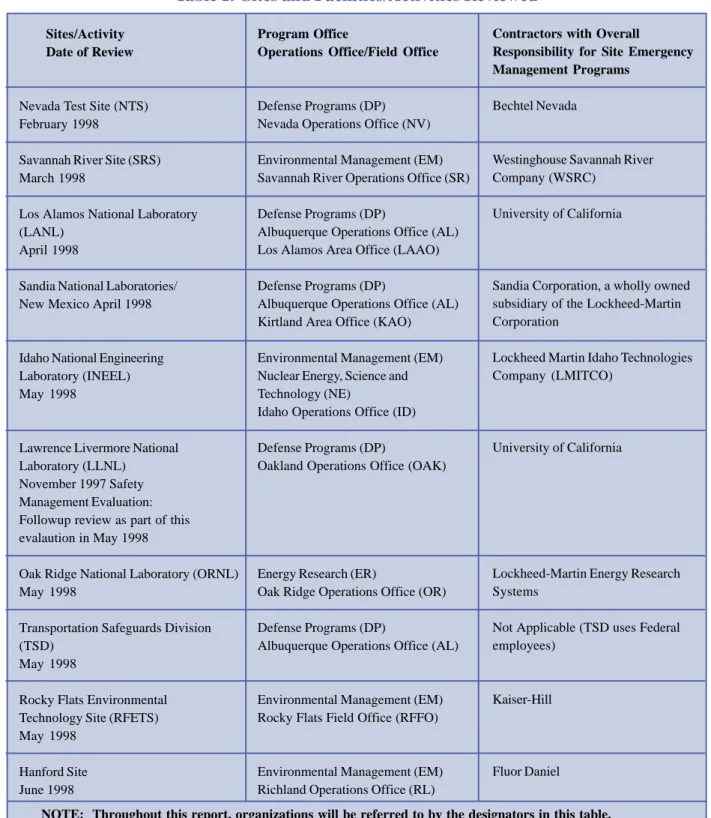
The sites selected, which encompass a range of DOE program offices, operations offices, and types of facilities and operations, are shown on Table 1. The Oversight team observed a full-participation exercise at four of these sites.
Consistent with the Secretary’s direction, the Office of Oversight has included emergency management in recent Office of Oversight safety management evaluations, which evaluate environment, safety and health (ES&H) program management and performance at DOE sites with respect to DOE’s integrated safety management policy. The emergency management program at one of the sites included in this evaluation, Lawrence Livermore National Laboratory, was initially reviewed as part of a safety management evaluation in September-November 1997. A followup review of the significant weaknesses identified there was performed as part of this evaluation.
The Office of Oversight met with representatives from nine states.
In addition to program reviews, Oversight interviewed stakeholders to identify their concerns and gather their perspectives on the effectiveness of DOE programs and efforts to build the necessary partnerships. The Deputy Assistant Secretary for Oversight held meetings with the emergency management directors of nine different states (California, Colorado, Georgia, Idaho, Nevada, New Mexico, Tennessee, South Carolina, and Washington). The purpose of these meetings was to discuss the emergency management evaluation and to gather the state agencies’ perspectives on DOE emergency management programs and the effectiveness of DOE’s interactions with state agencies. These visits provided an opportunity for open and candid feedback on site-specific interfaces, strengths, and concerns. Subsequent to these visits, a questionnaire was disseminated to gather perspectives in specific areas of common concern, such as DOE openness and joint information centers. In addition, during field level programmatic reviews, personnel at state and local agencies and mutual-aid hospitals were interviewed, and current memoranda of understanding, processes for maintaining
Purpose and Scope of the
Oversight Evaluation
The Office of Oversight evaluated the emergency management programs at nine DOE sites and the nuclear material transportation operations performed by the DOE Albuquerque Operations Office Transportation Safeguards Division. Oversight also assessed DOE Headquarters efforts, including both the Headquarters line management functions, which are performed by the program offices, and program management and support activities, which are performed primarily by the Office of Emergency Management (NN-60). The review of Headquarters included interviews with programs office and NN-60 managers and staff, observation of the Headquarters Emergency Operations Center during site annual exercises, and reviews of policies, directives, plans, and training documents. The evaluation was performed to:
•
Evaluate the effectiveness of emergency management programs at selected sites/ operations•
Determine whether the actions and enhancements directed by the Secretary have been effectively implemented•
Draw conclusions about the effectiveness of DOE emergency programs as a whole, including the Headquarters role, policy, and interfaces with stakeholders•
Identify complex-wide issues and obstacles to timely enhancement of emergency management•
Determine what additional improvement are needed to ensure that DOE sites have effective programs for managing emergencies.The Secretary indicated that all corrective actions were to be complete by March 1998. Consistent with this direction, the Oversight evaluation was initiated in February 1998. The Oversight evaluation was not limited exclusively to the actions and enhancements directed by the Secretary of Energy, although these were a major focus. Rather, Oversight examined a broad range of emergency management elements to determine the overall effectiveness of emergency management systems in the field and DOE Headquarters emergency management policies, guidance, and direction.
Program Office
Operations Office/Field Office
Defense Programs (DP) Nevada Operations Office (NV) Environmental Management (EM) Savannah River Operations Office (SR) Defense Programs (DP)
Albuquerque Operations Office (AL) Los Alamos Area Office (LAAO) Defense Programs (DP)
Albuquerque Operations Office (AL) Kirtland Area Office (KAO) Environmental Management (EM) Nuclear Energy, Science and Technology (NE)
Idaho Operations Office (ID) Defense Programs (DP)
Oakland Operations Office (OAK)
Energy Research (ER)
Oak Ridge Operations Office (OR) Defense Programs (DP)
Albuquerque Operations Office (AL)
Environmental Management (EM) Rocky Flats Field Office (RFFO)
Environmental Management (EM) Richland Operations Office (RL)
NOTE: Throughout this report, organizations will be referred to by the designators in this table. Sites/Activity
Date of Review
Nevada Test Site (NTS) February 1998
Savannah River Site (SRS) March 1998
Los Alamos National Laboratory (LANL)
April 1998
Sandia National Laboratories/ New Mexico April 1998
Idaho National Engineering Laboratory (INEEL) May 1998
Lawrence Livermore National Laboratory (LLNL)
November 1997 Safety Management Evaluation: Followup review as part of this evalaution in May 1998
Oak Ridge National Laboratory (ORNL) May 1998
Transportation Safeguards Division (TSD)
May 1998
Rocky Flats Environmental Technology Site (RFETS) May 1998
Hanford Site June 1998
Contractors with Overall
Responsibility for Site Emergency Management Programs
Bechtel Nevada
Westinghouse Savannah River Company (WSRC)
University of California
Sandia Corporation, a wholly owned subsidiary of the Lockheed-Martin Corporation
Lockheed Martin Idaho Technologies Company (LMITCO)
University of California
Lockheed-Martin Energy Research Systems
Not Applicable (TSD uses Federal employees)
Kaiser-Hill
Fluor Daniel
Table 1. Sites and Facilities/Activities Reviewed
agreements, and the effectiveness of site performance in implementing these agreements were reviewed. Particular emphasis was placed on the interfaces between site medical and emergency services and hospitals.
Organization of the Report
This Office of Oversight report is organized into two volumes. Volume 1 presents complex-wide perspectives and an overall assessment of
DOE’s capability to deal with emergencies. Volume 1 includes an appendix that provides a detailed discussion of generic weaknesses that need to be addressed on a complex-wide basis in order for DOE to enhance its ability to respond to emergencies, as well as opportunities for improvement and examples of good performance that can be used to benchmark improvements.
Volume 2 of this report presents Oversight’s assessment of the emergency management programs at each of the ten sites/operations evaluated. The scope and methods for evaluating the selected sites/operations are discussed in
Volume 2. The summary assessments in Volume 2 are condensed versions of the field reports that were provided to each site/operation reviewed during this Oversight evaluation. Each of the ten summary assessments includes an overall assessment of performance, noteworthy practices (if any), positive attributes, weaknesses, and opportunities for improvement. Sites were also provided an opportunity to identify corrective actions that they plan to implement; for the sites that elected to submit planned corrective action, a summary of the site plan is included in Volume 2.
Establishing and maintaining effective emergency management systems is a challenge for any organization that has hazardous materials (e.g., DOE, Department of Defense, commercial nuclear industry, and chemical industries), for a variety of technical and organizational reasons:
•
Complex engineered systems, such asnuclear process facilities, can experience unexpected failures. Over
time, factors such as low management priority, poor maintenance and surveillance testing practices, configuration control errors, and aging systems and equipment can all contribute to latent failures that remain dormant and undetected until a triggering event occurs. When aligned unexpectedly with a triggering event and human errors, the result can be a major accident. Many serious accidents, such as Three Mile Island, Chernobyl, Bhopal, and Challenger, involved a complex series of events and/or combinations of latent equipment failures, personnel error, and breakdowns in management systems. Although the consequences were not as severe, the recent Hanford explosion demonstrates that latent failures (e.g., not emptying a tank when a process was shut down) can cause an accident even after several years and that the consequences of an accident can be magnified by human error and the confusion that often occurs after an unexpected event.
•
Emergency response involves uniqueorganizational challenges and difficulties. The transition from normal
operations to an emergency response involves different responsibilities for personnel, new and different interactions among staff, and the need for different
skills (e.g., innovation and quick decision making) than those used in the normal environment. In addition, the skills needed during an emergency are practiced only occasionally (e.g., during drills and annual exercises), and the opportunities to practice in an exercise often involve only a small fraction of management and technical personnel. Further, systems that are used only rarely may deteriorate through inattention. Such inattention is often evident in a failure to perform drills, update hazards assessments, update procedures, and reassign responsibilities after organizational changes or personnel departures. Finally, emergency management systems often receive a low priority in budgeting because they are typically an “overhead” function that is not directly tied to the success of any single program.
DOE sites face additional challenges because of its unique environment:
•
Changing hazards. At many DOE sites,such as national laboratories, the hazards and toxic material inventories may change rapidly as new experiments/projects are started and others end. In addition, many sites are undergoing mission and facility life-cycle changes, such as the transition to decontamination and decommissioning that involve new and different hazards in comparison to a production facility. Further, many sites have been shut down but still contain hazardous materials. As demonstrated by the Hanford event, such sites can experience many unexpected events because materials are stored in a configuration that was not designed for long-term storage (e.g., plutonium cans), equipment is aging, maintenance and
Background
organizational control of several different contractors and subcontractors simultaneously. Privatization of DOE facilities/activities also presents unique challenges to emergency management programs, such as the need to determine whether workers on privatized efforts should be considered members of the general public or co-located workers.
The explosion at Hanford raised questions about the effect-iveness of DOE emergency management programs.
Events such as the recent explosion at the Plutonium Reclamation Facility (PRF) at the Hanford Site (see text box) raised questions about the effectiveness of DOE emergency management programs. The accident at Hanford is an example of the problems that can occur if emergency management systems are not effectively implemented. For example, poor communications and coordination with the protective force resulted in several workers being directed to walk in an area where they were unnecessarily exposed to airborne chemicals, causing minor injuries. routine checks are deferred, and other such
reasons.
•
Changing missions, workforce, andorganizational interfaces. As the missions of
DOE sites change, the nature of the work changes significantly (e.g., nuclear process operators are replaced by demolition/ construction workers). Correspondingly, sites often hire new subcontractor workers who are unfamiliar with the site, or use the existing workforce to perform tasks that they are not familiar with. In such situations, the turnover is often high, workers may not recognize a hazardous condition, and the likelihood of an error can be higher. In light of the mission and workforce changes, DOE cannot solely rely on an experienced workforce to prevent accidents or to respond correctly when an accident occurs. In addition, recent trends, such as the move to management and integrating contracts, can create additional complexity in the coordination between organizations. For example, at DOE sites that operate under management and integrating contracts, the site emergency response elements are often under the
Accident at the Hanford Site Plutonium Reclamation Facility Accident Description and Effects
The Plutonium Reclamation Facility tank explosion occurred in May 1997. The explosion caused extensive damage to the room where the tank was located (e.g., doors were blown off their hinges, and piping and structures were bent by the force of the explosion). At the time of the emergency, the cause of the explosion was not known. Subsequent investigations revealed that the explosion resulted from a chemical reaction in a tank that had not been emptied.
No workers were in the room at the time, so no one was injured by the force of the explosion. The explosion caused a slight increase in airborne radioactivity levels for a brief period within the facility but did not otherwise result in workers being exposed to radioactive contamination or the release of radioactive materials to the environment.
Eight construction workers and an emergency responder were exposed to a plume of chemicals released from an exhaust stack as a result of the explosion. Their injuries consisted primarily of throat and eye irritation and nausea and did not involve hospitalization.
Accident Investigation Results
Following the explosion, the DOE Richland Operations Office (RL) performed a Type B accident investigation. The investigation identified a number of weaknesses in Hanford’s safety management program, including deficiencies in chemical hazard assessments, implementation of procedures, and self-assessment programs. A related RL investigation focused specifically on Hanford’s emergency response to the accident. The
investigation of emergency response highlighted significant deficiencies in the Hanford emergency management program:
•
Failure to classify the emergency in a timely manner and notify offsite agencies•
Failure to implement emergency response activities, including protective actions for workers, consistent with the take-cover order and security lockdown conditions that were declared as a result of the emergency•
Failure to take appropriate and timely actions to care for personnel exposed to uncharacterized hazardsevaluated are not fully prepared to handle major accidents or emergencies that require a coordinated response by a number of organizations or that involve unexpected hazards (e.g., fires in buildings that have uncharacterized hazards). Because of such gaps in effectiveness, the possibility of significant error cannot be discounted, and problems similar to those noted during the 1997 Hanford explosion cannot be precluded. Accidents of sufficient magnitude to cause a significant radiological or toxicological exposure to the general public are considered unlikely. Nevertheless, DOE sites must maintain their hazards assessments, emergency action levels, and memoranda of understanding with mutual aid organizations to ensure that such accidents can be handled effectively.
Some sites have effective emergency management programs, and most are improving.
A few sites, such as SRS and INEEL, have relatively strong and mature programs; these programs need improvement in a few specific areas to address remaining weaknesses. Emergency management programs at LANL, RFETS, and Hanford have improved considerably but require continued attention to ensure that ongoing enhancements are fully and effectively implemented and sustained. Hanford, in particular, has employed a systematic project management approach to substantially improve their emergency management program over the past year. Programs at LLNL, SNL, ORNL, and NTS still have significant weaknesses, but they are improving with the support and attention of senior DOE and contractor managers. These programs are in various stages of developing program enhancements and corrective actions. NTS is in the very early stages of developing a structured emergency
Overall Status
In the past year, some DOE sites have made considerable progress toward improving emergency management systems. However, DOE sites have not consistently developed effective emergency management programs that are capable of meeting the challenges that DOE faces. Since the first comprehensive DOE emergency management order was issued in 1987, management attention and support have varied widely from site to site and over time at the same site. Recent improvements have been substantial but are not yet sufficient to overcome years of inconsistent and sometimes inadequate attention to emergency management both at Headquarters and the field.
Recent improvements are not yet sufficient to address the full range of possible accidents.
Despite recent progress, DOE sites are still not fully prepared to cope with the spectrum of possible accidents and emergencies. The existing management systems, personnel, and equipment can generally handle smaller-scale localized events, but systems for handling complex, low-probability, high-consequence accidents need improvement. DOE sites generally have professional emergency management personnel who are well qualified to handle relatively common and uncomplicated events, such as fires and injuries. DOE has also analyzed many of the potential accident scenarios at nuclear facilities through its safety analysis processes and is prepared to take actions to mitigate them. However, DOE sites have not adequately analyzed the full range of potential accidents. For example, transportation events and sabotage have not been analyzed at many sites, and most sites have not fully analyzed accidents involving hazardous chemicals. Many of the DOE sites
were identified with protection of the public. For most emergency management elements, performance varied substantially from site to site, with some sites demonstrating effective or noteworthy performance and others demonstrating significant weaknesses. Significant improvement is also needed at DOE Headquarters to address weaknesses in several areas that have contributed to inconsistent performance across DOE sites. Most importantly, improved leadership and accountability are needed to ensure that all weak areas are effectively addressed.
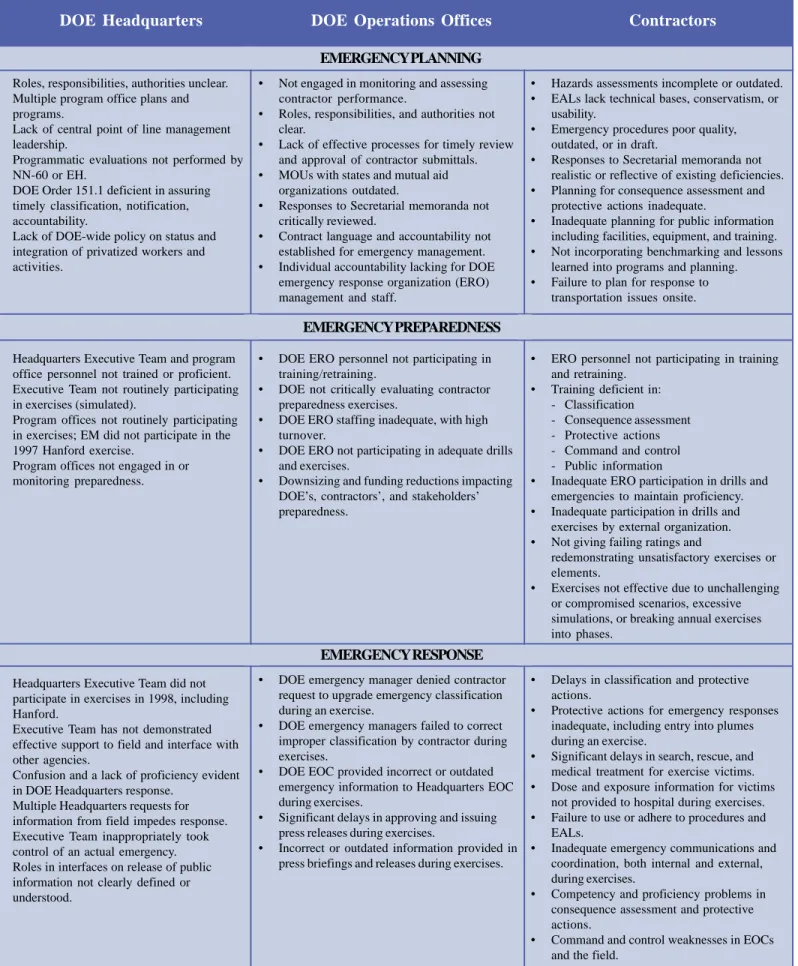
Tables 2 and 3 summarize positive aspects and weaknesses observed in each of the three phases of emergency management programs–planning, preparing, and responding.
Noteworthy Practices
Essentially all of the DOE sites reviewed had adequate facilities to support emergency management systems; several sites have state-of-the-art facilities and excellent equipment. Further, the professional staff who support emergency management activities, such as fire department personnel, were generally knowledgeable, well trained, and highly experienced in their areas of expertise. Although they do not fully mitigate the weaknesses in emergency management systems, the strengths in the areas of facilities and professional staff provide a good framework upon which needed improvements can be made.
Several DOE sites have notably effective elements that can be used as “benchmarks” for improvements.
In addition to DOE-wide strengths in facilities and equipment and professional staff, Oversight noted some site-specific practices that were particularly effective or innovative. Such practices could serve as models for other sites. For example, various sites could learn from the INEEL approach to developing effective emergency action levels (EALs). Similarly, SRS and RFETS were viewed as having the most effective programs for performing DOE operations office/field office assessments of contractor performance and contractor self-assessments. The self-critical reviews by SRS were an important factor in SRS establishing an effective emergency management program and processes for continuous management program but has the combined support
of both the DOE Operations Office Manager and the new contractor. The program at TSD has significant weaknesses and has not yet established the necessary management support to ensure that the needed improvements are made.
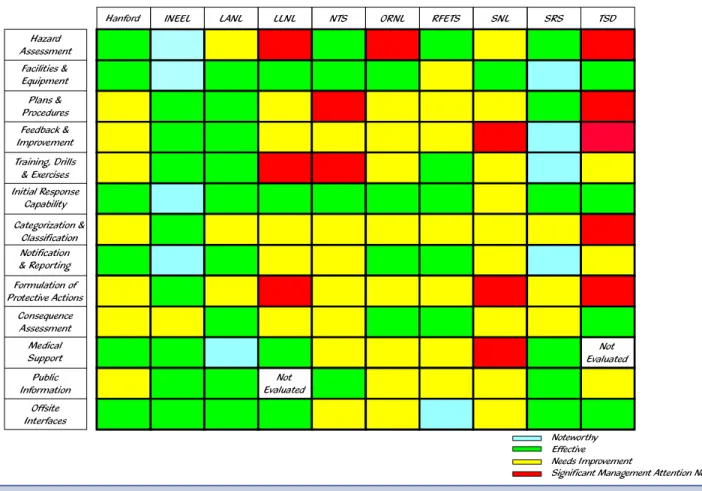
Figure 1 provides the overall evaluation of the emergency management elements at the sites reviewed1. The color ratings are not intended to
represent comparative or absolute grades. Rather, they provide DOE management with a perspective on areas needing the most attention. By focusing on the areas of weakness, DOE line managers can identify value-added improvements, prioritize assessments, and assign resources to emergency management programs where most needed.
The elements that are evaluated in Figure 1 are derived from DOE order requirements and delineate the essential elements of an emergency management program. They are structured to include the key elements that Oversight reviewed during field visits and to reflect the programmatic strengths and weaknesses. The offsite interface element encompasses stakeholders, such as state emergency management agencies and local hospitals. The evaluation was based on the information gathered during the field visits, summarized in Volume 2, which included observation of full-participation exercises at four of the sites.
Improved leadership and accountability are needed to address weaknesses at Headquarters and the field.
As noted in Figure 1, some emergency management elements, such as facilities and equipment and the initial response capability (e.g., fire departments and medical responders), are effective at most DOE sites. Similarly, some elements, such as categorization and classification of events (which is important for timely mitigation of events) were weak at most sites. The low ratings in the protective actions primarily reflect concerns with worker and responder safety; few concerns
1 The evaluation applies only to the facilities and
activities reviewed by the Office of Oversight. The status of development and effectiveness of emergency management programs have been noted to vary within different facilities within a site, and thus the evaluation of the individual elements does not necessarily reflect the entire site.
Hazard Assessment Facilities & Equipment Plans & Procedures Feedback & Improvement Training, Drills & Exercises Initial Response Capability Categorization & Classification Notification & Reporting Formulation of Protective Actions Consequence Assessment Medical Support Public Information Offsite Interfaces TSD SRS SNL RFETS ORNL NTS LLNL LANL INEEL Hanford Not Evaluated Not Evaluated
Significant Management Attention Needed Needs Improvement
Effective Noteworthy
Figure 1. Key Emergency Management Elements
EVALUATED ELEMENT BRIEF DESCRIPTION
Hazard Assessment Quantitative analysis of the results of a release or loss of control of hazardous materials (radiological and non-radiological) which forms the technical basis for development of emergency program elements.
Facilities and Equipment Emergency Operations Centers, fire department assets, decontamination equipment, communication equipment, and other equipment which is needed to respond to and mitigate an emergency.
Plans and Procedures Includes the site emergency plan and emergency preparedness implementing procedures which document the processes that ensure emergency management personnel operate according to established procedures and effectively coordinate their efforts during an emergency
Feedback and Improvement Assessments, line management oversight, lessons learned, and corrective actions designed to identify weaknesses and make needed improvements
Training, Drills, and Exercises Programs to ensure that emergency response capabilities are adequately developed and maintained so that personnel are capable of performing their duties and that the systems are tested and verified to be effective. Initial Response Capability The ability of onsite personnel to effectively respond to time urgent emergencies in order to take appropriate
actions to minimize the extent and severity of the event.
Categorization and Classification Processes to promptly and conservatively classify an operational emergency based on potential hazardous material releases and the resulting impact to people in the facility, on site, and offsite using a predefined classification system that is understood by both the site and stakeholders.
Notification and Reporting Processes for formally and promptly notifying DOE organizations, state and local agencies, and other organizations that an emergency condition exists, the classification of the emergency, and recommended protective actions for people offsite.
Formulation of Protective Actions Timely initiation of protective actions for onsite personnel and passing of protective action recommendations to offsite authorities for local populations based on the existing hazard in order to minimize or prevent injuries and illnesses
Consequence Assessments Prediction of the concentration and location of hazardous material plumes based on computer modeling that result from a release during an operational emergency.
Medical Support Programs to treat personnel that have been injured or contaminated as the result of an accident or when responding to an emergency, including efforts to ensure that information on hazardous materials is available to medical personnel.
Public Information Systems to provide timely and accurate information to the public and media, including notification of the site status and needed protective actions.
Offsite Interfaces Interfaces with state and local emergency management organizations and mutual support organizations, such as fire departments, that are necessary to coordinate the response to an emergency.
improvement. Other sites can also learn from experience at RFETS in developing a “partnership” with their stakeholders, which includes significant community involvement in areas such as review of hazards assessments.
A list of noteworthy practices to implementing various emergency management system elements is included in the text box on page 17. Volume 2 provides additional details on each of these noteworthy practices.
Weaknesses and Impacts
Every site reviewed had weaknesses in some aspects of emergency management, although the
degree and significance of the weaknesses varied considerably. Such weaknesses hinder DOE’s ability to effectively manage emergencies and thus could impact the health and safety of the public or the workforce. For example, poorly trained personnel can make errors that can turn a relatively minor equipment failure into a major accident. Weaknesses in emergency management programs can also delay needed protective actions or result in increased consequences of an event. For example, contamination or exposure could result if people are sent into a hazardous area without proper equipment; if the site does not know the location and quantities of hazardous materials, it will not know what areas may be hazardous.
DOE Headquarters
• Secretarial directives on emergency classification, hazards assessments, EALs, training, exercises, and vulnerability reviews.
• NN-60 assessment of EALs and training on discretionary and conservative classification. • NN-60 development of
performance measures and criteria for emergency management programs.
• DP lead office in planning and conducting DIGIT PACE II (May 1997), which was a multi-agency, full-scale training exercise.
DOE Operations Offices
• RFFO oversight and assessment program for emergency management.
• OAK integration of integrated safety management and emergency management and incorporation into the University of California contract.
• AL participation in PRF project approach to upgrading Hanford emergency response.
• Consolidated emergency plan at OR to “umbrella” all three sites under a single emergency management program. • TSD and OR processes for
maintaining MOUs between Federal, state, tribal, and local organizations and mutual aid organizations.
• RFFO and RFETS strong relationship with State of Colorado and stakeholders. • NV emergency management
upgrade including co-locating of the emergency management center, fire department, and communication center. • AL establishment of public
information processes and training for public affairs staff.
Contractors
• Fluor Daniel PRF incident response project approach for improving emergency management at Hanford.
• INEEL and RFETS development of comprehensive EALs including a strong technical basis, protective actions, and a common format. • SRS electronic emergency
operations center (EOC) status boards including interface with state EOCs and Web site access. • SNL family crisis center. • INEEL chemical vulnerability
review in response to Secretarial directive.
• Emergency response teams including LANL hazardous material and TA-55 emergency response teams, and INEEL incident response teams.
• LANL integration of medical services into emergency management and response. • SRS emergency response facilities
including EOC, TSC, and 24-hour operations center.
• INEEL integration of all site facilities under a single emergency management program.
• LANL emergency program upgrade and improvement since 1994 Porcupine exercise.
• Kaiser Hill’s and subordinate Rocky Flats contractors’ aggressive program to eliminate hazardous materials.
• Not engaged in monitoring and assessing contractor performance.
• Roles, responsibilities, and authorities not clear.
• Lack of effective processes for timely review and approval of contractor submittals. • MOUs with states and mutual aid
organizations outdated.
• Responses to Secretarial memoranda not critically reviewed.
• Contract language and accountability not established for emergency management. • Individual accountability lacking for DOE
emergency response organization (ERO) management and staff.
• DOE ERO personnel not participating in training/retraining.
• DOE not critically evaluating contractor preparedness exercises.
• DOE ERO staffing inadequate, with high turnover.
• DOE ERO not participating in adequate drills and exercises.
• Downsizing and funding reductions impacting DOE’s, contractors’, and stakeholders’ preparedness.
• DOE emergency manager denied contractor request to upgrade emergency classification during an exercise.
• DOE emergency managers failed to correct improper classification by contractor during exercises.
• DOE EOC provided incorrect or outdated emergency information to Headquarters EOC during exercises.
• Significant delays in approving and issuing press releases during exercises.
• Incorrect or outdated information provided in press briefings and releases during exercises.
EMERGENCY RESPONSE
• Hazards assessments incomplete or outdated. • EALs lack technical bases, conservatism, or
usability.
• Emergency procedures poor quality, outdated, or in draft.
• Responses to Secretarial memoranda not realistic or reflective of existing deficiencies. • Planning for consequence assessment and
protective actions inadequate.
• Inadequate planning for public information including facilities, equipment, and training. • Not incorporating benchmarking and lessons
learned into programs and planning. • Failure to plan for response to
transportation issues onsite.
• ERO personnel not participating in training and retraining.
• Training deficient in: - Classification
- Consequence assessment - Protective actions - Command and control - Public information
• Inadequate ERO participation in drills and emergencies to maintain proficiency. • Inadequate participation in drills and
exercises by external organization. • Not giving failing ratings and
redemonstrating unsatisfactory exercises or elements.
• Exercises not effective due to unchallenging or compromised scenarios, excessive simulations, or breaking annual exercises into phases.
• Delays in classification and protective actions.
• Protective actions for emergency responses inadequate, including entry into plumes during an exercise.
• Significant delays in search, rescue, and medical treatment for exercise victims. • Dose and exposure information for victims
not provided to hospital during exercises. • Failure to use or adhere to procedures and
EALs.
• Inadequate emergency communications and coordination, both internal and external, during exercises.
• Competency and proficiency problems in consequence assessment and protective actions.
• Command and control weaknesses in EOCs and the field.
EMERGENCY PLANNING
DOE Headquarters DOE Operations Offices Contractors
Table 3. Examples of Deficiencies in Emergency Planning, Preparedness, and Response
EMERGENCY PREPAREDNESS
• Roles, responsibilities, authorities unclear. • Multiple program office plans and
programs.
• Lack of central point of line management leadership.
• Programmatic evaluations not performed by NN-60 or EH.
• DOE Order 151.1 deficient in assuring timely classification, notification, accountability.
• Lack of DOE-wide policy on status and integration of privatized workers and activities.
• Headquarters Executive Team and program office personnel not trained or proficient. • Executive Team not routinely participating
in exercises (simulated).
• Program offices not routinely participating in exercises; EM did not participate in the 1997 Hanford exercise.
• Program offices not engaged in or monitoring preparedness.
• Headquarters Executive Team did not participate in exercises in 1998, including Hanford.
• Executive Team has not demonstrated effective support to field and interface with other agencies.
• Confusion and a lack of proficiency evident in DOE Headquarters response.
• Multiple Headquarters requests for information from field impedes response. • Executive Team inappropriately took
control of an actual emergency. • Roles in interfaces on release of public
information not clearly defined or understood.
Generic weaknesses in emergency management were evident at many sites.
Weaknesses can impact DOE’s credibility with stakeholders if DOE sites do not effectively communicate information to stakeholders and the public. Further, if DOE is not perceived as forthcoming about a site’s status, DOE loses the confidence and support of state and local agencies. Ineffective emergency management can also have financial and legal impacts (e.g., lawsuits from injured persons).
Several weaknesses were evident at many sites. These “generic” weaknesses include:
•
Hazards assessments and protectiveactions. Hazards assessments provide the
foundation for the emergency management program, including the development of EALs, emergency procedures, and protective actions. Despite the Secretary’s mandate to assure that all hazards assessments be updated by March 31, 1998, hazards assessments at several sites
were not developed, did not reflect current hazards, or lacked an adequate technical basis.
• Event classification. Event classification and
EALs are essential in ensuring that appropriate actions are taken to mitigate accidents and notify the appropriate authorities. Some DOE sites have not established procedures, training, drills, exercises, and competencies that provide
Field Monitoring Team performing environmental sampling in an exercise
NOTEWORTHY PRACTICES
•
Emergency response training and drill program that is comprehensive, integrated with other site emergency response elements and includes regular casualty drills to maintain proficiency (SRS).•
Strong and effective self-assessment process including assessment criteria and checklists for evaluating emergency management and achieve continuous improvement (SRS).•
State-of-the-art emergency response facilities and effective and well-maintained emergency response equipment (SRS and INEEL).•
Hazards assessments, emergency action levels, and emergency response organizations that are effectively designed to support timely and conservative classification of emergencies and notification of stakeholders (INEEL).•
Training and qualifications of personnel who provide the initial response to emergencies, such as fire department, medical technicians, and incident response team personnel (INEEL).•
Medical support fully and effectively integrated into sitewide emergency preparedness, planning, and response activities, including participation in exercises and exercise scenario development (LANL).•
A hazardous materials response team that is competent, well trained, and fully equipped to respond to radiological and chemical emergencies both on and off site (LANL).•
A Family Assistance Center for emergencies to provide support and assistance to families of emergency victims, including good participation by the Laboratory, Red Cross, and emergency response organizations (SNL).•
Close working relationships with state and local agencies, including stakeholder participation in review of emergency management program elements such as hazards assessments (RFETS).•
DOE emergency management order. Someprovisions of DOE Order 151.1, Comprehensive Emergency Management System, are unclear or require modification. DOE and contractor leadership, management followup, and accountability have not been sufficient to ensure that the order is effectively implemented, contributing to continuing weaknesses in emergency management and response and varying levels of performance across the DOE complex.
Because they are so prevalent, these generic weaknesses need to be addressed from a DOE-wide “corporate” perspective, as well as by individual sites. Section 4 of this report provides a detailed discussion of each of the above issues, including specific opportunities for improving policy, program management, and performance.
Response to the Secretarial
Direction Following the Hanford
Accident
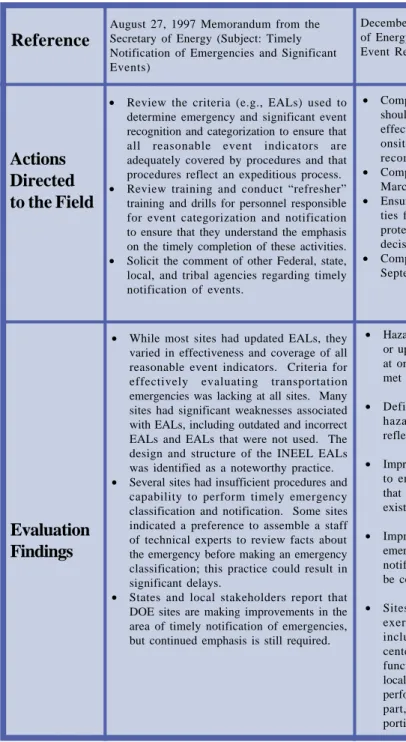
Although much work remains to be accomplished, the Hanford Site has made significant progress toward establishing an effective emergency management program. In addition, the Secretarial direction to improve emergency management programs has had a positive effect at most other sites by focusing site management awareness on emergency management issues. In the past year, DOE Headquarters and DOE sites have completed some of the actions specified in the Secretarial direction and have made some improvements. However, the Secretarial initiatives have not yet been fully embraced, and weaknesses identified in the Secretary’s directives have not been adequately addressed at some sites (see Table 4).
Hanford has made substantial improvements, and most sites have made progress. However, some DOE sites have not addressed the types of problems that led to the Hanford explosion or the inadequate response to the accident.
Eight months after Secretarial direction to improve hazards assessments and response capability, some DOE sites have not addressed the assurance that events will be classified in a
timely and conservative manner.
•
Performance feedback mechanisms. DOEand contractor management oversight, critical assessment processes, and feedback mechanisms have not been effective in ensuring adherence to requirements and expectations, identification and resolution of significant weaknesses, and continuous improvement.
•
Worker safety and treatment. Much ofDOE’s attention has been devoted to analyzing accidents that could affect the general public. DOE sites have not placed sufficient emphasis on protecting and treating workers by ensuring that hazards and risk assessments, work planning and control, consequence assessment, search and rescue, protective actions, and medical treatment adequately address site workers who could be affected by accidents at DOE sites.
•
Training, competencies, and proficiency.Competent personnel, who are capable of recognizing hazardous conditions and taking appropriate actions, are the most important factor in preventing and mitigating accidents. Training, drills, and exercises have not been effective in ensuring the continuing competency and proficiency of personnel with emergency management responsibilities and decision-making authority.
•
Stakeholder and public interfaces,coordination, and information. Most states
cited improving relationships with DOE sites on emergency management. However, they indicated a perception that DOE’s notification of events and accidents was not always timely and expressed concerns that reduced DOE funding would jeopardize state and local emergency operations centers and the ability to respond to DOE emergencies. In addition, many agreements or MOUs with external support organizations are not current, and the information provided to the public and the media during emergency exercises was not consistently timely or accurate.
The sites’ reports to the Secretary provide an overly optimistic picture of the actual status.
Based on a comparison of selected site reports to the Secretary and the actual status of emergency management programs, the site reports provide an overly optimistic picture of the actual status. In general, the site reports identify few significant problems, while a more detailed assessment of the actual status reveals that the programs have significant weaknesses. Several factors have contributed to this situation:
•
Expectations for performance by DOE and contractor management are not in line with DOE policy, and thus mediocre and even substandard performance is not recognized as such.•
DOE and contractor management did not perform sufficient critical reviews of the site submittals to the Secretary to verify that the submittals were accurate and that performance was indeed adequate.•
Some responses were less than accurate. For example, sites reported that EALs were established when the EALs were actually outdated, incorrect, and not used in responding to emergencies.•
Some DOE and contractor managers do not have a realistic understanding of the status and performance in various aspects of emergency management within the field on such subjects as hazards assessments and EALs, consequence assessment capabilities, training and compentencies, programs and procedures, and coordination with state and mutual-aid organizations.Overall, Secretarial direction has had a positive impact but has not yet resulted in the desired level of performance improvement at some DOE sites. Further, the reports on status and progress provided by the sites in response to the Secretarial direction provides an overly optimistic picture of actual performance and a corresponding false sense of security.
types of problems that led to the Hanford explosion or the inadequate response to the accident. Despite specific Secretarial direction to classify emergencies conservatively, several sites lack the necessary information (e.g., hazards assessments and EALs), and some local classification guidance is non-conservative. Further, although NN-60 and DP have provided training, DOE Headquarters and site efforts have not adequately ensured the training, qualifications, and proficiencies of personnel who perform emergency management functions. Perhaps most significantly, many personnel did not have a good understanding of their responsibilities. This is a particular concern for facility managers, who typically make critical decisions early in an event, such as initial classification and protective actions. A substantial fraction of such personnel were not able to quickly classify an emergency and correctly apply EALs when given credible hypothetical scenarios during tabletop exercises.
LLNL has begun to redesign their emergency management program within the integrated safety management framework.
In accordance with the Secretary’s direction, sites were to submit a report on the status of action items by December 31, 1997, and to complete upgrades and corrective actions by March 31, 1998. DOE sites have all submitted the status reports as required by the Secretary’s memoranda. Several sites have completed some upgrades and corrective actions and initiated others. Some sites, such as NTS, recognized that their programs had significant weaknesses and have initiated efforts to improve. In response to the Secretary’s direction and an Office of Oversight safety management evaluation, LLNL has begun to redesign their emergency management program within the framework of the DOE integrated safety management initiative.
Although sites submitted their status reports, the correction actions they identified were not always adequate to meet the objectives. Some sites reported that they had adequate hazards assessments because they had approved safety analysis reports (SARs). However, the SARs often did not have the right type of information to also serve as an emergency management hazards assessment. Further, emergency management programs at some sites did not incorporate the information available from existing hazard analyses into EALs and emergency procedures.
Issue: This evaluation, completed one year after the Hanford event, indicates that some field responses were not sufficiently self-critical and representative of actual performance, that some sites did not take adequate advantage of lessons learned, and that some of the same weaknesses in emergency response could still be seen today.
Table 4. Effectiveness of Response to Secretarial Initiatives on Emergency Management
Reference
Actions
Directed
to the Field
Evaluation
Findings
• Scrutinize the use or storage of chemicals that have potential for explosion, fire, or significant toxic release.
• Reassess known chemical and radiological vulnerabilities at facilities that have been shut down, are in standby, are being deactivated, or have otherwise changed their conventional mode of operation.
• Assess the technical competence of staff to recognize the full range of hazards in facilities.
• Assess the site lessons-learned and occurrence reporting programs.
• In general, reviews conducted by most sites for storage of chemicals and reassessment of known vulnerabilities lacked rigor. Notable exceptions included thorough and meaningful vulnerability reviews at INEEL and proactive chemical vulnerability reductions at RFETS.
• Exercise, drill, and tabletop walk-through performance of emergency responders indicates continued weaknesses in their understanding of the nature and magni-tude of hazards in facilities.
• Most sites did not have an effective lessons-learned program for emergency management. Additionally, there are significant weaknesses associated with trending and analyzing deficiencies to identify root causes and develop corrective actions to fully address known problem areas.
August 27, 1997 Memorandum from the Secretary of Energy (Subject: Lessons Learned from the Emergency Response to the May 14, 1997 Explosion at Hanford’s Plutonium Reclamation Facility)
• Train key emergency management personnel on conserva-tive emergency management decision-making.
• Assure availability of personal protective equipment, field monitoring equipment, and qualified personnel for emergency response and post-accident activities.
• Update emergency procedures to assure that timely medical attention is provided to injured or potentially exposed personnel. Confirm that procedures are implemented for the notification and protection of workers in a variety of locations (indoors and outdoors) at event onset, and that methods are available to control their sheltering.
• Implement procedures to provide local medical facilities with available information on chemical and radiological hazards as well as timely qualitative and quantitative exposure information for individuals.
• Training was conducted at all sites on conservative emergency management decision-making; however, its effectiveness was impeded by an absence of strong management policy and followup to institutionalize conservative decision-making through EALs and emergency procedures. Lack of conservative decision-making was identified as a weakness during exercises and tabletop walk-throughs at multiple sites.
• In general, there is an excellent initial emergency response capability at DOE sites in terms of both qualified personnel and available equipment. The ready availability of field monitoring personnel (such as radiological control technicians and industrial hygienists) to support post-accident activities varied from site to site.
• It was observed during exercise and drill performance that many sites have not yet established effective policy, procedures, and plans to assure timely treatment of potentially contaminated personnel. Emergency response personnel were observed to be unfamiliar with the nature and extent of hazards present. This shortcoming interfered with effective triage for treatment of personnel with simulated serious injuries. In one exercise, emer-gency medical treatment was delayed for more than three hours due to problems in this area.
• Progress continues to be required in coordination with local medical facilities. Several MOUs between DOE sites and local hospitals were found to be out of date. In exercises involving local medical facilities, communica-tion of exposure or contaminacommunica-tion informacommunica-tion was weak.
• Several sites were unable to demonstrate adequate provisions for making prompt protective action notifications to onsite personnel during emergency situations and emergency responders traversed radiological or chemical plumes during exercises.
August 4, 1997 Memorandum from the Secretary of Energy (Subject: DOE Response to the May 14, 1997 Explosion at Hanford’s Plutonium Reclamation Facility)