PDF hosted at the Radboud Repository of the Radboud University
Nijmegen
The following full text is a publisher's version.
For additional information about this publication click this link. http://hdl.handle.net/2066/122867
Please be advised that this information was generated on 2017-12-05 and may be subject to change.
Compartmentalized Catalysis
Proefschrift
ter verkrijging van de graad van doctor aan de Radboud Universiteit Nijmegen op gezag van de rector magnificus prof. mr. S. C. J. J. Kortmann, volgens besluit van het college van decanen in het openbaar te verdedigen op woensdag 8 januari 2014 om 16:30 uur precies
door
Jorgen Steven Willemsen geboren op 12 oktober 1984
Promotoren:
Prof. dr. F. P. J. T. Rutjes Prof. dr. ir. J. C. M. van Hest
Manuscriptcommissie:
Prof. dr. A.E. Rowan
Prof. dr. G. Roelfes (Rijksuniversiteit Groningen) Dr. ing. K.M. Bonger
Paranimfen:
Dr. H. A. van Kalkeren F. van der Pijl
The research described in this thesis was financially supported by the NRSC-Catalysis.
Cover picture adapted from: Clipart courtesy FCIT (http://etc.usf.edu/clipart) Press: Ipskamp drukkers
- 3 -
Table of contents
1. Introduction – Compartmentalization techniques to overcome incompatibility issues in cascade catalysis
5
2. Ligand synthesis for water-soluble metal catalysts 35
3. Aqueous reductive amination using a dendritic metal catalyst in a dialysis bag
59
4. Towards homogeneous metal catalysis in a polymersome nanoreactor 73
5. Potassium formate as a small molecule switch: controlling oxidation/reduction behaviour in a two-step sequence
93
6. A one-pot oxidation/enantioselective oxa-Michael cascade 107
7. Summary and perspectives (samenvatting en visie) 123
Publications 130
- 5 -
1. Introduction
–
Compartmentalization
techniques to overcome incompatibility issues in
cascade catalysis
Abstract
When multiple chemical transformations in one-pot are combined, higher conversions, less by-product formation and shorter reaction times are generally observed. As a consequence, less waste is produced and the impact on the environment is lower than in a stepwise approach. However, multiple single reactions can generally not be combined without creating incompatibility issues. Compartmentalization of the individual reactions is the key strategy to overcome such inactivation problems. Incompatible reactions are performed in different compartments by keeping the reagents or catalysts in a defined space, while the substrate and intermediates can freely diffuse from one compartment to the other. Several methods to create compartmentalization have been developed and are discussed in this chapter.
1.1 Cascade reactions & incompatibility issues
The highly efficient formation of complex molecules in nature can be attributed to sophisticated, well-developed reaction sequences. In living cells, production of molecules often proceeds via multiple step cascade reactions. A precise control of the reaction sequence is achieved by positional assembly or spatial allocation of the responsible enzymes. In addition, this strategy suppresses incompatibility issues between the different reactions.[1],[2] Well-known cyclic reaction sequences in nature are the citric acid cycle,[3] and Calvin cycle.[4] Examples of complex linear sequences are the fatty acid oxidation,[5] the production of vitamin C[6] and the taxol biosynthesis,[7] the latter being a highly active natural product which is currently on the market as the cytostatic drug Paclitaxel. The transformations are often enantioselective, and the occurrence of undesired side reactions or formation of waste products is negligible. Transport of labile reaction intermediates occurs sometimes via channels which connect two active sites, called metabolic channeling.[8] Remarkably, the
- 6 -
separate enzymatic steps do not hamper each other in an undesired way and the biocatalysts retain their activity for a prolonged period of time.
A related strategy in nature to prevent harmful interactions between catalytic systems is by compartmentalization. Processes can be separated from each other using different membrane-based compartments for the formation of intermediate structures. Substrates and products of the reactions can easily move between compartments, sometimes via selective membrane channels.[9] Another feature of this compartmentalization strategy is that all enzymatic reactions, which are in equilibrium, are pushed to one side by the in-situ product removal strategy: products are continuously removed from a compartment.[10] In-situ product removal is also beneficial if product inhibition of enzymes occurs.
Based on the efficient results obtained in nature, chemists have applied this knowledge to construct one-pot reaction sequences in-vitro.[11],[12],[13],[14] In such cascade processes, steps A→B, B→C, C→D etc. happen concurrently so that only one purification step is necessary. One-pot reactions are not necessarily cascade reactions however, since reactions in one-pot can also be performed subsequently. In other words, some reagents of a next reaction are added after completion of the previous reaction. This means that the reactions do not proceed simultaneously. Replacing multistep batch wise processes by one-pot procedures increases the overall efficiency, as fewer purification steps of intermediate compounds are necessary. In a batch wise process, time-consuming and waste-producing purifications are performed between individual reactions and multiple purification steps are usually required (Figure 1.1). Another advantage is that reactive compounds are generated in-situ and directly reacted into another compound, thereby preventing side reactions. Considering the strong points of cascade chemistry, it is no surprise that cascade reactions have been proposed to contribute to greener chemical processes[15] and that they have continuously received attention of the chemical community.[16]
- 7 -
Batch wise synthesis Cascade synthesis
Figure 1.1 Schematic difference between stepwise and cascade synthesis.[11] Adapted with permission from ref. 11. Copyright (2003) American Chemical Society.
The major challenge in combining multiple chemical transformations is the compatibility of the different reagents and catalysts. One approach for a successful reaction sequence is to search for two or more compatible reactions. Thus, none of the chemicals present in the mixture inhibit another reaction in the sequence. Many combinations of compatible reactions have been reported in literature.[11],[12],[13],[14] In a remarkable example described by Orru, an eight-component reaction was carried out in a total reaction yield of 24% (Scheme 1.1).[17] First isocyanide 1 reacted with acetone (2) and amino acid 3. After formation of 7, compounds 4, 5 and 6 were added to the same reaction vessel which led to the formation of compound 8. After neutralization of the reaction mixture by HCl and addition of benzylamine and isobutyraldehyde, compound 9 was obtained. Product formation was only successful after a careful design of the reaction sequence. All the reactions proceeded readily in methanol, intermediates did not react in an undesired manner and no interfering waste products were formed. The strategy that worked here is to perform some reactions in the sequence consecutively; transformations went to completion before the next step was initiated.
- 8 -
Scheme 1.1 Eight-component one-pot reaction.[17]
Arguably the most impressive compatible cascade to date is the one-pot synthesis of a complex precursor of vitamin B12, hydrogenobyrinic acid (11) in 12 enzymatic steps by Scott
et al. (Scheme 1.2).[18] All enzymes were prepared by overexpression of the specific
biosynthetic gene of Pseudomonas denitrificans. After concluding that the nine enzymes worked separately in their single corresponding step, all enzymes were combined in the presence of 5-aminolevulinic acid (10) and the necessary co-factors. Spectacularly, complex intermediate 11 was obtained in 20% yield. After four additional chemical steps, vitamin B12
could be readily prepared.
Scheme 1.2 One-pot multistep synthesis of a vitamin B12 precursor.[18]
Many reactions however, can only be integrated if they fulfill certain requirements. It is obvious that the combined reactions should proceed in the same reaction medium and - for
- 9 -
aqueous solutions - in a similar pH-window. Generally, combining enzymes with metal complexes is problematic, as most metal complexes are not active or even decompose in water, while many enzymes are inactive in organic solvents. Furthermore, general problems with metal catalysts are poisoning of the metal center by undesired coordination of reactants or, if more than one metal catalyst is employed, ligand exchange. Another prerequisite of one-pot chemistry is that reagents or catalysts of different steps are unreactive to each other but only interact with the substrate. The combination of opposing reactions, for example acid- and base-catalyzed, or reduction and oxidation reactions poses an additional challenge for one-pot chemistry.[19] Some successful combinations have been developed with enzymes in organic media,[20] especially in the field of dynamic kinetic resolution,[12] and of water-soluble metal catalysts combined with enzymes in aqueous reaction mixtures.[21],[22] However, in general most reactions cannot be combined in a one-pot process without encountering problems due to incompatibility issues.
Several techniques have been applied to protect reagents or catalysts in one-pot reactions. Generally, like in nature, physical contact between incompatible reagents or catalysts is prevented mostly via compartmentalization of the compounds. The incompatible reagents or catalysts are confined in the compartment while the substrate and other non-harmful reagents can move from one compartment to another. An additional advantage of compartmentalization is that catalysts can be selectively recovered from the reaction mixture in many cases. In this chapter we will describe different approaches that have been followed to overcome compatibility issues between different catalysts in a one-step process, with a focus on compartmentalization strategies. We will thereby start with methods to make reactions compatible on the macroscale and move to the nanoscale. We will also include those methods that until now have only been employed in single catalytic processes, but have the potential to be also exploited in cascade reactions.
1.2 Biphasic reaction media
Biphasic reaction mixtures consist of two non-miscible solvents. Solvents do not mix if the intermolecular forces differ sufficiently. A classic example is a water-organic solvent mixture. If the products have a different polarity than the reagents and catalysts, the product can be easily purified and catalysts and reagents can be obtained from the other phase and reused.[23] The polarity of catalysts can be manipulated by the immobilization on a support with desired
- 10 -
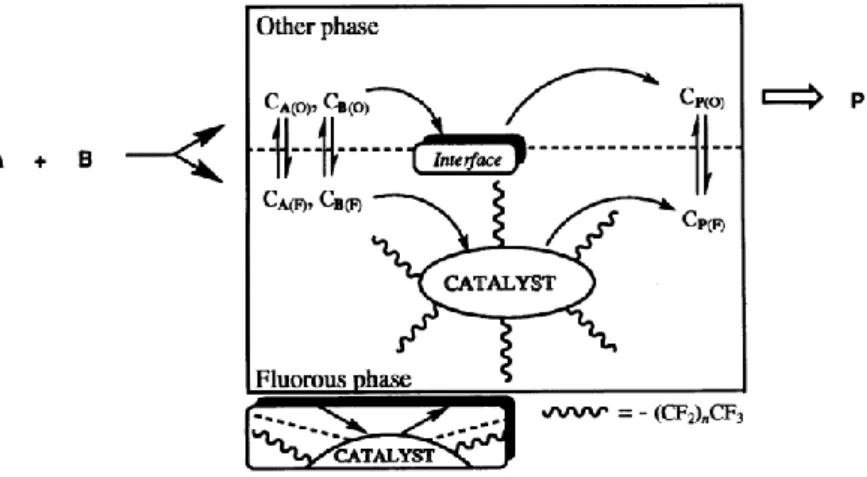
hydrophilicity, resulting in a successful recovery and separation from the reaction products.[24] Water, which is used in classic biphasic reaction set-ups, has the drawback of being polar and reactive towards electrophiles. Therefore, in several studies water is replaced by solvents which are also immiscible with organic solvents. An early example was described by Rábai et al. in 1994.[25] An adapted rhodium catalyst was used under fluorous biphasic conditions (FBC) in a hydroformylation reaction. The catalyst was decorated with fluor-rich alkyl tails, thereby enhancing the solubility in the fluorous phase. Contrarily, the substrate had a better solubility in the other phase, a hexane/toluene mixture, but still reacted in a catalytic hydroformylation (Figure 1.2). After completion of the reaction, the catalyst could be readily recovered by separation of the two phases. Other combinations of solvents were developed as well, for example ionic liquid-organic solvent,[26] supercritical carbon dioxide-water[27] or non-aqueous combinations.[28]
Figure 1.2 Schematic representation of biphasic catalysis using a fluorous/organic biphasic system.[25] From ref. 25. Reprinted with permission from AAAS.
The solvents can be considered as two separate (macro)compartments: reagents or catalysts may be only soluble in one of the two phases, while substrates have a (moderate) solubility in both liquids or react at the interface. York et al. demonstrated the beneficial effects of a normally low-yielding pair of reactions when performed in a biphasic medium.[29] A Grubbs-I catalyzed ring-closing metathesis reaction was combined with a palladium-catalyzed Heck-coupling (Scheme 1.3). If all reactants and catalysts were combined in one solvent, product formation was observed in poor yield due to poisoning of the ruthenium complex by the phosphine ligands of the palladium catalyst. When a fluorinated solvent was added the palladium catalyst remained in the fluorous phase while the ruthenium complex was confined in the other phase catalyzing the ring-closing metathesis reaction. After completion of the first reaction, the mixture was heated, resulting in a monophasic mixture. At this point, the
- 11 -
palladium catalyst came in contact with intermediate 13 and reacted towards the desired compound 14 in a total reaction yield of 67%. If no fluorous phase was used and the catalysts were present from the beginning of the reaction, only 22% of 14 was obtained.
Scheme 1.3 One-pot reaction sequence in a water-fluorous phase mixture.[29]
In addition to metal catalysts, biocatalysts have been applied in biphasic reaction mixtures to broaden the scope even further.[30] An impressive number of enzymatic reactions are performed under biphasic conditions nowadays. Leitner and coworkers showed the concept of macroscale compartmentalization by executing an enzyme-metal catalyst combined cascade reaction in a biphasic reaction mixture.[27] Hydrogen peroxide was safely prepared in situ by palladium catalysis in supercritical carbon dioxide. This oxidant diffused into the other solvent, in which an enantioselective sulfoxidation was catalyzed by chloroperoxidase.
Microfluidic devices are useful for compartmentalization strategies, via the creation of microdroplets.[31] These small compartments are prepared by the dispersion of an aqueous solution into oil, resulting in a biphasic system. Enzymes, reagents, metal catalysts or whole cells have been enclosed in these droplets. As the aqueous layer is completely enclosed by the oil phase encapsulation efficiencies with this technique are quantitative. Stability was ensured for prolonged periods and activity was still observed in the droplets.
Several publications describe the application of the in vitro transcription and translation (IVTT) strategy in microdroplets.[32],[33] The first step, the transcription process, involves mRNA formation from encapsulated DNA. Next, the mRNA is decoded to produce the desired protein during the translation step. High-throughput measurements on protein expression and function are possible as large numbers of microscale droplets can be produced within short periods of time. Each droplet can be considered as an isolated reaction vessel and different reaction conditions can be easily screened. Hence, microdroplets can be used in directed evolution technology i.e. the gene is randomly mutated in each droplet in order to obtain a large library of different mutated proteins which can have desirable properties.[34]
- 12 -
1.3 Membrane reactors & dialysis bags
Continuous membrane reactors are widely used to achieve compartmentalization, in many cases to recover valuable catalysts, either biocatalysts or metal catalysts.[35],[36] In a dead-end membrane reactor, the mixture is pumped through a membrane and collected at the end of the channel, while in a loop reactor the mixture is continuously circulated (Figure 1.3). Materials with dimensions larger than the pore size of the membrane stay in their intended compartment, whereas substrates and products can diffuse through the membrane.
Figure 1.3 Different types of continuous membrane reactors.[35] Reprinted with permission from ref 35. Copyright (2002) American Chemical Society.
From the early 1980’s, Wandrey et al. investigated the possibilities of compartmentalized catalysis using membrane technology.[37] In an early example, NAD(H) was covalently bound to PEG 10,000 and kept in a compartment of the membrane reactor. Together with formate dehydrogenase to regenerate the NAD(H) and leucine dehydrogenase, L-leucine was formed
in 99.7% yield. In another example, Cantarella linked two membrane reactors in a serial fashion.[38] Although this is not a one-pot process per se, it illustrates the possibilities of compartmentalization by membrane reactors for cascade synthesis. Nitrilase was enclosed in the first reactor, where 3-cyanopyridine (15) was transformed into nicotinamide (16). This intermediate product was transferred to a second reactor, in which amidase catalyzed further hydrolysis to nicotinic acid (17) (Scheme 1.4). Enclosing the enzymes in different membrane reactors provided the possibility to perform the individual reactions at their optimized conditions. The reaction mediated by the unstable nitrile hydratase was therefore conducted at 5 ºC, while the robust amidase gave the best results at 50 ºC. In addition, the concentration of the second reaction was lowered to prevent inhibition by the substrate. This approach resulted in two quantitative reactions.
- 13 -
Scheme 1.4 Nicotinic acid formation via a two-step enzymatic process.[38]
Decreasing the dimensions of reactors offers some attractive features. In these so-called microreactors, heating, cooling and mixing are efficiently accomplished and risks of explosions or runaway reactions are negligible. A well-controlled cascade reaction with microreactors connected serially was developed by Ley and co-workers. Thus, the necessary catalysts and reagents were enclosed in different microreactors and the substrates were passed through the separate compartments (Scheme 1.5).[39] The first step was mixing a solution of Bestmann-Ohira reagent 18, benzyl azide and an aldehyde with a KOtBu solution, resulting in acetylene formation upon heating to 100 °C for 30 minutes. Next, the excess aldehyde, base and acidic material were removed by passing the mixture subsequently through three different types of functionalized columns (with benzylamine, Amberlyst-15 sulfonic acid and Amberlyst-21 dimethylamine, respectively). In a fourth column, a copper catalyst was immobilized which catalyzed a Huisgen cycloaddition between the acetylene and azide, giving a triazole functionality. Traces of copper were scavenged by a thiourea-functionalized column, yielding pure product 19 in 69% yield.
Scheme 1.5 In situ acetylene formation and subsequent Cu-catalyzed Huisgen cycloaddition inside a microreactor.[39] © 2009 Wiley-VCH Verlag GmbH & Co. KGaA,
Weinheim.
Xia and coworkers published an enzymatic dynamic kinetic resolution performed in a continuous-stirred membrane reactor. The reactor consisted of two compartments, separated
- 14 -
by a silicone rubber membrane (Figure 1.4).[40] The experiment started with racemic Naproxen methyl ester (20). Only the (S)-enantiomer was hydrolyzed by lipase. Because of the hydrophobic nature of the membrane, only the unreacted methyl ester was able to migrate to the other compartment, where the methyl group was isomerized by solid NaOH. Next, the racemic mixture could diffuse back to the other compartment and the (S)-enantiomer was again hydrolyzed by lipase. An enantiomeric excess of 96% was achieved in a yield of 60%. Without using a membrane, the lipase was destroyed by NaOH, which shows that compartmentalization was essential for this reaction to succeed.
Figure 1.4 Dynamic kinetic resolution of Naproxen (21) in a membrane reactor.[40] Catalysis has also been performed in commercially available dialysis bags. Originally, dialysis bags were used to purify materials with dimensions larger than the pore sizes of the membranes, in most cases enzymes or polymeric materials. However, as was shown by pioneering work of the Whitesides group, enclosure of the biocatalysts in a dialysis bag also gives the possibility to remove the enzymes from the reaction medium and reuse them by adding the bag to a fresh reaction mixture.[41] Recently, also metal catalysis was performed in a dialysis bag. In one example, a copper complex was covalently attached to a dendrimer to prevent leakage outside the dialysis bag.[42] Still activity of the dendritic catalyst in a Henry reaction was observed and the catalyst could be recycled for seven cycles without a significant loss in activity. In another example, palladium was immobilized and showed activity in a cross-coupling reaction.[43]
- 15 -
1.4 Immobilization on supports
Incompatible reagents or catalysts can be combined in one-pot after immobilization on a support. The insoluble materials can be considered as compartments, so the opposing reagents cannot interact with each other, even at relatively high concentrations. The soluble substrate however, is able to react subsequently with both reagents, thus entering the different “compartments”. This approach is not always applicable. Of course, reagents must remain active after immobilization. Secondly, inactivation processes may also proceed in a heterogeneous mixture. In 1981, Patchornik et al. found that incompatible reagents could be combined in one-pot after immobilization on insoluble polymer supports.[44] In one example of the so-called “Wolf and Lamb” reaction, γ-butyrolactone (22) was deprotonated by an insoluble trityllithium polymer (Scheme 1.6). Next, the anion reacted with a benzoyl-bearing polymer, resulting in benzoylated lactone 24 in 95% over two steps. Without immobilization on a polymer, only 31% of the desired compound was obtained. The advantage of this method is that the lithium enolate 23 could be immediately trapped with the benzoylation agent. Contrarily, in a traditional process the base should be completely consumed before continuing with the next step, as it otherwise reacts with the benzoylating agent. However, enolate 23 has a limited stability in the presence of lactone 22 as it forms the self-condensated byproduct.
Scheme 1.6 Cascade reaction with two polymer-supported reagents.[44]
In later work, catalysts or reagents that were incompatible under homogeneous conditions were also immobilized on magnetic nanoparticles and silica.[45] An additional benefit here was
that the catalysts could be separately removed from the reaction mixture by applying a magnetic field and filtration respectively. Another example involves the preparation of a bifunctional silica material containing an acid and base.[46] The two opposing reagents were in close proximity but did not neutralize each other.
McQuade used polymer nanoparticles to achieve compartmentalization in a normally incompatible reaction.[47],[48] First, benzaldehyde (25) was reacted into trans-β-nitrostyrene (26) under (poly)ethylenimine-catalyzed conditions. Next, a nickel-mediated Michael addition
- 16 -
produced desired material 29 (Scheme 1.7). The combination of both catalysts in one-pot without any further precautions resulted in only 5% yield. This can be attributed to poisoning of the metal catalyst 27 due to coordination of the polymer nitrogen atoms to the nickel. Nevertheless, by crosslinking the outer amines of the polymer, nanocapsules were formed. The capsule surface appeared impermeable for the metal catalyst, while the starting material
25 was able to penetrate and react with nitromethane to intermediate 26.
Scheme 1.7 Double catalyzed Michael adduct formation in one-pot.[47]
Fréchet used star polymers to protect acid and base catalysts from neutralization in a homogeneous mixture.[49] The acid PTSA and the base DMAP were covalently attached to a styrene monomer, which was used in a crosslinking reaction with divinylbenzene and nitroxide-functional polystyrene chains to obtain star polymers. Thus, the reactive functionalities were located at the core of the materials while the outer part contained polystyrene. It was hypothesized that the acidic and basic moieties would have no interaction as the reactive centers were unable to physically come in contact with each other (Figure 1.5). Indeed, a yield of 65% was obtained in a cascade reaction in which an aldehyde was formed after acid-mediated acetal hydrolysis and subsequent base-promoted Baylis-Hillman reaction. If the non-adapted catalysts were used, no desired product was obtained. More importantly, also reactions in which the acid and base were attached to linear polymers did not yield any desired material. This result shows that it was essential to locate the catalytic site in the interior of the star polymer.
- 17 -
Figure 1.5 Acid- and base-containing star polymers without interaction abilities.[49] © 2005 Wiley-VCH Verlag GmbH & Co. KGaA, Weinheim.
Polymer micelles are related to the star polymers described by Fréchet.[50] Polymeric amphiphiles self-assemble above the critical micelle concentration under aqueous conditions, thereby preventing contact between water and the hydrophobic part of the polymer. Nanocompartments are thus formed with an opposite polarity as the solvent. This feature has been used to perform organic reactions in aqueous media which were not possible in water alone.[51] In addition, enhanced catalytic activities in polymeric assemblies have been observed, which can be attributed to high local substrate and catalyst concentrations inside the vesicles. For example, Sc(OTf)3-catalyzed aldol reactions inside a micellar vesicle resulted in
a fivefold increase in product formation.[52] In other research, a rhodium-catalyzed hydroformylation showed good yields in the presence of surfactants, while no conversion was observed in pure water.[53] Polymer micelles were also used for recycling purposes. An encapsulated gold catalyst showed good activity in a cycloisomerization reaction and could be recycled by extraction with a metal loss of only 0.1% or less per cycle.[54] Other examples of metal catalysis in polymeric micelles reported by the same group consisted of metathesis chemistry with a Grubbs catalyst[55] and a palladium-catalyzed Sonogashira coupling.[56] Enclosing catalysts or reagents in different polymeric micelles or at different locations of the micelles would allow performing cascade reactions that are normally incompatible.
- 18 -
1.5 Sol-gels
Sol-gels are glassy or ceramic materials which are prepared from colloidal solutions. Generally, sol-gels are formed after hydrolysis of metal alkoxides, resulting in condensation into polymeric networks with submicrometer pores. Starting from the middle of the 19th century, a constant interest in sol-gels led to a broad knowledge about these materials.[57] Besides applications in for example the field of ceramics and the manufacturing of optical elements like lenses and mirrors, sol-gels are applied in (bio)organic chemistry. Because numerous papers have appeared about the encapsulation of catalysts in sol-gels,[58],[59] we will only discuss some selected examples in which cascade reactions are performed with compatibility issues. Between 2000 and 2003, Avnir, Blum and Gelman published about combining incompatible reactions in a one-pot system by compartmentalizing the incompatible catalysts in sol-gels.[60],[61],[62],[63] One obvious striking combination comprises acid-base catalysis. Various acids and bases were successfully entrapped in separate sol-gels.[61] Next, both gels were added to the same reaction vessel. Ketone 30 was formed via an acid-catalyzed pinacol-rearrangement; after diffusion out of the acidic and into the basic gel it reacted further by a base-promoted Knoevenagel reaction (Scheme 1.8). No leakage of the reagents from the different compartments was observed, which was necessary to perform the cascade reaction.
Scheme 1.8 Acid-catalyzed pinacol rearrangement and base-promoted Knoevenagel
reaction.[61]
In another example, opposing oxidation and reduction reactions were combined. Gelman et al. encapsulated pyridinium dichromate, an oxidant, and a metal catalyst capable of performing hydrogenations in separate sol-gels.[64] By combining both gels in one-pot, a primary alcohol was oxidized to the corresponding aldehyde, which reacted with an amine. Next, the resulting imine was reduced by the metal catalyst. Without entrapment of both reagents in different compartments, the metal complex was poisoned by the oxidant.
- 19 -
1.6 Templated nanocapsules
Particles with an internal reaction volume can be prepared by the preparation of a permeable shell around a sacrificial template. Removal of this temporary core leaves a capsule with a hollow interior, which is perfectly suited to perform (bio)catalysis. The most applied method for the creation of the shell is the layer-by-layer (LbL) technique, in which multiple thin layers are prepared step-by-step, i.e. each layer after the other. As a result of this fabrication technique, an excellent control on size, stability and permeability is realized. Furthermore, for each layer a different material can be used, as long as the different layers have a reasonable interaction to secure binding of the sequential layers.[65] Polyelectrolyte capsules are an important class of LbL-particles, which consist of consecutive multiple layers of polyanions and polycations.[66] Formation of the layers is possible due to stabilization by electronic interactions, which results in a highly permeable membrane.[67] In a representative example, the starting point is a colloidal particle, which is encapsulated by negatively charged polymers, poly(styrene sulfonate) (PSS) (Figure 1.6). The next step involves addition of the positively charged poly(allylamine) (PAH), which binds to the particle due to electrostatic interactions. The cycle of absorption of alternating charged polymers is repeated until the desired strength and thickness of the layer are achieved. Destruction of the solid core of the particle results in a hollow polyelectrolyte capsule. Problems during the preparation are mixing of the opposing charged layers, difficulties in removal of the non-bound polyelectrolytes and incomplete coverage of the surface, all leading to vesicles with less defined and unpredictable properties.
Figure 1.6 Polyelectrolyte capsule formation.[68] © 2004 Wiley-VCH Verlag GmbH & Co. KGaA, Weinheim.
- 20 -
Besides a great interest in polyelectrolyte nanocapsules for drug delivery purposes,[69] other molecules have been entrapped, including enzymes.[68] Because of the intrinsic permeability of the shell it is no surprise that polyelectrolyte capsules have been used as nanoreactors, for example by Sukhorukov et al.,[70],[71] even in cascade chemistry.[72] A normally incompatible dynamic kinetic resolution was successfully performed (Scheme 1.9). Compartmentalization of the acidic zeolite was achieved by encapsulation via the layer-by-layer method and the nanoreactor was used together with the lipase Candida antarctica Lipase B (CALB). The acid catalyzed the racemization of 1-phenylethanol (33). The (R)-enantiomer was selectively acetylated by CALB, which afforded 70% of 34 in 87% ee. Without compartmentalization, only 41% conversion and 11% ee of the acetylated alcohol 34 were observed, caused by enzyme inactivation by the acidic catalyst.
Scheme 1.9 DKR with normally incompatible acidic zeolite and lipase CALB.[72] A higher level of complexity in compartmentalization was achieved by the group of Möhwald with the construction of a vesicle-in-vesicle architecture.[73] The so-called shell-in-shell microcapsules are multi-compartment nanoreactors in which two normally incompatible steps can be combined within one particle. The preparation of the vesicles started with coprecipitation of an enzyme in the presence of magnetite by adding Na2CO3 (Figure 1.7).
Next, the particles were coated via the LbL technique and a second Na2CO3 precipitation was
performed at the surface in presence of a second enzyme. At this time, no magnetite was added which enables the purification of the desired material from the coproduct, consisting of Na2CO3 particles which were formed spontaneously in solution and did not encapsulate the
previously made LbL particle. Another coating was installed, followed by removal of both inorganic supports. The compartments of the microvessels were independently loaded with glucose oxidase and peroxidase. In a cascade reaction, enzymatic oxidation of glucose yielded H2O2, which was used by peroxidase to produce a highly fluorescent species. A fluorescent
signal was only observed in the peroxidase compartment of the vesicle. This result shows that no leakage of the enzyme occurred and peroxide was able to diffuse from the glucose oxidation compartment to the other compartment. This concept was expanded by Bäumler,
- 21 -
who encapsulated three enzymes in three different compartments of one single – shell-in-shell-in-shell – particle.[74]
Figure 1.7 Formation of shell-in-shell microcapsules by Möhwald et al.[73] © 2007 Wiley-VCH Verlag GmbH & Co. KGaA, Weinheim.
Related materials are yolk-shell vesicles. These are vesicles with a shell and a heterogeneous nanoparticle in the core which however does not utilize the whole inner compartment. An early example of a catalytic application has been described by the group of Song.[75] This material was prepared using a simple approach starting with the preparation of gold nanoparticles, which were coated with silica. In the last step, the metal was partially etched away in a controlled manner, leaving empty space between the metallic core and the silica shell (Figure 1.8). The particles showed catalytic activity in the reduction of p-nitrophenol by NaBH4. The heterogeneous catalyst stayed inside the compartment, while the substrate and
reducing agent were able to diffuse through the silica shell.
Figure 1.8 Au@SiO2 yolk/shell particle formation.[75] © 2008 Wiley-VCH Verlag GmbH
- 22 -
An incompatible cascade sequence using yolk/shell particles has been recently reported by Yang (Figure 1.9).[76] The core consisted of a basic amine while the outer surface was covered with acidic functionalities. The preparation was a combination of the methods depicted in Figures 1.7 and 1.8: a sacrificial silica layer was attached to a solid nanoparticle functionalized with Boc-protected amines. Next, a thiol-bearing mesoporous silica shell was built up around this silica-coated system. After removal of the silica layer, a yolk/shell particle was obtained. Next, the amines were deprotected and the thiol groups oxidized to SO3H, resulting in particles bearing two opposing catalysts. The particles showed an excellent
activity in an acid-catalyzed deacetylation followed by a base-promoted Henry condensation. Additionally, the material could be recycled with only a slight loss in activity.
Figure 1.9 Compartmentalized cascade reaction in a yolk-shell nanoreactor.[76] © 2012 Wiley-VCH Verlag GmbH & Co. KGaA, Weinheim.
1.7 Liposomes
Liposomes are vesicles with a bilayer of phospholipids. Due to the amphiphilic nature of the phospholipids, nanocompartments with dimensions between 20 and 200 nm are formed in water to minimize hydrophobic-hydrophilic interactions. Liposomes have been well-studied in the past and current interest focusses on mimicking the living cell,[77] enzyme encapsulation and stabilization[78] and drug delivery.[79]
The concept of compartmentalization is nicely illustrated in an example described by Moore.[80] ATP was produced in a liposome after incorporation of both ATP synthase and a proton pump in the liposomal membrane of the vesicle (Figure 1.10). ATP synthase is a
- 23 -
membrane protein with two subunits which is able to produce ATP from ADP and inorganic phosphate. Electrons can be transferred through the membrane via the carotene–porphyrin– naphthoquinone amphiphile after excitation (C-P-Q to C•+-P-Q•-) and a lipophilic quinone (Qs) in an alternating oxidized-reduced form. Upon a pH difference between the two sides of the membrane, one of the subunits of the synthase starts to rotate and produces ATP. One of the subunits of ATP synthase was embedded inside the lipid membrane of a liposome, while the other subunit could freely rotate and hence produce ATP.
Figure 1.10 ATP formation at the surface of a liposome (C•+-P-Q•- represents the excited amphiphile).[80] Reprinted by permission from Macmillan Publishers Ltd: Nature, ref. 80,
copyright (1998).
The production of proteins via the in vitro transcription and translation (IVTT) strategy inside these lipid vesicles is another impressive example of a cascade process and an alternative for protein formation from cell extracts.[81] The first step, the transcription process, consists of mRNA formation from encapsulated DNA. Next, the mRNA is decoded to produce the desired polypeptide during the translation. In the group of Yomo, Green Fluorescent Protein (GFP) was produced in such a cascade process.[82] First, a gene was expressed to obtain RNA polymerase, which transcribed a second gene yielding the GFP. In a second impressive example, Libchaber et al. expressed α-hemolysin, a pore-forming protein, inside liposomes via the transcription-translation sequence. The in situ prepared protein migrated to the shell and formed a membrane channel for nutrients for another protein formation process.[83]
- 24 -
Recently, the group of Zasadzinski reported a multicompartment liposome.[84] Large vesicles with lipid bilayer were formed in the presence of smaller ones, which yielded liposomes-in-liposomes or so-called ‘vesosomes’. Encapsulation of a drug inside the vesosomes resulted in an enhanced stability in serum. The half-life of ciprofloxacin, a drug often used in drug-release studies, increased from 10 minutes in single liposomes to 6 hours in vesosomes. This can be attributed to the double lipid membrane which has to be crossed instead of a single membrane in liposomes. This multicompartment vesicle is a first step towards more complex systems and a closer mimic of a natural cell. The multiple organelles in living cells can be considered as inner compartments, which are necessary to achieve an efficient metabolism. Compartmentalization within one particle will have benefits compared to multiple single compartment vesicles in chemical transformations, as intermediates need to travel a shorter distance to the next reactive site.
1.8 Polymersomes
Polymersomes are the synthetic analogues of liposomes and were firstly reported by Discher in 1999.[85] Inspired by the self-assembly behavior of natural phospholipids in water, synthetic polymeric amphiphiles were added to water and robust vesicles were spontaneously formed. Dyes and proteins were successfully encapsulated in those nanocompartments. Polymersomes are generally more stable than liposomes, which is attributed to the higher molecular weight of the polymers.[86] In addition, properties of polymersomes are better tunable, as many different hydrophobic and hydrophilic polymers can be used and the polymers can be synthetically adapted.[87] Also the size of the hydrophobic and hydrophilic part and the length of the whole polymer have an influence on the thickness, strength and porosity of the vesicle membrane. The permeability can be further adapted by insertion of specific proteins in the membrane,[88],[89] or by insertion of stimuli-responsive groups,[90] thereby creating semi-permeable channels.
Besides proposed biomedical applications of polymersomes as drug carriers,[91] these vesicles have been extensively used in compartmentalized catalysis. The polymeric membrane is an efficient semi-permeable gate: small molecules can easily enter the compartment, while large materials like enzymes or heterogeneous nanoparticles stay inside. Hence, polymersomes would be useful to perform cascade reactions with incompatible catalysts, provided that these catalysts are unable to cross the membrane. To date, no incompatible reactions have been
- 25 -
combined with the aid of polymeric nanoreactors as compartmentalization technique. However, some examples of compatible reactions which were combined in a one-pot reaction will be discussed to show the concept of compartmentalization via polymersomes.
In an early and impressive example, Montemagno prepared a multi-enzyme bearing polymersome (Figure 1.11),[92] analogously to the liposome example of Moore[80] and discussed in the corresponding section. Under the influence of light, protons were continuously introduced in the polymersome via the enzyme bacteriorhodopsin (BR), which was also installed in the polymeric membrane. A pH difference of almost 0.1 was observed between the interior and exterior of the vesicle, which was large enough to produce ATP. In the absence of light, no ATP production was detected, showing that it was essential to have two active enzymes. This design would have been impossible to conduct without a vesicle. However, its function was to create a proton-enriched environment and not to protect enzymes from deactivation.
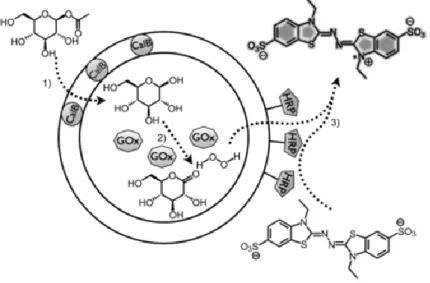
Figure 1.11 BR-ATP synthase-mediated ATP formation based on a proton gradient.[92] Reprinted with permission from ref. 92. Copyright (2005) American Chemical Society. In another example, three enzymes were combined in a one-pot process. Two enzymes were installed inside a polymersome: one in the lumen and one in the membrane. The third enzyme was first kept outside the polymersome and in later work attached to the membrane surface (Figure 1.12).[93],[94] The first enzymatic step comprised a CALB-catalyzed deacetylation of
- 26 -
glucose acetate in the membrane of the nanoreactor. Next, the deprotected alcohol was selectively oxidized by glucose oxidase (GOx) thereby producing hydrogen peroxide. This compound diffused through the membrane and was used in the oxidation of ABTS by the surface-attached horse radish peroxidase (HRP), yielding a fluorescent species. This combination of enzymes is also active in solution, but it nicely shows the possibility of compartmentalization. Hence, the same strategy would be applicable for incompatible enzymes or metal catalysts as well.
Figure 1.12 Three-enzyme-mediated cascade reaction with all enzymes attached to one polymersome.[94] © 2009 Wiley-VCH Verlag GmbH & Co. KGaA, Weinheim.
To successfully mimic the natural metabolism process in polymeric vesicles, a demand exists for multicompartmentalized vesicles.[95] Caruso and co-workers designed liposome-in-polymersome vesicles, called capsosomes, for nanocarrier purposes.[96] First, a cholesterol-based polymeric film was formed around silica nanoparticles, which gave a stable absorption of phospholipid liposomes. Next, a mixture of a cholesterol-based polymer and a different, crosslinkable polymer was assembled around the liposomes. Stable capsules were obtained after crosslinking of the outer polymer shell. Although this system was designed for transport of the liposome loading, it should also be applicable for cascade catalysis in which each catalyzed transformation is performed in a different compartment.
Nallani prepared polymersomes-in-polymersomes by the formation of the large, outer polymersome in the presence of smaller polymersomes.[97] Besides single polymersomes of both the large and the small type, polymersomes-in-polymersomes were observed. This example of a vesicle with more than one compartment was supported by an experiment with a
- 27 -
smart choice of macromolecular dyes: a red and a green fluorescent dye were encapsulated in the large and small polymersomes, respectively. Fluorescence microscopy showed either red or green emission for the single polymersomes, while the polymersome-in-polymersome system showed a yellow emission, indicating that the two dyes are in close proximity of each other and that the small polymersomes were indeed encapsulated into the larger ones. In a more recent example, Lecommandoux also prepared polymersomes-in-polymersomes.[98] The encapsulation of the smaller vesicles into the larger ones was achieved via an emulsion-centrifugation procedure, leading to a highly efficient method to prepare multicompartmentalized vesicles.
Weitz et al. prepared vesicles which can be seen as two spheres adhering together.[99] Formation of the multicompartment vesicles was performed in a well-controlled fashion (Figure 1.13). First, W/O/W double emulsions with multiple inner water droplets were prepared with glass capillary microfluidics. A di-block copolymer stabilized the interfaces between the organic solvent and water. Upon evaporation of the oil-phase, the water droplets which were initially in the oil-droplet stuck together. Importantly, the polymeric walls between the aqueous compartments remained intact, which yielded polymeric capsules with multiple compartments. These complex materials would be perfectly suited for cascade chemistry, as subsequent incompatible processes can be performed in close proximity of each other.
Figure 1.13 Multicompartment formation via a W/O/W double emulsion.[99] © 2011
Wiley-VCH Verlag GmbH & Co. KGaA, Weinheim.
In other work of the same group polymersomes were prepared with a triple polymeric membrane.[100] Each membrane consisted of the same amphiphile. The
- 28 -
multicompartmentalized vesicles were constructed following a step-by-step approach using a microfluidic device.
Very recently, polymersome-stabilized pickering emulsions were reported (Figure 1.14).[101],[102] These emulsions consist of water droplets in an oil phase, which are stabilized by colloidal particles. In one example, catalysis was performed within these multicompartmentalized vesicles.[101] To this end, Candida antarctica Lipase B (CALB) was encapsulated in either the polymersomes or the water droplets and showed enhanced yields in an unfavorable esterification reaction in water. The improved reactivity can be explained by the presence of a large hydrophobic medium and small aqueous compartments in which the lipase was active. The lipid nature of the product ensured that the molecule stayed only shortly in the aqueous vesicle.
Figure 1.14 Polymersome-stabilized pickering emulsions with CALB encapsulated in the
water droplet (A) or in the polymersomes (B).[101] © 2012 Wiley-VCH Verlag GmbH & Co. KGaA, Weinheim.
1.9 Viruses and virus like particles
Virus-like particles (VLPs) are one of the best defined capsules that have been employed as nanoreactors. Generally, the surfaces of these viral cages consist of multiple copies of only one or a few different protein subunits, which are assembled in a highly ordered fashion. Naturally, virus cages contain genetic material which is brought inside living host cells for reproduction of the virus. Release of this material occurs by disassembly of the protein cage, followed by reforming the virus particle. Scientists have demonstrated that for some virus particles this DNA or RNA could be removed and replaced by other materials like enzymes and metal nanoparticles by using a disassembly-assembly strategy that was inspired by
- 29 -
nature.[103] Since the genetic information is missing, the protein nanocontainer is referred to as a virus-like particle. Inside this nanocontainer catalysts can also be synthesized.[104] Enzyme loaded capsules are, besides application in the field of protein carriers,[105] perfectly suited for catalysis as the shell of capsules is highly permeable to substrates.[106],[107] The interest in using viral nanoreactors has increased over the past years because these compartments can be considered as artificial organelles. The content of the capsules is compartmentalized and hence protected from the environment.
1.10 Outlook
The chemical community started to work on cascade reactions because potentially higher overall efficiencies can be obtained. Time, costs and waste can be reduced by performing reactions in a subsequent manner. Therefore, the search for compatible catalysts and reagents to perform multiple steps in one-pot will continue. However, some reactions simply cannot be combined, and in such cases compartmentalization is a key technique to overcome incompatibilities. The approach to separate harmful catalysts and reagents has been changed from a macroscopic to a nanoscopic level since the start of cascade chemistry. In early examples, separation was achieved by membrane reactors, via biphasic reaction conditions and on heterogeneous supports. Today, the state-of-the-art examples of compartmentalization are mainly at the micro- and nanoscale level. Polyelectrolyte capsules, shell-in-shell vesicles, liposomes and polymersomes are recent developments in the field of compartmentalization. These materials can be considered as mimics of living cells, as they all have an inner compartment surrounded with a shell or membrane. Furthermore, (bio)catalysts can be encapsulated, which allows to conduct chemical transformations within the artificial cells. Due to the small dimensions of the compartments, the path from one catalytic site to another is short and subsequent reactions can proceed faster. Hence in the future, academic research will most likely mainly focus on nanoscale encapsulation techniques.
A better imitation of a living cell will enhance the efficiency of cascade reactions. Consequently, it is expected that the complexity of nanoreactors will increase. More steps can be incorporated in a cascade sequence if multicompartment vesicles are used, which has already been shown with shell-in-shell capsules, liposomes and polymersomes. Additionally, catalysts can be attached at different locations in or around the vesicle. Another way to obtain a closer mimic of a cell is to incorporate selection channels in the membrane. In this way,
- 30 -
desired substrates can selectively enter the compartment, while unreactive or harmful compounds will not occupy the compartment and inhibit conversion of the substrate. A next step would be to navigate substrates to the catalytic site. In previous examples of cascade reactions in microcapsules, substrates diffused in random directions and reacted more or less ‘incidentally’ near the biocatalyst. Navigation of the substrates, for example by mimicking metabolic channeling, would definitely enhance the efficiency, as the sequence of transformations will proceed faster.
Until now, the potential of homogeneous metal catalysis has been underestimated in cascade chemistry in micro- and nanocapsules. Many metal-catalyzed transformations are difficult to achieve by biocatalysts, so the usage of metal catalysts will definitely enhance the synthetic opportunities of cascade reactions. A possible explanation for the lack of homogeneous metal catalysis in micro- and nanocapsules is that the metal complex should be immobilized on a large support to prevent diffusion into another compartment. Furthermore, the metal complexes have to be active in aqueous medium, as only a small number of enzymes show activity in organic solvents. This puts severe restrictions on the metal complexes that can be applied in combination with enzymes. Clearly, more research is required to extend the use of homogeneous metal catalysis in aqueous cascade reactions inside microcompartments.
1.11 Thesis outline
This research has been carried out as part of the program ‘Catalysis Controlled by Chemical Design’ of the Dutch National Research School Combination – (NRSC-Catalysis). Our goal was to develop catalytic cascade reactions in an aqueous medium, possibly facilitated by compartmentalization. Reactions in water were selected since that would allow combinations of transition metal complexes with enzymatic reactions in cascade processes.
Chapter one introduces numerous examples of compartmentalization strategies that have been developed over the years. In chapter two, bipyridine and N-heterocyclic carbene (NHC) ligands, widely applied in catalysis, were functionalized for immobilization purposes and to allow the introduction of water-soluble groups. In chapter three, the modified bipyridine ligand was attached to a dendrimer and a metal was coordinated. Due to its expanded size, the resulting macrocatalyst stayed in a dialysis bag during a catalytic reductive amination in water, showing the concept of aqueous compartmentalized catalysis. In chapter four, our
- 31 -
efforts to encapsulate a homogeneous metal catalyst inside a polymersome nanoreactor are reported. Approaches involving immobilization on dendritic molecules and on proteins were pursued. In chapter five, two catalytic steps, an enzyme-mediated oxidation and a metal complex-catalyzed reduction, were combined in one-pot. It is described how a small molecule, potassium formate, can act as a switch to stop one process and start the other one. The final chapter six describes a laccase/TEMPO-mediated oxidation combined with a Michael addition catalyzed by a copper complex, which was immobilized on a DNA template. The effect of the presence of the template on compatibility and stereochemistry of the cascade reaction was investigated.
1.12 References
[1] S. Hurtley, Science, 2009, 326, 1205–1205.
[2] A. H. Chen, P. A. Silver, Trends Cell Biol., 2012, 22, 662–670.
[3] A. R. Fernie, F. Carrari, L. J. Sweetlove, Curr. Opin. Plant Biol., 2004, 7, 254–261. [4] C. A. Raines, Photosynth. Res., 2003, 75, 1–10.
[5] P. J. Randle, Diabetes/Metab. Rev., 1998, 14, 263–283.
[6] N. Smirnoff, P. L. Conklin, F. A. Loewus, Annu. Rev. Plant Physiol. Plant Mol. Biol.,
2001, 52, 437–467.
[7] R. Croteau, R. E. B. Croteau, R. M. Long, R. Kaspera, M. R. Wildung, Phytochem. Rev., 2006, 5, 75–97.
[8] B. S. J. Winkel, Annu. Rev. Plant Biol., 2004, 55, 85–107.
[9] W. F. Visser, C. W. T. van Roermund, L. IJlst, H. R. Waterham, R. J. A. Wanders,
Biochem. J., 2007, 401, 365–375.
[10] G. J. Lye, J. M. Woodley, Trends Biotechnol., 1999, 17, 395–402.
[11] A. Bruggink, R. Schoevaart, T. Kieboom, Org. Process Res. Dev., 2003, 7, 622–640. [12] O. Pàmies, J. E. Bäckvall, Chem. Rev., 2003, 103, 3247–3261.
[13] J. Zhou, Chem. Asian J., 2010, 5, 422–434.
[14] E. Ricca, B. Brucher, J. H. Schrittwieser, Adv. Synth. Catal., 2011, 353, 2239–2262. [15] R. A. Sheldon, Chem. Soc. Rev., 2012, 41, 1437–1451.
[16] R. Noyori, Nat. Chem., 2009, 1, 5–6.
[17] N. Elders, D. van der Born, L. J. D. Hendrickx, B. J. J. Timmer, A. Krause, E. Janssen, F. J. J. de Kanter, E. Ruijter, R. V. A. Orru, Angew. Chem. Int. Ed., 2009, 48, 5856– 5859.
[18] A. I. Scott, Synlett, 1994, 871–883.
[19] J. H. Schrittwieser, J. Sattler, V. Resch, F. G. Mutti, W. Kroutil, Curr. Opin. Chem.
Biol., 2011, 15, 249–256.
[20] A. Caiazzo, P. M. L. Garcia, R. Wever, J. C. M. van Hest, A. E. Rowan, J. N. H. Reek,
Org. Biomol. Chem., 2009, 7, 2926–2932.
[21] E. Burda, W. Hummel, H. Gröger, Angew. Chem. Int. Ed., 2008, 47, 9551–9554. [22] F. G. Mutti, A. Orthaber, J. H. Schrittwieser, J. G. de Vries, R. Pietschnig, W. Kroutil,
Chem. Commun., 2010, 46, 8046–8048.
- 32 -
[24] D. E. Bergbreiter, S. D. Sung, Adv. Synth. Catal., 2006, 348, 1352–1366. [25] I. T. Horváth, J. Rábai, Science, 1994, 266, 72–75.
[26] H. Olivier-Bourbigou, L. Magna, D. Morvan, Appl. Catal., A, 2010, 373, 1–56.
[27] S. K. Karmee, C. Roosen, C. Kohlmann, S. Lütz, L. Greiner, W. Leitner, Green
Chem., 2009, 11, 1052–1055.
[28] F. Jutz, J. M. Andanson, A. Baiker, Chem. Rev., 2011, 111, 322–353. [29] R. Grigg, M. York, Tetrahedron Lett., 2000, 41, 7255–7258.
[30] P. Lozano, Green Chem., 2010, 12, 555–569.
[31] A. B. Theberge, F. Courtois, Y. Schaerli, M. Fischlechner, C. Abell, F. Hollfelder, W. T. S. Huck, Angew. Chem. Int. Ed., 2010, 49, 5846–5868.
[32] L. Cai, N. Friedman, X. S. Xie, Nature, 2006, 440, 358–362.
[33] A. Huebner, L. F. Olguin, D. Bratton, G. Whyte, W. T. S. Huck, A. J. de Mello, J. B. Edel, C. Abell, F. Hollfelder, Anal. Chem., 2008, 80, 3890–3896.
[34] J. J. Agresti, E. Antipov, A. R. Abate, K. Ahn, A. C. Rowat, J. C. Baret, M. Marquez, A. M. Klibanov, A. D. Griffiths, D. A. Weitz, Proc. Natl. Acad. Sci. U. S. A., 2010,
107, 4004–4009.
[35] H. P. Dijkstra, G. P. M. Van Klink, G. Van Koten, Acc. Chem. Res., 2002, 35, 798– 810.
[36] M. Janssen, C. Müller, D. Vogt, Green Chem., 2011, 13, 2247–2257.
[37] R. Wichmann, C. Wandrey, A. F. Bückmann, M. R. Kula, Biotechnol. Bioeng., 1981,
23, 2789–2802.
[38] L. Cantarella, A. Gallifuoco, A. Malandra, L. Martínková, A. Spera, M. Cantarella,
Enzyme Microb. Technol., 2011, 48, 345–350.
[39] I. R. Baxendale, S. V. Ley, A. C. Mansfield, C. D. Smith, Angew. Chem. Int. Ed.,
2009, 48, 4017–4021.
[40] J. Y. Xin, S. B. Li, Y. Xu, J. R. Chui, C. G. Xia, J. Chem. Technol. Biotechnol., 2001,
76, 579–585.
[41] M. D. Bednarski, H. K. Chenault, E. S. Simon, G. M. Whitesides, J. Am. Chem. Soc. 1987, 109, 1283–1285.
[42] M. Gaab, S. Bellemin-Laponnaz, L. H. Gade, Chem.Eur. J., 2009, 15, 5450–5462. [43] N. J. M. Pijnenburg, H. P. Dijkstra, G. van Koten, R. J. M. Klein-Gebbink, Dalton
Trans., 2011, 40, 8896–8905.
[44] B. J. Cohen, M. A. Kraus, A. Patchornik, J. Am. Chem. Soc., 1981, 103, 7620–7629. [45] N. T. S. Phan, C. S. Gill, J. V. Nguyen, Z. J. Zhang, C. W. Jones, Angew. Chem. Int.
Ed., 2006, 45, 2209–2212.
[46] S. Shylesh, A. Wagener, A. Seifert, S. Ernst, W. R. Thiel, Angew. Chem. Int. Ed. 2010, 49, 184–187.
[47] S. L. Poe, M. Kobašlija, D. T. McQuade, J. Am. Chem. Soc., 2006, 128, 15586–15587. [48] S. L. Poe, M. Kobašlija, D. T. McQuade, J. Am. Chem. Soc.,2007, 129, 9216–9221. [49] B. Helms, S. J. Guillaudeu, Y. Xie, M. McMurdo, C. J. Hawker, J. M. J. Fréchet,
Angew. Chem. Int. Ed., 2005, 44, 6384–6387.
[50] R. K. O'Reilly, C. J. Hawker, K. L. Wooley, Chem. Soc. Rev., 2006, 35, 1068–1083. [51] P. Persigehl, R. Jordan, O. Nuyken, Macromolecules, 2000, 33, 6977–6981.
[52] S. Kobayashi, T. Wakabayashi, S. Nagayama, H. Oyamada, Tetrahedron Lett., 1997,
38, 4559–4562.
[53] H. Chen, Y. Z. Li, J. R. Chen, P. M. Cheng, Y. E. He, H. J. Li, J. Mol. Catal. A: Chem, 1999, 149, 1–6.
[54] S. R. K. Minkler, B. H. Lipshutz, N. Krause, Angew. Chem. Int. Ed., 2011, 50, 7820– 7823.
- 33 -
[56] B. H. Lipshutz, D. W. Chung, B. Rich, Org. Lett., 2008, 10, 3793–3796. [57] L. L. Hench, J. K. West, Chem. Rev., 1990, 90, 33–72.
[58] M. T. Reetz, Adv. Mater., 1997, 9, 943–954.
[59] Z. L. Lu, E. Lindner, H. A. Mayer, Chem. Rev., 2002, 102, 3543–3577. [60] F. Gelman, J. Blum, D. Avnir, J. Am. Chem. Soc., 2000, 122, 11999–12000. [61] F. Gelman, J. Blum, D. Avnir, Angew. Chem. Int. Ed., 2001, 40, 3647–3649. [62] F. Gelman, J. Blum, D. Avnir, J. Am. Chem. Soc., 2002, 124, 14460–14463.
[63] F. Gelman, J. Blum, H. Schumann, D. Avnir, J. Sol-Gel Sci. Technol., 2003, 26, 43– 46.
[64] F. Gelman, J. Blum, D. Avnir, New J. Chem., 2003, 27, 205–207.
[65] W. J. Tong, X. X. Song, C. Y. Gao, Chem. Soc. Rev., 2012, 41, 6103–6124. [66] A. A. Antipov, G. B. Sukhorukov, Adv. Colloid Interface Sci., 2004, 111, 49–61. [67] H. Möhwald, Colloid Surf., A, 2000, 171, 25–31.
[68] C. S. Peyratout, L. Dähne, Angew. Chem. Int. Ed., 2004, 43, 3762–3783.
[69] M. Goldberg, R. Langer, X. Q. Jia, J. Biomater. Sci. Polym. Ed., 2007, 18, 241–268. [70] O. P. Tiourina, A. A. Antipov, G. B. Sukhorukov, N. L. Larionova, Y. Lvov, H.
Möhwald, Macromol. Biosci., 2001, 1, 209–214.
[71] Y. Lvov, A. A. Antipov, A. Mamedov, H. Möhwald, G. B. Sukhorukov, Nano Lett.,
2001, 1, 125–128.
[72] A. F. Fois, A. Yap, A. F. Masters, T. Maschmeyer, Top. Catal., 2008, 48, 153–157. [73] O. Kreft, M. Prevot, H. Möhwald, G. B. Sukhorukov, Angew. Chem. Int. Ed., 2007,
46, 5605–5608.
[74] . B umler, . eorgieva, Biomacromolecules, 2010, 11, 1480–1487. [75] J. Lee, J. C. Park, H. Song, Adv. Mater., 2008, 20, 1523–1528.
[76] Y. Yang, X. Liu, X. Li, J. Zhao, S. Bai, J. Liu, Q. Yang, Angew. Chem. Int. Ed., 2012,
51, 9164–9168.
[77] P. Luisi, F. Ferri, P. Stano, Naturwissenschaften, 2006, 93, 1–13. [78] P. Walde, S. Ichikawa, Biomol. Eng., 2001, 18, 143–177.
[79] G. Fricker, T. Kromp, A. Wendel, A. Blume, J. Zirkel, H. Rebmann, C. Setzer, R. O. Quinkert, F. Martin, C. Müller-Goymann, Pharm. Res.,2010, 27, 1469–1486.
[80] G. Steinberg-Yfrach, J. L. Rigaud, E. N. Durantini, A. L. Moore, D. Gust, T. A. Moore, Nature, 1998, 392, 479–482.
[81] P. Stano, P. Carrara, Y. Kuruma, T. P. de Souza, P. L. Luisi, J. Mater. Chem., 2011,
21, 18887–18902.
[82] K. Ishikawa, K. Sato, Y. Shima, I. Urabe, T. Yomo, FEBS Lett., 2004, 576, 387–390. [83] V. Noireaux, A. Libchaber, Proc. Natl. Acad. Sci. U. S. A., 2004, 101, 17669–17674. [84] B. Wong, C. Boyer, C. Steinbeck, D. Peters, J. Schmidt, R. van Zanten, B. Chmelka, J.
A. Zasadzinski, Adv. Mater., 2011, 23, 2320–2325.
[85] B. M. Discher, Y. Y. Won, D. S. Ege, J. C. M. Lee, F. S. Bates, D. E. Discher, D. A. Hammer, Science, 1999, 284, 1143–1146.
[86] D. E. Discher, A. Eisenberg, Science, 2002, 297, 967–973.
[87] J. Le Meins, O. Sandre, S. Lecommandoux, Eur. Phys. J. E., 2011, 34, 1–17.
[88] M. Sauer, T. Haefele, A. Graff, C. Nardin, W. Meier, Chem. Commun., 2001, 2452– 2453.
[89] A. Ranquin, W. Versées, W. Meier, J. Steyaert, P. Van Gelder, Nano Lett., 2005, 5, 2220–2224.
[90] K. T. Kim, J. J. L. M. Cornelissen, R. J. M. Nolte, J. C. M. van Hest, Adv. Mater.,
2009, 21, 2787–2791.
[91] R. P. Brinkhuis, F. P. J. T. Rutjes, J. C. M. van Hest, Polym. Chem., 2011, 2, 1449– 1462.
- 34 -
[92] H. J. Choi, C. D. Montemagno, Nano Lett., 2005, 5, 2538–2542.
[93] D. M. Vriezema, P. M. L. Garcia, N. S. Oltra, N. S. Hatzakis, S. M. Kuiper, R. J. M. Nolte, A. E. Rowan, J. C. M. van Hest, Angew. Chem. Int. Ed., 2007, 46, 7378–7382. [94] S. F. M. van Dongen, M. Nallani, J. J. L. M. Cornelissen, R. J. M. Nolte, J. C. M. van
Hest, Chem. Eur. J., 2009, 15, 1107–1114.
[95] M. Marguet, C. Bonduelle, S. Lecommandoux, Chem. Soc. Rev., 2013, 42, 512–529. [96] B. Städler, R. Chandrawati, A. D. Price, S. Chong, K. Breheney, A. Postma, L. A.
Connal, A. N. Zelikin, F. Caruso, Angew. Chem. Int. Ed., 2009, 48, 4359–4362.
[97] Z. K. Fu, M. A. Ochsner, H. P. M. de Hoog, N. Tomczak, M. Nallani, Chem.
Commun., 2011, 47, 2862–2864.
[98] M. Marguet, L. Edembe, S. Lecommandoux, Angew. Chem. Int. Ed., 2012, 51, 1173– 1176.
[99] H. C. Shum, Y. J. Zhao, S. H. Kim, D. A. Weitz, Angew. Chem. Int. Ed., 2011, 50, 1648–1651.
[100] S. Kim, H. C. Shum, J. W. Kim, J. Cho, D. A. Weitz, J. Am. Chem. Soc., 2011, 133, 15165–15171.
[101] Z. P. Wang, M. C. M. van Oers, F. P. J. T. Rutjes, J. C. M. van Hest, Angew. Chem.
Int. Ed., 2012, 51, 10746–10750.
[102] K. L. Thompson, P. Chambon, R. Verber, S. P. Armes, J. Am. Chem. Soc., 2012, 134, 12450–12453.
[103] I. J. Minten, V. I. Claessen, K. Blank, A. E. Rowan, R. J. M. Nolte, J. J. L. M. Cornelissen, Chem. Sci., 2011, 2, 358–362.
[104] T. Douglas, M. Young, Nature, 1998, 393, 152-155.
[105] D. Cardinale, N. Carette, T. Michon, Trends Biotechnol., 2012, 30, 369–376.
[106] M. Comellas-Aragonès, H. Engelkamp, V. I. Claessen, N. A. J. M. Sommerdijk, A. E. Rowan, P. C. M. Christianen, J. C. Maan, B. J. M. Verduin, J. J. L. M. Cornelissen, R. J. M. Nolte, Nat. Nanotechnol., 2007, 2, 635–639.
[107] S. A. Bode, I. J. Minten, R. J. M. Nolte, J. J. L. M. Cornelissen, Nanoscale, 2011, 3, 2376–2389.
- 35 -
2. Ligand synthesis for water-soluble metal
catalysts
Abstract
In the past decades, the interest in green chemistry has significantly grown in order to reduce the environmental impact of chemical processes. The use of green solvents such as water for the execution of traditional reactions is in this respect one of the central focus points. Another important issue is the recovery of toxic metal catalysts from reaction mixtures. This is generally achieved by immobilization on a support which facilitates separation of the catalyst after the reaction by filtration. In order to be able to conduct metal-catalyzed cascade reactions in water, we have enhanced the water solubility of metal catalysts by installing polar functional handles on N-heterocyclic carbene (NHC) and bipyridine ligands, which at the same time could be used for immobilization purposes.
2.1 Introduction
Green chemistry can be described as the performance of chemical processes in such a way
that the impact on the environment is reduced. Given the societal pressure to decrease the environmental burden by chemical manufacturing and to develop sustainable chemical processes, green chemistry approaches attract much attention of the global community.[1],[2] The chemical industry has put a lot of effort in the past decades to implement green chemistry in their production processes. For example, hazardous chemicals are increasingly replaced by other, non-toxic reagents. Furthermore, the formation of environmentally unfriendly byproducts must be prevented as much as possible, while the desired transformations must proceed in high yield. To this end, many processes utilizing stoichiometric amounts of reagents are developed into catalytic ones, which also leads to a reduction of costs since catalysts lower the activation energy of reactions, allowing them to be performed at lower temperatures. Importantly, the recovery of (heterogeneous) catalysts is also widely applied in industry to reduce costs and the impact of the metals involved on the environment. Another
- 36 -
aspect concerning green chemistry is to use environmentally benign solvents. The total impact on the environment varies from solvent to solvent,[3] but evidently an excellent green chemistry candidate is water. Therefore, currently established organic transformations are adjusted to be carried out in aqueous or water-compatible media.[4] Heterogeneous metal catalysts have generally a high stability towards water and are readily recovered by filtration. However, there are numerous reactions in which homogeneous catalysts outperform their heterogeneous counterparts. This is often due to the fact that the relatively stable heterogeneous catalysts are difficult to modify, while well-defined homogeneous catalysts are more easily optimized to a higher level of selectivity and reactivity. The outcome of homogeneous metal-based catalyzed reactions can be adjusted by modifying the coordinating ligands of the
![Figure 1.3 Different types of continuous membrane reactors. [35] Reprinted with permission from ref 35](https://thumb-us.123doks.com/thumbv2/123dok_us/440105.2550880/13.892.122.784.364.530/figure-different-types-continuous-membrane-reactors-reprinted-permission.webp)
![Figure 1.4 Dynamic kinetic resolution of Naproxen (21) in a membrane reactor. [40]](https://thumb-us.123doks.com/thumbv2/123dok_us/440105.2550880/15.892.181.716.371.713/figure-dynamic-kinetic-resolution-naproxen-membrane-reactor.webp)
![Figure 1.5 Acid- and base-containing star polymers without interaction abilities. [49] © 2005 Wiley-VCH Verlag GmbH & Co](https://thumb-us.123doks.com/thumbv2/123dok_us/440105.2550880/18.892.262.629.100.395/figure-acid-containing-polymers-interaction-abilities-wiley-verlag.webp)
![Figure 1.6 Polyelectrolyte capsule formation. [68] © 2004 Wiley-VCH Verlag GmbH & Co](https://thumb-us.123doks.com/thumbv2/123dok_us/440105.2550880/20.892.256.634.787.1049/figure-polyelectrolyte-capsule-formation-wiley-vch-verlag-gmbh.webp)
![Figure 1.7 Formation of shell-in-shell microcapsules by Möhwald et al. [73] © 2007 Wiley- Wiley-VCH Verlag GmbH & Co](https://thumb-us.123doks.com/thumbv2/123dok_us/440105.2550880/22.892.117.774.187.480/figure-formation-shell-microcapsules-möhwald-wiley-wiley-verlag.webp)
![Figure 1.9 Compartmentalized cascade reaction in a yolk-shell nanoreactor. [76] © 2012 Wiley-VCH Verlag GmbH & Co](https://thumb-us.123doks.com/thumbv2/123dok_us/440105.2550880/23.892.243.650.441.667/figure-compartmentalized-cascade-reaction-shell-nanoreactor-wiley-verlag.webp)

![Figure 1.11 BR-ATP synthase-mediated ATP formation based on a proton gradient. [92]](https://thumb-us.123doks.com/thumbv2/123dok_us/440105.2550880/26.892.259.638.541.920/figure-atp-synthase-mediated-formation-based-proton-gradient.webp)