CO-CREATION ONLINE: THE POTENTIAL OF WEB 2.0 TOOLS TO ENABLE IT AND IMPACT USAGE
Gareth Rees
29751293
A research project submitted to the Gordon Institute of Business Science, University of Pretoria, in partial fulfilment of the requirements for the degree of Master of Business
Administration.
Abstract
There is little in the existing literature that provides practical information on the link between creation and the internet as well as guidance on how to facilitate co-creation in the online environment. This study sought to address these gaps and particularly the lack of guidance on the practical act of co-creation and the relationship between co-creation and the online environment.
A quantitative research methodology with a descriptive design was followed. The data for the study was collected by way of an internet survey. The population for the research was defined as the users of the online cycling social network, www.thehubsa.co.za. A topic explaining the purpose of the study and inviting users to participate was posted on the website.
The study revealed the existence of a new two factor solution related to the separate co-creation and Web 2.0 applications constructs. In this respect the Interact and Use components (co-creation) as well as the Creating and Sharing components (Web 2.0 applications) could provide the foundation for construct validity for more comprehensive scales.
The ability of a user to Author content on a website was found to be of particular practical importance in facilitating co-creation. Providing this functionality to a customer may be the key to the missing “how to” element of online co-creation. The ability of a social networking website, such as www.thehubsa.co.za, to encourage general product/service usage appears to be the main attraction to advertisers. Advertisers looking to build their brands may not necessarily obtain the same benefits from the website. Findings regarding impact on usage were inconclusive and further research is suggested.
Keywords
Declaration
I declare that this research project is my own work. It is submitted in partial fulfilment of the requirements for the degree of Master of Business Administration at the Gordon Institute of Business Science, University of Pretoria. It has not been submitted before for any degree or examination in any other University. I further declare that I have obtained the necessary authorisation and consent to carry out this research.
The name and the original signature of the student and the date should follow the declaration.
__________________________ Gareth Rees
Acknowledgements
To my supervisor – Kerry Chipp: Kerry, thank-you for all your coaching and coaxing! I eventually made it to the stadium. Thanks.
To my family – Kate and Grace Rees: Thank-you for all the love and support. Thanks too for your patience while I completed this journey. It would not have been possible without you.
Table of Contents
Chapter 1 – Introduction ... 1
1.1. Research problem and objectives ... 2
1.2. Research scope ... 3
1.3. Research motivation ... 4
Chapter 2 – Literature review ... 6
2.1. The online environment and the concept of flow ... 7
2.2. Offline consumer behaviour ... 8
2.2.1. Rational choice and the information processing model of consumer behaviour ... 8
2.2.2. The experiential aspects of consumption ... 9
2.3. Service-dominant marketing... 12
2.3.1. The marketing evolution towards co-creation ... 13
2.4. Enacting co-creation ... 15
2.4.1. The role of the customer in co-creation ... 16
2.4.2. Customer trust in the co-creation process ... 17
2.4.3. The role of the supplier in co-creation ... 18
2.5. Online consumer behaviour and co-creation ... 19
2.5.1. Co-creation in online communities ... 19
Chapter 3 - Propositions ... 25
Chapter 4 – Research methodology ... 26
4.1. Research design ... 26
4.2. Unit of analysis ... 27
4.3. Population ... 27
4.4. Sampling method and size ... 27
4.5. Data gathering ... 29 4.6. Measurement instrument ... 31 4.7. Data analysis ... 34 4.8. Research limitations ... 35 Chapter 5 – Results... 37 5.1. Descriptive statistics ... 37 5.1.1. Responses ... 37 5.1.2. Demographics ... 37
5.1.3. Descriptive statistics for each scale ... 43
5.1.4. Transformations to achieve normality ... 53
5.2. Internal consistency of scales ... 53
5.2.1. Exploratory factor analysis ... 60
5.3. Testing of research propositions ... 68
Chapter 6 – Discussion of results ... 83
6.1. Introduction ... 83
6.2. Addressing the research propositions ... 83
6.2.1. Proposition 1: Co-creation is present on the online cycling forum, www.thehubsa.co.za ... 83
6.2.2. Proposition 2: Different Web 2.0 applications available on www.thehubsa.co.za determine/correlate with the individual members‟ ability to co-create ... 89
6.2.3. Proposition 3: Increased perceived co-creation on the site results in an increase in time spent on the site ... 94
6.2.4. Proposition 4a: The ability to co-create fosters product/service usage ... 96
6.2.5. Proposition 4b: The ability to co-create fosters brand usage ... 98
Chapter 7 – Conclusion and recommendations ... 102
7.1. Academic contributions ... 102
7.2. Limitations of the research and suggestions for future research ... 103
7.3. Managerial implications ... 107
References ... 108
Appendices ... 113
APPENDIX A: BLANK QUESTIONNAIRE ... 113
APPENDIX B: NORMALITY DESCRIPTIVES AND EXTREME VALUES FOR DART SCALE ... 121
APPENDIX C: NORMALITY DESCRIPTIVES AND EXTREME VALUES FOR SLATES SCALE ... 122 APPENDIX D: BOXPLOTS FOR DART AND SLATES SCALE ... 123 APPENDIX E: RESULTS OF TRANSFORMATIONS TO ACHIEVE NORMALITY FOR DART AND SLATES SCALES ... 124
LIST OF TABLES
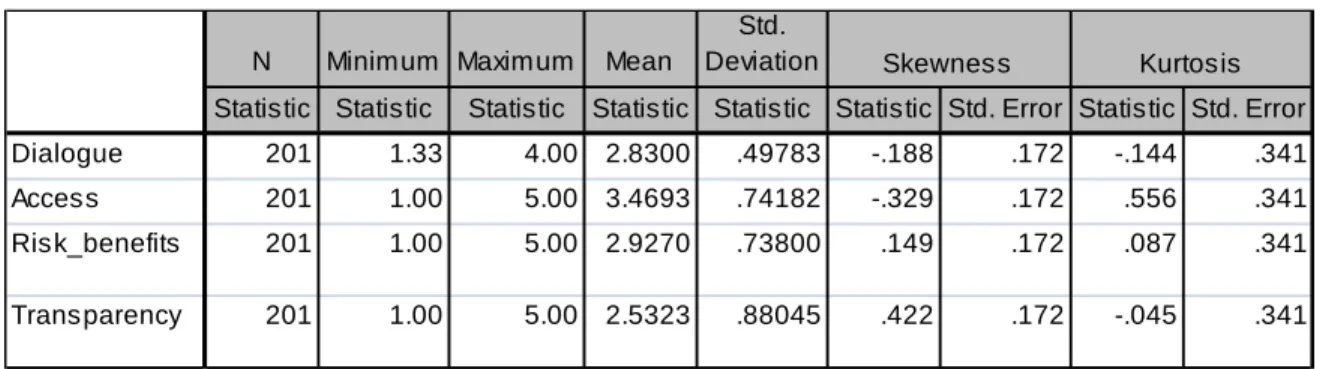
TABLE 5.1: DESCRIPTIVE STATISTICS PER DART SCALE DIMENSION ... 43
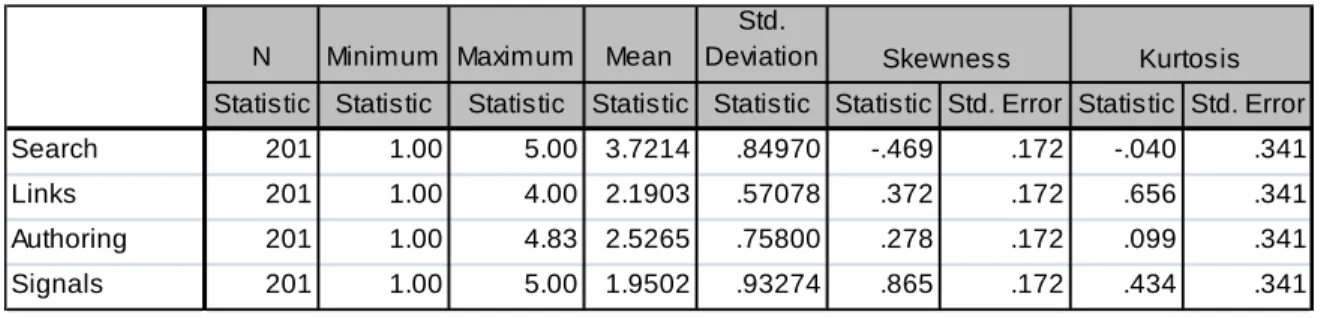
TABLE 5.2: DESCRIPTIVE STATISTICS PER SLATES SCALE DIMENSION ... 48
TABLE 5.3: DIALOGUE RELIABILITY AND ITEM-TOTAL STATISTICS ... 54
TABLE 5.4: ACCESS RELIABILITY AND SUMMARY ITEM STATISTICS ... 56
TABLE 5.5: RISK-BENEFITS RELIABILITY AND SUMMARY ITEM STATISTICS ... 57
TABLE 5.6: TRANSPARENCY RELIABILITY AND SUMMARY ITEM STATISTICS ... 57
TABLE 5.7: LINKS RELIABILITY AND SUMMARY ITEM STATISTICS ... 58
TABLE 5.8: AUTHORING RELIABILITY AND ITEM-TOTAL STATISTICS ... 59
TABLE 5.9: AUTHORING RELIABILITY AND SUMMARY ITEM STATISTICS ... 60
TABLE 5.10: DART KMO AND BARTLETT’S TEST ... 61
TABLE 5.11: DART VARIMAX ROTATED COMPONENT MATRIX AND COMPONENT TRANSFORMATION MATRIX ... 63
TABLE 5.12: SLATES KMO AND BARTLETT’S TEST ... 65
TABLE 5.13: SLATES VARIMAX ROTATED COMPONENT MATRIX AND COMPONENT TRANSFORMATION MATRIX .... 67
TABLE 5.14: RESULTS OF ONE-SAMPLE TEST ... 70
TABLE 5.15: PEARSON CORRELATION RESULTS ... 72
TABLE 5.16: MULTIPLE REGRESSION CORRELATION RESULTS ... 73
TABLE 5.17: MULTIPLE REGRESSION MODEL SUMMARY ... 77
TABLE 5.18: REGRESSION ANOVA TEST RESULTS ... 77
TABLE 5.19: REGRESSION COEFFICIENTS ... 77
TABLE 5.20: PROPOSITION 4A OMNIBUS TESTS OF MODEL COEFFICIENTS ... 79
TABLE 5.21: PROPOSITION 4A VARIABLES IN THE EQUATION ... 80
TABLE 5.22: PROPOSITION 4B OMNIBUS TESTS OF MODEL COEFFICIENTS ... 80
LIST OF FIGURES
FIGURE 2.1: STRUCTURE FOR THE LITERATURE REVIEW ... 6
FIGURE 5.1: PERCENTAGE OF RESPONDENTS BY TOTAL YEARS RIDING A BIKE ... 38
FIGURE 5.2: PERCENTAGE OF RESPONDENTS BY RACES PARTICIPATED IN EACH YEAR ... 39
FIGURE 5.3: TYPE OF BIKE RIDING ... 41
FIGURE 5.4: TOTAL HOURS PER WEEK SPENT ON THE WEBSITE ... 42
FIGURE 5.5: HISTOGRAMS AND NORMAL PROBABILITY PLOTS FOR DART CO-CREATION SCALES ... 46
FIGURE 5.6: HISTOGRAMS AND NORMAL PROBABILITY PLOTS FOR SLATES CO-CREATION SCALES... 51
FIGURE 5.7: DART SCREE PLOT ... 62
FIGURE 5.8: SLATES SCREE PLOT ... 66
FIGURE 5.9: NORMAL PROBABILITY PLOT OF REGRESSION STANDARDISED RESIDUAL ... 75
Chapter 1 – Introduction
The increasing importance of providing customers with an experience, as opposed to just a product or service, has led to the development of what Pine and Gilmore (1998) called the experience economy. In the new experience economy the onus has shifted to the creation of value by staging experiences that involve customers. An organisation‟s ability to involve customers in the value creation process, and in so doing allow them to co-create the product or service, has become the new source of competitive advantage (Prahalad and Ramaswamy, 2004).
The explosive growth of the internet, as well as the radical changes that it presents to the traditional marketing approaches, is set to transform the way in which customers are encourage to co-create. Novak, Hoffman and Yung (2000) confirmed how the interactive capabilities of the internet have transformed the concept of the customer experience and created an environment in which the online customer experience is paramount. The internet is ideally suited to co-creation by virtue of its multimedia capabilities, the applications it enables as well as its suitability to the creation of online communities.
Against the backdrop of the emerging importance of both the concept of co-creation as well as the internet‟s ability to facilitate the co-creation process, there is little in the existing literature that provides practical information on the link between co-creation and the internet as well as guidance on how to co-create. Prahalad and Ramaswamy (2004) developed a theoretical model of the building blocks necessary to facilitate a
co-creation environment, however, additional practical guidance on the topic of co-co-creation does not appear in a review of the literature.
This study sought to address the gaps noted above and particularly the lack of guidance on the practical act of co-creation and the relationship between co-creation and the online environment.
1.1. Research problem and objectives
The purpose of the study was to address the practical considerations related to establishing an online environment for co-creation. This involved both understanding what constitutes online co-creation as well as what Web 2.0 tools are necessary in order for co-creation to take place. The marketing benefits of online co-creation were also considered as part of the study.
The main objectives of the research were as follows: To create a practical definition for co-creation
To determine which Web 2.0 tools have the biggest influence on co-creation To establish the relationship between co-creation and product/service usage To establish the relationship between co-creation and brand usage.
The research problem was concerned with providing an answer to the “how to” element of co-creation that appeared to be lacking in the existing literature. The link to the research objectives is established through the stated purpose of arriving at a practical definition for co-creation that involved determining which Web 2.0 tools have the biggest
influence on co-creation as well as the commercial consequences of a co-creation strategy.
1.2. Research scope
The concept of co-creation
Prahalad and Ramaswamy (2004) defined co-creation as the interaction between the firm and the consumer that results in value creation. The nature of the actual interaction is not specified and may take different forms depending on the type of co-creation relationship. The co-creation that was studied as part of this paper was facilitated by means of a website (www.thehubsa.co.za) that provides certain tools to members and guests that allow them the opportunity to contribute content. In this respect, co-creation for the purpose of this study involved the online sharing of information and content as opposed to the customised development of a product or service.
Online environment
The online environment that formed the basis of this study was a website hosted in South Africa and mainly used by South African cyclists. The Web 2.0 tools and website functionality was therefore limited to that generally available in South Africa. In addition the website content was specific to a community of cyclists and the information that they are likely to share. This shared information included reports and reviews, comments, photos, and links.
Cycling community
The scope of the study was limited to co-creation within an online community of cyclists. In this respect the focus was on a specific form of co-creation and may not be appropriate for a consideration of other co-creation environments.
1.3. Research motivation
Enacting co-creation
The literature reviewed revealed very little practical guidance on how to actually implement a co-creation strategy. Reports on the topic are predominantly focussed on the importance of co-creation (Prahalad and Ramaswamy, 2000); the need to create a customer experience (Pine and Gilmore, 1998); and the process of co-creation (Payne, Storbacka and Frow, 2008). The work of Prahalad and Ramaswamy (2004) came closest to providing practical advice through the development of building blocks of interactions between the firm and customers that are necessary for the process of co-creation.
The opportunity therefore arose to make use of the theoretical knowledge that existed on the topic of co-creation and use this to build practical insights. The current study was performed on a website that provides a social network for cyclists to interact and share information based on the view that co-creation was currently taking place in this environment. This allowed for a consideration of the activities that constituted co-creation as well as the Web 2.0 tools that facilitated the process.
The impact of co-creation on usage
The findings of Okleshen and Grossbart (1998) confirmed that consumers that are active participants in online groups feel a stronger sense of membership and were more likely to place increased value on group information and act on this information. Their work established the indirect link between online membership perception and consumer behavioural changes (Okleshen and Grossbart, 1998). Research by Jae, Choi, Qualls and Han (2008) examined the impact of online communities on brand commitment and subsequent customer behaviour. The findings suggested that online community commitment had a direct influence on brand commitment and that customers that are members of online communities have a stronger brand commitment than those that are not (Jae et al, 2008). Further research by Lesser and Fontaine (2002) reaffirmed the fact that online communities allow companies to learn more about their customers as well as attract repeat visits to their websites.
There appeared to be a substantial body of work on the formation and benefits of establishing online communities. The resulting benefits related to the positive impact on website usage as well as product/service and brand usage. The impact of a co-creation process and the links to the establishment of an online community were not covered by the existing research. This gap in the research motivated the current study and specifically the objectives related to a better understanding of the relationship between co-creation and usage (measured by website usage, product/service usage and brand usage).
Chapter 2 – Literature review
The following framework provides a structure for the literature that has been reviewed in this chapter.
Figure 2.1: Structure for the literature review
Online environment
and flow
•A change in traditional marketing practice
•Many-to-many and personalised communication made possible •The positive impact of flow on consumer behaviour
Offline consumer behaviour
•Information processing model of consumer behaviour •Experiential view and consumer emotions
•Customer experience
Service dominant marketing
•Co-creation of value with customers
•Understanding and establishing relationships with customers •Customer-centric marketing
•The link between customer-centric marketing and co-creation
Co-creation
•Conceptual approach and building blocks for co-creation process •Co-creation processes
•Requirements for customer participation •Customer trust and implications for the internet
•Role of the supplier in creating experiential interactions
Online consumer behaviour and co-creation
•Interactive capabilities of the internet and customer experience •Co-creation in online communities
2.1. The online environment and the concept of flow
Hoffman and Novak (1996) realised the importance of the internet at an early stage and specifically the implications that it would have on the traditional marketing approach. The initial work of Hoffman and Novak (1996) on the concept of flow in hypermedia computer-mediated environments (CMEs) was in recognition of the fact that traditional marketing practice was no longer appropriate in environments such as the World Wide Web. Traditional marketing media is characterized by a passive one-to-many communication model whereas the World Wide Web provides the ability to communicate on an interactive many-to-many basis as well as on a personalized basis. The Hoffman and Novak (1996) paper described flow as an enjoyable and desirable state that consumers seek to achieve. A conceptual model of flow was developed and determined the variables that cause a consumer to enter into a flow state while interacting on the internet. The primary antecedents of flow were found to be skills and challenges which need to be matched and above a particular threshold level as well as the presence of focused attention (Hoffman and Novak, 1996). The two secondary antecedents that were considered to enhance, but not induce flow, were interactivity and telepresence (Hoffman and Novak, 1996). By understanding the variables that resulted in the flow state being achieved, marketers gained an insight into how to induce flow and thereby increase consumption.
The structural model of Novak, Hoffman and Yung (2000) built on the earlier conceptual model and allows for the extent of the appeal of an online experience to be defined and measured as well as related to important marketing variables. One of the key findings in relation to consumer behaviour and web usage was that flow and closely related
constructs was greater for respondents who use the Web for experiential uses such as online chat and entertainment compared to task orientated uses like work and performing searches (Novak et al, 2000).
A later paper by Novak, Hoffman and Duhachek (2003) considered whether flow occurs during both experiential and goal directed activities. In contradiction to their early work, they found more evidence for flow occurring in relation to goal oriented than experiential activities (Novak et al, 2003). The quality of the flow experience can therefore be said to be dependent on the active engagement of the consumer as well as the type of activity i.e. experiential or goal directed. The authors note the importance of further research into the role that goal-directed and experiential activities play in creating a compelling online consumer experience.
Regardless of whether the online customer activities are experiential or goal directed, the importance of the online environment as an effective marketing medium cannot be ignored. An integral part of the online marketing offering is the ability to get closer to and intimately understand the customer.
2.2. Offline consumer behaviour
2.2.1. Rational choice and the information processing model of consumer behaviour
Consumer behaviour was initially considered based on the micro-economic concept of rational choice in which consumers were studied on the basis of decision making as a result of reason and judgement. Some effort was given to the study of the irrational buying needs of consumers, but this ultimately gave way to models of bounded rationality in which rational decisions are made based on an individual consumer‟s
perception of reality. Models of bounded rationality extended the understanding of consumer behaviour and ultimately led to the introduction of the information processing model (Holbrook and Hirschman, 1982).
Bettman and Jones (1972) considered the emergence of the information processing model and noted that, under this model, consumers receive information from an environment and are required to process the information in order to make choices. The information processing model views consumers as logical thinkers that make decisions in order to solve problems (Holbrook and Hirschman, 1982). Consumer research under the information processing model was therefore most interested in the choice process and how this resulted in purchase decisions (Holbrook and Hirschman, 1982). As choices were largely dependent on brands, brand purchase decisions were considered to be an important behavioural outcome under the information processing model (Holbrook and Hirschman, 1982).
2.2.2. The experiential aspects of consumption
The experiential view of Holbrook and Hirschman (1982) recognised the subjective nature of consumption that involves various emotional states. A simple consideration of the information processing view is thought to only account for a small part of what constitutes the entire customer experience and ignores the pursuit of fantasies, feelings and fun (Holbrook and Hirschman, 1982). In considering the concept of customer delight (and how this differs to customer satisfaction), Oliver and Rust (1997) noted that there is an increasing realisation on the part of manufacturers that the product only represents a small part of the overall service provided to customers.
The consumption experience is a result of the actual consumption or use of products or services. Under the information processing view of consumer behaviour, the consumer is concerned with the tangible benefits that result from utilitarian functions (Holbrook and Hirschman, 1982). The experiential perspective is more subjective and based on the emotions as well as fantasies, feelings and fun that are invoked (Holbrook and Hirschman, 1982).
A paper by Berry, Carbone and Haeckel (2002) on managing the total customer experience provided further support for customer value not being a simple trade-off between functionality and price. Value is created for customers by providing experiences that involve more than simply entertaining customers or being creative. In order to provide a truly memorable experience it is necessary for companies to understand and establish a relationship with their customers (Berry et al, 2002). There are a number of clues that make up the customer experience and these include anything that can be perceived or sensed by the customer based on the actual product or service, the physical setting or store location as well as the company employees (Berry et al, 2002). It follows that although part of the customer experience is dependent on the actual functioning of the good or service, the extent of the emotions that the good or service invokes as well as the environment in which it is offered are equally as important.
It was Hoch (2002), however, that wrote about the seductive nature of product experience that leads customers to believe that they learn more from the experience than they actually do. Hoch (2002) suggested that experience is better than formal education due to the experience being more engaging and vivid, less partisan and
therefore less subject to manipulation or influence, ambiguous and open to different interpretations and endogenous meaning that the experience allows for the consumer to modify and make changes in tastes. The significance of this work was not to support the notion of cognitive dissonance and how consumers tend to rationalise choices, but to establish that consumers can alter their enjoyment of an experience by the development of expertise. The importance of the seductive nature of the product experience was found to have an impact on the consumer‟s expertise, as a result of their personal perception of the experience, and ultimately their impression of the product. The findings of Hoch (2002) again highlighted the importance of the customer experience and the direct impact that this has on the product or service being offered. As marketers began to realise the importance of the customer experience this lead to the focus on managing the customer experience in order to build relationships with customers and establish loyalty. The reality per Frow and Payne (2007), however, is that few companies understand the true meaning of customer experience and what needs to be done to deliver a superior customer experience. Frow and Payne (2007) noted that service quality and customer satisfaction are actually declining and for this reason it is paramount to establish what constitutes the “perfect customer experience”. The lessons developed from the cases studied in the research of Frow and Payne (2007) highlighted the importance of co-creation, involving the active participation of the customer, in creating “the perfect customer experience”.
The research detailed above supports the current trend towards creating customer experiences in conjunction with products and services. The creation of a meaningful experience (possibly in search of the “perfect customer experience”) is based on
establishing a personal relationship with the consumer in order to fully understand their needs. This should be considered in light of the statement made by Novak et al (2000) that the internet should not be thought of as a substitute for the real world, but as an alternative to the real world in which online customer experience plays a major role. The internet has a significant role to play in developing and managing customer experiences and may not currently be effectively utilised in this context.
2.3. Service-dominant marketing
Vargo and Lusch (2004) emphasised the need to move from a goods-dominant view of marketing, in which the main objective is to make and sell goods, to a service-dominant view characterised by the exchange of competencies and the co-creation of value with consumers. The discipline of marketing has slowly evolved from the functional view of what needed to be done to facilitate the exchange of goods and services to the marketing management model that characterised marketing as a decision-making activity that was necessary in order to satisfy the customer (Vargo and Lusch, 2004). Service-dominant marketing led marketers to consider the importance of the customer and establishing relationships with the customer (Vargo and Lusch, 2004). What followed, according to Vargo and Lusch, (2004) was a focus on relationship management and the emergence of service marketing. The service-dominant view of marketing is based on exchange processes and relationships and resulted in a move away from the goods-dominant view in which product exchange was central. Service-dominant marketing is seen as a social and relational process that involves understanding the customer‟s needs and how best to serve the customer.
The service-dominant view is supported by eight foundational premises and includes the principle that the customer is always a co-producer (Vargo and Lusch, 2004). The service provided is to ensure a customised product by involving the customer in the production of value. This customer involvement ensures that goods become the vessels that provide services for and in partnership with the customer (Vargo and Lusch, 2004). There is clearly a close link between experiential consumption (and the importance of creating a customer experience) and service-dominant marketing that emphasizes the need to customise offerings by involving the customer in the co-creation process. In fact it is pointless to try to create a customer experience without involving the customer in a process of co-creation.
2.3.1. The marketing evolution towards co-creation
Customer-centric marketing has replaced earlier marketing strategies that involved product and segment-centric marketing (Sheth, Sisodia and Sharma, 2000). The focus on customers was based on the view that marketers needed to get closer to customers in order to anticipate their behaviour. The benefits of customer-centric marketing were established as being able to focus on profitable customers and, as a consequence, the focus of marketing changed from demand management to supply management (Sheth et al, 2000). Customer-centric marketing was found to be closely linked to co-creation marketing and Sheth et al (2000) foresaw a closer level of interaction between production (supplier) and consumption (customer) and noted that the internet will serve as a key platform for this interaction. Understanding and interpreting individual consumer needs and wants, and not those of a mass market, is the cornerstone of customer-centric marketing. Customers are required to play an increasing role in the
fulfilment process (Sheth et al, 2000) in order to facilitate the collaboration between supplier and customer through the process of co-creation.
The concept of co-creation by customers has put the customer back in control as the ultimate decision maker with respect to value. This change has been supported by advances in technology, and specifically the internet, that has led to increased access to information as well as the opportunity for consumers to communicate directly with each other regardless of location. The impact for suppliers is that consumers can now choose the companies that they interact with based on personal views of how value is created (Prahalad and Ramaswamy, 2004). The firm is no longer viewed as trying to please the customer and the focus is on connecting the customer to the firm‟s offerings (Prahalad and Ramaswamy, 2004).
There are, however, some inherent dangers in the co-creation process. Bendapudi and Leone (2003) studied customers‟ potential psychological responses to the co-creation process and documented some interesting findings. The authors note that customers that participate in a co-creation process are subject to the self-serving bias meaning that they take more credit for positive outcomes and less credit for negative results. In addition they found that the tendency was reduced when customers had a choice to participate in a co-creation process or not (Bendapudi and Leone, 2003). Hilton (2008) highlighted another potential issue whereby a focus on increasing customer productivity in order to reduce costs can have the effect of reducing quality and the resultant customer experience. Her work in the self-service context noted the key difference between co-production, in which the performance of certain tasks is transferred to the
customer, and co-creation where customers co-create the value they obtain from the service experience.
2.4. Enacting co-creation
A lot has been written on co-creation, however, a review of the literature revealed very little practical guidance on how to actually implement a co-creation strategy and process. The majority of articles on the topic of co-creation are either focussed on the importance of adopting a co-creation strategy and the need to incorporate the customer experience into the business model (Prahalad and Ramaswamy, 2000) or the challenges involved in co-creation.
In answer to the question of how a co-creation system should be created, Prahalad and Ramaswamy (2004) developed the building blocks of interactions between the firm and customers that are necessary for the process of co-creation. The basis of interaction was found by Prahalad and Ramaswamy (2004) to come from dialogue, access, risk-benefits and transparency (DART). Dialogue forms the basis of the interaction between the firm and the customer and usually involves a conversation taking place. Both access and transparency were found to be necessary elements in order for the exchange of information to occur between both parties. The customer is then able to consider the risk-benefits and make a decision. The essence of the co-creation process is the company-customer interaction which results in the value creation (Prahalad and Ramaswamy, 2004) and occurs at all levels of interaction between the parties.
In developing a conceptual model for the co-creation of value, Payne, Storbacka and Frow (2008) recognised the importance of establishing processes in co-creation. Payne
et al (2008) developed a process-based vale co-creation framework that was made up of the three main components:
Customer value-creating processes – refer to the practices which customers use to manage their activities.
Supplier value-creating processes – used by the supplier to manage its business and relationship with customers.
Encounter processes – govern the interaction and exchange that takes place between customers and suppliers.
Gurau (2009) extended the co-creation concept further by noting that value is embedded directly in the co-creation experience and stated that it is no longer attributable to products or services. His work stressed the flexibility required for such a marketing system based on the participative nature of the interactions with customers.
2.4.1. The role of the customer in co-creation
The traditional role of the customer as a passive buyer and consumer has changed and customers are now considered as part of the enhanced network of companies (Prahalad and Ramaswamy, 2000). Customers are increasingly viewed as a source of competence that is necessary in order to establish a competitive advantage. The reality, however, is that customers must also be regarded as competitors (Prahalad and Ramaswamy, 2000). This is due to the increasing popularity of the internet that has resulted in both customers and companies having equal access to information (Prahalad and Ramaswamy, 2000). The extent of information available to customers has led to increased power on their part as they now have the ability to research the
options available to them and the prices that companies charge for a particular product or service. It is now not uncommon for customers to negotiate prices with suppliers and this has been recognised by the number of online auction sites that have been established so that customers can effectively set the price for a good or service.
Sawhney and Prandelli (2000) found that the following requirements are necessary in order for the customer to participate in the co-creation process:
Customers must have an understanding of the firm and knowledge of the products or services it offers.
Customers need to have a relationship of trust with the firm.
There must be sufficient motivation for customers to take part in the co-creation process.
2.4.2. Customer trust in the co-creation process
Trust is a critical part of any means of exchange and is necessary due to the uncertainty in dealing with another party. As the internet facilitates an online exchange in which the identity of the supplier is even more uncertain, so the issue of trust becomes more important in the online setting. Hoffman, Novak and Peralta (1999) noted that there is a fundamental lack of faith between most businesses and consumers on the internet and that consumers do not sufficiently trust Web providers to engage in exchanges involving personal information or money. The reason for the lack of trust, per Hoffman et al (1999), is a result of online consumers feeling that they lack control over the access that online vendors have to their personal information.
Gounaris, Dimitriadis and Stathakopoulos (2005) produced a paper based on a consideration of the key drivers of e-service quality on the internet. The study showed that customer trust in a company was a significant factor in determining perceived e-service quality. The research conducted by Gounaris et al (2005) found that customer trust influences all four key dimensions of e-service quality being information, user friendliness, interaction / adaptation and aesthetics. The implication is that to have a positive effect on consumers‟ perception of e-service quality, online retailers should focus on building trust by paying attention to issues such as security and after-sales service.
A later study by Goode and Harris (2007) considered the online behavioural intentions of a group of consumers based on an experience with a particular website. The research tested a number of hypotheses and found that the perceived online reputation had the biggest impact on consumers‟ behavioural intentions. This result reaffirms the importance of reputation and trustworthiness in the e-commerce environment.
2.4.3. The role of the supplier in co-creation
Payne et al (2008) considered the role that the supplier has in managing the co-creation of value. The importance of the relationship between the supplier and customer highlights the need for customer learning whereby the supplier provides experiential interactions that assist customers in using their resources for the co-creation process (Payne et al, 2008). The supplier processes as outlined by Payne et al (2008) involved a review of co-creation opportunities followed by the planning, testing and prototyping of value co-creation opportunities. The final part of the process is dedicated to developing metrics in order to determine if the appropriate value propositions are being created.
2.5. Online consumer behaviour and co-creation
Pine and Gilmore (1998) introduced the concept of the experience economy and noted that companies have moved from purely providing goods and services to consumers towards staging experiences. The level of participation of consumers in the experiences that are staged by companies determines the ultimate success of the experience and the competitive advantage that is established. The interactive capabilities of the internet have radically transformed the concept of creating a customer experience and resulted in it becoming an environment in which the online customer experience is paramount (Novak et al, 2000).
2.5.1. Co-creation in online communities
The explosion of the internet as a communication tool is due to its multimedia capabilities as well as the number of applications that it enables e.g. email and the World Wide Web. As a marketing medium, the internet has made it possible to communicate to the masses as well as to engage in a personal conversation with specific customers. More importantly, and from a co-creation perspective, the internet has facilitated the creation of online communities.
The work of Fischer and Bristor (1996) studied the formation of communities based on consumption facilitated by the internet. In a traditional sense, communities are developed based on relationships which are considered necessary to provide some sort of companionship or support (Fischer and Bristor, 1996). Another school of thought, per Fischer and Bristor (1996), is that bonds - formed through things that people have in common - and experiences might be more important than relationships.
Fischer and Bristor (1996) regarded the communities formed on or supported by the internet to be consumption communities and included discussion groups, newsgroups and the World Wide Web. The main findings of their work was that internet consumption communities were uniquely liberating and empowering, but at the same time self-selective, voluntary in nature and easy to join and leave (Fischer and Bristor, 1996).
The view of the internet as a community has been thoroughly researched and specifically the argument that Usenet users, that make use of the distributed internet discussion system, form virtual communities (Okleshen and Grossbart, 1998). The findings of Okleshen and Grossbart (1998) confirmed that consumers that are active participants in Usenet groups (“posters” that post information and interact with other users) feel a stronger sense of membership than less active observers (“lurkers” that only observe). These active users (posters) were found to place more value on group information and were more likely to act on this information and in so doing affect behaviour (Okleshen and Grossbart, 1998). It was established that there is an indirect link between membership perception and behavioural changes (Okleshen and Grossbart, 1998) that is facilitated by the perceived value of the group information. The findings are in support of the unique capabilities that the internet presents as a means of co-creation. In addition the impact that the formation of online groups and communities has on consumer behaviour and the propensity to engage and spend presents unique opportunities for co-creation marketing. From a marketing perspective the challenge is to facilitate and encourage online consumers to become “posters” that are active participants that develop a strong membership bond. The strength of the
online bond, which is determined by the customer‟s involvement, is ultimately what impacts the success of an online community.
The case for the emerging importance of online communities is evident from the unprecedented popularity of social media groups such as Facebook, Twitter and YouTube. This is further supported by research and findings detailed in academic papers. Research by Jae, Choi, Qualls and Han (2008) examined the impact of online communities on brand commitment and subsequent customer behaviour. Their findings confirmed that online community commitment has a direct and key influence on brand commitment and that customers that are members of online communities have a stronger brand commitment than those that are not members (Jae et al, 2008). The implications are significant in that the creation of online communities is a means of building brand loyalty and encouraging consumption. However, successful online communities are dependent on stimulating consumer involvement which ultimately involves a meaningful co-creation process. The challenge then is how best to facilitate the online co-creation process.
The creation of online communities that bring together customers with common interest is beneficial to companies both from a point of view of learning more about their customers as well as a means of attracting repeat visits to their websites (Lesser and Fontaine, 2002). By listening to what customers are saying online, companies are able to use online communities to learn more about their customers and foster loyalty. Although the medium of customer communication i.e. the internet is new, the concept of customer-centric marketing is well established as documented earlier. In fact, the creation of online communities can be considered as a form of service-dominant
marketing that facilitates the co-creation process by actively engaging with the customer. It would make sense then to apply the traditional co-creation model in an online setting in order to maximise the benefits of an online community.
The literature reviewed with regards to the online setting provided guidance with respect to the nature of the activities that the customer seeks to accomplish, being goal directed and experiential, and the impact that these have on the flow experience. While there are findings to support favourable flow experiences for both activities it would seem that the degree of active customer engagement is ultimately what counts. This conclusion further underlines the need to research and to understand why the online environment is best suited to co-creation.
2.5.2. The technologies for online co-creation
McAfee (2006) noted that digital platforms, referred to as Web 2.0 technologies, are already in existence on the Internet and allow for the generation and sharing of information and knowledge. In the context of the platforms available for companies to share the results and output of their knowledge work, McAfee (2006) made use of the term “Enterprise 2.0”. McAfee (2006) described the components of Enterprise 2.0 technologies in terms of the SLATES framework which consists of the following parts:
Search – generally refers to the fact that the website has a keyword search function.
Links – the website provides links between Web pages.
Authoring – members are able to create and update posts on the website. Tags – members can categorise content using tags.
Extensions – the website recommends content to individual users through a process of customisation to individual user needs.
Signals – the website uses RSS (Really Simple Syndication) technology to notify members of content changes.
The literature reviewed on the specific topic of online consumer behaviour and co-creation has provided ample support for the benefits of establishing online communities. These benefits relate to the value of group information, the positive influence on brand commitment as well as the opportunities for companies to learn more about their customers and foster loyalty. In addition, the available Web 2.0 technologies have been discussed and are capable of supporting an environment in which information and content is shared. The challenge that remains is the integration of these two parts – co-creation in the online environment through the effective use of Web 2.0 technologies – in order to practically understand an approach to online co-creation.
2.6. Summary of literature review
The existing literature set supported a considerable amount of work in the separate areas of the online environment and the concept of co-creation. The research on the online environment was dominated by references to the interactive nature of the internet and the role that it facilitates in creating customer experiences. Research into the actual Web 2.0 technologies confirmed the existence of the tools and infrastructure that are currently available to create these interactive customer experiences. A separate consideration of the growing importance of creating a customer experience revealed an abundance of literature on the concept of co-creation. Specifically the value added importance of co-creation has been studied in addition to the theoretical understanding
of co-creation as well as the processes required to co-create. The practical “how to” element of co-creation appeared to have largely been ignored in the literature. An opportunity therefore existed to study online co-creation with a view to arriving at a practical definition for co-creation. This research opportunity would involve determining which Web 2.0 tools have the biggest influence on co-creation as well as the commercial consequences of a co-creation strategy.
Chapter 3 - Propositions
The objectives of this study were to create a practical definition for co-creation and to determine which Web 2.0 tools have the biggest influence on co-creation. Other aims were to establish the relationship between co-creation and product/service usage as well as the relationship between co-creation and brand usage. A review of the existing literature provided frameworks for both co-creation and Web 2.0 applications that were developed further in order to test the individual propositions that are listed below.
Proposition 1:
Co-creation is present on the online cycling forum, www.thehubsa.co.za Proposition 2:
Different Web 2.0 applications available on www.thehubsa.co.za determine/correlate with the individual members‟ ability to co-create.
Proposition 3:
Increased perceived co-creation on the site results in an increase in time spent on the site.
Proposition 4a:
The ability to co-create fosters product/service usage. Proposition 4b:
Chapter 4 – Research methodology
A deductive research approach was used in order to test the existing theory that has been set out in the literature review. Per Saunders, Lewis and Thornhill (2009) the deductive approach owes a great deal to the scientific approach and involves the development of a specific theory for testing. A quantitative research methodology was followed as both the data collection tool (questionnaire) and data analysis procedure made use of numerical date.
4.1. Research design
The co-creation and online environment subject areas have individually been thoroughly researched to date, however, the review of the literature revealed that there is little research on online co-creation and the suitability of the online environment for the process of co-creation. As the research in each particular area is well understood, in spite of the apparent lack of work done on online co-creation, there was not much value to further exploratory research and accordingly this paper followed a descriptive approach.
As the purpose of the research was to test and establish relationships between variables, the research design was descriptive and took the form of a descriptive study. As outlined by Saunders, Lewis and Thornhill (2009) the emphasis will therefore be on quantifying a specific situation and the relationship between the variables of interest. Zikmund (2003) defined descriptive research as that which is designed to describe characteristics of a population or phenomenon. The characteristics in this type of descriptive research are explained by establishing relationships. In this case, the
phenomenon related to the online website capabilities and the impact on co-creation as well as the knock-on effects on brand loyalty and use. Per Zikmund (2003) descriptive research is used to answer the who, what, when, where and how questions that are encompassed in the propositions stated above.
Zikmund (2003) also noted that descriptive research is conducted when there is some previous understanding of the nature of the research problem. The literature review detailed the existing literature and findings with regard to both the co-creation and online constructs.
4.2. Unit of analysis
The research of Novak, Hoffman and Yung (2000) was based on the perceived changes that the internet had on the traditional view of marketing and the need to understand consumer behaviour in this new environment. The online consumer making use of the internet was the unit of analysis for their work. Similarly, the unit of analysis for this study was the members of www.thehubsa.co.za (in the role of an online consumer).
4.3. Population
Population is defined by Saunders, Lewis and Thornhill (2009, p. 212) as “the full set of cases from which a sample is taken”. Following this definition, the population consists of the membership base of the online cycling website www.thehubsa.co.za that accessed the site in September 2010.
4.4. Sampling method and size
A non-probability sampling technique will be used which according to Saunders, Lewis and Thornhill (2009) has the following characteristics:
There is an unknown probability of each case being selected from the population; and
It is not possible to make statistical inferences about the population.
More specifically a convenience sampling method will be adopted in order to haphazardly select the cases that are easiest to obtain (Saunders, Lewis and Thornhill, 2009). It is noted that a disadvantage of using this sampling method is that it is “prone to bias and influences that are beyond your control” (Saunders, Lewis and Thornhill, 2009, p. 241) as a result of the researcher being in a position to select the individual cases. The advantage of using convenience sampling is that a large number of completed questionnaires can be obtained quickly and economically (Zikmund, 2003). Based on an assumed realistic response rate of 2% for online questionnaires and a total of 11,000 respondents (current membership base of www.thehubsa.co.za), the goal was to elicit 220 responses at a minimum. Chipp and Ismail (2004) note, however, that internet surveys have to contend with the issue of sample control (which also impacts mail surveys) as there is no direct control over who completes the questionnaires as this is dependent on who operated the computer
There is also the issue of self-selection (or volunteer) bias in conducting internet surveys with the result that respondents are limited to those that are interested in the topic (Chipp and Ismail, 2004). Although this is considered to be desirable from the perspective of getting complete data it does, however, imply that the responses were primarily from those members of the website that had a particular interest in online
co-creation which could negatively impact the variability of the data. This could mean that the group of respondents is not necessarily representative of the population.
The choice of an internet-mediated questionnaire made use of the medium (the internet) in which consumer behaviour was being studied and was considered to be the most convenient way of reaching the population. From the perspective of resources available to the researcher, the choice of questionnaire was supported by the limited time available as well as the financial implications.
4.5. Data gathering
In the opinion of Saunders, Lewis and Thornhill (2009) questionnaires tend to be used for explanatory research as they involve standardised questions that are interpreted in the same way. The authors go on to mention that the design of a questionnaire is dependent on both how it is intended to be administered and the amount of contact that is expected with the respondent. The most appropriate questionnaire for use in this study was considered to be a self-administered questionnaire to be completed electronically using the internet (internet-mediated questionnaire). The advantages of conducting quantitative research over the internet are considered by Chipp and Ismail (2004) to relate to the low-cost and high-speed nature of the medium, the unlimited geographical scope as well as the fact that there is no interviewer bias and no data entry errors. The specific benefits in this regard related to the fact that the questionnaire was not printed and therefore any increases in the number of respondents did not increase the cost of the study and as the data was received in an electronic format there was little data capture and coding required. A consideration of the disadvantages of an internet-mediated questionnaire revealed that some studies
have found that online respondents are unlikely to make use of extreme points on a scale and tend to choose the middle value (McDonald and Adam, 2003). The risk was overcome in this study by making use of an unbalanced five point Likert-style rating scale that was used to establish members‟ behaviours. The five point Likert-style rating scale was considered to be unbalanced as it did not contain a middle “neutral” item and was skewed towards a positive response with the middle item representing a “slightly” confirmatory response to the scale items.
An online questionnaire was used (see Appendix A for a copy) and a post was started on www.thehubsa.co.za requesting members to complete the questionnaire by following a link to Survey Monkey (www.surveymonkey.com). The process followed was a self-selection sample and consisted of the type of people that were willing to take part in the research (Chipp and Ismail, 2004) which may have resulted in the disadvantage that the group was not representative of the universe of people. The web-based survey was an open type which meant that the website could be accessed and the survey completed by any visitor (Chipp and Ismail, 2004). The post started on www.thehubsa.co.za made specific reference to the fact that the survey was being conducted by a Gibs MBA student who was also a cyclist and member of the www.thehubsa.co.za online community. In addition, the post listed the benefits members would receive from participating which included a better understanding (on the part of management of the website) of which Web 2.0 tools were being used by members as well as the extent of use and the perceived benefit that the members derived. The link available in the post redirected interested members to the online questionnaire that was available for completion on Survey Monkey.
4.6. Measurement instrument
Constructs and scales used in the questionnaire were based on the literature reviewed. The DART scales were developed based on the definition of what activities and behaviours contributed to the definition of co-creation per the research of Prahalad and Ramaswamy (2004). As the DART scales were developed from the existing literature there was no Cronbach alpha available to assess the reliability of the scales. The approach followed to develop DART scales was to consider the elements of the concept of co-creation as specified by Prahalad and Ramaswamy (2004) and tailor these to the specific co-creation environment of www.thehubsa.co.za. The practical and specific components of co-creation on the website were matched to the DART framework through a process of deciding which contributed to each of dialogue, access, risk-benefits and transparency (DART). By following this approach it was possible to develop a scale that tested whether co-creation was actually present on the cycling forum. The website is structured into a number of general forums in which specific topics of interest can be started or added to by members making posts. The following scale items were developed to test the DART framework by asking a series of behavioural questions relating to the extent to which users currently “do” the following:
Dialogue
- Respond to posts that interest me
- Start a post based on a topic of my choice - Interact with the website administrator - Make use of user generated content - Make use of moderator generated content
- Generate my own content - Read the contributions of others
- Flag topics that I would like to return to - Log on as a member
- Log on as a guest - Start a new topic
- Post a response to an existing topic Access
- Chose a topic of interest from the list of active forums
- Make a decision based on information posted by other members
- Buy goods and services that I customise through my interaction with the website Risk-benefits
- Benefit from the interaction between administrator and users - Use the information in posts to make decisions
- Post information on both the risks and benefits relating to a particular topic Transparency
- Freely voice my opinion on a specific topic
- Report posts when I think the comments are offensive
A similar approach was followed in order to develop scale items to measure the impact of the Web 2.0 applications available on www.thehubsa.co.za on the individual members‟ ability to co-create. The SLATES six components of Enterprise 2.0 technologies as proposed by McAfee (2006) were developed into a scale through a consideration of the Web 2.0 tools offered by the website that matched the specific six
components that made up the SLATES framework. For this reason there was also no Cronbach alpha available to assess the reliability of the scale. It should be noted that no scale was developed for either the “tags” or the “extensions” component of the SLATES framework as the website tested (www.thehubsa.co.za) did not have the specific technology to tag (categorise) or recommend customised content for individual users. The following scale items were developed to test the SLATES framework by asking a series of behavioural questions to determine the extent to which users made use of the following Web 2.0 tools:
Search
- The search function to search for specific information Links
- Links to jump between information on different web pages - Links in the site menu to access information on other websites - The Twitter link
- The Facebook link Authoring
- The tool to upload photos in the photo gallery - The tool to upload photos in forum posts - The private messenger function
- The fast reply function - The comment function - The email a friend function
Signals
- The “watch this topic” function to notify me/email when topic is updated - RSS feed to notify me when content is updated
The questionnaire made use of closed questions and more specifically rating questions to gather opinion data. A five point Likert-style rating scale was used in order to determine the extent to which a respondent performed a specific activity / used a particular Web 2.0 tool on the website.
4.7. Data analysis
As proposition one required a comparison between the means of a group and the population the appropriate statistical technique was the t-Test (Zikmund, 2003).
For proposition two correlation analysis was used to determine the strength and direction of the linear relationship between the scale items that made up the DART co-creation scale and those that constituted the Web 2.0 scale. Pearson correlation is designed for interval level variables and for this reason was considered most appropriate.
According to Saunders, Lewis and Thornhill (2009), the regression coefficient is the most appropriate method of determining the relationship between a dependent variable and one or more independent variables. Regression analysis is used to calculate a regression equation for one independent variable. However, as the regression equation for proposition three involved more than one independent variable it was necessary to make use of multiple regression analysis.
In the case of proposition 4a and 4b logistic regression was used as it allows for an assessment of how well a set of predictor variables predicts or explains a categorical dependent variable (product/service and brand usage). In addition Logistic regression was considered to be appropriate in order to obtain an indication of the adequacy of the model through an assessment of “goodness of fit”.
Statistical analysis software was used to calculate the significance of the multiple regression coefficient and the independent variables in the logistic regression based on the probability (p-value) of the test result. The p-value was evaluated on the following basis per Saunders, Lewis and Thornhill (2009, p. 450) “if the probability of obtaining the test statistic or one more extreme by chance alone is higher than 0.05, then you conclude that the relationship is not statistically significant. Statisticians refer to this as accepting the null hypothesis”. This formed the basis for the evaluation of proposition three as well as proposition 4a and 4b.
4.8. Research limitations
The research had the following limitations:
A low response rate could result in insufficient variance in the data collected which will negatively impact the statistical tests to be performed.
The research was focussed solely on a cycling website with the result that the findings might not be applicable to other websites.
As a non-probability sampling technique was used it was not possible to make statistical inferences about the population.
The use of a self-administered internet-mediated questionnaire may have lead to respondents discussing their answers with others which may have contaminated the responses.
Internet based surveys are prone to self-selection (volunteer) bias meaning that respondents are limited to those that want to take part in the survey. In addition there may have been a lack of authority in the sense that the survey has conducted electronically and did not involve any human interaction which might have resulted in some of the interviewer “authority” being lost.
An element of researcher bias was present in the design of the instrument in that:
o Both the co-creation and Web 2.0 applications scales were developed by the researcher based on his experience as a regular user of the website being tested.
o The researcher specified a subjective and incomplete list of products/services and brands in the questionnaire (although an option for “other” was included) in order to test product/service and brand usage. A lack of scale items for the proposed scales may result in scale reliability issues.
Chapter 5 – Results
5.1. Descriptive statistics
PASW (SPSS) Statistics 18 software was used in order to analyse the raw data and run the descriptive statistics.
5.1.1. Responses
The targeted number of respondents was set at 220 based on a 2% assumed realistic response rate for online surveys and a total of 11,000 respondents being the estimated membership base of www.thehubsa.co.za during the month of September 2010. A total of 258 responses were received, however, during the data cleaning process it was discovered that 57 respondents failed to answer most questions in the survey. Based on the fact that a non-probability sampling technique was adopted and a sufficient number of respondents remained after deleting the missing data (201) an approach was taken to remove these respondents from the data (Hair, Anderson, Tatham and Black, 1998). This left a total of 201 respondents that had answered all the survey questions with no missing data which represented a response rate of 1.8%.
5.1.2. Demographics
Bike riding experience
The majority of respondents (26%) have been riding a bike for three years or less. The next most represented category were those cyclists that have been riding a bike for between 10 and 15 years (22%). 18% of respondents have been riding a bike for between four and five years. Cyclists that have been riding a bike for between six and nine years consisted of 17% of the respondents with the lowest percentage (16%)
recorded for the group that had been riding a bike for more than 16 years. There was one respondent that had been riding a bike for 53 years which was the highest response. The data suggested that the majority of respondents that made use of the website in September 2010 had been riding a bike for less than 15 years (84%) while 26% of the respondents indicated that they had not been riding for more than three years
Participation in races
A total of 24% of the respondents have completed up to 4 races per year. A further 23% completed between seven and ten races per year. The next highest category included those that have completed 16 and more races (20%). The remaining respondents completed between five and six races a year (18%) and 11 and 15 races a year (14%). There was one respondent that participated in 50 races per year which represented the highest frequency.
Based on the above demographics the majority of respondents have been riding for three years or less and compete in four or less races per year. This indicated that the cyclists using the website are fairly inexperienced cyclists based on these two factors. Type of bike riding
The majority of respondents ride both road and mountain bikes (53%). 31% of the respondents ride only mountain bikes with the balance of 16% riding only road bikes.
Figure 5.3: Type of bike riding
Time per week spent on website
24% of the respondents spent between three and four hours per week on the website. The next highest category (22%) was for respondents that spent two or less hours per week on the website. Only 15% of respondents were represented in the lowest