Chapter 7
Advertising
The (advertising) campaign is a tool to frame the debate.
It can introduce an issue and create ‘noise.’ This not only
sparks dialogue but can itself become the environment.
— Anne Miller, Arnold Worldwide
Massachusetts Tobacco Control Program
Advertising is a way to speak to your audience. It’s a communication tactic. For example, if you want people who use tobacco to quit, you need to give them a reason to do—so, something in exchange for giving up their perceived benefits of smoking—the nicotine high or the feeling of independence. Advertising is one way to present, in a clear and persuasive manner, the benefits of quitting tobacco use.
If you think of a tobacco counter-marketing campaign as a conversation, advertising, like public relations, is about how you do the talking. In public relations, the message is delivered through an intermediary, such as the press. In advertising, the message is delivered directly to a mass audience. With public relations, the message may change, depending on who relays it. In advertising, the audience is exposed repeatedly to the same ad. In public
relations, you gain the credibility of an intermediary, but you give up a lot of control. In advertising, you don’t benefit from an intermediary’s credibility, but you can more tightly craft the tone and content of your message, as well as when, where, and how often people hear it. You pay a premium for this control, however, when you produce an ad or make a media buy.
Effective advertising can increase knowledge, correct myths, change attitudes, and even help to influence behavior. For example, Florida launched a major teen-oriented mass media campaign aimed at revealing the manipulative
In This Chapter
• Logistics: Hiring
and Managing
Advertising
Contractors
• Strategy: Developing
Effective Messages
• Creative: Breaking
Through the Clutter
• Exposure: Show the
Message Enough for
It to Sink In
• Choosing a Media
Approach: Paid
Media, Public
Service Announce
ments, and Earned
Media
• Evaluating
What Advertising Can and Can’t Do
Can
■ Communicate a message ■ Reach many people ■ Change attitudes
■ Create an image for the campaign
and deceptive tactics of the tobacco industry. After six months, more teens felt strongly that the tobacco industry wanted them to begin smoking to replace dying smokers. A year into the campaign, tobacco use by middle school and high school students in the state declined considerably, in part because advertising had changed their attitudes about cigarettes and tobacco companies.
For advertising to work, however, it must meet the following minimal criteria:
■ Offer members of the target audience a
benefit they value, thus influencing them to change their beliefs, attitudes, and behaviors
■ Reach the target audience enough times
that the message is understood and internalized
■ Engage audience members in a way that
they can understand and that makes them feel understood
Although most effective advertising is created by advertising agencies—firms that specialize
Can’t
■ Substitute for strategy■ Present complicated information ■ Provide feedback
■ Provide services
in analyzing audiences and finding creative ways to reach them—the counter-marketing program manager doesn’t simply pay the bills and sign off on what the agency does. As with any program approach, the manager must ensure that the ads are more than just enter taining or informative. The program manager must make sure that the ads further the pro gram’s overall objectives and that the three minimal criteria are met. Furthermore, the manager must make sure these efforts are accomplished within a set budget and time frame. This chapter takes you step by step through the four key aspects of managing a successful advertising campaign: logistics, strategy, creative (advertising concepts), and exposure.
Logistics: Hiring and Managing
Advertising Contractors
Campaigns that rely solely on public service announcements are unlikely to reach a target audience with sufficient regularity to make an impact because they air during time slots donated by the TV or radio stations, so most states hire contractors to create new advertising,
to buy the media needed to place the ads, or to perform both tasks. Some state tobacco control programs with limited emphasis on paid adver tising may not need to hire an ad agency, social marketing firm, or media buyer, but states that plan to make advertising a significant part of their overall tobacco control program probably do. Even states planning to use creative materi als produced by others will need to make a media buy, and they’re likely to get a better price and more effective placements if they hire professionals to do the buying.
Once a contractor is hired, the challenges are far from over. A counter-marketing manager and the creative agency should set up guide lines for everything from schedules for pay ment to the process for approving creative materials. Then, during the day-to-day management of the campaign, the counter-marketing manager and the agency must bal ance the agency’s need for creative freedom with the marketing manager’s need for strategic control. It’s no easy task.
Selecting Marketing Contractors
Hiring an agency, media buyer, or social marketing firm is often the first challenge a counter-marketing manager must face. The typical first step is writing a request for pro posals (RFP) or a similar document. The rules about writing RFPs vary by state, but one simple way to start is to look at what others have done. People who write RFPs usually review previous RFPs for government-run marketing campaigns in their state (e.g., a lottery or tourism effort) and forcounter-marketing campaigns in other states. (See the State Information Forum Web site of the Centers for Disease Control and Prevention at http://ntcp.forum.cdc.gov for sample RFPs.) Take the language that is most relevant to the challenges you face, and refine it to fit your sit uation. The RFP should provide potential bid ders with specific objectives, a description of the behavior you want to change, a list that ranks the target audiences, and a statement of your potential budget.
Most counter-marketing programs use selec tion committees to choose firms for creative services. A state agency can be protected from the appearance of favoritism by asking a multidisciplinary group of highly respected experts to make a recommendation or to select the marketing contractor on the basis of a thorough review of the proposals submitted and oral presentations. This approach also adds a degree of buy-in from the committee members and brings needed expertise to the decision-making process. There’s no perfect recipe for a selection committee, but most states include marketing and advertising experts, grassroots tobacco control activists, policy makers, health professionals, an evalua tion expert, and representatives from the organization managing the campaign. (See Chapter 6: Managing and Implementing Your Counter-Marketing Program for more infor mation on the RFP process.)
Ultimately, the process should help ensure hiring of a firm that can understand your tar get audience, be responsive to your program’s
needs, offer breakthrough creative ideas, maximize exposure to the message, and be accountable for its use of government funds. Try to stay focused on these goals throughout the selection process. Firms that provide cre ative services are in the business of making things appealing. Part of your job is to make sure that an advertising approach—no matter how funny or interesting it may be—offers a logical, research-based strategy that fits within the approach of your overall program.
Ask three key questions about firms making a pitch:
1. Are they strategic? Do they have a clear idea about how their plan will help to encourage changes in attitudes and behaviors, not just build awareness or interest people in the topic? Do their
examples of previous work reflect sound strategic thinking and positive, data-based outcomes?
2. Are they capable? Do they and their partners have the ability to produce breakthrough, memorable ads that can help to change beliefs and attitudes and to encourage changes in behavior? Can they manage the media buys you might want? Can they handle the financial responsibilities required by the state? Do they have sufficient staff to service your needs?
3. Are they listening to you, to the audi ence, to the research? Will they be responsive and incorporate data and expert perspectives into their plans?
Media
Creative
Production
Account
Planning
Client
Account
Services
*
Billing
* Most of your interactions will be with Account Services; they will facilitate your interactions with the other core service areas.
Managing a Marketing Contractor
To manage an advertising agency, it’s helpful to understand how agencies make money and how they handle the work you request. Most ad agencies offer these core services:■ Account service (also known as client service). All ad agencies have specialists who are responsible for responding to your needs and managing the work the agency is doing for you. The account service staff are your day-to-day link to the agency.
■ Creative. An agency’s creative services
staff develop a range of advertising products, from TV spots to logos to bill boards. Advertising concepts, typically called “creative,” are developed by a copywriter and an art director. The staff, called “creatives,” work on many accounts and are assigned to your proj ects by the account staff, as needed.
■ Account planning. Most ad agencies
have in-house experts who conduct and analyze market research, then help to develop an overall strategy. Account planners are experts on the consumer, and they provide the creatives with insights to help in development of advertising ideas. Some agencies do not have an account planning department, but have a market research department that focuses on conducting and analyz ing research.
■ Media. Agencies can buy media time or
space for you, either in-house or through
a subcontract with a media buyer. They keep abreast of current rates and negoti ate for TV and radio time, newspaper and magazine space, outdoor advertis ing, and other opportunities to place your message before the audience. They offer expertise in finding cost-effective ways to reach specific audiences by selecting the best places to run your advertising and negotiating the best rates for these media placements. Some agencies hire another firm that special izes in media buying to handle this work.
■ Production. Agencies often have in
house staff who produce materials, manage outside vendors, and help them to produce broadcast spots and other advertising.
When you contract directly with an ad agency, you hire a firm whose core business is to create and disseminate advertising products, typical ly print ads, billboards, and broadcast spots, based on a strategy the agency develops or helps to develop. The agency makes money by charging for creating the product, buying the media time, or both. Most agencies are paid through one or more of the following arrange ments:
■ Commission. A percentage of the media
buy and, in some cases, production costs
■ Project fee. A straight fee paid for a
specific set of deliverables (Partial pay ments may be made as deliverables are completed.)
■ Retainer. A fee, typically paid monthly,
for a specified scope of work (Sometimes there’s a guaranteed retainer and the possibility of additional charges based on the workload for a particular month.)
■ Time and materials. A payment system
consisting of an hourly rate for labor; a number by which the hourly rates are multiplied (“multiplier”) to underwrite overhead; and direct reimbursement of other expenses (e.g., production costs and the media buy)
■ Performance based. Compensation
related to outcomes (For example, a portion of the payment may be based on the level of confirmed audience awareness of the advertising.)
The government rarely compensates agencies on the basis of results. However, such compen sation is becoming more common in the private sector and some states are using performance-based compensation for tobacco control efforts. Florida, for example, hired a compen sation consultant to help link the ad agency’s multiplier to awareness, attitude, and behavior measures selected by the state’s Tobacco Pilot Program. In Florida, Minnesota, and other states, the agencies have been guaranteed a base multiplier and growth of the multiplier that is contingent on achievement of certain targets.
to applicable state policies. Whatever your state’s policy is, the best approach is to create an arrangement that allows the agency to make a reasonable profit by creating and placing strategically sound, memorable, insightful communication products for your target audience. The ad firm should be rewarded in particular for contributing to desired changes in the audience’s awareness, knowledge, attitudes, intentions, and behaviors.
Responses to the RFP often recommend the reimbursement arrangement as part of a cost proposal. In some states, an ad agency is selected and then the arrangement for reim bursement is negotiated from scratch, according
A good marketing manager should support the agency in ways that will help its creative staff develop the most effective communica tion products possible, while maintaining appropriate financial and creative control. How can you do that?
■ Establish guidelines early. ■ Designate a primary contact. ■ Trust the creative expertise you hire. ■ Tap expertise, not just opinions. ■ Protect the agency from politics. ■ Agree to brief, written copy strategies. Establish guidelines early. If both the program manager and the ad agency know what to expect, management is always easier. States have established all types of guidelines to ensure that expectations are clear. Two of the most important guidelines relate to approval of creative materials and media buys. You should decide with the contractor how long these app rovals will take, who will be involved, and how revisions will be handled. Make these decisions in advance of the first recommendations from
the ad agency, not as the ad development process takes place. Then you need to hold up your end of the bargain: Don’t promise five-day approvals if you can’t deliver. Also, you should think in terms of the entire process. If you plan to require pretesting, schedule it. In addition, consider developing guidelines for media buy ing and billing. Media-buying guidelines set rules for what types of media and what kind of exposure the firm should buy. Billing guidelines create deadlines and other restrictions for prompt and accurate billing and payment. You also may want to consider placing limits on the agency’s scope of work. For example, you may want to restrict a firm hired at the state level from soliciting additional tobacco control busi ness—and more money—from your partners at the local level.
Designate a primary contact. Just as an ad agency assigns specific account staff to your program, the state must assign a primary contact for the agency. This person should coordinate everything the ad agency is asked to do, so the agency isn’t pulled in several directions at once. This state staff person should have the ability to make decisions and represent the needs of the overall program. Trust the creative expertise you hire. Outstanding advertising is rarely the result of endless tinkering or a lengthy approval process. Instead, it results from strong strategic planning that uses audience insights, creativity, and judgment. Once a creative agency is care fully selected and hired, marketing managers need to place some trust in the agency. If an agency is hired for its ability to connect with
“hip” teens, for example, a middle-aged health department official probably shouldn’t ques tion the choice of colors for a youth-targeted flier. On the other hand, don’t hesitate to ques tion whether an ad concept will be understood, will be perceived as relevant, will seem credi ble, or is consistent with your program’s goals. These are questions you may want to test with audience research. Using qualitative research, you can expose your target audience to a con cept and analyze their reaction. (See Chapter 3: Gaining and Using Target Audience Insights for more information on performing qualita tive research.)
Tap expertise, not just opinions. Your adver tising doesn’t need to work for everyone reviewing the ad; it needs to work only for the target audience. As you share a product with your peers and superiors, try to tap their expertise, not their taste. For example, ask the disease expert if the disease references are accurate, not whether he or she “liked” the ad. Consider allowing as many final decisions as possible to be made by the marketing manager, not a more senior political appointee. Some states have allowed a properly tested TV spot to air on the sole basis of a marketing director’s approval. You must balance issues of control and accountability with an agency’s ability to create something new, insightful, interesting, and effective.
Protect the agency from politics. Policy makers are very important in tobacco control, but they may not always be the best marketers. As much as possible, avoid pressuring your agency to make advertising decisions based on
a politician’s preferences. Many creative firms are very client oriented and may respond to political pressures that could be better handled by the secretary of health or another ally. Your ad agency should never be asked to lobby the legislature for funding, nor should a legislator lobby the ad agency to, for example, select for the campaign a certain celebrity who may not appeal to the audience. Many program man agers inform policy makers that key marketing decisions should be made by the marketing staff because they are closest to the audience research and are skilled at interpreting it. The marketing manager has a responsibility to ensure that advertising decisions are not based on politics but on marketing information— insights about what might influence the audience and get results. On the other hand, the marketing manager should communicate regularly with state officials who make funding decisions, so they understand the campaign and will not be alienated, surprised, or offend ed by the ads they see, hear, or read.
Agree to brief, written copy strategies. Keeping on strategy is one of the greatest challenges of any advertising campaign. Advertising is full of creative people eager to break through the media clutter with some thing new and exciting. Your job, however, is to change behavior and build support for poli cies, not to win advertising awards or please everyone. You and the agency need to agree— in writing—on what kinds of messages will affect attitudes in a way that will lead to behav ior change. Write a brief copy strategy that clearly and simply states what you’re trying to
do, and check everything you do against this written agreement. For each new advertising assignment, you and the agency will develop a “creative brief” that describes in detail what you are trying to achieve with each ad or cam paign. This brief should include your copy strategy and more details. (See Appendix 6.3: Elements of a Creative Brief and Appendices 6.4, 6.5, and 6.6 for sample creative briefs.) By requiring all your advertising to fall under a copy strategy, you may decide not to produce some very entertaining ads, but what you do produce will be more effective.
The bottom line in logistics is to make it as easy as possible for your creative agency to develop effective advertising. As a marketing manager, you’re not only an agency’s client— you and the agency are partners.
Strategy: Developing Effective
Messages
Just as your program must have an underlying logic to it, so must your advertising. As with your entire program, your advertising strategy should be based partly on a situational analy sis—an understanding of the environment in which you operate. Who is your competition? What are they doing? How is your product— the behavior you’re seeking—viewed in the marketplace? One simple type of situational analysis marketers use is a list of the strengths, weaknesses, opportunities, and threats (SWOTs) surrounding the campaign’s goals. This analysis should help you to understand the current situation, so you have a clearer idea about what must change.
In Principles of Marketing, Kotler and Armstrong (2001) discuss two elements of advertising strategy: messages and media. A message should be designed to change an atti tude or tell people something they don’t already know. Media—TV, radio, newspapers, bill boards, or some other outlet—are the channels used to expose people to the message. (See the Creative and Exposure sections later in this chapter for information about choosing media.)
The Message
What makes a tobacco control message effective? This is a hot topic debated among the tobacco control community. No single message can claim to be the silver bullet for every audience in every state. Perhaps the most effective messages have yet to be devel oped, but some messages have already shown promise with at least one type of audience. Several message strategies are commonly used in tobacco control. You should test messages with your audiences before you decide
whether your assumptions about what might work are correct. The brief descriptions here may help you to decide on the messages that are worth testing with the audiences you select for your state program.
Health effects. The oldest and most obvious appeal in tobacco control is the argument that tobacco is bad for your health. It’s the message the Surgeon General’s warning carries on every pack of cigarettes. Messages range in intensity: some emphasize death, and others focus on sickness. The message can come as statistics, graphics, pictures, personal testimonials, or a combination of these forms. What makes the messages similar is the underlying logic: Health effect messages try to communicate, and often dramatize, the health risks of smok ing or chewing tobacco. Some messages on health effects focus on the long term (having a shorter life or an agonizing death) while others focus on the short term (health effects suffered while one is young). Although their logic may seem counterintuitive, some researchers argue
that for many smokers, especially teens and young adults, the idea of living with the effects of smoking is more frightening than the thought of dying from them.
The approach that emphasizes health effects is criticized by some people as ineffective. They argue that even though most people today know tobacco is unsafe, many still smoke. However, health concerns are probably what led to the substantial drop in cigarette use after the first Surgeon General’s report on smoking and health, in 1964. Health concerns also probably led to the subsequent decline in smoking after the “Fairness Doctrine”1 adver tising from 1967 through 1970, which broadly communicated tobacco’s health effects for the first time (USDHHS 1989). Today it’s important to present health-risk information that is new or that comes from a novel, insightful
perspective. One example of this approach is California’s recent campaign linking tobacco use to impotence. The new information in this campaign alarmed some men and caused them to think about their tobacco use differ ently. Another example is the “Every Cigarette Is Doing You Damage” campaign from Australia. The campaign was aired in six countries, and data from follow-up research supported the effectiveness of the campaign in at least five of those countries. In this campaign, graphic visuals of a rotting lung, a brain with a blood clot, a clogged artery, and a developing tumor were coupled with the news that every cigarette smoked can contribute to similar
damage. Other examples of the health effects approach are the testimonial ads developed and aired by many states and other countries. These ads poignantly describe the physical and emotional tolls that tobacco has taken on real-life smokers and their families, in the words of those individuals. The ads personalize the health effects and make them relevant to smokers and their friends and families. One caveat when using the health effects approach is that people sometimes don’t believe drama tizations that are overexaggerated or are too removed from what they see every day or what they can imagine.
Secondhand smoke. Perhaps the most widely used strategy today focuses on the dangers of
1
The Fairness Doctrine was an agreement within the broadcast industry to air one antitobacco message for every three protobacco advertisements aired. As a result, significant levels of media presence for tobacco counter-advertising messages were reached for the first time for long enough to achieve a high level of awareness.
exposure to secondhand smoke. For more than a decade, counter-marketing programs across the country have communicated and dramatized the health effects of secondhand smoke on nonsmokers—to encourage smok ers to protect their loved ones, discourage smoking in public places, and support policy initiatives, such as smokefree workplaces. California relied heavily on these types of mes sages in its successful push to support some of the nation’s strongest statewide tobacco con trol policies, such as smokefree bars and restaurants. These messages encourage non smokers to question a behavior that decades of tobacco advertising have tried to frame as a norm. Secondhand smoke messages also have been found to encourage smoking cessation because smokers have fewer places to smoke, fewer people will permit a smoker to light up around them, and fewer smokers want to smoke around friends and family. The strategy also counters the tobacco industry’s claim that smoking is an “individual choice.”
Industry manipulation. This strategy aims to reveal to potential and current smokers how the tobacco industry uses manipulative and deceptive practices to win new customers and maintain current ones, regardless of the health consequences. These messages often talk about the industry’s advertising tactics, profit motives, history of targeting children, and efforts to downplay or simply deny the health dangers of smoking. One common message is that the industry targets teens as “replacement smokers” to take the place of smokers who have died. An early California ad using this
approach is one of the most memorable TV spots the state tobacco control program has ever produced.
Repositioning. Aimed at teens, this approach is a close cousin of industry manipulation, but its messages are part of a larger strategy that not only repositions the tobacco industry as a manipulative adult institution, but also gives tobacco control advocates an opportunity to take on the role of hip rebels. The goal is to undermine two benefits offered by cigarette brands popular with teens—rebellion and independence—and to offer those benefits to nonsmokers. Florida took this approach by creating and branding an edgy, rebellious anti tobacco effort called “truth.” Although teens actually played a large role in directing the campaign, much of the work and development needed to be performed by the health depart ment and its contractors. By making the cam paign appear to be organized entirely by hip teens, however, this effort repositioned the “truth” movement, and thus nonsmoking, as young and hip, while making smoking seem old and corporate. This strategy is now the basis of the national “truth” campaign funded by the American Legacy Foundation.
Defining the norm. Because most people don’t smoke, some programs use the “follow the-crowd” approach to let people know that smokers are in the minority. One TV spot, for example, informed teens that three of four teenagers don’t smoke. The theory is that teens sometimes consider smoking because they think everyone is doing it. They’re conforming to a perceived social norm. These messages
simply deflate the myth that “everyone is doing it.” In addition, showing that nonsmok ers are the majority may empower them to speak up about secondhand smoke. On the other hand, critics of this approach worry that some independent and more rebellious teens might be attracted to smoking, because most people don’t do it.
Social consequences. Messages on social consequences consider how tobacco use might affect a person’s social standing, dating opportunities, and other situations. Although teens are concerned with social consequences, messages from state health departments about social consequences in the teen culture face the same credibility challenges that parents of teens often face. One tactic to address this challenge is featuring older and seemingly hip teens as spokespeople, which gives them an authentic voice. Some states are also begin ning to look at the social consequences in a global sense, considering tobacco’s impact on issues such as child labor, the environment, and poverty in the developing world.
Chemical disclosure. Another strategy is to tell people about the chemicals in cigarette smoke or about the hundreds of chemical additives in
cigarettes. This advertising typically tries to dramatize the implications of being exposed to the deadly chemicals known to be associated with smoking. One TV spot showed a family drinking these chemicals from beakers. Another ad interviewed professionals who worked with toxic chemicals and used protec tive clothing to shield themselves from those chemicals. The message highlighted their shock that the same chemicals were found in secondhand smoke inhaled every day by many people, who are unprotected from its effects. Addiction. Several programs have attempted to illustrate the power of nicotine addiction: Once someone decides to smoke, that decision isn’t always easy to reverse. One difficulty with this strategy is the message it sends to current smokers. After hearing these messages, some smokers may believe cessation attempts are hopeless. Making the addiction claim convinc ing for youth also has been a challenge. In focus groups, even teens who acknowledge that nicotine is addictive don’t always seem to understand what that means. “Once I feel I’m getting addicted,” one teen said, “I’ll quit.” An addiction message may be better used to supplement another message. For example,
addiction has been mentioned in industry manipulation to emphasize how tobacco companies recruit “customers for life.” The power of addiction also is noted often in smoking cessation messages.
Heroes and celebrities. Many tobacco control ads use famous actors, musicians, models, and athletes in the same way that commercial brands use these celebrities: to associate the product (i.e., the behavior of not smoking) with someone who is loved and admired. These heroes and celebrities have included supermodel Christy Turlington, actor Esai Morales, the musical group Boyz II Men, and the national women’s soccer team. Celebrities can also attract news media. However, it’s important to carefully select the heroes and celebrities to use as spokespeople, because working with them can have downsides. They can quickly fall from popularity, may suddenly become bad role models by adopting the behaviors you’re trying to change in the target audience, may command significant fees, and often demand a lot of creative control.
Role models. Another strategy focuses on how adults and older teens are role models them selves, most commonly to their children and younger siblings, respectively. The essential message is that if you decide to smoke, others will follow. One ad shows a couple peering into their bedroom, where their children are play ing dress up and are pretending to be adults. The couple is aghast when they see the chil dren pretend to smoke, copying their behavior. This approach has been used with populations such as African Americans, Asians, and
Hispanics/Latinos in which family connections
are often very important. Counter-marketing programs have also used the role model theme to promote tobacco control advocacy. The “truth” campaign, both in Florida and nation ally, under the American Legacy Foundation, showed teens taking a stand against tobacco advertising. One Florida ad featured teens rip ping tobacco ads from magazines. Another ad, developed by Massachusetts, told the story of a group of teens who pressured a mall to go smokefree.
Cosmetic effects. Like messages about social consequences, messages about the effects of tobacco use are more about appearance than health. Put simply, tobacco use can be disgust ing. Messages about cosmetic effects rely on people’s concern about their appearance. By dramatizing consequences such as yellow teeth or cigarette breath, such messages tell an audience that tobacco makes them less appealing. Some messages emphasize the results of these effects: A Massachusetts ad shows an attractive teenage girl talking about how smokers turn her off. However, experts debate the efficacy of this approach. In focus groups, teens often say they can mask these effects of cigarettes with perfume, with breath mints, or in some other way.
Refusal skills or individual choice. Campaigns centered on refusal skills or individual choice, which nearly always target youth, typically show a teenager or group of teenagers dis cussing their own decisions not to smoke. These ads try to build credibility by appearing to respect a teen’s ability to make an individual choice about tobacco use. Philip Morris
(now renamed as Altria), the maker of the nation’s most popular cigarette, Marlboro, created the largest and best known individual choice campaign, which carried the tag line: “Think. Don’t Smoke.” Qualitative and quanti tative research on ads from that campaign showed that those ads didn’t perform as well as ads from tobacco control campaigns using other approaches. Qualitative research demon strated that individual choice ads developed by state programs did not perform well either. Survey respondents thought that giving youth the choice to smoke without giving them good rationale for not smoking (e.g., information on health effects) was not a strong or helpful mes sage and would cause some youth to choose to smoke. (More information about the quantita tive research is available from the American Legacy Foundation’s First Look Report 9, Getting to the Truth: Assessing Youths’ Reactions to the “truth” and “Think. Don’t Smoke” Tobacco Countermarketing Campaigns (2002). Smoking cessation. A number of messages have been used to encourage people to quit smoking or call a hotline to help them quit. Many use the messages described earlier with a twist that will appeal to certain smokers, such as telling parents about the dangers to their children of secondhand smoke or graphically exposing for pack-a-day smokers the health effects of their smoking. In some cases, ads to promote smoking cessation emphasize the health benefits of quitting as opposed to the dangers of continued use of tobacco. Also, cessation ads sometimes focus on efficacy, recognizing that it is difficult but very possible
to stop smoking. Occasionally, these ads offer tips on how to quit. The most successful cessa tion ads nearly always include an easy-to remember number for quitline services that are supported by well-qualified staff.
By jointly agreeing to a copy strategy with your creative agency, you have logic against which to judge particular advertising products. One way to do this is to determine which strategies are likely to work best, test them with your audi ence, and then select the strategy that seems the most powerful. Try to capture the approach in a short and simple statement, perhaps a sin gle sentence. For example, a statement that sets direction for a secondhand smoke ad could say:
To increase support from nonsmokers for restrictions on tobacco use in homes and public places, we will show non smokers how secondhand smoke endangers them.
An ad focused solely on the health dangers to smokers, as opposed to nonsmokers, would be off strategy when it comes to this objective. It might be interesting and even frightening to nonsmokers, but a message that smoking is dangerous for smokers isn’t based on the logic of the message strategy on secondhand smoke. If you don’t stick to your strategy, you’re not giving the strategy you developed a chance to work.
You may have several copy strategies aimed at different audiences, but try not to create too many for each audience. Too many messages aimed at the same audience can have the result that no single message reaches the audience
enough times to make a difference. Attitudes are changed only after people are repeatedly exposed to the same basic message. To stick to the strategy without wearing out a particular ad or message, you’ll probably want to illustrate the same message in different ways. You can produce or reuse different creative executions that carry the same basic message. You may want to use various media vehicles (communi cation channels), knowing they’ll work syner gistically to strengthen the message’s impact. A
vehicle is a route or method used to reach a target audience with a message. Examples of media vehicles are TV, radio, the Internet, bus signs, billboards, brochures, and notepads in physicians’ offices.
Context of the Message
You should also consider the context of your message. You’re not the only one talking to your audience. Your target audiences are being exposed to hundreds of messages every
day. Some may directly pertain to tobacco. Others may not mention tobacco, but still may influence what your audience thinks is right, fashionable, or simply believable. These other messages will affect how the audience receives your message.
People consider information from many sources when they form opinions. Your audi ence may already be hearing from the tobacco industry, voluntary health organizations (e.g., the American Cancer Society), and the American Legacy Foundation, which is the antitobacco foundation created by the national settlement with the tobacco industry. Each campaign may have a different message, and your target audience may not recall who is saying what. For example, your audience may think the state health department’s antitobacco program and the Philip Morris youth smoking prevention effort are the same campaign. You can’t coordinate everyone’s messages, but you can consider how your effort might fit. For example, Legacy’s “truth” campaign is spend ing heavily to reach teens and young adults with industry manipulation and repositioning messages. Instead of competing for teens’ attention, you could choose to support this strategy, not with additional ads but with on the-ground marketing efforts, such as the cre ation of youth antitobacco groups or “collateral materials” (promotional and other items such as T-shirts, posters, and fliers) to be used by interested teens. (See Chapter 10: Grassroots Marketing for more about promoting youth activism.) Or you may choose to target adults with messages that focus on changing norms
around secondhand smoke or on cessation, both of which are likely to contribute to lower youth tobacco use over time.
Creative: Breaking Through the
Clutter
Once you’ve explored various message strate gies for the target audience and determined the one you believe has the most potential to influence the audience as desired, you’ll begin working toward creative development of ads. Instead of developing ads, you may decide to save time and resources and reapply previously produced ads from other states, organizations, or countries. Although some parts of this sec tion are relevant both to ad reapplication and developing new ads (for example, the process you will go through in critiquing ads), this sec tion focuses mainly on topics relevant ONLY to developing new advertising. It’s not an easy task to effectively translate your chosen message strategy into creative concepts and then to produce ads based on those concepts. This task requires a high level of strategic discipline and teamwork between you and the ad agency, with all parties contributing their talents to the effort.
In advertising, details matter as much as mes sage strategy. Two TV spots might share the same message strategy and even the same script but may be executed very differently. Who is talking and how they present them selves will affect the impact of the final ad. Is this a message from the band 98 Degrees or from the governor? One might be more credi ble defining what’s cool to teens; the other might be more credible with parents. Even
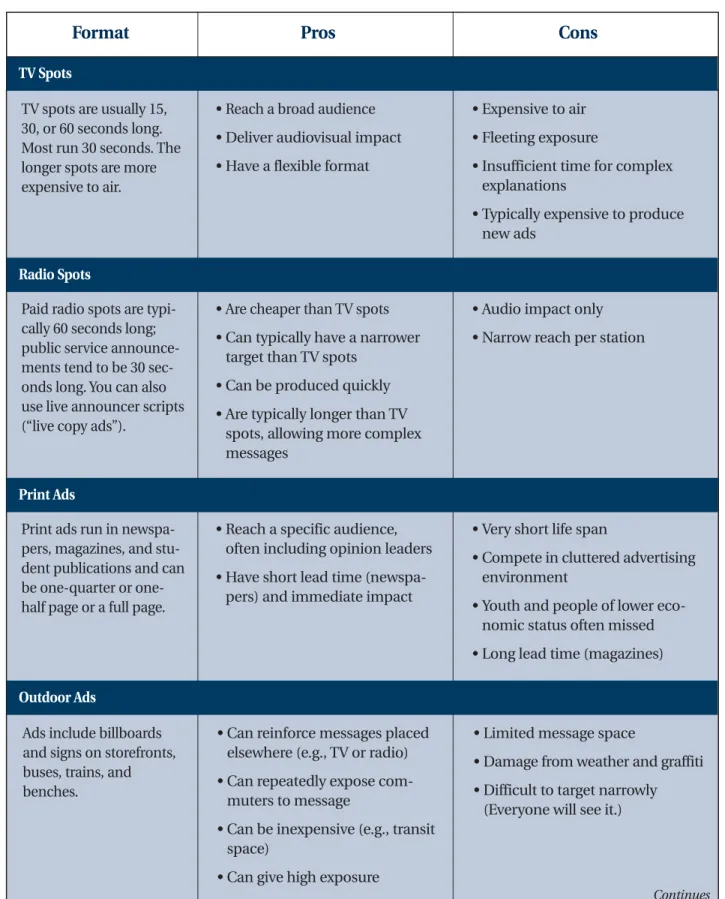
Table 7.1: Pros and Cons of Advertising Media
Format
Pros
Cons
TV Spots
TV spots are usually 15, 30, or 60 seconds long. Most run 30 seconds. The longer spots are more expensive to air.
• Reach a broad audience • Deliver audiovisual impact • Have a flexible format
• Expensive to air • Fleeting exposure
• Insufficient time for complex explanations
• Typically expensive to produce new ads
Radio Spots
Paid radio spots are typi cally 60 seconds long; public service announce-ments tend to be 30 sec onds long. You can also use live announcer scripts (“live copy ads”).
• Are cheaper than TV spots • Can typically have a narrower
target than TV spots • Can be produced quickly • Are typically longer than TV
spots, allowing more complex messages
• Audio impact only • Narrow reach per station
Print Ads
Print ads run in newspa pers, magazines, and stu dent publications and can be quarter or one-half page or a full page.
• Reach a specific audience, often including opinion leaders • Have short lead time (newspa
pers) and immediate impact
• Very short life span
• Compete in cluttered advertising environment
• Youth and people of lower eco nomic status often missed • Long lead time (magazines)
Outdoor Ads
Ads include billboards and signs on storefronts, buses, trains, and benches.
• Can reinforce messages placed elsewhere (e.g., TV or radio) • Can repeatedly expose com
muters to message
• Can be inexpensive (e.g., transit space)
• Can give high exposure
• Limited message space
• Damage from weather and graffiti • Difficult to target narrowly
(Everyone will see it.)
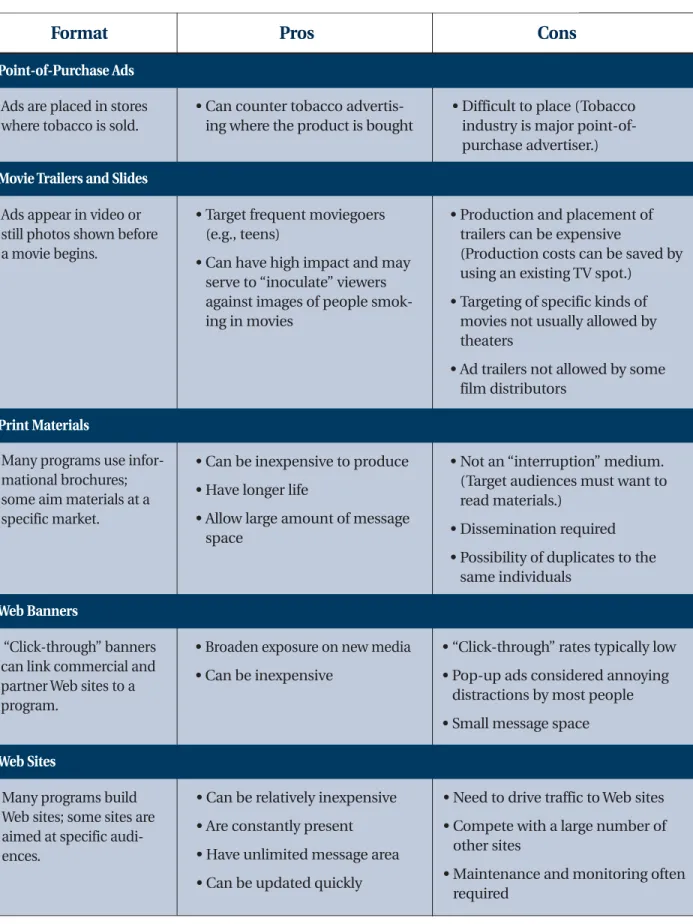
Table 7.1: Pros and Cons of Advertising Media (cont.)
Format
Pros
Cons
Point-of-Purchase Ads
Ads are placed in stores where tobacco is sold.
• Can counter tobacco advertis ing where the product is bought
• Difficult to place (Tobacco industry is major point-of purchase advertiser.)
Movie Trailers and Slides
Ads appear in video or still photos shown before a movie begins.
• Target frequent moviegoers (e.g., teens)
• Can have high impact and may serve to “inoculate” viewers against images of people smok ing in movies
• Production and placement of trailers can be expensive
(Production costs can be saved by using an existing TV spot.) • Targeting of specific kinds of
movies not usually allowed by theaters
• Ad trailers not allowed by some film distributors
Print Materials
Many programs use infor mational brochures; some aim materials at a specific market.
• Can be inexpensive to produce • Have longer life
• Allow large amount of message space
• Not an “interruption” medium. (Target audiences must want to read materials.)
• Dissemination required • Possibility of duplicates to the
same individuals
Web Banners
“Click-through” banners can link commercial and partner Web sites to a program.
• Broaden exposure on new media • Can be inexpensive
• “Click-through” rates typically low • Pop-up ads considered annoying
distractions by most people • Small message space
Web Sites
Many programs build Web sites; some sites are aimed at specific audi ences.
• Can be relatively inexpensive • Are constantly present • Have unlimited message area • Can be updated quickly
• Need to drive traffic to Web sites • Compete with a large number of
other sites
• Maintenance and monitoring often required
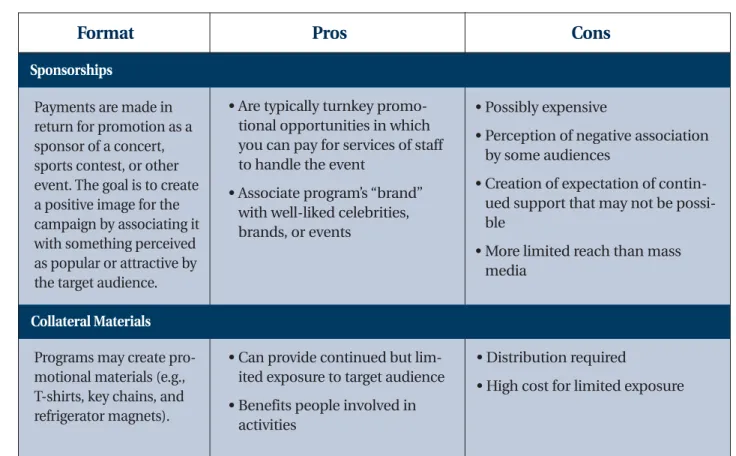
Table 7.1: Pros and Cons of Advertising Media (cont.)
Format
Pros
Cons
Sponsorships
Payments are made in return for promotion as a sponsor of a concert, sports contest, or other event. The goal is to create a positive image for the campaign by associating it with something perceived as popular or attractive by the target audience.
• Are typically turnkey promo tional opportunities in which you can pay for services of staff to handle the event
• Associate program’s “brand” with well-liked celebrities, brands, or events
• Possibly expensive
• Perception of negative association by some audiences
• Creation of expectation of contin ued support that may not be possi ble
• More limited reach than mass media
Collateral Materials
Programs may create pro motional materials (e.g., T-shirts, key chains, and refrigerator magnets).
• Can provide continued but lim ited exposure to target audience • Benefits people involved in
activities
• Distribution required
• High cost for limited exposure
what people wear can make a difference. In Florida’s “truth” campaign, for example, the real Florida teens recruited for TV spots changed clothes before they went on the air. The program’s ad agency worked with a wardrobe expert to select clothing that was more hip than the teens’ own clothes.
Producing good creative is an art form. Beyond sending a clear message, advertising must be salient and interesting. The audience should feel understood and respected. Advertising can be tested to determine which concepts or fin ished ads have the highest likelihood of suc cess, but just how it may work in the real world is always partly a mystery. The artistic expert ise for which the creative firms are hired must be valued and appreciated, but it also must be
balanced with the tobacco control experience and technical expertise that you bring to the process. You are ultimately responsible for ensuring that the ads that are approved have the highest likelihood of contributing to your tobacco control goal.
Managers evaluate potential advertising in different ways. The key is to think broadly and avoid nitpicking any product to meet your personal tastes. If you relate everything to what you know about your audience and your strategy, you can provide the creative firm with the needed perspective. Consider four key questions:
1. Is the creative product something you can disseminate effectively to your audience? For example, you may not want to produce
a TV spot if you don’t have much money for a media buy; instead, radio might be a more cost-efficient option.
2. Is the creative product on strategy? For example, the product shouldn’t dwell solely on health effects if your strategy is industry manipulation.
3. Does the product reflect what you know about your audience? Think about whether it communicates persuasively to your audience. Will they understand it? Will they feel understood? Is it persuasive? Will the audience respond to the actors in terms of age, diversity, and attitude?
4. Might unintended negative consequences occur? Advertising exposure can’t be tightly controlled; other audiences will be exposed to these products. Consider the implica tions of that scenario. For example, teens who view a message aimed at adults about how many teens are smoking might begin to see smoking as the norm.
Types of Creative
Work with your creative firm to decide what kinds of products to use. Will billboards work? Should you buy radio time? What about a brochure? Does your budget allow for this advertising? The creative firm should present you with a plan to use several different types of advertising materials in a campaign. The materials should complement one another to completely reach members of your target audience, whether they watch TV, read news papers, or only see billboards. (See Table 7.1
for a list of the most common types of adver tising and the benefits and drawbacks associ ated with each product.)
Table 7.1 lists only some of the types of adver tising available. Advertising messages are placed everywhere these days, from a banner flown above a beach to the well of a urinal. Your job is to determine the most appropriate and cost-efficient place for the audience to see your message, so it’s clear, widely viewed, persuasive, and without unintended negative consequences.
You should also consider using creative mate rials that already exist. Even states with large campaigns that produce a large percentage of their own materials (e.g., California, Florida, and Massachusetts) have borrowed advertising executions from other states and countries. To help states share materials, the CDC Media Campaign Resource Center (MCRC) maintains an inventory of existing tobacco counter-advertising materials developed by a number of states, organizations, and federal agencies. By providing access to existing advertising materials, the resource center allows states, organizations, and government agencies to save the time and high cost of producing new ads. The MCRC collection includes ads for TV, radio, print, and outdoor use that address a variety of themes and target audiences. In addition, the MCRC negotiates rights and tal ent fees to simplify the process of using the ads in different states. (More information and a searchable database are available on the MCRC Web site, http://www.cdc.gov/ tobacco/mcrc).
E-mail:
[email protected]
Phone:
(770) 488-5705, press
2Web site:
www.cdc.gov/tobacco/mcrc
Media Campaign Resource Center
In general, you’ll want to select vehicles with the lowest cost per thousand audience mem bers potentially reached (CPM). However, CPM should be balanced with the need for high-quality exposure. For example, showing ads to promote smoking cessation in a physician’s waiting room may have a high cost and low overall reach, but the exposures are very high quality, because you have a captive audience consisting of people preparing to talk to their physician about their health.
Pretesting Creative
Advertising can be very expensive. Producing a high-quality, 30-second TV spot by using union talent can easily cost more than
$250,000. Airing the spot can cost much, much more, so before major advertisers invest money in airing or placing an ad, they typically test it to determine whether it clearly conveys the intended message.
Pretesting can be performed at several stages in the creative process. You can pretest a concept, a script, a rough cut of a broadcast spot, or a storyboard (visuals and words that portray the actions in a proposed TV spot). (See Appendices 7.2 and 7.3 for sample story boards.) Also, the finished ad itself can be used
in a pretest. Pretesting won’t tell you whether the ad will “work”; you’ll find that out only after you place the ad and measure attitudinal changes or other results in the context of your entire campaign. However, pretesting can give you important information about whether your intended message is being communicated clear ly to your target audience. The most common conclusions you can draw from pretesting are:
■ Overall reaction. How is the ad likely to
make the audience feel?
■ Communication of a message. What
message is your audience likely to take away from the ad?
■ Likes and dislikes. What parts of the ad are
likely to please or anger your audience?
■ Confusing aspects. What parts of the ad
are likely to confuse your audience?
■ Credibility. Is your audience likely to
find the ad believable?
■ Relevance. Does the audience think this
is a message for “people like them”? Does it apply to their lives?
■ Perceived motivational aspects. Is your
audience likely to think the ad will prompt them to change anything? Do they find the ad convincing? (Attempting to measure the ad’s potential influence can be very misleading. People don’t like to admit that advertising might affect their behavior. What’s more, the ad may only need to affect an attitude as part of an overall program that will change behavior.)
Some pretesting efforts use larger sample sizes and try to measure people’s intention to change behavior. On the opposite extreme, some pretesting can be abbreviated as a quali tative communication check. The testing measures whether the “take-away” (messages and impressions left with the audience after viewing of the ad) was what you intended. Before you pretest, decide what you need to learn. You need to be realistic about what you can learn and whether you’re learning some thing that can be the basis for some action. Don’t ignore the results of your pretesting, but rather use them in your decision making. As a program manager, you can
require your creative firm to pretest (1) some or all of the ads you’re considering for use in the counter-marketing campaign, (2) only the ads targeted at a specific group, or (3) only the ads that you believe could pose problems. You can also decide at what stage the testing would be most useful. The testing can be performed by the creative firm, a subcontractor to the creative firm, or another con tractor you hire separately. Some people worry that creative firms won’t test their own creative prod ucts fairly, but good firms know it’s to their advantage to honestly pretest their products to find problems before they’re widely distributed. You should under stand and agree to the testing
methods selected. You’ll also want to observe the research, if possible, and fully understand the analysis. Firsthand observations will better prepare you to fight for the production of an ad or defend it once it’s produced. (See Chapter 3: Gaining and Using Target Audience Insights for more information on pretesting.) You and the agency should be partners in the planning and execution of the research and in drawing conclusions from the results.
Creating a Standard Review Process
The final version of a creative product should not surprise you. A TV spot, magazine ad, or other creative product should be the result of ajoint effort by the creative firm and you. Again, as a program manager, your role is to continu ally evaluate whether the product is persuasive and on strategy, can be disseminated to your audience, reflects what you know about your audience, and is not likely to cause unintended negative consequences.
You can make these judgments at several points in the creative process. You and your creative firm should agree on when your review is necessary. A list and discussion of the milestones for reviewing a TV spot are provided here. The TV spot is one of the more complicated and costly products a creative firm can produce and place. The process is similar for other creative products, such as print ads and radio spots. You may not have time to perform every step for every creative product, but you and your creative firm can decide jointly when your input would be most valuable.
The milestones are as follows:
■ Read the creative brief.
■ Review the scripts or storyboards. ■ Attend pretesting focus groups or inter
views.
■ Attend or listen in on the preproduction
meeting.
■ Attend the shoot. ■ View the first cut.
■ View and approve the edited spot. Read the creative brief. The first thing you should review when overseeing the production
of a TV spot is the creative brief. You may even want to be involved in helping write the cre ative brief. Some ad agencies consider the cre ative brief to be an internal function of the ad agency, developed by agency planners and account staff, and shared exclusively with the creatives. However, you have the right and responsibility to ensure that it’s strategically focused and communicates the key informa tion and insights the creatives will need to do their work. This is the document that tells the agency’s writers and artists—the people who create the ad—what you want. Because the function of the creative brief is to translate your strategy into specific guidelines for the creative team, you may want to help develop it or at least review it before it goes to the cre ative staff. (See Appendix 6.3: Elements of a Creative Brief and Appendices 6.4, 6.5, and 6.6 for samples of creative briefs.)
Review the scripts or storyboards. After the creative brief is shared with the creatives, they’ll develop ideas for creative executions (e.g., the script or storyboards for a TV spot; see Appendices 7.2 and 7.3 for sample storyboards). The creative executions may be presented to you in a meeting. When you review the script or storyboard and see the intended visuals, think about how your audience might react and whether these creative concepts accomplish what you set out to do in the creative brief. This task won’t always be easy. At first, you may not see how the proposed ad can accomplish your goal. Some advertising executions cannot be interpreted literally. In all cases, the firm should be able to explain how the ad can accomplish
the goal(s) you set out in the creative brief. (See Appendix 7.1 for help in organizing your com ments and questions about the creative con cepts.) Raise any concerns you have about taste, language, or how you see the ad taking shape. Are the visuals reinforcing what’s being said? Is the language appropriate and understandable for this audience? Is there anything that might unnecessarily offend the audience or mislead people? As the content expert, you must ensure that the “facts” in the ad are true and can be substantiated.
Attend pretesting focus groups or interviews. At this stage, the scripts and storyboards can be presented to members of your target audi ence to get their reactions. You should observe the pretesting to be sure that the audience understands the messages and finds the ad concepts relevant and clear. If you can’t attend the testing, read the transcripts or the report of the findings, watch the video, or listen to the audiotape. The agency personnel (e.g., account service, research and planning, and creative staff) should also attend the sessions. You may also want other members of your staff to attend. Consider inviting key stakeholders to observe focus groups of specific populations that they represent. Even though these stake holders share many characteristics with the specific population, they may differ in signifi cant ways (such as education or income), and observing a focus group may help them to better understand the participants.
You may wish to pretest again after production of the TV spot, because storyboards don’t always adequately convey the experience of seeing the finished ad. You can also pretest
using animatics or a rough version of a spot or print ad. One caveat is that some creative concepts don’t lend themselves well to focus group testing of a storyboard. For example, an ad that relies on clever special effects or a testi monial ad that relies on the candid emotions of a person negatively affected by tobacco use may not be convincing or engaging in focus groups where those special elements are miss ing. In these cases, you won’t be able to judge the persuasiveness of the ad concepts, but you still should be able to determine whether the audience understood the messages and found them relevant.
Attend or listen in on the preproduction meeting. Shortly before the production of an ad (the shoot), a preproduction meeting is held for the agency’s creative staff to meet with the people who will actually produce the spot. They discuss locations, wardrobe, talent, and other production issues. The meeting is often held where the shoot will take place. If you can’t be there in person, it’s a good idea to join the meeting by phone. Most production deci sions are probably best left to the agency and the production crew, but occasionally you may want to address certain issues. For example, you would raise an objection if they were plan ning something you think might offend the audience or might not be appropriate for your campaign. If you have questions or concerns, don’t be afraid to raise them. It’s much harder to make changes once the shoot is complete. Attend the shoot. Many marketing managers attend the filming of the ad (the shoot), though it’s not a necessity. Your role usually will be limited, but your attendance will be more
important in cases where you need to weigh in on unanticipated issues. For example, Florida and Minnesota developed ads using video of unscripted teens criticizing the industry’s practices. It was important for the marketing manager to be present because the script was essentially being written and approved on the spot.
View the first cut. After the shoot and some editing, the agency can show you a rough cut of the production that may not yet include all the edits or production enhancements the creative firm is planning, such as color correc tion, sound adjustment, sound effects, and music. This step will give you a chance to review the spot before the creative firm invests a lot of time and money in postproduction processes. The agency can tell you what can be changed at this point. If you have concerns about some aspect(s) of the ad, you may also want to test the ad with the target audience to see if your concerns are valid. Sometimes ads are produced and never aired. This may seem wasteful, but it’s smarter than spending a lot more money buying time to air an ineffective or offensive ad that will cause you problems. Many veteran marketers can tell you about an ad that never ran and how happy they are that it didn’t run.
View and approve the edited spot. You should always review the version of the spot that you intend to air but try to avoid having to get clearance from a large number of people. Everyone is a critic, and sometimes it’s difficult to remind your superiors that what really mat ters is how the audience sees the spot, not how it’s viewed inside your department or agency.
In many states, a large number of reviews can’t be avoided. Try to remind every reviewer what the ad is supposed to do and which audience it’s intended to reach. Use the pretesting results to support the relevance of the message to your audience.
In the end, your role in the creative process is one of quality control. You’re not a critic, an editor, or an artist, but you are the person ultimately responsible for ensuring that your advertising is on strategy and effective with the intended audience. You may not even like the ad. That’s okay. You just need to believe it will work.
Exposure: Show the Message
Enough for It to Sink In
Great advertising is worthless if nobody sees it. A program manager or marketing manager needs to ensure that the right people get the
right message multiple times. You need your target audience to become familiar enough with your message that it raises awareness, changes an attitude, or prompts action. This means they have to see it more than once. Many advertising experts say that, in general, people won’t even remember a commercial unless they’ve seen it at least three times. Others contend that TV spots must be seen three to seven times to be effective. In reality, the success of an ad largely depends on the quality of the creative execution and produc tion. There are no set criteria, but one thing is for sure: Once is not enough.
Advertising is not a vaccine. In a global review of smoking cessation campaigns by CDC and the World Health Organization, successful cessation efforts required both a “strong” and “ongoing” media presence. When levels of advertising drop, so do the calls to cessation helplines. You can expect levels of ad aware ness to mirror the schedule of your media buys. Awareness may be high while TV spots are on the air, but it will likely drop once the ads stop running.
You also need to think about when and how you reach your audience. The fact that you can
reach the audience with your message at a certain time and through a certain channel does not mean you always should. For exam ple, you might not want to run an ad on breast cancer during a Sunday football game. It’s a bad “aperture” for a media message on breast cancer, because football fans aren’t likely to change their thinking from rooting for a team to considering how the disease might affect them or their spouses. When Florida launched
its rebellious youth antitobacco brand, the state could have disseminated its message in schools. After all, where better to reach teens? But the state shunned that dissemination approach. If teachers and principals promoted the “truth” brand, program managers rea soned, it would seem anything but young, cool, and rebellious. The approach would undermine the brand’s value, and in the process, the strategy.
Exposure is usually measured by reach and frequency, which are typically translated into “rating points.” A rating point is the percentage of the target audience potentially reached (reach) multiplied by the number of times the audience will potentially see the message (frequency). If, on the basis of your media buy, 50 percent of the targeted audience is expected to see your ad an average of three times, you’ve purchased 150 target rating points (TRPs). (The term target rating points is meant to convey that the rating points are specifically for your target audience.) Rating points are usually expressed in four-week figures, but you must always ask to be sure. An agency may add rat ing points together over a longer or shorter period. For example, an agency may talk about buying 1,200 rating points during the launch of your campaign. That statement may mean 300 points a week for four weeks or 150 points over eight weeks.
You may also hear media planners refer to “gross rating points” (GRPs). By definition, both GRPs and TRPs represent the total amount of rating points bought over a period of time in relation to an audience. Typically, a planner will use GRPs or TRPs to represent
rating points for your target audience, not rating points for a general audience, but you need to check to make sure.
Rating points vary depending on which audi ence is being targeted. For example, “Sabrina the Teenage Witch,” a TV show produced by Warner Bros. Television Network, would have much higher rating points for adolescent girls than for 40-year-old men, and network news would have higher rating points for retirees than for teenagers.
Because buying media is so expensive, pro grams typically buy media in “flights” of three to six weeks, then go off the air for two to six weeks. If you’re introducing a campaign, you should be on the air as continuously as possi ble during the first six to 12 months, and that strategy is even more important if you’re trying to establish a brand. Awareness of the cam paign will vary depending on how long a flight has been on the air, when it aired (e.g., time of day, season, programs), and how many flights were used over a period of time, but media are typically bought in a way that preserves some baseline level of awareness. Although ads are not on the air constantly, an effort is made to keep the program’s message constantly in peo ple’s minds. The broadcast buy is supplement ed by other vehicles, such as outdoor advertis ing, which is typically bought in month-long increments. These supplemental ads remain in place during the off weeks of a broadcast buy, and broadcast ads return to the airways before a dramatic dip in awareness occurs. You should be given a media flowchart (including dates, TRPs, and markets) that shows how
each flight will take place for different audi ence segments. The media experts at your ad agency can advise you on how to maximize the impact of your budget.
Again, media messages aren’t like inoculations: No audience becomes immune to an unhealthy behavior after a certain number of exposures to a message. Just as Coca-Cola must continue advertising even though the soft drink is very well known, tobacco control programs can’t simply air a message, then disappear. A con stant and evolving media program with new and engaging messages is needed to counter the competitive influences on the audience to smoke or chew tobacco.
How much exposure should you buy? That depends on your strategy, the stage of your campaign, the other counter-marketing activi ties, and your budget. Some strategies require more exposure than others. Some programs depend less on advertising and more on other interventions, such as smoking restrictions, education programs, or cigarette taxes. There’s no one-size-fits-all formula.
Programs generally start with stronger media buys to win the audience’s attention. When California launched the nation’s first major tobacco counter-marketing campaign in 1990, the state was on the air almost continuously from April to November, buying 125 to 175 TRPs a week for adults and about 100 TRPs a week for teens. The program is now very well known inside the state, so media buys usually run three- or four-week flights of 100 to 150 TRPs per week, with breaks that last about a month.