Immunization
Guidelines
Department of Public Health & Safety
Health Policy & Strategy Sector
This guideline may be reproduced in whole or in part for reading or study purposes subject to the inclusion of an acknowledgement of the source. Reproduction for purposes other than those indicated above requires a written permission of the Dubai Health Authority.
Immunization
Guidelines
Dubai Health Authority
Department of Public Health & Safety
Health Policy & Strategy Sector
Immunization Guidelines - Department of Public Health & Safety, Health Policy & Strategy Sector
Contents
Abbreviations ... 7 Acknowledgement ... 8 Foreword ... 9 Introduction ... 10 Scope ... 10 Purpose ... 10 Immunization Concept ... 101 Immunization & Vaccination Procedures ... 12 1.1 General Principles of Immunization ... 12 1.2 Types of Vaccines ... 13 1.3 Vaccine Administration ... 14 1.4 Routes of Administration ... 15
2 Childhood Immunization and National Immunization Program Recommended by DHA ... 17
2.1 DHA vaccine schedules ... 18
2.2 DHA Catch up immunization schedule ... 18
2.3 Multiple Vaccinations ... 22
3 Vaccine Management and Cold Chain ... 24
3.1 Vaccine Storage and the Cold Chain ... 24
3.2 Vaccine Storage Equipments ... 25
3.3 Vaccine Cold Chain Monitors ... 28
3.4 Key points for handling and storing vaccines ... 34
4 Immunization Information System 35 4.1 General recommendations ... 35
4.2 Basic recording tools... 36
4.3 Reporting Immunization services ... 38
5 Immunization Adverse Events .... 39
5.1 Vaccine reactions ... 39 6 Specific Vaccines ... 45 6.1 BCG vaccine ... 45 6.2 Hepatitis B vaccine ... 46 6.3 Diphtheria vaccine ... 47 6.4 Pertussis vaccine ... 48 6.5 Tetanus vaccine ... 49 6.6 Poliomyelitis vaccine ... 50 6.7 Haemophilus Influenza Type b vaccine ... 52 6.8 Pneumococcal vaccine ... 53 6.9 Measles vaccine ... 54 6.10 Mumps vaccine ... 56 6.11 Rubella vaccine ... 56 6.12 Varicella vaccine ... 57 6.13 Hepatitis A vaccine ... 58 6.14 Meningococcal vaccine... 58 6.15 Influenza vaccine ... 60 6.16 Rotavirus vaccine ... 61 6.17 Typhoid vaccine ... 62
6.18 HPV vaccine ... 64
6.19 Rabies Vaccine ... 65
6.20 Yellow fever vaccine ... 66
7 School Health Vaccination ... 68
7.1 Routine Immunization Schedule ... 68
7.2 Delayed Immunization Schedule ... 68
7.3 Delayed schedule for children who had discontinued or interrupted immunization ... 69
7.4 Important notes ... 69
8 Adult Immunization... 70
8.1 Recommended adults immunization schedule ... 70
8.2 Vaccines for adults with risk factors ... 72
8.3 Vaccines for travelers... 73
8.4 Immunization in post bone marrow transplant patients ... 73
Immunization Guidelines - Department of Public Health & Safety, Health Policy & Strategy Sector
Abbreviations
DHA : Dubai Health Authority UAE : United Arab Emirates HPV : Human Papilloma Virus MMR : Measles, Mumps, Rubella VIS : Vaccine Information Systems TIG : Tetanus Immunoglobuline Globuline HBIG : Hepatitis B Immunoglobulin VVM : Vaccine Vial Monitor OPV : Oral Polio Vaccine WHO : World Health Organization
UNICEF : United Nations International Children Emergency Fund
VQC : Vaccine Qualified Clinic
AEFI : Adverse Event Following Immunization FDA : Food & Drug Administration
IPV : Inactivated poliovirus vaccine
Hib : Haemophilus Influenza Type b
HAV : Hepatitis A Vaccine
TB : Tuberculosis
BCG : Bacillus Calmette-Guerin ACLS : Advanced Cardiac Life Support ATLS : Advanced Trauma Life Support CPR : Cardiopulmonary Resuscitation DHA : Dubai Health Authority
DM : Dubai Municipality MOH : Ministry of Health
Immunization Guidelines - Department of Public Health & Safety, Health Policy & Strategy Sector
Acknowledgement
This guideline is the product of a sincere effort of health professionals representing all concerned stakeholders in the Emirate of Dubai as well as the Federal Ministry of Health. The insight and depth of experience of participants has enriched the process and
improved the quality of the final document.
The Dubai Health Authority wishes to express sincere gratitude to following for their contribution to the development of this guideline; Central Preventive Medicine Dept &
Office of the NFP-IHR – MOH; Dubai Police; American Hospital Dubai; Medcare Hospital.
The DHA would like also to acknowledge the contribution of the Committee members for their commitment and patience which provided a best practice model for intra-sector and inter-sector collaboration for health development.
The committee members:
Dr. Ali Hassan Al Marzooqi - Former Director, Public Health & Safety Department Dr. Aizeldin El Gak Ibrahim - Head of Preventive Medicine Section
Dr. Hisham Al Khatib - Senior Public Health Specialist -DHA Dr. Fatma Al Olama - Head of Child Health - DHA
Dr. Mhd. Oussama Kayali - Head of Health Regulation Section - DHA Dr. Fathia Hatim - Head of Health Promotion Section - DHA Dr. Abeer Khayat - Chief of Pediatrics - American Hospital
Dr. Moeena Zain - Specialist Infectious Disease - American Hospital Dr. Jyoti Joshi - Specialist Community Medicine -
Central Preventive Medicine Dept & Office of the
NFP IHR - MOH
Dr. Emad Abdulkarim - Consultant Community Medicine & Vaccinology MOH
Dr. S. M Anees - Chief Paediatrics -Medcare Hospital Ms. Noora Al Saadi - Head of Nursing Dept - Dubai Police
Immunization Guidelines - Department of Public Health & Safety, Health Policy & Strategy Sector
Foreword
Immunization is one of the most cost-effective health interventions known to mankind. With immunization, smallpox has been eradicated and polio eradication is also in sight
Dubai Health Authority announced the
first immunization policy in the Emirate of
Dubai as part of the initiatives of the Dubai Health Strategy that aims to reduce the burden of vaccine preventable diseases. The introduction of this policy will pledge the improvement of immunization services as well as provision of technical guidance to healthcare providers to ensure that they follow best practices in terms of administering and storing vaccines.
This document was developed within this policy is the culmination of a one-year process that brought together a task force set by the department of Public Health and Safety at the Health Policy and Strategy sector within Dubai Health Authority; and includes experts from government and private health care sectors.
The approach adopted in the document has been inspired mainly by the guiding principles of the World Health Organization and by the National Program of Immunization in the United Arab Emirates.
The process of developing this document provides a model for the kind of collaboration across professionals that are essential to assure the provision of
unified immunization services, in addition to its significant for the commitment it reflects to harmonize and coordinate data
collection, improving reporting and data sharing, and fostering new levels and modes of collaboration.
It is hoped that these comprehensive and updated immunization guidelines will give the technical support that required standardizing and regulating the immunization services at health care facilities in the Emirate of Dubai. Complying with these guidelines by health care professionals will ensure
unified immunization services at both
public and private health sectors.
Laila Al Jassmi
Immunization Guidelines - Department of Public Health & Safety, Health Policy & Strategy Sector
Introduction
Scope
This regulation applies to every hospital licensed under the Dubai Health Authority (DHA) establishment law, including government, semi government, and private hospitals, and hospitals operating in free zone areas.
Purpose
The DHA is the sole responsible entity ensuring that all healthcare facilities and professionals in the Emirate of Dubai provide the highest level of safety and quality immunization services at all times, through the development, establishment, and enforcement of minimum required
standards for vaccine qualified clinics
(VQCs).
Based on the DHA objective of better health with focus on prevention as well as cure, and based on the UAE Federal law number (27) of 1981 concerning prevention of communicable diseases. Dubai Health Authority along with other concerned sectors developed this vaccination service requirement with aim to regulate immunization practice and vaccination against the communicable diseases in the Emirate of Dubai
The assessment, licensure, control, and surveillance of human vaccines are major challenges for any health regulatory authorities in the world as confronted by a steadily increasing number of novel products, complex quality concerns, and new technical issues arising from rapid
scientific advances. Because vaccines
are given to healthy individuals, they undergo a more rigorous approval process than drugs which are given to cure sick people.
Immunization Concept
Immunization is one of the most successful and cost-effective public health interventions. Globally, it prevents an estimated 2.5 million child deaths every year in all age groups from diphtheria, tetanus, pertussis, and measles. Small pox has already been eradicated and Polio is the next disease targeted for eradication using vaccines and is to be followed by Measles.
Immunization as an effective preventive intervention is intended to support the body immune defense against infections. Its aim is to protect individuals and communities from infectious diseases. Vaccines contain the same antigens or parts of antigens that cause diseases, but the antigens in vaccines are either killed or greatly weakened. When they are injected into fatty tissue or muscle, vaccine antigens are not strong enough to produce the symptoms and signs of the disease but are strong enough for the immune system to produce antibodies against them. The memory cells that remain prevent re-infection when they encounter that disease in the future. Newborn babies are immune to many diseases because they have antibodies they got from their mothers. However, the duration of this immunity may last only a month to about a year. Further, young children do not have maternal immunity against some vaccine-preventable diseases, such as whooping cough. If a child is not vaccinated and is exposed to a disease germ, the child’s body may not
be strong enough to fight the disease.
Before vaccines, many children died from diseases that vaccines now prevent,
such as whooping cough, measles, and polio. Those same germs exist today, but babies are now protected by vaccines, so we do not see these diseases as often.
Therefore, the first years of a child’s
life constitute the period of greatest vulnerability to infectious diseases. It is precisely during that period vaccines are recommended.
Immunizing individual children also helps to protect the health of our community, especially those people who are not immunized. People who are not immunized include those who are too young to be vaccinated, those who cannot be vaccinated due to medical reasons (e.g., children with leukemia), and those who cannot make an adequate response to vaccination. Through herd immunity, these individuals are less likely to be exposed to disease germs that can be passed around by unvaccinated children. Immunization also slows down or stops disease outbreaks.
In addition to their ability to prevent disease among members of the community, vaccines can make substantial contributions to the quality of life of families and communities. Disease prevention results in substantial cost savings whether measured by personal, family, insurer or community expenditures. Vaccines reduce the need for visits to
physician’s offices, hospital admissions,
medication use, and contribute to better school attendance by healthier students. Vaccines are biological substances that can lose their effectiveness if they become too hot or too cold and therefore, may not offer protection against the
disease specified and will need to
be discarded. Vaccine effectiveness
depends upon vaccine efficacy, which
depends on maintaining the vaccine ‘cold
chain’ at all levels from the manufacturer to the recipient.
Vaccines are safe and effective. However, they are neither perfectly safe nor perfectly effective. Consequently, some persons who receive vaccines will be injured or not be protected. Most adverse events associated with vaccines are minor and involve local soreness or redness at the injection site or perhaps fever for a day or so. Rarely, however, vaccine can cause more serious adverse events. Therefore it is imperative to have a surveillance program for monitoring any adverse events following immunization. The National Immunization Program is being continually updated to include the best and safest available technology to our children in UAE.
Immunization Guidelines - Department of Public Health & Safety, Health Policy & Strategy Sector
Immunization
& Vaccination
Procedures
1
1.1 General Principles
of Immunization
All biologic materials involved in the
production of a specific immune state against a specific infection in a human
are termed “Immunobiologics”. All immunobiologics function on one of two principles; active immunization and passive immunization.
1.1.1 Active Immunization
This is the process of administering immunogens to stimulate a protective antibody or a cell- mediated response in a person. Active immunization takes between two to six weeks to complete. The product being used may be any of the following:
Vaccine
A suspension of either whole or part of an organism that is used to induce immunity
against a specific infectious disease
when injected, inhaled or ingested is
called a vaccine e.g. Influenza vaccine.
Toxoid
Toxoid is a modified microbial toxin that
still retains its antigenicity and is able to stimulate immunity to a relevant toxin. Common toxoids are Tetanus toxoid.
1.1.2 Passive Immunization
Passive immunization refers to the passive transfer of pre-formed antibodies to a person to provide them limited immunity. Passive immunity is useful if immediate protection is needed, but lasts a much shorter duration, generally till approx. 3 months. It may be given up to 3 weeks before or up to 72 hours after the exposure. These antibodies are provided generally in any of the following forms:
Immunoglobulin
Immunoglobulin is a preparation derived from a large pool of human plasma that
contains a specified amount of preformed
antibodies to a variety of common infectious diseases including Measles, Diphtheria, and Polio. It also contains a variable amount of antibodies to several other common infections like varicella and hepatitis B. Immunoglobulins can be administered either intravenously or intramuscularly depending on the exact formulation. There is generally a higher incidence of allergic reactions with immunoglobulins.
Immunization & Vaccination Procedures Specific Immunoglobulin
Specific immunoglobulin are special
preparations that are very high in antibody content against a particular disease are also available. They are prepared using only immunized donors or individuals recovering from a recent infection. Common examples include Tetanus Immunoglobulin. They are always given intra-muscularly.
Antitoxins
Antitoxins are antibodies to specific
bacterial toxins that have been derived from animals. Examples include diphtheria and botulinum anti toxins.
1.2.1 A. Live Attenuated Vaccines:
Live attenuated vaccines are manufactured using live micro-organisms that
have been genetically modified to
maintain their antigenicity but lose their pathogencity. They may be viral or bacterial. Live attenuated vaccines stimulate potent immune response resulting in prolonged immunity. Live attenuated vaccines cannot be given to immuno-compromised individuals or their close contacts, or during pregnancy. Examples of live attenuated vaccines are: measles, mumps, rubella, polio, and varicella vaccines (Table 1).
1.2.2 Inactivated Viral or
Bacterial Vaccines:
Inactivated vaccines contain either
de-activated microorganisms or only purified
components of the toxins. Since there is no risk of developing infections from these vaccines, they can be given to all individuals. Immunity produced by these vaccines may not be life-long and usually require boosters. Examples include hepatitis A, hepatitis B, HPV, inactivated polio, and tetanus vaccines (Table 1).
Killed vaccines/inactivated Live vaccines Toxoids
Pertussis component in DTP/DTap/Tdap Hep B & Hep A vaccines
Injectable polio vaccine Meningococcal vaccines
Influenza
Cholera Pneumococcal vaccines
Rabies
Haemophilus Influenza type B
Typhoid capsular polysaccharide (IM) Human papillomavirus vaccine
Oral Polio vaccine MMR BCG Yellow fever vaccine
Varicella vaccine Oral typhoid Rotavirus vaccine
Tetanus & diphtheria components in DTP/DTap/Tdap
Tetanus toxoid (TT) Tetanus & diphtheria in DT/Td
Table1 : Types of vaccines; killed vaccines, live vaccines, and toxoids.
Appropriate vaccine administration is critical to vaccine effectiveness. The following information provides general guidelines for administration of vaccines for those who administer vaccines. This information should be used in conjunction with professional standards for medication administration and vaccine manufacturers› product guidelines.
1.3.1 Patient Preparation:
Patients should be prepared for vaccination with consideration for their age and stage of development. Parents/ guardians and patients should be encouraged to take an active role before, during and after the administration of vaccines.
Screening
All patients should be screened for contraindications and precautions for each scheduled vaccine.
Patient Education
Healthcare professionals should be
prepared to discuss the benefits and risks
of vaccines using Vaccine Information Statements (VIS) and other reliable resources. Updated VIS in 39 languages are available for free download from the US Centers for Disease Control and Prevention web site http://www. immunize.org/vis/.
Atraumatic Care
Healthcare providers need to utilize a variety of techniques to minimize the stress and discomfort associated with receiving injections.
1.3.2 Infection Control
Healthcare professionals should follow Standard Precautions to minimize the
1.3 Vaccine Administration
Immunization Guidelines - Department of Public Health & Safety, Health Policy & Strategy Sector
risks of spreading disease during vaccine administration.
Hand washing
Hands should be washed thoroughly with soap and water or cleansed with an alcohol-based waterless antiseptic between patients, before vaccine preparation or any time hands become soiled.
Gloving
Gloves are not required to be worn when administering vaccines unless the person administering the vaccine is likely to come into contact with potentially
infectious body fluids or has open lesions
on the hands.
Needle stick injuries
Needle stick injuries should be reported immediately to the site supervisor, with appropriate care and follow-up given as directed by the institution guidelines.
Equipment disposal
All used syringe/needle devices should be placed in puncture proof containers to prevent accidental needle sticks and reuse. Empty or expired vaccine vials are considered medical waste and should be disposed of according to UAE regulations.
1.3.3 Vaccine Preparation
Equipment selectionSyringe Selection - A separate needle and syringe should be used for each injection. A parenteral vaccine may be delivered in either a 1-mL or 3-mL syringe as long as the prescribed dosage is delivered.
Needle Selection - Vaccine must reach the desired tissue site for optimal immune response. Therefore, needle selection should be based upon the prescribed route, size of the individual, volume and
Immunization & Vaccination Procedures
viscosity of the vaccine, and injection technique.
Inspecting vaccine
Each vaccine vial should be carefully inspected for damage or contamination prior to use. The expiration date printed on the vial or box should be checked. Vaccine can be used through the last day of the month indicated by the expiration date unless otherwise stated on the package labeling. Expired vaccine should never be used.
Reconstitution
Some vaccines are prepared in a lyophilized form that requires reconstitution, which should be done according to manufacturer guidelines. Diluent solutions vary; use only the
specific diluent supplied for the vaccine.
Once reconstituted, the vaccine must be either administered within the time guidelines provided by the manufacturer or discarded. Changing the needle after reconstitution of the vaccine is not necessary unless the needle has become contaminated or bent.
Prefilling syringes
Filling syringes in advance is strongly discouraged, because of the increased risk of administration errors, and possible contamination in vaccines that do not contain a preservative. Syringes other
than those filled by the manufacturer are
designed for immediate administration, not for vaccine storage.
Only in certain circumstances, such as a busy school clinic, more than one syringe
can be filled. One person should prefill
only a few syringes at a time, and the same person should administer them. Any syringes left at the end of the clinic day should be discarded.
Under no circumstances should MMR,
varicella, or zoster vaccines ever be reconstituted and drawn prior to the immediate need for them. These live virus vaccines are unstable and begin to deteriorate as soon as they are reconstituted with diluent.
Labeling
Once a vaccine is drawn into a syringe, the content should be indicated on the syringe. There are a variety of methods for identifying or labeling syringes (e.g. keep syringes with the appropriate vaccine vials, place the syringes in a labeled partitioned tray or use color coded labels or (preprinted labels).
1.4 Routes of Administration
1.4.1 Subcutaneous injections (SC)
Sub-Q or SC injections are administered into the fatty tissue found below the dermis and above muscle tissue.
Site - Subcutaneous tissue can be found all over the body. The usual sites for vaccine administration are the thigh (for infants <24 months of age) and the upper outer triceps of the arm (for persons >24 months of age).
Needle Gauge & Length - SQ injections can be achieved using 5/8-inch, 23- to 25-gauge needle.
Technique - Follow standard medication administration guidelines for site assessment/selection and site preparation. However, care should be taken to avoid the routine use of alcohol swabs to prepare the injection site since it can reduce the affectivity of the vaccine. To avoid reaching the muscle, pinch up the fatty tissue, insert the needle at a 45° angle and inject the vaccine into the tissue.
Withdraw the needle and apply light pressure to the injection site for several
Immunization Guidelines - Department of Public Health & Safety, Health Policy & Strategy Sector
seconds with a dry cotton ball or gauze.
1.4.2 Intramuscular injections (IM)
IM injections are administered into muscle tissue below the dermis and subcutaneous tissue.
Site - Although there are several IM injection sites on the body, the recommended IM sites for vaccine administration are the vastus lateralis muscle (anterolateral thigh) and the deltoid muscle (upper arm). The site depends on the age of the individual and the degree of muscle development.
Needle Gauge - needle size 22- to 25-gauge is recommended for intramuscular injection.
Needle Length - For all intramuscular injections; decision on needle size and site of injection must be made for each person on the basis of the size of the muscle, the thickness of adipose tissue at the injection site, the volume of the material to be administered, injection technique, and the depth below the muscle surface into which the material is to be injected.
For the majority of infants, a 1-inch,
22-25- gauge needle is sufficient to
penetrate muscle in an infant’s thigh.
For newborn (first 28 days of life) and
premature infants, a 5/8 inch needle usually is adequate if the skin is stretched
flat between thumb and forefinger and
the needle inserted at a 90-degree angle to the skin.
Older Children (24months through 10 years), the deltoid muscle can be used if the muscle mass is adequate. The needle size for deltoid site injections can range from 22 to 25 gauge and from 5/8 to 1 inch on the basis of the size of the muscle and the thickness of adipose tissue at the injection site. A 5/8-inch needle is adequate only for the deltoid muscle and only if the skin is stretched
flat between thumb and forefinger and
the needle inserted at a 90° angle to the
skin. For toddlers, the anterolateral thigh can be used, but the needle should be at least 1 inch in length.
Adolescents and Adults (11 Years or Older), the deltoid muscle is recommended for routine intramuscular vaccinations. The anterolateral thigh also can be used. For men and women weighing less than 130 lbs (60kg) a
5/8-1-inch needle is sufficient to ensure
intramuscular injection. For women weighing 130-200lbs (60-90 kg) and men 130-260 lbs (60-118kg), a 1-1½-inch needle is needed. For women weighing more than 200 lbs (90 kg) or men weighing more than 260 lbs (118 kg), a 1½-inch needle is required.
Technique - Follow standard medication administration guidelines for site assessment, selection and site preparation. However, care should be taken to avoid the routine use of alcohol swabs to prepare the injection site as it can reduce the affectivity of the vaccine. To avoid injection into subcutaneous tissue, spread the skin of the selected vaccine administration site taut between
the thumb and forefinger, isolating the
muscle. Another technique, acceptable mostly for pediatric and geriatric patients, is to grasp the tissue and “bunch up” the muscle.
Insert the needle fully into the muscle at a 90° angle and inject the vaccine into the tissue.
Withdraw the needle and apply light pressure to the injection site for several seconds with a dry cotton ball or gauze. Aspiration is the process of pulling back on the plunger of the syringe and should be performed prior to injection to ensure that the medication is not injected into a blood vessel. Although this practice is advocated by some experts, the procedure is not required because no large blood vessels exist at the recommended injection sites.
Immunization Guidelines - Department of Public Health & Safety, Health Policy & Strategy Sector
Childhood Immunization
and National
Immunization Program
Recommended by DHA
2
Routine immunizations are started in infancy; however, if a child is not immunized in infancy, immunizations should be started as early as possible. When this happens, a catch-up schedule may be followed, depending on the
child’s age and the prevalence of specific
diseases at the time.
Childhood recommended vaccines include BCG, diphtheria, tetanus toxoid, pertussis (DTaP), poliovirus vaccine (IPV/OPV), measles, mumps, rubella
(MMR), haemophilus influenza type b
(Hib) vaccine, hepatitis B vaccine (HBV), varicella, and pneumococcal vaccines. Please refer to national immunization vaccine schedule (Table 2).
Immunization & Vaccination Procedures
2.1 DHA vaccine
schedules
2.2 DHA Catch up
immunization schedule
2.1.1 DHA immunization schedule
for children between 0-6 years
l At birth: BCG, Hep B.
lTwo months: DTaP, Hib, Hep B, IPV, PCV.
lFour months: DPT, Hib, Hep B, OPV, PCV.
l Six months: DPT, Hib, Hep B, OPV, PCV.
l12 months: MMR, varicella. l18 months: DTaP, Hib, OPV, PCV. l Five to six years: DPT, OPV, MMR,
varicella.
2.1.2 DHA immunization schedule
for persons aged 7--18 years
l Td/ Tdap at age 11--12 years for those who have completed the recommended childhood DTP/DTaP vaccination series.
lMeningococcal conjugate vaccine (MCV4) at age 11--12 years and at age 13--18 years if not previously
vaccinated. Meningococcal polysaccharide vaccine (MPSV4) is an
acceptable alternative.
lHepatitis B 3-dose series to those who were not previously vaccinated. lVaricella 2 doses series if not previously
immunized.
2.2.1 Catch up vaccination
schedule for children 4months
through 6 years who are more
than one month behind or who
start late (Table 3)
Hepatitis B:
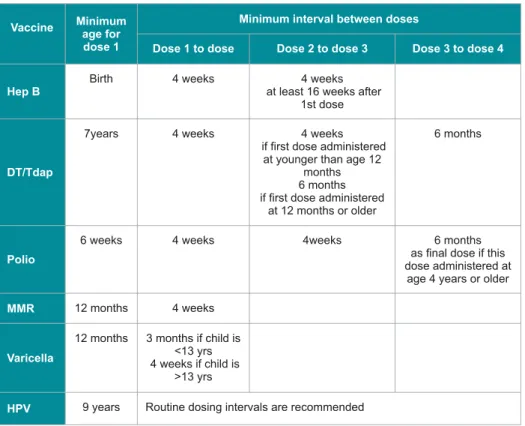
3-dose series of Hep B vaccine should be administered. The interval between 1 and 2nd dose should be at least 4 weeks, between 2nd and 3rd dose should be at least 8 weeks, and at least 16 weeks between 1st and 3rd dose. Minimum age for 3rd dose of Hep B vaccine is 24 months.
DTP/DTap:
Child should receive 5 doses by the age of 6 years. The minimum interval between 1st and second dose and between 3rd and 4th dose is 4 weeks.
The minimum interval between 3rd and 4th dose and between 4th and 5th dose
is 6 months. However, the fifth dose
is not necessary if the 4th dose was administered after age of 4 years.
Haemophilus Influenzae type b:
Children 12-59 months of age, who received 2 or 3 doses of Hib vaccine before 12 months of age, or one dose between 12 and 14 months of age, will
need a final Hib vaccine dose with a
An interrupted primary series of immunizations does not need to be restarted; rather, the original series should be resumed regardless of the length of time that had lapsed.
lMMR 2 doses at least 4 weeks apart if not previously immunized.
lHuman papilloma virus vaccine is recommended for girls 11-16 years of age.
minimum interval of 8 weeks from the previous dose.
Unvaccinated children 12-15months of age should receive 2 doses of Hib vaccine 8 weeks apart.
Unvaccinated children 15 to 59 months should receive one dose of Hib vaccine.
Pneumococcal vaccine:
Children 12-59 months of age, who received 2 or 3 doses of pneumococcal vaccine before 12 months of age, or one dose between 12 and 23 months of age,
will need a final pneumococcal vaccine
dose with a minimum interval of 8 weeks from the previous dose.
Unvaccinated children 12-15months of age should receive 2 doses of Pneumococcal vaccine 8 weeks apart. Unvaccinated healthy children 15 to 59 months should receive one dose of Pneumococcal vaccine.
Children 12-59 months of age, who received 2 or 3 doses of pneumococcal vaccine before 12 months of age, or one dose between 12 and 23 months of age,
will need a final Pneumococcal vaccine
dose with a minimum interval of 8 weeks from the previous dose.
A 4th dose of Pneumococcal vaccine is necessary for all high risk children 12months through 59 months who received 3 doses at any age.
Pneumococcal polysaccharide vaccine (PPSV) should be administered to children aged 2 years or older with certain underlying medical conditions, including a cochlear implant, at least 8 weeks after the last dose of PCV.
Polio vaccine
DHA recommends total of five doses.
Immunization Guidelines - Department of Public Health & Safety, Health Policy & Strategy Sector
Catch up schedule and intervals between polio vaccine doses are shown in table (3).
For children who received an all-IPV or all-oral poliovirus (OPV) series, a fourth dose is not necessary if third dose was
administered at age ≥4 years. If both
OPV and IPV were administered as part of a series, a total of 4 doses should be given, regardless of the child’s current age.
Rotavirus vaccine
Vaccination should not be initiated for infants aged 15 weeks 0 days or older.
The maximum age for the final dose in
the series is 8 months 0 days.
MMR
A total of two doses are recommended for all children a second dose of MMR vaccine is administered routinely at age 4 through 6 years.
The minimum interval between the 2 doses of MMR is 4 weeks.
Varicella vaccine
A total of two doses are recommended for all children; a second dose of varicella vaccine is administered routinely at age 4 through 6 years.
The minimum interval between the 2 doses of varicella is 3 months. However, if the second dose was administered at
least 4 weeks after the first dose, it can
Immunization & Vaccination Procedures
2.2.2 Catch-up immunization
schedule for persons aged 7
through 18 years who start late
or who are more than 1 month
behind (Table 4)
Td and Tdap
Children 7 through 18 years who never received DTP/DTap/DT/dT vaccine
should receive total of 4 doses of Td. The minimum interval between 1st and 2nd dose and between the 2rd and 3rd dose is 4 weeks.
Children 7-18 years whose immunization is incomplete doses of DTaP/Td should be counted as part of the Td/Tdap series.
If the first dose of DTap/DT vaccine was
given before 12 months of age a 4th and
final dose of the vaccine is indicated 6
Table 3 : Catch up immunization schedule for persons aged 4 months through 6 years who are more than one month behind or who start late.
months after the previous dose. If the
child’s first dose of Dtap/DT/dT vaccine
was given after 12 months of age then a
3rd and final dose is indicated 6 months
after the previous dose.
Tdap can be substituted for a single dose of Td in the catch-up series for children aged 7 through 10 years or as a booster for children aged 11 through 18 years; Td should be used for other doses.
Polio vaccine
Polio vaccine catch up schedule for children 7 through 18 years of age is
Immunization Guidelines - Department of Public Health & Safety, Health Policy & Strategy Sector
similar to those younger than 7 years. Oral polio vaccine is not recommended to be administrated after 15 years of age.
Varicella vaccine
Varicella vaccine is given as 2 doses 3 months apart for children <13 years of age and 4 weeks apart for children older than 13 years of age.
MMR vaccine
MMR vaccine is administered as 2 dose series at least 4 weeks apart.
Table 4 : Catch up immunization schedule for persons aged 7 through 18 years who are more than one month behind or who start late.
2.3 Multiple Vaccinations
2.3.1 Simultaneous administration
of vaccines
Simultaneous administration refers to administrating 2 vaccines on the same day. Several vaccines can be given together as long as there are no contra- indications for individual agents. There are no contra-indications to simultaneous administration live attenuated vaccines with inactivated or toxoid vaccines. It is
safe, efficient and desirable to provide
different vaccines at the same visit. This can go a long way to improve patient
compliance and maximize the benefit on
the population.
When administering multiple vaccines, vaccines should never be mixed in the same syringe unless approved for mixing by manufacturer.
Separate sites should be used for different vaccines. If more than one vaccine must
be administered in the same limb, the injection sites should be separated by 1-2 inches so that any local reactions can be differentiated.
The location of each injection should be documented in the patient’s health record.
2.3.2 Interval between vaccines
not administered simultaneously
There is no minimum interval between administration of inactivated or toxoid vaccines.
There is no minimum interval to separated administration of inactivated and live vaccines.
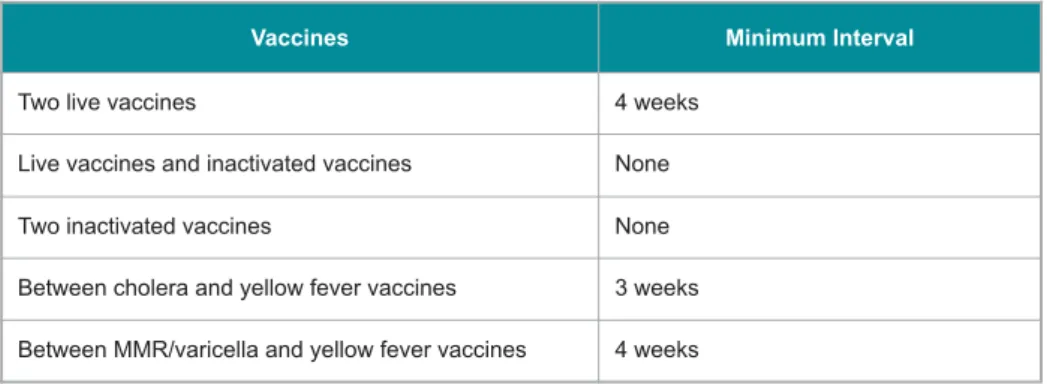
Two or more live vaccines should either be given concurrently or separated by a minimum of 4 weeks interval.
Table 5 summarizes minimum intervals between different vaccines.
Immunization Guidelines - Department of Public Health & Safety, Health Policy & Strategy Sector
2.3.3 Active and passive
immunization
In several circumstances, active and passive immunizations are given together to provide both the short term immediate protection and the longer lasting antibody responses elicited by active immunizations. For example, the administration of hepatitis B vaccine and hepatitis B immune globulin to a neonate born to a hepatitis B positive mother. If a vaccine and an immune
globulin preparation are administered simultaneously, a separate anatomic site should be used for each injection.
If the vaccine and the immunoglobulin preparation are not administered simultaneously, the vaccine and the immune globulin should be separated by a minimum interval, Table 6 summarizes the minimum interval between different vaccines and antibodies when are not administered simultaneously.
Immunization Guidelines - Department of Public Health & Safety, Health Policy & Strategy Sector
Vaccine
Management
and Cold Chain
3
It is an organized system composed of people, equipments and procedures aimed to maintain and monitor vaccines at an acceptable temperature from the manufacturer to the persons who are to be vaccinated so as to preserve safety,
efficacy and potency of the vaccine.
Anyone handling vaccination is
responsible for their potency, at each step in transport, storage and administration of vaccines. Vaccines are delicate biological substances that can become less effective or destroyed if they are frozen, exposed to heat or direct sunlight
or fluorescent light.
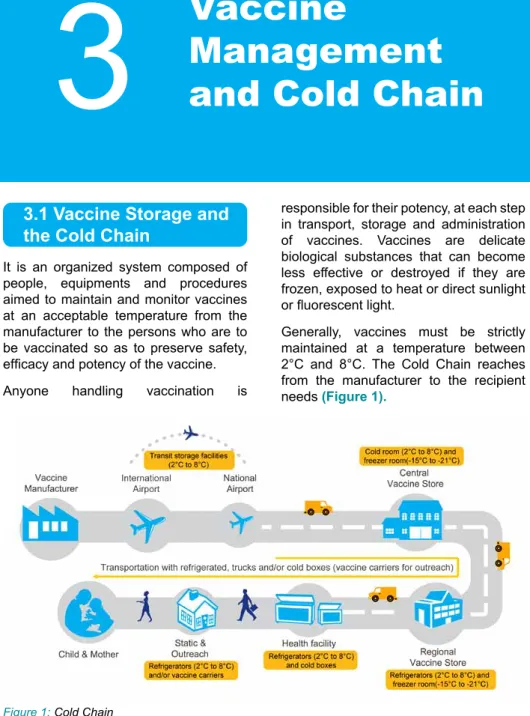
Generally, vaccines must be strictly maintained at a temperature between 2°C and 8°C. The Cold Chain reaches from the manufacturer to the recipient needs (Figure 1).
3.1 Vaccine Storage and
the Cold Chain
Vaccine management and cold Chain
3.2.1 The Refrigerator
A refrigerator has two compartments: the main compartment and the freezer. The main compartment is where vaccines are stored. It should work at temperatures between 0°C and +8°C. The freezer is where ice is made; it works at temperatures below freezing point. To ensure that the refrigerator works well; it should be loaded and used correctly, and desired temperature should be maintained and monitored continuously.
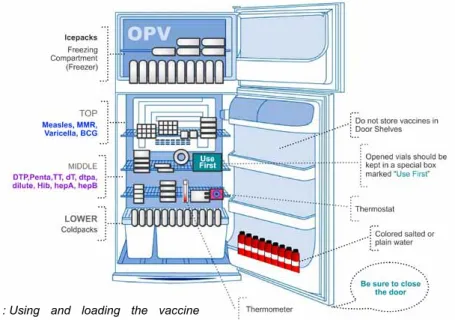
Loading and using the refrigerator
l The vaccines should be kept on the top and middle shelves of the main compartment.
lThe vaccines should be stacked carefully so that air can circulate between the boxes.
3.2 Vaccine Storage
Equipment
l In standard refrigerators, plastic bottles of water or spare ice packs should be kept on the lower shelf of the main compartment; this helps to maintain the refrigerator working a constant temperature.
lThe diluent water, used to reconstitute vaccines such as measles vaccine, should be kept in the main compartment with the vaccine.
lA special box in the main compartment should be used for keeping returned vaccines that has been taken to an immunization session in a vaccine carrier.
l Ice packs and ice cubes should be kept in the freezer.
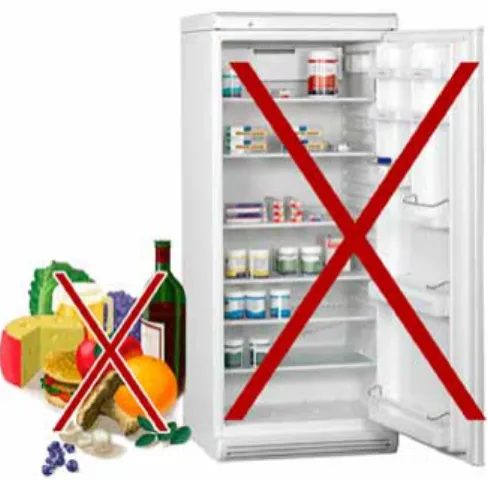
lAbsolutely, no food or drink should be kept in the vaccine refrigerator.
lVaccines should never be stacked on the shelves of the refrigerator door because this area is not cold enough. lExpired and partially used vaccines
should never be kept in the refrigerator and should be discarded immediately.
Figure 2 : Using and loading the vaccine refrigerator.
Immunization Guidelines - Department of Public Health & Safety, Health Policy & Strategy Sector
Maintaining and monitoring
the temperature of the main
compartment
l The refrigerator is equipped with a thermostat to control the refrigerator
temperature. The thermostat is adjusted using a knob in the main compartment. The knob has numbers 1-6 or 1-7, and an arrow to show which number is currently in use. Higher numbers indicate colder temperature. lA thermometer should be used to
measure the refrigerator temperature continuously; this should be kept in the main compartment.
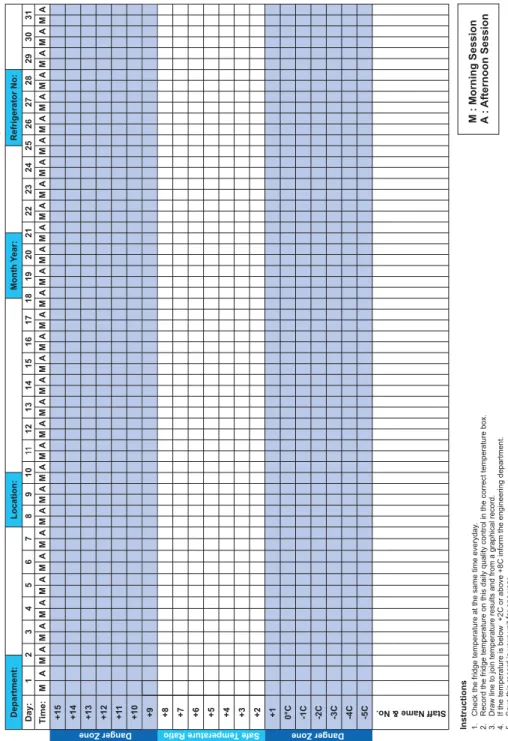
lThe refrigerator temperature should be checked twice daily, once in the morning and once in the afternoon, and should be recorded. The temperature record should be kept on top of the refrigerator or on the outside of the refrigerator door.
l It is advisable to assign one person to be in charge for the vaccine refrigerator temperature checks and records. However, all staff who use the vaccine refrigerator should be aware of these checks and records, and recognize any temperature defaults and what actions to take.
3.2.2 Vaccine Carriers
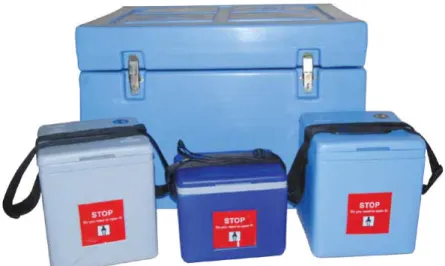
Vaccine carriers are containers made of insulation material (Figure 4). They are used for carrying and storing small quantities of vaccines during transportation and immunization sessions. Ice packs are used in vaccine carriers to preserve temperature. Care should be taken to avoid direct contact of certain vaccines vials, including DTP/DTap, DT, Td, TT, Hib, HBV, and pneumococcal vaccines, with ice packs. Figure 3: Vaccine refrigerator door should be
kept closed all the time and not to be used for any personal stuff.
In case they have to be saved for replacement or documentation; they have to be marked clearly and kept somewhere else outside the refrigerator.
l The refrigerator door should be kept closed. Opening the refrigerator door should be limited to no more than two to three times a day and should be closed quickly. Thus, planning ahead of time is essential to avoid unnecessary prolonged or frequent opening of the refrigerator door (Figure 3).
l Vaccine refrigerator should be defrosted
regularly. Newer refrigerators specific
for vaccines usually are equipped with auto-defrost.
Vaccine management and cold Chain
3.2.3 Ice Packs
Ice packs are flat plastic bottles filled with
water or gel (Figure 5). They are used for lining the walls of cold boxes and vaccine carriers to keep them cold, and in vaccine refrigerator to help to stabilize its temperature and to maintain a safe temperature level for longer period of time in case of electricity failure.
When filling ice packs with water, they should not be filled all the way to the
brim; air space should be left to allow ice expansion. Salt should not be added to the water as it lowers the temperature to sub-zero temperature; which is not recommended for some vaccines that should not be exposed to freezing point including DTP, DTap, DT, Td, TT, Hib, and pneumococcal vaccine.
Ice packs should be loosely packed in deep freezer or freezer compartment in
upright or oblique position; they should not be stacked on top of each other to avoid cracking the freezer compartment. Any damaged or leaking ice packs should not be used and should be replaced. Figure 4 : Vaccine carriers.
Immunization Guidelines - Department of Public Health & Safety, Health Policy & Strategy Sector
3.2.4 Cold box
Cold boxes are used to collect and transport large quantities of vaccines for health centers and regional store. Cold boxes can be used to store vaccines for several days (maximum 144 hours or 6 days without opening the box) in case of electricity failure. Ice packs (24 packs) are usually required to maintain desired temperature in the ice box.
3.3.1 Cold Chain Monitor Card
(CCM)
CCM was introduced to monitor international shipment of vaccines. WHO recommends one card per shipping box containing 3000 doses. The monitor card has two heat-sensitive indicators in the
form of a strip with 4 windows. The first
indicator is for the A, B, and C windows, and the second one is for the D window. They are separate because they are activated by different temperatures. The instructions for interpreting the readings are printed on the monitor card
(Figure 6).
3.3 Vaccine Cold Chain
Monitors
Vaccine management and cold Chain
To activate the card a small tab on the left hand side of the strip should be pulled out. When the strip is exposed to temperature above 10°C; a blue color begins to
appear in the first window, marked ‹A›. If
the temperature then drops below 10°C the blue color stops spreading to next window. Each time the strip is exposed to temperatures above 10°C the blue color will spread further across the windows from A to C. The color change is irreversible. When the card is exposed to temperature above 34°C; the window labeled D turns blue within one hour. Once the color has changed to blue it will never change back to white (Figure 7).
There is usually one monitor card packed with each shipment of 3,000 doses of vaccine. When the vaccine arrives at each level, central, regional, or sub-regional stores, the distributor should check the monitor card for any blue color on the strip. If there is no blue color, it means that this shipment of vaccine has never been exposed to temperatures
above 10°C. The distributor should fill in
the top part of the monitor card with the date of arrival of the shipment, the name, the location of the cold store, and mark the index column. In case there is no blue color showing in any of the windows, a
dash filled in the index column. If window
A is entirely blue, the letter “A” should be written in the index column. If window A & B are entirely blue, the letters “A & B” should be written and so on. If any window is partially blue it should be documented in the index column.
The monitor cards should always be kept in the cold room or refrigerator, along with the vaccines with which they are originally packed with. The card should be checked periodically for any color changes and appropriate actions must be taken when there is blue color showing in any of the cards. The distributor may have to send
Figure 7: Activation of the monitor card.
vaccines to several destinations at the same time. The ideal situation would be to have enough monitor cards for each destination. Before the distributor puts the monitor card with vaccine he has to write the date on which the vaccine leaves the store, and enter the index registered on the monitor.
The healthcare professionals at regional, sub-regional and health center levels should follow the same steps when they pack their cold boxes and vaccine carriers.
In case of vaccines with VVM the CCM will not be applicable.
3.3.2 Cold chain refrigerator and
freezer graph
The purpose of the graph is to monitor the refrigerator and freezer temperature and to identify any impending problem of cold chain failure. It is important that at least one
vaccine thermometer is available in each vaccine refrigerator to monitor temperature. There are several types of vaccine thermometers for this purpose
Immunization Guidelines - Department of Public Health & Safety, Health Policy & Strategy Sector
Figure 8: Types of vaccine thermometers.
If the temperature rises steadily over a few days it may probably mean that the compressor is failing. Immediately the responsible staff should be informed to take appropriate action for repairs. If the temperature chart shows wide variations between the beginning of the session and the end of the session, this
may indicate frequent opening of the refrigerator door. In this case actions should be taken to minimize door opening and perhaps to increase the temperature stability by increasing the number of cold packs in the refrigerator.
Sample of cold chain refrigerator graph is shown in (Figure 9).
Vaccine management and cold Chain
Immunization Guidelines - Department of Public Health & Safety, Health Policy & Strategy Sector
In case of a cold chain failure due to power failure for short breaks (< 2 hours); the best solution is to keep the fridge door closed with the vaccines inside, meanwhile, time should be utilized for identifying the problem, solving it, and preparing the cold box.
If power failure continued beyond 2 hours; the vaccines and cold chain monitors should be transferred to a vaccine carrier or vaccine cold box.
After the problem has been solved and the temperature of the refrigerator has returned to the safe range 2°C to 8°C the vaccines and cold chain monitors should be replaced in the refrigerator.
3.3.3 Freezer indicators
Freezer indicator is irreversible temperature indicator, to show if a package of vaccines was exposed to freezing temperature. The color changes from white to blue if exposed to temperature below 0°C (blue) for more than 1 hour. This warns the recipient that the vaccine was probably frozen
(Figure 10).
Vaccines such as DTP, T, DT, Td, Hib and HBV lose their potency if frozen or exposed to freezing temperature.
If it is suspected that these vaccines have been frozen the “shake test” should be
performed as described below to confirm
or rule out whether the vaccine being tested has been frozen or not (Figure 11).
The shake test is most easily demonstrated using a vaccine vial that you personally froze and do not intend to use for immunization. This vial can be used
Figure 10: Freezer indicators.
as a “frozen control sample’” and is to be compared with suspect vaccines from the same batch number. To perform the test; both vials should be shaken vigorously for 10-15 seconds, then left at rest, and observed to compare sedimentation rate. If the frozen control vial shows much faster sedimentation than in the vial being tested, the vaccine in question is probably potent and may be used. If, however, the sedimentation rate is similar and contains
flakes, the vial under test should not be
used. It is important that the shake test is done using both “tested” and “control” vaccine vials produced by the same manufacturer. Since the batches may behave differently, therefore the shake test should be repeated with all batches involved in the shipment.
Vaccine management and cold Chain
Figure 11: The shake test.
3.3.4 The vacine vial monitor
The Vaccine Vial Monitor (VVM) is one
of the most significant developments
in the history of cold chain technology. It is applied directly to a vaccine vial by the vaccine manufacturer; it enables the health care professional to verify at the time of use whether each vaccine is in usable condition and has not lost its
potency and/or efficacy due to exposure
to heat. More and more vaccines are now being supplied with VVM.
Vaccine itself exhibits no visible change with heat exposure. Prior to the development of the vaccine vial monitor, there was no way for health care professional to recognize if a vaccine had been properly refrigerated. Now, with the vaccine vial monitor, the health care professional can easily identify if a vial had been exposed to too much heat and
thus avoid giving it to patients (Figure 12).
WHO, UNICEF and manufacturers of OPV decided in their meeting in Oct›94 that all vials of oral polio vaccine, which
meet WHO standards, shall be fitted with
vaccine vial monitors as of 1st January 1996.
The benefits of using vaccine vial
monitors include the ability to keep opened vials of polio vaccine until fresh supplies arrives, decrease in vaccine
wastage rates by 30%, the flexibility to
take vaccine «beyond the cold chain»
where it is necessary in reaching difficult
locations, and giving the health care
professionals confidence that they are
administering vaccines unharmed by heat exposure.
Future vaccines will contain individual vaccine vial monitors.
Immunization Guidelines - Department of Public Health & Safety, Health Policy & Strategy Sector
Figure 12: The vaccine vial monitor (VVM).
3.4.1 Ordering vaccines
It is recommended to keep 2-3 weeks supply at a time. The quantity of required vaccines can be estimated based on usage and left over, seasonal variations, disease outbreaks, and storage capacity.
3.4.2 Receiving vaccines
Upon receiving vaccines from the distributor, the health care provider should make sure that the packs are still cool, the contents of the shipment match the order form, and the monitor card does not
reflect any heat exposure. Afterward the
new stock of vaccines should be entered ledger book. And vaccines should be stored in the fridge immediately, with the new vaccines behind current stock to ensure rotation.
3.4 Key points for handling
and storing vaccines
When storing vaccines, the following points should be considered:
Vaccines should be kept in their packaging as this provides insulation and protects against thermal insult.
l Monitors should be kept together with the vaccine they arrived with
lThe door and drawers of fridges
should be filled with bottles of water to
maintain steady temperatures.
lVaccine stock should not exceed 50% of a domestic fridge volume in order to allow for circulation of air in fridge. lVaccines should not be stored against
the walls of the refrigerator, on the refrigerator door, close to the rear freeze plate or the refrigerator icebox. lThe refrigerator should be placed in a
well-ventilated room, away from direct sunlight or heat source, and along an internal rather than external wall.
Immunization Guidelines - Department of Public Health & Safety, Health Policy & Strategy Sector
Immunization
Information
System
4
Vaccination Information System (VIS) generally require updating the registry forms and vaccination cards used for recording and reporting vaccine administration, forms for adverse events, forms for ordering vaccines and vaccine stock ledgers, and any other forms that are required by health regulation or public health and safety department.
The forms used should reflect the vaccine
that is actually used according to the immunization schedule. In addition to the forms, the various sectors that use the information will also need to be updated
to assure unified reporting system.
The VIS process includes aggregate immunization coverage data from the vaccination clinics (public and private) levels upwards, including reporting at national level.
Collaboration and communication with the different sectors providing vaccination services is needed to make sure of adequate VIS that required for monitoring and evaluation of immunization services.
4.1 General
recommendations:
Vaccine Qualified Clinics (VQCs) should
have a book or register where each child’s immunization history can be registered and tracked back.
l Child immunization cards should be available at each VQC visit.
lThe VQC should have a system to ensure that the children who are
cared for in a specific clinic are fully
immunized.
lThe clinics must make regular reports to Dubai Health Regulation Department on the progress of the immunization activities.
lAll private clinics must maintain an
immunization record register as per the format recommended by Dubai Health Regulation Department (appendix. This register must be kept updated and would be inspected during routine visits by Dubai Health Regulation supervisor.
lMonthly vaccination and consumption of the vaccines reports should be completed each month and submitted to Health Regulation Department.
Immunization Information System
4.2 Basic recording tools:
The main recording tools that each health facility must use are:
lImmunizations register. lChild immunization card. lTally sheets.
lVaccination Adverse Events Reporting form.
lSystem for tracking defaulters.
4.2.1 Immunization Register
The immunization register helps health professionals keep track of the immunization services they offer to each child (Appendix 1). A register should include the following information, as well as any information required by your health facility:
lA unique identification number.
lRegistration date (usually the date of
the first visit).
lName of the child. lChild’s birth date.
lDetails of vaccinations provided. lNext appointment.
Below are the steps that describe the use of the immunization registry:
lThe children must be registered as soon as they arrive at the health facility and have all information completed as soon as vaccination is provided. lIt is not recommended to create a new
entry in the register each time the child is brought for immunization.
l Look for a corresponding entry in the
register according to the immunization card. If not available, locate in the registry based on information obtained from the mother.
lFor a new child not immunized before; create a new entry in the register and issue a new immunization card.
lFor a child who has come to your
health facility for the first time but has
received immunizations in another health facility, create a new entry in the register, ask for the immunization card and mark on the register immunizations that the child has already received. lA referral form should be completed
and send to the health facility where the child followed.
4.2.2 Child Immunization Card
A child’s immunization card is a document
that reflects child’s immunization status,
which can be a separate document or part of a general child health record e.g. “Road to Health Card”.
The child immunization card should include: lThe child’s unique identification number. lName of child.
lChild’s birth date. lChild’s sex.
lName and address/contact information of parents.
Each child should have an immunization card. The immunization card should
reflect the national immunization
schedule with the child’s immunization history and status marked correctly. The immunization card should be kept by the child’s parents/guardian. The immunization card should be checked and updated at each immunization visit,
Immunization Guidelines - Department of Public Health & Safety, Health Policy & Strategy Sector
including documentation of the date of each immunization and the due date for the next immunization.
The immunization card serves as a reminder for parents to return to the clinic for the next immunization visit, helps the health professionals determine child’s immunization status, and can be useful to conduct coverage surveys. In certain circumstances the immunization card is the only available documentation for the child’s immunization records; this is usually the case if the patient moves from one health care facility to another or if the immunization registers are not well maintained.
4.2.3 Tally sheets
Tally sheets are forms on which health care professionals make a mark every time a dose of vaccine is administered. Tally sheets are useful for survey and reporting purposes.
A new tally sheet should be used for each vaccination session. At the end of each immunization session the tally sheet provides data on the total the number of doses of each vaccination given during the session. Information obtained will be used to monitor vaccination performance and prepare a monthly report (Appendix 2).
4.2.4 Vaccination Adverse Events
reporting form
Adverse event following vaccination is a medical incident that occurs after administration of vaccine, causes concern, and is believed to be caused by the vaccination.
Common events are to be expected and health professionals should advise parents at each visit of the likely consequences of vaccination and how to deal with them.
Rare events which might be serious and should be reported include the following: lAll injection site abscesses.
lAll deaths that are thought by health professionals, or the public, to be related to immunization.
lAll cases requiring hospitalization that is thought by health professionals, or the public, to be related to immunization. l Other severe or unusual medical
incidents that are thought by health professionals, or the public, to be related to immunization.
These events usually occur within a month of immunization. However, some medical incidents can be related to immunization have a delayed onset. (Please refer to Chapter 5).
4.2.5 System for tracking defaulters
Each health facility (VQC) should devise an appropriate way for tracking children who do not show up for their immunizations on the appointed days. Monitoring and follow up of defaulters should be done regularly. Upon identifying defaulters, immediate contact with guardian/parent should be made to remind them about vaccination date. Different means of contact can be used such as phone calls or e-mails.
Here are some tracking systems that can easily be used for tracking defaulters:
Electronic tracking system
Immunization register - Immunization register can be used to identify defaulters. At the end of each month, the immunization register can be reviewed to identify children who may have failed to receive doses of vaccine when due. Reminder cards - To make immunization
Immunization Information System
“reminder” cards; a copy of the
immunization card should be filed in a
box for the month when the infant’s next vaccination is due.
Figure 13: Immunization reminder card
4.3 Reporting
Immunization services
The immunization data collected needs to be consolidated into a Summary Report, either manually or electronically, for transmission from the health facility to the higher authority levels. At each level the data should be analyzed and used to improve immunization services.
The format of the summary report should
be defined at local/national level and
should be standard for all health facilities. Health professionals should ensure that the reports prepared are complete, timely and accurate.
Summary Report should include: lReporting on vaccinations given.
lReporting on vaccine-preventable diseases in your area.
lReporting on any adverse reactions following immunization.
lReporting vaccine usage and wastage patterns.
lAny specific problems encountered during the reporting period (e.g. stock-outs, transportation problems, cold chain failure).
Immunization Guidelines - Department of Public Health & Safety, Health Policy & Strategy Sector
Immunization
Adverse Events
5
An adverse event following immunization (AEFI) is any adverse event that follows immunization and is believed to be caused by the immunization. Reported adverse events can either be true adverse events, i.e. really a result of the vaccine or immunization process, or coincidental events that are not due to the vaccine or immunization process but are temporally associated with immunization.
Every immunization program should endeavor to make vaccination risk-free. Furthermore, those in charge should address any cause for concern that arises in the population about the safety of immunization, for example the effects observed during clinical trials prior to the issuing of licenses or during the experimental stages of a vaccine’s development.
The failure to deal rapidly and effectively with allegations of vaccine-related adverse events can undermine
confidence in a vaccine and ultimately
reduce immunization coverage and increase disease incidence.
The existence of many events that are supposedly related to a given vaccine indicate that there may be a problem with its application (program operation errors), such as contamination, improper injection, problems in the
cold chain, dosage errors, or dilution or administration of vaccines as though they were drugs. It is imperative that each vaccination provider be aware of these potential problems and recognizes them when they occur, so that they are corrected immediately. Nevertheless, vaccine-associated adverse events may affect healthy people and should be
promptly identified to allow for additional
research and appropriate action.
In order to respond promptly, efficiently, and with scientific rigors to vaccine safety
issues, WHO has established a Global Advisory Committee on Vaccine Safety. DHA has established a reporting system and all vaccine related adverse events will be reported (Appendix 3).
AEFIs are classified into five categories;
vaccination reaction, program error, coincidental, injection reaction, and unknown when the cause of the AEFI remains unknown.
5.1 Vaccine reactions
Vaccine reactions are events caused or precipitated by the vaccine when given correctly caused by the inherent properties of the vaccine.
Vaccine reactions may be classified into
common, minor reactions or rare, more serious reactions. Most vaccine reactions
Immunization Adverse Events
are minor and settle on their own. More serious reactions are very rare and in general do not result in long-term problems.
5.1.1 Common, minor vaccine reactions
Common, minor vaccine reactions include local and systemic reactions. These reactions can result as part of the immune response, or reaction to some of the vaccine’s components such as aluminum adjuvant, stabilizers or preservatives. These reactions occur within a day or two of immunization
(except for measles/MMR – 6 to 12 days
after immunization) and they only last one to a few days.
Local reactions
Local reactions include pain, swelling and/or redness at the injection site and can be expected in about 10% of vaccinees, except for those injected with DTP (whole cell), or tetanus boosters, where up to half can be affected. BCG
causes a specific local reaction that
starts as a papule (lump) two or more weeks after immunization that then becomes ulcerated and heals after several months, leaving a scar. Keloid
(thickened scar tissue) from the BCG lesion is more common among Asian and African populations.
Systemic reactions
Systemic reactions include fever and occur in about 10% or less of vaccinees, except for DTP where it is again about half. Other common systemic reactions (e.g., irritability, malaise, loss of appetite) can also occur after DTP. For measles/ MMR and OPV the systemic reactions arise from vaccine virus infection. Measles’ vaccine causes fever, rash and/or conjunctivitis, and affects 5-15% of vaccinees. It is very mild compared to ‘wild’ measles, but for severely immunocompromised individuals, it can be severe, even fatal. Vaccine reactions for mumps (swollen parotid gland) and rubella (joint pains and swollen lymph nodes) affect less than 1% of children. Rubella vaccine causes symptoms more often in adults, with 15% suffering from joint pains. Systemic reactions from OPV affect less than 1% of vaccinees with diarrhea, headache and/or muscle pain.
Table 7 summarizes the occurrence of common minor vaccine reactions and their treatments.
Immunization Guidelines - Department of Public Health & Safety, Health Policy & Strategy Sector
Rare and more serious vaccine reactions Rare and more serious vaccine reactions include reactions such as seizures, thrombocytopenia, hypotonic hyporesponsive episodes, and persistent inconsolable screaming. Most of these reactions do not lead to long-term problems. Anaphylaxis, while potentially fatal, is treatable without leaving any long-term effects. Although
encephalopathy is included as a rare reaction to measles or DTP vaccine, it is not certain that these vaccines in fact cause encephalopathy (brain damage). Some serious events that have been reported following immunization are likely to be coincidental rather than true reactions. Table 8 summarizes the occurrence of some rare vaccine reactions and their treatments.
Immunization Adverse Events Prevention and treatment of vaccine
reactions
Vaccines are very rarely contraindicated. However, it is important to check for contraindications to avoid serious reactions. For example, vaccines are contraindicated if there is serious allergy to the vaccine or its components. Live vaccines should not be given to
immune-deficient children.
Advice on managing the common reactions should be given to parents, as well as instructions to return if there are more serious symptoms. This will help to reassure parents about immunization and prepare them for these common reactions.
A feverish child can be cooled with a tepid sponge or bath, and by wearing cool
clothing. Extra fluids need to be given to
feverish children. For a local reaction, a cold cloth applied to the site may ease the pain.
5.1.2 Program error
Program errors result from errors and accidents in vaccine preparation, handling, or administration (Table 9). They are preventable and detract from
the overall benefit of the immunization program. The identification and correction
of these errors are of great importance. A program error may lead to a cluster of events associated with immunization. These clusters are usually associated with a particular provider, or health facility, or even a single vial of vaccine that has been inappropriately prepared or contaminated. Program errors can also affect many vials (e.g. freezing vaccine during transport leading to an increase in local reactions).
The most common program error is infection as a result of non-sterile injection. The infection can manifest as a local reaction (e.g. suppuration, abscess) or systemic eff