Development and feasibility evaluation of a
repetitive functional task practice (RFTP)
programme for upper limb recovery early after
stroke.
A thesis submitted for the degree of Doctor of Philosophy
Lianne Jetta Brkić
Student number: 110492784
Institute of Neuroscience
Newcastle University
Supervisors: Professor Helen Rodgers, Dr Lisa Shaw and
Professor Frederike van Wijck
Abstract
Introduction:
Loss of arm function is common after stroke. Systematic reviews suggest upper limb recovery following stroke may be improved by repetitive functional task practice (RFTP), but results fell short of statistical significance.
Methods:
Development and evaluation of an intervention to improve upper limb function post-stroke following the MRC Framework:
1. Development of an upper limb RFTP programme for patients with acute stroke based on published RCTs, motor learning theory, clinical expertise and
stakeholder feedback.
2. Delivery of the RFTP programme to seven stroke patients by a research physiotherapist. Adaptations following feedback from patients and therapists. 3. A multicentre feasibility randomised controlled trial.
Results:
An evidence-based upper limb RFTP programme was developed, tested and refined. It commenced within 14 days of acute stroke and consisted of functional goal setting followed by independent activity practice (total 80 daily repetitions), for up to four weeks with twice weekly therapist reviews.
In the multicentre feasibility RCT, 55 eligible patients were identified from three study sites representing 4-6% of patients screened. Twenty four participants were
randomised to receive the RFTP programme delivered by NHS therapists + usual care (intervention group) or usual care (control group). Two sites met the recruitment target of 1-2 per month. The programme was delivered as intended at 2/3 sites. The median number of therapist sessions delivered was 6 [IQR 3-8]. Participants
recorded a median 80 daily repetitions [IQR 39-80]. Outcome assessments were undertaken for 22/24 (92%) participants at 1 month and 20/24 (83%) at 3 months.
Conclusion:
A structured approach has been followed to develop and evaluate an upper limb RFTP programme which is acceptable to patients and NHS therapists. A multicentre
RCT to evaluate an upper limb RFTP programme is feasible, but this project identified issues which need to be addressed when designing a Phase III study.
Dedication
This thesis is dedicated to my brother Adam Vlatko Brkić who always believed in me and was the most courageous man I’ve ever met. I’ll always look up to you and hope I’ve made you proud.
Acknowledgements
I would like to thank the following people:Professor Helen Rodgers: Thank you for offering me this wonderful opportunity and so many other opportunities whilst undertaking my PhD. I am extremely grateful for your unwavering support, guidance and encouragement.
Dr Lisa Shaw: Thank you for continuously supporting, guiding and nurturing this former research fledgling. You always found time to listen to me and talk through my endless queries – you’ve been an absolute rock.
Professor Frederike van Wijck: Thank you for all of your support and encouragement, sharing your therapy expertise and challenging my thinking.
Project participants: Thank you for taking part in this project during a difficult time in your lives.
Local NHS study site staff: Thank you to the study site Principal Investigators, NIHR Stroke Research Network staff, local study therapists and outcome assessors at all study sites.
The Stroke Association: Thank you for funding the project and allowing me to undertake the project as a PhD.
Dr Helen Bosomworth: Thank you for being a fantastic friend and for helping me wrestle the EndNote beast – we won in the end!
My parents: Thank you both for your limitless support and love. I could not have done this without you. Dad – thank you for being the project poster boy and ‘model father’, posing for endless pictures for study documents.
My friends: Thank you for supporting me, listening to endless ‘thesis talk’ and
Thesis author responsibilities / contribution
This project was developed by Professor Helen Rodgers and co-investigators (Dr Lisa Shaw, Professor Frederike van Wijck, Dr Christopher Price, Professor Caroline Watkins, Professor Anne Forster and Professor Peter Langhorne) who secured a project grant from the Stroke Association to conduct this work.
I joined the team at the start of the project (September 2011), when I was seconded from my NHS position as a senior neurological physiotherapist to work on design and development of the RFTP programme. After commencing work on the project, I was offered the opportunity to undertake the project as a PhD and remain working on the project until its completion. The study stages were outlined by the study investigators. Some aspects of the RFTP programme were pre-specified in the project funding application and details are provided in Chapter 3. My contribution during each stage is explained further below.
Development of an upper limb RFTP programme
I was responsible for developing the RFTP programme with assistance from my supervisory team.
Delivery of the RFTP programme to stroke patients by a research physiotherapist and subsequent modification following feedback from patients and therapists
I prepared study documents and applications for Research Ethics Committee (REC) approval and local R&D approvals under the supervision of Professor Helen Rodgers and with assistance from Dr Lisa Shaw. I attended the REC meeting with Professor Rodgers. I was the local Principal Investigator for one of the study sites and the research physiotherapist who delivered the RFTP programme to seven patients with stroke. I performed the data analysis and modified the programme for use in the multicentre feasibility RCT.
Multicentre feasibility randomised controlled trial (known as the RAFTAS study) Under the supervision of Professor Rodgers and Dr Lisa Shaw, I co-ordinated study set up which included preparation of study documents (e.g. Participant Information Sheet, consent forms) and applications for REC approval and local R&D approvals. I attended the REC meeting alone.
During the RAFTAS feasibility study, under the supervision of Professor Helen Rodgers and Dr Lisa Shaw I:
Identified appropriate local NHS therapists at each study site who were suitable to work as local study therapists and negotiated with relevant local therapy managers.
Acted in the role of local Principal Investigator for one of the study sites. Trained local study site staff including 8 local NIHR Stroke Research Network
staff members (study screening and baseline assessment procedures), 7 local therapists (delivery of the RFTP programme and outcome assessments) and 6 usual post stroke rehabilitation staff (completion of usual post stroke
rehabilitation data collection forms).
Supported all local site staff and assisted with procedures at site when necessary.
Conducted semi-structured interviews with participants who received the RFTP programme and local study therapists who delivered the RFTP programme.
Completed and submitted annual reports to the study funder (the Stroke Association)
Completed analysis of quantitative data (with guidance from Dr Richard Francis who has expertise in quantitative data analysis).
Completed analysis of qualitative data (with advice from Professor Catherine Exley, Professor of Qualitative Health Research).
Interpreted RAFTAS feasibility study results.
Mr Michael Adams (research support staff) transcribed the local study therapist and participant interviews and entered data onto the study database.
Publications and presentations
Conference oral presentations:
Title: A pilot randomised controlled trial of a repetitive functional task practice programme for patients with reduced upper limb function early after stroke
Organisation: The Society for Rehabilitation in Research
Venue: St. James’ Park, Newcastle Presentation Date: 09/06/2015
Conference poster presentations:
1. Title: Development of a repetitive functional task practice (RFTP) programme for upper limb recovery early after stroke (WIP)
Organisation: The Society for Rehabilitation in Research
Venue: East Midlands Conference Centre
Presentation Date: 05/02/2013
2. Title: Repetitive arm functional tasks after stroke (RAFTAS) study
Organisation: NIHR North East Stroke Research Network Conference
Venue: The Civic Centre, Newcastle
Presentation Date: 19/09/2013
3. Title: Repetitive arm functional tasks after stroke (RAFTAS) study
Organisation: The UK Stroke Forum
Venue: Harrogate International Centre, Harrogate
Presentation Date: 04/12/2013
4. Title: Repetitive arm functional tasks after stroke (RAFTAS) study: Phase B
Organisation: Joint NICR/IAH post-graduate research day Venue: Newcastle University
Presentation Date: 07/03/2014
5. Title: Development of a Repetitive functional task practice (RFTP) programme for patients with upper limb impairment early after stroke
Organisation: Scottish Stroke Allied Health Professions Forum
Venue: Dewar’s Conference Centre, Perth Presentation Date: 12/06/2014
6. Title: Development of a repetitive functional task practice (RFTP) programme for patients with upper limb impairment early after stroke
Organisation: The Society for Rehabilitation in Research
Venue: Glasgow Caledonian University
Presentation Date: 10/06/2014
7. Title: A pilot randomised controlled trial of a repetitive functional task practice programme for patients with reduced upper limb function early after stroke
Organisation: European Congress of Neurorehabilitation
Venue: Hofburg Congress Center, Vienna, Austria
Presentation Date: 03/12/2015
Journal publications and submissions:
1. L Brkic, L Shaw, F van Wijck, C Price, C Watkins, A Forster, P Langhorne, H Rodgers. 2015. Development of a repetitive functional task practice (RFTP) programme for patients with upper limb impairment early after stroke. Proceedings of SRR, Clinical Rehabilitation, vol 29 (4) 394-412
2. L Brkic, L Shaw, F van Wijck, C Price, C Watkins, A Forster, P Langhorne, H Rodgers. 2015. A pilot randomised controlled trial of a repetitive functional task programme for patients with reduced upper limb function early after stroke. Proceedings of European Congress of Neurorehabilitation, Neurologie & Rehabilitation, Special issue 7.
3. L Brkic, L Shaw, F van Wijck, C Price, C Watkins, A Forster, P Langhorne, H Rodgers. 2016. Repetitive arm functional tasks after stroke (RAFTAS): a pilot randomised controlled trial. Pilot and Feasibility Studies, 2:50.
Invited oral presentation:
Title: Development and feasibility evaluation of a repetitive functional task practice (RFTP) programme for upper limb recovery early after stroke
Organisation: NIHR Clinical Research Network, North East Regional Rehabilitation Showcase
Venue: Research Beehive, Newcastle University
Contents
Dedication ... iii
Acknowledgements ... v
Thesis author responsibilities / contribution ... vii
Publications and presentations ... ix
Chapter 1. Introduction ... 1
Overview of stroke ... 1
Consequences of stroke ... 1
Upper limb problems after stroke ... 1
Upper limb rehabilitation after stroke ... 2
Neuroplasticity and early upper limb rehabilitation after stroke ... 2
Therapeutic interventions for improving upper limb functional recovery ... 3
Repetitive functional task practice (RFTP) definition and theoretical basis .... 3
Current UK recommendations for use of RFTP ... 6
Evidence for repetitive functional task practice (RFTP) for improving upper limb function after stoke ... 6
Randomised controlled trials evaluating the use of RFTP for the upper limb after stroke ... 6
Appraisal of the Cochrane systematic review (2007) [27] of repetitive task practice for improving functional ability after stroke. ... 58
Discussion of the evidence for repetitive functional task practice (RFTP) for improving upper limb function after stoke ... 61
Developing and evaluating complex interventions ... 64
Summary of introduction ... 66
Chapter 2. Project Aim and Objectives ... 67
Project aim ... 67
Chapter 3. Development of the initial RFTP programme ... 69
Aim and objectives ... 69
Aim ... 69
Objectives ... 69
Sources of information used to model the RFTP programme ... 69
Modelling the initial RFTP programme: Setting, content, delivery and dose 70 RFTP programme setting ... 70
RFTP programme content ... 71
RFTP programme delivery ... 75
RFTP programme dose ... 79
Designing the RFTP programme documentation ... 82
Documentation for participant use ... 82
Documentation for therapist use ... 84
Stakeholder involvement and modifications to the RFTP programme following feedback ... 84
Collection of stakeholder feedback ... 84
Stakeholder feedback ... 86
Further modelling of the RFTP programme following stakeholder feedback ... 89
Summary of the developed RFTP programme ... 90
Potential strengths and weaknesses of the RFTP programme ... 93
Potential strengths of the RFTP programme ... 93
Potential weaknesses of the RFTP programme: ... 94
Conclusion ... 94
Chapter 4. Non-randomised feasibility study ... 95
Non-randomised feasibility study: Aim and objectives ... 95
Non-randomised feasibility study aim ... 95
Non-randomised feasibility study objectives ... 95
Study design ... 95
Setting ... 97
Population ... 97
Screening and recruitment ... 98
The RFTP programme ... 98
Data collection ... 98
Study withdrawal ... 100
Safety of the RFTP programme ... 100
Training of NHS staff ... 101
Sample size ... 101
Study data analysis ... 101
Ethics and governance ... 101
Non-randomised feasibility study: Results ... 102
Study recruitment ... 102
Participant baseline characteristics ... 106
Therapy sessions delivered ... 107
Participant feedback about the RFTP programme ... 111
Research physiotherapist’s observations about delivering the RFTP programme ... 115
Local NHS staff feedback ... 116
Safety of the RFTP programme ... 117
Usual post stroke rehabilitation ... 119
Non-randomised feasibility study: Discussion ... 120
Summary of implications for later in the project (RAFTAS feasibility study)125 Future reporting of the RFTP programme ... 126
Non-randomised feasibility study: conclusion ... 130
Chapter 5. Repetitive arm functional tasks after stroke (RAFTAS) feasibility study: Aim, objectives and methods ... 131
RAFTAS feasibility study: Aim and objectives ... 132
RAFTAS feasibility study aim ... 132
RAFTAS feasibility study objectives ... 132
RAFTAS feasibility study: Methods ... 133
Study design ... 133
Study setting and study site selection ... 135
Local study site staff ... 135
Study population ... 136
Study screening and recruitment data ... 136
Case ascertainment, recruitment and consent ... 137
Baseline assessment ... 137
Randomisation... 137
Study intervention treatment (RFTP programme) ... 137
Study control treatment ... 138
Usual post stroke rehabilitation ... 138
Outcome assessments ... 138
Blinding of outcome assessments ... 138
Study withdrawal ... 139
Safety ... 139
Sample size ... 140
Data analysis ... 140
The views and experiences of study participants and local study therapists about the RFTP programme ... 140
Ethics and Governance ... 142
Chapter 6. Repetitive arm functional tasks after stroke (RAFTAS) feasibility study: Consolidated Standards of Reporting (CONSORT) flow diagram ... 143
Chapter 7. Repetitive arm functional tasks after stroke (RAFTAS) feasibility study: Recruitment rate and the main reasons why patients were not enrolled in the study. ... 145
Results ... 145
Recruitment period ... 145
Screening and enrolment ... 145
RAFTAS feasibility study recruitment rate ... 150
Discussion ... 151
Chapter 8. Repetitive arm functional tasks after stroke (RAFTAS) feasibility study: Data completeness and summary statistics at baseline ... 157
Results ... 157
Discussion ... 160
Chapter 9. Repetitive arm functional tasks after stroke (RAFTAS) feasibility study: Local study therapist and participant adherence to the RFTP programme ... 170
Results ... 170
Time from randomisation to the initial therapy assessment ... 172
Number of RAFTAS therapy sessions delivered ... 172
Patient selected upper limb rehabilitation goals ... 175
Recovery activities selected ... 177
Action taken by local study therapists at each RAFTAS therapy session ... 178
Participant independent practice and logging of recovery activities ... 181
Discussion ... 185
Chapter 10. Repetitive arm functional tasks after stroke (RAFTAS) feasibility study: Usual post stroke rehabilitation ... 189
Results ... 189
Discussion ... 193
Chapter 11. Repetitive arm functional tasks after stroke (RAFTAS) feasibility study: Attrition, data completeness and summary statistics of clinical outcomes at 1 and 3 months ... 197
Results ... 197
Attrition ... 197
Timing of study outcome assessments ... 198
Clinical outcomes ... 200
Discussion ... 202
Chapter 12. Repetitive arm functional tasks after stroke (RAFTAS) feasibility study: Outcome assessor blinding ... 210
Results ... 210
Discussion ... 211
Chapter 13. Repetitive arm functional tasks after stroke (RAFTAS) feasibility study: Adverse events... 212
Results ... 212
New medical problems ... 212
Pain in the upper limb affected by stroke ... 213
Fatigue ... 216
Increased muscle tone (spasticity) in the upper limb affected by stroke ... 217
Serious adverse events (SAEs) ... 220
Discussion ... 220
Chapter 14. Repetitive arm functional tasks after stroke (RAFTAS) feasibility study: Views and experiences of study participants and therapists about the RFTP programme ... 224
Results ... 224
Study participants ... 224
Local study therapists ... 238
Discussion ... 244
Chapter 15. Repetitive arm functional tasks after stroke (RAFTAS) feasibility study: Study outcome and lessons learnt to inform the design and conduct of a Phase III study ... 246
RAFTAS feasibility study outcome... 246
Lessons learnt to inform the design` and conduct of a Phase III study ... 246
Selection of study sites ... 246
Recruitment ... 248
Eligibility criteria ... 249
Consent and randomisation/ stratification ... 249
The RFTP programme (intervention) ... 250
Control treatment and usual post stroke rehabilitation ... 252
Study attrition and timing of outcome assessments ... 252
Outcome measures ... 253
Data quality, completeness and monitoring ... 254
Study blinding ... 255
Adverse events / safety ... 256
Conclusion ... 256
Appendix 1: Database search strategies ... 258
Appendix 2. Scottish Intercollegiate Guidelines Network (SIGN) Checklist ... 262
Appendix 3: Recovery activity List... 264
Appendix 4: Participant handbook ... 275
Appendix 5: Recovery activity Log Sheet example ... 301
Appendix 6: Recovery activity Log Sheet – Optional Activity ... 302
Appendix 7: Therapy session documents ... 303
Appendix 8: Therapy manual ... 320
Appendix 9: Usual post stroke rehabilitation data collection form ... 341
Appendix 10: Recovery activity Log continuation sheet ... 342
Appendix 11: Participant interview Topic Guide ... 343
Appendix 12: Local study therapist interview topic guide ... 346
Appendix 13: Example of initial coding of a participant interview ... 349
List of Figures
Figure 1: Phases of designing and developing complex interventions in the Medical Research Council (MRC) framework ... 65 Figure 2: The National Clinical Guideline for Stroke recommendations for goal setting [14] ... 76 Figure 3: Flowchart of the study design ... 96 Figure 4:All sites: Summary of study screening data ... 103 Figure 5:Study Site A: summary of study screening data ... 104 Figure 6:Study Site B: summary of study screening data ... 105 Figure 7: Number of therapy sessions delivered ... 107 Figure 8: Flowchart of the RAFTAS feasibility study design ... 134 Figure 9: CONSORT Flow Diagram of the RAFTAS Feasibility Study ... 144 Figure 10: All Sites: Summary of the RAFTAS feasibility study screening data ... 147 Figure 11: Study Site 1: Summary of the RAFTAS feasibility study screening data 148 Figure 12: Study Site 2: Summary of the RAFTAS feasibility study screening data 149 Figure 13: Study Site 3: Summary of the RAFTAS feasibility study screening data 150 Figure 14: Delivery of the RFTP programme ... 171 Figure 15: Delivery of RAFTAS study sessions ... 174 Figure 16: Upper limb rehabilitation goals selected by participants ... 176 Figure 17: Action taken at RAFTAS therapy sessions ... 179 Figure 18: Progress against selected goals by the last RFTP programme review .. 180 Figure 19: Adherence to the intervention: Areas to be addressed ... 186 Figure 20: Study follow up ... 197
List of Tables
Table 1: Previous studies including RFTP for the upper limb after stroke – study design overview ... 38 Table 2: Previous studies including RFTP for the upper limb after stroke – eligibility criteria ... 44 Table 3: Previous studies including RFTP for the upper limb after stroke – RFTP based input ... 47 Table 4: Previous studies including RFTP for the upper limb after stroke – study methodology ... 52 Table 5: Ongoing study and unpublished completed study ... 56 Table 6:Details of Exercise Levels ... 74 Table 7:Stakeholder comments – positive feedback about the initial RFTP
programme design and materials ... 87 Table 8: Stakeholder comments - suggested alterations to the initial RFTP
programme design and materials ... 88 Table 9: Stakeholder feedback - potential feasibility and acceptability issues ... 89 Table 10:Recovery activities provided using blank optional activity log sheets ... 108 Table 11:The number of daily repetitions of recovery activities logged by participants ... 110 Table 12:Feedback from participants who logged less than 80 daily recovery activity repetitions ... 112 Table 13:Participant comments about the RFTP programme... 113 Table 14: Opportunities to report an adverse event and number of adverse events reported ... 117 Table 15: The number of participants who reported each adverse event type (per study week) ... 118 Table 16:The potential number of days usual post stroke rehabilitation was provided and the total number of days usual post stroke rehabilitation data was collected (per participant)... 119 Table 17:Completed Template for Intervention Description and Replication (TIDieR) checklist for the RFTP programme ... 127 Table 18: RAFTAS feasibility study recruitment rate ... 151 Table 19: Previous studies including RFTP for the upper limb after stroke – screening and recruitment ... 154 Table 20: Baseline demography and stroke characteristics ... 158
Table 21: Pre stroke Oxford Handicap scale ... 159 Table 22: Baseline functional ability and activity limitation ... 160 Table 23: Previous studies including RFTP for the upper limb after stroke – baseline demography and stroke characteristics ... 162 Table 24: Previous studies including RFTP for the upper limb after stroke – pre-stroke function and baseline functional ability and activity limitation ... 165 Table 25: Time from randomisation to the initial therapy assessment ... 172 Table 26: Number of therapy sessions delivered ... 173 Table 27: ‘Optional’ recovery activities provided to participants ... 177 Table 28: Returned recovery activity log sheets and activity log sheet completion . 182 Table 29: Daily repetitions of recovery activities from returned recovery activity log sheets ... 184 Table 30: Previous studies including RFTP for the upper limb after stroke -
adherence to the study intervention ... 188 Table 31: Number of participants with usual post stroke rehabilitation documentation collected ... 189 Table 32: Reasons why participants did not have usual post stroke rehabilitation data collected/returned ... 190 Table 33: Number of days usual post stroke rehabilitation data were collected and therapy sessions provided ... 190 Table 34: Content of recorded usual post stroke rehabilitation received by
participants ... 192 Table 35: Previous studies including RFTP for the upper limb after stroke - therapy received by study comparison group(s) and usual post stroke rehabilitation received by all groups ... 194 Table 36: Reasons for study attrition ... 198 Table 37: Timing of outcome assessments (per study site and total for all sites) ... 199 Table 38: Action Research Arm Test (ARAT) results ... 201 Table 39: Secondary outcome results... 202 Table 40: Previous studies including RFTP for the upper limb after stroke - attrition ... 203 Table 41: Previous studies including RFTP for the upper limb after stroke -
completeness of data at outcome(s) ... 206 Table 42: Assessor certainty of randomisation group at 1 month ... 210 Table 43: Assessor certainty of randomisation group at 3 months ... 210
Table 44: Response to occurrence of any new medical problems ... 212 Table 45: New medical problems at one month ... 213 Table 46: New medical problems at the three months ... 213 Table 47: Presence of pain in the upper limb pain affected by stroke ... 214 Table 48: Details about upper limb pain provided at one month... 214 Table 49: Details about upper limb pain provided at three months... 215 Table 50: Upper limb pain severity ... 215 Table 51: Inconsistencies in reporting of adverse events ... 216 Table 52: Fatigue severity ... 217 Table 53: Participant reported upper limb muscle tightness at one and three months ... 217 Table 54: Participant reported details about upper limb muscle tightness at one month ... 218 Table 55: Participant reported details about upper limb muscle tightness at three months ... 218 Table 56: Therapist determined location and severity (MAS at elbow) of increased muscle tone at one month and three months ... 219 Table 57: Previous studies including RFTP for the upper limb after stroke: Adverse events ... 222 Table 58: Help provided from another person ... 225 Table 59: Comments regarding the recovery activity / RFTP programme ... 226 Table 60: Reason for stopping recovery activity practice session ... 227 Table 61: Participant comments about the programme ... 229 Table 62: Comments about activity log sheet completion ... 231 Table 63: Participant feedback recorded at final therapy sessions... 233 Table 64: What participants felt worked well ... 237 Table 65: What participants felt did not work so well ... 238 Table 66: Local study therapist feedback collected at the participants’ final therapy sessions ... 239 Table 67: What local study therapists felt worked well ... 241 Table 68: What local study therapists felt did not work so well ... 243 Table 69: Suggested RFTP programme improvements / considerations for a Phase III study ... 243
Chapter 1. Introduction
Overview of stroke
The World Health Organisation (WHO) defines stroke as “rapidly developing clinical signs of focal (or global) disturbance of cerebral function lasting more than 24 hours or leading to death, with no apparent cause other than of vascular origin”[1]. This definition includes neurological deficits caused by cerebral infarction, cerebral haemorrhage and subarachnoid haemorrhage [1].
Stroke is a worldwide major cause of death and disability with almost 17 million [2] people diagnosed with first ever stroke per year and 6.7 million deaths per year [3]. In the UK, stroke is the fourth most common cause of death in adults [4-6]; 152,000 people per year are diagnosed with stroke [7] and approximately 25% of strokes result in death within the first year [8-10]. There are 1.2 million stroke survivors in the UK [11, 12] and over half of all stroke survivors are disabled [11, 13], making stroke one of the largest causes of disability [11, 13].
Incidence of and mortality due to stroke are reducing [2], but owing to the ageing population, the burden of stroke (premature death, illness and disability) has been estimated to double worldwide by 2030 [2].
Consequences of stroke
Stroke can result in numerous and often complex impairments including; reduced motor control (reduced movement, muscle weakness and incoordination); sensory loss; impairments in vision, cognition, bladder and bowel control, swallowing and speech and language ability; depression; dementia; and emotionalism [14, 15]. Impairments can affect a person’s engagement in functional activities and
participation in society [15] resulting in stroke being associated with a greater disability impact compared to other chronic conditions [13].
Upper limb problems after stroke
Upper limb impairments after stroke include loss of active movement, reduced sensation, coordination and dexterity. Impairments may lead to difficulties in
completing everyday functional activities (loss of function) such as washing, dressing and eating / drinking, [15] as activities often require fine finger dexterity and / or
coordination of both upper limbs. Loss of arm function is common after stroke, affecting up to 69% of patients [16]. Twenty one percent of stroke survivors have reduced arm function on hospital discharge [16]. Less than half of patients with
reduced upper limb function following stroke regain normal upper limb function by six months [17].
Loss of arm function directly impacts on quality of life and wellbeing after stroke [18]. Stroke patients who are unable to use their arm may require long term support from their families or social services. Patients describe loss of arm function as one of the most distressing long term consequences of stroke [19]. Research into optimising arm function has been identified by stroke survivors, carers and health care professionals as a research priority [20].
Upper limb rehabilitation after stroke
Rehabilitation after stroke aims to minimise impairments, prevent secondary
complications and increase functional independence with activities of daily living [21]. Upper limb rehabilitation is usually provided by physiotherapists and occupational therapists, but can also be provided by other clinicians (e.g. nurses) or carers / family members [22].
Neuroplasticity and early upper limb rehabilitation after stroke
Neuroplasticity is the ability of the cerebral cortex to undertake functional
reorganisation in response to experience, which may result in the acquisition of new skills [23]. Neuroplasticity occurs throughout life and evidence suggests that injury to the central nervous system (such as stroke) evokes increased neuroplasticity. Surviving areas of the brain undertake alteration in structure and functional activity allowing restoration of skills, so providing the foundation for recovery [23].
Neurophysiological research evidence suggests the period of maximum
reorganisation / plasticity induced by injury occurs within one month of stroke, making this the optimal time for rehabilitation [24]. Early upper limb therapeutic intervention is also supported by evidence that most significant recovery of upper limb ADL function occurs within the first two months after stroke [16]. However, it has been recognised that evidence relating to the influence of time post stroke on the effectiveness of therapeutic interventions on upper limb recovery is low quality and further
Therapeutic interventions for improving upper limb functional recovery
There are many interventions that have been developed which aim to improve upper limb function early after stroke. Interventions may be targeted towards functional movements (e.g. grasp and release) or at specific impairments (e.g. muscle weakness) [25]. Interventions can be used individually, or combined in order to address the complex nature of problems following stroke [25].
Treatments delivered by healthcare professionals are generally selected considering a patient’s goals and following an assessment of upper limb activity, impairment and effects of impairments on participation (disability) [26]. Interventions or treatment approaches in current use that aim to increase upper limb functional ability after stroke include; bilateral arm training; biofeedback; Bobath approach; constraint induced movement therapy (CIMT); electrical stimulation; manual therapy
techniques; mental practice; motor learning approach; robotics; sensory interventions and repetitive functional task practice (RFTP) [25].
A Cochrane overview of systematic reviews examining interventions for improving upper limb function after stroke (2014) [25] found no high GRADE (Grades of
Recommendation, Assessment, Development and Evaluation) quality evidence for any routine upper limb intervention. Moderate quality GRADE evidence was found for repetitive task training and authors called for further research [25]. This overview of systematic reviews [25] was published in 2014 – after the current project had commenced (2010). Prior to the start of the current project, a Cochrane review examining the effectiveness of repetitive task practice for improving functional ability after stroke was published (2007) [27] which found the intervention promising, but also called for further research. Current evidence for repetitive functional task practice (RFTP) for improving upper limb function after stoke is appraised and discussed in section 1.7.
Repetitive functional task practice (RFTP) definition and theoretical basis
Repetitive functional task practice (RFTP) is repeated practice of functional tasks within a single training session. RFTP includes practice of whole functional activities, movements aimed towards a functional activity or components of a functional activity [27].Systematic reviews have indicated that patients benefit most from therapy
interventions involving direct practice of functional tasks, rather than impairment based exercise programmes such as muscle strengthening [28-30]. An example of a functional task in the context of early stroke rehabilitation is reaching towards and
picking up a cup - with the goal of regaining independence with drinking. Practice of components of functional activities (part task practice) involves dividing the functional activity into components (‘segmentation’) and practising each section separately. Progression of the task is achieved by adding sections of the task together (‘chaining’) with the aim of mastering the whole task [31].
Repetitive functional task practice (RFTP) is underpinned by theories related to stroke rehabilitation [32] and motor learning [31]. Motor learning has been described as alteration of the spatial and temporal organisation of muscle synergies, resulting in movement sequences which are accurate, smooth and consistent [33]. Repetitive functional task practice (RFTP) seeks to enhance motor learning by undertaking practice of functionally relevant tasks [27, 34]. Selection of relevant functional activities promotes active cognitive engagement in rehabilitation and is considered a key factor to enhance motivation. Intrinsic motivation relates to achieving internal satisfaction (e.g. possessing a sense of autonomy). Functional activities that are meaningful and relevant to patients nurture intrinsic motivation and so encourage patients to
participate in rehabilitation [35]. It has been theorised that direct practice of a functional task improves quality and relevance of the motor experience and so enhances learning of the task [34] (specificity of learning hypothesis).
Other components of RFTP supported by motor learning theory include feedback on performance [32] and practice type and intensity. Feedback on performance can be either intrinsic or extrinsic. Intrinsic feedback is information provided by the sensory systems of the individual who is moving, e.g. how the movement feels. Extrinsic feedback is additional sensory information e.g. a therapist providing commentary about a patient’s movement [35].
RFTP can be delivered through a variety of practice schedules including constant or variable practice, random or blocked practice, part or whole task practice and
massed or distributed practice. Selection of practice type is dependent on the patient’s stage of learning. Key stages of motor learning have been described as; verbal-cognitive stage (getting an ‘idea’ of the activity to be learned), motor stage (‘fine tuning’ of performance) and autonomous stage (mastering the activity) [34]. Intensity of practice as well as type of practice is fundamental to upper limb recovery. After injury, the brain can form either adaptive or maladaptive pathways depending on not only the quality but the quantity of motor experiences encountered [24]. The
optimal intensity of therapy post stroke remains unclear, but there is increasing evidence that greater frequency and intensity of therapy enhances recovery post stroke [26, 28, 36] and high intensity practice is an important component of effective rehabilitation [36]. High intensity training, delivered through RFTP is supported by several high quality neurophysiological studies which have demonstrated that skilled motor learning requires not only context dependent practice (achieved through direct practice of functional activities) but also repetition of practice [24]. Animal studies of neuroplasticity have suggested that hundreds of repetitions are likely to be required to drive neuroplastic changes and improve recovery post stroke [37].
Guidelines concerning the optimal number of repetitions to include in a clinical rehabilitation practice session have not been developed [26] and there is currently no consensus in defining how many task repetitions within a RFTP session constitute ‘repetitive practice’. In the Cochrane review examining the effectiveness of repetitive task practice (2007) [27], authors did not state a minimum number of repetitions required per session in their description of the intervention nor in criteria for considering studies for the review. Studies were included if repetition of an active motor sequence occurred and the time duration or number of repetitions within a practice session (and the number of sessions provided) could be identified [27]. Physiologically, the use of RFTP early after stroke is supported by neuroplasticity (discussed earlier). Cortical reorganisation as a neuroplastic mechanism for upper limb recovery has been shown by positron emission tomography (PET), functional magnetic response imaging (fMRI), transcranial magnetic stimulation (TMS) and magnetoencephalography (MEG) [38-41]. The central nervous system can be described as a functionally organised, distributed hierarchical circuit where
information is processed in a parallel-distributed manner. Dedicated neural networks in the brain represent specific skills or behavioural functions [42]. The implication for rehabilitation is that that if a particular function is to be improved, training needs to focus on that specific neural network, so supporting use of functional activities (i.e. task specific training).
Neurophysiological studies using animal models have provided evidence that such task specific training can produce changes in neural architecture, such as
synaptogenesis, dentritic branching and neural sprouting [43-47]. Data from animal models further support this and demonstrate that task specific training in post stroke rehabilitation can activate molecular pathways, e.g. the up-regulation of brain-derived
neurotrophic factors that are important for learning and neurogenesis [48]. RFTP also reflects Hebbian ideas of neuroplasticity where connections between neurons are strengthened when neurons are simultaneously active (neurons which ‘fire’ together ‘wire’ together) [49].
Functional neuroimaging studies investigating changes in brain activity after stroke have demonstrated evidence of training related neuroplastic changes in humans [50-52].
In conclusion, theories related to stroke rehabilitation and motor learning, studies evaluating intensity of practice and neurophysiological and neuroimaging research provide rational for key components of RFTP; context dependency, use of
functionally relevant tasks, active cognitive engagement, feedback on performance and high intensity practice.
Current UK recommendations for use of RFTP
The National Institute for Clinical Excellence (NICE) guideline for Stroke
Rehabilitation advises stroke services offer “repetitive task training after stroke on a range of tasks for upper limb weakness” [53]. The National Clinical Guideline for Stroke also advises “repetitive task training for the upper limb, such as reaching, grasping and other functionally meaningful tasks” [14], but recommendations in both guidelines were supported by consensus based on the authors’ collective views.
Evidence for repetitive functional task practice (RFTP) for improving upper limb function after stoke
Randomised controlled trials evaluating the use of RFTP to date have been appraised. The Cochrane review examining the effectiveness of repetitive task practice for improving functional ability after stroke (2007) [27] was also appraised.
Randomised controlled trials evaluating the use of RFTP for the upper limb after stroke
1.7.1.1 Literature review methods
The Cochrane review examining the effectiveness of repetitive task practice for improving functional ability after stroke (2007) [27] offered a basis for the literature review and search strategy. Methodology used by the Cochrane Collaboration is regarded as robust, using explicit methods to minimise bias and produce reliable results. The literature search included in the Cochrane review [27] was up to date on the 09.04.2007, so subsequent searches were limited from 2007 onwards. An initial
search was undertaken and alerts for each data base checked each month until 01.01.2016.
Three electronic databases were searched; Medline, EMBASE and Scopus. Due to the nature of each individual electronic database, different search terms were used for each database (see appendix 1).
The National Institute for Health Research Clinical Research Network (NIHR CRN) register, the metaRegister of Controlled Trials (mRCT) and the ClinicalTrials.gov Register (international register) were also examined for relevant completed or on-going studies (last checked 01.01.2016).
The search criteria concerning types of studies and interventions were based on the approach taken in the Cochrane review (2007) [27], but criteria were modified as explained below: The Cochrane review (2007) [27] refers to RFTP as ‘repetitive task training (RTT)’.
1.7.1.1.1 Types of studies
In considering the types of studies to be included in the Cochrane review (2007) [27], the authors stated;
‘We included randomised and quasi-randomised trials (such as those allocating by date or alternation) in the review. One arm of the trial had to include RTT, compared against usual practice (including ’no treatment’), or an attention control group.
Examples of attention-control treatment are comparable time spent receiving therapy on a different limb, or participating in an activity with no potential motor benefits. We accepted usual-practice comparison groups when the intervention received by the control group was considered a normal or usual component of stroke rehabilitation practices, including neurophysiological or orthopaedic approaches. We assumed that, early after stroke, usual practice would mean that people would receive some therapy’, (p. 3) [27].
The criteria were still appropriate, so applied to the current literature review search.
1.7.1.1.2 Types of interventions
In considering the types of study interventions to be included in the Cochrane review (2007) [27], the authors stated:
‘One arm of the trial had to include an intervention where an active motor sequence was performed repetitively within a single training session, and where the practice was aimed towards a clear functional goal. Functional goals could involve complex whole tasks, or pre-task movements for a whole limb or limb segment such as grasp, grip, or movement in a trajectory to facilitate an ADL-type activity. To be included, trials of repetitive activity were required to involve complex multi-joint movement with functional measurement of outcome, rather than the exercise of a single joint or muscle group orientated to motor performance outcomes. We included any intensity and duration of task training schedule However, we only included trials if the time duration or number of repetitions within a session of practice and the number of sessions delivered could be identified’ (p. 3) [27].
The criteria were applied when screening titles / abstracts for the current literature review. If the content of the intervention was unclear, the full text paper was used. The authors of the Cochrane review (2007) [27] included studies that;
‘clearly used motor relearning as a whole therapy approach if we could identify the amount of task-specific training received’ (p.3) [27].
Studies evaluating motor learning were included in the current review and details specifying intervention intensity / repetition were sought. If insufficient information was available in the study paper to allow the intervention to be determined as RFTP, then the study was excluded.
The Cochrane review [27] included studies that combined;
‘ RTT with person-delivered, mechanical or robotic movement assistance if the purpose of the assistance was to facilitate a task-related repetition. We excluded studies if assisted movement was predominant, or could not easily be related to a functional goal’ (p. 3) [27].
The criteria in the current review differed from the Cochrane review (2007) [27] as studies on robotics were excluded. The use of robotics was considered a different intervention to RFTP as use of robotics does not include the direct practice of
functional tasks. It is possible that studies into robotics may have been considered for the Cochrane review as they were limited in number prior to 2007. Studies
The Cochrane review [27] omitted studies that;
‘combined RTT with another intervention where the influence of task repetition could not be isolated, for example electrical stimulation, virtual environments, performance or biofeedback, forced use, bilateral movement, or mental rehearsal. We also
excluded trials if the intervention used mechanical means simply to increase endurance’ (p. 4) [27].
This criterion was applied to the search strategy of the current review. Common adjuncts such as mirrors, electro-stimulation and constraint induced movement therapy (CIMT) are likely to impact on the nature of the repetitive task practice study interventions / results and so were specifically excluded in the search terms for the current literature review.
1.7.1.2 Literature review results
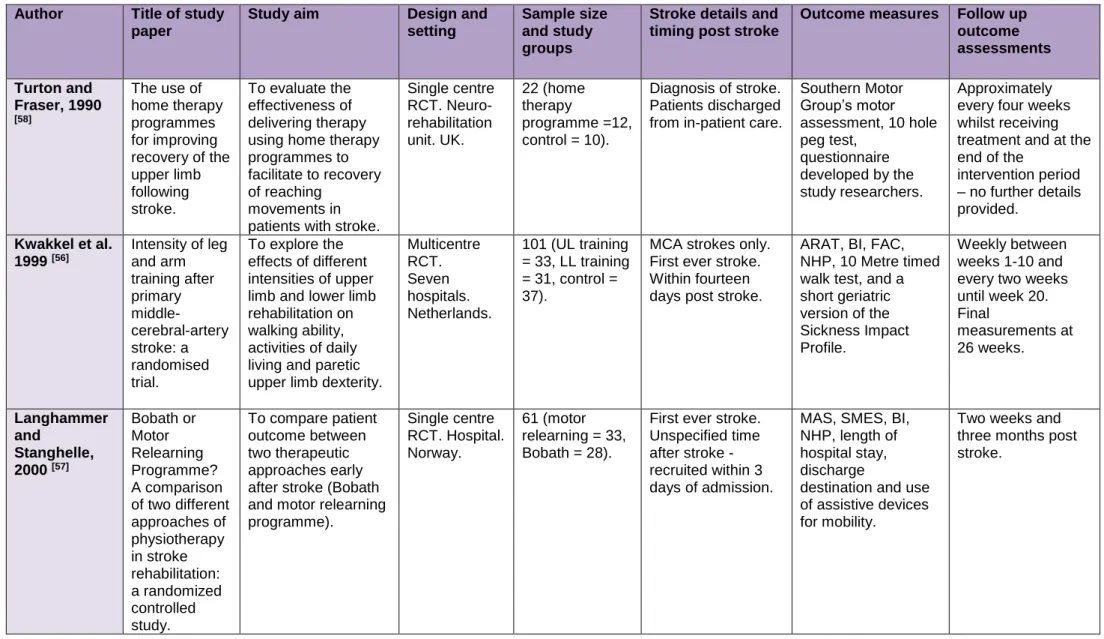
The Cochrane review [27] included fourteen studies, seven of which addressed the upper limb [54-60] and have been included in the current review. The initial search for the thesis review was completed in October 2013 where a total of 2,376 bibliographic references were identified from database searches (1,993 Scopus, 289 Medline and 94 Embase).
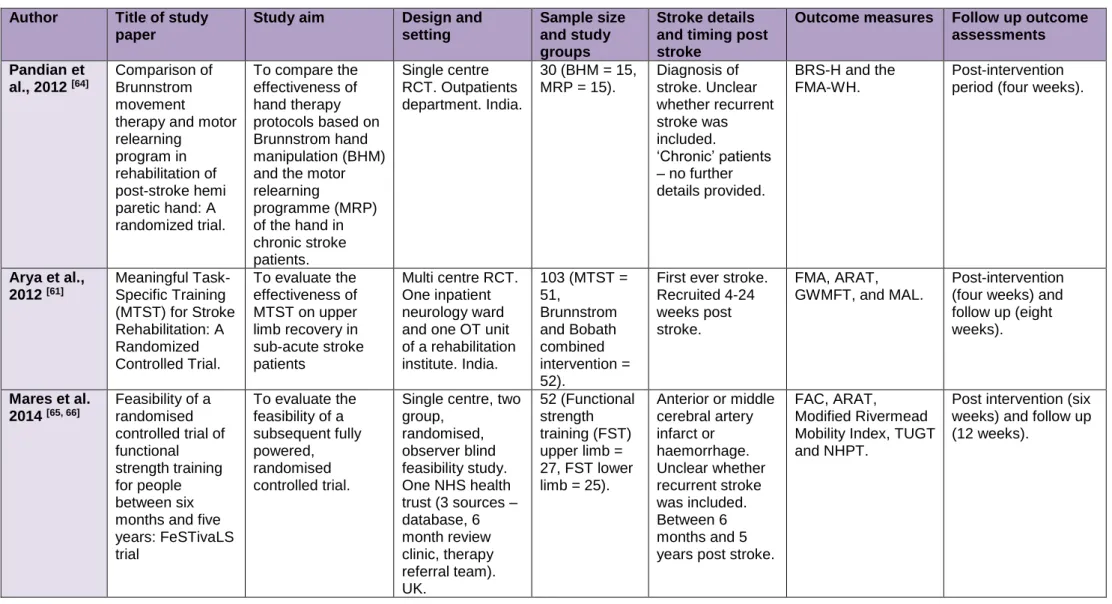
Unsuitable studies were filtered out by title and further detail was collected from abstracts and full papers if required. Four suitable studies [61-64] were identified in the initial search and included in the review. After the initial search (October 2013), another three studies were identified for possible inclusion in the literature review. Monthly database alerts yielded two appropriate studies [65-67] (last alert 01.01.2016). One study has been appraised [65, 66] and one was ongoing, so has not been
appraised [67].
After removing duplications, one further study was identified [68] after searching the National Institute for Health Research Clinical Research Network (NIHR CRN) register, the metaRegister of Controlled Trials (mRCT) and the ClinicalTrials.gov Register for completed and on-going studies. The study [68] had been completed, but unfortunately, there were no publications.
1.7.1.3 Appraisal of randomised controlled trials evaluating the use of repetitive functional task practice for the upper limb after stroke
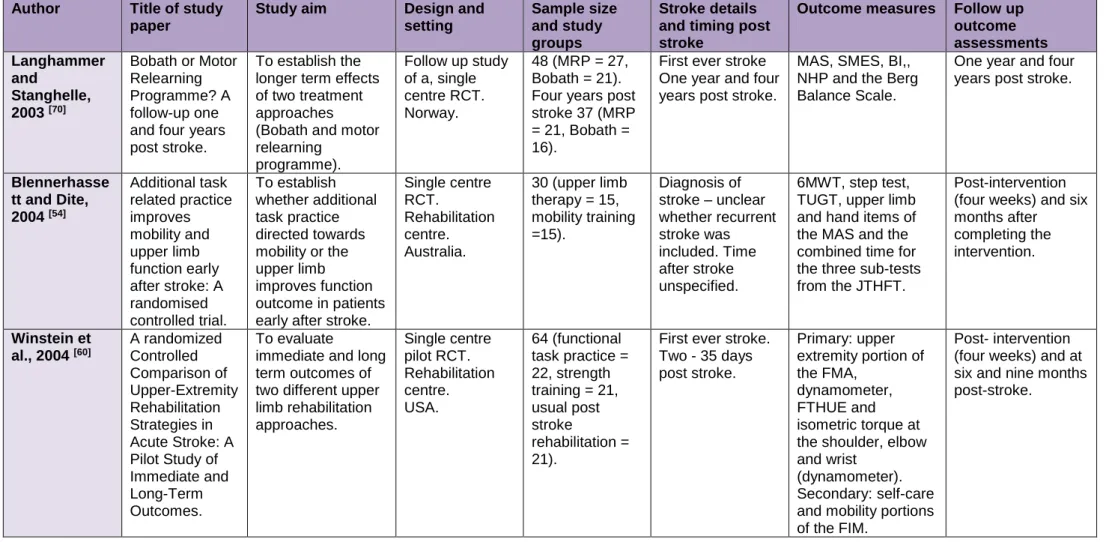
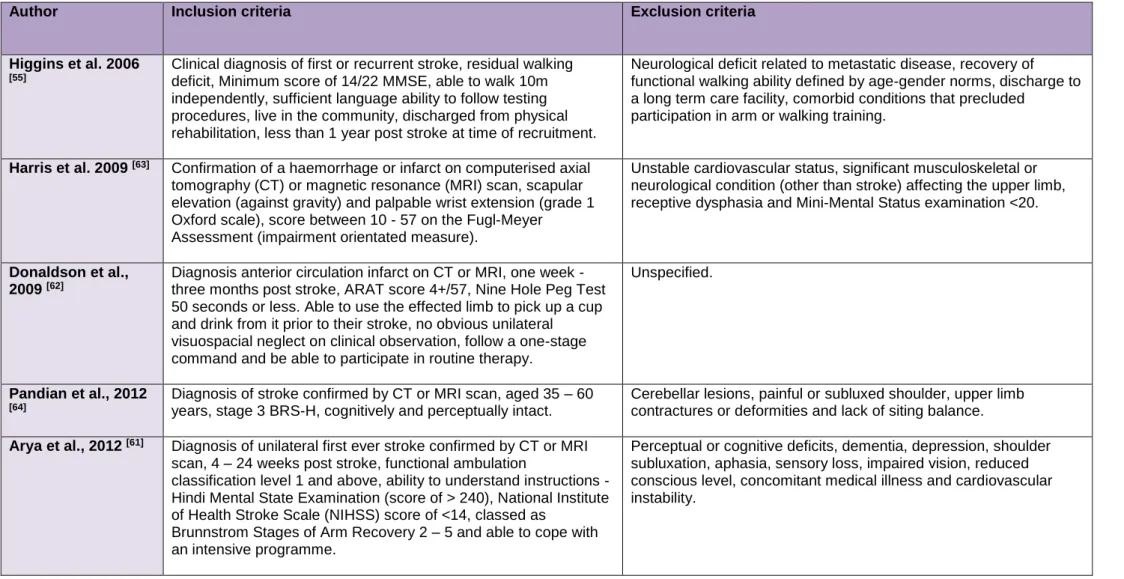
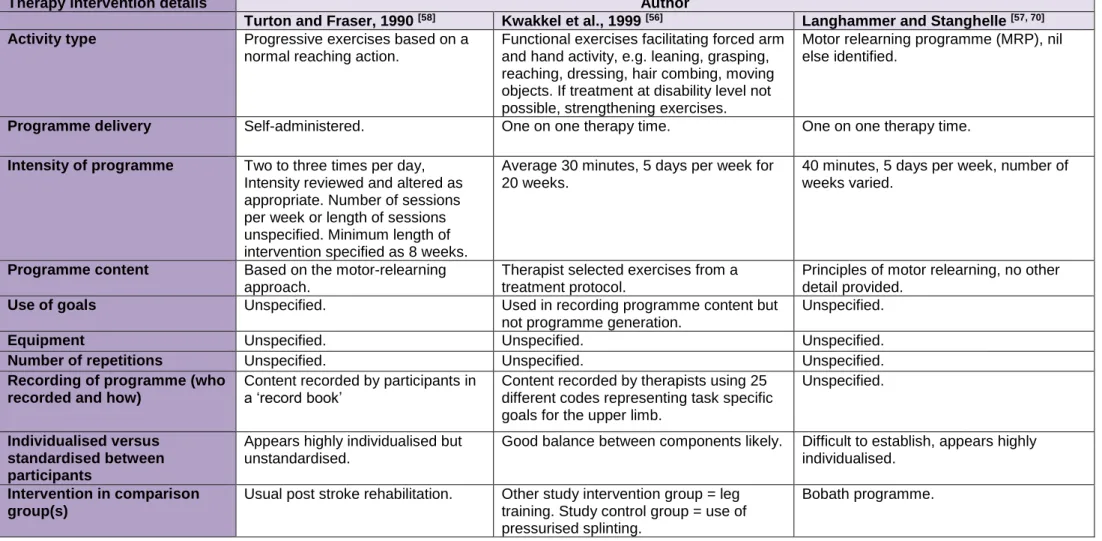
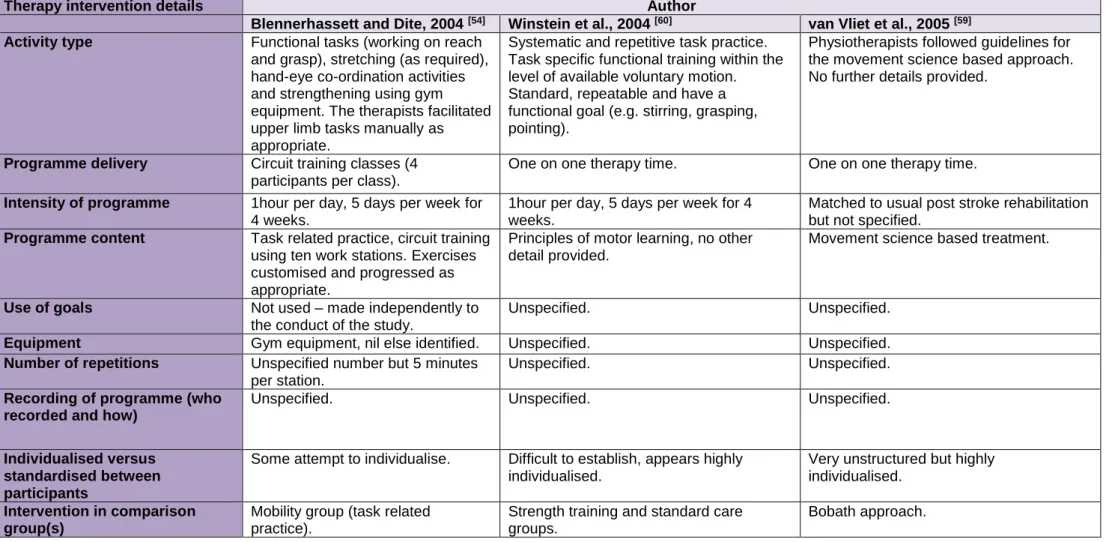
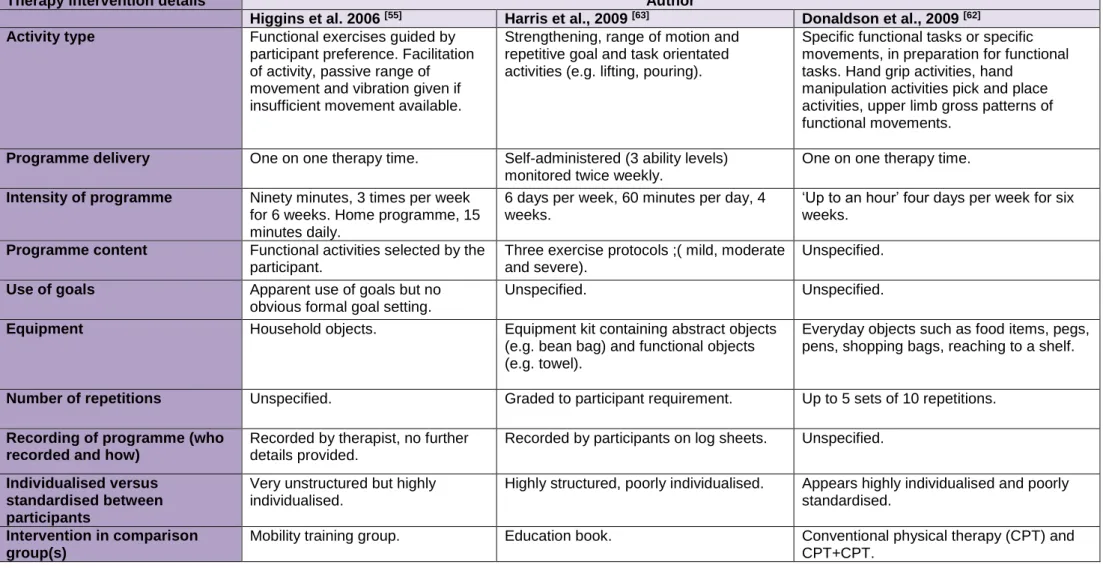
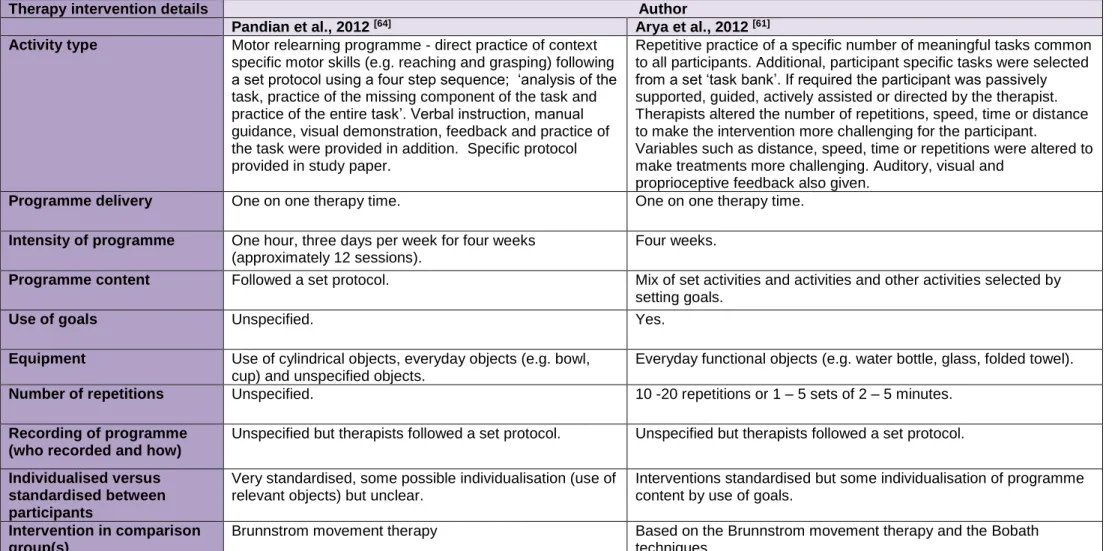
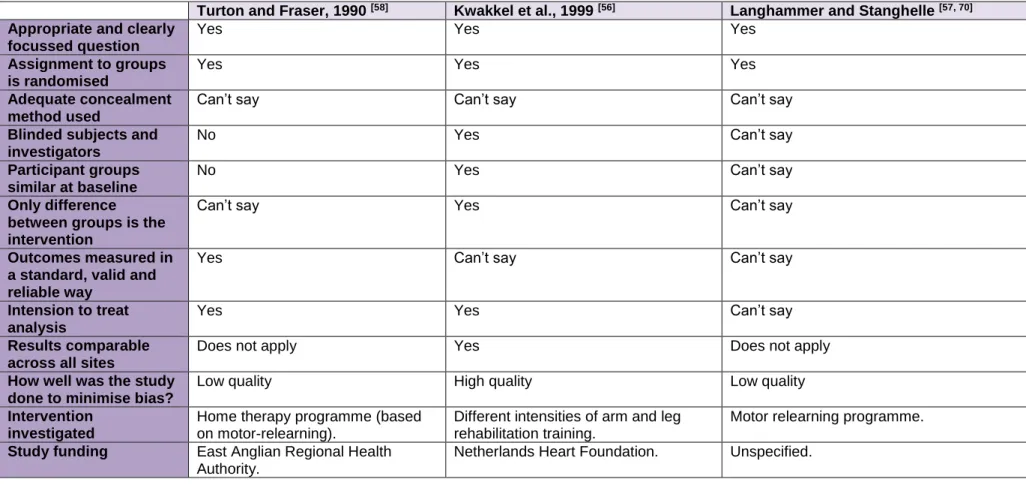
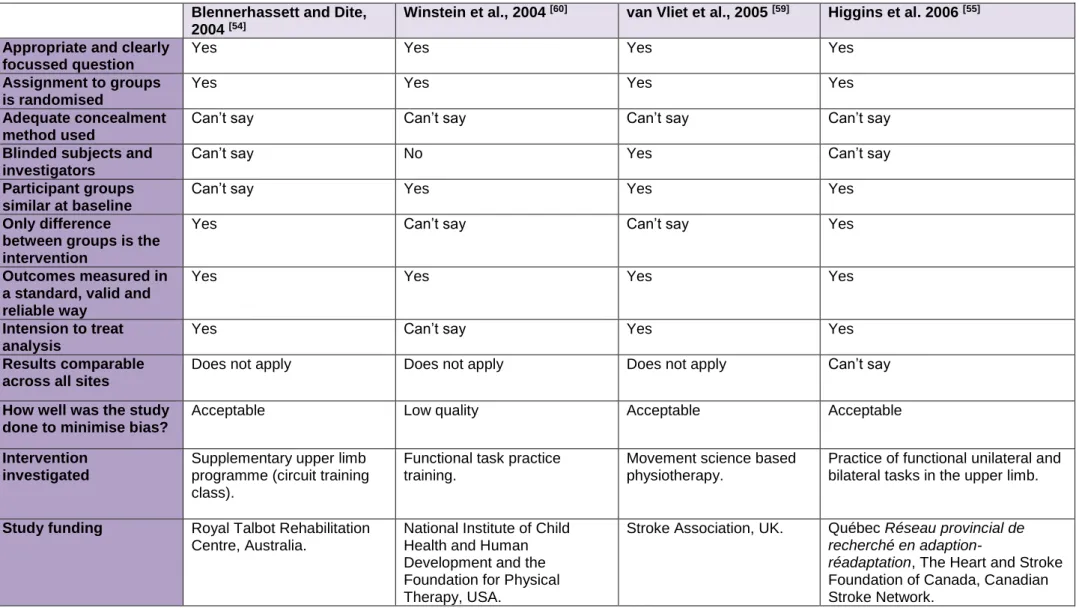
A total of 12 studies have been appraised and are presented in date order. The Scottish Intercollegiate Guidelines Network (SIGN) randomised controlled trials (RCT) appraisal tool [69] was used to inform the appraisal. Further information about the studies is presented in tables; study design (table 1); study eligibility criteria (table 2); RFTP based therapy input (table 3); appraisal of study methodology (table 4). Available information about the ongoing study [67] and the unpublished completed study [68] is presented in table 5.
Turton and Fraser, 1990 [58]
This was a single centre RCT to evaluate the effectiveness of delivering therapy using home therapy programmes for recovery of reaching movements in patients with stroke. Stroke patients discharged from inpatient care with impaired upper limb
function on the ten hole peg test were included. Patients were considered to have impaired upper limb function if they scored less than 95% of ‘normal performance’, but a ‘normal performance’ score was unspecified (full eligibility criteria available in table 2).
Twenty two participants were assigned to study groups (intervention =12, control = 10) in alternate runs of five (quasi-randomisation). As group allocation was not truly random, this may have resulted in selection bias during randomisation. The
intervention group received a therapy programme based on the motor learning
approach. Therapy content and intensity were not standardised between participants, but individualised to the participant in relation to presenting problems and stage of recovery. Length of the intervention period was a minimum of eight weeks (no maximum length specified). This may have led to large variations in the intervention delivered. Content or intensity of home programmes delivered were not reported and lack of information would make reproduction of the intervention challenging. Available information on RFTP based input is presented in table 3. Participants in the control group were visited at home for outcome assessments only. All study participants continued with usual post stroke rehabilitation (out-patient therapy or no therapy follow up) but usual post stroke rehabilitation content or intensity was not recorded. Outcome measures were the Southern Motor Group’s motor assessment (section for the upper limb performed in sitting), an uncommon measure which evaluates a
patient’s ability to achieve different arm and hand positions. Use of measures not commonly used makes results less comparable with other studies. The 10 hole peg test (measure of finger dexterity) was also included for participants considered to possess sufficient motor activity. Timing of outcomes were poorly standardised, occurring at approximate time points - around every four weeks. Timing of the last assessment (primary end point) may have varied between participants, influencing the amount of therapy input and time since stroke onset. Such confounding variables may have impacted on study results. Outcome measures were conducted by the same therapist who delivered the study intervention, which may have led to assessor bias. Neither patients nor the outcome assessor were blinded to treatment group allocation.
The Mann Whitney U test was applied. A formal power calculation was not reported. Results were presented for 12 intervention group participants and 10 control group participants (0% attrition). The two study groups did not appear similar at baseline, differing in the mean time post – stroke (intervention = 24 weeks, control = 16
weeks), 10 hole peg test scores (intervention = 47.6 seconds, control = 40 seconds) and ability to complete the test (intervention = 7/12, control = 4/10). This may indicate that the intervention group were more severely affected at baseline.
Change between initial assessment and final assessment were reported for the Southern Motor Group’s motor assessment and the ten hole peg test. The intervention group demonstrated improvement on the Motor Assessment Scale compared to the control group and but this was not statistically significant
(intervention mean change = +2, control change = 0, p= >0.05). The intervention group also showed greater improvement on the ten hole peg test than the control group and this result was statistically significant (p = <0.05). Outcome data from other assessment time points were not presented.
Compliance with the therapy intervention was reported. Participants were requested to record each self-practiced therapy session. The mean rate of self-reported
compliance with the home exercise programme was 68%. The reasons for not completing the programme (e.g. due to fatigue) were not reported. Such data could assist in future study and therapy programme development.
Authors concluded there was an improvement in arm and hand movement when repeated exercises were practiced at home. Authors conclusions may be challenged
as interpretation of the results may be not meaningful due to potential insufficient sample size (power calculation not undertaken). In addition, the ten hole peg test result should be interpreted with caution as scores were recorded only for
participants able to undertake the test. There are some methodological limitations to the appraised study, but studies testing self-practiced programmes are rare and valuable insight can be gained from the study.
Kwakkel et al., 1999 [56]
This multicentre RCT explored the effects of different intensities of upper limb and lower limb rehabilitation on walking ability, activities of daily living (ADL) and paretic upper limb dexterity. Participants aged 30 – 80 years with first ever stroke in the middle-cerebral artery (MCA) and impaired motor function were included. The age limiting criterion was not justified and motor function assessment was unspecified (full eligibility criteria are available in table 2).
One hundred and one participants were randomised into three groups; arm-training (n=33), leg training (n=31) and control (n=37) using sealed envelopes. Use of sealed envelopes for randomisation is considered inferior to computer software. Groups were similar at baseline.
Arm training sessions consisted of functional exercises to facilitate forced upper limb activity (e.g. leaning, reaching, and dressing). Strengthening exercises were used if treatment at a disability level was not possible. Leg training sessions focussed on improving gait velocity and stability through weight bearing, standing and sitting exercises and use of treadmills. Limited information detailing study intervention content was provided, making study interventions difficult to replicate. The control group received immobilisation of their affected upper and lower limbs via inflatable pressure splints during treatment sessions. Inflatable splints could be considered an attention control treatment or alternative intervention. The comparison of study interventions against a usual post stroke rehabilitation group may have been more appropriate. Treatments in all three study groups lasted for 30 minutes, 5 days per week for 20 weeks post stroke (see table 3 for therapy programme details). In
addition, all three study groups were provided a set amount and content of usual post stroke rehabilitation determined by the study.
Outcome measures were performed by a blinded assessor (assessor unblinded to10% of patients) once per week for the first 10 weeks then once every fortnight until
week 20. Measurements were repeated at 26 weeks post stroke. Primary outcome measures were the Barthel Index (measure of disability or dependence in activities of daily living), Functional Ambulation Classification (categorises walking ability) and the Action Research Arm Test (ARAT - used to measure arm function at a disability level, scores range from 0-57, 0 = no ability). There was a wider range of outcome
measures used to detect changes in mobility compared to arm function. A description of the power calculation was not presented and 12 participants withdrew prior to 20 weeks (4 arm training, 5 leg training and 3 control). It was unclear whether an intention to treat analysis was undertaken.
There were significant differences between the three groups at 6, 12 and 20 weeks after stroke for the three primary outcome measures listed. The arm training group showed greater improvements in the ARAT compared to the control group in weeks 12 (p= <0.05), 20 (p= <0.01), and 26 (p= <0.05). There were no differences in Barthel Index scores between the arm training group and the control group at any time point. The leg training group showed greater improvements than the arm training group and the control group in the Barthel Index at week 6 (p= <0.05 and p = <0.01
respectively). It is worth noting that from weeks 20 - 26 weeks, decisions about
treatment interventions and intensity were made by the participant’s usual post stroke rehabilitation team.
Adherence to therapy was monitored through coding of activities and time spent in therapy. Planned difference in time spent between study groups and content of interventions were achieved.
Authors concluded increased arm rehabilitation intensity resulted in small
improvements in dexterity and that this result provided further evidence for specificity of training. There were some methodological limitations to this study and further details about interventions would have been useful.
Langhammer and Stanghelle, 2000 [57]
The aim of this single centre RCT was to compare the impact of two therapeutic approaches on patient outcome early after stroke. Sixty one patients with acute first-ever stroke were randomised to receive therapy following the Bobath approach (Bobath group = 28) or the Motor Relearning Programme approach (MRP = 33). The study used blocked randomisation and the sample was stratified according to
hemisphere site and gender. Level of initial functional ability was not considered (full eligibility criteria available in table 2).
The intervention group received treatments based on the Motor Relearning
Programme which included functional task training using repetition. The control group received a Bobath based intervention. Programmes were standardised by the use of therapy manuals outlining the philosophy of each approach. Further details about study interventions or adherence to the programmes were not reported.
Participants in both groups received physiotherapy five days per week (minimum 40 minutes per session). Study physiotherapy continued as long as participants were hospitalised, so the length of the intervention period was not standardised.
Participants continued with the same treatment approaches in follow up
physiotherapy services on hospital discharge, which may have varied in intensity and duration (not reported).
Participants considered independent in activities of daily living on hospital discharge did not receive any follow up physiotherapy. Few of the participants discharged to nursing homes continued with physiotherapy (number of participants not provided) - stopping rehabilitation for such patients may have influenced study results.
Study physiotherapy interventions were in place of usual physiotherapy care. All participants continued with usual occupational therapy, medical care, and speech and language therapy during the intervention period. The content and intensity of occupational therapy provided was not included in the study paper. Occupational therapists provide training in activities of daily living (and so in accordance to the motor relearning approach), and input could have varied between participants causing contamination of study treatments.
Outcome measurements were taken by a blinded assessor at three days post
admission, two weeks later and at three months post stroke. Success of blinding was not reported. The Motor Assessment Scale (MAS- everyday motor function) and the Sødring motor evaluation scale (SMES) were recorded on each occasion. The SMES is a measure of arm, leg and gross motor function in stroke, but is not commonly used making results less comparable with other studies. The Barthel ADL index was used on the first and third data collection points and the Nottingham Health Profile (NHP – quality of life) was used on the third test period only. Length of hospital stay, discharge destination and use of assistive devices for mobility were also recorded.
Authors reported that the study was double blinded (outcome assessors and participants), but success was not reported.
A sample size of a minimum of 55 was calculated (details not provided). Student’s t -test was used to evaluate group differences. Eight participants were lost to follow up (MRP = 4 Bobath = 4), it was unclear if an intention to treat analysis was performed. It is not possible to distinguish whether the two groups were comparable at baseline due to lack of data. A statistically significant difference was seen between groups in the MAS at two weeks in favour of the MRP programme (p = 0.05), but there was no difference at three months (p = 0.31). The SMES score was analysed under the three subscales. A significant difference in improvement in favour of the MRP programme was seen in the SMES part 2 sum score (only when comparing between two weeks after admission minus three days after admission differences (p = 0.018)). There was no difference when comparing the other 2 subscales or comparing the Barthel Index or the NHP results at three months post stroke.
The MRP group had a much shorter length of stay compared to the Bobath group (21 and 34 days respectively, p = 0.008). Forty six percent of the Bobath group were discharged to their own homes compared to 52% of the MRP patients (p value unavailable). Although adherence to the therapy protocols was encouraged,
monitoring of adherence to the designated interventions delivered once patients were discharged home was not mentioned.
The main conclusion was that patients treated with MRP had a shorter hospital stay and greater improvement in motor function compared to patients receiving the Bobath approach. However, results were not sustained as there no difference between groups at three months. Authors recognised differences in treatment approaches delivered by therapists may not have been maintained post hospital discharge and participants were likely to be practising more activities of daily living. A further explanation offered was that the MRP approach worked more rapidly but did not affect the overall longer term outcome of the patients.
Although the paper does support the use of RFTP, it would not be possible to
reproduce programmes from the limited information available and there were several methodological issues that indicate the need for further research.
The study was followed up in 2003 [70] when authors aimed to establish the longer term effects of two treatment approaches.
Patients who had participated in the previous study were re-assessed at 1 year post stroke (48 participants, MRP n=27, Bobath n=21) and four years post stroke (37 participants MRP n=21, Bobath n=16). An assessment of the data collected by
authors revealed that all living participants agreed to participate in the follow up study and none were lost to follow up. Mortality rate was recorded and outcome measures (used in the initial study [57]) were repeated. Semi-structured interviews with
participants (details not provided) were also undertaken. It was unclear whether outcome assessors or the physiotherapist conducting study interviews were blinded to participant treatment allocation.
The same method of statistical analysis as previous study [57] (Student’s t-test) was undertaken. Data presented for both groups indicated a deterioration in MAS, SMES (all three sub scales), and the NHP. A statistical analysis comparing between group differences was not presented in the paper; authors stated there were ‘no significant differences between groups in any of the tests’. The authors concluded that the initial therapeutic approach did not have a meaningful impact on longer term outcome of patients. It is unclear why authors undertook the follow up study as initial
improvements observed in the first study were not sustained after three months. Blennerhassett and Dite, 2004 [54]
The aim of this single centred study was to determine whether additional task practice directed towards mobility or the upper limb improves functional outcome in patients early after stroke (full eligibility criteria are available in table 2).
Thirty participants with stroke (up to three months post stroke) with the ability to walk ten metres were recruited and randomised into two groups (n=15, n=15). Upper limb ability / function was not considered in the inclusion criteria. Randomisation was performed by drawing pre-sealed envelopes (no further information reported), a randomisation procedure which may be open to selection bias.
One group received additional upper limb task related practice and the other group received additional mobility task practice. Interventions were delivered through separate group classes that lasted one hour, five days per week for four weeks. Both classes involved circuit training through 10 work stations (five minutes per station)
and were supervised by a physiotherapist who customised and progressed exercises as appropriate. Although programmes were customised, overall treatment goals were managed separately to the study (in usual post stroke rehabilitation), questioning how well the content was individualised. The upper limb class comprised of functional tasks (working on reach and grasp), stretching (as required), hand-eye co-ordination activities and strengthening using gym equipment. The mobility class practiced functional tasks such as sit to stand, endurance tasks (treadmill and static bike) and strengthening exercises.
Usual physiotherapy care included one hour five days per week and was based mainly on the movement science approach. Researchers recorded time spent in interdisciplinary usual post stroke rehabilitation and time practising upper limb tasks and mobility in physiotherapy. Usual post stroke rehabilitation physiotherapists may have been un-blinded to participant group allocation but the success of blinding was not recorded. Time spent on upper limb or mobility tasks in occupational therapy was not reported.
Outcome measures were recorded at baseline, post-intervention (four weeks) and six months post - intervention by blinded assessors (success of blinding not described). Locomotor performance was measured by the six minute walk test (6MWT), the step test and the timed up and go test (TUGT). Measurement of upper limb ability was measured using the upper limb and hand items of the Motor Assessment Scale (MAS) and the combined time for the three sub-tests from the Jebsen Taylor hand function test (JTHFT, an uncommonly used measure).
The study was powered in relation to mobility performance (steps per second), possibly making the study more sensitive to detecting changes in the mobility group rather than the upper limb group. Data were analysed by intention to treat. A variety of statistical tests were used to examine between – group differences including split-plot ANOVAs, independent sample t-tests and chi-square tests.
Participant groups were reported as similar at baseline, but the range of demographic data collected and compared was limited. Follow-up was 97% at six months.
No significant difference was found when comparing individual outcome measures between groups across three time-points, with the exception of two results in favour of the mobility group (6MWT p = 0.01 and TUGT p = 0.02) at four weeks. Individual outcome measures were compared within groups for changes over time. The upper