SOLID
PHASE
PEPTIDE
TIPS AND TRICKS FOR
SOLID PHASE PEPTIDE SYNTHESIS
FROM THE EXPERTS AT BACHEM
List of Abbreviations 05 Foreword 08 I Introduction 08 1. Historical Background 08 2. Fmoc or Boc? 10 3. Equipment 10 3.1. Manual Synthesis 10
3.2. “Quasi Continuous Flow” 11
3.3. Fully Automated SPPS 12
II Fmoc Based SPPS 12
1. Resins 12
1.1. General Remarks 12
1.2. General Handling of the Resins 13
1.3. Resins Available from Bachem 14
1.3.1 Resins for the Synthesis of Peptide Acids 14
Wang resin and preloaded Wang resins DHPP-resin and Fmoc-Pro-DHPP-resin PDDM-resin
1.3.2. Resins for the Synthesis of Peptide Amides 15
Tricyclic amide linker resin Rink amide resin
4,4’-Dialkoxybenzhydrylamine resin Other TFA-labile amide resins
1.3.3. Resins for the Synthesis of Fully Protected Peptide Fragments 15 SASRIN and preloaded SASRIN resins
2-Chlorotrityl chloride resin and preloaded 2-chlorotrityl resins
Xanthenyl linker resin (for the synthesis of fully protected peptide amides) PDDM-resin
1.3.4. Resins for the Synthesis of Peptide Alcohols 16
SASRIN PDDM-resin
2-Chlorotrityl chloride resin
3,4-Dihydro-2H-pyran-2-ylmethoxymethyl resin (Ellman’s dihydropyrane resin) Further resins
1.4. Linkers 20
2. The Fmoc Group 22
2.1. General Remarks 22
2.2. Cleavage Procedures 22
3. Fmoc Amino Acid Derivatives 23
3.1. Side-Chain Protecting Groups 23
3.2. Side-Chain Protection Schemes 24
3.3. Protection of Cys During Fmoc SPPS of Peptides Containing Disulfi de Bridges 26
3.3.1. Peptides Containing a Single Disulfi de Bridge 27
3.3.2. Peptides Containing Two Disulfi de Bridges 27
3.3.3. Peptides Containing Three Disulfi de Bridges 28
3.3.4. Simultaneous Formation of Disulfi de Bridges 28
4. Coupling Reagents and Methods 29
4.1. General Remarks 29
4.2. Activation Methods 30
4.2.1. Carbodiimides – Carbodiimide/HOBt 30
4.2.2. Activation by Phosphonium and Uronium/Aminium Salts 31
4.2.3. Fmoc Amino Acid Active Esters 31
4.2.4. Fmoc Amino Acid Fluorides and Chlorides 31
4.3. Monitoring of Coupling and Deblocking 32
4.3.1. Kaiser Test 32
4.3.2. TNBS Test 32
4.3.3. Acetaldehyde/Chloranil Test 33
4.3.4. Bromophenol Blue Test 33
4.3.5. Cleavage of Samples 33
4.4. Capping 34
4.5. Aggregation/ Diffi cult Sequences 34
5. Cleavage from the Resin 35
5.1. Simultaneous Cleavage from the Resin/Side-Chain Deprotection 35
5.2. Mix Your Own Cocktail 36
5.3. Cleavage of Protected Peptide Fragments 36
6. Side Reactions in Fmoc SPPS 36
6.1. Diketopiperazine Formation 36
6.2. Aspartimide Formation 37
6.3. Transfer of Pmc to Trp During TFA Cleavage 37
6.4. 3-(1-Piperidinyl)alanine Formation 37
6.5. Incomplete Fmoc Cleavage 39
6.6. Guanidinylation of Free Amino Moieties During Coupling 39
6.7. Side Reactions of Methionine 39
6.8. N-O Shift 39
7. Standard Fmoc Cycle 39
III Boc Based SPPS 46
1. Resins 46
1.1. Resins for the Synthesis of Peptide Acids 46
Chloromethyl polystyrene (Merrifi eld resin) PAM-resin
1.2. Resins for the Synthesis of Peptide Amides 46
BHA-resin MBHA-resin
1.3. Further Resins 47
4-Formyl-phenoxymethyl polystyrene
2. The Boc Group 47
2.1. General Remarks 47
2.2. Deprotection 48
2.3. Neutralization 49
3. Boc Amino Acid Derivatives 49
4. Coupling Reagents and Methods 51
5. Cleavage from the Resin 51
5.1. HF 51
5.2. TFMSA 52
5.3. TMSOTf 52
5.4. HBr/TFA 52
6. Side Reactions in Boc SPPS 52
6.1. Diketopiperazine Formation 53
6.2. Aspartimide Formation 53
6.3. Homoserine Lactone Formation 53
6.4. N-O Shift 53
6.5. Side Reactions Involving Glu 53
6.6. Asp-Pro Cleavage 53
7. Standard Boc Cycle 53
Protecting Groups and Active Esters Acm Acetamidomethyl
Adpoc 2-(1’-Adamantyl)-2-propyloxycarbonyl Aloc Allyloxycarbonyl
Boc tert. Butyloxycarbonyl Bom Benzyloxymethyl
2-BrZ 2-Bromobenzyloxycarbonyl tBu tert. Butyl
Bzl Benzyl 2-ClZ 2-Chlorobenzyloxycarbonyl Dde 1-(4,4-Dimethyl-2,6-dioxocyclohexylidene)-3-methylbutyl 2,6-diClBzl 2,6-Dichlorobenzyl Dmb 2,4-Dimethoxybenzyl Dnp 2,4-Dinitrophenyl Fm 9-Fluorenylmethyl Fmoc 9-Fluorenylmethyloxycarbonyl For Formyl Hmb 2-Hydroxy-4-methoxybenzyl MBzl 4-Methylbenzyl Mmt 4-Methoxytrityl Mob 4-Methoxybenzyl Mtr 4-Methoxy-2,3,6-trimethylphenylsulfonyl Mtt 4-Methyltrityl Npys 3-Nitro-2-pyridylsulfenyl OAll Allyl ester
OtBu tert. Butyl ester
OBt 3-Hydroxy-1,2,3-benzotriazole ester OcHex Cyclohexyl ester
OcPen Cyclopentyl ester
ODhbt 3-Hydroxy-4-oxo-3,4-dihydro-1,2,3-benzotriazine ester
ODmab 4-{-[1-(4,4-dimethyl-2,6-dioxocyclohexylidene)-3-methylbutyl]amino}benzyl ester OFm 9-Fluorenylmethyl ester
OMpe 3-Methylpent-3-yl ester OPfp Pentafl uorophenyl ester OPp 2-Phenylisopropyl ester OSu Hydroxysuccinimide ester
Pbf 2,2,4,6,7-Pentamethyldihydrobenzofurane-5-sulfonyl Pmc 2,2,5,7,8-Pentamethylchroman-6-sulfonyl
StBu tert. Butylthio Tfa Trifl uoroacetyl Tmob 2,4,6-Trimethoxybenzyl Trt Trityl Tos p-Toluenesulfonyl Xan 9-Xanthydryl Z Benzyloxycarbonyl
List of Abbreviations
Reagents
BTFFH Bis(tetramethylene)fl uoroformamidinium hexafl uorophosphate
BOP Benzotriazolyloxytris(dimethylamino)phosphonium hexafl uorophosphate DBU Diazabicyclo[5.4.0]undec-7-ene
DCC Dicyclohexylcarbodiimide
DEBPT 3-(Diethoxy-phosphoryloxy)-3H-benzo [d][1,2,3] triazin-4-one DIC Diisopropylcarbodiimide
DTE Dithioerythritol DIPEA Diisopropylethylamine DMAP N,N-Dimethylaminopyridine EDT Ethanedithiol
HATU O-(7-Azabenzotriazolyl)-tetramethyluronium hexafl uorophosphate* HBTU (Benzotriazole-1-yl) tetramethyluronium hexafl uorophosphate* HOAt 1-Hydroxy-7-aza-benzotriazole
HOBt 1-Hydroxybenzotriazole
PyBOP (Benzotriazol-1-yl)oxy-tris-pyrrolidino-phosphonium hexafl uorophosphate TATU (7-Azabenzotriazolyl) tetramethyluronium tetrafl uoroborate*
TBTU (Benzotriazolyl) tetramethyluronium tetrafl uoroborate* TEA Triethylamine
TFA Trfl uoroacetic acid
TFMSA Trifl uoromethanesulfonic acid TES Triethylsilane
TFFH Tetramethylfl uoroformamidinium hexafl uorophosphate TIS Triisopropylsilane
TMSBr Trimethylsilyl bromide TMSCl Trimethylsilyl chloride
TMSOTf Trimethylsilyl trifl uoromethanesulfonate TNBS 2,4,6-Trinitrobenzenesulfonic acid
Resins
BHA Benzhydrylamine
DHPP 4-(1’,1’-Dimethyl-1’-hydroxypropyl)phenoxyacetyl alanyl aminomethylpolystyrene MBHA 4-Methylbenzhydrylamine
PAM Phenylacetamidomethyl PDDM Polymeric diphenyldiazomethane
Solvents
AcOH Acetic acid DCM Dichloromethane DMA N,N-Dimethylacetamide DMF N,N-Dimethylformamide DMSO Dimethyl sulfoxide HFIP Hexafl uoroisopropanol IPA Isopropanol
MTBE Methyl tert. butyl ether NMP N-Methylpyrrolidone TFE Trifl uoroethanol
Miscellaneous AA Amino Acid DKP Diketopiperazine
FTIR Fourier Transformed Infra Red
HPLC High Performance Liquid Chromatography
MALDI-MS Matrix-Assisted Laser Desorption/Ionization Mass Spectrometry MAS-NMR Magic Angle Spinning Nuclear Magnetic Resonance
MS Mass Spectrometry
SPOS Solid Phase Organic Synthesis SPPS Solid Phase Peptide Synthesis TLC Thin Layer Chromatography
This publication is a practical vademecum in which Bachem’s chemists involved in solid phase synthesis for many years have gathered their knowledge and experience in SPPS.
The idea is to discuss the variables of solid phase synthesis and to present the choices, advantages and drawbacks of each one enabling an optimal selection for an “easy” and successful synthesis.
The procedures described in this brochure are routinely used but we can’t guarantee that they can be applied in all cases. When in doubt it is strongly recommended to per-form feasibility experiments before using the bulk of the material.
During the last years, several books have been published in which SPPS is a major topic. We want to cite them apart from the literature references.
• Methods in Enzymology 289, Solid Phase Peptide Synthesis, (G.B. Fields Ed)
Academic Press 1997.
• Chemical Approaches to the Synthesis of Peptides and Proteins,
(P. Lloyd-Williams, F. Albericio, E. Giralt Eds), CRC Press 1997.
• Fmoc Solid Phase Peptide Synthesis, A Practical Approach,
(W.C. Chan, P.D. White Eds), Oxford University Press 2000.
• Solid Phase Synthesis, A Practical Guide, (S.F. Kates, F. Albericio Eds),
Marcel Dekker 2000.
• Houben-Weyl E22a, Synthesis of Peptides and Peptidomimetics
(M. Goodman, Editor-in- chief; A. Felix, L. Moroder, C. Toniolo, Eds),
Thieme 2002, p.665ff.
FOREWORD
1. Historical Background
Solid Phase Peptide Synthesis (SPPS) can be defi ned as a process in which a peptide anchored by its C-terminus to an insoluble polymer is assembled by the successive ad-dition of the protected amino acids consti-tuting its sequence.
Each amino acid addition is referred to as a cycle consisting of:
a) cleavage of the Nα-protecting group b) washing steps
c) coupling of a protected amino acid d) washing steps
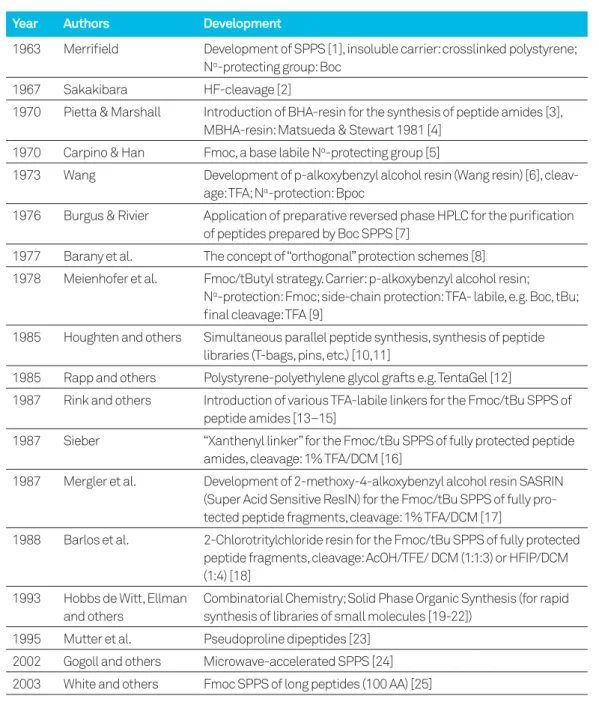
As the growing chain is bound to an insoluble support the excess of reagents and soluble by-products can be removed by simple fi ltration. Washing steps with appropriate solvents ensure the complete removal of cleavage agents after the de-protection step as well as the elimination of excesses of reagents and by-products resulting from the coupling step. For a general scheme of SPPS see Fig. 1 on p. 10. Table 1 gives an overview of im-portant developments during the history of SPPS.
Table 1. 50 Years of history - A choice of key dates.
Year Authors Development
1963 Merrifi eld Development of SPPS [1], insoluble carrier: crosslinked polystyrene; Nα-protecting group: Boc
1967 Sakakibara HF-cleavage [2]
1970 Pietta & Marshall Introduction of BHA-resin for the synthesis of peptide amides [3], MBHA-resin: Matsueda & Stewart 1981 [4]
1970 Carpino & Han Fmoc, a base labile Nα-protecting group [5]
1973 Wang Development of p-alkoxybenzyl alcohol resin (Wang resin) [6], cleav-age: TFA; Nα-protection: Bpoc
1976 Burgus & Rivier Application of preparative reversed phase HPLC for the purifi cation of peptides prepared by Boc SPPS [7]
1977 Barany et al. The concept of “orthogonal” protection schemes [8] 1978 Meienhofer et al. Fmoc/tButyl strategy. Carrier: p-alkoxybenzyl alcohol resin;
Nα-protection: Fmoc; side-chain protection: TFA- labile, e.g. Boc, tBu; fi nal cleavage: TFA [9]
1985 Houghten and others Simultaneous parallel peptide synthesis, synthesis of peptide libraries (T-bags, pins, etc.) [10,11]
1985 Rapp and others Polystyrene-polyethylene glycol grafts e.g. TentaGel [12]
1987 Rink and others Introduction of various TFA-labile linkers for the Fmoc/tBu SPPS of peptide amides [13–15]
1987 Sieber “Xanthenyl linker” for the Fmoc/tBu SPPS of fully protected peptide amides, cleavage: 1% TFA/DCM [16]
1987 Mergler et al. Development of 2-methoxy-4-alkoxybenzyl alcohol resin SASRIN (Super Acid Sensitive ResIN) for the Fmoc/tBu SPPS of fully pro-tected peptide fragments, cleavage: 1% TFA/DCM [17]
1988 Barlos et al. 2-Chlorotritylchloride resin for the Fmoc/tBu SPPS of fully protected peptide fragments, cleavage: AcOH/TFE/ DCM (1:1:3) or HFIP/DCM (1:4) [18]
1993 Hobbs de Witt, Ellman and others
Combinatorial Chemistry; Solid Phase Organic Synthesis (for rapid synthesis of libraries of small molecules [19-22])
1995 Mutter et al. Pseudoproline dipeptides [23] 2002 Gogoll and others Microwave-accelerated SPPS [24] 2003 White and others Fmoc SPPS of long peptides (100 AA) [25]
Although in general acidolytic cleavage from the resin is the method of choice to release the peptide at the end of the synthesis, a broad range of resins susceptible to be cleaved by nucleophiles such as the “Kaiser oxime resin” [26] and the p-carboxybenzyl alcohol linker [27] or by photolysis [28] has gained popularity.
Quite often, these moieties are not com-patible with the conditions of Fmoc SPPS,
whereas allyl-based anchors [29] are re-sistant towards the cleavage conditions of Boc as well as Fmoc protecting groups. The so-called “safety-catch linkers” are per-fectly compatible with both Boc and Fmoc chemistries. Only after an activation step they are highly sensitive towards nucleo-philes e.g. the sulfonamide linker [30] or 4-hydrazinobenzoic acid [31].
2. Boc or Fmoc?
The choice of an adequate combination of protecting groups/solid support is the fi rst step on the way to achieve a successful synthesis. For standard SPPS this choice is generally limited to a Boc/benzyl or a Fmoc/tBu based scheme. During the fi rst 15 years of SPPS, the Boc group has been used almost exclusively.
Even if this technique permitted remark-able synthetic achievements [32,33] the introduction of a new type of protecting group has offered more fl exibility for the modifi cation of the peptide chain and/or more specifi city in the cleavage of the Nα- versus the side-chain protecting groups. The combination Fmoc/tBu has met these requirements and broadened the scope of SPPS. Moreover, the development of new resin derivatives has allowed the cleavage of fully protected sequences which can be further coupled in SPPS or in a classical solution process.
In addition, a variety of selectively cleavable protecting groups offers new perspectives for “on-resin” modifi cation (cyclization,
for-mation of disulfi de bridges, derivatization of side chains, etc ).
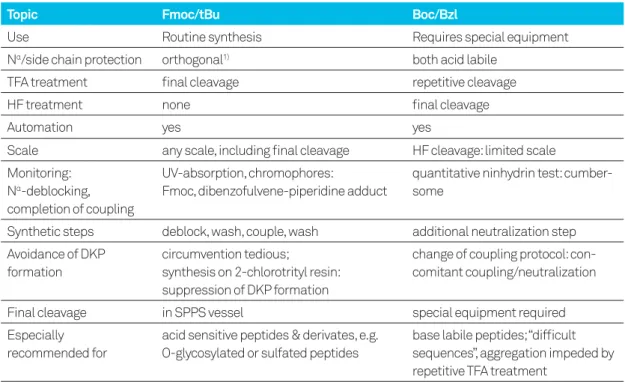
The main characteristics of the two general approaches are outlined in Table 2.
3. Equipment
3.1. Manual Synthesis
The “classical” reactor for SPPS merely consists of a cylindrical vessel with a fritted disc and a removable lid equipped with a mechanical stirrer. Shakers have already been used by Merrifi eld, for a popular model see the photograph on p. 74 in [34]. The resin may also be stirred by bubbling nitrogen through, however more elaborate equipment is required. For rapid small scale synthesis a small fritted glass funnel is suffi cient. Oxygen and moisture need not be strictly excluded, but the cleavage of the Nα protecting group should be performed under a hood as to avoid exposure to piperi-dine (Fmoc cleavage) or TFA (Boc cleavage). The swelling of the resin has to be taken into consideration in the choice of the reactor size. Normally, the volume of the
P linker AA1 PG1 TPG HX P linker AA1 PG1 P linker H AA1 PG1 P linker AA2 PG2 AA3 PG3 AA4 H AA1 AA2 AA3 AA4 H XH coupling of TPG-AA1(PG1)-OH cleavage of TPG
further coupling and deprotection steps
not all amino acids
require side-chain protection
fi nal cleavage removed during
the fi nal cleavage
desired peptide Fig. 1. General scheme of SPPS. X = O, NH AA = Amino Acid PG = Protecting Group P = Polymer Support TPG = Temporary Pro-tecting Group
swollen peptide resin will slowly increase during chain elongation. When synthesizing a medium-sized peptide (20–30 AA) using Fmoc SPPS, a 100–150 ml reactor will suf-fi ce for ca. 10 g of resin. The swelling will be more important in Boc SPPS mostly during the TFA deprotection step; a 250 ml reactor would be recommended for the above- mentioned synthesis. Vessels for small-scale SPPS are depicted in Fig 2a (p.12), Fig. 2b (p. 17) shows a large-scale reactor. At the beginning of each coupling cycle, deblocking or washing step the resin and the solution have to be mixed thoroughly, followed by slow stirring or shaking for the remaining process. All the beads have to be suspended in the liquid for thorough washing, effi cient coupling, and complete deblocking. It is important to watch for beads sticking to the wall of the vessel especially during the coupling and rinse them from the wall with a small amount of solvent if necessary. “Sticking beads” may become a problem when stirring too vigor-ously. Silylation of the glassware improves the surface hydrophobicity and prevents the beads from sticking to the wall of the vessel.
Solvents are fi ltered off by slight suction, or, more gently, by applying inert gas pressure. In Fmoc/tBu based SPPS the vessel may also be used for the fi nal cleavage or for the cleavage of fully protected peptides from very acid-labile resins such as SASRIN. Using a manual synthesizer may be more cumbersome than employing a fully automated one, but any parameter can be changed at any time. A more thorough monitoring is possible as samples for analysis can be removed at each stage of the synthesis.
3.2. “Quasi Continuous Flow”
In this approach the solid support is packed into a column and the reagents and sol-vents are delivered by a pump. The resins used in this technique must be able to with-stand considerable pressure and, at the same time, keep a constant volume while changing solvents. The standard polysty-rene-based resin is not suitable for that purpose as the volume of the beads mark-edly depends on the solvent. Nevertheless, continuous-fl ow synthesizers taking into account the shortcomings of swollen poly-styrene have been developed [35,36]. Table 2. Fmoc/tBu or Boc/Bzl?
Topic Fmoc/tBu Boc/Bzl
Use Routine synthesis Requires special equipment
Nα/side chain protection orthogonal1) both acid labile
TFA treatment fi nal cleavage repetitive cleavage
HF treatment none fi nal cleavage
Automation yes yes
Scale any scale, including fi nal cleavage HF cleavage: limited scale Monitoring:
Nα-deblocking, completion of coupling
UV-absorption, chromophores:
Fmoc, dibenzofulvene-piperidine adduct
quantitative ninhydrin test: cumber-some
Synthetic steps deblock, wash, couple, wash additional neutralization step Avoidance of DKP
formation
circumvention tedious;
synthesis on 2-chlorotrityl resin: suppression of DKP formation
change of coupling protocol: con-comitant coupling/neutralization
Final cleavage in SPPS vessel special equipment required
Especially recommended for
acid sensitive peptides & derivates, e.g. O-glycosylated or sulfated peptides
base labile peptides; “diffi cult sequences”, aggregation impeded by repetitive TFA treatment
This type of synthesizer is best used for Fmoc-based protocols. The Boc protocols generate ionic species during the Boc cleav-age, which cause considerable changes in swelling due to electrostatic forces. A synthesizer has been developed in which swelling is monitored, considering that dur-ing Fmoc-SPPS, volume changes in a given solvent can only be caused by the growing peptide chain [37].
Composite material made from a rigid sup-port such as Kieselguhr particles [38] or large pore crosslinked polystyrene [39] in which dimethylacrylamide [40] has been polymerized are used for continuous fl ow synthesis.
Poly(ethylene glycol)-based supports such as TentaGel or PEGA have been introduced for batch as well as continuous fl ow synthe-sis [41–43]. For a review of recent develop-ments in this fi eld see [12].
3.3. Fully Automated SPPS
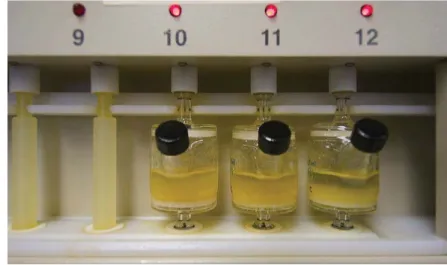
A variety of fully automated synthesizers for batchwise and continuous fl ow SPPS is commercially available [44]. Fig. 2a shows the reaction vessels of such a machine allowing parallel small-scale syntheses. In the meantime, fully automated synthesizers employing microwave irradiation for accel-erating the synthetic steps were success-fully introduced to the market [24]. Fmoc/tBu SPPS permits automatic moni-toring and adequate adjustment of de-protection and coupling times in order to achieve complete conversions. The monitor-ing relies on strong chromophores which are either released during deprotection
[45] or “consumed” [46] (the Fmoc amino acid derivative) and concomitantly released (HOBt or HOAt) during coupling. Monitoring via changes of conductivity [46] allows the monitoring on a real-time basis and end point value can be given to determine the completion of the coupling reaction.
II FMOC-BASED SPPS
1. Resins1.1. General Remarks
All resins marketed by Bachem are obtained from beaded polystyrene crosslinked with 1% divinylbenzene (a mixture of the meta and the para isomer). This degree of cross-linking is optimal for SPPS. A higher level of crosslinking would reduce the swelling whereas a decrease would cause a consid-erable loss of mechanical stability in the swollen state.
The carrier resins for SPPS are obtained from this polymer or from the chlorometh-ylated material. In the second case, the available load is restricted by the degree of chloromethylation. The average bead size is adjusted by the conditions of polymeriza-tion. Bachem offers the most popular size distribution 200–400 mesh (average diam-eter 38–75 μm). A variety of resin derivatives is also available as large beads: 100–200 mesh (average diameter 75–150 μm). With such resins, reaction times may have to be prolonged due to limited diffusion towards the interior of the beads.
Fig. 2a. Fully auto-mated reactor for parallel small-scale SPPS, reac-tion vessels.
The load of the resins is adapted to the needs of routine SPPS: 0.7–1 meq/g before the loading of the fi rst Fmoc amino acid. Loads may be deliberately reduced, e.g., for side-chain cyclization, for the synthesis of long peptide chains (above 30–40 residues), or for the preparation of sequences pre-senting intrinsic diffi culties. Resins having a particularly high load can be prepared by Bachem on request.
1.2. General Handling of the Resin The term “Solid phase” peptide synthesis is actually misleading, gel-phase synthe-sis would be more appropriate [47]. The swelling, i.e. the solvation of the polystyrene chains and the functionalized moieties including the growing peptide, remains essential for successful SPPS and even more so in SPOS. The swelling volumes of polystyrene-based resins in the most important solvents have been determined by Santini [48]. The complete swelling of the dry resin may take up to 1 hour [48].
Unmodifi ed crosslinked polystyrene and chloromethylated polystyrene swell very well in apolar solvents such as toluene, dioxane and DCM, moderately in DMF and poorly, if at all in alcohols and water. The swelling behaviour of derivatized polysty-rene depends on the load and the polarity of the functional groups. These moieties are usually rather polar: amides, alcohols, amines, esters, ethers, etc., and improve the interactions with polar solvents whereas no “additional polarity” is gained when working with the “purely aromatic” 2-chlorotrityl chloride resin. So, after the loading with an Fmoc amino acid, the Fmoc group is split off with piperidine/DMF (1:4) considerably slower from the 2-chlorotrityl resin than from the Wang resin derivative.
SPPS relies on proper swelling in polar solvents as polar aprotic solvents facilitate coupling (see II. 4); good swelling means good accessibility of coupling sites and thus, a smooth reaction (even though a few exceptions to this rule have been observed [49]). Concurrently with the peptide elonga-tion, swelling in DMF normally increases. But it should be kept in mind especially when synthesizing long peptides that swell-ing also means dilution of couplswell-ing sites and reagents. A slow and steady increase of their excess will compensate for this effect.
As mentioned above, the coupling rate is controlled by the diffusion of the activated species into the swollen bead, i.e. the larger the bead the slower the coupling. Thus, the coupling can’t be accelerated by vigorous stirring. Slight stirring or shaking is suf-fi cient to support the diffusion of reagents into the beads.
Sudden shrinkages should alarm the op-erator. This phenomenon is caused by the aggregation of the peptide chain which will impede the continuation of the synthesis. Complete coupling reaction and deblocking will be diffi cult to attain due to the steric hindrance created by the aggregation. A range of methods to improve the effi ciency of these key steps will be dealt with later on. As the peptide resin may be deliberately swollen or shrinked, washes with shrinking solvents such as IPA accelerate the removal of excesses of reagents, and time must then be allowed for proper swelling, e.g. in DMF. The peptide resin should not be shrinked when the peptide may aggregate, which is rather diffi cult to predict [50] and during the fi rst cycle of a synthesis. On the other hand, when shrinking the resin with MTBE before coupling the maximum concentra-tion of coupling reagents is attained. For fragment coupling it has even been recom-mended to treat the dried resin with a solu-tion of the activated fragment [51].
A WASH represents a short treatment (1–5 min, depending on the amount) of the peptide resin with a solvent under gentle stirring. The swollen resin may be inspected under a microscope. Regular round spheres should be observed, but not neccesar-ily smooth surfaces. Torn beads and fi nes result from inappropriate treatment of the resin and will clog frits. Mechanical stress has to be minimized as swollen beads are rather susceptible to abrasion. So they should not be stirred with a magnetic bar (except for cleavage, as the carrier is nor-mally not recovered). Reaction vessels and stirrer blades have to be designed to mini-mize shearing forces. As already mentioned, a slight stirring will suffi ce, and the system has to be thoroughly mixed only when start-ing a washstart-ing step or a reaction. Vigorous suction and suction to dryness will unnec-essarily stress the peptide-resin. Applying inert gas pressure to remove the solvent is a gentle alternative. The inert atmosphere
may be benefi cial, though inertization is not an esential requirement of SPPS.
The load of the carrier resin is determined by elemental analysis (N, Cl) and/or by cou-pling an Fmoc amino acid and determining the resulting conversion (see below). Resins may also be characterized, e.g., by FTIR-spectroscopy. The growing interest in SPOS led to renewed interest in the method and refi ned instrumentation for the character-ization of solid samples [52]. MAS-NMR can also been carried out if the resin is properly swollen [53].
Requirements of storage depend on the nature of the resin: PDDM-resin and photo-labile resins have to be protected from light, 2-chlorotritylchloride resin is sensitive to humidity; in most cases the resins have to be stored in the deep-freezer.
1.3. Resins Available from Bachem 1.3.1. Resins for the synthesis of peptide acids
Wang resin and preloaded Wang resins (D-1250 (200–400 mesh) and D-2115 (100–200 mesh))
Wang resin, i.e. p-alkoxybenzyl alcohol resin, may be termed the standard resin for Fmoc/tBu SPPS of “peptide acids”. The tert. butyl type side-chain protection is concomi-tantly removed during acidolytic cleavage from this resin.
The esterifi cation of Wang resin as well as of other resins bearing hydroxyl groups with Fmoc amino acids is a crucial step in SPPS. It is more diffi cult than it may seem considering that high conversion and, espe-cially, minimal racemization are desired. We therefore recommend the use of preloaded resins. Bachem offers a broad range of Fmoc L- and D-amino acids coupled to Wang resin. If the resin derivative you need is not yet available please ask for a quota-tion. In any case, Bachem guarantees high loading and minimal racemization. DHPP Resin and Fmoc-Pro-DHPP resin DHPP-resin, i.e. 4-(1’,1’-dimethyl-1’-hy-droxypropyl) phenoxyacetyl alanyl amino-methyl polystyrene, has been developed especially for the synthesis of peptides containing a C-terminal proline [54,55,56]. The bulkiness of the linker prevents diketo-piperazine formation, but the esterifi cation
of Fmoc-Pro-OH (yielding a modifi ed tert. butyl ester) is impeded as well. Bachem offers the preloaded Fmoc-Pro-DHPP resin (D-1830).
Diphenyldiazomethane resin (PDDM-resin) (D-2230)
PDDM-resin, i.e. diphenyldiazomethane resin D-2230, readily reacts with carboxylic acids in DCM [57,58]. The rate correlates with the acidity of the substrate. Nitrogen, the only by-product, is evolved concomi-tantly. As the incoming amino acid is not activated racemization is suppressed; as a result, PDDM-resin lends itself especially for the synthesis of peptides containing a C-terminal Cys or His.
Due to the simple and reliable linkage pro-tocol PDDM-resin is especially recommend-ed for the anchoring of expensive amino acids. The excess of derivative can also be easily recovered as no coupling reagent is used. Bulky amino acids such as Fmoc-Aib and peptide fragments react readily with PDDM-resin. The acids don’t have to be pure but they must not be contaminated by other acids of comparable strength or stronger; on the other hand, selective alkylation of the more acidic carboxyl group may be at-tained. PDDM-resin reacts preferentially with the α-carboxyl group of Fmoc-Glu-OH in DCM/DMF (3:1), the γ-carboxyl can be modifi ed otherwise (M. Mergler, unpub-lished results). Loading of PDDM-resin is best performed in DCM but small amounts of other solvents such as DMF, THF, or dioxane may be added to improve solubil-ity. In contrast to standard esterifi cation procedures where conversion can’t be easily followed, alkylation with PDDM-resin can by monitored visually due to the color change of the resin. The deeply violet resin turns yellowish while nitrogen evolves. After dis-coloration, shaking or stirring is continued for 4 to 6 hours and the resin is carefully washed with DCM.
Moreover, PDDM-resin is the resin of choice for the side-chain anchoring of Fmoc-Asp and Fmoc-Glu derivatives, especially when the standard esterifi cation of Wang resin or SASRIN (e.g., with DCC/DMAP) has proven diffi cult. When anchoring Fmoc-Asp-NHR via the β-carboxyl functionality to PDDM-resin, losses due to aspartimide formation can’t occur.
Peptides can be cleaved from PDDM-resin under the same conditions as from Wang resin, even though 2–5% TFA/DCM is suffi ciently strong to promote cleavage. Fully protected peptide fragments may be obtained if Tyr(tBu), Lys(Boc), or His(Trt) are not present. Thus, for safe synthesis of fully protected peptide fragments, SASRIN or 2-chlorotritylchloride resin should be preferred.
1.3.2. Resins for the synthesis of peptide amides
A special functionality must be introduced on the resin to allow the release of the pep-tide as an amide.
These linkers possess an amino function to which the C-terminal amino acid is coupled and present an electronic structure such that the fi nal acid treatment splits off the peptide as an amide.
Tricyclic amide linker resin (D-2200)
The 5-Fmoc-amino-10,11-dihydro-5H-dibenzo[a,d]cycloheptenyl-2-oxyacetyl linker based on the dibenzosuberyl protect-ing group of Pless [59] has been developed by Ramage [60] to enable smooth cleavage of peptide amides with concomitant side-chain deprotection. The linker is coupled to MBHA-resin modifi ed with DL-norleucine. The fi nal cleavage is performed using stan-dard cocktails (see II. 5.)
“Rink amide” resins ( D-1675 and D-2080)
Rink amide AM resin (or Knorr resin) D-1675 is obtained by the attachment of the linker Fmoc-2,4-dimethoxy-4’-(carboxymethyloxy)-benzhydrylamine to aminomethyl resin [61].
The ether derivative 4-(2’,4’-dimethoxy-phenyl-Fmoc-aminomethyl) phenoxymethyl polystyrene as originally described by Rink [13] is also available from Bachem (D-2080). Peptide amides are split off from these res-ins by 95% aqueous TFA; scavengers being added if necessary.
4,4’-Dialkoxybenzhydrylamine resin (D-1600)
N-Fmoc-4-Methoxy-4’-(-carbonylpropyloxy) benzhydrylamine is linked to H-Ala-amino-methyl resin [15]. The cleavage of peptide
amides from this resin requires harsher conditions, e.g. a treatment with 95% TFA and scavengers at 35°C for 2 hours. Peptide amides containing a C-terminal Gly may be split off under milder conditions.
Other TFA-labile amide resins
Bachem also offers the well-established “PAL” resin 4-alkoxy-2,6-dimethoxybenzyl-amine resin [14] (D-2125). Cleavage from PAL resin requires a lower concentration of TFA than cleavage from the resins de-scribed above.
Additionally, peptides containing C-terminal Asn or Gln derivatives may be obtained by side-chain linkage of the corresponding Fmoc-Asp or Fmoc-Glu derivative followed by SPPS, acidolytic cleavage yields the C-terminal Asn or Gln [63].
The aldehyde resins D-2570 and D-2575 may be used for backbone (-CO-NH-) anchoring of peptides or SPPS of peptide N-alkylamides [64]. The appropriate educt resins are obtained via reductive amination of D-2570/D-2575. D-2570 should be pre-ferred for Fmoc-SPPS, as the fi nal cleavage can be performed with TFA under standard conditions.
1.3.3. Resins for the synthesis of fully pro-tected peptide fragments
SASRIN and preloaded SASRIN resins (D-1295 (200–400 mesh) and D-2440 (100–200 mesh))
SASRIN (Super Acid-Sensitive ResIN) cor-responds to 2-methoxy-4-alkoxy-benzyl alcohol resin [17].
As already discussed before, we recom-mend the use of SASRIN preloaded with the desired Fmoc amino acid. Fully protected peptide fragments are obtained by cleavage with 0.5 to 1% TFA in DCM or by treatment with HFIP/DCM (1:4) [65]. Fully protected peptide hydrazides can be obtained con-veniently by Fmoc SPPS employing the SASRIN-derivative D-2285. The derivative D-2550 allows the synthesis of fully pro-tected peptide hydroxamic acids.
Detailed cleavage protocols and compre-hensive information concerning the use of SASRIN are contained in our brochure SASRIN – a review of its manifold applica-tions which is available free of charge upon request. It can also be downloaded from our homepage at www. bachem.com.
2-Chlorotrityl chloride resin and preloaded 2-chlorotrityl resins
(D-1955 (200–400 mesh) and D-2930 (100–200 mesh))
2-Chlorotrityl resin [18] is somewhat more acid-labile than SASRIN.
Loading of 2-chlorotritylchloride resin is achieved by treatment with the triethylam-monium salt of the desired Fmoc amino acid, thus, concomitant racemization is minimized. To proceed with SPPS, Fmoc has to be split off, but the fi rst deprotection with piperidine/DMF takes longer than usual (2 x 30 minutes).
On the other hand, Fmoc-AA-2-chlorotrityl resins are not stable, the Fmoc amino acid is slowly cleaved upon storage, whereas the H-AA-2-chlorotrityl resins can be stored. Bachem offers a broad range of preloaded H-AA-2-chlorotrityl resins, resins with standard substitution as well as the cor-responding low-load (LL) derivatives. The resin is especially suitable for the synthesis of fully protected peptides containing a C-terminal Cys or Pro. In case of C-terminal Pro, diketopiperazines can’t be formed when proceeding with the SPPS due to the steric hindrance of the trityl moiety. Moreover, 2-chlorotrityl resin is the opti-mal carrier for the synthesis of peptides containing a C-terminal tryptophan as the bulkiness of the chlorotrityl group prevents the alkylation of the indole moiety, and thus, irreversible binding of peptide during fi nal cleavage.
Rapid cleavage of fully protected peptide fragments is attained by treatment with 0.5–1% TFA in DCM or HFIP/DCM (1:4 or 3:7) [66]; further cleavage mixtures have been described by Barlos et al. [18].
Xanthenyl linker resin
(for the synthesis of fully protected peptide amides)
(D-2040)
Xanthenyl resin (or Sieber resin) has been developed for the synthesis of peptide
am-ides allowing very mild cleavage conditions [16]. The 4-(9-Fmoc-aminoxanthen-3-yloxy) butyryl linker coupled to MBHA resin [68] yields fully protected peptide amides after repetitive short treatments of the pep-tide resin with 1% TFA/DCM. The resin will turn yellow during acidolytic cleavage. The cleavage protocol and work-up procedures described in the SASRIN brochure can also be applied to this product. The N-terminus may be deprotected before cleavage. Traces of carboxylic acids have to be carefully removed if the product is to be subjected to fragment coupling.
Fully protected fragments obtained from SASRIN or 2-chlorotrityl resin can be coupled in solution to amidated fragments cleaved from the title resin, providing a way for the synthesis of peptide amides by a convergent approach [69, 70].
PDDM-resin
For the synthesis of protected peptide frag-ments on PDDM-resin see p. 14.
1.3.4. Resins for the synthesis of peptide alcohols
Bachem offers a range of resins which can also be used for the synthesis of (fully pro-tected) peptide alcohols and thiols. SASRIN
The alcohol is generated by reductive cleav-age. A detailed procedure is described in the SASRIN-brochure.
PDDM-resin
This resin readily alkylates Fmoc amino alcohols in the presence of a catalytic amount of BF3· Et2O in DCM [71]. High loads can be obtained rapidly under these mild conditions provided that the alcohol is suf-fi ciently soluble in DCM. Satisfactory loads have been obtained as well with secondary alcohols. The resulting benzhydryl ether can be cleaved by repetitive short treat-ments with 1–2% TFA/DCM. This simple and effi cient approach is our preferred method for the preparation of protected peptide alcohols.
Thiols are alkylated by PDDM under the same conditions with equally good results. The resulting thioethers can be cleaved with TFA/phenol (9:1) [72] or 95% TFA.
2-Chlorotrityl chloride resin
This resin reacts with Fmoc amino alcohols in the presence of pyridine (or DIPEA/DMAP) in DCM/DMF. The reaction is slower than the alkylation with the PDDM-resin [73,74]. The resulting ethers can be cleaved by mild acid. Thiols react more readily with the resin. 3,4-Dihydro-2H-pyran-2-ylmethoxymethyl resin
(Ellman’s dihydropyrane resin ) (D-2530)
This resin has been conceived especially for the anchoring of alcohols [75].
It reacts with Fmoc amino alcohols in dichloroethane to form acetals. Acetalation and mild cleavage via transacetalation are catalyzed by strong acids such as benzene-sulfonic acid.
Further resins
For the preparation of C-terminally modi-fi ed peptides, the side-chain hydroxyl groups of Ser and Thr can be alkylated with PDDM-resin or 2-chlorotrityl chloride resin [74] or acetalated by Ellman’s resin. The reaction is less favorable with Thr due to the steric hindrance of the amino acid side-chain.
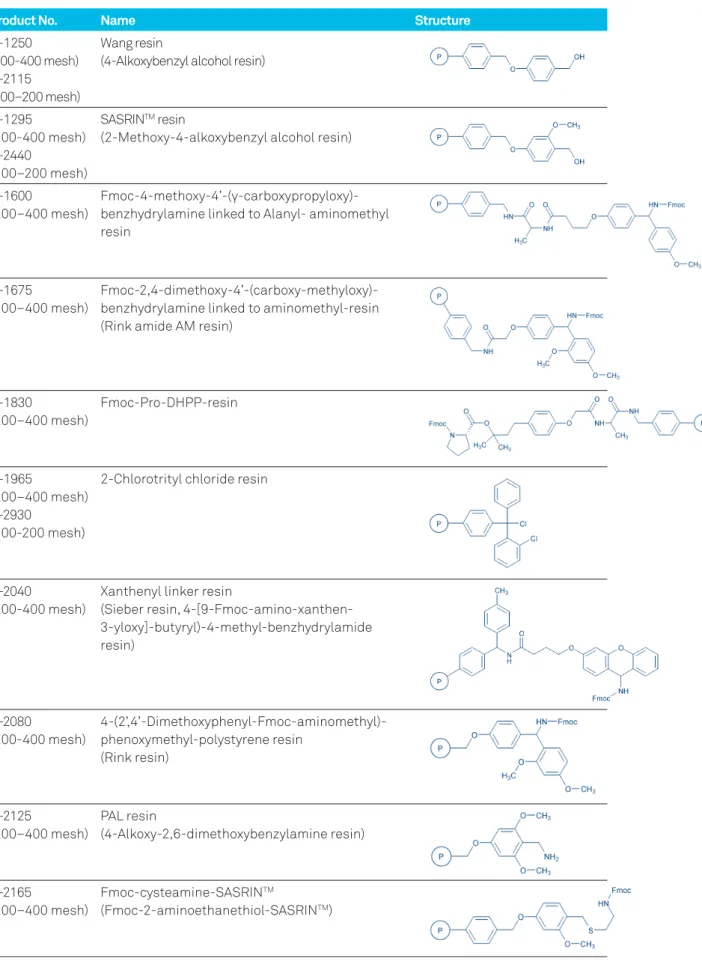
Cys and cysteamine derivatives have been obtained from SASRIN (D-2165 and D-2170), PDDM [72] and chlorotrityl resin. Table 3 gives an overview of the resins avail-able from Bachem.
Fig. 2b. Large-scale reactor for SPPS allowing to produce kilograms of peptide.
Table 3. Resins for Fmoc-SPPS
Product No. Name Structure
D-1250 (200-400 mesh) D-2115 (100–200 mesh)
Wang resin
(4-Alkoxybenzyl alcohol resin)
D-1295
(200-400 mesh) D-2440
(100–200 mesh)
SASRINTM resin
(2-Methoxy-4-alkoxybenzyl alcohol resin)
D-1600
(200–400 mesh)
Fmoc-4-methoxy-4’-(γ-carboxypropyloxy)-benzhydrylamine linked to Alanyl- aminomethyl resin
D-1675
(200–400 mesh)
Fmoc-2,4-dimethoxy-4’-(carboxy-methyloxy)-benzhydrylamine linked to aminomethyl-resin (Rink amide AM resin)
D-1830 (200–400 mesh) Fmoc-Pro-DHPP-resin D-1965 (200–400 mesh) D-2930 (100-200 mesh)
2-Chlorotrityl chloride resin
D-2040
(200-400 mesh)
Xanthenyl linker resin
(Sieber resin, 4-[9-Fmoc-amino-xanthen-3-yloxy]-butyryl)-4-methyl-benzhydrylamide resin) D-2080 (200-400 mesh) 4-(2’,4’-Dimethoxyphenyl-Fmoc-aminomethyl)-phenoxymethyl-polystyrene resin (Rink resin) D-2125 (200–400 mesh) PAL resin (4-Alkoxy-2,6-dimethoxybenzylamine resin) D-2165 (200–400 mesh) Fmoc-cysteamine-SASRINTM (Fmoc-2-aminoethanethiol-SASRINTM)
Product No. Name Structure
D-2170
(200–400 mesh)
Fmoc-Cys(SASRINTM)-OH
D-2200 Tricyclic amide linker resin (200–400 mesh) (Ramage resin, 5-Fmoc-amino-10,11-di-hydro-5H-dibenzo [a,d]cycloheptenyl-2-oxyace-tyl-DL-Nle- 4-methyl-benzhydrylamide resin)
D-2230 (200–400 mesh) PDDM-resin D-2285 (200-400 mesh) SASRINTM-carbazate D-2415 (200-400 mesh) Hydroxylamine-Wang-resin D-2530 (200–400 mesh) 3,4-Dihydro-2H-pyran-2-ylmethoxymethyl resin (Ellman resin) D-2550 (200–400 mesh) O-Alkyl hydroxylamino-SASRINTM D-2560 (200-400 mesh)
4-(Fmoc-hydrazino)-benzoyl aminomethyl resin
D-2570
(200–400 mesh)
4-Formyl-3-methoxy-phenyloxymethyl polysty-rene resin
D-2575 4-Formyl-phenyloxymethyl polystyrene resin (200-400 mesh)
(4-Alkoxybenzaldehyde resin) Table 3. Resins for Fmoc-SPPS (continued)
1.4. Linkers
Linkers are bifunctional molecules anchor-ing the growanchor-ing peptide to the insoluble carrier. Linkers may be coupled to any car-rier suitable for SPPS, an important option if alternatives to polystyrene-based resins have to be considered.
The C-terminal Fmoc amino acid may be coupled to the linker yielding the so-called handle which can be purifi ed before loading the polymer. High loads regardless of the bulkiness of the amino acid are obtained by coupling these handles.
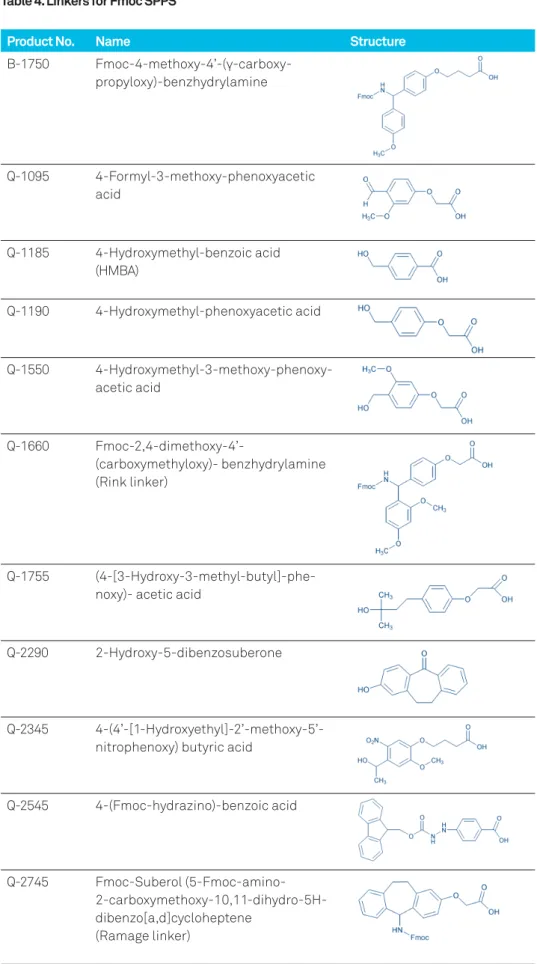
The linkers available from Bachem are presented in Table 4. Some of them are better suited for use in solid phase organic synthesis.
Q-1755
(4-(3-hydroxy-3-methyl-butyl)-phenoxy)-acetic acid, a “tert.butyl-equivalent” anchor especially suitable for the synthesis of peptides with a C-terminal Pro since DKP formation is suppressed by its bulkiness [54 - 56].
Q-1660
Fmoc-2,4-dimethoxy-4’-(carboxy-methyloxy)-benzhydrylamine
(Rink Amide Linker), for the synthesis of peptide amides [61].
B-1750
Fmoc-4-methoxy-4’-(-carboxypropyloxy)-benzhydrylamine, for the synthesis of peptide amides [15].
Q-1095
4-Formyl-3-methoxy-phenoxyacetic acid, may be reduced to the alcohol before or after coupling [64,76,77]; it can also be used as a formyl anchor e.g. for reductive amination [64].
Q-2290
2-Hydroxy-5-dibenzosuberone, reacts with resins carrying chloromethyl groups. Q-1185
4-Hydroxymethylbenzoic acid (HMBA), an anchor especially suited for cleavage with nucleophiles, thus Boc should be preferred for Nα-protection [78].
Q-1550
4-Hydroxymethyl-3-methoxy-phenoxy-acetic acid, somewhat less acid-labile than SASRIN [76,77,79].
Q-1190
4-Hydroxymethyl-phenoxyacetic acid (HMP linker), a “Wang equivalent” [78]. Q-2545
4-(Fmoc-hydrazino)-benzoic acid, acid-base stable linker which can yield various esters/amides upon the cleavage from the resin requiring a Cu(II) catalyst and a nucleophile [31].
Q-2345
4(4-(1-hydroxyethyl)-2-methoxy-5-nitro-phenoxy)-butyric acid, a photolabile linker releasing the peptides as carboxylic acids [80].
Q-2745
Fmoc-Suberol (5-Fmoc-amino-2-carboxy-methoxy-10,11-dihydro-5H-dibenzo[a,d] cycloheptene), the Ramage linker for the synthesis of peptide amides [60].
Table 4. Linkers for Fmoc SPPS
Product No. Name Structure
B-1750 Fmoc-4-methoxy-4’-(γ-carboxy-propyloxy)-benzhydrylamine Q-1095 4-Formyl-3-methoxy-phenoxyacetic acid Q-1185 4-Hydroxymethyl-benzoic acid (HMBA) Q-1190 4-Hydroxymethyl-phenoxyacetic acid Q-1550 4-Hydroxymethyl-3-methoxy-phenoxy-acetic acid Q-1660 Fmoc-2,4-dimethoxy-4’-(carboxymethyloxy)- benzhydrylamine (Rink linker) Q-1755 (4-[3-Hydroxy-3-methyl-butyl]-phe-noxy)- acetic acid
Q-2290 2-Hydroxy-5-dibenzosuberone
Q-2345 4-(4’-[1-Hydroxyethyl]-2’-methoxy-5’- nitrophenoxy) butyric acid
Q-2545 4-(Fmoc-hydrazino)-benzoic acid
Q-2745 Fmoc-Suberol (5-Fmoc-amino- 2-carboxymethoxy-10,11-dihydro-5H-dibenzo[a,d]cycloheptene
2. The Fmoc Group
2.1. General Remarks
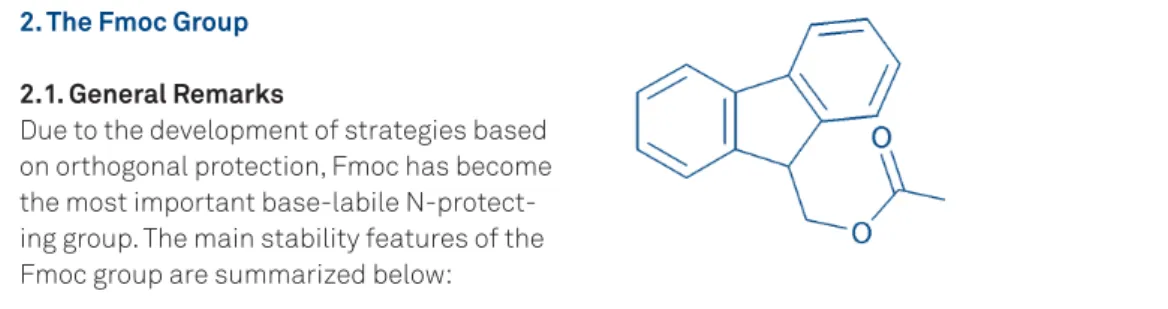
Due to the development of strategies based on orthogonal protection, Fmoc has become the most important base-labile N-protect-ing group. The main stability features of the Fmoc group are summarized below:
By-products generated by the repetitive treatment with base have been described. Aspartimide formation is the best docu-mented side-reaction (see II.6.2). Epimer-ization and subsequent piperidide forma-tion have been detected, even though the bulky tert. butyl group impedes reactions involving the β-carboxy group. Aggregation during chain elongation interferes with the couplings as well as with the Fmoc cleav-ages. If an incomplete deblocking occurs or is suspected, more active cleavage reagents should be tested (see below).
2.2. Cleavage Procedures
Usually, Fmoc is split off by a short treat-ment (3 to 5 minutes) with piperidine/DMF (1:4). In general this treatment is repeated and slightly prolonged (7 to 10 minutes). Un-der those conditions complete deblocking is attained in most cases. Thus, deviations are restricted to cases of sluggish cleavage (see diffi cult couplings, II.4.5.) or base-sensitive sequences.
Harsher alternatives to piperidine/DMF have been developed as well as milder cleavage reagents [84]. In case of sluggish deblocking, even slight variations of the reagent may considerably accelerate the cleavage, e.g.:
Stability Fmoc is acid-stable, withstands cleavage of Boc/tBu (TFA) and Z/Bzl (HF). Fmoc is stable under the cleavage conditions of Aloc/OAll (Pd°).
Limited stability
Limited stability towards tertiary amines such as DIPEA, pyridine [81]; the rela-tive stability depends on base concentration, solvent and temperature. Stability towards hydrogenolysis is controversial [82] and should be evaluated for each individual case.
Lability Lability towards bases, especially secondary amines
[81] (piperidine > diethylamine). Fortunately the Fmoc group is less labile towards primary amines, including the amino group of the amino acid involved in the coupling reaction.
Premature Fmoc cleavage may nevertheless occur during very slow couplings. N-silylation of the coupling site prevents this side reaction, it can accelerate the coupling [83].
The Fmoc group is removed via base-induced β-elimination (see Fig. 3). As a result dibenzofulvene and carbon dioxide are split off. Secondary bases such as piperidine add to the former molecule whereas bases such as DBU don’t react with the dibenzofulvene. Hence, it has to be removed rapidly from the peptide resin or scavenged by a secondary amine such as piperidine to avoid irreversible attachment to the liberated amino group. Since both cleav-age products are strong chromophores the deblocking can be monitored by UV spectroscopy.
Fig. 3. Removal of the Fmoc group with piperidine
• 1 to 5% DBU/DMF, more reactive than piperidine [85], for glycopeptides [86], • 20% piperidine and 1–5% DBU in DMF, for diffi cult deblockings,
• morpholine/DMF (1:1), milder than piperi-dine for highly sensitive glycopeptides [87], • piperidine/DMF (1:4) at 45°C, for “diffi cult sequences” [88],
• acceleration by microwave treatment [24], • 0.1 M HOBt in piperidine/DMF (1:4), sup-pression of DKP and aspartimide formation [89],
• Bu4N+F– in DMF and other tetraalkylam-monium fl uorides [90] (not recommended), • 2% HOBt, 2% hexamethyleneimine, 25% N-methylpyrrolidine in DMSO/NMP 1:1, mild cleavage conditions keeping thioesters intact [91] and reducing aspartimide forma-tion [92].
Whichever cleavage reagent is preferred, it has to be washed out very carefully after Fmoc removal and the last washing must be neutral.
When synthesizing large peptides the dura-tion of Fmoc cleavage should be gradually increased. For safe removal of the de-blocking reagent the resin may have to be washed more often.
Recommended Standard Procedure
Fmoc Cleavage
Prewash with DMF (2x)
Treat with piperidine/DMF (1:4), 5 and 10 min, 10 mL of reagent/g peptide-resin. Wash alternately with DMF and IPA until neutral pH.
As mentioned above, the generation and disappearance of Fmoc based
chromophores allows the monitoring of the synthesis. Furthermore, samples may be taken to determine the load of Fmoc peptide. The completion of the deprotection reaction may be checked by cleaving samples and analyzing the obtained pep-tide.
Recommended Standard Procedure
Determination of Load
A sample of peptide-resin is washed 4x DMF, 5x IPA and 2x MeOH or ether,
and dried to constant weight.
10 to 20 mg of dried resin are weighted ex-actly into a 100 ml measuring fl ask (the amount of resin depends on the
ex-pected load, for a load of ca. 0.5 meq/g 20 mg is suffi cient).
Piperidine/DMF (1:4) is added to the mark, beads sticking to the neck have to be care-fully rinsed off.
The mixture is shaken thoroughly and left to settle for 25 to 30 min.
The resin is fi ltered off and the absor-bance of the fi ltrate is measured at 301 nm (ε=7800).
Recommended Standard Procedure
Determination of the Completion of Fmoc Cleavage
The sample is washed and dried as de-scribed above. The sample is cleaved with the appropriate reagent.
Super acid-sensitive resins: the sample is thoroughly washed with DCM and treated with 1% TFA/DCM (ca. 5 min) or HFIP/DCM (1:4) (15 min - 1 hr).
The resulting solution can be applied directly to a TLC plate, which should be dried in vacuo before development. Fmoc is readily detected at 254 nm, but Pmc, Pbf, Mtt, and Trt are strong chromophores as well.
For further analysis e.g. by HPLC, the peptide may be isolated and deprotected with TFA as described below.
Other resins (and large peptides, as TLC may show ambiguous results): treat with 95% aq TFA containing 5% EDT (or TIS) for at least 1 hr.
Filter off the resin and precipitate the pep-tide with MTBE.
Minute amounts of Fmoc peptide can be detected by HPLC, TLC or MS.
3. Fmoc Amino Acid Derivates
3.1. Side-Chain Protecting Groups Fmoc/tBu probably represents the most popular “orthogonal” combination of pro-tecting groups. The term “orthogonal” was coined by Barany and Merrifi eld in 1977 to designate “classes of protecting groups which are removed by differing chemical mechanisms. Therefore they can be re-moved in any order and in the presence of the other classes. Orthogonal protection schemes allow for milder overall reaction conditions as well as the synthesis of par-tially protected peptides” [8].
The combination Fmoc/tBu is truly orthogo-nal whereas Boc/ Bzl is not, at least not un-der the conditions of SPPS as they both are cleaved by acids. As Boc can be selectively removed in the presence of Z/Bzl, the combination has been termed “quasi-orthogonal”.
A brochure Orthogonaly of Protecting Groups proposing combinations of selectively cleavable side-chain protecting groups for use in Fmoc-SPPS is also available from Bachem and can be downloaded from our homepage.
3.2. Side-Chain Protection Schemes As mentioned earlier the choice of orthogo-nal protecting groups has broadened the scope of the Fmoc/tBu based SPPS. The solid support to which the C-terminal amino
acid is linked is a protecting group as well. When conceiving the synthesis of complex or “modifi ed” peptides (e.g. side-chain cyclized peptides) the tactics of synthesis, that is, the combination of side-chain pro-tecting groups and type of resin has to be considered thoroughly. A few combinations are presented in Table 5.
For example, side-chain cyclization, usually via amide bond (e.g. for increasing the rigid-ity of a peptide and thus stabilizing desired conformations) has become an important structural element in designing peptide analogues. Appropriate synthetic strategies relying on (quasi) orthogonal side-chain protecting groups have been conceived, cyclization may be achieved either “on-resin” or following cleavage of the (partially) protected linear precursor from the resin.
Strategic choices
A–Linker cleaved by strong acid (Wang, Ramage)
Side-chain protecting groups Options
X, Y, Z cleaved by strong acid No cleavage specifi city, standard synthesis. Final cleavage from the resin provides deprotected peptide.
X, Y cleaved by strong acid (tBu, Boc, ...) Z orthogonal (Allyl, ...)
cleaved by weak acid (Trt, Mtt, ...)
Partial and specifi c on-resin deprotection and modi-fi cation of the peptide chain.
A–Linker cleaved by weak acid (SASRIN, 2-Chlorotrityl, Xanthenyl)
Side-chain protecting groups Options
X, Y, Z cleaved by strong acid or orthogo-nal
Cleavage from the resin provides fully protected pep-tide for future chain elongation (convergent synthe-sis) or chain modifi cation in solution.
X, Z cleaved by strong acid Y orthogonal
Partial and specifi c on-resin deprotection and modi-fi cation of the peptide chain.
Cleavage of the modifi ed peptide from the resin with or without concomitant removal of side- chain protection. Table 5. Orthogonality of protecting groups. X, Y, Z: protecting groups A = O, yields peptide acid A = NH, yields pep-tide amide.
The combinations All/Aloc and Dmab/Dde have become very popular for side-chain cyclization (via an amide bond) of resin bound peptides.
If treatment with 1% TFA/DCM is kept suffi -ciently short, Mtt (or Adpoc) in combination with OPp may be employed in combination with a Wang type resin [93,94] as well. For peptides synthesized on SASRIN, side-chain modifi cations of the partially protect-ed peptide are performprotect-ed in solution after cleavage from the resin.
A choice of side-chain protected Fmoc amino acids is presented in Table 6. For further infor-mation on these and other derivatives please go to our online shop at www.bachem.com
Arginine
Pmc and Pbf are mostly used for the protection of the guanidino function of Arg. The cleavage is accelerated in the presence of thiols in the cocktail (see II.5.1.). The cleavage of the Mtr group requires prolonged reaction time or reac-tion at elevated temperature which can lead to undesired side reactions [95].
Asparagine and Glutamine
The Trt and Mtt protected amino acids are perfectly suited for Fmoc based SPPS. The protecting groups are effi cient in impeding the dehydration of the side chain carboxamide during the activation step. In addition these protecting groups increase the solubility of the poorly soluble Fmoc-Asn-OH and Fmoc-Gln-Table 6. Side-chain protected Fmoc derivatives of proteinogenic amino acids.
Amino Acid
Protecting Group
Cleavage Conditions Remarks
Arg Pmc Pbf Mtr 95% aq TFA 95% aq TFA 95% aq TFA (35°C) standard
standard, slightly more acid labile than Pmc more acid stable than Pmc
Asn/Gln Trt Mtt Xan 95% aq TFA 95% aq TFA 95% aq TFA
standard, more stable to acidolysis than Mtt standard standard Asp/Glu OtBu OMpe OPp OBzl OAll ODmab 95% aq TFA 95% aq TFA 1% TFA/DCM H2/Pd or HF Pd(PPh3)4 2% N2H4·H2O/DMF standard
Asp: suppression of aspartimide formation on-resin modifi cation
acid sensitive peptides, SASRIN then H2/Pd, rarely used orthogonal to Fmoc/tBu/resin linkage
quasi orthogonal to Fmoc, acid stable
Cys see II.3.3.
His Trt Mtt 95% aq TFA 95% aq TFA standard standard
Met O NH4I/Me2S rarely used (see II.6.7.)
Lys Boc Aloc Adpoc Mtt Dde ivDde Z Fmoc 95% aq TFA Pd(PPh3)4 1% TFA/DCM 1% TFA/DCM 2% N2H4·H2O/DMF 2% N2H4·H2O/DMF H2/Pd or HF 20% piperidine/DMF standard
orthogonal to Fmoc/tBu/resin linkage on-resin modifi cation
on-resin modifi cation cf. Dmab
improved stability towards piperidine rarely used
multiple antigenic peptides, dendrimers Ser/Thr/ Tyr tBu Trt Bzl 95% aq TFA 1% TFA/DCM H2/Pd or HF standard
on-resin modifi cation rarely used
Trp Boc 95% aq TFA then aq
AcOH
OH. As Trt is removed rather sluggishly from an N-terminal Asn, Mtt carboxamide protection should be preferred in this position [96]. Aspartic Acid and Glutamic Acid
In routine Fmoc SPPS the side-chain is protect-ed as the tert. butyl ester. This protecting group is stable under the conditions of SPPS and is readily removed during the fi nal TFA cleavage. The OMpe derivative is less prone to base-catalyzed aspartimide formation [97]. OPp, OAll, or ODmab-esters are used when an additional level of orthogonality is required, for on-resin cyclization for example. These esters can be cleaved specifi cally in the presence of other protecting groups such as Boc, OtBu, Fmoc. Cysteine
See also II.3.3.
Cys derivatives are notorious for base-catalyzed racemization during activation and coupling [98]. Considerable amounts of D-Cys epimer are obtained when cou-pling Cys(Trt) derivatives in the presence of bases. Cys(Acm) derivatives show a lower tendency to racemize. They tolerate weak bases as collidine. Attempted syntheses of peptides containing several disulfi de bridges following standard Fmoc protocols may have failed for this reason. The extent of this side-reaction can be reduced by using weak bases as collidine in combina-tion with uronium/aminium or phophonium reagents or, more effectively, by coupling in the absence of bases, e.g. with carbodi-imides and HOBt (or HOAt). Racemization is further impeded by using less polar sol-vents for the coupling.
Histidine
Trt or Mtt are the most common protecting groups for the protection of the imidazole ring of His. Due to steric hindrance tritylation occurs exclusively at the Nτ (1-position). Trt and Mtt are stable under the conditions of SPPS but they don’t prevent catalysis of racemization during activation by the imidazole moiety (free Nπ) [99]. Fortunately, a coupling protocol minimizing this side reaction has been described. See 4.2.2. [100, 101].
Lysine
In routine Fmoc SPPS, Boc is used for the pro-tection of the amino function. It is cleaved dur-ing the fi nal TFA cleavage. Special orthogonal
protecting groups exist for syntheses in which on-resin derivatization is desired. Among them the most commonly used are Aloc, cleaved by nucleophiles in the presence of Pd. Adpoc and Mtt are more acid labile than Boc and are cleaved by repeated treatment with 1–2% TFA/ DCM. The combination of the various Asp/Glu and Lys/Orn protecting groups has enabled the synthesis of complex molecules benefi tting from the “multidimensional orthogonality” [102]. Serine, Threonine and Tyrosine
The tert. butyl ethers possess the qualities of good protecting groups and are widely used. Trt can be used for the protection of Ser and Thr if on-resin derivatization is required. Thr and Tyr may also be coupled with unprotected side-chain functionalities .
Tryptophan
Trp has been used without protection, however the indole nucleus can then be alkylated in the fi nal TFA cleavage. For that reason we strongly advise coupling indole-protected tryptophan. Fmoc-Trp(Boc) has become the standard derivative for incorporating the amino acid . Dur-ing the fi nal TFA cleavage the Boc group yields isobutylene and leaves the N(indole)-carboxy moiety which prevents alkylation of the indole nucleus. This intermediate is decarboxylated during a subsequent treatment with diluted AcOH.
3.3. Protection of Cys During Fmoc SPPS of Peptides Containing Disulfi de bonds We offers a brochure on cysteine
and further mercapto amino acids including a compilation of our offer of derivatives of these compounds which can be downloaded from our web page.
Cys has always required particular attention in peptide chemistry. Protection of the highly reactive side chain thiol function during peptide synthesis is mandatory, and peptides contain-ing free cysteines have to be protected from random oxidation (for a choice of often-used S-protecting groups see Table 7). In most cases, the liberated sulfhydryl moieties are oxidized to generate intra-or intermolecular disulfi de bonds selectively. By choosing appropriate protecting groups, the disulfi de bridges may be formed at various stages of the synthesis: on-resin as well as in solution.
S-Protection has to be chosen according to the synthetic strategy. Furthermore, removal of
S-protection and oxidation yielding the disulfi de bridge may be performed either as separate steps or concomitantly, i.e. oxidative deprotec-tion. If selective on-resin Cys deprotection is required, the Mmt derivative should be incorpo-rated [103].
If two or more disulfi de bonds have to be formed either pairwise orthogonal protection is used allowing selective, consecutive disulfi de bridge formation or a single Cys protecting group is chosen [104]. Then all the sulfhydryls are liber-ated simultaneously followed by bridging in buffered solutions containing redox systems such as oxidized and reduced glutathione; the term “oxidative folding” as been created for this approach.
3.3.1. Peptides containing a single disulfi de bridge
Standard strategies for synthesizing peptides containing a disulfi de bond are assembled in Table. 8
Recommended Standard Procedure
Formation of Disulfi de Bridges by Air Oxidation
The peptide is dissolved at a concentration of 10–3 to 10–4 M in dilute acetic acid or 0.05 M ammonium acetate; the pH is adjusted between 7.5 and 8 and the solution is stirred at room tem-perature in the presence of atmospheric oxygen. Additives such as 1–10 % DMSO or 3% H2O2 can be used to accelerate the reaction. H2O2 must not be used if peptides contain a Met residue. The progress of the reaction is followed by HPLC. After disulfi de formation the solution is acidi-fi ed with acetic acid and can be used directly for preparative HPLC purifi cation.
3.3.2. Peptides containing two disulfi de bridges
This procedure allows to avoid the mispairing which could occur if the simultaneous air oxida-tion of the 4 free sulfhydryls was performed. The adequate combination of the protecting groups allows specifi c cleavages and the use of optimal cyclization conditions.
Numerous combinations of protecting groups are possible [106]. We will describe in our Recommended Standard Procedure merely the popular combination Trt/Acm as depicted in Fig. 4.
The fi rst oxidation follows the protocol de-scribed in the preceeding paragraph.
Table 8. Strategies for obtaining peptides with a single disulfi de bridge.
Cys pro-tecting groups Cleavage of Cys protecting groups Cyclization conditions Cys(Trt) + Cys(Trt) 95% aq TFA + 5% EDT standard, separate steps, liberation of SH followed by oxidation (air, H2O2, iodine, ...) Cys(Acm) + Cys(Acm) iodine in 80% AcOH1) standard, oxidative cleavage, orthogonal to tBu/Wang Cys(Trt) + Cys(Acm) 95% aqTFA + 5% EDT; 1 eq. iodine in 80% AcOH (iodine titration)
separate steps, Acm is cleaved concomitantly with bridge formation by titration with iodine [105]
1) Precautions have to be taken in the presence of Tyr, His, Met and especially Trp. Trp can be protected by adding a large excess of Ac-Trp-OMe. Protected peptides are less susceptible to iodine-induced side-reactions.
Table 7. Side-chain protected Fmoc-Cys-OH. Cys (R)
R =
Cleavage conditions Remarks
Trt Dpm Acm Mob Mmt Mbzl StBu 95% TFA + scav1) 95% TFA + scav Hg (II) TFMSA 1% TFA/DCM + scav HF Bu3P standard
more stable than Trt I2/AcOH (+oxidation) on-resin cleavege in presence of Trt orthogonal orthogonal 1)scavengers Acm Acm H H TFA P Acm Acm Trt Trt Acm Acm iodine air oxidation Fig. 4.
Synthesis of peptides containing two disulfi de bridges via consecutive S-S-bond formation.
Recommended Standard Procedure
Formation of Disulfi de Bridges from Bis-Acm Peptides
The peptide is dissolved at a concentration of 10–3 to 10–4 M in 40% aqueous acetic acid. Iodine (25 to 50 fold excess) dissolved in 80% acetic acid (or in methanol) is added. The solution is stirred at room temperature and the progres-sion of the reaction is monitored by analytical HPLC. At the end of the reaction the excess of iodine is destroyed with 1 M ascorbic acid in water (the ascorbic acid solution is added up to disappearance of the iodine color). The solution is diluted with water to an acetic acid concentra-tion of approximately 10% and is used directly for preparative HPLC purifi cation.
3.3.3. Peptides containing three disulfi de bridges
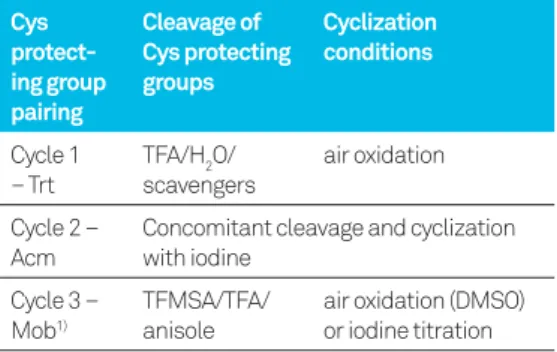
The combination of protecting groups pre-sented in Table 9 has been successfully used for the preparation of several peptides (relaxin, defensins, sapecin) [107-109] having three disulfi de bridges, following an approach of selective bridging.
The experimental conditions for the formation of the fi rst two bridges have been descibed earlier in this chapter.
Recommended Standard Procedure
Cleavage of Mob Group and Disulfi de Formation
The cleavage solution (TFMSA/TFA/anisole 1:8:1) is prepared and cooled in an ice bath.The cooled solution is added to the peptide (3 mg/ mL). The reaction is carried out at 0°C for 45 min in the ice bath. The reaction solution is diluted 50 times with iced water and extracted 3 times with ether. The water layer is recovered and DMSO (10% of total volume) is added. The cyclization is monitored by analytical HPLC and the reaction solution is used directly for preparative HPLC pu-rifi cation at the end of the reaction, after dilution with water. The cyclization can also be achieved by iodine titration: addition of a methanolic solu-tion of iodine up to persistent yellow color and destruction of the excess of iodine with ascorbic acid.
It should be clear that the successive formation of the disulfi de bridges is a long and tedious process. When the peptide to be prepared cor-responds to a naturally occuring sequence, with the natural bridging pattern, the simultaneous disulfi de bridges formation (random oxidation) can yield very good results [112]
3.3.4. Simultaneous disulfi de bridge formation Following this approach only a single kind of protecting group is chosen for the protection of all the sulfhydryl functions of a peptide. The most commonly used one is Trt which is cleaved during the fi nal TFA deprotection; Mtt, Mmt and Tmob can also be chosen. The crude peptide can be prepurifi ed or employed directly in the oxidation reaction.
The Acm group is stable to acidolysis, and the peptide obtained after the fi nal TFA deprotec-tion has its SH funcdeprotec-tions still protected, which facilitates the purifi cation.
The Acm group can then be cleaved by mercuric acetate followed by oxidative folding.
This approach has been used in the preparation of muscarinic toxin 1 (MTX1) [113] a 66 residues peptide containing 5 disulfi de bridges following a convergent Boc synthesis based on a com-bined solid phase-solution approach.
Recommended Standard Procedure
Simultaneous Formation of Multiple Disulfi de Bridges
The linear peptide is dissolved at a concentration of 10–3 to 10–4 M in 0.05 M ammonium acetate /0.1 M guanidinium hydrochloride (optional) and the pH is adjusted to 7.5. Redox additives are of-ten used to accelerate the reaction; typically the couple glutathione reduced (GSH)/glutathione oxidized (GSSG) is added to the oxidation solution in the ratio peptide/GSH/GSSG 1:100:10. The reaction is monitored by analytical HPLC and at the end, after acidifi cation with acetic acid, the solution is directly used for preparative HPLC purifi cation.
However, it has been observed that in certain cases a product showing a non-natural folding
Table 9. Consecutive formation of three disul-fi de bonds Cys protect-ing group pairing Cleavage of Cys protecting groups Cyclization conditions Cycle 1 – Trt TFA/H2O/ scavengers air oxidation Cycle 2 – Acm
Concomitant cleavage and cyclization with iodine
Cycle 3 – Mob1)
TFMSA/TFA/ anisole
air oxidation (DMSO) or iodine titration 1) can be replaced by Dpm [110]
pattern was isolated as main product [114]. Op-timization of the cyclization conditions (reaction at 5°C in the presence of 2 M sodium sulfate) has resulted in the isolation of the naturally folded molecule as the main product.
4. Coupling Reagents and Methods
4.1. General Remarks
The coupling of an amino acid to the peptide resin, i.e. the elongation step, is the crucial part of the SPPS cycle (see Fig 2 and 5). Rate and yield of the reaction are infl uenced by various parameters such as
• The choice of solvent:
The solvent not only determines the swelling of the peptide-resin and thus infl uences the accessibility of the reactive sites; it also directly affects the kinetics of the coupling reaction. • The steric hindrance:
It is determined by the nature of the side chains (R1 and R2) and their protecting groups.
• The reactivity of the activated carboxylic acid: It determines the acylation rate, as well as the extent of side reactions, such as racemization.
Generally speaking, the fi rst priority is to fi nd the optimal combination of high coupling rate and minimal racemization. Contrary to widespread assumptions Nα-urethane pro-tected amino acids can racemize considerably under inadequate coupling conditions [98, 99,114,115]. The mechanism of this reaction is presented in Fig. 6.
“Standard” coupling conditions may result in incomplete coupling and formation of by-products such as epimers, truncated peptides and deletion sequences, products of guanyl-ation [116], or products generated by premature Fmoc cleavage. More potent coupling reagents such as HATU [117] or very active Fmoc amino acid derivatives such as the acid fl uorides [118] may drive the coupling to completion, N-silylation with bis(trimethylsilyl)acetamide (the use of TMS-Cl is restricted to Boc-SPPS) [83,119] may be an additional means to pro-mote the reaction.
Better results will be obtained by repeating a coupling with fresh reagents (and changing coupling parameters if a low conversion was ob-tained) rather than by prolonging the reaction. Fig. 5.
A coupling reaction. Act: Activator, e.g. OBt, OAt, OSu.
Fig. 6. Mechanism of base-catalyzed racemization during activation.