Pozo-Martin, F (2015) Multi-Criteria Decision Analysis (MCDA) as the basis for the development, implementation and evaluation of in-teractive patient decision aids. PhD thesis, London School of Hygiene & Tropical Medicine. DOI: https://doi.org/10.17037/PUBS.02391598 Downloaded from: http://researchonline.lshtm.ac.uk/2391598/
DOI:10.17037/PUBS.02391598
Usage Guidelines
Please refer to usage guidelines at http://researchonline.lshtm.ac.uk/policies.html or
alterna-tively [email protected].
1
Multi-Criteria Decision Analysis (MCDA) as the basis for the
development, implementation and evaluation of interactive patient
decision aids
FRANCISCO POZO-MARTIN
Thesis submitted in accordance with the requirements for the degree of Doctor of Philosophy of the University of London
November 2015
Department of Social and Environmental Health Research Faculty of Public Health and Policy
LONDON SCHOOL OF HYGIENE AND TROPICAL MEDICINE, UNIVERSITY OF LONDON
2
I, Francisco Pozo-Martin, confirm that the work presented in this thesis is my own. Where information has been derived from other sources, I confirm that this has been indicated in the thesis.
3
ABSTRACT
BACKGROUND: In the context of the progressive movement towards
patient-centred care, patient-specific decision support is an important focus of interest. Many diagnostic and treatment patient decision aids (PDAs) are now available to help patients make informed choice decisions. An increasing number of these are software-based, with some available online. Multi-Criteria Decision Analysis
(MCDA) is a potentially useful technique on which to base a software-assisted PDA, especially when the decision is complex - as is the case in choosing the best
treatment for non-small cell lung cancer – but it has so far been relatively little exploited in this area. The use of any from a number of existing MCDA-based software applications in the development and delivery of a MCDA-based interactive PDA can be an effective way of achieving “best-practice” or normative standards of decision making, such as 1) a well-constructed set of decision criteria or 2) logically consistent patient preferences. However, it also involves the use of resources such as the time and cognitive effort involved in decision-making. The comparative
evaluation of alternative MCDA-based software applications in developing and delivering a PDA therefore involves trade-offs between decision effectiveness and decision resource criteria moving from the normative to the prescriptive. MCDA is an ideal tool for this meta-evaluation task as well as for the adoption decision itself.
AIM: To analyse, as proof of concept, the use of MCDA for the development,
implementation and evaluation of interactive PDAs in routine clinical practice.
OBJECTIVES:
1. To assess the use with clinicians in the Spanish NHS of two alternative MCDA software applications which implement dissimilar MCDA techniques in the development of a PDA in routine clinical practice;
2. To assess the use with clinicians in the Spanish NHS of the same two alternative MCDA software applications in the implementation of a PDA in an environment replicating actual clinical consultations;
4
3. To build a meta-multi-criteria decision model based on the Decision Resources Decision Effectiveness Analysis (DRDEA) framework and assess the use of this model by clinicians in the Spanish NHS to make the choice between the two MCDA applications as the basis for a PDA.
METHODS:
1) Two dissimilar MCDA software applications served as a basis for the
development of a lung cancer clinical management PDA in close collaboration with two different groups of three clinicians from two different Spanish NHS hospitals (H1 and H2): 1) Expert Choice, which implements the Analytic Hierarchy Process
(AHP) MCDA approach; 2) Annalisa in Elicia (ALEL), which implements the
Simple Attribute Weighting (SAW) MCDA approach. The process of co-development of the PDA in hospitals H1 and H2 was documented;
2) Expert Choice was used to implement (i.e. deliver) the lung cancer clinical management PDA in three hypothetical consultations in hospital H1. In each
consultation, one of the three clinicians involved in the development of the tool, with support by this researcher, guided a proxy patient (a non-clinical member of hospital staff) through the PDA. The same process was repeated with the MCDA software
ALEL in hospital H2. The process of delivery of the PDA in hospitals H1 and H2 was documented;
3) This researcher built a meta-multi-criteria decision model based on the DRDEA framework to help clinicians choose between different MCDA software applications as the basis of a PDA. The MCDA approach used for this meta-model was Multi-Attribute Value Theory (MAVT). The model was implemented, using the software HiView 3, with three clinicians from hospital H3 for the choice between Expert Choice and ALEL as the basis of a lung cancer clinical management PDA.
RESULTS:
The thesis makes a three-fold contribution to research in patient-centred decision support. First, it presents two new MCDA software-based approaches to clinical decision support, based on joint work with clinicians in the Spanish NHS, for developing an interactive PDA for the clinical management of non-small cell lung cancer. Second, it describes the use of these decision support tools in the delivery of
5
an interactive PDA for the clinical management of non-small cell lung cancer in a hospital environment via simulated consultations between actual clinicians, with support from this researcher, and proxy lung cancer patients. Third, it presents and applies a new MCDA-based methodology for evaluating the use of alternative MCDA software applications in the development and delivery of interactive PDAs.
6
AKNOWLEDGEMENTS
The conversation that this thesis originated from took place on the street in Johannesburg, South Africa, several years ago. Much has happened since then. Throughout the years that led to this day, Zaid Chalabi and Jack Dowie have been a constant source of knowledge and support. Thank you. As Jack said to me once, quoting Shoeless Joe Jackson, “if you build it they will come”, and he was right. Apart from Zaid and Jack, other friends have illuminated the way. Some quite literally, as they are the wonderful clinicians that participated in this research: Angel Salvatierra, Eduard Monsó, Jaume Sauleda, Miguel Angel Martín, Isidoro Barneto, Teresa Morán, Pedro López de Castro, Mónica Guillot, and Miguel Angel Carvajal. In addition to them, my friends Angel López Encuentra and Víctor Abraira provided me with extremely valuable insights at a difficult moment.
Light also came from Hilary, Caroline, Alvaro, Douglas, Charlotte, Angel, Rosa, Luciano, Miguel, Alex, Sara, James, Clara, Yoel, Thanassis, Isabelle, Chris, Sandra, Andy, Melisa, Triantafyllos, Mariana, Catriona, Sotiris, Karima, Alessandra, Ana, Milica, David, Fernando, Leandro, Alejandra, and Yoshimi. Thank you.
Judy, thank you! Karl, merci bien!
Paco and Wigberta, my parents, continue giving to me unconditionally, and so do Gonzalo and María, Daniel, and Ula. Thank you.
7
Table of Contents.
List of Figures. ... 9
List of Tables: ... 12
Introduction: ... 15
Chapter 1. Literature review. ... 21
Chapter 2: Using Expert Choice and Annalisa in Elicia to develop, with clinicians in the Spanish NHS, a patient decision aid for the clinical management of Stage IIIA3 non-small cell lung cancer. ... 109
Chapter 3: Using Expert Choice and Annalisa in Elicia to deliver, with clinicians in the Spanish NHS, a patient decision aid for the clinical management of Stage IIIA3 non-small cell lung cancer in an environment replicating actual clinical consultations. ... 166
Chapter 4: Using a meta-multi-criteria decision model to make the choice between alternative templates for developing and delivering a patient decision aid in routine clinical practice. ... 208
Chapter 5: Discussion ... 249
Appendix 1: Initial hierarchies of criteria for the Expert Choice-based PDA and the ALEL-based PDA. ... 265
Appendix 2: Description of the criteria of the final hierarchy common to the Expert Choice-based PDA and the ALEL-based PDA. ... 267
Appendix 3: Literature search of published clinical studies evaluating the outcomes of the three clinical decision options. ... 272
Appendix 4: Expert Choice Evidence-Generation Questionnaire (EC-EGQ), clinicians’ judgments about the performance levels of the options on the bottom-level criteria of the hierarchy and single-criterion scores of the options on these criteria for hospital H1 ... 284
Appendix 5: ALEL Evidence-Generation Questionnaire (ALEL-EGQ), clinicians’ judgments about the performance levels of the options on the bottom-level criteria of the hierarchy and single-criterion scores of the options on these criteria for ALEL -based PDA ... 295
Appendix 6. Visual representation of the sequence of delivery steps using the Expert Choice-based PDA (hospital H1) ... 306
Appendix 7. Visual representation of the sequence of delivery steps using the ALEL -based PDA (hospital H2) ... 309
Appendix 8: Spanish version of the top-level criteria and of the treatment descriptions for the Expert Choice-based PDA ... 312
Appendix 9: Spanish version of the top-level criteria and of the treatment descriptions for the ALEL-based PDA ... 314
8
Appendix 10: STATA output. ... 316 References: ... 321
9
List of Figures.
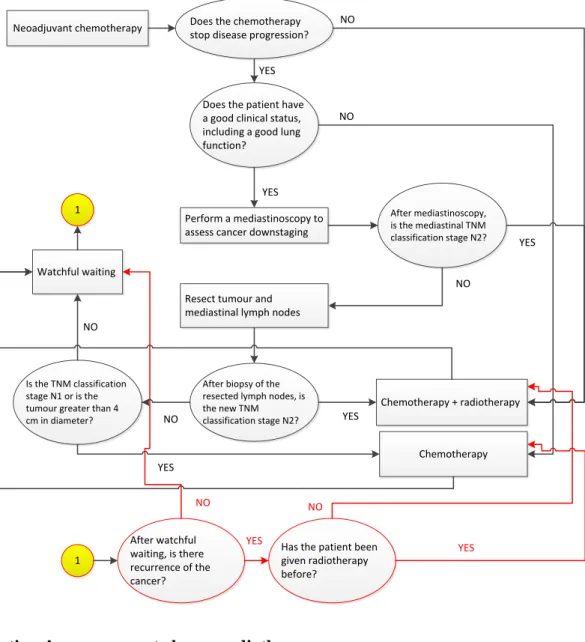
Figure 2.1. Pathway of possible clinical interventions under option 𝐴1, neoadjuvant
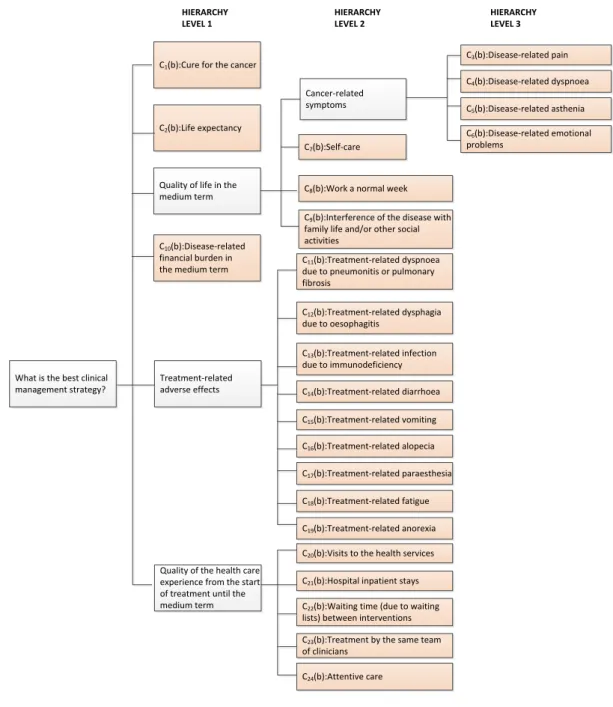
chemotherapy with resective intent. ... 113 Figure 2.2. Pathway of possible clinical interventions under option A2, concurrent chemo-radiotherapy. ... 114 Figure 2.3. Final hierarchy of criteria for the Expert Choice-based PDA and the ALEL-based PDA ... 117 Figure 2.4. Calculation of the priorities 𝑠𝑖,𝑘 of the options 𝐴𝑖(𝑖 = 1,2,3) on criteria
𝐶 𝑘(b) (𝑘 = 3,4,5,6) (Expert Choice-based PDA) ... 134 Figure 2.5. Transformation of the levels of performance 𝑥𝑖,𝑘 of the options 𝐴𝑖(𝑖 = 1,2,3) on criteria 𝐶𝑘(b) (𝑘 = 1,2,7,8 … 24) into priorities 𝑠𝑖,𝑘 (Expert Choice-based PDA) ... 135 Figure 2.6. Schematic representation of the Stage IIIA3 non-small cell lung cancer Markov
model ... 140 Figure 2.7. Calculating the priorities of the options on the top-level criteria (Expert Choice -based PDA) ... 143 Figure 2.8. Priorities of the options on the top-level criteria (Expert Choice-based PDA) . 144 Figure 2.9. Transformation of the levels of performance 𝑥𝑖,𝑘 of the options 𝐴𝑖(𝑖 = 1,2,3) on criteria 𝐶𝑘(b) (𝑘 = 1,2,7,8 … 24) into ratings 𝑠𝑖,𝑘 (ALEL-based PDA) ... 149 Figure 2.10. Transformation of the levels of performance 𝑥𝑖,𝑘 of the options 𝐴𝑖(𝑖 = 1,2,3) into ratings on 𝐶3(𝑏)- 𝐶6(𝑏) (ALEL-based PDA) ... 152 Figure 2.11: Weighted sums required in order to calculate the ratinss of the options on the parent top-level criteria (ALEL-based PDA) ... 155 Figure 2.12. Calculating the ratings of the options on the top-level criteria (ALEL-based PDA) ... 156 Figure 2.13. Visual representation of the scores (priorities/ratings) of the options on the six top-level criteria ... 160 Figure 2.14. Comparing the performance levels and the scores (priorities/ratings) of the options on the bottom-level criteria ... 161 Figure 3.1. Sequence of delivery steps of the Expert Choice-based and ALEL-based PDAs ... 168 Figure 3.2. Results of delivering the Expert Choice-based PDA in hypothetical consultation 1 with Clinician 1 and a proxy patient (hospital H1) ... 187 Figure 3.3. Results of delivering the Expert Choice-based PDA in hypothetical consultation 2 with Clinician 2 and a proxy patient (hospital H1) ... 188 Figure 3.4. Results of delivering the Expert Choice-based PDA in hypothetical consultation 3 with Clinician 3 and a proxy patient (hospital H1) ... 189 Figure 3.5. Results of delivering the ALEL-based PDA in hypothetical consultation 1 with Clinician 1 and a proxy patient (hospital H2) ... 190
10
Figure 3.6. Results of delivering the ALEL-based PDA in hypothetical consultation 2 with
Clinician 2 and a proxy patient (hospital H2) ... 191
Figure 3.7. Results of delivering the ALEL-based PDA in hypothetical consultation 3 with Clinician 3 and a proxy patient (hospital H2) ... 192
Figure 3.8. Plot of the MDQ scores (Expert Choice-based PDA and ALEL-based PDA) ... 196
Figure 3.9. Criteria weights assigned by the proxy patients in the hypothetical consultations ... 200
Figure 4.1. Normativity in the development of a MCDA-based PDA: parent criterion and sub-criteria ... 214
Figure 4.2. Practicality in the delivery of the template-based PDA: parent criterion and sub-criteria ... 215
Figure 4.3. Ease of use of the template interface: parent criterion and sub-criteria ... 216
Figure 4.4. Acceptability of the template-based PDA: parent criterion and sub-criteria ... 216
Figure 4.5. Full hierarchy of decision criteria for the meta-decision model ... 217
Figure 4.6. Example of a diagram illustrating each of the single-criterion value functions for criteria 𝐶𝑘(b)(𝑘 = 1 … 11) ... 218
Figure 4.7. Value function for criterion normativity in the model structuring (𝐶1(𝑏)) ... 220
Figure 4.8. Value function for criterion logical consistency of the preferences (𝐶2(𝑏)) ... 221
Figure 4.9. Value function for criterion empirical accuracy of the preferences (𝐶3(b)) ... 223
Figure 4.10. Value function for criterion normativity in the evidence generation/ representation (𝐶4(𝑏)) ... 224
Figure 4.11. Value function for criterion practicality in the communication of the model structure and outputs (𝐶5(𝑏)) ... 225
Figure 4.12. Clinician-specific value functions for criterion practicality in the communication of the model structure and outputs (𝐶5(𝑏)) ... 226
Figure 4.13. Clinician-specific value functions for criterion practicality in the preference elicitation ((𝐶6(𝑏))... 229
Figure 4.14. Clinician-specific value functions for criterion practicality in the preference elicitation ((𝐶7(𝑏)) ... 232
Figure 4.15. Value function for criterion ease of use of the template interface by clinicians (𝐶8(b))... 234
Figure 4.16. Value function for criterion ease of use of the template interface by patients (𝐶9(b)) ... 236
Figure 4.17. Value function for criterion cost of the template (𝐶10(𝑏)) ... 239
Figure 4.18. Value function for criterion organisational fit (𝐶11(𝑏) ... 240
Figure 4.19. Results of the meta-decision model (clinician 1) ... 242
11
Figure 4.21. Results of the meta-decision model (clinician 3) ... 245
Figure 5.1. DRDEA MAUT formulation. Using high DE templates to develop a PDA: sacrifice in DE ... 252
Figure 5.2. DRDEA MAUT formulation. Using high DE templates to develop a PDA: no sacrifice in DE ... 253
Figure A1.1. Initial hierarchy of criteria for the Expert Choice-based PDA ... 265
Figure A1.2. Initial hierarchy of criteria for the ALEL-based PDA ... 266
Figure A2.1. Sub-hierarchy of quality of life in the medium term sub-criteria (Expert Choice-based PDA and ALEL-Choice-based PDA) ... 269
Figure A2.2. Sub-hierarchy of treatment-related adverse effects sub-criteria (Expert Choice-based PDA and ALEL-Choice-based PDA) ... 270
Figure A2.3. Sub-hierarchy of health care experience between the start of treatment and the medium term sub-criteria (Expert Choice-based PDA and ALEL-based PDA) ... 271
Figure A3.1. Full final hierarchy of criteria for the Expert Choice-based PDA and the ALEL-based PDA ... 273
Figure A6.1. Communication of the criteria ... 306
Figure A6.2. Pair-wise comparisons screen ... 306
Figure A6.3. Communication of the options ... 307
Figure A6.4. Communication of the results of the decision ... 307
Figure A6.5. Communication of the evidence for the quality of life in the medium term criterion ... 307
Figure A6.6. Dynamic sensitivity analysis screen ... 308
Figure A7.1. Communication of the criteria ... 309
Figure A7.2. Elicia screen to assess the criteria weights ... 309
Figure A7.3. Weightings panel in the Annalisa topic screen ... 310
Figure A7.4. Information pop-up for criterion financial burden due to the disease in the medium term ... 310
Figure A7.5. Communication of the options ... 310
Figure A7.6. Communication of results ... 311
Figure A7.7. Communication of the evidence ... 311
12
List of Tables:
Table 1.1. IPDAS definition of PDA effectiveness. ... 27
Table 1.2. AHP scale of intensity of dominance. ... 66
Table 1.3. Software applications for MCDA: methods implemented, decision support features and group decision support. ... 83
Table 1.4. Software applications for MCDA: problem structuring. ... 85
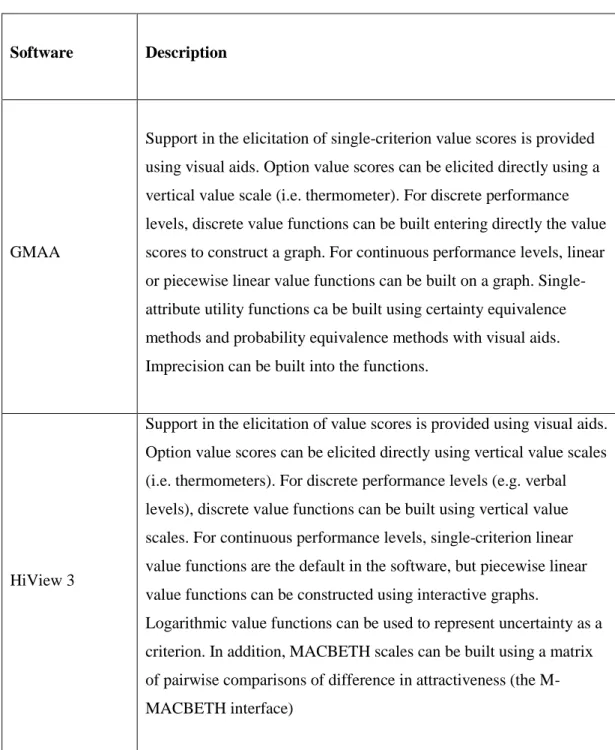
Table 1.5. Software applications for MCDA: scoring options on the individual criteria ... 87
Table 1.6. Software applications for MCDA: weight elicitation. ... 92
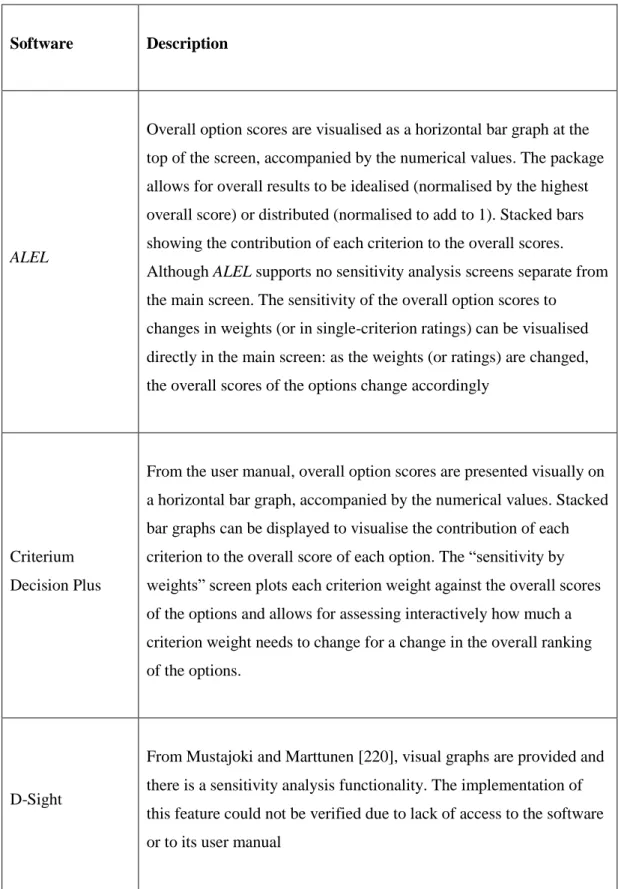
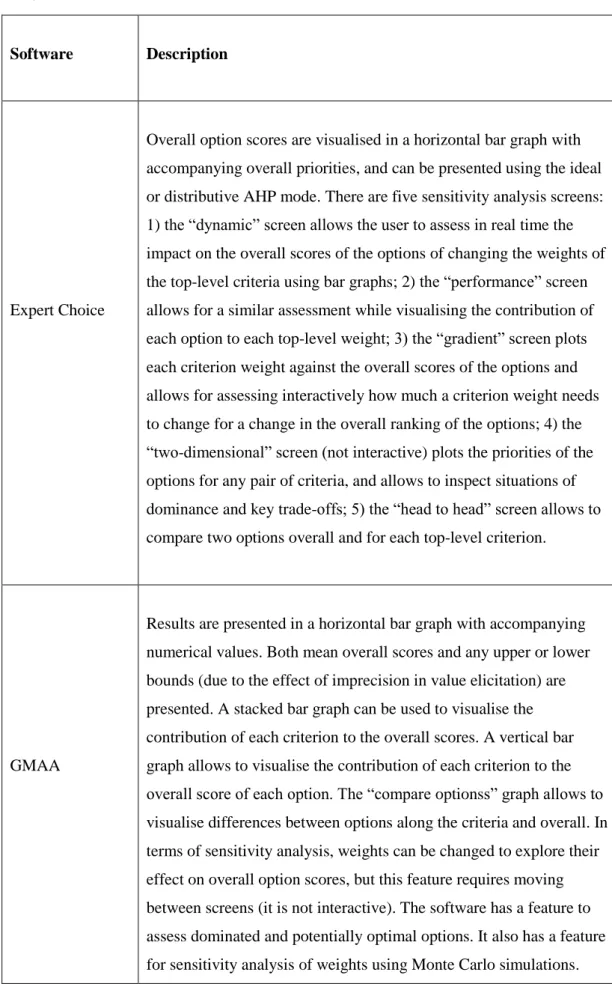
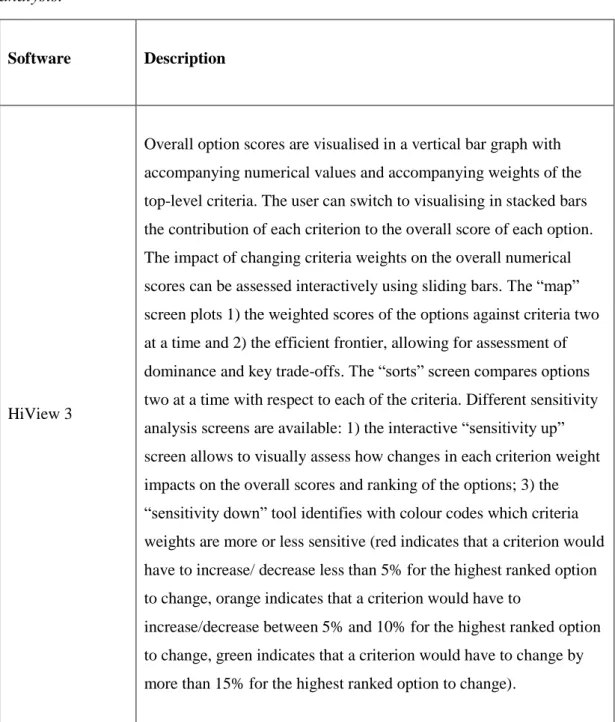
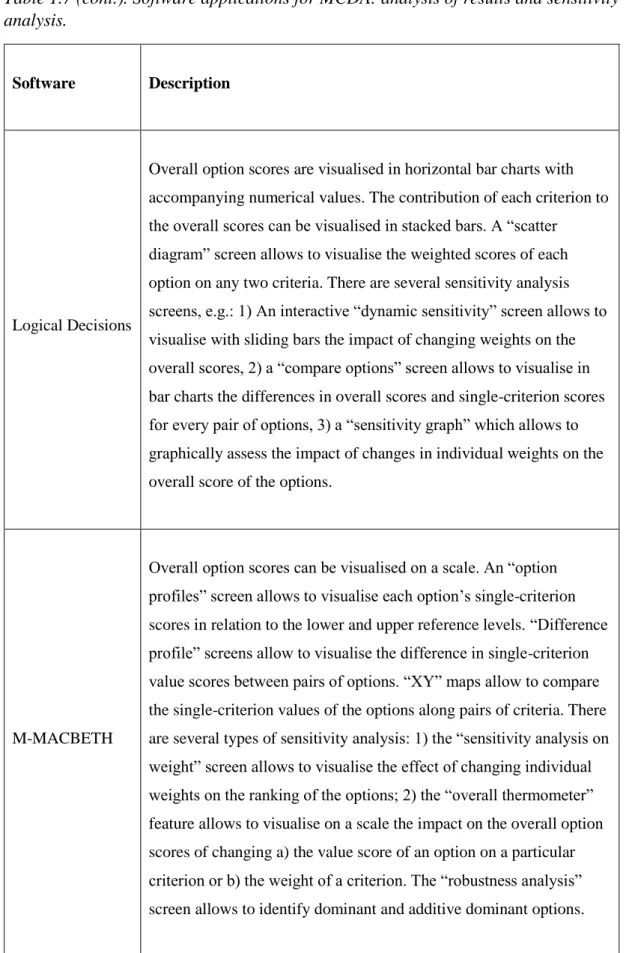
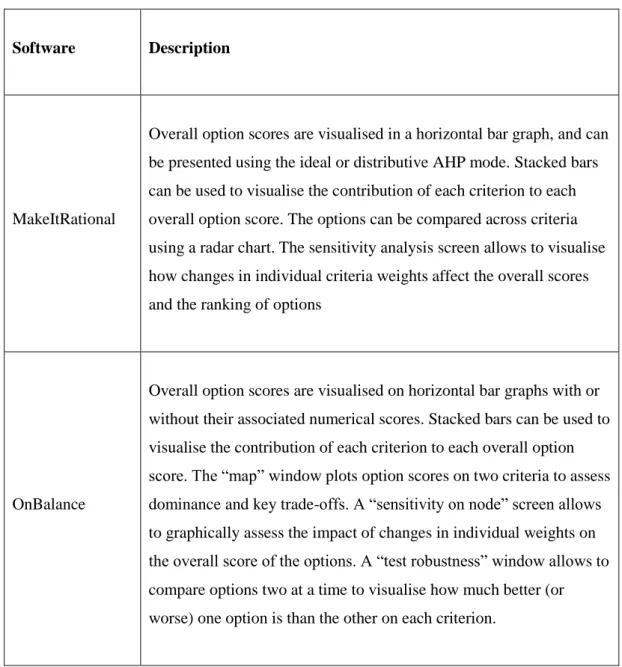
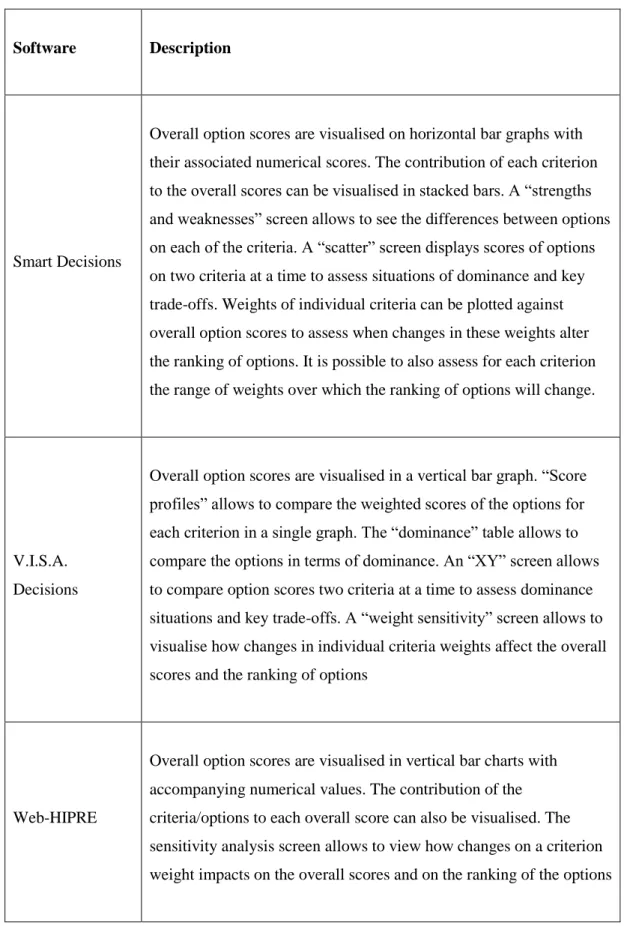
Table 1.7. Software applications for MCDA: analysis of results and sensitivity analysis. ... 94
Table 2.1. Description of the pair-wise comparisons used to obtain the priorities of the options on criteria 𝐶3(𝑏)-𝐶6(𝑏) ... 121
Table 2.2. Description of the variables used to measure the levels of performance 𝑥𝑖,𝑘 of the options 𝐴𝑖(𝑖 = 1,2,3) on criteria 𝐶 𝑘(b)(𝑘 = 1,2,7,8 … 24) ... 122
Table 2.3. Description of the variables measuring the levels of the options on the criteria 𝐶3(𝑏)-𝐶6(𝑏) (ALEL-based PDA) ... 147
Table 2.4. Inter-rater reliability ... 162
Table 3.1. Communication of the criteria to the proxy patient (Expert Choice-based PDA) ... 171
Table 3.2. 1-9 AHP scale of intensity of dominance. ... 172
Table 3.3. Textual content of the three option descriptions (Expert Choice-based PDA) ... 174
Table 3.4. Levels of criterion importance and associated weights (ALEL-based PDA) ... 179
Table 3.5. Content of the criterion information pop-ups (ALEL-based PDA) ... 180
Table 3.6. Possible levels of importance and corresponding weights of the decision quality criteria (MDQ) ... 184
Table 3.7. Ratings on the decision criteria (MDQ) ... 185
Table 3.8. Overall scores (ranking of options) for the options in hypothetical consultations ... 197
Table 3.9. Highest scoring option on each criterion for each hypothetical consultations ... 198
Table 3.10. Impact on rankings and overall scores of adding option A2* to the set of options ... 202
Table 3.11. Impact on rankings and overall scores of subtracting option A2 from the set of options ... 203
Table 3.12. Impact on rankings and overall scores of subtracting option A3 from the set of options ... 204
Table 4.1. Levels 𝑥𝑖,1(𝑖 = 1,2) and value scores 𝑣𝑖,1(𝑖 = 1,2) of the two templates 𝐴𝑖 (𝑖 = 1,2) on criterion normativity in the model structuring (𝐶1(b)) ... 220
13
Table 4.2. Levels 𝑥𝑖,2(𝑖 = 1,2) and value scores 𝑣𝑖,2(𝑖 = 1,2) of the two templates 𝐴𝑖 (𝑖 =
1,2) on criterion logical consistency of the preferences (𝐶2(𝑏)) ... 222 Table 4.3. Levels 𝑥𝑖,3(𝑖 = 1,2) and value scores 𝑣𝑖,3(𝑖 = 1,2) of the two templates 𝐴𝑖 (𝑖 =
1,2) on empirical accuracy of the preferences (𝐶3(𝑏)) ... 223 Table 4.4. Levels 𝑥𝑖,4(𝑖 = 1,2) and value scores 𝑣𝑖,4(𝑖 = 1,2) of the two templates 𝐴𝑖 (𝑖 =
1,2) on normativity in the evidence generation/ representation (𝐶4(𝑏)) ... 224 Table 4.5. Levels 𝑥𝑖,5(𝑖 = 1,2) and value scores 𝑣𝑖,5(𝑖 = 1,2) of the two templates 𝐴𝑖 (𝑖 =
1,2) on criterion practicality in the communication of the model structure and outputs (𝐶5(𝑏)) ... 228 Table 4.6. Levels 𝑥𝑖,6(𝑖 = 1,2) and value scores 𝑣𝑖,6(𝑖 = 1,2) of the two templates 𝐴𝑖 (𝑖 =
1,2) on criterion practicality in the preference elicitation ((𝐶6(𝑏)) ... 230 Table 4.7. Levels 𝑥𝑖,7(𝑖 = 1,2) and value scores 𝑣𝑖,7(𝑖 = 1,2) of the two templates 𝐴𝑖 (𝑖 =
1,2) on criterion practicality in the preference elicitation ((𝐶7(𝑏)) ... 233 Table 4.8. Levels 𝑥𝑖,8(𝑖 = 1,2) and value scores 𝑣𝑖,8(𝑖 = 1,2) of the two templates 𝐴𝑖 (𝑖 =
1,2) on criterion ease of use of the template interface by clinicians (𝐶8(𝑏))... 235 Table 4.9. Levels 𝑥𝑖,9(𝑖 = 1,2) and value scores 𝑣𝑖,9(𝑖 = 1,2) of the two templates 𝐴𝑖(𝑖 =
1,2) on criterion ease of use of the template interface by patients (𝐶9(𝑏))... 237 Table 4.10. Single user standard licenses available and their cost for six commonly used MCDA templates (in year 2013)... 238 Table 4.11. Levels 𝑥𝑖,10(𝑖 = 1,2) and value scores 𝑣𝑖,10(𝑖 = 1,2) of the two templates
𝐴𝑖(𝑖 = 1,2) on criterion cost of the template (𝐶10(𝑏)) ... 239 Table 4.12. Levels 𝑥𝑖,11(𝑖 = 1,2) and value scores 𝑣𝑖,11(𝑖 = 1,2) of the two templates
𝐴𝑖 (𝑖 = 1,2) on criterion organisational fit (𝐶11(𝑏))... 241 Table 4.13. Short names of the meta-decision model criteria ... 242 Table A3.1: Search strategy ... 274 Table A3.2: Results of the literature search. Treatment option: neoadjuvant chemotherapy with resective intent (𝐴1) ... 277 Table A3.3: Results of the literature search. Treatment option: concurrent
chemo-radiotherapy (𝐴2) ... 281 Table A4.1: Expert Choice Evidence Generation Questionnaire (EC-EGC) ... 284 Table A4.2. Levels of the three options 𝐴𝑖 (𝑖 = 1 … 3) on the bottom-level criteria of the full final hierarchy for each of the three clinicians (Expert Choice-based PDA) ... 287 Table A4.3. Transition probability matrices for the Stage IIIA3 NSCLC Markov model
elicited from the three clinicians in hospital H1 (Expert Choice-based PDA) ... 291 Table A4.4. Levels 𝑥𝑖,2 (𝑖 = 1 … 3) of the three options 𝐴𝑖 (𝑖 = 1 … 3) on criterion life expectancy 𝐶2(𝑏), in years (Expert Choice-based PDA) ... 291 Table A4.5. Non-idealised scores (idealised scores) of the options 𝐴𝑖(𝑖 = 1 … 3) on the bottom-level criteria 𝐶𝑘(𝑏)(𝑘 = 1 … 24) resulting from clinicians’ judgments (Expert Choice-based PDA) ... 292
14
Table A5.1. ALEL-based evidence generation questionnaire (ALEL-EGC) ... 295 Table A5.2. Levels of the three options 𝐴𝑖 (𝑖 = 1 … 3) on the bottom-level criteria of the full final hierarchy for each of the three clinicians (ALEL-based PDA) ... 298 Table A5.3. Transition probability matrices for the Stage IIIA3 NSCLC Markov model
elicited from the three clinicians in hospital H2 (ALEL-based PDA) ... 302 Table A5.4. Levels 𝑥𝑖,2 (𝑖 = 1 … 3) of the three options 𝐴𝑖 (𝑖 = 1 … 3) on criterion life expectancy 𝐶2(𝑏), in years (ALEL-based PDA) ... 302 Table A5.5. Non-idealised scores (idealised scores) of the options 𝐴𝑖(𝑖 = 1 … 3) on the bottom-level criteria 𝐶𝑘(𝑏)(𝑘 = 1 … 24) resulting from clinicians’ judgments (ALEL-based PDA) ... 303 Table A8.1. Renaming in Spanish the top-level criteria for communication to the patient . 312 Table A8.2. Textual content in Spanish of the three treatment descriptions ... 313 Table A9.1: Renaming in Spanish the top-level criteria for communication to the patient . 314 Table A9.2: Textual content in Spanish of the three treatment descriptions ... 315
15
Introduction:
In recent years there has been an increased emphasis in involving patients in making decisions about their own health care [1]. Different models of clinical decision making where the patient is an active participant in the decision making process have been proposed. One model that has gained high policy support is Shared Decision Making (SDM) [2, 3]. SDM is a concept variably and loosely defined [4]. In a review of the literature on alternative definitions of SDM, Makoul and Clayman [4] proposed that an integrative model of SDM would have the following elements: a discussion between the patient and the clinician of the problem to be addressed, the options available, and their pros and cons; an explication of the patient’s values and preferences, as well as of the physician’s knowledge and recommendations; an assessment of patient self-efficacy to adhere to a plan of action; an explicit decision (or an explicit deferment of a decision) and follow-up [2].
SDM can be facilitated by the use of patient decision aids [5]. Patient decision aids (PDAs) are “evidence-based tools designed to help patients participate in making specific and deliberated choices among health care options” [5]. In general, they provide decision support to patients by 1) making explicit the decision that needs to be made, 2) providing evidence-based information about the condition, the options, the consequences (benefits, harms), their probabilities and the uncertainties related to each of the health care options under consideration, and 3) helping patients express their values/ preferences with regards to the benefits, harms and uncertainties of the options [6]. PDAs are available in different formats [7]. A number of them are available on the internet. They can be self-administered by patients or used with practitioners in the consultation [7].
A systematic review of randomised clinical trials (RCT) of PDA effectiveness provides enough evidence that PDAs improve decision making (in terms e.g. of improving patient knowledge, reducing decisional conflict and increasing the consistency between patient values and the chosen option) so as to warrant their use in clinical practice [5]. However, the routine implementation of these tools to support SDM has challenges [7]. Among the barriers cited in the literature by practitioners are 1) the lack of skills to practice shared decision making, 2) an organisational
16
culture that hinders the uptake of PDAs, 3) the perception that PDAs are
inappropriate and/or too complex for use with certain groups of patients, 4) problems with workflow fit [7]. These barriers highlight the importance of developing “tools, processes and systems of care which make SDM feasible given the constraints of routine clinical practice” [8].
Multi-Criteria Decision Analysis (MCDA) can be the used as the basis for such tools [8]. MCDA is “an umbrella term for a collection of formal approaches which
explicitly seek to take into account of multiple criteria in helping individuals or groups explore decisions that matter” [9]. In preference-sensitive choice decision situations such as those which are often the subject of SDM, a number of MCDA techniques are available to provide decision support. For these decisions, the MCDA process usually involves the following steps: 1) Identifying the decision problem, 2) clearly specifying the options, 3) Identifying the objectives of the decision and related measureable criteria, 4) measuring the consequences of the options on each of the criteria and, depending on the specific MCDA technique used, scoring these consequences on a common scale, and 5) assigning weights of relative importance to the criteria [10]. Formal procedures are used to combine the information from steps 4) and 5) to provide a recommendation for the decision, usually in the form of a ranking of the options from most to least preferred. A sixth step in the process involves analysing the robustness of the results to changes in inputs that are not defined or measured precisely. The main role of MCDA is to help decision-makers manage large amounts of complex information in a way that is consistent [10].
Examples of well-known MCDA approaches include Multi-Attribute Value Theory (MAVT) [11], the Analytic Hierarchy Process (AHP) [12], the family of methods Election et Choix Traduisant la Realite (ELECTRE) [13] and the family of methods Preference Ranking Organisation Method for Enriched Evaluation (PROMETHEE) [14]. The implementation of these methods is usually done using decision analytic software applications. For example, HiView 3 [15] implements MAVT, and Expert Choice [16] implements the AHP.
MCDA can and has been used in decision support for complex clinical decisions, such as in oncology [17]. In addition, some MCDA approaches have been shown to be acceptable to patients and within their capabilities [18].
17
Clinicians can use different software applications for developing and implementing MCDA-based PDAs for complex clinical decisions in their day-to-day clinical practice environment. According to the Decision resource-decision effectiveness analysis (DRDEA) framework [19], the choice by clinicians between alternative software applications or “templates” for developing and implementing MCDA-based PDAs in routine clinical practice is a multi-criterion meta-decision that can be expressed in terms of the trade-offs between two types of criteria: 1) decision resources (DR) criteria expressing the resource requirements associated with using each template (e.g. time required, cognitive effort required, or financial cost [19]) and 2) decision effectiveness (DE) criteria expressing the benefits of using each template (e.g. theoretical grounding, evidential strength and coverage, transparency [19]). This choice depends on the specific context in which clinicians operate and it is preference-sensitive, i.e. it depends on how clinicians trade-off DR and DE
criteria. According to DRDEA [19], MCDA is the appropriate technique to make this choice.
Aim: To analyse, as proof of concept, the use of MCDA for the development,
implementation and evaluation of interactive patient decision aids in routine clinical practice
Objectives.
1. To assess the use with clinicians in the Spanish NHS of two alternative MCDA software applications which implement dissimilar MCDA techniques in the development of a PDA in routine clinical practice;
2. To assess the use with clinicians in the Spanish NHS of the same two alternative MCDA software applications in the implementation of a PDA in an environment replicating actual clinical consultations
3. To build a meta-multi-criteria decision model based on the DRDEA framework and assess the use of this model by clinicians in the Spanish NHS to make the choice between the two MCDA applications as the basis for a PDA.
The case study.
The case study in this research is a hypothetical 69 year-old patient recently diagnosed with stage IIIA3 non-small cell lung cancer and with lung and
18
cardiovascular comorbidities who will use an MCDA-based PDA to choose between a set of available clinical management strategies for his condition.
Methods.
1. The two MCDA software applications which served as a basis for the development of the lung cancer PDA were 1) Expert Choice [16], which implements the Analytic
Hierarchy Process (AHP) MCDA approach, and Annalisa in Elicia (ALEL) [20],
which implements the Simple Additive Weighting (SAW) MCDA approach.
Expert Choice was used by this researcher to co-develop with 3 clinicians (one oncologist, one pulmonologist, one thoracic surgeon) from hospital H1 in the
Spanish NHS a Stage IIIA3 lung cancer clinical management PDA. The same process
was repeated with a different group of 3 clinicians working in hospital H2 in the Spanish NHS using ALEL.
The process of co-development of each PDA with clinicians was documented by this researcher. This process included the following steps: 1) determining the options, 2) determining the relevant criteria for the decision, 3) measuring the consequences of the options on the criteria, and 4) scoring these consequences.
2. ALEL was used to implement (i.e. deliver) the lung cancer clinical management PDA in 3 hypothetical consultations in hospital H1. In each consultation, one of the three clinicians involved in the development of the tool, with support by this
researcher, guided a proxy patient (a non-clinical member of hospital staff) through the PDA. The same process was repeated with the MCDA software Expert Choice in hospital H2.
The process of implementation of each PDA in each hypothetical consultation, documented by this researcher, included the following steps: 1) communication of the criteria, 2) preference elicitation, 3) communication of the options, 4)
communication of the results of the decision, 5) communication of the evidence, 6) sensitivity analysis. In addition, at the end of each consultation the perceived quality of the decision of both the physician and the patient was assessed using the “My Decision Quality” (MDQ) questionnaire [21].
3. This researcher built a meta-multi-criteria decision model based on the DRDEA framework to help clinicians choose between different MCDA software applications
19
as the basis of a PDA. The MCDA approach used for this meta-model was Multi-Attribute Value Theory [11]. The model was implemented with 3 clinicians (one oncologist, one pulmonologist, one thoracic surgeon) from hospital H3 in the Spanish NHS for the choice between ALEL and Expert Choice as the basis of a lung cancer management PDA. The MCDA software used to implement the meta-model was HiView 3 [15].
The process of development of the meta-model by this researcher had four steps: 1) determining the options, 2) determining the relevant decision effectiveness (DE) and decision resources (DR) criteria, 3) measuring the consequences of the options on the criteria, and 4) scoring these options. The implementation of the meta-model with each of the 3 clinicians from hospital H3 had three steps: 1) preference elicitation for the different DE and DR criteria, 2) review of results, 3) sensitivity analysis.
This research project was considerably informed by the concept of engaged
scholarship, which involves generating knowledge in collaboration with practitioners (in this case, clinicians from three hospitals in the Spanish NHS) that can jointly advance the scientific enterprise and enlighten the community of those practitioners [22]. In this sense, the methods used were context-led. That is, they evolved in response to the conditions found in the context of clinical practice where the research was conducted. Particularly, in response to the time constraints posed to the
clinicians involved. This should not be considered a limitation but the essence of this study.
Structure of the thesis.
This thesis is structured to analyse, as proof of concept, the use of MCDA for the development, implementation and evaluation of patient decision aids in routine clinical practice. Chapter 1 presents a literature review of interactive PDAs. This includes a review of the current status in the field of PDAs with a focus on successful empirical applications, a review of MCDA methods, and a review of software
applications supporting MCDA. The chapter ends with a justification of the case study for this thesis: a hypothetical 69 year-old patient recently diagnosed with stage IIIA3 non-small cell lung cancer and with lung and cardiovascular comorbidities who
will use an MCDA-based PDA to choose between a set of available clinical
20
of using Expert Choice and ALEL with clinicians to develop a Stage IIIA3 lung
cancer clinical management PDA in routine clinical practice. Chapter 3 describes the process and results of using Expert Choice and ALEL with clinicians to implement a Stage IIIA3 lung cancer clinical management PDA in an environment replicating
actual clinical consultations. Chapter 4 describes the process and results of developing and implementing a meta-multi-criteria decision model based on the
DRDEA framework to help clinicians choose between Expert Choice and ALEL as
the basis for a Stage IIIA3 lung cancer clinical management PDA. The chapter shows
that the decision is preference-sensitive: it depends on the trade-offs clinicians are willing to make between “decision resources” and “decision effectiveness” criteria. Chapter 5 brings all the elements of the thesis together by presenting a discussion of the main findings and lessons learnt, as well as suggestions for further research.
21
Chapter 1. Literature review.
1. What is and what is not a PDA.
PDAs are tools to help patients participate in making decisions about health care options [5]. They contain, at least, information about the health care options and about their consequences (e.g. benefits and harms) on an individual’s health [6]. In addition, they may provide 1) information on the condition, 2) the chances (i.e. probabilities) that the patient will experience these consequences, 3) an explicit exercise to help patients clarify their preferences (i.e. values) over the consequences of the options, 4) other’s testimonials, and 5) assistance through the decision-making process [6].
PDAs are most often used to help patients make preference-sensitive decisions, i.e. decisions for which the choice of option is not clear (e.g. because several options with similar efficacy are available) and thus depend on the patient’s valuation of the different consequences of the options [23]. They support the process of Shared Decision Making, a mode of decision making in which both clinicians and patients share information in order to reach a consensus about the preferred treatment [24].
The above definition of PDAs excludes 1) passive informed consent materials, 2) educational interventions which are not targeted to making a specific decision, 3) interventions to increase adherence to a particular option. It also excludes
computerised decision support systems (CDSS). CDSS are information technology (IT)-based systems that use algorithms to provide specific recommendations to clinicians about a particular patient or his/her condition [25], including, inter alia,
computerised physician order entry systems, reminder systems, alert systems, and medical calculators. CDSS are not patient-centred but clinician-centred systems.
2. Origin, growth, drivers.
The early development of PDAs was influenced by work on decision support tools based on Decision Analysis [23], a quantitative approach to decision making first used in patient counselling in the late 1970s [26, 27]. In the 1980s, the work by Mulley, Wennberg and others [28, 29] on interactive multimedia programmes for the treatment on benign prostate hyperplasia was influential in the development of the
22
field [23]. PDAs are primarily developed and used in Australia, North America and Europe [5]. In the last 15 years their number has proliferated rapidly [5]. While in 1999 only 15 PDAs had been developed by researchers [30], in 2007 O’Connor reported the existence of more than 450 PDAs and that the previous year more than 8 million hits were made on the websites of the main PDA providers [31]. In 2014, the Ottawa Decision Aid Repository, a comprehensive collection of PDAs available on the internet, received more than 80,000 visits and provided information about 647 PDAs [32].
Several factors have influenced the development of PDAs, among which are the following:
1. An acknowledgement that, with the rapid expansion of health care interventions in recent years, several options are often available for a particular clinical decision, and that the choice of option will often depend on the trade-offs between the harms, benefits, and uncertainties related to each of these options [1];
2. The search for interventions to help reduce unwarranted variations in the provision of health care (i.e. variation in the provision of care that could not be explained by the need for these interventions) [23, 33]. In this sense, the use of PDAs is intended to spur patient self-interest in avoiding those interventions [23];
3. The increased importance of the ethical principle of respect for patient autonomy [23], which promotes that patients make choices understanding all the relevant information about the options and which has prompted changes in the legal
requirements for informed consent [34]. These changes highlight the importance that patients are fully informed of the consequences of the different health care options available to them before they make a decision [34]. PDAs are tools which may support this process;
4. The influence of the evidence-based medicine (EBM) movement [6]. EBM highlights the importance of making available and taking into account information about the outcomes of different health care interventions in clinical decision making.
3. Types of PDAs.
23
- The health care condition they address, ranging from allergies to depression, from cancer to end of life care [32];
- The type of decision they support, such as choice of screening test, choice of treatment, or choice of self-management strategy [1];
In terms of their characteristics, they differ, inter alia, in terms of:
- Their format, including booklets (see, for example Labrecque et al. [35] or Legare et al. [36]), audiotape workbooks (e.g. Hunter et al. [37]), videos (e.g. Partin et al. [38] and Pignone et al. [39]), and internet-based applications such as those provided by the following online resources: Patient [40], NHS Rightcare [41], Healthwise [42], Mayo Clinic Shared Decision Making National Resource Center [43];
- Their mode of delivery, either self-administered by patients or used with clinicians in the consultation [7];
- Their components, which may or may not include probabilistic information about the consequences of the options, visual representations of this probabilistic
information, explicit value clarification exercises, personal stories (e.g. testimonials of other patients) or guidance through the decision-making process [5];
- The theory or model of decision making which informs their design and
development [26], e.g. Decision Analysis under Expected Utility Theory (e.g. Bekker at al. [44] or Montgomery et al. [45]), Multi-Criteria Decision Analysis (e.g. Dolan and Frisina [46]), the Ottawa Decision Support Framework (e.g. Hunter et al. [37] or Lalonde et al. [47]), the Health Belief Model (e.g. Schapira and VanRuiswyk [48]), or no theory or model of decision making (e.g. Auvinen et al. [49] or Deschamps et al. [50]).
For the purposes of this thesis, one type of PDAs is particularly relevant: computerised PDAs. These PDAs use a computerised medium, and their format includes video-discs, CD-ROM or computer-based programmes, and websites [51]. Computerised PDAs have a number of advantages over other types of PDAs: 1) they allow for interactivity and for the use of visual features which can facilitate patient involvement, 2) they can include information tailored to specific patients, 3) they can provide feedback to increase understanding and 4) they can facilitate the
24
4. What makes a good PDA? Different views on the most appropriate measure of PDA effectiveness.
In principle a good PDA is a PDA that leads to a good decision. However, there are different views about what constitutes a good decision [5]. These different views are reflected in the literature in a debate around what should be the focus of the
evaluation of PDAs, i.e. what is the most appropriate measure of the effectiveness of PDAs [52].
Studies measuring the effectiveness of PDAs have used a wide range of outcomes. The next five sections provide an overview of these outcomes. Incorporated in the narrative are any salient criticisms and justifications in the literature for the use of these outcomes as measures of effectiveness of PDAs.
4.1. Outcomes related with decision-making.
Decision-making using a PDA involves patients engaging in a decision-making process to make a choice. The next two sub-sections explores PDA effectiveness outcomes related with 1) the decision making process and 2) the choice made. A third sub-section section explores a number of constructs of decision quality, which are multidimensional measures of PDA effectiveness.
4.1.1. Outcomes related with the decision-making process.
Outcomes related with the decision-making process include variables such as 1) preparation for decision-making, 2) satisfaction with decision-making, 3)
communication between the patient and the practitioner, 4) patient involvement in decision making, and 5) decisional conflict [5].
Preparation for decision-making refers to the patient’s perception of the usefulness of a PDA in helping him/her prepare to communicate with the practitioner and to make a decision [53]. It has been measured using e.g. the Preparation for Decision Making Scale [5, 53].
Different measures of satisfaction include self-reported satisfaction with the option chosen and satisfaction with the process of decision-making [5]. These measures have been criticised by some authors as inadequate measures of PDA effectiveness
25
because satisfaction depends on a patient’s expectations [54] rather than in the quality of decision support [55].
Communication between the patient and the practitioner has been measured [5] using instruments such as the Observing Patient Involvement in Decision Making
(OPTION) scale [56] or the Informed Decision Making instrument [57].
Patient involvement in decision making has been measured [5] using e.g. the Control Preferences Scale (CPS), which identifies the preferred role of the patient in terms of decisional control (active, shared with the clinician, or passive) [58]. Measures highlighting patient participation in the consultation have been considered by some researchers as unsuitable for primary measures of PDA effectiveness on the grounds that the role of PDAs is not to promote any particular model of decision-making [52].
Decisional conflict is a construct measuring an individual’s “level of personal uncertainty about the course of action to take” [59]. Factors influencing decisional conflict in patients include the absence of information about the health care options and their consequences, values which are not clear, insufficient skills in decision-making or in putting decisions into practice, emotional distress, and the perception that significant others exercise pressure to impose their views on the decision [59]. A commonly used measure of decisional conflict is the Decisional Conflict Scale (DCS), an instrument composed of 16 items grouped into five subscales measuring patients’ perceptions in terms of the following domains: feeling uncertain in making a choice, feeling uninformed, feeling unclear about values, feeling unsupported in decision making, feeling that the decision was effective [60]. Decisional conflict has been criticised as a measure of PDA effectiveness by some authors on the grounds that focusing on reducing decisional conflict penalises decision processes which create in patients a state of warranted equipoise with regards to the decision [21].
4.1.2. Outcomes related with the choice made.
Outcomes related with the choice made include 1) knowledge acquired by the patient about the condition, the options and their consequences and 2) accuracy in the
patient’s perceived probabilities of the options’ consequences and 3) concordance between the option chosen and the patient’s values [5].
26
Knowledge is measured using knowledge questionnaires, generally based on multiple choice or true/false questions and usually designed specifically for each study [61]. Perceived probabilities of the options’ consequences are measured using e.g. probability scales [62, 63], which are then matched to the actual probabilities presented in the PDAs to assess their accuracy. Some authors have argued against knowledge and accuracy in perceived probabilities, two types of knowledge outcomes [52], as being the most appropriate measures of PDA effectiveness [36, 64]. Knowledge makes patients more informed and thus helps them deliberate about their preferences, but it does not ensure, by itself, that patients will be more involved in decision making or that they will get the option that they desire [36]. In addition, knowledge as a key element of a good decision is not a concept easy to
operationalise [64]. For example, does there exist an amount of knowledge which is both necessary and sufficient for each decision question or should patients determine when they know enough? [64].
Achieving concordance between the option chosen and the patient’s values has been described as one important measure of PDA effectiveness [52] and increasingly identified as a key goal of PDAs [65], in line with the argument that PDAs should primarily help patients make personalised choices between options [52]. Studies have measured value-choice concordance using different approaches, e.g. calculating the percentage of patients getting a treatment that matched their stated preferences or eliciting patients’ preferences and using regression models to predict patients choices based on those preferences [5].
4.1.3. Constructs of decision quality
A number of constructs of decision quality have been proposed in the literature to measure the effectiveness of PDAs. Perhaps the most well-known of these constructs is the one developed by the International Patient Decision Aids (IPDAS)
Collaboration. The IPDAS Collaboration, founded in 2003, is an international group of researchers, PDA developers and other stakeholders with the main task of
developing a framework to improve the content, development, implementation and evaluation of PDAs [66]. The IPDAS Collaboration has developed a consensus definition of PDA effectiveness based on two main components: 1) the quality of the decision-making process and 2) the quality of the choice made [30]. According to
27
this definition, a PDA fosters a high quality decision process if it helps patients “recognise that a decision needs to be made”, “feel informed about the options and their features”, “understand that values affect the decision”, “be clear about the option-features that matter most”, “discuss values with their practitioner”, and “become involved in their preferred ways” [67]. A PDA fosters a high quality choice if it “improves the match between the chosen option and the patients’ values” [67]. The IPDAS definition of PDA effectiveness combines different outcomes of the decision making process and of the choice made explored in previous sub-sections. Table 1.1 shows the different elements of the IPDAS definition of PDA effectiveness against the outcomes that map onto these elements [5, 53, 61].
Table 1.1. IPDAS definition of PDA effectiveness.
Elements of the definition Outcomes of PDA effectiveness mapping onto the elements of the definition
Quality of the decision-making process:
1. “Recognise that a decision needs to be made”
1. Preparation for decision-making
2. “Feel informed about the options and their features”
2. Decisional conflict (feeling uninformed)
3. “Understand that values affect the decision” 3. Preparation for decision-making 4. “Be clear about the option-features that
matter most”
4. Decisional conflict (feeling unclear about values)
5. “Discuss values with their practitioner” 5. Patient-practitioner communication 6. “Become involved in their preferred ways” 6. Patient involvement in
decision-making
Quality of the choice made:
7. “Improve the match between the chosen
option and the patients’ values” 7.1. Knowledge
7.2. Accuracy in the patient’s perceived probabilities
7.3. Concordance between chosen option and patient’s values
28
The different elements of decision quality of the IPDAs definition have been measured in studies evaluating PDA effectiveness using different measurement instruments such as the Preparation for Decision Making Scale, the Decisional Conflict Scale and the Control Preferences Scale [61]. There is considerable consensus that PDAs should be evaluated according to the IPDAS criteria of PDA effectiveness [61].
There are other definitions of decision quality. For example, Sepucha et al. [68] have defined decision quality as “the extent to which a decision reflects the considered preferences of a well-informed patient, and is implemented” [55, 68]. This definition emphasises similar outcomes of quality of the choice made as does the IPDAS definition (namely, knowledge outcomes and concordance between the chosen option and the patient’s values), but it makes an additional decision quality requirement: that the choice is implemented. The team led by Dr Sepucha in the Health Sciences Centre of the Massachusetts General Hospital has developed a set of Decision Quality Instruments (DQI) for a number of health care conditions such as back pain or breast cancer [69]. Each DQI, completed by a patient, assesses 1) the knowledge of the patient, 2) the concordance of the patient’s choice with the patient’s values, and 3) the extent to which the patient was involved in shared decision-making with his/her clinician [69].
Kaltoft et al. [21] have criticised existing measurements of decision quality (including the DQIs) mainly on the grounds that they do not incorporate patients’ preferences for the different aspects of decision-making [21]. They have proposed to measure decision quality using a tool called My Decision Quality (MDQ) [21]. MDQ asks the patient, after making a health care decision, to first rate and then assign preference weights to the following eight decision quality criteria: 1) clarity about the options, 2) clarity about the likely effects and consequences of the options, 3) clarity about the importance of the effects and consequences of the options, 4) clarity about the chances of these effects and consequences, 5) trust in having received the best possible information, 6) receiving the desired level of decision support, 7) feeling in control of the decision to the desired extent, and 8) committing to
implementing the choice [21]. MDQ, implemented using the multi-criteria decision analysis (MCDA) software Annalisa in Elicia, combines a patient’s ratings and
29
quality which reflects how important each aspect of decision-making is for him/her personally [21].
4.1.4. Health outcomes.
Health outcomes include general health status (e.g. as measured by the 36 item Short Form Health Survey or by the EuroQoL EQ-5D instrument), condition-specific health outcomes (such as back pain, angina or bleeding), depression, anxiety and regret [5]. Some authors have argued that considering the main goal of health care is to improve health, the main measure of effect of PDAs should be their impact on health outcomes [70, 71] . Other authors argue that judging the success of PDAs primarily by whether or not their use leads to better health outcomes is inappropriate [61, 64]. This is so because: 1) PDAs are used in preference-sensitive decision situations involving the choice between alternative health care options none of which is clearly superior to the others in terms of health outcomes, 2) these decisions are made under conditions of uncertainty, which implies that beneficial or adverse health outcomes may be due to chance and 3) focusing on improving health outcomes ignores the possibility that patients may value other outcomes more than health outcomes [61].
4.1.5. Outcomes related with patient behaviour after using the PDA.
Behaviour-related outcomes include 1) the option implemented by the patient and 2) patient adherence to the chosen option [5]. The main criticism made with respect to using this type of outcomes as a basis for measuring the effectiveness of PDAs is that PDAs are not intended to promote one health care option over another; instead, the appropriate choice of option for a patient will depend on his/her preferences for the different consequences of these options [52].
4.1.6. Health systems outcomes.
These outcomes include the length of the consultation using a PDA, the costs incurred as a results of using a PDA, and the cost-effectiveness of using a PDA [5]. Including these outcomes as measures (but not as sole measures) of PDA
effectiveness is important from the perspective of the health service provider [61]. This is so because if health systems are to fund access to PDAs, it is important to know the impact of these tools on costs and cost-effectiveness [61].
30
4.1.7. Conclusion.
As has been shown in the previous sections, there is debate in the literature about what is the most appropriate measure of effectiveness of PDAs. The definition of the IPDAS PDA effectiveness criteria, which results from a consensual effort by
researchers, PDA developers and other stakeholders to develop common standards for the evaluation of PDAs, indicates that there is considerable agreement that, notwithstanding other goals (such as improving health), PDAs primarily aim to support decision processes which are conducive to patients making decisions that are consistent with their informed preferences.
5. What should a good PDA contain and how should it be developed? 5.1. IPDAS criteria to assess the quality of the PDA content and of the PDA development process.
Along with the IPDAS criteria of PDA effectiveness, the IPDAS Collaboration developed a consensus checklist of criteria for assessing the quality of the content of PDAs and the quality of the PDA development process [67].
Quality criteria regarding the content of PDAs are grouped into four dimensions:
1. “Provide information in sufficient detail for decision making” [67]. Patients should be provided with sufficient information to generate the knowledge that allows them to make preference-based choices [72]. Such information should include a
description of the condition and the health care options involved, a description of how the condition would evolve if it is not treated, the likely benefits, the likely harms, and probabilistic information about both [72]. Other patient information needs should be identified [72];
2. “Present probabilities of outcomes in an unbiased and understandable way” [67]. Trevena et al [73] developed an expert consensus summary of relevant issues in the presentation of probabilistic information of the options’ consequences in PDAs, as well as evidence-based guidance on how to best address these issues. The issues and guidance presented in the summary are numerous and are described in section 6.5.1 of this review.
31
3. “Include methods for clarifying and expressing patients’ values.” [67] Value clarification methods aim to help patients to, inter alia: retrieve their preferences for relevant option consequences that may be overlooked, make holistic comparisons between options, and make preference trade-offs between option consequences [74]. Value clarification methods can be implicit or explicit [75]. Implicit value
clarification methods are not interactive and include 1) vivid descriptions of the physical or mental impact of the consequences of the options and 2) other patients’ testimonials of their attitudes towards the options’ consequences [75]. Explicit value clarification methods are interactive and include 1) utility-based techniques [75] such as the standard gamble [76] and 2) non-utility-based approaches [75] (e.g. comparing the pros and cons of the options [77], the balance technique [78], the time trade-off technique [79], conjoint analysis [80], rank ordering the importance of consequences [77], or assigning importance weights on a visual analogue scale [77]).
4. “Include structured guidance in deliberation and communication” [67]. This dimension includes coaching (support through decision-making by a trained individual) and guidance (an explicit component of the decision support material aimed at facilitating the decision process) [81]. Coaching and guidance can aid patients to reflect on the steps of making a decision, anticipate and help to prevent cognitive biases in patients’ judgments, and engage patients in the process of learning about the decision [81]. Coaching and guidance can also increase patient-clinician communication, e.g. by helping patients prepare questions or by training patients to raise difficult issues [81].
Quality criteria regarding the PDA development process are grouped around six dimensions:
1. “Presentation of information and options in a balanced manner” [67]. The presentation of information in PDAs is balanced if it is complete (including all relevant options and all relevant option-related information such as possible benefits and harms and probabilistic information), if it is non-directive (i.e. giving equal weight to positive and negative aspects), and if it avoids bias in the processing of information by the patient [82]. Balanced presentation of information in PDAs is important, among other reasons, to avoid cognitive biases that may affect patient
32
knowledge and perceptions of benefits and harms, and ultimately their preferences [82];
2. “Systematic PDA development process” [67]. To inform this dimension, Coulter et al [83] suggested, based on a literature review of previous experiences that a systematic development process for a PDA should include the following steps: 1) a scoping stage to determine the decision, the target audience and the theoretical framework informing the PDA; 2) a design stage to determine patient needs for information, the format and content of the PDA and how the PDA will be delivered, 3) an alpha-testing stage to determine the comprehensibility and usability of the PDA, 4) a beta-testing stage to determine its feasibility in real practice [83];
3. “Use scientific evidence that is cited in a reference section” [67]. Informed consent requirements, quality of care principles and evidence-based medicine all suggest that the development of a high quality PDAs should incorporate comprehensive, up-to-date and critically appraised (“best available”) evidence on the options and on the probabilistic information regarding the consequences of these options for patients [84];
4. “Disclose conflicts of interest” [67]. PDAs should report prominently and in clear language 1) sources of funding for their development and distribution and 2) whether the people or institutions involved in the development of the PDA can incur in gains or losses derived from the choices patients make using the PDAs [85]. In addition, PDAs should report that no organisations with a commercial interest in the options included in the PDA have provided funding for the development and distribution of PDAs [85];
5. Quality criteria for PDAs including patient stories [67]. Patient stories (e.g. testimonials of other patients, or narratives of health practitioners discussing the experience of patients making the same decision [86]) can be a useful means to communicate decision-related information in PDAs [86]. The content of patient stories included in PDAs should report both positive and negative experiences [67]. PDAs should not include testimonials (or other narratives) of patients without their explicit consent and should report the reasons (financial or not) for patients agreeing to share their stories [67];
33
6. Quality criteria for PDAs delivered online [67]. PDAs delivered over the internet should 1) be navigable one step at a time, 2) be easy to return to if navigated away from, 2) permit searches for key words, 3) provide safeguards for (and feedback on) any personal health data entered into them, and 4) be printable as a sole document [67].
The IPDAS checklist is being promoted as guidance for the development of PDAs [87] and is increasingly used by PDA developers to inform the development and evaluation of PDAs [87]. An instrument (IPDASi [88]) is available to assess quantitatively the different IPDAS quality dimensions.
5.2. Criticisms of the IPDAS quality checklist.
Some criticisms have been made of the IPDAS checklist of PDA quality criteria. McDonald et al [89], focusing on the quality dimension “presenting probabilities in an unbiased and understandable way”, found that 1) some of the key concepts
underlying this dimension have not been defined and that 2) that there are gaps in the empirical evidence and in the theoretical basis supporting the use of specific criteria within this dimension [89]. Bekker [87] has pointed out that the IPDAS checklist was developed by expert consensus as “much of the evidence-base to underpin each IPDAS domain was weak” [87]. In particular, Bekker argues that there is insufficient evidence about what are the active components of PDAs which facilitate decision-making [87]. In this sense, different theories of decision-decision-making emphasise different active components [87]. Elwyn et al. [90] illustrate this debate by considering how different theories of decision-making can inform the design of PDAs [91]. For example, the design of a deliberation component (the element of PDA that supports patients in deliberating about their choice [90]) would differ across theories of decision-making (e.g. Prospect Theory [91], Fuzzy-trace Theory [92] or the Rational-emotional Theory of Decision Avoidance[93]) [90].
5.3. Conclusion.
The development by the IPDAS Collaboration of a consensus checklist to assess the quality of PDAs was prompted by concerns regarding the quality of existing PDAs [30]. The checklist provides agreed standards for assessing the quality of the content and of the development process of PDAs, and is increasingly used by PDA
34
standards for the certification of PDAs [94]. However, it should be used with caution [87]. First, the evidence underlying the recommendations of the checklist is not entirely clear, as shown by McDonald et al [89]. Second, the checklist does not adequately reflect the existing debate in the decision sciences regarding what are the active components of PDAs which facilitate decision-making, as discussed by Bekker [87].
6. Evidence of the effectiveness of PDAs.
6.1. The Cochrane systematic review of trials evaluating PDA effectiveness.
The Cochrane Collaboration published in 2014 the latest update of a systematic review of clinical trials evaluating the effectiveness of PDAs [5]. This review synthesised the evidence of PDA effectiveness for 115 studies covering 46 health conditions [5].
From the review, PDAs have proven to have a number of benefits on variables mapping onto the IPDAS criteria of PDA effectiveness [5]. First, compared to standard consultations the use of PDAs leads to patients having higher levels of knowledge with respect to the options and their outcomes [5]. In addition, the use of PDAs which include the probabilities of the consequences of the options leads to an increase in the accuracy of the perceived probabilities by patients [5]. These two results highlight the limitations of standard clinical consultations in terms of providing the necessary information for helping patients make preference-sensitive decisions [5]. Third, the use of PDAs versus standard consultations results in lower decisional conflict with respect to feeling uninformed and feeling unclear about values [5]. Fourth, compared to standard consultations, the use of PDAs leads to a reduction in practitioner-controlled decision-making: patients who use PDAs have a higher level of involvement in making decisions [5]. Fifth, compared to standard consultations, using PDAs leads to higher levels of consistency between the options chosen by patients and patients’ values [5]. The review states that, in addition, PDAs with explicit value clarification exercises lead to an increase in values-based choice compared to PDAs without these exercises [5]: however, this is not entirely clear, as some of the studies reporting this effect use a variation of the Multidimensional Measure of Informed Choice [95] which does not measure directly the consistency between patients’ values and their choices [61]. Other variables of proven PDA
35
effectiveness include overall decisional conflict, proportion of patients undecided and patient-practitioner communication [5].
PDAs have limited effects in terms of increased satisfaction, either with the decision or with the decision-making process [5]. Also, PDAs have limited effects in terms of improved health outcomes, which is unsurprising given that they are often used in preference-sensitive decision situations where no option has a distinct advantage over other options [5]. While the effects of PDAs on the options chosen by patients and on the length of the clinical encounter are variable [5], little is known about how the use of PDAs impacts on other measures of PDA effectiveness such as adherence to the chosen option or cost-effectiveness [5].
Although the 2014 update of the Cochrane systematic review provides an in-depth analysis of the effectiveness of PDAs, it does not distinguish between different PDA formats, different modes of PDA delivery, or different theoretical frameworks underlying the development of PDAs. With respect to specific PDA components, apart from describing the benefits of 1) including probabilities of the consequences into PDAs and of 2) including explicit value clarification exercises into PDAs, the Cochrane review only provides additional results of PDA effectiveness for studies comparing detailed with simple PDAs. From the review, compared to simple decision aids, the use of detailed decision aids results in 1) higher levels of knowledge of the options and outcomes and 2) lower levels of overall decisional conflict and of decisional conflict related to feeling uninformed [5].
6.2. Effectiveness of different PDA formats.
In terms of the effectiveness of PDAs by different formats, two reviews of the literature were found: a review by Hoffman et al. [96] exploring the effectiveness of PDAs delivered over the internet and a systematic review of the effectiveness of computerised PDAs (which include internet applications) by Sheehan et al. [51].
The review by Hoffman et al. [96] found some evidence that internet-delivered PDAs led to an increase in knowledge, improved preparation for decision-making and lower decisional conflict, as well as, for screening PDAs, an increase in the
likelihood of screening [96]. However, these results were based on few clinical trials which did not control for potential confounders (e.g. whether or not patients had
![Table 1.1 shows the different elements of the IPDAS definition of PDA effectiveness against the outcomes that map onto these elements [5, 53, 61]](https://thumb-us.123doks.com/thumbv2/123dok_us/357590.2539360/28.892.186.811.434.1076/table-different-elements-ipdas-definition-effectiveness-outcomes-elements.webp)