1
A Case Study of Building Information Modelling
Enabled ‘Information Totem’ for Operations and
Maintenance Integration
Author1 (Erika A. Parn), Author1 (Birmingham City University)
([email protected]) Author2 (Prof. David J. Edwards), Author2 (Birmingham City University)
([email protected]) Author3 (Richard Draper),
Author3 (Birmingham City University Estates Department) ([email protected])
Abstract
This paper reports upon the use of a semi-automated toolkit to aid the development of as-built Building Information Model (BIM) (As-built model reflects on-site changes by the contractor to the original BIM) from inception to final construction. An observational case study of two educational ‘multi-storey’ facilities obtained primary data from project archives and focus group meetings with key design team members. The results demonstrate that the data requirements for both structures evolve post occupation because of stakeholder tacit knowledge accrued via building operation and usage. The semi-automated toolkit developed can readily access operations and maintenance (O&M) manuals, retrieve room specific data (such as categories of equipment or building element) within the as-built BIM and, assist in the navigation and coordination of amendments and changes throughout the construction phase. This paper provides useful practice-based information for practitioners to develop suitable BIM data structures for future information requirements throughout a building’s lifecycle. The inherent value of the semi-automated toolkit resides in the facilitation of ease of handover for the Facilities Management team during the O&M stages.
Keywords: As-built model, BIM, Facilities Management, Operations and Maintenance, Maintenance management
2
1. Introduction
Succar (2009) defined Building Information Modelling (BIM) as a: “procedural, technological shift within architecture, engineering, construction and operations.” This definition was expanded upon by Eastman et al., (2011) who noted that BIM has shifted the way building information is managed, exchanged and transformed to enhance collaboration between project stakeholders. Garber, (2014) concurred with this view and suggested that BIM provides a platform for better design team integration and project coordination. From an operational perspective, BIM embeds key product and asset data, and a three-dimensional computer model that can be used for effective management of information throughout a project’s lifecycle from earliest concept through to occupation and use (HM Gov, 2012). Consequently, BIM deployment throughout the building lifecycle is invaluable to organisations that seek to obtain value from the technology (Love et al., 2013; 2014). In essence, BIM represents a collaborative way of working, underpinned by digital technologies, which unlock more efficient methods of designing, creating and maintaining assets (HM Government, 2012).
Khemlani (2011) states that every constructed facility requires a bespoke BIM model, analogous to an owner’s manual, with mandates for model updates that correspond to periodic repair, or refurbishment works. In practice, BIM in the operations stage has been primarily connected to the roles and responsibilities of the Facilities Management Team (FMT) but this can create problems in other areas (Becerik-Gerber et al., 2012; Volk et al., 2014; Kassem et al., 2015). For example, Teicholz, (2013) reported upon a litany of issues which include: inconsistent naming conventions used; a myriad of bespoke FMT information requirements; inadequate data categorization in BIM and computer aided facilities management (CAFM) systems; poor information synchronization; and lack of methodology to capture existing facilities and assets. Delivering efficient operations and maintenance (O&M) procedures for buildings is therefore problematic and exacerbated by the vast complexity and volume of data and information generated (Mohandes et al., 2014). The open access digital environment afforded by BIM provides a partial solution to this issue because it readily affords storage, sharing and integration of information for future use. Indeed, contemporary research demonstrates promising potential for integrating facilities management (FM) within a BIM environment at the post construction stage (Azhar, 2011). In aiming to characterise the hybrid BIM-FM environment, Kelly et al., (2013) observed that the following advantages could be accrued, namely: augmented manual processes of information handover; accuracy of FM data; and increased efficiency of work orders execution to accessing data and locating interventions. However, the construction industry currently resides within a transition period of adopting BIM. Industry practitioners are now selecting their own paths to cope up with the new technology in this rapidly changing environment and climate of exponential technological advancement. To date there remains a considerable dearth of applied studies that develop a hybrid BIM-FM environment and/ or report upon the tangible benefits of such to practitioners. With this in mind, this paper proposes a semi-automated toolkit (also known as an information totem) to aid the development of as-built BIM from design to final construction. A conceptual design for the toolkit is presented and is based upon a case study of two multi-storey educational buildings augmented with pragmatic input from the building’s FMT.
3
2. BIM Value for FM
Contemporary literature indicates that exploiting BIM’s inherent value adding capability within a building’s development remains questionable especially, during the transition period of adopting BIM within the project’s whole lifecycle (Parn et al., 2015). Despite the palpable benefits of BIM application during the design and construction stages, case-studies of its application during the management and maintenance of assets during the O&M stage of building occupancy remain scant (Kelly, 2014). Yet, Boussabaine and Kirkham (2008) reported that 80 percent of an asset’s cost is spent during O&M, leaving the benefits of BIM short lived at the design and construction stages. In addition, Love et al., (2015) suggests that significant challenges are presented by an ill-equipped project team who lack standardized tools and processes, specific data required for operations and, maintenance and the workflow to deliver a digital model. As a 3D modelling tool associated with a parametric database of components, BIM offers the FMT opportunities to manipulate and utilise information contained within 3D objects (HM Government 2013). However, Liu and Issa (2014) found that during the design phase, participants in a BIM project focus on clash detections and tend to ignore future-proofing maintenance accessibility. The authors (ibid) highlighted potential in BIM for designers to explore the background geometry and parametric database to add functions to help the FMT anticipate and solve maintenance accessibility issues. Similarly, Meatadi et al., (2010) and Motawa and Almarshad (2015) proposed additional tools to improve BIM’s performance at the O&M stage by effectively engaging stakeholders. Longstreet, (2010) further added that the value of implementing BIM increases exponentially as a project lifecycle unfolds. This is because BIM value in FM stems from improvements to: current manual processes of information handover; accuracy of FM data; accessibility of FM data; and efficiency increase in work order execution (Kassem et al., 2015). Consequently, FMT involvement during the BIM development process is essential because they can alert the building delivery team of any issues related to O&M of facilities. This synthesis of extant literature underpins the necessity to involve building operators/ management stakeholders in the design phase of a BIM project. Interestingly, Bosch et al. (2015) contradicted this position and concluded that the current added value of BIM in the operations stage was marginal due to a lack of alignment between the supply of and demand for FM related information and the context-dependent role of information. Although the antithesis of Bosch (ibid) is contrary to opinion within main stream literature, Kassem et al., (2015) did concede that a key challenge of BIM-FM integration is a lack of methodologies that demonstrate the tangible benefits associated with this hybrid merger.
3. As-built BIM Model Structure to Aid O&M
At the O&M stage, more than 80% of a FMT’s time is spent on finding relevant information because such expenses are often overlooked at the pre-construction stages by designers (Becerik-Gerber et al., 2012). Consequently, a number of studies are supportive of BIM application within the O&M stages (Patacas et al., 2015; Motamedi et al., 2013; Volk et al., 2014). This is because BIM provides an information conduit and repository (containing for example, manufacturer specifications and maintenance instructions linked to building components) in support of building
4
maintenance management activities (Sabol, 2008). Such information and functionality is important when handing-over an accurate as-built model to building owners for the purpose of asset management. At present, laser scanning represents a common methodology used to create an as-built model of the completed project (Bennett, 2009). However, this methodology is time consuming and prone to human error and hence, as built preparation is perceived to be a time consuming and costly procedure (Huber et al., 2011). The Institution of Civil Engineers (ICE) (2015) state that these issues can largely be eliminated through the provision of a reliable, BIM-sourced suite of information. However, the technical expertise of the FMT represents a significant barrier to BIM and as-built model development and maintenance (Kassem et al., 2015).
McArthur (2015) suggests that identification of critical information required to inform operational decisions is a critical determinant towards configuring data retrieval techniques at the post-construction stages. Despite being emphasised by a number of authors (Meatadi et al., 2010; Motamedi et al., 2013), the issue of identifying critical information and linking them to the as-built model for O&M phase usage remains problematic. Meatadi et al., (2010) revealed that the inconsistency between demand and availability of particular information in an as-built model incur unnecessary expenditures. Thus, linking data and configuring the retrievable information within the as-built model for the project’s post-construction operational phase is a key issue that must be considered during the design and development of the BIM data.
4. Problem Domain: Big Data Acquisition
When utilising BIM technology, a vast array of data (commonly referred to as big data) is produced and integrated into existing objects within the 3D BIM (Bentley, 2003); where big data has been defined as high volume, velocity and variety data sets which pose extreme data management and processing challenges (Laney, 2001). Data within the model requires a structured method of information and data categorisation that can be tracked, validated and extracted. Grilo et al., (2010) argue that BIM should create a broader base for interoperability in order to be fully utilisable, such as standards on communication, coordination, cooperation and collaboration. The huge volume of data within an as-built model is a matter of concern in terms of extracting valuable information and knowledge from it during the O&M phase of a building, particularly for the FMT (Russom, 2013). Federated models are defined as the amalgamation of multiple models in one, namely: architectural, structural and MEP models (HM Gov, 2012). To further exacerbate this issue, not all data is contained within one federated model because the FMT often link BIM to additional relevant external databases, to create a highly integrated multi-dimensional model (Succar, 2009; Love et al., 2015). This mass of data creates opportunities for new thinking and/ or adopting alternative techniques for model data structuring (Bentley, 2003). Matthews et al., (2015), explored adaptation of cloud-based technology with object oriented workflow for as-built BIM scheduling. In a similar vein, this research adopts an ‘object-orientated workflow’ for real time data capture. However, the semi-automated toolkit proposed will predominantly be used to capture changes relevant to the FM parameters embedded within information totems. Information totems provide an additional layer of information structuring that are fed through to the federated as-built BIM model congested with high volume of data loads.
5
5. Methodology
This observational case study largely relied on project archival data and focus group discussions to explain as-built BIM preparation and the development of information totems. Specifically, the research sought to observe and report upon the processes and procedures adopted during the development of the as-built BIM to facilitate ease of handover for the FMT. Two multi-storey educational buildings located in the centre of Birmingham, UK were used for this study. Building one was build first and constituted phase I of the development and building two was built second and constituted phase II. Primary qualitative data was collected using verbal interviews with key stakeholders which included representatives from the project management team (PMT) including the client’s representatives (i.e. the Building’s Estates Department) and design related disciplines (including the Architect, the Contractor’s BIM Manager , Principle Designer for Mechanical Engineering and Plumbing and the Lead Structural Engineer). Note that the Estate’s Department held three fundamental roles, namely that of: client’s representative; project manager; and Estates Department and hence, covered all three major phases of the building’s life cycle. Two meetings were held with the PMT over a 4 months period during 2015. Secondary data sources further complemented information obtained and consisted of project documents including contracts, bids, BIM execution plans, EIR’s and BIM protocols. Additional hand written notes were taken to record impromptu meetings or telephone calls held. Largely archival records of BIM documentation and contracts provided: i) an elaborate account of contemporary practices through the exploration of stakeholder experiences and interrogation of the images themselves; and ii) sponsoring organisations with opportunities to learn from everyday experiences of design team members and the FMT. During the study, FM associated aspects of BIM implementation were observed to evolve as a consequence of a synthesis of diverse opinions emanating from the PMT.
6. Case Study Discussion and Findings
Individual PMT group members claimed to have been inexperienced at utilising BIM technologies the outset of the project’s development during phase I. However, at the end of phase I team confidence grew, and the idea for an information totem was conceived and proficiency/ competency gains were adopted in phase II. Information totems were described by the PMT as a placeholder for the room datasheets used during O&M stages of a development and are used for data input and retrieval. When formulating the information totem concept to ensure BIM and O&M data integration, the PMT considered various outcomes including: modelling requirements for FM; and model structure for data retrieval. The aim being to generate an information totem that would deliver interoperability and encapsulate the following attributes: i) increased of coordination; ii) facilitated ease of communication link; iii) informed decision making; iv) enabled information exchange enabler between multiple stakeholders; and v) provided ease of navigation between BIM model and construction site. Different PMT members added room specific information into each totem; contractors then retrieved asset related information for guidance during the construction stages and attach construction progress photos to each totem. Data within totems was predominantly categorised into FM parameters, were often room bound
6
and in the instances of open plan spaces, these divisions of space were allocated by the PMT during the building’s design. The totems themselves connected to multiple external data bases which are directly linked with room specific O&M manuals, maintenance frequency codes for different spaces and product fact sheets.
6.1 Asset Management at O&M stages
During the O&M phase, the client used of room barcodes (Figure 2) to aid the management of assets by allowing efficient access to data at the O&M stages. This same barcode was applied within information totems and mapped into FM software utilised at later stages of the development, including the cloud based BIM platform used for both projects.
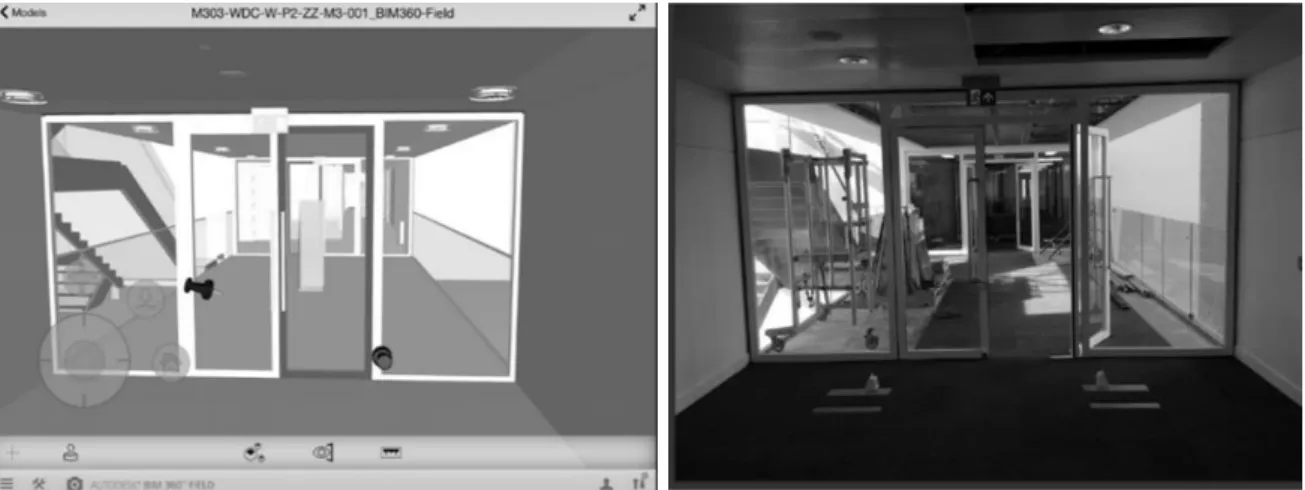
Figure 1.Infromation totem for site navigation
(a) (b)
a) View of the Information Totem in yellow from the cloud based federated BIM model. b) Photograph of the same location on site as cross reference retrieved from the information totem. Figure 2. Asset Management with room barcodes
7
a) A Barcode tagged room in Phase II, barcodes are typically placed outside the rooms on doorframes. b) Individual steel barcode plates, typically an 8 Digit number bi-directionally linked with the information totem held in the federated model. These barcodes associated per room are used by facilities management team for ease of access to the digital O&M manuals and room asset data.
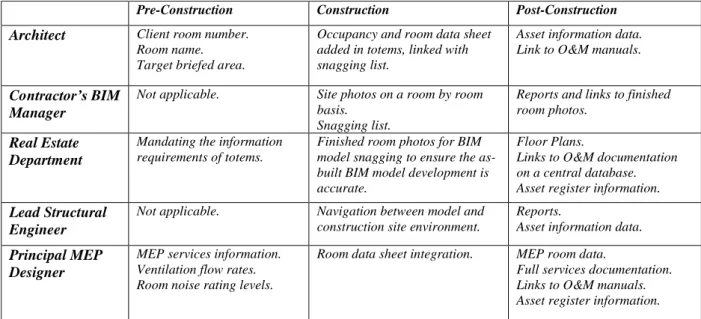
Table 1 displays the stakeholder disciplines and their input of information into the information totems during pre- construction, construction and post-construction stages.
Table 1. PMT use of totems
Snagging is an expression coined in the building industry in the UK and Ireland. Snagging is defined as the process of defect identification and resolution (Sommerville and Craig, 2006). The contractor used disciplinary BIM models from the design stages to develop the project design. Design developments were uploaded in the BIM model using the federated cloud model and the updating of consecutive information totems. This federated model was used for a number of reasons, namely to: avoid clash detections; facilitate, 4D and 5D modelling; and provide a basis for the cloud BIM data base, where information totems are linked with the federated BIM. A cloud based BIM database and information totem parameters were managed by the contractor on site but was developed by the estates team. The information totems were gradually populated throughout the construction to provide a full database reflecting the changes of the as-built development. All BIM models were updated by the contractor to reflect the building completion. So called ‘BIM snags’ were developed to aid the development of the as-built BIM these were helped with site photographs and commentary attached to the federated model. BIM snags follow a similar function as snagging, except they are used to inform designers of any potential changes on site that need to be reflected in the as-built BIM. Laser scanned data was used to verify the validity between model and as-built building. Other documents not directly related to the BIM, such as equipment fact sheets, O&M manuals, documentation and drawings were linked into the
Pre-Construction Construction Post-Construction
Architect Client room number. Room name. Target briefed area.
Occupancy and room data sheet added in totems, linked with snagging list.
Asset information data. Link to O&M manuals.
Contractor’s BIM Manager
Not applicable. Site photos on a room by room
basis. Snagging list.
Reports and links to finished room photos.
Real Estate Department
Mandating the information requirements of totems.
Finished room photos for BIM model snagging to ensure the as-built BIM model development is accurate.
Floor Plans.
Links to O&M documentation on a central database. Asset register information.
Lead Structural Engineer
Not applicable. Navigation between model and
construction site environment.
Reports.
Asset information data.
Principal MEP Designer
MEP services information. Ventilation flow rates. Room noise rating levels.
Room data sheet integration. MEP room data.
Full services documentation. Links to O&M manuals. Asset register information.
8
cloud based federated model via the information totems. Currently the estates and research team are exploring ways in which Building Management Systems data (as an external source of data) will be linked via totems into the cloud based model.
7. Discussion
During the PMT focus group discussions, four main lessons emerged regarding the use of BIM and information totems during the project, namely: i) the creation of information totems; ii) limitations of a semi-automatic totem; iii) inflexibility of software providers; and iv) lack of software integration. First, information totems were only adopted towards the end of phase I when the Real Estate Management Team realised that FM requirements (such as building heating and cooling loads, and building usage) could have been uploaded into the BIM at the design stage to inform the design and better meet client expectations. A MEP designer said: “Design data, such as ventilation rates, cooling loads could have been included in the design stages already, as the M &E contractors are often playing catch up from the other design team…” Second, it was apparent that the information totems developed were not fully automated and hence, as changes to specification occurred, manual updates were needed in the model. For example, when the contractor altered a specification provided by the Architect or MEP designer (at the construction and commissioning stages). The contractor stated: The totems still lacked automation, what would have been good was to have a live feed of the changes in the model with the totems, as they currently did not capture all of the changes in the model, some information had to be manually added to the totems…” Third, the BIM software designers (as external providers) were unwilling to implement bespoke modifications and amendments to their software. For example, information could not be exported into other file formats for usage in room data sheets or for snagging lists post construction. A BIM Manager said: “We were unable to export the totem information directly out of the software into a PDF, which could then be used as a room data sheet…” Fourth, the BIM model had a distinct lack of software integration capability and therefore, when clicking on the information totem, room elevational views could not be seen and these had to be extracted from other databases within the BIM model. A Project Manager said: “What would be useful is if we could have direct views of reflected ceiling plans, room elevations and floorplans just by clicking the totems faces, makes it easier to then share the model with subcontractors…” However, these aforementioned issues apart, a largely inexperienced PMT valued the input guidance and advice from the client’s representative throughout the design and construction phase. This allowed the PMT to mature as a collaborative and collegiate partnership that allowed both phases of the development to be constructed and commissioned to all parties’ satisfaction and with minimal disputes arising. Efficiency gains were also made by individual PMT members who acquired new knowledge of BIM that allowed them to streamline their management of the project and ultimately cut costs without adversely impacting upon quality, For example, the Architect who employed ten people during phase I, reduced this to five people in phase II. In summing up the project’s success, a representative from the Contractor said: “Phase II has been one of most successful BIM project in our business, it has really pushed BIM all the way through the process right through to FM, and we haven’t actually done this on any other project to date”.
9
8. Conclusion
Extant literature illustrates that BIM-FM integration presents an ideal opportunity to produce accurate design data extended throughout a building’s lifecycle for retrieval during the O&M stages. This case study has revealed that an effective means of creating model infrastructure to manage data is essential at the hand over stages. By generating an information totem to add room and space related information between assets, the transition between BIM and FM is performed in an easier way for the FMT to adopt. The observations accrued from the case study have shown how an object orientated workflow can provide structure and develop complex as-built BIM models whilst embedding key O&M related information. This paper has reported upon the use of a semi-automated tool-kit promoting the use of object-orientated workflows to increase coordination, ease of communication, information exchange, ease of navigation. Future work needs to look at how information totems could be linked into existing Computerised Aided Facilities Management (CAFM) systems to be utilised at during the O&M stages. Additional development of the totems is anticipated and future research efforts will now develop a fully automated information totem.
References
Azhar S, Hein M and Sketo B (2011) “Building Information Modelling (BIM): Benefits, Risks, and Challenges for the AEC Industry Leadership Management in Engineering”, ASCE, Vol. 11 No. 3, pp. 241-252.
Becerik-Gerber B, Jazizadeh F, Li N and Calis G (2012) “Application Areas and Data Requirements for BIM-Enabled Facilities Management”, Journal of Construction Engineering and Management, Vol. 138 No. 3, pp. 431-442.
Bennett T D (2009) “BIM and Laser Scanning for As-built and Adaptive Reuse Projects: The Opportunity for Surveyors”, The American Surveyor, Cheves Media.
Bentley K and Workman B (2003) “Does the Building Industry Really Need to Start Over - A Response from Bentley to Autodesk's BIM-Revit Proposal for the Future Bentley”, BIM White Paper, pp.6-7.
Bosch A, Volker L , Koutamanis A (2015). "BIM in the operations stage: bottlenecks and implications for owners." Built Environment Project and Asset Management 5(3): 331-343. Boussabaine A and Kirkham R (2008) Whole Life-Cycle Costing: Risk and Risk Responses, John Wiley & Sons, pp.122.
Eastman C, Teicholz P, Sacks R and Liston K (2011) BIM Handbook: A Guide to Building Information Modelling for Owners, Managers, Designers, Engineers and Contractors, Canada, John Wiley and Sons.
10
Garber M (2014) BIM Design: Realising the Creative Potential of Building Information Modelling, New York, John Wiley & Sons Inc.
Grilo A and Jardim-Goncalves R (2010) “Value proposition on interoperability of BIM and collaborative working environments”, Automation in Construction, Vol. 19 No. 5, pp. 522-530. HM Government (2012) Final Report to Government by the Procurement/Lean Client Task Group, London, Government Construction Strategy.
HM Government (2013) Building Information Modelling Industrial Strategy: Government and Industry in Partnership, London, UK.
Huber D, Akinci B, Adan A, Anil E, Okorn B and Xiong X, (2011) “Methods for Automatically Modelling and Representing As-built Building Information Models”, NSF Engineering Research and Innovation Conference, January 4-7, Atlanta, Georgia.
Institution of Civil Engineers (2015) “Leveraging the Relationship between BIM and Asset Management”
Lindkvist C M (2015) “Contextualizing Learning Approaches Which Shape BIM for Maintenance”, Built Environment Project and Asset Management Built Environment Project and Asset Management, Vol. 5 No. 3, pp.318 – 330 (available at: http://dx.doi.org/10.1108/BEPAM-03-2014-0018 [accessed 22/10/2015]).
Kassem M, Kelly G, Nashwan D, Serginson M and Lockley S (2015) “BIM in Facilities Management Applications: A Case Study of a Large University Complex", Built Environment Project and Asset Management, Vol. 5 Issue: 3, pp.261 – 277.
Kelly G, Serginson M, Lockley S, Nashwan D, Kassem M (2013) “BIM For Facility Management: A Review And A Case Study Investigating The Value And Challenges” Proceedings of the 13th International Conference on Construction Applications of Virtual Reality, 30-31 October 2013, London, UK (available at: http://dx.doi.org/10.1108/F-09-2011-0078 [accessed 20/10/2015]).
Khemlani L (2011) AGC’s Winter 2011 BIM Forum, Part 1, AECbytes, “Building the Future” 22
March, Leeds, UK (available at:
http://www.aecbytes.com/buildingthefuture/2011/AGC_BIMForum_2.html [accessed 25/10/2015]).
Laney D (2001) 3D Data Management: Controlling Data Volume, Velocity and Variety (available at: http://blogs.gartner.com/doug-laney/files/2012/01/ad949-3D-Data-Management-Controlling-Data-Volume-Velocity-and-Variety.pdf [accessed 25/11/ 2015]).
11
Liu R R A and Issa R A I (2014) “Design for Maintenance Accessibility Using BIM Tools”, Facilities, Vol. 32 No. 4, pp.15.
Longstreet B (2010) Finding the Right Solution to Create an As-built BIM of Portland International Airport’s Baggage Handling Facility, (available at: http://www.leica-geosystems.us/en/ScanningPDX.pdf. [accessed October 22, 2015])
Love P E D, Matthews J, Simpson I, Hill A and Olatunji O (2014) “A Benefits Realization Management Building Information Modelling Framework for Asset Owners”, Automation in Construction, Vol. 37, pp. 1-10.
Love P E D, Simpson I, Hill A and Standing C (2013) “From Justification to Evaluation: Building Information Modelling for Asset Owners”, Automation in Construction, Vol. 35, pp. 208-216. Love P E D, Matthews J and Lockley S (2015) “BIM for Built Asset Management”, Built Environment Project and Asset Management, Vol. 5 Issue: 3
Matthews J, Love P E D, Heinemann S, Chandler R, Rumsey C and Olatunj O (2015) “Real Time Progress Management: Re-Engineering Processes for Cloud-Based BIM in Construction”, Automation in Construction, Vol 58, p. 38-47.
McArthur J J (2015) “A Building Information Management (BIM) Framework and Supporting Case Study for Existing Building Operations, Maintenance and Sustainability”, Procedia Engineering, Vol. 118, pp. 1104-1111, (available at: http://dx.doi.org/10.1016/j.proeng.2015.08.450. [accessed 22/10/ 2015]).
Meatadi P, Irizarry J and Akhnoukh A K (2010) “BIM and RFID Integration”, Proceedings from Second International Conference on Construction in Developing Countries (ICCIDC-II), Advancing and Integrating Construction Education, Research and Practice. August 3-5, Cairo, Egypt.
Mohandes S R, Hamid A R A and Sadeghi H (2014) “Exploiting Building Information Modelling Throughout the Whole Lifecycle of Construction Projects”, J. Basic Applied Science, Vol. 4 No. 9, pp.16-27.
Motamedi S A, Setayeshgar S, Soltani M M and Hammad A (2013) “Extending BIM to Incorporate Information for RFID Tags Attached to Building Assets”, Proceedings from 4th Construction Specialty Conference, May 29 to June 1, Canadian Society for Civil Engineering, Montreal, Canada.
Motawa I and Almarshad A (2015) “Case-based Reasoning and BIM Systems for Asset Management”, Built Environment Project and Asset Management, Vol. 5 Iss. 3, pp.233 – 247.
12
Parn E, Colombage L and Thurairajah N (2015) “Affordances of BIM During the Architectural Design Process”, Proceedings from 12th International Post-Graduate Research Conference, 10th -12th June, Manchester.
Patacas J, Dawood N, Vukovic V, Kassem M (2015) “BIM for Facilities Management: Evaluating BIM Standards in Asset Register Creation and Service Life Planning”, Journal of Information Technology in Construction, Vol 20 No. 10, pp.313-318.
Russom P (2013) “TDWI Best Practices Report: Managing Big Data”, TDWI (The Data Warehousing Institute TM) Research.
Sabol L (2008) Challenges in Cost Estimating with Building Information Modelling, IFMA World Workplace (available at: http://dcstrategies.net/files/2_sabol_cost_estimating.pdf [accessed 25/10/ 2015]).
Succar B (2009) Building Information Modelling Maturity Matrix (chapter), Handbook of Research on Building Information Modelling and Construction Informatics: Concepts and Technologies, pp. 8-50.
Sommerville J and N Craig (2006). Implementing IT in Construction, Taylor & Francis pp. 151-153
Teicholz P (2013) BIM for Facility Managers, Texas, IFMA Foundation.
Volk R, Stengel J and Schultmann F (2014) “Building information Modelling (BIM) for Existing Buildings – Literature Review and Future Needs”, Automation in Construction, Vol. 38, pp. 109