communication modality and shared visual information
on collaboration in virtual teams. PhD thesis, University
of Nottingham.
Access from the University of Nottingham repository:
http://eprints.nottingham.ac.uk/12068/1/Corrections_final_printed2.pdf Copyright and reuse:
The Nottingham ePrints service makes this work by researchers of the University of Nottingham available open access under the following conditions.
· Copyright and all moral rights to the version of the paper presented here belong to the individual author(s) and/or other copyright owners.
· To the extent reasonable and practicable the material made available in Nottingham ePrints has been checked for eligibility before being made available.
· Copies of full items can be used for personal research or study, educational, or not-for-profit purposes without prior permission or charge provided that the authors, title and full bibliographic details are credited, a hyperlink and/or URL is given for the original metadata page and the content is not changed in any way.
· Quotations or similar reproductions must be sufficiently acknowledged.
Please see our full end user licence at:
http://eprints.nottingham.ac.uk/end_user_agreement.pdf
A note on versions:
The version presented here may differ from the published version or from the version of record. If you wish to cite this item you are advised to consult the publisher’s version. Please see the repository url above for details on accessing the published version and note that access may require a subscription.
The rise of the internet coupled with advancements in computing technology has contributed to the increasing popularity of virtual team working. Virtual teams rely heavily upon the use of mediated communication as face-to-face interaction is limited. Many off-the-shelf collaborative technologies with multiple features are widely accessible in the market to support virtual collaboration. These technologies are being adopted to support uni- and multi-modal interaction in various workplace settings. However the influence of these technologies is often domain specific and is dependent on the type of tasks and teams, thus selecting the most appropriate tool to support a specific collaborative task is difficult.
This thesis investigated the use and influence of communication modality when used to accompany shared workspaces in virtual collaboration, particularly in the design and engineering domain. Empirical studies were conducted in laboratory and field settings to evaluate the effects of modality and shared workspaces on collaboration. Novel and off-the-shelf technologies were examined at different development stages (i.e. from user requirements elicitation, to prototype evaluation, to workplace implementation and evaluation of off-the-shelf technologies). The focus of these studies was to compare audio, audio-visual, text-only and text with additional audio communication within the context of shared workspaces. The purpose was to identify whether these modalities have different effects when used in synergy with shared workspaces for collaboration on spatial and non-spatial tasks. The first series of studies investigated how these modalities were adopted in the workplace individually and/or to supplement other tools in collaborative work. Findings from these studies contributed to the understanding of how modalities are selected to support different aspects of various collaborative tasks. A field study was conducted to evaluate the implementation of an ‘always-on’ audio-visual feed to provide shared visual information in the workplace suggested that providing shared visual information for remote users could help maintain team awareness. The results suggested that a careful consideration is required to ensure that the context of use, technical constraints and the quality of the audio-visual feed satisfied the end user needs. Finally, to further extend this understanding, laboratory studies were conducted to compare these modalities. The findings suggested that audio-only compared to audio-visual had no influence on collaboration, while text-only communication required no additional audio to support a virtual design task, given that a shared workspace or screen sharing is provided in both settings. Shared workspaces reduce the necessity for virtual team members to verbalise lexically complex information, thus allowing users to concentrate on the core activities of collaborative tasks.
I owe my deepest gratitude to my supervisors, Dr. Sarah Sharples, Dr. Harshada Patel and Professor John Wilson for their excellent supervision, guidance, patience and support they gave me over the past 4 years.
I would also like to thank CoSpaces and EPSRC for sponsoring this PhD research. My particular thanks go to the CoSpaces end users for their time and for all the volunteered participants in the studies. In addition, thanks to Dr. Holger Schnädelbach for inviting me to be a part of the field study.
Thanks to everyone at the Human Factors Research Group for their kindness and support. Many thanks also to Nastaran Dadashi, Kirstie Dane, Tamsyn Edwards, Anne Floyde and Laura Millen and for helping out with my experiments.
My eternal thanks to my family for everything they have done for me throughout this long endeavour. My special thanks to my sister Grace Saikayasit. Thanks to all my friends for their constant support, especially Francesca Cheney, Susannah Drummond-Moray, Nyan Kyaw, Newton Li, Jan Sriviroj, E Feng Tan-Loh, Gibb Tungtavaprasith and Eva Yung.
Finally, special thanks to Glyn Lawson for his limitless reserves of encouragement, help and motivation.
ABSTRACT ... I
ACKNOWLEDGEMENTS ... II
CHAPTER 1 - INTRODUCTION... 1
1.1 BACKGROUND...1
1.2 THESIS OVERVIEW...5
CHAPTER 2 - LITERATURE REVIEW ... 8
2.1 CHAPTERSUMMARY...8
2.2 INTRODUCTION TOCOLLABORATION...8
2.3 CO-LOCATED ANDDISTRIBUTEDCOLLABORATION...10
2.4 TECHNOLOGIESUSED INVIRTUALCOLLABORATION...19
2.5 QUALITATIVE ANDQUANTITATIVEMETHODS INCOLLABORATIONSTUDIES...53
2.6 IDENTIFYING THERESEARCHAREA...60
CHAPTER 3 - EVALUATING THE USE OF QUALITATIVE AND QUANTITATIVE METHODS IN MEASURING COLLABORATION ... 64
3.1 CHAPTERSUMMARY...64
3.2 INTRODUCTION...66
3.3 PURPOSE OFCHAPTER3...71
3.4 INTERVIEWS...71
3.5 EXPERTPRIORITYELICITATIONEXERCISE...81
3.6 QUESTIONNAIRES...89
3.7 CASESTUDY...109
3.8 DISCUSSION...114
3.9 KEY FINDINGS FROMCHAPTER3 ...116
CHAPTER 4 - EVALUATING A COLLABORATIVE TECHNOLOGY ENABLING A SHARED VIRTUAL ENVIRONMENT IN THE WORKPLACE – A CASE STUDY ... 120
4.1 CHAPTERSUMMARY...120
4.2 INTRODUCTION...121
4.3 PURPOSE OFCHAPTER4...121
4.4 THECOMPANY...122
4.5 MIXEDREALITYARCHITECTURE...123
4.6 METHOD...126
4.7 RESULTS: PRE-INSTALLATIONQUESTIONNAIRES ANDINTERVIEWS...129
4.10 RESULTS: INTERIMEVALUATION...140
4.11 RESULTS: EXITEVALUATION...145
4.12 RESULTS ANDDISCUSSION...148
4.13 KEY FINDINGS FROMCHAPTER4 ...153
CHAPTER 5 - INVESTIGATING THE INFLUENCE OF SHARED VISUAL INFORMATION AND THE USE OF AUDIO-VISUAL COMMUNICATION ON VIRTUAL COLLABORATION... 158
5.1 CHAPTERSUMMARY...158 5.2 INTRODUCTION...158 5.3 PURPOSE OFCHAPTER5...164 5.4 METHOD...165 5.5 ANALYSIS...178 5.6 RESULTS...184 5.7 DISCUSSION...199
5.8 KEY FINDINGS FROMCHAPTER5 ...203
CHAPTER 6 - INVESTIGATING THE IMPACT OF A SHARED APPLICATION AND THE USE OF INSTANT MESSENGER AND INTERNET PHONE ON VIRTUAL DESIGN TEAMS ... 208
6.1 CHAPTERSUMMARY...208 6.2 INTRODUCTION...208 6.3 PURPOSE OFCHAPTER6...210 6.4 METHOD...212 6.5 PROCEDURE...229 6.6 ANALYSIS...230 6.7 RESULTS...235 6.8 DISCUSSION...251
6.9 KEY FINDINGS FROMCHAPTER6 ...254
CHAPTER 7 - DISCUSSION ... 258
7.1 DISCUSSION OFRESEARCHFINDINGS...259
7.2 STRENGTHS ANDLIMITATIONS OFRESEARCH...274
CHAPTER 8 - CONCLUSIONS... 277
8.1 RECOMMENDATIONS FORCOSPACESENDUSERS...278
8.2 FUTURERESEARCH...279
8.3 SUMMARY...281
REFERENCES ... 282
Table 2-1: Summary of co-located and virtual collaboration (adapted from Olson and Olson,
2000) ... 12
Table 2-2: Summary of key findings on the influences of physical proximity on collaboration19 Table 2-3: Summary of key research in the use of technologies in VTs ... 24
Table 2-4: Summary of key findings for audio and video information in virtual communication ... 29
Table 2-5: Summary of key findings on shared visual information ... 39
Table 2-6: Summary of key findings for text-based communication tools... 50
Table 2-7: Summary of key findings on communication modality ... 53
Table 2-8: Methods used to measure collaboration ... 59
Table 2-9: Key aspects of collaboration investigated in this thesis ... 63
Table 3-1: Summary of purpose of studies and outcomes ... 65
Table 3-2: Critical review of research methodology in measuring collaboration... 70
Table 3-3: Purpose of Chapter 3 ... 71
Table 3-4: Occupations of semi-structured interview participants ... 76
Table 3-5: Skype interview prompts ... 76
Table 3-6: Comparing semi-structured interviews ... 80
Table 3-7: Expert priority elicitation question design... 82
Table 3-8: Three questions asking participants to list and rank influential factors of collaboration and technologies ... 82
Table 3-9: Categorisation of responses from the expert session and the frequency of responses with descriptive statistics (i.e. the median and mode results from participants’ ranking) ... 86
Table 3-10: Evaluation of collaborative technologies checklist... 95
Table 3-11: Checklist layout used to evaluate DiFac technologies... 96
Table 3-12: Summary of number of collaboration questionnaires completed for each technology ... 96
Table 3-13: Summary of the number of completed collaboration questionnaires for the DiFac in-house evaluation ... 98
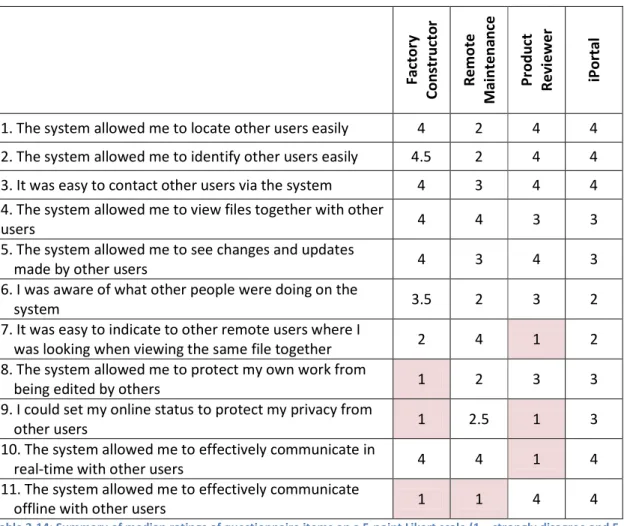
Table 3-14: Summary of median ratings of questionnaire items on a 5-point Likert scale (1 = strongly disagree and 5 = strongly agree). The medians reporting strongly disagree are highlighted. ... 99
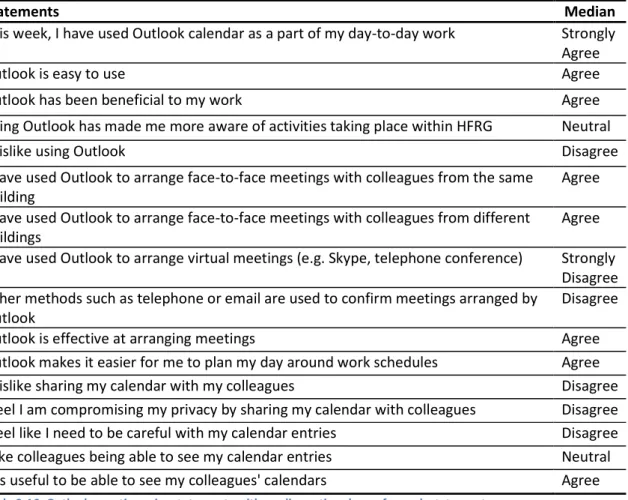
Table 3-15: Outlook questionnaire statements... 104
Table 3-16: Outlook questionnaire statements with median rating shown for each statement ... 106
Table 3-17: What do you like about Outlook? (Category and the frequency of responses).. 107
Table 3-18: What do you dislike about Outlook? (Category and the frequency of responses) ... 107
Table 3-19: How has Outlook influenced your overall collaboration? (Category and the frequency of responses) ... 108
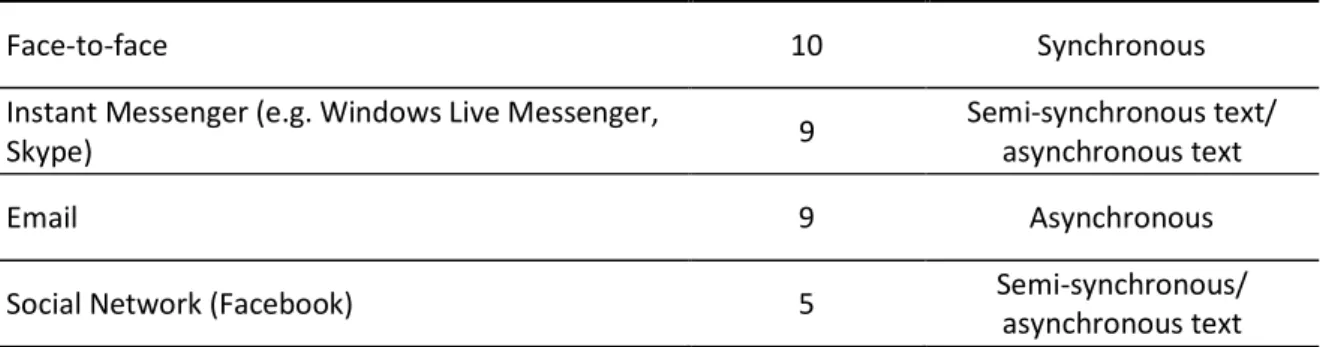
Table 3-20: Students' choice of collaboration methods and types of communication they support... 113
Table 3-21: Summary of methods and further uses in the thesis ... 115
Table 3-22: Chapter 3 summary of key findings ... 119
Table 4-1: Chapter 4 – purpose of study ... 122
Table 4-2: Offices and staff distribution ... 122
Table 4-3: Summary of data collection methods used at different stages of the trial... 126
Table 4-4: Structure of pre-installation questionnaire ... 127
Table 4-5: Technologies and the frequency of usage at Company X... 134
week... 139
Table 4-9: Frequency of use at the different locations... 142
Table 4-10: Recommendations which would encourage participants to use the MRA more in future ... 142
Table 4-11: Statements and median responses on the influence of the MRA system at work from the interim survey ... 144
Table 4-12: The comparison of MRA with email and the telephone and the median responses from the interim survey ... 144
Table 4-13: Influence of MRA on the office environment and the median ratings from the interim survey ... 144
Table 4-14: Summary of reasons for lack of MRA usage - exit survey... 146
Table 4-15: Statements and median responses on the influence of the MRA system at work from the exit survey... 147
Table 4-16: The comparison of MRA with email and the telephone and the median responses from the exit survey... 147
Table 4-17: Influence of MRA on the office environment and the median ratings from the interim survey ... 147
Table 4-18: Comparing the user ratings from the post-demo, interim and exit evaluations on the benefits of the MRA at work ... 149
Table 4-19: Comparing the user ratings from the interim and exit evaluations on the effectiveness of the MRA vs. the telephone... 150
Table 4-20: Chapter 4 summary of key findings ... 157
Table 5-1: Summary of experimental conditions... 158
Table 5-2: Chapter 5 - purpose of study ... 164
Table 5-3: Summary of participant information ... 166
Table 5-4: Post-task questionnaire - satisfaction ratings on performance... 169
Table 5-5: Post-task questionnaire - subjective ratings on the experience of the task... 170
Table 5-6: Post-task - subjective rating on the difficulty of the task ... 170
Table 5-7: Summary of different features provided in the six experimental conditions ... 177
Table 5-8: Summary of collaboration style categories and group description... 181
Table 5-9: Summary of top three rankings of houses by four independent judges ... 183
Table 5-10: Summary of marks awarded to correct houses and ranking positions ... 183
Table 5-11: Example of scores awarded to final three houses selected (X as an option represents other choices other than A, B or C) ... 183
Table 5-12: Results of the 2*3 analyses of variance investigating the effects of experimental conditions on the utterances in the collaboration style categories ... 188
Table 5-13: Summary of post-hoc tests; Tukey HSD values indicate the significant differences in the mean utterances made in two information sharing methods ... 191
Table 5-14: Summary of descriptive statistics for task performance ... 196
Table 15: Summary of significant differences found on the questionnaire items rated on a 5-point rating scale and the mean ratings of each condition ... 198
Table 5-16: Summary of the influence of the presence of a shared screen (50% with shared screen and 50% without shared screen)... 202
Table 5-17: Comparison between the 50% without a shared screen and 100% without a shared screen conditions ... 202
Table 5-18: Chapter 5 summary of key findings ... 207
Table 6-1: Chapter 6 – purpose of study ... 211
Table 6-2: Summary of participant information ... 212
Table 6-6: Task selection criteria ... 218
Table 6-7: Comparison of task scenarios ... 221
Table 6-8: Summary of design layout of conditions 1 and 2 ... 228
Table 6-9: Collaboration style categories and explanations... 231
Table 6-10: Bathroom Marking Scheme ... 234
Table 6-11: Overall communication (condition 1 vs. condition 2)... 235
Table 6-12: Means and standard deviations of collaboration style category utterances ... 236
Table 6-13: Giving verbal instructions: comparison between condition 1 (IM only) and condition 2 (IM and audio) ... 238
Table 6-14: Descriptive statistics for IM logs (conditions 1 and 2) ... 239
Table 6-15: Post-hoc Test – condition 1 chat vs. condition 2 chat ... 241
Table 6-16: Condition 2 comparison of audio vs. IM chat ... 241
Table 6-17: Comparing communication codes - IM chat vs. audio... 243
Table 6-18: Summary of performance scores of two conditions ... 244
Table 6-19: Correlation between collaboration style categories and performance score... 246
Table 6-20: Means and standard deviations of physical behaviour for conditions 1 and 2 ... 247
Table 6-21: Physical behaviour comparison between condition 1 vs. condition 2 ... 247
Table 6-22: Summary of correlations found between the overall level of satisfaction and aspects of collaboration... 249
Table 6-23: Correlations between overall level of difficulty and aspects of collaboration .... 249
Table 6-24: Correlations between the difficulty rating of the drawing tablet and collaboration ... 250
Table 6-25: A summary of participants’ comments after task completion ... 251
Table 6-26: Chapter 6 summary of key findings ... 257
Table 7-1: Summary of thesis key findings ... 263
Figure 1-1: Thesis structure ... 5
Figure 2-1: Topics covered in the literature review... 8
Figure 2-2: Categories of communication technologies discussed in section 2.4 ... 23
Figure 2-3: MRA-physical and virtual space integration... 28
Figure 2-4: Online puzzle task (Gergle et al., 2004a; Gergle et al., 2004b) ... 34
Figure 2-5: Diagrams used by Veinottet al.(1999): Expert's map with route drawn on (left). Novice's map requiring the route to be drawn on (right) ... 37
Figure 2-6: The use of a whiteboard as part of a decision making task from an experiment by Dillenbourg and Traum (1999) – the diagram illustrates how participants eliminated various clues to solve the mystery during the task ... 38
Figure 2-7: Image of IM (taken from Windows Live Messenger) ... 44
Figure 3-1: Illustration of median ranking and the number of appearances of each category (median ranking 1 = most important and 10 = least important) ... 87
Figure 3-2: Factory Constructor – 3D virtual factory layout (Bourguignonet al., 2009) ... 91
Figure 3-3: Remote Maintenance – the tool allows users to share views, annotate the shared view of the workspace and initiate text and audio chat (Bourguignonet al., 2009) ... 92
Figure 3-4: Collaborative Product Reviewer server (Bourguignonet al., 2009) ... 93
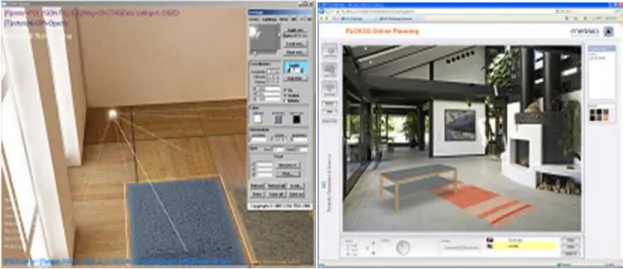
Figure 3-5: Collaborative Product Reviewer - carpet design visualisation tool allowing 3D designs of a carpet to be positioned and superimposed onto a real photo (Bourguignonet al., 2009) ... 93
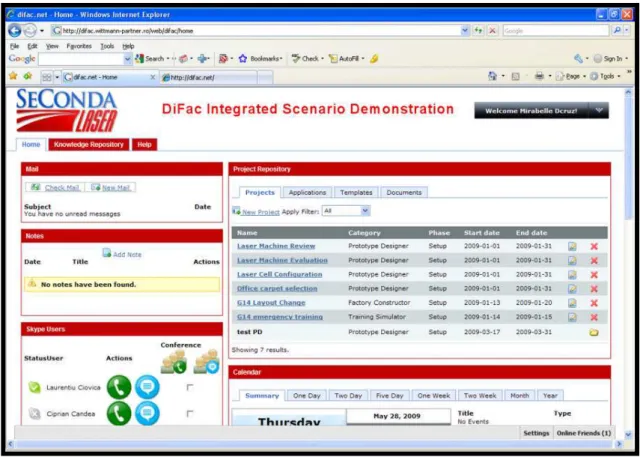
Figure 3-6: iPortal illustrating the project page and status of other users (Bourguignonet al., 2009) ... 94
Figure 3-7: Layout of Outlook online questionnaire on the frequency of use ... 103
Figure 3-8: Layout of online Outlook questionnaire (statements listed in Table 3-15)... 104
Figure 4-1: Open-plan office at Office A ... 123
Figure 4-2: Representation of three MRACells sharing a 3D virtual environment in an MRA system ... 124
Figure 4-3: Images of an MRACell. View from the office of the shared virtual environment (left) and view of others from the environment into the office (right) (Schnädelbach et al., 2007) ... 125
Figure 4-4: MRA privacy feature: open (left), semi-closed (middle), offline or unavailable (right) (Schnädelbachet al., 2007)... 125
Figure 4-5: MRACell – Office A (main office) ... 139
Figure 4-6: MRA in the boardroom at Company X (participants were blurred to protect anonymity) ... 140
Figure 4-7: How often do you typically use the MRA system for communication? (n=19).... 141
Figure 4-8: Extract from the interim questionnaire on the influence of the MRA system (the company name has been blanked for confidentiality purpose)... 143
Figure 4-9: Typical frequency of MRA use reported in the exit survey ... 146
Figure 4-10: Usage comparison between interim and exit surveys ... 149
Figure 5-1: Three steps involved in hidden profile tasks (Kerr and Murthy, 2009) ... 162
Figure 5-2: Experimental setup diagram of the experiment ... 167
Figure 5-3: Illustration of experimental setup for conditions with a shared screen ... 167
Figure 5-4: Rent expressed in area shown on a map... 173
Figure 5-5: Locations of all ten houses ... 174
Figure 5-6: Integrated information given to independent judges during the development of a marking scheme including locations of houses, price and crime zones (not given to participants) ... 182
Figure 5-9: Mean comparison of audio-only and audio-visual conditions ... 187
Figure 5-10: Mean comparison of shared visual information ... 187
Figure 5-11: Illustration of performance means from the six experimental conditions ... 196
Figure 6-1: Paint application used as e-whiteboard ... 213
Figure 6-2: Unisex wheelchair-accessible toilet with corner WC and bathtub (source: Approved Document M) ... 223
Figure 6-3: Height restrictions for bathroom layout (source: Approved Document M) ... 224
Figure 6-4: Bathtub grab-rails and fittings... 225
Figure 6-5: Design guidelines for bathroom layout ... 226
Figure 6-6: Total number of utterances (condition 1 IM-only vs. condition 2 IM and audio) 235 Figure 6-7: Mean utterances of text-only vs. text and audio conditions... 236
Figure 6-8: Comparing the mean utterances between chat logs taken from condition 1 and condition 2 ... 240
Figure 6-9: Comparison between the total number of utterances on audio vs. IM chat... 242
Figure 6-10: Comparison between the mean number of utterances for IM chat and audio to communicate for each collaboration style category ... 242
Figure 6-11: Bathroom design of the pair of participants with the highest mark in condition 1 ... 245
Figure 6-12: Bathroom design of the pair of participants with the highest mark in condition 2 ... 245
Figure 6-13: IM emoticons... 246
Chapter 1 - Introduction
1.1 Background
Research in supporting virtual teams and collaboration has become increasingly important along with the move towards globalisation. The increasing use of groupware or computer-mediated communication (CMC) tools which allow two or more users to interact with each other across time and distance has resulted from the availability of the Internet and greater bandwidth (Gutwin and Greenberg, 2000). Many commercial technologies supporting different modes of communication in remote interaction have also become more widely accessible and thus more widely used.
Many organisations have adopted the use of virtual teams, whose members work together towards common task goals across time and distance (Edwards and Wilson, 2004). The benefits of virtual team working include the ability to utilise resources, be located closer to the market and recruiting experts from all over the globe regardless of their physical locations. However, the geographical distance separating each member has altered the way in which teams collaborate by moving towards mediated communication and away from face-to-face meetings, which can often be expensive and difficult to arrange. These teams rely heavily on technologies which allow and support remote coordination, cooperation and collaboration regardless of the physical distance between team members.
Different research fields such as computer science, human factors, engineering, management, education and healthcare have examined ways to support virtual collaboration (Schmidt, 2009). Early researchers of mediated communication used their observations on face-to-face interactions to influence their theoretical hypotheses to form the view that multi-modal technologies (e.g. audio and visual) offer better solutions than uni-modal ones (e.g. audio-only) (Whittaker, 2003). This therefore led to the development of video-conferencing systems, which provide users with a video of each other as well as audio. However, the results of these studies comparing uni- and multi-modal technologies have not led to clear agreement on the influence of communication modality on collaboration or how these technologies support different types of collaborative tasks. Many of these research fields use different definitions of collaboration which consider and focus on different elements. Wilsonet al.(2009) further suggests that supporting collaboration is dependent on many factors such as the type of task, the availability of skills and resources, team attributes and individuals involved. This adds to the difficulty of selecting collaborative technologies for
a particular task in a specific setting. Furthermore, various collaborative technologies with multiple features to support virtual interaction (e.g. audio, video-conferencing, web-seminars, shared workspaces and shared virtual environment with avatars representing users etc.) are readily available in the market, while the influence of these technologies on different collaborative tasks remains unclear.
Studies have examined and compared the use and aspects of collaborative technologies, such as modality and shared visualisation to support collaboration. Previous research directly compared either the use of communication modality (i.e. audio-only vs. audio-visual) or the presence of shared visualisation (i.e. with a shared workspace vs. without a shared workspace) but limited consideration of when they are adopted together as an integrated solution to support the same collaborative task.
This thesis aimed to investigate the influence of these technologies as an integrated solution on virtual collaboration, pattern of technology use when users are able to select between technologies, user satisfaction and task performance, particularly in design and engineering. The focus of this research thesis was motivated by and was conducted within the context of CoSpaces. CoSpaces (IST-5-034245) is a 48-month European Commission funded Integrated Project, which involves researchers, end users and developers from different institutes and organisations from 12 European countries. The project consortium worked together to achieve the overall objective of developing collaboration models and innovative collaborative workspaces to support co-located, distributed and mobile settings in engineering and design (within the automotive, aerospace and construction industries).
The work presented in this thesis was conducted independently from and mainly in parallel with the CoSpaces project. The only study conducted as part of the CoSpaces is presented in Section 3.4.2. The purpose of the work conducted in this thesis was solely to fulfil the aims and objectives of this research thesis and not that of CoSpaces. However, it should be noted that the focus and findings of the CoSpaces project inspired some of the work (i.e. experimental tasks and rationales) for studies in Chapter 5 and Chapter 6.
The main aim of this thesis was to investigate the influence of communication modality in collaborative technologies and the use of shared workspaces on supporting virtual collaboration. Laboratory and field studies were conducted to include various task contexts such as spatially orientated decision making and design tasks. As part of the investigation, the research observed the effects of technologies on collaboration (including conversational
communication and information exchange), effectiveness of collaboration (i.e. performance) and the overall satisfaction of users.
The following objectives contributed to the achievement of the overall objective of this thesis:
1: Evaluate approaches to examine the use of technologies to support collaboration in a range of contexts
Methods used to examine collaboration in different contexts were compared in order to inform the most appropriate data collection methods for the main studies conducted in this thesis. Various qualitative and quantitative approaches have been adopted by researchers investigating collaboration and the influence of technologies on collaborative work. A review of these methods was conducted as part of the literature review (Chapter 2). The most frequently used methods were employed in this thesis to measure collaboration and the influence of technologies in industry and university settings (Chapter 3) to identify the appropriateness of these methods in different settings.
2: Understand and evaluate the influence of communication modality on collaborative tasks
Empirical studies were conducted in the laboratory and in the field to investigate the effects of communication modality on supporting virtual collaborative tasks, team awareness and how communication technologies are adopted with regards to the context of use, user needs and behaviours. Synchronous and asynchronous off-the-shelf technologies used to support verbal, textual and spatial information (such as email, shared calendar, Instant Messenger and internet telephone) were examined in commercial, educational and research settings (Chapters 3 and 4). Studies compared the use and the influence of audio, video and text based technologies in the workplace (Chapter 3), on collaborative decision making (Chapter 5) and design tasks (Chapter 6). The following research questions were extracted from the literature and were used to focus the studies conducted to satisfy this objective:
How important is it for technologies to suit user needs, context of use, task and do users alter behaviours to fit technological constraints?
How can technology help to maintain an awareness of remote colleagues and tasks? Is audio the most useful communication modality in remote tasks?
3:Investigate the use of shared workspaces and shared visual information when used with synchronous communication tools in collaborative tasks
The Mixed Reality Architecture system was implemented in a workspace; the system continuously connects remote offices together over a shared virtual space to provide a constant communication channel (audio and visual). The influence of this technology on collaboration was evaluated (Chapter 4). Shared visual information tools were investigated in two laboratory experiments: first to provide a shared view of the textual and spatial information space in a collaborative decision making task (Chapter 5), and second, to provide a shared drawing space for a virtual collaborative design task (Chapter 6). The findings from these studies were used to answer the following research questions which contribute to this objective:
Is there a need for technology to support more than spoken language for planned and unplanned collaboration?
Is a shared view of the workspace in remote collaboration more useful than a view of the remote colleague?
1.2 Thesis overview
This section presents an overview of each of the contributing chapters to the thesis. The structure of the thesis is illustrated in Figure 1-1.
Chapter 2: A literature review consolidated the understanding and requirements of virtual collaboration and mediated communication. This review covered fields such as management, human factors, engineering, psychology, computer-supported cooperative work (CSCW), computer-supported collaborative learning (CSCL) and human-computer interaction (HCI). Much research has been done in these areas and therefore this initial review was essential to fully appreciate the complexity of collaboration. Chapter 2 summarises literature from these fields.
Chapter 3:A series of small studies were conducted in order to examine the use of various qualitative and quantitative data collection methods as well as to investigate several aspects of virtual collaboration influenced by the use of communication technologies. This chapter presents six pilot studies investigating: 1) user requirements for collaborative technologies, 2) the use of internet telephone (Skype), 3) the expert prioritisation of aspects of collaboration, 4) the evaluation of novel collaborative technologies using the checklist developed in the expert prioritisation exercise, 5) the use of Microsoft Outlook’s shared calendar feature, and 6) the use of communication tools in a student project. These studies employed several data collection methods: two interviews, one expert priority elicitation, two questionnaires and one case study. The findings from the expert priority elicitation were used to design a collaboration checklist to evaluate collaborative features of technologies. Furthermore, findings were also used to inform the design of the commercial case study presented in Chapter 4 and later laboratory studies (Chapters 5 and 6).
Chapter 4:This chapter describes a field study undertaken to evaluate the use of mediated communication in the form of an ‘always-on’ media space called the Mixed Reality Architecture (MRA). The MRA connects remote users through a shared virtual environment with a live audio and video feed. The system was adopted to complement other existing communication channels in an industrial organisation. This field study used interviews, questionnaires and focus groups to evaluate collaboration in the workplace. The company involved was a medium sized enterprise with one main head office accommodating the majority of staff and two smaller branches abroad as well as three home offices in the UK. Chapter 5: This chapter presents a laboratory study investigating the influence of communication modality and shared visual information on a spatially oriented collaborative decision making task. The task was referred to as ‘House Hunting’, which required participants to work in pairs and select three out of ten given houses that they would like to rent together, according to their given conflicting criteria. This experiment examined two
modes of communication (audio-only vs. audio and video) and three information sharing methods enabling shared visual context: 1) no shared visual information – (participants in pairs were given half of the information each), 2) screen sharing enabling shared visual information – (participants could see each other’s screen but were given half of the information each), and 3) participants working in pairs were both given all the required information. The experiment had six experimental conditions and 96 participants were involved.
Chapter 6: This chapter describes a laboratory experiment examining the use of a shared workspace such as a virtual whiteboard combined with different communication modes (i.e. text-only vs. text and audio) in two experimental conditions, each with 10 pairs of participants. The task developed for this study was referred to as ‘Bathroom Design’. Participants were required to collaborate remotely in their pairs to design a bathroom (i.e. complete a spatially-oriented design task). Each participant in a pair was given a different half of the design guidelines.
Chapter 7: This chapter presents a general discussion of all the key findings obtained from the research studies with the aim of drawing conclusions on how to support virtual collaboration and use of collaborative technologies in different settings with regards to the tasks and user requirements.
Chapter 8: The thesis concludes with a summary of findings and recommendations for future research in the area of supporting virtual collaboration and the use of technologies in design and engineering. Recommendations for CoSpaces end users, which are drawn from the key findings of this thesis are also presented in this chapter.
Chapter 2 - Literature Review
2.1 Chapter Summary
This chapter reviews and summarises literature relevant to supporting collaboration. Much research has been done in supporting collaboration from different perspectives, such as investigating different types of technologies for use in different tasks, contexts and organisations. Collaboration exists in two main settings, referred to as co-located (when members are in the same physical space) and remote or distributed (when members are geographically dispersed). The nature of co-located and distributed collaboration are reviewed and compared in this chapter, however only the latter is further discussed in relation to supporting technologies. The structure of this chapter is represented in Figure 2-1.
Figure 2-1: Topics covered in the literature review
2.2 Introduction to Collaboration
The first part of this chapter presents an overview of collaboration, which is a concept that has been researched in many fields including business and management, psychology, human factors, human-computer interaction, computer-supported cooperative work, engineering and design, healthcare and education (Wilsonet al., 2009). Researchers in these fields have investigated ways to support co-located and distributed collaboration in teams, with the latter being the newer subset of collaboration (though it has been investigated and examined for over 20 years) (Bradner and Mark, 2002). This research is more relevant now with the increasing use of computer-mediated communication tools and the increasing connectivity of
•Co-located and distributed work settings •Factors affected by physical proximity Collaboration (Section 2.3)
•Effects of mediated-communication •Audio
•Shared visual spaces •Text-based communication •Modality
Technologies (Section 2.4)
•Summary of methods used in collaborative studies •Measuring collaboration in different tasks and activities Measuring Collaboration (Section 2.5)
the internet, allowing organisations to adopt and rely on these tools to support teams whose members are geographically distributed to one another (Gutwin and Greenberg, 2000). Collaboration has been described in various ways; however the main understanding from these definitions of collaboration is that it is the process which takes place when two or more people coordinate, communicate, and cooperate with each other to reach a common goal (Schrage, 1990; Klein, 2001; Weisethet al., 2006; Wilsonet al., 2009) by sharing information, establishing common ground and shared understanding (Clark and Brennan, 1991; Dillenbourg and Traum, 1999; Birnholtzet al., 2005) as well as maintaining mutual awareness of each other (Schmidt and Bannon, 1992; Artman and Wærn, 1999; Schmidt, 2002). This definition suggests that there are interdependencies amongst team members, though each may have his/her individual goals, in addition to a common goal which all parties want to achieve (Klein, 2001).
Team coordination involves different stages and each requires different support systems. These stages as defined by Kline (2001) are: preparation, planning, direction, execution and assessment. The preparation stage requires the sharing of information and management of the availability of resources so that all participants receive appropriate and meaningful information for their tasks. The planning stages require support to allow members to establish and maintain common ground. Having clearly defined directions is crucial as this involves teams transferring their established knowledge into ways forward for themselves and their colleagues, whilst execution involves monitoring and alignment in order to maintain the ultimate level of performance, and assessment is the phase in which the team can assess how well it is doing (Klein, 2001).
Cooperation, as another aspect of collaboration, implies that members work independently, but together, in their efforts in order to achieve mutual benefits, though they may not necessarily have the same common goals (van Leeuwen and Fridqvist, 2006; Liuet al., 2008). This includes sharing knowledge, expertise and experience among the team in order for members to accomplish mutual benefits (Liuet al., 2008).
Face-to-face and computer-mediated collaboration has been studied widely in the fields of computer-supported cooperative work (CSCW) (Egido, 1988; Heath and Luff, 1992; Bellotti and Bly, 1996; Bannon and Bødker, 1997; Fussell et al., 2000; Schmidt, 2009), computer-mediated communication (CMC) (Preeceet al., 2002; Whittaker, 2003; Schmidt, 2009), small group research (McGrath, 1997), Group Support Systems (GSS) (DeSanctis and Gallupe, 1987)
and computer-supported collaborative learning (CSCL) (Ocker and Yaverbaum, 1999; Lipponen, 2002; Rummel and Spada, 2005). Different terms have evolved to describe similar systems which fundamentally are computer-based communication tools or systems used to support virtual collaboration (Beranek and Martz, 2005). CSCW and CSCL have produced the most popular models to investigate team working (Leinonenet al., 2005).
Mobile Virtual Work (MVW) is a concept which suggests that in many areas such as maintenance, sales, healthcare and logistics, users are becoming more mobile and are collaborating on the move instead of from a fixed location (i.e. an office) (Andriessen and Vartiainen, 2006). The increase in this type of work is driven by the competition in the markets (e.g. globalisation) as well as a cost reduction solution. The availability of technologies such as mobile phones and hand-held equipment allow users to stay connected, thus collaborate while being mobile (Andriessen and Vartiainen, 2006). In addition, collaboration can also exist amongst individuals not working as part of a team, and in some cases even with competitors in the same industry to develop better solutions, for example. This is described as mass collaboration, where some companies have adopted open-source as a way of collaborating over the internet, by taking the risk to share proprietary data to allow interested experts across the globe, who are not necessarily part of the organisation, to virtually solve problems and submit possible solutions to the company (Tapscott and Williams, 2008). MVW and mass collaboration are however beyond the scope of this thesis.
2.3 Co-located and Distributed Collaboration
The process of collaboration can happen when team members are spontaneously interacting at the same time, which is referred to as ‘synchronous’ collaboration. It can also take place when members are not interacting at the same time, with a delay in responses, which is referred to as ‘asynchronous’ collaboration. Another aspect to consider is the physical proximity of people engaged in collaboration and how this influences collaboration (Bradner and Mark, 2002) - the following section discusses this.
There are two settings of collaboration which are mainly categorised by the physical proximity of those involved in the interactions. The first is referred to as ‘co-located’ collaboration, where team members are located in the same office or building, referred to as ‘co-present’ (Clark and Brennan, 1991), and the second, is referred to as ‘distributed’, ‘remote’ or ‘virtual’ collaboration, when team members are geographically dispersed and interact with each other through an electronically mediated infrastructure (Olson and Olson, 2000; Edwards and Wilson, 2004). The term “virtual” is commonly used to describe the
absence or reduction of physical artefacts, and hence in distributed collaboration, the reduction of physical interactions (Wilson, 2006).
Virtual teams (VTs) are usually typified as those consisting of geographically distributed members who are involved in virtual collaboration using various types of communication tools (Hammondet al., 2001; Driskellet al., 2003; Huysmanet al., 2003; Edwards and Wilson, 2004; Martinset al., 2004; Lee-Kelley and Sankey, 2008; Bransonet al., 2008; de Jonget al., 2008), to achieve “virtual co-location” and overcome difficulties (those associated with culture, language, time and organisational boundaries) caused by a lack of physical proximity (Olson and Olson, 2000), in order to achieve competitive gains, flexibility and productivity outcomes (Hacker and Lang, 2000; Martinset al.,2004; Edwards and Wilson, 2004; Beranek and Martz, 2005; Greenberget al.,2007; Bergielet al., 2008). This type of team is becoming increasingly common and fast-growing in organisations (Edwards and Wilson, 2004; Horwitz
et al., 2006; de Jong et al., 2008), providing the benefit of recruiting experts regardless of their geographical location (Greenberg et al., 2007; Bergiel et al., 2008). The rise of VTs is supported by the growth, lowering costs and the availability of technology and benefits of these technologies such as to enhance cohesiveness, satisfaction and performance (e.g. productivity and work quality) (Edwards and Wilson, 2004; Horwitzet al., 2006).
Historically, prior to the rise of VTs, organisational teams were constricted by geographical and temporal limitations and meetings were mainly held face-to-face, scheduled around the availability of members (Beranek and Martz, 2005). VTs can therefore be seen as a way to cut travel time, cost and effort associated with face-to-face meetings (Bergielet al., 2008). VTs have been categorised by Edwards and Wilson (2004) as: project teams (assembled in response to a specific project brief), service teams (provide support and resources as their main function) and process teams (formed in response to an ongoing need). They further suggest that the nature of collaboration greatly depends on the type of team and their goals (Edward and Wilson, 2004).
Co-located and virtual teams often engage in both synchronous and asynchronous collaboration, which are supported by different technologies. The differences between co-located and VTs in both synchronous and asynchronous collaboration were identified by Olson and Olson (2000) and are summarised in Table 2-1.
Co-located Virtual
Synchronous
Participants are co-present in time and space (interactions take place synchronously such as face-to-face meetings)
Members share social settings and have access to common spaces for interactions
Technologies are sometimes used in this setting such as Instant Messenger and telephony
Members are geographically dispersed in space and/or time Distributed members
communicate via mediated collaboration tools at the same time, e.g. telephone, video-conferencing system, Instant Messenger, shared applications and shared whiteboard
Asynchronous
Participants are in the same place i.e. same office. However, they are unable to interact at the same instant
Technologies such as email and message boards can be used
Team members are unable to communicate in real-time whilst being geographically distributed Email, virtual message boards
and voicemail are often used to collaborate
Table 2-1: Summary of co-located and virtual collaboration (adapted from Olson and Olson, 2000)
VTs are required to overcome problems imposed by the lack of physical proximity, which influence various factors affecting the effectiveness of the overall collaboration (Olson and Olson, 2000).
People have reported a preference for face-to-face interactions when possible, especially if they are within walking distance to one another (Bellotti and Bly, 1996; Ocker and Yaverbaum, 1999; Santhanam, 2001) and are more likely to initiate a collaboration or new work projects with their co-located colleagues (Kiesler and Cummings, 2002). Furthermore, many studies also suggest that the lack of proximity negatively affects the frequency of face-to-face and mediated communication within teams (Krautet al., 1990; Whittakeret al., 1994; Isaacset al., 1997; Olson and Olson, 2000; Bradner and Mark, 2002; Schmidt, 2002; Kiesler and Cummings, 2002). In addition, the lack of physical proximity also increases the difficulty of team coordination (Olson and Olson, 2000; Driskell et al., 2003) whilst the lack of observation and presence of other members hinders the group decision making process and shared understanding (Kiesler and Cummings, 2002; Leinonen et al., 2005). These studies suggest some degree of difficulty in virtual collaboration.
In situations where individuals have to collaborate with both co-located and distributed colleagues, Andres (2006) and Fussell et al. (2004) found that individuals collaborated and shared more information with their co-located team members. Furthermore, co-located colleagues who were to collaborate face-to-face formed a stronger sense of group. They often gave higher priorities to requests from their co-located colleagues than their remote
colleagues and as a result, outperformed those working remotely (Sadat Shamiet al., 2004). Moreover, as individuals focus more attention on their co-located collaboration when they are required to multi-task (Kiesler and Cummings, 2002; Fussel et al., 2004; Gonzalez and Mark, 2005), responses to their remote colleagues are further delayed (Scupelliet al., 2005). The lack of face-to-face interactions can lead to misunderstanding; individuals often perceive their remote colleagues to be over domineering in virtual discussions. This results in negative
P et al. A P et al.
(2007) compared the dominance perception between co-located and distributed settings and found that individuals rate their co-located colleague’s level of dominance as close to neutral whilst the opposite is observed in distributed teams.
Physical proximity also influences other factors such as technologies used (see Section 2.4), team and task awareness (Olson and Olson, 2000; Krautet al., 2002a; Leinonenet al., 2005), trust building approach (Rocco, 1998; Greenberg et al., 2007), management style (Beranek and Martz, 2005; Lee-Kelly and Sankey, 2008) and communication (Krautet al., 2002a; Bergiel
et al., 2008; Bransonet al., 2008). The following sections present literature on the effects of physical proximity (i.e. whether participants are co-located or remote from one another) on the overall collaboration.
2.3.1 Awareness and Common Ground
Being co-present (Clark and Brennan, 1991) with colleagues means individuals’ attention and social impact towards each other increases (Kiesler and Cummings, 2002). Individuals are able to share all visual, verbal and social cues with each other, in real-time, which allows them to process the same information during an interaction (Driskellet al., 2003). These cues enable them to establish a sense of awareness of their working environment as well as equip them with crucial information to develop common ground (Schmidt, 2002; Krautet al., 2003; Nealeet al., 2004). Visual co-presence refers to the level of shared visual environment during collaboration (Gergleet al., 2004b).
Co-located team members sharing the same environment surreptitiously monitor their colleagues’ work and update themselves with a continuous flow of information including visual and audio cues. Audio cues such as ‘overhearing’ in co-located settings have been shown to support awareness in teams (Heath and Luff, 1992; Sharples et al., 2007). These cues allow team members to adapt to dynamic changes, relying on the new information they receive. Heath and Luff (1992) studied collaborative work between co-located colleagues
within a Line Control Room of the London Underground and observed that members updated their own work or volunteered relevant information to their colleagues without direct requests, as a result of overhearing conversations. Similarly Cox et al. (2007) observed collaboration in air traffic control and examined how experts interacted with each other as well as the computer systems as part of their tasks. The study found that overhearing enabled team members to receive verbal instructions, which were not initially directed to them, but relevant to their work to provide them with an update of the working situation (Coxet al., 2007).
Visual cues are also shared in a co-located environment, providing the inhabitants with information to promote situation awareness and helping to reduce any extra effort required to ensure that they understand each other (Kraut et al., 2003). These cues include facial expressions, reactions of other colleagues, tone of voice, body position and the view of all objects involved in the discussion, which are often unavailable in distributed collaboration (Krautet al., 2003). These cues also enable members to gain an awareness of the possibility for collaboration, and awareness of the aims and process of collaboration (Leinonen et al., 2005).
However, Avarahamiet al.(2007) found that regardless of all these available cues, co-located team members often fail to estimate the interruptibility and the availability of their colleagues. The study found that a cue such as a closed office door causes others to misjudge how busy a person is and mistake this cue as ‘no interruption’, though individuals inside the office are often frustrated when colleague fail to notify them of important information. In contrast, colleagues believe that individuals are more interruptible when they are working on their computer when, in fact, they do not wish to be disturbed.
The availability of visual and verbal cues also influences the development of common ground. In order for collaborators to communicate effectively, they should establish common ground or mutual understanding, knowledge, attitudes, goals and beliefs (Clark and Brennan, 1991). The term grounding refers to the activity carried out to ensure that the speaker’s message is received and understood appropriately by the listener. The speaker monitors the listener’s reactions and expressions during the information exchange and then decides whether sufficient information has been delivered or whether to provide more information should the listener fail to understand the message (Clark and Brennan, 1991). Furthermore, the principle of ‘least collaborative effort’ in conversational grounding by Clark and Brennan (1991)
suggests that speakers limit their effort in elaborating their conversations for the listener if they believe that the message has already been understood.
Common ground can be established when members are in the same group and have the same joint awareness of the situation (Nealeet al., 2004) and shared understanding of the task and actions of those involved (Clark and Brennan, 1991). It can be further developed from verbal interaction given that participants have the same linguistic co-presence and/or physical co-presence (Fussell et al., 2000; Kraut et al., 2003) as well as visual co-presence (Gergle et al., 2004b). Linguistic co-presence refers to when collaborators are able to construct interactions on the basis that they understand the same utterances (Kraut et al., 2003). Establishing and maintaining common ground in group activities is crucial to the performance and success of the group (Clark and Brennan, 1991).
In virtual activities involving discussion or manipulation of physical objects, conversations are often focussed on the identification of the object, as part of the grounding process, to ensure that all participants understand the information related to that object correctly (Krautet al., 2003). Furthermore, if actions are carried out on the target object, participants involved are required to have an up-to-date understanding of the state of the object and the task activities, through grounding. This process is greatly influenced by the availability of visual and verbal cues which affect the level of shared awareness amongst participants (Gergle et al., 2004b). In contrast, Roch and Ayman (2005) suggest that the lack of cues in distributed teams enable members to judge their performance and success of their decision making much more accurately than face-to-face teams as they are not affected or distracted by peripheral cues such as the emotions and facial expressions of others.
2.3.2 Trust
Another concept related to team working and virtual collaboration is trust (Edwards and Wilson, 2004). This includes trust in the technologies (i.e. how reliable the hardware and software are to support tasks) and trust that each team member has for one another (Wilson, 2006). Trust amongst team members is harder to establish and maintain in distributed settings (Rocco, 1998; Wilson, 2006; Greenberg et al., 2007), due to the lack of face-to-face interaction (Riegelsberger et al., 2003). However, it can be developed through frequent interactions during which individuals learn to share insights, interests and commonality (Holton, 2001), while enabling individuals to become familiar with each other (Kiesler and Cummings, 2002).
An experimental study by Bradner and Mark (2002) found that geographical distance in collaboration has a negative impact on the level of collaboration, persuasion and trust. Participants were required to collaborate with an experimenter acting as an unknown partner who gave standard responses leading participants to either believe that the experimenter was in the same city as them, or located far away. Participants were able to communicate with the experimenter using video-conferencing and Instant Messaging. The results suggest that participants collaborated less with a partner if they were perceived to be far away. They were also less cooperative and less persuadable initially, however this increased with the level of interaction. Furthermore, if participants believed that the experimenter was remote to them, they were less truthful or open about themselves, their backgrounds and personal details.
In VTs, trust building often takes place over mediated communication, including video-conferencing and audio tools, which may be as good as face-to-face interaction in terms of trust development, though participants communicating virtually may take slightly longer to establish trust than face-to-face teams (Boset al., 2001).
Trust in VTs is further defined as ‘delayed’ and ‘fragile’ to explain the effect of different communication mediums on the rate of trust formation and declination in remote teams. Delayed trust is developed fastest when using video-mediated communication, followed by audio and then text-only communication. Fragile trust defines the level in which trust declines after a violation by other members. Trust is more fragile in VTs than in traditional face-to-face teams, and once trust has been violated teams face a higher level of difficulty to regain that trust (Boset al., 2002).
2.3.3 Management and Training
The lack of physical co-presence means VTs require more structured management and training than face-to-face teams to equip team members with the skills they require to collaborate virtually (Kiesler and Cummings, 2002; Beranek and Martz, 2005; Wilson, 2006; Lee-Kelly and Sankey, 2008), including ways to utilise collaborative technologies appropriate to their teams and their tasks (Qureshi and Zigurs, 2001). VTs are often seen to spend more time managing team processes and much less time on information processing and decision making, even in a decision making task (Bransonet al., 2008). Thus by implementing a well structured management system, VTs can concentrate on their core activities.
Training is required to help VT members (who are unable to interact with each other face-to-face) to develop relational links which can lead to cohesiveness, positive perceptions of the process and satisfaction with outcomes (Beranek and Martz, 2005). Virtual members should be trained to understand and anticipate problems which may arise as part of virtual collaboration, such as common misunderstandings, ways to conduct virtual meetings, task-orientated communication, trust building and goal clarification (Bernaek and Martz, 2005), which all contribute to the development of relational links in VTs.
The level of assistance offered by the management to VTs has an impact on perceptions of the overall project, performance and other team colleagues. Horwitzet al.(2006) found that a lack of assistance negatively influences the perception of the overall team performance and increases the perceived level of difficulties and complications experienced by individuals within VTs.
Disagreements and conflicts are more difficult to manage in VTs due to the lack of face-to-face interaction. Moreover, in face-to-face-to-face-to-face teams, managers can be casually informed of any problems and they are able to ‘sense’ the working atmosphere or tension. In contrast, VT managers rely on explicit notifications by team members to be made aware of conflicts (Bergielet al., 2008). Management is also required to support individuals working remotely from other colleagues to ensure that they are not overlooked or feeling isolated (Bransonet al., 2008). In addition, when team members are located away from their team leaders, the level of motivation as well as performance becomes harder to evaluate and support, therefore setting clearly defined goals provides remote members with clear directions whilst ensuring they understand their responsibilities and become accountable to their actions and contributions (Bergiel et al., 2008). Members should be committed to their teams and encouraged to frequently communicate with other colleagues to ensure cohesion and cooperation (Jensen et al., 2000; Horwitzet al., 2006), shared understanding and to reduce miscommunications (Horwitzet al., 2006).
2.3.4 Communication and Knowledge Sharing
VT members often mistakenly believe that virtual communication is the same or easier than face-to-face communication (Olson and Olson, 2000; Bergielet al., 2008). However, Branson
et al. (2008) suggest that virtual interactions often fail to convey subtle confirmatory communication which requires visual or audio support to enable users to see and hear each other’s expressions (e.g. a lighter tone of voice or a smile to accompany a sarcastic comment expressing informality and playfulness). Virtual interactions therefore need to be conducted
cautiously to avoid misunderstanding between team members. The traditional hierarchical setups of organisations also require updating to better suit the nature of virtual communication in VTs (Carlettaet al., 2000).
Knowledge sharing is a crucial part of team working and is harder to initiate and maintain in VTs as it can be influenced by factors such as trust, technology and cultural differences (Rosen et al., 2007). Members in VTs should be encouraged to share information and knowledge virtually in order for individuals to benefit from a pool of information when making decisions for the team (Finholtet al., 2002; Kock, 2002).
The main effects of physical proximity are summarised in Table 2-2. Evidently, VTs need to be assisted in a different manner to traditional face-to-face teams. This type of team offers many advantages and flexibility over co-located teams, however, many factors which were naturally occurring and supported in co-located teams now require more effort to establish and maintain in VTs. Issues and difficulties emerging from geographical dispersion have to be addressed in order for VTs to be successful (Hacker and Lang, 2000).
The reliance on all available human and technological resources to achieve optimal performance is a necessity. However, only technologies designed to support virtual teams and their influence on collaboration are discussed further in this thesis.
Key Finding Source
VTs need to overcome challenges such as cultural differences, time zones, language barriers as well as a lack of face-to-face interactions in order to collaborate effectively
Martinset al.(2004); Rosenet al.
(2007); Bergielet al.(2008)
Physical proximity negatively affects the frequency of communication – individuals interact more with co-located than distributed colleagues
Krautet al. (1990); Whittakeret al.
(1994); Isaacset al.(1997); Olson and Olson (2000); Bradner and Mark (2002); Schmidt (2002); Kiesler and Cummings (2002); Fussellet al.(2004); Sadat Shamiet al.(2004); Andres (2006); Bergielet al.(2008)
People often prefer face-to-face communication which supports richer communication cues (visual/verbal)
Bellotti and Bly (1996); Santhanam (2001); Krautet al.(2003)
Frequent communication helps cohesion, cooperation, develop shared understanding and reduce the effects of cultural differences.
Jensenet al.(2000); Horwitzet al.
(2006) Sharing work environment and communication helps
establish and maintain awareness between team members
Heath and Luff (1992); Coxet al.
Trust is harder to establish when members are geographically dispersed due to a lack of familiarity and face-to-face interactions. Therefore frequent communication is required for team trust
Holton (2001); Kiesler and Cummings (2002); Bradner and Mark (2002); Riegelsbergeret al.
(2003)
Table 2-2: Summary of key findings on the influences of physical proximity on collaboration
2.4 Technologies Used in Virtual Collaboration
The rise of networked technologies has enabled the increasing formation of VTs while computer-mediated tools have evolved and improved their services in response to the increasing trend of VTs (Beranek and Martz, 2005). These tools should allow participants to coordinate activities, share knowledge and expertise, and gather appropriate information to ground their utterances and understanding between each other in remote collaboration (Qureshi and Zigurs, 2001; Krautet al.,2003).
The term Computer-Supported Cooperative Work (CSCW) was first used in the early 1980s to describe and discuss ways of supporting collaboration with the use of computers in the workplace (Schmidt and Bannon, 1992). CSCW and computer-mediated communication (CMC) have been used to describe similar systems and environments used to support group work (Driskellet al., 2003).
These systems can help to bridge the time and space gap in VTs (Liuet al., 2008). However, as further investment is required to implement new systems (e.g. extra equipment and increased bandwidth) (Kraut et al., 2003), it is suggested that they are not cost reduction methods (i.e. reduce travel cost for face-to-face meetings), but support systems which organisations adopt to improve collaboration for the same cost and possibly less time (Kamel and Davison, 1998).
Research in the CSCW field considers aspects of multiple individuals, different perspectives and different work settings as examples of factors affecting the design of computer systems which aim to support them (Schmidt and Bannon, 1992; Taylor, 2001). This field has been fast moving, resulting in the rapid development of technologies which offer strategies and solutions for team collaboration in different forms such as shared workspaces, information exchange, discussion mechanisms, knowledge management, and documentation and scheduling tools (Klein, 2001), whilst endeavouring to ensure that negative interactions are avoided (Kamel and Davison, 1998).
Many in the field of CSCW concentrate on the design of software that supports group work (Schmidt and Bannon, 1992; Taylor, 2001), however, Kamel and Davison (1998) suggest that
developers often fail to focus on end users and instead aim to develop highly sophisticated tools which may not suit their needs or address real life problems. Therefore the consideration of user needs, contexts of use, and task specifications is crucial to the development, selection and implementation of technologies to support successful collaboration (Clark and Brennan, 1991; Driskell et al., 2003; Gergle et al., 2004a; Lauche, 2005; Beranek and Martz, 2005; Andres, 2006; Bergielet al., 2008). It is important that the appropriate tools are implemented and the adoption is supported to encourage team members to feel involved and utilise the technology to provide optimal benefit for their tasks (Andersonet al., 2007), while ensuring that tasks and behaviours are not being altered to fit the technological constraints (Olson and Olson, 2000).
CSCW tools implemented in VTs require users to understand and use these tools as part of their collaborative work, influencing the overall nature of collaboration (Andres, 2006) by affecting group cohesiveness, dynamics and interpersonal relations among members (Kamel and Davison, 1998). Gergle et al. (2004a) highlighted that a good proportion of existing communication tools primarily aim to support spoken language and fail to support other types of interaction (such as visual feedback, gestures and verbal utterances). However, these neglected cues are vital in virtual collaboration as they help to raise awareness and coordination among members (Andres, 2006).
Clark and Brennan (1991) defined media characteristics which can influence the nature of communication. These factors compare face-to-face with distributed settings and could be used to identify characteristics which are currently unsupported in technologies (Olson and Olson, 2000). These media characteristics are: 1) ‘co-presence’: whether they are in the same physical space 2) visibility: whether participants can see each other, 3) audibility: whether they can hear each other, 4) ‘co-temporality’: whether communication is received at the same time as it is sent, 5) simultaneity: whether participants can send and receive information at the same time, 6) ‘sequentiality’: whether participants’ speaking turns stay in sequence during the communication, 7) reviewability of messages by others, and 8) ‘revisability’ of own messages before sending to other participants (Clark and Brennan, 1991). Olson and Olson (2000) further extended this to include: multi-channels (i.e. combinations of voice, facial expressions, gesturing), shared social context, co-reference, implicit periphery cues, and spatiality of reference.
In addition, key concepts influencing the success of a collaborative team have been identified by Olson and Olson (2000). These concepts are: common grounding, work coupling (the level
of communication amongst members in order to complete the task), collaboration readiness (the extent to which the culture within the organisation encourages or permits collaboration and information sharing) and collaboration technology readiness (the capability and openness of members to the introduction of new technologies). Clark and Brennan (1991) suggested that common grounding mechanisms during mediated collaboration differ from that of face-to-face interactions, and are affected by the medium used.
Mediated communication in itself can become a barrier to communication and knowledge sharing in VTs (Rosenet al., 2007). Remote work is still difficult to support, even in the case of teams consisting of members who have been engaged in previous work together (Olson and Olson, 2000). It should be further noted that mediated communication can support interaction in one situation but disrupt interaction in other situations (Driskell et al.,2003). Therefore selecting appropriate tools to suit different situations to avoid unwanted interruption can be complex, as judging the situation and availability of distributed colleagues can be difficult due to the lack of physical co-presence (Krautet al., 2003).
The ‘media richness’ theory suggests that different technologies used to mediate virtual collaboration have varying degree of information richness, thus tools should be selected to provide enough amount of information to reduce uncertainty, ambiguity and encourage understanding (Daft and Lengel, 1986; Workmanet al., 2003). High richness, such as face-to-face interaction conveys communication cues (i.e. visual and audio) as well as instantaneous feedback, allowing participants to exchange information and understanding within an appropriate time interval. It was suggested that low richness mediums with few cues and restricted feedback are less appropriate for reducing uncertainty and ambiguity (Daft and Lengel, 1986).
Nowadays teams can choose to adopt different tools from a comprehensive range in order to support their needs, whether to supplement or replace face-to-face interactions (Martins et al., 2004). However it is important to realise that initial face-to-face meetings at the start of a project, or when a team is first formed, can help members establish a connection, trust and collaboration before a later reliance on mediated communication tools (Rocco, 1998). Mediated communication can reduce the necessary conversational strategies for team relationship building such as small talk (Kiesler and Cummings, 2002), thus occasional face-to-face meetings can help to establish and maintain relationships (Santhanam, 2001).