Ethical considerations in collaborative care in severe and enduring anorexia: an application of an ethical decision-making model
A thesis submitted in fulfilment of the requirements for the degree of Doctor of Philosophy (Psychology)
RICHARD KNIGHT
BAppSc, University of Melbourne
School of Health and Biomedical Sciences College of Science, Engineering and Health
RMIT University
Abstract
Severe and enduring anorexia nervosa (SE-AN) is a mental illness with a high morbidity and mortality rate. It can profoundly affect a person’s quality of life and relationships due to frequent periods of relapses and remissions. Many people become critically unwell and refuse treatment because they fear gaining weight, and they become resistant when subjected to coercion. Psychiatric advance directives (PADs) can reduce treatment refusal and enhance collaboration between health professionals and patients. SE-AN is an ethical concern for health practitioners, families and ethicists. Few qualitative studies have explored the ethical debate of whether to impose forced treatment or respect a person’s right to refuse medical care. This thesis critiques both arguments and explores the ethical considerations. It uses a constructivist–interpretivist grounded theory method guided by a symbolic interactionist approach to inductively build an ethical decision-making model framed under the auspices of PADs. A purposeful homogenous sample of five women with SE-AN and eight clinicians participated in semi-structured interviews and focus groups. All participants were recruited from a hospital in Melbourne, Australia. The results confirmed that coercion is a moral and ethical problem when treating people with SE-AN. The central concern was that they lacked control over the illness, specifically in relation to provision of care, decision-making process, living with the debilitating effects of anorexia and absence of knowledge regarding PADs. The model addresses these concerns by enablingpeople with SE-AN to collaborate with their healthcare providers regarding their treatment preferences if they lose their ability to make decisions. In clinical practice, if patients’ rights and treatment preferences are not respected, this may result in further acts of coercion, which may damage the therapeutic relationship and leave the patient feeling powerless and not in control of their illness. The sample size limited the generalisation of the findings. Future researchers should empirically test and modify the model for other clinical settings and patient groups to enhance the transferability of findings’.
Declaration
I certify that except where due acknowledgement has been made, the work is that of the author alone; the work has not been submitted previously, in whole or in part, to qualify for any other academic award; the content of the thesis is the result of work which has been carried out since the official commencement date of the approved research program; any editorial work, paid or unpaid, carried out by a third party is acknowledged; and, ethics procedures and guidelines have been followed.
I acknowledge the support I have received for my research through the provision of an Australian Government Research Training Program Scholarship.
Acknowledgments
I would sincerely like to express my gratitude to my supervisors for their contribution, including Dr Sophia Xenos, Dr Mervyn Jackson, Dr Trish Melzer, Associate Professor
Richard Newton and Professor Eleanor Holroyd.
A warm thanks to my beloved friend Val for her contributions, patience and
unconditional support. Special thanks to my friend, Dr Alicia Fitzgerald, who adopted the role of a mentor and provided me with much-needed support. And to my dear friends Mary, Lorrelle and Dale, thank you for your unwavering support. I would also like to acknowledge the contribution of my editor, Kylie Lowe.
This thesis could not have been written without the support of the participants—both staff and patients—from the Austin Hospital. I am very grateful for your precious time and commitment. Thank you.
Table of Contents
Abstract ... i Declaration ... ii Acknowledgments ... iii Table of Contents ... iv List of Tables ... ix List of Figures ... x List of Appendices ... xiList of Abbreviations ... xii
Preface ... xiv
Glossary ... xviii
Declaration of Position ... xxi
Chapter 1: The Research Problem ... 1
1.1 Introduction ... 1
1.2 Context of Study—The Ethical Dilemma ... 1
1.3 Arguments for Forced Treatment ... 6
1.4 Arguments for Respecting Autonomy ... 10
1.5 Statement of the Problem ... 12
1.6 Purpose and Significance of the Study ... 13
1.7 Scope ... 13
1.8 Aim and Objectives of the Research ... 14
1.9 Research Approach ... 14
1.10 Formulation of Research Questions ... 15
1.11 Overview of the Thesis ... 16
1.12 Conclusion ... 17
Chapter 2: Background ... 19
2.1 Introduction ... 19
2.2 History of Anorexia Nervosa ... 19
2.3 Diagnosis and Classification ... 21
2.4 Aetiology of Anorexia Nervosa ... 22
2.4.1 Physical consequences of severe and enduring anorexia nervosa ... 23
2.4.2 Psychological consequences of severe and enduring anorexia nervosa ... 25
2.4.2.1 Social adjustment ... 26
2.4.2.2 Substance abuse and comorbidities ... 29
2.4.2.3 Suicide and self-harm ... 31
2.4.2.4 Sociocultural factors ... 35
2.4.2.5 Self-esteem ... 38
2.4.2.6 Perfectionism ... 39
2.5 Definition of Severe and Enduring Anorexia Nervosa ... 41
2.6 Recovery from Severe and Enduring Anorexia Nervosa ... 44
2.7 Epidemiology and Prevalence of Severe and Enduring Anorexia Nervosa ... 51
2.8 Treatment Models and Severe and Enduring Anorexia Nervosa ... 55
2.8.2 Medical model of care—‘compulsory treatment’ ... 57
2.9 Modified Treatments—‘A Different Paradigm of Management’ ... 58
2.9.1 Specialist supportive clinical management ... 59
2.9.2 Cognitive behaviour therapy ... 61
2.9.3 Internet-based interventions ... 63
2.9.4 Palliative care ... 66
2.9.5 Good practice principles... 69
2.10 Conclusion ... 70
Chapter 3: Ethical Principles and Values ... 73
3.1 Introduction ... 73
3.2 Ethical Principles—Principlism ... 73
3.2.1 Autonomy: ‘respect for persons’ ... 75
3.2.1.1 Concept of competency—a brief overview ... 76
3.2.2 Beneficence: ‘promoting well-being’... 76
3.2.3 Nonmaleficence: ‘above all, do no harm’ ... 77
3.2.4 Justice: ‘act in a fair and equitable manner’ ... 78
3.3 Moral Values ... 79
3.3.1 Veracity ... 79
3.3.2 Fidelity ... 80
3.3.3 Privacy and confidentiality... 80
3.4 Conclusion ... 80
Chapter 4: Part One: ‘Advance Care Planning’ Literature Review ... 83
4.1 Introduction ... 83
4.2 History of Psychiatric Advance Directives—Models of Care ... 83
4.3 Benefits and Value of Psychiatric Advance Directives... 85
4.4 Barriers to Completing Advance Directives ... 86
4.4.1 Patient-reported barriers ... 87
4.4.1.1 Honour a person’s psychiatric advance directive and the law ... 89
4.4.2 Clinician-reported barriers ... 93
4.4.2.1 Lack of knowledge and training ... 95
4.4.3 System-reported barriers ... 96
4.4.3.1 Lack of time ... 98
4.5 Practical Strategies to Increase the Uptake of Psychiatric Advance Directives... 100
4.5.1 Registry database system ... 100
4.5.2 Educational training and knowledge ... 103
4.5.3 Discussions with patients ... 105
4.6 Conclusion ... 107
Chapter 5: Part Two: Ethical Considerations of Severe and Enduring Anorexia Nervosa ... 109
5.1 Introduction ... 109
5.1.1 Arguments in favour of forced treatment ... 109
5.1.2 Arguments against forced treatment ... 114
5.1.3 Anorexia and control—the ‘Holy Grail’ ... 120
5.1.4 Therapeutic relationship—‘an important prerequisite’ ... 122
5.1.5 Therapeutic alliance and decision-making ... 126
5.1.6 Least restrictive alternative principle ... 129
5.1.7 Competency—‘an ethical quandary’ ... 132
Chapter 6: Research Methodology ... 141
6.1 Introduction ... 141
6.2 Philosophical Underpinnings ... 141
6.2.1 Introduction ... 141
6.2.2 Theoretical sensitivity versus objectivity—a paradigmatic debate ... 142
6.2.3 Reflexivity ... 147
6.2.4 Phenomenology ... 149
6.2.5 Symbolic interactionism ... 151
6.3 Why Use Grounded Theory—A Justification ... 154
6.4 Grounded Theory Methodology ... 155
6.4.1 Constant comparative method ... 157
6.4.2 Theoretical sampling ... 158 6.4.3 Theoretical saturation ... 160 6.5 Conclusion ... 160 Chapter 7: Method ... 163 7.1 Introduction ... 163 7.2 Ethical Considerations ... 163 7.2.1 Informed consent ... 163
7.2.2 Confidentiality and privacy ... 165
7.2.3 Potential risks and benefits ... 166
7.3 Sampling ... 168
7.3.1 Recruitment process ... 168
7.3.1.1 Individual participants ... 168
7.3.1.2 Focus groups ... 169
7.3.2 Inclusion and exclusion criteria... 170
7.3.2.1 Individual participants ... 170
7.3.2.2 Focus groups ... 171
7.3.3 Sample profile—individual participants ... 171
7.3.4 Sampling profile—focus groups ... 171
7.3.5 Sample size—a justification ... 173
7.4 Data Collection ... 174
7.4.1 Interview guide and process ... 174
7.4.2 Field notes and participant observations ... 175
7.5 Grounded Theory—Data Analysis ... 177
7.5.1 Introduction ... 177
7.5.2 Qualitative data analysis software ... 177
7.5.3 Memoing and Diagramming ... 178
7.5.4 Coding ... 179
7.6 Overview of Data Analysis ... 180
7.6.1 Open coding ... 181
7.6.2 Axial coding ... 181
7.6.3 Selective coding ... 183
7.7 Rigor/Trustworthiness ... 184
7.7.1 Credibility/authenticity (truth value) ... 185
7.7.2 Confirmability (neutrality) ... 185
7.7.3 Dependability (consistency) ... 187
7.7.4 Transferability (applicability) ... 187
7.7.5 Triangulation ... 188
Chapter 8: Results ... 192
8.1 Introduction ... 192
8.2 Brief Overview of the Construction of the Ethical Decision-Making Model ... 192
8.3 Core Category: Lack of Control ... 194
8.4 Finding 1: Reclaiming the Self ... 199
8.5 Finding 2: Autonomy and Choice ... 204
8.5.1 Superordinate theme: autonomy and choice ... 204
8.6 Finding 3: Quality of Life ... 213
8.6.1 Superordinate theme: Quality of Life... 213
8.7 Finding 4: Healthcare Services ... 218
8.7.1 Superordinate Theme: Healthcare Services ... 218
8.8 Summary of Findings ... 226
Chapter 9: Discussion ... 228
9.1 Introduction ... 228
9.2 Process of Interpreting Qualitative Research ... 229
9.3 Summary of Findings ... 230
9.4 Category 1: Reclaiming the Self ... 231
9.4.1 Subtheme: voluntary care—‘a different frame of mind’ ... 231
9.4.2 Subtheme: recovery—‘up and down, up and down process’ ... 233
9.5 Category 2: Autonomy and Choice ... 235
9.5.1 Subtheme: decision-making—‘was taken somehow out of your hands’ ... 235
9.5.2 Subtheme: therapeutic relationship—‘definitely building rapport’ ... 238
9.5.3 Subtheme: psychiatric advance directives—‘I didn’t know this was a thing’ ... 240
9.6 Category 3: Quality of Life ... 243
9.6.1 Subtheme: social stigma—‘you are so completely ashamed’ ... 243
9.6.2 Subtheme: psychological—‘it is inherently a psychological disorder’ ... 246
9.6.3 Subtheme: physical—‘reaching extreme points’ ... 248
9.6.4 Subtheme: suicide—‘I’m ready to die with anorexia’ ... 249
9.7 Category 4: Healthcare Services ... 252
9.7.1 Subtheme: limited trained staff—‘just another number, just another eating disorder’ ... 252
9.7.2 Subtheme: limited specific services—‘just not enough facilities’ ... 255
9.8 Conclusion ... 258
9.9 Clinical Implications for Practice ... 259
9.9.1 Collaborative decision-making ... 259
9.9.2 Psychiatric advance directives ... 260
9.9.3 Debilitating effects of shame and social stigma ... 261
9.9.4 Provision of care... 262
9.10 Conclusion ... 262
9.11 Recommendations ... 263
9.12 Limitations of the Study ... 266
9.13 Future Research Directions ... 269
Chapter 10: A Collaborative Care Model for Severe and Enduring Anorexia ... 273
10.1 Introduction ... 273
10.2 Overview of the Parameters of the Ethical Decision-Making Model ... 273
10.3 Ethical Decision-Making Process ... 277
10.3.1 Step 1: develop collaborative relationships ... 277
10.3.2 Step 2: engage in respectfully shared decision-making ... 280
10.3.4 Step 4: improve the quality of life for people with SE-AN ... 287
10.3.5 Step 5: evaluate the model’s performance ... 293
10.4 Conclusion ... 296
10.5 Final Conclusion ... 299
10.6 Contributions to Knowledge ... 301
List of Tables
Table 2.1 Psychological and Physiological Effects of Anorexia ... 23
Table 2.2 Similarities and Differences between CBT and SSCM-SE ... 63
Table 5.1 Treatment Principles for Managing Treatment Refusal ... 132
Table 7.1 Demographics of the Individual Interview Participants ... 172
Table 7.2 Demographics of Focus Group 1 Participants ... 172
Table 7.3 Demographics of Focus Group 2 Participants ... 173
Table 8.1 Conceptual Themes ... 194
Table 9.1 Key Recommendations to Reduce Coercion ... 264
Table 10.1 Key Recommendations of the Model ... 297
List of Figures
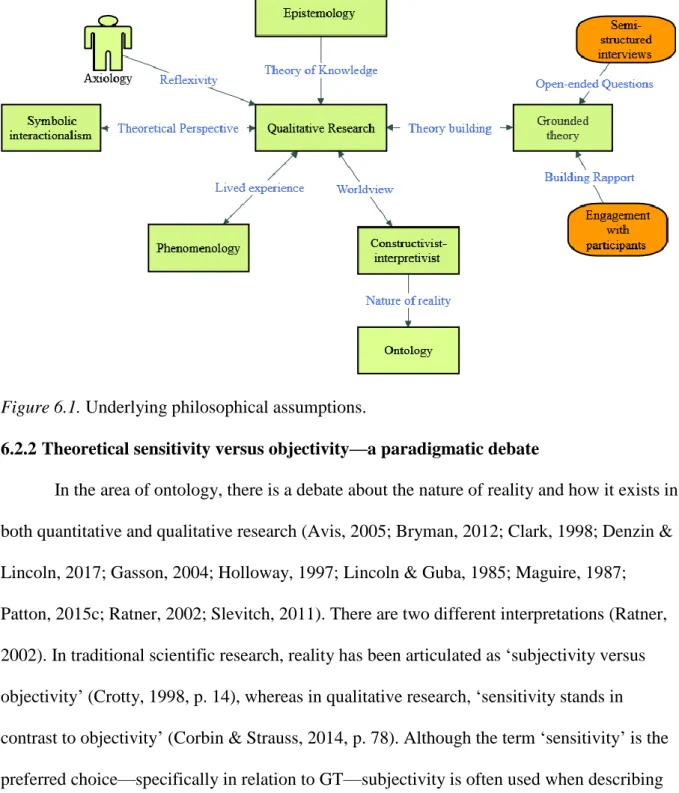
Figure 6.1. Underlying philosophical assumptions. ... 142
Figure 7.1. Grounded theory—data analysis. ... 177
Figure 8.1. Core theme: lack of control. ... 196
Figure 8.2. Subtheme 1: ‘managing my illness’. ... 199
Figure 8.3. Subtheme 2: ‘collaborative care’. ... 204
Figure 8.4. Subtheme 3: ‘debilitating illness’. ... 214
Figure 8.4. Subtheme 4: ‘healthcare services’. ... 219
Figure 9.1. Conditional matrix: lack of control. ... 228
List of Appendices
Appendix A: Austin Hospital Ethics Approval ... 305
Appendix B: Site-Specific Assessment Authorisation ... 307
Appendix C: RMIT University Ethics Approval ... 310
Appendix D: Plain Language Statement ... 311
Appendix E: Recruitment Letter ... 312
Appendix F: Informed Consent Form—Individual Participants ... 313
Appendix G: Interview Guide (Clinicians) ... 314
Appendix H: Interview Guide (Consumers) ... 318
Appendix I: Anorexia Diagnostic Criteria ... 323
List of Abbreviations
ACP Advance care planAD Advance directive AI Advance instruction AN Anorexia nervosa
APA American Psychiatric Association BDD Body dysmorphic disorder
BED Binge eating disorder BMI Body mass index BN Bulimia nervosa
CBT Cognitive behaviour therapy
CBT-AN Cognitive behaviour therapy–anorexia nervosa CBT-E Cognitive behaviour therapy enhanced
DSM-5 Diagnostic and Statistical Manual of Mental Disorders EDNOS Eating disorder not otherwise specified
GP General practitioner
GT Grounded theory
HCPA Health Care Power of Attorney
ICD-10 International Classification of Diseases ICU Intensive care unit
IPT Interpersonal psychotherapy
NEDC National Eating Disorder Collaboration
NHMRC National Health and Medical Research Council NICE National Institute of Health Care Excellence NSU Non-substance users
OCD Obsessive compulsive disorder
PACFA Psychotherapy and Counselling Federation of Australia PAD Psychiatric advance directive
PCP Primary care physician PT Psychodynamic therapy
RANZCP Royal Australian and New Zealand College of Psychiatrists RCT Randomised controlled trial
SEDC Specialised eating disorder clinic SI Symbolic interactionalism SIB Self-injurious behaviour
SSCM-SE Specialist supportive clinical management SU Substance users
UK United Kingdom
US United States
WHO World Health Organization
Preface
Before proceeding, I would like to make a few comments about the language and sample size used in this thesis. In line with the philosophical tradition of qualitative research, this thesis will use both the passive voice and the active voice (Charmaz, 2006; Evans, Gruba, & Zobel, 2011; Gilgun, 2005; Wolcott, 2009). Specifically, the first-person active voice ‘I’ is used for several reasons: to highlight my journal thinking, to clarify my position regarding the research topic, to illuminate my personal biases and assumptions, and to reflect on my
individual experience of living with anorexia (Patton, 2015c). In fact, it is common for qualitative researchers to ‘position’ themselves in their research (Bloomberg & Volpe, 2008, p. 9). That is, the author’s voice should be ‘seen’ in the text (Charmaz & Mitchell, 1996; Creswell, 2013; Denzin, 2001; Dey, 1993; Ely, 1997; Gilgun, 2005; Hertz, 1997; Holloway, 2005b, 2008; Marshall & Rossman, 2010; Maxwell, 2012; O’Leary, 2014; Oliver, 2013; Patton, 2015c; Ponterotto, 2005; Punch, 2013; Ritchie, Lewis, Nicholls, & Ormston, 2013; Smythe, Ironside, Sims, Swenson, & Spence, 2008; Thorne, 2008).
Evans et al. (2011) suggested that the active voice should be used judiciously and without compromising the integrity of the participants’ voices—that is, it should not be overused or dominate the discourse of the analysis. Further, the researcher should not
consider the experiences of the participants as if they were his or her own (Holloway, 2005b; Marshall & Rossman, 2010). Indeed, this would undermine the credibility of the findings as well as the philosophical foundation of social constructivism—an epistemological position the author has adopted to inform the research investigation (Charmaz, 2006; Gilgun, 2005).
The singular ‘I’ is often frowned upon by some quantitative researchers, thesis committees and even conservative editors (Charmaz & Mitchell, 1996; Evans et al., 2011; Wolcott, 2009), who might consider it a ‘forbidden pool of knowledge’ (Fine as cited in Hertz, 1997, p. vii). However, some people (mainly qualitative researchers) believe (and
would defend) that the use of ‘I’ can make a thesis more readable and credible (Gilgun, 2005; Patton, 2015c). For example, Holloway (2005b) stated that ‘the use of “I” makes the write-up more lively and imaginative if used as a literary device, as well as credible and real’ (p. 280). He further added that ‘I’ can be used to amplify the voice of ‘the other’ (p. 280). That is, it can exemplify the ideas and beliefs of the researcher and participants (and other authors) without detracting from their own experience (Hertz, 1997). In contrast, Charmaz (2006) stated that ‘we can weave our points of view into the text and portray a sense of wonder, imagery, and drama’ (p. 174). Indeed, it is my intention to weave my voice throughout the thesis by asking questions, challenging ideas and assumptions, and integrating parts of my own lived experience. Hopefully, this will enable me to connect with readers and might stimulate further thinking from a ‘consumer’ perspective.
Regardless of the type of voice, the participants’ voices will take centre stage to share their views, beliefs and attitudes regarding the research topic (Holloway, 2005b). As is often the case, these marginalised women are rarely given the opportunity to express their lived experiences with mental health (Padgett, 2008). In fact, the principle of justice requires that we listen ‘to the voices of the minority and disadvantaged groups’ (Orb, Eisenhauer, & Wynaden, 2001, p. 96).
This thesis aims to introduce terms that are representative of, and acceptable to, people with eating disorders (Weissman et al., 2016). It is important for researchers to pay attention to language when referring to people with eating disorders to prevent further stigmatisation. Therefore, I will not use terms that would contribute to stigmatising people in the eating disorder community. Nor will I use terms such as ‘anorectic’or ‘hard core’, which medicalise and pathologise women’s bodies (Boyle, 2019; Ramjan, 2004). Rather, I will use respectful language that is inclusive of and sensitive to the experiences of women with SE-AN
human beings rather than being defined by their illness (Holloway, 1997; Weissman et al., 2016). This sentiment was expressed by an author who had experienced mental illness herself: ‘we want our personhood to be recognised before our psychiatric diagnosis’ (Deegan, 1997, p. 12). It is hoped that readers of this thesis will respect my personhood.
The focus of this study is adult women; therefore, the thesis deliberately uses the pronouns of ‘she’ and ‘her’. Of course, this does not mean that males are not at risk of developing eating disorders (Crisp, 1995; Greenberg & Schoen, 2008; Mangweth‐Matzek, Kummer, & Pope, 2016; Murray, Rieger, Karlov, & Touyz, 2013; Pope, Olivardia, Gruber, & Borowiecki, 1999; Wooldridge & Lytle, 2012).
Throughout the thesis, a number of terms are used interchangeably, such as ‘forced treatment’, ‘involuntary’, ‘inpatient care’ and ‘restrictive care’. Further, I have used several terms to describe the doctor–patient dyad, including ‘clinician’, ‘healthcare practitioner’ and ‘physician’, as well as ‘participant’, ‘patient’, ‘client’, ‘person’ and ‘individual’.
Of course, the terms ‘patient’ and ‘client’ have sociopolitical implications. It has been reported that such labels perpetuate stigmatising attitudes (Austin, Bergum, & Nuttgens, 2004; Crisp, 2005; McLaughlin, 2009; Ritchie, Hayes, & Ames, 2000). For example, patients are viewed as being ‘sick’, ‘weak’ and ‘mentally ill’, which automatically negates their ability to make informed decisions about their medical care (Lemma-Wright, 1994; Shattell,
McAllister, Hogan, & Thomas, 2006).
As researchers, we need to move beyond these terms and others (i.e., ‘subject’) and develop language that is more inclusive (e.g., ‘people’) to describe people with serious mental issues (McLaughlin, 2009; Ritchie et al., 2000).
For clarity, the terms ‘patient’ and ‘person’ will be used (alternated with the term people) in this doctoral thesis because there are no acceptable alternatives. Further, the term
‘patient’ was frequently used in the interview transcripts; therefore, the term was retained for authenticity purposes (Boddy, Chenoweth, McLennan, & Daly, 2013).
On a final note, the qualitative studies that have been cited in this thesis, including my own study, consist of a small number of participants. This is acceptable and justified for social science research (Boddy 2016). Currently, there is no consensus as to what constitutes an objective measure of the sampling size in qualitative research, and there are no definitive studies on this topic (Bryman, 2012; Liamputtong, 2013; Thorne, 2008). Typically, though, qualitative studies involve small numbers, whereas quantitative studies use larger sampling sizes (Creswell, 1998; Hennink, Hutter, & Bailey, 2010; Onwuegbuzie & Leech, 2007). For researchers, this is a key concern because the generalisability and transferability of qualitative findings is a limited factor (Bryman, 2012).
Moreover, Morrow (2005) makes a valuable point by stating that ‘ultimately, what is far more important than sampling size are sampling procedures; quality, length, and depth of the interview data, and variety of evidence’ (p. 255).
Glossary
As part of the glossary of key terms provided to help the reader understand the
research project, I have compiled a list of terms, including definitions, that will be used in this thesis.
Advance directive: An advance directive ‘enables a competent person to make decisions about future treatment, anticipating a time when they may become incompetent to make such decisions’ (Halpern & Szmukler, 1997, p. 323).
Best interest: This approach works from the maxim to act beneficently (what is thought to be in the best interest of the person) by making decisions (weighing the potential costs and benefits) that will protect their wellbeing (Buchanan & Brock, 1989; Carter, Detering, Silvester, & Sutton, 2015; Dresser, 1984c; Exworthy, 2004; Kapp, 2010).
Capacity/competency: This is predicated on the belief that a person has the ability to communicate choices, understand relevant information, appreciate the situation and its consequences, and manipulate information rationally (Appelbaum & Grisso, 1988).
Compulsory treatment: This refers to a person who has been force-fed (nasogastric feeding) against their will (Werth Jr, Wright, Archambault, & Bardash, 2003).
Coercion: This can be defined ‘as an individual’s perception or sense that her freedom has been violated’ (Matusek & Wright, 2010, p. 435).
Countertransference: Freud coined this psychodynamic term in 1910 to describe the unconscious reaction of the therapist to the patient’s transference (Corey, Corey, Corey, & Callanan, 2014).
Dignity: This can be defined as treating people as individual human beings by respecting their values, attitudes and feelings (Haddock, 1996).
Egosyntonic: This term describes a person’s mental state. People often believe that their behaviours fit with their sense of who they are (Beat Eating Disorders, 2017; Crisp, 1997).
Feminism: Feminism aims to reduce power differentials and androcentric patriarchal biases, work towards change and justice, overcome gender inequalities and oppression, and empower marginalised groups (Kushner & Morrow, 2003; Kvale, 1996; O’Leary, 2014).
Heideggerian phenomenology: This ‘phenomenology is the study of human
experience and of the ways things presents themselves to us in and through such experience’ (Sokolowski, 2000, p. 2).
Hermeneutics: Hermeneutics ‘refers to the art, theory, and philosophy of interpreting the meaning of an object (a text, a work of art, social action, the utterances of another speaker, etc.)’ (Schwandt, 2014, p. 138).
Iatrogenic: Iatrogenic refers to negative outcomes (e.g., coercion) in treatment settings (e.g., hospitals) (Garner, 1985).
The ‘inner voice’: This is a nebulous concept in the literature with no clear definition apart from being described as an ‘inner critical voice’ with some parallels to psychotic
hallucinatory experiences. However, there are few studies on this subject to support this claim (Noordenbos, Aliakbari, & Campbell, 2014; Pugh & Waller, 2017). This, of course, does not apply to all people with eating disorders, but rather it is an idiosyncratic experience that may have different meanings (both positive and negative aspects) for different people (Tierney & Fox, 2010). Some patients have conceptualised the inner voice as a different form of ‘self’ (Surgenor, Plumridge, & Horn, 2003).
Involuntary treatment: This refers to a person who has been placed in the care of state authorities (e.g., psychiatric hospital), sometimes detained under the Mental Health Act, to protect their safety and wellbeing (Werth Jr et al., 2003).
Maudsley Model for Treatment of Adults with Anorexia: This is a family based outpatient eating disorder program that targets specific symptoms, such as obsessional thinking, perfectionism and negative emotional avoidance. It is delivered using a cognitive– behavioural program in the treatment of the illness (Halmi, 2013).
Proxy: A proxy is ‘the person making a decision on the behalf of a person without decision-making capacity’ (Devettere, 2010, p. 489).
Serious mental illness: Individuals who experience episodic periods of a mental health crisis with periods of stability are defined as having a serious mental illness (Van Dorn, Scheyett, Swanson, & Swartz, 2010).
Severe and enduring anorexia nervosa: This term describes a person who has experienced anorexia nervosa for a protracted period of more than seven years (George, Thornton, Touyz, Waller, & Beamont, 2004; Hay, Touyz, & Sud, 2012; Wildes et al., 2016).
Substituted judgment: This doctrine allows a surrogate decision-maker (e.g., state, guardian, medical team or tribunal) to make a decision on behalf of an incompetent person—a decision that the person would have made if they were competent to do so (Appelbaum, 2007; Buchanan & Brock, 1989; Dresser, 1984c; Exworthy, 2004; Gillick, 2006; Ryan & Callaghan, 2014; Tan, Hope, & Stewart, 2003a).
Declaration of Position
Given that the qualitative researcher is considered the main research instrument (Avis, 2005; Creswell, 2013; Holloway, 1997, 2005b; Wimpenny & Gass, 2000), they must declare any biases, values, views (e.g., political and social), pre-existing knowledge and experiences that they bring to the research (Berger, 2015) because they could potentially influence the researcher’s interpretations and compromise the trustworthiness of the research findings (Creswell, 2013; Hennink, Hutter, & Bailey, 2010; Marshall & Rossman, 2010). This is known as ‘reflexivity’, whereby the researcher engages in a process of introspection and critical reflection regarding their position within the research project and their involvement with the research participants (Berger, 2015; Bryman, 2012; Hennink et al., 2010; Holloway, 2005a, 2005b, 2008; Janesick, 2003; Padgett, 2008; Patton, 2015c). Wolcott (2010) supported this position, stating that:
Our readers have the right to know about us. And they do not want to know whether we play in the high school band. They want to know what prompts or interests us in the topics we investigate, to whom we are reporting, and what we personally stand to gain from our study. (p. 36)
My exploration of this topic was prompted by my personal lived experience of severe and enduring anorexia nervosa (SE-AN). My lived experience has broadened my view of the mental health system and of the disparity in the quality of care between private and public healthcare providers. I have also gained a better depth of understanding of the
psychopathology of SE-AN, both from a clinical and personal point of view.
I have not written this thesis with any ill feelings towards the medical profession, and this is not an attempt to undermine their profession or credibility. It is my sincere intent to write a balanced and well-informed analysis of the medico-legal debate by engaging with all stakeholders to ensure that an accurate and fair description is presented regarding the ethics of forced treatment among people with SE-AN. Thus, I do not favour one view over another (beneficence v. autonomy); rather, I see various shades of grey depending on a person’s
circumstances. There is no intention to persuade readers to align themselves with a particular argument or agenda such as paternalism or feminism. Such a promotion would be superfluous given that this thesis is meant to present an unbiased account of the debate.
I must confess, though, that at the outset of the research, I was against any form of enforced treatment (stemming from my negative experience of hospitalisation) and supported the belief that hospitalisation has no role in the care of people with SE-AN. However, after listening to the participants’ stories and reflecting on my personal experience with anorexia, I came to realise that hospitalisation is necessary to facilitate a person’s recovery and, more importantly, it can be used as a ‘life-saving’ device (Melamed, Mester, Margolin, & Kalian, 2003, p. 625). I am living proof of this and am now more aware of my potential biases
regarding the issue of forced hospitalisation. This could help to avoid contaminating the data. On a personal level, a major part of my motivation for writing this thesis is to create social justice for people with SE-AN and to improve their quality of life. That is, I want to minimise the iatrogenic effects of hospitalisation by allowing them to actively participate in the decision-making process through the use of PADs. I have met a number of people with SE-AN who have expressed a need to be listened to because they felt disempowered by the mental health system. They often complained about the lack of fairness in the decision-making process regarding their care, which left them feeling disrespected, ignored and not valued.
This thesis has been written for those who have an interest in the phenomenon of SE-AN, but it is more specifically targeted to health professionals, policymakers and other researchers (Liamputtong, 2013a; Patton, 2015c). These groups can use the ethical model as an adjunct tool to guide clinical decision-making and enhance collaborative care for people with SE-AN (Papaioannou, Demetropoulos, & King, 2010). Further, they can incorporate aspects of the proposed model into clinical practice to improve the quality of mental
healthcare not just for those with SE-AN, but potentially for other people with severe disabilities—physical or otherwise (Liamputtong, 2013a). Researchers can test and modify the model for other clinical settings and patient groups (e.g., males or minors) to enhance the transferability of the findings.
I do not claim that the proposed model will completely eradicate coercion from our eating disorder hospitals, nor do I believe that such an idealist approach is possible given the nature of the illness. Rather, the rationale behind this model will promote awareness and contextual understanding of the ethical dimensions of decision-making when caring for patients with SE-AN (Warren & McGee, 2013).
I hope that this model will improve the social condition of women with SE-AN and assist in their emancipation by empowering them to tackle their chronic illness (Creswell, 1998; Kvale, 1996).
Chapter 1:
The Research Problem
1.1
Introduction
This chapter will focus on the medico-legal debate between the ‘autonomy’ and ‘beneficence’ of compulsory treatment of people with anorexia nervosa (AN), the ethical considerations for professionals when enforcing treatment and the concept of advance
directives (ADs) and its potential application in mental health services. It includes discussions of the following topics: research problem, significance of the study, study design, scope and aim of the research, and research questions.
1.2
Context of Study—The Ethical Dilemma
AN is a life-threatening condition with a high mortality rate. It is an illness that can affect anyone, often with devastating consequences (American Psychiatric Association [APA], 2013; Herpertz et al., 2011; Mitchison & Hay, 2014; Radu, Chirita, Untu, Ciubara, & Chirita, 2016; Royal Australian and New Zealand College of Psychiatrists [RANZCP], 2014; Tan, Hope, & Stewart, 2003a; Tiller, Schmidt, & Treasure, 1993).
It is confronting for both the patient’s family and health professionals to watch the patient starve them-selves to the brink of death (Appelbaum & Rumpf, 1998; Hughes, 1997; Lemma-Wright, 1994; Melamed, Mester, Margolin, & Kalian, 2003). Parents and carers often feel overwhelmed by a sense of helplessness and blame themselves when a loved one is experiencing an eating disorder (Lackstrom & Woodside, 1998). Many carers go to great lengths to remedy the problem (Whitney et al., 2005), even to the point of committing their loved one to a hospital for treatment, specifically in countries where this practice is legalised (Dresser, 1984c; Giordano, 2010; Lewis, 1999; Yager, Carney, & Touyz, 2016).
In the literature on AN, involuntary treatment is justified under the ethical principle of beneficence—that is, the act of ‘doing good’ for the patient (Douzenis & Michopoulos, 2015; Golden, Corvea, Dang, Llorente, & Silverman, 2008; Guarda et al., 2007; Kjellin et al., 1993;
Vuckovich, 2003). Thus, when a patient refuses to eat, health professionals have a moral obligation (Hippocratic duty) to enforce treatment to prevent serious medical complications and ensure the patient’s safety and wellbeing (Carney, Wakefield, Tait, & Touyz, 2006; Douzenis & Michopoulos, 2015; Geller, Williams, & Srikameswaran, 2001; Guarda et al., 2007; O’Brien & Golding, 2003).
Although mental health practitioners have a duty of care to protect their clients from irreversible or preventable harm (beneficence), it can nevertheless be argued that they also have an ethical obligation to respect the values and interests of individuals (autonomy) with eating disorders (Breeze, 1998; Carney, Tait, Wakefield, Ingvarson, & Touyz, 2005;
Giordano, 2005; Krieger, Moritz, Weil, & Nagel, 2018; MacDonald, 2002; Matusek & Wright, 2010; Tan, Hope, Stewart, & Fitzpatrick, 2006). The ethical dilemma of deciding whether to enforce involuntary treatment of people with anorexia or respect their right to refuse medical care is a controversial issue, and it remains a challenge not only for mental healthcare providers, but also for family members, carers and the community (Ayton, Keen, & Lask, 2009; Carney, Yager, Maguire, & Touyz, 2019; Faith, 2002; Feiring & Ugstad, 2014; Guarda et al., 2007; Swartz, Swanson, & Hannon, 2003; Tiller et al., 1993; Vandereycken, 1998).
More recently, international human rights bodies such as the World Health
Organization (WHO) have voiced concerns about the application of involuntary care and the human rights violations of people with mental health issues:
Often, people are admitted inappropriately and treated against their will. They lack access to legal processes and mechanisms to protect against abuses during involuntary treatment, and they do not have the possibility to appeal against decisions to involuntarily admit or treat them. Nor do they have access to
complaints mechanisms should they wish to report human rights violations being
committedagainst them. (World Health Organization and World Organization of
This highlights a breach of the principle of non-maleficence—‘above all, do no harm’. It is paternalistic in preventing women from accessing legal aid and support mechanisms to enable them to exercise their basic legal rights—that is, their right to freedom of choice and action.
One possible way to solve this ethical dilemma, and to develop a more collaborative approach (e.g., clinicians, families and consumers) in the care of people with severe and enduring anorexia nervosa (SE-AN), is to explore the potential value of psychiatric advance directives (PADs) (Commonwealth of Australia, 2013; Elbogen, Swanson, Appelbaum et al., 2007; Exworthy, 2004; Gallagher, 1998; O’Connell & Stein, 2005; Srebnik & Fond, 1999). By definition, an AD ‘enables a competent person to make decisions about future treatment, anticipating a time when he or she may become incompetent to make such decisions’ (Halpern & Szmukler, 1997, p. 323).
PADs can be used as a social justice tool to increase the autonomy/empowerment of individuals with severe mental illnesses (SMIs) and thereby reduce the occurrence (or perception) of coercive practices such as involuntary treatment (Amering, Denk, Griengl, Sibitz, & Stastny, 1999; Amering & Schaffer, 2007; Bonnie, 2012; Henderson et al., 2008; Khazaal et al., 2014; O’Brien & Golding, 2003; Scheyett et al., 2008; Scheyett, 2007; Shields, Pathare, Van Der Ham, & Bunders, 2014; Swanson, Tepper, Backlar, & Swartz, 2000; Van Dorn, Scheyett, Swanson, & Swartz, 2010; Winick, 1994; Zelle, Kemp, & Bonnie, 2015).
These ideas are consistent with the ‘least restrictive principle’, which supports a harm minimisation approach that avoids (or at least minimises) the use of coercive practices in the least restrictive environment possible (Atkinson, 2007; Gallagher, 1998; O’Brien & Golding, 2003; RANZCP, 2014). It must be emphasised that coercion can occur in both voluntary and involuntary patients and, equally, not every person will experience coercion (Katsakou & Priebe, 2007; Khazaal et al., 2014; MacDonald, 2002; Matusek & Wright, 2010; Schreyer et
al., 2016). Acts of coercion can be categorised as either subtle or overt (Guarda et al., 2007; MacDonald, 2002); accordingly, people’s perceptions of coercion can vary widely (Guarda et al., 2007; Hoge et al., 1997; Kjellin & Wallsten, 2010; Matusek & Wright, 2010; Olofsson & Jacobsson, 2001; Tan, Stewart, Fitzpatrick, & Hope, 2010).
To better understand the ethics of coercion for adult women with SE-AN, a case study presented by Gans and Gunn Jr (2003) will form the framework of this discussion to highlight the key arguments of this medico-legal debate.
Mrs. Black (not her real name), a US resident, was a 44-year-old married female with two children, a son aged 20 and a daughter aged 17. Mrs. Black had a 25-year history of anorexia nervosa. At the time of the evaluation she suffered from anorexia nervosa and related medical complications. She was living in a hospice connected to the hospital at which she had received much of her treatment over the years, admitted by her physician who felt she might have less than 6 months to live. No further treatment for the anorexia nervosa was being administered…. She denied being actively suicidal and reiterated her wish to die should she need life supports. She had some insight into her illness, but continued to focus on food and weight without awareness of complex psychological issues. However, her husband strongly felt that, given her history and the family’s experience of Mrs. Black, that she was competent to make this decision and that a more complex approach to the
question was needed. These evaluators,her husband and the ethics committee of
the hospital agreed… She only wanted to live if she could ‘feel good and
comfortable’. She said: ‘it is better to die than to live with yourself … l am trying to let myself die’ (pp. 678–688). She subsequently died.
Stories like that of Mrs Black may appear to be the exception rather than the norm. However, many anecdotal cases suggest the contrary (Appelbaum & Rumpf 1998; Campbell & Aulisio, 2012; Coggon, 2014; Davies et al., 2012; Fost, 1984; Giordano, 2010; Hebert & Weingarten, 1991; Hodel et al., 2019; Maher & Rosedale, 1993; Melamed et al., 2003;
O’Neill, Crowther, & Sampson, 1994; Selvini-Palazzoli, 1978; Tiller et al., 1993; Trachsel, et al., 2015; Wang, 2015).
The description of Mrs Black as a 44-year-old woman highlights that SE-AN is a debilitating illness with a duration of at least seven years (Hay, Touyz, & Sud, 2012; RANZCP, 2014; Stiles‐Shields et al., 2013). It can dominate a person’s life and cause significant long-term social, physical and psychological sequelae (Bamford et al., 2015;
Lacey & Sly, 2016; Maine, 1985; Noordenbos, Oldenhave, Muschter, & Terpstra, 2002; RANZCP, 2009; Scolan, Praline, Carlin, & Noël, 2013; Stockford, Kroese, Beesley, & Leung, 2018; Walsh, 2013).
It also highlights the fact that people with SE-AN are difficult to manage in a clinical setting, particularly those who have become resistant to therapy (Draper, 2000; Halmi, 2013; Kaplan & Strober, 2019; McIntosh et al., 2005), those whose values are different to those of others (e.g., pro-anorexia) (Dresser, 1984b; Giordano, 2005; Kendall & Hugman, 2014; Robertson, 1992), those who are not willing to give up their personal sense of identity (Hope, Tan, Stewart, & Fitzpatrick, 2011; Tan et al., 2003a; Tan et al., 2006) and those who wish to end their life (Campbell & Aulisio, 2012; Draper, 2000; Griffiths & Russell, 2000; Yager, 1992). In most cases (but not all), they succumb to the travails of their illness and lose hope of ever recovering, refusing all forms of medical assistance (Draper, 2000; Gans & Gunn Jr, 2003; Richmond, 2001; Russell, Mulvey, Bennett, Donnelly, & Frig, 2019; Selvini-Palazzoli, 1978; Yager et al., 2016).
This raises several ethical challenges for treating practitioners and illustrates the juxtaposition of the ethical principles of beneficence and autonomy (Beauchamp & Childress, 2001; Dyer & Bloch, 1987; Maher & Rosedale, 1993; Schreyer et al., 2016). In particular, it raises the question of whether involuntary treatment is the best course of action or even ‘morally’ acceptable in the care of people with SE-AN. It also questions whether patients have the right to refuse treatment (based on competency or otherwise), and, if so, what the implications are if they are not treated, whether traditional mental health services (curative treatments) are appropriate for people with SE-AN and how clinicians provide humane and dignified treatment without undermining the principle of respect for patient autonomy (Carney, Tait et al., 2006; Geppert, 2015; Kaplan & Strober, 2019; Knapp & Vandecreek,
2007; Lewis, 1999; Maher & Rosedale, 1993; Norvoll, Hem, & Pedersen, 2017; Tan, Hope, Stewart, & Fitzpatrick, 2003).
In the literature, these questions have largely remained unanswered. There is a
growing body of literature on the treatment of patients with SE-AN (Wonderlich et al., 2012), but there is no clear consensus on how to resolve the ethical dilemma of forced treatment (Bezance & Holliday, 2013; Matusek & Wright, 2010). Many authors consider involuntary treatment an ‘act of violation and compassion’, but one that is necessary to preserve human life (Vandereycken, 1998, p. 1). Yet there are those who argue that involuntary treatment is a breach of human rights and autonomy and should not be permitted (Griffiths & Russell, 2000; Yager, 1992). The following analysis will examine these and attempt to highlight the pros and cons of these ethical questions.
1.3
Arguments for Forced Treatment
A key argument in favour of compulsory treatment is that it can save lives (Draper, 2000; Griffiths & Russell, 2000; Mitrany & Melamed, 2005). To preserve Mrs Black’s life, advocates who support the use of forced treatment argue that coercion is necessary. They claim that the starvation effects of the disorder have affected her ability to make sound judgments (i.e., competency) and prevented her from understanding the full severity of her illness (Draper, 2000; Griffiths & Russell, 2000). Often, health professionals question whether a patient’s decision to refuse treatment is influenced by the disorder (cognitive impairment) or whether it is based on sound judgment (capacity) (Cutcliffe & Links, 2010; Draper, 2000; Holm, Brixen, Andries, Hørder, & Støving, 2012; Manley, Smye, & Srikameswaran, 2001; Mappes & Zembaty, 1981; Widdershoven & Berghmans, 2001). This is the main crux of the debate (Goldner, Birmingham, & Smye, 1997; Russell, 2001). This issue will be discussed in more detail in Section 5.1.8.
It has been theorised that the ego-syntonic features of the illness are a contributing factor to its psychopathology (Cutcliffe & Links, 2010; Draper, 2000; Fassino & Abbate-Daga, 2013; Mappes & Zembaty, 1981; Strober, 2004; Tan et al., 2003a; Widdershoven & Berghmans, 2001). People with AN cannot ‘see’ what other people can see—that is, an emaciated sick person who requires medical attention (Bruch, 1974; Dresser, 1984b;
Starzomska, 2006; Treasure, 2002; Vandereycken & Beumont, 1998a; Vitousek, Watson, & Wilson, 1998). This is due to the distortion of thought (cognitive impairment) and being fixated by the belief that their condition is congruent to who they are—that is, the anorectic self (Fost, 1984; Turrell, Peterson‐Badali, & Katzman, 2011; Williams & Reid, 2010). Mrs Black’s reluctance to accept medical help, and her ‘relentless pursuit of thinness’ (Bruch, 1979, p. 38), could be part of the ego-syntonic nature of the illness, which clouds her judgment and makes her think she is fat when in fact she is emaciated (Dresser, 1984b; Elbaky et al., 2014; Matusek & Wright, 2010; Westwood & Kendal, 2012).
This irrational belief is a common feature of anorexia and is considered an important feature in the diagnosis of the condition (APA, 2013; Draper, 2000). They often demonstrate a ‘lack of insight’ into their condition, thus placing themselves at risk of serious medical problems (Halmi et al., 2005). People with SE-AN usually lead precarious and unpredictable lives, that is—they ‘live on the edge’ of life—not understanding the risks associated with the illness (Westmoreland & Mehler, 2016, p. 316). That is, they die not because of their
intentions, but because of a lack of awareness of the consequences of the illness (Draper, 2000; Goldner, 1989; Holm et al., 2012). Anaïs Nin’s proverb of ‘we don’t see things as they are; we see them as we are’ is true in this case (Nin, 1990, p. 124).
This ‘denial’ and ‘lack of insight’ is intrinsic to the illness (Anderson & Paulosky, 2004; Bruch, 1974; Crisp, Kalucy, Lacey, & Harding, 1977; Halmi, 2013; Stice, 2002). It is often accompanied by other comorbidities such as depression, low self-esteem, anxiety and
obsessive-compulsive disorder (Achamrah, Coëffier, & Déchelotte, 2016; APA, 2013; Herpertz et al., 2011; Jagielska & Kacperska, 2017; Manley et al., 2001; Steinhausen, 2002). These conditions can exacerbate the illness, leading to further weight loss, and are likely to cause a person to withdraw from their social support networks (Lacey & Sly, 2016). Given that Mrs Black has been suffering from the illness for a long time, it could be said that her morbid mood has prevented her from recovering. It is common for people with AN to lose hope in the face of adversity, and they question their ability to recover (Geller et al., 2001). Sometimes, these feelings can be fuelled by shame and guilt, which are caused by repeated hospital admissions (Dresser, 1984b; Geller et al., 2001; Goldner, 1989; Maier et al., 2014).
In extreme cases, people with AN may attempt to resolve the feeling of hopelessness through acts of suicide or self-harm. This is an increasing problem among people with SE-AN (Marzola & Abbate-Daga, 2019).
However, some people ‘see’ the condition and understand the nature of the illness but are unable to control it. Control is a central problem in AN and forms part of a person’s social psyche and identity (Crisp, 1995; Dresser, 1984b; Hope et al., 2011; Lewis, 1999; Tan, Hope, & Stewart, 2003b; Tan, Hope, Stewart et al., 2003). Some experts have argued that this is the main perpetuating factor sustaining the illness (Bell, 2003; Beumont & Vandereycken, 1998; Mitrany & Melamed, 2005; Murray et al., 2017; Rathner, 1998; Tan, Hope, Stewart, & Fitzpatrick, 2003).
People with AN are characterised by their extreme need to be in control, especially of their body weight and shape (Giordano, 2005; Hepworth, 1999; Murray et al., 2017; Tan, Hope, Stewart et al., 2003). They are not prepared to relinquish their control and will go to great lengths to avoid doing so (Goldner, 1989; Guarda & Heinberg, 2004). The principal motivating factor seems to be an intense fear of gaining weight (APA, 2013; Garner & Needleman, 1997; Stice, 2002). They will be in conflict (control) with health professionals
and loved ones (Beumont & Vandereycken, 1998; Faith, 2002; Geller et al., 2001; Goldner, 1989; Jarman, Smith, & Walsh, 1997; Melamed et al., 2003; Tan, Hope, Stewart, &
Fitzpatrick, 2003; Woodside, 2002), pull out nasogastric fusion lines (Dresser & Boisaubin Jr, 1986; Gans & Gunn Jr, 2003), manipulate others and ‘eat their way out’of hospital (Dresser, 1984b, p. 321), and relentlessly pursue weight loss through extreme measures (e.g., excessive use of laxatives) until they become medically unwell (Dresser, 1984b).
Mrs Black had reached the ‘end stage’ of her psychiatric illness (Campbell & Aulisio, 2012; Geppert, 2015; Selvini-Palazzoli, 1978; Westmoreland & Mehler, 2016; Woodside, Twose, & Olteanu, 2016). She had chosen not to surrender her control, but rather to maintain control to the point of death. Globally, among patients with chronic illnesses, the decision to withdraw from lifesaving treatment is common. For treating practitioners, this is increasingly becoming an ethical problem (Campbell & Aulisio, 2012; Draper, 2000; Dresser & Boisaubin Jr, 1986; Woodside et al., 2016).
However, in most cases, the ethical principle of beneficence outweighs autonomy (Fost, 1984; Maher & Rosedale, 1993). Often, but not always, involuntary treatment is
dictated by ‘overzealous’ doctors who want to make the ‘final decision’ (Draper, 2000). Some have feelings of countertransference that overshadow their attempts to rescue sick patients (APA, 2006; Hebert & Weingarten, 1991), while others are morally bound out of ‘goodness and rightness’ to do the best for their patients (Giordano, 2005 p. 11), and a few remain indifferent but succumb to the pressures of ethical committees and are mandated to rescue dying patients (Maher & Rosedale, 1993). This strong adherence to these moral, legal and ethical codes shows that paternalism remains a threat to people’s autonomy (Hill, Glaser, & Harden, 1998; Kitchener, 1984; Murgic, Hébert, Sovic, & Pavlekovic, 2015; Rosenman, 1998; Werth Jr, Wright, Archambault, & Bardash, 2003).
A number of authors have suggested that Mrs Black’s problem could be related to her ‘inner anorexic voice’ (Noordenbos, Aliakbari, & Campbell, 2014, p. 338) telling her that she was not worthy of living, and as a result, she had lost hope of ever recovering from the insidious illness, and refused all offers of treatment (Fassino & Abbate-Daga, 2013; Tan, 2003; Tierney & Fox, 2010; Vialettes, Samuelian-Massat, Valero, & Béliard, 2006; Williams & Reid, 2010). An argument can be made that Mrs Black had lost her ‘authentic self’ and was consumed by the presence of this internal voice (Hope et al., 2011; Noordenbos et al., 2014). She was subjected to ongoing criticism about her weight and appearance and was convinced that life with AN was intolerable (Pugh & Waller, 2017).
Some patients actively seek help and want to be rescued, while others (a small group) remain ambivalent and live a life of despair with no hope of recovering (Crisp et al., 1977; Fairburn & Cooper, 2011; Strober, 2004; Vitousek et al., 1998; Woodside et al., 2016). These patients believe the illness is ‘impenetrable’, and they eventually hit ‘rock bottom’. Then, feeling ‘battle weary’ and ‘exhausted’, they simply give in, leaving them facing a continuing illness with severe mental and physical problems, possibly leading to death (Crisp, 1995; Dawson, Rhodes, & Touyz, 2014; Draper, 2000; Giordano, 2005; Kaplan & Strober, 2019). Mrs Black’s story exemplifies this point.
The above considerations have been identified as the main contributing factors in treatment refusal among patients with SE-AN. Forced treatment is therefore warranted (Carney, Tait, & Touyz, 2007; Mitrany & Melamed, 2005; Tan et al., 2010); however, there are concerns about the legitimacy of the use and implications of involuntary treatment.
1.4
Arguments for Respecting Autonomy
Civil libertarians have argued that involuntary treatment is unacceptable, degrading and an infringement of the human right to justice and dignity. They believe that involuntary treatment is limited in its ability to help people with SE-AN, and it violates the fundamental
ethical principle of respect for persons (Feiring & Ugstad, 2014; Giordano, 2005; Kallert, Mezzich, & Monahan, 2011; Rathner, 1998; Roberts & Dyer, 2007; Silber, 2011; Tan, Hope, Stewart et al., 2003). Some commentators have criticised the use of coercion and have described it as an act of ‘humiliation’ (Feiring & Ugstad, 2014, p. 2), ‘punishment’ (Tan, Hope, Stewart et al., 2003, p. 640), ‘inhumane’ (Treasure, 2002, p. 342), ‘imprisonment’ (Chamberlin, 2005, p. 14) and ‘mistreatment’ (Treasure & Ramsay, 2002, p. 34), stating that it ‘contributes to stigma, trauma and [victimisation] criminalisation of the mentally ill’ (Swanson et al., 2008, p. 2). These all constitute abuse and cause irrevocable harm to the person, thereby further marginalising people with mental health issues (Austin, Bergum, & Nuttgens, 2004; Chamberlin, 2005; Douzenis & Michopoulos, 2015; Feiring & Ugstad, 2014; Holm et al., 2012; O’Brien & Golding, 2003; Tan, Hope, Stewart et al., 2003; Vandereycken, 1998).
Thus, the main arguments against involuntary treatment, which can be used as a defence for Mrs Black’s plight, include the following: it undermines and destroys trust and compromises the therapeutic alliance; it deters people from seeking future care; it violates and undermines a person’s autonomy and freedom of choice; it causes elevated rates of depression and suicide; it causes psychological trauma for those who have a past history of physical or sexual abuse; and there is no empirical research to support the view that compulsory treatment benefits people with SE-AN, especially in regard to force feeding (APA, 2013; Brewerton, 2007; Draper, 2000; Dresser, 1984b; Duker & Slade, 1988; Geller et al., 2001; Giordano, 2005; Goldner et al., 1997; Griffiths & Russell, 2000; Jacobsen, 2012; Kjellin & Wallsten, 2010; Lemma-Wright, 1994; Matusek & Wright, 2010; Melamed et al., 2003; Russell et al., 2019; Schreyer et al., 2016; Sjöstrand & Helgesson, 2008; Tan et al., 2003a; Tan, Hope, Stewart et al., 2003; Yager et al., 2016). In many cases, patients view involuntary treatment as being punitive (Russell et al., 2019).
The above analysis shows that there is no agreement among commentators regarding the ethics of coercion (Elzakkers, Danner, Hoek, Schmidt, & Elburg, 2014). The overarching question is whether clinicians will accept this ‘therapeutic nihilism’ and therefore respect Mrs Black’s autonomous self and dignity, thus jeopardising her safety and wellbeing, or whether they will independently intervene (e.g., invoke compulsory treatment), violate the patient’s rights (e.g., disrespect her autonomy and self-determination), subject her to aggressive
treatments and thus prolong her suffering (Carney et al., 2019; Draper, 2000; Giordano, 2005; Goldner et al., 1997; Vandereycken & Beumont, 1998c; Yager, 1992).
These considerations raise a hypothetical question about the patient described by Gans and Gunn Jr (2003) in their vignette. If Mrs Black had been given an opportunity to receive PADs, it may have resulted in a different outcome regarding her suffering (coercion),
longevity of illness, recovery and, more importantly, her quality of life while living with AN (Carney et al., 2019). This hypothetical question requires further evaluation and will form much of the discussion in the literature review (see Chapter 5).
1.5
Statement of the Problem
At present, the clinical practice guidelines of the National Institute of Health Care Excellence (NICE, 2017), the APA (2000) and the Clinical Practice Guidelines for the BC Eating Disorders (Geller, Goodrich, Chan, Cockell, & Srikameswaran, 2012) recommend restoring a person’s weight based on ‘operant conditioning’ with the primary objective of reversing malnutrition (Bakker et al., 2011; Golden et al., 2003; Mental Health First Aid Training & Research Program, 2008; Psychotherapy and Counselling Federation of Australia [PACFA], 2011; RANZCP, 2014; Treasure, 2004).
However, these clinical guidelines do not address the long-term effects of SE-AN (Boughtwood & Halse, 2010; Cost & Mehler, 2019; Dresser, 1984c; Geller et al., 2001; Guarda, 2008; Woodside et al., 2016; Yager et al., 2016). As a result, people with SE-AN
‘continue to exhibit significant eating disorder psychopathology’ (Scholtz, Hill, & Lacey, 2010, p. 396) and therefore experience frequent relapses (Fassino & Abbate-Daga, 2013; Guarda, 2008; Williams, Dobney, & Geller, 2010; Wonderlich et al., 2012). For a more detailed explanation, see Section 2.8.
In an attempt to redress this problem, this research project will develop a collaborative decision-making model (an intervention tool) that emphasises patient treatment preferences. Although there are only a few models in the professional literature on AN, none of them have been specifically designed to address or resolve the ethical concerns relating to the care of people with SE-AN when ADs have been used, and this represents a significant gap in the professional literature on anorexia (Tierney, 2008; Vandereycken & Beumont, 1998c).
1.6
Purpose and Significance of the Study
The purpose of this grounded theory (GT) study is to develop an ethical decision-making model, framed under the auspices of ADs, to enable people with SE-AN to nominate their own treatment preferences should they lose mental competency or experience a relapse.
The significance of this ethical decision-making model is that it will improve
healthcare for people with SE-AN, provide clinical direction to clinicians in developing more collaborative ways to assist people in their recovery and health, give people more
responsibility and ownership of their mental health issues, engender a culture of mutual respect and power balance, and empower marginalised people in their emancipation from psychiatric care. An important feature of this model is that it can be applied to a wide range of clinical settings and populations, including males and minors.
1.7
Scope
The scope of this study will be limited to adult women who have been formally diagnosed as having, or having had, SE-AN, and who have experienced inpatient psychiatric care. While the prevalence of eating disorders in males has increased in recent years, women
remain more highly represented (Garner & Garfinkel, 1997; Hepworth, 1994). For this reason, only women have been selected for this research.
1.8
Aim and Objectives of the Research
The overall aim of this study is to develop an ethical decision-making model based on the research data. This study has a number of objectives:
a. to give a ‘voice’ to patients who are experiencing from SE-AN
b. to encourage practitioners to think ethically and explore the ethical dimensions of decision-making processes when caring for women with SE-AN
c. to enhance the collaborative alliance between all key stakeholders (e.g., consumers and clinicians) using PADs
d. to examine the literature regarding the utility of PADs in reducing the effects of coercion
e. to identify the need to develop an ethical decision-making model.
1.9
Research Approach
The purpose of this study is to explore and understand the ‘lived experiences’ of adult women with SE-AN who had been admitted to hospital care (Creswell, 2013; Denzin & Lincoln, 2011). To better understand this phenomenon, a constructivist–interpretivist approach, underpinned by a symbolic interactionalist framework, will be applied to the research (Bryman, 2012; Crotty, 1998; Denzin & Lincoln, 2008; Patton, 2015).
In addition, GT will be used to analyse the data and inductively build a theoretical model (Bloomberg & Volpe, 2012; Corbin & Strauss, 2014; Whitman & Woszczynski, 2004). This research design aims to address the central research question and the stated aims and objectives of the study (Evans, Gruba, & Zobel, 2011; Oliver, 2013).
1.10
Formulation of Research Questions
According to Creswell (2013), qualitative researchers should have an overarching central question that will enable them to address the proposed research problem. Others suggest that the research question should be open-ended and broad (i.e., does not limit the views of participants) (Bluff, 2005; Bryman, 2012; Chenitz & Swanson, 1986a; Corbin & Strauss, 2014; Creswell, 2013; Holloway, 2008), clear and concise (avoid ambiguities) (Barker & Pistrang, 2015; Bloomberg & Volpe, 2008), enable the investigator to explore phenomena of interest with flexibility and depth (Bloomberg & Volpe, 2015; Charmaz, Thornberg, & Keane, 2017; Corbin & Strauss, 2014), and, more importantly, help guide the researcher to develop a substantial theory that is reflective of the participants’ perspectives (Corbin & Strauss, 2014; Holloway, 2008; O’Donoghue, 2006).
The research question of whether an ethical decision-making model that uses ADs can minimise the effects of coercion in psychiatric care for adult women ‘living’ with chronic AN will initially be broad, but it will undergo a refining process and become more focused during the course of the study (Barker & Pistrang, 2015; Bloomberg & Volpe, 2008; Carpenter & Suto, 2008; Charmaz, 2006, 2008a; Corbin & Strauss, 2014; Hennink, Hutter, & Bailey, 2010).
Maxwell (2012) explained that researchers tend to have sufficient theoretical knowledge about the research problem to formulate a provisional research question, but he argued that this knowledge (or source of concern) becomes clearer when a significant part of the research is completed—that is, the literature review. He encouraged researchers to interact with the literature and spend time with participants to obtain a feel for the research problem in order to design a research question that will provide clarity around the purpose and conceptual context of the research.
In addition to the principal research question, a number of sub-questions have been designed to explore further aspects of the phenomenon (Creswell, 2013). These include:
a. How do women construct knowledge about living with SE-AN through interactions with healthcare professionals?
b. How do women interpret their experiences of hospitalisation?
c. What is the relationship (social psychological process) between coercion and its effect on a patient’s autonomy?
d. What does decision-making mean to healthcare practitioners?
1.11
Overview of the Thesis
A key element in writing a well-structured thesis is to deliver a unified narrative (Evans et al., 2011; Holloway, 2008). This thesis comprises 10 interlinked chapters and is presented in a traditional monograph format and in chronological order. It consists of numbered headings and subheadings, as well as tables that present results and figures that illustrate concepts (Bloomberg & Volpe, 2008; Evans et al., 2011; Holloway, 2008; Morrow, 2005; Oliver, 2013). The layout of the thesis is outlined below.
Chapter 1 provides an overview of the ethical reasons for and against involuntary treatment, and it provides a brief description of the significance, purpose, statement problem, scope, objectives, design, and research questions of the study. Chapter 2 presents clinical background information regarding the history, aetiology, epidemiology, prevalence and definition of SE-AN, as well as the treatment modalities. Chapter 3 outlines the ethical principles and values that will form the framework of the thesis.
Chapter 4 and Chapter 5 are divided into two sections—the ethical debate and PADs. They explore the underpinnings of the philosophical debate and describe the different models of ADs and their utilisation and potential barriers. Chapter 6 explores the
philosophical underpinnings of constructivism, symbolic interactionism, reflexivity and phenomenology. It defines GT, justifies its use and identifies its strengths and limitations.
Chapter 7 outlines the ethical considerations, participant sample and recruitment process, data gathering strategies, and analysis and interpretation procedures. Chapter 8 presents the key findings (themes) of the thesis, while Chapter 9 discusses the interpretations of the findings. Finally, Chapter 10 presents the ethical model and explains the decision-making process and the model’s potential use as a collaborative tool to reduce the use of coercive measures. It also discusses whether the research aims have been met.
1.12
Conclusion
This chapter has provided an overview of the research problem and methodology, as well as a brief outline of the chapters presented in this thesis. This study proposes that PADs can resolve the ethical dilemma of treatment compulsion and thereby reduce the iatrogenic effects (coercion) of psychiatric care. This study can be considered a conduit to advance the principles of autonomy and beneficence within this discordant debate.
Chapter 2:
Background
2.1
Introduction
The focus of this chapter is twofold. First, it explores the clinical characteristics of AN, including its history, definition, classification, epidemiology and aetiology. Second, it provides a general overview of the treatment modalities used to assist patients with SE-AN.
2.2
History of Anorexia Nervosa
AN has puzzled health professionals for many decades, and it remains an ‘enigmatic’ condition that is not fully understood by the scientific community (Bruch, 1974; Dresser, 1984b; Finelli, 2001; Schmidt & Treasure, 2006; Strober, 2004; Walsh, 2013). Even people with AN are bewildered, and they experience contradictory feelings about their illness (Bruch, 1974; Crisp, 1995; Fox, Ward, & O’Rourke, 2005; Geller et al., 2001; Giordano, 2005;
Rance, Clarke, & Moller, 2017; Strober, 2004; Tan et al., 2003a).
Some theorists have attempted to unravel the complexities of the condition by offering a range of interventions, including cognitive behaviour therapy (CBT; Beck, 1976),
psychodynamic therapy (PT; Freud, 1961) and interpersonal psychotherapy (IPT; Klerman, Weissman, Rounsaville, & Chevron, 1984), but there have been no significant breakthroughs apart from family therapy—Maudsley Model for Treatment of Adults with Anorexia—in the treatment of the illness (Finelli, 2001; Hsu, 1990; Tinker & Ramer, 1983; Walsh, 2013).
According to Silverman (1997), the word ‘anorexia’ first appeared in the medical literature in the seventeenth century, when Richard Morton (1689), an English physician, reported two cases of ‘Nervous Consumption’ (p. 3). Subsequent publications by Sir William Gull (1874) and Professor Ernest-Charles Lasègue (1873) reported similar findings (Finelli, 2001; Orbach, 1986; Selvini-Palazzoli, 1978; Silverman, 1997).
Gull published a paper in 1874 in which he described three cases of women who presented with unexplained weight loss symptoms and referred to their condition as ‘Apepsia