The Future of Drone Strikes:
A Framework for Analyzing Policy Options
Diane M. Vavrichek
Cleared for Public Release
COP-2014-U-008318/Final September 2014
CNA's Occasional Paper series is published by CNA, but the opinions expressed are those of the author(s) and do not necessarily reflect the views of CNA or the Department of the Navy.
Cleared for Public Release. Distribution unlimited. Specific authority: N00014-11-D-0323.
Copies of this document can be obtained through the Defense Technical Information Center at www.dtic.mil or contact CNA Document Control and Distribution Section at 703-824-2123.
Copyright 2014 CNA
This work was created in the performance of Federal Government Contract Number N00014-11-D-0323. Any copyright in
Approved for distribution: September 2014
Dr. Jeffrey B. Miers
Vice President and Director Operations and Tactics Analysis
Photo credit line: "A British MQ-9 Reaper sits on a runway March 17, 2011, at an undisclosed location in Afghanistan. Both British and American Reapers are deployed to Afghanistan. (U.S. Air Force photo by Senior Airman David Carbajal/Released)"
Photographer's Name: SrA David Carbajal Location: Kandahar Airfield
Date Shot: 6/10/2011 Date Posted: 11/29/2011 VIRIN: 110610-F-IM197-001
Acknowledgement
The author is indebted to many people for their help during the pro-duction of this report. She gratefully acknowledges the individuals who aided her research by granting interviews; as well as the following colleagues for their feedback and support: Bill Brobst, Richard Brody, Alan Brown, Marc Garlasco, Matthew Grund, LCDR Matthew Ivey (JAGC, U.S. Navy), Larry Lewis, CAPT Mark Rosen (JAGC, U.S. Navy, Ret.), and Jonathan Schroden.
Contents
Acknowledgement . . . i Summary. . . 1 Introduction . . . 5 Outline of framework. . . 11 Policy options . . . 13 Military preference . . . 13 A “drone court” . . . 16Releasing further details about targeting . . . 19
Summary of policy options . . . 22
Military effectiveness . . . 23
TME . . . 23
The enemy's vote . . . 28
Summary of military effects issues . . . 29
Legitimacy . . . 31
International legal context . . . 31
Legality issues . . . 36 Legitimacy issues . . . 41 Legality . . . 41 Transparency . . . 43 Accountability . . . 46 Ethical considerations . . . 47 Miscellaneous issues . . . 48 Secrecy. . . 49
Summary of legitimacy issues. . . 50
Conclusions . . . 59
The military preference . . . 59
A FISA-like drone court . . . 60
An Israeli-style drone court . . . 61
Releasing further details about targeting . . . 62
Overview of initial findings of all policy options . . . 63
Final thoughts . . . 65
Appendix A: Title 10, Title 50 and oversight. . . 67
Appendix B: Covert actions. . . 71
Acronyms. . . 81
References. . . 83
List of figures . . . 95
Summary
Drone strikes against individuals have become a heavily used tool in U.S. counterterrorism operations since the 9/11 terrorist attacks. These targeted killing operations have been effective in many respects, but they have simultaneously been highly controversial, with concerns about aspects such as transparency, legality and collateral damage. This controversy has sparked growing discussion within the U.S. and in the international community about possible policy changes that might address some of the issues surrounding drone strikes.
However, what this discussion has been missing is an approach for analytically evaluating these proposals, particularly an approach for (a) assessing the tactical effects they would have on operations, and (b) incorporating such an assessment with a broad-based evaluation of the implications of public perceptions of drone strike operations. This paper presents a framework for systematically considering policy proposals that aims to fill these gaps. In doing this, it breaks out many of the specific issues that are currently affecting public perceptions of the legitimacy of drone strike operations.
In short, the framework suggests evaluating policy options for drone strikes by considering their expected effects on tactical, operational and strategic military effectiveness, as well as perceived legitimacy, and using these determinations to anticipate the net effect of the options on keeping the U.S. and its citizens largely safe from terrorist attacks. It goes on to provide means through which to analyze
expected effects on tactical military effectiveness and legitimacy, and how these would contribute to net effectiveness.1
Considerations for evaluating the tactical military effectiveness of a policy option to alter the drone program should include the effects of that option on the tactical steps that constitute a drone strike, such as getting approval for the target and the strike, executing the strike and subsequently reviewing the strike. Impacts on all levels of military effectiveness include potential changes in adversaries' actions that might result from a policy option—for example, a terrorist may be able to avoid being targeted if he or she gains a good understanding of targeting “go/no-go” criteria as a result of increased transparency. The impact of a policy option on the public perception of the legiti-macy of drone strike operations is composed of a number of factors, including the effects of that option on various legal considerations as well as transparency, accountability and ethical concerns, and issues around maintaining secrecy (if secrecy is used).
Finally, the net effectiveness of a policy option is considered by antic-ipating the broader implications of any expected changes in both tac-tical military effectiveness and the perception of legitimacy, and the interplay of these factors (operational and strategic military effective-ness should also be considered if they are analyzed).
The framework and the considerations presented in this paper for tactical military effectiveness, legitimacy and net effectiveness are all qualitative; it is left to decision-makers to determine the relative importance of any risks and benefits brought out by these consider-ations.
1. Operational military effectiveness depends heavily on the types of oper-ations the drone strikes are a part of, and strategic military effectiveness is very broad—thus these two components are beyond the scope of this report. Instead, it is suggested that policymakers, analysts and operators address these topics by narrowing their focus to the types of operations and strategic military effects that are of the greatest importance in the context with which they are concerned.
The considerations described above are discussed throughout the paper in the context of five example policy options that the author has selected from the numerous options proposed, based on their assessed viability and potential to address some of the top controver-sies surrounding drone strikes. These options are:
•
A “preference that the United States military [as opposed to other government agencies] have the lead for the use of force around the world” [1]—termed the “military preference” policy in this report—which was policy guidance issued by Pres-ident Obama in May 2013, though the implementation of this guidance has been at least partially blocked by Congress [2, 3]•
Two different options for a “drone court” that oversees drone strikes: one modeled after the court established by the Foreign Intelligence Surveillance Act (FISA), and one that would review drone strikes after the fact, as has been established in Israel•
Two options for the public release of additional information: publicly releasing specifics about targeting processes and stan-dards, and publicly releasing information about successfully targeted individualsBecause much information surrounding drone strike practices has not been publicly released and, moreover, important details of these policy options have either not been determined or not been released, the recommendations for these policy options for the most part merely suggest areas of analytic focus for military and civilian person-nel who are currently involved in drone strike operations. These rec-ommendations are summarized as follows:
•
In order to evaluate the military preference policy, this report finds that focus should be concentrated on anticipating the effects it would have on tactical military effectiveness, and over-sight and accountability issues. The military preference policy can be expected to bring more transparency to drone strike operations, and better align these operations with the spirit of certain aspects of international law. If this policy were to include the slightly more restrictive preference that dronestrikes be done under Title 10 of the U.S. Code, it could poten-tially further enhance the transparency of drone strike prac-tices but might bring about more operational limitations.
•
A “FISA-like” drone court that grants approvals for strikes before they are carried out could have significant issues related to legality, and determining its implications for tactical military effectiveness should also be a primary consideration. It is antic-ipated to bolster U.S. legitimacy in the fewest areas of these five options.•
An “Israeli-style” drone court that reviews strikes after the fact could be implemented in a number of different ways that could bolster the legitimacy of U.S. drone strike operations substan-tially, but indirect operational impacts also need to be carefully considered and weighed against these potential advantages.•
Finally, releasing further details about U.S. targeting processes and standards and releasing details about targeted individuals could both significantly increase transparency but could also lead to considerable risk to U.S. military effectiveness. Deter-mining exactly what information to release would need to be evaluated carefully in light of these considerations.The framework presented here could be used to evaluate other potential changes in drone strike policy and practices, and could serve as a basis for a methodology to evaluate proposed changes to targeting operations more broadly.
Introduction
Since the terrorist attacks on September 11, 2001, there has been a steady stream of terrorist plots against U.S. targets and citizens.2 The public will likely never know how many attacks have been thwarted by law enforcement, the military and the intelligence agencies, but the would-be “Christmas Day” and “Times Square” bombers3 and the Boston Marathon bombings4 make clear the gravity of the threat of terrorism. The U.S. government has been using a wide variety of means in its fight to prevent terrorist attacks. One of those means has been the use of armed drones.
Unmanned Aerial Vehicles (UAVs), known colloquially as drones, have been used to carry out targeted killings since at least 2002, when the U.S. launched an attack in Afghanistan against suspected al Qaeda members [5]. Since then, targeted killings via drone strikes have become an integral piece of the U.S. campaigns Operation Enduring Freedom (OEF) in Afghanistan, as well as against al Qaeda and its associated terrorist groups, reportedly in Pakistan, Yemen and Somalia.
2. One report documented 60 terrorist plots against the U.S. from Sep-tember 11, 2001 through 2013 [4].
3. The “Christmas Day” bomber, Umar Farouk Abdulmutallab, attempted to detonate a bomb hidden in his underwear during a flight to the U.S. in 2009. The “Times Square” bomber, Faisal Shahzad, attempted to det-onate a car bomb in New York City's Times Square in 2010. Both bombs failed to detonate, and the bombers were subsequently sentenced by U.S. courts to life in prison. See, e.g., [4].
4. Two brothers, Dzhokhar and Tamerlan Tsarnaev, set off bombs that exploded near the finish line of the 2013 Boston Marathon. Tamerlan Tsarnaev was killed in a subsequent confrontation with police, and Dzhokhar was captured and is currently awaiting trial.
The U.S. government has claimed that these strikes are effective. Indeed, in a 2013 speech, President Obama stated: “Dozens of highly skilled al Qaeda commanders, trainers, bomb makers and operatives have been taken off the battlefield. Plots have been disrupted that would have targeted international aviation, U.S. transit systems, Euro-pean cities and our troops in Afghanistan. Simply put, these strikes have saved lives” [6].
Drones have proven to be almost an ideal tool for the U.S. in many respects. They can execute kinetic attacks while limiting collateral damage due to their accuracy and ability to surveil targets for hours to determine the presence of other people in the area before strik-ing.5 They do not risk the life of a pilot and may be less expensive to operate than manned aircraft. Furthermore, they can enable targeted killing operations in places where the U.S. does not have a presence on the ground.
Moreover, with the problems surrounding Guantanamo Bay, no other readily apparent long-term detention options available for dealing with captured terrorists, and the planned withdrawal of U.S. forces from large-scale combat operations, some argue that drone strikes are becoming one of few remaining tools currently left to use in the U.S. counterterrorism (CT) mission (see, for instance, [8]).
Yet the practice of using drones in targeted killing operations has become highly controversial, both within the U.S. and in the interna-tional community, for numerous reasons:
•
The U.S. has only vaguely publicly explained its targeting pro-cesses and standards, and there is growing pressure for increased transparency and accountability. The United Nations (UN) High Commissioner for Human Rights went so far as to5. Despite these advantages, however, U.S. claims that drones are “surgi-cal” in their ability to avoid civilian casualties seem not to be supported by operational data: one report makes reference to an analysis of strikes in Afghanistan 2010–2011 showing that drone strikes were ten times more likely to cause civilian casualties than were strikes by manned air-craft [7].
note that, “[t]he current lack of transparency surrounding [the use of drone strikes] creates an accountability vacuum” [9].
•
There is controversy in the international community as to whether the practice is in accordance with international law, as is detailed below.•
There is controversy within the U.S. around the authorization of the practice under domestic law, including controversy over the 2001 Authorization for the Use of Military Force (AUMF) and the role of the War Powers Resolution (see, for instance, [10]).6•
There have been highly publicized incidents in which innocent people have been mistakenly killed (e.g., [11]).•
The U.S. targeted and killed an American citizen.7•
In addition to targeting identified individuals, the U.S. engages in “signature strikes” in which, reportedly, “a strike is autho-rized based on patterns of behavior in an area but where the identity of those who could be killed is not known” [12].•
Other countries and their militaries are increasingly investing in drones; there is growing concern that the U.S. is not setting a standard for the use of drone strikes that mandates sufficient restraint and transparency.Because of these controversies, there have been numerous proposals for changes to U.S. drone strike policy from both within and outside of the government. Notably, in May 2013, President Obama issued guidance to implement certain changes [1], although that imple-mentation has been at least partially blocked by Congress [2, 3]. This paper proposes a general framework for evaluating proposed policy options for drone strike operations, with a focus on effects on tactical military effectiveness and the public perception of legitimacy, and how these two factors can influence the net effectiveness of the
6. These important debates are outside the scope of this report.
7. The significant issues and controversies around targeting American cit-izens are also outside the scope of this report.
operations within the larger CT context. In its analytic approach to evaluating tactical effects and its incorporation of this with the impli-cations of public perceptions, this framework addresses a gap in the current dialogue over drone strikes.
The next section of this paper briefly outlines the framework, and the following section provides an overview of President Obama's guid-ance and several other policy options. After that, methods for evalu-ating the effects of proposed changes to drone strike policy on aspects of the framework are presented in three sections: military effective-ness, legitimacy issues, and how these topics contribute to the net effectiveness of a policy option on the broad goal of U.S. security and counterterrorism. The policy options described initially are revisited in these sections, where they are considered in the context of military effectiveness and legitimacy. The last section provides a summary and concluding remarks. Finally, appendices are provided on Title 10 and Title 50 of the U.S. Code, and on covert action. These topics are rel-evant to the discussion in this paper but are often misunderstood in the current dialogue, and the appendices aim to provide some clarity. Before moving on, however, this section closes with a few words on applying the framework in more general settings.
Applying the framework to targeting in general
In some sense, there is nothing special about the role that drones, as a weapons platform, play in this discussion; the framework below could be applied equally well in the broader context of remote target-ing and even targettarget-ing in general. However, a broader application of this analysis to targeting in general should be performed with cau-tion.
One reason to exercise caution is that, while the report considers drone strikes within the context of the CT campaign (and, to a lesser extent, that of the “hot” battlefield of Afghanistan), targeting opera-tions could potentially take place within vastly different settings and as components of completely different missions. Any such different type of situation should be considered individually and the frame-work adjusted appropriately.
Outside of the CT context, for example, the legal considerations around targeting operations may be different. The tactical-level pro-cesses may also differ—for instance, the approval of a strike may not need to go up to the same level, and the after-the-fact review of the operation may not be conducted in the same way.
Moreover, outside of the CT context, the current public demand for greater legitimacy in targeting operations is minimal—note that many of the controversies listed above apply primarily to the CT con-text. No other types of targeting operations share the notoriety of drone strikes within the CT campaign, and it's not even clear that other types of targeting operations are conducted by the U.S. govern-ment with any frequency, and hence the American public and the international community may afford such actions the benefit of the doubt, with respect to legitimacy. In contrast, drone strike operations continue to be reported, even as the American public's sense of urgency for CT operations seems to fade with each passing year since the 9/11 terrorist attacks. It follows that the decision-making calculus surrounding the framework presented here—weighing the potential benefits of a policy option against the risks—would be different for targeting operations within and outside of the CT context.
Using different methods for targeting, even within the CT context, also involves relevant differences that could significantly change this decision-making calculus. Indeed, other methods of lethal target-ing—by manned aircraft, teams of Special Operations Forces (SOF) or ship-launched Tomahawk Land Attack Missiles (TLAMs), for example—are not subject to many of the controversies or pressure for greater legitimacy that apply to drones. This is in part a question of perceptions: drones elicit a visceral negative reaction from many peo-ple, with even the word “drone” misleadingly suggesting the aircraft operate autonomously (one reason why the term is despised by many in the military). The more negative perceptions of drones as com-pared to other means of targeting is also in part a question of prac-tice. In particular, the U.S. is using drone strikes in circumstances and with a frequency that other platforms would not permit, as a result of factors such as those mentioned above: that drones entail little risk to U.S. forces, may be less expensive than manned platforms, and do not require a ground presence. For all these reasons, the public demand
for increased legitimacy in the case of other platforms is limited, and this would mean that only a potentially modest public-perception benefit would be gained by implementing a policy option that improved, for instance, the transparency and oversight of operations. At the same time, tactical risks of any policy option would be magni-fied for targeting operations that are not done remotely, such as by a manned aircraft strike or a SOF team, for in those cases mission fail-ure could entail the loss of life of a military service member, or a risky rescue operation.
Hence the framework and analysis presented here may be able to serve as a basis for evaluating policy options for other types of target-ing operations, but care should be taken to adapt them as needed.
Outline of framework
The military aspects of the U.S.'s CT campaign can be analyzed along the following lines:
• Four components that are progressively broader in scope: • Tactical military effectiveness (TME): the level of success
of and considerations related to individual components of an operation
• Operational military effectiveness (OME): the level of success of and considerations related to a larger-scale mission or operation, which may entail the actions of multiple units and platforms acting in concert
• Strategic military effectiveness (SME): how well military operations contribute to the success of a military cam-paign, and how well those operations and that campaign further U.S. interests domestically and on the world stage • Legitimacy: how U.S. operations, and the military cam-paign more broadly, are perceived by the American pop-ulation and the international community
•
How these components influence one another and contribute to the net effectiveness of U.S. military actions on the terrorism threat against the U.S. and its citizensThe effects of any changes in drone strike policy can therefore be anticipated by considering the impacts on these points. For example, a policy change could influence the TME of drone strikes by affecting the target or strike approval process. Depending on the types of oper-ations in question, a drone strike policy change could influence OME if it affects the quantity and frequency with which drone strikes are carried out, or the deconfliction or coordination between drones and other units and platforms. A drone strike policy change could impact
SME by contributing, for instance, to the elimination of a significant terrorist cell, or to intelligence-sharing or travel and cargo security agreements being put in place between the U.S. and other countries. Finally, a policy change could impact the perception of the legitimacy of U.S. actions by affecting factors like transparency and accountabil-ity.
This report focuses primarily on TME and legitimacy. A thorough analysis of the effects of drone strike policy changes on OME and SME is beyond the scope of this report, as OME depends heavily on the details and types of larger-scale operations in which drone strikes are employed, and SME is very broad. These two components would be best addressed by policymakers, analysts and operators by limiting the focus to those operations and strategic military effects that are of the greatest interest or importance in a given context.
Considerations for evaluating the impacts of a drone strike policy change on TME and perceived legitimacy are presented in the sec-tions below. These considerasec-tions are illustrated in each section through discussions of several specific policy options, which will serve as a theme throughout this report.
Policy options
Numerous policy options for the use of drone strikes in the CT cam-paign have been proposed during the last several years. The “military preference” policy, which was issued by President Obama in 2013 (though not yet fully implemented), is one of the policies that is used as an example in this paper. This paper also uses as examples a few of the policy proposals put forth that the author assesses as the most viable and most likely to significantly address some of the problematic aspects of strike practices. Those proposals are: to stand up an over-sight body or “drone court” for drone strike operations; and to release more detailed information regarding targeting processes and standards, and/or targeted individuals. This section provides an introduction to these potential policy changes, as well as a prelimi-nary discussion of some of their pros and cons.
Military preference
Drone strikes are currently Department of Defense (DOD)– and other government agency (OGA)–conducted (see, for instance, [5]). However, OGA strikes have become controversial and have poten-tially negative legal implications, which are discussed below. In May 2013, President Obama issued classified guidance to implement what was described to the media as a “preference that the United States military have the lead for the use of force around the world,” regard-less of whether operations are in or outside of war zones [1]; this guidance is referred to here as the “military preference” policy. How-ever, in early 2014 Congress at least partially blocked this policy change through a classified annex to the federal budget [2, 3], so movement in this direction is reportedly happening only very slowly [13].
The military preference policy, as described, would not prohibit OGAs from carrying out drone strikes, but should result in a reduc-tion in the number of strikes they carry out (at least, as “lead” organizations). In practice, this should mean that there will be some missions that in the past would have been completed by an OGA using drone strikes, but instead will: be completed using drone strikes but with DOD as the lead agency, be completed using means other than a drone strike (such as by a small SOF team), or not be completed.
This policy guidance has been interpreted less literally by some to be a preference for drone strike operations to be done under Title 10 of the U.S. Code, which would be subtly distinct from the policy just described, and will also be considered in this analysis. In order to explain the distinction, further discussion is required.
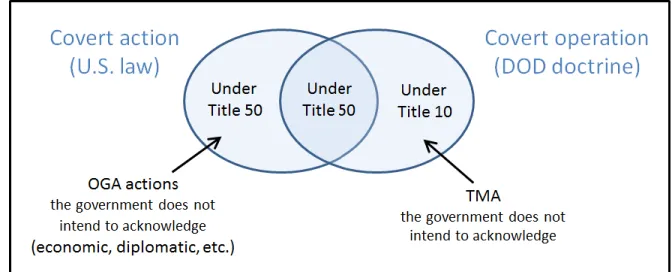
Some confusion surrounds the legal regime that governs drone strike (and other related) operations, evidenced by the common conflation of the military with Title 10 of the U.S. Code and of intelligence agen-cies with Title 50 of the U.S. Code. The subtlety that is often missed here centers on “covert actions,” which, generally speaking, are actions taken by a government that, at the time the action is carried out, are not intended to be acknowledged by the government. Title 10 governs the authorities and mechanisms of the armed forces, while Title 50 covers the authorities of the intelligence agencies, intel-ligence collection and other such secretive activities. There are important details to note with regard to the interplay between Title 10 and Title 50. Relevant to the discussion here is the fact that covert actions are covered in Title 50 (which gives a more nuanced defini-tion than that given above, see Appendix B) and may only be exe-cuted if directed by a presidential finding, but their execution is not restricted to any particular agency. As a result, the military may carry out covert actions—including covert drone strikes—under Title 50. See Appendix A for a more detailed discussion. However, military doctrine provides a definition of covert action that is in some ways broader than the definition given by Title 50. In particular, any mili-tary action that is classified as a “traditional milimili-tary activity” (TMA) is
not covert under U.S. law and therefore falls under Title 10, even though it may be doctrinally covert.
A further complication is that the military may act in support of a Title 50 OGA operation. (This was the case for the raid that killed Osama bin Laden, which was conducted covertly by military forces, although the raid was technically a Central Intelligence Agency (CIA) operation [14].) Since such an operation is not technically a DOD operation, this is a separate case from that of the military carrying out a Title 50 operation as described above. This practice serves to further blur the association of government departments and agencies with sections of the U.S. Code.
As mentioned above, some have interpreted President Obama's guidance to express a preference that drone strike operations be conducted under Title 10 as opposed to Title 50, which would mean a preference for strikes to be conducted by the military and not to be done covertly (in the Title 50 sense), although it would not limit clan-destine operations.8 While this interpretation may not be supported by the terse explanation issued by the White House [1], the guidance itself is classified and therefore unavailable for clarification and public debate. Nonetheless, the preference for drone strikes to be conducted “under Title 10” is a logical one and worth exploring, regardless of whether or not it is a part of President Obama's guid-ance.
Would there be a practical difference between the military prefer-ence and this “Title 10 preferprefer-ence”? This depends mainly on whether, in practice, the military engages in covert actions, as defined in Title 50 (as the lead, as opposed to supporting, agency). Legally it may, as was mentioned above, and the analysis below considers this case.
8. A clandestine operation is defined doctrinally as “an operation spon-sored or conducted...in such a way as to assure secrecy or concealment” [15, 16]. Military doctrine goes on to clarify: “A clandestine operation differs from a covert operation in that emphasis is placed on conceal-ment of the operation rather than on concealconceal-ment of the identity of the sponsor” [15, 16]. Appendix B discusses issues related to conducting drone strikes in a clandestine or covert manner.
Thus throughout the following, a preference for drone strike opera-tions to be conducted under Title 10 is considered as a potential option for the military preference policy. It is discussed specifically in the cases when it has different or additional implications than does the military preference in the absence of the additional Title 10 pref-erence.
If the military does not carry out covert actions, this would simplify some of the discussion below. Even so, note that the additional Title 10 preference would make for a more transparent policy. As is dis-cussed in the sections below, there are advantages to transparency, but there might also be military and strategic costs.
Speaking of transparency, even this relatively brief discussion already highlights some of the issues around President Obama's guidance being classified. The public release of what specifically it entails, assuming it is or will be implemented, would significantly increase the transparency of U.S. drone strike operations. A policy option dis-cussed below entails the release of additional information about tar-geting processes and standards, and could include the release of the guidance, or at least more information describing it. The pros and cons of that general policy option will be considered throughout this paper, alongside those of the military preference policy.
A “drone court”
A push for increased accountability and oversight has resulted in calls for a “drone court” to oversee drone strikes. Although drones have caught the public's attention, it may be more logical to expand this notion to that of a court that oversees remote targeting operations, rather than the court's purview being dependent on the weapons platform being a drone. Moreover, such a mechanism for oversight could potentially exist outside of the Judicial Branch, so even though the word “court” is used throughout the following, this option should be understood to be an oversight body, rather than a court necessar-ily. Thus the term “drone court” will be used in this report as a short-hand reference to a body that has oversight of remote targeting
operations in which people are killed, including those carried out by drones.9
A drone court could take a couple of different forms. One form that is widely discussed is the notion of a “FISA-like drone court,” referring to the court established by the Foreign Intelligence Surveillance Act (FISA). The federal judges presiding over the FISA court approve warrants permitting U.S. agencies (in particular, the National Secu-rity Agency (NSA) and the Federal Bureau of Investigation (FBI)) to collect evidence—typically electronic communications—pertaining to foreign intelligence and terrorism. The analog in the drone world would be a court in which judges authorize drone strikes or drone strike targets based on whether they are legally sound and/or in line with U.S. policy, except in cases for which time does not permit, wherein a post-strike review would be conducted. As with the FISA court, the proceedings would necessarily be classified and held out of the public view. The court could be limited to overseeing only operations outside of a “hot” battlefield, or have jurisdiction over all operations.
This option has received high-profile attention. Members of the Senate Select Committee on Intelligence including Chairman Feinstein and Senator King, as well as Senate Judiciary Committee Chairman Leahy and Ranking Member Grassley have expressed inter-est in it [17, 18, 19]. Former Secretary of Defense and CIA Director Gates expressed support for this option [20], and President Obama has stated his intention to review its merits [6]. However, a FISA-like court raises a number of significant legal and practical questions, such as whether it would be constitutional or an unprecedented intrusion into battlefield decision making and the president's prerog-atives as Commander-in-Chief.
Another alternative would be to establish an “Israeli-style drone court” to review drone strikes after they have occurred. Such a system
9. A drone court could alternatively have oversight over targeting opera-tions in general. This may include operaopera-tions that are in support of more widely varied missions than if the purview of the court was strictly over remote targeting operations.
has been in place in Israel for several years, in which, as stipulated by the Israeli Supreme Court [21],10 after a targeted killing strike takes place, an independent body carries out “a thorough investigation regarding the precision of the identification of the target and the cir-cumstances of the attack upon him.” These proceedings are not visi-ble to the public, but add some level of oversight and accountability to the process.11 Currently, U.S. government organizations that carry out drone strikes conduct internal investigations according to their own criteria (or sometimes at the direction of the relevant Congres-sional Committees).
There are many different potential ways to implement an Israeli-style court. It could evaluate strikes based on their adherence to legal or policy standards. It could release its findings to the public or not. It could investigate all targeted killings, or only those alleged to have been improper or that resulted in unintended civilian casualties. As with the FISA-like court, its jurisdiction could be restricted to opera-tions conducted outside of hot battlefields, or not. Under this system, the government could have the opportunity (or be compelled) to release—to Congress or the pubic—its findings that the target was guilty of wrongdoing. Finally, this system could also serve as an instru-ment to award monetary reparations in response to civilian casualties and other collateral damage. As with a FISA-like drone court, the Israeli-style model also raises significant legal and practical questions. The most obvious way to run a FISA-like court or an Israeli-style court would be to have it populated by federal judges. This would keep it within the Judicial Branch, although it would raise some questions about legality and whether the judges would necessarily have the appropriate national security expertise. Alternatively, either type of entity could be run as an independent oversight board within the Executive Branch, which President Obama referred to in a May 2013 speech [6], without providing further details. Another option would
10. This Israeli Supreme Court decision was a landmark one from 2006 in which the Court held that it was legal for the military to execute tar-geted killings against members of designated terrorist organizations. 11. See [22] for a description of some of the general mechanisms for
be to implement the drone court as a “national security court”—a hybrid between a federal court and a military commission—existing outside of the federal court system, that is modeled after such a pro-posal for dealing with detainees [23]. It would be overseen by civilian appointees with expertise in national security issues (see [24]). Both of these options might have significant potential, but would present a significant number of legal and practical issues that are outside the scope of this report.
Releasing further details about targeting
The Obama Administration has put forth basic information about its drone strike targeting practices in various speeches and other com-muniqués, but the demand for greater transparency continues to grow. The Department of Justice (DOJ) was recently compelled by a Freedom of Information Act (FOIA) lawsuit to release portions of a classified memorandum that put forth its legal rationale for its inten-tion to target U.S. citizen Anwar al-Awlaki [25],12 while members of the public and even of the Senate Select Committee on Intelligence have pushed for the release of additional DOJ legal memos on drone strike practices [26].
More widely, there have been calls from the UN, Congress, advocates and pundits for the release of further details on U.S. drone strike activities and practices. In the 2014 Intelligence Authorization Act, Congress proposed a provision that would have required the presi-dent to report the total number of combatants and noncombatant civilians killed or injured by drone strikes in the past year [27], although it later stripped the provision from the bill [28]. With respect to U.S. targeting processes and standards, Senators Wyden, Udall and Heinrich of the Senate Select Committee on Intelligence noted in a public letter to Attorney General Holder, “The United States' playbook for combating terrorism will sometimes include sec-tions that are secret, but the rulebook that the United States follows should always be available to the American public” [26].
12. Anwar al-Awlaki was an American citizen and a member of al Qaeda in the Arabian Peninsula who was actively involved in terrorist activities
While the primary focus of these members of Congress may be on the release of information to the American public, greater transparency to the local population in areas of drone strikes may also be desirable. For example, “in a place like Yemen,” one article notes, “although the American drone program is universally hated, many Yemenis will admit they would support targeted assassinations if there is clear intel-ligence that an individual is a senior operative within AQAP [al Qaeda in the Arabian Peninsula] and plotting a specific and imminent act of terror against Americans” [29].
As one legal scholar asserted, “The government needs a way to credi-bly convey to the public that its decisions about who is being tar-geted...are sound” [20]. While certain specifics of U.S. targeting practice and policy should remain protected in order to preserve the effectiveness of the intelligence collection methods and the strikes themselves, the release of some materials might be able to be done in a way that does not prohibitively harm U.S. national security interests. Two separate (and independent) options are considered here: the first consists of releasing more information about the targeting pro-cess itself and targeting standards, and the second consists of releas-ing post-strike details about specific targets. Such information should be released only after any potential harm to the future effectiveness of U.S. practices has been fully weighed.
Specific points of clarification of targeting processes and standards would be along the lines of:
•
How many people and from what agencies take part in the target approval process [30]•
What the intelligence review processes are like, in general [30]•
Further explanation of the requirement that a target represent an “imminent” threat [26]•
Provide more detail on what constitutes the “infeasibility” of capture for a target [26]•
What the means are for deciding, for targeting purposes, when members of al Qaeda and its associated forces are performingcontinuous combat functions, and when civilians are directly participating in hostilities
•
The level of evidence the president needs to determine that a given American may be targeted by military action [26]•
The level of evidence that is needed in order to target unknown individuals in a “signature” strike•
Provide further guidance on what types of military activities are considered TMAs, i.e., are conducted under Title 10, rather than Title 50 (see Appendix A for further discussion)•
What the Congressional review entails [30], including distinc-tions between the Intelligence and Armed Services Commit-tees' processes•
What President Obama's May 2013 guidance entails, and, to the extent that it is being implemented, what changes it has intro-duced into U.S. CT practicesThe other option is to release some of the target's terrorist affilia-tions, activities, and plans after a strike is completed, in cases when this can be done without revealing sources and methods in a way that would significantly hinder future operations and intelligence collec-tion. Information released could include:
•
Details of the target's ties to al Qaeda or an associated force [30]•
Explanation of the military necessity of the strike and why the threat posed was imminent [30]•
Explanation of why capture was not feasible [30]Currently, this type of information is only being released in extremely rare cases. For instance, some of these details were addressed in the case of al-Awlaki [16]. Note that an Israeli-style drone court would be one potential way to implement this option.
Summary of policy options
The five policy options described above are revisited in each of the remaining sections of this report. The options are summarized as fol-lows:
•
The military preference: A preference that drone strikes be car-ried out by the military. This may or may not include the addi-tional preference that drone strikes be carried out under Title 10, i.e., that drone strikes not be conducted covertly (as defined by Title 50).•
A FISA-like drone court: Establishing a process in which drone strikes are authorized by an oversight body (with exceptions for cases in which time is too short).•
An Israeli-drone court: Establishing a process that reviews drone strikes after the fact.•
Releasing further details about targeting processes and stan-dards.Military effectiveness
The remainder of this report will describe considerations for antici-pating the effects of policy options for drone strikes on military effec-tiveness (with a focus on TME), perceived legitimacy, and how those factors contribute toward the net effectiveness of combatting terror-ism. The policy options described above will serve as examples throughout these discussions.
Effects on TME, OME and SME are crucial factors to consider when evaluating any drone strike policy option. Presented below is one way to think through the effects of an option on TME, as well as consider-ations related to adversary reactions, which are relevant to all three aspects of military effectiveness.
TME
One way to anticipate effects on TME of a policy option pertaining to drone strikes is to break a single generic strike down into the tactical-level steps that it comprises, and consider the effects on each step individually. This section puts forth the following seven tactical steps to consider for drone strikes:
1. Targeting: Intelligence products are used to designate a target based on established criteria.
2. Approval of target: The appropriate authority approves of the target. This can happen in conjunction with “approval of strike” step.
3. Plan strike: The strike is planned, coordinated and decon-flicted by the forces that will conduct it, and resources are apportioned for it. The plan requires a drone based within reach of the strike area, either on land or afloat, and the use of airspace between the base and the strike area.
4. Approval of strike: The appropriate authority approves of the strike. This can happen months, days or hours before the strike is executed.
5. Conduct strike: The strike is carried out in accordance with plan, as well as the standard procedures set by the organiza-tion(s) in command and control of the operation.
6. Immediate review: A battle damage assessment (BDA) may be conducted, either by surveillance assets like a drone or by indi-viduals on the ground. The strike may be debriefed by opera-tors, and lessons learned may be extracted.
7. Longer-term review and reaction: The outcome of the strike may be reported to oversight authorities such as Congress. If there are significant concerns about the strike or its outcomes, an internal or external investigation may be conducted, and could result in disciplinary actions, acknowledgement of collat-eral damage, or changes to training or operations. Any lessons learned may also be absorbed and reflected in adaptations made to training or operations.
Note that the immediate and longer-term review steps may entail the many actions listed, or none at all.
The specifics of how each step is carried out will depend on the orga-nization(s) carrying out the operation and the details of the opera-tion itself. These steps will also vary depending on whether the strike is planned well ahead of time or arises out of a dynamic situation, such as if an opportunity for a spontaneous strike is observed that would further the objectives of the campaign, but for which the target or strike itself had not previously been approved (such as in the case of a signature strike). In the language of DOD's Joint Publication 3-60: Joint Targeting [31], these are “unanticipated” or “unplanned” targets of opportunity, respectively. In those cases, the target and strike planning and approval processes might be based on general guidelines, with a more robust review after the strike takes place. DOD doctrine supports the division of the targeting process into the generic steps. In particular, the steps are reflected to some extent in
the six steps of the Joint targeting cycle from Joint Publication 3-60 [31], which are the following:
1. End state and commander's objectives, where forces ensure that the commander's intent, the conditions that characterize the military objections have been met, and corresponding met-rics are all developed and thoroughly understood by forces. (This step is not a part of the process described above.)
2. Target development and prioritization, in which the adversary's systems of interest are analyzed to determine potential targets and those targets are developed, prioritized, nominated and approved.
3. Capabilities assessment, in which forces evaluate their own capabilities in the context of perhaps numerous anticipated target requirements and determine and analyze options for prosecuting those targets.
4. Commander's decision and force assignment, where options from the previous step are further analyzed with respect to the availa ble forces, systems and necessar y support; the commander approves the target list; and forces are tasked. 5. Mission planning and force execution, where the operations
are planned in detail, adjusted as necessary in reaction to any changing conditions, executed, and an initial BDA is completed.
6. Assessment, in which the commander evaluates the effect of the actions from the five previous steps on achieving the necessary objectives, does further BDA and recommends follow-on actions.
Several of the seven tactical steps have been expounded upon by gov-ernment officials. For example, in a 2012 speech, John Brennan, the then-chief counterterrorism advisor to President Obama and the cur-rent Director of the CIA, noted that the target approval step entails an evaluation of whether the potential target is a “significant threat to U.S. interests” and goes up to the “most senior officials in our govern-ment” [32]. This was supported by interviews with several DOD
offi-as the Departments of State and Justice review the relevant intelli-gence and approve or reject the DOD targets. The officials also noted that DOD's target approval process entails interagency legal vetting. Minimizing civilian drone strike casualties has always been a priority of the U.S. [32, 33], and President Obama recently specified that the current policy is that strikes be carried out only if there is “near cer-tainty that no civilians will be killed or injured” [6]. Furthermore, a planned strike is approved only if U.S. forces have a “high degree of confidence” in the identity of the target [32]. Immediate review includes BDA, and if collateral damage occurred then longer-term review and reaction can include analyzing the strike process and making changes based on those findings [32].
Effects of the policy options
The military preference, FISA-like drone court and Israeli-style drone court policies would each have implications on the tactical steps of a drone strike. The implications should be evaluated fully by those cur-rently involved in drone strike operations. Some initial consider-ations along these lines are the following.
For the military preference policy, note that how each of the seven tactical steps is carried out might differ depending on the agency leading the strike. Take for instance “longer-term review and reac-tion”: oversight for many DOD drone strikes is with the Congressional Armed Services Committees, while a drone strike carried out by an OGA will have oversight by the Intelligence Committees.13 Also, each organization that carries out drone strikes follows its own procedures, so the mechanics for strike planning and execution will vary depend-ing on whether strike planndepend-ing and execution are conducted by the DOD or an OGA. DOD and OGA operators and other relevant per-sonnel should be able to predict the effects the military preference policy would have on each of these steps.
13. Whether there is a substantive difference between the oversight of the different Congressional Committees is thus an important question, which publicly available information may not answer.
The necessary regional access to carry out drone strikes might also vary depending on the organization conducting the strikes. For example, OGAs apparently have a flexibility to operate in Yemen above that of the military. Indeed, as a result of a number of drone strikes that have mistakenly killed innocent people, Yemen has banned the U.S. military from conducting drone strikes, though OGA strikes reportedly continue to be conducted [13]. This example shows that the military preference policy might hinder the U.S.'s abil-ity to launch strikes in certain places.
Moreover, the drone strike process looks different depending on whether or not a strike is covert, so there would be further ramifica-tions if the military preference policy included a preference that drone strikes be conducted under Title 10 (i.e., not be conducted covertly, in the Title 50 sense). Indeed, a Title 50-covert strike requires a presidential finding for approval, whereas other strikes need not rise to this level of authorization. Oversight of a Title 50-covert strike must include the Intelligence Committees, and any investigations or acknowledgement of collateral damage could, by definition, only be internal to the government in the case of a covert strike. Again, DOD and OGA operators and other relevant personnel should be able to estimate the effects of these factors.
A FISA-like drone court would affect the target approval process, with the court itself adding an additional layer of oversight and time via its deliberations to ensure that the legal basis for the proposed action is sound. While those factors could hinder fast and streamlined execu-tion of strikes, they could potentially serve as an addiexecu-tional check against collateral damage and other unintended consequences. An Israeli-style drone court would add additional accountability and per-haps a mechanism for addressing collateral damage in the longer-term review and reaction processes. The additional accountability could potentially have a chilling effect on operations as well.
Finally, all of the policy options considered in this paper could have an effect on the cooperation of U.S. allies and other nations with U.S. drone strike operations, including, for example, drone basing and airspace usage, as mentioned in the planning step. These types of aspects of drone strike operations are discussed more holistically
The enemy's vote
“The enemy gets a vote” in the outcome of any military action, as the saying goes. Consider a single drone strike, which entails the process described above. The actions of the target and his or her network can make the steps of that process easier or harder to accomplish success-fully, and this is based in part on their understanding of U.S. methods of intelligence collection, operations and procedures. This topic affects TME, OME and SME.
For the targeting stage, the collection of intelligence to identify the target and his or her terrorist activities and affiliations is crucial, and in order to plan the strike, establishing intelligence on the local area and the target's pattern of life is necessary. All of this depends on U.S. forces' intelligence-gathering capabilities being effective in the tar-get's local area, and the target (and their network) not being able or aware enough to avoid these efforts. Intelligence-sharing agreements with U.S. allies can also provide an essential complement to these capabilities.
The strike must be conducted in accordance with the executing orga-nization's standards and procedures, and the more the target knows about these, the more they would be able to make sure those stan-dards are not met, so that the strike could not take place. For exam-ple, President Obama has said in recent years that current U.S. policy is that, “before any strike is taken, there must be near-certainty that no civilians will be killed or injured” [6]. Hence, if a terrorist can ensure that they are typically clearly in the presence of civilians, they may be able to avoid a strike. In that vein, the more terrorists know about the target approval and accountability processes for strikes, and the more robust those processes are, the more the terrorists may be able to deduce ways of making U.S. forces less inclined to act, either because a strike is not approved or for fear of repercussions under the accountability processes. On the other hand, less transparency about targeting practices could provide strategic ambiguity around U.S. actions, which could be exploited to deter potential terrorists.
Effects of the policy options
The obvious danger in the policy options that consist of releasing more information on the U.S. targeting processes and standards or individuals who were strike targets is that terrorists might be better able to thwart intelligence-gathering and strike operations based on a better understanding of these processes. This is a significant risk to the military effectiveness of drone strikes that should be taken into account when analyzing options.
As for the military preference policy, one of the main arguments for the policy is that DOD carries out operations under a relatively well-understood collection of standards and procedures. Former Director of National Intelligence (DNI) Admiral Blair noted that, “within the armed forces we have a set of procedures that are open, known for how you make decisions about when to use deadly force or not, levels of approval, degrees or proof and so on and they are things that can be and should be out” [34]. The extent to which the transparency of knowing that all drone operations must comport to those standards would make terrorists more able to avoid drone strikes is similarly a factor that should be taken into account.
Finally, the additional approval authority of a FISA-like drone court or the additional accountability measure of an Israeli-style drone court might also prevent the U.S. from acting in certain instances, which could potentially be manipulated by terrorists. The extent to which this could happen will depend on the standards of the court(s) as well as the transparency of those standards.
Summary of military effects issues
The discussion above provides a way to think through evaluating the potential effect of a policy change for drone strikes on TME by considering the various processes a single drone strike comprises. The generic drone strike steps highlight specific areas to consider within TME when evaluating policy options like the ones considered here. In order to make a concrete evaluation, input from current operators and the details of how the policy options would be imple-mented would be needed.
This section also suggests a significant area in which a policy change could indirectly impact military effectiveness at the tactical, opera-tional and strategic levels: that of terrorists' abilities to avoid being tar-geted. Indeed, the more individuals know about drone strike practices and targeting guidelines, the more they may be able to avoid meeting the criteria for a strike. Since all of the policy options pre-sented involve some degree of greater transparency for drone strike operations, all risk giving terrorists this type of advantage—particu-larly the options for releasing more information about targeting processes and standards, and targeted individuals.
Legitimacy
U.S. actions abroad are considered legitimate to a given audience to the extent that they are in line with that group's values and perceived norms. For instance, the U.S. will garner legitimacy in the eyes of the West if U.S. actions are consistent with Western values (such as transparency, and advancing personal and economic freedoms) and international law, which perhaps forms the perceived set of norms in the West. To the international community writ large, the common values might be more basic, including principles such as fairness, accountability and ethical standing, and perhaps only portions of international law form the common perceived norms. The values of the American public combine Western values with an American worldview. For example, after years as an active global hegemon, an American worldview might be more interventionist than that of the West as a whole.
This section provides a discussion of the international legal context in which drone strikes are carried out. After that, it provides the details of the “legitimacy” portion of this paper's framework by speci-fying numerous legitimacy issues, and it discusses how these issues are addressed by the five policy options.
International legal context
The U.S. CT campaign against al Qaeda and its associated forces is carried out within the context of international law. Whether drone strikes are seen to be consistent with international law forms a major
component of their perceived legitimacy throughout the world.14 This section provides background on the existing international legal framework and how the U.S. government has described its drone strike practices as fitting into that framework. It also discusses some controversies and issues that have emerged around the U.S. CT campaign and drone strikes more specifically, as well as the role that the policy options considered here could play in addressing some of those issues. The reader who is not interested in a detailed discussion of these topics may prefer to skip to the next section, where the issues identified here are briefly reiterated.
The U.S. government has stated unequivocally that the U.S. use of drone strikes is consistent with international law (see for example [6, 32, 35]).15 In particular, it has asserted that its use of drone strikes in CT operations is a legal use of force because it is in self-defense, in response to the 9/11 terrorist attacks and the continuing terrorist threat from al Qaeda and its associated groups (see, for instance, [32, 35, 36]).16 Indeed, on September 12, 2001, the United Nations
14. This is true even though international law has significant areas of con-troversy and ambiguity. For example, the Geneva Conventions—consist-ing of four Conventions and three Additional Protocols—form the basis for important aspects of international law. Even so, many countries have not ratified one or more of the Additional Protocols, including the U.S., which has not ratified the first and second of the Protocols. However, some articles from the Protocols have been deemed customary law, and thereby apply to all nations.
15. The U.S. government has also stated unequivocally that its drone strike practices are consistent with domestic law [6, 32]. However, this report focuses primarily on international law.
16. The UN Charter permits the use of force against a threat within another nation's borders under three circumstances: for self-defense (including collective self-defense), with the consent of the host nation, or in accor-dance with a Security Council resolution. In the case of self-defense, the host nation must be unable or unwilling to act against the threat.
Security Council passed a resolution condemning the 9/11 attacks and noting nations' right to self-defense [37, 38].17
The U.S. contends that it is involved in an armed conflict with al Qaeda and its associated forces [6, 32, 36, 39]—specifically, what some term a 'transnational' Non-International Armed Conflict (NIAC).18 This assertion is not without controversy, however. For instance, the International Committee of the Red Cross (ICRC) takes issue with the classification of all U.S. actions against al Qaeda and its associated forces in this way; its position is that each “situation of vio-lence” should be considered separately and classified as an Interna-tional Armed Conflict (IAC), a NIAC, or not an armed conflict on a case-by-case basis, and that situations of violence in the U.S. CT cam-paign have fallen under each of these categories [43].
International Humanitarian Law (IHL) governs the use of force in armed conflicts. IHL stipulates, for example, that individuals are tar-getable in an armed conflict if they are members of the armed forces of a party to the conflict or additionally, in the case of a NIAC, if they are members of an organized armed group that is a party to the
17. On the domestic front, on September 14, 2001, the U.S. Congress passed the Authorization for the Use of Military Force (AUMF), which permitted U.S. military action against the individuals, organizations and nations that perpetrated or aided in the 9/11 attacks, without geo-graphic or temporal limitations.
18. International law has differing standards for the use of force within and outside of armed conflicts, and also distinguishes between International Armed Conflicts (IACs) and NIACs. A conflict is an IAC if it is between nations or is a population defending its right of self-determination against “colonial domination and alien occupation and...racist regimes” [40]. Outside of these “national liberation” cases, a conflict is a NIAC if one or more of the main parties to the conflict is an organized non-state group (meaning that the group has “...certain command structure and the capacity to sustain military operations” [41], and the conflict is pro-tracted and is of a level of intensity above that of “internal disturbances and tensions, such as riots” [42] (see also [41]). (The notion of a “tran-snational” NIAC is a newer one.) A conflict is not an armed conflict if it does not fall into these two categories, i.e., if violent events are sporadic or rise only to the level of intensity of a disturbance, or parties to the conflict are not sufficiently organized.
conflict and have a continuous function to directly participate in hos-tilities [44, 45]. In addition, civilians may be targeted if they are directly participating in hostilities, subject to meeting specific criteria regarding the nature of their actions [44, 45].19 Any such targeting or use of force is further subject to the principles of military necessity, distinction and proportionality under IHL.20
The Obama Administration has argued that its targeting practices conform to these principles [32], and has outlined further aspects of U.S. targeting to make the case that it is in line with IHL and to some extent with International Human Rights Law (IHRL), which includes a more stringent set of standards for the use of force that applies even outside of armed conflicts.21 In particular, IHRL allows individuals to be targeted with force only if they provide an imminent and substan-tial threat to life, and arrest is not reasonably possible.
The Obama Administration has provided some clarification as to who qualifies as a targetable member of al Qaeda and its associated groups. In a 2012 speech [46], then-DOD General Council Jeh Johnson stated:
An “associated force,” as we interpret the phrase, has two characteristics to it: (1) an organized, armed group that has entered the fight alongside al Qaeda, and (2) is a
co-bellig-19. The topic of direct participation in hostilities is nuanced and an area of debate which is beyond the scope of this paper.
20. Necessity is the requirement that force only be used lawfully and to the level needed to achieve the military objective. The principle of distinc-tion speaks to distinguishing between legitimate military targets and protected entities (such as civilians who are not taking part in hostilities, or civilian infrastructure): attacks must attempt to limit damage to legit-imate targets as is possible, and armed forces should attempt to distin-guish and separate themselves and their fixtures from the civilian population. Proportionality requires that collateral damage be limited to a level “proportional” to the military objective sought. In addition, some cite the principle of humanity, which requires the use of weapons that do not inflict unnecessary suffering.
21. These aspects of IHRL can be considered regulation on law enforce-ment.
erent with al Qaeda in hostilities against the United States or its coalition partners. In other words, the group must not only be aligned with al Qaeda. It must have also entered the fight against the United States or its coalition partners.
Harold Koh, then-legal advisor to the Department of State, provided that U.S. forces' criteria for determining individual membership in al Qaeda or an associated group “includes, but is not limited to... rele-vant evidence of formal or functional membership, which may include an oath of loyalty, training with al-Qaeda, or taking positions with enemy forces” [36].
Harkening back to IHRL standards, lethal force is used only if the target “poses a continuing, imminent threat to U.S. persons,” and only then when capture is not feasible and there are “no other reason-able alternatives” to address the threat posed [47]. Attorney General Holder spoke to the notion of the feasibility of capturing a terrorist suspect in the case when that suspect is a U.S.citizen, although that criteria could potentially apply to suspects of any nationality [35]:
Whether the capture of a U.S. citizen terrorist is feasible is a fact-specific, and potentially time-sensitive, question. It may depend on, among other things, whether capture can be accomplished in the window of time available to prevent an attack and without undue risk to civilians or to U.S. person-nel...In that case, our government has the clear authority to defend the United States with lethal force.
When he was the chief counterterrorism advisor in the Obama Administration, John Brennan described aspects of targeting pro-cesses and standards [32]. A potential target and suspected al Qaeda member is vetted to determine lawfulness, and in that case presented to “the very most senior officials in our government” for evaluation. Interviews the author conducted with several DOD officials con-firmed that the target nomination meetings are lively interagency interactions at an extremely high level. Brennan noted that one crite-rion considered during the target approval process is whether the individual poses “a significant threat to U.S. interests,” for instance is an operational leader, is making preparations to attack U.S. interests, or “possesses unique operational skills that are being leveraged to plan an attack” [32].
Once the target has been approved, a strike is executed only “if we have a high degree of confidence that the individual being targeted is indeed the terrorist we are pursuing” [32], if there is a “near cer-tainty that no civilians will be killed or injured” [6], and if the country the strike would take place in either consents or is unwilling or unable to address the threat (see, for instance, [32, 35]). After the strike, forces utilize “the full range of...intelligence capabilities” to deter-mine if the target was killed as well as collateral damage [32]. If inno-cent civilians were harmed, Brennan notes that U.S. forces review their actions and strive to make improvements. Moreover, operating forces “regularly” report to Congress and Congressional Committees on strikes carried out [32].
Legality issues
There is significant controversy in the international community over the legality of the U.S.'s CT campaign. Some of the issues of conten-tion might be able to be alleviated by further clarificaconten-tion of the U.S.'s legal position, though one military attorney noted the current con-text of a lack of consensus around even the basic framework of the law [48]:
...[The] overt disagreement on the answer to the legality question masks that the various participants in the discus-sion are utilizing wholesale different methodologies and talking past each other in the process. Some speak in terms of how the United Nations Charter governs the overarching question of legality; others claim that the Charter provides only some of the framework; and still others posit that the Charter does not meaningfully apply at all. This divergence leads to correspondingly varied answers as to what extent the law of armed conflict (LOAC) or human rights law applies to the use of force through the United States engag-ing targets in Pakistan. These answers range from the char-acterization of the conflict in Pakistan as a war and UAS [Unmanned Aerial System] strikes as “just the killing of the enemy, wherever and however found” to the same strike being labeled extrajudicial killings, targeted assassination, and outright murder.
A UN Special Rapporteur noted that the U.S. use of drone strikes out-side areas of active hostilities “gives rise to a number of issues on