warwick.ac.uk/lib-publications
A Thesis Submitted for the Degree of PhD at the University of Warwick
Permanent WRAP URL:
http://wrap.warwick.ac.uk/id/eprint/87285
Copyright and reuse:
This thesis is made available online and is protected by original copyright.
Please scroll down to view the document itself.
Please refer to the repository record for this item for information to help you to cite it.
Our policy information is available from the repository home page.
i
Adaptive social e-learning for Saudi Students:
virtual project and group formation
recommendation acceptance
By
Afaf Alamri
A thesis submitted in partial fulfilment of the requirements for
the degree of
Doctor of Philosophy in Computer Science
Supervisor: Dr A. I. Cristea
University of Warwick, Department of Computer Science
October 2016
ii
Contents
Contents
Contents ... ii List of Figures ... iv List of Tables ... v Acknowledgments ...vii Declaration ... viii Publications... ix Abstract ... x Abbreviations ...xii Chapter 1 ... 1 Introduction... 11.1 E-learning, and e-learning in Saudi Arabia ... 1
1.2 Problems with e-learning and their reflection upon Saudi Arabia ... 2
1.2.1 Lack of acceptance ... 2
1.2.2 Lack of personalisation... 3
1.2.3 Lack of adequate group and project collaboration support ... 4
1.3 Research Questions ... 6
1.4 Research Objectives ... 6
1.5 Thesis Outline ... 7
1.6 Conclusion ... 8
Chapter 2 ... 9
Background and Related Work ... 9
2.1 Introduction ... 9
2.2. Traditional Education and E-learning in Higher Education ... 9
2.3. Adaptive Educational Hypermedia ... 12
2.4. Virtual Teams and Virtual Communities for Project-Based Learning in Higher Education ... 16
2.5. Overview of e-learning in Saudi Arabia Jusur ... 25
2.6. Theoretical Background ... 28
Chapter 3 ... 40
Methodology ... 40
3.1 Introduction ... 40
3.2 Literature Review ... 40
3.3 Case Studies and Evaluations ... 40
3.4 Discussion on the Research Sample Choice ... 43
3.5 Analysis and Results ... 44
iii
3.5.2 Parametric and Non-parametric Statistics ... 44
3.5.3 Data Analysis ... 45
3.5.4 Assessment of Instrument Reliability ... 46
3.5.5 Limitations of the methodology... 48
3.6 Ethical Considerations ... 49
3.7 Overview of the Case Studies ... 49
3.7.1 First Case Study: Comparison of Existing Systems ... 54
3.7.2 Second Case Study... 54
3.7.3 Third case study: Collecting the requirements for the implementation system ... 54
3.7.4 Fourth Case Study: Testing the Implemented Systems (Usability) ... 54
3.7.5 Fifth Case Study: Evaluation Collaborative Recommender System ... 55
3.8 Project phases for software development using the Waterfall Model... 55
3.9 Summary ... 56
Chapter 4: ... 58
Social Personalised e-learning, versus Traditional e-learning and Classroom Learning ... 58
4.1 Introduction ... 58
4.2 Hypotheses ... 59
4.4 Case Study Design ... 61
4.5 Results ... 65
4.6 Discussion ... 81
4.7 Conclusion ... 84
Chapter 5: Design and Implementation of a Collaborative Recommender System for Online Group Projects ... 86
5.1 Overview ... 86
5.2 Hypotheses ... 87
5.3 Investigating the needs of students in relation to recommended project groups ... 88
5.4 Experimental Setup ... 89
5.5 Results ... 90
5.6 A model for the Recommendation Process ... 98
5.7 The System Architecture of Topolor 3 ... 99
5.8 Implementation... 101
5.9 Discussions ... 113
5.10 Conclusion ... 116
Chapter 6: Evaluation of Collaborative Recommender System for online Group Projects ... 118
6.1 Overview ... 118 6.2 Experimental Setup ... 119 6.3 Results ... 127 6.4 Discussion ... 143 6.5 Summary ... 149 Chapter 7: Conclusions ... 152
iv
7.2 Answer to Research Questions and Implementation of Objectives ... 153
7.3 Contributions ... 159
7.4 Study limitations and further studies ... 162
7.5 Conclusion ... 164
References ... 165
APPENDIX A1: ... 173
Social Personalised e-learning, vs Traditional e-learning and Classroom Learning ... 173
APPENDIX B1 ... 192
System Requirement Survey ... 192
Investigation Saudi Arabia users’ cultural characteristics ... 192
APPENDIX C ... 201
System Requirement Survey ... 201
APPENDIX D ... 206
Investigation the usability ofTopolor 3 system ... 206
APPENDIX E ... 209
Investigation the acceptance of Topolor2 System ... 209
APPENDIX F ... 220
Investigation the acceptance of Topolor3 System ... 220
List of Figures
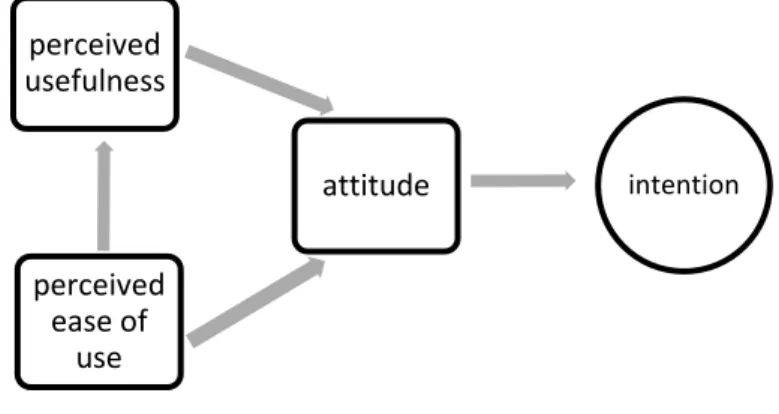
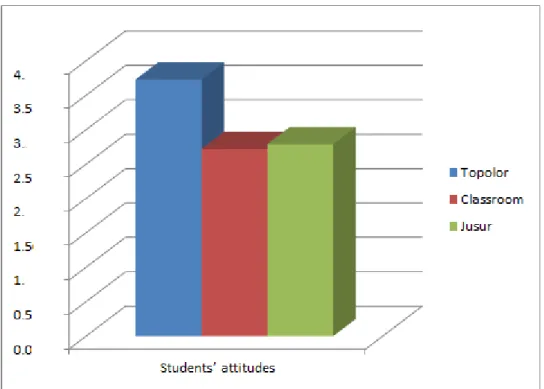
Figure 1: TAM, the Technology Acceptance Model ... 35Figure 2: Students’ Attitudes ... 70
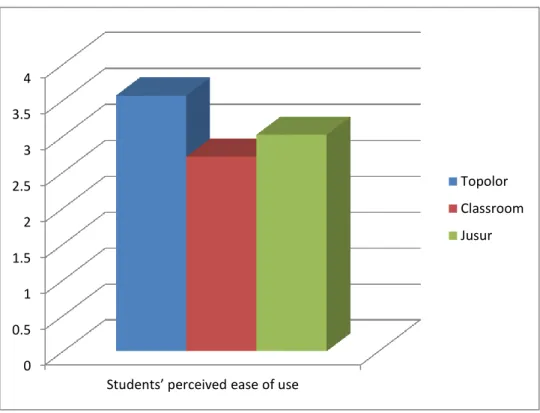
Figure 3: Students’ perceived ease of use ... 71
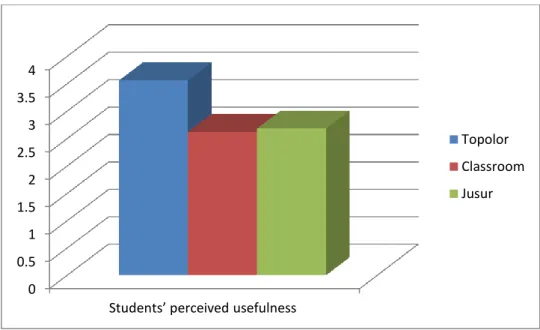
Figure 4: Students’ perceived usefulness ... 72
Figure 5: Students’ perceived intention of further use ... 73
Figure 6: Recommending the project topic ... 95
Figure 7: Recommending group members ... 96
Figure 8: Recommending Communication tools ... 96
Figure 9: Recommending Tasks ... 97
Figure 10: Web 2.0 tools to activate in group projects ... 98
Figure 11: Topolor 3 Framework ... 99
Figure 12: The System Architecture of Topolor 3 ... 100
Figure 13: Project Ideas and Taking a Test ... 107
Figure 14: Recommended Students ... 108
Figure 15: Starting a Group ... 108
v
Figure 17: Creating Project Tasks ... 110
Figure 18: Viewing Tasks ... 110
Figure 19: List of Tasks ... 110
Figure 20: Chat group ... 111
Figure 21: Social toolset ... 112
List of Tables
Table 1: Students enrolled in Saudi universities Adapted from [31]. ... 10Table 2: Overview of the Topolor 1 and Topolor 2 Systems. ... 19
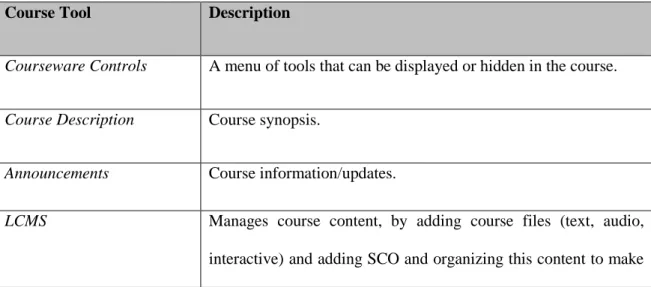
Table 3: Overview of Jusur LMS Tools ... 26
Table 4: Overview of the methodology ... 49
Table 5: Development of the questionnaire ... 63
Table 6: Demographics of the respondents of the questionnaire ... 66
Table 7: Normality Test ... 66
Table 8: Friedman Test: Students’ Attitudes ... 70
Table 9: Friedman Test_ Students’ perceived ease of use ... 71
Table 10: Friedman Test Students’ perceived usefulness ... 73
Table 11: Friedman Test: Students’ perceived intention ... 74
Table 12: Students' feedback ... 74
Table 13: Overview Results on the Acceptance of Social Personalised e-learning, versus Traditional e-learning and Classroom Learning ... 76
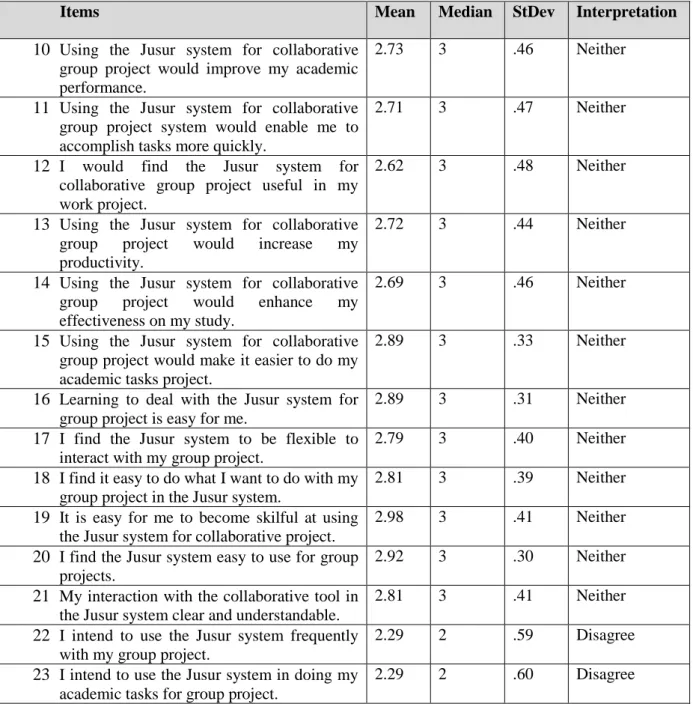
Table 14: Results Using Jusur System for a Collaborative Project. ... 79
Table 15: students’ feedbacks about using Jusur system for a collaborative project ... 79
Table 16 Gender of the students ... 90
Table 17 Students' level of study ... 91
Table 18: the scores and interpretation for all questions... 93
Table 19: Results of Hypothesis 3 ... 94
Table 20: Overview of Topolor 2 and Topolor 3 systems ... 102
Table 21 Development of the questionnaire ... 123
Table 22: Usability of the Topolor 3 (H11) ... 127
Table 23: Normality Test for Topolor 2 ... 128
Table 24 : Normality Test for Topolor 3 ... 128
Table 25: Results of Hypothesis 2 ... 130
Table 26: Scores of learner perceived usefulness, ease of use and students’ intention for Topolor 2 and Topolor 3 ... 140
Table 27: T-test for Topolor2 and Topolor3 ... 140
vi
Table 29: Actions recorded ... 143 Table 30: Cultural features in Topolor3 ... 145
vii
Acknowledgments
All Praise be to Allah (God), the most gracious most merciful. I praise Him and seek His aid and forgiveness. Without the help of Allah the completion of this thesis would have been impossible.
I would like to acknowledge The University of Warwick and Department of Computer Science in the United Kingdom for all scientific assistance.
I would like to express my sincere gratitude to my supervisor Dr Alexandra I. Cristea, for here unfailing help, patience and dedication.
I would like to acknowledge a debt of gratitude to my advisors, Dr Mike Joy and Dr Jane Sinclair.
A special thanks for my colleagues in study Maram, Alaa, Shi and Suncica for their assistance during my study and kindness during our study.
I would like to acknowledge a debt of gratitude that could never be repaid to my parents.
My profound gratefulness goes to my beloved my husband Hamad, for supporting my decision to follow my PhD dream with enormous encouragement. I will not ever forget his great help; times when he was waiting with our little ones for me outside the library are still vivid in my memory. His caring and patience has been the motivator for my persistence. I would like also to thank my children, Rama and Rakan, for their patience and understanding when I could not play with them because I was busy with my research.
I also extend my heartfelt thanks to all my brothers and sisters in Saudi and friends in UK for supporting me during my study.
viii
Declaration
This thesis is submitted to the University of Warwick in support of my application for the degree of Doctor of Philosophy. I hereby declare that, except where acknowledged, the work presented in this thesis has been composed by myself, and has not been submitted elsewhere for the purpose of obtaining an academic degree.
Afaf Alamri
Signature: ____Afaf__Alamri____________________________
ix
Publications
1. Al-Alamri, A.S.,A.I. Cristea. Al-Zaidi, M.S (2014). Saudi Arabian Cultural Factors and Personalised E-Learning. In: International Conference on Education and New Learning Technologies (EDULEARN14), pp. 7114-7121. ISSN: 2340-1117, 7th-9th July, 2014, Barcelona, Spain.
2. Al-Alamri, A.S. and A.I. Cristea. Al-Zaidi, M.S (2014). The Acceptance of Social Personalised Versus Static Web-Based Education by Saudi Students. In: International Conference on Education and New Learning Technologies (EDULEARN14), pp. 3145-3153. ISSN: 2340-1117, 7th-9th July, 2014, Barcelona, Spain.
3. Al-Alamri, A.S. and A.I. Cristea. (2016). Designing a Collaborative Group project Recommender for an e-Learning System. in SAI Computing Conference 2016, to be held from 13-15 July 2016 in London, United Kingdom. (Accepted).
4. Al-Alamri, A.S. and A.I. Cristea. (2016). a three-way comparison: Social Personalised e-learning, versus Traditional e-learning and Classroom Learning. (To be submitted to the Journal of e-Learning and Knowledge Society).
5. Al-Alamri, A.S. and A.I. Cristea. (2016). Evaluation Collaborative Recommender System for online group Projects. (To be submitted to the British Journal of Education, Society & Behavioural Science(BJESBS)).
x
Abstract
With the aid of information and communication technology, e-learning has become the latest model in education. Saudi Arabian universities are currently applying the idea of e-learning to facilitate life-long learning and provide new educational opportunities for students. In particular, e-learning is being strongly supported by the Saudi Ministry of Education. Therefore, the Jusur LMS was created, in order to manage the e-learning process. However, a 'one size fits all' approach, whilst not ideal in general, is especially not appropriate for the Saudi culture. Moreover, there is limited support for students to satisfy their individual needs, especially for implementing collaborative projects. To better understand the Saudi students’ needs, this research focuses on the acceptance of the social personalised e-learning, versus static e-learning and traditional education for Saudi university students, and how the former can cater to Saudi education, instead of offering an identical delivery to all students, regardless of students’ interests, preferences, backgrounds, or knowledge. The results from a relatively large-scale case study at Taibah University point towards Saudi students accepting more easily social personalised e-learning, than static e-learning or classroom education. Additionally, the results revealed that Saudi students cannot be said to perceive usefulness, ease of use, and intention of further use towards the traditional collaborative e-learning system they use (the Jusur system) for group project work.
Furthermore, this study analyses the current level of satisfaction and the needs for collaborative team projects, with the aim of predicting further requirements for social personalised e-learning systems. It investigates the needs of the students for best ways for recommending the project, group members and communication tools for the group project, aiming at collecting the requirements for the implementation of the research environment. Additionally, it proposes a framework for recommendation of collaborative project work to function within a social e-Learning System. Additionally, it proposed the architecture of the system. It investigated Saudi Arabian higher education students’ acceptance of a recommended virtual project and recommended group formation for e-learning versus traditional project- and team-formation methods for e-learning. The comparison is based on the well-known technology acceptance model (TAM), the theoretical
xi
framework which was used for designing the data collection from students. The results of the case study have indicated that a recommended virtual project and recommended group formation for e-learning is more acceptable to Saudi students than current e-e-learning methods.
Keywords— Static e-learning, Social personalised e-learning, recommended project, group members recommendation, task recommendation, communication tools recommendation.
xii
Abbreviations
AEH
Adaptive Educational Hypermedia
AEHS
Adaptive Educational Hypermedia System
AH
Adaptive Hypermedia
AHAM
Adaptive Hypermedia Application Model
AHS
Adaptive Hypermedia System
ALEF
Adaptive LEarning Framework
AM
Adaptation Model
ARP
Adaptation Rule Parser
ATR
Action TRacker
BI Behavioural intention
CM Communication tools Model
CM Course model
DM
Domain Model
EDM
Educational Data Mining
FAME
a model-based Framework for Adaptive Multimodal Environments
GM
Group Model
HCI
human-computer interaction
ICT
Information and Communication Technology
IDV Collectivism vs. individualism indexIS information systems
ITS
Intelligent Tutoring Systems
K.S Kolmogorov-Smirnov test
LAOS
Layered WWW AH Authoring Model and their corresponding Algebraic
Operators
LCMS
Content Management System tool
LM
Learner Model
xiii
MOT
My Online Teacher Adaptive Hypermedia Authoring System
MOT2.0
My Online Teacher 2.0 Social Web Adaptive Hypermedia Authoring and
Delivery System
NCeDL National Centre for e-learning and Distance Learning
OLM
Open Learner Model
OSLM
Open Social Learner Model
PDI
Power
‐
distance index
PHP
Hypertext Preprocessor, an open source general-purpose scripting language
that is especially suited for web development and can be embedded into
HTML
PM Project Model
PM
Presentation Model
Q&A
Question and Answer
RM The recommendation model
RM
Resource Model
SDT
Self-Determination Theory
SLAOS
Social LAOS: Social Layered WWW AH Authoring Model and their
corresponding Algebraic Operators: A framework for authoring of Adaptive
Hypermedia
SN
Social Networking
SPADEL
Social Personalised ADaptive E-Learning framework
SUS
System Usability Scale
TAM Technology acceptance model
TM Task Model
TRA Theory of reasoned action
UAIUncertainty avoidance index
1
UI
User Interface
UM
User Model
UM
User Model
1
Chapter 1
Introduction
1.1
E-learning, and e-learning in Saudi Arabia
With the aid of information and communication technology, e-learning has become the latest model in education [1]. Many universities are currently applying the idea of e-learning to facilitate life-long learning and provide new educational opportunities for students. The key advantages of e-learning are; to make education available for as large groups of students as possible; the students can access course material whenever they want and from any location; it encourages learners to take responsibility for their education; it supports highly interactive discussions, and students can contribute in dedicated discussion forums; it allows students to collaborate and communicate with their instructors and classmates through e-mail at any time [2]. E-learning can expand access to higher education, to meet the education and training needs of the younger generation, as well as provide education to under-served populations. E-learning can also alleviate capacity constraints that have resulted from a surge in student numbers in Saudi Arabia. E-learning has the potential to improve and introduce change to the Saudi system of higher education, by augmenting traditional education or by supporting the establishment of part-time or distance education programs [3]. As such, e-learning has become a priority for higher education institutions in the country. Saudi universities are on their way to applying e-learning, in order to provide high-level educational programmes.
The Ministry of Higher Education has considered the requirements for applying e-learning systems, and the creation of online resources, because traditional means of education cannot compete with the complexities raised in a rapidly changing society, such as Saudi Arabia [3]. Accordingly, a national plan for the utilisation of Information and Communication Technology (ICT) was launched in 2005. The plan urges “the implementation of web-based Education and distance learning and all their
2
prospective applications in higher education” [4]. In order to fulfil this ideology, the National Centre for e-learning and Distance Learning (NCeDL) was established, to fulfil the following goals:
• to develop infrastructure for web-based education;
• to collaborate with higher education, government and corporate partners to solve complex e-learning problems;
• to provide complete e-learning solutions;
• to develop rules and regulations governing e-learning programs in Saudi Arabia; and
• and to establish awareness of e-learning programs [5].
Moreover, the NCeDL launched a group of projects that aim to effectively contribute in developing this kind of education and benefit from its enormous possibilities, in developing the shape and content of education. Examples of these projects include ‘Jusur’ [6].
1.2
Problems with e-learning and their reflection upon Saudi Arabia
1.2.1
Lack of acceptance
However, there are many stories of failure of e-learning projects. One of the main reasons is that the success of such systems depends heavily on end-users’ acceptance [7]. According to Davis (1989), the acceptance of a new technology by an end-user is based on two factors, as follows:
Perceived Usefulness – refers to the degree to which a person believes that using a particular system would enhance his or her job performance;
Perceived Ease of Use – refers to the degree to which a person believes that using a particular system would be free of effort.
These two beliefs both influence users’ attitudes towards using information systems, which influences actual acceptance. Moreover, many influencing factors should be considered, before adopting an e-learning system, to build a well-designed, easily accessible, interactive and effective system. Prior studies [8], [9], [10], [11] presented many factors that have an effect on an e-learning. Some of these
3
factors are linked to the system itself and others are linked to the culture [12], as it will be discussed in this research (Chapter 2). There is a global movement in institutions of higher education in various countries to implement successful e-learning, including Saudi Arabia. This has caused a new phase in the globalisation of education [13], [14]. The majority of education software companies localise their products to the local preferences of their target countries. The process of localisation adapts user interfaces to local languages, as well as, e.g., date and time formats [15]. This has caused problems for e-learning, in that its content is local, but the instructional model is international, without the model of education being adapted to fit the learning style or the culture [13].
Aim 1: To understand how the acceptance of Saudi students towards the various aspects of e-learning is essential, in order to improve them.
1.2.2
Lack of personalisation
According to Hofstede [16], national culture refers to “the collective programming of the mind which distinguishes the members of one human group from another”. He also stated that the cultural environment of an individual has an impact on the person’s thinking, feeling and working style. As culture affects the manner in which people interact in general, culture will also impact on the way in which people will interact with computers [17]. The communication between the system and the user is required to be interactive, in order to achieve tasks. However, e-learning is an activity greatly affected by cultural factors, such as the content and the presentation style of the teaching curriculum, or the education style of an individual, the relationship between student and teacher, collaborative learning, social presence and interaction [18].
Education in Saudi Arabia is strongly affected by Islamic religious and culture traditions, such as separation of the genders. Imitation of e-learning styles from overseas countries might thus not be
4
appropriate to Saudi students. E-learning localisation is the process of adapting a website, to make it accessible, usable, understandable, and culturally suitable for target audiences. E-learning can be designed for a particular culture, to serve the needs of a particular audience, or specifically for cross-cultural participation, to serve the needs of an international audience. The user’s cross-cultural perspective should be taken into account when designing e-learning, to be more attractive and to retain more users [19].
Nevertheless, a weakness of traditional e-learning is that it offers an identical delivery for all students [20]. The content of a page would look almost the same (‘one-size-fits-all’) regardless of students’ characteristics. In recent years, it has become obvious that the ‘one-size-fits-all’ approaches are neither efficient nor effective for the different students. However, for most higher education establishments, students would have different backgrounds (e.g., come from different cultures), have different knowledge, interests, and preferences [21]. For example, an environment that is appropriate for some students (advanced students) may be inappropriate for other students (beginner students). Aim 2: To understand how Saudi cultural issues that affect learning can simplify the design of more acceptable personalised e-learning systems targeted at Saudi Arabian society, and to design personalised e-learning, targeted at Saudi culture.
1.2.3
Lack of adequate group and project collaboration support
Collaborative tools can motivate students to creating active learning/project environments, with the collaboration and feedback from their peers [22]. Working in teams can encourage students to engage in focussed learning activities with other students. It increases the students’ motivation students spend more time in studying and solving difficult problems, and communication in collaborative projects can lead to an increase in learning products [23]. However, although research on collaborative learning has generally revealed that student interaction can improve team performance and individual learning, these positive outcomes do not always occur [24]. There are many problems with group
5
collaboration, which ultimately impact on the effectiveness of collaborative learning or project work. The most critical problem is poor interaction, where some members may not contribute in a discussion at all, and others may contribute in a limited way; or members who are too active make it hard for others to participate [25]; or members whose contribution is unrelated to the topic, or work [26]. Efficient interaction is a vital factor in collaborative learning. If the students become apathetic, they tend to not participate in the required task [27]. Furthermore, the lack of clear personal responsibility is another problem that is limiting the advantages of group collaboration projects. Numerous related issues triggered by this are, for example, not meeting deadlines, not completing the given tasks, etc. [6]. The main reason for these problems is that collaborative systems do not offer the personalisation features required to meet to the student needs. In fact, some students struggle with communication tools and interpersonal skills or have poor knowledge related to the topic of the project, and this influences on the outcome of a project. For example, some students have little collaboration experience, thus they need a great deal of support. Students tend to have different interests, preferences, skill, experience, backgrounds or even knowledge. Therefore, allocating the topic of the project, the group formation, the tasks and communication tools utilised during a group collaboration project, should be considered as a personalisation process. The aim is then to allocate individuals to a project, to a group and to specific tasks. A well-defined task structure influences positively the efficiency, effectiveness, and satisfaction level of global virtual teams [28]. Individual responsibility and commitment towards the collaborative work are the vital factors for creating trust among group members [29].
Looking into what is needed to enhance project-based collaboration, most research about adaptive systems for collaborative learning support (ASCLS) systems has focused on the group formation process, which is determined systematically, based on the students’ profiles, and the information sharing process in groups. However, there have been very few studies about adaption for project task management.
Aim 3:, To address the gaps in prior research, and propose an approach for using a student-centred method in project-based e-learning; to support the student in decisions regarding project definition,
6
based on students’ knowledge and skills, and group membership, based on student profile characteristics.
1.3
Research Questions
In order to achieve the aims resulting from the issues described above, research questions have been formalised, as follows.
The main umbrella research questions are the following.
R1: Is Saudi students’ acceptance of social personalised e-learning higher than their acceptance of the traditional e-learning and classroom learning?
R2: Do Saudi students demonstrate acceptance of traditional collaborative e-learning for group project work?
R3: Are personalised virtual project and team formation methods for e-learning more acceptable to Saudi students than traditional project and team formation methods?
1.4
Research Objectives
To achieve the above research questions, the following objectives are to be addressed.
O1: Review the fields of adaptive social e-learning, adaptive collaborative learning environments, and cultural and virtual project and team formation, to investigate their effect on the e-learning process, and more specifically, on the virtual project process (project formation process and project completion process) for e-learning.
O2: Explore Saudi students’ acceptance of social personalised learning versus the traditional e-learning system and classroom e-learning.
O3: Explore Saudi students’ acceptance of traditional collaborative e-learning for group project work.
O4: Explore the cultural characteristics of Saudi Arabian students using Hofstede’s cultural value dimensions.
7
O5: Explore the needs of the students in relation to the recommended project group membership, the recommended task and the recommended communication tools for the group project, with the aim of determining what is necessary for implementation of the recommendation environment.
O6: Propose a framework for recommendation of collaborative projects within e-learning. Based on this framework, the architecture of the system to be implemented will be defined and implemented.
O7: Investigate Saudi Arabian higher education students’ acceptance of a recommended virtual project and recommended group formation for e-learning versus traditional project- and team-formation methods for e-learning.
1.5
Thesis Outline
Chapter One, the current chapter, defines the problem statement, explaining the situation of e-learning in Saudi Arabia. From this, the aims and research questions of the current thesis are derived, as well as the objectives necessary in carrying out this research.
Chapter Two presents the background literature and the related work. First, it presents an overview of traditional (classroom) education as well as traditional e-learning in higher education. Subsequently, it introduces the state of the art in adaptive educational hypermedia (AEH), presenting its advantages and limitations. More recent developments related to virtual teams and virtual communities for project-based learning in higher education are presented, as well as their advantages and limitations. From this, suggestions emerge about the questions and techniques that this research aims to address. Finally, it overviews several theoretical backgrounds used in the thesis, namely Hofstedes cultural dimensions theory, the technology acceptance model theory and the usability theory.
Chapter Three introduces the research methodology for this thesis. Moreover, it presents the structure of several of the experiments and details the data collection approaches and processes. Chapter Four reports on experimental results, which aimed to explore Saudi students’ acceptance of a social personalised e-learning, versus the traditional e-learning and classroom learning,andto further explore Saudi students’ acceptance of the traditional collaborative e-learning for group project work.
8
Chapter Five presents a case study investigating the cultural characteristics of Saudi Arabian students, by using Hofstede’s cultural value dimensions. Moreover, it reports on a case study investigating the needs of the students in relation to the recommended project group membership, the recommended task and the recommended communication tools for the group project, with the aim of determining what is necessary for implementation in the recommendation environment. Additionally, the Chapter describes the design, a framework for recommendation of collaborative projects for e-learning, the architecture of the Topolor 3 system and the system implementation.
Chapter Six reports on further case studies, as follows. It presents a case study investigating the usability of collaborative recommender systems for online group projects. It introduces a case study evaluating the design features of a collaborative recommender system for online group projects using cultural dimensions. It presents a case study evaluating the acceptance of a collaborative recommender system for online group projects versus traditional project- and team-formation methods for e-learning for Saudi Arabian higher education students.
Finally, Chapter Seven concludes this thesis through a review of the overall research achievements, and its contributions. It also highlights research limitations and proposes future work that could be undertaken in this area.
1.6
Conclusion
This chapter has introduced the research in this thesis, by giving a brief account of e-learning in general, and in Saudi Arabia in particular. The chapter has also introduced the problems encountered with e-learning in general, and in Saudi Arabia, in particular, as well as the aims, research questions and objectives towards carrying out this research. The chapter has finally presented the overall structure of this thesis.
9
Chapter 2
Background and Related Work
2.1
Introduction
The main purpose of the work presented in this chapter is to address the study objective O1: ‘Review the fields of adaptive social e-learning, adaptive collaborative learning environments, and cultural and virtual project and team formation, to investigate their effect on the e-learning process, and more specifically, on the virtual project process (project formation process and project completion process) for e-learning’, which provides the theoretical foundation of the thesis.
The remainder of the chapter is organised as follows. First, Section 2.2 presents an overview of traditional education and traditional e-learning in higher education. Second, Section 2.3 reviews the related work in adaptive educational hypermedia (AEH). Third, section 2.4 presents the more recent developments related to virtual teams and virtual communities for project-based learning in higher Education. Section 2.5 introduces an overview of e-learning in Saudi Arabia, and of Jusur. Finally, section 2.6 presents an overview of several theoretical backgrounds, namely Hofstede’s cultural dimensions theory, the technology acceptance model and usability theory.
2.2.
Traditional Education and E-learning in Higher Education
2.2.1
Traditional Classroom Education in Higher Education
Traditional education takes place in a university environment with classrooms of multiple students learning together with a trained, certified teacher of the subject. The method of education (especially, how learners interact with teachers) in these academies can be considered to contain three aspects: didactic, the tutor talks and the learners take notes (e.g., lectures); discursive, the tutor starts a
10
conversation and the learners join in (e.g., tutorials); and exploratory, the tutor allocates a task and the learners research it (e.g., experiments) [21].
Traditional classroom education is still the main form of education encountered in higher education in universities worldwide, in general, and in Saudi Arabia, in particular. For this reason, any new educational approach needs to be evaluated against this traditional type of classroom education first whether it is deemed to serve as its replacement or as an extension to it. Hence, in this thesis, traditional classroom education is compared to other proposed approaches, as in Chapters 4.
2.2.2
E-learning in Higher Education
At the end of the last century, there was a considerable increase of student numbers in universities[30]. For example, Saudi Arabia has experienced a great growth over the last years in higher education. The number of student registrations in Saudi higher education institutions has doubled since 1999, as shown in Table 1 [31].
Table 1: Students enrolled in Saudi universities Adapted from [31].
Year Total 2000 404,094 2005 603,767 2009 757,770 2010 903,567 2011 943,275 2012 1,116,230
The use of information technology is commonly seen as a possible solution to support this exponential growth [30]. Education can be delivered by e-learning [32], and Advantages of this approach include that any student can access a lesson by traditional e-learning anywhere and anytime
11
[28].Traditional e-learning refers to ‘the various uses of technology for learning, teaching, training, and wider knowledge management’ [33]. Traditional e-learning can be delivered via an electronic medium, such as the Internet, intranets, extranets, satellite transmission, audio/video tape, and CD-ROM [34]. Tavangarian et al. [35] stated that e-learning includes:
“All forms of electronic supported learning and teaching which are procedural in character and aim to effect the construction of knowledge with reference to the individual experience, practice and knowledge of the learner. Information and communication systems, whether networked or not, serve as specific media (specifically in the sense elaborated previously) to implement the learning process” [35].
In some implementations, e-learning can facilitate communication opportunities with other students around the world without limits, crossing national, regional, or time boundaries [30]. They can share ideas to increase experience and skills with a variety of students. Examples of popular traditional e-learning systems are a e-learning management system (LMS) and a e-learning content management System. There is difference between an LMS and an LCMS. An LMS targets students whereas an LCMS targets to education content authors. The main role of an LMS is to simplify the procedure of administrating education[36]. An LMS is not used to author course content[32]. In such a system, the instructors can manage their courses and manage contact with students. In addition, LMSs permit students to use and download course material, submit their homework assignments electronically, and communicate with other students [37]. In contrast to LMSs, LCMS helps authors (lecturers) to create and manage learning content, that is, the media, pages, quizzes, and lessons [32]. It allows designers to author and reuse e-learning content. Examples of popular LMSs are Blackboard [38] and Moodle [39].
Moodle [39] stands for ‘Modular Object-Oriented Dynamic Learning Environment’, and it is an open-source LMS. Moodle facilitates course management using the following modules: assignment module, chat module, choice module, forum module, glossary module, lesson module, quiz module, resource, survey module, wiki module, and workshop module.
12
Blackboard [38] is a commercial LMS that was developed by Blackboard Inc. Blackboard’s features include course management, a customisable portfolio, and a scalable architecture that facilitates integration with student information systems and authentication protocols. Blackboard also includes communication announcements, discussions, mail, course content, calendars, learning modules, assignments, grade books, and a media library.
In Saudi Arabia in particular, Jusur (see section 2.5) is one of the most used LMS systems. Based on the fact that Jusur is so popular in Saudi Arabia, which is the focus of this study, as well as on the fact that the learning approach taken in this thesis is based on e-learning, any new implementations or suggestions need to be able to compare against this baseline. This is the approach applied in Chapter 4 section 4.4.
Traditional e-learning has, beside its many advantages, also some disadvantages. One of the latter is that it offers an identical delivery for all students [20]. The content of a page would look almost the same (‘one-size-fits-all’) regardless of students’ characteristics. However, for most higher education establishments, students would have different backgrounds (e.g., come from different cultures), have different knowledge, interests, and preferences [21]. For example, a course that is suitable for advanced students may not be fit for beginner students. Therefore, Adaptive Educational Hypermedia systems attempt to address the problems encountered with traditional (static) e-learning systems, by providing tailored learning for each individual student [20].
2.3.
Adaptive Educational Hypermedia
As a direction of research, adaptive hypermedia (AH) began in the early 1990s, from research on both hypermedia and user modelling [40]. The aim of AH is to cater to the needs of the user, both to their indicated desires, as well as to their less obvious needs [41]. Whereas traditional approaches offer the same information (grouped, on the web, in pages) to all users, AH adjusts the presentation and direction of the hypertext and hypermedia to an individual user, by employing user modelling. It stores the user’s characteristics (goal, preferences, or knowledge) and presents pages adapted for each user [42]. According to Brusilovsky, AH is defined as follows:
13
“By adaptive hypermedia systems we mean all hypertext and hypermedia systems which reflect some features of the user in the user model and apply this model to adapt various visible aspects of the system to the user. In other words, the system should satisfy three criteria: it should be a hypertext or hypermedia system, it should have a user model, and it should be able to adapt the hypermedia using this model” [42].
In general, adaptive hypermedia systems can be adaptive or adaptable. The aim of adaptive systems is to adapt automatically, without the requirement for the user’s implicit input (by observing their interactions with the system), whereas adaptable systems adapt to users through explicit user input (for example, by asking them to fill out a questionnaire to specify exactly how the system should be altered) [43].
Moreover, in AH research, the adaptation techniques are classified into two types of adaptation: adaptive navigation and adaptive presentation [44].
Adaptive navigation support is one of the most studied areas of adaptive hypermedia [45] [46] [47], and involves adaptation of links, such as direct guidance, restricting access, sorting links, removing, disabling or hiding links, annotation, and map adaptation. Adaptive presentation describes the adaptation of the content. There are different types of adaptive presentations, such as 1) adaptive sorting, which reorders the text of a lesson, as required for each specific user, 2) adaptive altering, which may involve altering the text of each chunk of information, 3) stretch-text, where, for example, if more information was available for advanced students, it could be delivered by ‘stretching’ a keyword or phrase, 4) Adaptive Insertion & Removal, information can be inserted and/or removed to adapt the overall content of the lesson and 5) dimming fragments, which is where fragments of text that are not appropriate could be dimmed, rather than removed.
E-learning is the most frequent application area for the AH research field. The aim of adaptive e-learning is to cater to the needs of each student, such as their knowledge level, stereotypes, cognition, learning styles, preferences, and learning goals. Adaptive e-learning merges AH systems (AHSs) and intelligent tutoring systems (ITSs) [48], and forms the field of adaptive educational hypermedia
14
(AEH). The adaptive personalised education systems attempt to address the difficulties with static ‘one-size-fits-all’ e-learning systems [49]. The adaptive personalised e-learning system is:
“An online system that will measure your personal behaviours and preferences, store them and use these to alter the nature of the education given to you. The aim is to deliver a personalised and unique education to you and in so doing give you the best education you can receive [21].”
There are various research studies on adaptive learning systems that have been developed. Examples of such systems include ISIS-Tutor [50], InterBook [42], KBS Hyperbook [51], Task-based Adaptive learNer Guidance On Web (TANGOW) [52], (ADE) [53], My Online Teacher (MOT) [54] , KnowledgeZoom (KZ) [55] QuizGuide [46] and the Ontology-based learning content management system [56]. In the following, some of the characteristics of these pioneering, as well as some more recent adaptive educational hypermedia systems, are described.
The ISIS-Tutor was one of the first AEH systems, and has been introduced by Brusilovsky and Pesin [50]. It was designed by combining the capabilities of intelligent tutoring, hypermedia, and education environment systems. It was created by combining the mutually complementary methods of directed guidance (from intelligent tutoring systems) and exploratory learning (from educational hypermedia systems) together into one system. A domain model and user model (of both learner and tutor) are used in the system structure, to allow the adaptive functionality of the ISIS-Tutor.
The Task-based Adaptive learNer Guidance On-Web (TANGOW) [52] was designed to offer a variety of course views, based on a series of teacher-outlined parameters (adaptation rules). These parameters influence the demonstration of the system’s ‘tasks’, which are usually viewed as webpages. TANGOW includes learner profiles, behaviours, and teaching strategies. Course sequencing is generated dynamically thus, the course is taught to students in different ways, based on the students’ profiles and their activities while interacting with the system.
The adaptive display environment (ADE) [53] is another example of a complete adaptation delivery engine, implementing the full Brusilovsky taxonomy[41], which delivers AEH. ADE is a modular
15
system, which supports several forms of content formats and adaptation languages. It was also created based on the LAOS framework [57] for AHSs, which implements a division between the content and adaptation specifications.
The problem with most of the adaptive and personalised learning systems is that authoring adaptive curricula in e-learning is more complex than non-adaptive e-learning, demanding more time, effort, and expertise [54]. Therefore, the MOT system [57] [58] attempted to cater to the requirement for an adaptive and flexible approach to education. It is designed to facilitate personalised learning support for an individual learner. The MOT system was built based on the Layered WWW AH Authoring Model and their corresponding Algebraic Operators (LAOS) framework for authoring [59] [60] [61] and layer adaptation model LAG frameworks [62]. The MOT system implements the LAOS framework: it has a domain model, the goal, and a constraints model. The domain model is in the shape of a conceptual hierarchical layer, and the goal and constraints models are in the structure of a lesson layer, dealing with other presentations of content at an attribute level. The LAG framework has a three-layer model for authoring adaptations, which are direct adaptation techniques and rules, an adaptation language and adaptation strategies. Adaptation strategies and the adaptation language can be reused by saving the adaptation strategies. The adaptation strategy goal is to reflect repeated designing in AH authoring, so that the authors save the recurring call to use adaptation techniques. The authors are given the freedom to create their own of choice courseware, depending on their preferences and experience. They can design dynamic elements (i.e., personalisation, adaptation, and behaviour desires) or static component courseware (i.e., learning resources) or both. Brusilovsky [55] presents KnowledgeZoom (KZ) that implements a fine-grained user model centred on concepts hierarchically organised as an Ontology for Java programming. KZ permits the student to have an overall view and a detailed view of their progress and knowledge gaps, just a few clicks away. QuizGuide [46] is an adaptive system that guides students to the right learning material and aids them in choosing the most related quizzes for self-assessment of their topic knowledge. Quizzes are allocated to topics and adaptively marked, with respect to which topics are now important and which need for further work. An ontology-based learning content management system [56] was created, to
16
provide the personal collections of learning resources for students. The ontologies for the electronic learner’s profile, learning course domain, learning resources, and personal collections are elaborated, to manage the learning process.
However, another limitation of most adaptive or personalised learning systems is that they lack support for social and collaborative learning activities. As social presence is becoming an increasingly important factor in e-learning [37], the social adaptive learning field emerged, further discussed below, and is also of more direct relevance to this thesis.
2.4.
Virtual Teams and Virtual Communities for Project-Based Learning in
Higher Education
With the aid of Web 2.0, social e-learning has been applied to support collaborative learning environments. Web 2.0 tools (e.g., message, chat, and sharing resources) can motivate students to create active learning/project environments, with the collaboration and feedback from their peers [22].
However, some earlier empirical research, including [29] [63] [64] [65] have revealed that there are many factors affecting group collaboration, which influence the effectiveness of the collaborative learning or project work. For example, Edwards [28] conducted an exploratory research study, involving 24 virtual groups. The study indicates that ease of use of technology, trust between the groups, and a well-defined task structure positively influence the efficiency, effectiveness, and satisfaction level of global virtual groups. The vital factors for creating trust with group members were group organisation, familiarity with group members, individual responsibility, and commitment towards quality work [66]. Additionally, Napier [63] looked at factors that might affect group work satisfaction in a group database project in an undergraduate information systems (IS) course, using a blend of qualitative and quantitative methods. He found that the highest three factors leading to students’ dissatisfaction were: lack of participation in group meetings, insufficient technical skills to accomplish the assigned task, and poor communication among group members. Furthermore, Dubé and Robey [64] investigated the challenges in virtual group work. They conducted interviews with 42 people in virtual groups in 26 organisations in Quebec, Canada. They identified some challenges with virtual group work: 1)virtual groups require physical presence, 2) the flexibility of virtual group work
17
is aided by structure, 3) interdependent work in virtual groups is accomplished by members’ independent contributions, and (4) task-oriented virtual group work succeeds through social interactions. Moreover, they identified strategies that respondents used to manage the challenges of virtual group work, such as using information and communication technology (ICT) to define clear aims and make detailed plans, maintain a shared group calendar, attain all members’ input, and develop relationships. Moreover, Beise et al. [65] investigated a case study on the communication processes engaged in by virtual project groups. Their study suggested that virtual group projects require not only structured virtual groups, but also links to the technology, to achieve tasks.
Currently, common virtual teams and virtual communities in higher education use LMSs (e.g., Blackboard [38], Moodle [39], and LAMS [67]), which deliver courses with features for online collaboration. Learners can study an online course and contribute in activities (e.g., noticeboards, announcements, sharing resources, chats, forums, wikis, choices, questions and answers, and submitting files) organised for the course.
However, several researchers have moved towards social adaptive learning, to cover the social aspects of online interaction within adaptive learning, with systems such as MOT 2.0 [68], Whurle 2.0 [69], Topolor [70], Progressor [71], INSPIREus system [72] and Mastery Grids [73]. In the following, the characteristics of some of these social adaptive e-learning systems are described.
MOT 2.0 [68], a pioneering system in social adaptive e-learning, has been created based on the theoretical underpinning of MOT 1.0 [74], with the distinct aim to create the best balance between Web 2.0, content personalisation, and adaptive peer recommendations. It has created a new direction for adaptive e-learning, by merging Web 2.0 characteristics (such as tags, rating systems, feedback, etc.) with adaptive e-learning. This method was deemed very useful for students [68], because it allows them to interact with each other in various ways and allows opening to other Web 2.0 systems. Additionally, from a research point of view, the papers of MOT 2.0 offer various important methods for an overall research approach on forming new methods of education and teaching, via employing the synergetic merger of different fields, such as 1) Web 2.0, 2) e-learning, 3) social annotation
18
(student can rate, comment, and tag content), 4) collaborative authoring (the content can be edited by other students, describing content by commenting on the content, editing, tags, adaptation authoring for collaboration - supporting author activities, such as subscribing to other authors, identifying author groups, etc.) and 5) adaptive rights (where students are allowed to contribute to the content authoring process with various rights, which can be determined by their knowledge level). Results shows that combining recommendations of peers with content adaptation effectively enhances the educational outcome in an e-learning system in terms of attractiveness and time spent learning [68].
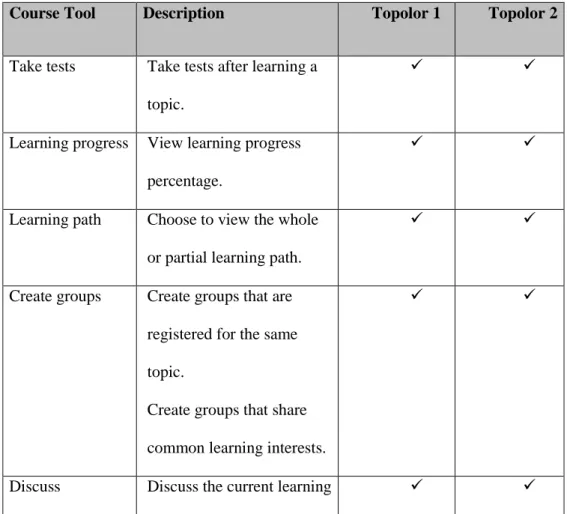
In one of the more recent research studies, the Topolor system [70] was introduced, which is a social personalised e-learning system. It was created by combining the capabilities of adaptation based on user modelling, social interaction, gamification, and open-learner modelling for e-learning methods and technologies (Table 2). Topolor’s creation is based on the hypothesis that ‘extensive social features, personalised recommendations and Facebook-like appearance of a system, anticipated to make the environment more familiar to students, will subsequently increase the usefulness and usability of the system’. The first version of Topolor was developed in November 2012. Then, the second version of Topolor was developed, by applying contextual gamification strategies and multifaceted open social learner model (OSLM) features, with the aim of raising students’ intrinsic motivation and, by means of this construct, providing an effective self-determined student experience. Gamification is ‘the use of gameplay mechanics for non-game applications’. Visualisation is designed with a Facebook-like look&feel and based on features extracted from common games, rather than on classical educational environment visualisations. Contextual gamification strategies have been revealed to be able to confirm that students using the system adopt the required educational behaviours and achieve pre-specified educational aims, supported by a great level of motivation. A multifaceted OSLM [75] was offered to permit visualising both students’ contributions and their performance within a learning community. It supports several types of comparisons and is adapted and linked to educational content. Multifaceted open social learner modelling can provide a high level of usefulness, satisfaction, and efficiency among students [75]. Social personalised e-learning (as represented by Topolor) is one of the basic research areas supporting the research in this thesis.
19
As said, Topolor is a relatively newly introduced system. However, it is one of the best systems to illustrate the combination of personalisation and social interaction, and it has received several awards at different conferences, including best demonstration award (five awards have been received for this research, including Best Student Paper Award from ICWL’14 [75], Best Demo Award from UMAP’14 [76], Best Poster Award from ICALT’13[77], Best Paper Award from IADIS-EL’13 [70], and Best Extended Abstract Award from YDS’13 [78]). It is a system that has also been widely deployed (in the UK, Bosnia-Herzegovina, the US, Jordan, Brazil, etc.). It is a system that is generating new research, with its most recent paper accepted for ITS’16 [79]. These are reasons why Topolor was used as a basis for the developments in the research presented in this thesis, as the aim was to work with a relatively established system. Moreover, there is no current commercial system that can offer such a combination of features. Finally, Topolor is an open-source system, and allows for further development, which was the ultimate intention with this research.
Table 2: Overview of the Topolor 1 and Topolor 2 Systems.
Course Tool Description Topolor 1 Topolor 2
Take tests Take tests after learning a topic.
Learning progress View learning progress percentage.
Learning path Choose to view the whole or partial learning path.
Create groups Create groups that are registered for the same topic.
Create groups that share common learning interests.
20 topic with other students. Ask/answer Ask and answer questions
of other students.
Feedback Use feedback and questions forum at the end of each lesson.
Share materials Share and/or recommend learning materials.
Communication tools
Use communication tools to chat and leave messages.
Comments Write comments/notions wherever and whenever wanted.
View history View history discussion when selecting a particular topic.
Recommend topics
Recommend other topics according to current learning topic. Recommend topics according to student’s knowledge level. Adapt learning path
Adapt learning path according to learning progress.
Recommend students
Recommend other students according to the current
21 topic.
Recommend other groups according to student’s interests.
Upload files
Use multiple types of files (e.g., PDFs, photos, videos, slides).
x
View learning progress
View learning progress percentage.
x
Contribute to learning
Contribute to learning content by creating and uploading files.
x
Recommend topics
Recommend topics by referring to other students’ ratings.
x
Adapt learning tools
Adapt learning tools according to student’s user level.
x
Adapt social interaction
Adapt social interaction tools according to student’s user level.
x
System status View system status. x
Using graphical
Use graphical user interfaces.
x
22
More recent systems exist, although they were not directly available for the research in this thesis at its start. For instance, Hsiao, et al. have introduced the Progressor system [71] that offers data about how other students (peers) have used and progressed through the learning resources, and therefore, it supports reflection on the user’s own work and progress.
The INSPIREus system [72] was proposed for creating interpretative views of the learners’ interaction behaviour. It is supporting students, teachers, and peers to view students’ behaviour and an indication of reference, such as the instructor’s proposal, or peers’ behaviour, in order to allow monitoring. It can be applied in any adaptive and/or hypermedia e-learning system that has data with semantic information.
From the point of view of interest for this thesis, personalised projects, the following is noticed. Although most LMSs (e.g. Blackboard [38], Moodle [39], and LAMS [67]) offer a variety of supporting functionalities for virtual communities (online collaborative e-learning), they are not created to support personalised project teams or customised for individual students, and the methods adopted for constructing group projects are not tailored to individual students’ characteristics. As students are usually assigned to groups manually by teachers, or students, or randomly by systems, students could have different backgrounds (cultures), knowledge interests, and preferences.
Furthermore, most of the social adaptive learning systems (e.g. MOT 2.0 [68], Whurle 2.0 [69], Topolor [70], Progressor [71] and Mastery Grids [73]) offer supporting functionalities for virtual communities, which are significantly different from virtual teams. Honglei clarified the differences between virtual communities and virtual teams as:
“Virtual teamsare formed to solve specific problems or tasks, organised by specific organisations and teams usually dissolve after the task is finished or the problem is solved. In contrast, virtual communities focus on relationship development in real life, where people do not have definite reasons to remain in them; virtual communities are spontaneously shaped by people with similar interests and can exist for a very long time, as long as people with similar interests do not disperse”[80].
23
Thus, a collaborative learning environment does not easily imply the use of technology for interactive aims. The effective collaborative learning system’s goal is to reach efficient group monitoring and more support, by capturing and modelling the information and knowledge of group activities [81]. Recently, research efforts have focused on adaptive collaborative learning environments that tailor to individual students’ characteristics, to address some particular limitations in non-adaptive collaborative e-learning systems. These systems can achieve collaborative aims that are hard to achieve using non-adaptive collaborative learning environments.
Brusilovsky [82], in his review on adaptation technologies, also mentioned technologies for adaptive group formation and peer help and technologies for adaptive collaboration support. Technologies for adaptive group formation and peer help:
“Attempt to use knowledge about collaborating peers (most often represented in their student models) to form a matching group for different kinds of collaborative tasks”.
Technologies for adaptive collaboration support:
“attempt to provide an interactive support of a collaboration process just like interactive problem support systems assist an individual student in solving a problem. Using some knowledge about good and bad collaboration patterns (provided by the system authors or mined from communication logs)”.
Several techniques were used for group formation. Spoelstra et al. [83] presented a group formation process model to determine a fitness value for a group of learners for a particular project. The model determined three types of variables that manage the group formation process: knowledge, personality, and preferences. One major approach in group formation is to form groups based on students’ learning styles. For example, in [84], [85], the Felder-Silverman learning style model (FSLSM) [86] and its index of learning styles (ILSs) questionnaire are applied, in order to group students based on their preferences, as represented on the four dimensions (active/reflective, sensing/intuitive, visual/verbal, and sequential/global). Another example, in [87], also used one dimension (active/reflective) of the FSLSM in the iGLS system to form groups. They found that learning styles influence the performance of the learners, when working together. Other researchers have proposed
24
forming groups based on a predefined ontology, based on information on an individual user. More specifically, ontologies could incorporate several features of a user’s profile, like preferences, learning domain knowledge level, learning style, and stereotypes. For example, Ounnas et al. [88] proposed applying semantics to permit teachers to form different types of groups, by differentiating between semantic student profiles.
Other researchers investigated how to best group students, considering communication by observing user behaviour, in order to offer to students feedback or recommendations, if they do not contribute or do not participate enough, encouraging them to increase their level of participation and contribution [89, 90].
However, there have been few investigations about adaptation within project management. Sun and Shen [90] introduced a group work-as-a-service (TaaS) system that allocates students to specific tasks, based on learning styles and preferences, using two heuristic algorithms: a genetic algorithm and a simulated annealing method. Another example, ACS system [91] was introduced to support students when doing a team project by supporting adaptive recommendations with respect to communication and managing the project. Students are assigned to tasks manually by teachers or by themselves. ACS is created to be attached to an LMS.
As can be seen from the above discussions, these research studies have been applied successfully in limited areas. The majority of the existing social e-learning systems offer supporting functionalities for virtual communities, which are significantly different from virtual teams. Most research about the adaptive systems for collaborative learning support (AICLS) focused on the group formation process, which is determined systematically based on the students’ profiles, and the information sharing process in groups. These methods force a student to join the recommended group and cannot be used to give students support on how to participate, which may eventually be more effective. Additionally, the algorithmic methods are complex for non-experts, and thus the link between cause and effect might be obstructed or impossible to extract and reuse diminished. Moreover, a pre-defined ontology about several traits of user profiles requires experts’ effort on building the ontology and students’
![Table 1: Students enrolled in Saudi universities Adapted from [31].](https://thumb-us.123doks.com/thumbv2/123dok_us/11007706.2988176/25.892.216.678.642.1019/table-students-enrolled-in-saudi-universities-adapted-from.webp)