University of South Florida
Scholar Commons
Graduate Theses and Dissertations Graduate School
April 2018
Environmental Perceptions to Promote
Self-directed Learning in the Workplace
Trevor Marshall Bernard
University of South Florida, [email protected]
Follow this and additional works at:http://scholarcommons.usf.edu/etd Part of theAdult and Continuing Education and Teaching Commons
This Dissertation is brought to you for free and open access by the Graduate School at Scholar Commons. It has been accepted for inclusion in Graduate Theses and Dissertations by an authorized administrator of Scholar Commons. For more information, please contact
Scholar Commons Citation
Bernard, Trevor Marshall, "Environmental Perceptions to Promote Self-directed Learning in the Workplace" (2018).Graduate Theses and Dissertations.
Environmental Perceptions to Promote Self-directed Learning in the Workplace
by
Trevor Marshall Bernard
A dissertation submitted in partial fulfillment of the requirements for the degree of
Doctor of Philosophy
In Curriculum and Instruction with an emphasis in Adult Education
Department of Leadership, Counseling, Adult, Career and Higher Education College of Education
University of South Florida
Major Professor: William H. Young, Ed.D. Waynne B. James, Ed.D.
Edward C. Fletcher, Ph.D. Yi-Hsin Chen, Ph.D.
Date of Approval: December 8, 2017
Keywords: adult learning, environmental aspects, Learning Preference Assessment, workplace learning
Dedication
This dissertation is dedicated to my mother and father Jeanne and Dr. Thomas Bernard, brother Devon, wife Dulce, and two children Tate and Bennett. I cannot thank you enough for your enduring support and encouragement.
Acknowledgements
I’d like to recognize everyone who has helped me complete this pilgrimage. Like any long journey, you learn a lot about yourself, but even more about the people who were there to support you when you wanted to stop and when you are finally able to celebrate your goal.
First, my loving wife, Dulce who sacrificed more than I can repay her. You kept everything running through the birth of two children, my studies, and a move out of state. My parents Jeanne and Thomas for giving me the foundation to go after my passion. I hope I can do the same for my children Tate and Bennett.
Dr. William Young who introduced me to the program and explicated how it could benefit an HRD professional in the corporate world. I’d like to thank him for being a guiding light and making himself available at any time to share his experiences. Dr. Waynne James who was influential through lecture, text, and late night conversations. I’d like to thank her for introducing me to the theory of self-directed learning and key contributors in the field. Dr. Edward Fletcher helped me to understand the importance of always linking my work to previous research and Dr. Yi-Hsin Chen who kept me focused on the importance of my data to the purpose of my study.
I was also lucky to be part a great cohort of students. I can’t imagine a group who contributed more to the program or had more fun. I’d especially like to thank Matt and Nicci who were there with me every step of the way.
Table of Contents
List of Tables ... iii
List of Figures ... iv
Abstract ... v
Chapter 1 Introduction ... 1
Statement of the Problem ... 3
Purpose Statement ... 5 Research Questions ... 5 Significance of Study ... 5 Theoretical Framework ... 6 Guglielmino ... 6 Knowles ... 7 Limitations... 8 Delimitations ... 9 Definition of Terms ... 9 Organization of Study ... 11
Chapter 2 Review of the Literature ... 12
Workplace Learning ... 12
Self-directed Learning ... 14
Self-directed Learning in the Workplace ... 17
Self-regulation ... 20
Cognitive Aspects of Self-directed Learning ... 21
Social and Environmental Aspects of Self-directed Learning ... 22
Learning Preference Assessment ... 24
Summary ... 25
Chapter 3 Methods ... 27
Research Design ... 27
Research Questions... 27
Population and Sample ... 28
Instrumentation ... 29
Focus Group Study ... 29
Recording Procedures ... 32
Preference Form ... 33
Learning Preference Assessment (LPA) ... 35
Validity and Reliability of Learning Preference Assessment ... 36
Data Collection Procedures ... 37
Data Analysis ... 38
Variables ... 40
Chapter 4: Findings... ... 42
Demographic Characteristics of the Sample... ... 42
Findings for Research Question 1... ... 46
Findings for Research Question 2 ... 48
Post-hoc Significant Results ... 53
Research Practices ... 58
Summary ... 59
Chapter 5 Summary, Discussion, Conclusions, Implications, and Recommendations ... 61
Summary ... 61
Discussion ... 63
Conclusions ... 64
Implications ... 66
Recommendations for Procedures ... 68
Recommendations for Further Research ... 69
References ... 73
Appendices ... 78
Appendix A Focus Group Procedures ... 79
Appendix B Preference Form... 84
Appendix C Demographic Form ... 85
Appendix D Sample Learning Preference Assessment ... 87
Appendix E Other Categories--Importance of Implementation ... 88
Appendix F Other Categories--Ease of Implementation ... 90
Appendix G LPA Scores and Demographic Variables ... 92
Appendix H IRB Consent Form ... 94
Appendix I IRB Approval Letter ... 97 About the Author ... End Page
List of Tables
Table 1: Promoters and Discouragers of Current Workplace Environmental
Characteristics ... 33
Table 2: Number and Percentages of Participants by Level of Education and Race/Ethnicity ... 43
Table 3: Number and Percentages of Participants by Year Born, Gender, and Position Title ... 44
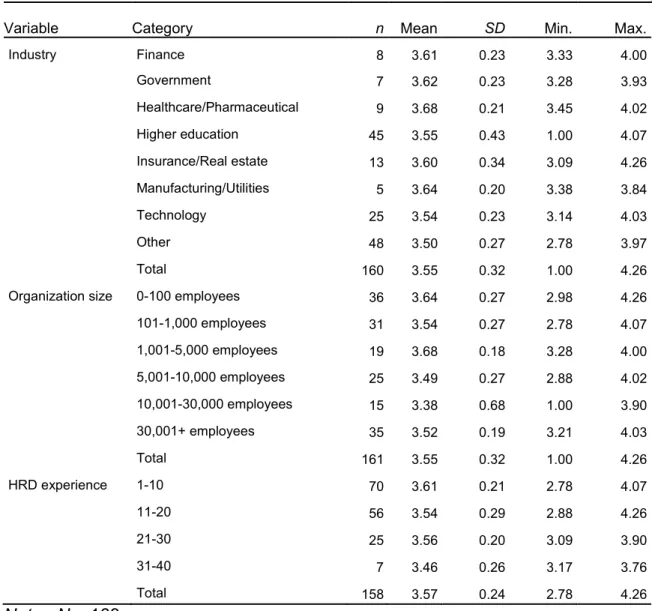
Table 4: Number and Percentages of Participants by Industry, Size of Organization, and Years of HRD Experience ... 45
Table 5: Perspectives of Participants on Importance of Implementing Environmental Preferences That Promote SDL in the Workplace ... 47
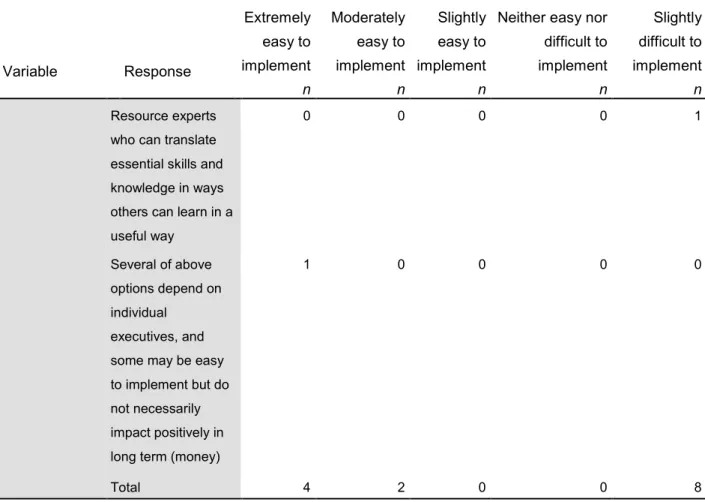
Table 6: Perspectives of Participants on Ease of Implementing Environmental Preferences That Promote SDL in the Workplace ... 48
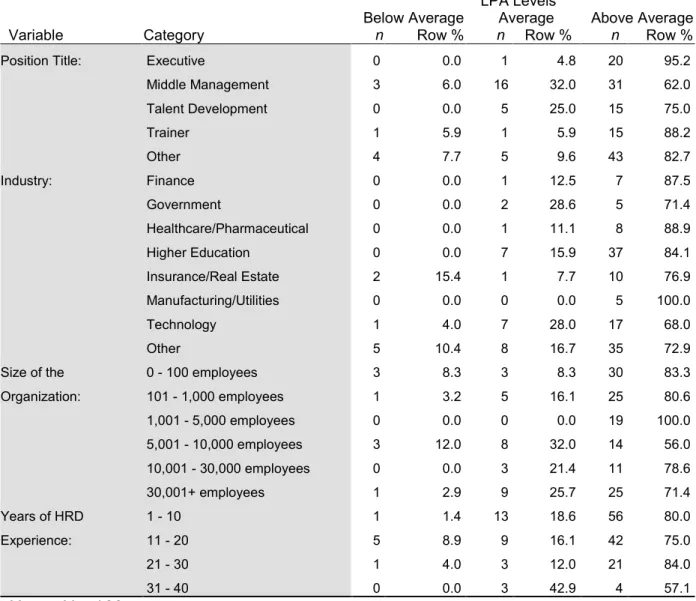
Table 7: Descriptive Statistics for Each Demographic Variable and Category ... 50
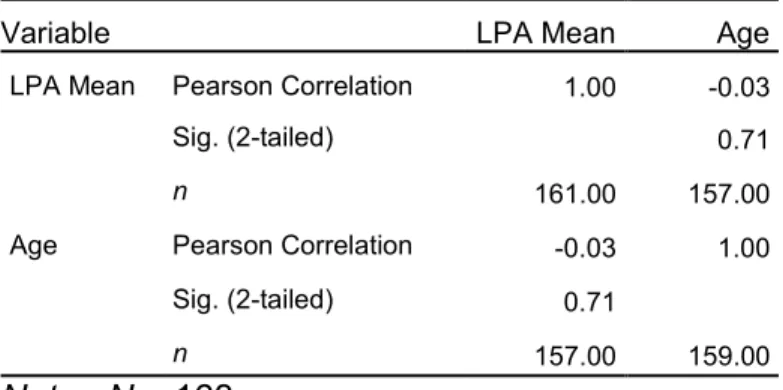
Table 8: Pearson Product Moment Bivariate Correlation of the LPA Scores and Age ... 52
Table 9: ANOVA Summary Analyses by Demographic Variable ... 54
Table 10: Tukey Post Hoc Analysis for Level of Education ... 56
Table 11: Tukey Post Hoc Analysis for Size of the Organization ... 57
Table E1: Other Categories--Importance of Implementation ... 87
Table F1: Other Categories--Ease of Implementation ... 89
List of Figures
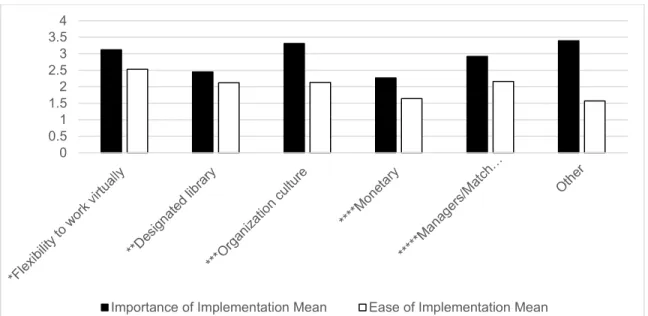
Figure 1: The comparison of the importance and ease of implementing
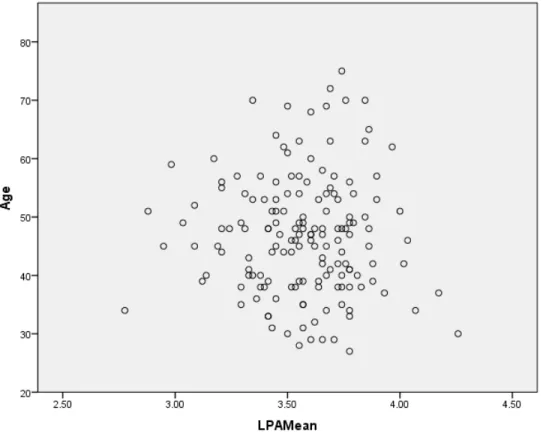
environmental preferences that promote SDL in the workplace ... 35 Figure 2: Scatter plot graph for continuous LPA mean scores and age ... 53
Abstract
The purpose of this study was to identify perceptions of environmental changes that promote self-directed learning in the workplace by Human Resources Development (HRD) practitioners and to investigate possible differences of the dependent LPA score variables to independent variables of highest level of education achieved, race/ethnicity, age, gender, position title, industry, size of the organization, and years of HRD
experience.
The research used a mixed method design. Qualitative data were recorded through four focus groups until a saturation of comments was reached. Quantitative Pearson product moment correlation and ANOVA statistics were used to show the possible differences of LPA scores with each demographic variable. Tukey post-hoc tests were used to compare significant differences in mean scores of associated variables.
Focus groups were conducted with 14 Human Resources Development (HRD) practitioners to collect the top five environmental preferences that promote self-directed learning in the workplace. The environmental preferences, the Learning Preference Assessment (LPA), and the demographic form made up the survey to measure
participant self-directed learning readiness across independent variables. A total of 163 participants completed the survey.
Results showed the consensus mean scores for importance of implementing environmental preferences that promote SDL in the workplace was 3.39 for other written
categories and 3.31 for organization culture encourages employees to learn on their own. The consensus mean scores for ease of implementing environmental preferences that promote SDL in the workplace was 2.53 for flexibility to work virtually with mobile access to learning and 2.16 for managers guide employees/match content to role.
Pearson product moment correlations showed no significant evidence of
relationship between the continuous LPA mean scores and age variables. Group mean scores were compared for the remaining independent variables. The results were significant for the level of education and the size of the organization. Tukey post-hoc multiple comparisons tests were conducted for the differences of LPA scores and the demographic variables of highest level of education achieved and the size of
organization. Only the level of education categories of high school diploma or equivalent and master’s degree were found to be significant.
Chapter One Introduction
Organizations that promote employee development and establish a structured workplace learning environment have a substantial advantage over their competitors. U.S. companies understand this model and have over the years produced a $164.2 billion annual training and development industry (Miller, 2013). However, due to rapid changes in an ever-increasing global economy, organizations struggle to develop and implement timely formal learning curricula with objectives to support the skills and knowledge needed for their staff and business to be successful. Therefore,
organizations are beginning to realize the need to provide an environment that enables employees to be self-sufficient in identifying their skill gaps and pursuing learning on their own; making learning part of their job.
Although organizations have always required talented people to perform their jobs effectively, the same organizations are now recognizing the importance of
maintaining an environment that supports the development of their staff and matches the pace of change in their operations. As a result, organizations are becoming more flexible in their methods of designing and implementing learning events for their employees and are relying on them to fill remaining skill gaps through self-directed learning (SDL) where individuals continually plan, conduct, and evaluate their own learning. Lee and Lai (2012) acknowledged this shift in workplace learning and noted its effort and results “should be considered as an everyday job and can be accessed at
anytime” (p. 4). In turn, organizations are held accountable to provide support for this learning method by maintaining workplace environments that encourage employees to learn on their own and hold them accountable for continually assessing their skill gaps.
The realization of SDL as a learning tool has emerged as an organizational response to meet the complex needs of the fast-paced global economy. Ellinger (2004) reported “Learners are increasingly being challenged to assume more responsibility for their own learning and development in work organizations” (p. 158). As a workplace learning solution, SDL enables employees to assume an increased accountability for their learning beyond the mandated curriculum and learning objectives provided by their company.
SDL has been an influential adult learning concept in the field of adult education for more than four decades. Merriam (2001) stated “it was Tough (1967, 1971), building on the work of Houle (1961), who provided the first comprehensive description of self-directed learning as a form of study” (p. 6). In reference to workplace learning, SDL has progressed with technology and each generation. Today’s younger generation entering the workforce is tied to products of the Web and have the expectation of easily
connecting with information in almost any location. As a result, access to more
information, progressive use of technology, and a generation expecting to have contact with both at any time may make self-directed approaches to learning the default norm in the workplace (Hiemstra, 2003). Therefore, it is necessary to further explore the
organizational requirements needed to support SDL in the workplace in order to meet the rapidly changing learning demands of employees and organizations so both may perform well in a fast-paced global economy.
Statement of the Problem
Although studies exist related to SDL and the workplace environment, there is no empirical research found that attempts to identify perceptions of environmental changes that promote SDL in the workplace by Human Resources Development (HRD)
practitioners. Ellinger (2004) stated, “It has been well established in the scholarly literature that learning is a significant source of competitive advantage for organizations and that creating environments conducive to learning and development can enhance individual and organization performance (Ellinger, Ellinger, Yang, & Howton, 2002; Marsick & Watkins, 1999; Pfeffer & Veiga, 1999)” (p. 158). However, organizations struggle to keep up with the ever increasing speed of business and the half-life of knowledge employees maintain.
Accreditation standards for many professions prepare employees for continued education, not to mention the time it takes for individuals to lose half of their industry knowledge. For example, engineers work in an industry where half of what they know becomes obsolete in two to eight years (Guglielmino, 2008). Therefore, employees are increasingly being encouraged to be lifelong learners and own the responsibility for their learning. Studies have shown organizations have responded to this requirement by implementing non-traditional training methods, like SDL to meet the complex needs of change in the workplace (Park, 2008).
In its broadest definition, SDL is the initiative of a learner to analyze their learning needs, formulate learning goals, identify resources for learning, implement a learning strategy, and evaluate their learning outcomes (Knowles, 1975). The research in SDL has increased recently over the past 40 years. However, according to Brockett et al.
(2000), the number of SDL research articles has been steadily declining since the mid-1980s. The real challenge proposed by Brockett et al. (2000) is to take the study of SDL to a new level. One area of prevalence is enhancing SDL environments in the workplace (Park, 2008).
Related to workplace learning, lifelong self-directed learning is necessary for employee and organizational survival. The globalization of information and competition, plus the annual influx of new information is overwhelming for an organization. An
enterprise cannot design and implement a formal curriculum to formally instruct
employees in the time they need it. As a result, organizations struggle with the question on how to provide employees with conditions at the place of work to promote SDL (Straka, 2000)?
Most workplace learning environment studies focus on technology as an
environment to encourage SDL. However, technology is a bridge to learning, providing access information and an opportunity for employees to work collaboratively or on their own. The World Wide Web generated an explosion of available information that has led to an increase of distance learning and employees gaining control of their own learning (Guglielmino, 2008). Information is the significant commodity to competitiveness; technology is the conduit to data, articles, and others with the same interests. “To remain current and competitive, it becomes necessary to engage in self-directed learning, in either autonomous or social ways, to assume responsibility for new
technological developments as they enter the marketplace” (Boyer et al., 2013, p. 14). Environments promoting SDL in the workplace improve employee and
performance and self-directed learning readiness (Durr, 1992; Guglielmino, Guglielmino, & Long, 1987; Roberts, 1986) support this assertion” (Guglielmino, 2008, p. 6). If the employee is going to be more responsible for their learning then the organization should provide an environment that helps individuals with the ability to perform SDL.
Therefore, research should focus on identifying environmental characteristics that promote SDL in the workplace.
Purpose Statement
The purpose of this study was to identify perceptions of environmental changes that promote self-directed learning in the workplace by Human Resources Development (HRD) practitioners and to investigate possible differences of the dependent LPA score variables to independent variables of highest level of education achieved, race/ethnicity, age, gender, position title, industry, size of the organization, and years of HRD
experience.
Research Questions
Two research questions were used to guide this study.
1. What are the participant perceptions to environmental influences that promote Self-directed Learning in the workplace?
2. What are the possible differences of LPA scores with each demographic variable (highest level of education achieved, race/ethnicity, age, gender, position title, industry, size of the organization, and years of HRD experience)?
Significance of the Study
Organizations are continually looking for ways to create environments that are conducive for learning and developing productive staff. However, in an ever-changing
global economy, organizations struggle to keep a competitive edge when relying only on formal learning curricula. As a result, organizations are expanding their learning
techniques and relying on additional adult learning theories to deliver timely content to their employees (Kops, 1997). This includes the realization that the workplace
environment should be responsive and flexible to approaches of learning that allows learners to be self-directed, especially when employee skills and knowledge become perishable and employees embrace continuous learning throughout their careers (Ellinger, 2004).
The significance of this study was to fill the research gap of examining workplace environmental changes identified by HRD practitioners to promote SDL in the
workplace. It should benefit organizational leaders to make informed decisions when implementing SDL and will promote future research of SDL in a professional work environment.
Theoretical Framework
This study focused on two major contributors to SDL. Guglielmino (1977) based on her development of the Self-directed Learning Readiness Scale and Knowles the father of andragogy (Smith, 2004). Although both contributed to the theory of motivating adults to learn, each has unique perspectives on the field of SDL.
Guglielmino. Guglielmino reinforced much of Knowles’ vision of SDL and supported his perspective that adults implement SDL to improve one’s position and “offers a path to increased life satisfaction” (Guglielmino, 2008, p. 7). Guglielmino also further theorized the occurrences of self-directed learning by stating, "self-direction in
learning can occur in a wide variety of situations, ranging from a teacher-directed classroom to self-planned and self-conducted learning projects" (1977, p. 34).
Guglielmino developed the Self-directed Learning Readiness Scale (SDLRS) addressing three principles of context, activation, and universality. Contextually, SDL can occur in many scenarios including one’s personal life, traditional classrooms, or in the workplace. Activation occurs in combination with learner characteristics and the situation. Universality it is present in each person to some degree.
Self-directed Learning Readiness (SDLR) is important to this study because it is adaptive to many scenarios including the work environment and is essentially a
prerequisite for adaptive living in the new world (Knowles, 1975; Guglielmino, 1977). Knowles. The field of adult education began to separate quickly from general education after Houle’s, 1961, landmark book The Inquiring Mind (Zsiga, 2008). Under Houle’s tutelage Knowles later introduced his concepts of adult education and the term andragogy. These theories helped to inspire adult learning research in the 1970s that led to further refinement of andragogy and SDL. Ellinger (2004) stated,
Knowles (1975) defined SDL as a process in which individuals take the initiative, with or without the help of others, in diagnosing their learning needs, formulating learning goals, identifying human and material resources for learning, choosing and implementing appropriate learning strategies, and evaluating learning outcomes. (p. 160)
Guglielmino (1977) added to this research by producing and validating the SDLRS. One of Knowles’ core beliefs is that adults become more self-directed as they mature (Ellinger, 2004). As a result, Knowles combined his early influences to define SDL as the process-based approach for adult learners to improve their status. This includes adults taking the initiative for their learning, identifying gaps, creating goals,
finding resources, implementing a strategy, and re-evaluating the results to continue their learning (Knowles, 1975). It is clear how Knowles’ foundation of adult learning translates to the workplace where learning organizations are “committed to providing engagement and support of lifelong learning for the adult employees” (Zsiga, 2008, p. 37).
Limitations
The initial participants of this study were members of the Association for Talent Development (ATD) Florida Suncoast Chapter or Research Triangle Area Chapter. The study used a snowball effect to collect more results and it may have been forwarded to others outside the two ATD chapters. ATD, formerly the American Society for Training & Development (ASTD), started in 1943 and is the world’s largest organization
dedicated to developing talent in companies with members in 100 countries, 112 U.S. chapters, and 12 international partners (Association for Talent Development, 2016). The ATD Florida Suncoast Chapter has been an affiliated ATD chapter since 1974, serving the needs of training and human resource development professionals
throughout the Tampa Bay area (Association for Talent Development Florida Suncoast Chapter, 2016). Similarly the ATD Research Triangle Area Chapter is focused on workplace learning and performance in the Research Triangle Area of North Carolina (Association for Talent Development Research Triangle Area Chapter, 2017).
Therefore, findings and generalizations from this study may not be applicable to environments outside of this professional setting.
Focus group results were only recorded by the researcher. This included
the results of the focus groups may have included bias of the researcher and threatened internal validity of the focus group results.
Truthfulness was a concern of the study because of confidential participation. In addition, most of the participants held undergraduate or graduate degrees from
institutions of higher education and were employees of business environments where there is a general belief that SDL is a positive characteristic and ultimately enhances an individual’s opportunities for promotion. As a result, self-selection bias may have
threatened the internal validity of the results and may have produced below average generalizability. The instructions stated that the survey was to be completed
confidentially and individual responses would not be presented as part of the study. Delimitations
The population sample was confined to 163 (N=163) ATD Florida Suncoast Chapter and Research Triangle Area Chapter members. It may have been forwarded to others outside the two chapters. The survey did not identify SDL as a direct or primary focus of research in order to mollify participant bias. Instead participants were told the objective of the research was to develop a greater understanding of learning
preferences of groups in professional work environments. Definitions of Terms
The following terms were used as operational definitions for this study. Executives--a lead organizational position of each functional area in a learning
organization.
Human Resources Development practitioners--organizational positions related to the development of employees.
Job aide--a document of information that guides an employee to perform a process or task correctly.
Learning Organization--an organization that promotes continual learning for employees who work collaboratively across functional areas to solve problems.
Learning Preference Assessment--an assessment instrument created by Guglielmino (1977) to measure tendencies of individual employees to engage in SDL.
Middle management-an organizational position managing employees in each functional area in a learning organization.
Self-directed learning (SDL)--individuals independently plan, conduct, and evaluate their own learning.
Self-directed learning readiness (SDLR)--combination of learner attitudes, values, and abilities that promote the likelihood that s/he is capable of SDL (Guglielmino, 1977).
Subject matter expert (SME)--a person in an organization that has authority in a specific topic.
Talent development--an organizational position related to the development of employees.
Trainers--an organizational position related to the facilitation of learning events to employees.
Workplace environment for SDL--workplace location for employees to participate in SDL.
Organization of Study
Chapter 1 introduces the study, presenting the problem, purpose, research
questions, significance of the study, theoretical framework, limitations, delimitations, and definition of terms. Chapter 2 introduces a review of the related literature concerning workplace learning, SDL, SDL in the workplace, self-regulation, cognitive aspects of SDL, social and environmental aspects of SDL, and the Learning Preference
Assessment. Chapter 3 reports the procedures utilized in this study, including the research design, the population and sample, instrumentation, data collection
procedures, and the data analysis. Chapter 4 shares the results of the study, with the demographic characteristics of the sample, findings for research questions, and research practices. Chapter 5 includes the summary, discussion, conclusions, implications, and recommendations for procedures and further research.
Chapter Two Review of the Literature
The purpose of this study was to identify perceptions of environmental changes that promote self-directed learning in the workplace by Human Resources Development (HRD) practitioners and to investigate possible differences of the dependent LPA score variables to independent variables of highest level of education achieved, race/ethnicity, age, gender, position title, industry, size of the organization, and years of HRD
experience. The parts of this chapter include the review of literature on workplace learning, SDL, SDL in the workplace, self-regulation, cognitive aspects of SDL, social and environmental aspects of SDL, LPA, and a summary.
Workplace Learning
In reviewing related workplace learning literature, there are two key concepts presented in this study. First, there is the theoretical aspect of how individuals or groups of individuals acquire, interpret, reorganize, change, or assimilate a related grouping of information. This includes the aspects of adult learning theories that align the needs of employees to acquire new skills. Second, there are the processes and outcomes of learning that employees undertake for the fulfillment of learning
requirements of a particular workplace. This incorporates the concepts of the workplace environment, culture, and required formal curriculum of training. As a result, the
learning and the environment for learning that will help drive a competitive advantage in organizations.
The primary concept for this study was the acknowledgement that there are key elements focusing on how employees learn and the validation for above average learning techniques that foster organizational success. The review of literature presented information that adult learning theories could be one of the most effective frameworks to meet the dynamic workplace learning environment today while allowing the learner to have the freedom to adjust their avenues of learning to meet their
preferences. Therefore, learning may result from a variety of sources and experiences, and can be both informal and formal. As a result, the learning being examined in the workplace is often embedded in everyday practices based on on-the-job experiences, mentoring, and formal and informal learning. The research also highlighted a conducive environment for behavior, defined in adult learning methods that should be present for most individuals to effectively learn through Knowles’ adult learning theory principles, methods, and assumptions within the workplace learning environment (Holliday, 2009).
Nonetheless, according to Cappelli (2008), workplace learning also has distinguishing features from traditional adult learning theories. The first is that workplace learning is different from learning in higher education, in that, although
workplace learning is collaborative, it occurs in an economic context and is driven by the individual’s awareness to be professionally successful. Second, most of workplace learning is about change. This may be behavioral, attitudinal, or cognitive that requires additional flexibility by the individual to identify, adjust learning goals, and develop a path of learning that meets each area of change. Therefore, workplace learning may be
more challenging than traditional higher education for the learner when high stakes are correlated.
In summary, by reviewing workplace learning literature, there is a lack of
empirical research that is directly influential in maximizing employee success outside of traditional adult learning theories and the importance of a conducive environment for learning. This study will help support related research focusing on a specific adult learning technique and how the workplace environment may be improved to positively influence workplace learning.
Self-directed Learning
Despite the lack of a universal definition, SDL has been communicated as
learners having the primary responsibility for planning, carrying out, and evaluating their own learning experiences (Ellinger, 2004).
The most common definition is that of Knowles (1975), who defined self-directed learning as a process in which individuals take the initiative, with or without the help of others, to diagnose their learning needs, formulate learning goals, identify human and material resources for learning, choose and implement appropriate learning strategies and evaluate learning outcomes. (Chakravarthi & Vijayan, 2010, p. 38)
According to Knowles (1975) there are nine major competencies of self-directed learning. These competencies include the descriptions below.
1. An understanding of the differences in assumptions about learners and the skills required for learning under teacher-directed learning and
self-directed learning and the ability to explain these differences to others. 2. A concept of oneself as being a non-dependent and self-directed person. 3. The ability to relate to peers collaboratively, to see them as resources for
diagnosing needs, planning one’s own learning, and learning; and to give help to them and receive help from them.
4. The ability to diagnose one’s own learning needs realistically, with help from teachers and peers.
5. The ability to translate learning needs into learning objectives in a form that makes it possible for their accomplishment to be assessed.
6. The ability to relate to teachers and facilitators, helpers, or consultants, and to take the initiative in making use of their resources.
7. The ability to identify human and material resources appropriate to different kinds of learning objectives.
8. The ability to select effective strategies for making use of learning resources and to perform these strategies skilfully and with initiative. 9. The ability to collect and validate evidence of the accomplishment of
various kinds of learning objectives. (p. 61)
One of Knowles’ core beliefs is that adults become more self-directed as they mature. For adults, this means they are more in control of their learning as they grow older with a desire to learn specific content or acquire a specific skill.
Tough (1971) also proposed a linear approach to SDL from his study of adult learning projects. Tough defined learning projects as deliberate efforts to gain new knowledge or skills and almost everyone engages in one or two learning projects a year with as many as 15-20. The projects can be aligned to gain general knowledge or understanding of a topic while others are designed to improve a specific skill or performance. In relation to adult learning theories, most projects are initiated for very practical reasons, like learning new information for the workplace, and are self-directed in nature.
As a result, Tough stated 70% of all adult learning projects used 13 steps to achieve decision-making points. First, learners must decide what knowledge to learn, follow identifying specific activities, methods, and resources that are needed. This is followed by where to learn, immediate deadlines or targets, and when to begin. Next they will identify the correct pace, their current knowledge level and desired end level, plus any factors that are hindering their current process for closing their knowledge gap of required skills. After, learners re-evaluate their needs and inefficiencies, obtaining
the proper resources or equipment, adapting physical environments for learning, nonhuman resources, time, and taking extra steps to increase motivation.
In relation to the reviewed articles, there are references of corporate employees needing to be proficient self-directed learners. Hoban et al. (2005) performed a study about professionals in the medical field to determine their need to be self-directed learners as their hypothesis included self-directedness and lifelong learning are invaluable characteristics to medical professionals. The researchers contended that technical content in this field is constantly changing; therefore, learners with high levels of self-efficacy can maintain their motivation, address their knowledge gaps, and re-evaluate their progress to excel in their field.
Chu and Tsai (2009) noted adult learners bring their life experiences to learning events and it is important for adult learners to have the opportunity to maintain a self-directed approach to their learning. In their empirical article, they discussed this should be conducted independent of the learning environment. Dynan, Cate, and Rhee (2008) supported the idea that institutions of higher education should identify the best methods for designing environments and curriculum with the appropriate learning tools to be conducive to their adult learners’ characteristics, self-efficacy, and willingness to learn. They proposed a research question to find if employees score measurably higher on Guglielmino’s LPA in a structured or unstructured learning environment. They understood SDL readiness as a skill possessed by adult learners and, if applied
successfully, can lead employees to become lifelong learners. However, they wanted to confirm if SDL was dependent on learners participating in a structured environment planned by their organization or one that was unstructured and left to the individual to
preserve. Similarly, King (2004), in her article examining professional development of educators, stated that engaging individuals in an active learning role, by bringing their experiences to the learning event, can have positive effects on their acquisition of knowledge and skills. “This strategy can potentially form a basis for increased self-directed lifelong learning beyond any formal development activity” (King, 2004, p.171).
In comparison, Lema and Agrusa (2006) focused on the relationship of SDL to productivity in the workplace. They studied the role of self-efficacy and industry
experience to learning in the hospitality industry. Specifically they researched the role of SDL readiness as it relates to employee productivity and their accountability for individual performance. For example, they wanted to find if an individual’s motivation to adapt to organizational change and their ability to succeed is based on their aptitude to be self-directed learners.
In summary, this section reviewed several definitions of self-directed learning regarding an academic perspective and others related to productivity in the workplace. However, each referred to a commonality of improving one’s performance by having motivation to address their knowledge gaps, continually re-evaluating their ability, and implementing appropriate learning strategies to achieve their learning goals.
Self-directed Learning in the Workplace
A large portion of adult learning is focused on acquiring skills, experience, and understanding within the workplace, which often lay outside the formal classroom. This is especially true for organizations that compete in a high-paced global economy, where textbooks and curriculums cannot maintain the pace of learning needs, and workers jobs change dramatically every five years. The rapid evolution of markets and
technologies create the obsolescence of documented learning at an increasing rate and, therefore, fuels a continual need for updating current skill sets of employees. Sze-yeng and Hussain (2010) stated
The 21st century is characterized by the ubiquitous forces of globalization,
which drives the existing knowledge driven economy, the inter-connectivity and digital revolution. Survival skills become obsolete over a couple of years due to the decreasing half-life of knowledge. This would mean that what is taught in formal institutions of learning have to be unlearnt and re-learnt over the years. Individuals need to be committed to lifelong learning and this is only possible if individuals are motivated with self-directional skills. (p. 1913) HRD professionals have recognized the opportunity to direct their attention to SDL when learning is identified as an appropriate performance improvement
intervention. In addition, Guglielmino and Murdick (1997) stated, SDL has saved leading U.S. companies 20-50% of their formal training budgets. If organizations are expected to continually advance the performance of their staff and be responsible to achieve their results at the lowest cost possible then they should continue to explore and examine how fostering SDL efforts contribute to the learning and development process of their employees.
However, traditionally companies struggle to find the most effective and efficient approach for providing their employees with the needed skills to succeed and they invest money and employee resources to develop formalized curriculum, but find employees who are successful and promotable improve their skill sets on their own through SDL efforts. “Given the trends toward self learning and self development and the growing importance of the workplace as an environment for learning, an
understanding of SDL can enhance human resource development” (Ellinger, 2004, p. 158).
Tobin (2000) identified SDL in the workplace as an emergent theme in research. More specifically, Keirns (1999) suggested a renewed emphasis on SDL as a means for development, with or without direct leadership direction due to the eminence of
computer-based or distance learning and hypermedia-driven content.
Avdal (2013) stated individuals with the ability to apply SDL techniques can use their knowledge and skills in a variety of situations in order to continue to enhance their ability to learn new skills throughout their life time. It was also suggested that the benefits of implementing SDL produces increased assertiveness, independence, motivation, and effective use of information. This is important for workplace learning because SDL provides the opportunity to improve capacity and increase learning motivation outside traditional classrooms. For example, healthcare professionals working in ever-changing and complex social and technical systems face a serious challenge for owning their own learning and frequently refreshing their competencies. This principle is known as life-long learning, which is closely linked to SDL. Therefore, it is critical for organizations to understand how much professionals can learn themselves in order for companies to individualize teaching/learning and their overarching
curriculum strategies.
Guglielmino and Guglielmino (1983) studied a sample of 753 individuals in an American utility corporation and found positive correlations between job performance and SDLR with outstanding performers having the highest SDLRS scores. Roberts (1986) studied a Hong Kong Telephone Company and found a significant relationship between SDLR and manager’s performance ratings.
In summary, SDL in the workplace is an emerging theme in research for individual development with or without leadership support. SDL is also increasingly important in fields where competencies need to be refreshed frequently.
Self-regulation
Lajoie (2008) defined self-regulation as an individual’s “mechanisms for checking the outcome, planning, monitoring effectiveness, testing, revising, and evaluating
strategies” of their learning (p. 470). Learners self-regulate their thoughts, feelings, and actions to attain goals through three theories important to this study. First, learners can improve their ability to learn through selective metacognitive and motivational strategies. Internal and external feedback is one set of examples. Each variance of feedback helps to monitor and evaluate performance that can enhance a learner’s effectiveness while engaged in tasks. Second, learners can proactively create supportive learning
environments. For example, computers can act as cognitive tools in SDL by stimulating the mind and providing external constraints or scaffolds to guide learning of new
information and allowing individuals to learn on their own. Third, learners can select the level of instruction that will help them succeed. In the professional workplace,
engagement in SDL is viewed as a highly desirable goal for employees because it is a requisite for continuous development.
In summary, this section defined self-regulation as the ability for checking outcomes, monitoring effectiveness, and revising strategies for success. Therefore, self-regulation is a key aspect of SDL for attaining learning objectives goals. Finally, this section included three theories of self-regulation based on metacognitive and
motivational strategies, supportive learning environments, and selecting the correct level of instruction.
Cognitive Aspects of Self-directed Learning
Adult learning is an internal cognitive process specific to the learner. It is what the learner does in a teacher-learner transaction, as opposed to what the educator does (Merriam & Brockett, 2007). Therefore, for an adult learner, cognitive involvement necessitates learning. In relation to this study, it is imperative to review the impact of the cognitive processes influencing the learner to choose strategies that promote the acquisition of new knowledge.
Jarvis, a major contributor to lifelong learning in the field of adult education, embraced learning as part of our human existence (Bagnall, 2017). He described nine characteristics of the self-directed learner as follows:
1. Decision to learn: The learner is motivated to respond to a perceived need or want to learn.
2. Type of participation: Learners decide between learning independently, learning through organized activity, or some combination.
3. Aims and objectives: Learners choose between learner control, control by others, or negotiated aims and objectives.
4. Content: Learners make a decision regarding the selection of content. 5. Method: The methodological processes engaged in by the learner.
6. Thought/Language: The mode of speech, thought, perception, and so forth, engaged in by the learner.
7. Assessment: The process of evaluating how much individuals have learned, whether their needs or wants have been satisfied, and whether learners have achieved their aims and objectives.
8. Disjuncture: Acting on a perceived need or want precedes the learner’s learning process.
9. Action/Outcome: Learner’s evaluation of the results. (Jarvis, 1992) In addition, the development of cognitive strategies is critical within the SDL process and adult learners, with clear indication that learners become better at using cognitive strategies with age and experience.
In summary, cognitive involvement is imperative for adult learners, because it necessitates how the individual learns. In respect to this study, the cognitive process affects the individual to choose strategies that free up cognitive resources and enable the ability for higher-level learning. Finally, this section related nine characteristics of self-directed learners that are reflective of cognitive strategy.
Social and Environmental Aspects of Self-directed Learning
Long (2000) stated SDL is a behavior that is explained as a psychological construct managing observable cognitive and personality traits in nurturing conditions. For a learner’s level of SDL to flourish, they must possess the motivation and ability to learn and also interact in an environment promoting opportunities for SDL. In regards to this study, it will not only focus on an individual’s motivation and cognitive ability to learn in a professional workplace, but measure the social impact and environmental influence on the learner as well.
The cognitive aspect of learning is the interaction between the mind and environment that represents the most influential nature of learning. Metacognition emphasizes how the mind triggers evaluations for important decisions and, with self-regulation, focuses on how the environment influences responses (Lajoie, 2008). Therefore, it is the management of cognitive load levels produced by the mind and the complexity of a learning environment that can improve an individual’s ability to learn. For example, organizations with complex learning environments have a tendency to design learning around real-world experiences in order for the individuals to transfer new knowledge to similar situations. However, van Merrienboer and Sluijsmans (2009) stated there is a risk to this approach as the level of cognitive load imposed by specific
learning events can be deemed excessive for novice learners and may in turn inhibit learning. For this reason, there is a need to identify levels of cognitive loads and techniques that can improve opportunities for learning in complex, workplace learning environments.
Van Merrienboer and Sluijsmans acknowledged three cognitive loads in their article. They included, “intrinsic cognitive load, which is determined by the complexity of the learning tasks . . .; extraneous cognitive load, which is caused by suboptimal
instructional design . . . and germane cognitive load which is caused by appropriate instructional design” (2009, p. 56). Since all three are related to instructional design, it is easy for an organization to think manipulating this learning development technique is an effective solution to managing cognitive load and improving the learning
environment. One example is to order tasks from simple to complex and gradually increase the number of interacting elements of each learning task or the use of
scaffolding to prevent effects of extraneous load and decrease the level of support for the learners as they gain more expertise. However, by focusing on lower level learners in a complex learning environment the tendency is to sequence the tasks for the whole group with no room for flexibility and little chance for SDL. As a result, it is “difficult for learners to (a) take full responsibility for performing learning tasks, (b) assess the strengths and below averagenesses in their own performance, and (c) select learning tasks that offer the best opportunities to remediate below averagenesses and improve performance” (van Merrienboer & Sluijsmans, 2009, p. 56). Therefore, it is important to enable learning environments within organizations to promote SDL and allow individual learners to diagnose their learning needs, formulate learning goals, identify human and
material resources for learning, choose and implement appropriate learning strategies and evaluate learning outcomes” (Chakravarthi & Vijayan, 2010, p. 38).
In summary, several studies were published communicating that the use of SDL has a positive correlation with desirable workplace performance results. Previously reviewed research indicated SDL readiness plays a major role in predicting adults’ traits for learning. Drivers include motivation and self-regulation, cognitive strategies, and social and environmental elements.
Learning Preference Assessment
Self-directed learning readiness scores were measured by the LPA instrument. The instrument was developed by Guglielmino (1977) as the Self-directed Learning Readiness Scale (SDLRS) as part of her dissertation. It changed its name in 1991 from SDLRS to LPA to avoid possible response bias. The LPA is currently the most widely used instrument to measure self-directed learning (Guglielmino & Associates, LLC, 2016a).
The instrument was designed to measure the participant’s perceived readiness for self-direction in learning. The latest version of the LPA has 58 items and is scored on a five-point Likert scale. The scale defines 1 as “almost never” through 5 as “almost always.” The instrument also categorizes the items into eight factors:
1. Openness to learning opportunities, 2. Self-concept of an effective learner, 3. Initiative and independence in learning,
4. Informed acceptance of responsibility for one’s own learning, 5. Love of learning,
6. Creativity,
7. Positive orientation to the future, and
8. Ability to use basic study skills and problem-solving skills. (Guglielmino, 1977, p. 62)
A list of characteristics of highly self-directed learners emerged from the Delphi Study that formed the basis of the instrument. The most-used operational definition for self-directed learning was cited by Guglielmino and Guglielmino (2008).
A highly self-directed learner. . . is one who exhibits initiative, independence, and persistence in learning; one who accepts responsibility for his or her own learning and views problems as challenges, not obstacles; one who is capable of self-discipline and has a high degree of curiosity; one who has a strong desire to learn or change and is self-confident; one who is able to use basic study skills, organise his or her time and set an appropriate pace for learning, and to develop a plan for completing work; one who enjoys learning and has a tendency to be goal-oriented. (p. 295)
It is the most adopted survey instrument for measuring SDL readiness (Merriam & Brockett, 2007). Guglielmino and Associates, LLC (2016b) stated LPA scores are categorized into three levels: below average (58–201), average (201–226), and above average (227–290). The prevalent use of LPA has shown stable reliability and validity. It has been translated into 22 languages and implemented in more than 40 countries. Summary
A thorough review of literature examined two integral components of this study. They were (a) SDL in the workplace and (b) social and environmental factors of SDL. There are numerous research studies focused on SDL in the workplace and its ability to help build employee skills efficiently and effectively. This becomes even more important in the 21st century where organizations compete in a fast-paced global economy
outpacing their ability to build formal curriculum to meet employee learning needs. However, according Foucher and Tremblay (1993) corporations do not fully support SDL proportionally to the types of learning in corporate settings. They found 80% of learning is informal while 80% of training budgets are directed to formal training events.
Therefore, there is a need for HRD professionals to further support SDL and make it easier to implement in learning organizations.
Numerous research studies also focused on the social and environmental factors of SDL. Mishra, Fahnoe, and Henriksen (2013) stated a majority of current research focuses on internal characteristics of SDL, but gradually external factors have an impact as well. In addition, Park (2008) found supportive organizational culture, willingness of learners to participate in SDL, and accessibility of subject matter expertise influences can affect the impact of SDL positively and negatively.
Therefore this study addressed some of the major research gaps over the past 40 years by specifically examining environmental changes identified by HRD
professionals that will promote SDL in the workplace (Brockett et al., 2000). SDL has been an influential topic of adult education since the 1970s. However, trends in SDL in the workplace has increased in importance as a means to build a structured workplace learning environment and provide an advantage to an organization by enhancing individual and organizational performance (Park, 2008). The result of this study should benefit executives when implementing SDL in their organization.
Chapter Three Methods
The purpose of this study was to identify perceptions of environmental changes that promote self-directed learning in the workplace by Human Resources Development (HRD) practitioners and to investigate possible differences of the dependent LPA score variables to independent variables of highest level of education achieved, race/ethnicity, age, gender, position title, industry, size of the organization, and years of HRD
experience. This chapter presents the research design, population and sample, instrumentation, data collection procedures, and data analysis.
Research Design
The research used a mixed method design. Qualitative data were recorded through four focus groups until a saturation of comments was reached (Krueger & Casey, 2009). Descriptive statistics were used to tabulate and describe the sets of data. Quantitative Pearson product moment correlation and ANOVA statistics were used to show the differences in LPA scores with each demographic variable (Glass & Hopkins, 1996). Then Tukey post-hoc tests were used to compare significant
differences in mean scores of associated variables.
Research questions. Two research questions were used to guide this study. 1. What are the participant perceptions to environmental influences that promote
2. What are the possible differences of LPA scores with each demographic variable (highest level of education achieved, race/ethnicity, age, gender, position title, industry, size of the organization, and years of HRD experience)?
Population and Sample
The initial target population for this study included members of the Association for Talent Development (ATD) Florida Suncoast Chapter and Research Triangle Area Chapter. The survey may have been forwarded to others outside the two chapters. ATD, formerly the American Society for Training and Development (ASTD), started in 1943 and is the world’s largest organization dedicated to developing training in
companies. Over the years, ATD has evolved to include a broader scope of the training profession servicing public and private organizations in 120 countries with 112 local chapters (Association for Talent Development, 2016).
The Florida Suncoast Chapter and the Research Triangle Area Chapter are part of the national affiliation of ATD. The chapters’ approximately 500 members are
reflective of ATD’s 70,000 worldwide membership and consist of practitioners focusing on workplace performance issues (Association for Talent Development Florida
Suncoast Chapter, 2016). The study used a snowball effect as the sampling technique to acquire participants from each chapter and draw a sample from the very large, geographically dispersed population of US HRD practitioners (Gall et al., 2007). The target sample size with a minimum of 144 participants was based on the G*Power and effect size analysis. Given the effect size of 0.4, a smaller sample size could be used. The error probability was selected at 0.05 and power at 0.95.
The total population collected for this study was 163 members (N = 163). For the purpose of this study, the sample was defined by highest level of education achieved, race/ethnicity, age, gender, position title, industry, size of the organization, and years of HRD experience.
Instrumentation
Four sources were used to collect data. The first source, focus groups, was used to identify commonly shared preferences of workplace environment changes that
promote self-directed learning in the workplace. The second source was the preference form that included a collection of the most commonly recorded preferences from the focus groups related to workplace environmental changes that promote self-directed learning in the workplace. The third source was the demographic form used to collect the highest level of education achieved, race/ethnicity, age, gender, position title,
industry, size of the organization, and years of HRD experience. The fourth source was the LPA. The encompassing survey included a combination of the preference form to record commonly shared preferences of workplace environment changes, the
demographic form, and the LPA. The following paragraphs provide additional detail for each source.
Focus group study. According to Krueger and Casey (2009), the intent of focus groups is not to infer but to understand and “to provide insights about how people
perceive a situation” (p. 66). Heterogeneous focus groups by industry were conducted to receive the widest range of comments and a deeper understanding of their
preferences for environmental changes to promote SDL in the workplace (R. Krueger, personal communication, June 21, 2016). Based on Krueger and Casey (2009)
recommendations, the focus groups consisted of small groups of 4-5 participants. Four focus groups were conducted until a saturation of comments was recorded. Limiting the number of participants allowed the moderator to best manage the group that shared interests and lengthy experiences on the topic. The target sample population
maintained the focus group’s purpose. The focus group participants were all HRD practitioners and members of the Florida Suncoast Chapter or Research Triangle Area Chapter of ATD. See Appendix A for a copy of sample focus group teleconference invitation and confirmation email for the focus group.
The preference form included the most common recorded preferences of workplace environmental changes to promote SDL in the workplace from the focus groups. See Appendix B for a sample preference form. Qualitative data were collected through four focus groups until a saturation of shared preferences of workplace
environmental changes that promote SDL in the workplace was reached. The focus groups consisted of 4-5 HRD practitioners who were members of the ATD Florida Suncoast Chapter or Research Triangle Area Chapter. Invitations to participate in the focus groups may have been forwarded to others outside the two ATD chapters. The focus groups identified the participants’ preferences of workplace environmental changes that promote SDL in the workplace. These suggestions were then added to the survey for the participants to record their preferred environmental change for SDL.
Focus groups were primarily conducted online where expedient. The majority of focus groups had small groups of participants meet face to face while they were
facilitated virtually. Only one focus group was facilitated face to face with all participants in one room. Focus groups included a total of 14 people with HRD experience in
multiple industries including the US military, technology, hospitality, non-profit, higher education, financial services, professional services, and the Peace Corps. The opening question asked participants to state what currently works or does not work to promote SDL in their workplace. Table 1 indicates the recorded environmental characteristics that the focus group participants identified as top promoters and discouragers of self-directed learning in their current workplace.
The researcher used a quantitative procedure to define the top five values of the preference form by frequency rather than a qualitative process of transcribing the focus group participant feedback. The results were then summarized by theme by the
researcher and the full list of promoters and discouragers are presented in Table 1 the number of times each item was recorded in parentheses. For example, the promoter, flexibility to work virtually with mobile access to learning (10) was a theme recorded 10 separate times during the four focus groups.
After a saturation of themes were recorded Table 1 was presented to the study committee members to help define the themes to be included in the preference form of the survey. As a result, the committee members recommended using the top five most frequently recorded themes. Although there was a natural break of frequency after the first seven themes, there was agreement by all committee members to use the first five promoters to control the number of items. Therefore the first five promoters were used in the survey for participants to rank the level of importance and the ease of
implementation for supporting self-directed learning in the workplace for each of the identified items.
Recording procedures. Focus groups were conducted via telephone conference calls. In accordance with Krueger and Casey (2009), an invitation was delivered via email to reserve one hour of the participant’s time along with a conference number and email address for reply. A confirmation email was sent prior to the focus group, noting the time, recognition that the call will be recorded, and the ground rules to be followed (see Appendix A). According to R. Krueger (personal communication, June 6, 2016), although in-person focus groups are the ideal choice, telephone focus groups are a reasonable substitute and have advantages over in-person sessions that help control resources and time limitations that inhibit the implementation of in-person focus groups.
The focus groups began with a short welcome statement, an overview of the topic, and ground rules to follow throughout the focus group. Then there was a short explanation of the informed consent procedures in compliance with the IRB Board of the University of South Florida to ensure the researcher was addressing ethical issues as outlined by Lipson (1994) to inform participants of the procedures, help to eliminate deception or covert activities, and establish confidentiality. Participants were reminded that the session was recorded for the purposes of data collection and assigned numbers to participant aliases to protect their confidentiality. This also ensured that the
developed results of the focus group represented a composite of the group rather than individual contributions. Focus group data were stored on a password protected laptop after the completion of this study in compliance with the IRB Board of the University of South Florida. The opening question to promote participation was for each participant to identify what currently worked, or did not work, in their workplace to promote SDL.
Table 1
Promoters and Discouragers of Current Workplace Environmental Characteristics
Promoters Discouragers
1. Flexibility to work virtually with mobile access to learning (10)
1. Dated library, no curators, no direction of content (12)
2. Designated library for information curated by managers & peers (9)
2. Unable to schedule time in workday, no time in the day (3)
3. Organization culture encourages employees to learn on their own (6)
3. Learner fatigue (3)
4. Monetary commission/Reward (5) 4. Firewalls restricting access and devices (2)
5. Managers guide employees/Match content to role (5)
5. Increased workload (2) 6. Ability to easily connect with
teammates/SMEs (4)
6. Translations not available (1)
7. Access to job aides (4) 7. Dispersed teams across multiple time zones impede quick access to
information (1) 8. Access to the internet to view YouTube
videos (3)
8. Too long to review long documents for small amount of information needed (1)
9. Ability to connect with co-workers inside & outside work hours (2)
10. Job shadowing and mentoring (2) 11. Ability to attend blended conferences (2) 12. Ability to work together in cubes (1) 13. Seeking out leaders for learning (1) 14. Affinity groups – women in leadership,
book groups, networking in the industry, cultural groups (1)
15. Community sharing (1)
16. No competition between peers (1) 17. Virtual budging system to find experts (1) 18. Kiosks in break room(1)
19. Used common area as quiet location to plan out learning & asked supervisor for money to take course(s) (1)
20. Access to cohort groups (1) 21. Access to common use cases (1) 22. Message boards (1)
Note. N = 14
Preference form. The preference form was a listing of the top five most popular recorded preferences for workplace environmental changes that would help to promote SDL in the workplace from the four focus groups. In the survey, participants were also
able to enter another suggestion, in the last field of the performance form, if they did not agree with those provided (see Appendix B).
Demographic form. The demographic form listed the highest level of education achieved, race/ethnicity, age, gender, position title, industry, size of the organization, and years of HRD experience. See Appendix C for a copy of the demographic form.
Recording procedures. The preference form and demographic form were combined and added as part of the survey with the LPA. Then the encompassing survey was deployed to participants via Qualtrics. Two five-point Likert scales were used to collect values from the preference form. Participants were asked to rank the importance and ease of implementation for each of the preferences for workplace environmental changes that would help to promote self-directed learning in the workplace. The Likert scale for importance recorded a value of 1 for “extremely important” through 5 for “not at all important.” Similarly the Likert scale for ease of implementation recorded a value of 1 for “extremely easy to implement” through 5 for “slightly difficult to implement.” An option was also provided to participants to add their own suggestions and rank each item for the level of importance and ease of
implementation. Mean scores were calculated for importance and ease of
implementation as consensus ranking of workplace environmental changes that would help to promote self-directed learning in the workplace.
The Likert scale scores for importance and ease of implementation were reverse scored for analysis purposes so positive levels in Figure 1 would be represented with higher scores for extremely important and extremely easy to implement. Therefore, the
mean scores were calculated and then subtracted from five to produce the scores represented in Figure 1.
Figure 1. The comparison of the importance and ease of implementing environmental preferences that promote SDL in the workplace.
*Flexibility to work virtually with mobile access to learning
**Designated library for information curated by managers & peers ***Organization culture encourages employees to learn on their own ****Monetary commission/Reward
*****Managers guide employees/Match content to role
Participants chose appropriate items in the demographic form from a list for highest level of education achieved, race/ethnicity, age, gender, position title, industry, size of the organization, and years of HRD experience. Participants could also add their own answers for highest level of education, race/ethnicity, position title, and industry if they preferred. Individual responses from the Qualtrics survey were recorded and populated into a spreadsheet once the survey was completed.
Learning Preference Assessment (LPA). The LPA identified participant self-directed learning readiness (SDLR) scores. The instrument was developed by
0 0.5 1 1.5 2 2.5 3 3.5 4
Guglielmino (1977) as the Self-directed Learning Readiness Scale (SDLRS) as part of her dissertation. The name changed from SDLRS to LPA in 1991 to avoid possible response bias (Guglielmino & Associates, LLC, 2016c). It is currently the most widely used instrument to measure self-directed learning (Guglielmino & Associates, LLC, 2016a).
The instrument was designed to measure the participant’s perceived readiness for self-direction in learning. The latest version of the LPA has 58 items and is scored on a five-point Likert scale. The scale defines 1 as “almost never” through 5 as “almost always. Scores are expected to range from 58 to 290. Scores closer to 290 suggest participants are highly self-directed learners while scores closer to 58 suggest
participants may require direct instruction when involved in learning (Guglielmino & Associates, LLC, 2016b). Guglielmino (1977, 2016a) only recommends using total scores for each individual as a continuous variable in research. See Appendix D for a sample copy of the LPA form.
Validity and reliability of Learning Preference Assessment. Content validity was established with an expert panel during the development of the instrument utilizing the Delphi technique (Guglielmino, 1977). Criterion validity was also established
through 23 item total analysis. Reliability estimates are generally above average across all studies. “Based on a population of 3,151 individuals from the United States and Canada, a split-half Pearson product moment correlation with a Spearman-Brown correction produced a reliability coefficient of .94 (Guglielmino & Guglielmino, 1991)” (Guglielmino & Associates, LLC, 2016b).