A Business Proclamation by Leading CIO
Fred Mapp
Presented by
Building
vs
Outsourcing
Your
Data Center
Copyright © 2007 i/o Data Centers, Inc. All rights reserved. | www.iodatacenters.com | 866.316.5189 TM
Building vs Outsourcing Your Data Center
by Fred Mapp, CIO
Business Proclamation
Building and operating a Data Center is purely an outsourcing project, especially given the amount of resources involved that relate to real estate, power and cooling.
Why? Because chief information officers (CIOs) have more strategic, higher value work on which to focus.
I’m not alone in thinking this way. According to the results of a recent CIO magazine survey, the No. 1 management priority for CIOs in 2007 is aligning IT and business goals. The survey also found that integrating and enhancing existing systems and processes is the top technology priority among CIOs. What about you – what are the priorities for your IT organization? Are you focused on aligning your technology strategy with your organization’s overarching business goals or are you spending time managing facilities and real estate due to the increasing demands of your data center? If you are considering an expansion of your data center, you have got to ask yourself
what’s the justification for not outsourcing the work. Are you afraid that with
outsourcing you will lose control?
In a recent conversation with James Phillips, vice president and CIO of the $1.6 billion Arizona Federal Credit Union, I asked him if he was focused on his aligning technology strategy to support his business or if he is spending more time managing the demands of the data center. His response was insightful. “Like many of my peers, I am forced to focus a great deal of my time on data center issues,” he said. But Phillips knows the important role outsourcing can play. “As we continue to evolve, we moved more and more services to outsourced vendor partners and that has helped in leveraging valuable time to spend designing solutions for our customers.”
“Like many of my peers, I am forced to focus a great deal
of my time on data center issues. As we continue to evolve,
we moved more and more services to outsourced vendor
partners and that has helped in leveraging valuable time to
spend designing solutions for our customers.”
~ James Phillips, vice president and CIO of the $1.6 billion
Arizona Federal Credit Union
Phillips noted there is a cultural shift within an organization that takes place when outsourcing a data center. “Most IT shops today have evolved around managing their own infrastructure. Many IT professionals fear a loss of control over their environment and an inability to meet customer requirements in a timely manner when they are not the masters of their own domain,” he explained. “Data centers over the past 20 years have evolved from owned/ centralized to decentralized/distributed and they are now moving back to a centralized/outsourced model. Many of our IT professionals today were not part of the workforce during the years when mainframe systems were managed by outsourced vendor partners.”
About
Fred Mapp
Fred Mapp
served as
CIO at various Fortune
100 companies and is
presently a consultant
and motivational
speaker with more
than 40 years of
experience in IT.
He has held key
positions at IBM,
InfoSpan Corporation,
American Express,
Honeywell, AMD and
the World Congress
on Information
Technology.
His book,
Mapping
Information Technology
to Your Business
,
was published by
Groundbreaking Press.
Copyright © 2007 i/o Data Centers, Inc. All rights reserved. | www.iodatacenters.com | 866.316.5189
We both agreed that in today’s environment, CIOs have to be more involved in developing and supporting business strategies. Today’s data centers require
flexibility and they must support technology platforms
and environments to meet a variety of business objectives and unique challenges.
The bottom line is, with everything on
the typical CIOs agenda, why manage
data center requirements such as space,
power and cooling elements when
outsourcers can do it better?
The Shape of Things to Come
The Association for Data Center Managers (AFCOM), an organization that provides education and resources for data center professionals, predicts big changes looming for data center managers, based on the results of a recent member survey. If their forecasts come to pass, data center managers will face some serious challenges in the years ahead: Power failures, service disruptions and a shrinking talent pool of technical staff are some of the key predictions AFCOM made based on the survey responses.
Here’s a summary of the survey findings that are
expected to have a major impact on future data center operations:
1. By 2015, the talent pool of qualified senior level
technical and management data center professionals will shrink by 45%.
2. By 2010, more than half of all data centers will have to relocate to new facilities or outsource some applications.
3. Over the next five years power failures and limits
on power availability will halt data center operations at more than 90% of all companies.
4. By 2010, nearly 70% of all data centers will utilize some form of grid computing or other virtual processing.
5. Within the next five years, one out of every four
data centers will experience a business disruption serious enough to affect the entire company’s ability to continue business-as-usual.
If these informed predictions come to fruition, how well prepared are you to address the fallout? If the future does shape up as AFCOM predicted, is outsourcing the data center the ultimate answer to address the challenges?
How Do You Manage
Business Continuity?
Maintaining business continuity is highly dependent on
the IT organization having a plan for overcoming such challenges as technical skills shortages and unexpected system failures. In recent years, business-continuity planning has grown more sophisticated, going beyond the technical recovery of IT systems and getting networks back online. Now, achieving continuous, 24x7 application availability requires a multi-pronged strategy that addresses and mitigates risks of unplanned failures, especially in the data center. While more businesses now have disaster recovery and business continuity plans in place than did prior to September 11, 2001, a surprisingly large number still do not. And any CIO without a well-designed business continuity plan is living dangerously. We exist in an always-on digital world, where customers and business partners have grown accustomed to immediate responses and instant service. In that world, there’s no tolerance for data center downtime.
Let’s consider data center power requirements and the possibility of failure. Are you exposed to the risk of a power-related failure bringing your business to a standstill? Is your data center designed to accommodate future power demands?
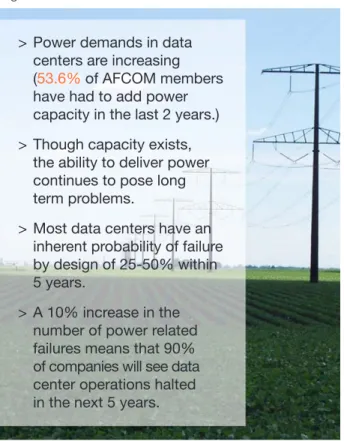
Figure 1 identifies some of the issues raised in the
AFCOM survey: Figure 1
Source: AFCOM® 2006 Membership Survey
2
> Power demands in data
centers are increasing
(
53.6%
of AFCOM members
have had to add power
capacity in the last 2 years.)
> Though capacity exists,
the ability to deliver power
continues to pose long
term problems.
> Most data centers have an
inherent probability of failure
by design of 25-50% within
5 years.
> A 10% increase in the
number of power related
failures means that 90%
of companies will see data
center operations halted
in the next 5 years.
Many business executives are prone to ignoring “disaster recovery” because disaster seems like an unlikely event. I use the term “business-continuity planning” when I talk about disaster recovery because it suggests a more comprehensive approach to making sure the business keeps running and you can keep making money when something goes very wrong. Often, the two terms are coupled under the acronym BC/DR. At any rate, disaster recovery and business continuity determine how a company will keep functioning after a disruptive event until operations are restored.
To assess how well your organization is prepared for BC/DR, start by asking a few questions:
• Can you identify a single point of failure? • Do you have a backup plan?
• What are the costs of disruption?
If you can’t answer these questions, a strategic plan needs to be developed immediately. Business continuity planning should include ways to improve resiliency and redundancy for critical infrastructures, especially the data center. The objective is to continue to move toward high
availability for all critical services and continue to refine
your recovery plans and continuity failover capabilities for all core systems. It is an important point to remember that the data center is central to business continuity and keeping your systems and applications running. Outsourcing data center operations can help reduce the risk of failure, business disruptions and impact on your bottom line.
Data center outsourcers are offering
Service Level Agreements assuring
100% uptime on data center
space, conditioned power, network
access and Internet bandwidth.
These are primary elements of business continuity
planning that can be offloaded, making it easier for IT
managers to reduce the potential cost of disruption.
What’s Your Data Center Strategy?
Many growing companies sooner or later findthemselves at a crossroads when it comes to their data center strategy. Moving ahead requires an honest assessment of where they are and, more importantly, where they want to go. In developing a data center strategy, your company needs to consider several questions: Is the data center a commodity? Should it be viewed as a utility and paid for based on the amount used, like electricity or water? What are the requirements of managing the data center? What are your capabilities to design, build and operate a data center? Do you have the know-how within your staff? How will you scale up to accommodate growth?
Another survey conducted by CIO magazine and Computerworld polled IT managers about their data center strategies. Roughly half of the 389 IT executives surveyed reported they had plans to expand their data center facilities, while 21 percent said they planned to consolidate. Close to half (47%) of those surveyed said their companies will expand their data center facilities within three years, while one-third (32%) planned on maintaining the same facilities.
Roughly half of the 389 IT executives
surveyed reported they had plans to
expand their data center facilities,
while 21 percent said they planned
to consolidate. Close to half (47%) of
those surveyed said their companies will
expand their data center facilities within
three years, while one-third
(32%) planned on maintaining the
same facilities.
~ CIO magazine and Computerworld poll
The primary drivers for making adjustments to their data centers were to reduce costs (63%), to bring in new capabilities without increasing costs (60%) and to consolidate multiple data centers into fewer locations for economies of scale and to centralize IT (37%).
Think of how much sense it would make if your data center could automatically adapt to the support your business requirements, supplying more capacity as needed and offering the economies of scale necessary to reduce costs? I truly believe that companies will be successful when they begin to develop a strategy that incorporates using experts to manage their data centers
and provide flexibility to address change.
How Do You Manage Growth?
How do you manage organic growth as well as keeping up with mergers and acquisitions? How far off are your calculations on growth and what do you do if you miss the target? For instance, how do you handle running out of capacity or overbuilding? What is your plan to design, build and operate your IT infrastructure to meet the needs of the business?
Business growth puts pressure on IT to deploy additional applications and servers within the data center.
Unfortunately, data centers are sometimes limited in capacity, and building out new capacity can be cost-prohibitive for many companies. Large or small, all environments may also have a limited amount of power, cooling capacity and space that they can support without costly upgrades.
Copyright © 2007 i/o Data Centers, Inc. All rights reserved. | www.iodatacenters.com | 866.316.5189
AFCOM’s most recent membership survey (see Figure 2), provides some insight into the drivers of growth and change at data centers. In the survey, IT managers cited business growth as the top reason for relocating or make major improvements to their data centers, followed by aging facilities and new technologies.
Figure 2
Source: AFCOM® 2006 Membership Survey
Building or expanding a data center requires a significant
investment in terms of money and time.
Outsourcing the data center provides
a powerful alternative that can enable
your company to quickly grow without
the capital and resource commitments
associated with building and running
your own.
How Do You Manage Data Center Costs?
Listen to a group of IT executives talk about data center requirements, and you’ll hear some common themes: IT costs are escalating, data centers are multiplying, utilization is way too low, power and space requirements are way too high and complexity is increasing. As aresult, businesses have a difficult time keeping up and
staying competitive.
For instance, a typical 10,000-square-foot data center consumes enough power to turn on more than 8,000 60-watt light bulbs. That amount of electricity is six to ten times greater than the power needed to operate a typical
office building at peak demand, according to scientists
at Lawrence Berkeley National Laboratory. Given that most data centers run 24/7, the companies that own them could end up paying millions of dollars a year just to keep their computers turned on. Consider the value
proposition of a data center that offers the flexibility of
capacity on demand, while eliminating the risk of wasted resources due to overbuilding.
The greatest challenge in managing costs is maintaining long-term IT investments, even as corporations struggle
to meet short-term financial commitments. Data center
managers are looking for a variety of ways to address this dilemma. Adding hardware has been more cost effective in the short run than adding people to scale up to solve IT challenges. But how effective is that hardware investment over time?
Perhaps the most significant reason that
enterprises choose to outsource data
center operations is the substantial cost
savings of leasing data center space
versus building.
Data centers are being squeezed by a variety of internal and external pressures such as power consumption, HVAC requirements, new servers, human errors, patching, asset tracking and more. On top of all this, you have to keep up with dynamically changing business requirements. You need a solution that will allow you to align IT to your business, control costs and minimize risks.
In recent surveys on data center strategies, IT executives consistently rank power and cooling among the top items of concern. This is a major change from a few years ago, when the thermal characteristics of servers would hardly register a blip on the radar screen. As an example, an IDC study as displayed in Figure 3 illustrates that in recent years, the rate of server technology advancement has outpaced the data center’s ability to support these systems, especially in terms of power and cooling.
Figure 3
Source: IDC, 2006
Historically, the objective of IT executives was to maximize their computer resources and performance. The associated expense of power and cooling was simply tied to the cost of doing business. But the
dynamics are shifting, with processing becoming more commoditized, and power and cooling becoming the limiting factors that require optimization.
As the saying goes, “You can not manage what you can not measure.” Surprisingly, however, many IT executives and data center managers do not even know how much power their IT equipment consumes. Typically, the facilities manager receives a single electric bill and is unable to break out IT consumption from that of other operations. As server power costs continue to rise, data center managers need the ability to determine which servers, systems or group of systems within their data centers are consuming large proportions of energy. The objective should be to eliminate the charge-back process and isolate your true costs instead of estimating them. Your goals should be to reduce the total cost of ownership, increase reliability and availability of business services, improve business agility and generate value.
Talking the Talk
Communicating and planning what is required to support these objectives with a data center outsourcing partner
can require communications and coordination finesse
that, frankly, not every CIO is skilled at today.
CIOs need to find data center partners
that understand and speak their
language – not strictly technology,
but the language of their business
requirements. An outsourcing partner
needs to understand how its services will
help its customers improve operations
and reach their business goals.
Now more than ever, CIOs must be effective directors of multiple outsourced partners, much like a symphony conductor. Instead of building a data center that provides excess capacity for growth and maintaining costly overhead for potential customer requests, we must now manage to a more exacting margin. Buying only what you truly use from an outsourced partner can trim millions off the ever-expanding technology budgets that come with running your own data center. By off-loading the capital and infrastructure costs of designing, building and operating data centers across multiple facilities and customers, businesses can get services at a fraction of the cost of building an in-house data center.
What Are Your Core Competencies?
So where do you start to begin developing a strategy to address these issues?A first step is to determine your core
competencies. What responsibilities and
functions do you keep and which do
you outsource?
Are you best at providing business solutions or coding? Is it your plan to implement out-of-the-box technology? If so, you should consider shedding legacy services and focus instead on supporting your corporation’s key objectives. A question to ask is what can you do
to move fixed costs to variable costs and support your
organization’s business needs.
Is managing facilities in your job description? If so, why not take on the mailroom and cafeteria? More companies are outsourcing non-core functions such as the call center, travel services and even the cafeteria to outside organizations that specialize in those services. The majority of the country’s data centers are using a lot more energy than they should. A survey of 19 data centers by the Uptime Institute, an organization of businesses whose mission is to optimize data center performance and investments, found that 1.4 kilowatts of power are wasted for every kilowatt of power consumed in computing activities, more than double the expected energy loss. In my view, that waste is a result of a lack of expertise in and resources dedicated to managing power consumption. During my tenure as a CIO I had enough on my plate besides trying to understand arcane heating and cooling formulas. In today’s environment, IT managers must have an understanding of their organizations’ systems thermal
characteristics, to begin to source more efficient server systems. Power efficiency is particularly important
because improvements can be achieved in both server power and in cooling. Every watt consumed by a server dissipates one watt of heat, which in turn requires an additional watt of energy to cool. Therefore, every watt reduced from a server’s initial consumption will save the organization more than the cost of one watt when taking both power and cooling into account. Furthermore,
as new servers are deployed, they are required to fit
within the thermal capacity of the existing data centers. Deploying too many power-hungry systems could exceed the current limitations, forcing a disruptive
data center retrofit or even expensive new facility
construction.
For me, and for many CIOs, all of these calculations are way outside the realm of my priorities and my role as someone who is helping my company use technology to add value. Where do you draw the line on what you are responsible for? Is it information technology or space, power and air handlers? Again, you need to ask yourself: What are my core competencies and what do I want to manage?
Copyright © 2007 i/o Data Centers, Inc. All rights reserved. | www.iodatacenters.com | 866.316.5189
By shifting responsibility for data center planning, operations and maintenance to the experts, you free up yourself and your key staff to focus on more important issues. You can reduce the time-to-value on technology initiatives by applying highly strategic internal resources to critical projects, instead of managing the day-to-day data center operations.
Moving Away from “Owning” Data Centers
and Leave It to The Experts
Managing a data center requires many skills comparable to being an effective landlord. For today’s CIOs, the tasks of managing environment, power, rack space and architecture diagrams is like focusing on how the car is designed when they really should be learning how to drive. Designing, building and owning a data center can be a complicated, time consuming, and expensive endeavor. Many businesses are growing so quickly that
by the time they’ve finished one data center, they are
already out of capacity. Outsourcing your data centers provides a powerful alternative to allow you to quickly grow without the capital and resource commitments inherent in building your own data center.
Outsourced data centers offer many advantages over traditional data centers, such as having professionals manage the day-to-day power, bandwidth and other basic requirements. You can also avoid the huge hidden personnel cost in deploying, running and maintaining the center.
Some additional benefits of outsourcing data centers are:
• High availability
• Scalability and flexibility to address changing
requirements
• Better solutions for providing space, power and cooling
• Services and solutions available sooner to meet business requirements
• Increased service levels
• Fully trained technicians on site • Code of conduct for contractors
• Contractors are an assigned account team
In my opinion, the benefits of outsourcing clearly outweigh
any reasons for keeping data center responsibility in-house. Businesses that provide outsourced data center services incorporate best practices and processes and can achieve economies of scale. They provide their customers with the
flexibility to respond more quickly to demands for additional
computing power. That, in turn, means your company is better positioned to respond to new market opportunities.
Managing in a High-growth Environment
To be truly effective in today’s fast-paced, high-growth technology environment, CIOs must be more in tunewith how IT solutions deliver business results and less involved with the technical details of how a data center or other project is architected. Today, technical knowledge and hands-on skills are simply the price of admission for an IT professional. To become an agent of change, you must understand your company’s strategic business goals and you must envision and communicate how technology will serve those goals. As we move forward into the next 10 years of computing I believe we will see a profound change in how technology environments are architected, hosted and managed.
Soon it will not be justifiable for
businesses to manage their own data
center because the price of outsourced
services will be too attractive to ignore.
Focusing on delivery of solutions to your customers and orchestrating all of the players in harmony to deliver the best possible product and solutions will be the chief mission for IT managers. In summary, outsourcing enables organizations to focus on core competencies, allowing the business to concentrate resources on opportunities offering the greatest potential for growth.
6
Building vs Outsourcing Your
Data Center is sponsored by
i/o Data Centers.
i/o Data Centers is a completely integrated data center services firm that designs, builds and operates best-in-class data centers. With i/o Data Centers, you get more than just a data
center – you get a dedicated team of data center
professionals dedicated to assessing, adapting and evolving with the data center needs of your business.
i/o Data Centers, based in Phoenix, Arizona,
specializes in world class data center colocation
services for large enterprises. To learn how you can outsource your data center based on your unique business requirements, visit i/o Data