THE IMPACT OF KOREAN PERFORMANCE
BUDGETING ON BUDGETARY
PROGRAMMES
By INCHEUL CHO
A thesis submitted to
The University of Birmingham
for the degree of
DOCTOR OF PHILOSOPHY
Institute of Local Government Studies
School of Government and Society
The University of Birmingham
November 2010
ABSTRACT
This study examines the impact of the Korean system of performance budgeting on government spending programmes. It sets out to examine the associations between a programme‟s future budget and its past performance and also the impact of performance budgeting on managerial practices.
Much of the study uses quantitative techniques – particularly regression analysis and analysis of variance (ANOVA). Regression analysis is used to examine the links between budget decisions and performance, by analysing the impact on budget changes of SABP (Self-Assessment of Budgetary Programmes) scores (or grades) of programmes which the SABP assessed from 2005 to 2007. Secondly, ANOVA is used to examine changes in seven managerial practices: goal clarity, goal difficulty, budget adequacy, budget flexibility, budget participation, procedure formalization, and support from higher management, using perceptual data of 807 administrators in the Korean central government.
This thesis found evidence of two main effects of Korean performance budgeting on government operations. Firstly, budget decisions have a statistically significant correlation with the performance of programmes or SABP scores (or grades). Secondly, Korean performance budgeting tends to initiate changes in programme-managerial practices within spending organizations, and to improve programme performance.
DEDICATION
TO MY PARENTS
TO MY WIFE, HYANG SOON PARK
ACKNOWLEDGEMENTS
This thesis has benefited greatly from the help and guidance of my supervisors, Reader Peter A. Watt and Professor Tony Bovaird. Their comments and support have given me strong encouragement throughout the process of writing my thesis. I thank them for those hours of patient consultations and thoughtful queries that inspired me.
I am very grateful to all the staff and fellow PhD students in the Institute of Local Government Studies, particularly John W. Raine, Phillip Whiteman and Adrian Campbell for their insightful suggestions and comments on my thesis. Also, I am very thankful to Professor Sheila Ellwood, my external examiner, for considerate consultations.
I am highly indebted to my sponsor, the Korean central government, who provided me with generous financial and other assistance. Without their sponsorship, my study in the UK would not have been possible.
I would like to express my sincere thanks to those who, despite their busy schedules, responded to my questionnaires. Without their kind support, my research could not have been completed. I am especially grateful to my Korean colleagues for giving me all kinds of help throughout my PhD courses.
Finally, my strongest appreciation goes to my family, for the sacrifices they unselfishly made so that I could complete my studies. In particular, I owe my wife, Hyang Soon, an enormous debt of gratitude.
i
TABLE OF CONTENTS
TABLE OF CONTENTS ... i
LIST OF TABLES ... v
LIST OF FIGURES ... viii
ABBREVIATIONS ... ix
CHAPTER 1 INTRODUCTION ... 1
1.1 Research Objectives ... 1
1.2 The Scope of the Research ... 6
1.3 The Structure of the Thesis ... 9
CHAPTER 2 DISCUSSIONS OF PERFORMANCE BUDGETING .. 13
2.1 Overview ... 13
2.2 Performance in the Public Sector ... 16
2.2.1 Definition of Performance ... 16
2.2.2 Determinants of Performance ... 19
2.2.3 Measurement of Performance ... 32
2.2.4 Conclusion ... 40
2.3 Performance Budgeting in the Public Sector ... 41
2.3.1 Introduction ... 41
2.3.2 Definitions of Performance Budgeting ... 43
2.3.3 Types of Performance Budgeting ... 46
2.3.4 Recent Trends ... 52
2.4 Impacts of Performance Budgeting in the Public Sector ... 55
2.4.1 Introduction ... 55
2.4.2 Impact on the Public Sector ... 58
2.5 Conclusion ... 60
CHAPTER 3 KOREAN PERFORMANCE BUDGETING ... 63
3.1 History ... 63
3.2 A Framework for Korean Performance Budgeting ... 67
ii
3.2.2 Measuring Programme Performance ... 69
3.2.3 Integrating Performance Information into the Budget Process ... 74
3.2.4 Roles Played by Individual Organizations ... 76
3.2.5 Limitations ... 78
3.3 Self-Assessment of Budgetary Programme (SABP) ... 83
3.3.1 Background ... 83
3.3.2 Institutional Overview ... 84
3.3.3 Programmes Assessed with SABP in Korean public finance... 94
3.3.4 SABP Operating Mechanisms ... 96
3.3.5 Checklists as a Means of Assessing Performance ... 100
3.3.6 Use of SABP Results ... 105
3.3.7 Limitations ... 107
3.4 Impacts of Korean Performance Budgeting ... 111
3.4.1 Overall Impacts on the Korean Central Government ... 112
3.4.2 Impacts on Budget Allocations ... 115
3.4.3 Impacts on Managerial Practices ... 116
3.5 Conclusion ... 118
CHAPTER 4 RESEARCH METHODOLOGY ... 121
4.1 Introduction ... 121
4.2 Developing Research Questions ... 122
4.2.1 Earlier Studies ... 122
4.2.2 Research Questions ... 127
4.3 Methods of Analysis ... 133
4.3.1 Analysis Framework ... 133
4.3.2 Analysis of Budget Allocation Changes ... 136
4.3.3 Analysis of Managerial Practice Changes ... 145
4.4 Conclusion ... 162
CHAPTER 5 A STATISTICAL ANALYSIS OF SABP RESULTS .... 165
5.1 Introduction ... 165
5.2 Statistical Characteristics ... 166
5.2.1 Overall Review ... 166
5.2.2 Characteristics of Questions ... 168
iii
5.2.4 Characteristics of Programme Types ... 172
5.2.5 Characteristics of Organizational Groups ... 176
5.3 Conclusions ... 179
CHAPTER 6 EMPIRICAL ANALYSIS OF BUDGET ALLOCATION
CHANGES ... 181
6.1 Introduction ... 181
6.2 Data Descriptions ... 183
6.3 The Results of the Analysis ... 195
6.3.1 Introduction ... 195
6.3.2 Relationships between SABP Assessments and Budget Allocations by the MPB ... 197
6.3.3 Relationships between SABP Assessments and Budget Requests by Spending Ministries and Agencies ... 211
6.3.4 Relationships between SABP Assessments and Budget Appropriations by the National Assembly ... 219
6.4 Conclusion ... 226
CHAPTER 7 EMPIRICAL ANALYSIS OF VARIATIONS IN
MANAGERIAL PRACTICE ... 231
7.1 Introduction ... 231
7.2 Data Descriptions ... 233
7.2.1 Quality of the Data ... 233
7.2.2 General Characteristics of the Data ... 238
7.3 Impacts on Managerial Practices ... 241
7.3.1 Introduction ... 241
7.3.2 Impacts on Programme Goal Setting ... 244
7.3.3 Impacts on Budget-Managerial Practices ... 254
7.3.4 Impacts on Other Programme-Managerial Practices ... 266
7.3.5 Conclusion ... 275
7.4 Impacts on Programme Performance ... 278
7.4.1 Impacts on Programme Performance ... 278
7.4.2 Differences in the Impact of Managerial Practices on Programme Performance ... 284
iv
CHAPTER 8 CONCLUSION ... 293
8.1 Summary of the Thesis ... 293
8.2 Policy Implications ... 297
8.3 Future Research Areas ... 302
BIBLIOGRAPHY ... 305
APENDICES ... 323
APENDIX 1 A QUESTIONNAIRE (ENGLISH) ... 323
v
LIST OF TABLES
Table 2-1 Characteristics of performance indicators for different purposes ... 39
Table 3-1 Extension of the numbers of PMS participants ... 72
Table 3-2 GPA vs. NFA regarding the performance management of Korean government ... 81
Table 3-3 Relations between grades and numeric scores ... 85
Table 3-4 Ratings by the PART ... 90
Table 3-5 Differences between SABP and the PART ... 93
Table 3-6 A standard for answering a question (example) ... 97
Table 3-7 Checklists for SABP ... 102
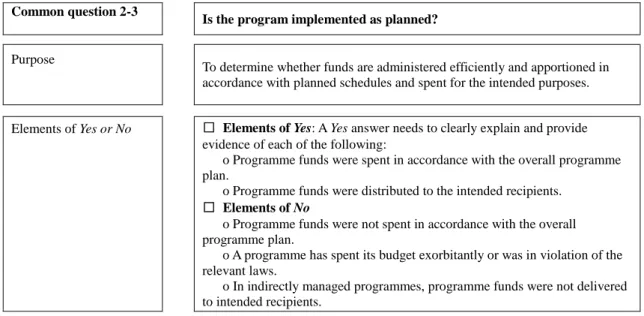
Table 3-8 Relationship between the four levels of answer and scores in Questions 3-2 and 3-3 ... 105
Table 3-9 Means and Standard Deviations of SABP scores (2005-2007) ... 110
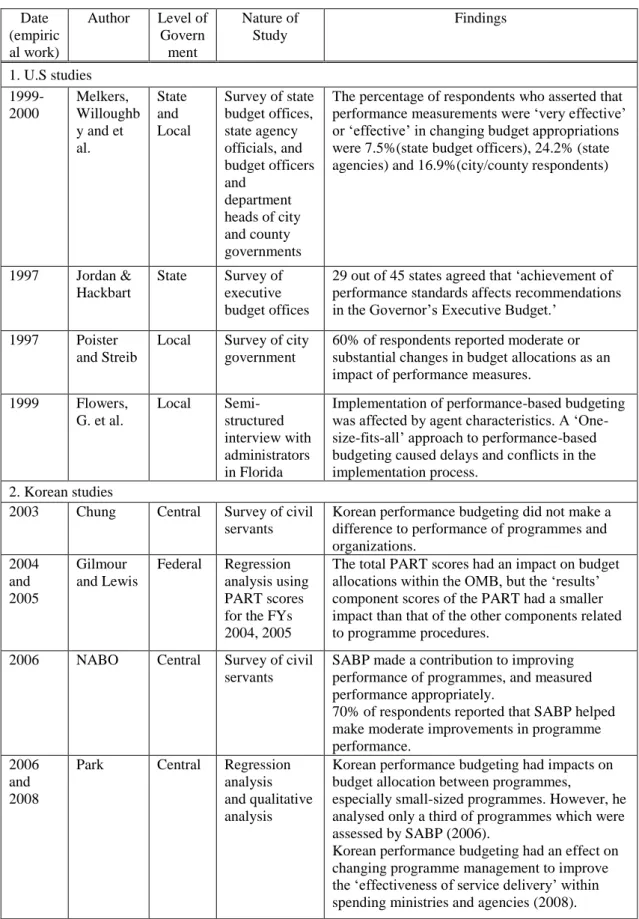
Table 4-1 Summary of existing studies on public performance budgeting ... 125
Table 4-2 Estimated results for the models in the budget proposal (three-year pooled data) ... 144
Table 4-3 Managerial parctice variables and grounds ... 146
Table 4-4 Items and their sources, depending on variables... 152
Table 4-5 Composition of questionnaire ... 155
Table 4-6 Response rates of ministries and agencies ... 156
Table 4-7 Demographic features of respondents ... 156
Table 4-8 Summaries of Analysis Methods ... 164
Table 5-1 Frequency distributions of grades ... 167
Table 5-2 Yes/No distribution between the questions ... 167
Table 5-3 Proportion of „Yes‟ answers to questions related to a performance plan ... 169
Table 5-4 Distribution of scores between sections ... 172
Table 5-5 Distributions of scores between programme types ... 173
Table 5-6 Differences in average scores between Economy- and Welfare-related programmes ... 174
Table 5-7 Differences in average scores according to budget size ... 176
vi
Table 6-1 Descriptive statistics for individual budget stages ... 184
Table 6-2 Programmes excluded from this analysis ... 184
Table 6-3 Budget change differences at the presidential budget stage ... 187
Table 6-4 Distribution of scores set by the MPB ... 190
Table 6-5 Distribution of grades set by the MPB for the truncated sample ... 192
Table 6-6 Pearson correlation coefficeints between proposed budgets and SABP scores by the MPB ... 192
Table 6-7 Differences between programme budgets at different budget stages in Korea ... 196
Table 6-8 Relationship of SABP scores to changes made to budget proposals by the MPB ... 201
Table 6-9 Differences in the impact of the different grades on changes made to budget proposals by MPB ... 203
Table 6-10 Relationship of programme components‟ SABP scores to changes made to budget proposals by MPB ... 205
Table 6-11 Interaction effects between SABP scores and programme groups at the MPB stage ... 209
Table 6-12 Relationships between SABP scores and changes to budget requests in spending ministries and agencies... 214
Table 6-13 Differences between grades in their impact on changes to budget requests in spending ministries and agencies... 215
Table 6-14 Relationships between programme components‟ SABP scores and changes to budget requests in spending ministries and agencies ... 217
Table 6-15 Interaction effects between SABP scores and programme groups in spending ministries and agencies ... 218
Table 6-16 Relationship of SABP scores to final budget changes at the National Assembly stage ... 221
Table 6-17 Differences between grades in their impact on changes to budget request in the National Assembly ... 222
Table 6-19 Interaction effects between SABP scores and programme groups in the National Assembly ... 225
vii
Table 6-20 Variations of the score’s and current year’s budget changes’ coeffficeints
between budgeting stages in Model 2 ... 225
Table 7-1 Corrected item-to-total correlations ... 235
Table 7-2 Factors with an eigenvalue greater than 1.0 in eight potential variables. ... 236
Table 7-3 Unrotated factor loadings and Cronbach‟s alpha in eight potential variables ... 237
Table 7-4 Case processing summaries ... 239
Table 7-5 Correlations between eight variables (Pearson) ... 240
Table 7-6 Means and confidence intervals for the seven managerial practices ... 242
Table 7-7 ANOVA results for perceived changes in goal clarity among groups ... 248
Table 7-8 ANOVA results for changes perceived in goal difficulty among groups ... 253
Table 7-9 ANOVA results for changes perceived in budget adequacy among groups . 258 Table 7-10 ANOVA results for changes perceived in budget participation among groups ... 262
Table 7-11 ANOVA results for perceived changes in budget flexibility among groups ... 264
Table 7-12 ANOVA results for changes perceived in procedure formalization among groups ... 270
Table 7-13 ANOVA results for perceived changes in support from senior managers 273
Table 7-14 Summary of the ANOVA results ... 276
Table 7-15 ANOVA results for differences in performance among groups ... 283
Table 7-16 Relationships of programme-managerial practices with programme performance ... 285
viii
LIST OF FIGURES
Figure 1-1 Structure of this thesis ... 12
Figure 2-1 Definition of performance in the public service production process ... 17
Figure 2-2 An adaptive structuration model ... 56
Figure 3-1 Relationship between the three sub-systems ... 70
Figure 3-2 Ratings by the PART ... 90
Figure 3-3 Expenditure ratio to GDP among major OECD countries ... 94
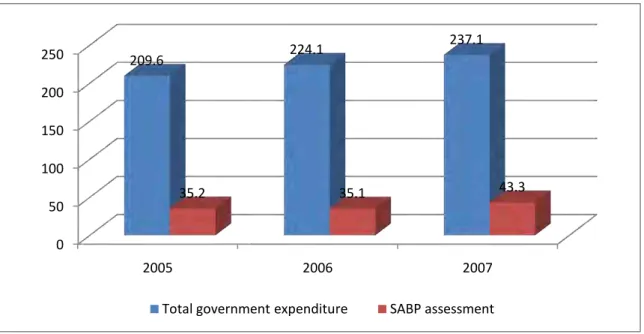
Figure 3-4 The budget amount of programmes assessed with SABP ... 96
Figure 3-5 The procedures and roles of SABP ... 100
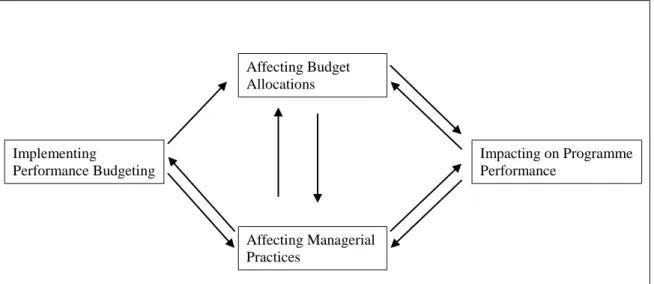
Figure 4-1 Impact process of performance budgeting ... 128
Figure 4-2 Analysis framework ... 134
Figure 5-1 Frequency graphs of grades ... 167
Figure 5-2 Graph showing the proportion of „Yes‟ answers to questions related to a performance plan ... 169
Figure 5-3 Graphs showing the distribution of scores between sections ... 172
Figure 5-4 Graphs of scores distributed between programme types ... 173
Figure 5-5 Graphs showing the distribution of scores between organizational groups 178 Figure 6-1 Histograms of budget changes to assessed programmes ... 189
Figure 6-2 Graphic comparison of the truncated sample with the full sanple ... 190
Figure 6-3 Scatter diagrams of the relationship between budget changes and SABP assessments at the presidential budget stage ... 194
ix
ABBREVIATIONS
Art. Article
GDP Gross Domestic Product
GPA Government Performance Assessment Act IES In-depth Evaluation System
KDI Korea Development Institute MBO Management By Objectives MPB Ministry of Planning and Budget NABO National Assembly Budget Office NFA National Finance Act
OPC Office of Policy Coordination under the Prime Minister OMB Office of Management and Budget
PMS Performance Management System PART Programme Assessment Rating Tools PPBS Planning Programme Budget System RMO Resource Management Office
RND Results Not Demonstrated
SABP Self-Assessment of Budgetary Programmes SOC Social Overhead Capital
1
CHAPTER 1 INTRODUCTION
1.1 Research Objectives
A budgeting system for the public sector is something that has been evolving continuously ever since the first efforts were made to establish a modern format for recording and regulating public expenditure (Nah, 2007). In the early twentieth century, the line-item budgeting system was introduced into one US local government, mainly to control the arbitrary approach of bureaucrats to making and executing budgets. Later, in response to changes in financial circumstances, the orientation of budgetary practice was changed from controlling the budget to linking it to performance. Introducing the concepts of cost and performance into public budgeting triggered the implementation of various types of performance budgeting by the US federal government: Zero-Based Budgeting (ZBB); the Planning-Programming-Budgeting System (PPBS); Management by Objectives (MBO); and others (Tyer and Willand, 1997).
Since the 1980s, when public finance departments found themselves operating in tougher financial circumstance than ever, Australia, New Zealand, the United Kingdom, the United States, and other developed countries have introduced performance budgeting systems in a variety of ever more elaborate types (Kim, 2003; Andrews, 2003). They have continuously struggled to associate budget allocations with
2
programme results. For example, in 2002, the US federal government designed the Programme Assessment Rating Tool (PART) in order to assess individual programme performance. In 2005, the Korean central government devised Self-Assessment of Budgetary Programmes (SABP) with reference to the PART (MPB, 2006a). Although SABP has many similarities to PART, one difference as discussed below is that currently SABP, unlike PART is largely limited to capital programmes, because of the current accounting system and the fact that programme managers have little authority in choosing their staff. It is planned to introduce a new accrual accounting system in 2012 that will partly address this issue.
These above types of performance budgeting aim to improve government performance by linking budget allocations with measured performance. For example, since introducing SABP in 2005, the Korean central government has argued that Korean performance budgeting has associated budget decisions with performance, and that this has contributed to improving programme performance. It has even been argued that Korean performance budgeting, supported by SABP, tends to be particularly direct in the way it links budgets and performance, one example of this being the stipulation in the Budget Request Guidance issued by the Ministry of Planning and Budget (MPB) that spending ministries and agencies should reduce by more than 10% the budget of any programmes assessed as „Poor‟ by SABP. Indeed, in the budget year 2006 the MPB reduced by 25% the budgets of programmes which had received the SABP grade „Poor‟; in the year 2007 the reduction to such programmes‟ budgets was 24 %; and in 2008 it was 15% (Park: 2006).
3
In practice, there may have been various arguments as to whether performance budgeting systems have served their primary purpose. Basically, there needs to be investigation of opposing arguments about whether, and how closely, performance budgeting models have linked budget allocations with programme performance. From the viewpoint of Giddens‟ theory of structuration (2007), an institution interacts with its actors. These interactions may lead to impacts on a wide range of government management areas such as organizational structure, finance, personnel. In this context, performance budgeting, as one of the institutions managing government, may affect personnel and organizational behaviour, for example, in managerial practices. In terms of its impact, there needs to be examination about how much they have improved the performance of individual programmes or government management.
Studies are required to ascertain the efficacy of performance budgeting and its impact on government operations. Following their implementation of performance budgeting, various governments have argued that it has made a key contribution to improving public activities. For example, the Korean central government (2003) has argued that performance budgeting has changed decisions about budget allocations among programmes and that it has led to improved use of public finances. On the other hand, many studies have reported that performance budgeting models have not had such a great success. According to an OECD investigation (Curristine, 2005a), there is no evidence to support the thesis that performance budgeting has directly improved the performance of individual programmes or of aggregate public finance. Schick (2003. p 83) concluded that „efforts to budget on the basis of performance almost always fail‟ due to difficulties in associating budget decisions with performance. Furthermore, there have been few studies about changes in managerial behaviour.
4
These opposing arguments, which have been made against a background of growing attention to performance budgeting, may result from practical and technical problems, rather than from problems inherent in performance budgeting itself. From a practical point of view, because performance budgeting encompasses diverse types or models which individual governments have developed, it may produce different impacts, depending on the particular approach, objective or phase of development (Curristine, 2005a). As a result, it is difficult to identify universal impacts of performance budgeting. Different research studies tend to produce different conclusions.
In addition, technical difficulties in measuring performance tend to make it harder to identify accurately the impacts of performance budgeting on public finance or government activities. Contemporary programmes require more elaborate and sensitive techniques for measuring performance, because the facets of performance and the interests of stakeholders are becoming more complex and intricate than ever. Measuring performance is a political process which becomes entangled with the interests of various stakeholders (Bouckeart and Halligan, 2008). As a result, performance tends to be defined in diverse ways, for example as economy, efficiency, or effectiveness, depending on the emphasis of the assessment.
It is also the case that it is difficult to separate the impacts of performance budgeting from those of other reform measures, because the system tends to be introduced as part of a package of government management reforms. At the current stage of technological development, it has been difficult to provide tools capable of overcoming these more nuanced problems of performance measurement.
5
Inevitably, many researchers tend to take a case-by-case approach to identifying the efficacy or impact of performance budgeting. The Korean version of performance budgeting may be a particularly interesting object for research because, in assessing budgetary programmes with SABP, it translates programme performance into scores and grades. The numeric scores and grades of programmes are useful for identifying whether Korean performance budgeting has successfully linked budget allocations with programme performance. Furthermore, the Korean version of performance budgeting can be expected to help researchers address how it has changed programme-managerial practices and programme performance, because it uses checklists which may be closely related to both of these areas in assessing the results or status of programme execution.
To date, there have been few empirical studies on the efficacy or impact of current Korean performance budgeting, because its history is so short. Regressing budget changes with SABP grades, Park (2006) reported that Korean performance budgeting had linked budget decisions with performance. The National Assembly Budget Office (2007) conducted an opinion survey of Korean central government civil servants to find out how SABP had impacted on public finance. The survey suggested that SABP had contributed to improving the performance of public finance. However, the two studies have some gaps that need to be filled. Park‟s conclusions are limited in that he analysed only about a third of programmes assessed with SABP. Nor did the National Assembly Budget Office‟s analysis reach a more helpful conclusion, because its survey dealt with the general impacts of SABP rather than with the specific impacts of Korean performance budgeting.
6
This research, in this context, aims to extend existing analyses of the impacts of Korean performance budgeting. It does this firstly by considering every programme assessed by SABP during the period under investigation, so that it gives more generalized suggestions about the links between budget decisions and performance. And secondly, it examines changes in programme-managerial practices and in programme performance, in an attempt to find more specific evidence about the dynamic impacts of Korean performance budgeting on public management.
This study is expected to make a minor contribution to constructing a bridge over a small chasm which existing research has rather missed, because it employs a more comprehensive approach, considering changes in both budget allocations and programme-managerial practices. Indeed, there have been few previous research studies which have taken a comprehensive approach to identifying the impacts of Korean performance budgeting on government, despite the possibility that these may affect a wide range of government activities such as budget decision-making and managerial practices. Furthermore, this study provides empirical evidence of the impacts of Korean performance budgeting on budget decisions and programme-managerial practices. From a practical point of view, the research is expected to contribute to providing specific indications as to how current performance budgeting efforts could be improved.
1.2 The Scope of the Research
7
served its purpose. This is a hard task, as stated earlier, because of practical and technical problems. Thus, limiting the scope of this research may be helpful for achieving its goal. Although there have been various types and models of performance budgeting used by various governments, this research focuses on the Korean version of performance budgeting. As far as the analysis is concerned, it aims to identify how Korean performance budgeting has linked budget decisions with performance, and what impacts it has had on budgetary programme-managerial practices and programme performance within spending organizations of the Korean central government.
The Korean central government, in 2000, introduced a performance budgeting system as one of the fiscal reform measures it put in place after the Asian Financial Crisis of the late 1990s. In 2005, the performance budgeting system was modified by the addition of SABP, so that budget allocations might rely more on programme results. SABP is a critical tool with which the Korean central government links budget decisions to performance. Before budgeting every year, the Korean budgetary authority assesses the results or performance of budgetary programmes using SABP. SABP produces numeric scores from 0 to 100 for programmes, and then translates these scores into one of four grades: „Poor‟, „Modest‟, „Somewhat effective‟, and „Effective‟. Following its implementation, SABP was used to assess 1717 budgetary programmes listed on the initial assessment plan for the year 2005 as follows: 555 programmes in 2005, 577 in 2006, and 585 in 2007. For all these programmes, their performance was represented as a numeric score or as one of four grades. In aiming to describe the links between budget decisions and performance, the research concentrated on this three year period of the implementation of Korean performance budgeting. As regards the question of how far
8
the results of the study can be generalized, it should be noted that the study considered the SABP assessment of all budgetary programmes which had been scheduled for such assessments in the three years of its duration.
As described above, Korean performance budgeting may have an effect on personnel and organizational behaviour, for example, in managerial practice. In the case of an assessment, an element of performance budgeting, this will be followed by a response. It is this response that may result in changing the behaviour of an organization or its personnel. According to both the National Finance Act and the Government Performance Assessment Act, the Korean central government assesses programmes using SABP and utilizes the assessments for making budget decisions and evaluating ministry (and agency) performance or personnel performance. As a result, Korean performance budgeting has the potential to cause changes in wide areas of government activities. However, this study is limited to changes in programme-managerial practices. This research uses the perceptions of administrators about the contribution of Korean performance budgeting in relation to changes in seven programme-managerial practices (goal clarity, goal difficulty, budget adequacy, budget participation, budget flexibility, procedure formalization, and support from senior management) and in programme performance. Conducting a survey in 2009, this research used the survey to analyse the impacts which Korean performance budgeting had had on managerial practices or programme performance up until that time.
To sum up, this thesis focuses on the impacts of Korean performance budgeting on government management. The analysis of links between budget decisions and
9
performance is confined to the three budget years 2006, 2007, and 2008. In terms of changes in the eight practice factors, this thesis measures them for the year 2009. However, the dynamic processes of their changes are beyond the scope of this research.
1.3 The Structure of the Thesis
This thesis consists of seven chapters. Figure 1-1 illustrates the structure of the thesis. Chapter 1 introduces the objectives, scope, and configuration of this thesis.
Chapter 2 provides a survey and analysis of existing research studies on performance and performance budgeting. This chapter first defines the concept of performance and then examines the factors which may influence programme performance within an organization. Following the descriptions of performance, a variety of performance budgeting systems implemented since the 1950s are introduced, and recent developments in performance budgeting are presented. Finally, this chapter describes the impacts of performance budgeting on government operations.
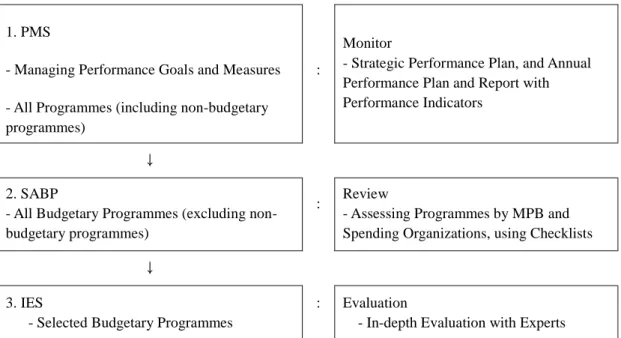
As noted earlier, this thesis focuses on Korean performance budgeting. In Chapter 3, the process of Korean performance budgeting is specifically described. First, its historical background and details of its introduction by the Korean central government are presented. The framework of the current performance budgeting system is illustrated diagrammatically. The chapter then examines SABP, a critical tool for assessing programmes, comparing it with the Programme Assessment Rating Tool (PART) developed in the United States. Finally, the impacts of Korean performance budgeting
10
are described in the context of reviewing existing research work. This chapter describes its possible contributions to changes in programme-managerial practices, focusing on checklists for SABP.
Chapter 4 develops research questions and determines ways to address them. There are a large number of issues about performance budgeting that need to be dealt with. This thesis starts from the question of how performance budgeting associates budget decisions with performance, bearing in mind that, by linking budget decisions with performance, it aims to improve performance. Furthermore, the thesis raises the question of whether performance budgeting improves performance, and how it changes managerial practices. Chapter 4 introduces techniques for answering these questions. Employing a quantitative approach, in this chapter the thesis constructs models for regressing budget decisions on performance. For analysing changes in practices, seven practice variables and one performance variable are selected, with reference to the discussion in Chapters 2 (literature review) and 3 (Korean performance budgeting) about impacts of Korean performance budgeting on programme-managerial practices which may affect performance. An opinion survey is designed to measure these, and the demographic characteristics of this survey are described.
Chapter 5 provides statistical descriptions of SABP results depending on programme types, and questions and sections in SABP checklists. It is expected to give some suggestions for analysing differences in budget linkages and managerial practice changes among programme groups in Chapters 6 and 7.
11
Chapter 6, using the techniques presented in Chapter 4, conducts an empirical analysis of how Korean performance budgeting has associated budget decisions with programme performance. After describing data, this chapter analyses the regression results of budget changes with SABP scores. More specifically, it identifies differences in the extent of links between ministries and agencies, and the four SABP grades. Also, it examines differences in the links, depending on types of programme. These empirical results are expected to give statistical evidence of whether SABP results have been reflected in budget decisions.
Chapter 7, using the methods discussed in Chapter 4, analyses the impacts of Korean performance budgeting on programme performance and programme-managerial practices within spending organizations. In order to establish the reliability of data gathered in a survey of Korean government administrators, exploratory factor analysis is conducted. The contributions of performance budgeting toward changing eight variables are presented. Differences in these contributions between organizations, programmes, and the uses of SABP results are examined using analysis of variance (ANOVA). Finally, this chapter examines whether these seven practices make a difference to improving performance.
Chapter 8 provides a summary of the thesis, and concludes by discussing the limitations and implications of this research.
12 Figure 1-1 Structure of this thesis
1. Identifying performance factors 2. Defining performance budgeting: basic elements
3. Describing impact on government
1. Identifying basic characteristics 2. Analysing the SABP results 3. Describing impact: budget link and programme-managerialpractices
Defining analysis methods:
Regression analysis andANOVA
Developing research questions:
2. What are the impacts of performance budgeting on programmes, particularly programme-managerial practices and programme performance? 1. Are budget decisions linked to programme performance?
Introduction: The objectives, scope, and structure of this thesis (Chapter 1)
Reviewing the literature dealing with performance budgeting (Chapter 2) Examining Korean performance budgeting (Chapter 3) Constructing methodology (Chapter 4)
Analyzing how budget decisions are linked with performance (Chapter 6)
Conclusion: Summary, policy implications, and future research area (Chapter 8)
Analysing SABP results (Chapter 5)
Analyzing the impacts of performance budgeting on programmes (Chapter 7)
13
CHAPTER 2 DISCUSSIONS OF PERFORMANCE
BUDGETING
2.1 Overview
A budget, a financial plan for what is being done or what it is intended shall be done (Musgrave, 1961), is a not uncommon feature in the life of an individual or an organization, whether the latter is in the private or the public sector. Fleischman and Marquette (1986; re-cited Tyer and Willand, 1997) noted that it is difficult to imagine governments without budgeting. Budgets play a critical role in public management. Wildavsky (1961) compared public budgets to the lifeblood of governments. That is to say, budgets are essential for the management activities of governments.
Schick (1966) argued that a budget, basically, has three functions: control, management, and planning. The earliest modern budget systems placed an emphasis on the control of governments. However, as budget systems have evolved, with the invention of a variety of accounting techniques, auditing techniques, and controls for budget-implementing units, the control function of budgets has attracted less attention than their other functions.
As government activities expanded in the post-World War 2 era, the voting public started to ask critical questions about what was being accomplished. In the mid-1980s,
14
when economic recession deepened, the demand on public services increased but the revenues that governments could call on to provide these were squeezed. To handle these difficult situations, governments concentrated on enhancing the efficiency and effectiveness of public spending. Since then, governments have shown an increasing tendency to shift from detailed input control to a more results-oriented budget management. As a consequence, performance budgeting has regained the attention which it originally received in the 1960s. The new performance budgeting models aim to improve the performance of government operations by associating budget decisions with performance.
Performance budgeting in the public sector has varied widely across the countries which have implemented it, because individual countries have constantly developed their practice. New Zealand, one of the leading countries in the field, began to introduce the present form of performance budgeting in the late 1980s, and was followed in the 1990s by Canada, Finland, the United Kingdom, and the United States. New Zealand has been shifting the emphasis of performance budgeting from outputs to outcomes. France has enacted a law which requires the measurement of outputs and outcomes in budget documentation for government programmes (Curristine, 2005a).
On the other hand, performance budgeting, in particular as a reform lever, may have an impact on various government operations. For example, performance budgeting, at the very least, is required to give spending organizations and administrators increased flexibility so that they can reallocate funds within the controls on budget line items. At the same time it ensures their responsibility for the results of reallocated funds. Thus,
15
returning to performance budgeting may cause spending organizations and administrators to adjust their managerial behaviour. In turn, the adjustment of managerial behaviour specifically related to performance factors may influence the performance of spending organizations‟ activities, including their implementation of policies and programmes. Nonetheless, there have been many arguments about whether performance budgeting has served its primary purpose. Some authors have argued that performance budgeting has failed to link budget decisions with performance and to improve performance (Shick, 2003; Willoughby and Melkers, 2001). Others have reported that it has contributed to the improvement of public finance (MPB, 2006a; Park, 2006; Reddick, 2003; Poister and Streib, 1999).
Performance budgeting, as described above, has been implemented in different forms by many governments. It has contributed to various, and sometimes contradictory, reputations. In order to investigate why it has been viewed in different ways, this chapter reviews various existing literatures which discuss it. Firstly, Section 2.2 examines what performance, a vital element of performance budgeting, is. In this section, the author examines definitions of performance, key performance factors, and some issues that relate to the measurement of performance. Section 2.3 defines what performance budgeting is: its history, definition, and types. Section 2.4 looks into the impact of performance budgeting on government operations. And the last section provides a discussion of the limitations of performance budgeting.
16
2.2 Performance in the Public Sector
2.2.1 Definition of Performance
It is not easy to define performance budgeting in the public sector in a single phrase, because performance has diverse definitions in both the practical and the technical sense. From performance budgeting‟s inception in 1950, the concept of performance in government has evolved in accordance with the objectives of budgeting systems or approaches. Ultimately, performance depends on the objectives of budget management systems (Diamond, 2005).
If the budget management system is a traditional one, performance will be defined by measures of compliance and stewardship. On the other hand, if the budget management system is outcome focused, and judges success in terms of impact on society, in this case performance will be defined by measures of the effectiveness of outputs produced (Diamond, 2005, pp 4).
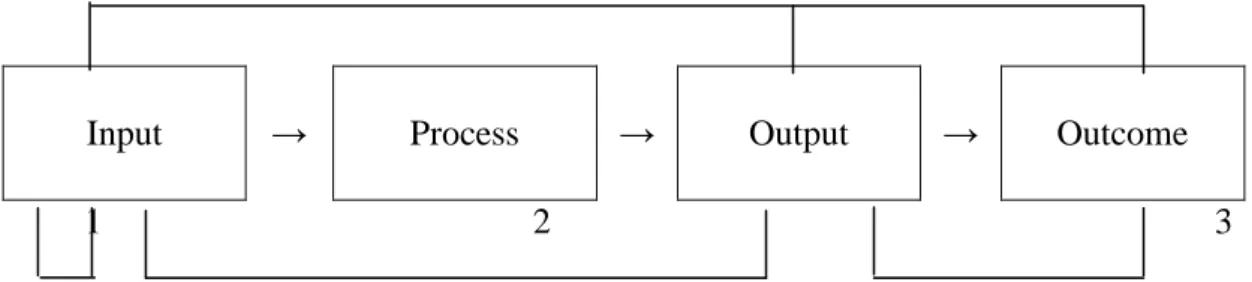
First of all, starting from the general viewpoint that performance budgeting can be defined as a budget management system which places a focus on performance for managing budgets, performance needs to be conceptualized. In order to define performance, a simple logic model of public service production is employed in 1. As seen in the figure, this model illustrates four paths: input, process, output, and outcome. It adds an outcome process to the typical production model of the private sector.
1 This model is regarded as the basis for assessing performance, and has a long tradition (Diamond:
2005.3). Bouckaert & Halligan (2008) state that for public organizations it is crucial to secure the trust of citizens, and so they add the trust stage to the process.
17
Figure 2-1 Definition of performance in the public service production process
Input → Process → Output → Outcome
1 2 3
1. input/input: economy 2. output/input: efficiency 3. outcome/output: effectiveness
The process starts with an input stage. An input is the acquisition of resources such as personnel, infrastructure, finance and other physical assets. In this sense, it is relatively easy to quantitatively measure this stage. A process refers to activities for which inputs are used. Activities produce outputs through implementing policies, programmes, and other government activities. An output is the name given to direct goods and services produced by various government activities. And an outcome, „not what the program or organization itself did but the consequences of what the programme or organization did (Bovaird and Loffler, 2003, pp 130)‟, is taken to be the final or long-term consequences and the effects or impacts on the community of a policy or a programme. Outcomes are more difficult to measure, due to the fact that they are affected by various external factors.
Based on this model, performance in the public sector has three dimensions. Firstly, economy, which is „the cost divided by the input (e.g. the cost per employee, the costs per office)‟ (Bovaird and Loffler, 2003, pp 131). In general, a traditional budget
18
management system concentrates on controlling input costs, and so places the emphasis on economy. Secondly, efficiency, which are defined as the ratio of output to input, as in the number of crimes solved by per police officer or the number of closures per inspection. Indeed, governments mainly tend to estimate efficiency, when measuring operation results. Finally, effectiveness is outcome divided by output, as in the amount by which transport expense is reduced by each Km of road extension. As outcome is more difficult to measure than input, effectiveness is not as easy to measure as economy.
As the focus of budget systems has changed from input to output and outcome, measurement of performance has become a critical issue. Performance tends to be conceptualized to focus on the measurability of efficiency and effectiveness (Miller et al., 2001; Bouckaert & Halligan, 2008). Performance, in practice, needs to be defined to be measurable and utilizable for managing government operations in the public sector. In this sense, it is not easy or reasonable to define performance as a unique concept. Behn (2003) noted that no single performance measurement is appropriate for overall management. Bovaird (1996; re-cited Bouckaert and Halligan, 2008) makes a significant suggestion that performance „is not a unitary concept, within an unambiguous meaning. Rather, it must be viewed as a set of information about achievements of varying significance to different stakeholders‟. This approach may have the advantage of covering a diverse range of performance budgeting systems from the „performance budget‟ recommended by the Hoover Commission in the United States, the Planning-Programming-Budgeting System (PPBS), and Zero-Based Budgeting (ZBB) to the „new‟ performance budgeting of the 1990s (Robinson & Brumby, 2005).
19 2.2.2 Determinants of Performance
Many researchers have argued that the performance of an organization and the success of its programmes are influenced by both internal and external elements: these include the capability of its personnel; its organizational type; its administration; organizational strategy; its organizational culture; and the external environment in which it functions. More specifically, the performance of organizations is closely related to organizational characteristics such as organizational size and organizational structure, as well as to external environment (Andrew, 1980; Blau and Schoenherr, 1971; Burns and Stalker, 1961; re-cited Keats and Hitt, 1985).
The external environment is widely believed to have a major impact on organization performance. Some researchers have argued that the degree of congruence between an organization and its environment is one of the critical factors affecting performance. Burns and Stalker (1961) suggested that „the success of a firm stems, in part, from the adoption of an organizational structure sufficient to deal with changing competitive circumstances (Recited Lenz, 1981, pp 134).‟ Child (1975), in an examination of 82 British companies, observed that the higher the performance, the greater the number of structured activities demonstrated, particularly in a stable environment. Also, Mason (1939) tested whether the market structure firms faced externally affected their conduct and, in turn, whether their conduct influenced performance. The results of the test indicated that market structure does explain the performance of an organization. The results of studies of the relationship between market structure and performance are often applied to public policy making (Lenz, 1981).
20
On the other hand, Pennings (1975) found, in sample-testing a „structural-contingency‟ hypothesis (the structure of organizations is associated with their environment and technology), that associations between organizational structure and external environment failed to explain the variance in effectiveness. Miner (1979) and Argyris (1973) concluded that the performance of an organization is affected more directly by how successfully its human resources are integrated than by its external environment. The variations in these theories produced by empirical studies may be the result of a discrepancy between the settings in which the organizations were situated (Lenz, 1981). Taking the different theories into account, external environment needs to be seen as a fundamental factor when research is conducted into an organization‟s performance.
The characteristics of an organization, such as type, size, structure, and the technology which it uses, are widely argued to have a major influence on its performance. They affect the decision-making process and managerial practices, and make a difference to the quantity and quality of the organization‟s goods and services (Merget and Renee, 1982; Jackson et al., 1989). After Banner and Gangne (1995) derived five common characteristics from their definitions of organizations – (1) goal direction, (2) relatively identifiable boundary, (3) social interaction, (4) deliberately structured activity system, and (5) culture – they suggested that these five elements are generally related to the performance of an organization. Likert (1976), also, established a „profile of organizational characteristics‟: leadership, motivation, communication, interaction, decision making, goal setting, and process control. The different profiles make a different organizational structure: bureaucracy, adhocracy, matrix structure, and so on. This, in turn, has an impact on organizational performance.
21
Many studies have indicated that organizational structure makes a difference in the performance of an organization. Organizational structure is believed to have an impact on individual behaviour as well as on organizational performance (Jackson et al., 1989). Studies of industrial organizations have observed that there is a significant relationship between organizational structure and organizational performance in a control situation (Marcus, 1969; Whittington, 1971; Child, 1974; Scheoffler, 1977; Steer and Cable, 1978). These discussions stem, in part, from a belief in the interaction between organizational structure and participants in the organization. Organizational structure is not only formed by participants‟ thinking but also affects the way in which participants think (Lenz, 1981). Dalton et al. (1980, pp 60) concluded in their research review on the relationship between organizational structure and performance that „evaluations and generalizations concerning the nature and directions of these relationships are tenuous.‟ They suggested that micro-level studies of the relationship between organizational structure and performance should be conducted using organizational variables: degree of formalization, organizational size, and other „structural‟/„structuring‟2
dimensions.
Boyne & Walker (2005) suggested at a symposium, „Determinants of performance in public organization‟, that „a growing number of studies show that management does matter. …… many issues remain to be addressed about how public management variables are related to organizational performance.‟ Also, in the public sector, many studies have suggested that management is one of the critical factors which affect the outputs and outcomes of programmes. Furthermore, performance-focused management
2
Campbell et al. (1974) made a distinction between the structural and structuring characteristics of organizations. The structural characteristics are physical attributes such as size, control span, and flat/tall hierarchy; and the structuring characteristics are policies or activities within an organization which regulate its members‟ behaviour, such as the degree of centralization, formalization and etc.
22
„not only has an impact on the key public management functions and components (HRM, finance, strategy, and etc.) but also changes the nature of policy and management in the public sector in itself (Bouckeart and Halligan, 2008, pp 2).‟
Roughly speaking, studies of the relationship between public management and performance have two streams: they either focus on managers‟ behaviour; or they focus on the administrative and managerial arrangements as opposed to managers‟ behaviour (Coggburn and Schneider, 2003). Focusing on managers‟ behaviour, many researchers (Cohen, 1993; Riccucci, 1995; Denhardt, 1993; Ingraham, Thompson and Sanders, 1998) have observed that managers‟ attributes and behaviour have a significant impact on organizational performance. Unlike the classical microeconomic assumption that managers are rational, managers‟ behaviour in an organization may be determined by such motives as maximization of a personal utility function (Williamson, 1963; McKean and Scott, 1975) or budget (Niskanen, 1971). Some researchers have argued that the level of motivation and skill of administrators have a positive relationship with organizational performance. Participation in making budget decisions is strongly argued to have a positive correlation with motivation and/or performance (Kenis, 1979).
Organizational culture, as a concept which originated from anthropology, has a variety of definitions and has been applied to organizational studies in many ways (Smircich, 1983). Organizational culture, put simply, refers to „the pattern of shared meanings in an organization (Trice and Beyer, 1993; recited Rainey, 2003, pp 308).‟ Among organizational researchers, organizational culture has been emphasized as a critical internal or external variable for organizational performance (Smircich, 1983).
23
Organizational culture has a critical role in the process of reforming an organization. For example, Flowers et al. (1999) observed, in the state of Florida in the US, that organizational culture was one of the main factors which had an effect on the implementation of a performance-based system.
As has been seen by now, there are many factors, internal and external, which influence the performance of an organization or a programme. However, several performance factors have been examined more specifically, which suits the purpose of this study. Chung (2003) conducted empirical research into the effect of performance budgeting on performance of programmes and organizations in Korean central government. In this research, along with three characteristics of budget management, he distilled four major factors from organizational characteristics: goal clarity, leadership, the degree of decentralization (or centralization), and the degree of formalization. Centring mainly on these, this study gives more specific discussion to performance factors.
Goals
An organizational goal is generally defined as the mission or the objectives of an organization. It promotes the existence or survival of the organization and its activities in various vital ways, such as by providing a standard of performance, a basis for planning and management control, guidelines for decision-making, and so on (Banner and Gangne, 1995). If, for example, the goal for a policy or a programme is not set clearly, it may not be possible to evaluate the effects of that policy or programme appropriately. In this sense, a goal is often employed as an instrument for stimulating motivation, behaviour, and job performance. The effects can be made positive or
24
negative, depending on the characteristics of the goal, such as clarity, difficulty, number of objectives, and how it has been set (imposed or motivated) (Boyne and Chen, 2007). In addition, some researchers have stressed the importance of participation by members of an organization in the process of goal setting. Analyzing the effect of goal setting on performance under different task conditions, Hirst (1987) proposed that it was crucial for members to participate in setting goals in order to improve the performance of an organization. He found that a task might attain a less effective goal if participants had little knowledge of how their goal had been set.
Of the possible qualities for a goal, clarity and difficulty have attracted much attention in academic and practical literatures. The clarity of goals has been defined as „the extent to which goals are stated specifically and clearly, and are understood by those who are responsible for meeting them‟ (Kenis, 1979, pp 709). „Goal clarity or goal ambiguity characterizes organizations‟ (Matland, 1995; recited Flowers et al., 1999). Flowers et al. (1999), in their comparative study of Florida, found that organizations with clear goals tended to implement policy using a „top-down‟ approach, and that organization with ambiguous goals used a „bottom-up‟ approach.
With regard to the relationship between goal clarity and performance, Locke (1968; re-cited Kenis, 1979) presumed that a goal controls an organization or the behaviour of the organization‟s personnel. He suggested that organizations with a specific goal are more productive than those with a vague goal, because an ambiguous goal gives grounds for employees‟ confusion, tension, and dissatisfaction. On the other hand, opponents of planning have stressed that quantified goals can have a negative impact on performance
25
because they can de-motivate members of the organization who disagree with them (Boyne and Chen, 2007).
Goal difficulty is defined as „the level of performance required to achieve a goal (Hirst, 1987, pp 774).‟ Hirst (1987) labelled goals as „easy (or low)‟ or „difficult (or high)‟ on the basis of an average level. The level of goal difficulty may make a difference in the performance in an organization. An inappropriate level of goal difficulty can de-motivate members of an organization. Goals that are too easily attainable may fail to inspire or challenge the members of an organization, whereas unattainable goals may stimulate feelings of failure and frustration. Some studies have suggested that while easy or low goals result in lower performance, difficult or high goals result in higher performance (Locke, 1968; Likert, 1967). Other researchers have found that if goals are not possible to achieve, they result in poor performance (Stedry and Kay, 1966; Hofstede, 1967; re-cited Kenis, 1979). In conclusion, Hanson (1966) recommended that goals should be attainable and yet challenging if they are to result in higher performance.
As noted above, setting goals with different characteristics may make a difference in the performance of an organization.
Leadership
There are many ways of defining leadership and interpreting its meaning, depending on the situation in which it is being demonstrated. In general, leadership is defined as a „relationship through which one person influences the behaviour or actions of other people‟ (Banner and Gangne, 1995, pp 246). Leadership, an interpersonal relationship,
26
is closely related to the motivation shown by members of an organization. A leader can encourage or discourage the members of their organization when it comes to being motivated towards achieving the organization‟s goals. Leadership has an effect on almost all activities related to the performance of particular personnel or of organizations as a whole. Organizations with effective leadership tend to produce high-quality goods and services more efficiently (Wart, 2003).
Sabatier and Mazmanian (1979) suggested that leadership was one of the vital factors that affected the successful implementation of policies or the successful performance of institutions. The introduction of new institutions into an organization, in particular as a reform lever, requires the active and enthusiastic support of the leadership if these institutions are to attain their primary purpose. In the 1990s, when administrative reforms swept across the world, there were increasing leadership problems.
Centralization/Decentralization
The degree to which an organization is centralized or decentralized is related to the question of who has the authority to make decisions. If one or a small number of individuals exert particular influence on the decision-making within an organization, the organization is regarded as centralized. The extent of centralization is measured by the dispersion of decision-making authority through the organization. Accordingly, centralization tends to be described as organizational structures which reflect how decision-making authority is distributed among organization members. Decentralization is defined as the redistribution of decision-making authority down to lower levels in an organization. A decentralized organization is likely to make greater use of the ideas of
27 lower level employees.
It is generally accepted that centralization or decentralization are elements which affect the performance of an organization. In particular, given that the running of organizations has recently become more complex and fast paced, many organizational researchers have proposed that centralization‟s weakness when it comes to providing a quick response to situations has a negative impact on performance (Dalton et al., 1980). And also, administrative reformers have paid more attention to decentralization. Accordingly, recent developments in public organizations tend to show a shift to flatter structures with a wider span of control, and so a shorter flow of decision-making.
Formalization
The degree of formalization in an organization is measured by the extent to which the organization‟s operations are defined formally by rules, policies, and procedures. Formalization regulates and controls the behaviour of personnel in an organization. In this sense, it is closely associated with standardization, which also prescribes the behaviour and procedures expected of personnel in an organization (Dalton et al., 1980).
There have been many arguments about what effects formalization has on the performance of an organization. Proponents of formalization have argued that, because it enhances predictability and stability, it can diminish the cost of communication in operating an organization. They have suggested that an organization requires some degree of formalization in order to avoid role ambiguity among members, and that it therefore improves members‟ behaviour and performance (Rizzo et al., 1970).
28
On the other hand, formalization may lead to boredom and job dissatisfaction amongst members of an organization because of constraints on the scope of jobs (Hackman and Lawler, 1971). In this sense, it may be counterproductive. It may also generate role conflict because it limits the opportunity for negotiation (Spekman and Johnston, 1986; recited Michaels et.al, 1988).
Similarly, the results of empirical research in this field have been mixed. Harrison (1974) reported that formalization had a positive relationship with performance in an organization. In contrast, some other authors have suggested that formalization has a negative relationship with employees‟ attitudes (Greene, 1978; Deshpande, 1982). Furthermore, Rogers and Mulnar (1976) found in an interview with 102 top-level county administrators that formalization was not associated with performance. These mixed results indicate that there may be an optimal level of formalization that reduces role ambiguity but provides employees with reasonable scope for doing their job (Dalton et al., 1980).
Budgeting
A budget, even though there may exist variations, depending on the emphasis given to particular elements, is generally defined as a financial plan for the activities of an organization. It is not only a financial plan, but also a key device for managing an organization. From the economic point of view, Musgrave (1980) presented three functions of budgets: allocation of resources, redistribution of income and wealth, and stabilization of employment and outputs. Also, a budget plays a variety of
29
administrative roles within an organization. Schick, in his article „The Road to PPB (1966)‟, suggested that a budget has three basic functions: planning, management, and control3.
Budgeting is one of the management activities which may affect the success of an organization. Leonard et al. (1995) explained that a budget makes a crucial contribution to organizing management culture, and that changes in budgetary practices lead to changes in management culture and in incentives for managers. Because budgeting, as a management activity, tends to induce different reactions amongst the members of an organization (Miliani, 1975), it has a critical impact on the results of organizational management. Argyris (1953) proposed that because budgeting is one of the accounting techniques that provide rewards or punishments for organization members, it tends to affect them directly.
The direction and strength of the impacts that budgets have depends very much on organizational characteristics related to budgeting: budget adequacy, budget responsibility, budget participation, and budget flexibility (Kenis, 1979). In an empirical examination of 169 department managers, Kenis (1979) reported that budget responsibility, budget participation, and budget goal clarity had a positive relationship with the job- and budget-related attitudes of managers.
Budget adequacy is defined as the extent to which a budget is adequate to accomplish a programme. In a survey study on the relationship between budget participation and job
3 According to Schick, „Planning involves the determination of objectives, the evaluation of alternative
courses of action, and the authorization of selected programmes. Management involves the programming of approved goals into specific projects and activities, the design of organizational units to carry out approved programmes, and the staffing of these units and the procurement of necessary resources.
Control refers to the process of binding operating officials to the policies and plans set by their supervisors‟.
30
performance, Nouri and Parker (1998, pp 467) described budget adequacy as „the degree to which the individual perceives that budgeted resources are adequate to fulfil job requirements.‟ They proposed that budget adequacy works as an intervening variable between budget participation and job performance, and that it is likely to improve job performance directly and indirectly via organizational commitment.
Budget participation has been described as members of an organization having an influence on, and being involved in, decisions related to their own budgets. Many management studies have examined how participation in making a budgetary decision affects the performance of an organization and its employees. Budget participation affects job or organizational performance directly or indirectly (Miliani, 1975).
Some studies have indicated that budget participation has a positive impact on performance (e.g. Argyris, 1952; Merchant, 1981). Proponents of budget participation have argued that, although members of an organization have a different quantity and quality of information about programmes and about local conditions, they can share various kinds of information with each other by participating in a budgeting process. This may result in the creation of more accurate budgets. Nouri and Parker (1998, pp 469) found that „subordinates often have better information about the level of budgetary support required to perform the subordinate‟s tasks than do superiors.‟ Other proponents have proposed that participation improves job or organizational attitude. Hanson (1966) stated that budget participation helps members to identify the goals of the budget and the organization. Miliani (1975) suggested, in a survey, that there was a positive correlation between budget participation and attitudes toward the participant‟s job and the organization as a whole.