Alberta Health Care Aides’ Palliative Care Competency Framework
Alberta Health Care Aides’
Palliative Care Competency Framework
Version 1.0 (September 2020)© Covenant Health Palliative Institute (2020)
Publication date: September 2020
This publication may be reproduced without permission for personal or internal use only, provided the source is fully acknowledged.
How to cite this document: Covenant Health Palliative Institute. Alberta Health Care Aides’ Palliative Care Competency Framework: A Resource Manual for Health Care Professionals. Edmonton, AB: September 2020.
Authors: Lisa Vaughn, RN, MN; Lorelei Sawchuk, MN, NP, CHPCN(C); Carleen Brenneis, RN, MHSA; and Konrad Fassbender, PhD
To obtain additional information, please contact the Covenant Health Palliative Institute.
Address: Covenant Health Palliative Institute, c/o Grey Nuns Community Hospital, Rm 416, St. Marguerite Health Services Centre, 1090 Youville Drive West, Edmonton, AB T6L 0A3
Fax: 780-735-7302
E-mail:[email protected]
Covenant Health is proud to continue our mission to seek out and respond to the needs in the vulnerable population of palliative
care. Following two decades of establishing an international reputation, Covenant Health launched the Palliative Institute in
October 2012 with a strategic plan to “be leaders in robust palliative and end-of-life care and advocate for it to be an
Alberta Health Care Aides’ Palliative Care Competency Framework
Table of Contents
Dedication ... 4
Forward ... 4
Alberta Health Care Aides’ Palliative Care Competencies’ Referent Group ... 5
Alberta Palliative Care Competency Framework ... 6
How to Use the Alberta Palliative Care Competency Framework ... 6
Purpose of this Document ... 6
Level of Expertise ... 6
Competency Domains ... 8
Alberta Health Care Aides’ Palliative Care Competencies ... 12
Domain 1: Principles of Palliative Care ... 12
Domain 2: Communication ... 13
Domain 3: Care Planning and Collaborative Practice ... 14
Domain 4: Optimizing Comfort and Quality of Life ... 15
Domain 5: Loss, Grief and Bereavement ... 17
Domain 6: Professional and Ethical Practice ... 18
Domain 7: Cultural Safety ... 19
Domain 8: Self-Care... 20
Domain 9: Education, Research and Evaluation ... 21
Domain 10: Advocacy ... 21
Appendix 1: Glossary of Terms ... 22
Appendix 2: Additional Resources ... 26
Dedication
We dedicate this document to patients living with a life-limiting illness, their families and friends and the dedicated health care providers caring for them.
Forward
The patient and their family are at the heart of every interaction and every intervention in palliative care. We dedicate this document to patients living with a life-limiting illness, their families and friends and the dedicated health care providers (HCPs) caring for them.
Sharing family palliative care stories serves as an important reminder to continually improve palliative care whenever possible. We share with you the following words and experiences of Jim Mulcahy, patient, caregiver, husband, father and grandfather.
“Joan Halifax, a Buddhist teacher, and a servant of the sick and dying, suggests that the practice of palliative care requires a strong back and a soft front. The strong back being the technical competencies, the skills, and knowledge crucial to minimizing the
suffering, and maximizing the quality of life of those living through a life-ending illness,” Mulcahy says “The soft front being the authentic, resonate heart of the caregiver. In the end, it is the reality of personal relationships which saves everything.”
“It is the lived acknowledgement and therapeutic significance of an authentic, personal, compassionate relationship between the caregiver and the patient. A relationship of trust, commitment, and tenderness. It is a gift, a blessing given by the caregiver to the patient. The gift of community, the gift of consolation, meaning, and companionship. A gift which ennobles the caregiver and the patient in equal measure. I am going to repeat that because it is so important. I get so sick and tired of people talking about the
professions in terms that they deny the possibility that it just might be an act of nobility to dedicate your life to caring for people. My wife is not a health care consumer, she is a person and she has a name. She is not just a pathology. And people who care for her genuinely, in my estimation, are noble. It is a gift that ennobles the caregiver, as well as the patient, in equal measure. A gift given until we are no more. It is the ancient,
archetypal expression of human solidarity that one should care for another. It is the measure of what is best in us as people and as a county.”
Alberta Health Care Aides’ Palliative Care Competency Framework
Alberta Health Care Aides’ Palliative Care
Competencies’ Referent Group
The Alberta Health Care Aides’ Palliative Care Competencies Referent Group below assisted in recruiting individuals participating in the production of the Alberta Health Care Aides’ Palliative Care Competency Framework. This includes members of the Alberta Palliative Care Competencies Advisory Working Group and the Alberta Health Care Aides’ Palliative Care Competencies Working Group (see detailed
acknowledgements in Appendix 3). Inclusion does not necessarily reflect official endorsement at the organizational level. Details of the broad and intensive consensus process can be found in a companion technical document, the Alberta Palliative Care Competency Framework Technical Report [Covenant Health]. Errors and omissions are attributed solely to the Covenant Health Palliative Institute.
Alberta Health Care Aides’ Palliative Care Competencies Referent Group
Health Care Organizations Educational Institutions
Alberta Health Emergency Medical Services Bethany Care Society
Carewest
CBI Home Health, Calgary
Life & Death Matters, Victoria, BC Alberta Health Services
Acute Care North Zone-Grande Prairie Bentley Care Center
Calgary Zone Palliative and End-of-Life Care Program Edmonton Zone Palliative Care Program
Edmonton Zone Palliative and End-of-Life Care and Community Programs, Continuing Care
Home Care South Zone-Medicine Hat Home Care North Zone-Grande Prairie Long Term Care North Zone-Mayerthorpe
Provincial Health Care Aide Program, Associate Chief Nursing Office, Health Professions Strategy and Practice
Provincial Palliative and End-of-Life Care, Community, Seniors, Addiction and Mental Health
Covenant Health
Mel Miller Hospice, Edmonton General Continuing Care Centre Professional Practice and Research
Tertiary Palliative Care Unit, Grey Nuns Community Hospital, Edmonton
Bow Valley College NorQuest College Faculty of Health and Community Studies University of Alberta Faculty of Nursing Faculty of Medicine and
Dentistry
University of Calgary
Faculty of Family Medicine Department of Oncology Professional Regulatory Bodies and Associations College of Licensed
Alberta Palliative Care Competency Framework
A competency is defined by Parry1 as a “cluster of related knowledge, skills and
attitudes that affects a major part of one’s job (a role or responsibility), that correlates with performance on the job, that can be measured against well-accepted standards, and that can be improved via training and development.” A Competency Framework is a compilation of competency statements.
How to Use the Alberta Palliative Care Competency
Framework
This document provides a reference and opportunity to engage in self-assessment of your own knowledge, skills, behaviors and attitudes toward palliative care. Competency statements are organized by areas of expertise for ease of recognition (competency numbers are for reference only). A checkbox marked ‘Educational Opportunity’ beside each competency helps to identify competencies which may require further education and training. Space is provided at the end of each domain for additional notes, including questions or missing competencies you may wish to communicate to the report authors. A glossary of terms is provided in an Appendix.
Purpose of this Document
Competencies allow HCPs to identify the skills, knowledge and attitudes required when providing palliative care. The Alberta Health Care Aides’ Palliative Care Competency Framework can be used as a resource to inform and guide academic curricula, professional development, professional regulatory bodies, continuing education programs and employers. This document presents the Alberta Health Care Aides’ Palliative Care Competency Framework which was developed by the Alberta Health Care Aides’ Palliative Care Competencies Working Group.
Competency statements are organized according to the following two dimensions: 1. Level of expertise
2. Competency domains
Level of Expertise
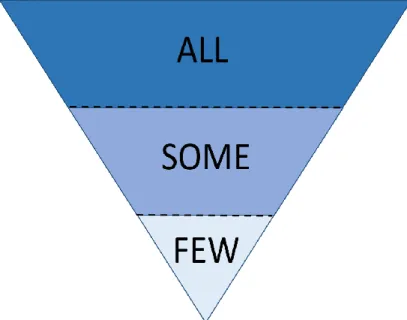
According to the Alberta Palliative Care Competency Triangle (Figure 1), HCPs have varying levels of palliative care expertise depending on how frequently and closely they work with patients who have life-limiting illnesses.
Alberta Health Care Aides’ Palliative Care Competency Framework
The Alberta Palliative Care Competency Triangle and associated definitions are adapted from the Irish and BC palliative care frameworks. The Alberta Palliative Care Competency Triangle is divided into three health care provider (HCP) levels of expertise, represented by ALL, SOME and FEW. Each level of expertise
requires a different set of competencies. They are separated by a dotted line to highlight that some HCPs may fit into more than one category. Each HCP level includes the competencies from the ones above it. For example, HCPs in the SOME category would also be expected to have the competencies outlined in the ALL level, and HCPs in the FEW level would be expected to have the
competencies from the ALL and SOME levels.
Table 1: Alberta Palliative Care Competency Triangle: Levels of Expertise Definitions All: HCPs in this level provide care within their scope of practice, to any person in any care setting, including those with life-limiting illnesses. They have foundational knowledge, and skills in palliative care. This category includes interprofessional health care teams that provide direct and ongoing palliative care for patients and their families by addressing their physical, emotional, social, practical, cultural and spiritual needs and respecting their personal autonomy with dignity and compassion. These HCPs may provide clinical management and care co-ordination,
including assessments, interventions, referrals and triage using a palliative approach, within their scope of practice. They use evidence-based guidelines and may consult with specialized
palliative care services as required, to support palliative care patients and their families. The competencies identified in this level are required for any HCP at entry to practice, point of registration and in relation to their current role.
Some: These HCPs have deeper knowledge, understanding and application of palliative and end-of-life care. HCPs in this level also provide care in any setting. They have expertise in palliative and end-of-life care, in managing pain and other symptoms and in providing
psychosocial and spiritual support. They ensure that adequate assessment and management of symptoms, psychological distress, practical and financial issues and spiritual needs are
incorporated into comprehensive care for patients and families. They provide enhanced care for more complex needs and consult with specialized palliative care services as required. They are a resource for colleagues within their local environment and may support patients and families who are not directly assigned to their care.
Figure 1: The Alberta Palliative Care Competency Triangle TTrTriangle
Few: This level of HCPs are palliative care experts who provide care for patients and their families, including those with the most complex palliative care needs. They provide a focused level of service for patients and families who require specialized, frequent and skilled
assessments and interventions in palliative and end-of-life care. They may act as a resource and support to any HCP (including those working in hospices and palliative home care) and provide formal and informal expert palliative and end-of-life care consultation. These palliative care experts provide leadership, mentoring and education in palliative and end-of-life care. This level also includes, but is not limited to, experts who conduct research and develop advocacy
strategies that advance approaches to palliative care and contribute to quality improvement on a system level.
In addition to the provincial All, Some and Few definitions, HCAs are identified in each category as follows:
All: Have entry to practice competencies with HCAs working in all care settings
Some: Have more enhanced palliative care skills, frequently care for patients with a life limiting illness, can be long term care champions, and/or work in palliative care settings
Few: Are mentors, engage in leadership to advance palliative care, contribute to development of resources, contribute on a systems level and are palliative care specialists
Competency Domains
The competency statements are organized according to eight core competency domains and four optional competency domains (Figure 2). The core competencies domains are common for each HCP group and represent the primary level of
understanding required to provide palliative care.
The optional competency domains may apply only to certain HCP groups and levels of expertise. Each working group collaboratively decided which optional domains to include. Each competency domain is defined with a domain statement. The domain statement remains the same irrespective of the level at which or the setting where palliative care is provided. Each domain has a set of competency statements. These statements outline the competencies required by HCPs in the context of their role and at the level of expertise with which they work.
Alberta Health Care Aides’ Palliative Care Competency Framework Domain 1: Principles of Palliative Care
Palliative care is both a philosophy and an approach to care that enables all patients with a life-limiting illness to receive integrated and coordinated care across the
continuum of life. This care incorporates each patient’s and family’s values, preferences and goals of care, and spans the disease process from diagnosis to end-of-life,
including bereavement. The following principles are foundational in providing palliative care to each patient and their family within Alberta: patient- and family-centeredness; equitable access; collaborative and integrated team service delivery; communication and information sharing; safe; ethical and quality care; sustainability and accountability; clearly defined governance and administration models; and research.
Domain 2: Communication
Communicating effectively is essential to the delivery of palliative care. Specific consideration should be given to communication as a method of establishing therapeutic relationships and patient/family participation in decision-making. Empathetic, person to person communication is foundational to palliative care.
Communication is also important where circumstances are ambiguous or uncertain or when strong emotions and distress arises. Effective communication includes information technology (i.e. NetCare, Connect Care) for knowledge transfer at all levels (patient and family, service delivery and system) and the use of common tools, language and
utilization of the most appropriate documentation to support seamless transitions of
each person, to convey appropriate information and to safely manage each person’s and family’s care needs.
Domain 3: Care Planning and Collaborative Practice
According to the AHS Palliative and end-of-life care Alberta provincial framework, “In order to meet the individual needs of each person and their family, comprehensive interprofessional teams with varying skills and knowledge are required to safely and effectively care for Albertans who are palliative or are at the end of life.” [Alberta Health Services] Care planning is a collaborative practice that includes addressing,
coordinating and integrating patient-centered care and family-centered care needs. It is enabled by interprofessional, cross-sector care planning, and communication that involves comprehensive needs assessment, promoting and preserving choice, and planning for likely changes that occur with the context of a deteriorating illness trajectory. Care planning ensures that multiple disciplines and agencies can be
accessed and referred to as required in a timely manner. Each patient and their family should be supported in care planning to the extent that they are able and wish to be involved.
Domain 4: Optimizing Comfort and Quality of Life
Supporting and optimizing comfort and quality of life as defined by the patient and family includes comprehensively assessing and addressing their emotional, psychological, social and spiritual needs as well as their physical needs. This is an ongoing process which aims to prevent, assess, acknowledge and relieve suffering in a timely and proactive manner, as well as includes effective symptom management that is in alignment with the patient’s goals of care.
Domain 5: Loss, Grief and Bereavement
A palliative approach assists HCPs in providing support to patients, families and communities, when possible, throughout the illness trajectory as they experience loss, grief and bereavement. This includes identifying patient and family needs, identifying those who may require additional bereavement support, and providing information and resources and support to all.
Domain 6: Professional and Ethical Practice
According to the AHS Palliative and end-of-life care Alberta provincial framework, “Comprehensive assessments by adequately skilled professionals and providers are at the heart of quality and ethical care delivery. The provision of care that is appropriate to all domains, including physical, psychological, social and spiritual requires knowledge and tools related to assessment in these areas.” [Alberta Health Services] HCPs focus on respecting and incorporating the values, needs and wishes of the patient and their family into care planning while maintaining professional, personal and ethical integrity. Professional and ethical integrity guide all HCPs to consider how best to provide ongoing care to people with life-limiting illnesses as their healthcare needs change.
Domain 7: Cultural Safety
Cultural safety is a process that encourages a patient to feel safe, without any fear of judgement, repercussions, discrimination (individual or systemic), or assault because of their needs and identities. It is defined and experienced by the patient. It is based on
Alberta Health Care Aides’ Palliative Care Competency Framework
respectful engagement, and communicating respect for a patient’s beliefs, behaviors, and values and ensures that the patient is a partner in decision making. It requires acknowledgement that we are all bearers of culture including the need for self-reflection about one’s own attitudes, beliefs, assumptions and values. It requires recognition of the power differentials inherent in healthcare service delivery, institutional
discrimination, and the need to address these inequities through education and system change. Assessing and respecting values, beliefs and traditions related to health, illness, family caregiver roles and decision-making are the first step in providing spiritually and culturally sensitive palliative care. Culturally safe care involves building trust with the patient and recognizing the role of socioeconomic conditions, history and politics in health. It requires awareness of family dynamics and the role the family plays in the cultural safety of the patient. Cultural competency is the process HCPs achieve with cultural safety being the outcome. [Health Council of Canada]
Domain 8: Self-Care
Self-care includes a spectrum of knowledge, skills, attitudes and self-awareness. It requires all HCPs to engage in ongoing self-reflection regarding appropriate
professional boundaries and the personal impact of caring for patients with life-limiting illnesses and their families. Self-care requires the use of holistic wellness strategies that promote the health of oneself as well as the health and function of the team.
Domain 9A: Education
Participating in palliative care continuing education, facilitating palliative care
educational opportunities for HCPs, volunteers, each patient, their family and the public.
Domain 9B: Evaluation
Based on evidence informed practice and available research, leading and/or participating in the evaluation of palliative care services and HCPs, patients’ and families’ experiences.
Domain 9C: Research
Promoting, participating in, and/or leading palliative care research; keeping abreast of palliative care research and inviting patients and their families to participate in relevant research projects.
Domain 10: Advocacy
Advocating for access to and funding for palliative care services and associated educational initiatives; policy development; and addressing the social determinants of health to improve patient outcomes.
Alberta Health Care Aides’ Palliative Care Competencies
Domain 1: Principles of Palliative CareAll Educational
Opportunity
1. Demonstrate an understanding of the principles of palliative care.
2. Demonstrate an understanding that a palliative approach can start early in the course
of a progressive life-limiting illness and continue through to time of death and into bereavement.
3. Practice patient-centered palliative care that promotes dignity.
4. Support patient dignity by facilitating expression of needs, hopes, feelings and
concerns.
5. Recognize the unique contributions of the family in caregiving.
6. Recognize when a patient may benefit from a palliative approach and discuss with the
health care team.
7. Recognize when a patient's care plan is not meeting a patient's needs and report to a
health care professional.
8. Recognize physical, emotional, cognitive, and spiritual needs of the dying patient and
their family and report to a health care professional.
Some Educational
Opportunity
1. Identify key members of the health care team (including external resources such as the Palliative Care Consult Team and community paramedics) and demonstrate an
understanding of their roles, how to access them and how to collaborate with them.
Alberta Health Care Aides’ Palliative Care Competency Framework Domain 2: Communication
All Educational
Opportunity
1. Engage in ongoing compassionate, respectful, individualized and timely
communication with each patient and their family.
2. Communicate effectively with each patient and their family about care needs,
preferences, religious beliefs, cultural practices and values related to death and dying. 3. Provide support and comfort to each patient and their family in times of crisis. 4. Listen, and respond appropriately to those who have questions or concerns and report
to a health care professional.
5. In collaboration with the health care team, identify patients and families in need of
additional support.
6. In collaboration with the health care team, provide support to family members who may respond in a variety of ways when experiencing the losses associated with the decline and death of the patient.
Some Educational
Opportunity
1. Encourage the patient and family to talk about goals of care.
2. Respond to questions regarding death, dying, and other concerns and refer to a health
care professional for follow up.
3. In collaboration with the health care team, use age appropriate communication approaches when communicating to children about dying, death, loss and bereavement.
Domain 3: Care Planning and Collaborative Practice
All Educational
Opportunity
1. Demonstrate awareness and understanding of the Advance Care Planning (ACP) and
Goals of Care Designation (GCD) Policy and Procedure.
2. Understand the role of the Alternate Decision Maker (ADM) and where to access that
information.
3. Support the patient or ADM who wishes to prepare or revise a care plan by listening
and then referring them to the appropriate members of the health care team.
4. Provide and advocate for care that is in alignment with the patient’s goals of care,
personal directive and or other advance care planning documents.
5. Provide input into the care plan regarding patient and family care needs.
6. Collaborate with other members of the health care team to support the family in order
to provide safe, quality care according to the care plan.
7. Facilitate the patient and their family towards active involvement in decision-making
and goal setting to support patent identified outcomes and quality of life.
Some Educational
Opportunity
1. Facilitate communication between the ADM and members of the health care team and
refer to a health care professional for follow up.
2. Provide information to the patient and family on how to access resources that can ease the burden of family caregiving (e.g. driving programs, home support respite, family support groups) and refer to a health care professional for follow up.
Few Educational
Opportunity
1. Participate in discussions regarding care planning and collaboration to best meet the
needs of the patient and their family.
Alberta Health Care Aides’ Palliative Care Competency Framework Domain 4: Optimizing Comfort and Quality of Life
All Educational
Opportunity
1. Provide care for the dying patient in line with principles of palliative care.
2. Understand the care needs of the patient with serious, chronic conditions, frailty and
declining capacity.
3. Promptly recognize changes in the patients’ physical, emotional and psychological
functioning and report to a health care professional.
4. Recognize that symptoms and symptom meaning are highly subjective and should be
understood from a patient-centered perspective.
5. Identify and recognize common symptoms associated2 with a life-limiting illness and
report observations to a health care professional.
6. Provide comfort measures for each patient experiencing common symptoms.
7. Provide assistance with the patient’s personal care needs in a way that maximizes their
dignity and privacy.
8. Adapt assistance to the patient’s changing and declining capacities, to maintain
maximum independence, mobility, wellbeing and quality of life.
9. Tailor assistance by getting to know each patient who has unique palliative care needs,
preferences, cultural and religious customs.
10. In collaboration with the health care team, plan personal care for a time when
medications and interventions for symptom management will be most effective.
11. Plan activity when the patient has the most energy.
12. Focus on activities which are most important to the patient and their family.
13. Maximize the patient's participation in self-care, assisting in a way that maximize the
patient's dignity and privacy, especially in intimate care.
14. Integrate the family in the patient’s care, while being sensitive to the patient’s and
family's wishes.
15. Support the family to provide aspects of care, while monitoring the quality of care
provided.
16. Particularly in the last hours to days of life, anticipate and address the family's need for
support.
17. Provide an atmosphere of peace, safety, and unconditional regard for the patient.
2 Common symptoms associated with life- limiting illnesses include: difficulty breathing, dehydration,
changes in bowel and bladder function, delirium, fatigue, mouth discomfort, nausea and vomiting, pain, decreased appetite and involuntary weight loss
18. Provide an empathetic and compassionate presence. 19. Recognize signs of active dying and communicate with a health care professional
about the patient's changing needs.
20. At the time of death, provide post-mortem care and a supportive space for the family.
Some Educational
Opportunity
1. Identify patients who would benefit from the Emergency Medical Services Palliative
and End of Life Care Assess, Treat and Refer (EMS PEOLC ATR) program.
2. Provide the family with information about the dying process.
3. Provide enhanced palliative care that is consistent with the patient's goals of care. 4. Provide enhanced care for the dying patient in line with the principles of palliative care. 5. Identify and recognize signs and symptoms of palliative care emergencies3 and report
to a health care professional.
Notes:
3 Common palliative care emergencies include: bowel obstruction, urinary obstruction, massive
Alberta Health Care Aides’ Palliative Care Competency Framework Domain 5: Loss, Grief and Bereavement
All Educational
Opportunity
1. Demonstrate knowledge of diverse perspectives on loss, grief, bereavement and
mourning to support others from a cross-cultural perspective.
2. Recognize the range of individual physical, psychological, spiritual, emotional and
social responses to loss, grief and bereavement.
3. Understand the dimensions of grief.
4. Provide support to the patient and family throughout the grieving process, including
during illness, decline, time of death and following.
5. Support the patient and family as they grieve losses, transitions, decline and death in
unique ways, and at their own pace.
6. Identify resources available for grieving families and refer to appropriate members of
the health care team for follow up.
7. Recognize that family dynamics can influence each person's experience of loss, grief
and bereavement.
Some Educational
Opportunity
1. Acknowledge the cumulative losses inherent in the experience of a life-limiting illness
and its impact on the patient and family.
2. Recognize the patient and family with actual or potential difficult grief reactions and
collaborate with the health care team to provide support.
3. Recognize factors that may increase the risk of complicated grief.
Few Educational
Opportunity
1. Contribute to the development of resources for grieving individuals and family.
Domain 6: Professional and Ethical Practice
All Educational
Opportunity
1. Demonstrate an understanding of the ethical issues pertaining to palliative care.
2. Support the patient’s and families choices pertaining to end-of-life care.
3. Maintain personal and professional boundaries.
4. Identify situations with ethical implications and collaborate with the health care team. 5. Contribute to the development of health care team practices (e.g. debriefing, rounds).
Some Educational
Opportunity
1. Respond to inquiries regarding Medical Assistance in Dying (MAID) in accordance with regulatory, organizational, and employer policies and directives and refer patient and family to a health care professional.
2. Act as a mentor and coach for Health Care Aide (HCA) peers.
Few Educational
Opportunity
1. Advocate for the role of HCAs on the health care team.
2. Work collaboratively with all team members to ensure the patient’s and family’s unique
needs are met.
Alberta Health Care Aides’ Palliative Care Competency Framework Domain 7: Cultural Safety
All Educational
Opportunity
1. Demonstrate an understanding of the influence of culture on key issues in palliative
and end-of-life care.
2. Demonstrate openness and sensitivity to social, spiritual and cultural values and
practices that may influence preferences of the patient and family.
3. Identify that family is whoever the patients says they are.
4. In collaboration with the health care team, explore the patient’s and family’s cultural
and religious needs, beliefs and preferences, as they relate to end-of-life.
5. Honor the patient’s and family's individual and community rituals.
6. Provide opportunities for each patient and their family to practice social, spiritual and
cultural values and practices, referring to supports as required.
7. Advocate for diversity and cultural safety in the workplace.
Few Educational
Opportunity
1. Assist with the development of resources, space and opportunities for cultural and
personal expression.
Domain 8: Self-Care
All Educational
Opportunity
1. Explore own attitudes and beliefs regarding death, dying and caring for patients with a
life-limiting illness.
2. Recognize compassion fatigue in self and colleagues; intervene and refer
appropriately.
3. Engage in healthy activities that help prevent compassion fatigue.
4. Demonstrate an awareness of the impact of past experiences of suffering, death and
dying when providing palliative care.
5. Demonstrate awareness of one's own responses in the presence of a patient who is
suffering.
6. Recognize the importance of personal awareness and self-care and commit to a plan
of regular self-care.
7. Demonstrate awareness of self-care strategies to manage impacts from working with
patients and their families facing life-limiting illnesses.
8. Demonstrate awareness of strategies to cope and manage with death and dying.
9. Demonstrate awareness of emotional and spiritual supports available to promote
self-care and personal well-being.
10. Understand personal grief is normal and an appropriate response to loss.
11. Contribute to a team environment of caring and supporting by recognizing compassion
fatigue in oneself and colleagues.
Few Educational
Opportunity
1. Mentor and coach colleagues regarding the personal impact of loss, grief and
bereavement, supporting them to recognize their own loss responses and encouraging engagement in activities to maintain their resilience on an ongoing basis.
Alberta Health Care Aides’ Palliative Care Competency Framework Domain 9: Education, Research and Evaluation
All Educational
Opportunity
1. Participate in evaluation of the quality of palliative care.
2. Participate in palliative care continuing education opportunities.
3. Provide input into evaluation and quality improvement activities.
Some Educational
Opportunity
1. Provide input into the development of educational materials for HCAs.
2. Coach, mentor, and guide HCAs who are less experienced in palliative care.
3. Participate in research activities, as appropriate.
Notes:
Domain 10: Advocacy
All Educational
Opportunity
1. Advocate for the development of resources specific to the care setting, as needed.
Appendix 1: Glossary of Terms
Please note that the organizational authorities are acknowledged for selected terms. Definitions were adapted from academic sources for the remainder and are referenced in the technical document, Alberta Palliative Care Competency Framework Technical Report [Covenant Health].
Advance care planning: a process which encourages people to reflect and think about their values regarding clinically indicated future health care choices; explore medical information that is relevant to their health concerns; communicate wishes and values to their loved ones, their alternate decision-maker and their health care team; and record those choices [Alberta Health Services].
Agent: the person(s) named in a Personal Directive who can make decisions on personal matters according to the wishes expressed by the patient [Alberta Health Services].
Alternate decision maker: a person who is authorized to make decisions with or on behalf of the patient. These may include: a minor’s legal representative, a guardian, a ‘nearest relative’ in accordance with the Mental Health Act, an agent in accordance with a personal directive, a co-decision-maker, a specific decision-maker or a person
designated in accordance with the Human Tissue and Organ Donation Act [Alberta Health Services].
Competency: a “cluster of related knowledge, skills and attitudes that affects a major
part of one’s job (a role or responsibility), that correlates with performance on the job, that can be measured against well-accepted standards, and that can be improved via training and development”.
Family(-ies): one or more individuals identified by the patient as an important support, and who the patient wishes to be included in any encounters with the health care system, including, but not limited to, family members, legal guardians, friends and informal caregivers [Alberta Health Services].
Goals of care: the intended purposes of health care interventions and support, as recognized by a patient and/or alternate decision-maker [Alberta Health Services].
Goals of care designation: one of a set of short-hand instructions by which health care providers describe and communicate general care intentions, specific clinically indicated health interventions, transfer decisions, and locations of care for a patient as established after consultation between the most responsible health practitioner and patient or alternate decision maker [Alberta Health Services].
Goals of care designation order: the documented order for the goals of care
designation as written by the most responsible health practitioner (or designate) [Alberta Health Services].
Alberta Health Care Aides’ Palliative Care Competency Framework
Green sleeve: A folder containing a patient’s GCD Order, along with an Advance Care
Planning (ACP)/GCD Tracking Record, for the patient to own and produce at relevant health care encounters [Alberta Health Services].
Health care provider: any person who provides goods or services to a patient, inclusive of health care professionals, staff, students, volunteers and other persons acting on behalf of a health care organization [Alberta Health Services].
Health care professional: an individual who is a member of a regulated health discipline, as defined by the Health Disciplines Act (Alberta) or the Health Professions Act (Alberta), and who practices within scope and role [Alberta Health Services].
Health care team: Individuals who work together to provide health, personal, and supportive care to clients. The team may consist of, but is not limited to, different configurations of the client, regulated health professionals, unregulated care providers and/or other caregivers including the client’s family. Within the team the client remains its center and client-directed care its focus [Alberta Health].
Illness trajectory: Three typical illness trajectories have been described for patients with progressive chronic illness: cancer, organ failure, and the frail elderly or dementia trajectory. Physical, social, psychological, and spiritual needs of patients and their care givers are likely to vary according to the trajectory they are following. Being aware of these trajectories may help clinicians plan care to meet their patients’ multidimensional needs better, and help patients and care givers cope with their situation. Different models of care may be necessary that reflect and tackle patients’ different experiences and needs.
Interprofessional: interprofessional collaboration occurs when health professionals from different disciplines work together to identify needs, solve problems, make joint decisions on how best to proceed and evaluate outcomes collectively. Interprofessional collaboration supports patient-centered care and takes place through teamwork. Team interactions, wider organizational issues and environmental structures such as safety, quality, efficiency and effectiveness issues influence this model of care. These broader contextual influences affect practice where there are tensions between the ideals of interprofessional collaboration and the realities of practice. This is evident when the patient and family position in interprofessional collaboration is considered.
Imminently dying: Any patient who, according to the most responsible health practitioner’s clinical assessment, is within the last hours to days of life.
Life-limiting illness. Describes illness where it is expected that death will be a direct consequence of the specified illness. The term “person living with a life-limiting illness” also incorporates the concept that people that are actively living with such illnesses, often for long periods of time, are not imminently dying. Therefore, it affects health and quality of life, and can lead to death [Health Canada].
Palliative and end-of-life care:is both a philosophy and an approach to care that enables all individuals with a life-limiting and/or life-threatening illness to receive
integrated and coordinated care across the continuum. This care incorporates patient and family values, preferences and goals of care, and spans the disease process from early diagnosis to end of life, including bereavement. Palliative care aims to improve the quality of life for patients and families facing the problems associated with a life-limiting illness through the prevention and relief of suffering by means of early identification, comprehensive interdisciplinary assessments and appropriate interventions [Alberta Health Services].
Palliative approach: Access to a palliative approach in primary care requires that, in every primary care setting, (outpatient offices, home care organizations, Long Term Care facilities), providers of every discipline (family physicians, nurses, nurse
practitioners, pharmacists, health care aides, paramedics, social workers) possess and implement the basic palliative care knowledge, skills, and attitudes pertinent to their discipline.
This requires not just education, but also an infrastructure, a policy
environment and a culture of care delivery that facilitates a palliative approach in primary care. A palliative approach in primary care also requires appropriate support from palliative care providers for patients with complex needs. High-quality palliative care, like high-quality maternity care or
mental health care depends on co-operation and co-ordination between primary care and consultant palliative care teams [Canadian Hospice Palliative Care Association].
Patient: an adult who receives or has requested health care or services. This term is inclusive of residents, clients and outpatients [Alberta Health Services].
Patient-and family-centered care: care provided working in partnership with patients and families by encouraging active participation of patients and families in all aspects of care, as integral members of the patient’s care and support team, and as partners in planning and improving facilities and services. Patient- and family-centered care applies to patients of all ages and to all areas of health care [Alberta Health Services].
Personal directive: a written document in accordance with the requirements of the Personal Directives Act (Alberta), in which an adult names an agent(s) or provides instruction regarding his/her personal decisions, including the provision, refusal and/or withdrawal of consent to treatments/procedures. A Personal Directive (or part of) has
Alberta Health Care Aides’ Palliative Care Competency Framework
effect with respect to a personal matter only when the maker lacks capacity with respect to that matter [Alberta Health Services].
Principle of double effect [Catholic Health Alliance of Canada]: Some human actions have both a beneficial and a harmful result, e.g., some pain treatment for a terminally ill person might carry a possibility of shortening life, even though it is given to relieve pain and is not intended to kill the person. Five conditions are cited for trying to decide if such actions would be morally/ethically permissible:
1. The action of the person must be ‘good’ or at least neutral in itself.
2. There are two anticipated outcomes for the action of the person, one intended and good, the other an unintended but foreseen bad/wrong/harmful.
3. The bad effect is not the means to the good effect.
4. There must be a proportionate reason to accept the bad effect. 5. There must be no less-negative alternative.
Referral: means direction from another health care professional or organization to provide service for a patient; or direction to the patient, or on behalf of the patient, to obtain additional services from another organization or provider. These may include change of service, changes in level of care, and/or transfer between units [Alberta Health Services].
Total pain: Total pain is a term that is often used to refer to the phenomenon, where the pain experience has a combination of physical, social, psychological, and spiritual (or existential) sources [Pallium Canada].
Appendix 2: Additional Resources
The following references acknowledge competency statements issued by the respective professional and national organizations.
Alberta Health. (2018). Alberta health care aide competency profile: Health workforce planning and accountability. https://open.alberta.ca/publications/9781460137253 Association of Canadian Community Colleges and Canadian Association of Continuing
Care Educators. (June 2012). Canadian educational standards for personal care providers: A reference guide. https://www.collegesinstitutes.ca/wp-content/
uploads/2014/05/Reference-Guide_Canadian-Educational-Standards-for-Personal-Care-Providers_ACCC.pdf
Canadian Hospice Palliative Care Association. (2013). A model to guide hospice palliative care: Based on national principles and norms of practice.
https://www.chpca.ca/wp-content/uploads/2019/12/norms-of-practice-eng-web.pdf
Canadian Partnership Against Cancer & Health Canada. (July 2020). The Canadian inter-disciplinary palliative care competency framework. A curriculum guide for educators and reference manual for health professionals and volunteers. Ottawa, ON.
Covenant Health Palliative Institute. (September 2020). Alberta palliative care competency framework technical report. Edmonton, AB.
Government of Alberta. (2019). Alberta health care aide competency assessment profile tool. https://www.albertahcadirectory.com/wp-content/uploads/2020/02/Alberta-Health-Care-Aide-CAP-Tool_Jan-2020.pdf
Government of Alberta. (2019). Alberta health care aide bridging modules.
https://www.myalbertahca.com/
Murray, K. (2017, January 23). Palliative care competencies: Once upon a time, there were competencies. Life & Death Matters. https://www.lifeanddeathmatters.ca /category/palliative-care-competencies/
Palliative Alliance. (May 2012). Quality palliative care in long term care alliance (QPC- LTC): Personal support worker competencies. http://www.palliativealliance.ca/ assets/files/QPC_LTC_PSW_Competency_Brochure_Final_May_2_2012_V2_1. pdf
Alberta Health Care Aides’ Palliative Care Competency Framework
Appendix 3: Acknowledgements
We acknowledge Ireland’s Palliative Care Competence Framework Steering Group; Nova Scotia Health Authority’s (NSHA’s) Palliative Care Capacity Building and Practice Change Working Group; the BC Center for Palliative Care Competency Framework Committee; and the Ontario Palliative Care Network Provincial Palliative Care Education Steering Committee who led the development of palliative care
competencies’ frameworks in Ireland, Nova Scotia, British Columbia, and Ontario
respectively. Their work was used to create the palliative care competencies for various disciplines in Alberta.
We thank Cheryl Tschupruk, Kathleen Yue, Susan Blacker, Tara Walton, Deborah Dudgeon and Julie Lachance for their ongoing consultation, guidance and advice throughout this project.
We appreciate the Canadian Partnership Against Cancer Palliative Care Competencies Working Group for their ongoing consultation.
We acknowledge the Covenant Health Foundation for their financial support of the Alberta Palliative Care Competencies’ Project
We are grateful to Covenant Health Library Services whose staff conducted numerous and thorough literature reviews.
Last but not least, the development of these competencies would not have been possible without the support of the members of the Alberta Health Services Provincial Palliative and End-of-Life Innovations Steering Committee, the Alberta Palliative Care Competencies Advisory Working Group and all the members of the Alberta Health Care Aides’ Palliative Care Competencies Working Group.
Alberta Palliative Care Competencies Advisory Working Group
Name Position Location/Program/Organization
Michelle Peterson Fraser, RN, BN
Director Provincial Palliative and End-of-Life Care,
Community, Seniors, Addiction and Mental Health/Alberta Health Services
Christy Raymond, RN, PhD
Assistant Professor Edmonton/Faculty of Nursing/University of Alberta
Sandy Ayre, BScOT Occupational Therapist Edmonton/Tertiary Palliative Care Unit, Grey Nuns Community Hospital/Covenant Health Sarah Burton MacLeod,
MD, CCFP(PC)
Residency Program Director Enhanced Skills in Palliative Care and Palliative Care Physician Consultant
Edmonton/Faculty of Medicine and Dentistry/University of Alberta Edmonton Zone/Palliative Care Program/Alberta Health Services Jacqueline Hui, MD, MHPE, CCFP (PC), FCFP, DTMH Assessment Director, Enhanced Skills Palliative Care Residency Program Director, and Clinical Assistant Professor; and Consulting Physician
Calgary/Department of Family Medicine Residency Program Family Medicine, Departments of Oncology & Family Medicine/Cumming School of Medicine/University of Calgary
Calgary Zone/Palliative and End-of-Life Care Program/Alberta Health Services
Charlotte Pooler, RN, PhD
Clinician Scientist Edmonton Zone/Palliative and End-of-Life Care and Community Programs, Continuing Care/Alberta Health Services
Jeanne Weis MN, BN, RN, CHPCA (C)
Executive Officer College of Licensed Practical Nurses of Alberta
Cheryl Cameron, M.Ed., ACP
Manager, EMS Policy, Standards, and
Reporting
Emergency Health Services/Alberta Health
Roberta Parkes, RN Professional Practice
Lead
Nursing, Professional Practice and Research/Covenant Health
Alberta Health Care Aides’ Palliative Care Competency Framework
Alberta Health Care Aides’ Palliative Care Competencies Working Group
Name Position Location/Program/Organization
Katherine Murray, RN, BSN, MA, CHPCN(C), FT
Hospice Palliative Care Nurse, Educator and Author
Life & Death Matters, Victoria, BC
Barbara Roemer, RN Professional Practice Leader Nursing-Seniors
Covenant Health Amandeep Sahota, RN Clinical Educator and
Palliative Program Lead
Bethany Care Society Brenda Slobozian, RN, MN Quality Practice
Leader-Palliative Care
Bethany Care Society Lenora Carriere, RSW,
BAHSA
Senior Program Lead, Provincial Health Care Aide Program, Associate Chief Nursing Office, Health Professions Strategy and Practice
Alberta Health Services
Gail Thauberger, RN, MEd Coordinator, HCA, RTA and NM Programs
Calgary/School of Health and Wellness/Bow Valley College
Jodi Wilson, CPHR Regional Manager People and Culture/Regional Privacy Officer
Calgary/CBI Home Health
Katie Knott, HCA Health Care Aide Mayerthorpe-North Zone/Long Term Care/Alberta Health Services
Robert James Jimenez, HCA
Health Care Aide Acute Care, Grand Prairie, North Zone, Alberta Health Services
Jennifer Kohn, HCA Health Care Aide Home Care, Grand Prairie, North Zone, Alberta Health Services
Debbie Hall, HCA Health Care Aide Home Care, Medicine Hat, South Zone, Alberta Health Services
Adeene Schultz, HCA Health Care Aide Bentley Care Center, Bentley, Central Zone, Alberta Health Services
Sandra Cook Wright, RN, MHS, CHPCN(C)
Educator, Pain and Palliative Consultant
Calgary/Sarcee Hospice Educator, Pain and Palliative Consultant/Carewest
Mary DeLong, RN, MSN Nursing Instructor School of Health and Wellness, Bow Valley College
Cheryl Brindza, HCA Health Care Aide Edmonton/Edmonton General Continuing Care Centre, Mel Miller Hospice/Covenant Health Tammy Crush, RN, BN HCA Instructor Edmonton/Instructor, HCA/
Faculty of Health and Community Studies/NorQuest College Karen Van Niejenhuis, RN HCA Instructor Edmonton/Instructor, HCA/
Faculty of Health and Community Studies/NorQuest College