Connected, Creative and Cultural Communities:
Developing an Integrated Approach to Policy and Evaluation for
Remote Australian Indigenous Media and Communications
By
Daniel Featherstone
This thesis is presented for the degree of Doctor of Philosophy
Major Subject: Communications
Murdoch University
2015
Declaration
I declare that this thesis is my own account of my research and contains as its main content work which has not previously been submitted for a degree at any tertiary education institution. All other sources are fully acknowleged by referencing or footnotes. Ethics approval (Permit No. 2007/180) was granted on 28/6/2007 for research to be undertaken in Aboriginal communities for this project.
……… Daniel Featherstone
Abstract
This research project seeks to develop appropriate policy and evaluation frameworks to support the development of the remote Indigenous media and communications sector and build digital inclusion and capacity within remote Australian Indigenous communities. This project reviews existing policy and theory pertaining to Indigenous media and communications and identifies and assesses the applicability and limitations for the
contemporary remote Indigenous Australian context. Some key policy aspects have remained the same since the 1990s. These include: cultural and linguistic maintenance,
self-representation, community access, rights and justice, and employment opportunities. However, in the context of significant technological and socio-political change, there are a range of contemporary issues yet to be effectively incorporated into policy, including: digital convergence; digital inclusion; organisational and industry development; and sustainability. There is a growing divide between and within remote communities in terms of digital inclusion; access to appropriate information and services. Despite billions of dollars being spent on ‘closing the gap’ for Indigenous Australians, and numerous reviews over recent decades, the potential role of Indigenous media and communications in remote Indigenous communities remains largely unrecognised and under-utilised. At a time when the debate is re-emerging about the viability of remote Indigenous communities, the effectiveness of media and communications services and connectivity will increasingly become key determinants for community sustainability, effective service delivery, community capacity building, cultural maintenance and individual capability.
The research included a review of literature in the fields of Communications, Media
Anthropology, Community Development and Development Communications. Summaries of issues were then prepared. Relevant past and current government policies in Indigenous affairs and Indigenous broadcasting and communications were also reviewed and key issues summarised, along with an historic overview of the development of remote Indigenous media and communications in Australia and potential future directions and challenges. This led to the preparation of a draft set of Policy and Evaluation frameworks to be reviewed using a series of case studies.
Using an Ethnographic Action Research methodology, the author undertook research over a nine year period while working as Manager at Ngaanyatjarra Media, the remote Indigenous media organisation for 15 remote communities in the Western Desert region of eastern WA. He worked closely with Yarnangu (Central/Western Desert Aboriginal people) media
workers and communities, building on the existing BRACS network and cultural maintenance agenda to establish a range of innovative and integrated media and
communications programs in the region. Six Ngaanyatjarra Media case studies were used to assess and revise the draft Policy and Evaluation frameworks.
While the unique context and ‘communicative ecology’ of the Ngaanyatjarra Lands differs from other parts of remote Australia, the evaluation outcomes suggest that the integrated approach to media and communications delivery can have broader application. The research found that a bottom-up approach to program development that considers the social, cultural, political and technological context promotes community ownership and participation and delivers locally relevant solutions and outcomes. In contrast, top-down initiated programs had significantly lower participation and outcomes. It proposes a consultative approach to program development that incorporates community strategic planning and locally specific delivery strategies. It also proposes an evaluation model that includes three sets of
performance indicators: those specified by the funding agencies (typically Government); indicators considered relevant by the local delivery agencies (e.g. media organisations); and those that meet the needs of Indigenous community recipients to understand and evaluate the impact of the program.
A further key finding is the need for a ‘contingent’ approach to application of both the Policy and Evaluation frameworks; that is, selection and prioritisation of particular potential aspects to match the specific policy or evaluation need. The thesis provides justification for this approach and indicates how it may be developed.
This thesis seeks to contribute to the existing body of knowledge in this field by documenting the growth of a little known remote Indigenous media organisation situated in the
Ngaanyatjarra region of WA during a time of technological, political and social change within Australia. It brings together a deep understanding of community and cultural values and determinants as well as a solid knowledge of relevant government policy and programs. It helps fill a gap in field research and observation of remote Indigenous media activities in
Australia since the 1990s. While aimed at the Australian context, the findings of this
research may also have relevance for the international communications development sector. The project’s objective was to develop appropriate Remote Indigenous Media and
Communications Policy and Evaluation frameworks for use within the contemporary technological, social and political context. The proposed integrated delivery approach involves the use of existing and new media and communications activities that engage and empower remote Indigenous people and help build connected, creative and cultural communities.
Table of Contents
Declaration ii
Abstract iii
Table of Contents vii
List of Tables xxi
List of Figures xxv
Acknowledgements xxvii
Chapter 1. Introduction 1
1.1 In this chapter 1
1.2 Author’s motivation 1
1.3 Background to this project 3
1.4 Why this research is needed 6
1.5 Research questions 10
1.6 Approach taken in this research project 11
1.6.1 Research methodology 11
1.6.2 Literature review analysis 12
1.6.3 Development of a Policy Framework 13
1.6.4 Development of an Evaluation Framework 14
1.6.5 Case study analysis of Ngaanyatjarra Media context and projects 15
1.6.6 Limitations of this research 17
1.7 Overview of chapters 18
1.8 Conclusions 20
Chapter 2. Literature Review of Communications Theory 21
2.1 Introduction 21
2.2 Mass Communications Theory 22
2.3 Communications theory not directly relevant to this thesis 23
2.4 Discussion of the most relevant Communications theories 24
2.4.1 Introduction 24
2.4.2 Political Economy 24
2.4.3 The Public Sphere and Counter-publics 25
2.4.4 Cultural Media Policy 28
2.4.5 Participatory Media Theory 31
2.4.6 Resistant Media 34
2.4.7 Democratic Communication and Community Media 37
2.4.8 Rhizomatic approach to community media 39
2.4.9 Transformative aspects of community media in Australia 42 2.4.10 Recent theoretical models: Polymedia and Mediatisation 45
2.5 Conclusions 46
Chapter 3. Literature Review of Development Communications Theory and Practice 47
3.2 Recent theoretical approaches to Community Development 49
3.2.1 Community development and social justice 49
3.2.2 Capacity Development 50
3.2.3 Capability Approach 54
3.2.4 Development Communication theory 55
3.2.5 Communications for Development programs 57
3.3 Literature review of selected approach- Communicative Ecologies 61
3.3.1 Description of Communicative Ecologies approach 61
3.3.2 Applicability of Communicative Ecologies theory to this project 64
3.4 Conclusions – How theory informs thesis 66
Chapter 4. Literature Review of Indigenous Media & Communications Research 68
4.1 Introduction 68
4.2 Media Anthropology 69
4.2.1 The role of Media Anthropology 69
4.2.2 Anthropological studies of Indigenous uptake of media technologies 71
4.3 Australian research into remote Indigenous media 77
4.3.1 Eric Michaels and the ‘Aboriginal Invention of Television’ 77
4.3.2 Critique of Michaels’ ‘cultural maintenance’ thesis 79
4.4 Indigenous use of new media 84
4.4.1 Three viewpoints on new media use 84
4.4.2 Technophilic view: Indigenous media as enabling advocacy 85 4.4.3 Sceptical View: The possibility that Indigenous media might lead to adoption of
Western values 87
4.4.4 Concern View: Questions of ownership of cultural knowledge 92
4.5 Summary 94
Chapter 5. Literature Review- Development of Remote Indigenous Media 95
5.1 Introduction 95
5.2 Development of remote Indigenous media and television in Australia 96 5.3 Policy development for Indigenous media in remote Australia 96
5.3.1 Overview 96
5.3.2 Indigenous Broadcasting and Media Review 2010 103
5.3.3 Impact of digital TV switchover 110
5.3.4 Community media and broadcasting 112
5.3.5 Current challenges for remote media 115
5.3.6 Conclusions and summary of issues in section 5.3 120
5.4 The need for updated Indigenous media and communications policy 121
5.4.1 Overview 121
5.4.2 Suggestions towards a new national policy 124
5.4.3 The context of remote Indigenous communities 127
5.4.4 False assumptions underpinning current policies 129
5.4.5 Summary – Towards a remote policy framework 130
5.5.1 Issues with current evaluation models 132
5.5.2 Measuring the value of culture 136
5.5.3 The linkage of policy and evaluation 138
5.5.4 Towards a new evaluation model 140
5.5.4.1 Introduction 140
5.5.4.2 Need for a contingent evaluation model 141
5.5.4.3 Evaluation linked to strategic planning 141
5.5.4.4 Recipient-derived indicators 142
5.5.4.5 Community as primary target 143
5.5.5 Conclusions re need for a new Evaluation Framework 144
5.6 Chapter conclusions – context for thesis 145
Chapter 6. Policy Making 147
6.1 Introduction 147
6.2 Models of policy making 148
6.2.1 Policy frameworks in Australia 148
6.2.2 The Policy Cycle 150
6.2.3 A Ground-level development model 151
6.2.4 Evidence-based Policy 153
6.2.5 Towards a remote focussed policy approach 159
6.2.6 Summary of Section 161
6.3 Indigenous Affairs policy making 162
6.3.1 Introduction 162
6.3.2 Indigenous affairs policy in Australia 162
6.3.3 Critique of Indigenous affairs policy making 167
6.3.4 Issues and success factors for policy making for remote Australia 170
6.3.5 Summary of section 172
6.4 Development of a remote Indigenous media Policy Framework 173
6.4.1 Objectives and method of development of framework 173
6.4.2 Policy Principles 174
6.4.2.1 Introduction 174
6.4.2.2 An essential service 176
6.4.2.3 Rights & equity 177
6.4.2.4 Participation and access 177
6.4.2.5 Promotes reconciliation 178
6.4.2.6 Convergence and two-way communications 179
6.4.2.7 Recognition of sector diversity 180
6.4.2.8 Building partnerships 182
6.4.2.9 Industry development 182
6.4.2.10 Capacity building 184
6.4.2.11 New models for RIMOs and RIBS 185
6.4.2.12 Cultural and linguistic development 186
6.4.2.13 Appropriate technologies 188
6.4.4 Policy implementation guidelines 189
6.4.4.1 Stakeholder perspectives and policy approaches 189
6.4.4.2 The top-down public policy approach 192
6.4.4.3 Ground-up strategies 194
6.4.4.4 Implementation by strategic planning 197
6.4.5 Policy contingency factors 198
6.4.6 Evaluating the draft Policy Framework 198
6.5 Conclusions 199
Chapter 7. Evaluation Framework 201
7.1 Introduction 201
7.2 Evaluation theory and methodologies 202
7.2.1 Introduction 202
7.2.2 Approaches to evaluation methodology 204
7.2.3 Challenges in Determining Appropriate Evaluation Models 210 7.2.4 Evaluation of ICT Projects and Interactive Policymaking 212 7.2.5 Evaluating Communication for Development: A Framework for Social Change214 7.3 Selected Evaluation Methodology – Ethnographic Action Research 218
7.3.1 Introduction to Ethnographic Action Research 218
7.3.2 Reasons for selecting EAR 220
7.4 Matrix of evaluation theory 221
7.5 Overview of the Evaluation Framework (EF) 221
7.5.1 Introduction 221
7.5.2 Purpose and use of the Evaluation Framework 223
7.5.2.1 Key questions to address 223
7.5.2.2 Who is the evaluation for? 223
7.5.2.3 What is it for? 224
7.5.2.4 Who are the intended users of the evaluation? 225
7.5.2.5 What are the intended uses? 225
7.5.2.6 What expectations do various groups have for the evaluation? 226 7.5.2.7 How will the process itself empower those involved and strengthen wider
C4D processes? 227
7.6 First version of the Evaluation Framework 227
7.6.1 Development of the Evaluation Framework version 1 227
7.6.2 Review of first version of the EF 229
7.7 Developing version 2 of the EF 231
7.7.1 Introduction 231
7.7.2 EF version 2: Simplified model 231
7.7.3 Contingency Versions of the EF 233
7.7.3.1 Introduction 233
7.7.3.2 EF-C1: Longitudinal Model - Evaluation by project stages 234
7.7.3.3 EF-C2: Evaluation by project type 234
7.8 Conclusions 242
Chapter 8. Methodology 244
8.1 Introduction 244
8.2 Research Methods 244
8.2.1 Introduction 244
8.2.2 Literature Review Analysis 245
8.2.3 Contextual Analysis 245
8.2.4 Ethnographic Action Research 245
8.2.5 Case studies 248
8.2.6 Interviews 250
8.3 Other research methodologies considered 250
8.3.1 Overview 250
8.3.2 Grounded Theory methodology 251
8.3.3 Media Studies research approach 251
8.3.4 Ethnography 252
8.3.5 Audience Analysis methods 252
8.4 Quantitative and qualitative approaches to evidence collection 253
8.4.1 Quantitative research 253
8.4.2 Qualitative research methods 254
8.4.3 A mixed method approach 257
8.5 Challenges of research in remote Indigenous communities 258
8.6 Conclusions 261
Chapter 9. Case Studies 262
9.1 Introduction 262
9.2 Selection of case studies 263
9.2.1 Selected case studies 263
9.2.2 Excluded case studies 264
9.2.3 Relationship of case studies to the Strategic Plan 264
9.3 Overview of case studies 267
9.3.1 CS1 – The Ngaanyatjarra Radio Show 267
9.3.2 CS2 – Video Production and the Ngaanyatjarra Cultural Performance and
Recording Project 268
9.3.3 CS3 – IT Training and Access Facilities 269
9.3.4 CS4 – Ngaanyatjarra Music Development Program 269
9.3.5 CS5 – National Jobs Package 270
9.3.6 CS6 – Ngaanyatjarra Language Recording and Archiving Project 271 9.4 Applying the Policy and Evaluation Frameworks to the case studies 272 9.4.1 Methodology for evaluating case studies and frameworks 272
9.4.2 Applying the Evaluation Framework 274
9.4.2.1 Alignment of case studies with Evaluation Framework v.2 274
9.4.2.2 Notes for review of the EF v.2 278
9.4.3.1 Alignment of case studies with the Policy Framework v.1 282
9.4.3.2 Notes for review of the PF v.1 287
9.5 Conclusions 291
Chapter 10. Review of Policy and Evaluation Frameworks 293
10.1 Introduction 293
10.2 Review of Evaluation Framework 294
10.2.1 Process for reviewing and refining EF v.2 294
10.2.1.1 Outline of process 294
10.2.1.2 Stage 1: Incorporation of relevant Amendments and Emergent Topics 294 10.2.1.3 Stage 2: Review maximum ratings for each Principle 298 10.2.1.4 Stage 3: Review EF v.3 against previously identified issues 301 10.2.1.5 Stage 4: Review of EF v.3 against the Integrated Delivery approach 302
10.2.1.6 Review of case studies using EF v.3 304
10.2.1.7 Considerations for turning EF v.3 into an Evaluation Tool 307
10.2.2 Towards a contingency-based Evaluation Framework 308
10.2.2.1 Approach to developing a contingency-based EF process 308 10.2.2.2 Contingency factor 1: Project Duration and/or Stages 308
10.2.2.3 Contingency factor 2: Project Type 311
10.2.2.4 Contingency factor 3: Scale of Project 314
10.2.2.5 Contingency factor 4: Stakeholder Perspective 314
10.2.2.6 Contingency factor 5: Contextual Factors 315
10.2.2.7 Developing a Contingency-based Evaluation process 317
10.2.3 Summary of the review of the Evaluation Framework 319
10.3 Review of Policy Framework 321
10.3.1 Issues to be incorporated 321
10.3.1.1 Process for reviewing and revising PF v.1 321
10.3.1.2 Stage 1: Incorporation of relevant Amendments and Emergent Topics 322 10.3.1.3 Stage 2: Review maximum ratings for each Principle 325 10.3.1.4 Stage 3: Review PF v.2 against previously identified issues 329 10.3.1.5 Stage 4: Review of PF v.2 against the Integrated Delivery approach 331
10.3.1.6 Review of case studies using PF v.2 333
10.3.2 Towards a contingency-based Policy Framework 337
10.3.2.1 Approach to developing a contingency-based PF 337
10.3.2.2 Contingency factor 1: Stakeholder Perspective 338
10.3.2.3 Contingency factor 2: Project Type 339
10.3.2.4 Contingency factor 3: Delivery Context 342
10.3.2.5 Developing a contingency-based policy process 343
10.3.3 Summary of the review of the Policy Framework 344
10.4 Intended future revision and use 345
10.5 Review of theory 347
10.5.1.1 How the theory informed the development of the EF and PF 347 10.5.1.2 Relevance and limitations of Communicative Ecologies theory 349
10.5.1.3 Discussion of role of methodology theory 351
10.5.2 Learnings from case studies 353
10.5.2.1 Effectiveness of case studies in assessing frameworks 353
10.5.2.2 Learnings with respect to theory 357
10.6 Conclusions 360
Chapter 11. Conclusions and Future Directions 361
11.1 Introduction 361
11.2 Project objectives and context 361
11.2.1 The relationship between the EF & PF 361
11.2.2 Future directions for Indigenous remote media industry 364
11.2.3 Future directions for theoretical positions 365
11.3 Restatement of research objectives and questions 366
11.4 Summary of main findings and conclusions re research questions 367
11.5 Summary of main contributions to knowledge 369
11.6 Limitations of the research context and findings 370
11.7 Implications for society and practical applications of the research 371
11.8 Future research directions 374
11.9 Final remarks 376
Appendix 1. Author’s personal motivation for this research 377
Appendix 2. Acronyms and Definitions 384
A2.1. Acronyms 384
A2.2. Definitions of terms used 390
A2.3. Ngaanyatjarra and Pitjantjatjara language terms 391
Appendix 3. Literature Review of Mass Communications Theory 392
A3.1. Introduction 392
A3.2. Hegemony 392
A3.3. Post-Modernism 393
A3.4. Post-Colonial Theory & Discourse 394
A3.5. The ‘Bias of Communication’ Theory 397
A3.6. Cultural Theory 399
A3.7. Audience Theory 401
A3.8. Uses & Gratifications Theory 403
A3.9. Reception Theory 404
A3.10. Social Network Theory 404
A3.11. Communication Accommodation Theory 406
A3.12. Modernisation Theory 407
A3.13. Diffusion of Innovations Theory 408
A3.14. Convergence and the ‘Global Village’ 409
Appendix 4. Summary Matrix Tables 411
A4.1. Introduction 411
A4.3. Summary Matrix of Development Communications theory & practice from
Chapter 3 420
A4.4. Summary Matrix of literature on Indigenous media & communications research in
Chapter 4 425
A4.5. Summary Matrix of literature on development of remote Indigenous media from
Chapter 5 433
A4.6. Summary Matrix of policy making literature in Chapter 6 445 A4.7. Summary Matrix of literature on evaluation theory & methodologies from Chapter
7 451
A4.8. Summary Matrix of media and communications on the Ngaanyatjarra Lands from
Appendix 9 454
Appendix 5. Community Development in Indigenous Australia 460
A5.1. Indigenous community development policies in Australia 460 A5.1.1. History of community development approaches in remote Australian
Aboriginal communities 460
A5.1.2. The challenges of community development programs 461
A5.1.3. Public management versus community development 465
A5.2. Some key issues of community development programs in remote Australia 466
A5.2.1. Concept of community 466
A5.2.2. Leadership 467
A5.2.3. Constant change can be counter-productive 468
A5.2.4. Adaptability and energy conservation 469
A5.2.5. Problems with technology-based development 470
Appendix 6. The Development of Remote Indigenous Media and Indigenous
Television in Australia 472
A6.1. Introduction 472
A6.2. History of remote Indigenous media sector 472
A6.3. Indigenous Television in Australia 482
A6.4. Two models of Indigenous television- ICTV and NITV 483
A6.5. Differences between the two Indigenous TV models 491
A6.6. Conclusions 495
Appendix 7. Indigenous Use of ICTs 497
A7.1. Introduction 497
A7.2. Indigenous ICT policies and programs in remote Australia 498
A7.3. Digital literacy in remote Australia 502
A7.4. Key issues in ICT projects in remote Indigenous Australian context 504
A7.4.1. Introduction 504
A7.4.2. Accessibility 505
A7.4.3. Awareness 509
A7.4.4. Affordability 511
A7.4.5. Appropriateness 513
A7.5. Conclusions re Indigenous use of ICTs 515
Appendix 8. Context of the Ngaanyatjarra Region 518
A8.2. Environmental, social, cultural & political overview 519
A8.2.1. Regional overview 519
A8.2.2. Climate 521
A8.2.3. Existing land use 522
A8.3. Ngaanyatjarra culture 523
A8.3.1. The Western Desert cultural block 523
A8.3.2. Social organisation - kinship, moieties and skin groups 524
A8.3.3. Tjukurrpa 526
A8.3.4. Turlku 527
A8.3.5. Sorry business 528
A8.4. Traditional communication 529
A8.4.1. Modes of communication 529
A8.4.2. Language 531
A8.4.3. Oratory tradition 532
A8.4.4. Authority and respect 532
A8.4.5. Avoiding conflict 533
A8.4.6. Teaching 533
A8.4.7. Contemporary communication 534
A8.5. Contact history of Ngaanyatjarra Lands 534
A8.5.1. Pre-contact 534
A8.5.2. Early explorers 535
A8.5.3. State control 537
A8.5.4. Mission time 538
A8.5.5. Government policy 540
A8.6. Recent development of Ngaanyatjarra area 543
A8.6.1. Homeland movement 543
A8.6.2. Formation of Pitjantjatjara Council 544
A8.6.3. Struggle for land rights 544
A8.6.4. Establishment of Ngaanyatjarra Council 545
A8.7. Ngaanyatjarra Council organisational structure and governance 548
A8.8. Shire Of Ngaanyatjarraku 551
A8.9. Communities structure, governance & management 552
A8.9.1. Incorporation 552
A8.9.2. Staffing 552
A8.9.3. Communities profile 553
A8.10. Contemporary life 554
A8.10.1. Introduction 554
A8.10.2. Breakdown of roles in contemporary Ngaanyatjarra society 556
A8.11. Working in a cross-cultural environment 558
A8.12. Conclusions 560
Appendix 9. Media and Communications on the Ngaanyatjarra Lands 562
A9.1. Introduction 562
A9.3. Development of media activity on the Ngaanyatjarra Lands 566
A9.3.1. Introduction to Ngaanyatjarra Media 566
A9.3.2. The establishment of Irrunytju Media 567
A9.3.3. The introduction of BRACS in the Ngaanyatjarra Lands 569
A9.3.4. BRACS Revitalisation Strategy (BRS) 1993 570
A9.3.5. A slow start for Ngaanyatjarra radio 571
A9.3.6. Incorporation of Ngaanyatjarra Media 574
A9.3.7. Ngaanyatjarra Media Strategic Plan 2003-6 576
A9.3.8. The Integrated Delivery Model 578
A9.3.9. Program resourcing 579
A9.3.10. Ngaanyatjarra Media update 2015 581
A9.3.11. Future directions 582
A9.4. Communications infrastructure and programs in the Ngaanyatjarra Lands 584
A9.4.1. Introduction 584
A9.4.2. Overview of communications in the Ngaanyatjarra Lands 584 A9.4.3. History of communications infrastructure in the region 587
A9.4.3.1 1970s to late 1980s 587
A9.4.3.2 Arrival of telephones 588
A9.4.3.3 Fibre optic rollout through APY Lands and HCRC upgrade 588
A9.4.3.4 ‘Networking The Nation’ program 1998-2005 589
A9.4.3.5 iConnect Phones Program 2001-4 591
A9.4.3.6 Two-Way Internet satellite rollout 2002-3 591
A9.4.3.7 UHF radio network 2003 592
A9.4.3.8 Growing demand for broadband 2003 594
A9.4.4. Connecting the Ngaanyatjarra lands 597
A9.4.4.1 The Ngaanyatjarra Lands Telecommunications Project (NLTP) 597
A9.4.4.2 Considerations for last mile delivery 600
A9.4.4.3 NLTP Stage 2 rollout 602
A9.4.4.4 Mobile telephony 602
A9.4.5. Key issues for communications infrastructure and programs 602
A9.4.6. Summary of telecommunication and ICT issues 606
A9.5. Communicative ecologies summary of Yarnangu usage 607
A9.6. Conclusions- Context for case studies 616
Appendix 10. Policy and Evaluation Frameworks Tables 618
A10.1. Introduction 618
A10.2. Draft Policy Framework 618
A10.3. Evaluation Framework version 1 625
A10.4. Longitudinal contingency model of EF by project stages (EF-C1) 639
Appendix 11. Case Studies 645
A11.1. Introduction 645
A11.2. Case Study 1: Ngaanyatjarra Radio Show on 5NPY 646
A11.2.1. Outline of project 646
A11.2.3. Actual outcomes 651
A11.2.3.1 Introduction 651
A11.2.3.2 Skills development, employment and capability 651
A11.2.3.3 Increase local and regional radio broadcasting 653 A11.2.3.4 Provide relevant radio content to Ngaanyatjarra audiences 654
A11.2.3.5 Enable community access to radio broadcasting 656
A11.2.3.6 Increase Ngaanyatjarra language on radio 656
A11.2.3.7 Increase Ngaanyatjarra music on radio 657
A11.2.3.8 Produce and broadcast community service announcements in language 657 A11.2.3.9 Increase awareness of regional news and issues 658 A11.2.3.10Record, share and archive social and cultural history 658 A11.2.4. Evaluation of effectiveness of the activity and Evaluation Framework v.2 659
A11.2.4.1 Evaluation using EF v.2 659
A11.2.4.2 Key findings concerning evaluation 664
A11.2.5. Evaluation of effectiveness of the Policy Framework v.1 666
A11.2.6. Conclusions 672
A11.3. Case Study 2: Video Production and the Ngaanyatjarra Cultural Performance and
Recording Project 673
A11.3.1. Background 673
A11.3.1.1 Video production in the Ngaanyatjarra Lands 673
A11.3.1.2 Genres of video production 675
A11.3.1.3 Reasons for popularity of video 677
A11.3.1.4 The role of cultural video production 678
A11.3.2. Outline of project 679
A11.3.3. Proposed outcomes 681
A11.3.4. Actual outcomes 682
A11.3.4.1 Introduction 682
A11.3.4.2 Skills development, employment and capability 682
A11.3.4.3 Production outcomes 683
A11.3.4.4 Appropriate production modes 685
A11.3.4.5 Language and cultural maintenance outcomes 686
A11.3.4.6 Relevant content and information/ increased awareness 687
A11.3.4.7 Income generation 688
A11.3.4.8 Inter-regional communications 688
A11.3.4.9 Documenting social, political and cultural history 689 A11.3.5. Evaluation of effectiveness of the activity and Evaluation Framework v.2 689
A11.3.5.1 Introduction 689
A11.3.5.2 Evaluation using EF v.2 690
A11.3.5.3 Key findings concerning evaluation 695
A11.3.6. Evaluation of the effectiveness of the Policy Framework v.1 697
A11.3.7. Conclusions 705
A11.4.1. Background 706
A11.4.1.1 Irrunytju Telecentre 706
A11.4.1.2 Expanding to regional IT training delivery 708
A11.4.2. Outline of project 710
A11.4.2.1 Future Skilling Outback Project 710
A11.4.2.2 Backing Indigenous Ability Program 714
A11.4.2.3 Indigenous Communications Program (ICP) 717
A11.4.3. Proposed outcomes 718
A11.4.4. Actual outcomes 719
A11.4.4.1 Training delivery and participation outcomes 719
A11.4.4.2 Employment and pathways outcomes 722
A11.4.4.3 Establishment of community access ICT facilities 723
A11.4.4.4 Increased uptake and usage of ICTs 725
A11.4.4.5 Cultural, linguistic and social outcomes / impacts 726
A11.4.4.6 On-line issues 727
A11.4.4.7 Organisational development outcomes 728
A11.4.5. Evaluation of effectiveness of the activity and Evaluation Framework v.2 729
A11.4.5.1 Introduction 729
A11.4.5.2 Evaluation using EF v.2 730
A11.4.5.3 Key findings concerning evaluation 736
A11.4.6. Evaluation of effectiveness of the Policy Framework v.1 738
A11.4.7. Conclusions 746
A11.5. Case Study 4: Ngaanyatjarra Music Development Program 747
A11.5.1. Background 747
A11.5.1.1 Ecology of contemporary music practice 747
A11.5.1.2 Ngaanyatjarra Music and Culture Festival 749
A11.5.1.3 Music recording and Garageband workshops 750
A11.5.1.4 Ngaanyatjarra Music Development Strategy 752
A11.5.2. Outline of project 754
A11.5.3. Proposed outcomes 756
A11.5.4. Actual Outcomes 757
A11.5.4.1 Skills development, capability and participation 757
A11.5.4.2 Industry & bands development 759
A11.5.4.3 Music production and distribution outcomes 761
A11.5.4.4 Cultural and linguistic outcomes 762
A11.5.4.5 Community health, wellbeing and social cohesion outcomes 762
A11.5.4.6 Organisational development outcomes 763
A11.5.5. Evaluation of effectiveness of the Evaluation using EF v.2 764
A11.5.5.1 Evaluation using EF v.2 764
A11.5.5.2 Key findings concerning evaluation 769
A11.5.7. Conclusions 778
A11.6. Case Study 5: National Jobs Package 779
A11.6.1. Background 779
A11.6.1.1 Long-term demand for remote media employment and award wages 779 A11.6.1.2 Employment in the Ngaanyatjarra Lands prior to 2009 781
A11.6.2. Outline of project 783
A11.6.2.1 Introduction of the NJP in 2009 783
A11.6.2.2 Ngaanyatjarra Media concerns regarding NJP 785
A11.6.2.3 Ngaanyatjarra Media delivery of the National Jobs Package 786
A11.6.2.4 Sector responses to NJP 790
A11.6.2.5 Abolition of NJP under Indigenous Advancement Strategy 791
A11.6.3. Proposed outcomes 792
A11.6.4. Actual outcomes 792
A11.6.4.1 Skills development, capability and participation 792
A11.6.4.2 Employment outcomes 793
A11.6.4.3 Organisational development outcomes 795
A11.6.5. Evaluation of effectiveness of the activity and Evaluation Framework v.2 797
A11.6.5.1 Evaluation of CS5 using EF v.2 797
A11.6.5.2 Key findings concerning evaluation 802
A11.6.6. Evaluation of the effectiveness of the Policy Framework v.1 804
A11.6.7. Conclusions 812
A11.7. Case Study 6: Ngaanyatjarra Language Recording and Archiving Project 813
A11.7.1. Background 813
A11.7.1.1 Scope of the Ngaanyatjarra Media audio-visual collection 815
A11.7.1.2 Risks to the collection 816
A11.7.1.3 Efforts to establish an archiving project 819
A11.7.1.4 Management of the collection 821
A11.7.1.5 Community access to the collection 822
A11.7.1.6 Ara Irititja Archival Project 824
A11.7.2. Outline of project 825
A11.7.2.1 Element 1 – Setup and rollout of Ara Irititja computers 827
A11.7.2.2 Element 2 – Language Recording Project 828
A11.7.2.3 Element 3 – Ngaanyatjarra Audio-Visual Keeping Place Project 830
A11.7.3. Proposed outcomes 832
A11.7.4. Actual outcomes 833
A11.7.4.1 Introduction 833
A11.7.4.2 Skills development, employment and capability 833
A11.7.4.3 Production outcomes 835
A11.7.4.4 Management and preservation of collection 835
A11.7.4.5 Community access to relevant content 836
A11.7.4.7 Organisational development outcomes 838 A11.7.5. Evaluation of effectiveness of the evaluation of CS6 using EF v.2 839
A11.7.5.1 Evaluation of CS6 using EF v.2 839
A11.7.5.2 Key findings concerning evaluation 844
A11.7.6. Evaluation of effectiveness of the Policy Framework v.1 846
A11.7.7. Conclusions 855
List of Tables
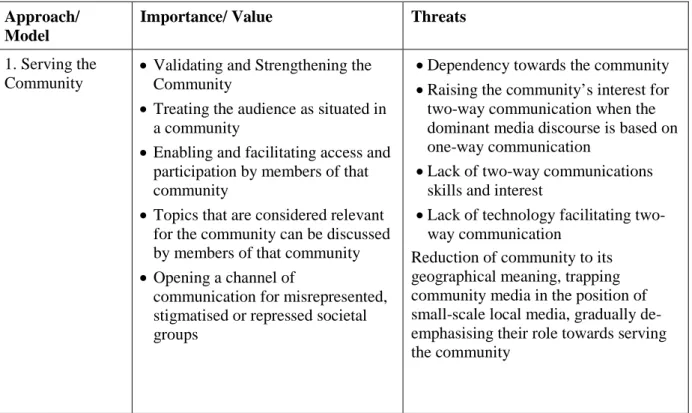
Table 2-1: Four key models for Community Media (Carpentier, Lie and Servaes, 2008) ... 40
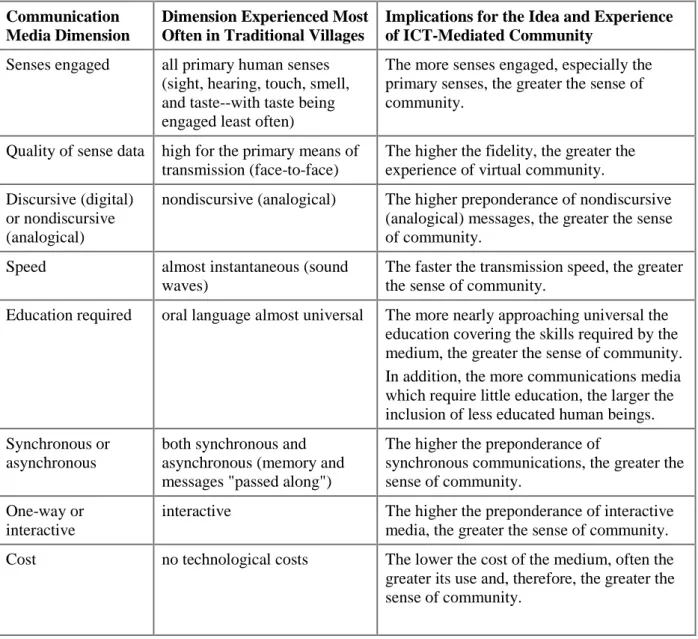
Table 3-1: Dimensions of communication media and their implications for the idea and experience of community despite ICT mediation (Allison, 2007) ... 63
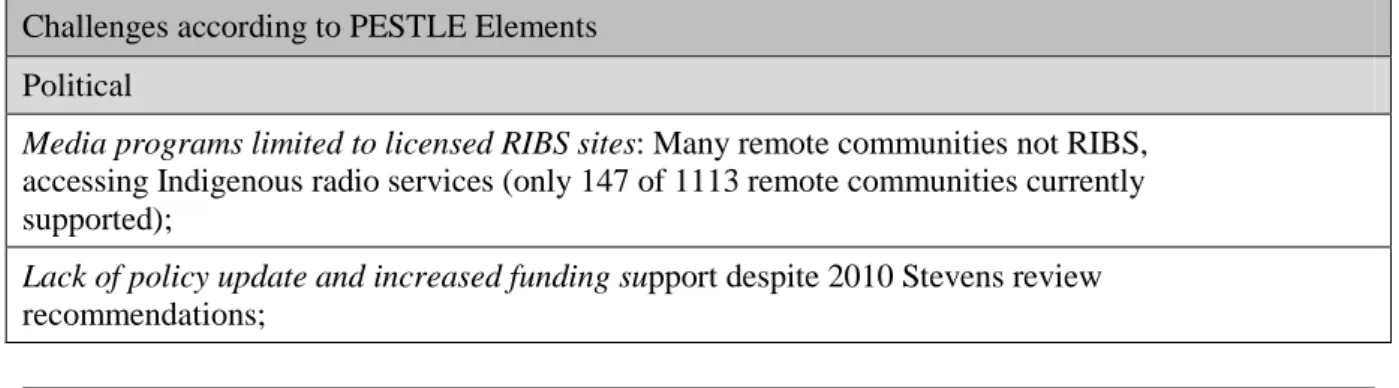
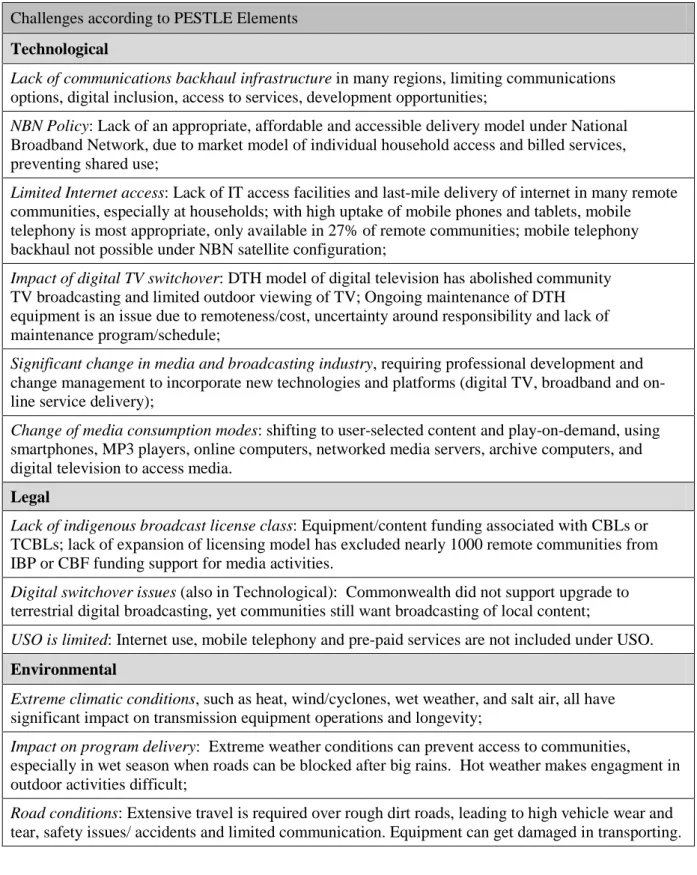
Table 5-1: PESTLE Analysis to show key challenges facing remote Indigenous media sector. ... 115
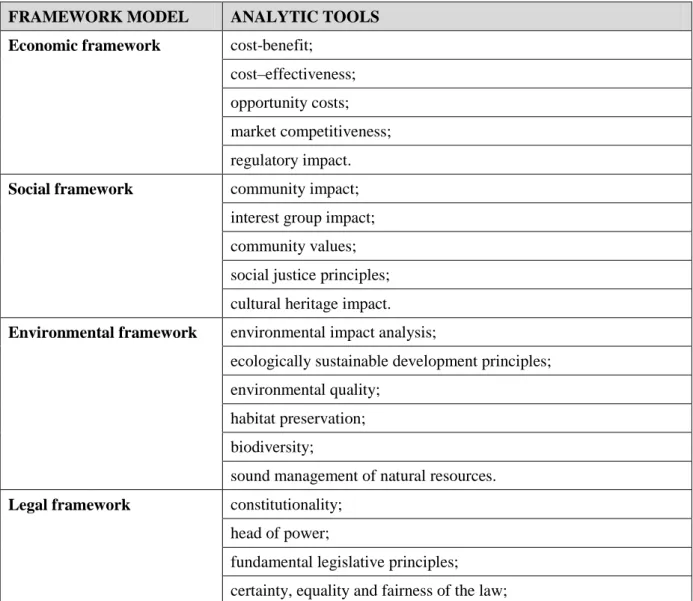
Table 6-1: Policy analysis frameworks with examples of analytic tools and methods (adapted to table from Althaus, Bridgman and Davis, 2013:77) ... 148
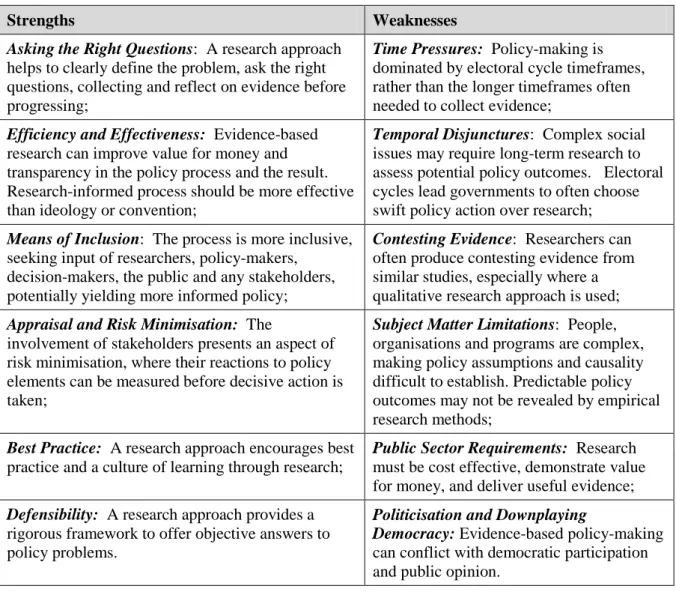
Table 6-2: Strengths and weaknesses of the evidence-based policy-making process (summarised and adapted to table form from Althaus et al, 2013:71-74) ... 156
Table 6-3: Three-lens model of a policy analysis framework (Althaus et al., 2013:76, adapted from Head, 2008) ... 158
Table 6-4: Degrees of relevance of policy layers for various stakeholder groups/levels ... 191
Table 7-1: Process Evaluation Methods (Department for International Development, 2005:18-19; adapted into table form by author) ... 207
Table 7-2: Guiding principles for the framework for evaluating C4D (Lennie and Tacchi, 2013:24-37; adapted into table form by author) ... 215
Table 7-3: EF v.2: Simplified model ... 232
Table 7-4: EF-C2: Contingency Model for evaluation by project type ... 236
Table 7-5: Contingency evaluation framework for Digital Inclusion ... 239
Table 9-1: Comparative evaluation of case studies using EF v.2 ... 274
Table 9-2: Summary of ratings of case studies by Evaluation Principles within EF v.2 ... 278
Table 9-3: Proposed Amendments and Emergent Topics to draft EF v.2 from case study analysis ... 280
Table 9-4: Evaluation of all 6 case studies using the Policy Framework v.1 ... 282
Table 9-5: Summary of ratings of the six case studies by Policy Principles within the PF v.1 ... 285
Table 9-6: Proposed Amendments and Emergent Topics to PF v.1 from case study evaluation ... 288
Table 10-1: Revised EF v.2.1 following incorporation of the Amendments and Emergent Topics from the Case Studies analysis ... 295
Table 10-2: Relative ratings for each Principle within EF v.2.1 compared with EF v.2 ... 297
Table 10-3: Revised version EF v.3 ... 299
Table 10-4: Relative ratings of Principles using EF v.3 compared with EF v.2 and EF v.2.1 ... 300
Table 10-5: How issues with EF1 are addressed by the revised EF v.3 ... 301
Table 10-7: EF-C2 v.2 showing relevance of Evaluation Principles and Topics for the four Project Types ... 312 Table 10-8: Revised Policy Framework PF v.1.1 ... 322 Table 10-9: Relative ratings for each Principle within PF v.1.1 compared with PF v.1 ... 324 Table 10-10: Revised Policy Framework PF v.2 ... 327 Table 10-11: Relative ratings for each Principle within PF v.2 compared with PF v.1 and PF
v.1.1 ... 328 Table 10-12: Revised ratings for the six Case Studies using PF v.2 ... 333 Table 10-13: Summary of Case Studies ratings using the PF v.2 and relative results using EF
v.3 ... 336 Table 10-14: Contingency model PF-C1 showing relevance of Policy Principles and Topics
for the four Project Types ... 340 Table 10-15: Comparison of case studies ratings against PF v.1, PF v.2, EF v.2 and EF v.3
... 354 Table A4-1: Summary of Communications Theories outlined in Chapter 2 and Appendix 3.
... 411 Table A4-2: Summary Matrix of key concepts and relevant aspects from Community
Development and Development Communications theory and practice in Chapter 3. ... 420 Table A4-3: Summary Matrix of Indigenous media & communications research in chapter 4.
... 425 Table A4-4: Summary Matrix of key concepts and relevant aspects from chapter 5 ... 433 Table A4-5: Summary Matrix from review of policy making literature in section 6.2. ... 445 Table A4-6: Summary Matrix from review of Indigenous affairs policy making from section 6.3. ... 447 Table A4-7: Summary Matrix of evaluation theory & methodologies from chapter 7 ... 451 Table A4-8: Summary Matrix of key concepts and relevant aspects from Appendix 9 ... 454 Table A6-1: Comparison of ICTV and NITV... 492 Table A7-1: Pros and cons of public access facilities compared with private ownership of
ICTs ... 507 Table A7-2: PESTLE Analysis showing key issues and obstacles for ICT usage in remote
communities. ... 516 Table A9-1: Overview of Ngaanyatjarra Media funding and projects in 2009/10 ... 579 Table A9-2: Comparison of the primary broadband solutions ... 595 Table A9-3: Factors affecting uptake and choice of communications and ICTs ... 603 Table A9-4: Key communicative modes used in the Ngaanyatjarra Lands... 607 Table A10-1: Draft Policy Framework v.1 ... 618 Table A10-2: Evaluation Framework version 1 ... 626
Table A10-3: EF-C1: Contingency model of EF v.1, based on longitudinal evaluation by project stages ... 639 Table A11-1: RIMO models of radio network coordination ... 648 Table A11-2: Estimated number of hours of broadcasting by Ngaanyatjarra RIBS in 2010653 Table A11-3: Evaluation of Case Study 1, The Ngaanyatjarra Radio Show, Using EF v.2.. 660 Table A11-4: Alignment of CS1, the Ngaanyatjarra Radio Show, against the 40 Evaluation
Topics ... 665 Table A11-5: Evaluation of Case Study 1, the Ngaanyatjarra Radio Show, using Policy
Framework v.1 ... 666 Table A11-6: Alignment of Case Study 1 against the 60 Policy Topics in the PF v.1 ... 671 Table A11-7: Number of edited productions by Ngaanyatjarra Media by genre from 1991 to
2010 ... 675 Table A11-8: Evaluation of Case Study 2 Ngaanyatjarra Cultural Performance and Recording
Project (NCPRP) using EF v.2 ... 690 Table A11-9: Summary of ratings of Case Studies 1 and 2 by Evaluation Principles within
EF v.2 ... 696 Table A11-10: Alignment of the NCPRP against the EF v.2 and Revised EF v.2 ... 696 Table A11-11: Evaluation of Case Study 2, the Ngaanyatjarra Cultural Performance and
Recording Project, using Policy Framework v.1... 698 Table A11-12: Alignment of Case Study 2 against the 60 Policy Topics in the PF v.1 ... 704 Table A11-13: Summary of ratings of Case Studies 1 and 2 by Policy Principles within the
draft PF ... 705 Table A11-14: Ngaanyatjarra Media’s IT training delivery and participation for FSO Phase
One ... 720 Table A11-15: Evaluation of Case Study 3 (CS3) IT Training and Access Facilities Using EF v.2 ... 730 Table A11-16: Summary of ratings of Case Studies 1 to 3 by Evaluation Principles within EF
v.2 ... 737 Table A11-17: Alignment of CS3 against EF v.2 ... 737 Table A11-18: Evaluation of Case Study 3, IT Training and Internet Access, using the Policy Framework v.1 ... 738 Table A11-19: Alignment of Case Study 3 against the 60 Policy Topics in the PF v.1 ... 745 Table A11-20: Summary of ratings of Case Studies 1 to 3 by Policy Principles within the
draft PF ... 746 Table A11-21: Thematic analysis of 101 songs by Ngaanyatjarra and Pitjantjatjara Bands
between 2003 and 2008 (Kral, 2008:13) ... 748 Table A11-22: Performance outcomes of initial ICS funded music projects 2009/10 ... 758 Table A11-23: Evaluation of CS4 using EF v.2 ... 765 Table A11-24: Summary of ratings of Case Studies 1 to 4 by Evaluation Principles within EF
Table A11-25: Alignment of CS4 against EF v.2 ... 770 Table A11-26: Evaluation of Case Study 4, Ngaanyatjarra Music Development Program,
using the Policy Framework v.1 ... 771 Table A11-27: Alignment of CS4 against the 60 Policy Topics in the PF v.1 ... 777 Table A11-28: Summary of ratings of Case Studies 1 to 4 by Policy Principles within the
draft PF ... 778 Table A11-29: NJP participant roles, communities and type of training received, as at
December 2009 ... 788 Table A11-30: Evaluation of CS5 using EF v.2 ... 797 Table A11-31: Summary of ratings of Case Studies 1 to 5 by Evaluation Principles within EF
v.2 ... 803 Table A11-32: Alignment of CS5 against EF v.2 ... 803 Table A11-33: Evaluation of Case Study 5, National Jobs Package, using the Policy
Framework v.1 ... 805 Table A11-34: Alignment of CS5 against the 60 Policy Topics in the PF v.1 ... 811 Table A11-35: Summary of ratings of Case Studies 1 to 5 by Policy Principles within the
draft PF ... 812 Table A11-36: Evaluation of CS6 using EF v.2 ... 839 Table A11-37: Summary of ratings of Case Studies 1 to 6 by Evaluation Principles within EF
v.2 ... 845 Table A11-38: Alignment of CS6 against EF v.2 ... 845 Table A11-39: Evaluation of Case Study 6, Ngaanyatjarra Language Recording and
Archiving Project, using the Policy Framework v.1 ... 847 Table A11-40: Alignment of CS6 against the 60 Policy Topics in the PF v.1 ... 853 Table A11-41: Summary of ratings of the six Case Studies by Policy Principles within the
List of Figures
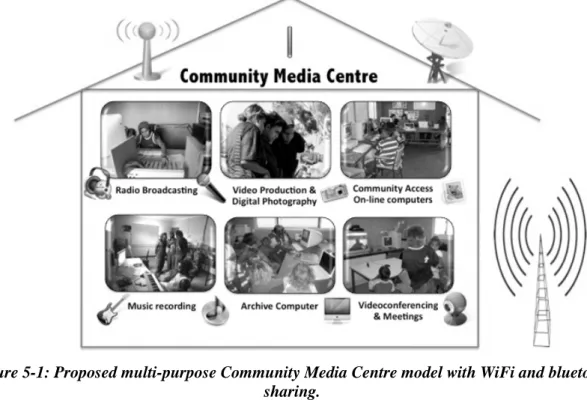
Figure 4-1: A model for rural and remote ICT development (Ramirez, 2001:321) ... 91 Figure 5-1: Proposed multi-purpose Community Media Centre model with WiFi and
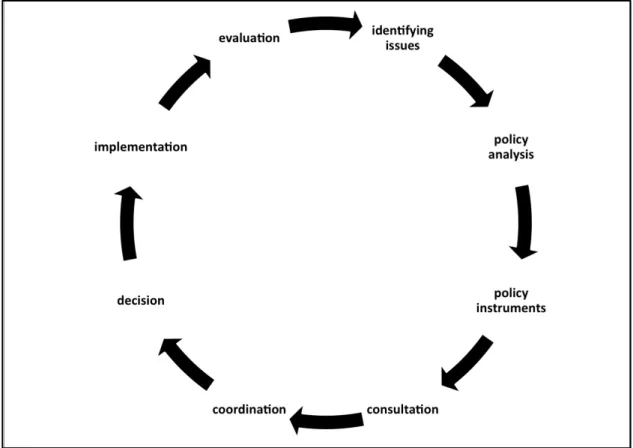
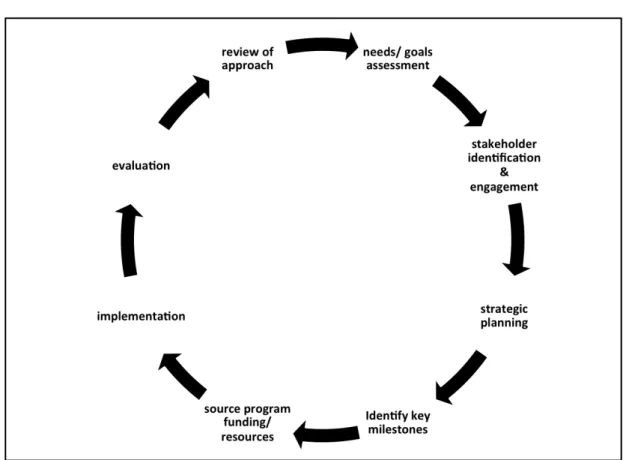
bluetooth sharing. ... 104 Figure 6-1: The Australian policy cycle (Althaus et al 2013:38 ) ... 151 Figure 6-2: A ground-level program development cycle. ... 152 Figure 7-1: Hierarchy of questions for program design and evaluation (Rossi, Lipsey and
Freeman, 2004:80) ... 206 Figure 7-2: Seven inter-related components of the framework for evaluating C4D (Lennie and
Tacchi, 2013:22) ... 215 Figure 7-3: Comparison of Australian policy cycle (Althaus et al, 2013:38) with ground-level project development cycle (by author) ... 226 Figure 7-4: Four project categories for EF-C2 ... 235 Figure 8-1: Underlying philosophical assumptions for qualitative research (from Myers,
1997:243) ... 255 Figure 9-1: The Integrated Delivery Model used by Ngaanyatjarra Media ... 266 Figure 9-2: Evaluation Framework v.2 - The Simplified Model ... 274 Figure 10-1: Revised EF v.3, incorporating changes based on Chapter 10 and review in 11.2
... 304 Figure 10-2: Draft Contingency-based Evaluation Process ... 319 Figure 10-3: Revised PF v.2, incorporating changes based on Chapter 10 and review in 11.3
... 333 Figure 10-4: Draft Contingency Policy Process ... 344 Figure 11-1: The inter-relationship of the EF and the PF ... 363 Figure 11-2: Cooperative program delivery approach. ... 373 Figure A8-1: Map of communities in the Ngaanyatjarra region supported by Ngaanyatjara
Media ... 519 Figure A8-2: Organisational structure of Ngaanyatjarra Council 2010. ... 550 Figure A9-1: Integrated Delivery Model used by Ngaanyatjarra Media as at 2010 ... 578 Figure A9-2: Map showing path of NLTP Stage 1 fibre optic rollout,and satellite solution for
six sites under NLTP Stage 2(Diagram by Anson Cheng, courtesy WA
Government) ... 599 Figure A9-3: NLTP Stage 2 showing broadband satellite delivery to six outlying
communities(adapted from diagram by Anson Cheng, WA Government) .... 600 Figure A9-4: Last mile wireless distribution (adapted from diagram by Anson Cheng, WA
Government) ... 601 Figure A11-1: Graph showing comparative alignment of CS1 against EF v.2 ... 665
Figure A11-2: Graph showing alignment of Case Study 1 against the Policy Topics in the PF v.1 ... 672 Figure A11-3: Graph showing comparative alignment of Case Study 2 against EF v.2 and EF v.2 Revised ... 697 Figure A11-4: Graph showing alignment of Case Study 2 against the Policy Topics in the
draft PF ... 704 Figure A11-5: Graph showing alignment of Case Study 3 against EF v.2 ... 738 Figure A11-6: Graph showing alignment of Case Study 3 against the Policy Topics in the
draft PF ... 745 Figure A11-7: Graph showing alignment of Case Study 4 against EF v.2 ... 770 Figure A11-8: Graph showing alignment of CS4 against the Policy Topics in the draft PF 777 Figure A11-9: Graph showing alignment of Case Study 5 against EF v.2 ... 804 Figure A11-10: Graph showing alignment of CS5 against the Policy Topics in the draft PF
... 811 Figure A11-11: Graph showing alignment of Case Study 6 against EF v.2 ... 846 Figure A11-12: Graph showing alignment of CS6 against the Policy Topics in the draft PF
Acknowledgements
Warning: Names of deceased Aboriginal people are included in this section as a record of their valued contribution.
Firstly, a huge thanks to my principal supervisor Dr Andrew Turk for the many years of
encouragement, mentoring and support, always with amazing generosity and humour. Despite slow progress and ever-changing direction, Andrew continued to see the value in the project and finally convinced me to upgrade to a PhD. Being a remote-based candidate juggling heavy work
commitments and a young family, I often felt like giving up climbing this mountain. Andrew helped me reach the summit. Thanks also to my secondary supervisor Dr Mick Broderick for the feedback and encouragement over the last few years, and suggesting a more narrative writing style. Thanks also to Dr Martin Mhando who provided supervision in the early stages.
A special thanks to my two Yarnangumalpa1 (co-workers) Noeli Mantjantja Roberts and Belle Karirrka Davidson, to whom I dedicate this thesis. They ‘grew me up’ in the role of Media Coordinator at Ngaanyatjarra Media, generously shared their cultural knowledge, humour and
wisdom, and taught me the protocols and ways of Ngaanyatjarra culture and life. Noeli, Belle and my other Yarnangu colleagues were active participants in the planning, implementation and community engagement for the case studies in this project. Unfortunately the thesis style and word count made it difficult to include more of their voices in this thesis, as I had initially hoped.
Thanks to everyone - media workers, Board members and staff - who worked so hard to develop Ngaanyatjarra Media and its predecessor Irrunytju Media. Special thanks to my many Yarnangu co-workers, friends and community leaders across the region, including Winnie Woods, Simon and Roma Butler, Tjawina Roberts, Linda and Lance Eddy (deceased), the Mitchell and Woods families, Elizabeth Ellis, Daisy Ward and too many more to mention, including many more who are no longer with us. A big thanks to the dedicated dedicated staff at Ngaanyatjarra Media over the years – particularly Valerie Bichard who played a major role during the early years, the wonderful Nina Tsernjavski and many others – who contributed greatly to the learnings documented in this project. I acknowledge the years of support and guidance by the Directors and staff of Ngaanyatjarra Council. Thanks for approving my request to undertake this research project. I hope that the outcomes provide benefits beyond Ngaanyatjarra Media to other local organisations. Thanks also to the Shire of
Ngaanyatjarraku, to the councils and staff of all 15 communities, and to the many agencies and staff in the region for their support, cooperation and sharing of knowledge and experience.
Thanks to the many government agencies – federal, state and local – that supported Ngaanyatjarra Media’s development and projects over the years, as well as the broader sector. You all helped show me the human side of government and the importance of partnerships. Thanks also to the non-government agencies, industry partners and community stakeholders who helped along the way. Thanks to my colleagues at Indigenous Remote Communications Association (IRCA), where I now work as General Manager, especially Linda Hughes, Liam Campbell and Susan Locke. Thanks to the IRCA Board and membership from across remote Australia. Thanks to the Managers, staff and Boards of the eight RIMOs, ICTV, and the broader Indigenous media network. I have been fortunate to have known some of the pioneers, past and present, who have created the vision and pathway for future generations, including Francis Kelly, Simon (deceased) and Pantjiti McKenzie, Jim Remedio, and Uncle Bill and Mick Thaiday (both deceased). Thanks also to my non-Indigenous peers and mentors for their dedication and knowledge, including Neil Turner, Rita Cattoni, Will Rogers and many more.
I am also indebted to a number of researchers and academics who helped me formulate and test my ideas and encouraged me to complete this project. These include Dr Inge Kral, Dr Ellie Rennie, Dr Michael Meadows, Dr Frank Rijavec, Dr David Tafler, Dr Peter Radoll, Lyndon Ormond-Parker, and many others who generously shared knowledge, feedback and insights. And thanks to Michael Done for weaving his magic in formatting this thesis.
And a special big thank you to my wonderfully supportive and loving partner Bronwyn Taylor, who has been on this journey with me for the last six years. During that time we have moved from remote communities to the big smoke of Alice Springs, made house and been blessed with two gorgeous children, Anuwa (4) and Senna (2). My kids have missed a lot of Daddy time to this project, and are now looking forward to some quality time. Thanks to my parents-in-law John and Wendy Taylor, for their support and assistance to find me a space to write during holidays.
And, finally, thanks to my loving parents, Jan and Kerry Featherstone, for their eternal support and encouragement, my brothers Kieran and Michael and sister Kelli and their families, and my grandparents, now passed, who always encouraged me to write.
Chapter 1. Introduction
1.1
In this chapter
This chapter begins with a summary of the author’s background and personal motivation for undertaking this research project. It then provides the background context for the project and outlines why the research was needed before defining the research question and
sub-questions.
It describes the approach taken to the research, including the methodology and theoretical models adopted. It introduces the key output of this project, being the development of contemporary policy and evaluation frameworks, aimed at developing effective, relevant and participatory media and communications projects for remote Indigenous communities and the capacity and sustainability of the remote Indigenous media industry to deliver these. The proposed frameworks will also facilitate an evidence-based policy approach.
It introduces Ngaanyatjarra Media as the research site and the six projects used as case studies. It briefly describes the limitations on generalisability of this research site and the project. Finally, it provides a summary overview of the structure of the dissertation and what is covered within each chapter.
1.2
Author’s motivation
When I moved from Sydney to the remote community of Irrunytju, 10km from the tri-state border of WA, SA and NT, in 2001 to take up the role of Media Coordinator at Ngaanyatjarra Media, I had little understanding of the world I had entered or the journey I was embarking on. Neither my film-making experience, nor my reading on the development of BRACS1 and Eric Michaels’ research more than a decade earlier, had prepared me for the reality of coordinating an Indigenous media organisation that supported 14 communities over a 400,000 square kilometreregion.
I was very fortunate to have two very special teachers and co-workers, Noeli Mantjantja Roberts and Belle Karirrka Davidson, to induct me into the communicative world of the
1
Broadcasting for Remote Aboriginal Communities Scheme, established in 1987 to provide local community radio and television broadcasting capability in selected remote Indigenous communities.
Ngaanyatjarra Lands and the Yarnangu2 approach to media production. They generously shared their cultural knowledge and experience and showed me the importance of community ownership and participation. Ngaanyatjarra Media had a strong history of cultural recording, based on the model of neighbouring PY Media (originally EVTV), however little activity had occurred in recent times. I quickly realised this was a cross-cultural collaborative endeavour. Over the next nine years, we worked side-by-side, with the growing ‘family’ of media
workers and staff, to build an expansive media and communications program across the region.
This project began as a Research Masters project in 2007, initially at the suggestion of Dr Andrew Turk who was conducting an interactive TV research project in Irrunytju (Eyers et al., 2006; McGinley et al., 2009). Initially I planned to document the development of Ngaanyatjarra Media, and the learnings based on a number of media and communications project case studies. I wanted to describe the challenges and opportunities associated with introducing communications technologies into the region – Internet, ICT access and mobile telephony – via the Ngaanyatjarra Lands Telecommunications Project3. However, as Ngaanyatjarra Media expanded its delivery of media and communications projects the inter-connectivity of the projects became more apparent and the outcomes more expansive4. While I was on a steep learning curve to understand the Ngaanyatjarra cultural worldview and locally appropriate delivery models, I also had to learn another language and worldview; that of the policymakers and funding agencies. To effectively deliver projects in remote communities and gain funding, a translation role was required between two very different cultural frameworks; the community and government agencies. Each stakeholder group had its own language, protocols, needs, assumptions and values. I needed to be able to bridge these two frameworks in order to provide relevant outcomes for each. The misalignment of expectations, intended outcomes and understanding had resulted in many remote programs wasting money, burning out staff, disenfranchising Yarnangu and leaving little net benefit.
2 See Appendix 2 for list of acronyms, definitions and Ngaanyatjarra language terms used in this thesis. 3 The ‘Ngaanyatjarra Lands Telecommunications Project’, completed in 2008, introduced broadband to the region. It included a fibre optic network connecting six communities and satellite broadband to another six, with WiFi in all 12. In a 2010 article entitled “The Aboriginal Invention of Broadband’, I described how, like satellite TV in the 1980s, broadband communications was the next major wave of communications-led globalisation in remote communities. However, rather than having negative impacts, Aboriginal people were using digital tools to maintain cultural and language and develop new skills, literacy and capability.
In order to deliver media and communications programs with meaningful outcomes for community stakeholders, I needed to have a broad understanding of local needs, regional context, infrastructure and technology, cultural frameworks, history of communications usage and social networks. This can be summarised by the term ‘communicative ecologies’ (see section 3.3). I also needed to understand government policy and funding options in order to access the resources needed to support locally relevant media and ICT activities.
This research project was a journey of learning, not just in a university context, but on-the-job while managing a remote media organisation and delivering a range of projects. The learnings come from navigating the many internal challenges of undertaking this work in a remote community setting, as well as placing these into a larger industry and policy context through my learnings from the literature and national and international research. Having left Ngaanyatjarra Media in 2010 and worked as General Manager of the remote media sector peak body IRCA since 2012, the learning curve has continued. This research helped to inform my work in supporting industry development and policy advocacy for the sector. A longer version of the author’s personal motivation is included in Appendix 1.
1.3
Background to this project
Following the establishment of CAAMA Radio in Alice Springs in 1980, remote community video production began in about 1983 in Yuendumu (NT) and Ernabella (SA). This activity was partly a response to concerns about the potential cultural impact of the impending introduction of mainstream television into remote Australia via the AUSSAT satellite5, but was also enabled by the recent introduction of low-cost domestic video production
equipment. In 1985, both Warlpiri Media Association and Ernabella Video and Television began pirate community TV broadcasts using low-powered transmitters.
Following the ‘Out of the Silent Land’ report (Willmot et al, 1984) this model was developed into a national program, the Broadcasting for Remote Aboriginal Communities Scheme (BRACS), enabling local radio and television broadcasting over the mainstream television
5
The A1 and A2 AUSSAT satellites were launched in late 1985 and K3 in April 1987 with ABC and the four Remote Commercial Television Services beginning broadcasting in 1987-8. In January 1980, Central Australian Aboriginal Media Association (CAAMA) founders John Macumba, Freda Glynn and Phillip Batty organised a community meeting of Aboriginal people in Alice Springs to discuss concerns over the impact of the satellite on Aboriginal language and culture, especially in remote communities where there were not even telephones at that time (Glynn and Batty 1998:34).
and radio services. Initially rolled out to 81 remote Indigenous communities in 19876, BRACS was established in 103 communities across Central and northern Australia by 1996. A fledgling remote media industry had begun, using media tools to ‘fight fire with fire’ and maintain language and cultural diversity. Nearly 30 years later, and despite numerous challenges, that industry is finally coming of age.
There are now over 120 Remote Indigenous Broadcasting Services (RIBS, formerly BRACS) supported by eight hub Remote Indigenous Media Organisations (RIMOs). These RIMOs operate in diverse regional contexts with different languages and cultures, contact histories, and socio-political, technological, geographic and climatic factors. As such, the media programs and communicative modes used vary across the regions.
In 2015, the remote Indigenous media and communications industry has reached a critical crossroads. For over two decades, it has been constrained from achieving its potential due to poor implementation of the BRACS program, limited resourcing, lack of consultation on communicative needs, and out-dated policy (Meadows, 1992, 2000, 2012; Molnar and Meadows, 2000).
Australia’s Indigenous media policy has remained unchanged since the 1993 ATSIC policy, retaining a broadcasting focus despite digital convergence in Australia and international trends towards using ICT for communications development. While Australia’s Broadcasting Services Act (1992) recognised Indigenous broadcasting as a discrete sector alongside
community broadcasting, it has effectively been considered a sub-set of community broadcasting in terms of funding, industry codes and licensing. As such, the Indigenous Broadcasting Program (IBP)7 guidelines changed in 2007 to support radio broadcasting only, going against the national industry trend towards convergence and multi-platform delivery. During this time, there was growing recognition internationally, through the United Nations Declaration on the Rights of Indigenous Peoples8, that Indigenous peoples should have the
6 See the Australian Bureau of Statistics definitions of ‘remote Indigenous communities’ and the remoteness index for defining ‘remote and very remote’ in section A2.2 of Appendix 2.
7 IBP was the primary funding program for Indigenous media. It was coordinated by ATSIC until 2004, then Department of Broadband, Communications and the Digital Economy, Department of Environment, Water Heritage and the Arts, Ministry for the Arts, Department of Communications. The move into the IAS within Department of Prime Minister and Cabinet in 2014 has seen the abolition of IBP.
8 The UN Declaration, adopted on 13/9/2007, sets out the individual and collective rights of the world’s Indigenous peoples. Australia was one of four countries to not endorse the Declaration initially, but changed its position and signed on 3rd April 2009.
right “to establish their own media in their own languages and to have access to all forms of non-indigenous media without discrimination” (Article 16; UN, 2008:7-8).
Meanwhile, Indigenous affairs policy in Australia had become a political ‘football’ in the early 2000s with a dramatic shift in direction from the self-determination policy, leading up to the Howard government’s abolition of ATSIC in 2004 and the NT Intervention in 2007. This marked a change from a rights and cultural maintenance agenda towards a more assimilationist and deficit-based approach aimed at ‘normalising’ Aboriginal and Torres Strait islanders (Altman and Hinkson, 2007). Following the Stolen Generation speech by the new Prime Minister Kevin Rudd in early 2008, Indigenous affairs policy was re-focussed on ‘closing the gap’ on key indicators in health, life expectancy, education, employment and economic opportunity. However, the potential of Indigenous media and communications to become a significant enabler of that objective was not recognised by policy makers.
Most recently in 2014, 150 Indigenous programs across multiple portfolios were relocated into five ‘closing-the-gap’ streams within the Department of Prime Minister and Cabinet under the new Indigenous Advancement Strategy (IAS). The Indigenous Broadcasting Program was transferred from the Department of Communications into the IAS, effectively replacing the out-dated Indigenous broadcasting policy with a top-down generic Indigenous Affairs policy. While Indigenous media organisations survived this shake-up, their funding is contingent on their demonstrated outcomes against Indigenous affairs policy objectives. This undermines the Indigenous media sector’s position within the fourth estate and the press ‘freedoms’ to convey content relevant to their communities, including views that may be critical of government policy. While public funding is required to support the Indigenous broadcasting and media sector, its intended role is to provide a voice for Aboriginal and Torres Strait Islander people and communities, not government policy.
Beyond the policy changes, there have been significant technological changes that have changed the nature of media and communications. Nearly thirty years on from the
introduction of satellite TV, a new wave of media and communicative modes and content has penetrated remote Australia, with the introduction of broadband via satellite and fibre optic backhaul, community access ICT facilities and training programs, mobile telephony, apps and games, social media, and new platforms for accessing on-demand media. With the increasing accessibility of tools and platforms for personal media creation and distribution, the
marginal to daily media and communications usage. Also, the local TV broadcasting
capability was removed as part of digital television switchover in 20139. As a result of these changes, RIMOs are increasingly using ICTs and on-line networks for media production and access, information sharing, community journalism, meetings and training, remote
monitoring of facilities, language and cultural projects and digital archives.
Where infrastructure is available, there is rapid uptake of new communication technologies and applications by remote Indigenous people, enabling new modes of creative cultural expression (Schwab and Kral, 2012). However, remote Indigenous people remain the most digitally excluded section of the Australia demographic (ACMA, 2008). This is due to limited infrastructure, lack of access to affordable services and ICTs, limited English literacy and digital literacy, and cultural factors.
This section has provided the context for this research. The next section more explicitly summarises why the research is required. Updated policy and evaluation models are needed to support the development of Indigenous media and communications in remote Australia.
1.4
Why this research is needed
This thesis fills a gap in literature on the contemporary role and direction of Australian remote Indigenous media and communications within a convergent and technologically changed environment. It seeks to respond to the demand over more than two decades for updated policy in this area by developing new policy and evaluation frameworks (Meadows, 1992, 2000, 2013; Molnar and Meadows, 2000; Remedio, 2010). These are aimed at
promoting a broader policy approach, beyond a broadcasting-specific model, to a more holistic multi-modal approach that recognises the range of media and communications used in remote Indigenous communities, and builds the capacity and scope of Indigenous-owned media organisations to effectively address contemporary needs.
As remote Indigenous people become increasingly connected and media choices increase, there is a shift in communicative ecology toward online, mobile and social communications. Interactive, mobile, personal and social networking are the keywords for the new modalities of media and communications. With the long-term NBN satellite solution about to introduce high-speed Internet access to remote Australia in 2016 the communicative landscape is
9
In 2013, Digital Television Switchover replaced the capability of broadcasting local community and cultural programming with direct-to-home satellite delivery of 17 channels of mainstream TV services.
quickly changing. The challenge for the remote Indigenous media sector is to respond to these changes or risk becoming marginalised or obsolete.
The remote Indigenous media sector has long advocated for the resources to build a robust and sustainable industry, and to be able to adapt to changes in communicative technologies and community media usage. Three industry reviews since 1999 have recommended updated policy and increased funding for the sector (ATSIC, 1999; Productivity Commission, 2000; Stevens et al., 2011), yet there has been little change in funding levels since the mid 1990s. The Digital Dreaming review report (ATSIC, 1999) identified Indigenous media and communications organisations as providing essential services in their respective
communities. However, this has not been recognised in policy, with Indigenous broadcasting still considered a sub-set of community broadcasting in terms of licensing and regulatory codes. The 1990s licensing regime and limited funding model has also constrained the number of communities that the remote Indigenous media organisations (RIMOs) have been able to provide services to. While the eight RIMOs manage satellite radio networks to nearly 150 RIBS and retransmission sites, nearly 1000 remote communities and homelands
nationally are still without access to these essential Indigenous media services .
The Digital Dreaming report (1999) and Stevens Review (2011) both highlighted the need to recognise the convergence of media and ICTs as part of future policy and program
development. While convergence is already a reality with the remote Australian Indigenous media sector, it has yet to be effectively recognised within Australian government policy. Despite some of the most successful delivery of ICT training and projects by remote media organisations over the last decade as a result of this synergy, ICT projects continue to be treated as discrete activities and not recognised as recurrent programs. While a lot of research has been undertaken into the use of ICTs in remote Indigenous communities (Daly, 2005; Watson, 2007; McCallum and Papandrea, 2009; Radoll, 2010; Kral, 2010; Rennie et al., 2011; Singleton, 2013), little has been written on how this convergence of media and ICTs is being used within the contemporary remote media industry.
Indigenous media and communications policy in Australia has not been updated to align with significant changes internationally. Since the late 1990s, there has been a shift in the field of development communications from using one-way communicative modes such as
broadcasting to two-way and decentralised communicative modes using ICTs. Similarly there has been a shift away from top-down diffusion models based on modernisation theory,