DOCTORAL THESIS
Title Improving Creativity Training: An examination of the effects of delivery method and problem realism on creative performance in post-training ideation
Presented by Matilde Martínez Casanovas
Centre Escola Tècnica Superior d'Enginyeria Electrònica i Informàtica La Salle
Department Departament d'empresa i tecnología
Directed by Francesc Miralles Torner
C .I .F . G : 5 9 0 6 9 7 4 0 U n iv er si ta t R a m o n L u ll F u n d a ci ó P ri va d a . R g tr e. F u n d . G en er a li ta t d e C a ta lu n ya n ú m . 4 7 2 ( 28 -02 -9 0) C. Claravall, 1-3 08022 Barcelona Tel. 936 022 200
DEDICATION
For my mother, my sisters, and all who have believed in me, especially my guide
List of papers published in conferences
Martínez Casanovas, Matilde., Miralles, Francesc., García, Rafael.. Gómez, Marcos,
(2011). “Innovation Factory Brainstorming: improving idea generation
through experiential learning training”. In Proceedings XXII ISPIM Conference: Sustainability in Innovation (ISPIM 2011, ISBN
978-952-265-091-7), Hamburg, Germany – 12-15 June 2011.
Martínez Casanovas, Matilde., Miralles, Francesc., Gómez, Marcos, García, Rafael.
(2010). “Improving Creativity Results and its Implementation in Organizations
Using Creative Techniques Through Experiential Learning Training”. In
proceedings 5th European Conference on Innovation and Entrepreneurship
(ECIE 2010, ISBN 978-1-906638-75-7), Athens, Greece – 16-17 September
2010.
Martínez Casanovas, Matilde., Miralles, Francesc., Gómez, Marcos, García, Rafael.
(2010). “Improving creativity results in organizations using creative techniques
through experiential learning training”. In Proceedings XXI ISPIM Conference: The Dynamics of Innovation (ISPIM 2010, ISBN
Dew, Robert., Hearn, Greg., Martínez Casanovas, Matilde., Von Stamm, Bettina (2010).
“Designing pragmatic innovation measurement heuristics”. In Proceedings XXI ISPIM Conference: The Dynamics of Innovation (ISPIM 2010, ISBN
978-952-214-926-8), Bilbao, Spain – 6-9 June 2010.
García Escarré, Rafael., Martínez Casanovas, Matilde., Gómez Jiménez, Marcos.,
Miralles, Francesc (2010). “Business and entrepreneurial prior knowledge:
complementary role in opportunity identification”. In Proceedings XXI ISPIM
Conference: The Dynamics of Innovation (ISPIM 2010, ISBN
978-952-214-926-8), Bilbao, Spain – 6-9 June 2010.
Gómez Jiménez, Marcos., García, Rafael., Martínez Casanovas, Matilde., Miralles,
Francesc (2010). “Importing innovation practices: challenge for employee
creativity behaviour in its national context”. In Proceedings XXI ISPIM
Conference: The Dynamics of Innovation (ISPIM 2010, ISBN
978-952-214-926-8), Bilbao, Spain – 6-9 June 2010.
Martínez Casanovas, Matilde., Miralles, Francesc., Gómez, Marcos., García, Rafael.
(2009). “Improving creativity in organizations using creative techniques with
experiential learning”. In proceedings 4th European Conference on
Entrepreneurship and Innovation (ECEI 2009, ISBN 978-1-906638-42-9 CD),
Gómez, Marcos., García, Rafael., Martínez Casanovas, Matilde., Miralles, Francesc
(2009). “Employee creativity behavior based on national cultural dimensions:
observations from a comparative case study”. In proceedings 4th European
Conference on Entrepreneurship and Innovation (ECEI 2009, ISBN
978-1-906638-42-9 CD), Antwerp, Belgium – 10-11 September 2009.
Martínez Casanovas, Matilde., Miralles, Francesc., Gómez, Marcos., García, Rafael.
(2009). “Improving creativity in civil service organizations using creative
techniques with experiential learning”. In Proceedings XX ISPIM Conference: The Future of Innovation (ISPIM 2009, ISBN 978-952-214-767-7), Vienna,
Table of contents
ABSTRACT ___________________________________________________________ 13
Keywords ________________________________________________________________ 16
Chapter 1 – Introduction: Creativity enhancement through training ____________ 17
1.1. On the importance of creativity enhancement ________________________________ 17 1.2. Nurturing creativity through training _______________________________________ 21 1.3. Purpose of the study and research questions _________________________________ 23 1.4. Significance of the study _________________________________________________ 28 1.5. Structure of the dissertation ______________________________________________ 30
Chapter 2 – Conceptions of Creativity _____________________________________ 33
2.1. Introduction __________________________________________________________ 33 2.2. Creativity: a multidisciplinary field of research ________________________________ 34 2.3. Theories of organizational creativity ________________________________________ 40 2.3.1. The Componential Theory of Organizational Creativity _____________________ 42 2.3.2. The Interactionist Approach __________________________________________ 45 2.3.3. The “componential interaction” model –a unified view _____________________ 48 2.4. Creativity defined ______________________________________________________ 49 2.5. Chapter Summary ______________________________________________________ 52
Chapter 3 – Creativity training ___________________________________________ 55
3.1. Introduction __________________________________________________________ 55 3.2. On the effectiveness of creativity training ___________________________________ 57 3.2.1. Creativity training programs __________________________________________ 58 3.2.2. On the effectiveness of Creative Problem Solving __________________________ 59 3.2.3. Evaluations of creativity training effectiveness research _____________________ 61 3.2.4. The need for further evidence on training delivery methods _________________ 64 3.2.5. Hypotheses regarding training delivery method ___________________________ 67 3.3. Problem realism as factor affecting the effectiveness of creativity training __________ 69 3.3.1. The relevance of the problem according to Unsworth's creativity theory _______ 71
3.3.2. Evidence from brainstorming research __________________________________ 73 3.3.3. Evidence from education research _____________________________________ 77 3.3.4. Hypotheses regarding problem realism __________________________________ 78 3.4. Chapter summary ______________________________________________________ 80
Chapter 4 – Empirical method ___________________________________________ 83
4.1. Research design________________________________________________________ 83 4.2. Sample description _____________________________________________________ 85 4.3. Procedures ___________________________________________________________ 86 4.3. Typology of training experiences __________________________________________ 89 4.3.1. Training experience I: Ideation with no previous training (NKT) ______________ 91 4.3.2. Training experience II: Ideation after lecture-based creativity training (CRE) _____ 95 4.3.3. Training experience III: Experiential Learning training (ELT) __________________ 98 4.4. Measures _____________________________________________________________ 99 4.4.1. Fluency __________________________________________________________ 104 4.4.2. Originality _______________________________________________________ 105 4.4.3. Elaboration ______________________________________________________ 106 4.5. Chapter summary _____________________________________________________ 107
Chapter 5 – Empirical Findings _________________________________________ 109
5.1. Preliminary findings ___________________________________________________ 110 5.2. Results regarding training _______________________________________________ 112 5.2.1. Fluency results according to training ___________________________________ 115 5.2.2. Originality results according to training_________________________________ 117 5.2.3. Degree of elaboration according to training _____________________________ 119 5.3. Problem realism and creative performance _________________________________ 122 5.3.1. Fluency and problem realism ________________________________________ 124 5.3.2. Originality and problem realism ______________________________________ 125 5.3.3. Elaboration and problem realism _____________________________________ 127 5.4. Chapter Summary _____________________________________________________ 129
6.1. Does training affect creative performance? _________________________________ 136 6.2. Does problem realism affect creativity? ____________________________________ 138 6.3. Chapter summary _____________________________________________________ 142
Chapter 7 – Conclusions, implications and directions for future research _______ 145
7.1. Main conclusions of the study ___________________________________________ 146 7.2. Implications __________________________________________________________ 148 7.3. Limitations and directions for future research _______________________________ 152
Chapter 8 – References _______________________________________________ 155 Chapter 9 – Appendix ________________________________________________ 173
APPENDIX 1: Brainstorming, an idea generation technique ________________________ 173 APPENDIX 2: Experiential Learning ___________________________________________ 177 APPENDIX 3: Creative thinking techniques provided to participants __________________ 184
ABSTRACT
Creativity has attracted increasing interest over the past seven decades. Scientific
researchers from numerous academic fields as well as business managers, creativity
practitioners and educators, are all interested in the subject of human creativity, its
stimulators and inhibitors. Such interest is based on the belief that creativity is a motor
of innovation, a key factor in future development of humanity. It is thus also believed
that if we are able to understand the underlying factors that enhance human creativity
we can design training programs to help employees and future generations to reach their
full creative potential to the benefit of the entire humanity.
The purpose of this dissertation is to examine the effect of training on creative
performance. Training has been long indicated to have the potential of enhancing
creative abilities. As result many creativity training programs have been developed by
organizations and educational institutions alike (Sawyer, 2006). Yet, the empirical
evidence regarding the effectiveness of creativity training programs is limited to few
such programs. Rather than being focused on the effectiveness of specific training
programs this dissertation is centered on the effect that the delivery format may have on
the creative performance of groups that have received creative training. This way the
researcher seeks to ascertain whether the way in which creativity is taught to trainees
affects post-training creative performance. Specifically this study examines the effect of
approach. In addition, the study also examines the effects that the type of problem
(real-life versus fictitious) may have on creative performance.
One hundred and nine groups of employees of forty five Spanish companies (981
participants overall) participated in different training experiences conducted to ascertain
if and how the aforementioned factors (type of training and problem realism) affect
creative performance. Each group was submitted to a specific training experience and
group creative performance was measured by using three measures: fluency, originality,
and elaboration of ideas produced. Statistical analysis of performance differences
between each training experience and each measure was conducted using Student’s t-test and analysis of variance (ANOVA). Results of the data analysis reveal a positive
effect of training on creative performance and also showed that training based on
experience is better suited for creativity training. In addition the empirical results also
reveal that working on real-life problems as opposed to fictitious ones, enhances
creative performance.
The contribution made by this study to the field of creativity research is twofold. First it
provides additional empirical evidence regarding the factors conditioning the
effectiveness of creativity training. Specifically, the empirical application looks at
training delivery method and task realism. These factors have been under examined by
The empirical findings of this study indicate the existence of a relationship between
training delivery method and post-training ideation performance. Specifically, ideation
performance is enhanced by training delivery based on experiential learning. The groups
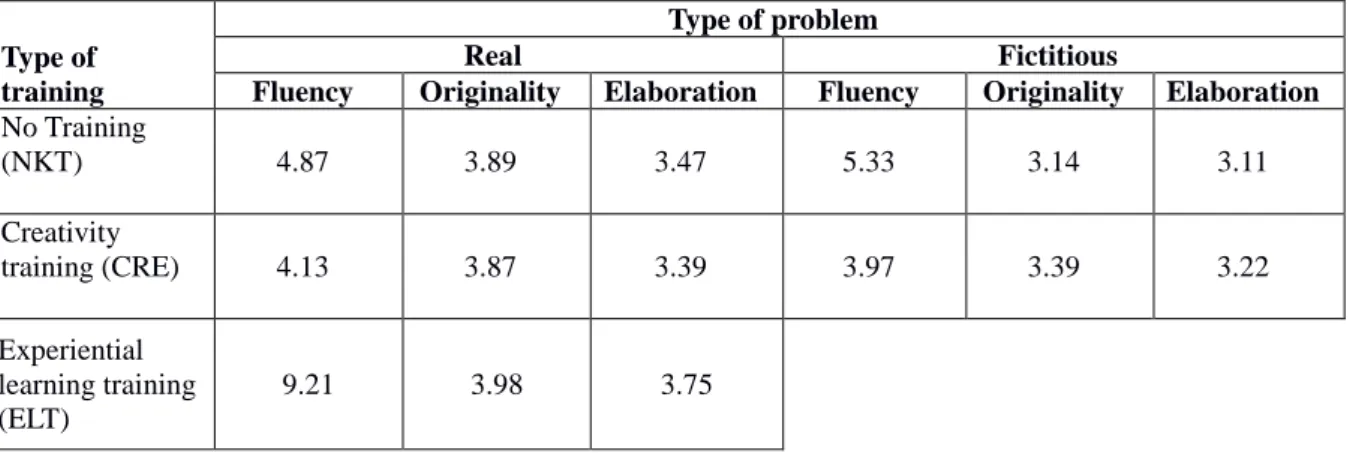
that received this type of training generate more than twice as many ideas as the groups
that received no training (9.07 vs. 4.34) and almost three times more ideas than the
groups that received lecture-based training (9.07 vs. 3.67). In comparison to the ideas
generated by the groups that received lecture-based training, the ideas generated by
experiential learning groups received superior rating scores for originality and
elaboration. In addition, a relationship was also established between problem realism
and post-training ideation. The groups that worked on solving real problems and were
trained through experiential learning rated higher on the degree of elaboration of the
ideas generated than both lecture-based trained groups (3.47 vs. 3.39) and untrained
groups (3.74 vs. 3.47). Experiential learning groups also produced more ideas and were
rated higher on the originality dimension than lecture-based training groups (3.98 vs.
3.78).
Another, less direct contribution, is that the study also provides evidence regarding the
relationship between creativity training and creative performance. Specifically, the
empirical findings establish a positive relationship between training and creative
performance. Trained groups, produced more ideas and also show superior results in
By examining the post-training creative output of groups that received training in
different formats and have worked on different types of tasks, the study provides
evidence regarding the effectiveness of training, valuable not only to academia but also
to practitioners in their quest of developing the most effective creativity training
programs.
Keywords
Creativity, creative thinking, creativity training, group creativity, organizational
creativity, problem realism, delivery method, experiential learning, empirical research,
Chapter 1 – Introduction: Creativity enhancement
through training
There are many reasons to consider the possibility that creativity can be enhanced. Most obvious may be that there are clear benefits in applied settings, such as schools and any organization that is concerned about innovation. There is, however, much more to enhancement than this. There is, for example, the idea that each of us has creative potential that can be fulfilled. If creative potentials are fulfilled, or at least maximized, the benefits of creativity (e.g., for psychological and physical health) are the most likely to be realized. The benefits will be apparent on both societal and individual levels […]. You might even say that there is a clear need for creativity on both social and individual levels, and thus a need to invest in techniques and programs that are designed to enhance creative skills. (Runco, 2007:320)
1.1. On the importance of creativity enhancement
Many agree that creativity is a key factor that drives the civilization forward (Hennessey
and Amabile, 2010). As the humanity is progressing into the 21st century it faces major
facing interdependent challenges such as energy, food and water shortages,
environmental and health issues, the problem of poverty and war, issues related to
population growth and limited resources, etc., all of them demanding for novel and
creative solutions. To be solved, some of these problems require groups of individuals,
institutions and even the co-operative effort of whole countries; others can be solved by
a single individual with a good idea (Sawyer, 2006). Albert Einstein once said that “the significant problems we face cannot be solved at the same level of thinking we were at
when we created them” (Calaprice, 2005) and that “a new type of thinking is essential if mankind is to survive and move toward higher levels” (New York Times, 1946). The progress of the entire humankind hinges upon its ability to envision innovative ways to
solve current problems and on its adaptability to the fast paced environmental change.
Innovative solutions to problems require creativity. As pointed out in Csikszentmihalyi
(1996:11) “new solutions […] will not appear magically by themselves. Problems are solved only when we devote a great deal of attention to them and in a creative way”. There is a shared view among academics, educators, business leaders and policy makers
that “it is only with creativity that we can hope to address the myriad problems facing ours schools and medical facilities, our cities and towns, our economy our nation, and
the world” (Hennessey and Amabile, 2010:570).
In a turbulent global environment that is changing faster than ever, the need to
understand creativity and the creative process has intensified. Some argue that “the study of creativity must be seen as a basic necessity” (Hennessey and Amabile, 2010:
570). Sawyer (2006) indicates several reasons for this. First, a proper understanding of
creativity can “help us identify and realize every person's unique creative talents. If we hope to solve all of the pressing problems facing our society and our world, we must
take advantage of the creative talents of everyone.” (Sawyer, 2006:4). Second, a
thorough understanding of creativity can also “help our leaders to respond better to the challenges facing modern society” (ibid). Creativity is a fundamental characteristic of effective leaders who need to be “especially effective at handling novel challenges that force them to go outside the typical routines” (ibid). Finally, a proper understanding of creativity can help us all to be better problem solvers in our every-day lives, which in
turn can help us solve bigger societal problems and challenges as “some of these
problems can be solved simply by a single individual having a good idea; others will
require groups of individuals to work together creatively as a unit” (Sawyer, 2006:5).
The world we currently live in is also becoming more complex. This increased
complexity is heavily driven by the fast paced technological change. Technological
change is increasing at exponential rates and it is profoundly affecting the world we live
in. As argued by Runco (2004) although in some ways the new technology has made our
life easier, in other ways it has made it more difficult also. Rapid technological
developments place new demands on people adopting them, as they need to constantly
update their skills to operate new technology. According to Runco (2004:658) all this
changes and the increased complexity of the world make creativity to be “more important now than ever before […] because creativity is a useful and effective response to evolutionary changes. In addition to what may be its most obvious function,
namely a part of the problem-solving process […] creative ideation allows the
individual to remain flexible.[...]. Creativity is usually tied to original behavior, and
indeed, originality is needed for creativity, but it is not sufficient. Creativity is a
syndrome or complex […] and flexibility is an important part of it. The flexibility of creative persons is what gives them the capacity to cope with the advances,
opportunities, technologies, and changes that are a part of our current day-to-day lives.”
Summarizing the above, creativity – often defined as the production of novel and useful
ideas in any domain (Amabile, 1996) – is key in order to solve the challenges posed by
the highly complex and fast changing world we live in nowadays. As put by Sir Ken
Robinson, in order to deal with the increasing world complexities and to realize our true
potential we must learn to be creative (Robinson, 2011). Around the globe, more and
more academics, educators, policy makers and business leaders acknowledge the need
for a more creative workforce and society in general. There is an increased recognition
of creativity as “an economic driver for generating wealth and employment, sustainable
development of world cities, technological changes, business innovation and
enhancement of competitiveness of individual cities and countries” (Hui, Ng and Mock, 2004:26). Based upon such arguments, there is an increasingly wide spread agreement
1.2. Nurturing creativity through training
According to Scott, Mumford and Leritz (2004: 361) several approaches have been used
to nurture and encourage creativity. Such approaches include: 1) providing the right
incentives (Collins and Amabile, 1999; Eisenberger and Shanock, 2003); 2) acquiring
the needed expertise (Ericsson and Charness, 1994; Weisberg, 1999); 3) effective
structuring of group interactions (King and Anderson, 1990; Kurtzberg and Amabile,
2001); 4) optimizing the climate and culture (Amabile and Gryskiewicz, 1989;
Anderson and West, 1998; Ekvall and Ryhammer, 1999); 5) identifying the necessary
career development experiences (Zukerman, 1974; Feldman, 1999) and 6) training to
enhance creativity (Torrance, 1972; Cropley, 2000; Nickerson, 1999). Of these
interventions, the authors argue that training “has been a preferred, if not the favored, approach for enhancing creativity” (Scott et al., 2004:361).
The idea that creative abilities are trainable emerged in the 1950s when a few
psychologists and creativity scholars such as J.P. Guilford, S. Parnes and P.E. Torrance
disagreed with their colleagues who thought that creativity is a characteristic fixed at
birth and which could not be increased deliberately (Sawyer, 2006: 296). Instead, they
viewed creativity as a common characteristic of all human beings rather than being a
trait reserved to a few gifted individuals (e.g. Guilford, 1967; Torrance, 1963,1972).
These authors also proposed that creative abilities are trainable and measurable through
training has become widespread and numerous training programs have been designed
and deployed over the years.
The claims that creativity is a common trait that can be found to some degree in
everyone and that creative abilities are trainable and measurable triggered, along with
an increased academic interest in the subject of creativity, the creation of numerous
techniques and training programs designed to enhance creative thinking in people. The
rationale is that if creative abilities are trainable, just as proper training helps enhance
any ability, creativity training can help increase creative performance. As put by Runco
(2007:372) “[v]irtually all human behaviors are flexible. They each have a range of reaction. The range is genetically determined, and the skill or behavior is a reaction to
the experience that influences that potential. The amount of muscle built will depend on
genetic potentials and the amount of exercise. Creative talents depend on the same two
things […] the programs and techniques […] will very likely increase the likelihood that the individual will behave in a creative fashion.” Runco (2007:371) further argues that creativity can be enhanced in each individual (micro-level) through the teaching and
training of tactics, programs and techniques designed to stimulate creative thinking and
enhance creative performance. In addition to teaching, encouragement rewards and
models are also needed. According to the author, “[t]hese may have maximal impact
when they target the attitudes about creativity and when they teach and reinforce
As seen from above, teaching creative tactics and providing training in creative thinking
techniques can be one way of encouraging and enhancing creativity in individuals and
groups. Consequently, research regarding effects of creativity training on creative
performance is highly relevant as it has the potential to provide understanding regarding
the techniques that can be employed to effectively nurture creativity in people. Yet,
compared to other streams of creativity research (e.g. research focused on individual
differences between people showing different creativity levels, or research examining
personality characteristics and cognitive factors affecting creativity) the examination of
the factors that affect the effectiveness of creativity training have been relatively scarce
(Hennessey and Amabile, 2010). Although most empirical research on the effectiveness
of training indicates a positive relationship between receiving training and subsequent
creative performance, some studies show the opposite (e.g. Svensson et al., 2002),
indicating that the available evidence is still inconclusive. In addition, some of the
relevant aspects (such as the delivery method, or task realism etc.) have not yet been
thoroughly examined. Finally, although there is a multitude of programs designed to
enhance creative thinking, just a few have been examined through rigorous academic
studies regarding their effectiveness. Hence, further evidence in this sense is in order.
1.3. Purpose of the study and research questions
Departing from the assumption that creative ability is trainable, it follows that
performance than untrained individuals. This study explores the question whether
creativity training can improve creative performance of groups working to generate
ideas. Further, it is also the purpose of the current study to ascertain to what extent
different training delivery formats may produce different performance results and to
examine the possible effects of problem realism on creative performance. A brief
argumentative discussion follows below.
Training has long been recognized by creativity researchers as having the potential to
enhance creative performance (e.g. Parnes and Brunelle, 1967; Torrance, 1972; Rose
and Lin, 1984). Nevertheless, as it was observed by the author of this study, training
delivery (i.e. the specific format in which training is provided to trainees) is rarely
examined within previous research of factors affecting training effectiveness and
post-training creative performance. Nevertheless, education research studies provide
evidence that different educational approaches produce different results. For example,
research comparing active learning programs (e.g. experiential learning and
problem-based learning1) reveal performance differences between individuals and/or groups
educated through such training methods as compared to lecture-based education
(Stepien, Gallagher and Workman, 1993; Boaler, 1997; Penuel and Means, 2000;
Adams, Kayes and Kolb, 2005). If different training methods yield different
post-training performance outcomes, it may be that different post-training formats of creativity
enhancement programs bare different effects on post-training creative performance.
1 In problem-based learning students are engaged in the learning process by being exposed to real-life
Thus, the present study aims at examining both the effect of training on creative
performance as well as the effect that different training delivery methods may have on
the creative performance of individuals. In this sense, the following research questions
are proposed.
Research Question 1: Does training affect creative performance? If so, what is the direction of the relationship between training and creative performance?
Research Question 2: Do different training methods produce different performance results?
Some researchers suggest that the nature of the task upon which groups and individuals
are asked to work may affect the quality and quantity of the outcomes (Watson,
Michaelsen and Sharp, 1991). For example, some idea generation researchers indicate
that the type of problem to be solved may have an effect on the performance of the
ideation process by affecting both the quantity and the quality of the ideas generated
(e.g. Isaksen, 1998, Mongeau and Morr, 1999).
Unsworth (2001) proposes a conceptual framework for studying creativity that
explicitly takes into consideration the type of problem as determinant of the creative
response and, consequently, creative performance. According to this author, the type of
problem (e.g. closed vs. open problem) bares an effect upon people's engagement in the
creative process. Indeed, motivational research (e.g. Deci and Ryan, 1987) has
responses to external demands. Self-determined behaviors are those in which “people
experience themselves as initiators of their own behavior” (Deci and Ryan, 1987: 1025) and researchers suggest that an intrinsic type of motivation (performing an activity for
its own sake and not for external rewards) underlies this kind of behavior. Creativity
researchers suggest that, as compared to extrinsic motivation (performing an activity in
pursuit of external rewards), intrinsic motivation favors creativity and enhances creative
performance (see for example Amabile, 1983, 1988, 1996, 1999, 2012).
The distinction between closed and opened problems and their impact on creativity was
previously discussed by problem-finding theorists of creativity (e.g. Getzels and
Csikszentmihalyi, 1976; Getzels, 1982). According to these authors, the formulation of
the problem is key for creative achievement. A closed problem is one for which the
solving method is known (e.g. an algebra problem [Getzels, 1975]) whereas an open
problem is one for which the participant is required to find, invent or discover the
problems (according to Dillon (1982) most artistic endeavours), (Unsworth, 2001).
According to Getzels and Csikszentmihalyi (1976: 81) for creativity to occur in problem
solving the solver must become a problem finder and her task should be not only to find
the solution but also discover the problem itself.
Unsworth (2001) takes into consideration the type of problem as a dimension of
creativity engagement, and develops four distinct types of creative behavior (e.g.
responsive, expected, contributory and proactive). Because the level of engagement is
different and, hence, the four types may yield different creative performance outcomes
(e.g. one person may show superior creative performance during the ideation process if
that person is creative because is expected to behave so, as compared when is proactive
or voluntarily wishes to contribute to solve the problem).
There is yet another way in which the type of problem can affect creative results,
namely its realism. Most empirical research examining the factors affecting creative
performance is based on laboratory studies that use fictitious problems with little, if any,
relevance to the solvers. According to Isaksen (1998) fictitious problems lack
ownership. A task has ownership if: (1) is of interest, (2) can be acted upon or actually
influenced by a member of the group, or (3) if it engages the imagination of the problem
solver because it demands a fresh new approach which is meaningful (Isaksen, 1998:
16). These aspects defining problem ownership have the potential of affecting the level
of engagement into the creative process, as well as the type of motivation and, on this
basis the creative outcomes. However, problem realism appears to be neglected by
previous creativity research. Hence, a second aim of this study is to examine the extent
to which problem realism affects creative performance. To this end the following
research question is formulated.
Research Question 3: Does problem realism affect creative performance? If so, what is the direction of the relationship between problem realism and creative performance?
1.4. Significance of the study
This study may be relevant to different groups interested in the topic of creativity and to
who a study of the relationship between training and creative performance is of high
relevance. First, the study is relevant to business organizations and creativity
practitioners. The organization's ability to constantly innovate and come up with fresh
solutions that will improve products, services and processes is a key ingredient for
success in today's competitive environment characterized by rapid and constant change.
Achieving high level of creative performance is crucial for innovation to occur thus,
additional empirical knowledge about the factors that affect creative performance is
valuable to business organizations in their quest to achieve and maintain their
competitive advantage within today's turbulent conditions.
By providing empirical evidence regarding two factors that have the potential to effect
creative performance, the study is relevant to business organizations and creativity
practitioners alike. Knowing about the effect of the type of creativity training on
creative performance can help human resource managers and creativity consultants to
implement the most efficient training programs to boost employees' creative
performance. Similarly knowing about the relationship between the nature of the task
and creative performance may help managers to structure and formulate tasks in such
way that they stimulate creative responses.
The factors and conditions that affect creative performance are relevant not only for
traced back to the Greek philosophers, more systematic research efforts have started in
the 1950's with the pioneering work of J.P Guilford and E.P. Torrance (e.g. Guilford,
1950; 1967; 1968; Torrance, 1968; 1974). Since then, the study of creativity has
intensified and the field is now multidisciplinary. As such, many different theoretical
perspectives have proposed a multitude of factors that affect creative performance. So
far, however, most of research developed in this sense has examined only a limited set
of factors that affect creative performance, such as personal characteristics and
individual personality traits, cognitive styles, creativity skills, ability and experience and
certain contextual factors. Yet, given the high complexity of the topic, there are many
other factors that have been either under-examined or not researched at all. The present
study is thus relevant to the academic research in creativity as it aims to examine the
effect that the type of training and problem realism have on creative performance in
groups. These factors are relatively under-examined by previous research and, hence,
extending the empirical evidence to such factors may help understand the most effective
ways of nurturing creativity through training.
This study is also relevant to education research and education policy makers. One of
the factors under examination is training delivery method. Although it has been
recognized that training in creative thinking enhances creative performance as it
provides trainees with both knowledge and skills in creativity techniques, little is known
about the relationship between the type of training and creative performance. Training
can be provided in different formats (e.g. lecture-based training, active learning, etc.)
learning). This thesis examines the effect that different teaching-learning formats in
which knowledge and skills in creative thinking are transmitted to the trainees, affect
their creative performance. The results of such an investigation are therefore relevant to
educators and education policy makers in their quest for the optimum teaching plans
and programs that deliver the best results.
1.5. Structure of the dissertation
The reminder of this dissertation is organized as follows. Chapter 2 introduces the reader
to the concept of creativity and ends with a discussion around the problem of defining
creativity. Chapter 3 discusses the subject of creativity training and the factors that affect
its effectiveness as reflected by previous research literature. The hypotheses to be tested
in the empirical application are presented at the end this chapter.
In Chapter 4 the methodology employed in the empirical study is presented. The chapter
starts by presenting a summary of the data and how it was collected as well as a full
description of the procedures followed. This chapter ends with a discussion of the
measures employed to assess creative performance and to compare it among different
groups.
Chapter 5 presents the empirical findings regarding the stated hypotheses. As an
dissertation concludes with Chapter 7 which includes the major conclusions of the study
based on the empirical findings as well as discussion of the main implications of such
findings, the main limitations of the current research and the directions for further
Chapter 2 – Conceptions of Creativity
Genius. Invention. Talent. And, of course, creativity. These words describe the highest levels of human performance. When we are engaged in the act of being creative, we feel we are performing at the peak of our abilities. Creative works give us insight and enrich our lives.
Creativity is part of what makes us human. Our nearest relatives, chimpanzees and other primates, are often quite intelligent but never reach these high levels of performance. And although advanced “artificially intelligent” computer programs hold the world title in chess, and can crunch through mounds of data and identify patterns invisible to the human eye, they still cannot master every-day creative skills. (Sawyer, 2006:3)
2.1. Introduction
Without a doubt, creativity is a bewildering topic. Research into creativity is not new,
some of the earliest efforts to understand creativity can be traced back to ancient Greek
philosophers (Treffinger et al., 2002). Systematic research efforts to explain creativity
and creative thinking have been documented as early as the 19th century (Becker, 1995)
with the work of Sir Francis Galton (Galton, 1869) on the hereditary transmission of
genius. Given the increasing attention placed on creativity as a major source of human
multitude of scientific disciplines have tackled the topic over the years. Yet, as pointed
out in Woodman, Sawyer and Griffin (1993), after many decades of theory development
and empirical research, researchers have not yet reached consensus regarding what
creativity is and what are the best ways to improve creative performance and, they “still know surprisingly little about how the creative process works” (Woodman et al., 1993.:316).
The purpose of this chapter is to provide a general theoretical setting for the study. In
this sense a brief overview on the field of research in creativity including a short history
of the field as well as the main theoretical approaches are provided here. Given this
study is focused on business organizations the main theoretical approaches to
organizational creativity are also presented. The chapter will end with a brief discussion
of definitional issues regarding creativity.
2.2. Creativity: a multidisciplinary field of research
In 1950 the American psychologist J.P. Guilford, after examining the index of
Psychological Abstracts and finding that only 186 articles out of 121,000 titles indexed
were on the subject of creativity, drew the attention upon the relevance of scientific
research on creativity and upon the scarcity of research on the topic (Guilford, 1950). In
addition, he also proposed a psychometric approach to the study of creativity and made
be also observed in the everyday life of regular individuals. As put by Guilford himself:
“creative acts can therefore be expected, no matter how feeble or how infrequent, of almost all individuals” (Guilford, 1950:446).
Guilford (1967) also identified the following three dimensions to be measured by
creativity researchers: fluency (quality of the idea), flexibility (variability of idea
categories) and originality (idea uncommonness) of mental operations involved in
creative thinking. These dimensions were later incorporated in many composite
measures designed to measure creativity; Torrance's (1968, 1974) tests of creativity
which, to date, “remain the most widely used assessments of creative talent” (Sternberg, 2006:87).
Since Guilford's (1950) pioneering work, the field of creativity research has blossomed,
and numerous researchers developed batteries of creativity tests and composite
measures in order to examine the creative potential of regular people in the general
population. By the end of the same decade over one hundred different definitions of
creativity were formulated (Taylor, 1959). Feist and Runco (1993) note that in the
following 30 years about 9,000 creativity references have been added to the literature.
Nowadays, the field evolved to become a very fertile ground characterized by pluralism
of approaches and multidisciplinary, the topic of creativity attracting the attention of
researchers in diverse fields, e.g. psychologists, economists, entrepreneurship scholars,
organizational researchers, sociologists, and cultural theorists among others (Kozbelt,
Table 2.1 presents a summary of the main categories of creativity theories as classified
in Kozbelt et al. (2010).
Table 2.1. Main theoretical approaches on creativity
Approach Primary Assertion Major studies
Developmental
Creativity develops over time (from potential to achievement); mediated by an interaction of person and environment
Albert and Runco (1989); Helson (1999)
Subotnik and Arnold (1996)
Psychometric
Creativity can be measured reliably and validly, differentiating it form related constructs (IQ) and highlighting its domain-specific nature
Wallach and Kogan (1965) Guilford (1968)
Economic
Creative ideation and behavior is influenced by ”market-forces” and cost-benefit analyses
Rubenson and Runco (1992) Sternberg and Lubart (1992, 1995) Florida (2002)
Stage and componential process
Creative expression proceeds through a series of stages or components, the process can have linear and recursive elements
Wallas (1926)
Runco and Chand (1995) Amabile (1999)
Cognitive
Ideational thought processes are foundational to creative persons and accomplishments
Mednick (1962) Guilford (1968)
Finke, Ward and Smith (1992) Problem-solving and
expertise based
Creative solutions to ill-defined problems result from a rational process, which relies on general cognitive processes and domain expertise
Ericsson (1999) Simon (1981, 1989) Weisberg (1999, 2006)
Problem finding
Creative people proactively engage in a subjective and exploratory process of identifying problems to be solved
Getzels and Csikszentmihalyi (1976) Runco (1994)
Evolutionary
Eminent creativity results from the evolutionary-like processes of blind generation and selective retention
Campbell (1960) Simonton (1988, 1997)
Approach Primary Assertion Major studies
Typological
Creators differ along key individual differences, which are related to both macro- and micro-level factors and can be classified via typologies
Galenson (2001, 2006) Kozbelt (2008)
Systems Creativity results from a complex system interacting and interrelated factor
Gruber (1981)
Csikszentmihalyi (1988) Sawyer (2006)
Note: Works cited in the third column can be found in the original article by Kozbelt et al. (2007). Source: Adapted from Kozbelt et al. (2010: 27-28)
Each theoretical perspective has its own assumptions regarding what may affect creative
performance. The developmental theories of creativity ( e.g., Albert and Runco, 1989;
Helson, 1999; Subotnik and Arnold, 1996) examine the roots of creativity by looking at
the background of acknowledged creative people. Early theories belonging to this
category were developed by examining the lives and background of eminent creative
people and suggested a correlation between developmental paths and creativity.
The psychometric theories e.g., (Wallach and Kogan, 1965; Guilford, 1968) focus on
measurement and are concerned with the reliability (i.e. consistency of measurement)
and validity (i.e. accuracy) of creativity assessment. By focusing on measurement,
psychometric theories inform all other theories of creativity (Kozbelt et al., 2010).
The economic approaches claim that creative performance is determined by
Rubenson and Runco, 1992; Sternberg and Lubart, 1992; 1995; Florida, 2002). These
theories focus on the creative efforts which are conceptualized in terms of investments
and examine creative processes as resource allocation mechanisms dictated by the
demand and offer existing in markets for creativity.
The stage and componential theories of creativity (e.g. Wallas, 1926; Runco and Chand,
1995; Amabile, 1999) set out to understand the nature and structure of the creative
process in terms of stages which can be sequential or recursive, or underlying
componential cognitive processes (Kozbelt et al., 2010). Given that most part of
conceptualizations as well as of the empirical research on organizational creativity rely
on stage and componential approaches, a more detailed discussion will be provided on
these theories later in this chapter.
Cognitive theories of creativity (e.g. Mednick, 1962; Guilford, 1968; Finke, Ward and
Smith, 1992) depart from the assumptions that creative performance has a basis in
cognition and that differences in cognition can play a major role in creative achievement
and, that creative individuals have some specific cognitive abilities. There are also
some theories based on problem solving and expertise (e.g. Ericsson, 1999; Simon,
1981 and 1989; Weisberg, 1999 and 2006) which draw on cognitive psychology to
emphasize problem-solving processes and expert knowledge as fundamental to creative
performance. As a reaction to the solving approach to creativity, the
problem-finding theories (e.g. Getzels and Csikszentmihalyi, 1976; Runco, 1994) propose that
Drawing on ideas from evolutionary biology, evolutionary theories of creativity (e.g.,
Campbell, 1960; Simonton, 1988 and 1997), focus on “identifying dispositional and
developmental idiosyncrasies associated to creative achievements” (Kozbelt et al., 2010:35). According to such theories, each individual starts with a different creative
“potential”. Through learning, a creative individual expands her potential and hence, increase her creative performance.
Typological perspectives aim to understand individual variations among creators by
creating typologies of creative personalities, working methods, etc (e.g. Galenson, 2001
and 2006; Kozbelt, 2008). These theories consider that differences in creative
performance are due to key individual differences between creators on both macro- and
micro level factors.
Finally, the systems perspectives (e.g. Gruber, 1981; Csikszentmihalyi, 1988; Sawyer,
2006) consider that creativity emerge from a complex system with interacting
components and that creative performance is conditioned by the socio-cultural
environment in which the creator lives, aside from her personal characteristics. Such
theories are very broad and take a qualitative contextual view on creativity (Kozbelt et
al., 2010)
Summarizing the above, although the theoretical perspectives on creativity abound,
none of them provides a single, widely accepted, explanation of the phenomenon. The
(Treffinger, 1986). Over the decades, as it can be observed in the table, many scholars in
fields so diverse such as psychology, sociology, anthropology, economics,
organizational behavior or biology, have proposed theoretical models to explain and
understand creativity. It is worth adding that the subject of creativity is also studied by
neuroscience (Dietrich, 2004; Andreasen, 2005; Vartanian, Bristol and Kaufman, 2013)
and psychiatry scholars as well (Andreasen, 1987; Andreasen and Glick, 1988; Ludwig,
1997). Yet, although the field is in continuous advancement, there are still many
questions opened regarding what exactly creativity is or how to improve it.
2.3. Theories of organizational creativity
Business organizations are also facing a fast paced and ever changing and turbulent environment to which they need to respond adequately in order to survive and succeed. As described by Ikujiro Nonaka, the renowned organizational theorist and knowledge management expert, today's business organizations are facing “an economy where the only certainty is uncertainty” and, in which “markets shift, technologies proliferate, competitors multiply, and products become obsolete almost overnight”. Under such conditions, “successful companies are those that consistently create new knowledge, disseminate it widely throughout the organization, and quickly embody it in the new technologies and products. These activities define the 'knowledge-creating' company, whose sole business is continuous innovation.” (Nonaka, 2007:162)
In addition to the external environment, there are also internal considerations that make
creativity to be seen as the key to innovation in today's organizations. As explained in
Zha et al. (2006) in order to be successful organizations need leaders with creative
vision. In addition, given it is believed that about 70% of a product's cost is determined
by design decisions (Daetz, 1987; Sheldon et al, 1990), creative designs can lead to
significant cost savings. Hence, the increased interest of organizations in building
and/or acquiring a creative workforce and in increasing the creative abilities of their
current employees. Given such interest, many training programs have been developed
and are marketed to organizations' human research managers as effective tools aiming to
enhance employees' creative abilities. Yet, although many of these programs are
embraced by organizations worldwide as part of their human resource training policies,
little evidence is available regarding their effectiveness and the extent to which they
increase employee's creative performance, calling for further research and empirical
evidence (Scott et al., 2004, Puccio et al., 2006).
Most attempts of theorizing on organizational creativity belong to the stage and
componential approach to creativity (see the fourth raw in Table 2.1 above). The
common feature of the theories and models grouped under this category is that they
focus on how the creative process takes place within organizations by envisioning “the
structure and nature of the creative process in terms of stages, which can be sequential
or recursive, or underlying componential cognitive processes” (Kozbelt et al., 2010: 30). Departing from Wallas’s (1926) pioneering model, which depicted the creative process
and verification) until the creative idea is generated and verified, more recent
approaches (e.g. Amabile, 1983, 1988, 1996, 1999; Woodman et al., 1993) have defined
the creative process in terms of component mechanisms rather than stages (Kozbelt, et
al., 2010). Such an approach moves beyond the linearity of Wallas’s (1926) model to recognize the higher complexity of the creative process and of the factors that affect it
(e.g. knowledge, information, motivation, social influences, etc).
Among the stage and componential approaches to creativity, Amabile's (1983, 1988,
1996, 1999) componential theory of creativity and Woodman, Sawyer and Griffin
(1993) interactionist approach to creativity are the most frequently cited in research
studies that aim to explain different aspects of creativity in organizations and working
settings. Given that creativity in work environments is the core topic of the current
dissertation, more details about these two theoretical approaches are provided in the
following sections.
2.3.1. The Componential Theory of Organizational Creativity
Amabile's (1983, 1988, 1996, 1999) componential theory of creativity, partially based
on the componential model of the social psychology of creativity, is one of the most
influential models concerning creativity in the workplace and represents one of the first
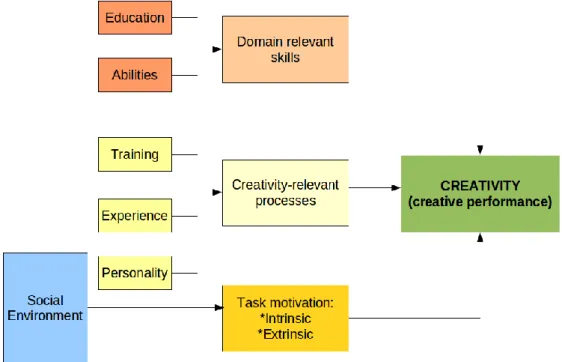
comprehensive and grounded theories of employee creativity. The theory posits that
processes and task motivation. A graphical representation of the model is presented in
Figure 2.1.
Domain relevant skills refer to factual knowledge and expertise in a given domain. They
tend to be affected by formal and informal education, and individuals' perceptual,
cognitive and motor abilities. Creativity relevant processes refer to explicit or tacit
knowledge concerning the appropriate strategies for producing creative ideas,
appropriate cognitive styles and work stiles for creative idea production. According to
Amabile, creativity-relevant processes are likely to be positively affected by the level of
training in creative skills and strategies for producing new ideas, by experiences in
creative activities and by possessing certain personality characteristics.
Task motivation includes individuals' attitudes toward a task and their perceptions of his
or her motivation for working on the task. In general, an individual's motivation can be
intrinsic or extrinsic in nature. Intrinsic motivation is defined as “any motivation that arises from the individual's positive reaction to the qualities of the task itself; this
reaction can be experienced as interest, involvement, curiosity, satisfaction, or positive
Figure 2.1. The Componential Model of Creativity
Source: Self devised based on Amabile (1996, 2012)
Extrinsic motivation can be defined as “any motivation that arises from sources outside
of the task itself” (Amabile, 1996:115). Extrinsic motivation is driven by the desire to attain some goal that is apart from the work itself – such as achieving a promised
reward or meeting a deadline or winning a competition. Although intrinsic and extrinsic
motivation for doing a task may coexist, one is likely to be primary. Amabile proposed
that a primarily intrinsic motivation will be more conducive to creativity than a
Summarizing, the Componential Model suggests that organizational creativity appears
at the interplay between organizational components that are deemed necessary for
overall innovation (such as, organizational resources, management practices and
organizational motivation) and components of individual/team creativity (i.e. creativity
skills, task motivation and expertise). The modeltakes into account creativity training as
an important factor that affect individual/team creativity, by affecting creativity-relevant
processes which, in turn, affect creative performance. The creativity-relevant processes
are a cognitive component of the model that refers to the cognitive style and the work
style and can be influenced by training and experience in generating ideas.
According to the model a positive relationship should be expected for the effect of
training on creativity. In this sense the current study will compare post-training creative
performance exhibited among groups that received creativity training using different
training delivery methods (i.e. lecture-based training versus experiential learning
approach).
2.3.2. The Interactionist Approach
Similar to Amabile's componential theory of creativity Woodman et al. (1993) propose
an interactionist model premised on the idea that creativity is an individual level
phenomenon that can be affected by both dispositional and situational variables. A
is more fully predicted by the interaction of individual's disposition and contextual
factors. Woodman's et al. (1993) model explicitly stresses the importance of the
interaction between the person and the situation, and is based on the theoretical base of
interactional psychology.
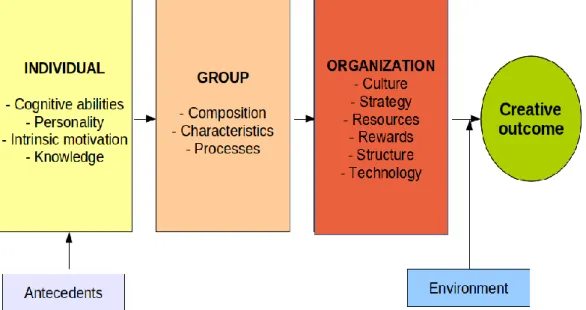
Figure 2.2. The interactionist approach to creativity
Source: Self devised, based on Woodman et al. (1993)
According to the interactionist approach, creative performance in organizations is a
function of individual, group and organizational characteristics that interact to enhance
or constrain creativity. Important individual characteristics proposed by this approach
are the cognitive abilities and style, personality, intrinsic motivation and knowledge.
task and problem solving approaches. Organizational characteristics such as culture,
resources, rewards, strategy, structure and technology are highlighted. The model
proposes that creative persons, groups and organization are inputs that are transformed
in some way by the creative process and the creative situation, which includes
enhancers and constraints for creative activities. The potential outcome of this
transformation of the inputs is a creative product.
Similarly to the componential model, the interactionist approach also considers
cognitive abilities as factor that affects creativity in individuals which in turn, affect the
creativity of the group which, according to its composition, characteristics and
processes, affect creativity at an organizational level and hence, the overall level of
creative performance. This model does not specify the potential influence of training on
creative performance directly. However, the authors rely on Amabile's (1988)
argumentation regarding the importance to creativity of “creativity relevant skills” (Woodman et al., 1993:301). Knowledge, learning and experience, as parts of such
skills relevant for creativity, are considered as having a positive impact on creative
performance, although the authors also acknowledge Stein's (1989) assertion that in
some situations previous experience or knowledge may lead to a “functional fixedness” that prevents individuals from producing creative solutions (Woodman et al., 1993:301).
As in the case of the componential model, the interactionist approach does not take into
account the specific effect of the type of task (e.g. real-life or fictitious) may have on
2.3.3. The “componential interaction” model –a unified view
As indicated in Eder and Sawyer (2008) although the empirical research in
organizational creativity has had a divergent history with the componential model in one
direction (emphasizing major personal attributes and how they affect the creativity of
individuals) and with the interactionist approach in the other direction (emphasizing the
importance of individual as well as environmental and contextual variables, working
together to influence creativity) the two theoretical perspectives on organizational
creativity are, nevertheless, complementary. They both analyze creativity at an
individual level and consider similar factors as being determinants of creative
performance. In fact both models consider creativity as the result of the interplay
between individual characteristics (e.g. abilities, skills, cognition, personality, etc.) and
the (working) context which has them involved in creative processes (e.g.
organizational features, group characteristics, the support received, etc.). The main
difference is that Woodman's et al. (1993) model places more emphasis on the
relationships developed within organizations (i.e. individual-group-organizations
interaction that are conducive to creative performance) whereas Amabile’s model is centered on identifying the components that work together for the enhancement of
creativity. According to Eder and Sawyer (2008) the two models can be even integrated
into a single “Componential Interaction” model. Under this approach the proposed components of Amabile's model are interactive. Specifically, the combination of high
intrinsic motivation, high domain-relevant skills, and high creativity relevant processes
Drawing on these two approaches frequently used within research on organizational
creativity, in this dissertation creative performance is considered to be the result of
people's knowledge, skills, abilities, education, cognitive abilities, personality and
motivation. Such determinants of creative performance in individuals, along with
inter-group processes will determine the creative performance of inter-groups. In addition, among
the process specific factors that may affect creative performance we consider training
delivery method and problem realism. A detailed discussion regarding the relevance of
these two factors as well as a summary of previous research is further provided in
Chapter 3.
2.4. Creativity defined
Not only that there is a lack of agreement on a single theory of creativity but also there
is a lack of agreement on how to define creativity. Runco (2007) explains that the
difficulty of defining creativity is related to its diversity, the same word being used to
describe different processes (from an individual inventing a breakthrough technology to
a child exhibiting original artistic expression). A first aspect of such diversity is its
diverse expression, creativity playing a role in various fields from technical innovation
to arts, from sciences to business, etc. Second, a distinction is also made between
eminent creativity (“big C”) and everyday creativity (“little c”). As indicated by Runco (2007: ix) “[m]any famous people have earned their reputation from their creativity […] Other adults are highly creative, though perhaps in the everyday sense of coping,
adapting and solving novel problems”. Third, there is a lot of ambiguity regarding how to define creativity given its connections to other concepts such as innovation,
imagination, intelligence, originality, invention, discovery, serendipity, adaptability;
each associated with creativity but also distinct concepts (Runco, 2007: 376).
Although the debates regarding the definition of creativity continue today, most
researchers and theorists agree upon two definitional criteria namely novelty and value
(Hennessey and Amabile, 2010). For example, some influential definitions of “big C” creativity consider creativity to be “the achievement of something remarkable and new, something which transforms and changes a field of endeavor in a significant way […]
the kind of things that people do to change the world” (Feldman, Csikszentmihalyi and Gardner, 1994: 1; emphasis added) or “a person's capacity to produce new or original
ideas, insights, restructurings, inventions or artistic objects, which are accepted by
experts as being of scientific, aesthetic, social or technological value” (Vernon, 1989: 94; emphasis added).
The newness and usefulness criteria also appear in definitions of “little c” creativity. Puccio et al. (2006:19) indicate that the production of novel ideas that are made useful
is the most widely accepted definition of creativity. This can also be observed in the
stream of research focused on creativity in organizations. For example, Amabile (1996)
defines creativity as the production of novel and useful ideas in any domain. In the same