Widening Participation in Higher Education:
A Case Study and Evaluation
A project submitted to Middlesex University
in partial fulfilment of the requirements for
the degree of Doctor of Professional
Studies
Sheila Cunningham
Candidate Number: 9539548
Module DPS 360
National Centre for Work Based Learning
Partnerships
Middlesex University
April 2011
Summary
Purpose
This report is an outcome of a research project exploring lecturers’ understanding of widening participation (WP) and how this influences their practice in one North London University. The project was undertaken as part of my DProf studies and was developed from my role and position within the School of Health and Social Sciences in co-ordinating and communicating WP activities. This project was undertaken over five years (2004 – 2009) and was influenced by local and national political and social changes most
particularly the range of Higher Education Funding Council documents impacting on WP.
Main approach used.
In a desire to explore WP and through multiple perspectives a mixed methods
methodology was selected epistemological umbrella of transformative learning arising from an emancipatory paradigm. Meizerow’s (2003) epistemology of transformative learning provides a lens by which to explore lecturers’ perceptions of WP and practices, challenge conventional notions of WP, explore the extent to which WP is mainstreamed or
embedded WP within the organisation and the relationship with pedagogical practices. This project was in three stages. Firstly, a focus group of lecturers, then separate individual lecturers were interviewed to explore perceptions of WP and pedagogical approaches (n= 12). Secondly, groups of diverse students completed a questionnaire (n=195) asking for their experiences of teaching and learning with a few (n=6) interviewed individually. Thirdly, an internal working group explored the wider university commitment to WP and how embedded this is in departments and services. Quantitative data from questionnaires and institutional data was analysed descriptively for frequency and correlations (Pearson’s correlation co-efficient via SPSS v.15). Qualitative data was analysed using textual thematic analysis, both manually and using CAQDAS (Nud*st) software.
Conclusions.
There were several conclusions:
1. Lecturers and teaching.
b. Some lecturers demonstrate sensitive and intuitive support but this is not widely disseminated.
c. Identify limited insight into students’ lives and experiences. d. View WP as deficiencies, remedial and someone else’s ‘job’.
2. Students and learning.
a. As a group students would not describe themselves as diverse but ‘typical’ students
b. Students value personal connections with lecturers.
3. University Role.
a. Initiatives to address the student experience subsume the needs of WP and all students.
b. Communication across services and departments is unclear and not cohesive.
c. Varied discourses of WP at different levels and high level commitment demonstrated at senior level.
Recommendations.
The key recommendations focussed on promoting WP in existing good practice in teaching and learning and utilise existing process to make WP core and embedded.
1. Lecturers:
• Promote dialogue of WP and raise issues pertinent to teaching and learning. • Staff development in relation to practice for inclusive teaching or teaching
diverse groups utilising existing procedures via preparation route (PGCHE) or established teaching observations or appraisals.
• WP ‘Champions’ to advocate and promote inclusive practice.
2. Students:
• Build on good practice to maximise students’ sense of ‘value’ and positive student experience.
• To locate a ‘home’ for WP so it can be more effectively monitored and disseminated and accounted for.
• Embed WP within core working processes (e.g. validation or programme monitoring) and
• Promote the dialogue of WP and inclusivity consistently from higher levels to student interface levels to enhance a culture of diversity and inclusivity.
List of tables and figures
Title Page
Table 2.1 Aims of Project 13
Table 2.2 Key objectives of the project and sub questions 13
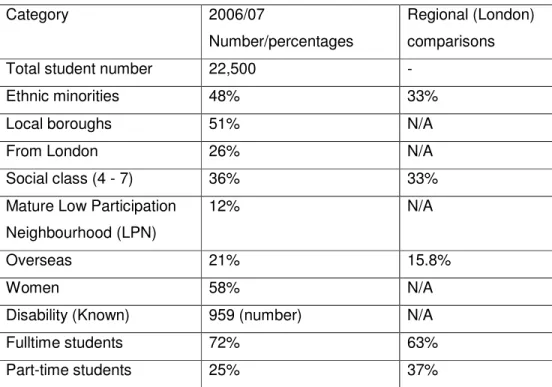
Table 2.3 Student diversity data 16
Table 2.4 Middlesex University student profile according to campus (three of the four main campuses and one hospital satellite campus
(Archway) 17
Table 2.5 Middlesex documents as secondary sources 18
Table 3.1 Practical considerations planned for conducting the focus group 64
Table 3.2 Subscales of ETL questionnaire. 69
Table 3.3 Fossey et al (2002) Considerations for methodological rigour. 77
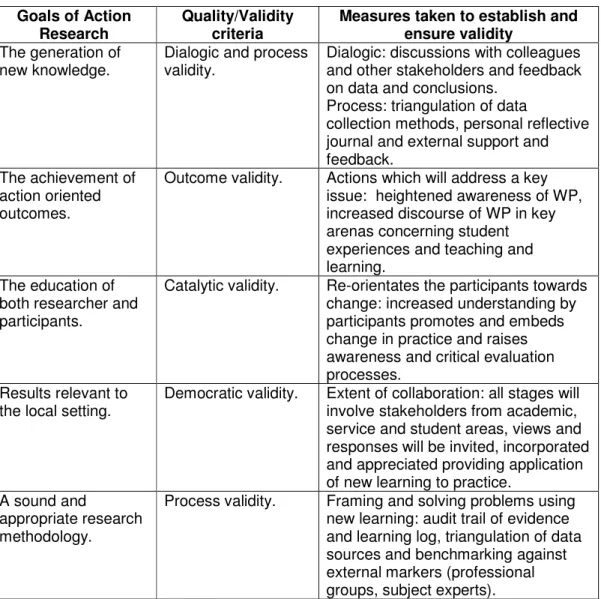
Table 3.4 Herr and Anderson (2005) Quality validation measures 78
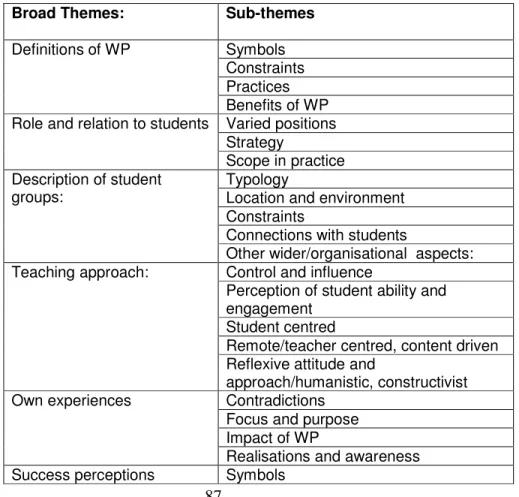
Table 4.1 Themes from Focus group 85
Table 4.2 Themes from Lecturer Interviews 87
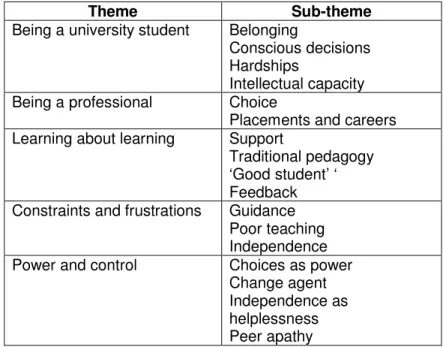
Table 4.3 Themes from data from student interviews. 96
Table 5.1 Details of research participants 107
Table 5.2 Focus group findings 108
Table 5.3 Themes from lecturer interviews 111
Table 5.4 Themes from student interviews. 112
Table 5.5 Details of lecturers interviewed. 113
Table 5.6 Student self reported parental occupation data of nursing and
sports students. 117
Table 5.7 Staff and student statistics at Middlesex University in 2007 129
Table 5.8 Approaches to learning and studying results from students’
Table 5.9 Correlations of Approaches to Teaching and Leaning subscale
variables 143
Table 5.10 Student Perceptions of LOTS module (key skills) 148
Table 5.11 Students qualitative comments on their success at university from
the ETL questionnaire 156
Table 6.1 WP SWOT analysis 164
Table 6.2 Collated responses to ‘What do you think WP is?’ 167
Table 6.3 Perception of the impact of WP on services and departments role and
function 167
Table 6.4 Responses to question asking service areas their perceptions of the
benefits or limitations of WP in HE 169
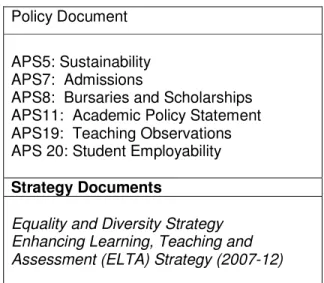
Table 6.5 Policy statements and commitment to WP 173
Table 6.6 Student demographics at Middlesex University 175
Table 6.7 Analysis of Middlesex University’s position in relation to Integrated Approach to WP categories suggested by Thomas et al (2006). 176
Table 6.8 AoA Working Group Suggested Changes for WP at
Middlesex University 180
Table 6.9 Categories of different approaches to WP 183
Table 7.1 Specific conclusions form research findings in relation to the project
objectives. 194
Table 7.2 Self reflective questions for lecturers (based on Thomas 2006,
Egbo, 2000) 202
Table 7.3 Summary of conclusions in the short term for key stakeholders 204
Figure 1.1 Timeline of changes impacting on this Project (2004-2009) 6
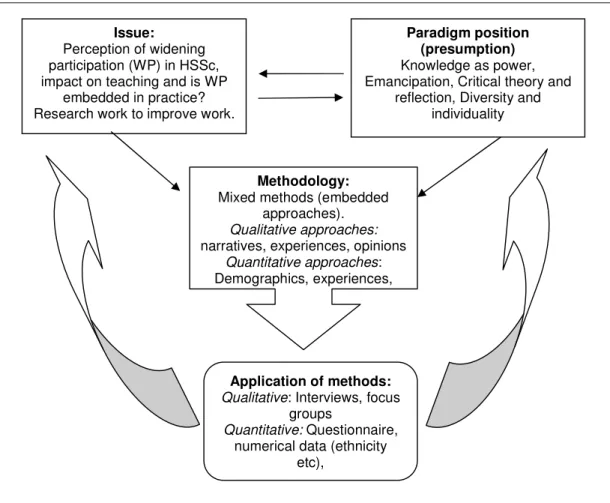
Figure 3.1 Ontological and Epistemological approach and consequent
methodology and methods 51
Figure 3.2 Concurrent design of embedded (nested) mixed method approach 57 (qualitative and quantitative methods) based on Creswell et al, (2009)
Figure 5.1 Concept map of the lecturers perceptions of WP and their approach
Abbreviations used in the report.
AD LQE Associate Dean for Learning and Quality Enhancement
AoA Action on Access
API Age Participation Index (values used by HESA in their WP
categories)
CEWBL Centre of Excellence in Workbased Learning
CPD Continuous Professional Development
DfES Department for Education and Skills
DoH Department of Health
ELLS English Language Learning and Support
ETLA Experiences of Teaching , Learning and Assessment
strategy
ETLQ Experiences of Learning and Teaching Questionnaire
FE Further Education
HE/HEI Higher Education (Institution)
HEA Higher Education Academy
HEFCE Higher Education Funding Council for England
HESA Higher Education Statistics Agency
HSSc Health and Social Sciences (School of)
ISLER Impact of Student Learning and Retention
LGU London Guildhall University
LOTS Level One Transferable Skills module, year one key skills module
LQE Learning and Quality Enhancement department
LSC Learning and Skills Council
NAO National Audit Office
NLCHS North London College of Health Studies
OFFA Office of Fair Access
PDT Personal Development Tutor (personal tutor)
PGCE Post Graduate Certificate in Education
PGCHE Post Graduate Certificate in Higher Education
POLAR Participation of Local Areas
SAA Student Achievement Advisor
TESS Teaching Enhancement and Students Success (funding)
UCAS University and College Admissions Service
UNL University of North London
V&A Validations and Approvals
CONTENTS PAGE:
Summary
Acknowledgements
List of tables and figures
Abbreviations used in the report
Chapter 1: Introduction 1
The context of the project and my role 2
Widening participation: local context 7
Widening Participation Policy and Influences for HEI: Policy Context. 8 Examples of Diversity and Implications for Teaching in HSSc 11
The focus of this project 13
Chapter 2: Literature and Framing the Project 15
Elaboration of the Aims and Objectives of this project 15
Project and Programme Outcomes 20
What is Widening Participation? 20
WP and the massification of HE 22
WP Policy outline 24
Local context 25
WP and access to HE 30
Research into WP in HEIs 31
‘Barriers’ 33
A ‘deficit’ view of non traditional students 35
Learning and Teaching and WP 37
Role of Universities. 45
My role as worker/researcher. 46
Chapter 3: Research Methodology 48
Research Approach 48
Rationale for research approach. 52
Epistemology and Ontology Considerations. 53
Operationalisation of the research project. 54
Methodological approach: multi-strategy (mixed methods). 56
Bounding the study. 58
Project development. 59
Ethical considerations. 59
Data collection strategies. 62
Data Analysis and Validation Procedures. 74
Insider researcher. 79
Indicative outcomes of this research project. 80
Anticipated challenges 81
Chapter 4: Project Activity 82
Introduction 82
PHASE 1: What is Widening Participation (WP)? 83
PHASE 2: What are WP students and what constitutes success in WP? 92
PHASE 3: Good practice and embedding of WP 97
Evaluation of overall Project coherence and progression. 104
Chapter 5: Discussion of findings: Perceptions of WP and Teaching
and Learning. 106
Generalised perceptions of WP 108
Perception of what is WP. 110
Perceptions of WP form lecturers and students. 112 Roles and relationships between lecturers and students. 126 Conceptions of teaching and learning by lecturers and students. 130
Expectations. 149
Conceptions of student success. 153
Lecturers’ perceptions of their wider academic department
approach or position in relation to WP. 157
Chapter 6: Discussion of findings: Institutional commitment to WP. 160
How embedded and mainstreamed is WP across the institution? 162
Policy statements and commitment to WP. 171
Embedding WP in the institution. 175
Dissemination mechanisms. 177
Implications of this project. 180
Insider-researcher. 185
Chapter 7: Conclusions and Recommendations 187
Summary of findings 188
Summary of findings linked to project objectives. 193
Recommendations. 199
What pedagogical approaches then would be appropriate for WP
and diversity? 206
Chapter 8: Reflective and reflexive account of my personal and 208
professional journey
References
1
Chapter 1: INTRODUCTION
Reducing inequalities in access to higher education (HE) has long been one of the persistent themes in British government policy since the mid 1990s (Dearing, 1997; Kennedy, 1997; Fryer, 1999). The approach known as ‘widening participation’ (WP) became a buzzword in New Labour policy documents and as such was used within funding and advisory bodies. Widening participation has been defined as 'extending and enhancing access to HE experiences of people from so-called under-represented and diverse subject backgrounds, families, groups and communities and positively enabling such people to participate in and benefit from HE' (Watson, 2006a: 4).
WP originated and gathered momentum in the 1990s as part of equal opportunities policies and discourses to improve social mobility and opportunities. This comprised of targeted activities to particular social groups with little regard for the teaching and learning experiences in higher education of those who progressed. At the time of writing this report it was reported that one of the challenges that faced educational practitioners in diversified societies is the adoption of inclusive educational practices that are aware and sensitive of the cultural, societal, language and differential learning styles of the various groups that make up the increasingly diverse student body (Egbo, 2005). Indeed, while liberal theories provide frameworks for educational policies equalising educational opportunities for all students there is some agreement that the success of such policies depends on pedagogical practices adopted by lecturers and teachers at the practice level (Thomas, 2001, 2006, Leathwood & O’Connell, 2003, Cunliffe-Charlesworth, 2006).
Middlesex University is a former Polytechnic that achieved university status in 1992 (commonly referred to as a post-1992 HEI) and expanded in 1995 with the inclusion of the North London College of Health Studies (NLCHS). Before and after this expansion the diverse student body within Middlesex was consistently above the HEFCE benchmarks for socio-economic groups and ethnicity (NAO, 2008) and it prides itself on its wide range of vocational and academic provision which is also reflected in marketing documentation and in the Mission position as a: … global university committed to meeting the needs and ambitions of a culturally and internationally diverse range of students. This is also reflected in its strategic aims of: championing a socially inclusive approach to participation in higher education’ and aims to ‘transform lives’
(http://www.mdx.ac.uk/regulations/allprogs/stratstat.htm). This has implications for the broader business of higher education and moreover the government driven social inclusion agenda as it impacts on daily student – lecturer engagement. This critical research report will
2
explore the concept of social inclusion under the term Widening Participation’(WP) and how this is reflected in lecturer engagement with students and the experiences of ‘WP’ students thereby challenging the notion of traditional pedagogies and the institutional position to widening participation. This critical research report will critically question my peers’ anecdotal perception of ‘we are practicing widening participation’ so why bother looking at it and the generalised notion that widening participation students are ‘weak’. Having diverse students does not raise the profile of widening participation and open up dialogue amongst lecturers, however it is hoped that enquiring into and reflecting upon lecturers’ perceptions and their practice will.
This chapter will outline the context of the project in terms of the University and the wider educational context in which widening participation and teaching and learning occurs. It will justify the component parts of the project as well as explain my position, role and responsibilities in the project.
The context of the project and my role.
This project arose from my personal and professional interest in the concept and practice of WP and also from my role within the school of Health and Social Sciences (HSSc) Learning Development Unit at Middlesex University. This is in both developing and advocating WP outreach and awareness, instigating and chairing the HSSc WP group and also the positions I held within and outside the University, all revolving around WP activities (see Review of Learning appendix 1). The main aim of this project are to contribute to the understanding and development of widening participation especially as it contributes to teaching and learning within HSSc. There are two additional aims: to contribute to teaching and learning discourse across the HE sector and explore the implications of this for improving professional practice of HE lecturers. This will be achieved through a series of objectives which will be expanded in chapter 2 but are included in brief in table 1.1.
Table 1.1 Key objectives of the project
1. To explore lecturers understanding and engagement with Widening Participation initiatives or activities.
2. To identify groups of ‘diverse’ students representing WP and explore their experiences of teaching and learning in HSSc
3. To explore the perceived benefits of ‘support’ given to WP students for their personal and academic achievements.
3
4. What are the perceived benefits of ‘support’ given to WP students?
5. To explore aspects of teaching and learning which contribute to success for widening participation students.
6. To identify how mainstreamed and embedded is WP within HSSc and the University
In my role as a lecturer I have taught a large number of students of varied ethnic and social backgrounds both in professional courses (Nursing) and non professional health related courses (e.g. Health Studies, Sports Science). It has been increasingly
apparent to me that the groups I have taught, whilst very varied, continually have needs which require a reflexive and responsive approach. Although HE curriculum and practice at Middlesex University have addressed student skills and abilities in
accordance to political or research findings (i.e. Dearing Report and key and transferable skills) this does not appear to have impacted on lecturers daily contact with students. Providing key skills and pedagogical practice then are seemingly unconnected with the implication that students are ‘skilled’ up to deal with higher education not higher education adapting to diverse student needs.
My work role has a number of components each of which puts me in contact with student groups and academic lecturing staff. This places me in a key position to listen to and influence lecturer approaches to the teaching of diverse student groups. In my position as a member of Validations and Approvals (V&A) committee and Curriculum Development groups (nursing and other programme groups) I exert influence which may be more sustained and can embed inclusive practices which are responsive to WP students’ needs. This may be potentially through programme developments:
influencing whole programme teams as well as individual lecturers.
I have acted as a contact for outreach and networking activities both within the University (across departments and schools) but also as part of the (now redundant) University wide WP group acting as a communication and dissemination conduit to HSSc. This latter group reflected the ongoing changes within the University in response to outside pressures and policy changes. In the HEFCE 99/24 document, institutions were required to provide a strategy in order to receive additional funds for WP. The funds were later subsumed into teaching and learning strategies and also ‘embedded’ in fair access and other agreements. There also was no further requirement for institutions to present a specific WP strategy to HEFCE (HEFCE, 2003). This group did provide a unifying valuable function, and efforts to resurrect it have been fraught. But ironically the central funding providers now require evidence, not only of
4
accountability for funds for WP, but also of cohesive and embedded approaches to WP. The landscape of WP is difficult to navigate and monitor (Watson, 2006a) and WP is a complex area with no simple definitions, easy solutions or approaches. This has been one example of a number of changes since this project began which impacted on this project and will be discussed later (see timeline figure 1.1)
The range of experiences, knowledge and skills I have acquired throughout my career both as a nurse and a lecturer within HE, have equipped me with the wider issues of WP and the intricacies and demands of an academic position in relation to this. I have striven to improve my practice and be an advocate for WP, through representation in various committees and representing the academic position. The breadth and extent of my involvement and contribution to teaching and learning was recognised in 2004 when I was awarded a Teaching Fellowship by Middlesex University and later
promotion to Principal Lecturer. I have used this award and my position as a vehicle to explore the issues of WP and engage actively in discourse around this. As a reflective practitioner I challenge my own ideologies and position and thus I believe act as a role model. I am grounded in the reality of Schon’s (1983) ‘swampy lowlands’ of practice striving to achieve the higher ground and wider perspective to improve practice overall. In my current position and in University groups I have the support and influence to make significant contributions to my immediate School (HSSc), University and higher education as a whole.
I advocate the wider WP position in curriculum developments and teaching and learning practices through my involvement on Validations and Approvals (V&A) committee, HSSc Retention Committee, mentor to new lecturers (PGCE course), Student Engagement committee and in an advisory capacity on 14-19 curriculum development activities outside of the university. Core to all these aspects is my tireless advocacy for the WP cause. However I am cognisant and sensitive to the debates and the challenges for practitioners at the micro level of practice. My position is thus broad, effective at the appropriate level and permeates the University infrastructure as well as other organisations outside.
This project contributes to my studies and works toward my Doctorate in Professional Practice. It draws together the experiences and work I have been involved in, my role within the teaching and learning arena within HSSc and the University and how I anticipate making an impact on this both personally and across the wider institution. It also addresses the challenges of a continually changing landscape of higher education
5
and issues which have and are continually arising and addresses strategies which were utilised and the prominent discourses which ensued.
6 Figure 1.1 Timeline of changes impacting on this project (2004 – 2009)
National/Government Developments Local Developments/Changes
8
Widening Participation: local context.
The position of the University in relation to government and society also has implications for the accountability of its stated mission and vision. The University is funded by government indirectly via departments such as the Higher Education funding council (HEFCE) and also the Department of Health (and regional Strategic Health Authorities for healthcare provision). As such it is accountable to these areas, and often the most valid way of providing evidence of the work it engages with is through
quantitative data. Whilst this provides some insight into the experience of HE it is in an era of limited resources available to help prioritise issues. However it does not provide the full picture of WP perceptions, culture and practices or experiences.
The HEFCE (2006a) strategic plan 2006-2011, renewed a commitment to this agenda and highlighted widening access and increasing participation as ‘central’ to their mission. The introduction to the strategic review does, however, make reference to the challenges inherent in this mission and its implications for both teaching and for funding. This includes meeting expectations, expansion of student numbers and funding, employer and society knowledge and skill demands, and ensuring public confidence in a quality HE experience. Most literature in the area of student experiences of university life relates to student non-completion (or retention) and is largely concerned with why students fail to finish their university career. Overall the latest published UK retention rates (in the NAO 2007 report on retention) for health related areas i.e. subjects allied to medicine increased from 89.3% (2002-3) to 90.2% (2004-5), alongside entry increasing by 30% overall. Middlesex data published in the same report indicates a continuation rate of 84.8 % (2% below the benchmark) in 2001-2 rising in 2001-2004-5 to 1.8% above benchmark.
It is well recorded in the literature that retention rates vary due a number of reasons. Yorke and Longden (2004: 132) suggested ‘focusing on maximizing retention risks mistaking symptom for cause’. However it is this backdrop which guides the institution strategies and the myriad of interventions to enhance the student experience and improve retention. As Yorke and Longden (2004) argue retention is a significant consideration in a period of increased competition in higher education and institutional research and improved retention will be critical to the continuing success of some institutions.
There have been a large number of changes in Middlesex University which have resulted in major upheavals for the Schools and also programmes and staff. Changes
9
made include geographical moves (campus moves), academic restructuring,
timetabling and resource challenges all of which have impacted on the teaching and learning experiences (figure 1.1). Whilst many of these changes are a result of internal research (ISLER 1– Impact of Student Learning and Retention project) other evaluation data (progression, student achievement etc) these are linked to policies such as the Teaching and Learning Strategy or the Retention Strategy. These were intended to improve the student experience yet WP as such, is subsumed rather than overt and remains unclear.
Widening Participation Policy and Influences for HEI: Policy Context.
‘Widening Participation’ refers to action and activities aimed at creating a more
inclusive higher education system. As a policy and as a practice it aims to ‘include’ and bring into higher education all those who could benefit from higher education but may be deterred by existing social and cultural barriers, not least institutional barriers. The government set a target of increasing to 50 per cent the participation of 18-30 year olds by 2010. Initially, progress towards the 50% target was measured through the Initial Entry Rate (IER). This measured the percentages of students entering higher
education for the first time at each age between 18 and 30, expressed as a proportion of the total population for each of those ages. This was replaced by the Higher
Education Initial Participation Rate (HEIPR) in 2004. Unlike the IER which measured the number of young students starting a course, the HEIPR measures how many are still there after six months. However, the Department for Business Innovation and Skills (BIS) cautioned comparing the data due to revisions to methodology of data analyses ‘due to underlying data’ (BIS, 2010a:8) thus the figures are difficult to compare over time spans. The latest figures indicate 2008/09 the HE participation rate was 45% so still short of the 50% target. The data on socio-economic groups and HE participation indicates that a gap still exists between the top three and lowest three socio-economic groups with only marginal difference between 2002/3 and 2008/9 (17.8 to 14.1
percentage points) in the Full-Time Young Participation by Socio-Economic Class (FYPSEC) at age 18 measure (BIS 2010b).
Harrison and Hatt (2009) caution that the rising socio-economic grouping of ‘unknown’ reported by students in UCAS applications (25% of fulltime students in 2007/08) challenges the validity of the official statistics concerning socio-economic groups and
1
ISLER stands for the Impact of Student Learning and Retention Project, commissioned by Middlesex University Centre for Learning and Quality Enhancement in 2004. This aimed to investigate the transition factors which impacted on first year students and causes of attrition. Also see chapter 2
10
consequently the evaluation of WP policy. But increasing participation does not necessarily imply widening participation. Indeed it is clear that increasing participation in some respects actually increases class differentials and differences, including ethnic differentials in participation levels. Furthermore, overcoming barriers to participation and fully widening participation at all points on what has come to be called ‘the student life cycle’ (Jary and Jones, 2004) has led to activities focussing on different aspects of the ‘life cycle’ rather than a more holistic approach.
Jary and Jones (2006) identified several policy aspects introduced by the current incumbent political party which impact on HEIs e.g. Annual Performance Indicators and Performance Benchmarks of HEIs of widening participation groups based on retention and progression of socio-economic groups, state school pupils and low participation neighbourhoods. Furthermore the requirement for Institutional Widening Participation Strategies, required by HEFCE, ostensibly a commitment to use of the specific funding intended for WP were subsequently not required under the Access agreements (also known as ‘Schwartz Report’ or initiatives).
The funding issue is intricate as funding streams indicate which priorities are to be met (e.g. Disability widening access etc) and in terms of teaching and learning quality enhancement, this is broad. Currently the funding for WP is divided into two steams: widening access and improving retention – the latter now funded through the teaching enhancement and student success (TESS) funds (HEFCE, 2009). One could view this as diluted in the wider resource budget implying a general good for ‘all’ students with less overt accountability for WP.
Policy requirements reflect the student life cycle from before, during, and completion or after university. This has implications for teaching and learning. Hockings (2010) argues that with changes in student demographics it is the learning environments which ought to change not the student. The response by academics to the increased monitoring and demand for flexible and innovative course design and delivery is mixed and often ambivalent and seen as overly bureaucratised and fragmented rather than looking at the whole student experience (McNay, 2007; Trowler, 1995). Any gains are disproportionate to the effort and also critically impact on academic identity (Henkel, 2000. In part this may also be due to a perceived overload on staff arising from the demands of teaching more students and undertaking more research within an ‘audit culture’ in a less well-funded system. For some, there is a perception of a decline in student quality and motivation (Haggis, 2006).
11
Ramsden (2008) reported that the student demographics have changed in HE over the previous decade they are more diverse have different lives and responsibilities and different expectations of HE. The challenges of a good student experience and quality teaching and learning in the face of changes persists and how to fund this. Diversity and WP then are linked then but if perceptions are of increased need alongside this the response can be to accept that WP is in principle a good thing, but is in need of better funding to support this (Jary and Jones, 2006).
Thomas (2006) argues that admission to HE is insufficient, students also need to be able to succeed. The concept of ‘success’ however does vary amongst institutions, students and HEI staff. Widening participation policies and monitoring (performance indicators) appear to consider success in terms of retention and completion of courses within a specific time frame (HEFCE, 2007) for prescribed groups of people determined to represent the WP population. This narrow view of success is reinforced by data categorisation, collection techniques and funding regimes, which omit forms of study other than degree level fulltime equivalent (Quinn et al, 2005). This is at times at odds with some professional courses or even students managing other commitments and requiring flexible start, exit or interruption points. This creates tensions in determining ‘fitness for practice’ as a result of negative perceptions of student ability associated with professional ability. One could argue that this creates sustainability issues for institutions in which WP-type student groups form the core business. This also presents issues for teaching and learning activities perceived to be flexible and adapted to student groups or not which impact on the institution reputation and sustainability for example in the NSS Student Survey.
Teaching and learning is important in student engagement and also in the success of students from a non traditional or any background. Yorke and Longden (2004) stress that broader indicators of success are required such as the ‘student experience’ emphasising its importance as ‘to focus on student success is implicitly to focus on the enhancement of the quality of the student experience’, (ibid p.135). Anecdotal evidence suggests that the plethora of interventions to ‘skill up’ students from diverse
backgrounds to survive university have been variable. As this project will show, in Middlesex the institutional response was to provide specific modules of Key Skills (numeracy, literacy, time management, employability issues etc) on the basis of the Dearing (1997) recommendations. Though important in principle, it is unclear the effect it has had on widening participation students or whether it ought to have had an effect or if this was intended to address diversity or diverse needs. Certainly anecdotal reports, from lecturers teaching this module and students participating, are mixed. The
12
perception of how helpful this module was and the experiences of teaching and learning generally will form part of this investigation. This sense of key skills ‘fatigue’ amongst staff and students may be in part due to perceptions of the value of keys skills, incongruent teaching styles, abundance of ‘key skills’ prior to university or perceptions effectiveness. Overall it appears the literature is inconclusive on whether such measures do work (Gorard et al 2006).
By exploring the experiences of lecturers and students around WP, and teaching and learning, at the micro level of practice I hope to improve the experience for both students and lecturers by influencing practice locally and challenging pedagogies across the institution. Ramsden (2008) argues that even with the increased student diversity and evolving student expectations teaching and the quality of the student experience in the UK is ‘among the best in the world’ (ibid: 1). This however is in a changing world and to maintain this, practice needs to be increasingly more flexible and responsive. For this research project the collective knowledge, practices,
experiences and wisdom of lecturers are viewed as a valuable resource to impact on the teaching approach across the University and the sector as a whole. This could be an influence to new and existing lecturers to reflect on practice and step outside
conventional practices and assumptions in a reflexive and responsive way. As Thomas, York and Woodrow (2001: 39) assert ‘a key barrier to overcome is a lack of
involvement and commitment of all staff to the philosophy of widening participation and to supporting the success of more diverse student cohorts’. This project intends to explore the rhetoric of inclusion and challenges perception of WP including any negative perceptions of what Haggis (2006) refers to as ‘dumbing down’
Examples of Diversity and Implications for Teaching in HSSc.
In reflecting on the student groups in HSSc and my own teaching experiences I concluded that students in two distinctly identified programmes within HSSc (Sports and Nursing) potentially represent the diversity reflective of WP students. As a lecturer for both groups of students I have been closely involved in their learning journeys and also the challenges which have been evident at times. I have engaged in debates about the nature of WP and the label of WP is linked very closely with ‘weak’ which appears to be the prevailing attitude. As a module leader and member of Learning Development group in my school I rise to the debates and endeavour to clarify and challenge attitudes to WP, influence the teaching environment and programme developments. As these students are present in such significant numbers they also represent a source of rich data for the issues and progression of widening participation
13
groups. Sports students and nursing students vary in prior educational attainment, exit level (sports students with a degree versus nurses exiting with a diploma) and
professional benchmark knowledge and skills achievements. These students also represent a wide range of age, gender and culture or ethnic diversity. Furthermore the lecturers associated with these programmes will also be a rich source of exploration.
The government aims to widen access especially for under-represented groups specifically those from lower socio-economic groups and certain ethnic minorities (HEFCE, 2009a). This gives rise to a variety of issues such as variable levels of expectations of higher education demands which ultimately impact on student and lecturer motivation and persistence (Ramsden, 2008). This may be compounded by current practitioner shortages (derived from workforce planners), and profession changes which dictate the format of education and skills development in all
programmes especially vocational programmes in an inflexible way. Howard (2002) and Mello (2004) argue for other poorly recognised issues which arise with non-traditional students which impact on their learning i.e. their perception of their role, struggle between stress and distress whilst on a professional programme and personal relationship conflicts. Other external pressures which may also impact include the introduction of variable tuition fees imposed by government under the Office for Fair Access (OFFA) agreements, though this does not affect nursing students (funded by Department of Health) it will impact fee paying students. As a condition of charging variable fees Universities are required to set out how they will safeguard and promote fair access - in particular for students from low income groups either through bursary or other financial support and outreach work (OFFA, 2004). This has implications for the type of student, and their particular circumstances, the needs with which they enter university life and potential future hardship.
Action on Access 2 maintain that students enter into the ‘student cycle’ but it could be forgotten that fair admissions is only one aspect (Gorard et al, 2006). Other factors impact on students and ultimately their success. Aspects which impinge upon success are erratic and under recognised such as experiences during the first year and flexible progression and destinations beyond University. Thus interventions which impact on one part of the student lifecycle may have limited impact if they do not consider the holistic view of the student experience. For the students within HSSc employment continuation is an issue especially in light of a changeable economy and work environment particularly with the potential of being burdened with debts for a HE
2
Action on Access is a National co-ordination team for HEFCE, LSC and DfES in the UK to support Widening Access to and promotion of diversity and inclusivity in higher education.
14
course. Ramsden (2008) argues that a significant consideration in a period of
increased competition in higher education is institutional research on student success, completion and employment destinations of students. This will be critical to the
continuing success or continuation of some institutions.
Throughout the period of this project there have been a number of developments (figure 1.1) within the University to support student diversity including student support services (advice centres etc), creation of core modules such as the level one
transferable skills modules, and strategies to address learning and teaching as well as retention and progression. These were core activities intended to address issues of retention (attendance monitoring, student achievement advisors to attend to students disengaging etc). The plethora of changes have all been student focussed and
intended to engage students and make staff more aware of problems arising. However, this does not explicitly address the issue of what student success is, teaching diverse students and how staff perceive WP in relation to their role. WP as presented is more than widening access and as such requires further examination.
The focus of this project.
HEFCE (2009a) has produced inclusion and target group indicators with which to benchmark the diversity of the core student body in higher education institutions. This benchmarking is based on a number of factors such as population ethnicity,
geographical distribution, social or income defined categories of students (i.e. low socio-economic), groups considered to be ‘under-represented’ in higher education and historical trends in attendance patterns by gender, sexuality or race. Some institutions therefore may be described as ‘successful’ at WP if they exceed the benchmarks (Quinn et al 2005). However exceeding numbers does not necessarily make an institution responsive to WP students or ‘good’ in practice (David, 2009).
Anecdotally diverse or WP students group are seen by lecturers, and staff in general, as weaker requiring increasing resources to support them. By opening up the discourse of WP and the issues impacting on higher education and teaching and learning, a more cohesive approach to WP can be explored. This critical report of the project will also provide information of benefit in the recent call to institutions to report on the strategic assessment of WP within their institutions (HEFCE, 2009a). It has also enabled me to critically evaluate my own practice in and understanding of WP and been a challenging learning journey (see Reflections of this project Appendix 2).
15
Hockings (2010) insists that change (for diversity) benefits all students. However it is unclear if the changes in my own institution are a ‘bolt-on’ for diversity in an
atmosphere of unchanging or static teaching practice or whether staff subscribe to WP and adapt their practice accordingly. The key participants in this study are the lecturers and the students selected from programmes that represent the diverse or ‘WP’
population within the university. By exploring the lecturers’ experiences of teaching and learning on their modules or programmes and their perceptions of WP a clearer picture of their understanding and their own teaching approaches will be elicited. It is also important to understand the differing roles of lecturers and the extent to which they acknowledge WP and how it impacts on the wider teaching and learning approaches. Furthermore, eliciting the students’ views of their learning experiences within the University will provide an insight into the WP perspective and if they perceive interventions such as Key Skills modules made any impact their learning needs.
As outlined in this chapter since starting this project much has changed. Early in this project the HSSc WP strategy was developed, this reflected the wider University WP strategy. However, as mentioned throughout this project period organisational changes resulted in policy and strategy revisions. In the intervening years the overall co-ordination and cohesion of WP throughout the institution altered. The process of monitoring and reporting of WP within the institution needs to be considered by identifying who monitors, identifies the needs of WP students, evaluates this and is ultimately accountable and responsible. As a consequence I have had to revise my aims and objectives accordingly sometimes even reframing some of the questions and emphases. The core issue remained in this changing environment and clarification and elaboration of the aims and objectives will be addressed further in the next chapter.
15
Chapter 2: LITERATURE REVIEW AND FRAMING THE PROJECT
This chapter will discuss the aims and objectives of this project as well as the relevant literature that has informed it, particularly in terms of framing the subject of widening participation in higher education discourse. The literature review will focus and discuss boundaries within which this project has operated and any conflicting issues
associated. It is acknowledged that as part of an interpretative research approach additional literature may emerge during the project process and therefore whilst not considered at the outset will later illuminate certain issues or themes. This chapter will commence with an outline of the aims and objectives of this project with accompanying rationale for these thus informing the project processes.
Elaboration of the Aims and Objectives of this project.
The literature in WP continues to evolve with as varied and diverse foci as the subject area itself. The vast array of aspects range from policy and economic analyses to research of students perceived as excluded, pre HE choice and information, aspirations and abilities, experiences of students at varied points in the student life cycle, curriculum issues, employability and the persistent population social inequality of HE participation. However, the key focus of this project concerns HSSc in Middlesex University, lecturers and their perceptions of WP and their own practice. As such, a selection of the literature will be explored to provide background and a more specific frame for this project.
In reflecting on my own role and position with HSSc I am concerned with my practice and local sphere of working. The overarching research question concerns the identification and elucidation of the discourses around WP including teaching and learning, pedagogies and associated practices within my School (HSSc) and Middlesex in general. The specific research question which emerges is: to what extent is the School of HSSc adopting a culture of WP and how is this translated in action and provision? At the time of commencing this project in 2004 there was little research on the relationship between WP and teaching and learning or how lecturers or teachers in HE perceive WP and approach this within their role. It was also unclear what
constituted a ‘WP student’ or even if the groups identified as marginalised or under-represented in HE were ‘WP students’. However what is evident is that as a term ‘WP’ has been alluded to a ‘stigmatising’ or ‘labelling’ emphasising ‘difference’ and a focus
16
on practice that is inclusive. However, it could be argued that highlighting ‘difference’ may also be counter-productive, causing further stigmatisation and potentially be exclusionary (Hockings, 2009,).
Given the above, my main project aim is to contribute to the understanding and development of widening participation especially as it contributes to teaching and learning within HSSc. There are two subsidiary aims: to contribute to teaching and learning discourse across the HE sector and explore the implications of this for improving professional practice of HE lecturers. To guide the development of the research process and data collection relevant research and other literature were consulted tools. Finally, dissemination of the findings within my own organisation (lecturers, support staff, department heads etc) and within the wider community of HE practitioners was planned through workshops and conference presentations.
Table 2.1: Aims of Project.
The project aims to:
To contribute to the understanding and development of widening participation as it contributes to teaching and learning within HSSc and also to contribute to teaching and learning discourse across the HE sector.
Extensively explore the literature around WP and teaching and learning and relevant research
To disseminate the findings with the wider community of HE practitioners (lecturers, support staff, department heads etc).
The aims and associated objectives which were developed to fully explore the research question are summarised in table 2.1 but expanded below. The objectives to
accomplish the aims involve the following:
To explore lecturers’ understanding and engagement with Widening Participation in HSSc.
This objective emerged directly from the main aim. It was planned to develop an initial exploration of lecturers’ perceptions and experiences of WP to determine the prevailing perceptions within HSSc, and to follow this up with deeper richer individual
17
examinations of lecturers’ understanding. This involved asking who were the lecturers involved in WP, what they understood by WP and what they considered engagement with WP to be. This also included identifying the key stakeholders involved in WP within HSSc (and Middlesex).
To identify groups of ‘diverse’ students representing WP and explore their experiences of teaching and learning in HSSc.
This objective addresses teaching and learning as experienced by diverse students. Cohorts of diverse students were selected as most likely to represent ‘WP students’ and as such the recipients of lecturers’ teaching approaches (see chapter 3 p.67). Information provided by students provides the students’ perspective and give insights into their perceptions of success and any challenges in their ‘journey’ before and during HE. This also triangulates the inquiry and adds a further dimension to the exploration of WP and increasing the internal validity of the methodology.
To explore the perceived benefits of ‘support’ given to WP students for their personal and academic achievements.
This objective relates to the main aim but also to the subsidiary aim of implications for professional practice for HE lecturers. In this research project this meant exploring lecturers’ and students’ beliefs of support and particularly the benefit of the mandatory core module in year 1 which was intended to equip students with key transferable skills to support them academically on their journey through HE. Senior students (final year undergraduate) were to be asked how this module assisted them and what other skills and achievements they believe they gained. This aimed to capture any perceived emancipation or transformation experienced due to HE (Thomas, 2006) or at the least any key points at which this was perceived to be developing.
To explore aspects of teaching and learning which contribute to success for widening participation students.
This objective expands the main aim and focuses on pedagogical approaches which complement WP, elaborating what ‘success’ is and how pedagogy influences it. This raises the question of what lecturers and students perceive as ‘success’. It was anticipated that if WP students (or diverse students) could be identified as a group they would have a particular vision of ‘success’ however it was unsure if this would be
18
recognised as developing from the mandatory key skills modules (LOTS - level one transferable skills module) which was intended to nurture capability and ultimately individual ‘success’. Lecturers’ understanding of ‘success’ are also a key aspect and the extent to which it parallels students conceptions. Capturing examples of practice in relation to diverse students and how this contributes to student success will inform practice and teaching and learning development locally and at a strategic level.
To identify the consequences of embedding a Widening Participation strategy upon lecturers’ understanding and teaching approaches.
This objective concerns an intervention (embedding) a School (HSSc) WP strategy intended as part of this research project. As the project progressed a series of local and national changes meant this was not possible. The aim was amended (this is elaborated further in chapters 3 and 4 and outlined in the timeline in chapter 1) to: Identify how mainstreamed and embedded WP is within HSSc and the University. This expanded the perceptions and practices within the University which are associated with WP. The previous University wide WP Strategy attempted this. However without a strategy it was concluded that this project would be ideally placed to explore who was involved, the wider staff understanding of WP and what they perceived their roles as in relation to WP. This was an opportunity to explore WP more widely and understand the environment in which lecturers work and thus conceive of WP and their practice. This was anticipated to create a wider dialogue on the pragmatic issues of WP and how this impacts on perceptions and practice. This engaged colleagues and challenged belief systems to reframe their approaches to teaching and learning and begs the question of any shared beliefs about WP. The question of what is meant by mainstreamed or embedded is important including any barriers or promoters to this.
In considering the objectives indicated above, I formulated a series of sub questions to expand and clarify the objectives. This was to guide the research and effectively answer the main research questions. The aims and objectives, with additional sub questions, are summarised in tables 2.1 and 2.2. respectively. These will be addressed further in the project activity sections in chapter 4.
Table 2.2 Key objectives of the project and sub questions.
To explore lecturers understanding and engagement with Widening Participation initiatives or activities.
19 Key sub-questions:
Who are the lecturers involved in WP?
What constitutes ‘engagement’ with initiatives and activities and how is this measured?
Are any other stakeholders involved if so to what extent? What are the differing views of WP?
To identify groups of ‘diverse’ students representing WP and explore their experiences of teaching and learning in HSSc
Key sub-questions:
To what extent can widening participation students be identified? Do lecturers consider the needs of WP students in their teaching?
To explore the perceived benefits of ‘support’ given to WP students for their personal and academic achievements.
Key sub-questions:
Are lecturing and other staff sensitive to needs of and knowledgeable of the resources available to support students from non traditional backgrounds? What are the perceived benefits of ‘support’ given to WP students?
To explore aspects of teaching and learning which contribute to success for widening participation students.
Key sub-questions:
What is meant by student success and how is it measured? To what extent can widening participation students be identified?
Have the developments of teaching and learning (i.e. LOTS 1modules and key skills threaded through the curriculum) addressed the needs of WP students?
To identify how mainstreamed and embedded WP is within HSSc and the University
1
LOTS module – was the mandatory Level One Transferable Skills module which was the core Key skills module for year one students as Middlesex’s response to the key skills required in the Dearing report (1997)
20 Key sub questions:
What is meant by embedded and how is this manifest in policy and practice across the institution?
What are the shared understandings, if any, of WP across the institution? Are there promoters or barriers to actively embedding and sustaining WP?
Project and Programme Outcomes.
The proposed outcome of this project is a report to contribute, inform and evaluate future curriculum and learning and teaching developments within the HSSc and the University. This will also encourage lecturers to reflect critically upon their practice and challenge adopted teaching practices and awareness to diverse student needs. A further outcome is knowledge of WP students’ experiences and learning needs in HSSc, as a diverse student group, and how these are addressed to enable student success.
The key products which are envisaged include this ‘Critical Review of Widening Participation’ paper intended for colleagues identifying the key issues for WP for HSSc and the institution. This critical mass of knowledge will then progress on towards identifying good practice in teaching for inclusivity in WP. A further product will be the development of ‘Diversity and Inclusivity’ resource guidance for staff linked with professional development and lecturer preparation (appendix 18). The identification of beliefs and perceptions of WP and the associated pedagogical philosophy in relation to diversity will be central to lecturers’ continuing professional development and also new lecturer development. The discourse on pedagogical practice will contribute to the wider dialogue on WP in professional centres and HE community.
What is Widening Participation?
The term ‘widening participation’ appears to have multiple meanings and applications in literature and lies in a number of ‘terrains’ i.e. school, community, HE each
contesting the exact meaning and role. HEFCE (2009e: website) identifies WP as to: ‘promote and provide the opportunity of successful participation in higher education to everyone who can benefit from it’. This is further expanded to indicate that it
21
between different social groups namely: disabled students, mature students, women and men, lower socio-economic and all ethnic groups (HEFCE, 2009a). Burke (2009) identifies that WP is a complex concept and shaped by local and national political discourses.
The concept of WP in HE, as distinct from simply increasing or expanding student numbers, took root in HE and employability policy discourse throughout the last decade. Whilst it is widely perceived to be a consequence of the publication of the Dearing review of HE in 1997 (Maringe and Fuller, 2007) it has longer history and can be traced back to the early 1960s (Harrison and Hatt, 2009) with emphasis on
opportunity within secondary (raising school age) and later further education following publication of the Kennedy Report (1997) (Parker, 2003, Jones, 2008). These waves of expansion in HE resulted in increased student numbers from all strata of society with the lower socio-economic groups under-represented in HE (NCIHE, 1997). Since the 1990s there have been a raft of government reports and policy papers to address this e.g. The Future of Higher Education (DfES,2003), Widening Participation in Higher Education (NAO 2002, 2008), Young Participation in Higher Education (HEFCE, 2005) among others.
There appear to be several different strands of widening participation reflecting a range of differing interpretations of the term. On the one hand it is proposed that HE requires reform to enable entry of a more culturally and socio-economically representative cohorts (DfES, 2003). Such reforms include development of responsive and flexible curricula, a more inclusive institutional environment and practices and interventions to facilitate student progression and completion for ‘non traditional’ groups (HEFCE, 2009a). The counter argument to this is that the HE sector is already capable of being culturally and socio-economically welcoming and representative and that any
inequalities or factors impeding the further or higher education of students lie beyond institutions for example differences in qualification levels amongst socio-economic groups (secondary or primary schools) result in poorer attainment which impedes progression to HE (Jones, 2008, Harrison and Hatt, 2009).
Although widening participation is debated in the literature in quite polarised ways this is a reductionist pragmatic view. However it does help to illustrate the potentially contrasting positions of HE WP policy. It has been suggested that a policy focus on widening, and not just increasing, participation places an emphasis on social justice and equity (Watson, 2006; Greenbank, 2009). Watson (2006: 2) points out that
22
‘succeeding at it [WP] contributes to social cohesion’. The aim of WP appears to be participation in HE which mirrors the characteristics of the general young (18-30 years) population. Ultimately this is presented as a ‘problem’ with policy makers instructed to address under-represented groups in HE. There have been changes to the student population entering HE over the last twenty or so years however, this however remains a rather complex picture. The growth in female participation in HE has impacted on the social composition of universities, with women comprising approximately 54% of students in British universities (HEFCE, 2010), while, overall, students from Black and Minority Ethnic (BME) backgrounds are also now proportionally over-represented in HE (HESA, 2009). Though this is complicated by some groups remaining
under-represented e.g. Afro-Caribbean males and Bangladeshi females (Stevenson and Lang, 2010). It still appears that HE participation by social or ethnic groups is highly variable across type and level of courses as well as within and between institutions (Stevenson and Lang, 2010).
Gorard (2008) asserts that it is difficult to establish who is missing from HE with the current data sets due to missing or incomplete data and complexities of the
categorisations used. Ultimately the categories used are arbitrary and interact with each other making trends and patterns difficult to establish over time (Gorard and Smith, 2005) and self reporting or recording (coding) are a matter of judgement and as such potentially variable over time. Harrison and Hatt (2009) further caution that the rising socio-economic grouping of ‘unknown’ reported by students in UCAS
applications (25% of fulltime students in 2007/08) challenges the validity of the official statistics concerning socio-economic groups and consequently the evaluation of WP policy. There is some notion that the unknown group is drawn from the lower socio-economic groups (ibid), however this indicates the complexity with determining what is WP, who it applies to and the challenge to evaluate it.
WP and the massification of HE.
The end of the binary system in 1992 when more universities were ‘created’ or re-named led to increases in the number of students participating, leading to what is referred to as the ‘massification’ of the HE sector (Stevenson, 2010). In 1997, Dearing (NCIHE, 1997) highlighted the existence of unequal rates of participation most acutely in lower social class groups. In the early 2000s, HEFCE (2003) pointed out that 40% of the population could be categorised as manual, partly skilled and unskilled family backgrounds. This compared to approximately 20% of young people from this social
23
grouping entering HE. This contrasts sharply with 55% from families with professional and non manual parental occupations (Stanton, 2008). Policymakers have avoided the term ‘class’ in favour of alternative terminology such as ‘disadvantaged’ ‘social
exclusion’ (Archer et al, 2003), ‘social mobility’ and ‘under-represented’ thus reframing the concept by utilising more positive terms such as ‘diverse’ and ‘inclusive’.
The expansion of HE has been enormous. Blanden and Machin (2004) report that in the early 2000s one in three people participated in HE compared to one in sixteen in 1960. That is an increase from 400,000 to over 2,000,000. According to Trow’s
categorisation and formulation, British HE became a ‘mass’ system (i.e. transmission of skills and preparation for broader roles) in 1988 when its age participation index
surpassed 15 per cent. The American system passed the 40 per cent mark to become a ‘universal’ system (adaptation of whole population to technological and social
change) in the mid-1960s (Trow, 2005). The emphasis then was a move away from HE as an ‘elite’ system and according to Trow, the preserve of ‘ruling’ classes. The UK system, in the late 1990s, was stable at around 30 percent though this is clearly insufficient in the social inclusion agenda of current national government aiming at 50 percent. This is recently reported at 43% (David, 2008) despite the government pouring millions of pounds into increasing the ‘non-traditional student’ entry between 2001-2008 (Jones and Thomas, 2008). Qualitatively and quantitatively, however, both systems have been transformed during the past decade. Student numbers overall have increased, but not necessarily widened as much as was expected (Blanden and Machin, 2004; NAO, 2007). Along with increased numbers and types of students as mentioned earlier students were perceived as less likely to be well prepared for HE (Quinn et al, 2005). It has been reported that this may in part due to students not possessing the same cultural capital as for example middle-class students and thus not knowing about HE (Archer et al, 2003). In addition, that it is the preserve of upper classes (Marks et al 2003) or they do not feel they ‘fit’ (Reay et al, 2010) or due to poor attainment whilst at school (Greenbank, 2009). In essence widening participation is a complex area but central to it is social enhancement and opportunity.
The composition of staff in universities has changed too. In 2007/08 it has been reported that there was a slow but consistent increase in female fulltime academic staff (38%) and ethnicity (11.6% compared to 5.5% in 2001/02) and disability (3% compared to 1.8% in 2001/02) across all institutions in the UK (HESA 2004, HESA 2010). Thus the greatest change was in gender and ethnicity. Interestingly the average age was reported 43.1 years and 27.5% were reported as employed in medicine, dentistry or
24
health (HESA, 2010). This indicates a substantial difference from the student
population. Academic staff are also increasingly more likely to come from professions outside academia and are more likely to be involved in vocational subjects and new disciplines with newer domains of knowledge (Burke, 2009). This latter point can be a strength especially in terms of currency of knowledge, practice and research. In relation to this research, one of the strengths of School of HSSc is that the health related courses are taught by practitioners or former practitioners, who in many instances maintain their professional status (i.e. Nursing and Biomedical Science Professionals update their practice and re-register annually). All of these factors are pertinent especially since there is evidence of increasing appeal of health related courses. It is reported that students entering university to study subjects allied to medicine (which would include nursing and other health related courses except medicine and dentistry) increased by 32% between 2002-02 and 2006-07 (NAO 2007: 44). However, It is unclear how and if academic staff compare their diversity (socially or ethnically) to their students or even how this impacts on their teaching and if this has changed due to increased student numbers.
WP Policy outline.
Policy implementation in the area of WP in HE integrates diverse stakeholders to work together to achieve the aim of a more representative student population. Stakeholders from the perspective of HE include the Higher Education Funding Council (HEFCE), DfES, Higher Education Academy (HEA), Universities and College Admissions Service (UCAS), HEIs, and bodies of education outside of HE such as Further Education (FE) colleges and schools. It also includes providers of advice and guidance services and beyond including public and private sector employers, Trades Unions and community groups. The ‘collaborative model’ for the 14-19 curricula changes is associated with constraints such as funding, targets and inspection to shape stakeholder behaviour at all levels (Hodgson and Spours, 2006b). However, the same measures and constraints are not prevalent in HE. Hodgson and Spours draw on Bowe et al’s (1992) ‘policy triangle’ model to point out that policy creation, implementation and practice provide three ‘contexts’ (influence, policy text production and of practice) within which there can be interaction between policy and stakeholders. This ‘policy triangle’ model may then explain why policies may be conceived in one way at the level of policy production but be interpreted in another at the level of implementation, and illuminate why intended and unintended outcomes may occur. This is pertinent when considering the varied ways WP policy is experienced and interpreted and the consequent perceptions by