RN Handouts, CDC’s DES Update, www.cdc.gov/DES 1
-Educational Material
HANDOUTS
“A woman born in 1967 presents with abdominal pain…”
Support materials for the Case Vignette
Developed by MCP Hahnemann School of Medicine
** Please do not open this packet until instructed to do so. **
** The instructor will indicate when each page of this handout
should be used. **
RN Handouts, CDC’s DES Update, www.cdc.gov/DES 2
This handout is intended for reproduction and use by both the
student and the instructor.
Multiple levels of reproduction will adversely affect the quality
of the images.
For best results, this file should be printed from a good quality
laser printer and copying restricted to one generation, with
sharpness maximized and contrast slightly increased.
RN Handouts, CDC’s DES Update, www.cdc.gov/DES 3
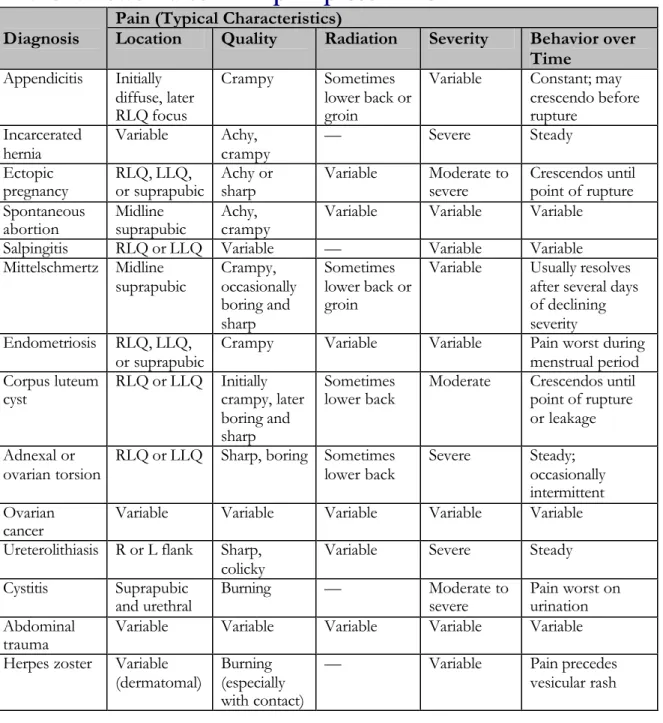
Table 1: Lower abdominal pain presentation
Pain (Typical Characteristics)
Diagnosis Location Quality Radiation Severity Behavior over Time Appendicitis Initially diffuse, later RLQ focus Crampy Sometimes lower back or groin
Variable Constant; may crescendo before rupture
Incarcerated
hernia Variable Achy, crampy — Severe Steady
Ectopic
pregnancy RLQ, LLQ, or suprapubic Achy or sharp Variable Moderate to severe Crescendos until point of rupture Spontaneous
abortion Midline suprapubic Achy, crampy Variable Variable Variable
Salpingitis RLQ or LLQ Variable — Variable Variable
Mittelschmertz Midline suprapubic Crampy, occasionally boring and sharp Sometimes lower back or groin
Variable Usually resolves after several days of declining severity Endometriosis RLQ, LLQ,
or suprapubic Crampy Variable Variable Pain worst during menstrual period Corpus luteum
cyst RLQ or LLQ Initially crampy, later boring and sharp
Sometimes
lower back Moderate Crescendos until point of rupture or leakage Adnexal or
ovarian torsion RLQ or LLQ Sharp, boring Sometimes lower back Severe Steady; occasionally intermittent Ovarian
cancer Variable Variable Variable Variable Variable
Ureterolithiasis R or L flank Sharp,
colicky Variable Severe Steady
Cystitis Suprapubic
and urethral Burning — Moderate to severe Pain worst on urination Abdominal
trauma Variable Variable Variable Variable Variable
Herpes zoster Variable (dermatomal)
Burning (especially with contact)
— Variable Pain precedes
vesicular rash
Developed by: Elizabeth Tillman, MD Reviewed by: Ana Nunez, MD
Shahab Minassian, MD Glenda Donoghue, MD
MCP Hahnemann School of Medicine
Handouts
RN Handouts, CDC’s DES Update, www.cdc.gov/DES 4
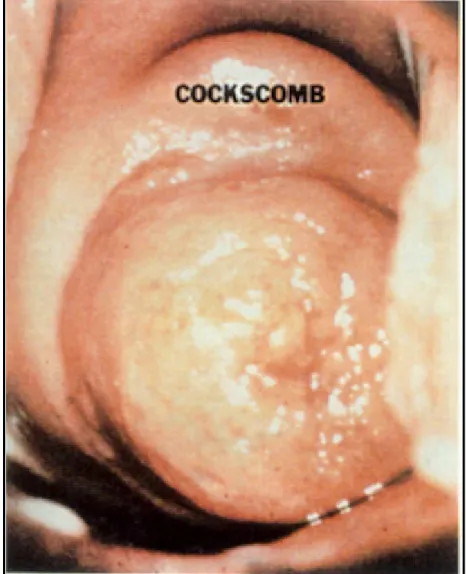
-Figure 1: Cervical collar with pseudopolyp and cockscomb
RN Handouts, CDC’s DES Update, www.cdc.gov/DES 5
-Table 2: Trade names under which DES and other nonsteroidal
estrogens have been sold in the United States
41Nonsteroidal Estrogens
Benzestrol Fonatol Palestrol
Chlorotrianisene Gynben Restrol
Comestrol Gyneben Stil-Rol
Cyren A. Hexestrol Stilbal
Cyren B. Hexoestrol Stilbestrol
Delvinal Hi-Bestrol Stilbestronate
DES Menocrin Stilbetin
DesPlex Meprane Stilbinol
Dibestil Mestilbol Stilboestroform
Diestryl Microest Stilboestrol
Dienostrol Methallenestril Stilboestrol DP
Dienoestrol Mikarol Stilestrate
Diethylstilbestrol dipalmitate Mikarol Forti Stilpalmitate
Diethylstilbestrol diphosphate Milestrol Stilphostrol
Diethylstilbestrol diproprionate Monomestrol Stilronate
Diethylstilbenediol Neo-Oestranol I Stilrone
Digestil Neo-Oestranol II Stils
Domestrol Nulabort Synestrin
Estilben Oestrogenine Synestrol
Estrobene Oestromenin Synthoestrin
Estrobene DP Oestromon Tace
Estrosyn Orestol Vallestril
Pabestrol D Willestrol
Nonsteroidal Estrogen-Androgen Combinations
Amperone Metystil Tylosterone
Di-Erone Teserene
Estan Tylandril
Nonsteroidal Estrogen-Progesterone Combination
Progravidium
Vaginal Cream Suppositories and Nonsteroidal Estrogens
AVC Cream with Dienestrol Dienestrol Cream
RN Handouts, CDC’s DES Update, www.cdc.gov/DES 6
-Handouts
RN Handouts, CDC’s DES Update, www.cdc.gov/DES 7
-Handouts
What is
Diethylstilbestrol?
• Synthetic nonsteriodal estrogen
• First produced in 1938
• Manufactured by over 267 companies
under a wide variety of names
• Stilbestrol used most commonly
• Contained even in some prenatal vitamins
What are the
Indications for Use?
• Pregnancy
– Prevention of miscarriage, premature delivery, postmaturity, and toxemia in high-risk pregnancies – Infertility, morning sickness, and low-risk pregnancies – No longer FDA approved
• Postcoital Contraception
– No longer FDA approved
• Breast and Prostate Cancer Treatment • Livestock Fattening
RN Handouts, CDC’s DES Update, www.cdc.gov/DES 8
-Handouts
When was DES Used?
• Became available in 1938
• In US, contraindicated for use in
pregnancy in 1971
• Outside US, use continued after 1971
What is DES’s
Mechanism of Action?
• Pregnancy
– Thought to induce placental hormone production, thus sustaining a viable pregnancy; later disproven43,45
• Postcoital Contraception
– Thought to decrease circulating progesterone levels, thus altering tubal motility and accelerating passage of ovum through oviduct
– Inhibits synthesis of endometrial production of carbonic anhydrase, thus making implantation unfavorable48
RN Handouts, CDC’s DES Update, www.cdc.gov/DES 9
-Handouts
What is DES’s
Mechanism of Action?
• Breast Cancer Treatment
– At high doses, paradoxically inhibits growth of estrogen receptor positive tumors
– Precise mechanism unknown54
• Prostate Cancer Treatment
– Inhibits pituitary production of luteinizing hormone, subsequently decreasing testicular androgen production52
• Livestock Fattening
– Increases lean muscle mass and decreases fat deposition
– Precise mechanism unknown55
Was DES Effective for
Preventing Miscarriages?
NO
• DES increased the rate of miscarriages,
premature deliveries and neonatal
mortality
43RN Handouts, CDC’s DES Update, www.cdc.gov/DES 10
-Handouts
Caveats to Consider When
Assessing Health Risks
• Most people who were exposed to DES have not experienced negative health consequences • These case materials represent the state of DES
research at the time of development and interpret studies current at that time for clinical practice
• Research on DES is ongoing, and some animal studies have identified health effects that might yet occur
DES Effects on
Daughters
• Clear Cell Adenocarcinoma (CCA)
of the Vagina and Cervix
– Rare cancer, previously seen in women
>50 years old
RN Handouts, CDC’s DES Update, www.cdc.gov/DES 11
-Handouts
DES Effects on
Daughters
• Clear Cell Adenocarcinoma (CCA)
of the Vagina and Cervix
– RR in DES exposed 40.7 compared
with nonexposed;
57absolute risk
1.0-1.5: 1000 in DES exposed
58– Peak incidence in late teens and early
20s; appears in DES Daughters as they
reach 30s and 40ss
57Photographs and
photomicrographs courtesy of
Kenneth Noller, MD
RN Handouts, CDC’s DES Update, www.cdc.gov/DES 12
-Handouts
Gross specimen of vaginal clear cell adenocarcinoma
RN Handouts, CDC’s DES Update, www.cdc.gov/DES 13
-Handouts
DES Effects on
Daughters
• Additional Cancer Risks
– None proven,57but average age of DES
Daughters is 35–55 years
– Relation with cervical intraepithelial neoplasia uncertain65
– Breast cancer risk a concern and still being investigated62-65
• 2002 study links exposure to increased risks in Daughters over 4066
DES Effects on
Daughters
• Reproductive Tract Structural
Differences
– Benign Vaginal Adenosis
• Seen in approximately 33% of exposed women37-39
• Present in 90% of cases with clear cell adenocarcinoma (CCA)56
• Not a proven premalignant lesion for CCA
RN Handouts, CDC’s DES Update, www.cdc.gov/DES 14
-Handouts
Cervical entropion with adenosis
RN Handouts, CDC’s DES Update, www.cdc.gov/DES 15
-Handouts
DES Effects on
Daughters
• Reproductive Tract Abnormalities
– Cervical Malformations
• Seen in 25%–33% of exposed population34,75-79
• Cockscomb; hood; collar, and pseudopolyp
RN Handouts, CDC’s DES Update, www.cdc.gov/DES 16
-Handouts
DES Effects on
Daughters
• Reproductive Tract Abnormalities
– Uterine Malformations
• Up to 69% of DES Daughters21 • T-shaped uterus most common • Variety of other abnormalities
• Frequently associated with cervical lesions
Illustrations courtesy of
DES Screening Program,
ProHEALTH Care Associates
RN Handouts, CDC’s DES Update, www.cdc.gov/DES 17
-Handouts
Normal uterine outline
RN Handouts, CDC’s DES Update, www.cdc.gov/DES 18
-Handouts
DES Effects on
Daughters
• Additional Reproductive Risks
– Infertility
• Up to 33% in Dieckmann cohort vs. 14% in unexposed women80,81
– Adverse Pregnancy Outcomes89
• Ectopic pregnancy RR 3.84
• Premature birth RR 2.9
• Miscarriage RR 1.31, 1sttrimester
RR 4.25, 2ndtrimester
• Risk higher in presence of reproductive tract abnormalities89
DES Effects on
Daughters
Overall pregnancy outcomes still good
in most cases
Approximately 85% of pregnancies in
DES-exposed women resulted in a
RN Handouts, CDC’s DES Update, www.cdc.gov/DES 19
-Handouts
DES Effects on
Daughters
• Other Disorders
– Links have not been proven in
• Immunologic diseases • Psychosexual disorders*
* But animal studies have raised concerns about effects on cognitive abilities differentiated by sex
DES Effects on Women
Exposed While Pregnant
• Breast Cancer
– RR is ~ 1.3101
– Absolute risk 13.3% vs. 10.2% in unexposed101
– No study has shown RR of 2 or greater, which would lead to changes in clinical screening – RR of family history of breast cancer 2.1108
RN Handouts, CDC’s DES Update, www.cdc.gov/DES 20
-Handouts
DES Effects on Women
Exposed While Pregnant
• Other Effects
– Exposed women, now in 50s to 90s
– Concerns about:
• Using HRT
• Other gynecologic disorders • Other cancers
– None of these concerns yet verified
through research studies
DES Effects on Sons
• Urologic Abnormalities
– Increased risk for epididymal cysts
111 • 20.8% exposed vs. 4.9% nonexposed– Increased risk for other genital
abnormalities
115,116 • Testicular hypoplasia • Undescended testicles • MicrophallusRN Handouts, CDC’s DES Update, www.cdc.gov/DES 21
-Handouts
DES Effects on Sons
• Testicular Cancer
– Increased rates of testicular cancer, shown in a prospective study, not statistically
significant;117may reflect increasing rates
overall in past 60 years
– Several case-control studies have shown
increased risk;118-121others have shown
none122,123
– Secondary risk exists for DES Sons with undescended and hypoplastic testes
DES Effects on Sons
• Other Abnormalities
– No proven decrease in fertility,
114but
concerns persist because of the
problems with DES Daughters
– Rates of cancer of rete testis and
prostatic utricle are increased in
RN Handouts, CDC’s DES Update, www.cdc.gov/DES 22
-Handouts
DES Effects on Third
Generation
• Animal studies have generated concerns
about uterine and rete testis tumors
131-133• Only one published human study has
demonstrated third-generation effects
• Sons of DES Daughters at increased risk
for hypospadias
139Ongoing Research on Health
Effects in DES Sons, Daughters
and Third Generation
• Baylor
• Boston University • Dartmouth
• University of Chicago
• Tufts-New England Medical Center • National Cancer Institute
RN Handouts, CDC’s DES Update, www.cdc.gov/DES 23
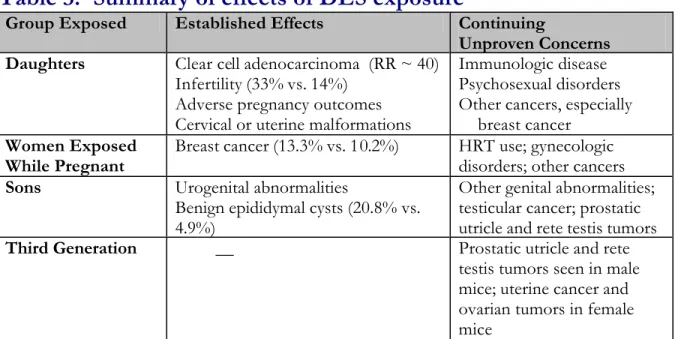
-Table 3: Summary of effects of DES exposure
Group Exposed Established Effects Continuing
Unproven Concerns Daughters Clear cell adenocarcinoma (RR ~ 40)
Infertility (33% vs. 14%) Adverse pregnancy outcomes Cervical or uterine malformations
Immunologic disease Psychosexual disorders Other cancers, especially
breast cancer
Women Exposed
While Pregnant Breast cancer (13.3% vs. 10.2%) HRT use; gynecologic disorders; other cancers
Sons Urogenital abnormalities
Benign epididymal cysts (20.8% vs. 4.9%)
Other genital abnormalities; testicular cancer; prostatic utricle and rete testis tumors
Third Generation __ Prostatic utricle and rete testis tumors seen in male mice; uterine cancer and ovarian tumors in female mice
RN Handouts, CDC’s DES Update, www.cdc.gov/DES 24
-Handouts
Screening
Recommendations for
DES Daughters
• With CCA: referral to gynecologic oncologist • With uterine or cervical abnormalities: increased
frequency of colposcopy and iodine staining • When abnormalities are found: consultation with
gynecologist experienced with DES • Biopsy of any gross vaginal lesion
Screening
Recommendations for
DES Daughters
• Routine exams (annual breast and pelvic exam, including bimanual and rectal exams) and careful monitoring for clear cell adenocarcinoma (CCA), throughout life
• With presence of cervical intraepithelial neoplasia: routine monitoring with close follow up
• With vaginal adenosis: no specific change in monitoring
RN Handouts, CDC’s DES Update, www.cdc.gov/DES 25
-Screening Recommendations
for Women Prescribed DES
While Pregnant
• Women aged 20 and older: monthly breast self-exams
• Women aged 20–39: clinical breast exam by a health professional every 3 years
• Women aged 40 and older: annual clinical breast exam by a health professional
• Women aged 40 and older: annual mammogram
American Cancer Society Web site144
Women who know they were exposed
to DES while pregnant should be
strongly encouraged to share this
information with their children
RN Handouts, CDC’s DES Update, www.cdc.gov/DES 26
-Handouts
Screening
Recommendations for
DES Sons
• Annual clinical testicular exam by a health professional
• Education regarding proper testicular self-exam technique and prompt medical evaluation if any abnormalities are found
• Monthly testicular self-exam for men with certain risk factors: cryptochidism , previous germ cell tumor on one side, or family history of testicular cancer
American Cancer Society Web site145
Indications for Referral
to an OB/GYN
• Preconception counseling, including discussion of increased risks for infertility, ectopic
pregnancy, miscarriage, premature labor, and premature birth
• Consideration of diagnostic testing, including
– Pelvic exam to assess for cervical anomalies
– Hysterosalpingogram to assess for upper genital tract anomalies
– Endometrial biopsy to diagnose luteal phase defect – Early diagnosis of pregnancy with close monitoring
RN Handouts, CDC’s DES Update, www.cdc.gov/DES 27
-Handouts
Screening of DES
Daughters by OB/GYN
• Preconception counseling
• Pelvic exam
• Hysterosalpingogram
• Close monitoring for early pregnancy
• Referral to an MFM specialist
RN Handouts, CDC’s DES Update, www.cdc.gov/DES 28
-Resources for consumers and health care providers
U.S. Government Resources
Centers for Disease Control and Prevention
CDC’s DES Update
888-232-6789 (toll-free phone)
www.cdc.gov/DES
A national education program for consumers and health care providers based on the latest research on DES-related health risks and treatment options.
National Cancer Institute
Cancer Information Service
800-4-CANCER (800-422-6237) (toll-free phone)
www.cancer.gov
A national service providing the latest cancer information to patients, families, health professionals, and the general public.
National Cancer Institute
Questions & Answers About DES
http://cis.nci.nih.gov/fact/3_4.htm
A national service providing the latest DES information to patients, families, health professionals, and the general public.
Consumer Organizations
DES Action USA
610 16th Street, Suite 301
Oakland, CA 94612 510-465-4011 (phone)
800-DES-9288 (800-337-9288) (toll-free phone) 510-465-4815 (fax)
[email protected] http://www.desaction.org
A national organization representing DES Mothers, Daughters, and Sons. Mission includes promoting research and educating both public and medical professionals about DES consequences and subsequent treatment options. Services include website; physician referrals; DES publications; and a quarterly newsletter, DES Action Voice.
RN Handouts, CDC’s DES Update, www.cdc.gov/DES 29
-DES Cancer Network
P.O. Box 220465
Chantilly, VA 20153-0465 202-628-6330 (phone)
800-DESNET4 (800-337-6384) (toll-free phone) 202-628-6217 (fax)
[email protected] http://www.descancer.org
A national network for DES Mothers and offspring. Mission includes research advocacy, educational of both public and medical professionals, and peer support. Services include website; educational programs for DES-exposed people with cancer; medical referrals; and a newsletter, DES Issues.
DES Daughters Listserv and Online Support Group
http://www.surrogacy.com/online_support/des/
An online support group to promote discussion, support, and sharing of information among DES Daughters.
DES-Family Listserv
An online listserv for all DES-exposed people, their families and friends, designed to promote mutual support and sharing of information. To subscribe, send an e-mail to
[email protected]. In the body of your message, write only “subscribe des-family” (without
the quotation marks).
DES Sons Network
104 Sleepy Hollow Pl. Cherry Hill, NJ 08003 609-795-1658 (phone)
The DES Sons Network is a national network providing information and support for men exposed to DES before birth, and counseling for men with testicular cancer.
DES Sons Discussion Network
http://groups.yahoo.com/group/des-sons/
A private, professional health information and support network for DES Sons.
Handouts
RN Handouts, CDC’s DES Update, www.cdc.gov/DES 30
-National Women’s Health Network
514 10th St., NW, Ste. 400
Washington, DC 20004 202-347-1140 Administration 202-628-7814 Health Information http://www.womenshealthnetwork.org
A coalition of women’s health organizations that lobbies Congress for women’s health issues and provides an information clearinghouse on various women's health topics, including DES. Resolve National Office: 1310 Broadway Somerville, MA 02144-1731 617-623-0744 (phone) Philadelphia Office: 821 Westview St. Philadelphia, PA 19119 215-849-3920 (phone) http://www.resolve.org
A national infertility organization with regional offices that provides support groups, publications, and a newsletter.
RN Handouts, CDC’s DES Update, www.cdc.gov/DES 31
-References
1. Crass RA, Trunkey DD. Abdominal pain. In: Saunders CE, Ho MT, editors. Current emergency diagnosis and treatment. New York: McGraw-Hill/Medical Publishing Division; 1992. pp. 107–27.
2. Andreoli TE, Bennett JC, et al. Cecil essentials of medicine, 4th ed. Philadelphia: WB
Saunders Company, 1997.
3. Holmes HN. Professional guide to signs and symptoms. Springhouse (PA): Springhouse Corporation; 1997.
4. Eubanks WS. Hernias. In: Townsend CM, editor. Sabiston textbook of surgery: the biological basis of modern surgical practice. Philadelphia: WB Saunders Company; 2001. pp. 783–801.
5. Kim HH, Fox JH. The fallopian tube and ectopic pregnancy. In: Ryan KJ, Berkowitz RS, et al., editors. Kistner’s gynecology and women's health. New York: Mosby Inc.; 1999. pp. 143–65.
6. Carr BR, Bradshaw KD. Disturbances of menstruation and other common gynecologic complaints in women. In: Fauci AS, Braunwald E, et al., editors. Harrison’s principles of internal medicine. New York: McGraw-Hill/Health Professions Division; 1998. pp. 289– 92.
7. Goldstein PJ. Obstetric and gynecologic emergencies and rape. In: Saunders CE, Ho MT, editors. Current emergency diagnosis and treatment. New York: McGraw-Hill/Medical Publishing Division; 1992. pp. 524–44.
8. DeGowin RL. DeGowin and DeGowin’s diagnostic examination. New York: McGraw-Hill/Health Professions Division; 1994.
9. Gant NF, Cunningham FG, editors. Basic gynecology and obstetrics. Norwalk (CT): Appleton & Lange; 1993.
10. Wheeler JE, Woodruff JD. Benign disorders of the ovaries and oviducts. In: DeCherney AH, Pernoll ML, editors. Current obstetric and gynecologic diagnosis and treatment. Norwalk (CT): Appleton & Lange; 1994. pp. 744–53.
11. Seller RH. Differential diagnosis of common complaints. Philadelphia: WB Saunders Company; 1996.
RN Handouts, CDC’s DES Update, www.cdc.gov/DES 32
-12. Abargel A, Pansky M, Neeman O, Bukovsky I. Torsion of single normal adnexa in a premenarchal girl. J Am Assoc Gynecol Laparoscopists 2000;7:421–2.
13. Bayer AI, Wiskind AK. Adnexal torsion: can the adnexa be saved? Am J Obstet Gynecol 1994;171:1506–10.
14. Baker VV. Premalignant and malignant disorders of the ovaries and oviducts. In: DeCherney AH, Pernoll ML, editors. Current obstetrics and gynecologic diagnosis and treatment. Norwalk (CT): Appleton & Lange; 1994. pp. 954–66.
15. Presti JC, Stoller ML, Carroll PR. Urology. In: Tierney LM, McPhee SJ, Papadakis MA, editors. Current medical diagnosis and treatment. New York: Lange Medical
Books/McGraw-Hill; 2000. pp. 917–58.
16. Salber PR, Taliaferro E. The physician’s guide to domestic violence: how to ask the right questions and recognize abuse. Volcano (CA): Volcano Press; 1995.
17. Pernoll ML, Garmel SH. Early pregnancy risks. In: DeCherney AH, Pernoll ML, editors. Current obstetrics and gynecologic diagnosis and treatment. Norwalk (CT): Appleton & Lange; 1994. pp. 306–30.
18. McQuaid KR. Alimentary tract. In: Tierney LM, McPhee SJ, Papadakis MA, editors. Current medical diagnosis and treatment 2001. New York: Lange Medical
Books/McGraw-Hill/Health Professions Division; 2001. pp. 559–661.
19. Pernoll ML, Taylor CH. Normal pregnancy and prenatal care. In: DeCherney AH, Pernoll ML, editors. Current obstetrics and gynecologic diagnosis and treatment. Norwalk (CT): Appleton & Lange; 1994. pp. 183–201.
20. Hill EC, Pernoll ML. Benign disorders of the uterine cervix. In: DeCherney AH, Pernoll ML, editors. Current obstetrics and gynecologic diagnosis and treatment. Norwalk (CT): Appleton & Lange; 1994. pp. 713–30.
21. Kaufman RH, Adam E, Binder GL, Gerthoffer, E. Upper genital tract changes and pregnancy outcome in offspring exposed in utero to diethylstilbestrol. Am J Obstet Gynecol 1980;137:299–308.
22. Wexler AS, Pernoll ML. Benign disorders of the uterine corpus. In: DeCherney AH, Pernoll ML, editors. Current obstetrics and gynecologic diagnosis and treatment. Norwalk (CT): Appleton & Lange; 1994. pp. 731–43.
RN Handouts, CDC’s DES Update, www.cdc.gov/DES 33
-23. Muse KN, Fox MD. Endometriosis. In: DeCherney AH, Pernoll ML, editors. Current obstetrics and gynecologic diagnosis and treatment. Norwalk (CT): Appleton & Lange; 1994. pp. 801–8.
24. Crombleholme WR. Obstetrics. In: Tierney LM, McPhee SJ, Papadakis MA, editors. Current medical diagnosis and treatment. New York: Lange Medical Books/McGraw-Hill; 2000. pp. 758–82.
25. Barnhart K, Esposito M, Coutifaris C. An update on the medical treatment of ectopic pregnancy. Obstet Gynecol Clin North Am 2000;27:653–67.
26. Ankum WM, Van der Veen F, Hamerlynck JV, Lammes FB. Transvaginal sonography and human chorionic gonadotropin measurements in suspected ectopic pregnancy: a detailed analysis of a diagnostic approach. Human Reprod 1993;8:1307–11.
27. Cunningham FG, MacDonald PC, et al. Williams obstetrics. Stamford (CT): Appleton & Lange; 1997.
28. Marchbanks PA, Annegers JF, Coulam CB, Strathy JH, Kurland LT. Risk factors for ectopic pregnancy: a population-based study. JAMA 1988;259:1823–7.
29. Job-Spira N, Collet P, et al. Facteurs de risqué de la grossesse extra-uterine: resultats d’une enquete cas-temoins dans la region Rhone-Alpes. Contraception Fertilite Sexualite 1993;21:307–12.
30. Cowen BD. Ectopic pregnancy. In: Rakel RE, editor. Conn’s current therapy 2000. Philadelphia: WB Saunders Company; 2000. pp. 985–6.
31. Ankum WM, Mol BW, Van der Veen F, Bossuyt PM. Risk factors for ectopic pregnancy: a meta-analysis. Fertil Steril 1996;65:1093–9.
32. Cousins L, Karp W, Lacey C, Lucas WE. Reproductive outcome of women exposed to diethylstilbestrol in utero. Obstet Gynecol 1980;56:70–6.
33. Veridiano NP, Delke I, Rogers J, Tancer ML., Reproductive performance of DES-exposed female progeny. Obstet Gynecol 1981;58:58–61.
34. Robboy SJ, Young RH, Herbst AL. Female genital tract changes related to prenatal diethylstilbestrol exposure. In: Blaustein A, editor. Pathology of the female genital tract. New York: Springer Verlag; 1982. pp. 99–118.
RN Handouts, CDC’s DES Update, www.cdc.gov/DES 34
-35. Sheets EE. The cervix. In: Ryan KJ, Berkowitz RS, et al., editors. Kistner’s gynecology and women's health. New York: Mosby Inc.; 1999. pp. 93–120.
36. Stevens A., Lowe J. Pathology: illustrated review in color. Edinburgh: Mosby; 2000. 37. Bengston JM. The vagina. In: Ryan KJ, Berkowitz RS, et al., editors. Kistner’s
gynecology and women's health. New York: Mosby Inc.; 1999. pp. 81–92.
38. Cotran RS, Kumar V, et al. Robbins pathologic basis of disease. Philadelphia: WB Saunders Company; 1994.
39. Mulley AG. Vaginal cancer and other effects of diethylstilbestrol exposure. In: Goroll AH, May LA, Mulley AG Jr, editors. Primary care medicine: office evaluation and management of the adult patient. Philadelphia: Lippincott-Raven Publishers; 1995. pp. 595–7.
40. Smith OW. Diethylstilbestrol in the prevention and treatment of complications of pregnancy. Am J Obstet Gynecol 1948;56:821–34.
41. NCI. Exposure in utero to diethylstilbestrol and related synthetic hormones. JAMA 1976:236:1107–9.
42 NCI. Cancer Facts: Questions and answers about DES. [Cited on 2000 June 27]. Available from URL: http://cis.nci.nih.gov/fact/.
43. Dieckmann WJ, Davis ME, Rynkiewicz LM, Pottinger RE. Does the administration of diethylstilbestrol during pregnancy have therapeutic value? Am J Obstet Gynecol 1953;66:1062–81.
44. Noller, KL, Fisch CR. Diethylstilbestrol usage: its interesting past, important questions and questionable future. Med Clin North Am 1974;58:739–810.
45. Brackbill Y, Berendes HW. Dangers of diethylstilboestrol: a review of a 1953 paper. Lancet 1978;2:520.
46. National Institutes for Health, Centers for Disease Control and Prevention. DES research update 1999: current knowledge, future directions. [Cited on 1999 Jul 19–20]. Available from URL: http://osp.nci.nih.gov/whealth/DES/index.html.
47. Nordqvist SRB. Perspective: DES exposure in utero. What are the effects? In: Ballon SC, editor. Gynecologic oncology: controversies in cancer treatment. Boston: Hall GK Medical Publishers; 1981.
RN Handouts, CDC’s DES Update, www.cdc.gov/DES 35
-48. Brenner PF, Mishell DR. Postcoital contraception/interception. In: Mishell DR, Brenner PF, editors. Management of common problems in obstetrics and gynecology. Boston: Blackwell Scientific Publications; 1994. pp. 829–33.
49. McEvoy GK, editor. AHFS drug information 2000. Bethesda (MD): American Society of Health-System Pharmacists Inc.; 2000. pp. 2797–9.
50. Greenspan FS, Baxter JD, editors. Basic and clinical endocrinology. Norwalk (CT): Appleton & Lange; 1994.
51. Slapak CA, Kufe DW. Principles of cancer therapy. In: Fauci AS, Braunwald E, et al., editors. Harrison’s principles of internal medicine. New York: McGraw-Hill/Health Professions Division; 1998. pp. 523–37.
52. Hardman JG, Limbird LE, et al., editors. Goodman and Gilman’s: the pharmacologic basis of therapeutics. New York: McGraw-Hill/Health Professions Division; 1996. 53. Food Safety and Inspection Service, USDA. Use of DES in the United States. Available
from URL: http://www.fsis.usda.gov:80/oa/background/des.htm.
54. Fleming ID, Brady LW, et al. Basis for major current therapies for cancer. In: Murphy GP, Lawrence W, Lenhard RE, editors. American Cancer Society textbook of clinical oncology. Atlanta (GA): American Cancer Society Inc.; 1995. pp. 96–134.
55. Anderson PT, Crooker BA, Pullen MM. Animal products: contributors to a safe food supply. University of Minnesota Extension Service. Available from URL:
http://www.extension.umn.edu/distribution/nutrition/DJ5513.html#Hormones.
56. Herbst AL, Ulfelder H, Poskanzer DC. Adenocarcinoma of the vagina: association of maternal stilbestrol therapy with tumor appearance in young women. New Engl J Med 1971;284:878–81.
57. Hatch EE, Palmer JR, Titus-Ernstoff L, Noller KL, Kaufman RH, Mittendorf R, et al. Cancer risk in women exposed to diethylstilbestrol in utero. JAMA 1998;280:630–634. 58. Melnick S, Cole P, Anderson D, Herbst AL. Rates and risks of diethylstilbestrol-related
clear cell adenocarcinoma of the vagina and cervix. N Engl J Med 1987;315:514–6. 59. Herbst AL. Oral communication. March 2000.
RN Handouts, CDC’s DES Update, www.cdc.gov/DES 36
-60. Robboy SJ, Noller KL, O’Brien P, Kaufman RH, Townsend D, Barnes AB, et al. Increased incidence of cervical and vaginal dysplasia in 2980 diethylstilbestrol-exposed young women: experience of the National Collaborative Diethylstibestrol Adenosis Project. JAMA 1984;252:2979–83.
61. Hatch EE, Herbst AL, Hoover, RN, Noller KL, Adam E, Kaufman, RH, et al. Incidence of squamous neoplasia of the cervix and vagina in women exposed prenatally to
diethylstilbestrol (United States). Cancer Causes Control 2001 Nov;12:837–45. 62. Trichopoulos D. Hyposthesis: does breast cancer originate in utero? Lancet
1990;335:939–40.
63. Thompson WK, Janerich DT. Maternal age at birth and risk of breast cancer in daughters. Epidemiology 1990;1:101–6.
64. Ekbon A, Trichopoulos D, Adami HO, Hsieh CC, Lan SJ. Evidence of prenatal influences on breast cancer risk. Lancet 1992;340:1015–8.
65. Braun MM, Ahlbom A, Floderus B, Brinton LA, Hoover RN. Effect of twinship on incidence of cancer of the testis, breast and other sites (Sweden). Cancer Causes Control 1995;6:519–24.
66. Palmer JR, Hatch EE, Rosenberg CL, Hartge P, Kaufman RH, Titus-Ernstoff L, et al. Risk of breast cancer in women exposed to diethylstilbestrol in utero: preliminary results (United States). Cancer Causes Control 2002;13:753–8.
67. Herbst AL, Anderson S, Hubby MM, Haenszel WM, Kaufman RH, Noller KL. Risk factors for development of diethylstilbestrol-associated clear cell adenocarcinoma: a case-control study. Am J Obstet Gynecol 1986;154:814–22.
68. Spence MR, Hernandez E. Benign conditions of the vagina and cervix. In: Hernandez E, Atkinson BF, editors. Clinical gynecologic pathology. Philadelphia: WB Saunders
Company; 1996. pp. 91–128.
69. Kumar V, Cotran RS, Robbins SL. Basic pathology. Philadelphia: WB Saunders Company; 1997.
70. Noller KL, Townsend DE, Kaufman RH, Barnes AB, Robboy SJ, Fish CR, et al. Maturation of vaginal and cervical epithelium in women exposed in utero to diethylstilbestrol (DESAD Project). Am J Obstet Gynecol 1983;146:279–85.
RN Handouts, CDC’s DES Update, www.cdc.gov/DES 37
-71. Frank AR, Krumholz BA, Deutsch S. Regression of cervicovaginal abnormalities in DES-exposed women: a comparison of changes in sexually inactive women and the effects of the onset of sexual activity. J Reprod Med 1985;30:400–3.
72. Muram D. Developmental abnormalities. In: Copeland LJ, editor. Textbook of gynecology. Philadelphia: WB Saunders Company; 2000. pp. 199–226.
73. Ulfelder H, Robboy SJ. The embryologic development of the human vagina. Am J Obstet Gynecol 1976;126:769–76.
74. Giusti RM, Iwamoto K, Hatch EE. Diethylstilbestrol revisited: a review of the long-term health effects. Ann Intern Med 1995;122:778–88.
75. Herbst AL, Poskanzer DC, Robboy SJ, Friedlander L, Scully RE. Prenatal exposure to stilbestrol: a prospective comparison of exposed female offspring with unexposed controls. N Engl J Med 1975;292:334–9.
76. Bibbo M, Gill WB, Azizi F, Blough R, Fang VS, Rosenfield RL, et al. Follow-up study of male and female offspring of DES-exposed mothers. Obstet Gynecol 1977;49:1–7. 77. Kaufman RH, Ervin A. Genital tract anomalies associated with in utero exposure to
diethylstilbestrol. Isr J Med 1978;14:353–62.
78. Jefferies JA, Robboy SJ, O’Brien PC, Bergstralh EJ, Labarthe DR, Barnes AB, et al. Structural anomalies of the cervix and vagina in women enrolled in the Diethylstilbestrol Adenosis (DESAD) Project. Am J Obstet Gynecol 1984;148:59–66.
79. Herbst AL, Hubby MM, Anderson D. Neoplastic changes in the human female genital tract following intrauterine exposure to diethylstilbestrol. Progr Cancer Res 1984;31:389– 99.
80. Senekjian EK, Potkul RK, Frey K, Herbst AL. Infertility among daughters either exposed or not exposed to diethylstilbestrol. Am J Obstet Gynecol 1988; 158:493–8. 81. Palmer JR, Hatch EE, Rao RS, Kaufman RH, Herbst AL, Noller KL. Infertility among
women exposed prenatally to diethylstilbestrol. Am J Epidemiol 2001;154:319–21. 82. Barnes AB, Colton T, Gundersen J, Noller KL, Tilley BC, Strama T, et al. Fertility and
outcome of pregnancy in women exposed in utero to diethylstilbesrol. N Engl J Med 1980;302:609.
RN Handouts, CDC’s DES Update, www.cdc.gov/DES 38
-83. Barnes AB. Menstrual history and fecundity of women exposed and unexposed in utero to diethylstilbestrol. J Reprod Med 1984;29:651–5.
84. Haney AF. The reproductive consequences of prenatal DES exposure. In: Guisti RM, editor. Report of the NIH workshop on long-term effects of exposure to
diethylstibestrol (DES). Washington (DC): US Department of Health and Human Services, Public Health Service, National Institutes of Health; 1992. pp. 46–9. 85. Karande VC, Lester RG, Muasher SJ, Jones DL, Acosta AA, Jones HW Jr, et al. Are
implantation and pregnancy outcome impaired in diethylstilbestrol exposed women after in vitro fertilization and embryo transfer? Fertil Steril 1990;54:287.
86. Wu CH, Mangan CE, Burtnett MM, Mikhail G. Plasma hormones in DES-exposed females. Obstet Gynecol 1980;55:157–62.
87. Peress MR, Tsai CC, Mathur RS, Williamson HO. Hirsutism and menstrual patterns in women exposed to diethylstilbestrol in utero. Am J Obstet Gynecol 1982;144:135–40. 88. Assies J. Hyperprolactinaemia in diethylstilboestrol-exposed women. Lancet
1991;337:983.
89.Kaufman RH, Adam E, Hatch EE, Noller K, Herbst AL, Palmer JR, et al. Continued follow-up of pregnancy outcomes in diethylstilbestrol-exposed offspring. Obstet Gynecol 2000;96:483–9.
90. Swan SH. Pregnancy outcome in DES daughters. In: Giusti RM, editor. Report of the NIH workshop on long-term effects of exposure to diethylstilbestrol (DES).
Washington, D.C.: U.S. Department of Health and Human Services, Public Health Service, National Institutes of Health; 1992. pp. 42–9.
91. Noller KL, Blair PB, O’Brien PC, Melton LJ, Offord JF, Kaufman RH, et al. Increased occurrence of autoimmune diseases among men and women exposed in utero to diethylstilbestrol. Fertil Steril 1988;49:1080–2.
92. Beach FA. Hormonal modification of sexually dimorphic behavior. Psychoneuroendocrinology 1975;1:3–23.
93. Goy RB, McEwen BS. Sexual differentiation of the brain. Cambridge (MA): The MIT Press; 1980.
94. Hines M, Sandberg EC. Sexual differentiation of cognitive abilities in women exposed to diethylstilbestrol (DES) prenatally. Horm Behav 1996;30:354–63.
RN Handouts, CDC’s DES Update, www.cdc.gov/DES 39
-95. Vessey MP, Fairweather DVI, Norman-Smith B, Buckley J. A randomized double-blind controlled trial of the value of stilbestrol therapy in pregnancy: long-term follow-up of mothers and their offspring. Br J Obstet Gynaecol 1983;90:1007–17.
96. Hernandez E, Atkinson BF. Malignant neoplasm of the cervix and vagina. In:
Hernandez E, Atkinson BF, editors. Clinical gynecologic pathology. Philadelphia: WB Saunders Company; 1996. pp. 175–221.
97. Senekjin EK, Frey KW, Stone C, Herbst AL. Local therapy in stage I clear cell adenocarcinoma of the vagina. Cancer 1987;60:1319–24.
98. Herbst AL, Anderson D. Clear cell adenocarcinoma of the vagina and cervix secondary to intrauterine exposure to diethylstilbestrol. Semin Surg Oncol 1990;6:343–6.
99. Helfland J. A healthy baby girl [videocassette]. Film Scouts LLC96B. 1997. 100. Felton BS. The lingering tragedy of DES. RN 1990:8;36–40.
101. Titus-Ernstoff L, Hatch EE, Hoover RN, Palmer J, Greenberg ER, Ricker W, et al. Long-term cancer risk in women given diethylstilbestrol (DES) during pregnancy. Br J Cancer. 2001;84:126–33.
102. Clark LC, Portier KM. Diethylstilbestrol and the risk of cancer. New Engl J Med 1979;300:263–4.
103. Greenberg ER, Barnes AB, Resseguie L, Barrett JA, Burnside S, Lanza LL, et al. Breast cancer in mothers given diethylstilbestrol in pregnancy. New Engl J Med
1984;311:1393–8.
104. Colton T, Greenberg ER, Noller K, Resseguie L, Van Bennekom C, Heeren T, et al. Breast cancer in mothers prescribed diethylstilbestrol in pregnancy: further follow-up. JAMA 1993;269:2096–100.
105. Calle EE, Mervis CA, Thun MJ, Rodriguez C, Wingo PA, Health CW.
Diethylstilbestrol and risk of fatal breast cancer in a prospective cohort of US women. Am J Epidemiol 1996;144:645–51.
106. Bibbo M, Haenszel WM, Wied GL, Hubby M, Herbst AL. A twenty-five year follow-up study of women exposed to diethylstilbestrol during pregnancy. New Engl J Med 1978;298:263–767.
RN Handouts, CDC’s DES Update, www.cdc.gov/DES 40
-107. Vessey MP, Fairweather DVI, Norman-Smith B, Buckley J. A randomized double-blind controlled trial of the value of stilbestrol therapy in pregnancy: long-term follow-up of mothers and their offspring. Br J Obstet Gynaecol 1983;90:1007–17.
108. Pharoah PD, Day NE, Duffy S, Easton DF, Ponder BA. Family history and the risk of breast cancer: a systematic review and meta-analysis. Int J Cancer 1997;71:800–9. 109. Collaborative Group on Hormonal Factors in Breast Cancer. Breast cancer and
hormonal contraceptives: collaborative reanalysis of individual data on 53,297 women with breast cancer and 100,239 women without breast cancer from 54 epidemiological studies. Lancet 1996;347:1713–27.
110. Bibbo M, Gill WB, Azizi F, Blough R, Fang VS, Rosenfield RL, et al. Follow-up study of male and female offspring of DES-exposed mothers. Obstet Gynecol 1977;49:1–8. 111. Gill WB, Schumacher GF, Bibbo M, Straus FH, Schoenberg HW. Association of
diethylstilbestrol exposure in utero with cryptorchidism, testicular hypoplasia and semen abnormalities. J Urol 1979;122:36–9.
112. Conley GR, Sant GR, Ucci AA, Micheson HD. Seminoma and epididymal cysts in a young man with known diethylstilbestrol exposure in utero. JAMA 1983;249:1325–6. 113. Niculescu A. Effects of in utero exposure to DES on male progeny. J Obstet Gynecol
Neonatal Nurs 1985;14:468–70.
114. Wilcox AJ, Baird DD, Weinberg CR, Nornsby PP, Herbst AL. Fertility in men exposed prenatally to diethylstilbestrol. N Engl J Med 1995;332:1411–6.
115. Vessey M, Fairweather DV, Norman-Smith B, Buckley J. A randomized double-blind controlled trial of the value of stilbestrol therapy in pregnancy: long-term follow-up of mothers and their offspring. Br J Obstet Gynaecol 1983;90:1007–17.
116. Leary FJ, Resseguie LJ, Kurland LT, O’Brien PC, Emslander RF, Noller K. Males exposed in utero to diethylstilbestrol. JAMA 1984;525:2984–9.
117. Strohsnitter WC, Noller KL, Hoover RN, Robboy SJ, Palmer JR, Titus-Ernstoff L, et al. Cancer risk in men exposed in utero to diethylstilbestrol. J Natl Cancer Inst 2001;93:545–51.
118. Henderson BE, Benton B, Jing J, Yu MC, Pike MC. Risk factors for cancer of the testis in young men. Int J Cancer 1979;23:598–602.
RN Handouts, CDC’s DES Update, www.cdc.gov/DES 41
-119. Schottenfeld D, Warschauer ME, Sherlock S, Zauber AG, Leder M, Payne R. The epidemiology of testicular cancer in young adults. Am J Epidemiol 1980;112:232–46. 120. Depue RH, Pike MC, Henderson BE. Estrogen exposure during gestation and risk of
testicular cancer. J Natl Cancer Inst 1983;71:1151–5.
121. Moss A, Osmond D, Bacchetti P, Torit FM, Gurgin V. Hormonal risk factors in testicular cancer: a case-control study. Am J Epidemiol 1986;124:39–52.
122. Brown LM, Pottern LM, Hoover RN. Prenatal and perinatal risk factors for testicular cancer. Cancer Res. 1986:46:4812–6.
123. Gershman ST, Stolley PD. A case-control study of testicular cancer using Connecticut tumor registry data. Int J Epidemiol 1988;17:738–42.
124. Dieckmann WJ, Davis ME, Rynkiewicz LM, and Pottinger RE. Does the
administration of diethylstilbestrol during pregnancy have therapeutic value? Am J Obstet Gynecol 1953;66:1062–81.
125. Newbold RR, Bullock BC, McLauglan JA. Lesions of the rete testis in mice exposed prenatally to diethylstilbestrol. Cancer Res 1985;45:5145–8.
126. Newbold RR, Bullock BC, McLaughlan JA. Testicular tumors in mice exposed in utero to diethylstilbestrol. J Urol 1987;138:1446–50.
127. McLaughlan JA, Newbold RR, Li S, Negishi M. Are estrogens carcinogenic during development of the testes? APMIS 1998;106:240–4.
128. McLachlan M, et al. Science. 1975;190:991–2.
129. McLachlan, J. Rodent models for perinatal exposure to diethylstilbestrol and their relation to human disease in the male. In: Herbst AL, Bern HA, editors.
Developmental effects of diethylstilbestrol (DES) in pregnancy. NY: Thieme-Stratton, Inc.; 1981.
130. Pylkkanen L, Makela S, Valve E, Harkonen P, Toikkanen S, Santti R. Prostatic dysplasia associated with increased expression of c-myc in neonatally estrogenized mice. J Urol 1993;149:1593–601.
131. Turusov VS, Trukhanova LS, Parfenov YD, Tomatis L. Occurrence of tumors in the descendants of CBA male mice prenatally treated with diethylstilbestrol. Int J Cancer 1992; 50:131–5.
RN Handouts, CDC’s DES Update, www.cdc.gov/DES 42
-132. Newbold RR, Hanson RB, Jefferson WN, Bullock BC, Haseman JA. Increased tumors but uncompromised fertility in the female descendants of mice exposed
developmentally to diethylstilbestrol. Carcinogenesis 1998;19:1655–63.
133. Newbold RR, Hanson RB, Jefferson WN, Bullock BC, Haseman J, McLachlan JA. Proliferative lesions and reproductive tract tumors in male descendants of mice exposed developmentally to diethylstilbestrol. Carcinogenesis 2000;21:1355–63. 134. Mittendorf R, Herbst AL. Managing the DES-exposed woman: an update. Contemp
OB/GYN 1994;9:62–80.
135. Wilcox AJ, Baird DD, Weinberg CR, Hornsby PP, Herbst AL. Fertility in men exposed prenatally to diethylstilbestrol. N Engl J Med 1995;332:1411–6.
136. Bekker MHJ, Van Heck GL, Vingerhoets AJJM. Gender-identity, body-experience, sexuality, and the wish for having children in DES daughters. Women Health 1996;24:65–83.
137. Kaufman RN, Adam E. Findings in female offspring of women exposed in utero to diethylstilbestrol. Obstet Gynecol 2002;99:197–200.
138. Wilcox AJ, Umbach DM, Hornsby PP, Herbst AL. Gynecology: age at menarche among diethylstilbestrol granddaughters. Am J Obstet Gynecol 1995;173:835–6. 139. Klip H, Verloop J, Koster M, Burger CW, van Leeuwen FE. Hypospadias in sons of
women exposed to diethylstilbestrol in utero: a cohort study. Lancet 2002;359:1102–7. 140. Kaufman RH, Adam E, Haynes SG, Herbst AL, Kutzner SK, McPhee SJ, et al.
Physician information: how to identify and manage DES exposed individuals. Bethesda, MD: National Cancer Institute; 1995.
141. Robboy SJ, Kaufman RH, Prat J, Welch WR, Gaffey T, Scully RE, et al. Pathologic findings in young women enrolled in the National Cooperative Diethylstilbestrol Adenosis (DESAD) Project. Obstet Gynecol 1979;53:309–17.
142. O'Brien PC, Noller KL, Robboy SJ, Barnes AB, Kaufman RH, Tilley BC, et al. Vaginal epithelial changes in young women enrolled in the National Cooperative Adenosis (DES) Project. Obstet Gynecol 1979;53:300–8.
143. Herbst AL, Hubby MM, Anderson D. Neoplastic changes in the human female genital tract following intrauterine exposure to diethylstilbestrol. Progr Cancer Res Therapy 1984;31:389–99.
RN Handouts, CDC’s DES Update, www.cdc.gov/DES 43
-144. American Cancer Society. ACS guidelines for the early detection of [breast] cancer. Available from URL: http://www.cancer.org. Search: “breast cancer screening,” select
ACS guidelines for the early detection of cancer.
145. American Cancer Society. ACS testicular cancer resource center. Available from URL:
http://www.cancer.org. Search: “testicular cancer.”