Financial
Capability
and
Wellbeing
A qualitative report by
March 2015
TNS BMRB
Contents
Summary
3
1.
Introduction
10
2.
How people manage their money
13
3.
Dealing with life events and financial shocks
20
4.
Financial capability and wellbeing
29
5.
Conclusions
42
Summary
Background and research design
The Money Advice Service was set up to improve the financial capability of the UK population and to help people make better decisions about their money. As part of its role in co-ordinating the development of the new Financial Capability Strategy for the UK, the Money Advice Service has created a model of financial capability known as the Financial Capability Framework (Fig. 1). This model is grounded in an understanding of the drivers of people’s financial behaviour based on research such as the Money Lives study. 1 The framework encompasses the key components of financial capability: ability (skills and knowledge), mindset (attitudes and motivation) and connection (ease and accessibility in relation to financial products), as well as external influences such as social norms. The model has been used to inform the Money Advice Service’s Financial Capability Survey which measures levels of financial capability across the UK adult population and will be used to monitor progress against the Strategy’s objectives.
The UK Strategy also explores the concept of Financial Wellbeing (Fig. 2). This is a broader measure of financial health and includes people’s current financial situation and their ability to withstand financial ‘shocks’ such as a reduction in income. More information on both the model and the UK Strategy can be found at www.fincap.org.uk. The Money Advice Service wished to deepen its understanding of the constituent parts of the Financial Capability Framework, how financial capability and financial wellbeing inter-relate and to provide further insight about the kind of interventions that might help or encourage consumers to improve their financial behaviour, capability or wellbeing. The aims of the research were to:
• explore the components of the Financial Capability Framework, their inter-relationships and importance;
• provide insight into the effects of unexpected financial ‘shocks’ and the drivers of greater financial resilience;
• explore the concept of financial wellbeing with consumers and provide insight into the barriers and triggers to movement between states of financial wellbeing; and
• consider potential question areas that may need to be included in future versions of the financial capability survey.
The wholly qualitative research was undertaken in two stages and comprised 30 depth interviews (Stage 1) and six group discussions (Stage 2) with working-age people (25–55 years old).
Participants for each stage were recruited on the basis of income, age, gender and household composition. Additional quotas were used for Stage 1 - financial capability and experience of a financial shock through a life event; and a measure of financial wellbeing in Stage 2. It is important to note that only the three middle levels of financial wellbeing were included in the study. This is because the Money Advice Service already has access to a considerable amount of information on those in crisis debt (‘unable to keep up’) and were of the view that the highest level (‘secure’) is focused around provision for retirement, a topic which requires more time and focus than would have been viable in this exercise. The sample did not include anyone who had significant issues around access to financial services, literacy or numeracy. Interviews and group discussions were undertaken during November and December 2014.
How people manage their money
While some participants had no strategy at all for managing money, most said they had adopted at least some approach to monitoring their expenditure, although this varied from recording every transaction (using software or in a notepad) to occasionally checking bank balances and ‘mental reckoning’ of expenditure. However, individuals who estimated their spending, rather than keeping a written record, found they invariably overspent and were unable to maintain any savings.
Participants were readily able to describe the difference between being ‘good’ or ‘bad’ with money and were able to assign themselves to either of the categories, although after discussion they tended to recognise they were not as good with money as they first assumed. Being ‘good’ with money was associated with having an accurate picture of their financial position coupled with planning for the future, spending only what was affordable and regularly saving.
It was considered much easier to be bad with money than good, as being good with money requires being strict with oneself and (if necessary) denying oneself spending on treats and things like holidays, which was at odds with consumer society. There was a perception that in today’s society, people want to be seen to be able to afford expensive or luxury items and therefore people do not aspire to being ‘good’ with money. Therefore, despite recognising they could save small amounts, participants said it was difficult to move from a ‘spend now’ culture to a ‘save and spend in the future’ culture.
A number of participants held the view that saving small sums of money was worthless and
demotivating as the sum saved over a year period may be quite small. However, when they set the amount they would save (say £120 per year) against the cost of a small emergency repair, the value of putting aside small amounts was more tangible.
Participants who said they were ‘bad’ with money sometimes said that managing finances required complicated financial know-how, and were therefore discouraged from adopting ‘good’ financial behaviours as they said this was beyond their capacity. However, this perception was dispelled when they heard about simple practices that others had adopted to monitor their spending or save small amounts. A critical aspect of money management was to have a good understanding of how much money they had available and to spend only what they could afford.
Despite being able to identify a range of opportunities to cut back on expenditure, participants also recognised that their (and others’) motivation to reduce spending was low. In addition some of the
suggestions participants made, e.g. reducing loan repayments, could lead to greater costs in the longer term as individuals would ultimately pay more in interest.
There were a number of assumptions people made about their capacity to manage their finances. In order to change people’s behaviour, it would be beneficial to challenge these beliefs:
My approach to managing my financial affairs is working.
I can keep a mental track of where my money goes.
Saving small amounts is a waste of time.
Saving is difficult.
Being good with money requires complicated financial know-how.
Using credit means I have more to spend.
Social norms can also act as barriers to ‘good’ financial behaviours as individuals want to be seen to afford what their social group can buy. However, positioning being responsible with money as the right thing to do for the family and for children may help to counter social norms around aspirational spending habits. These include promoting the social norms of:
Responsible borrowing is the right thing to do.
It is right for my children that I am careful with money.
Being careful with money provides security for my family.
Going bankrupt would be a negative situation for myself and my family.
Dealing with life events and a financial shock
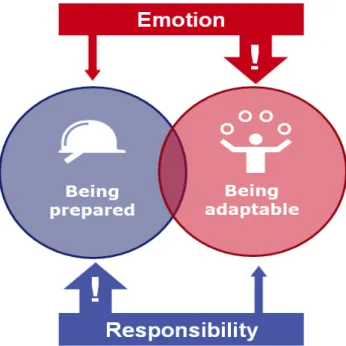
How effectively an individual responded to a financial shock depended in part on how prepared
they were (i.e. what savings or insurance they had to provide a financial buffer) and in part on how well they adapted – how quickly they changed their
spending habits and whether changes were sufficiently substantial.
Emotion and an individual’s sense of personal
responsibility for managing their finances both shaped how motivated people were to prepare and adapt.
Participants were not always willing to prepare for unexpected life events that were beyond their control and some said that today’s consumerist
society promoted irresponsible behaviours and therefore it was not their fault if they made poor choices.
During and after a life event (e.g. ill health or separation) the emotional turmoil experienced made it more difficult for people to think clearly about their finances in order to adapt appropriately. They were also less willing to make drastic lifestyle changes that would further disrupt their lives and the lives of their children.
Preparing for a shock
There was limited evidence that the participants were actively preparing for a future financial shock by protecting their income through income protection insurance or saving a financial buffer. Most saving was short term and earmarked for spending on items such as holidays, Christmas and large consumer items.
Whilst having small saving pots did provide some resilience to smaller emergencies such as repairing white goods, there was a risk that this also gave a false sense of security as people overestimated their financial buffer. Individuals who had experienced a financial shock, such as ill health, redundancy or separation generally found that the amount they had saved lasted for less time than they had expected, partly because they over-estimated their financial buffer and partly because they did not cut their expenditure fast enough or substantially enough.
Being adaptable
This research found that people did not always respond appropriately to financial shocks and this has a detrimental effect on their financial wellbeing. Individuals were slow to respond, or did not do enough (in terms of the amount of spending they cut back). This was in part because they were reluctant to make lifestyle changes and in part because they had not thought about a range of options to cut back while they recovered from a financial shock, for example opportunities to reduce the cost of pay TV or mobile phone contracts by changing their tariff, or by deferring payments, spreading the cost of, or reducing household bills.
In the face of a significant life event, some participants continued to spend as usual, either because they wanted to minimise the emotional impact of the event or because they were simply following routines and habits without thinking about the consequences.
In some cases, individuals focused on alternative sources of income which did not then materialise, for example they assumed they would find a job faster than they did or they
overestimated the level of support they would receive from the Government. Consequently, they delayed making lifestyle changes and cutting back expenses until they were unable to pay a bill or had spent all their savings.
Financial products such as high-cost credit were seen to contribute to poor financial resilience. It was apparent that it is more socially acceptable – i.e. it is the norm – to become (more) indebted rather than reduce one’s lifestyle in the face of a financial shock.
Overall, there was limited evidence of seeking help to deal with a financial shock. Advice was seen to be more for those in ‘real debt’ rather than for those who were having financial problems.
Alternatively, many participants assumed that ‘money advice’ would be very basic, designed for people with limited experience of everyday budgeting and therefore irrelevant (as most assumed they had a good basic understanding of how to manage their finances). Individuals commented on a marked lack of advice being provided by employers (after redundancy) or hospitals (after ill health) or solicitors (after separation or divorce). Some individuals were very passive and assumed that advice would ‘come to them’.
Financial Capability and Wellbeing
The Financial Capability Framework (see Figure 1) shows that financial capability is made up of three core components: mindset – the attitudes and motivations that shape financial behaviours;
ability – having the skills and knowledge to make appropriate financial decisions; and
connections – the ease and accessibility of financial products, advice and support. This research found that mindset was paramount as this determined people’s motivation to apply their knowledge and skills and access appropriate products and support.
It is important to note however that participants in this research did not report significant ability or connections barriers. Those who lacked online skills or confidence were unable to make use of online banking and budgeting and were therefore less able to monitor their spending accurately. However, on the whole the sample did not include individuals with significant knowledge, skills or access issues.
Understanding mindset – Financial decision making is made up of both reflective (decisions that are thought through) and automatic processes. Reflective processes require conscious
assessment of a situation and comprise: how people weigh up the costs and benefits of an action; whether an action will be effective; whether an action is the ‘right thing’ to do for an individual; and the impact of what others do or how others will see me. Automatic processes include: habits and rules of thumb that people use when making quick decisions without much thought.
Reflective Automatic
Cost / Benefit
The benefit of accumulating a savings buffer was often outweighed by the perceived pain (or emotional cost) of giving
up treats and luxuries.
Habits and routine are highly significant in shaping spending behaviour. People
can be slow to respond to changing income and find it
difficult to reflect on where they can make financial
savings.
Habit
Efficacy Participants questioned the value of making small changes or savings which they considered to
be within their grasp
Due to ‘optimism bias’ individuals overestimated the
income they had to spend or their capacity to pay off debt in the future; however, some had developed self-control strategies to curb spending,
such as limiting cash withdrawals and not automatically taking credit
cards shopping
Heuristics
Legitimacy / Morality
There was considerable variation over perceived personal responsibility for spending behaviours. For example, some did not feel they had the right to deny their family treats while others felt it was morally wrong to be irresponsible with money.
Social norms Maintaining a lifestyle was more important in many cases than having poor financial practices and getting into debt, especially where there
Understanding of Financial Wellbeing
Respondents intuitively associate financial wellbeing with resilience to financial shocks, their capacity and willingness to adapt to changing income and how their financial situation affects them emotionally. Whilst participants were clear that financial wellbeing was not solely based on
income, people on very high or very low incomes were invariably at the top or bottom of the staircase as their wealth or income either protected them from shocks (so they did not need to be resilient) or prevented them from saving or adjusting spending in order to become more resilient. Apart from life events which were a clear alert to a change in financial wellbeing, there was a series of behaviours which were also indicators of a fall in financial wellbeing:
Life Events Behaviours
• Job loss or reduced hours (especially if tendency to work short contracts)
• Ill health (short-term if employer doesn’t cover wages)
• Ill health (long-term) • Separation and divorce • House purchase • Pregnancy
• Large purchase from savings (e.g. house extension, car)
• Impulse purchases increasing in frequency or cost
• Not paying off credit cards at the end of the month (when had usually done so)
• Putting bargains on credit cards that are not paid off
• Reducing amount saved • Stopping saving
• Stopping monitoring money • Stopping planning or budgeting • Paying for day-to-day items on
credit cards (and not paying off) • Dipping in to savings for
day-to-day living expenses • Using payday loans
Conclusions
• Mindset is perhaps the most important component of financial capability, providing there are no significant barriers in terms of skills or access to support and guidance.
• Given the influence of automatic processes on decision-making, poor financial choices may be made with very little thought. Promoting behaviour change may therefore require
changing norms as well as prompting people to actively think about their attitudes to spending and their spending choices.
• Social norms are clearly very powerful, but currently can have a negative impact on capability as people spend more than they can afford to. There may be scope to drive positive behaviours if responsible financial choices can be positioned as the right thing to do.
• Understanding the true cost of credit (in terms of the amount of interest paid over the longer term) may encourage people to think more carefully about their spending behaviours. • Clear and easy behavioural approaches would also help to counter the perception that
being ‘good with money’ requires complicated financial know-how (e.g. keeping a record of spending or checking balances and budgets online).
• It is critical that people both prepare for, and are able to adapt in response to, changes to their finances.
Possible drivers of preparedness:
• Identifying small (painless) steps to prepare for future shocks.
• Changing attitudes towards saving to maintain a stable level of savings over time.
• Adopting simple savings practices (e.g. saving 20p pieces in ‘Smarties’ sweet tubes totals £13 when full).
• Driving a sense of personal responsibility to prepare and adapt for financials shocks.
• Recognising that using credit means having less to spend (e.g. £250 credit interest per year is enough for a holiday).
Possible drivers of adaptability:
• Individuals need to be more aware of the importance of being alert to changes in income or resilience and have a suite of responses in mind (e.g. making tough decisions about non-essential spending and understanding contract terms).
• Becoming aware of the impact of the social pressures around them and reprioritising responsible choices.
Individuals intuitively understood that financial wellbeing can be summed up in terms of resilience and that changing their ‘usual’ spending and savings habits is therefore building resilience.
However, on the whole they did not think about how secure they were financially to a major change in income or necessary expenditure.
The research has shown that participants generally shunned financial information seeing it as either too generic or not relevant to them, despite the fact that their method of budgeting was often insufficient to provide a clear picture of their finances; the provision of examples of simple, practical ways of saving and cutting expenses would be very helpful.
It was also clear that providing the right type of information at the right time – and via the right messenger – is important, especially where people have experienced a financial shock. For example, employers, doctors and lawyers could play a part in providing information about the appropriate response to job loss, ill health or divorce.
1. Introduction
1.1 Background
The Money Advice Service was set up to improve the financial capability of the UK population and to help people make better decisions about their money. As part of its role in co-ordinating the development of the new Financial Capability Strategy for the UK, the Money Advice Service has created a model of financial capability known as the Financial Capability Framework (see Figure 3). This model is grounded in an understanding of the drivers of people’s financial behaviour based on research such as the Money Lives study.2 The framework encompasses the key components of financial capability: ability (skills and knowledge), mindset (attitudes and motivation) and connection (ease and accessibility in relation to financial products) as well as external influences such as social norms. The model has been used to inform the Money Advice Service’s Financial Capability Survey which measures levels of financial capability across the UK adult population and will be used to monitor progress against the Strategy’s objectives.
The UK Strategy also explores the concept of Financial Wellbeing (see Figure 4). This is a broader measure of financial health and includes people’s current financial situation and their ability to withstand financial shocks, such as a reduction in income. More information on both the model and the UK Strategy can be found at www.fincap.org.uk. The Money Advice Service wished to deepen its understanding of the constituent parts of the financial capability framework, how financial capability and financial wellbeing (Figure 4) inter-relate and to provide further insight about the kind of interventions that might help or encourage consumers to improve their financial behaviour, capability or wellbeing.
1.2 Aims of the research
The aims of the research were as follows: • Financial Capability Framework
o To provide greater understanding of the ‘Attitudes, Motivation, Accessibility, Ease and other External influences’ components of the financial capability model.
o To provide insight into how the components of the UK Financial Capability Framework inter-relate and their relative importance.
• Financial Resilience
o To provide insight into the effects of unexpected financial ‘shocks’.
o To consider whether there are messages that may enable consumers to recognise their financial state and take steps to increase it.
• Financial Wellbeing
o To explore the concept of financial wellbeing with consumers.
o To provide insight into the barriers and triggers to movement between states of financial wellbeing.
1.3 Design
The research was wholly qualitative in design and conducted in two stages. Stage 1
• The aims of the first stage of research were to understand different approaches to money management, explore in detail the components of the financial capability framework, and consider how people prepare for and manage the financial implications of life events and financial shocks.
• The sample was designed to reflect the underlying broad spread of the working population for whom financial capability is most relevant. It also included people who had experienced some form of financial shock, due to a life event, in order to understand the effect on financial resilience and wellbeing as well as the financial recovery process. The sample did not include anyone who had significant access to financial services, literacy or numeracy issues.
• This stage comprised 30 face-to-face in-depth interviews across five areas of England, Wales and Scotland (London, Birmingham, Oldham, Cardiff and Glasgow).
• Participants were selected on the basis of:
o Income (low, medium and high – for definitions please see the Appendix)
o Working Age (25-55)
o Gender
o Household composition (singles and couples with, or without, children)
o Financial capability (low, medium and high – for definitions please see the Appendix)
o For some participants, experience of financial shocks in the past twelve months (including divorce, separation, ill-health, reduced working hours and job loss). Stage 2
• The aims of the second stage of the research were to consolidate the findings from the first stage of the research, refine the concepts employed in the financial capability framework and explore the concept of financial wellbeing in relation to financial capability.
• This stage comprised six group discussions conducted in London, Cardiff and Glasgow. • Participants were selected on the basis of:
o Income (low, medium and high – for definitions please see the Appendix)
o Age (25-55)
o Gender
o Financial Wellbeing categories. Only the three middle levels of financial wellbeing (‘Resilient’, ‘Making ends meet’ and ‘Constantly struggling’) were included in the study. This is because the Money Advice Service already has access to a considerable amount of information on those in crisis debt (‘unable to keep up’) and were of the view that the highest level (‘secure’) is focused around provision for retirement.
Recruitment of participants was undertaken using traditional free-find techniques, including door-knocking and on-street recruitment. Participants were screened to ensure they were eligible to participate in the research – copies of the screening questionnaire may be found in the Appendix. The interviews and group discussions were undertaken during November and December 2014. The interviews and group discussions were facilitated using topic guides which provide a structure for the flow of the conversations. Copies of these may be found in the Appendix.
1.4 Report structure
Following this introductory section there are four further chapters:
Chapter 2 – How people manage their money: focusing on what being ‘good’ or ‘bad’ with money means to people, money management, saving behaviour and financial planning.
Chapter 3 – Dealing with financial shocks: exploring the impact of different types of life events and financial shocks on financial resilience and approaches to driving greater financial resilience. Chapter 4 – Financial Capability and Wellbeing: focuses on refining the financial capability model using a behavioural analysis and exploring the link between financial capability and financial wellbeing.
Chapter 5 – Conclusions which draw together the findings and considers opportunities for influencing financial behaviour and potential routes for driving financial resilience.
2. How people manage their money
Summary While some participants had no strategy at all for managing money, most adopted an approach that varied from occasional checking of bank balances and ‘mental reckoning’ of expenditure to accurate record-keeping and spreadsheets. With the exception of those keeping accurate records of their expenditure, under-estimating expenditure was the norm. Those who felt most financially secure tended to have an accurate picture of their financial
position, planned for the future and had a desire to save for the long term.
People intuitively knew what being ‘good’ and ‘bad’ with money meant, but considered it was much easier to be bad than good. Being good with money requires being strict with oneself, an approach that was seen as being at odds with today’s consumer society. Participants were able to assign their own behaviour to either of the categories. Most of those using anything other than an accurate record of their expenditure (or
allocated pots of money) did not have a clear picture of their finances, invariably overspent on a regular basis and were unable to maintain any form of savings. This became
particularly apparent as people thought about their finances in the group sessions. The critical aspect of money management was to have a good understanding of how much money they had available and to spend or borrow only what they could afford.
Being able to manage finances well was described as complicated, although this view was dispelled when others described how they managed their money and put aside small sums of money as savings. People recognised that it was easier to rationalise their approach to money management than makes changes that could benefit them in the longer term. Despite having the view that it was impossible to save, when challenged people often recognised that they could change their behaviour to save small amounts of money. However, participants said it was difficult to move from a ‘spend now’ to a ‘save and spend in the future’ culture. Encouraging people to talk about money management may be
beneficial as it can demystify what some people see as a complicated process. There was an often held view that saving small sums of money was worthless and
de-motivating as the sum saved over a year period may be quite small. However, as
participants indicated, saving a small amount can grow into a significant savings pot which, in the case of having to find emergency money, would mean they had money available rather than having to use a loan or credit.
Participants were able to consider where they could cut back on expenditure if they needed to manage their financial circumstances better. However, in some cases participants
suggested not making loan payments or not paying off credit cards which could mean that in the longer term they are building up larger debts.
In order to change people’s behaviour there are a number of assumptions that people need to learn to question. These are : ‘my approach to managing my financial affairs is working’; ’I know where all my money goes’; ‘saving small amounts is a waste of time’; ‘saving is difficult’; ‘being good with money requires complicated financial know-how’; and ‘using credit means I have more to spend’.
There are also behavioural levers that need to be implemented in order to address people’s reluctance to change their standard of living to fit within their financial means. These include promoting the social norms of:
o Being responsible with money is the right thing to do; o Responsible borrowing is the right thing to do;
o It is right for my children that I am careful with money;
o Being careful with money provides security for my family; and
A great deal is already known about how the public manage money and their approaches to financial planning and saving.3 Without wishing to repeat well-known information this chapter presents a brief overview of participants’ approach to financial management and saving to provide a context for the remainder of the report, drawing out the implications for potential ways of
changing the behaviour people who fall into the middle three categories of financial wellbeing - ‘Resilient’, ‘Making ends meet’ and ‘Constantly struggling’.
2.1 Managing money, saving and financial planning
Most of the participants in the research had an approach to managing money. However, there were some participants who said that they did not manage money at all, spending at a level that
was unrelated to their income and using loans and credit cards to enable them to continue to spend. Others simply felt that they did not have time to manage their money. Of those who managed their money, they did so in a variety of ways:
using software that brought together all their financial assets to give them an overall picture of their financial situation;
maintaining a spreadsheet or a notebook that recorded every transaction, including keeping receipts for every purchase;
maintaining a note of income and expenses, but not at the same level of detail as keeping receipts;
daily checking of bank accounts;
weekly, or less frequent, checking of accounts;
allocating income into ‘pots’, sometimes using different bank accounts, sometimes physical pots of money, with spending being limited to the amount in the pot; and
using ‘mental calculations’ to estimate how much they had available to spend.
By definition, the research excluded people with problem debt, with participants generally being able to maintain a balance between their incomes and ‘keeping their head above water’. However, while there were some who were clearly more resilient as they had substantial savings, the
remainder ranged between ‘manageable debt’, through income being used in its entirety, to small savings that were frequently used and depleted.
It was clear that those most likely to have adopted an accurate way of recording their financial position were also those who were most likely to be financially resilient; most of those using anything other than an accurate record of their expenditure (or allocated pots of money) did not have a clear picture of their finances, invariably overspent on a regular basis and were unable to maintain any form of savings.
Apart from a lack of time and lack of motivation to keep on top of their finances, there was also a feeling that being able to manage money well required complicated financial know-how. This was often dispelled in the group discussions when those with money management strategies described them. These included: allocating ‘pots’ of money to specific bills; using a notebook to record all expenditure, or just cash withdrawals; allocating a specific amount of cash to be withdrawn each week and not exceeding it; saving everything left over each week; and saving specific coins such as 20p or 50p pieces.
3 For example see Money Advice Service (2014) Money Lives: the financial behaviour of the UK.
“It’s having the time to sit down and do it with children and work.” (Struggling, low income, Oldham)
While some of the participants said that they were simply unable to save because their expenditure was equal to or greater than their income, some were saving up for a house deposit or for a new car, others saved for short-term goals such as treats and holidays. Overall, there was very limited evidence of emergency or ‘rainy day’ savings outside of the resilient group and, where they did exist, it was common for people to dip into these
emergency funds for impulse purchases or unexpected expenses and not to replenish them. Financial
resilience could therefore be transitory and only maintained by those who had established an emergency fund of significant size.
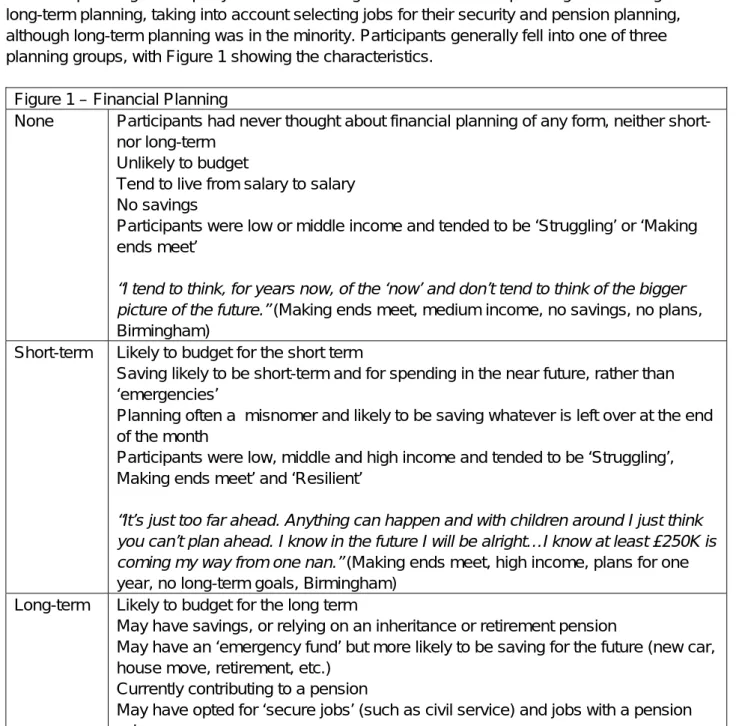
Financial planning was equally variable and ranged from no financial planning at all through to long-term planning, taking into account selecting jobs for their security and pension planning, although long-term planning was in the minority. Participants generally fell into one of three planning groups, with Figure 1 showing the characteristics.
Figure 1 – Financial Planning
None Participants had never thought about financial planning of any form, neither short- nor long-term
Unlikely to budget
Tend to live from salary to salary No savings
Participants were low or middle income and tended to be ‘Struggling’ or ‘Making ends meet’
“I tend to think, for years now, of the ‘now’ and don’t tend to think of the bigger picture of the future.” (Making ends meet, medium income, no savings, no plans, Birmingham)
Short-term Likely to budget for the short term
Saving likely to be short-term and for spending in the near future, rather than ‘emergencies’
Planning often a misnomer and likely to be saving whatever is left over at the end of the month
Participants were low, middle and high income and tended to be ‘Struggling’, Making ends meet’ and ‘Resilient’
“It’s just too far ahead. Anything can happen and with children around I just think you can’t plan ahead. I know in the future I will be alright…I know at least £250K is coming my way from one nan.” (Making ends meet, high income, plans for one year, no long-term goals, Birmingham)
Long-term Likely to budget for the long term
May have savings, or relying on an inheritance or retirement pension
May have an ‘emergency fund’ but more likely to be saving for the future (new car, house move, retirement, etc.)
Currently contributing to a pension
May have opted for ‘secure jobs’ (such as civil service) and jobs with a pension scheme
“Sometimes I think I may be saving for a holiday, then something happens with that and then it changes.” (Low income,
Participants were middle or high income and tended to be ‘Making ends meet’ and ‘Resilient’
2.2 Being ‘good’ or ‘bad’ with money
Despite differences in money management, saving and financial planning, participants were all able to consider what it meant by being ‘good’ or ‘bad’ with money (Figure 2).
Participants were also readily able to assign themselves to being either ‘good’ or ‘bad’ with money. Those who were good with money tended to value the feeling of being resilient to financial shocks, even if their level of savings that gave them a ‘resilience buffer’ was small. They often recognised that the ‘spend now’ approach to money management could lead to future debt – and money being spent on interest payments rather than being saved or spent on consumer goods, holidays, etc. By contrast, those who assigned themselves as bad with money valued their freedom to spend and to maintain a lifestyle that in many cases they recognised as being unsustainable in the long term. These participants were also able to justify their approach to finances:
They had insufficient income to be ‘good’ with money;
A view that saving small amounts of money was not worthwhile;
There is no money spare at the end of the month;
A desire that their children are not seen to be different to other children and should not suffer;
Spending was associated with maintaining a reputation. Sometimes this was about the level of presents that are bought for birthdays and Christmas, sometimes new clothes and sometimes regularly eating out.
There was a considerable strength of feeling that it was much easier to be ‘bad’ with money – “You just have to spend” – whereas being ‘good’ with money required being “strict with yourself” and actively managing money. Participants commented on how today’s consumerist society, with easily available credit, does not encourage self-control. Coupled with this was often a view that with their existing commitments it was not possible to save.
Figure 2 – Being good or bad with money Good with money
Awareness of what they can afford
Active budgeting
Prioritising / compromising on spending
Buying only what they can afford; minimising impulse spending
Minimum use of credit / avoiding credit interest
Active planning (short- and long-term)
Saving
Bad with money
Lack of budgeting
Lack of financial planning
Not knowing how much they have to spend
Impulse spending
Unmanageable loans and debts
Consolidating debt but still spending
However, when pressed, even those who were initially adamant that “they spent every penny every week”
recognised that with thought they could save a small amount. Others had already thought about how to save money by cutting back on certain types of expenditure, or shopping in different supermarkets. But, while people can consider how they would allocate their spending in the face of reduced income, in practice, the level by which people actually cut back is highly variable. For example, as part of the discussion process, participants were asked to consider how they would cut back their expenditure in the light of an assumed cut in income of a third to a half due to loss of work,
separation or illness. They were also asked to consider what were essential items, those that could definitely be cut back and those that they might cut back on. Typically, areas where people felt they could definitely cut back were treats, hobbies, sports and holidays; where they might cut included clothes, food purchases and treats for children. Some suggested areas for cutting expenditure, such as loan and credit card repayments and insurance, could in fact result in higher expenditure in the long term (detailed findings are in the Appendix).
It was clear though that despite recognising areas where they could manage their finances better, begin saving and become more financial resilient to any financial shocks that may occur, there was a tendency for many participants to enjoy life now and not worry about the future.
2.3 Changing financial behaviour
In considering how to change people’s financial behaviour it is clear that there are a certain mis-perceptions that need to be managed:
“My approach to managing my financial affairs is working.” With the exception of those participants who were recording their expenses or checking balances daily, the remainder generally recognised - as they were discussing money management in the group sessions - that they were almost certainly underestimating how much they spent. Adopting any strategy for managing money tended to reinforce the belief that they were in control, or good with money, yet the reality was that their financial affairs were more likely to be out of control. It increasingly became apparent to those who were using mental accounting methods that they were likely to be seriously underestimating how much they spent.
“I recognise where my money goes”. It was very clear that it was only the exceptions who really understood, or recognised, how they were spending money. One participant, for example spoke about a friend who could not understand why she was constantly overdrawn. Taking her through her expenses, they realised that costs such as daily parking, multiple coffees a day, impulse clothes purchases and lunch out every day were being completely left out of her mental calculation of her expenses. Identifying all the small purchases throughout the week can provide a much better indication of overall expenditure and also point to areas where cuts could be made.
“I spend everything I earn. There is no way I could save anything at all. It all goes on bills, food and children. Even my last £5 goes on treats for the children…well I suppose I don’t have to give the children treats every week; they don’t do so badly now. I could save £5 a week… That’s £250 a year, that’s a holiday.”(Making ends meet,
low income, Cardiff)
“I would rather struggle and have a couple of days out and enjoy myself than
be [financially] okay and in the house all day.” (Low income, Constantly struggling,
“Saving small amounts is a waste of time.” As a number of participants mentioned, even relatively small financial shocks, such as repairing a washing machine, can end up costing significant amounts of money if they are dealt with using payday loans or expensive credit. One participant who had experienced this, mentioned that had he saved £2 a week for a period of time he would have had sufficient money to pay for the repair and it would have worked out much cheaper than using a short-term loan.
“Saving is difficult.” There were participants that had adopted a range of ways of saving small amounts of money. This included: reducing the number of coffees they had each week and saving the money; saving specific coins (20p, 50p); saving whatever was left over each week; limiting themselves to one cash withdrawal per week; not taking credit cards out when shopping.
“Being good with money requires complicated financial know-how.” As participants demonstrated to each other during the research, keeping up to date with one’s expenditure is not difficult, especially if it is undertaken daily. For example, most participants said that they know what their main outgoings were (e.g. mortgage, rent, utilities, etc.) and that they were relatively stable from month to month. Deducting these from their income they then knew how much they had to spend during the month. Some broke this down into weekly amounts and then wrote down how much they spent each day, making sure that they did not exceed their weekly allocation. The key requirement was to work out the amount that was available each week or month and to record expenditure daily.
“Using credit means I can spend more.” As many participants pointed out there is a tension between knowing that they should save in order to be able to spend more money in the future and wanting to spend now. This is because spending now on credit (assuming interest is incurred) means that in the long term, people have less to spend as they use some of their income to pay interest. Equally, buying bargains on credit cards and not paying off the balance each month means that the bargains can sometimes work out more expensive than the original pre-discounted price. As participants said, if they spent less on interest (and often impulse buys) they would have more to spend in the longer term.
Spending and saving can both be aspirational – spending allows people to attain a certain lifestyle, while people often aspire to save but find reasons for not doing so. In part this is because people do not have the mechanisms in place to help them
(such as recognising how they are spending money, recording expenditure, saving strategies, etc.) and in part because they are conforming to social norms – It’s what others do and have”. In this respect there are often barriers to change. These include concern about:
what others in their social group may think of them if they reduce their spending, or cannot keep up with their current lifestyle;
how others will think of them if they ask for advice or help to deal with their financial situation;
what friends and family will think if their children have fewer treats, clothes, toys, holidays, etc.;
“It’s about the biggest and the best presents and the nicest stuff…I feel like it’s a competition with relatives and friends…people rub it in your face without meaning to. No one likes to admit they’re having a struggle with money so we’re never going to admit to friends and family that we haven’t got the
money to spend on things.” (Medium income, Constantly struggling, Birmingham)
“I realised that what we spent on [credit card] interest we could have spent on a holiday.” (Making ends meet, medium
what their children will think of them if they spend less on treats, clothes, holidays, etc.
In order to address these concerns there are behavioural levers that need to be
implemented in order to address people’s reluctance to change their standard of living to fit within their financial means. These include promoting the social norms of:
Being responsible with money is the right thing to do; Responsible borrowing is the right thing to do;
It is right for my children that I am careful with money;
Being careful with money provides security for my family; and
3. Dealing with life events and financial shocks
Summary There was limited evidence that the participants were actively saving money as a means of managing a future financial shock; most saving was short term and earmarked for spending on items such as holidays, Christmas and large consumer items.
There was very limited evidence of participants protecting their income through income protection insurance.
Building up a savings pot through small amounts of weekly or monthly savings was recognised by participants as a useful way of building financial security where disposable income was limited and can help people manage small financial shocks, such as a washing machine or car breaking down. However, there is a danger that this can lead to
complacency in the face of larger shocks, such as reduced earnings or illness. Individuals who had experienced a financial shock, such as ill health, redundancy or
separation generally found that the amount they had saved lasted for less time than they had expected, partly because they over-estimated their financial buffer and partly because they did not cut their expenditure fast enough or substantially enough.
Individuals respond very differently to a financial shock, reflecting their overall emotional response; some respond very fast, others took much longer. Those responding faster and adapting to their change in circumstances tended to minimise the impact of the financial shock.
There was some evidence to indicate that in the face of a drop in income individuals would try to find ways of increasing their income rather than changing their lifestyle and cutting some expenses. For example, those who had lost their jobs tended to seek compensation or benefits; those who were unable to work through ill-health tended to seek benefits; those who had separated from their partner tended to look for work. Investigating alternative income sources may in fact be an unhelpful response to a financial shock as individuals may be avoiding or delaying lifestyle changes they need to make in order to manage their expenditure.
While individuals recognised that cutting back their expenditure was the prudent response to a financial shock, people found it difficult to identify sufficient areas where they could cut back; there was also a lack of knowledge about how to manage contracts such as for television and mobile phones in the light of a financial shock.
Financial products such as high-cost credit were seen to contribute to poor financial resilience. It was apparent that it is more socially acceptable – i.e. it is the norm – to become (more) indebted rather than reduce one’s lifestyle in the face of a financial shock. Overall, there was limited evidence of seeking help to deal with a financial shock. Advice
was seen to be more for those in ‘real debt’ rather than for those who were having financial problems. Individuals commented on a marked lack of advice being provided by employers (after redundancy) or hospitals (after ill health) or solicitors (after separation or divorce). Some individuals were very passive and assumed that advice would ‘come to them’. There was also a tendency to ignore money advice as they saw it as being about everyday budgeting, which they generally thought that they could do.
Individuals do not always respond in the most beneficial way to a financial shock partly because of an individual’s emotional state and partly reluctance to make lifestyle changes.
Life events (such as a serious illness, separation or divorce, or job loss) can place an unexpected strain on people’s finances, whilst also causing significant stress and upset in their own right. If people are not resilient (i.e. if they struggle to pay essential costs as the result of a financial shock and take a long time to recover) then a financial shock can cause significant hardship. Research has shown4 that people who suffer a financial shock can quickly spiral into unmanageable debt; they may find themselves unable to make ends meet as well as experiencing poor health as a consequence.
The ability to cope well with a financial shock is therefore an aspect of resilience and avoiding a decline in wellbeing. This was recognised by participants themselves who aligned the ability to cope well with a financial ‘hit’ to being ‘good with money’ and a sign of financial health.
It is therefore important to understand what makes some people more resilient to financial shocks than others. This chapter explores a range of factors that may influence resilience including how well prepared people were for a financial shock, how they first responded to a financial shock, including how quickly they took action to minimise the impact of the shock and the factors that influence resilience to shocks.
4 For example see Money Advice Service (2014) Money Lives: the financial behaviour of the UK.
“If you take a hit, it's about knowing that you can cover those payments.”
(Medium income, Resilient, Cardiff)
The research found that participants do not always respond appropriately to financial shocks and this can have a detrimental effect on their financial wellbeing. Individuals may be slow to respond, they may not do enough (in terms of the amount of spending they cut back) or they do unhelpful things (e.g. by relying on alternative sources of income that do not materialise, or borrowing more to maintain spending habits).
Overall, those most able to manage a financial shock were those individuals who were able to deal with their finances despite the emotional turmoil of the situation and were either better prepared (in terms of savings or insurance) or more willing to adapt their spending habits. Individuals who are motivated to cut back on a wider range of everyday expenses may cope better, particularly those who understand the terms and conditions of contracts with service providers and are therefore able to take into consideration opportunities to defer, spread the cost of, or reduce household bills, while they recover from a financial shock.
The key drivers of financial resilience in the face of a financial shock are:
Being prepared – whether they have savings or insurances and they use these appropriately;
Being adaptable – whether they make changes to their lifestyle and spending
behaviours quickly and whether these changes are proportionate to the severity of the change;
Taking responsibility – whether the individual takes ownership of the situation and believes that taking active steps to prepare and adapt is the right thing to do;
Dealing with emotions – how clearly the individual can think about their financial situation, whilst dealing with the emotional turmoil of the life event.
3.1 Preparing for a financial shock
There was limited evidence that individuals were actively saving money to prepare for a drop in income due to a life event. Whilst participants said it was important to put money aside ‘for a rainy day’, in practice they found this difficult to do either because there were always things they wanted or needed to spend money on, or they found saving unaffordable and cited their low level of income as the reason. They did however manage to save for aspirational expenditure or treats (e.g. a new car, holiday or Christmas) which they sometimes dipped into in an emergency. Whilst having some savings set aside does provide a financial buffer, savings for specific items (such as treats, days out, holidays, etc.) cannot be relied upon because they are often earmarked and are therefore intermittently spent. Consequently, regular saving activity may offer some protection against a financial shock but may not reliably indicate financial resilience because individuals may be saving to spend rather than saving for an unforeseen eventuality.
Saving a small amount can grow into a significant savings pot which, in the case of having to find emergency money, would mean they had money available rather than having to use a loan or credit. However, having small savings pots could give individuals a false sense of resilience or reduce the perceived urgency to respond to a financial shock. As a result, some individuals waited until they had spent all of their savings before taking steps to assess their finances or adapt in line with changing income and pressures.
In some cases, individuals may believe they are better prepared than they really are – some overestimate how long they will be able to survive on relatively small savings pots or their
redundancy pay out, while others had unrealistic expectations about the level of financial support available from the government.
Individuals who had experienced long-term sickness said that the period for which they received sick pay felt shorter than they had expected. In some cases individuals initially focused on healthcare needs or retaining work and said they had not properly considered how they would manage financially until they stopped receiving sick pay. They were then shocked by the drop in income when they started to receive statutory sick pay or other Government benefits – having assumed that they would receive enough money to meet what they considered to be basic living costs. In practice, they found the actual amount was not sufficient to cover their usual level of spending on bills and food.
There was limited use of income protection insurance amongst participants who took part in this research. These products were considered too expensive, particularly as individuals said ‘you do not expect the worse until it happens.’ This research suggests that not only do people
underestimate the likelihood and financial impact of a life event, they also overestimate their financial resilience – including how long savings would last and what other sources of income would be at their disposal. It is therefore unsurprising that people do little to prepare for a financial shock – they avoid thinking about ‘bad events’ happening and where they do consider them, they make optimistic assumptions about how well they would cope.
3.2 Responding to a financial shock
There was huge variation in how quickly people took action following a financial shock. At one end of the scale, individuals began thinking about their finances ‘within minutes’ of learning about the event, at the other end of the scale they ‘hid their head in the sand’ until they were forced to make
adjustments to their expenditure because they were no longer able to pay for essential items – at which point the options available to them were much more limited. This could radically change
how well they coped with their change in circumstances or whether they were forced into hardship. Participants who took action quickly to adapt to their new circumstances were not only better placed to minimise financial hardships (e.g. avoiding unmanageable levels of debt or pre-empting difficulties paying bills or affording essential items), they also felt more in control. Individuals who waited until they were struggling to make ends meet before taking any meaningful steps to adapt in light of their changing income or pressures, experienced emotional distress because they felt that they were unable to take control of their finances and that taking steps to resolve financial
difficulties had become much more difficult or was beyond them.
When faced with a negative life event there were a range of ways people could adapt to changes in income and financial pressures including: adjusting spending habits and cutting back on non-essential spending; investigating and accessing other income sources; or using appropriate financial products such as pre-arranged insurance cover to deal with reduced income or
changing income pressures. However, faced with reduced income, many participants while rightly pursuing alternative sources of income (such as benefit entitlement and finding work) generally failed to take hard decisions to reduce their spending. Ultimately participants did not respond well when they were too focused on maintaining the status quo. For a number of reasons, including social pressures and a desire to minimise disruption for their children, participants maintained ‘spending as usual’ behaviours which sometimes meant they did not properly respond to financial shocks until it was already too late – i.e. when they were unable to pay their bills and had no savings left to fall back on.
3.2.1 Cutting back
Most commonly people thought about ways to cut back on their spending. However, they had very different views about what spending was essential and where they could make savings. This included mixed understanding and confidence around dealing with utilities companies and
telecoms providers. For example, when and how they could reduce or cancel contracts for internet, TV and mobile phone services or spread the cost of utilities bills.
Individuals who had not experienced a negative life event before assumed they would be able to make sufficient savings by cutting back on commonly mentioned non-essential spending such as socialising, nights out with friends, going to the pub or getting a takeaway meal. However, those who had experienced a significant financial shock found they needed to make further savings; commonly this included cutting back spending on food by switching to a lower cost supermarket, buying own brand food and cutting out luxury or treat items. Few looked into options to reduce housing costs and bills such as delaying or reducing mortgage payments, gas and electricitybills. It was only when they reached crisis point (i.e. they could not pay a bill) that they were forced to contact utilities or telecoms providers or a third party and then learn about options to spread payments or access hardship loans.
Whilst people say that they would cope with a financial shock by ‘cutting back’, this research found that the pool of expenditure where they are willing (or believe they are able) to cut back may be small and insufficient to cope with a major loss of income. Individuals who are motivated to cut back on a wider range of everyday expenses may cope better, particularly those who understand
“…months and months ‘cos I just put my head in the sand.” (Struggling, low
the terms and conditions of contracts with service providers and are therefore able to take into consideration opportunities to defer, spread the cost of, or reduce household bills, while they recover from a financial shock.
3.2.2 Other income sources
Generally, participants wanted to maintain their current lifestyle. On the assumption that their time with a reduced income would be short, there was a tendency to maintain their current level of spending. Whilst they were rightly pursuing alternative sources of income they continued to spend as if they had not experienced a drop in income. These participants were overly optimistic about how long their income would be reduced and were reluctant to adjust spending behaviours – consequently they delayed making difficult choices. They recommended that for others in this situation, individuals should both look for alternative sources of income as well as reducing their expenditure at the same time.
Investigating alternative income sources may in fact be an unhelpful initial response to a financial shock as individuals may be avoiding or delaying lifestyle changes they need to make.
3.2.3 Financial products
There was limited evidence that individuals were using appropriate financial products (e.g. insurances, consolidation loans, grants) to prepare for or recover from financial shocks. As discussed above there was limited use of income protection or household insurance products amongst participants as these were considered too expensive. Among the minority who had used a consolidation loan following a life event they did so because their focus shifted from juggling various income and credit sources to managing and paying off debt and reducing overall outgoings.
When asked about use of financial products, participants were concerned that the prevalence and ease of access of credit encouraged people to borrow beyond their means. Therefore these types of financial products were perceived to contribute to poor resilience, rather than providing a
possible solution, as they enabled people to continue with habitual spending without having to make difficult choices in response to a financial shock, the use of which ultimately leads to reduced disposable income and potentially greater financial hardship. This may be because a) there was limited use and understanding of products which can drive resilience (e.g. insurances) and b) people were prone to blame poor financial behaviours on external influences, rather than taking responsibility for bad choices themselves. They argued, for example, that promotion of various credit products has shifted perceptions of acceptability around credit to the extent that people are enticed to borrow more than they can afford. It also appeared that there was clear change in social norms with it being less acceptable to reduce one’s standard of living
compared to living in increased indebtedness. “You think something will turn up so you put it off for another month, another month…I thought I would get some sick money so you bank on that this will come in…you’re constantly telling yourself you'll get it from
somewhere, but you don’t.” (Struggling – was resilient, low income, Glasgow, motorbike accident)
“I probably didn’t like to admit that you’re skint and struggling financially. We had a good life and we’re not on the street yet and I was an ostrich, maybe burying my head in the sand.” (Making ends meet,
3.2.4 Seeking advice and support
There was limited evidence that people were actively seeking out advice and support after experiencing a financial shock. This was in part due to a lack of awareness - participants did not know what advice was available or where to access it - and in part due to unhelpful beliefs about the types of people who need help managing their finances.
Only a small number of the participants in this qualitative piece of work had heard of the Money Advice Service. Those who had heard of it believed that it principally
targeted advice towards those with unmanageable levels of
debt (perceived to be those unable to make credit payments or those who need advice about bankruptcy). Few in the sample identified themselves as such, including those who said they were ‘juggling’ multiple loans and credit cards. Respondents therefore assumed that advice from the Money Advice Service would not be relevant to them. Participants were aware of other potential sources of support, including Citizens Advice, but assumed that it would be difficult to book an appointment because these services were known to be over-subscribed.
Some were reluctant to identify themselves as needing advice because they held unhelpful beliefs about the types of people who needed help managing their finances. There was a perception that only people who were unable to cope financially or who were inexperienced dealing with
household budgets would ask for advice about money. Participants generally believed they already knew how to live within their means and had developed practices to help them budget, despite not always applying these. Even those struggling to make ends meet believed they were doing
everything possible to juggle income and expenditure, and in many cases they were doing so by carefully managing their finances and making difficult choices about things they could afford and things they could not.
This research suggests that people may quickly dismiss money advice as irrelevant because they believe it either comprises basic guidance on everyday budgeting (whereas many believed that they already knew what ‘good’ behaviour was) or is designed for people who have ‘hit rock bottom’ (and therefore irrelevant, unless one is thinking about declaring bankruptcy.)
Finally, there were some participants who expected advice to come to them, particularly when they were experiencing financial hardship that was caused by events outside of their control, for example illness, separation, or redundancy. These individuals questioned why they were not
given more information on dealing with loss of income from their employers (when made
redundant) or when they first interacted with services like the Jobcentre or hospitals. This attitude was indicative of a wider reluctance or lack of impetus to take personal responsibility for
responding to financial shocks. Individuals sometimes considered themselves to be ‘victims of circumstance’ and believed that more should be done to help them – including both the provision of advice and financial support to minimise hardship.
“I thought you had to cope with it all on your own, Then they say why didn’t you ask…because I didn’t know. You don’t get given anything when the benefits stopped saying “Go to the electric, go to the gas”, a tick
off thing of what to do.” (Struggling, low income, Cardiff, ill health)
“You know Wonga, you don’t
know Money Advice.” (Constantly
struggling, middle income, )
3.3 Consequences of responding slowly to a life event
This research found that people do not always respond appropriately to financial shocks and this has a detrimental effect on their financial wellbeing. Individuals may be slow to respond, they may not do enough (in terms of the amount of spending they cut back) or they do unhelpful things (e.g. relying on alternative sources of income that do not materialise, or borrowing more to maintain spending habits).
There were a number of reasons why people did not respond to events appropriately during and after a life event including: the impact of emotional distress on decision making; a reluctance to change (or be seen to change) their lifestyle; the impact of dealing with wider consequences of a life event; and the tendency to underestimate the severity of their situation until it becomes critical. These are discussed in turn below.
When dealing with frightening or upsetting life events, an individual’s emotional state can affect their capacity to make rational decisions about managing their finances. In some cases,
participants said it took several weeks after an unexpected event such as illness or separation to feel emotionally strong enough to assess their financial situation and take steps to respond to their changed circumstances.
People also delay changing their spending behaviours because they are reluctant to make the lifestyle changes required to reduce their spending. This was often due to perceived social pressure to maintain a certain lifestyle and a desire to keep financial difficulties secret from friends and family. In households with children, parents were also concerned about adding to their
children’s upset by denying them activities or treats that were part of the family routine. There were other practical consequences of life events that may take priority in the first few weeks of the event occurring, such as finding housing, or making arrangements for child visitation rights after a separation, or making arrangements for receiving medical treatment. Individuals may be so focused on other apparently more urgent needs and issues that they simply do not have time or energy to take into consideration the financial implications of their new situation.
The combination of any or all of the above can result in individuals giving little thought to changing or reducing their spending behaviour for several weeks after an event - during which time they may spend any savings they have, build up unmanageable levels of debt or reach a crisis point (e.g. unable to pay a bill) which then leads to increasing interest payments, bank fees, fines or penalties. Therefore, life events make people acutely vulnerable to adverse changes to financial wellbeing because: people experience acute changes in income or pressures; they are not sufficiently emotionally resilient to make difficult choices; and they focus on other, more pressing, issues including the welfare of their children, where they will live or accessing necessary medical
treatment. However, this research has identified a range of factors which can promote resilience to financial shocks brought on by difficult life events.
3.4 What drives financial resilience
This research suggests there are four factors that come into play in determining how well an individual copes with a financial shock:
Being prepared – whether they have savings or insurances and they use these appropriately.