DigitalCommons@University of Nebraska - Lincoln
Theses and Dissertations in Animal Science Animal Science Department
8-2015
Beef Cattle Management Systems for Estrus
Synchronization and Heifer Development
Hazy Rae NielsonUniversity of Nebraska-Lincoln, [email protected]
Follow this and additional works at:http://digitalcommons.unl.edu/animalscidiss
Part of theAnimal Sciences Commons, and theLarge or Food Animal and Equine Medicine Commons
This Article is brought to you for free and open access by the Animal Science Department at DigitalCommons@University of Nebraska - Lincoln. It has been accepted for inclusion in Theses and Dissertations in Animal Science by an authorized administrator of DigitalCommons@University of Nebraska - Lincoln.
Nielson, Hazy Rae, "Beef Cattle Management Systems for Estrus Synchronization and Heifer Development" (2015).Theses and Dissertations in Animal Science. 108.
Beef cattle management systems for estrus synchronization and heifer development
by
Hazy Rae Nielson
A THESIS
Presented to the faculty of
The Graduate College at the University of Nebraska In Partial Fulfillment of Requirements
For the Degree of Master of Science
Major: Animal Science
Under the Supervision of Professors Rick N. Funston
Andrea S. Cupp
Lincoln, Nebraska
Beef cattle management systems for estrus synchronization and heifer development Hazy Rae Nielson, M.S.
University of Nebraska, 2015 Advisors: Rick N. Funston and Andrea S. Cupp
Four experiments were conducted to evaluate estrus synchronization and heifer development systems. In the first experiment delaying AI 19 h following GnRH administration in a hybrid estrus detection and time AI protocol was evaluated. Final pregnancy rate was not different among heifers detected in estrus, AI at the time GnRH administration, or delayed AI. The second study compared the effect of melengestrol acetate (MGA) -PG and 14-d controlled internal drug release (CIDR) -PG estrus synchronization protocols on estrus response and pregnancy rates of 311 d old heifers. Final pregnancy rate was similar between CIDR and MGA treatment groups. The
objective of the third study was to determine the impact of heifer development system on subsequent growth and reproductive performance in 2 breeding seasons. Heifers were offered ad libitum meadow hay (HAY) and 1.81 kg/d (29% CP, DM basis) supplement or allowed to graze meadow (MDW) and 0.45 kg/d supplement. Although ADG during the winter feeding period was greater for HAY heifers, BW was similar between treatments in the spring, summer, and at pregnancy diagnosis suggesting a compensatory growth effect for MDW heifers. Similarly, pubertal status or pregnancy rate was not different, indicating a lower input winter management system is viable to maintain heifer pubertal status and pregnancy rates in 2 breeding seasons. Finally, to determine the impact of heifer development system on pregnancy rates and feed efficiency as a pregnant first calf heifer a 3 yr study was conducted. In Yr 1, weaned heifers either grazed corn residue
(CR) or were fed in a drylot (DLHI). In Yr 2 and 3 heifers either grazed CR, upland range (RANGE), or were fed diets differing in energy, high (DLHI) or low (DLLO), in a drylot setting. Pregnancy rates to AI were similar among treatments. A subset of AI-pregnant heifers from each treatment were placed in a Calan gate system. Intake did not differ among treatments, either as DMI or as a percentage of BW.
Acknowledgements
First, I would like to thank my advisors, Dr. Cupp and Dr. Funston, for allowing me to have the unique experience I did. I had the privilege to begin my program on campus in Lincoln and the experiences I had there are invaluable to me. I am forever grateful to Dr. Andrea Cupp for her kindness, guidance, and direction during my time in Lincoln. I also thank the entire Physiology department, faculty and students, for
welcoming me into the group, providing some awesome experiences, and helping me learn the ropes of graduate school.
I completed my program at the West Central Research and Extension Center in North Platte. This change made it possible to start working as an ABS Global sales representative. The opportunities afforded to me during my time in North Platte relate directly to the next step in my career. I thank Dr. Funston for so many things; for always encouraging new experiences, for allowing me to pursue my career while still in school, for all the times I had to figure it out for myself, for the guidance and advice, for the patience and support, for never letting me take the easy road.
I thank Dr. Kate Brooks for her economic help in times of great confusion. I thank Dr. Adam Summers for all his direction, patience, kindness, jokes, and encouragement in my first year in Lincoln. I thank Rosemary Anderson and her family for the moral
support, advice, and experience. I especially want to thank TL Meyer for her patience in editing everything I’ve written, not just once, but multiple times; for crossing out all the “that”s and getting rid of all the fluff. You have made me better.
I also need to thank all of my fellow students, for teaching me the tricks of grad school, helping me pass Biochemistry, never complaining about the office smelling like cow because of me, and making the experience enjoyable. There are too many to name, but you all have made a lasting impact on me.
And lastly, I thank all my extended family and friends for their encouragement. Whether it was a kind word or letting me crash in your basement between AI jobs, I couldn’t have done without you. I most especially want to thank my parents, Jonathan and Trenda, for always supporting me and pushing me to succeed. And a special thank you to my little brother, Tyler, whom never let me complain too much.
Table of Contents
Chapter I: Review of Literature _______________________________________ 1 Introduction _________________________________________________________ 1 Estrous Cycle _______________________________________________________ 2
Progesterone __________________________________________________ 2
Estrogen _____________________________________________________ 3
Gonadotropin releasing hormone __________________________________ 4
Luteinizing hormone ____________________________________________ 4
Follicle stimulating hormone _____________________________________ 4
Follicular Waves _______________________________________________ 5 Discussion of ovary _____________________________________________ 5 Prostaglandin _________________________________________________ 6 Puberty ____________________________________________________________ 6 Advancing Puberty _____________________________________________ 9 Selection _______________________________________________ 9 Nutrition ______________________________________________ 10 Progestins _____________________________________________ 15 Synchronizing Estrus ________________________________________________ 16 Prostaglandin ________________________________________________ 16
Gonadotropin releasing hormone _________________________________ 18
Progestins ___________________________________________________ 19
Norgestomet ___________________________________________ 20
Melengestrol acetate _____________________________________ 20
Controlled internal drug release ___________________________ 21
MGA vs CIDR __________________________________________ 22 Estrous Control _______________________________________________ 22 Systems ___________________________________________________________ 23 Calving distribution ___________________________________________ 24 Stages of development __________________________________________ 25 Fetal programming ______________________________________ 25 Pre-weaning nutrition ____________________________________ 25 Post-weaning nutrition ___________________________________ 26 Compensatory gain ______________________________________ 29 Economic Considerations _____________________________________________ 29 Objectives _________________________________________________________ 30 Literature Cited _____________________________________________________ 32 Chapter II: Comparison of TAI at GnRH injection and delayed AI of non-estrus beef heifers ___________________________________________________________ 39
Abstract ___________________________________________________________ 39 Introduction ________________________________________________________ 40 Materials and Methods _______________________________________________ 41
Statistical Analysis ____________________________________________ 42
Results and Discussion _______________________________________________ 42 Literature Cited _____________________________________________________ 45 Chapter III: Effect of MGA vs CIDR estrus synchronization on estrus response and pregnancy rates in 311 d old beef heifers __________________________________ 48
Abstract ___________________________________________________________ 48 Introduction ________________________________________________________ 49 Materials and Methods _______________________________________________ 50
Economic Analysis ____________________________________________ 52 Statistical Analysis ____________________________________________ 53 Results __________________________________________________________ 53 Economic Analysis ____________________________________________ 54 Discussion _________________________________________________________ 54 Implications _______________________________________________________ 57 Literature Cited ____________________________________________________ 58 Chapter IV: Impact of heifer development system on subsequent ADG and
reproduction in two different breeding seasons _____________________________ 69 Abstract ___________________________________________________________ 69 Introduction ________________________________________________________ 70 Materials and Methods _______________________________________________ 71
Statistical Analyses ____________________________________________ 72
Economic Analyses ____________________________________________ 72
Results and Discussion ______________________________________________ 73
Gain and Reproductive Performance _____________________________ 73
March-born treatment effects ____________________________________ 73
March-born year effect _________________________________________ 74
May-born treatment effect_______________________________________ 75
May born year effects __________________________________________ 77
Economic Analysis ____________________________________________ 78
Literature Cited ____________________________________________________ 80 Chapter V: Effect of post-weaning heifer development on pregnancy rates and subsequent feed efficiency as a pregnant first-calf heifer _____________________ 87
Abstract ___________________________________________________________ 87 Introduction ________________________________________________________ 88 Materials and Methods _______________________________________________ 90
Post-weaning development ______________________________________ 90
Pregnant Heifer Feed Efficiency _________________________________ 91
Economic Analysis ____________________________________________ 92
Statistical Analysis ____________________________________________ 93
Results and Discussion _______________________________________________ 93
Post Weaning Development Treatment _____________________________ 93
Pregnant Heifer Feed Efficiency _________________________________ 95
Economic Analysis ____________________________________________ 97
Implications________________________________________________________ 97 Literature Cited _____________________________________________________ 98 Appendix A: How many clean-up bulls are needed after estrus synchronization and artificial insemination? ________________________________________________ 108
Abstract __________________________________________________________ 108 Introduction _______________________________________________________ 108 Materials and Methods ______________________________________________ 109 Results ___________________________________________________________ 110
Literature Cited ____________________________________________________ 111 Appendix B: A Comparison of Two Implant Protocols; Synovex-Choice/Synovex-Plus vs Synovex-S/Revalor-S on Steer Feedlot Performance and Carcass
Characteristics_______________________________________________________ 117 Abstract __________________________________________________________ 117 Introduction _______________________________________________________ 118 Materials and Methods ______________________________________________ 119
Economic analysis ___________________________________________ 120
Statistical analysis ___________________________________________ 120
Results and Discussion ______________________________________________ 120
Feedlot performance data ______________________________________ 120
Steer carcass characteristics ___________________________________ 121
Economic analysis ___________________________________________ 122
Implications_______________________________________________________ 122 Literature Cited ____________________________________________________ 123
List of figures
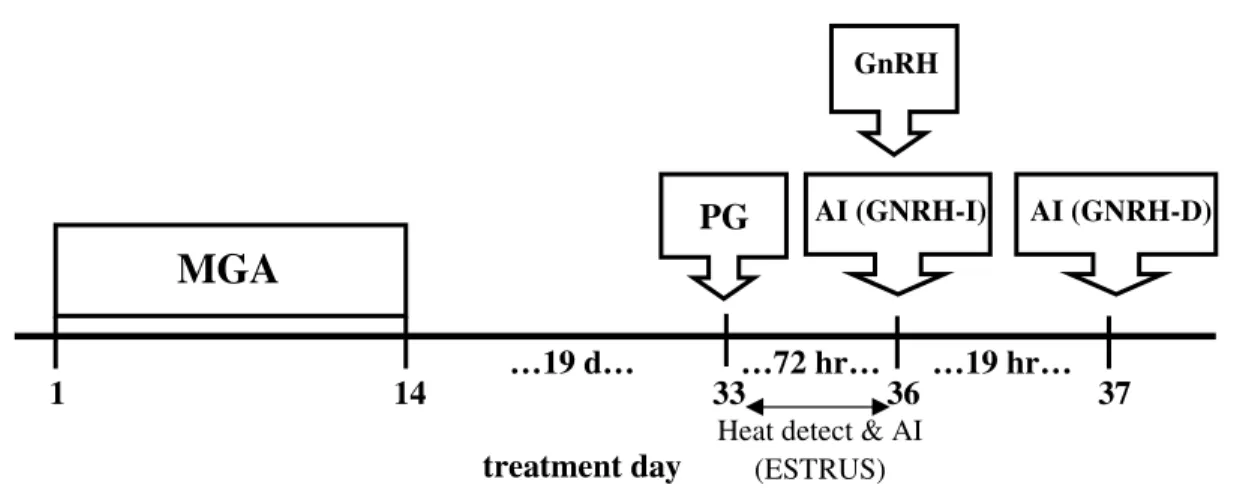
Chapter I: Review of Literature __________________________________________ 1 Figure 1.Illustration of the estrous cycle of the cow _______________________________ 3 Figure 2. Computer simulation results showing the impact of PG injection at 2 different stages of the estrous cycle _______________________________________________ 17 Chapter II: Comparison of TAI at GnRH injection and delayed AI of non-estrus beef heifers ___________________________________________________________ 39 Figure 1. Modified MGA-PG estrus synchronization protocol utilized to compare AI at GnRH injection (GNRH-I) and AI 12 h following GnRH injection (GNRH-D) ______ 46 Chapter III: Effect of MGA vs CIDR estrus synchronization on estrus response and pregnancy rates in 311 d old beef heifers __________________________________ 48 Figure 1. Treatment schedule for heifers in CIDR or MGA treatments _____________ 63 Chapter IV: Impact of heifer development system on subsequent ADG and
reproduction in two different breeding seasons _____________________________ 69 Chapter V: Effect of post-weaning heifer development on pregnancy rates and subsequent feed efficiency as a pregnant first-calf heifer _____________________ 87 Figure 1. Illustration of time heifers spent grazing winter range, on corn residue, or in the drylot during the treatment period following a 30 d receiving period to co-mingling in the drylot for estrus synchronization _________________________________________ 102 Appendix A:How many clean-up bulls are needed after estrus synchronization and artificial insemination? ________________________________________________ 108 Appendix B: A Comparison of Two Implant Protocols; Synovex-Choice/Synovex-Plus vs Synovex-S/Revalor-S on Steer Feedlot Performance and Carcass
List of Tables
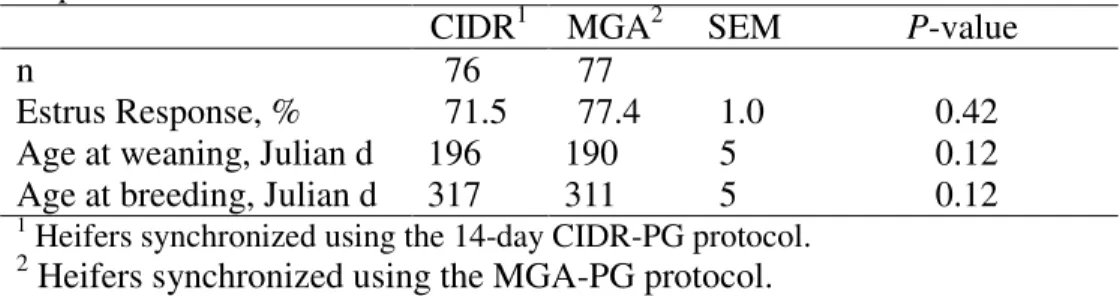
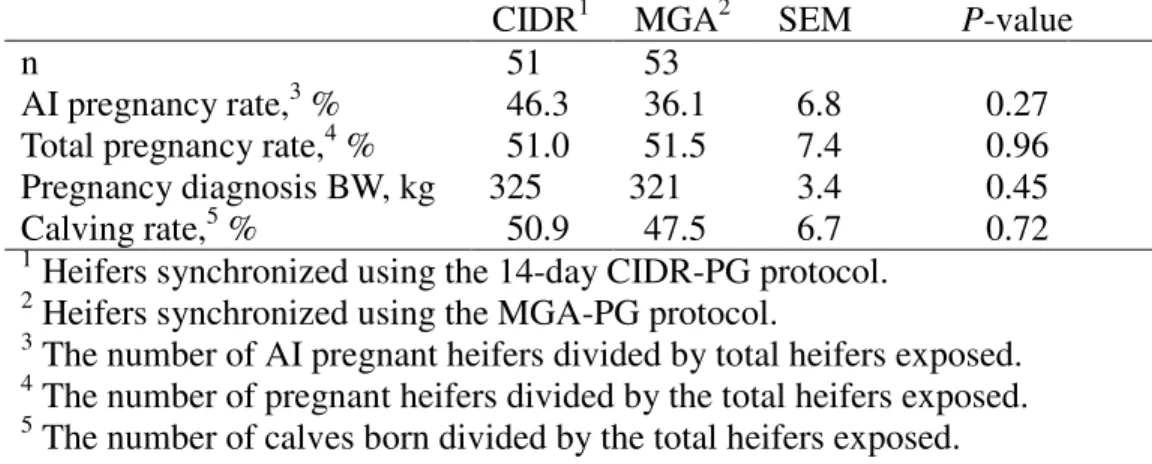
Chapter I: Review of Literature __________________________________________ 1 Chapter II: Comparison of TAI at GnRH injection and delayed AI of non-estrus beef heifers ___________________________________________________________ 39 Table 1. Growth and reproductive performance of heifers AI on their estrus and non-estrus heifers assigned to GNRH-I or GNRH-D_______________________________ 47 Chapter III: Effect of MGA vs CIDR estrus synchronization on estrus response and pregnancy rates in 311 d old beef heifers __________________________________ 48 Table 1. Heifer development BW1 for heifers AI at 311 d of age _________________ 64 Table 2. Effect of CIDR or MGA estrus synchronization on estrus response of 311 d
old heifers.____________________________________________________________ __65 Table 3. Effect of CIDR or MGA estrus synchronization on reproductive
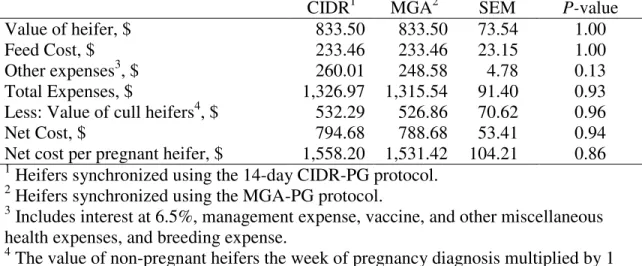
performance of 311 d old heifers __________________________________________ 66 Table 4. Calving performance of heifers’ exposed at 311 d old ___________________ 67 Table 5. Economic analyses using a 5 yr average for heifer development from weaning to pregnancy diagnosis. ____________________________________________________ 68 Chapter IV: Impact of heifer development system on subsequent ADG and
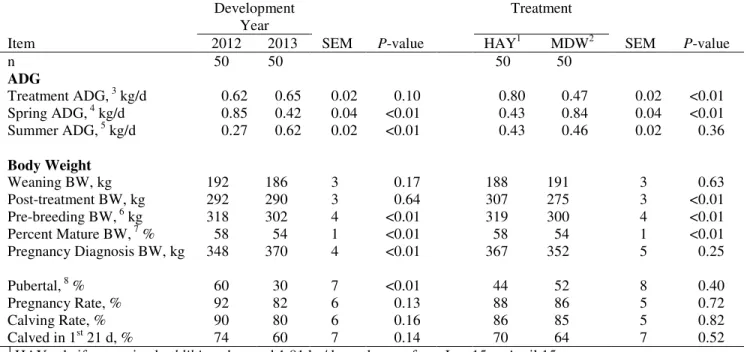
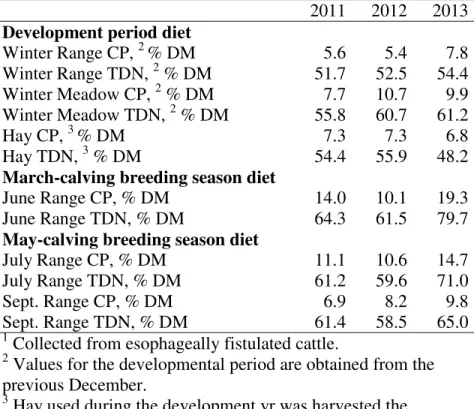
reproduction in two different breeding seasons _____________________________ 69 Table 1. Effect of over-winter treatment on developing March-born heifer ADG, BW, and reproductive performance ____________________________________________ 82 Table 2. Nutrient composition of range and hay in each development year ______________ 83 Table 3. Effect of over-winter treatment on developing May born heifer ADG, BW, and reproductive performance ________________________________________________ 84 Table 4. Cost analysis of heifer development over-winter nutritional treatments _____ 85 Table 5. Partial budget analysis of heifer development calving season and over-winter nutritional treatments ___________________________________________________ 86 Chapter V: Effect of post-weaning heifer development on pregnancy rates and subsequent feed efficiency as a pregnant first-calf heifer _____________________ 87 Table 1. Composition of drylot diets fed to developing heifers __________________ 103 Table 2. Composition of drylot supplement included in DLHI1 and DLLO2diets fed to heifers ____________________________________________________________ 104 Table 3. Effect of heifer development system on gain and reproductive performance 105 Table 4. Effects of heifer development system on feed efficiency as a pregnant first-calf heifer _______________________________________________________________ 106 Table 5. Five-year-average economic analysis (2010-2014) of heifer development nutritional treatments __________________________________________________ 107 Appendix A: How many clean-up bulls are needed after estrus synchronization and artificial insemination? ________________________________________________ 108 Table 1. Summary of AI and final pregnancy rates of varying bull to female ratios
obtained in cited studies ________________________________________________ 115 Appendix B: A Comparison of Two Implant Protocols; Synovex-Choice/Synovex-Plus vs Synovex-S/Revalor-S on Steer Feedlot Performance and Carcass
Characteristics_______________________________________________________ 117 Table 1. Composition of calf and yearling diets ______________________________ 125 Table 2. Feedlot performance of steers on CHPL and SS implant protocols ________ 126 Table 3. Carcass characteristics of steers on CHPL and SS implant protocols ______ 127
Chapter I
Review of literature
Introduction
Heifer development is key to the success of the beef industry. A productive cow herd provides a continuous supply of beef and as mature cows age and become less productive it is imperative that a steady supply of replacements be available to fill the place of culled cows. Cost effective heifer development resulting in optimal pregnancy rates allows producers to continue producing beef. There are many tools available to producers to improve reproductive performance in both heifers and the cow herd, including estrus synchronization and artificial insemination (AI). However only 8% of US beef producers utilize estrus synchronization and/or AI (USDA, 2009), even though the benefits of AI are well established- maintaining fewer bulls and the opportunity to utilize superior genetics for a fraction of the cost. Estrus synchronization also provides numerous benefits to producers- a more uniform calf crop, shortened calving season, tighter calving distribution, more calves born early in the calving season, causing anestrus animals to resume or begin cyclic activity. In combination with AI, estrus
synchronization allows producers to consolidate the labor and time required into only a few days.
Another management tool available to producers is cost effective heifer
development. The recent expansion of cost effective heifer development strategies can aid beef producers, these strategies can reduce inputs without compromising reproductive performance. Each beef producer has a unique set of resources available to them. The
most cost effective method for each producer depends on their resources. There are many options in heifer development strategies, allowing producers to utilize a system that works in their specific scenario to attain an optimum number of pregnancies in a cost effective manner.
This review of literature will begin with a discussion of the estrous cycle, which will aid in understanding the attainment of puberty. Next the ways in which puberty can be advanced in heifers will be evaluated. Once the critical threshold of puberty has been attained, the mechanisms of estrus synchronization will be reviewed next. A discussion of heifer development as a system, where a single decision may impact many aspects of the system, will follow. Finally, by approaching heifer development with a systems mindset, producers can incorporate economics into their decision process.
Estrous Cycle
As with any complex physiological system, the cow’s estrous cycle is best understood by first examining the individual mechanisms, hormones, in relation to the cycle and then combining the individual hormones to make sense of the entire system. In all examples ovulation occurs on d 1. The bovine estrous cycle is typically discussed in 2 phases, luteal and follicular. The luteal phase lasts 14 to 18 d, is characterized by the formation of the corpus luteum (CL), and is divided into metestrus and diestrus. The follicular phase lasts 4 to 6 d and marks the time period following the regression of the CL before ovulation; this phase is further differentiated by proestrus and estrus. A cow’s estrous cycle is approximately 21 d, but can lie anywhere between 18 and 24 d.
Progesterone is secreted by the CL. Progesterone concentrations are low 2 d before and 3 d following ovulation, with a gradual increase observed beginning on d 4 and reaching a plateau on d 10 (Figure 1; Schams et al., 1977; Wettemann et al., 1972).
Metestrus is defined as the formation of the CL from the collapsed ovulated follicle (Forde et al., 2011). As the CL grows, small and large luteal cells produce progesterone to prepare for pregnancy or a new estrous cycle, thus progesterone concentrations increase.
Estrogen
Estrogen concentrations increase beginning on d 19, during the follicular phase, and reach a maximum on d 20 (Schams et al., 1977; Wettemann et al., 1972). Estradiol is
Figure 1. Illustration of the estrous cycle of the cow depicting the growth of healthy follicles (yellow) and atretic follicles (red) followed by ovulation on d 1. Concentration of FSH (blue) rise and fall with follicular development. Progesterone concentration is depicted in orange. The pattern of LH secretion during an 8 h time period is shown above for the early luteal, mid luteal, and follicular phases of the estrous cycle. (adapted from Forde et al., 2011)
secreted by the granulosa cells of the dominant follicle on the ovary; as the follicle grows it produces an increasing amount of estradiol (Forde et al., 2011). When the elevated estradiol concentration coincide with the decreasing progesterone concentrations following luteolysis of the CL it triggers a surge in GnRH (Forde et al., 2011).
Gonadotropin Releasing Hormone (GnRH)
GnRH is a decapeptide that comes from the hypothalamus and acts on the anterior pituitary via the hypophyseal portal blood system to induce production of FSH and LH (Forde et al., 2011). When progesterone levels are low and LH pulses have occurred for 2 to 3 d every 40 to 70 minutes the dominant follicle will ovulate (Roche, 1996).
Luteinizing hormone (LH)
Basal concentrations of LH are present from ovulation to d 5, increased concentrations are seen from d 6 to 10, with below basal levels from d 11 to 13 and increasing again thereafter resulting in a pre-ovulatory surge in LH on d 20 (Schams et al., 1977). Schams et al. (1977) observed the pre-ovulatory LH peak occurring a few hours after observation of estrus, lasting a mean time of 7.4 ± 2.6 h. LH is secreted by the anterior pituitary. Figure 1 depicts LH secretion during 8 h windows for the early luteal, mid luteal, and follicular phase. The early luteal phase is characterized by frequent, low amplitude LH pulses. The mid luteal phase has less frequent, but higher amplitude LH pulses. The follicular phase has increased frequency of pulses which build up to an LH surge.
Schams et al. first reported a wavelike function to the concentration of FSH in 1977, noting peak concentrations on d 4, 8, 12-13, 17, 18, and 20; furthermore, they observed enhanced follicular growth coinciding with these FSH peaks. Figure 1
demonstrates increased FSH concentration immediately prior to follicular growth. Like LH, FSH is secreted from the anterior pituitary. Schams et al. (1977) noticed a FSH peak on d 18 coinciding with the decrease in progesterone and proposed these opposite
trending concentrations might induce final follicular growth.
Follicular waves
Follicular growth during the bovine estrous cycle nearly always occurs in a 2 or 3 wave pattern. (Adams, 1999). Figure 1 depicts a 3 wave estrous cycle. These waves are characterized by a synchronous growth of small follicles for about 4 d, when one follicle becomes the dominant follicle, continuing to grow, while the remaining follicles undergo atresia. Most cows and heifers have a non-alternating pattern (consistently having only 2 waves or only 3 waves); 70% non-alternating compared with 30% alternating (Jaiswal et al., 2009). This indicates a cow is likely to be consistent as either having a 2 or 3-wave follicular pattern. Furthermore older animals were more consistent than younger heifers, with 82% of the older cows in the study having a non-alternating pattern compared with 63% of the younger heifers (Jaiswal et al., 2009). The variability in the number of waves of follicular growth helps account for the variability between cow estrous cycle lengths.
Discussion of the Ovary
Controlled primarily by FSH, LH, and their respective receptors, the ovary is a complex organ undergoing constant change. The ovary hosts 2 or 3 follicular waves in
each estrous cycle. Each wave is characterized by the recruitment of a cohort of follicles and selection of a single dominant follicle to continue growth while the remaining follicles undergo atresia (Berisha and Schams, 2005). After the pre-ovulatory LH surge, changes termed luteinization occur in the theca interna and granulosa cells of the
preovulatory follicle leading to the formation of the CL. Normal CL development depends on blood flow and the growth of new blood vessels from existing ones, angiogenesis (Berisha and Schams, 2005).
Prostaglandin (PG)
Prostaglandin is naturally produced by the uterus (Forde et al., 2011). Regression of the CL, in the event the cow is not pregnant, is induced by PG. Sensing the absence of a developing embryo the endometrium secretes PG around d 17 to 19 of the estrous cycle (Sharasuna et al., 2012).
In summary, the hypothalamic-pituitary-gonadal (HPG) axis in the mature cow functions in a somewhat linear fashion with GnRH produced from the hypothalamus acting on the anterior pituitary to stimulate the production of LH and FSH, which act on the ovary. Follicles on the ovary develop and grow, producing more and more estrogen; estrogen feeds back positively on the hypothalamus to produce more GnRH. Upon ovulation of the follicle, the CL is formed and secretes progesterone, which has a
negative feedback effect on the hypothalamus to inhibit stimulation of the gonadotropins.
Puberty
Establishment of puberty is the cornerstone of a females’ lifetime productivity. Heifers that conceive and give birth to their first calf by 24 mo of age are more
productive the rest of their lives (Cushman et al., 2014). Thus a heifer must become pregnant at 15 mo of age. Bridges et al. (2014) observed increased pregnancy rates in heifers having attained puberty prior to initiation of synchronization compared with their non-pubertal counterparts. Although historical data states a heifer’s pubertal estrus is less fertile than her third estrus (Byerley et al., 1987), our more recent research found no difference in pregnancy rates between heifers who conceived on their first, second or third estrus (Vraspir, 2014). Regardless, a heifer must attain puberty to become pregnant.
Prior to the onset of puberty the HPG axis is controlled by negative feedback of estradiol from the ovary. Estradiol binds to its receptor in the hypothalamus, eliciting a negative effect on neurons that secrete kisspeptin. As puberty approaches, the number of estradiol receptors in the hypothalamus decreases, resulting in a potential increase in kisspeptin, effecting an increase in GnRH and thus increasing LH and FSH levels (Atkins et al., 2013). In 1998, Day and Anderson understood the hypothalamus was responding differently to estradiol pre- and post-puberty. They attributed this to structural
modification of LHRH (later called GnRH) neurons (Day and Anderson, 1998).
Kisspeptin and the corresponding G protein receptor GPR54 are vital to the establishment of puberty; rodents with the gene for either kisspeptin or GPR54 removed do not go through puberty, indicating a serious role being played in the attainment of puberty (Han et al., 2005). Moreover, when kisspeptin is centrally administered, a strong GnRH response is seen, further demonstrating the key role of kisspeptin in the HPG axis (Han et al., 2005). The intensity of such a response is dependent upon age. In juvenile mice, about 25% of GnRH neurons respond to kisspeptin administration compared with about 50% in prepubertals and greater than 90% in adult mice (Han et al., 2005). In the
mouse, expression of kisspeptin in the RP3V, a specific area of the hypothalamus, is nearly nonexistent at birth with a gradual increase up to puberty onset when expression takes on a pulsatile movement coinciding with cyclicity (Clarkson et al., 2010).
An amino acid transmitter, GABA, γ-aminobutyric acid, also plays a critical role in the establishment of puberty. GABA has been found to have a depolarizing effect on GnRH neurons in immature female mice, while having the inverse effect in mature mice, hyperpolarizing GnRH neurons (Hans et al., 2002). This conclusion indicates during puberty in the mouse a switch occurs, where prior to puberty GABA acts as a stimulant on GnRH secretion and in turn LH secretion. Following puberty, GABA would act in an inhibitory fashion in the mouse.
In beef heifers, the importance of estradiol feedback on LH secretion has been documented. Gasser et al. (2006d) demonstrated this by comparing 3 groups of heifers, 1) those with intact ovaries and two groups of ovariectomized heifers, 2) one group with an exogenous estradiol source, and 3) one without. Heifers with intact ovaries had very low levels of LH secretion, as did ovariectomized heifers, but receiving supplemental
estradiol. Heifers with no ovaries or exogenous estradiol, however, had dramatically more frequent LH pulses (Gasser et al., 2006d). The presence of estradiol clearly has a negative impact on LH pulses in pre-pubertal heifers.
Day and Anderson (1998) documented decreasing negative estradiol feedback as estradiol levels in the heifer increased. As puberty progresses, follicle diameter increases, estradiol secretion increases, estradiol negative feedback decreases, and GnRH and LH pulse frequency increases. Immediately prior to puberty estradiol feedback becomes positive, as it will remain throughout the remainder of the heifer’s life. At puberty,
estradiol secretion drops, there is an LH surge, and ovulation occurs (Day and Anderson, 1998).
Often GnRH is presented as the first hormone in the HPG axis, eluding to its importance. Gonadotropin releasing hormone is important in the sense that without it the cascade of reproductive hormones comes to a screeching halt. It is also vital GnRH not only be present but must be present in a pulsatile fashion. In monkeys, it has been shown when GnRH is administered in pulses, the levels of LH and FSH secretion remains high. However, when GnRH administration is continuous the levels of LH and FSH fall dramatically and then plateau at a level of almost zero. Upon resumption of pulsatile GnRH administration, LH and FSH levels increase to reach previous pulsatile levels (Conn and Crowly, 1990).
Advancing Puberty
Given the importance of puberty attainment several methods have been developed to hasten the onset of puberty. These include genetic selection, nutrition, and progestins.
Selection
As selection tools improve, producers now have better ways to predict the value of the impact a potential sire could have on his herd. Expected progeny differences (EPD) have become an invaluable tool to producers when making herd sire decisions. Expected progeny differences evaluating carcass traits such as HCW, yield grade, and quality grade have proven to be fairly accurate. Traits considered more maternal, such as a heifer’s ability to become pregnant or a cow’s ability to stay in the herd while producing a calf every year, have been more difficult to apply a single and effective number to. One
measure developed is scrotal circumference, which is well established to correlate negatively to the age at which a sires’ daughters attain puberty. This is intuitive, as a bull’s scrotal circumference is measured at 1 yr of age. More mature bulls will have a larger scrotal circumference and the daughters of these earlier maturing bulls are also earlier maturing. A producer striving to improve his herd will always look for the best bull; oftentimes, “best” meaning bigger. As producers have continued to choose the “best” bull, an upward trend has emerged in several breeds, including Angus and Simmental, in the scrotal circumference EPD (Eriksson et al., 2012). Perhaps as the industry strived for improvement, they unwittingly selected for increased incidence of precocious puberty.
Nutrition
Although a long-term trend towards selection for earlier maturing cattle may exist, a factor more easily managed in the short term is nutrition. It has been shown puberty can be negatively impacted as a result of energy restriction; when pre-pubertal heifers were under energy restriction LH levels decreased (Kurz et al., 1990). Conversely, Gasser et al. (2006b) were successful in inducing precocious puberty in 8 out of 9 heifers, utilizing early weaning and a high concentrate diet. Heifers were weaned early at 73 ± 3 d, fed a receiving diet for 26 d and placed on either a control or high concentrate diet. The control diet was comprised of 30% whole shell corn and had 1.70 Mcal/kg of NEm, while the high concentrate diet was 60% whole shell corn and had 2.02 Mcal/kg of NEm; both diets provided 14.1% CP. At 300 d, the cut off for heifers to be considered precociously pubertal, 88.9% of high concentrate diet heifers were pubertal, compared with no heifers fed the control diet (Gasser et al., 2006b). In a follow-up study, Gasser et al. sought to
determime the role of early weaning; heifers were randomly assigned to be weaned early (104 ± 2 d of age) or weaned normally (208 ± 3 d of age). Heifers weaned early were fed a receiving diet for 3 wk before being assigned to the same control and high concentrate diets as the previous study (Gasser et al., 2006c). In the follow-up study, normally weaned heifers had a 50% incidence of precocious puberty, with heifers weaned early and fed the control diet having 56% precocious puberty incidence and 100% incidence in heifers weaned early and fed a high concentrate diet (Gasser et al., 2006c). The authors speculate the high incidence of precocious puberty in all groups of heifers in this particular study could be due to the above average forage quality available the year the study was conducted (Gasser et al., 2006c). These studies point to a clear connection between a high concentrate diet and precocious puberty.
Nutrition has been shown to be linked to serum levels of GH and IGF-1. In
developing beef heifers, IGF-1 appears to be a better indicator of nutrition, with increased levels in heifers fed on a higher plane of nutrition (Granger et al., 1989). Furthermore, this same study again demonstrated puberty was hastened in heifers fed a higher plane of nutrition (Granger et al., 1989). Given that insulin and IGF-1 stimulate ovarian growth and IGF-1 increases at puberty, these findings are not surprising (Nobles, 1992; Bach et al., 1990). An increased level of nutrition results in elevated IGF-1 levels, relative to a more restrictive diet: IGF-1 levels correspond with puberty attainment, making the conclusion that higher levels of nutrition result in earlier attainment of puberty a natural one. The precise mechanism by which higher levels of energy and/or protein in the developing heifers diet lead to stimulation of the HPG axis have not yet been established and warrant further study.
Cushman et al. (2014) found a negative correlation between pre-weaning BW and age at puberty, with higher gaining heifers prior to weaning attaining puberty at an earlier age; heifers’ post-weaning ADG did not correlate to age at puberty. When dairy heifers were compared at the common physiological time point of puberty, body composition and backfat were similar across development treatments (Chelikani et al., 2003). Although these dairy heifers were developed on varying levels of protein and energy, they attained puberty at different ages; however BW at puberty was similar across treatments. In a separate study, heifers developed on a high nutritional plain reached puberty at a heavier BW than heifers developed on a low wintering level diet (Wiltbank et al., 1966).
To evaluate the impact of a high concentrate diet at 2 different time points heifers were weaned early and fed either a high concentrate or control diet in 2 phases, the first phase was designed to represent the pre-weaning phase of a heifer’s life and the second phase representing post weaning (Gasser et al., 2006a). Precocious puberty occurred at a higher rate in heifers fed a high concentrate diet in both feeding phases compared with control diet in both feeding phases (Gasser et al., 2006a). Average age at puberty was less for heifers fed a high concentrate diet in the pre-weaning phase compared with heifers on control diet for both phases (oldest at puberty) or heifers on control diet followed by high concentrate diet (intermediate age at puberty, Gasser et al., 2006a). Heifers attaining puberty earlier than 300 d of age (precocious puberty) were at a lighter BW at puberty attainment than their contemporaries (Gasser et al., 2006a). Thus, although nutrition is very important to early puberty attainment, the mechanism by which it acts is not by altering BW.
Cordoso et al. (2014) evaluated the impact of heifer diets on puberty attainment. Heifers were weaned at approximately 3.5 mo of age and grown on a high concentrate diet (ADG = 1.0 kg), forage based diet ( ADG = 0.5 kg), or 1 of 2 stair step diets
alternating every 10 wk between ab libitum concentrate diet and restricted access to high-forage diet. The proportion of heifers attaining puberty at 12 mo of age was similar for heifers receiving the high concentrate diet (80%) as well as the stair step program beginning with high concentrate (70%). However heifers on forage (30%) and on the opposite stair step program, beginning with restricted forage (40%), had lower
proportions of pubertal heifers at 12-mo of age (Cardoso et al., 2014). By 14 mo of age, 90% of heifers on the restriction-first stair step program had attained puberty, while forage diet fed heifers were 40% pubertal. There were insufficient numbers to evaluate BW at puberty for forage diet heifers. Stair step heifers beginning with high concentrate tended (P = 0.09) to be lighter when they reached puberty than heifers on the high
concentrate diet. Pubertal BW was not different between stair step heifers beginning with restriction and high concentrate heifers or the opposing stair step program heifers
(Cardoso et al., 2014). Heifers on the high concentrate diet had higher levels of leptin compared with both the forage and stair step diets. As heifers in both stair step programs were transitioned from high-concentrate diets to restricted forage diets, they experienced rapid declines in circulating leptin concentrations. Interestingly, heifers in the stair step program that began with the high concentrate diet the first 10 wk demonstrated increased leptin levels in the restriction period, while mean leptin concentrations for stair step heifers whose first 10 wk was on restricted forage diet were consistently low during periods of feed restriction (Cardoso et al. 2014). Leptin is produced by adipocytes and
may act as a permissive signal to initiate puberty as an indicator of adequate nutritional status (Hausman et al., 2012). The higher levels of leptin in concentrate fed and
concentrate-first fed heifers indicate a recognition by the heifer of adequate levels of nutrition to begin the establishment of puberty. Heifers fed forage throughout the development period had low levels of leptin, and consequently, a lower percentage of heifers attaining puberty. In a similar study, more heifers on a rapid growth rate, compared with a slow-then-rapid growth rate, were pubertal at 11 and 12.5 mo of age, prior to any other treatment (Hall et al., 1997).
In a 3 yr study, Roberts et al. (2009) compared restricted and ad libitum heifer development systems. The proportion of restricted heifers attaining puberty by 14 mo of age was less than heifers offered ad libitum access; 60% of restricted heifers were pubertal at the beginning of the breeding season, while 68% of ad libitum heifers had reached puberty (Roberts et al., 2009). Heifers on a restricted diet reached puberty at a lighter BW than ad libitum contemporaries; restricted heifers attained puberty at 57% of mature BW while ad libitum heifers reached puberty at 59% of mature BW (Roberts et al., 2009).
Furthermore, Roberts et al. (2009) found in the yr with the greatest proportion of heifers attaining puberty prior to the breeding season, heifers also had the lightest pre-breeding BW. For every 0.1 kg/d increase in ADG from weaning to the beginning of nutritional treatments the percentage of heifers attaining puberty prior to the breeding season increased by 3.6%, while the same increase in ADG during the pre-weaning period resulted in a 12% increase in pubertal heifers BW (Roberts et al., 2009). As previously observed (Wiltbank et al., 1966; Laster et al., 1972), this would indicate a
female’s growth rate prior to weaning is perhaps more important to the early attainment of puberty than the time period from weaning to breeding. Pubertal status was not found to explain the variation in final pregnancy rate (Roberts et al., 2009).
In a comparison of heifer development diets, heifers fed dried distillers grains (DDG) containing levels of RUP above NRC requirements did not impact age at puberty compared with control heifers; however, pregnancy rates were 16.9% greater in heifers developed on DDG (Martin et al., 2007). In this study Martin et al. (2007) found a 10.6 and 6.1% incidence of puberty at the initiation of development treatment at heifer ages of 250 and 230 d.
Progestins
Progestins can hasten the onset of puberty in prepubertal heifers. Crossbred heifers of either Charolais or Hereford descent demonstrated an inducement of puberty due to a progestin-based norgestomet implant at 12.5 mo of age but not at 9.5 or 11 mo of age (Hall et al., 1997). Slow LH pulse frequency in combination with low LH
concentrations in younger heifers cause researchers to speculate the HPG axis of these younger animals is not capable of responding to progestins in the way we expect an older animal to, by increasing releases of LH (Hall et al., 1997). Gonzalez-Padilla et al. (1975) observed the use of norgestomet in prepubertal heifers increased pregnancy rates from 7% in control heifers to 94% in treated heifers. Furthermore, in a separate trial, 79% of treated heifers were observed in estrus within 4 d of implant removal with 84% cycling by d 25 of the breeding season whereas only 28% and 38% of control heifers had cycled by d 25 and 48, respectively (Gonzalez-Padilla et al., 1975).
Synchronizing estrus
Once a heifer has attained the critical threshold of puberty, there are 3 main ways the estrous cycle of beef cattle can be manipulated: 1) the use of PG to regress an existing CL, 2) the use of GnRH to create synchrony in a new wave of follicles and/or initiate ovulation, and 3) the use of a progestin to regulate the timing of the release of the CL. These 3 mechanisms, when used alone or in combination allow progressive managers to maximize labor while reaping the benefits of AI by successfully utilizing an estrus synchronization protocol.
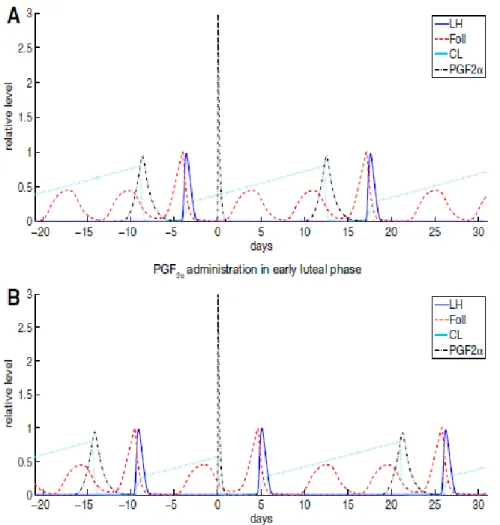
(Roche et al., 1998). In the early part of the estrous cycle, when no CL is present, the use of PG is not effective. The effect of PG varies depending upon the stage of the luteal phase at the time of injection (Berardinelli & Adair, 1989). When PG is given during the
mid (d 10 to 14) and late (d 15 to 19) luteal phase estrous synchrony is increased
(Berardinelli and Adair, 1989). This is due to increasing sensitivity of the CL to PG as the CL matures. Furthermore, in the later days of the luteal phase, endogenous PG from the
Figure 2. Computer simulation results showing the impact of PG injection on d 0 at 2 different stages of the estrous cycle. (A) demonstrates that ovulation does not occur when PG is given during the early luteal phase. (B) shows an ovulation response following PG administration 10 d following a previous ovulation. (adapted from Stotzel et al., 2012)
uterus, which begins to produce PG on d 15 (Shemesh & Hansel, 1975) may augment the exogenous dose of PG.
Figure (2A) adapted from Stotzel et al. (2012) is a simulation of a computer generated model of the response to PG administration when given during the early luteal phase. When PG is given 4 d following ovulation, luteolysis cannot occur because a CL is not yet present, thus there is no ovulation response. Figure (2B) illustrates PG
administration in the mid luteal phase, when a CL is present, and the subsequent ovulation response.
Tervit et al. (1973) observed successful synchronization utilizing a PG analogue both when given via i.m. or intra-uterine administration, but observed more precise synchrony when pretreated with pregnant mare serum gonadotropin. When administered to non-pregnant dairy cows on a weekly basis PG was shown to improve pregnancy rate over the administration of PG after confirmation of a CL via rectal palpation (Kristula et al., 1992). This is likely due to management (i.e. inefficiencies in rectal palpation).
Gonadotropin Releasing Hormone (GnRH)
Gonadotropin releasing hormone stimulates the endogenous release of FSH and LH from the anterior pituitary. Given the absence of GnRH receptors on the bovine ovary, it is clear GnRH acts through FSH and LH to stimulate follicular growth and ovulation, respectively (reviewed by Twagiramunga et al., 1995). Administration of GnRH serves to induce ovulation in follicles during the luteal phase and in females without a functioning CL; if the follicle is already on the path of atresia GnRH does not
alter the outcome (reviewed by Twagiramunga et al., 1995). Thus, GnRH can be used to initiate a new wave of follicles, which increases the likelihood of the presence of a dominant follicle at the time prostaglandin is given to lyse the CL (Roche et al., 1998). By insuring a dominate follicle is present at the time of luteolysis, the variability of when estrus occurs is reduced.
Pursley et al. (1995) proposed one of the first FTAI protocols; GnRH was given at any random point in a females’ cycle with a PG injection 7 d later, followed by a second GnRH injection 48 h later and AI 24 h after that. The first injection of GnRH served to bring about ovulation in 18 out of 20 cows and 13 out of 24 heifers (Pursley et al., 1995). Following luteolysis of the CL, caused by the PG injection, the second GnRH injection caused ovulation in all of the females who responded to synchronization (Pursley et al., 1995). This protocol for FTAI, utilizing GnRH, was superior to previous FTAI protocols utilizing 2 injections of PG because it more precisely timed ovulation. In a study
comparing the administration of GnRH 6 h prior to CIDR implantation, at CIDR
implantation, or 48 h after CIDR implantation, it was observed ovulations were reduced in cows receiving the GnRH injection 48 h following CIDR implantation (Perry and Perry, 2009). The interaction of elevated progesterone levels, as a result of the CIDR, and GnRH result in a diminished LH response (Colazo et al., 2008). In a comparison of the then traditional synchronization protocol of 2 injections of PG and protocols utilizing GnRH as a pre-treatment, Dahlen et al. (2003) observed increased pregnancy rates in lightweight, peripubertal heifers pre-treated with GnRH.
Endogenously produced by the CL, progesterone regulates the estrous cycle length (Roche et al., 1998). As early as 1967, Woody et al. explored the possibility of using exogenous progesterone to shorten the estrous cycle. The effort was relatively successful, and what was learned laid the groundwork for modern-day use of progestins in feed additives and intra-vaginal devices. The use of progestins has been demonstrated to successfully induce non-cyclic females, both pre-pubertal heifers and anestrus cows post-partum, to ovulate (Gonzalez-Padilla et al., 1975; Lamb et al., 2001).
Norgestomet
Norgestomet was used as a progestin prior to the advent of melengestrol acetate (MGA) or controlled internal drug release devices (CIDRs). Administered as implants in the ear, norgestomet was the frontrunner of progestin research. Gonzalez-Padilla et al. (1975) observed norgestomet use in prepubertal heifers increased pregnancy rates from 7% in control heifers to 94% in treated heifers. Furthermore, a separate trial resulted in a pregnancy rate of 73% in treated heifers following a 48 d breeding season compared with 27% in the control group (Gonzalez-Padilla et al., 1975). The value of progestin-induced estrus in heifers is clearly demonstrated by these trials and led researchers to continue to develop protocols utilizing progestins to induce cyclicity in anestrus females.
Melengestrol acetate (MGA)
Melengestrol acetate was first used as a progestin feed additive in feedlot heifers to inhibit estrus and ovulation, thereby increasing heifer feedlot efficiency and
performance. The minimum dosage of MGA to inhibit ovulation is 0.42 mg/d (reviewed by Patterson et al., 1989). Eventually, MGA began to be used in estrus synchronization
protocols. However, the long term use of MGA results in a less fertile estrus immediately following the end of MGA administration. This is partially due to a number of
physiological changes (reviewed by Patterson et al., 1989). Evaluation of ova collected from heifers given MGA for 16 d found few normal follicles, in combination with hyperplastic and atretic follicles (Lamond et al., 1971). Thus, heifer MGA + PG
synchronization protocol allows for an ovulation to occur before AI. Melengestrol acetate is a cost effective synchronization method for heifers.
Controlled internal drug release (CIDR)
Similarly to MGA, a CIDR allows for prolonged progestin exposure. Although more expensive than MGA, CIDRs provide several advantages over MGA. In breeding seasons where synchronization is occurring while heifers are on green grass, managing MGA consumption can be difficult, whereas a CIDR is a more reliable source of
progestin. Moreover, the individual aspect of CIDRs allows for use in cows with calves, where use of MGA has not been FDA approved.
In ovariectomized beef cows, after CIDR insertion plasma progesterone levels peaked within 24 h and decreased thereafter to d 7 (Long et al., 2009). CIDRs have been shown to be effective in a number of different protocols. Bridges et al. (2014) compared 3 CIDR protocols on heifers: 5-d CO-Synch + CIDR, PG- 6-d CIDR, and 14 d CIDR + PG and observed no difference in FTAI pregnancy rates.
The addition of a CIDR into the Co-Synch protocol increased pregnancy rates by 11% (43 vs 54%, CO-Synch vs Co-Synch + CIDR); moreover, by adding a CIDR to the Select Synch protocol pregnancy rates increased by 5% (53 vs 58%, Select Synch vs
Select Synch + CIDR; Larson et al., 2006). Although the addition of a CIDR to the Co-Synch protocol did not improve pregnancy rates in cycling cows with high levels of progesterone (58 vs 58%) it did improve pregnancy rates in non-cycling cows (40 vs 53%; Co-Synch vs Co-Synch + CIDR) and cycling cows with low progesterone levels (38 vs 66%; Co-Synch vs Co-Synch + CIDR; Lamb et al., 2001). This increase can be explained by the positive effect of the CIDR on anestrus cows, inducing estrous cycling in those cows not cycling at the beginning of the breeding season.
MGA vs CIDR
In a direct comparison of the MGA-PG and 14 d CIDR protocols variance for interval to estrus after PG injection was not different (Mallory et al., 2010). It may seem a CIDR would provide a more uniform synchrony compared with MGA, given the source of progestin is removed at nearly the exact same time upon device removal opposed to MGA, which must clear the digestive system. However, this was not the result observed by Mallory et al. (2010). Moreover, conception rate to AI was not different between MGA and CIDR synchronized heifers (Mallory et al., 2010). Furthermore, heifers synchronized with either MGA-PG or 14 d CIDR-PG protocols resulted in similar FTAI and overall pregnancy rates (Vraspir et al., 2013).
Estrous Control
The advent of FTAI protocols, which completely eliminate the need for estrus detection, increases the appeal of using AI. In a comparison of Co-Synch + CIDR (no estrus detection) and Select Synch + CIDR & TAI (requires estrus detection) there was no difference in AI pregnancy rates (54 vs 58%; Larson et al., 2006). In an effort to
determine the effect of stage of estrous on estrus synchronization, Moreira et al. (2000) utilized the Ovsynch/TAI protocol, in which GnRH was administered at the initiation of the protocol, followed by PG 7 d later, a second GnRH injection 36 h after the PG injection and fixed time AI 16 h following the final GnRH injection. Heifers were grouped to begin the synchronization protocol on d 2, 5, 10, 15, or 18 of their estrous cycle. Heifers beginning synchronization on d 5, 10, 15, and 18 had successful synchronization of a new follicular wave, while heifers beginning on d 2 had already begun the follicular recruitment process and thus did not respond to the GnRH injection. This experiment eloquently demonstrates the effect of estrus synchronization protocols at different time points in the estrous cycle. The d 2 heifers, having already begun the recruitment process at initiation of the protocol, had larger follicles throughout the synchronization period and were no longer growing at the time of ovulation. Heifers in d 15 group had decreased progesterone concentrations prior to the PG injection, the point where the other groups began to decrease in progesterone levels. This was likely due to endogenous release of PG acting on both original and accessory CL. This study
concluded if progesterone levels were high an induced accessory CL was capable of responding to injected PG. Heifers in group d 18 had a greater incidence of incomplete CL regression, surmised to be due to the growth of the accessory CL under a low
progesterone environment, causing them to be sub-responsive to injected PG. This study concluded by noting an exogenous source of progesterone during the synchronization period would help in avoiding premature ovulation, validating use of MGA and CIDRs in synchronization protocols.
Decisions made in beef production are never singular, but always impacting other areas of the production system. Thus, decisions must consider the other components of the system. Some areas of the system are more easily altered than others, (e.g. a post weaning calf diet) and some we have little control over, such as the occurrence of a severe winter storm. The point is, these decisions and events all have an impact within the system, and because years will vary, even with the best management, it becomes very difficult to pinpoint the exact reason for performance differences across years.
Reduced-input heifer development must be accompanied with a systems outlook, in which the continuation of a heifer’s growth is accounted for after the initial
development process.
Calving distribution
Perhaps one of the most important perspectives on beef systems management is calving distribution. It has long been known heifers who calve early the first time go on to wean more kg of calf throughout their lifetimes than late calving heifers (Lesmeister et al., 1973). This has been confirmed in the current century with heifers giving birth to their first calf in the first 21 d of the calving season remaining in the herd through 5 parturitions at a significantly higher rate than their contemporaries (Cushman et al., 2013). Heifers born in the first 21 d of the calving season are more likely to calve in the first 21 d of their first calving season (Funston et al., 2012). Additionally, heifers born in the first 21 d of the calving season have increased puberty attainment prior to the
breeding season and increased pregnancy rates (Funston et al., 2012). Heifers calving in the first 21 d of the calving season are more productive over the remainder of their lives. They wean heavier calves each season, such that over her lifetime a heifer whose first
calf was born in the first 21 d of the calving season, will have weaned the equivalent of an extra calf over her lifetime (Cushman et al., 2013). This gives producers a tool in selecting replacement heifers. By retaining only heifers carrying older fetuses or
shortening the breeding season to insure all pregnancies are early pregnancies, a producer can select for fertility. Furthermore, as a selection tool, heifers that calved in the first 21 d, were born earlier in their own calving season and were heavier at their own weaning (Cushman et al., 2013).
Stages of Development
Heifer development can be divided into many stages, all of which have the potential to alter the heifer’s lifetime productivity: fetal development, pre-weaning (nursing), post-weaning, and post-breeding. In theory, these stages could be broken down even further, for example fetal development could be broken down into the trimesters of pregnancy.
Fetal Programming
Although the concept of a fetus being affected by its environment in utero is not new and has been advocated in human medicine, the idea has been slower to develop in livestock production. Reducing maternal nutrition by 25% in mature beef cows during the second and third trimester was found to have no negative effects on either growth or reproductive performance of the daughters (Cushman et al., 2014). However in the same study, mature cows fed at a higher plane of nutrition during the third trimester resulted in a higher percentage of their daughters calving in the first 21 d of the calving season as first calf heifers (Cushman et al., 2014). Given the nature of a natural service breeding
system, it is impossible to tell if this is due to conception date or if it is a function of maternal nutrition. Furthermore, dam supplementation during early gestation resulted in increased heifer progeny pregnancy rates and a greater number of calves born in the first 21 d of the calving season in heifer progeny (Martin et al., 2007).
Pre-Weaning Nutrition
Although much of the focus of heifer development has recently been on post-weaning nutrition, pre-post-weaning management also impacts the development of the replacement beef heifer. Research has observed heifers fed creep feed as a calf had decreased milk yield at 120 d (Hixon et al., 1982) and 52, 108, and 164 d (Sexton et al., 2004) postpartum as a first calf heifer. Furthermore, Sexton et al. (2004) observed a numerical decrease of 7 to 11% in pregnancy rate in heifers fed creep feed compared with controls. Additionally creep fed heifers have been shown to have reduced lifetime
productivity, including longevity, number of calves weaned, and average calf weaning BW (reviewed by Patterson et al., 1992).
Pre-weaning nutrition may also play a role in puberty attainment. A 2 yr study found the incidence of precocious puberty to be 25% in the first year and 8.3% in the second (Wehrman et al., 1996). The authors speculated the discrepancy between yr was due to the difference in growth rates between the yr, with the yr corresponding to the higher incidence of precocious puberty having a greater growth rate in the 2 mo following weaning, because of increased forage (Wehrman et al., 1996). Additionally, Roberts et al., (2009) found increased ADG in the first 8 mo of life was associated with earlier conception and thus calving date.
Post Weaning Nutrition
The majority of heifer development research focuses on post-weaning nutritional treatments, likely because that is one of the easiest factors to manipulate and control. Treatments include differing diet qualities, diet access, nutrient availability, or a combination of differences to achieve a different target BW.
Patterson et al. (1991) first investigated the concept of developing heifers to a specific target BW based on a percentage of the expected mature BW; by developing heifers to 55% and 65% of mature BW. The conclusion of this study was nutrition was extremely important and inadequate nutrition resulted in increased incidence of dystocia and lengthened the post-partum interval (Patterson et al. 1991).
Heifers fed a restricted diet to achieve 53% of mature BW, consumed 27% less harvested feed in a 140 d trial period than their contemporaries offered ad libitum access to achieve 58% of mature BW (Roberts et al., 2009). Additionally, final pregnancy rates following a 45 d breeding season did not differ; 87% of restricted heifers and 91% of ad libitum heifers became pregnant; however pregnancies conceived in the first 21 d of the breeding season tended to be reduced in restricted heifers (Roberts et al., 2009). During the development period, heifers on restricted feed intake were more efficient than their contemporaries developed on a control diet (Roberts et al., 2007).
Development diets with increased amounts of RUP have benefited pregnancy rates. Heifers developed with a 50% RUP supplement had a 13% greater pregnancy rate than contemporary heifers developed with a 36% RUP supplement (Mulliniks et al., 2013). Heifers either developed in the drylot or supplemented on pasture with either 50%
RUP or 36% RUP supplement reached 58, 51, and 51% of mature BW prior to the breeding season, with only a tendency for increased pregnancy rate in the 50% RUP group compared with drylot or 36% RUP supplemented (Mulliniks et al., 2013).
Success or failure of a development strategy is often determined by pregnancy rate. Development treatments may have other impacts as well. Although pregnancy rates did not differ between lightweight heifers supplemented with high and low levels (3.68 vs 2.99 kg/d) of ground corn, high corn heifers did reach puberty earlier and have larger pelvic areas (Buskirk et al., 1995).
Heifers developed on either high (to achieve 65% of mature BW) or low gain (to achieve 55% of mature BW) diets from 8 mo to d 21 of the breeding season had similar pregnancy rates after 47 d of breeding, although a larger proportion of high gain heifers became pregnant in the first 21 d of the breeding period (Eborn et al., 2013). The depressed pregnancy rates in low gain heifers was not due to inhibited cyclicity as a result of diet as similar proportions of heifers were cycling prior to the breeding season regardless of nutritional treatment, breed, and yr (Eborn et al., 2013). The delay in pregnancy attainment by heifers developed to achieve 55% of mature BW prior to the breeding season may be a concern for commercial herds because early calving first calf heifers produce more calf BW in their lifetimes than later calving heifers (Lesmeister et al., 1973). Thus, by impairing a heifer’s ability to attain a pregnancy in the first 21 d of the breeding season, calf BW may suffer not only in her first calf, but in all calves she produces. This may be less of an issue in a yearling based system, where calves are not sold at weaning. Furthermore, due to the market slide for lighter weight calves, this decrease in calf weaning weight may not result in diminished revenues.
Heifers developed on corn residue tended to have lower gains than heifers developed on winter range, in a comparison of 2 low-input, standing-forage systems (Larson et al., 2011). In this same study, corn residue developed heifers had similar pre-breeding BW to winter range developed heifers, indicating a compensatory gain effect prior to the breeding season (Larson et al., 2011). Heifers developed on corn residue had increased ADG as a pregnant heifer when returned to corn residue for winter grazing compared with heifers developed in the drylot or on winter Sandhills upland range (Summers et al., 2014). Behavioral retention appears to play a role in heifer performance as a pregnant female. Heifers developed in the environment they will be returned to as pregnant females appear to perform better than heifers naïve to the environment.
Compensatory gain
Developing replacement beef heifers by reducing inputs at the beginning of the development period and utilizing the compensatory gain effect to reach a target BW prior to the breeding season is an effective strategy. By altering pattern of gain from a
continuous linear curve to a period of slow gain followed by a short period of fast gain near the end of development, heifers can reach a similar target BW and reduce feed inputs, resulting in similar conception rates (Clanton et al., 1983). One such development strategy is to develop heifers on a restricted diet for the majority of the development period and then feed a higher quality diet closer to breeding (Lynch et al., 1997). By concentrating the inputs of a heifer’s development, a great deal of cost savings can be captured. Heifers fed at a low rate of gain until the last third of the development period, when heifers experienced compensatory gains, had similar pregnancy rates to heifers fed at an even rate throughout the feeding period (Lynch et al., 1997).
Economic Considerations
At first consideration it may seem to maximize potential profits, a heifer
development system should aim to achieve as many pregnancies as possible. However, there exists a balance point at which the additional feed cost outweighs any additional pregnancies attained. With this in mind, reduced input systems of heifer development, with the intention of selling any non-pregnant heifers for a credit against the cost of a pregnant heifer, have proven to be an economical strategy.
Feuz (1992) concluded from an economic analysis the least cost alternative to develop a heifer to her first calving season is 50% of mature BW, compared to 62.5 and 70%. However when taking into account the cost of establishing a heifer’s second pregnancy the 62.5% of mature BW target was the least cost alternative. Roberts et al. (2009) found a $33 per heifer advantage to restricting heifers, developing to 55% of mature BW compared with 58%. In addition, heifers developed in the drylot were found to have decreased net returns compared with heifers developed on pasture and
supplemented with either 36 or 50% RUP supplement. Net return per heifer was greater by $99.71 and $87.18 for heifers fed 50 and 36% supplement and developed on pasture than their drylot contemporaries (Mulliniks et al., 2013).
In a comprehensive economic analysis, Clark et al., (2005) recommended producers evaluate the option of retaining a greater number of heifers and developing them on a low input system, with the intention of marketing the non-pregnant heifers. In a low input system, non-pregnant yearling heifers netted a substantial profit in
Objectives
• Evaluate the effect of a 19-h delayed AI following GnRH administration in a hybrid estrus detection and time AI protocol in heifers.
• Compare the effects of MGA-PG and 14-d CIDR-PG estrus synchronization protocols on estrus response and pregnancy rates of 311 d old Angus-based, crossbred heifers.
• Determine the impact of heifer development system on subsequent growth and reproductive performance in 2 breeding seasons.
• Identify the impact of heifer development system on pregnancy rates and feed efficiency as a pregnant first calf heifer a 3 yr study was conducted.