ScholarWorks @ Georgia State University
ScholarWorks @ Georgia State University
Business Administration Dissertations Programs in Business Administration Winter 12-17-2020
The Future of the AICPA Peer Review Program: The Impact of Age
The Future of the AICPA Peer Review Program: The Impact of Age
Henry Okwuchukwu OnwumbikoFollow this and additional works at: https://scholarworks.gsu.edu/bus_admin_diss
Recommended Citation Recommended Citation
Onwumbiko, Henry Okwuchukwu, "The Future of the AICPA Peer Review Program: The Impact of Age." Dissertation, Georgia State University, 2020.
https://scholarworks.gsu.edu/bus_admin_diss/142
This Dissertation is brought to you for free and open access by the Programs in Business Administration at ScholarWorks @ Georgia State University. It has been accepted for inclusion in Business Administration Dissertations by an authorized administrator of ScholarWorks @ Georgia State University. For more information, please contact [email protected].
i
PERMISSION TO BORROW
In presenting this dissertation as a partial fulfillment of the requirements for an advanced degree from Georgia State University, I agree that the library of the university shall make it available for inspection and circulation in accordance with its regulations governing materials of this type. I agree that permission to quote from, copy from, or publish this dissertation may be granted by the author or, in his absence, the professor under whose direction it was written or, in his
absence, by the dean of the Robinson College of Business. Such quoting, copying, or publishing must be solely for scholarly purposes and must not involve potential financial gain. It is
understood that any copying from or publication of this dissertation that involves potential gain will not be allowed without written permission of the author.
NOTICE TO BORROWERS
All dissertations deposited in the Georgia State University Library must be used only in accordance with the stipulations prescribed by the author in the preceding statement.
The author of this dissertation is: Henry Okwuchukwu Onwumbiko 2232 Noelle Place
Powder Springs, GA 30127
The director of this dissertation is: Danny N. Bellenger
J. Mack Robinson College of Business
The Future of the AICPA Peer Review Program: The Impact of Age
by
Henry Okwuchukwu Onwumbiko
A Dissertation Submitted in Partial Fulfillment of the Requirement for the Degree
Of
Executive Doctorate in Business In the Robinson College of Business
Of
Georgia State University
GEORGIA STATE UNIVERSITY ROBINSON COLLEGE OF BUSINESS
Copyright by
Henry Okwuchukwu Onwumbiko 2020
DISSERTATION ACCEPTANCE
This dissertation was prepared under the direction of the HENRY OKWUCHUKWU
ONWUMBIKO Dissertation Committee. It has been approved and accepted by all members of that committee, and it has been accepted in partial fulfillment of the requirements for the degree of Doctor of Philosophy in Business Administration in the J. Mack Robinson College of
Business of Georgia State University.
Richard Phillips, Dean
DISSERTATION COMMITTEE
Dr. Danny Bellenger (Chair)
Dr. Wesley Johnston
ACKNOWLEDGEMENTS
I want to recognize the many people on whose shoulders I have stood to complete this doctoral degree, which has been a lifelong quest for me. I completed this program because many people in my life, young and old, created, accepted, and facilitated the path that allowed me the freedom to work when I needed to and rest when the opportunity allowed me to.
I owe special thanks to you, Dr. Danny Bellenger, my committee chair, and doctors Siva Nathan and Wesley J. Johnson, my committee members. As a team, you redirected me, advised me, and corrected me in the kindest way possible to see me through this program; I am forever indebted to you. Dr. Bellenger, you were special in your instructions: You were kind and direct in my difficult times, you knew when I got lost, and you towed the line with me throughout this process. Your flexible accommodations eased the process for me, and I thank you so much. Dr. Nathan, I appreciated your wisdom and direction, which made the objects of my confusion become meaningful. Dr. Wesley Johnson, you are a superman. You showed me what commitment really meant—even in pain with broken legs, it was still important that you shared your opinion personally with me. I will never forget that, and I thank you dearly.
I thank all my classmates, whose wonderful insights and perspectives inside and outside the classroom expanded my scholarly horizons, for which am eternally grateful. I received great encouragement from many of my professors in my moments of difficulty that helped me in the program. Thus, I extend my gratitude to the many who sought to see me succeed in the program: Dr. Sub Sammadah and Dr. Lars Mathiassen, for your consistent encouragement and reassurance throughout this program.
Tione Hueil, my classmate and friend. You called my attention to this program. I thank you for your thoughtfulness and trust, and I respect you very much. I show my appreciation to my classmates, Dr. Charles Ifedi, Dr. Sarah Kayongo, and Dr. Dania Musa El-Eter for always looking out for me. Your support remains important to me.
To my children, Tobenna, Linda, Golibe, and Ebubechukwu Onwumbiko: I love you and I owe you all the world for allowing me to finish this program. For the many days and nights I indulged your quietness, for the many times you accepted my absence in your lives, for the many times in your best manners you reminded me how important you all are in my life. My love for
you has no bounds, and we will be able to share more love now. You know this is for us all, together.
My dearest brothers, Chukwunedu and Ugochukwu Onwumbiko, you sacrificed, laughed, and cried with me through it all. This is for you, too. You stood by me in good and bad times. I cherish your listening ears, comforting words, and the fact that both of you are here to witness this. You know you are next in line for this program. I owe you both dearly. My dear cousin, Obiageliaku Moneke, you held our bright torch for my moral compass and conscience in trust even when it was difficult to do so. I will always love you.
My dear doctors Chris and Anne Ibegbu, how it is that you loved me so much? This success is yours, for you always lent me emotional and physical support. I thank you. I have a strong pillar beside me in my friend Mr. Gregory Okafor. Greg, your strength and support kept me straight throughout this journey. I called on you numerous times. You walked step by step with me and never wavered. I thank you immensely. My giant, R. R., I am forever thankful. Tunde Mobolade and Bambo Sonaike, my professional brothers, I greatly appreciate your support.
I am eternally grateful to my brothers, sisters, and children in prayer led by Charles Chine: I appreciate you all and remain prayerful. To Femy Okeze, Chychy Okoli, Ngozi Nnorom, Ada Onwumbiko, and Osita Okafor: You all wanted me to succeed in this program. I did it with your support, and I thank you.
I dedicate this dissertation to my father, Arinze Samuel Onwumbiko. Dad, you left something with me. You tested me and committed me to this path of success over 40 years ago. I did not see what you saw in me at the time, but you taught me enough that even 30 years later, it is still a huge burden to know you are not here physically to celebrate this success with me. I feel your spirit around me. I miss you. I love you for loving me unconditionally even when I faltered. I still remember your soft and gentle kind words, saying, “keep on moving, strive for your best.” You know that am nibbling at it; we will change this world for the better.
TABLE OF CONTENTS
ACKNOWLEDGEMENTS ... iv
I CHAPTER I: INTRODUCTION ... 1
I.1 The Concept of the AICPA’s Peer Review Program ... 3
I.1.1 AICPA Mission and History ... 3
I.1.2 System Reviews ... 6
I.1.3 Engagement Reviews ... 7
I.1.4 AR-C Section 70: Preparation of Financial Statements ... 8
II CHAPTER 2: LITERATURE REVIEW ... 19
II.1 Area of Concern ... 19
II.1.1 Accounting Industry Recruitment and Retention Project ... 20
II.2 Younger CPAs in the Workplace... 22
II.3 Study Significance ... 26
III CHAPTER 3: Theoretical Background and Framework ... 28
III.1 Expectancy Theory ... 28
III.2 Limitations/Criticisms of Expectation Theory ... 34
III.3 Theoretical Importance ... 35
IV CHAPTER 4: RESEARCH FRAMING ... 36
IV.1 Framework... 36
IV.2 Research Model ... 36
V CHAPTER 5: METHODOLOGY ... 39
V.1 Research Approach & Hypotheses ... 39
V.2 Research Questions ... 39
V.3 Hypotheses ... 39
V.4 Method of Analysis ... 41
V.4.1 Data Collection ... 42
VI.1 Measurements ... 44
VI.2 Question Mapping ... 45
VI.3 Perceived Value of Instrumentality/Outcome ... 46
VI.4 Statistical Methods ... 47
VI.4.1 Ordinal Regression ... 47
VI.4.2 Significance and Relevance Testing ... 47
VI.4.3 Methods ... 48
VI.4.4 Statistical Results ... 49
VI.4.5 Hypothesis Testing ... 54
VII CHAPTER 7: DISCUSSION AND CONCLUSION ... 55
VII.1 Discussion ... 56
VII.2 Key Findings and Implications ... 57
VII.2.1Finding #1 – CPAs do not agree on the reasons to join the PRP. ... 57
VII.2.2Finding #2 – Importance of Race ... 59
VII.3 Limitations and Future Research ... 60
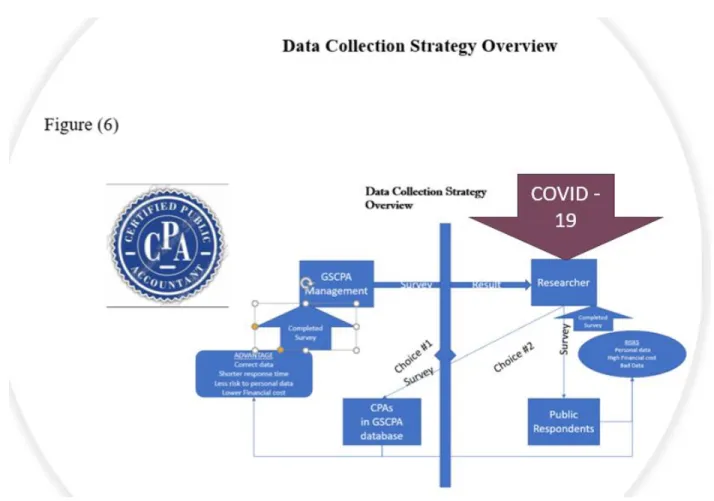
VII.3.1COVID-19 – Low Number of Responses ... 60
VII.4 Future Research ... 60
VII.4.1Area of Specialization ... 60
VII.4.2Importance of PRP ... 61
VII.4.3State of Peer Reviewers in the PRP ... 61
VII.5 Contributions Of The Study ... 61
VII.5.1Contributions to the Theory ... 61
VII.5.2Contributions to Practice ... 62
VII.6 Conclusion ... 62
REFERENCES ... 64
APPENDICES ... 68
Appendix A: Proposed Research Survey Sample ... 68
Appendix C: Lawler and Porter’s Modified Expectancy Theory ... 75
Appendix D: Positive Attributes of PRP ... 76
Appendix E: Negative Attributes of PRP ... 77
ABSTRACT
The future of the AICPA Peer Review Program: The Impact of Age By
Henry Okwuchukwu Onwumbiko August 2020
Committee Chair: Dr. Danny Bellenger
Major Academic Unit: Doctorate in Business Administration
The American Institute of Certified Public Accountants (AICPA) and its state accounting boards across the United States of America are aware of practitioners’ difficulty in recruiting and retaining young and qualified certified public accountants (CPAs), but researchers have not examined the reasons why or the effects or recruitment issues on the peer review program (PRP; aicpa.org, (2019)). Some literature has addressed reasons why college students choose accounting as their major discipline, but no research has ventured to examine the choices community CPAs make on joining the Peer Review Program (PRP).
In this study, I argue that younger CPAs choose whether to join the PRP differently from their older counterparts. This addresses the dwindling enrollment in the AICPA’s PRP by looking at the rewards that motivate CPAs, especially CPAs born after 1964, to join the PRP. Primary data used for analysis were collected using surveys completed by CPAs from the Georgia Society of
Public Accountants (GSCPA; N = 185). The survey results were quantitatively analyzed. SEM and
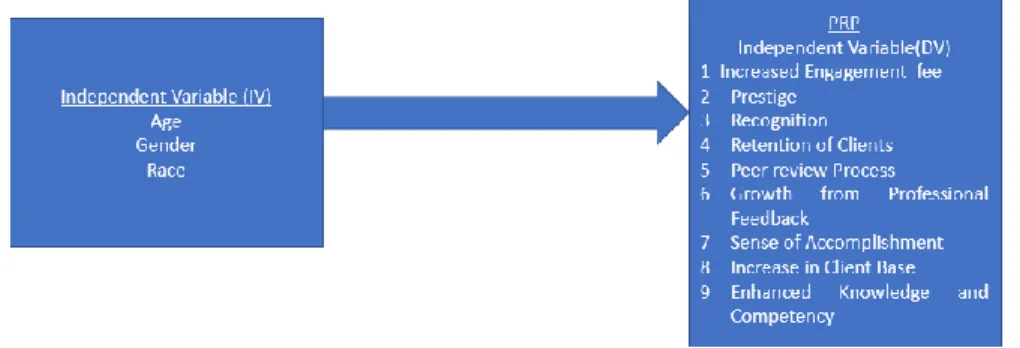
SPSS (ver. 26) were used for the analysis and to test the hypothesis. To determine whether increased engagement fees, prestige, recognition, retention of clients, peer review process, growth from professional feedback, sense of accomplishment, increased client base, and enhanced knowledge and competency significantly affected CPAs’ decisions to join the PRP, using SPSS ver. 26.
My findings show that age has no significant effect on the decision to join the PRP, contrary to my hypothesis. However, I found that CPAs perceived a low level of involvement: PRP activities negatively affect their perceived worth of the program, as shown by the negative words and rankings of attributes they returned.
The academic contribution of this study is the pioneering empirical application of expectancy theory on CPAs’ perception of the PRP. The practical contribution of this study is that the PRP’s worth to CPAs is better understood through the eyes of CPAs, and this information can be used to modify the program to better serve CPAs.
This increase in the body of knowledge and understanding on the rewards CPAs value most will help to incentivize their participation, involvement in the design and valuation of the outcomes, and the worth of those outcomes and their effects in joining the PRP. Future research is needed to explain how best to meet the needs and implications of the findings.
Age may not be an effective variable to determine why a particular CPA chooses to join the PRP; however, race is a significant predictor of the choices CPAs make in joining the PRP. It is my recommendation that efforts be intensified as early as high school to improve diversity in membership and to show CPAs the clear benefits of the PRP—that is, to effectively address the dwindling enrollment numbers currently witnessed in many areas of the accounting profession. Accountants must be encouraged to speak for themselves, to fully participate in the profession, and must be driven to create and see value in membership. The PRP should be effectively re-marketed to large employers of accounting professionals, demonstrating the real value of the PRP to them and to CPAs.
INDEX WORDS: Certified Public Accountant, Peer Review, Reward, American Institute of Certified Public Accountants, National Association of State Board of Accountants, Georgia Society of Certified Public Accountants
I CHAPTER I: INTRODUCTION
Accounting literature has shown a steady decline in the number of students choosing accounting majors, and the accounting profession is at a loss for a solution to curb the negative trend (American Institute of Certified Public Accountants [AICPA], 2019). Many studies have submitted numerous reasons for the trend: that the accounting profession is less valuable, that the rigor needed to obtain the certification is overstated, that accounting education as it is currently structured cannot sustain future demands on the accounting profession. Albrecht, W.S., & Sack, R.J., (2001). This issue is of great concern to the profession, such that state accounting boards (SABs) are expending some energy to address it. Certified public accountants (CPAs) have earned the confidence of the business world and the public by providing solutions to complex management problems. In this, the accounting profession has done well in its obligation to the public, but it is still unknown whether its obligation to individual professionals is being met
(Williams, 1964). The confidence that the accounting profession has enjoyed arose solely
through auditing work, and such work is championed by the peer review program (PRP). The PRP is a program of the AICPA that monitors qualifications, maintenance of members’
certification, and helps control the quality of work produced by CPAs in its membership. Being a CPA in the US means serving as the primary protector, the eyes and ears of an investor’s interest
(Laschenski, 2002). The PRP monitors and helps the CPA to uniformly deliver and maintain that
public trust as the public eye of the investor and users of the financial statements. More
importantly, after the 2008 global financial crisis, investors expect their auditors to protect them even more than before. The tension is to understand how to remain relevant in the public interest even in a changing environment such as the tight job market. The strong U.S. economy, with its high-paying jobs, is a double-edged sword for the accounting profession. The accounting
industry is in competition with other professions to get the best candidates in an environment that features more professionals seeking better pay, better working conditions, and many more rights and accommodations. (Frecka & Reckers, 2010).
The importance of PRP to the accounting profession cannot be overemphasized. The accounting profession relies on the PRP to show investors that CPAs are there to protect their interests. To sustain the PRP, younger CPAs must be ready to step into this crucial program in record numbers, but that is not happening. The Georgia Society of Certified Public Accountants (GSCPA) lists over 700 entities in the PRP, but only 20 peer reviewers to attend to that need (GSCPA, 2019). The financial world, businesses, and governments rely on financial statements in much of their decision-making. From management seeking to balance its activities with
investors and employees, to governments awarding contracts, to individuals seeking relationships with and loans from financial institutions, all parties need financial statements—especially audited financial statements prepared by CPAs. CPAs play an important role in providing these financial statements under the guidelines of the AICPA, which is under pressure to ensure that qualified personnel continue to join the profession and make the necessary commitments to the standards required to provide these services.
AICPA in general is struggling to maintain the interest of those born after 1964, who are choosing other interesting professions. Those who become CPAs rarely reach the flagship program of the institute, the PRP. This program maintains and monitors the proper provision of financial statements, especially those audited under AICPA guidelines.
A great deal of research has been conducted on the guidelines, requirements, and regulations in the provision of attestation engagements, but little or no literature is available on the motivating factors affecting the people who are required to maintain or provide these
services. This study adds to the understanding of the human factors motivating accountants to enter the PRP, using the framework of expectancy theory for the first time to this author’
knowledge. I give practitioners effective tools for hiring and retaining CPAs and create openings for future research that will identify how best to meet those reward attributes. I explored the
motivation of younger versus older age cohorts for joining the core PRP of the AICPAin the
state of Georgia.
I.1 The Concept of the AICPA’s Peer Review Program I.1.1 AICPA Mission and History
Founded in 1887, the American Institute of Certified Public Accountants (AICPA) represents the Certified Public Accountants (CPA) profession nationally regarding rule-making and standard-setting, and serves as an advocate before legislative bodies, public interest groups and other professional organizations. . . . The AICPA develops standards for audits of private companies and other services by CPAs; provides educational guidance materials to its members; develops and grades the Uniform CPA Examination; and monitors and enforces compliance with the profession’s technical and ethical standards. The AICPA’s founding established accountancy as a profession distinguished by rigorous educational requirements, high professional standards, a strict code of professional ethics, a licensing status and a commitment to serving the public interest. (AICPA, 2019, p.1)
The U.S. Bureau of Labor Statistics (2018) estimated that there were around 1.4 million accountants in the United States in 2018. The National Association of State Boards of
Accountancy (NASBA, 2018) claims it has licensed about 650,000 CPAs among its 55 jurisdictions. Among those licensed 650,000, the AICPA has over 429,000 CPA members (AICPA, 2019). An accountant is a bachelor’s degree holder with at least 150 semester hours of education. An accountant becomes a CPA by passing the Uniform CPA Examination and
obtaining minimum practice hours required by their state. Georgia has a requirement of one year of continuous qualifying experience (minimum of 2,000 hrs; GSCPA, 2019). The CPA on their own decides what type of practice or business they want to engage in by choice of employment or by services they provide to the public. Accountants who passed the examination and qualified
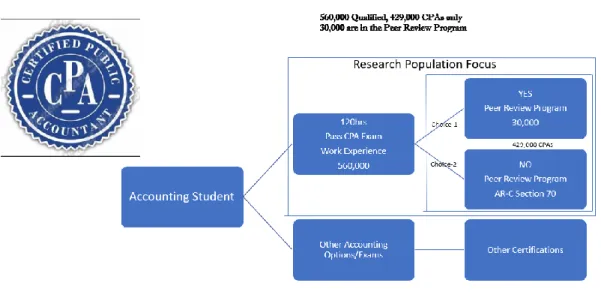
to apply were among the 650,000 licensed by the AICPA. However, only 429,000 members pledged to maintain that certification by adhering to continuing education requirements as well as paying dues to the AICPA. Out of this 429,000, 30,000, or about 7%, are in the PRP. This select group of 30,000 CPAs has voluntarily chosen to adhere to the requirements of the PRP, which are designed to monitor the quality of financial reports—reviews and audits—provided by its members to the public.
AICPA has the sole responsibility of managing, monitoring, and setting standards for maintaining the public trust in the financial services provided by its members.
One service provided by members of this association is the provision of financial statements to the public. The AICPA monitors this section of its responsibility through its PRP under the peer review board. As part of its licensing process, the AICPA requires members to join the PRP in order to provide select services in attestation engagements. This requirement is very effective across the US, as 53 state boards of accountancy (SBAs) have adopted mandatory peer review requirements, requiring their members to submit certain peer review documents as a condition of licensure (AICPA, 2018a). Enforcement of the peer review requirement is
administered by states with the capabilities to monitor and administer it:
There are 41 state CPA societies or groups of state societies. . . referred to as
‘administering entities’ (AEs), approved by the AICPA Peer Review Board (PRB) to administer the AICPA Peer Review Program for 55 licensing jurisdictions. As part of the PRB’s oversight of the Program, each administering entity is visited by a member of the AICPA’s Peer Review Board Oversight Task Force (OTF) ordinarily at least once every other year. The objective of the visits is to determine if the administering entity is following the administrative and report
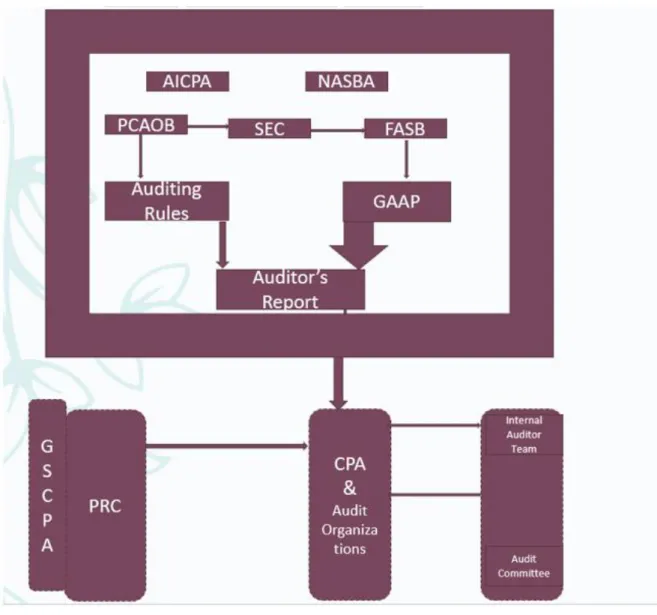
Figure (1) details author’s adaptation of the AICPA and PRP relationship with other organizations in the accounting profession.
Figure 1: Oversight of CPAs in Georgia State
Joining the PRP is optional for CPAs, except CPAs who perform services that fall within the jurisdiction of the program.
In order to be admitted to or retain their membership in the AICPA, members of the AICPA who are engaged in the practice of public accounting in the United States or its territories are required to be practicing as partners or employees of firms enrolled in an approved practice-monitoring program or, if practicing in firms not eligible to enroll, are themselves enrolled in such a program. (AICPA, 2014, p. 1)
Williams (1964) explained that auditing remains the vehicle by which the CPA gains all investor and public confidence. Other tax and consulting services provided by CPAs are not guided as much, even where they bring accounting firms higher revenues than their audit work. Many accounting firms market themselves as anything but audit firms in their publications and websites. The goal of peer review practice monitoring is to promote and enhance quality in the accounting and auditing services provided by the CPA firms and individual CPAs subject to the program. This program serves the public interest and enhances the significance of AICPA membership. Firms and individual CPAs enrolled in the program are required to undergo a peer review of their accounting and auditing practices once every 3 years (AICPA, 2014). Review is conducted by an independent evaluator, a CPA known as a peer reviewer. The AICPA oversees the program, and the review is administered by an entity approved by the AICPA to perform that role. There are two types of peer reviews: system reviews and engagement reviews. System reviews focus on a firm’s system of quality control, and engagement reviews focus on work performed on selected engagements (AICPA, 2014).
I.1.2 System Reviews
A system review is a more detailed review of the activities of a CPA.
A system Review is a type of peer review that is a study and appraisal by an independent evaluator(s), known as a peer reviewer, of a CPA firm’s system of quality control to perform accounting and auditing work. The system represents the policies and procedures that the CPA firm has designed, and is expected to follow, when performing its work. The peer reviewer’s objective is to determine whether the system is designed to ensure conformity with professional standards and whether the firm is complying with its system appropriately. (AICPA, 2019, p. 59)
Under this guideline, each firm is allowed to create its own program or pathway to meet the professional standards established by the AICPA. The firm, its staff, and its agents are responsible for following the pathway it created to meet the standards.
I.1.3 Engagement Reviews
An Engagement Review is a type of peer review that is a study and appraisal by an independent evaluator(s), known as a peer reviewer, of a sample of a CPA firm’s actual
accounting work, including accounting reports issued and documentation prepared by the CPA firm, as well as other procedures that the firm performed. By definition, CPA firms undergoing Engagement Reviews do not perform audits or other similar engagements but do perform other accounting work including reviews and compilations, which are a lower level of service than audits. The peer reviewer’s objective is to evaluate whether the CPA firm’s reports are issued and procedures performed appropriately in accordance with applicable professional standards. Therefore, the objective of an Engagement Review is different from the objectives of a System Review, which is more system oriented and involves determining whether the system is designed in conformity with applicable professional standards and whether the firm is complying with its system appropriately. (AICPA, 2019, p.61).
The peer review committee (PRC) under each state’s society of CPAs has the
responsibility of managing standards for attestation engagements by reviewing services provided by its members. Each PRC signs off on each peer review audit report prepared by an independent CPA (reviewer) for it to be accepted.
The Georgia Society of CPAs (GSCPA) is the premier professional organization for CPAs in the state of Georgia. With almost 14,000 members throughout the state, the purpose of
GSCPA is to achieve excellence by providing superior advocacy, leadership, service, lifelong learning and personal and professional development opportunities. (GSCPA, 2019, p. 1)
Out of 14,000 GSCPA members, only about 700 firms are enrolled in the PRP, because they chose to provide services covered by the program such as compilations, reviews, audits of financial statements, and some agreed-upon engagements. Each participating member makes a choice based on their perceived benefits for joining the program. Many have speculated that increased engagement fees, prestige, and sense of accomplishment are some of the benefits of joining the program. For others, joining the program is unnecessary because the services they provide do not meet the requirements. Some wonder what CPAs gain from membership. Author sees that professional associations can learn to compete for members, as many other professional bodies seeking members from the same pool of professionals considering personal and
professional gain before accepting membership. The makeup of the membership organization must not be a forced membership, but one in which members see clear benefits.
The consideration may not only be financial but can include other benefits that the associations provide for their members.
I.1.4 AR-C Section 70: Preparation of Financial Statements
AR-C is a code used and generated by the AICPA’ Accounting and Review Service Committee to identify its statements to the public. AR-C Section 70 is an exception provision made available for CPAs to still provide financial statements to their clients without joining the PRP. Under this AR-C 70 exception, all financial statements by qualifying CPAs should have a disclaimer stating that no assurance on the referenced financial statement is provided “These financial statements have not been subjected to an audit or review or compilation engagement, and no assurance is provided on them”. (AICPA, 2019a, P2614) “For purposes of complying
with AICPA membership requirements, a firm that only performs engagements to prepare financial statements under AR-C section 70 is not required to enroll in a peer review program” (AICPA, 2019a, p. 2614).
To fully comprehend the choices confronting CPAs in making this choice, there needs to be overwhelming evidence of better benefits to them professionally and personally. Other professions can provide similar or better benefits with lesser demands on one’s person or profession. In practice, a CPA can choose to only provide financial statements under AR-C section 70 without joining the PRP (see Figure 2). This means providing only financial
statements without company opinion pages or a signature page, and a requires a disclaimer that no assurance is provided. CPAs need to harness the prestige of PRP association membership to provide high quality services and obtain higher fees from clients.
Bills et al. (2008) described accounting firm associations as
Autonomous organizations in which all audit firm members are independent in legal name and legal structure. Thus, their opinions carry their individual audit firms’ names, rather than the association name, and their legal liability does not extend to other members of the associations. The association membership is subject to peer approval process, peer recommendation, client service, quality control. Members pay annual fees, members can access resources provided by the association itself and by other association members. Technical training, joint training opportunities, recommendation to best
practices, and benchmarking, outsource with other members, recognition for belonging to associations. Bills et al. (2008)
Bills et al. (2008)’ findings suggest that association membership assists small audit firms in overcoming barriers to auditing larger audit clients. They found that audit fees are higher for clients of members firms than for clients of non-member firms, suggesting that clients are willing to pay an audit fee premium to engage association member audit firms. They also found that member firms’ audits are similar quality to a size-matched sample of Big 4 audits, but member firms’ clients pay lower fee premiums than do Big 4 clients. Bills et al. (2008, p. 768)
Figure 2: General Overview
The history of the AICPA is not properly represented in the boardrooms and classrooms as it is not glamorous. The boards of AICPA and other large accounting firms have been called out for not protecting the interests of the profession or its flagship program, but instead
promoting their own consulting interests. Laschenski (2002) asked who speaks for the
accounting profession. He explained that the role of the CPA as the protector of an investor is constantly under attack in the press and in Congress, and there is no one at the leadership level of the profession who is able to craft a vision of what the accounting profession should be. “The profession’s leadership desperately needs to restate the vision that auditing and its implied knowledge of accounting is at the profession’s heart, and constitutes the core competences without which nothing matters” (Laschenski, 2002). Laschenski claims that the state societies are silent while the AICPA competes with its members instead of creating value for its membership. One must then ask whether CPAs’ PRP membership is forced or conscripted.
Do CPAs feel conscripted into the PRP of the AICPA? Who then can inform students of the program’s importance to them and the accounting profession? Upon graduation, accounting
students choose to either be certified as CPAs by passing the CPA examination or to pursue other accounting interests. Those who become CPAs must further choose whether to participate in the PRP or under the AR-C70 practice without PRP services. This study covers CPAs in the state of Georgia using the medium of the GSCPA to determine what motivates the CPAs’ choices in joining the PRP. This information can help recruiters and the AICPA develop better recruitment and retention programs to meet the public demand for better accountability and CPA products.
The PRP is well known for managing and monitoring the auditing part of CPAs’ work. Audit work is the reason for high investor confidence in CPAs.
John P Laschenski observed that “Governments license accountants to practice auditing (just as they license doctors to practice medicine) because a public interest is a stake. For capital markets to work, investors, including lenders, must know what happens to the money they entrust to an enterprise. Financial statements tell investors how their money has fared, and governments have decided that the best way for investors to be protected is for an independent accountant to attest that these statements tell the truth. To be a CPA is to be primarily a protector of investors’ interests. There is no other reason for the license.” Laschenski John P. (2002)
Audits play a crucial role in the activities of business owners, investors and customers. And they’re even more important in today’s increasingly complex business environment.
Businesses rely on audited information for decision-making, so the CPA profession is committed to performing high-quality audits. (AICPA, 2018a, p. 2)
“The PRP is integral to achieving the profession’s audit quality goals. Nearly all firms that perform audit engagements are required to undergo a peer review, which puts peer reviewers in a unique position to drive quality enhancement.” (AICPA, 2018a, p. 5) One of the important roles peer reviewers play is helping firms identify their quality issues and giving the AICPA the opportunity to address those issues through new training requirements, communications efforts, and oversight programs to help them perform their best. The AICPA claimed that peer reviewers detected 62% of nonconforming engagements in 2017— up from 18% in 2014 (AICPA, 2018a). These nonconforming engagements received remediation
and subsequently showed close to 90% improvement on their subsequent reviews” (AICPA, 2018a).
AICPA understands the importance of upholding the public trust in CPAs. To that end, the PRP is the evidence that it is doing something to maintain that trust.
In the interim, the AICPA must increase the interest of qualified candidates in joining the profession. The AICPA is making efforts to address what it sees as a monumental and existential problem. It is throwing education, more inspections and reviews, and improved training at its membership, but it has not reached out to the people performing the audit work on what could make the environment better for all stakeholders, from college enrollment to retaining peer reviewers.
The public accounting industry is currently experiencing a decline in the number of new graduates taking the CPA examination. According to the AICPA (2019), the numbers of new CPA examination candidates were 48,004 in 2016, 39,630 in 2017, and 36,827 in 2018. The same publication showed the numbers of CPA candidates who passed the fourth section of their CPA examinations were 27,889 in 2016, 25,514 in 2017, and 23,941 in 2018. At my recent meeting with the senior management team of GSCPA on February 12, 2020, they stated that not only is the number of new entrants in decline, the number of reviewers has become lower as many are withdrawing their participation and no research has been carried out to find out why or what needs to be done to curb the decline. The requirement for graduating accounting students to have completed 150 college credit hours, pass the infamous four-part CPA examination, and accumulate several hundred hours of experience may be some of the causes. Because the rate of accounting graduates venturing into public accounting with CPA designations is slowing,
designations because being a CPA firm is too costly and burdensome for employers. Thus, some firms are making themselves accounting firms without the CPA designation, especially where state CPA boards are slow to change, forgetting that investor confidence in CPAs is built on audit work. This decline in the number of new entrants and lack of diversity in the accounting industry is concerning. Lloyd et al. (2018) stated, “As firm diversity and collaboration increase, managers must utilize various criteria to motivate workers across numerous sectors and cultures continually” Lloyd et al. (2018) (p. 28). In their 2005 paper, Padgett et al. (2005) talked about the high rate of turnover in public accounting firms, such turnover is costly to firms in both training costs and in the loss of competitive advantage associated with employees’ knowledge and experience. Padgett et al. (2005)
If employees leave firms within the first few years of being hired, the firms do not recover the cost of recruiting and training, and their clients may be served less effectively by the new staff assigned to the engagement (Barton, 1994; Waller, 1985). If employees leave after they have developed knowledge and experience, the firm loses talented individuals from whom it could have drawn to select future firm managers and partners Hill et al., (1994). In a study investigating the impact of met and unmet expectations on the length of time employees
remained in public accounting, Padgett et al. (2005) concluded that lack of work–family balance is a significant contributor to the high turnover of public accounting professionals, particularly women. Studies also highlighted the role of differences in individual expectation to the extent that “actual experiences differ from initial expectation. Employees experience unmet
expectation, ‘occupational reality shock’” (Porter & Steers, 1973, p. 21).
When employee expectations are met, employees exhibit more positive job attitudes and behavior, including low turnover (Padgett et al., 2005). Simply offering flexible working
arrangements does not guarantee that employees will feel free to utilize them. The intention to utilize work arrangements is based upon both organizational and personal considerations. Despite the availability of flexible work arrangements in public accounting, it is quite possible that employees’ expectations with respect to their ability to achieve work–family balance may not be met if the accounting firms’ cultures do not support their use (Padgett et al., 2005). The tension in recruitment and retention is real and seems fundamental to the accounting industry. It causes the AICPA to form committees to review and provide policies to help them increase enrollment into the public accounting industry. Some of the suggestions brought forward included recruiting nonaccountants as members of the AICPA.
The Pathways Commission on Accounting Higher Education (2012) recognized this shortage of accounting students when it stated,
Many students beginning in accounting gain the impression that it is a narrow vocational field and professional practice is almost exclusively about auditing and taxation. The result is too many high-quality students who might otherwise be interested in pursuing accounting are not attracted to it. Promoting the utility of accounting to the broader society, and moreover, ensuring diversity among those who enter the profession is critical.
There is a gap in linkage between research and practice, practice and education, and education and research. Unlike other professions (medicine, law, etc.) where more research is clinical—deliberately directed toward problems faced by practicing professionals—accounting professionals are not significant consumers of academic accounting research. Most accountants are not educated in universities on how to read or understand academic research. Accounting researchers have difficulty gaining access to requisite data to address problems facing the business community, and academic research is often not directed toward addressing the issues most pressing to the profession. (p. 13) The Pathways Commission’s findings still ring true now, as a great amount of accounting research is concentrated on financial and accounting policies and effects, and not on the people who provide such services. More important in their findings is the difficulty in getting access to requisite data for research, even in moments when the economy is doing well and accounting professionals are in high demand.
“High demand for services is a great situation for CPAs as a whole,” said Carl Peterson, the AICPA’s vice president of small firms “From a firm management perspective, however, it poses some significant challenges” (AICPA, 2017a, p. 1).
“For the first time, respondents were asked to rank eight issues expected to have the greatest impact on how their practice operates over the next five years. Staffing was the top answer for all segments but sole practitioners” (AICPA, 2017a, p. 2).
While the importance of a peer review committee in enforcing guidelines to maintain high standards cannot be overemphasized, the need to maintain a constant flow of qualified professionals in the program is equally great. The high standards and processes put in place by the AICPA will only mean something if it finds enough qualified professionals ready to perform services.
This study shows why CPAs join or do not join the AICPA’s flagship program, and the steps necessary to address the issues with appropriate policies to stem the scarcity of qualified professionals.
What can the accounting community do to reduce the loss of employees, knowing that younger CPAs are looking elsewhere for professional satisfaction? College accounting
enrollment totaled 226,108 in 2010, 253,082 in 2015, and 253,084 in 2016 (AICPA, 2019), a
very stagnant number for the profession.Many years ago, employers required new accountants
to obtain their CPA certification within a given period of time to maintain employment and seniority. That is no longer the case because many audit assignments are now performed by nonaccountants using improved technology. The rising cost of college tuition may also compel students to seek lower-cost alternatives to reach their states’ hourly requirements for CPA licensure.
1.2 Research Component
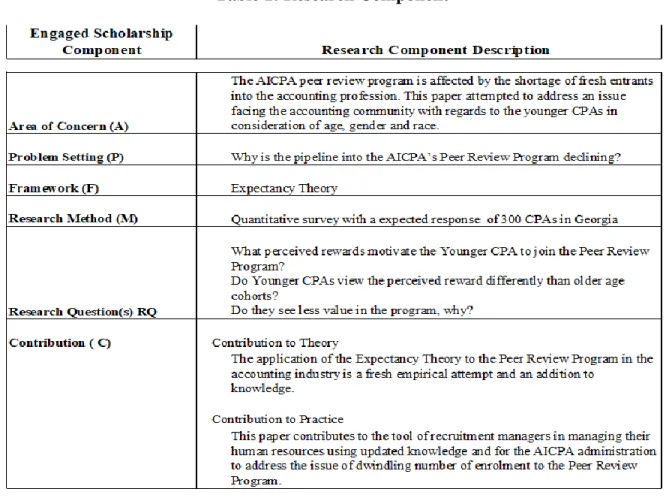
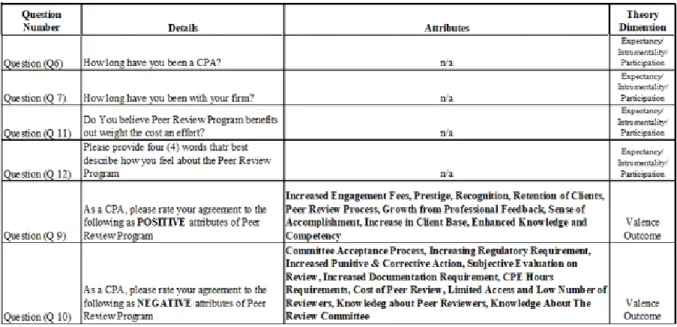
To fully examine this issue, in this study, I used the guidelines provided in Table 1 as the research component details.
Table 1: Research Component
1.2.1 The Project’s Value to the Peer Review Program and the Accounting Industry
The main objective of this study was to address the issue facing the accounting community of filling the pipeline to the PRP. To achieve this objective, I examined the likely rewards and values that CPAs apportion to the services they receive from the program and sought appropriate solutions to address the drying up of the program pipeline. The AICPA PRP serves as the defense for the profession whether things are good or bad. It serves as the eyes and ears of the association by holding and administering the role of overseer to all public accountants who subscribe to its policies to be able to provide prime services. The efforts and submission to the PRP can be painstaking for midsized and small operations in terms of cost and staff
experience needed to complete the reviews. The AICPA uses the PRP as the baseline to assure the public that its checks and balances are working well while it in turn imposes extraneous policies on its reviewers and the reviewed.
Today, the AICPA claims a membership strength of 429,000. About 160,000 own CPA firms or are in private practices, but only 30,000 are enrolled in PRPs across the United States, the majority of whom are older white males. Figure 2 shows the demographics of CPAs at CPA firms in 2016, with 60% males and 40% females. Of that population, 88% were white, 1% were Black/African American, 3% were Hispanic/Latino, and 8% were other. In the same year, the demographics of partners in CPA firms were as follows: 77% male and 23% female. Of that population, 95% were white, 0.3% were Black/African American, 2% were Hispanic/Latino, and 2.7% were other. According to the 2019 “Trend Report,” the demographics of professional staff in accounting/finance functions in U.S. CPA firms in 2018 were as follows: 53% male and 47% female. Of that population, 71% were white, 4% were Black/African American, 6% were Hispanic/Latino, and 19% were other.
In 2018, the demographics of partners in CPA firms showed no change from 2016, with 77% males and 23% females. Of that population, 91% were white, 1% were Black/African American, 2% were Hispanic/Latino, and 6% were other. (AICPA, 2019). The low participation of younger CPAs, females, and minorities in the program has received little interest in the industry, and prior research has not examined the perception of younger, female, and minority CPAs in relation to their efforts and the PRP, which this study was designed to address from the perspective of the expectancy theory. Hence, in this study, I focused on the PRP with the goal of exploring—in consideration of age, gender, and race—the importance of rewards to CPAs’ satisfaction and willingness to join the program. I empirically tested the conceptualized model of
the hypothesis. I explain the practice and theoretical implications of the findings and suggest areas for further research to help change the trend.
II CHAPTER 2: LITERATURE REVIEW II.1 Area of Concern
The demand for accounting professionals is increasing because of the high-performing economy and high potential for fluctuation in investment returns. On the other hand, GSCPA has over 10,000 members, only 700 of whom are in the PRP, which is usually the arm of the AICPA that is committed to protecting the interests of the investor. One of the factors that the PRP would use to reassure the investors is the availability of qualified professionals to produce high-quality reports. It is important to note that the AICPA’s concern that it might not be able to fill its pipeline to the PRP is real, and the literature review shows that why the downward trend has not reversed is not well understood. This study provides new insight into the trend from the CPA perspective by focusing on the value and rewards that remain important to CPAs.
Over the past few years, the U.S. economy has enjoyed unprecedented growth and moments of excess, calling for forensic checks to avoid financial lax that affected the economy in the past. Lail et al. (2017) explained that there is a need for vigilance in the accounting profession to curb the past financial reporting failures that led to the consequences of Enron, WorldCom, HealthSouth, Tyco, Lehman Brothers, MF Global, and others that resulted in incredible lost wealth, damaged public trust, and a worldwide recession. The authors proposed the argument the “fraud triangle” that when opportunity, incentives, and rationalism come together, the tendency for fraud and reporting failures increases (Lail et al., 2017).
This trend can be mitigated when staffing and human resources is no longer a major concern in the accounting profession. The AICPA’s formation of the commission to find a solution to the problem is good, but emphasis should be placed more on understanding young professionals, as the aging accounting professionals making the policies are on their way out. What, then, is the future of the PRP in the hands of younger CPAs?
II.1.1 Accounting Industry Recruitment and Retention Project
Accountants are trained to have desirable skills that include reading, writing, analytical skills, and skills needed to solve a wide range of organizational problems, planned and
unplanned. The simple fact that accountants graduate from college with technical knowledge that equips them with the capacity for enquiry, critical thinking, and logical and historical
consciousness makes them important in the business world, so that numerous business publications pay attention to the trends. Siva Nathan et al. (1997) argued that these business press articles can serve as a great resource to develop these skills in students in the accounting curriculum to make them desirable to firms.
Liu et al. (2018) examined factors that affect students’ career decisions to work for Big Four accounting firms, suggesting that mindset plays an important role in students’ aspirations to work for Big Four firms, but such aspiration does not necessarily translate to better exam
performance. They recognized that “the recruiting market for young accountancy professionals is highly competitive and challenging” (Liu et al. (2018) p. 93). “Thus, recruiting qualified staff has consistently been a major issue for accounting firms.” Liu et al. (2018, p.93). They noted that “contemporaneously, prospective professional accountants find it difficult and stressful to choose a career path and to find their first job” Liu et al. (2018, p.93) Could this be a reason the
accounting profession is still struggling to attract young, female, and African American students to major in accounting, and how can we improve the existing efforts? These students’
relationship with and first impression of the accounting profession is such that they feel that accounting is too hard and time consuming to learn, so that they do not enjoy working with numbers. A good introductory accounting course can improve the enjoyment of learning accounting, according to Violette and Cain (2018).
How one is introduced to an activity can influence one’s perception of that or other activities. The AICPA commission concluded that the accounting profession is not properly introduced to students early on and proposed an intervention to re-introduce to the public that accounting is not just about auditing and tax activities. This intervention is needed in the
corporate world, and more so in an organization that monitors what the profession presents to the public. He et al. (2017) stated that “the liaison between the company’s management and its external auditor, the audit committee (AC) plays a major role in overseeing the financial
reporting process” (p. 83). The goal here is to see if the Report Acceptance Body (RAB) affects CPAs’ decision to participate in the PRP. Of the respondents, 35% indicated that their experience with the RAB had something to do with gender, race, or relationship status. Of the respondents, 15% are no longer participating in or are considering withdrawing from the program. This subset’s perception caused them to change the services offered to consider modifying services rendered to the public and remain in compliance. The decline in recruitment is further worsened when diversity even in partners and boards is not overtly encouraged. Khlif et al. (2012)
criticized and informed policymakers about the negative effect of underrepresentation of women in management and audit professions, as represented in some accounting literature, and
suggested that future research avenues are necessary.
Lai et al.’s (2017) findings suggest that boards (audit committees) with female directors (members) are likely to demand higher audit quality, ceteris paribus. Much literature on the accounting community has centered on the involvement of females and minorities, but no one has studied the effect of policies on those responsible for managing them, such as younger, female, and minority CPAs.
The shortage of new entrants into the accounting profession compounded by the new and different expectations of younger entrants requires further investigation. It is obvious that the face of the workforce is changing as younger CPAs enter the profession with employment expectations and motivational forces that make them behave in certain ways.
II.2 Younger CPAs in the Workplace
The younger generation was born between 1965 and 2004. Many publications suggest that they are not career oriented and lack the normal “work hard” mentality of the older generation; others assert that they are very career oriented and expect recognition and rapid advancement. Sandeen (2008) argued that this generation is experienced and success oriented and expects to be recognized because they are status conscious. Ng (2010) obtained similar findings and added that their top priority is the opportunity for advancement. It is generally accepted now that promotions and pay increases rank quite high on this generation’s work-related expectations. They are identified as ambitious and impatient, expecting promotion to be quick and frequent. The accounting industry offers prestige, success, technology, opportunities for advancement, and much more, but it is still not attracting this young generation. It is now common knowledge that this younger generation values technology. Eisner (2005) stated, “Gen Y was socialized in a digital world” (p. 3). Kaifi et al. (2012) claimed that this younger
generation has greater familiarity with communication, media, and digital technologies. This suggests that they are more connected and transient than are other generations, which would ordinarily fit the AICPA’s operational models of increased technical sophistication. Every generation is influenced by its own historical events and demographics. Hershatter et al. (2010) referred to this generation as “digital natives,” whereas the rest of us, who lived prior to the development of the Internet, feel like “digital immigrants.” Being born in a highly networked
environment means they have higher expectations and appear to be more open-minded
(Fernandez, 2009). These characteristics could affect preferences in a multitude of organizational settings. According to Dubinsky et al. (1986), realism and congruence are important antecedents to several desirable job-related outcomes. Hershatter et al. (2010) acknowledged that young people have been so over-indulged that they are incapable of handling the most mundane tasks without guidance or handholding, deeming this group “Generation Whine.” Demanding more choices and selectivity is one of the 16 behaviors, Sweeney (2006) proposed this younger generation possesses. They also have group interactions that affect their choices and behavior. Fernandez (2009) stated that a team-based approach “attempts to neutralize the hierarchical structure and permit individuals of different age groups to interact as peers” (p. 7). Consequently, they tend to be more trustworthy to organizations and systems, even where loyalty has been found to be questionable in the research results. They want control and more flexibility. In his article titled, Schwantes (2017) organized flexibility into four categories relating to what this generation wants from employers: flexible time, flexible recruitment, flexible role, and flexible location.
Flexibility offers a better work–life balance and lends itself as part of organizational culture. Flexibility breeds innovation. Charles Robinson-Huiel, born in 1993, stated, “I want to make a difference,” indicating that Generation Y might be less focused on money-making ventures than on making a difference in the world. Even with all these conflicting conclusions, one would expect that many of the attributes highlighted would be found in the accounting industry to motivate this younger generation to join the membership, and if not, why? Could it be that their expectations on auditor opinions of financial stability differ from those of their older
cohorts, especially because this younger generation is also involved in the capital markets as the American public?
The AICPA internally recognized the issues and made some changes, including considering non-accountants CPAs and increasing the penalties for noncompliance, but such steps did not increase the number of new entrants, especially younger CPAs. The AICPA board’s actions are not yielding the intended results of increasing the number of graduates interested in public accounting, nor are they increasing diversity and finding more ways to motivate graduates to enroll into the PRP. I have attended many AICPA local chapter meetings, where I recorded the average attendees to be 60-year-old white males, which clearly shows that younger CPAs were nowhere close to the mix. Without an increased number of young and enthusiastic CPAs, the PRP might be headed toward a natural death.
The public perception of auditors has a significant effect on the capital markets around the world. Findings indicate that the less sophisticated financial public rates the exemplary behavior of auditors higher than the more sophisticated public does. “Nonetheless, the American public continues to expect the auditor’s opinion to be a guarantee of financial stability” (Brown, P. A., et al (2007). p. 40). To effectively address image perception differences between auditors and their public, the public perception of auditors, as well as the profession’s self-image, must be determined. The AICPA has employed a variety of strategies including advertisements and lobbying to address how the public perceives its image and sometimes imposing tasks such as increased requirements from auditors including SAS 82, SAS 99, and the Sarbanes-Oxley Acts of 2002, which many think overburden the auditors they were intended to help. This high public image of the CPA needs to be sustained with increased interest of younger CPAs in the
professionals as affecting and limiting the “best and brightest” student from enrolling in the accounting programs or profession, even in Japan, but this author noted no credible research focused on this. The study further supports the idea that CPAs should make themselves more accessible to the young population, as their opinion is well regarded in their communities.
In considering what choices and benefits CPAs consider in joining a PRP, it is equally important that the socialization of these CPAs prior to and during work be considered important. Dubinsky et al. (1986) quoted Van Maan and Schien’s (1979) organizational socialization as the “process by which an individual acquires the social knowledge and skills necessary to assume an organizational role” (p. 193). They also quoted Louis (1980), who described it as a “process by which an individual comes to appreciate the values, abilities, expected behavior and social knowledge essential for assuming an organizational role and participating as an organization member” (p. 193). These processes could occur through interpersonal and/or intrapersonal interactions such as training, internship, and education, or during regular business activities.
Communication among younger generations is dominated by technology; Internet access has become commonly available, making it highly possible for employees to work from home. Employers have enough cybersecurity for their employees to work from anywhere around the world at minimal costs. People no longer have need to meet face to face because social media has reduced the distance between employers, employees, and coworkers, reducing the need for associations. The socialization from their youth means that membership in associations might not be a necessary route to success. Accreditations such as CPA might not be necessary, as
organizations do not see the CPA as a differentiating symbol because employers no longer require it for retention. Many researchers, including Feldman (1976b), have proposed descriptive models of organizational socialization stages, such as anticipatory, accommodation, and role
management, with outcomes that include general satisfaction, mutual influence, internal work motivation, and job involvement, which I considered in this research regarding why and how CPAs consider joining the PRP.
Hence, I hypothesized that younger CPAs would gravitate toward PRP membership if they believed their efforts would lead to successful performance, which in turn would bring certain outcomes with the desired value. In this study, I explored prospective members’ perception of the PRP.
II.3 Study Significance
This research offers practitioners a novel explanation of the motivational variables in the recruitment of members to the PRP. Additionally, the application of the expectancy theory to semi-voluntary organization membership is new in the empirical sphere, and this paper filled that gap.
Existing researchers have spent time studying what the accounting industry has done to attract new entrants, but no emphasis has ben placed on the efforts and perceptions of younger CPAs with regard to their rewards from the AICPA PRP. This is why understanding how younger CPAs perceive their efforts and the rewards they receive from the program will explain their motivational force. In practice, this study contributes by offering suggestions regarding designing recruitment tools and retention techniques for younger CPAs. Studying the PRP’s effectiveness in a new light among peers is new in the literature.
Reviewing various theories such as organizational learning, exploration and exploitation, socialization, willingness, ambidexterity, and network action theory gave me confidence that expectancy theory holds the greatest promise to explain this tension in the relationship between younger CPAs and PRP membership. CPAs are not employed or paid directly by the AICPA, but
the relationship in the PRP feels like an employer/employee relationship because the main product of the CPA is the “financial report,” which is constantly reviewed and approved by AICPA representatives. Only in an employer/employee relationship would a firm submit its activity to another firm for approval and not get paid for it. Younger CPAs will gravitate toward PRP membership if they believe their efforts will lead to successful performance, which in turn will bring certain outcomes with the desired value. Because my understanding that the
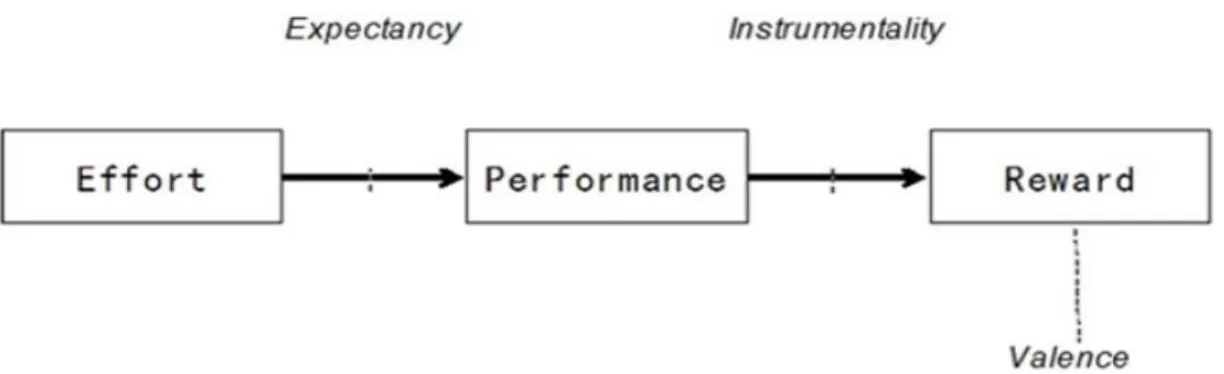
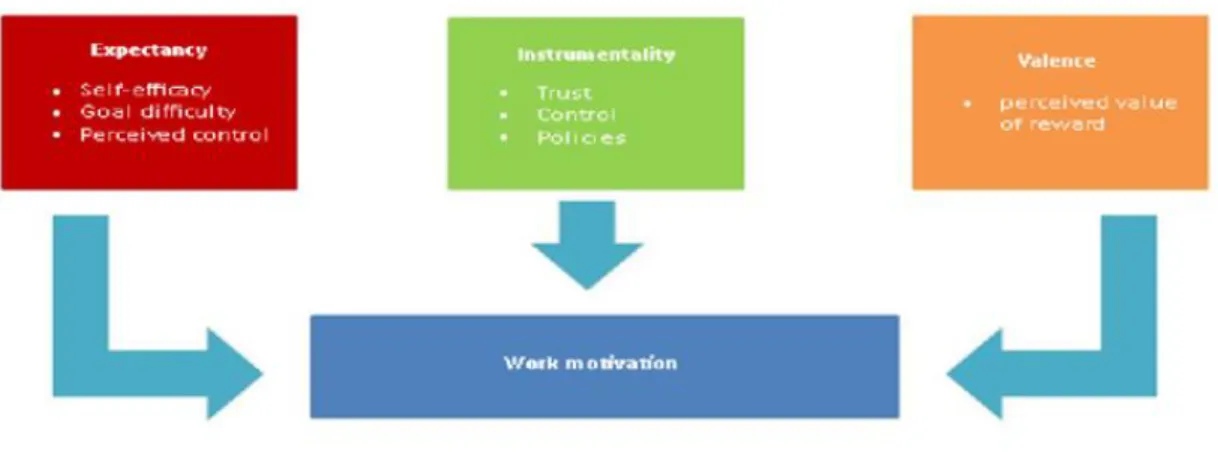
expectancy theory explains the motivation from the perspective of the performer and not the judge, I have confidence that it explains the membership direction from the perspective of the CPA. In my model, the expectancy theory addressed how members see the effects for which they worked. The instrumentality explained how members viewed the potential reward of the efforts employed, and valence explained the value members place on the rewards (Figure 3).
III CHAPTER 3: Theoretical Background and Framework III.1 Expectancy Theory
In 1964, Victor Vroom postulated that the theory known as the “expectancy theory of motivation” described motivation as a product of expectancy, instrumentality, and valence. Vroom (1964) defined motivation as a “process governing choice made by persons or lower organisms among alternative forms of voluntary activities” (p. 107). According to Lloyd et al (2018), expectancy theory is based on the understanding that individuals have choices, and that they make decisions based on which choice they perceive will lead to the best personal outcome (Figure 3). This supposition is based on three premises: expectancy, instrumentality, and valence. These three variables equal the motivation to act. Thus, the motivational force that drives
behavior is a product of the three variables, as represented in the following equation: Motivation = F (expectancy*instrumentality*valence.)
Figure 4: Vroom’s Expectancy Theory
Individually, the variables can be understood as follows: Expectancy is the anticipation that a certain effort on one’s part will lead to a specific performance. The anticipation is the
degree (between no chance and 100% certainty) to which an individual believes his or her effort will lead to goal achievement. Vroom (1964) described it as ‘an action-outcome association’. Instrumentality is the perceived likelihood that a given performance outcome on one’s part will lead to receiving an anticipated reward. Vroom described this as ‘a performance-outcome association’ which can range from no chance to 100% certainty. Valence is an individual’s perceived value of a given outcome. Vroom assigned it a value range of -1 to 1, ‘effective orientations toward particular outcomes’ (Lloyd et al. 2018).
Valence can be positive when a desired reward is attained or negative when the attained reward is something the individual intended to avoid. Valence is the perceived, anticipated satisfaction, whereas the assigned value is the actual satisfaction or utility received after attaining the reward (Lloyd et al., 2018).
Baumann and Bonner (2017) described expectancy theory as follows:
at any given time, a person (chooser) has a set of potential behaviors he or she could attempt. The chooser evaluates each of these behaviors on three characteristics; the desirability of the outcomes associated with each behavior (valence), the impact of each behavior on those outcomes, (instrumentality), and the likelihood that attempting the balance will result in successful execution of the behavior (expectancy).
They claimed that the chooser combines these evaluations multiplicatively to form an overall assessment of each behavior, referred to as the behavior motive force, then executes whichever behavior has the greatest force. They agreed that the choices are inherently within-person because the chooser selects from the set of behaviors available to him or her.
This theory is interesting because it is based on the chooser. How does the chooser see the choices available to him or her? What does the reward mean in relation to the efforts? Does the chooser feel that he or she is a part of the process by having some input and responsibility for the actions and outcomes?
The expectancy theory also applies to group interactions, where choices interplay with certain behaviors. The action of an individual might be affected by the group; members might discuss their actions or expectations with group members, even when those discussions are not evident to others. In group settings, members learn about other people and cultures, and in considering others, they identify their areas of expertise or comfort within the group to enable them to operate freely. Members can each access expectancy, instrumentality, and valence based on their beliefs about the task, about themselves, and about other members. People often
coordinate their actions even without first discussing or agreeing to it. Group members try to gain information within their own area of expertise while avoiding other members’ areas (Baumann & Bonner, 2017).
Baumann and Bonner (2017) explained the simplicity and flexibility of the expectancy theory, believing that Vroom (1964) treated the three expectancy theory characteristics as equal and allowed them to be considered in any order. Baumann and Bonner (2017) also theorized that the evaluation and selection process is typically nonconscious but allowed for conscious
deliberation as well. To apply the expectancy theory, one must first specify the outcomes and behavioral options for which valence, instrumentality, and expectancy are being evaluated. This evaluation involves three variables: trust, control, and policies—trust in who decides on the reward and its receiver, control of the decision-making process in case there is no trust, and policies that clearly state how performance will lead to reward.
The player buys into the process, owns the process, becomes responsible for the process, and ultimately believes in the process.
In this study, I investigated the level of buy-in the younger CPAs have in the PRP. Do they view their efforts as contributing to the rewards expected? Are those rewards worth the efforts?
What is the opportunity cost of the efforts put forward in maintaining or obtaining membership? Do the variables have positive implications sufficient to motivate CPAs to join or maintain their membership?
The literature suggests that a reward has the greatest impact when the chooser
consciously understands each variable. To understand these choices, consideration should be given to the chooser’s beliefs, expectations, trust in the process, trust in who decides on the reward and receiver, and trust in the process and policies. How would one be confident to participate in a process if he or she did not have any control or input in the process or result? This is especially true when a person is expected to make commitments that involve cost prior to seeing any result. The AICPA developed the PRP, where the committee is the policy proponent,
the monitor, and the final judge of what is good or bad. To understand interest or lack of interest
in the program, evaluations by the prospective participants needs to be considered.
Nimri et al. (2015) used expectancy theory to explain the motivation of public sector employees in Jordan and espoused that despite the numerous steps by the government to increase production, not many changes were found. In Jordan, the government workforce was about 40% of the entire national workforce, costing the government much financially due to over hiring, leading to decline in the quality of service. The researchers argued that it is necessary to see how employees perceive the rewards to understand where their motivation stems from, “to consider the personal motivation of public sector employees, and how they see their own personal and professional development in their public sector careers” (Nimri et al., 2015, p. 71).