Hinsliff-Smith, Kathryn (2013) Failure is not an option:
learner persistence amongst Access to Higher
Education learners on a DipHE/BSc nursing programme.
PhD thesis, University of Nottingham.
Access from the University of Nottingham repository:
http://eprints.nottingham.ac.uk/13831/1/hinsliff-smith.pdf
Copyright and reuse:
The Nottingham ePrints service makes this work by researchers of the University of
Nottingham available open access under the following conditions.
·
Copyright and all moral rights to the version of the paper presented here belong to
the individual author(s) and/or other copyright owners.
·
To the extent reasonable and practicable the material made available in Nottingham
ePrints has been checked for eligibility before being made available.
·
Copies of full items can be used for personal research or study, educational, or
not-for-profit purposes without prior permission or charge provided that the authors, title
and full bibliographic details are credited, a hyperlink and/or URL is given for the
original metadata page and the content is not changed in any way.
·
Quotations or similar reproductions must be sufficiently acknowledged.
Please see our full end user licence at:
http://eprints.nottingham.ac.uk/end_user_agreement.pdf
A note on versions:
The version presented here may differ from the published version or from the version of
record. If you wish to cite this item you are advised to consult the publisher’s version. Please
see the repository url above for details on accessing the published version and note that
access may require a subscription.
Failure is not an option: Learner
Persistence amongst Access to Higher
Education learners on a DipHE/BSc nursing
programme
Kathryn Hinsliff-Smith
The University of Nottingham
For the degree of Doctor of Philosophy
Page | i
Abstract
Since the late 1990s, the UK Government has a policy to support Widening Participation (WP) measures in UK universities. These measures aimed to increase the demographic and socio-economic profile of the undergraduate student population across all UK universities. The target for these measures includes a focus on mature applicants, women entrants, and ethnic minority representation. Latest data (2010/2011) from the Higher Education Statistics Agency (HESA) indicates by far the largest proportion of full-time entrants to undergraduate places is the ‘traditional’ 19-year entrant with A level qualifications (288,590). By comparison a further 77,155 entrants are mature, those aged over 21, who have gained a variety of accepted entry qualifications. One such recognised qualification is that of an Access to Higher Education Diploma. The Access programme is usually undertaken by mature students, with no previous qualifications, who after successful completion of a one-year full-time course are then able to apply for an undergraduate course. It is estimated that one in four mature entrants will enter a university course with an Access qualification (HEFCE, 2006).
Against a backdrop of a changing and more diverse student population, a discourse has emerged around the retention of HE students. Current data suggests that one in every twelve undergraduates will leave their university programme in the first year of study (Thomas, 2012a). The attrition of students who have entered university is not only an economic cost to the institution and the individual but is considered a wider social cost. Within the body of work on student retention there is an emerging focus on pre-registration nursing programmes, which were traditionally delivered in nursing schools attached to hospitals but since the 1990s are now delivered in HE institutions. Historically there have been concerns about the levels of student attrition from all nursing programmes and this has continued to the present day with individual Schools of Nursing and the Department of Health trying to address the issues around retaining pre-registration nursing students.
Concerns around student retention have given rise to a prolific and substantive body of work around HE student retention both in the UK and wider afield, with much of this work underpinned by the seminal work of Tinto
Page | ii
(2002, 1993). Studies on student retention agree that understanding and addressing the issues of student retention is complex, with multiple reasons why students leave early. The largest proportion of research undertaken on UK pre-registration nursing programmes has focussed on the reasons why students leave pre-registration nursing programmes rather than what makes them stay. The research questions asked in this thesis are not around student retention, although this phenomenon provides a backdrop to the study, but around learner persistence by mature Access entrants on UK pre-registration nursing programme. This research raises important questions about what is enabling mature entrants to persist on their programme, since data indicates that mature entrants account for 46% of all nursing students who enter pre-registration nursing programmes in the UK.
This study is located in one large UK School of Nursing that attracts over 19% of its student cohort as mature Access entrants. This study follows nine individuals through their second year of a three-year programme to understand their transition, through this mid-point year, as an understanding of the transitions for these mature entrants is currently lacking in the literature. The nine participants were recruited via an electronic survey and were interviewed on three occasions throughout their 2nd year of a DipHE/BSc pre-registration nursing course in order to gain an understanding of their lived experiences as mature Access entrants. Data analysis in this study utilised Glaser and Strauss (1967) classic grounded theory (CGT) methodology.
The findings from this CGT study indicate two phases in the participants’ journey enabling them to successfully complete their pre-registration nursing programme: Phase One - pre entry to university and participant journey towards their current course and Phase Two – continued journeys in the first 2 years of nurse training with 5 main categories metaphorically described as:
‘Home Territory’, ‘No Man’s Land’, ‘I Can See Land, ‘Lost Bearings’ and ‘Wearing the Uniform’. These metaphor categories describe a journey that is undertaken from when participants left school and made their early career decisions, through to participants exploring opportunities of further study and gaining an Access qualification to participants been accepted onto a DipHE/BSc pre-registration nursing programme.
Page | iii
The study findings indicate that despite the known transition hurdles that result in some student nurses leaving their course early, the nine participants in this study were able to persist successfully on their programme. The study findings suggest that there are significant factors that have enabled these nine mature Access entrants to have a ‘persistent’ approach. These are the ‘Learner Profile’, ‘On-programme’ and ‘Environmental’ factors and are presented as a framework for a grounded theory of mature learner persistence directly taken from the lived experiences of the nine individuals in this study.
These significant factors for a theory of learner persistence include an overarching ‘profile of the learner’ that enters a pre-registration programme and includes their entry qualification, age, career aspiration, and previous experience of nursing, whilst ‘On-programme’ factors aid learners’ ability to overcome the transitions into university and the clinical practice requirements of the programme. The skills and experiences gained through obtaining an Access qualification and the preparation for higher-level study are significant factors in enabling the study participants to overcome the difficulties that they experienced over their first two years of their DipHE/BSc programme. An additional factor for their persistence was a strong career motivation, a desire to become a nurse. This career motivation underpinned the reasons why participants choose an Access programme, provided a route into university and enabled them to focus on their DipHE/BSc pre-registration nursing programme.
UK Schools of Nursing who offer pre-registration programmes are required to attract and retain the very best student nurses. This presented theory of mature student learner persistence raises important questions about the policy for selection, recruitment, and retention by all HE providers and policy makers of nurse education. The findings demonstrate how different factors enable learners to persist and recommends that these should be incorporated into the recruitment stage and furthermore how to support learners during the 3-years of a pre-registration nursing programme.
Page | iv
Acknowledgements
My first acknowledgement must go the nine individuals who during their own transition to university and their pre-registration nursing programme; they gave freely of their time to be interviewed during their second year of study. Without them, this thesis would not exist. Whilst they are pseudonyms in this thesis, they know who they are: Adam, Charles, Emily, Emma, Jane, Judith, Kate, Martha, and Patricia.
It seems strange composing this acknowledgement page some five years after I had an initial meeting with Dr. Peter Gates in The School of Education. This meeting was to discuss an idea about a research topic on mature applicants to university, in particular those that enter with an Access to Higher Education qualification. I am eternally grateful to Peter who provided the support and guidance that enabled me to secure funding for the Masters in Educational Research Methods and then further 3-years of funding from the School of Education. My heartfelt thanks for his continual support, encouragement and the occasional coffee!
My thanks must also be paid to Dr. Marion Leducq, my second supervisor, from the School of Nursing, Midwifery, and Physiotherapy who agreed to ‘take me on’. This was despite her heavy work schedule and her new role as Retention Lead for the School. Her clinical experience and guidance on aspects of the curriculum was equally important, as was her support during the last 4-years, thank you.
Having been formally diagnosed as dyslexic, as I commenced my Masters programme, I must acknowledge the continuous support that Christine Carter and in the last year, Annie who provided ongoing advice from the student support centre at Nottingham. They gave me the confidence to overcome any writing difficulties I experienced over the past 5 years, and I would like to thank them for this.
And finally, Ross, Amy, and Molly you were there when I needed you and understood my desire to achieve this dream. Love you.
Page | v
Abstract
Acknowledgements Table of Contents
List of Tables, Figures, and Graphs List of Appendices
List of Abbreviations
Contents
Page 1 Prologue: Personal and Professional Context 2 My journey in the formative school years 4 Working with mature learners
7 Introduction to the thesis chapters
Page 10 Chapter 1: UK pre-registration nursing programmes in the Higher Education sector – an overview
11 Study Focus
14 UK pre-registration nursing programme challenges 18 Historical perspectives: Project 2000 nursing scheme 21 The UK Widening Participation (WP) Policy
21 Widening Participation in the beginning 26 Widening Participation Policy and mature
students
29 Widening Participation and pre-registration nursing programmes
31 Access to Higher Education qualification
36 Access entrants to pre-registration programmes
Page | vi
Page 41 Chapter 2: What is known about the challenges of student retention: Perspectives from UK Higher Education and pre-registration nursing programmes 42 Student retention on UK Higher Education programmes 45 Underpinnings of the work by Tinto (2002, 1993) 48 Language in the context of student retention 51 Social Class Perspectives in HE
55 Pre-registration nursing retention at one East Midlands University
58 Emerging themes – UK pre-registration nursing student retention
59 - Student Recruitment
63 - Programme Transitions
68 Chapter Summary
Page 71 Chapter 3: Methodological Framework – Classic Grounded Theory (CGT)
72 Concepts of grounded theory (GT) 73 Different grounded theory perspectives 76 What makes grounded theory ‘grounded’? 78 Generating substantive theory
80 Justification of CGT methodology 83 Reviewing the literature
86 Theory testing
87 Theoretical perspective
88 Ethics
Page | vii
Page 91 Chapter 4: Strategies for data collection
92 Introduction
92 Carrying out the fieldwork 95 The nine study participants
99 Pilot online survey
100 Stage One-Online Data Collection - Ethics and ‘Netiquette’
- Participant recruitment - Second year cohort - Online survey results
110 Stage Two–Participant Interviews - Interview structure and schedule - Pilot interview
- Conducting the interviews
126 Memos
126 Researcher bias
129 Limitations of the study
-
Cohort and gender imbalances-
Selection of study site130 Chapter summary
Page 132 Chapter 5: A desire to be a nurse
133 Introduction
135 Data analysis
135 CGT stages: theoretical sampling 136 CGT stages: open coding
139 CGT stages: category formation 140 CGT stages: sensitizing concepts
Page | viii
145 CGT stages: selective coding
147 CGT stages: forming the categories
Page 148 Phase One - Pre entry to university and participant journey towards their current course:
149 Category Home Territory
157 Category No Man’s Land
161 Category I Can See Land
Page 166 Phase Two – Continued journeys in the first 2 years of nurse training
168 Category Lost Bearings 171 Sub category: Role Conflict
177 Sub category: Degree of self-doubt 180 Category Wearing the Uniform 184 Core Category – Desire to be a nurse
188 Chapter Summary
Page 191 Chapter 6: What does this study tell us about learner persistence
192 Introduction
193 Individual career decisions 195 Career decisions – key stages
197 Career planning
203 Parental influence
205 Influencing factors for choosing nursing 209 Professional socialization
217 A grounded theory of learner persistence 219 - Learner Profile
221 - On programme factors 225 - Environmental factors
Page | ix
227 CGT testing
231 Chapter Summary
Page 234 Chapter 7: Conclusions, Policy, and Practice Implications
235 Introduction
235 Research Question One:
What are the lived experiences for ‘persistent’ Access entrants on a pre-registration DipHE/BSc programme?
240 Research Question Two:
What theory emerges about the nature of ‘learner persistence’ in the context of higher education nursing programmes?
245 Research Question Three:
How should a new understanding of learner persistence be reflected in future policy and practice?
253 Study conclusions and overall summary References
Page | x
List of Tables
Page 17 Table 1: UK DOH Commissioned places pre-registration nursing
Page 28 Table 2: WP Allocations for 2010/11
Page 33 Table 3: Registered Access learners 2005–2010
Page 37 Table 4: Access applications to UK universities via UCAS 2005-2011
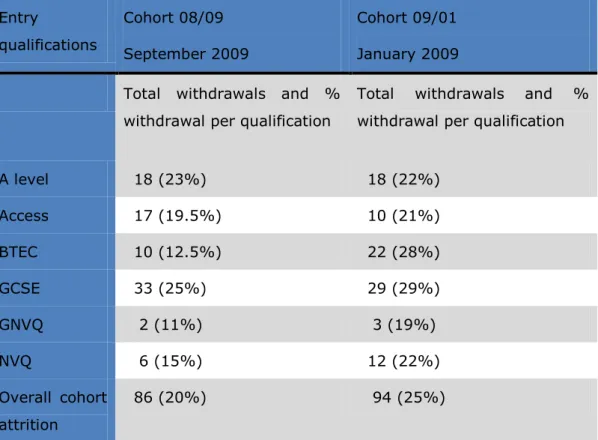
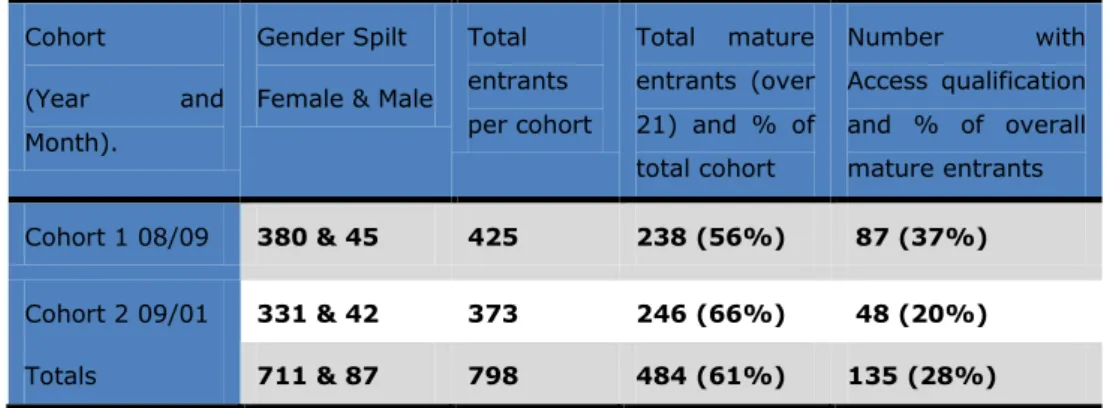
Page 56 Table 5: Profile of entrants on the two study cohorts
Page 57 Table 6: Rates of attrition per entry qualification per study cohort
Page 104 Table 7: Breakdown of participants per cohort (September, January)
Page 105 Table 8: Profile of entrants to study cohort 1 & 2 (September and January)
Page 107 Table 9: Online survey response levels
Page 108 Table 10: Confirmed interviews from the on-line survey
Page 140 Table 11: Manifest content analysis
Page 163 Table 12: Participant care responsibility
Page 165 Table 13: Previous care exposure
Page 172 Table 14: Participants employment prior to Access course
Page | xi
List of Figures
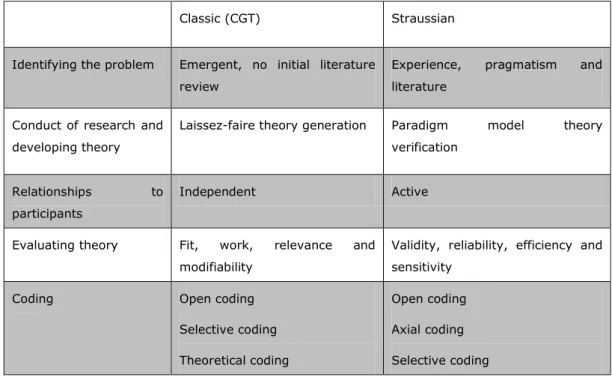
Page 74 Figure 1: Comparison of grounded theory methodologies Page 76 Figure 2: Four stages of CGT analysis
Page 94 Figure 3: Research activity planning Page 149 Figure 4: Category Home Territory Page 157 Figure 5: Category No Man’s Land Page 161 Figure 6: Category I Can See Land Page 168 Figure 7: Category Lost Bearings
Page 180 Figure 8: Category Wearing the Uniform
Page 214 Figure 9: Benner’s (1984) Stages of Nursing Proficiency (Basic Student Socialization)
Page 219 Figure 10 – Model of Learner Persistence on a DipHE/BSc nursing programme
List of Graphs
Page 16 Graph 1: Reported attrition levels – England
Page 113 Graph 2: Participant distribution per branch and centre of learning
Appendices
Appendix 1: Data for entrants 2005 – 2009 for Nottingham Appendix 2: Participant consent form
Appendix 3: Participant information sheet Appendix 4: Participant covering letter Appendix 5: Interview schedule 1 Appendix 6: Interview schedule 2 Appendix 7: Interview schedule 3
Page | xii
Abbreviations
AVA Authorised Validating Authorities
A levels Advanced Level
BERA British Educational Research Association
BSc/DipHE Bachelor of Science/Diploma in Higher Education
BSP Basic Social Process
BTEC Business, Technology, and Engineering Council
CGT Classic Grounded Theory
CINAHL Cumulative Index to Nursing and Allied Health Literature CSE Certificate of Secondary Education
DFEE Department for Education and Employment
DfES Department for Education and Skills
DoH Department of Health
DoN Division of Nursing
FE Further Education
FECs Further Education Colleges
FG Focus Group
FiF First in Family
GCSE General Certificate of Education
GHQ General Health Questionnaire
GT Grounded theory
HCAs Health Care Assistants
HE Higher Education
HEA Higher Education Academy
HEIs Higher Education Institutions
HEFCE Higher Education Funding Council for England HESA Higher Education Statistics Agency
IAG Information, Advice, and Guidance
ISS Interview Score Sheet
NAO National Audit Office
NHS National Health Service
NMAS Nursing and Midwifery Admissions Service
NMC Nursing and Midwifery Council
NVQ National Vocational Qualification
Page | xiii
OFFA Office for Fair Access
ONS Office for National Statistics
ORM Online Research methods
OU Open University
PCs Personal Computers
PCT Primary Care Trusts
PHD Doctor of Philosophy
PGCE Post Graduate Certificate in Education
QAA Quality Assurance Agency
QMC Queens Medical Centre
RCN Royal College of Nursing
SoE School of Education
SoN School of Nursing
SU Students Union
UCAS Universities and Colleges Admissions Service
UK United Kingdom
UKCC United Kingdom Central Council for Nursing, Midwifery and Health Visiting
US United States
USA United States of America
WEA Workers Education Association
Page | - 1 -
Prologue: Personal and Professional Context
This section is really about the beginning of how this
thesis came to be; it tells how as a ‘novice’ researcher,
my
journey ends in submission of this thesis a thesis I am
justly proud of. I hope that telling you my story will help
to provide the background and the extent to why I feel
passionately and at times empathetic about the journeys
that the nine participants in this study have taken in
order to pursue their desire; a desire to become a registered
nurse. I am pleased to say that as I complete the thesis all
nine participants have graduated and are now registered
staff nurses they, like me, are starting a new journey.
Page | - 2 -
Prologue My journey in the formative school years
I was no different from any other child in my years at primary school, a suburban local primary school in a district of Leeds, a large multicultural City in the North of England. I was educated during the late 1960s at an infant and junior school, which was located on the same school site, then moved at the age of 14 to a large (over 800 pupils) comprehensive school. I enjoyed my formative school years although my memory of my first day at school having just turned five, I wasn‟t born until August, was crying and feeling that the teacher didn‟t like me much! I enjoyed these early years at school, or rather I cannot remember, other than my first day that I hated going. By the age of 9 or 10, I was very conscious that spelling was something I did not excel in. I dreaded weekly spelling tests and found no comfort from receiving the lowest grade each week. My consolation was that I was an avid reader something which my father was particularly pleased with as we chose our books from the local library; he was also an avid reader. Looking back at my school reports, other than my poor spelling grades and my average reading age, calculated somehow by the form teacher, there was nothing to indicate that I was anything but an average school kid. It was only when I was about to embark on my Masters, having successfully gained a Postgraduate Certificate in Education (PGCE), a 1st Class BA (Hons) and HND, that I was formally diagnosed as dyslexic.
My parents were what we would term „working-class‟. Once my sister and I started at school, our mother worked as a school dinner lady at a local school, a part-time job she held for over 28 years. My father was a trained tailor and ended his working life as the manager of a High Street man‟s outfitters. My parents were both brought up in Leeds and were from working class families; my grandfathers were both trained electricians and as a result neither served in the Second World War, whilst my grandmothers were responsible for raising the family. My father was raised in social housing on a large new style estate with four siblings and a stepmother, my maternal grandmother died before I was born. Whilst my mother lived quite the opposite in a detached owned property, my grandfather inherited money to
Page | - 3 -
purchase a house outright in 1957. Therefore, although their home circumstances were different both suburbs were very much working class, with social housing or rented back-to-back terrace houses, which was common in these two suburbs of Leeds. Indeed, for the first three years of my life we lived in a back-to-back although my parents had a mortgage on this property before moving to a larger property in a „better‟ area.
It was during my time at the comprehensive school from the age of 14 to 16 that I became aware that I had an opportunity to excel in my schoolwork. In transferring from my primary school and selecting my next school, I remember deliberately choosing one that had a better reputation, it „wasn‟t as rough‟. This was more a judgment of the type of pupils who were attending rather than the academic standards, which we consider nowadays. I found the level of schoolwork enjoyable and relatively easy, we were „placed‟ in specific qualification levels whether that be CSE or O levels and it was clear to me, that once placed, you were not likely to move from one level to another. I was acutely aware, even at this stage, that I had a chance to do well, particularly as the rest of my class was rowdy, raucous and enjoyed tormenting the „soft‟ teachers. My school reports upheld the view that I was doing well and I quickly got the nickname of „Swot‟, winning the annual prize for achievement three years running. Despite this, I was only destined to be entered for CSE exams. How different perhaps from what we expect in our secondary schools of today whereby pupils are encouraged to strive higher and receive ongoing feedback rather than one page annual report received in the 70s.
It was at the end of my first year in the comprehensive that my life changed; my father died. Looking back on this time, I only took one-day leave from school to attend my father‟s funeral and then my school life appeared to continue uninterrupted. I distinctly remember no mention made at school, although I did have to take a note asking for a day off! The rest of my formal education was very much about doing the very best, not causing any concerns for my mother who was left to bring up two daughters aged 13 and
Page | - 4 -
10, and thinking about a job when I left school. There was never any mention of continuing my education past 16, the world of work was the accepted norm for my classmates and me. At this time, I was not aware of anyone going to college or staying on in the school 6th form, we were in the wrong set!
Working with mature learners
When interviewing my participants, who have similar stories to tell about their formal education, we were a generation that undertook no formal career planning; our career trajectory was about gaining qualifications and entering the work place. However, I distinctly remember a teacher coming to our home and talking to Mum about what I wanted to do. I wanted to go to college and train to be a baker. I was advised that I was clever than that and I should look for work in an office environment, which I did. This was despite, in the last year of my schooling, attending a local training college for a baking taster programme, one day a week. I have no regrets about this decision as this path has led me to where I am today.
My interest in the aspirations of mature applicants to Higher Education was only to crystallise when I started to work in a large Further Education College (FEC) in Nottingham where I was recruited as a Programme Manager for Leisure and Tourism Programmes. During this time, over 5 years, we developed a range of programmes specifically aimed at mature students, in particular women. I realised that I had a similar story and an understanding about the challenges of undertaking further study, particularly the need to make the transition as smooth as possible whilst being supportive of their needs; I too was a „mature‟ student. At the tender age of 28, during the early 1990s, mature students were very much a minority; I left a successful career and entered the world of education undertaking a full-time Higher National Diploma followed by a BA (Hons) in Tourism Business Management, gaining a 1st Class before going into FE teaching.
The journeys that the nine participants in this study tell are not dissimilar to those that I came across during my years of working in the FE sector. Many
Page | - 5 -
of the mature students, a majority of whom were women returners, had unmet aspirations, whether that be to gain different employment opportunities or to improve or gain higher qualifications. For many of the learners I encountered, their stories were inspirational. They had a desire to succeed, they viewed this time as „time for them‟, and I saw our role within the college to make this happen for them. Today I still have contact with a few of these inspirational students.
My obvious interest and enjoyment of working with mature students continued with my employment in 2002 at an East Midlands university within a newly formed unit: Widening Participation. This was the period when there was clear political agenda to increase the student population and meet the then Labour Government target for higher education “50% of 18 – 30 year olds gaining some experience of Higher Education” (Quinn, 2005) brought about by the recent education reviews (Dearing, 1997, Kennedy, 1997). Higher Education institutions (HEIs) were bidding for funding allocations from Higher Education Funding Council (HEFCE) to support projects and schemes in order to meet the Government targets. The HEFCE 1998 circular (HEFCE, 1998) clearly stated how monies would be used for these WP projects,
to build partnerships with other organisations to widen participation in HE (Thompson, 2000:127)
At my institution, within the School of Education a „Widening Participation‟ (WP) unit was created to develop and manage WP initiatives to help meet university wide WP targets over the next 3 years (2002-2005). This was at a time when, excluding the School of Nursing, undergraduate programmes at this institution attracted just over 3% of its student cohort as mature entrants compared to a UK wide mature student population of 22.6% (HESA, 2002). From these early days of targeted WP work the institution has seen increases in its demographic student profile with Higher Education Statistics Agency (HESA) figures indicating that in 2009/2010 some 14.5% (n=860) was new mature undergraduates enrolled, an 11.5% increase (Higher Education Statistics Agency) (HESA, 2011).
Page | - 6 -
The focus for this thesis is not the changing shape of the UK higher education (HE) sector brought about by WP policy, that understandably has some bearing on the participants‟ and my own career trajectory, but that of the nine participants and their stories, told I hope as an accurate reflection of their journeys. My aim, in this qualitative study is to tell their story, but as Wolcott (2009) warns, it is not to say that my interpretation is the only one, but it is hoped that readers can make their own interpretations of what was told (Wolcott, 2009).
I
I
deeds there is not always an indication of virtue or vice, indeed a
small thing like a phrase or a word often makes a greater revelation
Page | - 7 -
Introduction to the thesis chapters
Chapter One, UK pre-registration nursing programmes in the Higher Education sector – an overview sets the scene for this study and describes the context of UK pre-registration nurse education that is established within the Higher Education sector. It is a sector that has undergone many challenges including the introduction of Widening Participation (WP) Policy that has influenced a changing profile of entrants to UK universities, including pre-registration nursing programmes. This changing profile includes mature students and those entering with an Access to Higher Education qualification.
Chapter Two, What is known about the challenges of student retention?: Perspectives from UK Higher Education and pre-registration nursing programmes introduces the concepts of student retention and learner attrition within a UK and wider context of university provision and explores this against work by Tinto (2002, 1993) to provide a framework for this study on learner persistence. The chapter describes the language used within the context of student retention before presenting the challenges and emerging themes faced by UK Schools of Nursing. Two clear themes emerge, student recruitment and programme transitions, and these are presented in more detail to underpin the background to which this study was conducted.
Chapter Three, Methodological framework – Classic Ground Theory (CGT) this chapter introduces the dimensions of CGT (Glaser and Strauss, 1967) and how studies are conducted using this approach as opposed to other GT methods. The chapter then provides a rationale for the use of this methodology in light of the research aims and interest that of learner persistence on a UK pre-registration nursing programme.
Chapter Four, Strategies for data collection provides the methods taken for the recruitment and interviewing of mature, Access entrants as participants for this study. The chapter describes the rationale for the choices made including the online recruitment survey and the individual interviews conducted over a 15-month period. Included is the research timeframe for the data collection during 2009-2010 and discussion on the planning and interview structure for the 27 interviews.
Page | - 8 -
Chapter Five, Resolving a desire to be a nurse is the overarching description of the five metaphor categories that emerged from the analysis of the interview data. The analysis of data identified that for the nine participants there were two phases to their journey towards gaining professional nurse registration. Phase One related their pre-entry journey to their current pre-registration university programme with three metaphor categories identified: „Home Territory‟, No Man‟s Land, „I Can See Land‟. Phase Two describes the participants‟ continued journey having secured a place on a pre-registration nursing programme having successfully gained an Access to HE qualification. Two metaphor categories describe this second phase; „Lost Bearings‟ and „Wearing the Uniform‟ with two sub-categories: Role conflict and Degree of self-doubt.
Chapter Six, What does this study tell us about learner persistence discusses the findings in light of the current literature and identifies new aspects of learner persistence currently not in the literature on student retention or learner persistence. These include the lack of career planning, limited career decisions taken by participants and the influencing factors of parents despite a strong desire to train to be a nurse earlier in the participants‟ lives. Despite established frameworks for professional socialization within the nursing profession, for these nine mature entrants there was often a conflict between their mature life skills, previous care experience, and them as student nurses, which this chapter describes in more detail. From the findings, this chapter suggests that significant factors should be considered in order to understand a different dimension of student retention, that of learner persistence.
Chapter Seven, Conclusions, Policy, and Practice Implications. This chapter returns to the three research questions and reviews them in light of the findings from this empirical study. This chapter provides over-arching conclusions about the nature of learner persistence for mature entrants to a pre-registration nursing programme and makes suggestions for a review of current policy for student retention strategies on UK pre-registration nursing programmes, drawing upon the established work within the HE sector. Since pre-registration nursing is driven by professional practice guidelines this
Page | - 9 -
chapter also discusses the implications of the findings for nurse educators and the wider nursing profession. The chapter concludes with an overall study summary.
Page | - 10 -
Chapter One
UK pre-registration nursing programmes in
the Higher Education sector
–
an overview
This first chapter sets out the context for the basis of this thesis. The
focus for the study is to explore learner persistence amongst mature
students on a pre-registration nursing programme at one UK
School of Nursing. However, the context of nurse education has
changed over the past 20 years and Schools of Nursing are now
established within UK Higher Education universities The chapter
describes changes to the HE sector brought about by a Widening
Participation (WP) Policy and increasing number of mature and
non-traditional learners. The chapter highlights the challenges that
pre-registration face in light of WP policy and the move to
Page | - 11 -
Study Focus
The focus for this study developed because of my experiences of working with mature learners in two local further education colleges in the East Midlands during the late 1990s. At this time, I was acutely aware that more mature learners were wishing to re-engage in education by attending locally provided courses. These courses enabled them to gain or improve their existing qualifications. The end goal at the time for most of these learners, who were predominately women, was to enter the workplace and to „establish‟ themselves.
During this time, there were changes and reforms within university establishments. In particular, after the formation of post 1992 universities, these „new universities‟ forged strategic alliances with local further education colleges in order to extend their provision and therefore increase their student population. These contractual arrangements enabled many mature applicants to gain access to their local university and higher-level study, which were previously excluded to them due in part to the entry requirements.
Through my work in Widening Participation at a Russell group university, I saw first-hand the same type of learners, mature men and women, who were working towards gaining entry to university with an Access to HE qualification. During this period, my main role was to encourage, support, and raise aspirations of potential applicants to all universities, pre or post 1992 establishments who had gained such a qualification. It is for these reasons that I am well placed to explore, discuss, and understand the phenomenon of leaner persistence since this impinges on both my personal journey and in my professional context as a tutor and teacher.
However, since my role stopped at the „university gate‟ I had no indication of how these successful applicants coped with their new environments. Nor did I understand how those entering a pre-registration nursing programme, which is different from „traditional‟ university courses, were able to cope with the
Page | - 12 -
multifaceted demands of academic life, clinical practice, and their home life that could include partners, children, other caring responsibilities, and in some cases still making a financial contribution to the household.
Studies demonstrate that retention of students within HEIs is a continual problem (Thomas, 2012b, Yorke, 2012, Jones, 2008a); this is no less a problem within pre-registration programmes, which aim to provide employees within the UK health service (Wray et al., 2010, DoH, 2006a, Trotter and Cove, 2005). The retention of students is both an economic and social concern and one that in the last 10 - 15 years has gained prominence in the literature, although the issue of student retention is not new within nursing programmes and has in fact a concern since the 1930s (Deary et al., 2003). However, my interest lies in those mature students who manage to persist on their pre-registration nursing programmes, particularly as they juggle outside commitments and are the very entrants on whom this study will focus. This is against the backdrop of recent work of a large data set of over 12,000 „early leavers‟ from university. They reported that mature „non-traditional‟ entrants, without recent A levels, from the FE sector are more likely to leave (Rose-Adams, 2012:4).
Reviewing the literature identified there is a paucity of work that explores mature student persistence on pre-registration nurse programmes in the UK. The body of work that does exist and includes mature entrants, explores the issues of student attrition, many within the 1st year of pre-registration training (Fergy et al., 2008, Jones and Johnston, 1997). Therefore, a gap exists for a study that examines mature learner persistence, one that considers the experiences after the 1st year. This is because the 1st year is widely accepted to have a number of known triggers for learners to leave early. These are known as the transitions, relating to: clinical placements, academic, and course requirements, personal and social pressures, and financial constraints.
Page | - 13 -
Therefore, I concluded that for this study, I intended to follow the journeys of nine mature Access entrants across their 2nd academic year on a pre-registration DipHE/BSc nursing programme. This study aims to illuminate the academic and personal aspects and how these two worlds are interwoven as they progress through their second year of training. The questions that I seek to explore involve Access entrants who have passed the university „gate‟, completed their first year and are about to embark on their second year of training as they appear to demonstrate learner persistence by overcoming and negotiating the known transitions of the first year experience. Mature Access entrants are an important source of recruits for many university courses none more so than pre-registration nursing programmes in the UK. Data obtained from the study site indicates that over the past 4 academic years (2005/06 – 2008/2009) on average 19% of their recruits enter with an Access to HE qualification, indicating the importance of this group of students to this School of Nursing as provided in Appendix 1. Therefore, I pose three main research questions for this study:
Question One: What are the lived experiences for „persistent‟ Access entrants on a pre-registration DipHE/BSc programme?
Question Two: What theory emerges about the nature of „learner
persistence‟ in the context of higher education nursing programmes?
Question Three: How should a new understanding of learner persistence be reflected in future policy and practice?
In seeking to explore these three research questions, I identified that, whilst the issue of retention has been explored within the field of nurse education and in the wider context of UK Higher Education, few studies discuss the differences and dimensions for learners as Access entrants. In addition, there is a paucity of literature on the successful transition into the second year of pre-registration programmes by this group of mature entrants. Current approaches to understanding mature student retention do not adequately answer the questions raised of exploring learner persistence amongst Access
Page | - 14 -
entrants on pre-registration nursing programmes. Therefore, the aim of this study is to examine learner persistence, and learners who are succeeding rather than leaving or „dropping-out‟ from their pre-registration programmes. Since it is understood that reasons for attrition are complex and inconclusive (Orton, 2011, Avis et al., 2009), a focus on those learners who are persevering on programmes may be helpful. This is particularly pertinent in light of the planned curriculum changes, an all graduate entry from September 2013 (Melling, 2011, NMC, 2009) and the overall reduction in commissioned places for student nurses in England (Crombie et al., 2013). For these reasons, it is timely that this study explores how and what enables mature Access entrants to persist on programme. By offering an insight into the lived experiences of a group of 2nd year pre-registration nurses I provide a different perspective on the ongoing debate around levels of student attrition on UK pre-registration nursing programmes.
UK pre-registration nursing programme challenges
In the UK, levels of student nurse attrition from pre-registration programmes continues to cause concerns, not least due to the ageing workforce, reduced commissioned places, increasing financial demands on the NHS and an ageing population (Bowden, 2008, DoH, 2006a, Brodie et al., 2004, Glossop, 2001). The issue of attrition and retention from UK pre-registration nursing is not a new phenomenon. A report by Hutt et al., (1985) reported that around 35% of students who started training actually failed to reach registration in England and Wales (Hutt, 1985). The United Kingdom Central Council for Nursing & Midwifery and Health Visiting (UKCC) (1986) also commissioned a review of training as a response to persistent wastage of pre-registration students to qualify (UKCC, 1986). From this the UKCC recommended that attrition and its understanding was a concern, stating that
a common definition of attrition...should be in place across all four countries of the UK (UKCC, 1986).
Page | - 15 -
The UKCC later became the Nursing and Midwifery Council (NMC) who is today the sole body responsible for the registration of nurses and midwives in the UK.
The latest student attrition figures for pre-registration nursing programmes 2010 reports England has a 28% rate compared to Scotland at 30% a reported increase from 2008 of 27% for both England and Scotland (Kendall-Raynor, 2011:14). However, there is some debate about the reliability of data recording student progression, attrition and continuation rates, leading to wide variances in the regions (Crombie et al., 2013). For example London and the South of England report rates of students leaving as high as 30% (Crombie et al., 2013) whereas other institutions report particularly branches of nursing below the accepted 13% DoH attrition threshold (Orton, 2011). Overall, the UK reported rates of student nurse attrition are lower than many other developed countries (Pryjmachuk et al., 2009) but this phenomenon of student attrition is not limited to a UK context. Studies in the US (Porter, 2008, Jeffreys, 2007b, Rudel, 2006, Shelton, 2003), Europe (Dante et al., 2011, O'Donnell, 2011) and Australia (Birks et al., 2009, Newton et al., 2009) report similar concerns about student nurse attrition.
Graph 1 provides the reported levels of student nurse attrition from pre-registration programmes delivered in England over the past 30 years, indicating that despite good intentions there appears no clear sign that attrition levels are reducing.
Page | - 16 -
Graph One – Reported attrition levels – England
Source: Hutt, 1985, English Nursing Board, 1998, McLaughlin et al., 2008, Kendall-Raynor, 2011* (*for England only)
Notwithstanding that the DoH has an accepted level of 13% attrition from pre-registration programmes delivered in England (Scotland, Wales Ireland have a devolved system for pre-registration nurse education), it is unanimously understood that student attrition not only has a financial impact on institutions but also a wider social impact for those learners that leave early and fail to complete training. It is in the best interests of all stakeholders involved in nurse education to recruit, select and retain the very best candidates for a career in nursing. Indeed in response to the reported higher levels of attrition in Scotland, the Scottish Government have provided additional funding (£5m) to NHS Scotland and the Scottish HEIs to provide an integrated approach to address the issues of student recruitment and retention on their pre-registration nursing and midwifery programmes, such is the level of concern (Sabin et al., 2012).
Whilst it is widely agreed that levels of attrition and measures to address student completion are a priority for Schools of Nursing across the UK, there are other pressures which make this problem more significant. The reduction
35 15 24.8 27 28 0 5 10 15 20 25 30 35 40 1980s 1997/98 2000/2004 2008 2010 % a tt ri ti o n l e v e ls
Years
English reported nursing programme
attrition levels
Page | - 17 -
in commissioned places generated with workforce planning and centrally funded and then devolved to local health authorities and regions directly affects the funding received by University Schools of Nursing. To illustrate, Table 1 provides the actual commissioned places for all four counties of the UK (England, Ireland, Scotland and Wales).
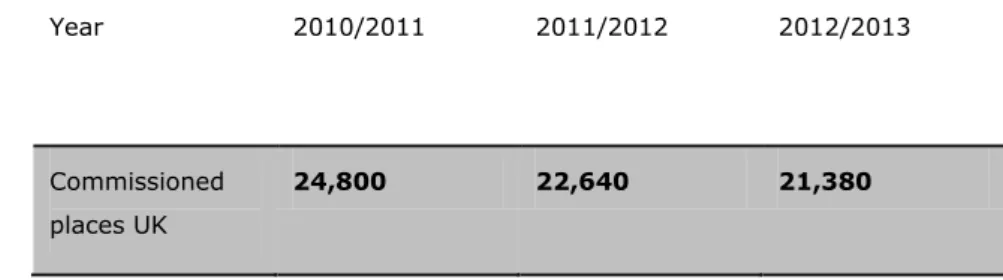
Table 1 – UK DOH Commissioned places pre-registration nursing
Year 2010/2011 2011/2012 2012/2013
Commissioned places UK
24,800 22,640 21,380
Source: (RCN, 2012:35)
To provide some context to the figures provided in Table 1, in 2006 some 31,500 nurses joined the NMC register, of which over 20,000 were from those who completed their pre-registration training in the UK (Longley et al., 2007:47). Whilst Table 1 shows us that the number of DOH pre-registration commissioned places is reducing year on year, the current demand for registered nurses and the number registering with the NMC is far higher. This has previously been reported and is due to the NHS demand being met by recruiting overseas trained nurses (Humphries et al., 2008).
There are real concerns about the longer term impacts of insufficient numbers of qualified nurses in future decades. Despite the disparities in the commissioned place figures and actual predicted demand within the NHS it illustrates further the importance of retaining as many student nurses as possible and reducing overall levels of student attrition from pre-registration programmes. This is aside from the financial implications of UK Schools of Nursing not meeting their commissioned place targets.
Page | - 18 -
Historical Perspective: Project 2000 nursing scheme
Following the Hutt Report (1985), a new scheme, Project 2000, was launched in 1989. This scheme offered a different model of nursing curriculum away from an apprenticeship style of nursing to nurse education delivered in University settings. By 1997 Project 2000 was fully integrated into higher education offering a 3-year full time pre-registration programme with Diploma or Degree routes and student nurses gained theoretical knowledge and allocated time in clinical practice before achieving their registration to practice.
Project 2000 was viewed as a solution to addressing issues of retention and attrition as well as creating a more diverse student population (Kevern et al., 1999). Prior to this scheme, nurse education was offered in unaffiliated nurse colleges, where the nursing student was employed by the hospital, and where they undertook practical and ward work, living in nursing schools attached to the hospital and gaining registration to practice (registered general nurse, RGN). In essence, what Project 2000 was attempting to address was twofold; the need to reduce „wastage‟ and to widen participation in a nursing context. It was reported that Project 2000 did reduce „wastage‟ from the reported levels of attrition during the 1980s of 35% to 15% in 1997/1998 (English National Board of Nursing, 1998).
Studies undertaken at the time (Kevern et al., 1999), agreed that Project 2000 did initially reduce attrition levels on UK nursing programmes, but in other respects, the issue of why students were withdrawing was not understood (Kevern et al., 1999, English National Board of Nursing, 1998). More recent studies (Fergy et al., 2008, Mulholland et al., 2008, Glossop, 2001) agree that reporting of attrition rates, ranging from 5% to 30% (Mulholland et al., 2008) presents a confusing and mixed picture of true attrition levels within UK pre-registration programmes. Indeed, a UK survey across all 83 nurse teaching institutions for 2000 – 2004 revealed that of 19,995 student nurses overall attrition rates were 24.8% (i.e. 4,956 dropped out) (McLaughlin et al., 2008). This illustrates the continual problem of
Page | - 19 -
retaining nursing students in spite of changes to the curriculum, methods of delivery, and the move to a university based provider.
A further review in 1999 Fitness for Practice was commissioned by UKCC (UKCC, 1999). This review, known as the Peach Report, recommended longer placements in education, and practice to work closer together, in order to address a range of issues including retention, and meet the changing demands by the health service. There is no doubt that applicants arrive at training as well motivated, highly qualified entrants with estimated training costs of £19,370 for a 3-year programme (Mulholland et al., 2008:50). This investment is wasted if entrants withdraw early and fail to gain registration. Unlike many traditional university programmes, due to the vocational nature of the training, new entrants cannot be sourced once programmes start, leaving very few options to fill vacant places.
What is indicated is a persistent and ongoing pattern of over a quarter of nursing students not completing and therefore suggesting a pressing need for a better understanding of the issues surrounding successful retention of all student nurses, although the DoH in their 2006 guidelines on good practice for managing attrition accepts that:
There has always been „attrition‟ in the nursing student and midwife population. Indeed, it would be completely inappropriate for a zero
attrition rate – human nature being what it is, there are always going to be
students who don‟t reach the prescribed academic standards, who don‟t
possess the necessary clinical competences, whose personal circumstances change or who subsequently decide that they have made the wrong career choice. (DoH, 2006a:8)
For the first time guidelines produced by the DoH (2006), „Managing Attrition Rates for Nursing student‟s and Midwives‟ charged nurse educators to look at their policy implementation and strategic measures to address the issues of retention and attrition. This direct focus on institutions necessitates the need to understand complex issues of attrition and reasons for student withdrawal
Page | - 20 -
from programmes. Tied with this is the continual pressure to meet targets set by the Governments Widening Participation (WP) Policy and the Department of Health workforce needs. However, despite the desire of policy makers, funders and nurse educators there is still no one accepted measure of attrition, therefore creating anomalies in the recording of true levels of attrition across the UK (O'Donnell, 2011, Urwin et al., 2010, Pryjmachuk et al., 2009, DoH, 2006a) for example, how student interruptions (i.e. for maternity, health or personal reasons) are recorded and learners who transfer to other institutions or courses. This lack of robust data collection, at institutional and national level, results in a mixed and often confusing picture of student retention that clouds the real issues for individuals and nurse educators, although Scotland is now taking a regional approach by considering data across the six institutions who deliver nurse and midwifery education (Sabin et al., 2012).
What research studies indicate is that recruitment and retention of nurses is a national and global concern and is a high priority within nursing research. However, the complexity of the issue cannot be resolved with one solution. A myriad of strategies needs to be examined and implemented at national and local levels. A consideration might be that attrition is inevitable and learners leave for a variety of complex reasons linked to academic, personal, and social reasons or a mixture of all three. Indeed Bowden (2008) considers some elements of attrition to be positive, concluding that students leaving early may be the best outcome (Bowden, 2008:57). However, what the literature indicates is that there has been a research focus on reasons for student withdrawal; but rarely do these studies include the hard to reach learners who have already exited their programme and who may provide a useful perspective on their reasons for non-completion. Likewise little emphasis has been placed on those who succeed, in particular those who despite adversity continue on programme and achieve professional registration. This achievement is the focus for this study; mature learners who enter with an Access to HE qualification, overcoming the academic, personal, and social hardships to succeed.
Page | - 21 -
The UK Widening Participation (WP) Policy
Since the setting for this study is within a university with learners registered on a pre-registration programme, it is important to provide the background to the WP policy and the agenda that this creates within a UK context. Arguably the WP policy creates the single largest impact on the profile of students who successfully enter university.
The UK Governments WP policy became contentious with the recommendations from the Dearing Report (1997) to introduce a tuition fee of £1,000 per academic year. In 2006, these fees were revised as variable tuition fees and subsequently increased from £3,300 in 2010 to a maximum of £9000 per year commencing in 2012 (Wyness, 2011).
Healthcare programmes and pre-registration programmes are not exempt and come under scrutiny from the Government‟s WP policy since delivery for most programmes is within a university setting. However, the WP policy is not the sole driver of change to recruitment or retention policy within Schools of Nursing. The main stakeholder, the DoH, also drives this. As the main commissioning agent they are therefore holder of the „purse strings‟ and the main employer in the healthcare sector. The following section provides an overview of WP, mature student recruitment and pre-registration programmes.
Widening Participation in the beginning
The term Widening Participation (WP) is a term that is often associated with HE provision within the UK, and is used frequently by the UK press, Government Ministers (Denham, 8th April, 2008) and FE & HE staff to describe those efforts to encourage a larger „take-up‟ of university places by a wider range of the population. WP may even make specific mention of target groups or minorities, but more recently policy wording mentions „wider access‟ rather than targeted specific groups as part of its Government WP pledge (HEFCE, 2010).
Page | - 22 -
WP is not new; in fact as far back as the 1950s there was recognition that something different needed to be offered which would allow others to experience what was an „elite‟ system (Thompson, 2000). During the early 1960s it was unusual for working class pupils to proceed into further education after age 16 (Preece, 1999) and even more unlikely for them to enter a so called „elite‟ HE sector. Even those that that showed „promise‟ were encouraged to sit the local Grammar school entrance test providing „bright‟ working class kids with a route into university education and an escape from their working-class roots. During this time, there were still limited choices of HE with only 20 established universities, increasing to 43 during the 1960s, compared to over 170 UK HE institutions now.
The Workers Education Association (WEA), founded in 1903, was one organisation that provided local communities with courses that could offer an opening to other subjects, not necessarily progression to a degree programme, but certainly an insight into the „establishment‟ (Thompson, 2000:2). Indeed, the opportunity to gain an insight was viewed as so important that only academics from these „establishments‟ could deliver the programmes. Whilst the WEA is still a charity, parallels can be seen between their role and the Government WP policy. The following indicates how the WEA still see its role:
we provide courses for all kinds of adults but we maintain our special mission to provide educational opportunities to adults facing social and economic disadvantage (WEA, 2011)
During the 1990s there were a number of widely publicized reports: Dearing (1997) „Higher Education in the Learning Society‟ (Dearing, 1997), Kennedy (1997) „Learning Works (Kennedy, 1997) and the review by the Department for Education and Science‟ (1987) White Paper „Higher Education – Meeting the Challenge‟ (DES, 1987). Kennedy‟s (1997) report highlighted the pressing need over the next 20 years to have a workforce with the right skills for a „knowledge led‟ society and the key way to create this was through education whether that be pre or post 16 qualifications (Kennedy, 1997). Indeed
Page | - 23 -
forecasters agree that, “to be economically self-sufficient in the information driven world economy, some form of post-secondary education is essential” (Kuh et al., 2005:4).
In light of these reviews and the election of a Labour Government in 1997 there were mounting pressures to make key educational changes to the school curriculum and the provision of university education. This was made easier with the Further and Higher Education Act (1992) allowing polytechnics to gain university status, the so called pre- and post- 1992 universities which created a total of 84 universities (Reay et al., 2001). In 1994, twenty of these universities formed the Russell Group, a collaboration of research-focussed institutions. Overall, the Russell Group attracts two thirds of all university research grants in the UK with sixteen institutions in England, two in Scotland, and one each in Wales and Northern Ireland.
In 2000 the first indication of changes to HE were made by the Labour Education and Employment Secretary, David Blunkett in his keynote speech „Higher Education in the twenty-first century‟ (Blunkett, 15th February, 2000). This is now viewed as a landmark speech on how the Government viewed the future role of HE in the UK (Thompson, 2000). Blunkett recognised that HE was part of the solution to achieving a global economy. In order to grasp this he viewed the UK as needing to be innovative, to develop new skills whilst creating a sound knowledge base; the role of HE was key to this.
World-class higher education ensures that countries can grow and sustain high skill businesses and attract and retain the most highly skilled people ...(higher education) is at the heart of the productive capacity of the new economy (including the knowledge economy) and the prosperity of our democracy"(Blunkett, 15th February, 2000)
Blunkett (2000) saw HE as the instrument to provide social justice and being able to attend university or take part in it, would create wealth, and improve
Page | - 24 -
life chances. He also used this speech to create a marker that in order to achieve the goals HE institutions needed to change:
A modern higher education sector must be open and inclusive. It must pursue wider social inclusion as an institutional objective. Success must be understood and measured by how far institutions service the population as a whole - and that means people from all social class backgrounds and ethnic groups, and those with disabilities, at whatever stage of their lives. This will mean better access courses and
similar initiatives which root higher education in the local community and open up provision to previously excluded groups...Social justice requires the democratisation of participation in higher education, which, in turn requires reform and modernisation of the sector itself (Blunkett, 15th February, 2000)
This was one of a number of key speeches that indicated that the „establishment‟ (HE institutions), under the Labour Government, was not only under review, but, also the nature of HE was to change forever. This was also at a time when Primary Care Trusts (PCTs) were experiencing severe nursing shortages in their workforce. The Government response to this was to pledge 6,000 new nurse education places (DoH, 1999) and to increase the nursing workforce by 20,000 by 2004 (DoH, 2000).
To focus attention on their commitment to a WP policy the Government set a bold target demonstrating their pledge by stating that they intended to:
increase university attendance to 50 per cent of those under 30 by 2010 … (Quinn, 2005) with at least a percentage point every two years to the academic year 2010/11 (Smith, 2009)
Setting these targets indicated Government recognition that in order to up-skill the workforce and provide more learners with Level 4 qualifications or above (Level 3 is equivalent to A levels and BTEC qualifications), they needed to include a wider age range including those classed as mature, rather than be reliant on a diminishing pool of school leavers, the traditional entrants to undergraduate programmes. However, there was recognition that in order to
Page | - 25 -
attract a wider age range would present some tensions within the HE sector. The Higher Education Minister, Bill Rammell at an OU Students Association conference, demonstrated this in a speech:
We‟re going to need to get many more mature people into higher
education over the next decade...It‟s no good expecting large numbers of adults with careers, families or mortgages to behave like 18 year olds and go off to university full-time for three or four years. It is just not going to happen. For most of the 171 higher education institutions in this country
the consequences of all that are going to be very challenging. They‟re
going to have to enter what is, for most, very unfamiliar territory. Dealing with older, possibly more demanding and certainly more discerning
students. Educating more part-timers, and more students who aren‟t just part-time, but who undertake most of their learning in their workplace or at home. Coping with a more varied student body, in terms of age, ethnicity, social background, prior qualifications, personal circumstances,
and individual aspirations. Embracing closer involvement by students‟
employers not just in funding higher education, but in designing and delivering it (Rammell, 2008)
These momentous changes in the nature and scale of UK HE have resulted, in more recent times, in concerns about the „massification‟ of the UK HE system (Crosling et al., 2008) replacing the so called „elite‟ system of university education (Andreshak, 2001). In order to understand this phenomenon better mass education needs to be understood. Trow (1974) provides one definition: [Massification] is when the majority of a population (in a country) from the relevant age group participates in higher education. In some countries this is already achieved US, Scotland, Japan (Trow 1974 cited in Thomas, 2008:69)
However, as Andreshak (2001) has highlighted:
While „mass‟ in number, an equitable distribution of students from all
Page | - 26 -
Academics within universities also questioned the role of the university and the nature of the learning that should take place under this new ethos of un