LEARNING OBJECT DESIGN AND SEQUENCING THEORY
by
David A. Wiley, II
A dissertation submitted to the faculty of Brigham Young University
in partial fulfillment of the requirements for the degree of
Doctor of Philosophy
Department of Instructional Psychology and Technology Brigham Young University
Copyright © 2000 by David Wiley
This material may be distributed only subject to the terms and conditions set forth in the Open Publication License, v1.0 or later (the latest version is presently available at
BRIGHAM YOUNG UNIVERSITY
GRADUATE COMMITTEE APPROVAL
of a dissertation submitted by David A. Wiley, II
This dissertation has been read by each member of the following graduate committee and by majority vote has been found to be satisfactory.
______________________ __________________________________________ Date C. Victor Bunderson, Co-chair
______________________ __________________________________________ Date J. Olin Campbell
______________________ __________________________________________ Date M. David Merrill
______________________ __________________________________________ Date Paul F. Merrill
______________________ __________________________________________ Date Laurie M. Nelson, Co-chair
BRIGHAM YOUNG UNIVERSITY
As co-chair of the candidate’s graduate committee, I have read the dissertation of David A. Wiley, II in its final form and have found that (1) its format, citations, and
bibliographical style are consistent and acceptable and fulfill university and department style requirements; (2) its illustrative materials including figures, tables, and charts are in place; and (3) the final manuscript is satisfactory to the graduate committee and is ready for submission to the university library.
______________________ __________________________________________ Date Laurie M. Nelson
Co-chair, Graduate Committee
Accepted for the Department
__________________________________________ Paul F. Merrill
Department Chair, Instructional Psychology and Technology
Accepted for the College
__________________________________________ Robert S. Patterson
ABSTRACT
LEARNING OBJECT DESIGN AND SEQUENCING THEORY
David Wiley
Department of Instructional Psychology and Technology Doctor of Philosophy
Given the likelihood of the broad deployment of learning objects-based
technology, and the dangers of employing it in an instructionally unprincipled manner, the need for an instructional design theory providing explicit support for the instructional design and use of learning objects is clear. “Theory” here follows Reigeluth’s (1999) definition of design theories as “describ[ing] methods of instruction and the situations in which those methods should be used.” This study reviews, synthesizes, and combines four existing instructional design theories, namely Elaboration Theory (Reigeluth, 1999), Work Model Synthesis (Gibbons, et al., 1995), Domain Theory (Bunderson, Newby, & Wiley, 2000), and the Four-Component Instructional Design model (van Merriënboer, 1997) with new work, the result being a new instructional design theory, Learning Object Design and Sequencing Theory (LODAS). LODAS provides guidelines for the analysis and synthesis of an undifferentiated content area (e.g., English), the application of which produces specifications for the scope and sequence of learning objects. The theory also provides a taxonomy of five learning object types and provides design guidance for the different types of learning objects.
Currently, any person or organization that wants to employ learning objects in their instructional design is required to create their own taxonomy of learning objects. The author considers this to be a major cause of the current poverty of practical applications of learning objects. However, taking the taxonomy and learning object design guidelines presented in LODAS, an instructional designer may be able to connect these to the instructional design theory of their choice via the creation of “prescriptive linking material,” a considerably simpler exercise than the creation of a new taxonomy. As the theory is tested, this development has the potential to speed the practical adoption of the learning object approach, allow the simplified application of any instructional design theory to the learning object approach, and provide a common ground for future research in the instructional technology called “learning objects.”
ACKNOWLEDGMENTS
My thanks go first and foremost to my wife, Elaine, and children, David Enoch and Megumi, who have supported and buoyed me up with love, patience, and
understanding throughout my tenure as a graduate student.
I also extend my gratitude to my committee co-chairs, Laurie Nelson, who introduced me to the field of instructional technology, specifically instructional design theory, and taught me to be passionate about it, and Vic Bunderson, who invited me to participate in the development of Domain Theory and first suggested validity argument as a means to test instructional design theories. My gratitude also goes to the entire
committee, who read and reread quickly in order to help me finalize the study in a timely manner.
Finally, special thanks go to my external reviewers, Charles Reigeluth and Brandon Muramatsu, for their tireless reading and commenting.
TABLE OF CONTENTS
Table of Contents ... viii
List of Tables ...x
List of Figures ... xi
Chapter One: Introduction ...1
What are Learning Objects?...2
Adoption of the Learning Objects Idea ...4
Instructional Design Theory ...6
The Role of Instructional Design Theory: Sequence ...7
The Role of Instructional Design Theory: Scope...9
The Role of Taxonomy Development ...10
Goals of This Study ... 11
Overview of Chapters ...12
Chapter Two: Theory-building Methodology... 13
Instructional Theory-building Methodology...13
Role of Theory-Testing Plans ...19
Summary ...20
Chapter Three: Literature Review...21
Learning Objects ...21
Selection of Instruction Design Theories for Inclusion in this Review...25
Review of Selected Instructional Design Theories ...26
Summary ...38
Applying the Theory-building Methodology...41
Presentation of the Theory...52
Goals and Values of LODAS...52
Conditions for Application of the Theory... 54
LODAS’ Methods ...58
Preliminary Activities...58
Analyze and Synthesize Content...59
Design Practice and Information Presentation...67
Select and / or Design Learning Objects ... 76
Design Learning Object Sequencing ...93
Summary ...98
Chapter Five: Accomplishments and Future Directions ...99
Accomplishing the Goals of the Study ... 100
Testing and Improving the Theory... 103
The Theory Testing Plan... 109
Conclusion ... 117
LIST OF TABLES
Table 1. A Taxonomy of Learning Object Types...79 Table 2. Sample Consequential Aspects Evidence...113
LIST OF FIGURES
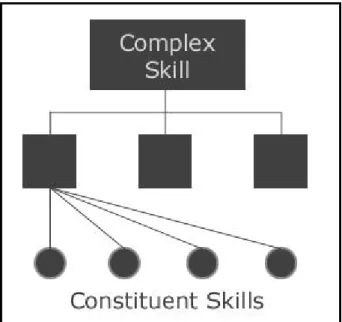
Figure 1. Principled Skill Decomposition. ...60
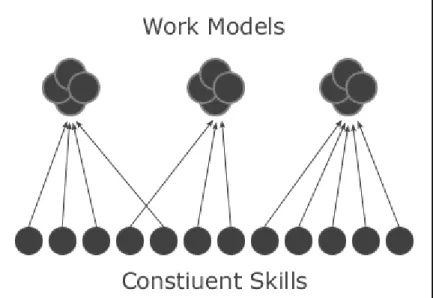
Figure 2. Work Model Synthesis. ...61
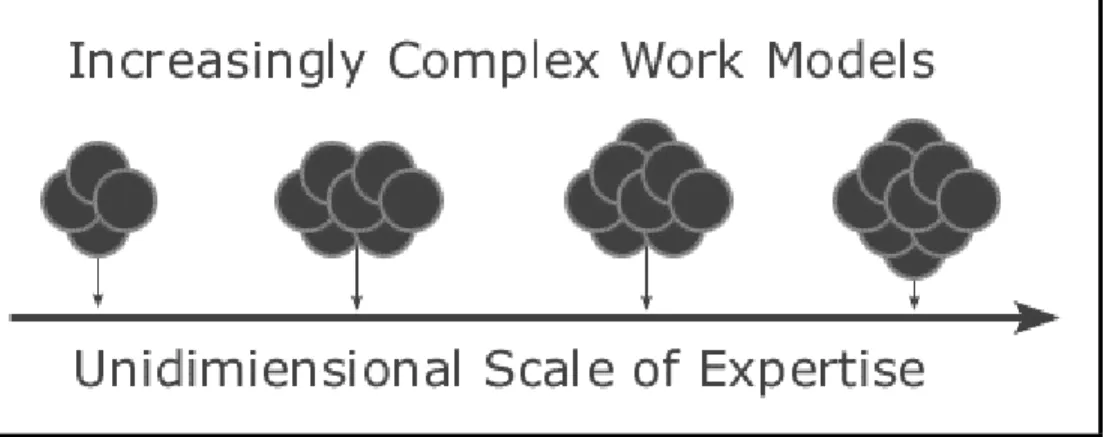
Figure 3. A Unidimensional Scale of Expertise...63
Figure 4. Domain Map. ... 65
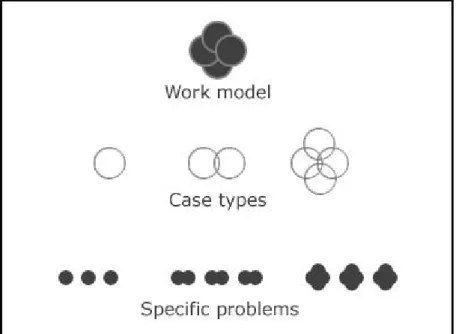
Figure 5. Work model, Case Types, and Specific Problems. ...71
Figure 6. Case Type Template. ...91
CHAPTER ONE
INTRODUCTION
Technology is an agent of change, and major technological innovations can result in entire paradigm shifts. The computer network known as the Internet is one such innovation. After affecting sweeping changes in the way people communicate and do business, the Internet is poised to bring about a paradigm shift in the way people learn. Consequently, a major change may also be coming in the way educational materials are designed, developed, and delivered to those who wish to learn. An instructional
technology called “learning objects” (LTSC, 2000) currently leads other candidates for the position of technology of choice in the next generation of instructional design, development, and delivery due to its potential generativity, adaptability, and scalability (Hodgins, 2000; Urdan & Weggen, 2000; Gibbons, Nelson, & Richards, in press).
While standards bodies are eagerly developing technological standards for the widespread deployment of learning objects, currently instructional design theories do not explicitly support the design and instructional use of learning objects. As Reigeluth and Frick (1999) have stated, “more [instructional design] theories are sorely needed to provide guidance for … the use of new information technology tools (p. 633).” The purpose of this study is to develop an instructional design theory that provides guidance in the instructional use of learning objects.
This chapter provides a rationale for the current study by presenting an overview of learning objects, the current state of adoption of learning objects, instructional design
theory, and the manner in which learning objects can contribute to the success of instructional technology.
What are Learning Objects?
Learning objects are elements of a new type of computer-based instruction grounded in the object-oriented paradigm of computer science. Object-orientation highly values the creation of components (called “objects”) that can be reused (Dahl & Nygaard, 1966). This is the fundamental idea behind learning objects: instructional designers can build small (relative to the size of an entire course) instructional components that can be reused a number of times in different contexts. Additionally, learning objects are
generally understood to be digital entities deliverable over the Internet, meaning that any number of people can access and use them simultaneously (as opposed to traditional instructional media, such as an overhead or video tape, which can only exist in one place at a time). Moreover, those who incorporate learning objects can collaborate on and benefit immediately from new versions. This is a significant difference between learning objects and other types of instructional media that have existed previously.
Supporting the notion of small, reusable chunks of instructional media, Reigeluth and Nelson (1997) suggest that when teachers first gain access to instructional materials, they often break the materials down into their constituent parts. They then reassemble these parts in ways that support their individual instructional goals. This suggests one reason why reusable instructional components, or learning objects, may provide instructional benefits. If instructors received instructional resources as individual components, this initial step of decomposition could be bypassed, potentially increasing the speed and efficiency of instructional development.
To facilitate the widespread adoption of the learning objects approach, the Learning Technology Standards Committee (LTSC) of the Institute of Electrical and Electronics Engineers (IEEE) formed in 1996 to develop and promote instructional technology standards (LTSC, 2000). Without such standards, universities, corporations, and other organizations around the world would have no way of assuring the
interoperability of their instructional technologies, specifically their learning objects. A similar project called the Alliance of Remote Instructional Authoring and Distribution Networks for Europe (ARIADNE) had already started with the financial support of the European Union Commission (ARIADNE, 2000). At the same time, another venture called the Instructional Management Systems (IMS) Project was just beginning in the United States, with funding from Educom (IMS, 2000a). Each of these and other organizations (e.g., ADL, 2000) began developing technical standards to support the broad deployment of learning objects. Many of these local standards efforts have representatives on the LTSC group.
The Learning Technology Standards Committee chose the term “learning objects” to describe these small instructional components, established a working group, and provided a working definition:
Learning Objects are defined here as any entity, digital or non-digital, which can be used, re-used or referenced during technology supported learning. Examples of technology-supported learning include computer-based training systems,
interactive learning environments, intelligent computer-aided instruction systems, distance learning systems, and collaborative learning environments. Examples of Learning Objects include multimedia content, instructional content, learning
objectives, instructional software and software tools, and persons, organizations, or events referenced during technology supported learning (LOM, 2000). Adoption of the Learning Objects Idea
There has been a considerable investment in the idea of learning objects. The IMS Project, which develops and promotes compliance with technical standards for online learning, is funded solely by memberships. The highest level of participation is
“Contributing Member,” with an annual fee of $50,000, retroactive to the project’s beginning. Over 30 vendors, universities, and other organizations belong to this program (IMS, 2000b) whose membership list reads like a who’s who of software developers and high-powered organizations: Microsoft, Oracle, Sun, Macromedia, Apple, IBM,
UNISYS, the U.S. Department of Defense, the U.S. Department of Labor, the California State Universities, International Thompson Publishing, and Educational Testing Service, to name a few. The next level of membership down, the “Developers Network,” has over 200 members, most of which are universities.
Whether or not the learning object paradigm is grounded in the best instructional theory currently available, there can be little doubt that the United States and the world (the ARIADNE coalition has a similar list of European members) are about to be flooded with IMS compliant – in other words, learning object-based – tools. Microsoft has already released a toolset it touts as “the first commercial application of work being delivered by the Instructional Management System (IMS) Project” (Microsoft, 2000). With this broad industrial, governmental, and educational support, it would appear that learning objects may become the technology of choice in the emerging area of online instruction.
A recent report released by investment banking firm W. R. Hambrect contains more than the common predictions for the future of online learning, e.g., that the online learning market will reach $11.5 billon by 2003 (Urdan & Weggen, 2000). As evidenced in the report, even brokers are talking about learning objects and encouraging investors to make sure that the e-learning companies they buy rely on the technology:
[Online learning content] development cycles are predicted to shorten by 20% every year to two or three weeks by 2004. This imperative will drive more template-based designs and fewer custom graphics. Learning objects will be created in smaller chunks and reusable formats. As a consequence, the industry will become more efficient and competitive…We are convinced that the move to defined, open standards is crucial to the continuing successful adoption of e-learning, especially as it begins to transition beyond early adopters into the rapid growth phase of the market. Authoring tools will need to operate across different platforms and communicate with other tools used to build learning systems. Content and courseware must be reusable, interoperable, and easily manageable at many different levels of complexity throughout the online instructional
environment. Enterprise learning systems have to accommodate numerous and varied learner requirements, needs, and objectives. Corporate customers need to be able to easily track content created by multiple content providers through one training management system and search vast local or distributed catalogs of content to identify learning objects or modules on a particular topic. The race for education technology standards is on (Urdan & Weggen, 2000, p.16).
Recognition, adoption, and the potential for future support for the learning objects idea is significant, and includes some of the biggest players in software, higher education, and even investment. Learning objects may become the instructional technology of online learning. However, technical standards and venture capital are not enough to promote learning. In order to promote learning, technology use should be guided by instructional principles.
Instructional Design Theory
Instructional design theories have been overviewed frequently in the literature (Dijkstra, Seel, Schott, & Tennyson, 1997; Reigeluth 1983, 1999b; Tennyson, Schott, Seel, & Dijkstra, 1997). Reigeluth (1999) defines instructional design theory as follows:
[I]nstructional design theories are design oriented, they describe methods of instruction and the situations in which those methods should be used, the methods can be broken into simpler component methods, and the methods are
probabilistic. (p. 7)
Reigeluth’s current definition of design theory as prescriptive theory follows earlier definitions of design theory (Simon, 1969; Snelbecker, 1974; Reigeluth, 1983). Because the very definition of “theory” in some fields is “descriptive,” design theories are commonly confused with other types of theories that they are not, including instructional systems development models, learning theory, and curriculum theory (Reigeluth, 1999). Following Reigeluth and others, “design theory” as used in this study connotes prescriptive theory. Instructional design theory, or instructional strategies, guidelines, and criteria for their application, must play a large role in the application of learning objects technology if it is to succeed.
The Role of Instructional Design Theory: Sequence
While groups like the Learning Technology Standards Committee exist to promote international discussion around the technology standards necessary to support learning object-based instruction, and many people are talking about the financial opportunities about to come into existence, there is astonishingly little conversation around the instructional design implications of learning objects.
Indicative of this lack of thought about instructional design is of item 7(d) of the Learning Objects Metadata Working Group’s (a working group of the Learning
Technology Standards Committee) Project Authorization Request (PAR) form. The PAR is the mechanism by which IEEE projects are officially requested and approved, and must contain statements of the project’s scope and purpose. Section 7 of the PAR deals with the purpose of the proposed project, and item (d) in the Learning Objects Metadata Working Group’s PAR (LOM, 2000) reads as follows:
To enable computer agents to automatically and dynamically compose personalized lessons for an individual learner.
As the Learning Object Metadata standard neared finalization in early 2000, some questions were raised regarding the current standard’s ability to achieve this purpose. Apparently no one had considered the role of instructional design in composing and personalizing lessons. At this point a brief discussion of metadata, the focus of the Learning Object Metadata Working Group’s efforts, is necessary.
Metadata, literally “data about data,” is descriptive information about a resource. For example, the card catalog in a public library is a collection of metadata. In the case of the card catalog, the metadata are the information stored on the cards about the Author,
Title, and Publication Date of the book or resource (recording, etc.) in question. The labels on cans of soup are another example of metadata: they contain a list of Ingredients, the Name of the soup, the Production Facility where the soup was canned, etc. In both the case of the library book and the can of soup, metadata allow you to locate an item very quickly without investigating all the individual items through which you are searching. Imagine trying to locate Paradise Lost by sifting through every book in the library, or looking for chicken soup by opening every can of soup in the store and inspecting their contents! The Learning Objects Metadata Working Group is working to create metadata for learning objects (such as Title, Author, Version, Format, etc.) so that people and computers will be able to find objects by searching, as opposed to browsing the entire digital library one object at a time until they find the right one.
The problem with 7(d) arose when people began to actually consider what it meant for a computer to “automatically and dynamically compose personalized lessons.” This meant taking individual learning objects and combining them in a way that made instructional sense, or in instructional design terminology, “sequencing” the learning objects. It seemed clear to a few of us that in order for a computer to make sequencing or any other instructional design decisions, the computer must have access to instructional design information to support the decision-making process. The problem was that no instructional design information was included in the metadata specified by the current version of the Learning Objects Metadata Working Group standard. Once the problem was clearly explained to the other members of the Learning Objects Metadata Working Group, the only viable solution was to edit the PAR and remove 7(d).
The lack of instructional design discussion at this standards-setting level of conversation about learning objects is disturbing, because it might indicate a trend. One can easily imagine technology implementers asking, “if the standards bodies haven’t worried about sequencing, why should we?” Once technology or software that does not support an instructionally-grounded approach to learning object sequencing is completed and shipped to the average teacher, why would he or she respond any differently? This sets the stage for learning objects to be used simply to glorify online instruction, the way clip-art and dingbats are used in a frequently unprincipled manner to decorate elementary school newsletters. Obviously, instructionally grounded sequencing decisions are at the heart of the instructionally successful use of learning objects.
The Role of Instructional Design Theory: Scope
Discussion of the problem of combining learning objects in terms of “sequencing” led to another connection between learning objects and instructional design theory. The most difficult problem facing the designers of learning objects is that of “granularity” (Wiley et al., 1999). How big should a learning object be? As stated above, the Learning Technology Standards Committee’s definition leaves room for an entire curriculum to be viewed as a learning object, but such a large object view diminishes the possibility of learning object reuse. Reuse is the core of the learning object notion, and this is why a more restrictive definition has been proposed for this study. However, because learning objects commonly require the creation of metadata, which means filling out a form of twenty-some odd fields like “Semantic Density” and “Typical Learning Time,” designating every individual graphic and paragraph of text within a curriculum a
decision regarding learning object granularity can be viewed as a trade-off between the possible benefits of reuse and the expense of cataloging. From an instructional point of view, alternatively, the decision between how much or how little to include in a learning object can be viewed as a problem of “scope.” While reality dictates that financial and other factors must be considered, if learning is to have its greatest chance of occurring, decisions regarding the scope of learning objects must also be made in an instructionally grounded, principled manner.
The Role of Taxonomy Development
The discussion of learning object characteristics, such as sequence and scope, leads naturally to the question, “are there different types of learning objects?” In other words, can types of learning objects be meaningfully differentiated? Taxonomy
development has historically accompanied instructional design theory development (Bloom, 1956; Gagne, Briggs, and Wager, 1992), and is recommended by Richey (1986) and Nelson (1998) in their instructional design theory development approaches.
According to Richey (1986), the development of conceptual models such as taxonomies serves to “identify and organize the relevant variables; defining, explaining, and
describing relationships among the variables” (p. 26-27).
While object categorizations exist specific to particular instructional design theories, such as Merrill’s (Merrill, Li, and Jones, 1991) sets of process, entity, and activity classifications, a learning object taxonomy compatible with multiple instructional design theories does not exist. The lack of such a broadly applicable taxonomy
significantly hinders the application of learning object implementation methodologies to existing instructional design theories, as current practice has been to create
theory-specific taxonomies to support each implementation (Merrill, Li, and Jones, 1991; L’Allier, 1998), considerably increasing the effort necessary to employ learning object technologies.
Goals of This Study
Given the likelihood of the broad deployment of learning objects technology, and the dangers of employing the technology in an instructionally unprincipled manner, both of which have been described in this chapter, the need for an instructional design theory that provides explicit support for the instructional design and use of learning objects is clear. Therefore, the purpose of this study is to develop an instructional design theory that (1) provides explicit support for scope and sequence decisions about learning objects, (2) provides a taxonomy of learning object types, and (3) provides design guidance for each type of object. If properly developed, the instructional design theory will not only present a method of instructional design expressible in learning objects, but will present a general taxonomy of learning object types and an example of linking instructional design theory to the taxonomy. The taxonomy and instructional design prescriptions which link the taxonomy to the rest of the instructional design theory should provide others with an example of how to use learning objects with any instructional design theory.
This instructional design theory will be developed through a theory-building process that includes (1) a review of literature focusing on instructional design theories that provide scope and sequence guidance and (2) the development of a taxonomy of learning objects. The literature will be synthesized into a theory of content analysis and synthesis that will end in the content scope specification and sequence specification of learning objects. According to their instructional function as identified in the content
analysis and synthesis, these specifications will be linked to a specific type of learning object as identified in the taxonomy of learning object types. Design guidelines for each of the types of learning objects in the taxonomy will be outlined.
Overview of Chapters
This chapter has presented an overview of the background and rationale for this study. Chapter 2 presents the theory-building methodology that will be employed to accomplish the goals identified above. The Methodology precedes the Literature Review in this study because the Literature Review is a key part of the theory-building process. Chapter 3 presents the instructional design literature pertinent to the current study, including a more detailed investigation of instructional design theories that provide scope and sequence guidance and are compatible with learning object-based instruction.
Chapter 4 begins with an overview of the manner in which the theory-building
methodology has been applied, and ends with the presentation of the instructional design theory – Learning Object Design and Sequencing (LODAS, pronounced “lotus”) Theory. As the purpose of this study is to build and not to test an instructional design theory, Chapter 5 will present a proposed design experiment framework for testing and improving LODAS.
CHAPTER TWO
THEORY-BUILDING METHODOLOGY
This dissertation builds an instructional design theory that will provide the support necessary for the instructionally sound design and sequencing specifications of learning objects. A theory- or model-building methodology was employed to achieve this end. In this chapter a relatively new instructional design theory-building methodology (Nelson, 1998) will be introduced, and improvements to the Nelson methodology will be suggested. The chapter will close with a brief discussion of the role of theory-testing in theory-building.
Instructional Theory-building Methodology
While instructional technologists and educational psychologists have long engaged in the creation of teaching strategies, few formalized methods exist for the creation of instructional design theory. Nelson (1998) recently reviewed and synthesized the existing methods (Patterson 1977; Reigeluth 1983; Richey, 1986; Snelbecker, 1974; Snow 1971) with experience from case studies in order to create a thirteen-step
instructional theory-building process. The Nelson process contains the following steps, each of which is discussed in greater detail below.
1. Define the Purpose of the Theory 2. Select a Paradigm for the Theory
3. Determine the Specific Domain, Situation, or Scope of the Theory 4. Identify an Optimal Process on Which to Model the Theory 5. Develop general criteria for goals, methods, and conditions
6. Develop Goals for the Theory 7. Develop Methods for the Theory 8. Identify Conditions for the Theory
9. Create a Variable Taxonomy for the Theory 10. Finalize the Theory Prototype
11. Formatively Research the Prototype Theory 12. Finalize the Goals, Methods, and Conditions 13. Write Up the Theory
A comparison of the Nelson design methodology with the Waterfall methodology of software design (Royce, 1970; Boehm, 1981), which is structurally similar, showed that Nelson’s methodology stands up to all the historical criticisms of the Waterfall method but one. Nelson’s methodology sidesteps criticisms regarding the difficulty of making requirements explicit to the software developer, because the “customer” of the instructional theory building process is usually the theory developer. The methodology is also sidesteps criticisms regarding the lateness with which the customer sees the product for the same reason. Finally, the Nelson methodology also sidesteps criticisms of
reusability. While individual algorithms and lines of code disappear when a piece of software is compiled, the goals, methods, and conditions of an instructional design theory continue to exist exposed to the world, ripe for reuse.
However, the common weakness of the Waterfall and Nelson methods is their tendency toward linearity. It is nearly impossible for a work as comprehensive and complex as an instructional design theory to be completed successfully in a single
Prototype Theory” and “Finalize the Goals, Methods, and Conditions” steps, but these imply a single pass through an improvement loop. Accordingly, Nelson’s step 12, “Finalize the Goals, Methods, and Conditions,” has been changed to “Revisit the Goals, Methods, and Conditions.” This change creates an internal improvement loop that feeds back to review initial purposes, goals, conditions, methods, and values as many times as necessary. This improvement loop is driven by primarily conceptual data, such as expert review, as empirical data gathering falls under the purview of theory-testing as opposed to theory-building.
Ongoing improvement is suggested as part of the final step of Nelson’s
methodology, “Write Up the Theory.” A more explicit statement of the need for multiple iterations of the theory-building process to occur, a rigorous theory-testing plan that would provide the data for each design cycle, and an explicit statement like “Implement and Improve the Theory” would strengthen this methodology. Accordingly, the inclusion of an additional step (numbered 13 below) “Plan for Theory-Testing” makes the
commitment to ongoing improvement of the theory more explicit, and requires the theory-builder to think forward to the theory-testing process. Another additional step (number 15 below) “Implement and Improve the Theory,” articulates the fact that theory building cannot occur in the proverbial ivory tower, but must be grounded in and
improved upon by real experience. This approach could be extended to support a full-blown design experiment approach (Brown 1992; Collins, 1990), as recommended by Bunderson, Martinez, and Wiley (2000).
The following description of the theory-building methodology to be used in this study is adapted from Nelson (1998), with a change to step 12 and the addition of steps
13 and 15. (These steps are bolded below to indicate that they have been modified or added to Nelson’s methodology.)
1. Define the Purpose of the Theory – Delineate the intent of the theory by
determining what instructional situation or problem the theory is attempting to address.
2. Select a Paradigm for the Theory – The theory developer should determine if the instructional theory will be one intact model, a model with different variations for different conditions, or an independent components model from which an instructor can choose the most salient methods and strategies for his/her purposes.
3. Determine the Specific Domain, Situation, or Scope of the Theory – Determine more specific boundaries for the theory. One goal of this part of the theory-building process is to generally define what the scope of the theory is and is not. This provides the foundation for identifying and articulating the specific conditions under which the theory should be used.
4. Identify an Optimal Process on Which to Model the Theory – Find an existing case or create a mental model from which to work (as in grounded theory development). This initial model serves as the framework around which the synthesis of the theoretical and research literature will be organized.
5. Develop general criteria for goals, methods, and conditions – Develop criteria to assess the appropriateness of goals, methods, and conditions either
identified in existing theories and research or newly formulated for this specific theory.
6. Develop Goals for the Theory – Determine the specific learning goals the theory is being designed to fulfill.
7. Develop Methods for the Theory – Formulate appropriate instructional methods and strategies necessary to realize the learning goals of the theory.
8. Identify Conditions for the Theory – Conditions need to provide guidelines by which users of the instructional theory can judge the appropriateness of this approach for their instructional purposes.
9. Create a Variable Taxonomy for the Theory – Group together goals, methods, and conditions into a representation that highlights commonalities and
relationships (this is useful in conceptualizing the theory and communicating it to others).
10. Finalize the Theory Prototype – A prototype is created that outlines the organization and implementation of the methods and strategies to be used during instruction.
11. Formatively Research the Prototype Theory – Refine the theory by doing a type of formative research using existing instructional theories and research findings. Examine the comprehensiveness, cohesion, and congruency of the new theory. Expert review is suitable for this stage of research. Appropriate modifications can be made based on these findings.
12. Revisit the Goals, Methods, and Conditions – Once the usability of the theory has been tested conceptually, the developer then takes the insights gained and revisits the goals, methods, conditions, and values for the instructional theory. This step takes a rapid-prototyping approach in which the results of the
formative research are fed back into the theory-building system both early and frequently in the theory-building process, continuing until a satisfactory set of the goals, methods, conditions, and values exists.
13. Plan for Theory-Testing – Develop a comprehensive, rigorous plan for testing the instructional design theory. This plan can take the form of a validity argument, relying on Messick’s (1995) unified validity framework, and address aspects of relevant descriptive theories (domain and individual difference theories). The test plan should also include both broad and specific measures of the design (prescriptive) theory itself, such as measuring
instructional quality through student learning (broad) and measuring the instructional function of specific prescriptions (specific).
14. Write Up the Theory – Formalize the current version of the theory by writing it up and disseminating the theory so that it can be examined and critiqued by other educators and theorists. This allows for further refinement of the theory by the developer and others.
15. Implement and Improve the Theory – Once the first cycle of theory-building has been completed, which includes conceptual testing, the first cycle of theory-testing can begin, which includes the collection and analysis of
empirical data. Carry out the first phase of the theory-testing plan outlined in 13 above. Implementation provides valuable formative evaluation of the theory. Data gathered during implementation in accordance with the testing plan provides more data to feed back into the theory-building process, allowing further refinement of the theory.
This methodology will be employed in the development of the proposed theory, which will be presented in Chapter 4. However, the development of an instructional design theory does not end after the first conceptual testing – the theory can be improved through empirical testing.
Role of Theory-Testing Plans
As stated above, a theory-testing plan provides the theory-builder with concrete strategies for verifying the efficacy of the instructional design theory. Such a plan adds significant value to an instructional design theory, both for the developer and
implementers of the theory. As the developer thinks through and develops the theory-testing plan, the instructional design theory-building process becomes grounded in the realities of the testing plan. Likewise, when the theory is written up and published, as per step 14 above, theory implementers have specific metrics they can plan to use in
evaluating the performance of the theory. Knowing the needed data types ahead of time allows implementers to quickly put the theory and necessary data collection frameworks into place, and get to the business of helping people learn. Two clarifications should be made before proceeding.
First, it should be noted that it is impossible to perform direct empirical tests of the theory itself. That is, for the purposes of empirical testing, it is not possible to isolate the prescriptive theory from the implementation of the theory’s prescriptions – the two are totally confounded. Empirical tests will always involve an implementation, and to a large extent it is this implementation that is tested in the theory-testing process. Because this is true, a significant number of implementers and implementation cycles are
factor, or principle component that will begin to show itself over multiple implementation cycles is the theory itself. This is what makes the design experiment framework laid out by Bunderson (2000), in which a method is explained for meaningfully comparing across cycles, so critical. To perform the necessary number of implementation cycles without introducing design improvements based on data collected in previous cycles is to miss the only real opportunity to improve the design theory. Consequently, the theory-testing plan must include implementation-testing procedures.
Second, it should also be noted that the theory-testing plan cannot simply be developed, set aside, and brought out again when the theory is ready for implementation. Like the theory-building process itself, the plan must be developed iteratively, over cycles. As the theory-building process progresses, the theory-testing plan may progress as well. The theory-testing plan was therefore developed simultaneously with the new instructional design theory. Because performing actual theory testing is outside the scope of the current study, the theory-testing plan is presented in Chapter 5, Accomplishments and Future Directions.
Summary
This chapter has outlined the manner in which the proposed instructional design theory will be created and conceptually tested. It has also outlined a rationale for theory-testing, within which the new instructional design theory may be improved and validated over time. Chapter 4 will describe the development of the theory and then present the new instructional design theory and Chapter 5 will present the theory-testing plan.
CHAPTER THREE
LITERATURE REVIEW
The purpose of this chapter is to provide an overview of instructional design theories that provide guidance for making scope and sequence decisions. This review is comprised of three main sections. First, the relatively new field of learning objects will be reviewed in order to provide context for the overview of scope and sequence guidance provided by current instructional design theories. Second, a discussion will be presented describing why the instructional design theories chosen for review were selected. Finally, the instructional design theories to be synthesized, adapted, and extended to support learning object-based instruction will be reviewed.
Learning Objects
The IEEE’s Learning Technology Standards Committee has presented a definition of “learning object” that will soon make its way into an internationally recognized
standard (LTSC, 2000). As noted above, the definition “any entity, digital or non-digital, that can be used, re-used, or referenced during technology supported learning,” is
extraordinarily broad. Accordingly, different groups outside the Learning Technology Standards Committee have created different terms that generally narrow the scope of the canonical definition down to something more specific. Other groups have refined the definition but continue to use the term “learning object.” Confusingly, these additional terms and differently defined “learning objects” are all Learning Technology Standards Committee “learning objects” in the strictest sense. This section of the literature review will overview several definitions of “learning object” and similar terms and provide the working definition of “learning object” to be used throughout the rest of the dissertation.
The proliferation of definitions for the term “learning object” makes
communication confusing and difficult. For example, computer-based training (CBT) vendor NETg, Inc., uses the term “learning object” but applies a three-part definition: a learning objective, a unit of instruction that teaches the objective, and a unit of
assessment that measures the objective (L’Allier, 1998). Another CBT vendor,
Asymetrix, defines learning objects in terms of programming characteristics: “ToolBook II learning objects - pre-scripted elements that simplify programming … provide
instantaneous programming power” (Asymetrix, 2000). The NSF-funded Educational Objects Economy takes a technical approach, only accepting Java Applets as learning objects (EOE, 2000). It would seem that there are almost as many definitions of the term as there are people employing it.
In addition to the various definitions of the term “learning object,” other terms that imply the general intention to take an object-oriented approach to computer-assisted instruction confuse the issue further. (An in depth discussion of the precise meanings of each of these terms would not add to the main point of this discussion: the field is still struggling to come to grips with the question “What is a learning object?”.) David Merrill uses the term “knowledge objects” (Merrill, Li, and Jones, 1991). Merrill is also writing a book on the topic of object-oriented approaches to instruction to be called “Components of Instruction” (personal communication, March 21, 2000), which is sure to introduce yet another term, “instructional component,” into the instructional design vernacular. The previously mentioned ARIADNE project uses the term “pedagogical documents” (ARIADNE, 2000). The NSF-funded Educational Software Components of Tomorrow (ESCOT) project uses the term “educational software components” (ESCOT, 2000),
while the Multimedia Educational Resource for Learning and On-Line Teaching (MERLOT) project refers to them as “online learning materials” (MERLOT, 2000). Finally, the Apple Learning Interchange simply refers to them as “resources” (ALI, 2000). While each of these is something slightly different, they all fit the Learning Technology Standards Committee’s “learning object” definition.
This terminological confusion forces a study that intends to provide instructional design support for learning objects to answer the question, “For the purposes of this study, what is a ‘learning object’?” The Learning Technology Standards Committee definition is too broad to be useful for this study, but the creation of yet another term only seems to add to the confusion. While the creation of a satisfactory definition of the term learning object will probably consume the better part of the author’s career, a definition must be decided upon for the purposes of this study. Therefore, this study will define a “learning object” as “any digital resource that can be reused to support learning.” This definition includes anything that can be delivered across the network on demand, be it large or small. Examples of smaller reusable digital resources include images or photos, live data feeds (like stock tickers), live or prerecorded video or audio snippets, small bits of text, animations, and smaller web-delivered applications, like a Java calculator.
Examples of larger reusable digital resources include entire web pages that combine text, images and other media or applications to deliver complete experiences, such as a
complete instructional event. This definition of learning object, “any digital resource that can be reused to support learning,” has been adopted for two reasons.
First, the definition is sufficiently narrow to define a reasonably homogeneous set of things: reusable digital resources. At the same time, the definition is broad enough to
include the estimated 15 terabytes of information available on the publicly accessible Internet (Internet Newsroom, 1999). While the definition must exclude some things, the primary purpose of the learning object paradigm, as described earlier, is to facilitate
reuse. To ignore 15 terabytes of existing data would fly in the face of this central purpose. Second, the proposed definition is based on the LTSC definition (and defines a proper subset of learning objects as defined by the LTSC), making issues of compatibility of learning object as defined within this study and learning object as defined by the LTSC explicit. The proposed definition captures the critical attributes of a learning object, “reusable,” “digital,” “resource,” and “learning,” as does the LTSC definition. However, the proposed definition differs from the LTSC definition in two important ways.
First, the definition explicitly rejects non-digital (by dropping the word and dropping the idea of a learning object being simply "reference"-able) and non-reusable (by dropping the phrase "used or" which seems to imply the acceptance of single use) resources. The definition of learning object adopted for this study does not include actual people, historical events, books (in the traditional sense of the term), or other discrete, physical objects. The definition also drops the phrase "technology supported" which is now implied because all learning objects are digital.
Second, the phrase "to support" has been substituted in place of "during" in the LTSC definition. Use of an object "during" learning doesn't connect its use to learning. The LTSC definition implies that nothing more than contiguity of and object’s use and the occurrence of learning is sufficient. The definition adopted for this study emphasizes the purposeful use (by either an instructional designer, an instructor, or a student) of these objects to support learning.
With the term learning object defined for this study, the discussion of the instructional use of learning objects can proceed.
Selection of Instruction Design Theories for Inclusion in this Review
An instructional designer charged with creating learning objects and instruction based on them would probably operationalize the question “What is a learning object?” by asking questions like “What are the components of a learning object? What is a learning object made of? What goes into a learning object? How much of it goes in?” These are questions of scope. Once these questions had been answered satisfactorily, the instructional designer would probably ask questions like “So what do I do with these learning objects? What can they be used for? How do I arrange them? In what order should the learner encounter them?” These are questions of sequence. In other words, the first two questions that must be answered regarding the design and combination of
learning objects are questions of scope and sequence. Therefore, the primary goal of the proposed instructional design theory is to provide scope and sequence guidance for the design of learning objects. In Reigeluth’s (1999a) terminology, the primary goal of the theory is to significantly increase (1) the efficiency with which instruction can be created and (2) the effectiveness of learning objects-based instruction by providing instructional design support for the creation of learning object-based instruction. Reigeluth’s third metric of appeal is not addressed directly in this first version of the theory, as significant increases in the appeal of the instruction may correlate highly with adaptive features of the learning object-based instruction (Reigeluth, personal communication, June 14, 2000). Adaptivity to individual differences (such as learning style) has consciously been scoped out of this first version of the theory; however, once considerations of adaptivity
are combined with the learning object approach, it should be considerably more appealing to students who are consumers of the instruction.
Accordingly, instructional design theories that provide overt guidance for making scope and sequence decisions were selected for review and used in creating the proposed instructional design theory for learning objects.
Review of Selected Instructional Design Theories
Four compatible instructional design theories were identified as containing overt scope and sequence guidance that could be applicable to learning objects: Elaboration Theory (Reigeluth, 1999a), Work Model Synthesis (Gibbons, et al., 1995), Domain Theory (Bunderson, Newby, & Wiley, 2000), and the Four-Component Instructional Design model (van Merriënboer, 1997). These theories are reviewed below. Each review contains a description and discussion of the theory, ending with a summary of the scope and sequence guidance provided by the theory. These guidelines for scope and sequence will be synthesized into a single set of compatible guidelines in Chapter 4 as part of the proposed theory-building activity.
Elaboration Theory. Reigeluth’s (1999a) Elaboration Theory helps users “select and sequence content in a way that will optimize the attainment of learning goals” (p. 426). It has been described numerous times in the literature (Reigeluth, et al. 1980; Reigeluth & Darwazeh, 1982; Reigeluth, 1992, 1979) and has been critically reviewed by Wilson and Cole (Wilson & Cole, 1992).
The theory’s Simplifying Conditions Method (SCM) provides relevant
information regarding scope and sequence of instructional content. SCM is composed primarily of two parts, epitomizing and elaborating. Epitomizing means finding the
simplest version of the task that is to be taught that is still representative of the entire task. Elaborating means teaching students increasingly complex versions of the task. The idea of incrementing the difficulty of instruction has been discussed in other ways, such as Bruner’s (1960) “spiral curriculum,” Ausubel’s (1968) “progressive differentiation,” and Burton, et al.’s (1984) “increasingly complex microworlds.” Reigeluth (1999a) described epitomizing and elaborating as follows.
Epitomizing utilizes
1. a whole version of the task rather than a simpler component skill; 2. a simple version of the task;
3. a real-world version of the task (usually); and
4. a fairly representative (typical or common) version of the task (p. 444). Elaborations should be
1. another whole version of the task;
2. a slightly more complex version of the task; 3. equally authentic (or more so); and
4. equally or slightly less representative(typical or common) of the whole task (p. 444).
The SCM can be summarized in the following nine steps. (Detailed guidelines for the design of an SCM sequence are available in Reigeluth, 1999a.)
1. Prepare for the content analysis and instructional design.
2. Identify the simplest version of the task to be taught, paying careful attention to the simplifying conditions (i.e., the conditions which make this version of the task simpler than others).
3. Analyze the organizing content for this task. (This is called “organizing content” because different organizational strategies are presented for procedural, heuristic, and tasks containing a combination of the two). 4. Analyze the supporting or prerequisite content.
5. Decide the size of the individual instructional episodes. “Too big is bad…Too small is bad” (p. 447). Appropriate size is situational, and varies depending on delivery constraints (such as time, learner ability, content difficulty, etc.) Episodes need not be of equal size.
6. Determine within-episode sequencing of the content. 7. Identify the next version (first elaboration) of the task.
8. Analyze organizing content, supporting content, and determine size and within-episode sequencing of content (steps three - five) for the next version of the task.
9. Cycle back to step seven to identify the remaining versions of the task and design the instruction for each.
While Elaboration Theory and its Simplifying Conditions Model were not created with learning objects in mind, they do provide explicit guidance for both scope and sequence for developing instruction. This guidance can be adapted to learning objects as follows.
Scope guidance summary: Learning objects need not all be the same size; while some will be small, they should be combined into learning objects large enough to teach either the epitome or current elaboration.
Sequence guidance summary: Learning objects should be presented in order of increasing complexity, beginning with the epitome or simplest case.
Work Model Synthesis. In many ways, Work Model Synthesis (Bunderson, et al., 1981, Gibbons, et al., 1995; Gibbons and Fairweather, 1998) represents a reaction against the fragmentary nature of traditional “analyze down to objectives” approaches to
instructional design, such as task analysis. Gibbons, et al. (1995) described Work Model Synthesis as “systematically combin[ing] and recombin[ing] tasks and objectives that through task analysis procedures have been fragmented at a low level.” Gibbons, et al. (1995) catalog problems (from the designer’s point of view) with the traditional, strict one-to-one mapping of objectives to instructional events. These include the need for instruction and practice to occur in different media, the need for practice in increasingly realistic performance environments, the need for more integrative performances, and the need to group related objectives. Work Model Synthesis also builds on Burton, et al.’s (1984) notion of “increasingly complex microworlds”.
Work Model Synthesis is described as a mapping construct (Gibbons, Bunderson, Olsen, & Rogers, 1995) or mapping entity (Gibbons & Fairweather, 1998). In other words, Work Model Synthesis provides a framework in which individual objectives can be combined into meaningful, real world performances, or work models. When
constructed properly, the results of work models are valuable performances that people can imagine themselves doing in the real world, as opposed to narrow, individual objectives that frequently hold little or no apparent relevance for the learner.
A work model is not an instructional event. Rather, it is a specification from which several individual instructional events can be created. Several types of mappings from objectives to work models are possible. These include:
• Many-to-one mapping, in which many instructional objectives are integrated into a single work model. For example, the objectives “Use capitalization properly,” “Use punctuation properly,” and “Spell words correctly” may be combined into a “Write an admissions essay” work model. As opposed to the individual objectives, performance of the work model has value implications and many students will be able to imagine themselves engaging in the activity, adding relevance to the task.
• One-to-many, in which a single instructional objective maps into multiple work models. For example, the objectives above may additionally map into the work models “Create a resume,” and “Submit an article for publication.” • One-to-one mapping, in which an instructional objective maps directly into a
single work model. (This type of mapping occurs when a prerequisite skill must be mastered in isolation before it can be combined into a more
meaningful work model.) For example, the objective “Use word processing software effectively” could be practiced in isolation from the other work models listed above that rely on this mastery.
Because work models are specifications for instructional events, and not actual instances of them, they provide the blueprint for several distinct but similar instances. It is therefore possible that work models could be used to create a number of instructionally equivalent events that could be traversed (or by-passed) in different orders by different
learners. Gibbons and Fairweather (1998) refer to this possible set of events as “the complete field of problems” that learners could traverse on their way toward expertise, and dub this type of approach the “field theory of curriculum design.” Interestingly, this ability to present different learners equivalent but different instructional events points toward the possibility of adaptive instruction based on a computer adaptive testing model, in which instructionally equivalent but presentation-style diverse learning objects
(visually-oriented, simulation-oriented, etc.) could be delivered based on learner profiles. The Work Model Synthesis approach provides explicit guidance for both scope and sequence that can be adapted to learning objects as follows.
Scope guidance summary: Learning objects are the instructional events resulting from the instantiation of a work model, and must be large enough to teach meaningful, real-world performances. One or more traditional instructional objectives may map into a learning object.
Sequence guidance summary: Learning objects should be sequenced in an order that simulates the real-world performance with increasing fidelity. Because more than one learning object can be created from a single work model, and because the learning objects thus produced will function in instructionally equivalent ways, instructionally equivalent learning objects can be substituted for each other in the sequence.
Domain Theory. Domain Theory (Bunderson, Newby, & Wiley, 2000) can be viewed as an extension of the Work Model Synthesis approach applied to assessment. Domain Theory provides scope and sequence guidance grounded in fundamental measurement theory. Domain Theory provides a rigorous method for exploring and mapping a domain of expertise, relying on four mathematically sophisticated types of
invariance to provide a stable view of the domain over time: sample invariance, task invariance, unit of measurement invariance, and interpretive invariance. This primary focus of Domain Theory, construct valid measurement, is outside the scope of this
theory-building exercise and is therefore not discussed in detail here. However, one of the analysis techniques employed in the domain mapping method provides scope and
sequence guidance, and this technique will be reviewed here.
While Work Model Synthesis directs users to group related individual objectives into work models, little formal support is given for the manner in which this is to be done. Building on the performance-based practice of Work Model Synthesis, Domain Theory moves computer-assisted instruction toward expertise representation, that is, Domain Theory works to represent what people can do with their knowledge rather than to abstractly represent what they know. Domain Theory takes the work model
specification produced by Work Model Synthesis and examines the underlying constructs of expertise within the given domain. For example, in the domain of language
acquisition, the underlying constructs may be categorized into the groups listening, speaking, writing, reading, and word knowledge (Strong-Krause, 2000). These groupings may be considered dimensions of expertise within the domain. Domains may have
different numbers of dimensions of expertise, and the names of these dimensions are likely to change from domain to domain. These dimensions are analogous to factors in the factor analysis procedure of statistics.
Once these constructs of expertise are identified, they can be considered dimensions that define the expertise space being modeled, just as the traditional four dimensions (height, length, width, and time) define “real” space. In this metaphor, the
point of origin represents no expertise in the domain, and further distances from the origin represent greater degrees of expertise. For example, in the language acquisition domain, the task “introduce yourself to a stranger” is closer to the origin of the speaking dimension than “make a presentation without notes.” The individual tasks or
performances that make up the domain can be located along each of these unidimensions. This location exercise provides a rough ordering of task difficulty in the domain, similar to the idea of increasingly complex microworlds.
Because of its roots in measurement explained above, Domain Theory also elaborates the role of assessment missing from Work Model Synthesis, by making explicit the fact that the same work models that provide specifications for instructional events can also be used to create assessments. This provides an integrated view of instructional design and development in which a single specification entity is created from which both instruction and assessment can be instantiated.
As with the other theories, Domain Theory was not created to provide explicit support for making scope and sequence decisions about learning objects. However, its scope and sequence recommendations may also be extrapolated to support the design of learning object-based instruction.
Scope guidance summary: Learning objects are the instructional events and assessments resulting from the instantiation of a work model, and must be large enough to teach meaningful, real-world performances. The scope of individual objects increases as the object’s distance from the point of origin on a unidimensional expertise scale increases.
Sequence guidance summary: Learning objects should be sequenced according to their difficulty order on the unidimensional expertise scales (multiple, non-identical unidimensions (scales) identify a multidimensional space). Because the difficulty of some learning objects may be indistinguishable from others (in terms of placement on the scale), difficulty-equivalent objects can be substituted for each other in the sequence in a manner similar to computer adaptive testing.
Four-Component Instructional Design (4C/ID) model. Van Merriënboer’s 4C/ID model of instructional design (van Merriënboer, 1997; Paas & van Merriënboer, 1992; van Merriënboer & Dijkstra, 1996; van Merriënboer, Jelsma, & Paas, 1992) outlines a sophisticated manner of designing training that supports the learning of complex cognitive skills.
As the name suggests, the 4C/ID model has four major steps. These are: 1. “Principled skill decomposition,” or breaking the complex cognitive skill to
be trained into a set of recurrent (algorithmic) constituent skills and a set of nonrecurrent (heuristic) constituent skills;
2. Further analysis of these two sets of constituent skills revealing the knowledge that supports these skills,
3. Selecting instructional methods for practicing constituent skills and presenting supporting information (notice that the emphasis is more on active practice than information presentation); and
4. Composing a training strategy (van Merriënboer, 1997).
Van Merriënboer’s theory is grounded in a significant amount of research (for examples, see van Merriënboer, J. J. G., 1990a, 1990b; van Merriënboer & De Croock,
1992; van Merriënboer , Jelsma, & Paas 1992; van Merriënboer & Dijkstra 1996; Paas & van Merriënboer, 1992, 1994a, 1994b) and provides very specific support in terms of instructional strategies for teaching the two types of constituent skills. Recurrent constituent skills, or skills that are performed in the same manner each time, are taught using part-task practice and prerequisite knowledge is provided just-in-time (van
Merriënboer, 1997; van Merriënboer & Dijkstra, 1996). For example, “adding three digit numbers” is performed the same way every time, making it a recurrent skill. This skill may actually be comprised of two sub-skills, “adding one digit numbers” and “carrying.” Part-task practice would recommend that each of these component skills be taught and practiced in isolation until automaticity is achieved. Any information the learner needed to perform these tasks would be readily available during practice, when needed.
Nonrecurrent skills, or skills which are performed differently in different situations, are taught using whole-task practice and their supporting knowledge is presented in ways that promote elaboration and understanding (van Merriënboer, 1997; van Merriënboer & Dijkstra, 1996). For example, computer programming would generally be classified as a nonrecurrent skill. The supporting knowledge for this skill, such as the different loop structures, variable types, etc., is taught ahead of time in an elaborative manner so that the learner will have it directly available (from their own memory) during practice. Whole-task practice means that this skill would be taught with a holistic approach such as the Simplifying Conditions Model.
Van Merriënboer identifies three levels of scope, or granularity: skill clusters, case types, and specific problems. Once the constituent skills have been identified, behavioral objectives indicating exit behaviors, etc., can be created for each constituent
skill. Van Merriënboer would prefer a method like Elaboration Theory (Reigeluth, 1999a) for re-integrating the skills before teaching them; however, he notes that some tasks are so complex as to escape epitomization at a sufficiently simple level. Instead he calls for building two to five clusters of related skills (skill clusters). These clusters represent whole tasks, and comprise the highest level of granularity in the 4C/ID model. Nested within each of these skill clusters is a number of case types. Case types are the categories of problems and examples the learner will experience during the instruction, and represent the middle level of granularity within 4C/ID. Finally, within each case type there are several specific problems. These are the actual examples and problems with which the learner interacts during instruction, and represent the lowest level of granularity within the 4C/ID model.
Van Merriënboer also identifies three levels of sequencing: macro-level, meso-level, and micro-level. The 4C/ID model provides detailed directions on sequencing at each of these levels. At the macro-level, skill clusters are ordered according to a part-task sequence. These clusters should be ordered such that the skills in the first cluster are “prerequisite” for success in the second cluster, and so on. At the meso-level, case types are ordered according to a whole-task sequence. Finally, at the micro-level, the 4C/ID model presents sequencing options for specific problems based on Sweller’s (1988) interpretation of Cognitive Load Theory, in which problem formats (or types) and sequence interact. For complicated tasks where learner interaction with examples and problems is expected to produce high cognitive load (e.g., conventional problems with no performance constraints), case types are ordered in the standard simple to complex manner to avoid cognitive overload. However, in order to promote transfer of skills to
novel problem-solving situations, the 4C/ID model recommends finding low load
problem formats (e.g., worked-out examples, completion assignments, and conventional problems with no performance constraints) and varying the problem sequence randomly (van Merriënboer, 1997).
As with the first three theories, the 4C/ID model was not created to provide explicit support for making scope and sequence decisions about learning objects. However, its scope and sequence recommendations may be extrapolated to support the design of learning object-based instruction.
Scope guidance summary: Learning objects can be of two sizes: skill clusters (macro-level) and specific problems (micro-level). Skill clusters should be scoped so that a single cluster requires no longer than 200 hours to learn (van Merriënboer, 1997). The first cluster should be small enough for learners to begin practicing a simplified, but authentic, version of the whole task within the first few days. The final cluster must be large enough to rely on all of the constituent skills identified in the preliminary analysis. Specific problems should only be large enough to provide examples or practice of a specific skill.
Sequence guidance summary: Learning objects should be sequenced according to their level and type, and in order to promote transfer when feasible. Macro-level skill clusters should be sequenced in a part-task manner, meaning that skills are taught one at a time and gradually combined. Meso-level case types should be sequenced according to a whole-task order, in which all skills are taught simultaneously. Micro-level specific problems can be sequenced in common simple-to-complex order or, when feasible, in a random sequence in order to promote transfer.
Summary
Four instructional design theories have been reviewed: Elaboration Theory, Work Model Synthesis, Domain Theory, and the Four-Component Instructional Design model. Each is compatible with the use of learning objects in computer-assisted instr