Florida International University
FIU Digital Commons
FIU Electronic Theses and Dissertations University Graduate School
6-28-2012
Essays of Strategic Alliance Portfolio
Configuration— Its Performance Properties,
Strategic Antecedents and Consequential Effects
on Multinational Firms’ Continuing Foreign
Expansion
Wei HeFlorida International University, [email protected]
Follow this and additional works at:http://digitalcommons.fiu.edu/etd
This work is brought to you for free and open access by the University Graduate School at FIU Digital Commons. It has been accepted for inclusion in FIU Electronic Theses and Dissertations by an authorized administrator of FIU Digital Commons. For more information, please [email protected].
Recommended Citation
He, Wei, "Essays of Strategic Alliance Portfolio Configuration— Its Performance Properties, Strategic Antecedents and Consequential Effects on Multinational Firms’ Continuing Foreign Expansion" (2012).FIU Electronic Theses and Dissertations.Paper 697.
FLORIDA INTERNATIONAL UNIVERSITY Miami, Florida
ESSAYS ON ALLIANCE PORTFOLIO CONFIGURATION—ITS PERFORMANCE PROPERTIES, STRATEGIC ANTECEDENTS AND CONSEQUENTIAL EFFECTS
ON MULTINATIONAL FIRMS’ CONTINUING FOREIGN EXPANSION
A dissertation submitted in partial fulfillment of the requirements for the degree of
DOCTOR OF PHILOSOPHY in BUSINESS ADMINISTRATION by Wei He 2012
ii To: Dean Joyce Elam
College of Business Administration
This dissertation, written by Wei He, and entitled Essays of Strategic Alliance Portfolio Configuration— Its Performance Properties, Strategic Antecedents and Consequential Effects on Multinational Firms’ Continuing Foreign Expansion, having been approved in respect to style and intellectual content, is referred to you for judgment.
We have read this dissertation and recommend that it be approved.
___________________________________ Joseph West ___________________________________ William Schneper ___________________________________ William Newburry ___________________________________ Sumit Kundu, Co-Major Professor ___________________________________ Jinlin Zhao, Major Professor Date of Defense: June 28, 2012
The dissertation of Wei He is approved.
___________________________________ Dean Joyce Elam College of Business Administration ___________________________________ Dean Lakshmi N. Reddi University Graduate School Florida International University, 2012
iii
ACKNOWLEDGMENTS
First and most important, I am immensely grateful to all of my five dissertation committee members for their guidance, advice, and encouragement during the entire process of writing this dissertation. I have been extremely lucky to have advisors who not only have great knowledge on a broad range of disciplines, but also provide wholehearted support for my research. I would like to express my deep respect and gratitude to my two major advisors: Dr. Jinlin Zhao and Dr. Sumit Kundu. Over the past seven years, Dr. Zhao has always been available when I needed help and input from him. He did not only guide me on the correct direction of completing coursework and doing research, but also offered me tremendous help in terms of scholarship development. I owe a great debt of gratitude to Dr. Kundu, co-chair of my dissertation committee, who has consistently provided me outstanding support and advice on my research works as well as career development plans since the beginning of this journey. Especially, under Dr. Kundu’s support I obtained the data source of strategic alliances, without which this dissertation would not have been possible.
I am indebted to Dr. Joseph West, who provided me great comments on refining my research framework. I was truly blessed to have his support for the opportunity of pursuing the Ph.D. degree that opens up my academia career. I also would like to express my thanks to Dr. William Schneper, for his invaluable suggestions and comments on the conceptualization of my theoretical framework at the final stage of my dissertation development. I owe many thanks to Dr. William Newburry, who offered me critical advice on the topic selection for this dissertation at the beginning stage of this journey.
iv
I wish I can dedicate this dissertation to my parents, who always encourage me to achieve at the higher level in all research that I do. They provide both material and spiritual support to me throughout every stage of my life. I thank them for their non-substitutable roles in shaping and strengthening my confidence in the meaning of what I am doing. I also want to thank my sister who, although having a busy life herself, consistently drives me to build positive attitudes towards my study, my research and my future life throughout the entire Ph.D. program over the past six years.
Furthermore, my special gratitude goes to my wife Kun Yang. Studying in the same Ph.D. program, she has lived through with me the entire process of my dissertation development and has always been understanding, supportive, and motivating. Her
consideration, patience and tolerance during the final stage of this project were invaluable to the completion of my research. This work would not have been completed without her remarkable investment of her strength, understanding and love.
I would like to acknowledge my colleague Mr. Watcharaphong Leartsurawat, who did a great job of explaining and transferring to me the background knowledge about the marketing practices of strategic alliances from a consumer’s perspective. This helped significantly in triggering my original interests of carrying out this research.
Finally, I want to express my genuine gratitude to my cohort—Abrahim Soleimani, Armando Borda, Sokol Celo, Abdul Beyd, and Yukai Wang, for their encouragement, inspiration and insightful academic support throughout the entire Ph.D. journey.
v
ABSTRACT OF THE DISSERTATION
ESSAYS ON ALLIANCE PORTFOLIO CONFIGURATION—ITS PERFORMANCE PROPERTIES, STRATEGIC ANTECEDENTS AND CONSEQUENTIAL EFFECTS
ON MULTINATIONAL FIRMS’ CONTINUING FOREIGN EXPANSION by
Wei He
Florida International University, 2012 Miami, Florida
Professor Jinlin Zhao, Major Professor Professor Sumit Kundu, Co-Major Professor
This dissertation focused on an increasingly prevalent phenomenon in today’s global business environment—strategic alliance portfolio. Building on resource-based view, resource dependency theory and real options theory, this dissertation adopted a multi-dimensional perspective to examine the performance implications, strategic antecedents of alliance portfolio configuration, and its strategic effects on firms’ decision-making on their continuing foreign expansion.
The dissertation consisted of three interrelated essays, each of which dealt with a specific research question. In the first essay I applied a two-dimensional construct that embraces both alliance relations’ and alliance partners’ attributes to illustrate alliance portfolio configuration. Based on this framework, a longitudinal study was conducted attempting to explore the performance properties of alliance portfolio configuration. The results revealed that alliance diversity and partner diversity have different relative contributions to firms’ economic performance. The relationship between alliance
vi
portfolio configuration and firm performance was shaped by degree of multinationality in a curvilinear pattern. The second essay attempted to identify the firm level driving forces of alliance portfolio configuration and how these forces interacting with firms’
internationalization influence firms’ strategic choices on alliance portfolio configuration. The empirical results indicated that past alliance experience, slack resource and firms’ brand images are three critical determinants shaping alliance portfolios, but those shaping relationships are conditioned by firms’ multinationality. The third essay primarily
employed real options theory to build a conceptual framework, revealing how country-, alliance portfolio-, firm-, and industry level factors and their interactions influence firms’ strategic decision-making on post-entry continuing expansion in foreign markets. The two empirical studies were resided in global hospitality and travel industries and use panel data to test the relevant theoretical models.
Overall, the dissertation advanced and enriched the theoretical domain of alliance portfolio. It particularly shed valuable insights on three fundamental questions in the domain of alliance portfolio research, namely “if and how alliance portfolios contribute to firms’ economic performance”; “what determine the appearance of alliance portfolios; and “how alliance portfolios affect firms’ strategic decision-making”. This dissertation also extended the international business and strategic management research on service multinationals’ foreign expansion and performance.
vii
TABLE OF CONTENTS
CHAPTER PAGE
Chapter 1: Introduction ... 1
Chapter 2. Essay One: Strategic Alliance Portfolio Configuration and Firms’ Financial Performance—A Two-Dimensional Analysis in the International Hospitality and Travel Industry ... 12
2.1 INTRODUCTION ... 12
2.2 LITERATURE REVIEW ... 14
2.2.1 Defining Strategic Alliance Portfolio ... 14
2.2.2 Strategic Alliance Portfolio and Firm Performance ... 16
2.2.2.1 Performance outcomes and alliance portfolio attributes ... 16
2.2.2.2 Theoretical perspectives applied ... 18
2.2.2.3 Theoretical background of alliance portfolio diversity—firm performance relationship ... 20
2.2.3 One-Dimensional versus Two-Dimensional Framework of Alliance Portfolio Configuration ... 24
2.3 THEORY AND HYPOTHESES ... 27
2.3.1 Illustration of Two-Dimensional Typology of Strategic Alliance Portfolio Configuration ... 27
2.3.2 Dimensional Diversity and Firm Performance ... 31
2.3.3 Effects of Alliance Portfolio Configuration Strategies on Firm Performance . 37 2.3.4 Contextual Effects of Internationalization ... 40
2.4 RESEARCH METHODOLOGY ... 43
2.4.1 Research Setting and Sampling ... 43
2.4.2 Data Collection ... 44
2.4.3 Variables and Measures ... 46
2.4.4 Data Analysis ... 50
2.5 FINDINGS ... 52
2.6 DISCUSSION AND IMPLICATIONS ... 61
2.7 CONCLUSION ... 69
Chapter 3. Essay Two: Strategic Antecedents of Alliance Portfolio Configuration—An Empirical Study Based on A Two-Dimensional Based Approach ... 71
3.1 INTRODUCTION ... 71
3.2 LITERATURE REVIEW ... 73
3.2.1 Emergence and Formation of Alliances ... 73
3.2.2 Emergence and Antecedents of Alliance Portfolio ... 76
3.3 THEORY AND HYPOTHESES ... 79
3.3.1 Alliance Management Experience and Alliance Portfolio Configuration. ... 80
3.3.2 Brand Image and Alliance Portfolio Configuration. ... 83
viii
3.3.4 Moderating effect of Internationalization on Alliance Portfolio Configuration.
... 87
3.4 METHODOLOGY ... 89
3.4.1 Research Setting and Sampling ... 89
3.4.2 Data Collection ... 90
3.4.3 Variables and Measures ... 91
3.4.4 Data Analysis ... 95
3.5 FINDINGS ... 99
3.6 DISCUSSION ... 101
3.7 CONCLUSION ... 104
Chapter 4. Essay Three: Alliance Portfolio Configuration and Multinational Firms’ Continuing Foreign Expansion—A Real Options Perspective ... 107
4.1 INTRODUCTION ... 107
4.2 CONCEPTUAL BACKGROUND ... 108
4.2.1 Post-Entry Continuing Foreign Expansion ... 108
4.2.2 Real Options Theory ... 112
4.3 THEORY AND PROPOSITIONS ... 114
4.3.1 Exogenous Uncertainty and Continuing Foreign Expansion ... 114
4.3.2 Endogenous uncertainty and firms’ continuing foreign expansion ... 117
4.3.3 Irreversibility and Firms’ Continuing Foreign Expansion ... 119
4.3.4 Managerial Discretion and Continuing Foreign Expansion ... 123
4.4 Conclusion ... 125
Chapter 5. Concluding Remarks ... 127
5.1 SUMMARY OF KEY FINDINGS ... 127
5.2 THEORETICAL CONTRIBUTIONS ... 128
5.3 EMPIRCIAL CONTRIBUTIONS ... 131
5.4 MANAGERIAL IMPLICATIONS ... 133
5.5 LIMITATIONS AND FUTURE RESEARCH ... 134
References ... 137
ix
LIST OF TABLES
Table 2-1: Summary of Selected Main Study on the Effects of Alliance Portfolio
Diversity on Firm Performance ... 22
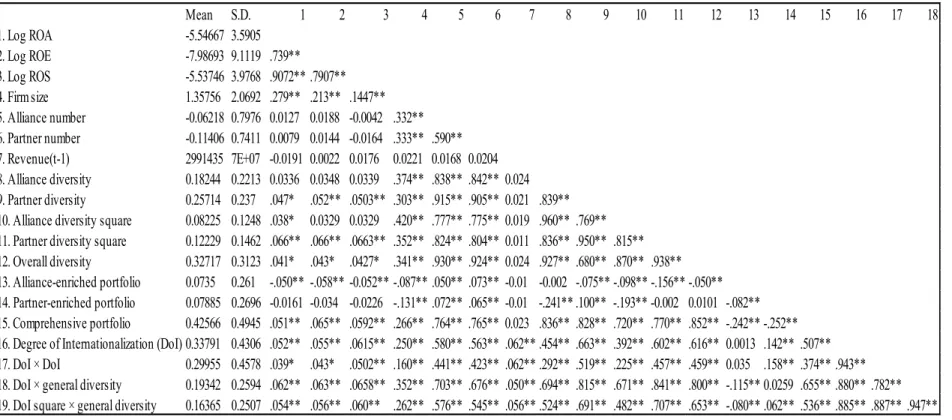
Table 2-2: Descriptive Statistics and Correlations for Essay One ... 51
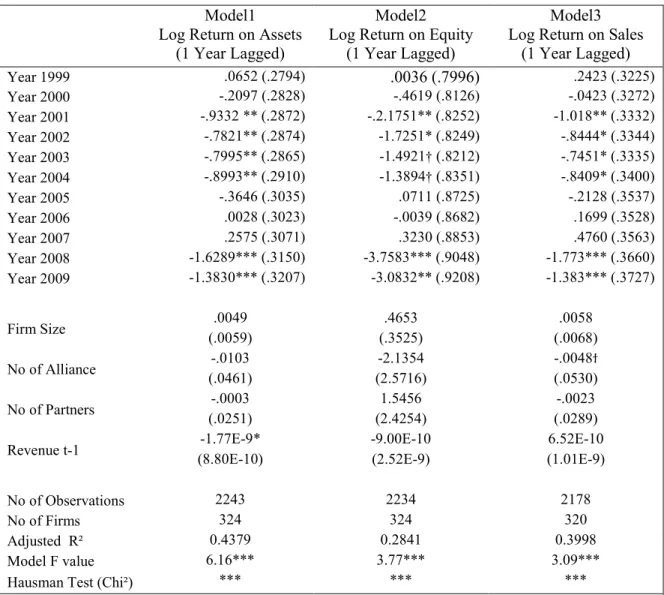
Table 2-3: Baseline Models with Control Variables... 52
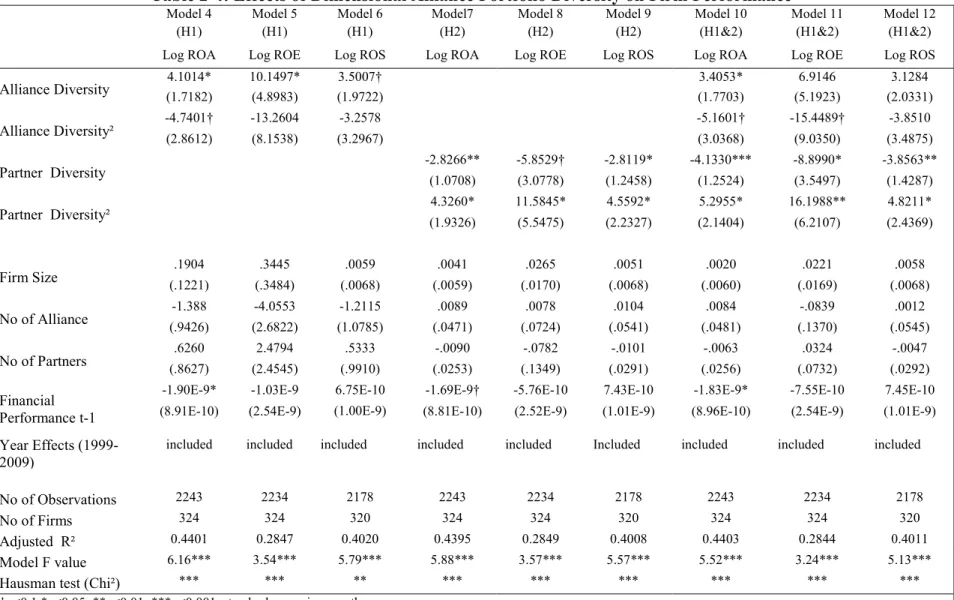
Table 2-4: Effects of Dimensional Alliance Portfolio Diversity on Firm Performance ... 54
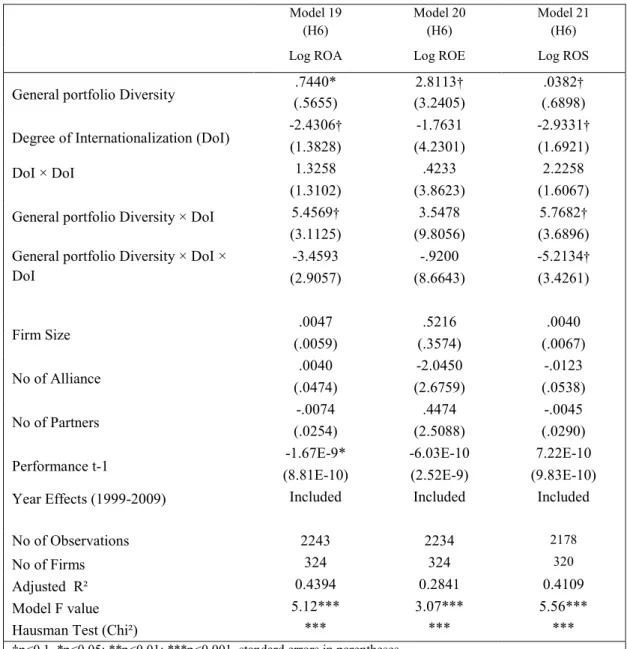
Table 2-5: Performance Properties of General portfolio Diversity and Strategic Alliance Portfolio Configuration ... 57
Table 2-6: Moderating Effects of Multinationality on Portfolio Diversity--Financial Performance Relationship ... 59
Table 3-1: Correlations and Descriptive Statistics for Essay Two ... 96
Table 3-2: Baseline Models and Control Variables ... 97
Table 3-3: Results of Logit Regressions ... 98
x
LIST OF FIGURES
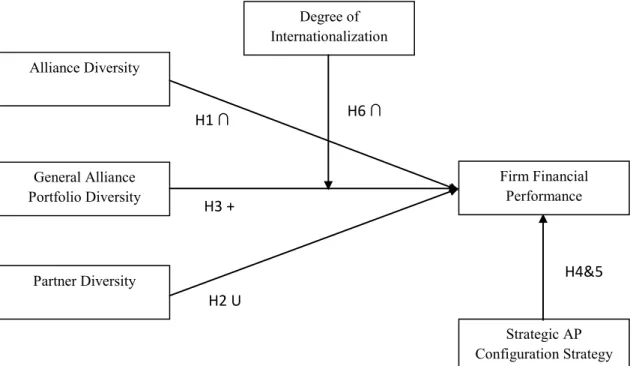
Figure 2-1: Alliance Portfolio Configuration Matrix... 28 Figure 2-2: Conceptual Research Framework ... 42 Figure 2-3: Alliance Portfolio Diversity Measurement ... 48 Figure 2-4: Performance Implication of Strategic Alliance Portfolio Configuration Choice ... 68 Figure 3-1: Conceptual Framework of Essay Two ... 89 Figure 4-1: Two-Directional Model of Firms’ Continuing Foreign Expansion ... 111
1
Chapter 1: Introduction
Over the past three and half decades the incidence of international strategic alliance formation has accelerated in the context of economic globalization (Glaister & Buckley, 1999). Multinational firms have been increasingly able to see the opportunities offered by different types of international alliance to draw upon knowledge and
capabilities that are not available within their home nations (Sirmon & Lane, 2004). Through formation and enforcement of international alliances, firms are able to achieve improved chances of new market entry (Glaister & Buckley, 1996), capability
supplement (Lane, Salk, & Lyles, 2001) as well as knowledge and technology integration (Baughn, Stevens, Denekamp, & Osborn, 1997; Inkpen, 2008).
Strategic alliances can be viewed as voluntary cooperative agreements between firms for achieving competitive advantage for the allying partners (Das & Teng, 2000). Alliances allow the establishment of joint competitive advantages through connecting resources and activities of cooperating firms and thus link their development (Hoffmann, 2007). Strategic alliances in business practice may come in a variety of forms including joint ventures, minority equity alliances, buyer-supplier partnerships, joint production or service arrangements such as the code-sharing programs in the airline industry (Teng & Das, 2008). While forming alliance is hardly a novel competitive strategy and has been widely recognized as an important source of competitive advantage (Hoffmann, 2007), a relatively new phenomenon identified by contemporary literature is that multinational firms have been increasingly engaging in multiple alliance relationships at the same time to fit the changing environment, especially in today’s global competitive market. In the context of global competition, instead of managing ad hoc alliances that merely serve
2
specific needs, multinational firms attempt to build up and maintain alliance networks that surround them and consist of increased number and extended scope of alliance ties with partners operating in different industries, counties and markets, thereby giving rise to the concept of alliance portfolio.
As a primary building-block of inter-firm relationship research, international alliance and strategic alliance have been extensively studied in the fields of international business, strategic management, organization theory and economics (Singh & Mitchell, 2005). While a large body of research has dealt with the three successively logic facets of alliance phenomenon, namely antecedents of alliance formation or partner selection (Glaister & Buckley, 1996; Doz, Olk, & Ring, 2000; Beckman, Haunschild, & Phillips, 2004; Lavie & Rosenkopf, 2006), management and governance of alliance (Hagedoorn & Narula, 1996; White, 2005; Dahlstrom, Haugland, Nygaard, & Rokkan, 2009) and
strategic outcomes of alliance especially the performance implications (Park & Ungson, 2001; Heimeriks & Duysters, 2007; Lunnan & Haugland, 2008; Lin, Yang, & Arya, 2009), the majority of these studies have been analyzing the dyadic relationships or network structures of alliances rather than applying a firm-centric perspective (Lavie, 2006), and thus fail to reveal the drivers and outcomes of firms’ alliance-related activities that involved both increased alliance numbers and alliance scope.
Whereas the traditional alliance literature focuses on the formation and management of dyadic alliances, and the network literature highlights relational and structural aspects of alliance networks, the studies of alliance portfolios adopt an ego-network perspective aiming to enhance the overall value generation of the firms’ alliance portfolios. In contrast to the traditional dyadic approach that applies individual alliances
3
as the unit of analysis and holds the assumption of independent value creation between different alliances (Gulati, 1998; Koka & Prescott, 2002), the portfolio approach aggregates the unit of analysis at the firm level and investigates how design and management of resources and strategies across the entire portfolio of alliances can contribute to firm outcomes (Sarkar, Aulakh, & Madhok, 2009).
Most recent alliance portfolio literature has demonstrated three main research streams—the emergence and formation, configuration, and the management of alliance portfolios (Wassmer, 2010). Literature investigating the emergence of alliance portfolios focuses on firms’ motivation to form alliance portfolios, which can be related to
rationales going beyond motivations of why firms engage in single strategic alliance. Research has shown that firms maintain alliance portfolios to reduce the influence of potential risk and uncertainty (Hoffmann, 2007), to accelerate learning (Anand & Khanna, 2000) or to enhance resource stock (Lavie, 2006; Gulati, 2007). Research concerned with management of alliance portfolio mainly centers on two topics—creation of alliance capability at portfolio level (Sarkar, Aulakh, & Madhok, 2009) and tools and approaches that can support managers to take critical alliance portfolio decisions on exploiting synergies and reducing conflicts (Parise & Casher, 2003). In contrast to the above two research streams, which are still in lack of generalized theories based on large scale empirical studies (Wassmer, 2010), the configuration of alliance portfolio and its consequent strategic outcomes have drawn the extensive attention of scholars from different research fields. Recent empirical research has examined alliance portfolio configuration from different perspectives and a central issue is how the strategic
4
strategic outcomes can be both performance-related (Bae & Gargiulo, 2004; Koka & Prescott, 2008; Lavie & Miller, 2008) or non-performance related such as R&D response (Soh, Mahmood, & Mitchell, 2004), innovation (Luo & Deng, 2009; Soh, 2010) and alliance portfolio capital (Sarkar, Aulakh, & Madhok, 2009).
Prior research on alliance portfolios has led to tremendous insights on the motivation of forming alliance portfolios, design and configuration of portfolios as well as maintaining and management of alliance portfolios. Nevertheless, a review of these studies indicates that several areas remain unclear or limited either in terms of theoretical framework development or in terms of research methodology design.
First, an ongoing issue that can be found in prior studies of alliance portfolio configuration appears to be the incomplete operationalization of key attribute construct of alliance portfolio and limited construction of portfolio mix (Wassmer, 2010). Researchers in most cases develop the key portfolio attribute measures and construct the overall portfolio mix based on a one-dimensional approach, which concerns either alliances or partners separately but not both at the same time such as the work by Ahuja (2000a), and Goerzen and Beamish (2005). The limited operationalization and defining of alliance portfolio attributes and the overall portfolio configuration can impose potential restriction on relevant research domain and result in deficient research design and outcomes.
Second,extant literature has not offered a clear rationale that explains the performance consequence of alliance portfolios. Although a variety of theoretical lens have been applied in this line of research, there was no consistent empirical results that indicate and provide support for the existence of an optimal alliance portfolio
5
effectively managing external collaborations. This is partially because of the incomplete defining and measurement of alliance portfolio configuration. In addition, the majority of existing studies examining the performance implications of alliance portfolios have either focused on the structural characteristics of alliance portfolios (Rowley, Behrens, & Krackhardt, 2000; Stuart, 2000; Bae & Gargiulo, 2004), or specific content attributes (Beckman & Haunschild, 2002; Koka & Prescott, 2002; Sampson, 2007) of alliance portfolios, while few studies have applied a comprehensive view that integrates different alliance portfolio attributes in one framework to uncover how the composition patterns of those attributes impact firms’ economic performance. Furthermore, although several works (Goerzen, 2005; Lavie & Miller, 2008; Jiang, Tao, & Santoro, 2010) have treated firms’ internationalization as one key attribute of alliance portfolio configuration to investigate alliance portfolio—economic performance relationship, no study has tested multinationality as a boundary condition that shapes this relationship, leaving an potential area for further theoretical contributions, especially in today’s global-based business environment.
Third, while literature has emphasized that the formation of alliance portfolio is mainly driven by firm’s requirement of enhancing strategic competitiveness (Wassmer, 2010), few studies have been able to conduct empirical research designs to explore both the driving forces that cause firms to form alliance portfolios and mechanisms that firms may employ to develop their alliance portfolios. In particular, little attention has been paid to investigating the antecedents that determine the specific mix and configurations of firms’ alliance portfolios, especially in the context of global competition and accelerating process of multinational firms’ internationalization, which leads to an unclearly defined
6
conceptual domain of alliance portfolio formation. This limitation also undermines the explanatory power of the rationales suggested by the concerned theoretical models for why firms develop alliance portfolios that go beyond the motivations of why firms
engage in individual alliances, which has been extensively investigated by prior literature. Fourth, whereas existing strategic management and international business
literature have extensively examined alliance related issues, few studies have applied an integrative approach to look at the roles of alliance portfolios in the internationalization process of multinational corporations (MNCs). In particular, compared with intensive investigations of firms' initial choice of entry modes into new product markets conducted by strategic management researchers and studies of MNCs’ entry mode into foreign markets, there has thus been little conceptual work in the literature explaining how MNCs’ alliance portfolios influence their post-entry expansion decisions in today’s global
economy, leaving a theoretical gap to be filled. In contrast to an individual alliance, an alliance portfolio holds more diverse and complex attributes and compositions, and thus is more likely than a single alliance to be influenced by endogenous factors within the portfolios and exogenous factors existing in the portfolio contexts. Given the dynamic nature of alliance portfolio configuration (Ahuja, 2000a; Chung, Singh, & Lee, 2000; Makino, Chan, Isobe, & Beamish, 2007), the lack of large-scale empirical studies in this field limits scholars’ understandings of how alliance portfolio configuration interacting with firm- and environmental factors have impacts on firms’ critical decision-making in the process of international expansion .
Finally, empirical research in prior alliance portfolio studies are mainly set in manufacturing industries (Ravindranath, Koka, & Prescott, 1998; Rowley, Behrens, &
7
Krackhardt, 2000; Reuer & Ragozzino, 2006; Mcdermott & Corredoira, 2010), especially the technology intensive sector (Lavie & Miller, 2008; Luo & Deng, 2009; Ozcan & Eisenhardt, 2009). Comparatively little attention has been given to the research setting of the consumer service sector, which holds unique characteristics compared to
manufacturing and high-Tech industries (Merchant & Gaur, 2008; Rugman & Verbeke, 2008). Since prior alliance portfolio related theoretical models have hardly taken into account the uniqueness of service industries, the generalizability of existing frameworks deserves further assessment.
This dissertation is initiated to address the above limitations existing in the current alliance portfolio literature. It aims at advancing the existing understandings of strategic alliance portfolio by integrating the theoretical lenses of strategic management and international business to provide a comprehensive view of alliance portfolio in the context of MNCs’ global competition and internationalization. Specifically, this dissertation targets on three fundamental questions: what are the specific performance properties of alliance portfolio configuration strategies? What constitutes the key antecedents of firms’ alliance portfolio configuration? How alliance portfolio
configuration can have an impact on critical strategic decision-making in the context of internationalization? These questions are answered by three separated essays, which as a whole construct the entire dissertation.
Essay One of this dissertation aims at examining the performance implications of alliance portfolio configuration. While a series of academic studies (Powell, Koput, & Smith-Doerr, 1996; Bae & Gargiulo, 2004; Goerzen & Beamish, 2005; Sampson, 2007; Jiang, Tao, & Santoro, 2010) have noted that the mix or composition of alliance portfolio
8
have an important impact on firms’ economic or technological performance, the majority of the studies mainly focused on one or several particular characteristics of partners as an explanation of alliance portfolio contribution to firm performance. Although very few studies such as Powell, Koput, & Smith-Doerr (1996) have looked at the composition of alliance ties, they exclusively examine the function mix and neglect the other attributes of alliance relations in an alliance portfolio.
As a whole, prior research on alliance portfolio configuration have tended to study one or the other of the two critical dimemsions of alliance portfolio configuration, while alliance relations and alliance partners have not been integrated at either conceputal or empircial level, resutling in incomplete definition and mixed findings (Wassmer, 2010). Furthermore, the exising lines of research in this field hardly tested the boundary conditions that shape the relationship between alliance portfolio configuraiton and firm performance, especially in today’s global strategic environment.
To tackle the above issues, in Essay One I adopt the rationale contributed by Bruyaka (2009) and Wassmer (2010), who proposed that alliance relation and alliance partner are two distinct dimensions of an alliance portfolio. Based on Bruyaka’s (2009) work I adopt a two-dimensional framework to examine how the diversity of these two alliance portfolio dimensions embracing multiple attributes have an impact on firms’ financial performance, and how this relationship is shaped by firms’ degree of multinationality. In particular, based on the two-dimensional typology, this essay suggests four potential alliance portfolio strategies and examines their performance properties.
9
The second essay aims at investigating the key determinants of alliance portfolio configuration when firms pursue in internationalization. While prior literature on
strategic alliance portfolios has applied a variety of theoretical lenses such as learning perspective (Anand & Khanna, 2000), social embeddedness perspective (Gulati, 1995a; Goerzen, 2007), effects of environmental shaping (Lorenzoni & Lipparini, 1999) and entrepreneurial orientation (Ozcan & Eisenhardt, 2009) to examine the drivers of alliance portfolio formation, a salient research gap still exists in that these studies did not uncover how those concerned drivers can shape the eventual appearance of the alliance portfolios. Since it is the configuration rather than formation of alliance portfolio that can influence firms’ strategic outcomes, it is paramount to fill the research gap and identify what the key determinants of alliance portfolio configuration are, and how they function as a whole in shaping a portfolio’s configuration. This study takes the pioneer role to address the above issues. It employs the resource-based view and resource dependency theory as the main theoretical instruments to explore the firm level antecedents of alliance portfolio configuration. The theoretical model focuses on how a single firm’s existing resource mix is associated with the pattern of the firm’s alliance portfolio configuration. Research on strategic management of alliance portfolio has suggested the pivotal linkages between individual alliances’ strategic objectives and the overall objectives of alliance portfolios (Hoffmann, 2007), suggesting that a focal firm’s different levels of strategic actions and decision-making condition the patterns of its alliance portfolio configuration.
Accordingly, this study particularly examines how a firm’s internationalization strategy moderates the potential relationship between an individual firm’s resource mix and its alliance portfolio configuration.
10
Essay Three is to investigate the strategic role played by a MNC’s alliance
portfolio in the process of firm internationalization. Prior entry mode related research has viewed strategic alliance as an important instrument for a firm to conduct foreign
expansion (Glaister & Buckley, 1996; Camisón & Villar, 2009). An ongoing research gap lies in the fact that extant literature exclusively focuses on the effects of strategic alliance on firms’ choice of initial entry into a foreign market, while how firms’ critical strategic decision-making is initiated and influenced after the initial entry into foreign markets remains to be an area lacking of both theoretical explanation and empirical examinations.
Organizational ecology and institutional theory have indicated that strategic alliance activities are usually embedded in multilevel social context with different norms and routines (Luo & Deng, 2009), such that multiple levels of analysis are indispensable in providing a full understanding of the factors and their interactions that can result in certain strategic outcomes for strategic alliance partners (Parkhe, 1991). Apart from a few exceptions (Luo & Deng, 2009; Yang, Lin, & Lin, 2010), cross-level analysis has rarely been applied in the field of alliance portfolio research. Considering the increased scale and scope in terms of inter-firm diversity (Molnar & Rogers, 1979) in alliance portfolios comparing with individual dyad alliances, it is paramount that different profile factors as well as their potential interactions are examined through a well-defined framework that is built on different levels of analysis.
In response to the above issue, this study follows a real options perspective and applies the resource-based view to look at how multinational firms employ alliance portfolios as special mechanism to adjust the their investment choices when they are in pursuance of continuing foreign expansion. The study develops a framework that is based
11
on a real options perspective to incorporate country-, portfolio-, industry- and firm level factors that influence the focal MNC’s strategic choice of post-entry expansion in a particular country. Attention is also paid to examining the boundary conditions of the concerned relationships, which are investigated by examining the interactions between factors at different levels, especially the interaction between alliance portfolio factors and factors from other levels of analysis.
The remainder of this dissertation is structured as follows. The two empirical studies that examine the performance implications and strategic antecedents of alliance portfolio configuration are discussed in Essay One and Essay Two respectively. Essay Three illustrates the conceptual framework that proposes the strategic consequence of alliance portfolio configuration on firms’ decision-making in continuing international expansion. The three essays are sequentially presented in Chapter Two through Chapter Four in this dissertation. The research implications of the entire dissertation are discussed in Chapter Five.
12
Chapter 2. Essay One: Strategic Alliance Portfolio Configuration and Firms’ Financial Performance—A Two-Dimensional Analysis in the International Hospitality and Travel Industry
2.1 INTRODUCTION
One of the most important trends in international business organizations in the past three decades has been the growth of collaboration between independent companies (Grant & Baden-Fuller, 2004). In particular, firms have come to appreciate the benefits that arise from the use of strategic alliances, which are employed as a means for firms to enter new markets, spread cost of new product development, gain additional marketing shares, or improve service solutions to the customer (Heimeriks & Duysters, 2007). In today’s global competitive environment, multinational firms have been increasingly relying on large amount of external collaborations with different strategic partners to direct attention to novel practices and facilitate the transmission of knowledge and information (Goerzen & Beamish, 2005). These external collaborating relationships and the collaborating partners as a whole constitute a particular firm’s alliance portfolio. An alliance portfolio can be defined as “a firm’s collection of direct alliances with partners” (Lavie, 2007, p. 1188).Alliance portfolios can be analogized to ego-centered networks encompassing the “focal company, a set of allying partners and their connecting ties” (Lavie, 2007, p. 1188), which correspond to the three key components in an ego-centered network from a social network perspective. According to social network theory, an ego-centered network or personal network is composed of three fundamental components— the focal actor (ego), alters having ties to ego, and “measurements on the ties among alters”(Wasserman & Faust, 1994, p. 42).
13
Wassmer (2010) notes three main research streams in alliance portfolio
research—the emergence of alliance portfolios, the configuration of alliance portfolios and the management of alliance portfolios. Given the critical role of strategic alliance portfolio in shaping firms’ competitive advantages (Dyer & Singh, 1998; Gulati, 1999) and driving the performance outcomes (Gulati, Nohria, & Zaheer, 2000), the
configuration of alliance portfolio and its consequent strategic outcomes have drawn extensive attention of scholars from different research fields. Recent empirical research has examined alliance portfolio configuration from different perspectives but has centered on one question—how does this portfolio configuration influence the strategic outcomes? However, review of existing literature on alliance portfolio configuration and alliance portfolio diversity reveals a lack of comprehensive understanding and robust conceptualization of alliance portfolio and its configuration, which leads to mixed empirical results. The underlying implications of this issue can be explained in twofold. First, the incomplete defining and operationalization of alliance portfolio configuration is not able to reflect the essential portfolio scale, which is built upon both alliances and related partners. Second, the size of alliance portfolio as a singular construct of alliance portfolio configuration is not sufficient to reflect different attributes embedded in one alliance portfolio (Wassmer, 2010).
While the majority of strategic alliance studies attempt to answer this question by examining one characteristic, property or attribute of alliance diversity or partner
diversity, this study extends the existing literature on alliance portfolio research through the introduction and application of a two-dimensional model to investigate the effects of alliance diversity, partner diversity and the general alliance portfolio diversity on firm
14
performance and the boundary condition in the context of firms’ internationalization that shape the alliance portfolio diversity—performance relationships. It advances the
research on strategic consequences of alliance portfolio by shedding insights on exploring the optimum configuration of alliance portfolio composition.
2.2 LITERATURE REVIEW
2.2.1 Defining Strategic Alliance Portfolio
The proliferation and increasingly diversified business relationships have driven companies to place themselves in a tangled web of interdependent alliances (Parise & Casher, 2003). Today’s industrial practitioners and strategy researchers have put more emphasis on firms’ multiple and simultaneous collaborating relationships.As alliance portfolio phenomenon has been investigated by researchers from a variety of
organizational fields, the conceptualization of alliance portfolio has not reached a general agreement (Wassmer, 2010). To avoid confusion it is paramount to distinguish alliance portfolio from other terminologies that describe different alliance-related phenomena such as alliance network (Baum, Calabrese, & Silverman, 2000; Goerzen, 2007; Koka & Prescott, 2008), alliance constellations (Das & Teng, 2002; Lazzarini, 2007), and web of alliance (Lorenzoni & Baden-Fuller, 1995).
Social network researchers (Baum, Calabrese, & Silverman, 2000; Rowley, Behrens, & Krackhardt, 2000) usually use the term alliance network to describe a firm’s direct allying relational ties with different partners, which is the most similar definition comparing to the definition of alliance portfolio in this research. In some special cases, scholars (Koza & Lewin, 1999; Goerzen, 2005) use alliance network to define alliances
15
that consist of multiple parties. These multi-party alliances are also referred by some scholars as alliance constellations (Gomes-Casseres, 1994; Das & Teng, 2002; Lazzarini, 2007), or alliance blocks (Vanhaverbeke, Duysters, & Noorderhaven, 2002). These alliance constellations or alliance blocks have more complicated structures than traditional dyad alliance ties due to the involvement of multiple parties, while they are not equal to alliance portfolios as they still consist of one alliance format or relationship per se. Lorenzoni and Baden-Fuller (1995) defined an alliance network with strategic guidance by a center firm as a web of alliances, which is used to describe a network consisting of different allying partners without identifying and highlighting the
fundamental role of the “egocentric”, thus does not have the same meaning of alliance portfolio defined in this study.
The existing ambiguity and inconsistency in the relevant conceptual domain requires specific clarification of alliance portfolios at the empirical level, especially for studies set in the context of globalized competitive environment. Two important issues in alliance portfolio research are level of analysis and temporality of alliances concerned in an alliance portfolio (Wassmer, 2010). Regarding the first issue, few of prior studies have clearly specify whether the alliance portfolio is situated at the business level, which means that the alliance portfolio only consists of alliances from a single business line, or the alliance portfolio includes alliances across diverse business lines. The second issue is concerned with the historical effects on alliance portfolio development and evolution. The primary argument is whether an alliance portfolio only includes active alliances or inactive past alliances, which may have significant contribution to the development of
16
alliance capability involved in a focal firm’s alliance portfolio from a learning perspective (Simonin, 1997; Anand & Khanna, 2000; Hoang & Rothaermel, 2005).
Corresponding to the above issues that closely relates to the defining of alliance portfolio, in this study1 an alliance portfolio is defined at corporate level given the highly diversified nature of alliance portfolios. Furthermore, it could result in serious
information loss if only one single business line is concerned in setting the boundary of an alliance portfolio. To avoid biased results, only active alliances are included when defining alliance portfolios in this study, because the nature of alliance portfolios determines that an active alliance does not matter anymore since the focus of alliance portfolio research needs to always rely on the management of multiple current alliances simultaneously. Finally, although Wasserman and Faust (1994, p. 53) suggested that an ego-centered network consists of the ties between different alters, this study applies the same approch indicated by priro allaince portfolio research (Goerzen, 2005; Lavie, 2007; Jiang, Tao, & Santoro, 2010) and only include direct alliance realtionships and immediate partners in the defining and measurement of alliance portfolios.
2.2.2 Strategic Alliance Portfolio and Firm Performance 2.2.2.1 Performance outcomes and alliance portfolio attributes
Gulati (1998) addressed five key questions of strategic alliance: 1) which firms enter alliances and whom do they choose as partners? 2) What types of contracts do firms use to formalize the alliance? 3) How do the alliance and the partners’ participation evolve over time? 4) What factors influence the success of alliances? 5) What is the
1The study in essay two will also take these perspectives explained in this section to define and measure
17
effect of alliances on the performance of firms entering them? In summary, traditional alliance research centers on the formation, governance, dynamic evolution and
performance of single alliances (Gulati, 1998). The same questions can be extended to the level of alliance portfolio, which has become a central direction of current and future research (Gulati, 2007). Among these questions, the performance implications of
strategic alliance portfolio appear to be the most practically attractive one for both strategy scholars and business executives, especially in today’s global competitive environment.
In this line of research, scholars attempt to discover whether and how alliance portfolios variation contributes to explaining the differentials of firms’ performance. The existing literature primarily focuses on effects of alliance portfolios on three types of performance outcomes—financial performance (Goerzen & Beamish, 2005; Lavie & Miller, 2008), entrepreneurial (Baum, Calabrese, & Silverman, 2000; Gulati & Higgins, 2003) outcomes, and technological performance (Luo & Deng, 2009). Overall, the empirical studies in this area generally agree that through configuring their alliance portfolios firms are able to gain better access than their counterparts to additional resources, knowledge and capabilities that embedded within the alliance networks surrounding them, so as to achieve better financial or innovational performance.
A review of existing literature suggests that the impacts of alliance portfolios on firms’ performance represent various patterns. The complicated nature of alliance portfolio—firm performance relationships can be ascribed to the fact that an alliance portfolio often represents a mixed bag of individual alliances that as a whole fail to cohere into a consistent portfolio (Doz & Hamel, 1998; George, Zahra, Wheatley, &
18
Khan, 2001), since each member alliance in the portfolio has different characteristics and consists of different attributes. The composition of those characteristics and attributes eventually determine the effects of alliance portfolios on firms’ strategic competitive advantages and performance (Soh, 2010).
A large body of prior studies have noted that specific attributes of an alliance portfolio usually have important impacts on firms’ performance outcomes and pivotal decision-making. For example, Stuart (2000) showed that connection to high-quality alliance partners can enhance the focal firm’s reputation, especially for young companies. Lazzarini (2007) noted that focal airline firms enjoy greater marketing capacity provided by the alliance portfolio to which they belong outperform their counterparts which do not have the marketing capacity from the relevant alliance portfolios. Lavie and Miller (2008) identified the important role of alliance multinationality in influencing firm performance and found that cross-national alliances can bring both benefits and liabilities to a firm as the national differences between the focal firm and its foreign partners do not only create opportunities for accessing unique network resources, but also impose barriers to efficient resource exchange. Some of the previous research has also identified the attributes of high-performing portfolios (Baum, Calabrese, & Silverman, 2000; Uzzi, 1997).
2.2.2.2 Theoretical perspectives applied
Regarding the main theoretical lens strategic management scholars have applied to investigate alliance portfolio—firm performance relationship, resource-based view and network theory are the two primary theoretical lenses on which the prior studies drew for investigating the alliance portfolio—firm performance relationship. Powell, Koput and
19
Smith-Doerr (1996) offered some valuable insights on how learning within alliance networks and inter-firm connectivity help biotechnology firms achieve business growth. They revealed that a more diverse alliance portfolio leads to a more superior position for firms to access pivotal resources and information beyond firm boundaries. Rowley (2000) found that a firm’s strong tie number is negatively associated with the economic
performance, while this relationship appears to be positive between weak ties and performance. From a network perspective, Capaldo (2007) argued that an alliance portfolio of strong dyadic ties can both positively and negatively affect a firm’s
innovative capabilities. Zaheer and Bell (2005) posited that superior network structures enable firms to better exploit their internal capabilities and improve their performance, thus firms need to develop network-enabled capabilities, which can bridge structural holes.
Other scholars focus more on the content aspect of alliance portfolio, and tend to examine how the composition, diversity and features of alliance portfolio impact firm performance. Baum, Calabrese and Silverman (2000) stressed the importance of the diversity among a focal firm’s alliance partners and show that a small set of alliances with diverse partners may yield more diverse resources, information, and capabilities for less cost than a large set of alliances with similar partners. George et al (2001) found that alliance portfolio characteristics such as structure and knowledge flows have impacts on a firm’s performance, innovativeness, and absorptive capability. They further concluded that alliance portfolios that are able to offer firms stability and access to new knowledge lead to superior economic performance. Hoffmann’s (2007) work developed a typology to describe alliance portfolio strategies from a dynamic perspective, and investigated how
20
the selected strategy affects the way an alliance portfolio is configured. The research identified the contingency factors influencing the choice of portfolio strategy and showed the effects of portfolio strategy on resource endowment and performance of focal
business units. He offered a typology including three alliance strategies—shaping, adapting and stabilizing, complementary with exploitation and exploration. Longitudinal case studies were used to illustrate patterns in the evolution of alliance portfolios.
2.2.2.3 Theoretical background of alliance portfolio diversity—firm performance relationship
In recent years, alliance portfolio diversity has become an increasingly growing research topic in the field of alliance portfolio—firm performance research. Integrating key attributes and dimensions that specify an alliance portfolio, the concept alliance portfolio diversity has been studied from several theoretical paradigms by strategy and entrepreneurship scholars. Specifically, transaction cost economics (TCE), resource based view, social network theory, and organizational learning are the most popular theories that have been usually integrated and applied in a significant number of studies to examine the underlying rationale that shape the alliance portfolio diversity—firm performance relationship. According to transaction cost theory (Williamson, 1985), an alliance is a more efficient organizational form than markets or organizational hierarchies. While a firm’s diverse alliance network help it reduce uncertainty and exploit power between organizations (Burgers, Hill, & Kim, 1993), the increasing diversity of firms’ activity may result in loss of corporate focus and subsequent higher costs (Williamson, 1985). Hence an appropriate configuration of alliance portfolio diversity is required. The
21
resource-based view (RBV) regards firms as bundles of heterogeneous resources and contends that firms possessing valuable, rare, inimitable and non-substitutable resources are able to gain competitive advantages and achieve superior performance (Barney, 1991). According to the resource-based view, strategic alliances provide an effective external exchange mechanism for the acquisition of strategically critical resources (Eisenhardt & Schoonhoven, 1996), which are not tradable and cannot be acquired in strategic factor markets (Dierickx & Cool, 1989).
The most significant progress in this line of research has extended the traditional RBV, which focuses on the key resources residing within firms’ boundaries (Rumelt, 1984; Wernerfelt, 1984; Barney, 1991), to interconnected firms that participate in inter-firm relationships (Lavie, 2006; Lavie, 2007), based on the relational view introduced by Dyer and Singh (1998). Extending the traditional RBV and integrating it with social network theory and organizational learning, the relational view suggests that the structure of alliance portfolios has profound implications for economic rent generation (Gulati, 1998), which also relies on how the characteristics of the alliance portfolios affect the firm’s ability to learn from its partners (Barkema, Bell, & Pennings, 1996), and how this learning process is affected by the partners’ knowledge capabilities (Koza & Lewin, 1998; Simonin, 1999). Considering the comprehensive and consolidated nature of relational view, I applied it as the basic theoretical building-block for theory and hypotheses development in this study.
22
Table 2-1: Summary of Selected Main Study on the Effects of Alliance Portfolio Diversity on Firm Performance Study Dimension/Attributes Alliance portfolio Operationalization Measurement/ Theoretical Lenses Main Arguments and Findings Baum, Calabrese &
Silverman (2000) Initial alliance portfolio size, efficiency, existence, scope advantage, and innovative capabilities of rival alliance
Hirschman-Herfindahl
index Network theory, entrepreneurship
Startup firms could enhance the initial performance by establishing alliances, configuring an efficient alliance network providing resource access, and allying with rivals for learning and rivalry reduction.
Beckman &
Haunschild (2002) Partner attributes—partners’ premium distribution, industrial affiliation, partner size
Ratio of indirect to direct
ties, entropy-based index Network theory, Firms allying with partners having heterogeneous prior premium experience enjoy higher acquisition performance. Firms having multiplex relationships with partners receive more benefit. Goerzen & Beamish
(2005) Multiple attributes—geographic location, product, partner nation, region and industry
Questionnaire survey TCE, social network theory
MNCs with more diverse alliance networks receive lower economic performance than those with less diverse alliance networks.
Lee (2007) Partners’ operational
context Blau Index Network theory, RBV Firms having access to high-quality, large- quantity and heterogeneous information enter new market more quickly. Network configuration lock-in and network costs counterbalance the benefits derived from network resources. Lavie & Miller
(2008) Partner foreignness Combined index embracing cultural distance, geographical distance, institutional distance and economic distance
Psychic distance, organizational learning
There is a sigmoid relationship between alliance portfolio internationalization and firm
performance. Foreign partner experience and wholly owned subsidiaries in partner home nation help overcome liabilities due to portfolio
internationalization. Jiang, Tao & Santoro
(2009) Partner—industry, organization, nation Alliance—function, governance
Blau Index RBV, dynamic
capabilities-based view
Alliance portfolios with greater organizational and functional diversity and lower governance diversity enjoy greater performance.
23
Table 2-1 summarizes the main studies since the new millennium that have been conducted to investigate the multiple facets of alliance portfolio diversity and their effects on firms’ performance. In sum, a review of the existing literature on alliance portfolios’ performance implications indicates that this relationship is still under-researched. While intensive attentions have been paid to the performance implications of strategic alliances, the majority of extant studies have been set up at dyad or alliance-tie level, and hence provides very limited insights on this issue. Although empirical research on this
important issue has started to emerge, the existing research addressing this question has primarily relied on structural alliance portfolio features as well as their consequential performance influence to the parent firms (Baum, Calabrese, & Silverman, 2000; George, Zahra, Wheatley, & Khan, 2001; Bae & Gargiulo, 2004).
Other research focuses have been drawn on individual portfolio attributes’ performance properties, or confound an attribute’s diversity with the overall alliance portfolio diversity (Powell, Koput, & Smith-Doerr, 1996; Sarkar, Aulakh, & Madhok, 2009). A full and comprehensive defining and measuring of alliance portfolio in one study has not emerged in the extant literature. Little empirical evidence has been provided for the impacts of overall alliance portfolio configuration on firms’ economic performance. Except scarce empirical attempts (Kale, Dyer, & Singh, 2002; Reuer & Ragozzino, 2006), very few studies have set up research design at the alliance portfolio level to solve this issue. Nor have scholars clearly defined and revealed what are the effective strategies of alliance portfolio configuration and what are the performance implications of those strategies.
24
2.2.3 One-Dimensional versus Two-Dimensional Framework of Alliance Portfolio Configuration
While the impact of alliance portfolio configuration—namely the content and arrangement of an alliance portfolio (Wassmer, 2010), on firms’ economic performance has drawn intensive attentions from scholars, extant research have exclusively tackled the issue by acknowledging one dimension—alliance or partner, which fails to discover the whole mix of contents that are contained in an alliance portfolio. This suggests the necessity of a new approach that defines and operationalizes alliance portfolios using a two-dimensional construct that incorporates both alliance-attributes and partner-attributes, will be more fruitful, as it helps uncover the complexity of alliance portfolio
configuration (Wassmer, 2010). Furthermore, alliance portfolio researchers (Wassmer, 2010, p. 163) also point out that the blend of certain alliance relations and partner types can be described by the “uniformity/diversity and homo-/heterogeneity” of a focal firm’s alliance portfolio content. The above discussion suggests that a compound
two-dimensional framework, specifying the magnitude of alliance portfolio
diversity/heterogeneity on the two dimensions, can be used to define and measure alliance portfolio configuration.
However, a review of extant literature in this line of research indicates that studies that adopt multi-dimensional framework and define alliance portfolio
diversity/heterogeneity based on integrating different attributes for each dimension are very scant. A most recent study contributed by Jiang et al. (2010) defined and
operationalized alliance portfolio diversity through three separated diversity measures, namely partner, function and governance diversity. They further decomposed partner
25
diversity into industrial diversity, national diversity and organizational diversity based on the nature of partners. Although their definition covers key attributes of both alliance ties and partners involved in alliance portfolios, Jiang et al. (2010) did not explicitly identify and define the two-dimensional structure of alliance portfolios. Both of Jiang et al.’ (2010) definition and their operationalization of alliance portfolio diversity focused on only the single attributes of either alliance ties or partners, thus still followed one-dimensional approach. Other strategic alliance researchers provided similar works in this field. However, they exclusively built their models either on single-attribute diversity (Lee G. K., 2007; Lavie & Miller, 2008) or on multiple-attribute diversity (Baum, Calabrese, & Silverman, 2000; Beckman & Haunschild, 2002; Goerzen & Beamish, 2005) of a single dimension of alliance portfolio.
A very useful recent work that addressed the above issue was provided by Bruyaka (2009, p. 9), who defined alliance portfolio as “the distribution of differences among attributes of both partners and alliance ties within a focal firm’s group of alliance.” Adopting a two-dimensional approach that incorporates multiple attributes of both
alliance ties and partners, Bruyaka (2009) proposed a matrix-based typology to describe alliance portfolio diversity, which contains two types of portfolio diversity locating on two dimensions, namely partners’ diversity and ties’ diversity. In her two-dimensional typology, Bruyaka (2009) also proposed four types of alliance portfolio configuration. However, in each definition of these four alliance portfolio categories, the numbers of alliances/partners were highlighted, which is not consistent with the original definition of
26 alliance portfolio diversity2
Another similar framework of two-dimensional alliance portfolio configuration was offered by Saebi (2011), who also proposed a matrix-based typology. However, in this framework the diversity of alliance dimension was defined as functional activity diversity, so that the overall model cannot be regarded as a full compound two-dimensional framework of alliance portfolio configuration per se.
. In addition, Bruyaka’s (2009) work also shed insights on alliance portfolio operationalization by noting the inappropriateness of using direct sum of dimensional portfolio diversity as the proxy of the overall alliance portfolio diversity. Although Bruyaka (2009) developed the compound two-dimensional framework to define alliance portfolio diversity, she did not operationalize the construct fully based on this framework at the empirical level. In her later empirical paper (Bruyaka, Caner, & Prescott, 2011), alliance diversity and partner diversity were measured respectively by single attribute diversities—namely alliance functional diversity and partner industrial diversity.
In addition, the construct development of alliance portfolio configuration requires clear distinction between similar terminologies. Although both alliance portfolio diversity and alliance portfolio heterogeneity can be found in extant literature, prior alliance
portfolio research such as Wassmer (2010) did not specify the conceptual difference between these two constructs. In his classical work, Blau (1977, p. 10) noted that “status diversity is the graduated-parameter equivalent of heterogeneity.” Accordingly, this
2 Due to this reason, the four names of alliance portfolio categories provided by Bruyaka (2009) are not applied in this dissertation.
27
study3 applies the term alliance portfolio diversity, as heterogeneity appears to be a particular type of it (Bruyaka, 2009).
2.3 THEORY AND HYPOTHESES
2.3.1 Illustration of Two-Dimensional Typology of Strategic Alliance Portfolio Configuration
The previous section suggests that a central issue that perplexes strategic alliance scholars is the defining and operationalization of alliance portfolio configuration. Based on the works of Bruyaka (2009), and Bruyaka, Caner, and Prescott (2010), a more comprehensive two-dimensional typology that integrates both alliance attributes and partner attributes can be used to demarcate the configuration of alliance portfolio. Accordingly, in this study an alliance portfolio is viewed as a composite system combining a variety of attributes that can be categorized into two clusters—alliance related attributes and partner related attributes. The former cluster consists of a series of attributes that altogether determine the configuration of alliance dimension in the
portfolio. Drawn from existing literature, these attributes can be identified as governance mode (Gulati, 1995b), duration (Paruchuri, 2010), number of partners (Gomes-Casseres, 1994) and scope nature (e.g. function, horizontal vs. vertical, knowledge accessing vs. knowledge creation). Correspondingly, the attributes determining partner dimension in an alliance portfolio can be specified as industrial affiliation (Kotabe & Swan, 1995), degree of competition in the same market (Dussauge, Garrette, & Mitchell, 2000), business size (Kotabe & Swan, 1995), country of origin (Hagedoorn & Schakenraad, 1994) and
28
cooperation experience (Goerzen, 2007). These attributes are naturally located on the two dimensions of a portfolio, and the patterns of their combination determine the eventual appearance of the focal alliance portfolio.
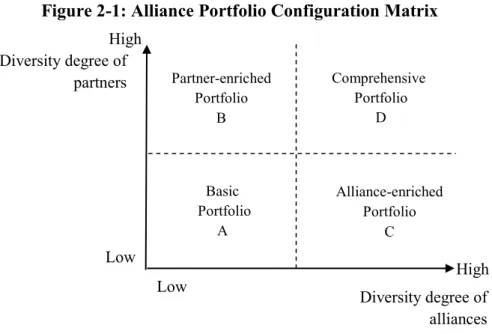
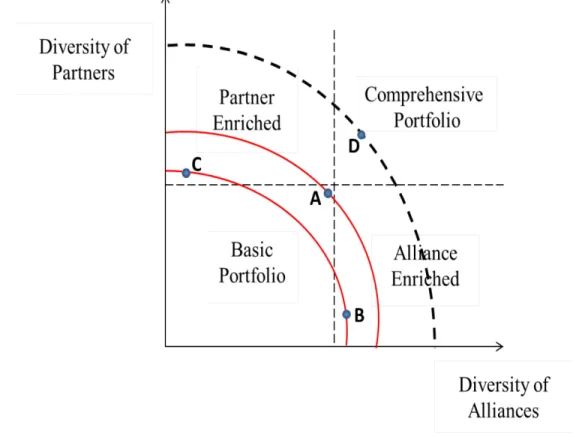
Figure 2-1: Alliance Portfolio Configuration Matrix
To tackle the above issues and shed new light on alliance portfolio configuration, a two-by-two matrix was created by juxtaposing the degree of diversity of alliance mix with the degree of diversity of partner mix. The determination of related mix diversity relies on a systematic synthesis process taking into account all of the relevant
dimensional attributes. As shown in Figure 2-1, the resulting typology consists of four types of portfolio configuration determined by different patterns of matching between partner diversity degree and alliance diversity degree. Namely, these four types of configuration are—basic portfolio, comprehensive portfolio, alliance-enriched portfolio and partner-enriched portfolio.
As shown in Figure 2-1, field A in the matrix is labeled “basic portfolio” and is the category in which alliance portfolios are composed of relatively uniform alliances and
Horizontal Portfolio Diversity degree of alliances Diversity degree of partners Partner-enriched Portfolio B Comprehensive Portfolio D Basic Portfolio A Alliance-enriched Portfolio C Low Low High High
29
partners. While the total number of alliances or partners included in a basic portfolio does not necessarily have to be low, both alliances and partners in this domain have identical attributes so that the degree of diversity in both alliance dimension and partner dimension appear to be lower than that of the other portfolio categories specified in the matrix. As the main attributes of both alliances and partners are identical, the configuration of basic portfolio is briefly structured following a unitary pattern. This type of alliance portfolio, to the largest extent, avoids the additional complexity added to the portfolio configuration and provides firms with straight support for the implementation of univocal strategic objectives.
Partner-enriched portfolio is demarcated by field B in the portfolio configuration matrix. In this portfolio category, firms enter into strategic alliances with business partners holding diversified attribute features. However, the pattern of strategic alliances themselves appears to be homogeneous across the entire partner mix. A typical example that falls into this domain is the alliance portfolio built by E-commerce companies such as eBay or Amazon, who develop large amounts of alliances with firms across a variety of business sectors, providing different products or services. On the other hand, the majority of the alliances are formed for the purpose of market sharing or extension as well as business image promotion. As indicated by Figure 2-1, the degree of partner diversity is much greater than the degree of alliance diversity in a partner-enriched portfolio. Firms particularly prefer this type of alliance portfolio as an instrument for achieving co-marketing related strategic objectives.
Field C in Figure 2-1 represents the alliance-enriched portfolio, which is in contrast to partner-enriched portfolio. In this category, firms enter into various alliances
30
with partners that hold relatively homogenous attributes. The most conventional case that matches this portfolio domain can be found at the corporate level. Large diversified corporations can enter into different alliances at the business level with other corporations especially when long-term trustful relationships have been developed among those
corporations. In this case, although alliance attributes appear to be highly diversified, the features of strategic partners involved are likely to be highly identical.
Finally, as indicated in field D of the matrix, the portfolio domain that represents the highest diversity degree of both alliances and partners is labeled as “comprehensive portfolio”. In this category, firms simultaneously maintain a collection of highly
heterogeneous alliances in terms of a series of attributes with a variety of strategic partners holding different characteristics. The comprehensive alliance portfolio implies a mix of different business strategies deployed by the focal firm and thus represents the highest complexity in terms of portfolio configuration compared with the other three types of alliance portfolios. Multinational corporations have been prominently developing comprehensive portfolio as an important mechanism to achieve strategic competitiveness (Wassmer, 2010) associated with a number of strategic behaviors including new market entry (Glaister & Buckley, 1996), innovation development (Phelps, 2010; Soh, 2010), and knowledge integration (Inkpen, 2008).
The introduction and application of this two-dimensional typology, incorporating both alliance and partner attributes, allows researchers to investigate the antecedents of alliance portfolio configuration through a more comprehensive and consistent way in contrast to prior frameworks in the traditional alliance portfolio literature.
31
2.3.2 Dimensional Diversity and Firm Performance
The relational resource-based view provides an appropriate explanation on the effects of alliance diversity on a firm’s performance. Burt (1992) noted that when firms are involved in inter-firm relations, they are able to enjoy several significant benefits— information from the network, which otherwise cannot be gained, as well as the first moving advantage due to the early receiving of this information, and the related referral benefits. Goerzen and Beamish (2005) suggested that non-redundant set of ties allow firms to establish reliable contacts enabling useful information to surface. Powell et al (1996) noted that diverse alliance relations provide firms pivotal and timely access to resources and knowledge that are otherwise unavailable. Apart from knowledge-accessing channels, improvement in knowledge application is another strategic benefit provided by diverse alliances in an alliance portfolio. Grant and Baden-Fuller (2004) argued that heterogeneous alliance-ties contribute to the efficiency of knowledge
application through efficiently integrating knowledge into producing complex goods and service, and efficiently utilizing knowledge. Under the uncertainty of future knowledge requirement and environmental change, diverse inter-firm alliances allow the focal firms to spread investment risks and reap the option value of segmented investments in new areas of knowledge (Kogut, 1988; Sanchez, 1993).
From a value-creation’s perspective, firms may enhance their value-creation outcomes by leveraging their diverse alliance relationships within their alliance portfolios to access a variety of resources, improve the efficiency in knowledge accessing and application, and meanwhile minimize the risks of knowledge investment. The alliance portfolio hence functions as an effective mechanism for the focal firms to meet external