i
FRAMEWORK FOR EFFECTIVE MANAGEMENT OF COST CONSTRAINT ON
BUILDING PROJECT DELIVERY IN SOUTH AFRICA
By
IMISIOLUSEYI JULIUS AKINYEDE
Thesis submitted in fulfilment of the requirement for the degree
Master of Technology (Construction Management)
In the Faculty of Engineering
Supervisor: Dr JA Fapohunda
Bellville Campus
July 2014
CPUT copyright information
The dissertation/thesis may not be published either in part (in scholarly, scientific or technical journals), or as a whole (as a monograph), unless permission has been obtained from the University
ii
DECLARATION
I, Akinyede Imisiolusey Julius, declare that the contents of this thesis represent my own unaided work, and that the thesis has not previously been submitted for academic examination towards any qualification. Furthermore, it represents my own opinions and not necessarily those of the Cape Peninsula University of Technology.
--- ---
iii
ABSTRACT
According to findings presented in literature, construction projects are restrained within budgeted cost. Hence, the operational system is challenged within prohibitive cost limits to deliver projects at a stipulated time and at a satisfactory quality. This has prompted the intention of establishing effective management of cost constraint on building project delivery in South Africa. Data for the main study were collected through observations, semi-structured and unsemi-structured qualitative interviews and quantitative close-ended questionnaires administered to construction stakeholders working in the Western Cape and Gauteng provinces, South Africa. Findings are that the following are factors that affect cost during building production process: additional works without contractual procedure, inadequate co-ordination of design phase and construction phase during production by project managers, financial mismanagement, frequent changes in design, cost of materials in the market, fluctuation of price of materials. Additional findings are proper monitoring and controlling at stages during production, procurement of competent contractors and subcontractors, involvement of experienced professionals in production, proper briefing by the client during production process, targeting quality during production, prompt decision taking during production, and the establishment of effective communication systems on site during production, frequent changes in building design by the client during production affect construction cost; frequent changes in building design during production cause rework; changes in building design during construction caused by errors and omissions detected affects quality of project delivered; and specification due to procurement of new materials during construction causes changes in building design, labour productivities, wrong planning for machine usage on site, late delivery of equipment during production and unanticipated increases in prices of building materials. Late delivery of materials also affects production process. Regular meetings on site will promote efficient productivities of human resources, team work on site during production, general progress reports on site during production, projects schedule/timetable for production and work programmes for site activities.
The study concluded by recommending that proper adoption of these findings by the South African construction stakeholders during production processes will enhance delivery of building projects at reduced construction resources, at the standard of quality expected, at the time stipulated, at the budgeted cost specified, and to the satisfaction of the client. Interest will be achieved as illustrated under each objective of the research study. This research recommends further investigation of the effects of building material supply management during production processes in the South African construction industry.
iv
Keywords: Budgeted cost, Building, Cost, Cost constraint, Construction industry, Delivery time, Product, Production process, Stakeholders, Quality project
v
ACKNOWLEDGEMENTS
I give thanks to the Almighty God for his infinity mercy on me during this study. I acknowledge the helpful guidance of my supervisor, Dr. Fapohunda Ayodeji Julius,
for his support in making my vision achievable.
My appreciation stretches to the Head of Department of Construction Management and Quantity Surveying, Mrs. Toni Stringer, for her assistance in the success of this research study, and all the staff members of the Department of Construction Management and Quantity Surveying, especially Mrs K. Mohammed for her useful advice during the course of this study and Ms. Charlene Daniels, Secretary of the Department.
Gratitude goes to my family and friends who has been supportive, particularly my Mother, Mrs. Felicia Akinyede, my beloved wife, Mrs. Adenike Akinyede, my older brother, Sola Akinyede, and others: Mrs. Bola Fasuba, Mr. Gboyega Peters, Mr. Ayo Adelusi, Mrs. Ajimo Iyabode Flourence, my children, Mr. Deji Aladejare, Alhaja Kuburat Akinyede, Ajimo oluwaseun and Mrs. Mojisola Ojudu, for all the assistance afforded to me during this study.
I would also like to mention and appreciate the support given by the pastors and all the members of the RCCG Household of God parish, Belhar.
Lastly, I thank the Dean of the Faculty of Engineering and staff members for the bursary awarded to me for this work.
vi
DEDICATION
vii
GLOSSARY
The following terms are defined according to the context of the research topic:
Constraint a factor that confines production processes in the construction industry to limited budget
Budgeted cost the actual amount of money assigned to a project for completion
Cost the total cost that includes important materials purchased, construction activities, all professional fees and other related costs
Money used to purchase construction resources
Budgeting making a financial arrangement for a construction process and assigning the resources linked with the project (i.e. money, men, machines, and materials) to cost centres
Estimate cost
a process of estimating the actual amount of monetary resources needed to complete all project activitiesviii
LIST OF PUBLICATIONS
The followings are list of publications during the master programme
Akinyede, I.J. & Fapohunda, J.A. 2014. The Impact of Design Changes on Budgeted Cost of Building Projects in South Africa. In laryea, S. and Ibem, E (Eds) Proceedings 8th Construction industry Development Board (cidb) Postgraduate Conference, 10-11 February 2014, University of the Witwatersrand, Johannesburg, South Africa: 537-546.
Akinyede, I.J. & Fapohunda, J.A. 2014. Essential Factors that Affect Budgeted Cost in Respect to Design, Construction and Management during Building Production Process in South Africa. Proceeding of the 3rd International Conference on Infrastructure Development in Africa 17-19 March, 2014 Abeokuta Nigeria: 300-311.
Akinyede, I.J. & Fapohunda, J.A. 2014. Factors that Affect Cost during Building Production Process in South African Construction Industry. Proceeding of the 3rd International Conference on Infrastructure Development in Africa 17-19 March, 2014 Abeokuta Nigeria: 312-324.
Akinyede, I.J. & Fapohunda, J.A. 2014. Efficient Utilization of Cost without Affecting Delivery Time during Production Processes. Proceedings of TG59 People in Construction Conference 6-8 April 2014 Port Elizabeth, South Africa: 120-125.
Akinyede, I.J. & Fapohunda, J.A. 2014. Factors that affect Budgeted Cost through Building Production Process in South Africa Construction Industry. Proceedings of International Council for Research and Innovation in Building and Construction and Association of schools of Construction of South Africa. The 8th Built Environment Conference 27-29 July 2014, Durban, South Africa.
Akinyede, I.J. & Fapohunda, J.A. 2014 Effect of building control plan on cost during building production process in South Africa construction industry. Proceedings of South Africa council for the quantity surveying profession, 7th annual quantity surveying research conference 22-23 September 2014 CSIR International Convention Centre Pretoria South Africa.
ix
Akinyede, I.J. & Fapohunda, J.A. 2014. Factors that Affect Budgeted Cost through Achieving Delivery of Quality Project in South Africa Construction Industry. Proceedings of International Cost Engineering Council (ICEC) A Worldwide Confederation of Cost Engineering, Quantity Surveying and Project Management Societies-Re Engineering Total Cost Management World Congress, 20-22 October, Milano Italy.
Akinyede, I.J. & Fapohunda, J.A. 2014. Impact of Budgeted Cost on Management of Construction Resources During Building Production. Processes in South Africa Construction Industry. Proceedings of International Cost Engineering Council (ICEC): A Worldwide Confederation of Cost Engineering, Quantity Surveying and Project Management Societies-Re Engineering Total Cost Management, World Congress, 20-22 October, Milano Italy.
x
TABLE OF CONTENTS
DECLARATION ...ii ABSTRACT ... iii ACKNOWLEDGEMENT ... v DEDICATION ... vi GLOSSARY ... viiLIST OF PUBLICATIONS ... viii
CHAPTER ONE ... 1 1.0 INTRODUCTION ... 1 1.1 Background ... 1 1.2 Problem statement ... 3 1.3 Aim ... 4 1.4 Objectives ... 4 1.5 Research questions ... 5
1.6 Preliminary literature review ... 5
1.7 Methodology ... 6 1.8 Scope ... 9 1.9 Key assumptions ... 9 1.10 Ethical consideration ... 9 1.11 Chapter outline ... 9 1.12 Chapter summary ... 10 CHAPTER TWO ... 11 2.0 LITERATURE REVIEW ... 11 2.1 Introductions ... 11
2.2 Construction cost as a constraint ... 11
2.3 Construction team ... 13
2.4 Design team members ... 17
2.4.2 Design team,... 18
2.4.2.1 Client as a member of design team ... 19
2.4.2.2 Architect as a member of design team ... 21
2.4.2.3 Contractor as a member of design Team ... 22
2.6 Costs in relation to other construction constraints ... 25
2.7 Cost and construction resources ... 27
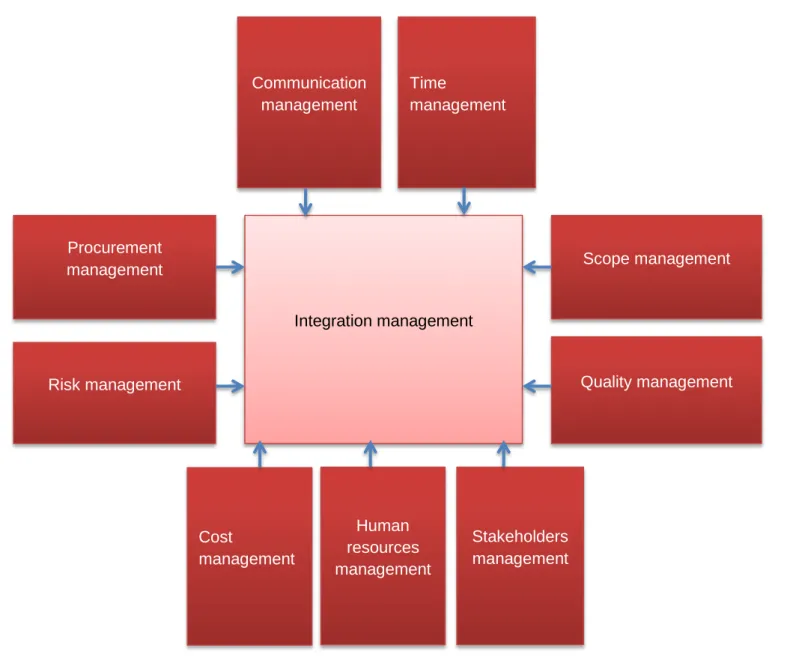
2.8 Cost and management knowledge areas... 29
xi
2.9 Production phases and building production processes live cycle ... 33
2. 9.1 Building production process stages ... 34
2.10 Consideration of management principles and practices... 35
2.11 Timely delivery of building product... 38
2.11.1 Funding of building production processes ... 39
2.12 Communication during building production ... 39
2.13 Summary ... 40
CHAPTER THREE ... 41
3.0 METHODOLOGY AND METHODS ... 41
3.1 Introductions ... 41
3.2 Research methodology approaches and research methods ... 41
3.3 Data collection ... 44
3.4 Snowball sampling approach/chain sampling approach ... 48
3.5 Closed-ended questionnaires ... 52
CHAPTER FOUR ... 60
4.0 DATA ANALYSIS ... 60
4.1 Introduction ... 60
4.2 Exploratory study ... 60
4.3 Responses to the main study questionnaires by the respondents ... 60
4.4 Respondent details ... 61
4.5 Project distinguishing... 62
4.6 Testing for the reliability of questions used for the study ... 63
4.7 Administrative management rules and practice ... 65
4.8 Factors that affect cost during building production process ... 66
4.9 Modality of achieving quality building projects during production processes ... 66
4.10 Effects of changes in building design during production process on budgeted cost 68 4.11 The impact of budgeted cost on management of construction resources ... 69
4.12 Efficient utilisation of cost without affecting delivery time and quality during production process ... 71
4.13 Discussion of findings ... 72
4.14 Validity assurance of the research outcome… ... 81
4.15 How the objectives of the research study were achieved ... 88
4.16 Chapter summary ... 99
CHAPTER FIVE ... 101
xii 5.1 Introduction ... 101 5.2 Conclusion ... 101 5.3 Limitations ... 104 5.4 Recommendations ... 105 APPENDICES ... 108
APPENDIX A: QUESTIONNAIRE FOR THE MAIN STUDY ... 115
APPENDIX B: SEMI-STRUCTURED QUESTIONNAIRE FOR THE VALIDATION OF RESULT OBTAINED FROM DATA ANALYSIS. ... 123
APPENDIX C: LIST OF ABSTRACTS OF PAPERS PRESENTED AT CONFERENCES . 124 REFERENCES ... 108
xiii
LIST OF FIGURES
Figure 1.1: Research theoretical framework ...7
Figure 1.2: Research flow chart………..8
Figure 2.1: Construction process in stages………15
Figure 2.2: Construction team and responsibilities………...16
Figure 2.3: Building production process……….……….24
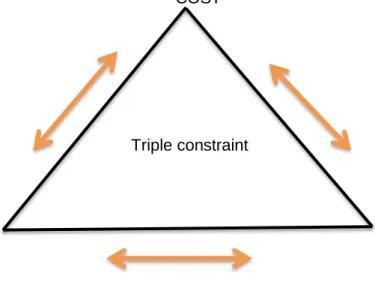
Figure 2.4: Triple constraint concepts………...25
Figure 2.5: Project management knowledge………..34
Figure 2.6: Production phases………..35
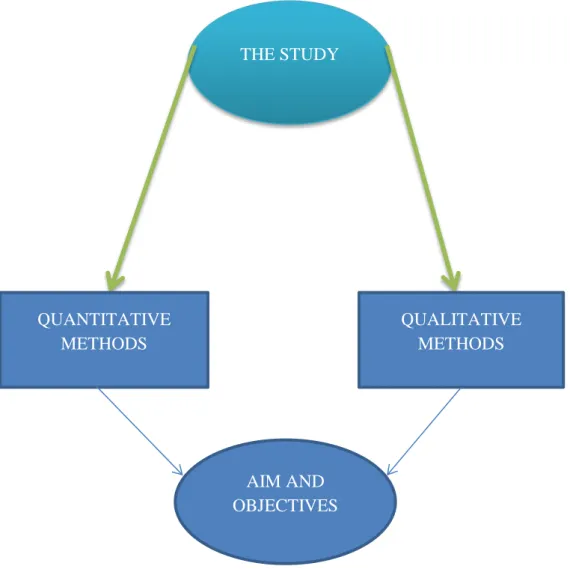
Figure 3.1: Research approach of the study………...44
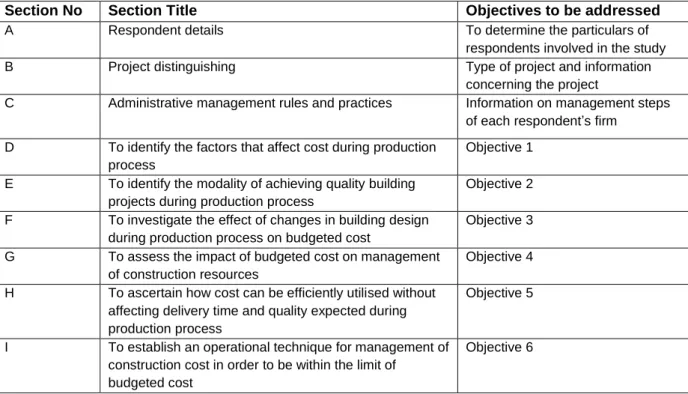
Figure 3.2: Illustrate the sequence of achieving research objectives………..………….54
Figure 4.1: How six objectives of the study were achieved……….…...92
Figure 4.2: Establishment of operational techniques for management of construction cost in order to be within the limit of budgeted cost framework………..93
xiv
LIST OF TABLES
Table 3.0: Questionnaire design………...52
Table 3.1: Method of achieving objectives……….53
Table 3.2: Sequence of achieving research objective………...54
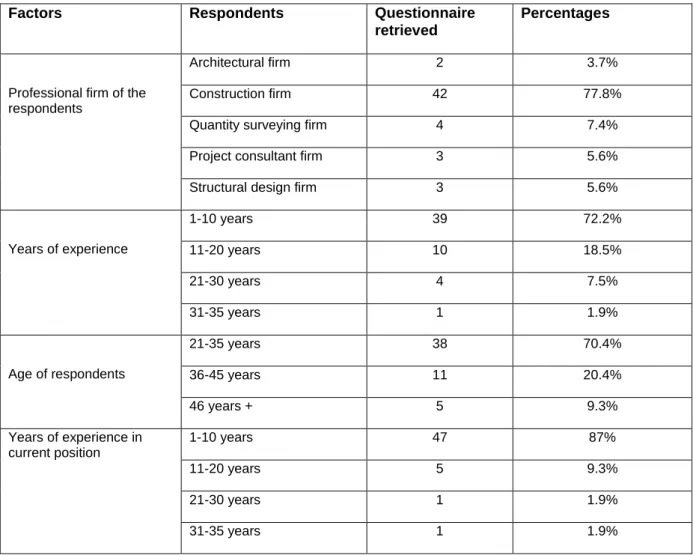
Table 4.1: Respondent details………...61
Table 4.2: Respondent details (continued) ………...62
Table 4.3: Project characteristic ………..64
Table 4.4: Testing for reliability of Likert scale questions………...64
Table 4.5: Administrative rules and practices………65
Table 4.6: Learning process……….66
Table 4.7: Factors that affect cost during building production process……….67
Table 4.8: Modality of achieving quality building product during production process………67
Table 4.9: Effect of changes in building design during production process……….69
Table 4.10: Effect of human resources on budgeted cost during production process……...70
Table 4.11: Effect of management of machinery on budgeted cost during production process……….71
Table 4.12: Effect of building materials on budgeted cost during production process………71
Table 4.13: Efficient utilisation of cost without affecting delivery time during production process……….72
Table 4.14: Summary of qualitative interview………....88
Table 4.15: To identify factors that affect construction cost in delivery of project above budgeted cost specified……….94
Table 4.16: To identify methods and system of achieving quality project delivery within budgeted cost specified……….95
Table 4.17: Investigate the causes and effect of constant changes in building design during production on budgeted cost………96
Table 4.18: To identify the effect of management of construction resources on budgeted cost toward delivery of project………..97
Table 4.19: To determine the uses and operation of cost on site in delivery of project within time and quality expected………98
1
CHAPTER ONE
1.0
INTRODUCTION
1.1 BackgroundThe construction industry has recorded the highest percentage as employer of labour, boosting the nation’s economic process through improvement and development of other industries and individual economic attainment. However, construction management plans, supervision, techniques of control of equipment, materials and management of knowledge areas during production processes have all been challenged by cost limitation, particularly in delivery of project at budgeted cost specified. Al-Najjar and Enshassi (2008) have found that in recent years, the construction industry and its operational systems are challenged by cost restraint to deliver projects at the stipulated time and at a certified quality. A project is termed as ‘successful’ if delivered within budgeted cost at a planned time with the quality expected. Thus, it is imperative to have control on cost performance of projects to ensure the construction cost is within the budgeted cost (Ali & Kamarazzuman, 2010). Likewise, mismanagement of cost by stakeholders during the production process leads to delivery of the project at construction costs above the budgeted cost (Arcila & Newton, 2012). Cost is clearly a constraint that hampers project progress, since it results in the loss of huge amounts of profit to the contractor (Kasimu 2012). Azhar et al. (2008) identified budgeted cost as a prime factor that has proven to be a significant factor for project success. Other top ten cost factors affecting budgeted cost included the following: (1) fluctuation in price of raw materials, (2) unstable cost of manufactured materials, (3) high cost of machineries, (4) lowest bidding procurement procedures, (5) poor project (site) management, (6) poor cost control, (7) delay between design and procurement phases, (8) incorrect/inappropriate method of cost estimate, (9) additional work, and (10) unsupportive government policies.
The findings of Dibonwa (2009) affirmed that project managers and owners were found to play main contributory roles in activities that impact project cost increase at conception/planning and design stage. In addition, Dibonwa (2009) explained that the project implementation stage apportioned blame to contractors, architects and quantity surveyors for construction cost increments. Quantity surveyors and contractors were discovered to be responsible for budgeted cost increase at the completion/commissioning stage. Likewise, Vidalis and Najafi (2002) discovered that cost and time overrun have been a common glitch challenging most construction projects. Further, Vidalis and Najafi (2002) explained that many factors, such as utility and weather damage delay, can lead to a situation where actual cost and project schedule exceed planned project objectives. Assaf
2
and Al-hajji (2006) affirmed that achieving project objectives during production processes is significant. Sambasivan and Soon (2007) identified delay as a serious problem to the construction industry as it results in time overrun, budgeted cost increments, disputes, litigations and project desertion. Similarly, Desai and Desale (2013) ascertained that delays are regarded as a significant problem affecting building production processes in delivery of projects at stipulated time, as a result of escalation of price of materials, delays in obtaining permits from authorities and delays in producing detail drawings.
Apolot et al. (2011) observed that as the construction industry continues to increase in size, the planning and budgeting problems increase simultaneously, and most construction firms are hindered by delay and increases in budgeted cost. Also, Bell (2011) emphasised that delays can affect construction costs as a result of legal and contractual issues, construction scheduling and claims. However, Rena (2012) observed that project objectives cannot be achieved unless proper management of a construction process is implemented—such as effective planning, budgeting, safety, and quality control of project—and are considered even during the production process.
Memon et al. (2010) established that the construction cost at which a project is delivered is one of the most important ways of assessing the success of a project, particularly as cost causes great anxiety to stakeholders who are involved in the construction industry. Further, Memon et al. (2010) listed numerous factors affecting construction cost such as cash flow and financial difficulties confronting contractors, contractor’s poor site management and supervision, contractor’s lack of experience, scarcity of site workers, and inadequate planning and timetabling by contractors. Rahman et al. (2013) affirmed that construction cost is a major problem challenging the construction industry globally and thus needs urgent attention to improve the operational techniques in delivery of quality project that meets with client objectives. Memon et al. (2013) explained that the identified factors impacting construction costs are poor site management and supervision, incompetent subcontractors, programme delay, improper planning and scheduling, lack of experience of workers and frequent design changes. Memon et al. (2011) discovered that cost is significant during the building production process in the delivery of projects that satisfied client interest. Hence, increase in construction cost above budgeted cost was observed as one of the most constantly occurring issues in construction globally. This, must, therefore, be more thoroughly investigated to determine with even more precision the potentially detrimental effects of cost during building production process.
Ganiyu and Zubairu (2010) discovered that a major problem in the Nigerian construction industry concerns those construction projects that are completed at a construction cost
3
higher than budgeted cost. Likewise, Ali et al. (2010) observed that budgeted cost increments are a great problem to the construction industry in Malaysia. Also, Ali et al. (2010) further clarified the factors causing budgeted cost increments in Malaysia as inaccurate estimation of original cost and mistake in design. Sae-Hyun and Moon Seo Hyun (2010) argued that for construction to progress smoothly, effective cost estimation is vital, mainly in the conceptual and design stages. Also, in the early stage of construction, a contractor must require precise forecasts from the client which accurately reflects their supply information.
A study conducted by Nega (2008) revealed that the majority of construction projects are challenged by budgeted cost increase as projects delivered at construction cost exceed the initial amount budgeted. The study also identified the escalation of costs of construction from an increase of price of materials, lack of proper planning, modifications in design due to improvements required by client, and excess quantity during construction—all of these as causes in increase of budgeted cost. Also, Rahman et al. (2013) observed that the success of any construction project depends significantly on how efficiently and effectively the management runs. Moreover, factors challenging contractors during production process are identified as the fluctuation of price of materials, cash flow and financial problems, and shortage of materials—all as reasons why a project cannot be completed within budgeted cost.
The survey conducted by CIDB 2011 on construction quality in South Africa concluded that client dissatisfaction with the quality of completed projects on around 2% of the projects surveyed in 2009 interpret to dissatisfaction on complete work in the public sector to an amount of around R3.5 billion per year as a result of procurement related barriers. Findings from literature point to the need of the establishment of a framework for effective management of cost constraints on building project delivery. Consequently, one of the key objectives of this study was to establish an operational technique for management of construction costs in order to for a project to remain within the scope of budgeted cost.
1.2 Problem statement
The budgeted cost specified is a limitation challenging construction in delivery of quality project at stipulated time; this, then, underscores the need to establish a framework for effective management of cost constraint on building project delivery in South Africa. Nega (2008), for example, emphasised that completion of a construction project within budgeted cost becomes difficult; cost, then, has been affecting overall project performance. Likewise, Al-Najjar et al. (2008) affirmed that the main objective of a construction firm is to upgrade project performance through cost reduction, completion of project within budgeted limit and
4
at specified time. Also, Parveen and Saha (2012) confirmed that a project operator’s main goal is to complete the project within both minimum time as well as minimum cost. Hence, construction cost increase is an enemy of cost restraint. Cost restraint challenges serve as an impediment in the construction industry from the achievement of its objectives. Athanas are to optimise project duration and also to develop the schedule that leads to the minimum total project cost.
A study by Aguma and Festus (2011) in South Africa argued that cost of construction increase is impacted by cost limitation challenges of construction during the building production process, thus leading to late completion of project delivery in South Africa, further degenerated by poor quality performances of building projects. Similarly, Emuze and Smallwood (2011) argued that the South African construction industry is challenged with a range of project performance issues: added cost in the project, poor quality, client dissatisfaction, rework and defects. The study of contractors in South Africa by Smallwood and Emuze (2012) argued that post-project services remaining within budget and time performances are more important to clients. Smallwood and Emuze (2012) point out, however, that contractors in South Africa have not met these requirements. Sidumendi (2009) established that poor capacity, poor quality, low productivity and low profit margins continue to characterise the mainstream of the South African construction industry.
Azhar et al. (2008) contended that a completed project may not rightfully be regarded as a successful work unless the cost constraint applied to it is satisfied. Cost limitation has been an epidemic problem to the construction industry in delivery of projects at the budgeted limit within the stipulated time. Unfortunately, previous researchers have not fully addressed the issue of the effect of cost constraint on building project delivery. Therefore, Operational systems of the construction industry have been challenged with cost restraint during production process in delivery of building projects at budgeted cost within specified time. 1.3 Aim of research
The aim of this research is to establish a framework for effective management of cost constraint on building project delivery in South Africa.
1.4 Objectives of research
The objectives of this research are as follows:
1. to identify the factors that affect cost during building production processes;
5
3. to investigate the effect of changes in building design during production process on budgeted cost;
4. to assess the impact of budgeted cost on management of construction resources;
5. to ascertain how cost can be efficiently utilised without negatively affecting delivery time and quality expected during production process; and
6. to establish a framework for management of construction costs in order to remain within the limit of budgeted cost.
1.5 Research questions
The following are the questions this research seeks to address:
1. What are the factors that affect cost during the building production process?
2. What are the modalities of achieving quality building projects during the production process?
3. What are the effects on budgeted cost of changes in building design during the production process?
4. What is the impact of budgeted cost on management of construction resources?
5. How can cost be efficiently utilised without affecting delivery time and quality expected during production processes?
6. How can a framework for management of construction cost be established in order to stay within the limit of budgeted cost?
1.6 Preliminary literature review
1.6.1 Cost of construction impact
The cost of construction is primarily a combination of the cost of money spent on site, the cost of materials, the cost of labour and the cost of management (Azhar, Farooqui & Ahmed 2008). Similarly, Azhar et al. (2008) identified factors that caused an increase in cost of construction: fluctuation of prices of materials as world commodity prices increase for basic building materials, the current state of the local economy, the quality of materials, and simple supply and demand processes.
6
Ameh and Osegbo (2011) defined the closed end of the construction process as a production process that consists of an input combining materials, labour, capital and energy in delivery of project that satisfies client interest.
1.6.2 Construction management impact
Jaggar et al. (2002) described project management as the duty of an organisation to ensure that the function of planning, control and feedback are brought about in terms of design, cost, time and quality (project objective equals project management). From a survey conducted, Azhar et al. (2008) discovered that a cost efficient site is a product of efficient management; frequent changes in scope are caused by inadequate planning and viability studies. Hence, with a determined attention, scope changes are avoidable and additional work which causes cost overrun can be considerably reduced. Similarly, Al-Najjar and Enshassi (2008) discovered that poor scheduling is a problem on construction cost: failing to have the right material, the right information, the right training and the right worker at the right place at the right time. Al-Najjar et al. (2008) further explained that time delay is caused by improper planning as well as construction cost increase. Also, Alwi (2003) argued that a factor that causes cost increase in a project site is lack of proper manner of developing a human resource plan. PMBOK (2008) stated that worker resource plans on site is the process of classifying and documenting project tasks, duties and essential skills.
1.7 Research methodology
An initial exploratory study will be conducted in order to generate more reliable objectives and precise questions for the study of a framework for effective management of cost constraint on building project delivery in South Africa. The study involved an extensive review of existing literature relating to the topic. In this research, both qualitative interviews and quantitative questionnaires will be employed to gain understanding of the insightful views of construction professionals in South Africa toward a framework for effective management of cost constraint on building project delivery. A purposive sampling approach will be the technique employed for the selection of a population for this study. Site visitation will be carried out to actually determine which of the construction companies have experienced and qualified stakeholders among their staff members who can adequately answer the questionnaire survey. Surveys will be conducted among the clients, project managers, contract managers, quantity surveyors, architects, structural engineers and site engineers through distribution of close-ended questionnaires to be collected as data. Questionnaires will be administered to the sample of the population. Findings obtained will be used for the research design of the main study. Participant observations will be among
7
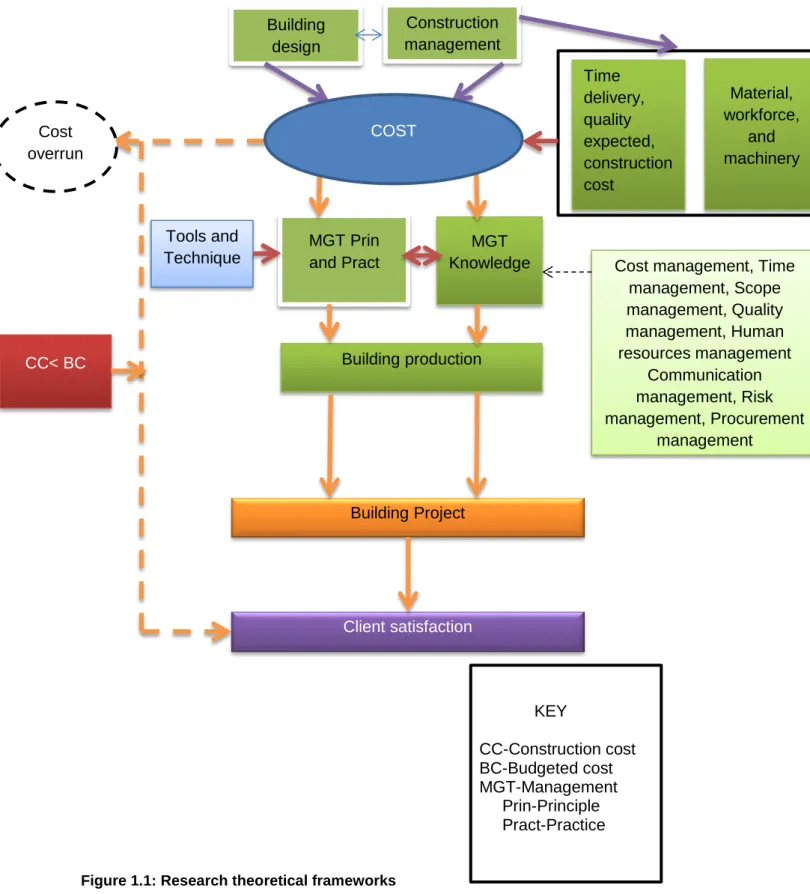
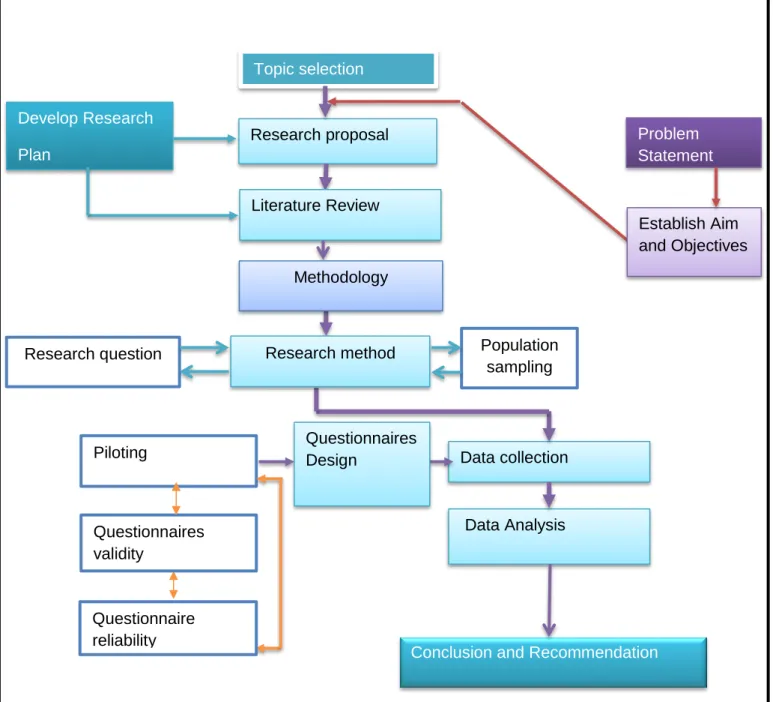
the techniques adopted to observe the group of samples being researched: views will be shared, observations and experiences will be recorded. Figure 1.1 describes the concept of the study in relationship with existing knowledge, and Figure 1.2 explains the research procedures known as research flow chart.
KEY CC-Construction cost BC-Budgeted cost MGT-Management Prin-Principle Pract-Practice
Figure 1.1: Research theoretical frameworks Building design Construction management MGT Knowledge Material, workforce, and machinery Time delivery, quality expected, construction cost MGT Prin and Pract Building production
Cost management, Time management, Scope management, Quality management, Human resources management Communication management, Risk management, Procurement management Tools and Technique Building Project Client satisfaction Cost overrun COST CC< BC
8
Figure 1.2: Research flow chart
Conclusion and Recommendation
Piloting Data collection
Data Analysis Questionnaires validity Questionnaire reliability Questionnaires Design Problem Statement Research proposal Establish Aim and Objectives Objective Literature Review Topic selection Develop Research Plan
Research method Population sampling Research question
9 1.8 Scope of research
The research will be limited to data gathered from the construction industry in the Western Cape and Gauteng provinces. The gathered information will be from stakeholders in construction and consultancy firms, project managers, site managers, architects, quantity surveyors, contractors, contract managers and construction clients.
1.9 Key assumptions
It is believed that proposed construction industries and consultant firms identified for the survey will cooperate and allow access to their sites.
1.10 Ethical considerations
In regard to ethical standards, the names of construction firms, stakeholders and team managers participating in the process will not be recorded on research instruments.
No salary or any other form of compensation will be paid to any respondent or participant in the research. Quality assumptions will be made in regard to the following steps:
capturing of quality data;
competence and conduct of interviewers;
completeness and correctness of questionnaires; and accuracy of calculations.
1.11 Chapter outline
Chapter One: This is an introductory chapter, incorporating the background information, research aims and objectives, the problem statement, preliminary literature review, methodology, limitations, key concepts and chapter outline.
Chapter Two: Previous studies and investigations of numerous researchers relating to the topic will be reviewed under the literature, focussing particularly on literature relating to the factors that affect cost and on the effect of cost restraint on building production processes. Chapter Three: This chapter explains the methodology that will be used to conduct the research and to establish the aims and objective. Sample size will be discussed, as well as instruments for data collection and the manner in which the research will be managed. Chapter Four: This chapter will analyse data collected. Findings obtained will be discussed and presented.
10
Chapter Five: This chapter explains the conclusion of the research and presents recommendations for further investigation.
1.12 Chapter summary
This chapter illustrates the entire research study. The background of the study provided insightful explanation of the framework for effective management of cost constraint on building project delivery in South Africa. Preliminary literature reviews explain the cost constraint associated with building production processes, the problem statement of the study, the effects of project and delivery project above specified budgeted cost. The goal of the study is to establish a framework for effective management of cost constraint on building project delivery in South Africa. The key objective is to establish operational techniques for management of construction cost in order to stay below the limiting cap of budgeted cost. The ethical considerations for collection of data in this research will comply with assumed standards.
11
CHAPTER TWO
2.0
LITERATURE REVIEW
2.1 IntroductionThis chapter reviews the literature concerning cost management, cost overrun and production, and the problems associated with delivery of project above budgeted cost and over time specified. This section discusses numerous aspects of construction cost: cost as a constraint, construction team, design team, construction resources, building production process, cost in relation to other construction constraints, cost and management knowledge areas, consideration of management principles and practices, funding of projects, timely delivery, and communication during production processes. The purpose of this research is to ascertain how cost can be efficiently utilised without affecting delivery time and quality expected during production process. The study reviewed literature pertaining to factors affecting cost during production processes and the modality of achieving a quality building project during production process, the effects of changes in building design during the production process on budgeted cost, and the impact of budgeted cost on management of construction resources. Findings will be used to establish an operational technique for management of construction cost in order to remain under the limit of budgeted cost.
2.2 Construction cost as a constraint
Constraints are defined as those factors that confine the production process within the construction industry. The stakeholders in the construction industry should be conscious of the fact that these constraints – time, quality, cost – are inter-related, and that adjustment to any of the factors will affect the others. Hence, failure on the part of the stakeholders to recognise these factors, leads to issues that may cause project failures in the construction industry.
Cost is very important in the construction industry; it is especially significant during the production process. Ashar et al. (2008) argued that a project is successful when it is completed at an estimated budgeted cost within time frame. Budget increase, though, could result in unanticipated time schedule delay (Ashar et al., 2008). Memon et al. (2010) discovered that cost is a motivating force for success in building production processes as well as being very important throughout the construction management life cycle. Similarly, Ganiyu and Zubairu (2010) discovered that cost has been the major problem confronting the Nigerian construction industry in delivery of projects at budgeted cost that has been specified. In addition, Ganiyu and Zubairu (2010) recommended the development of
12
analytical cost models that capture the factors affecting cost during building production processes. Al-kharachi and Skitmore (2009) contended that cost issues are significant during production processes in delivery of project at specified time and at quality expected by the client.
Ganiyu and Zubairu (2010) discovered that when a project is ‘successful’, this implies that the project accomplished its technical performance, maintained the timely delivery and within the budgeted cost. Furthermore, as clarified by Ganiyu Zubairu (2010), most building clients are quite aware of economic constraints which have made it mandatory that any available budget should be spent wisely to achieve best economic advantage. Similarly, Desai and Desale (2013) affirmed that a project is successful when it is completed at budgeted cost within time frame. Desai and Desale (2013) argued that delay is a constant problem in private residential projects in Nashik city. Fugar and Baah (2010) discovered that financial group factors ranked highest in consideration of all the factors that caused delay in a construction project in Ghana. Hence, specified budgeted cost is a limitation to construction which clearly impedes the production process. Many researchers have found that very often cost causes delay in building production processes globally. Likewise, Fugar and Baah (2010) argued further that cost problems render it difficult for contractors to procure materials for building construction processes in Ghana, clarifying that the material group delay factor was ranked the second most important factor that causes construction delay.
Nega (2008) argued that inability of a construction firm to complete project at budgeted cost within time frame at quality expected is a major problem causing anxiety for construction operators. Nega (2008) agued further that a building production process completed does not necessarily mean that the client is satisfied with the project delivered. Client satisfaction depends not just on completion, but on completion within the budgeted cost specified and meeting up with the requirements specified. Fatoye (2012) affirmed that the goal of any construction firm is to complete project within a budgeted cost and quality expected, and when the construction cost could not match up with the budgeted cost during production process, disputes and further delays arose.
The client should prepare adequately prior to the inception of construction activities on site, ensuring the availability of cash. The cash must flow throughout the construction process to avoid construction delay. Similarly, Sunday (2010) argued that client and consultant should make certain that all the necessary needs and funding techniques must be readily available during the production process, in fact, before the commencement of any project.
13 2.3 Construction team
The production process in the construction industry involves various people with their professional skills, knowledge, and experiences: the major requirements for construction team members is to work in unity, share common objectives and deliver quality project within the stipulated time specified (Azmy 2012). Likewise, Fryer (1990) argued that those in the construction industry are increasingly recognising the value of training their skilled employees in team work procedures during the building production processes. Team work training involves educating workers as to how to work together in a team-like manner through persistence and positive mind-sets, a sense of urgency, accessibility and openness to ideas. Urcher and Loosemore (2004) considered the client, project manager, financier, legal consultant, architect, project consultant, main contractor, sub-contractor and quantity surveyor as members of the construction team. The composition of members of the construction team depends largely on the size of the project. Stages of building production processes are used to form construction team members, stages defining the role of team member and their responsibility during production. Fryer (1990) provided useful insight concerning the roles and responsibilities performed by construction team members during building production: identifying the priority of the work to be done, concentrating on getting results, being a team organiser, being a team monitor in project delivery, being a group harmoniser in term of team spirit, and being a problem evaluator. Langford, Hancock et al (1995) argued that construction is labour-intensive, acknowledging that the level of labour intensity varies from construction firm to construction firm, project to project, country to country. Construction exists in order to contribute to the satisfaction of human needs and wants.
Construction activities on a project site will be achieved through effective team work, activities which involve several professionals with distinct academic training. The working relationship among construction stakeholders influences good end-project outcome and thus, overall productivity. Effective team work does not occur automatically; it is fraught with many challenges as the sources of the problems tend to be deficiencies in proper organisation, conflicts, lack of proper communication and ineffective participation of individuals (Azmy, 2012). An effective team shares common purposes and goals, shares leadership, ground rules for interactions, meetings, trust and openness. Efficient team work is essential in the construction industry. There are interpersonal issues that team members in the industry need to embrace, such as trust, respect, and leadership. These are the factors that enhance adequate use of budgeted cost during production process (Cohn & Ralston, 2005).
14
Cohn and Ralston (2005) counselled that construction teams are groups of professional coming from different backgrounds with different reactions and social needs. A team can have an impact, whether negative or positive, in solving differences. Failing to take action to influence good team work may lead to inefficient performance on site. Cohn and Ralston (2005) identified a team as a group of professionals coming together to achieve a common goal and to deliver a quality project. The assessment of work done does not depend on individual contribution, but in actual fact, on how efficiently the group can collaborate together to complete tasks. Team work increases the opportunity of learning a new profession in the construction industry, and therefore enhances productivity. Searching for new tradesmen during production processes will be avoided and delays in production will equally be avoided. The effect of long delays in the construction industry hurt budgeted cost. Fryer (1990) discovered from research findings that there is the possibility of learning new innovation in one’s job as a result of working together as a team. This also improves the quality of the standard of living. Fryer (1990) concurred that team work influences an employee’s personal and professional growth. Uher and Loosemore (2004) identify construction crews as responsible for management of activities on site. Every member of the group has a well-defined role to play, and any act of irresponsibility by any group member may have a detrimental effect on the construction processes. The responsibility on every member of the group is to oversee effective management of site activities, and budgeted cost is used as guidance for achieving the requirements of the client.
Azmy (2012) explained that it is very important for any construction team to have full knowledge of how a project activity will be organised on site, as construction has been challenged by delivery time and budgeted cost specified. The limitation as a result of fixed time and budgeted cost constituted an impediment toward the progress of construction activities on site. The construction team should fashion a technique at the inception stage to arrest the frequent cost escalation and delays in delivery time; the total freedom of construction process from these obnoxious effects of cost escalation and time overrun will allow a smooth running of construction (Parker 2008).
Alsuliman et al. (2012) discovered that thorough contract documentation and good communication and cooperation among construction team members are major elements that can make a management system more effective on site. A good communication procedure established among a construction team on site will enhance construction production activities. The efficient communication on site will allow for a quick decision on burdening issues such as budgeted cost, time overrun and quality expected. Azmy (2012) indicated that the phases of a construction project are enough to form a construction team and define all roles and responsibilities, not necessarily in relation to contractual roles.
15
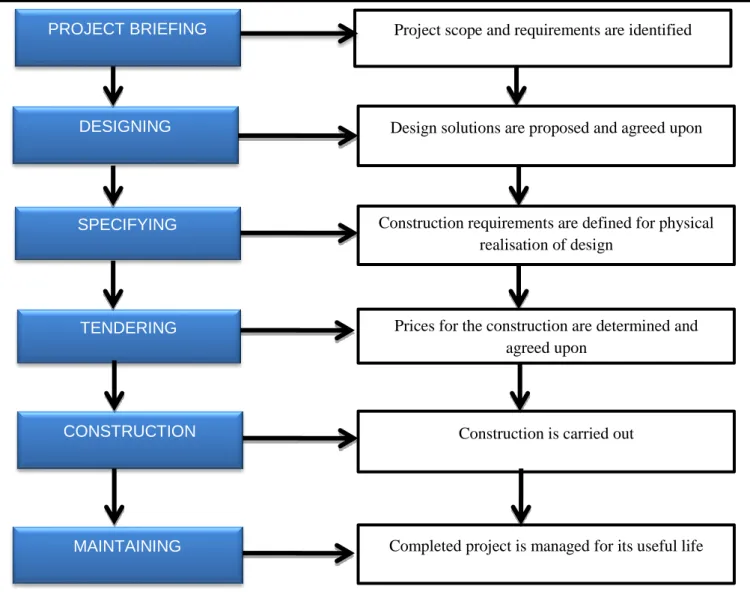
A construction project consists of six major phases: project briefing, designing, specifying, tendering, constructing and maintaining. Construction projects have stages, and each phase has its own team members. As soon as the tasks are completed, the team disengages from site and another team will come on board to carry out assignments given in regard to contract documents. Each phase will help the team to monitor budgeted cost, anticipated time, and provide feedback to the project manager. The typical project phase, illustrated in Figure 2.1, demonstrates the construction stage and its professional functions as a guide for forming a construction team. Figure 2.2 explains the analysis of a construction team in each stage according to the normal function performed at a construction site.
Figure 2.1: Construction process in stages (adopted from Azmy, 2012)
Figure 2.1 Construction process (adopted from Azemy 2012)
PROJECT BRIEFINGDESIGNING
TENDERING
CONSTRUCTION
MAINTAINING
Project scope and requirements are identified
Design solutions are proposed and agreed upon
Construction requirements are defined for physical realisation of design
Prices for the construction are determined and agreed upon
Construction is carried out
Completed project is managed for its useful life SPECIFYING
16
CONSRUCTION
PHASE TEAM MEMBERS BASIC FUNCTION
PROJECT BRIEFING Client Design team Construction manager Briefing Design Advisors Construction Construction Construction manager Design Approval Designer Design team Owner DESIGNING Construction monitor Specialist Designers Design /construction Construction manager Construction method Detail Design approval
Design monitor
Specialist construction
Construction management estimator SPECIFICATION WRITING
Maintenance
Construction price approval
Specialist construction estimator Design monitoring Owner Contractor/subcontractor Design team Construction manager CONSTRUCTION Owner Design team Construction manager Contractor/ subcontractor Owner Design team Construction manager Contractor/subcontractor
Owner and F. Manager TENDERING
MAINTAINANCE
Specialist design/construction Contractor/subcontractor
17
Figure 2.2: Construction team and responsibilities (adopted from Azmy 2012)
Azmy (2012) stated that activities in the construction industry are related to budgeted control and time constraint. It is very important for every member of a construction team to be properly informed as to how to set up a formidable team on site and maintain an effective team during operation on site. The selection of team members usually based on individual capability — efficiency, discipline, skill, expertise, and experience — is considered. The construction team should aspire for success during production processes if working together as a group. Parker (2008) stated that one of the greatest frustrations in the construction industry is the failure of teams to function smoothly.
2.4 Design team members
2.4.1 Introduction
Design teams are groups of professionals coming together to actualise client interest; this group plays a major contributory role during conceptualisation and the planning stage of the construction production process. Design team members may include the client, architect, structural engineer, quantity surveyor, building services engineer, contract manager and contractor. The composition of the design team depends on the size of the project. The design team members may determine the project starting and ending time. They may also contribute a great deal towards the completion date of a project because it depends greatly on the nature of drawings and specifications provided to the contractor (Azmy 2012).
Design documents are comprised of the following: drawings, specifications, and structural detailing. Inadequacies in the drawing, specification and documentation are sources of aggravations to the construction industry. Constant changes to design during the construction phase as a result of inefficiencies on the part of designers have constituted many problems that lead to rework, delay, variation, claim, and cost overrun (Arain & Pheng, 2006). Further findings by Arain and Pheng (2006) contended that variation is a result of constant design changes during construction and may cause substantial changes to project time, cost and quality. Client are being challenged by difficulties in the management of constant variation of orders as a result of poor design; however, this unpleasant situation can be reduced if a good management machinery system can be invoked for the handling of the building design stage.
Al-Dubaisi (2000) studied and reported that design changes are inevitable in any construction project, so the client may be forced by new technology discovered to affect change order into design. Designers may be influenced by the cost limitations of the project
18
and thus review design to upgrade the standard of design on better optimisation. Likewise, errors or omissions detected during the construction phase may force the designer to affect a change to design. Each of these identified factors is a source of design change. Similarly, Lam et al (2007) argued that design should be simplified for construction in order to allow for capability building during production processes. Construction ability was first defined as “the magnitude to which the plan of a building services ease of erection” (Lam et al 2007), signifying that plan outcome has an important effect on easiness of the building production process.
2.4.2 Design team
To Arain and Assaf (2006) argued that the construction industry was fragmented because different teams of professionals managed the design and construction phase. Professionals aim to achieve the same goal; designers, though, have a conceptual mind and contractors have a concrete mind. Achieving this goal has remained an elusive task leading to strong criticism of construction as reported in several reports by Memon (2013) and Lam et al. (2007).
Mendelsohn (1997) confirmed that even though 75% of the problems associated with the construction industry stem from the design phase, the contractors are not exonerated from the problems within the construction industry. Also, these glitches were often compounded by in-built design defects. The way to reduce defects from site is to start from the initial emphasis on what the project team can do to eradicate this problematic situation of the design phase in construction industry. Arian and Assaf (2006) contended that the recognition of causes of variation order is paramount at the design stage; designers should design according to the required materials needed on site to avoid non-availability of materials; the correction of errors and omissions needs to be rectified before going into production processes.
Alsuliman et al. (2012) stated that the construction team should establish a knowledge base of similar past projects, thus giving them the opportunity to plan more effectively prior to starting a project. Lack of proper planning is a common cause of change in design which affects construction processes, as a frequent change to design will attract claim from the contractor and such a claim will affect the construction cost. A change in contract plan, drawings and specifications will alter the contractor’s plan. This signifies the need for the contractor to go back to the drawing board to recalculate the cost of labour, cost of materials and schedule. Al-Dubaisi (2000) agreed that planning is very important in the construction industry. A solid plan at the very start of any project by the design team will enhance the
19
design process and will facilitate construction activities. Planning ahead of an activity in the construction industry will improve on the efficiency of the working operation of the team members. Al-Dubaisi (2000) further clarified that the harm engendered from ineffective planning of work in the construction industry includes delay, disorder in progress of work and change in orders.
Esohofonie (2008) confirmed that the frequent changes of building design structure lead to difficulties stemming from improper project planning and management of design processes. It is imperative that designers plan ahead of time and thoroughly review the design process to accommodate future changes in design. Al-Dubaisi (2000) stated that a change in design will affect material cost, cost of labour and schedule. Frequent changes in design may also affect construction costs and construction processes, both of which will result in variation and claims. Memon (2013) confirmed that cost is a major driving force throughout the life cycle of a project; regrettably, the construction industry regularly fails to deliver building projects at budgeted cost specified and within time expected. Also, Al-Dubaisi (2000) confirmed that the financing of a construction project depends on client budgeted cost-earmarked; delay in payment to contractor, however, will also impede the progress of construction activities on site. Furthermore, Al-Dubaisi (2002) explained that despite the fact that the construction industry in Saudi Arabia is a small industry, it is under-financed and consequently the materials supplier cannot be paid for months. This results in delay, on occasion forcing the construction industry to halt the entire production process.
2.4.2.1 Client as a member of the design team
The client briefs the architect of the requirements pertaining to the project. Consequently, the architect develops schemes and concepts based on the client brief. Success at the construction phase depends on the relationship between architects, contractors and clients (Olatunji & William, 2009). In addition, Olatunji and William (2009) argued that the client’s ideas of design initiation are worsened when the client’s practical brief is excessively difficult to be understood by the designer, or even worse, appears to be vague. Effective production processes are linked to project initiative. Likewise, ineffective cost performance and other functional disputes among construction team members are linked to inadequate briefings by clients.
Alsuliman et al. (2012) confirmed that the client initiates most changes during the design phase, and it was further clarified by Alsuliman et al. (2012) that design errors are regarded as the most important causes of variation orders in large building projects in the Saudi construction industry. Failure of designers to comply with the client’s requests will cause
20
frequent changes during production processes. On the other hand, the involvement of the contractor at the design stage will assist in the quality of design expected by the client; also this involvement will aid the contractor in understanding design and the contract document from inception (Arian & Pheng 2006).
Esohofonie (2008) confirmed that the client is the financier and the project motivator, playing a prominent role in the construction industry in terms of decision making. The client also motivates progress of work on site through regular payment. The role played by client in construction is vital as the client specifies the necessary requirements for a building, financing the project from inception stage to completion stage, and dictating authority through the financial capability to the consultant and the contractor on site.
Rahman et al. (2013) confirmed that money is highly needed on site, showing that the role it plays in the construction process is crucial. Without cash, nothing can be accomplished on site. The design and specification of any contract depends solely on monies available. Rahman et al. (2013) identified money as a motivating force of construction resources, as the effective performance of resources during production processes depend on cash availability. However, money is subjected to limitations by time, by client requirement, and by effective management of finances on site to produce an efficient output.
Any client, as the owner of a building, should thoroughly carry out a preliminary exploration of the new site; this will help in analysing client requirements before the commencement of design. Similarly, Al-Dubaisi (2000) confirmed that the client should properly carry out a site investigation at the inception stage of design to reduce frequent changes in design details and construction process. Moreover, according to Al-Dubaisi (2000), clients should clearly define the required quality in the design, prior to the commencement of design. Also, design requirement papers on client concept development should be very clearly explained. For quality and effective design requirement detailing, clients should contact professionals for more explanation. It is of paramount importance that the client should implore the services of project managers to itemise desired requirements for design documentation. Arain and Pheng (2006) identified the fact that the construction management team should respond quickly to the variation to enable them to reduce contrary effects on a project. Arain and Pheng (2006) further clarified that variation as a result to design changes may cause substantial elongation to project time, increases in cost and decreases in quality. Clients are being challenged by the difficulty in the management of constant variation orders as a result of poor design. This unpleasant situation can be curbed if an efficient management system can be applied during the planning stage for design, and also during the production process.
21
Likewise, Al-Dubaisi (2000) stated that clients should check design in a well-regulated process after completion.
2.4.2.2 Architect as a member of the design team
The architect is responsible for designing and maintaining the structure of the building and safeguarding drawings and specifications to meet the client’s desired requirements. The architect undoubtedly has a close relationship with the client and maintains constant communication during the construction process. The source of information for design requirements is from the client to the architect; if the architect failed to receive proper briefing from the client before going to the drawing board, there may be disappointment on the part of the architect to design in compliance with client requirements. Esohofonie (2008) confirmed that inadequate facts from a client will compel designers to develop design based on their own ideas and beliefs, yet this may not be in the interest of the client; consequently, this will likely lead to challenging situations between the design and construction interaction during production process.
Arain and Pheng (2005) discovered that timely start and completion of a project depend on construction documents: drawings and specifications should be well-detailed and precise. The late arrival of construction documents to the site may cause delay. Most of the construction companies rush to the site based on verbal instruction from the client. Then if the contractor embarks on production activity without detailed working drawings and specifications, this likely results in revolving changes to design during the production process. Arain and Pheng (2005) confirmed from their findings that the use of vague, unclear design details may cause problems of misrepresentation of design by construction team members, inadvertently leading to rework and delay in the project accomplishment. Design should be made simple by designers: improper shape, difficult geometric outlines and complex installation details are problems challenging most construction companies as a result of ineffective design details. Likewise, Lam et al. (2007) indicated that effective design details must be balanced with the built-in requirements of clients and creativity quality aspiration of the designer, whilst looking to achieve simplicity should not reduce the artistic quality expected. Lam et al. (2007) discovered that “modesty is a form of beauty” can be a school of thought for designers: building design should be somewhat simple to avoid unnecessary errors and omissions. Also, Arain and Pheng (2005) confirmed the argument that design errors usually have detrimental effects on construction projects as it all depends on the period, stage and time of occurrences.
22
Arain and Pheng (2005) clarified that a designer engaging in unusual design may cause problems. Unusual design being experienced for the first time means that construction team members need an adequate briefing from client. Likewise, Lam et al. (2007) confirmed that design details should be made easy. Designers should be more accurate in design detailing if discovering conflicts between design and construction; these should be resolved before the commencement of the construction process.
Esohofonie (2008) argued that cost is of paramount importance in the construction industry; thus it is the first issue the consultant must attend to in order to ensure the project is within the client’s established budget limit. Designers should design according to the interest of the client and within the budgeted cost. Ambiguous design will cause delay and affect construction cost. Consequently, it is very important to examine design properly to avoid frequent occurrences of design changes; proper examination must be conducted on design before contracting the project to the contractor. Al-Dubaisi confirmed that a design change clause must be added to contract documentation and should be well spelled out to the client, the designer, the consultant and the contractors as to how to effect changes in design during the production process. Arain and Pheng (2005) supported the argument that variation could be controlled, if constant changes to design can be reduced. Construction team members should determine a way to eradicate these difficulties encountered at the design phase. Similarly, Lam et al. (2007) supported the argument that the size components of building – such as columns, beams, doors, and construction details – should be designed according to standard in order to save time.
2.4.2.3 Contractor as a member of the design team
The involvement of the contractor at the design stage is necessary because of the technical advice the contractor will convey into design and specification, allowing the contractor to transfer his professional knowledge, skilful ideas and originality into the process (Arain & Pheng, 2006). Involvement of the contractor at the design phase may reduce frequent changes in building design during the construction process. Arain and Pheng (2006) further confirmed that the incorporation of project codes and skill at the design stage help to facilitate construction processes and project performance. The vested responsibility on the contractor is the management of construction resources; effective management of resource on site by the contractor will enhance productivities. Likewise, Esohofonie (2008) confirmed that the contractor is responsible for the production processes; the contractor is saddled with the responsibility of effective management of construction resources, and for efficient building project delivery at budgeted cost, within the time frame. Lam et al (2007) deduced from research findings that contractors should be allowed to be involved in design process as this will enhance design process. Lam et al. (2007) made a further clarification that the
23
contractor cannot improve on design details that are comprised of errors and omissions conceived from the start. Similarly, Esohofonie (2013) discovered that a building design without error will accelerate productivity and reduce cost of construction.
Arain and Pheng (2006) confirmed that many contractors are challenged by inadequate skill or by new technological innovations. If a contractor is not well-versed in new technology, it will be very difficult for the contractor to oversee an effective production process. In the situation of a contractor not being acquainted with new innovations, the contractor will be forced to adopt his own fashion of design entirely as a result of this lack of skilful knowledge to carry out the construction. Al-Dubaisi (2000) discovered that inefficient planning of work in the construction industry frequently leads to delays and disorderliness in progress of work and change order.
2.5 Building production process
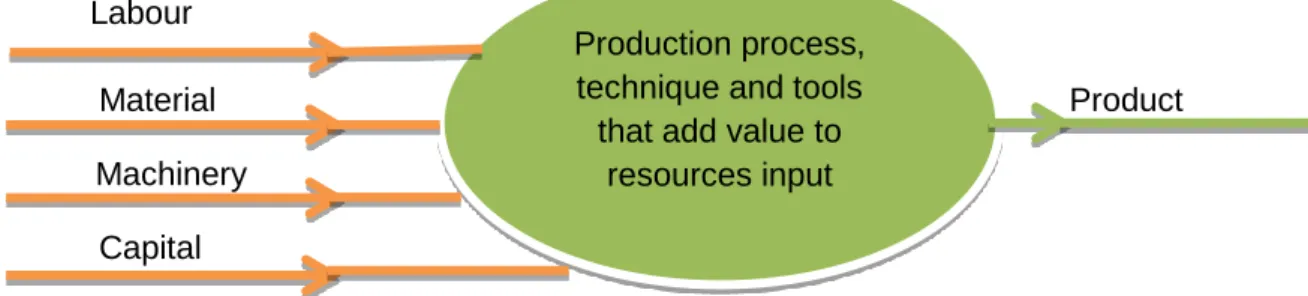
Building production processes incorporate the supervision and management of plan, budgeted cost, equipment, materials and labour involved in the production of buildings. This also entails compliance with government rules and regulations, construction rules, codes and contractual stipulations. The production process in the construction industry should be designed to run efficiently, keeping both time and cost minimal, and allowing returns on the investment to be realised as early as possible. Hence, the construction production process may involve the use of techniques like planning, organising, tendering, contracting, inspecting, controlling and formulating of progress charts to assess efficient running on project site. Lavender (1996) defined ‘production’ as a conversion process which receives input of resources such as labour, material, machinery, and capital and transforms them into a product.
The client is the originator of ideas and the formulator of concepts. Thus, techniques and tools to be employed during the production process in a construction project wholl