Classification Techniques Using EHG Signals for Detecting Preterm Births
IBRAHIM OLATUNJI IDOWU BSc, MSc, AHEA
A thesis submitted in partial fulfilment of the requirements of Liverpool John Moores University
for the degree of Doctor of Philosophy May 2017
i
ABSTRACT
Premature birth is defined as an infant born before 37 weeks of gestation and can be sub-categorized into three phrases; late preterm delivery between 34 and 36 weeks of gestation; moderately preterm between 32 and 34 weeks, and extreme preterm less than 28 weeks of gestation.
Globally, the rate of preterm births is increasing, thus resulting in significant health, development and economic problems. The current methods for the detection of preterm birth are inadequate due to the fact that the exact cause of premature uterine contractions leading to delivery is mostly unknown. Another problem is the interpretation of temporal and spectral characteristics of Electromyography (EMG), which is an electrodiagnostic medicine technique for recording and evaluating the electrical activity produced by uterine muscles during pregnancy and parturition – significant variability exists among obstetric care practitioners.
Apart from a small number of potential causes for preterm birth, such as medication, uterine over-distension, preterm premature rupture of membranes (PPROM), intrauterine inflammation, precocious foetal endocrine activation, surgery, ethnicity and lifestyle, there is still a large amount of uncertainty about their specific risks. Hence, it is currently very difficult to make reliable predictions about preterm delivery risk. There has also been some evidence that the analysis of uterine electrical signals, collected from the abdominal surface, could provide an independent and easier way to diagnose true labour and detect the onset of preterm delivery. Early detection opens up new avenues for the development of an automated ambulatory system, based on uterine EMG, for patient monitoring during pregnancy.
This can be made possible through the use of machine learning. The essence of machine learning is the utilisation of previously recorded data outcomes to train algorithms to
ii
stimulate software learning elements. Such learned models can, as a result, be used to detect and predict the early signs associated with the onset of preterm birth.
Therefore in this thesis, Electrohysterography signals are used to classify uterine activity associated with preterm birth. This is achieved using an open dataset, which contains 262 records for women who delivered at term and 38 who delivered prematurely. Several new features from Electromyography studies are utilized, as well as feature-ranking techniques to determine their discriminative capabilities in detecting term and preterm records. The results illustrate that the combination of the Levenberg-Marquardt trained Feed-Forward Neural Network, Radial Basis Function Neural Network and the Random Neural Network classifiers performed the best, with 91% for sensitivity, 84% for specificity, 94% for the area under the curve and 12% for the mean error rate. Applying advanced machine learning algorithms, in conjunction with innovative signal processing techniques and the analysis of Electrohysterography signals shows significant benefits for use in clinical interventions for preterm birth assessments.
iii
Word of Inspiration
“In the name of God, the Merciful, Passionate, Beneficent and Magnificent.”
“My thoughts about life aren’t just about life itself, but life is about anything that related and surrounded by it. I said many times be not afraid of your shadow Son, but walk along the path that leads to success. Life is not about who you are but is always about what you are capable of giving to, yourself and the people around you. I always said be optimistic, visionary,
focus and believe in yourself.
When I look back today as a father, my past, present and my future, nothing is greater than the defined greater Mighty God. My past is gone I am greater than, my present is here today, catching up with, and my future is unknown greater
than me whilst still working hard to obtain success in life to make better future for my family.
Son I knew you have a dream, and your imagination keep going far, far from your thinking, your abilities, skills, passions power of knowledge will continue to increase gradually, I can see the brighter light at the end of the road for you. Son remember when you take a step in life, you walk along with your shadow, nothing to be afraid off, just get on and it will always leads you to a success path, shadow of passion, shadow of future and shadow of life, then you’ll be inspired by
the theme legacy.
My inspirational thoughts about legacy of life from my perspective background, is to give what it take to get what you want in life. Through honesty, enthusiasm, equality, passion, energetic, positive, sociable and endurance, sky is the limit for
success, diplomacy of life goes around life within life circle.”
iv
ACKNOWLEDGEMENTS
First and foremost, all praise is due to Allah (s.w.t) for granting me the ability, strength and determination to complete my PhD. Very special thanks goes out to my Father Alhaj Imam Isiaka Rabiu Folorunsho Idowu El-Saki. May his Soul Rest in Peace and May Allah Grant him Jannatul Firdaus (Ameen Ya Robil-alameen) for all the financial assistant, encouragement and words of wisdom during the completion of this thesis – this will forever be valuable to me.
My gratitude also extends to my director of studies, Dr Paul Fergus without whose support and advice I would not have had the opportunity to undertake this PhD research work. Dr Paul always quotes me Rocky Balboa “Let me tell you something you already know. The world ain’t all sunshine and rainbows. It’s a very mean and nasty place, and I don’t care how tough you are, it will beat you to your knees and keep you there permanently if you let it. You, me, or nobody is gonna hit as hard as life. But it ain’t about how hard you hit. It’s about how hard you can get hit and keep moving forward; how much you can take and keep moving forward. That’s how winning is done! Now, if you know what you’re worth, then go out and get what you’re worth. But you gotta be willing to take the hits, and not pointing fingers saying you ain’t where you wanna be because of him, or her, or anybody. Cowards do that
and that ain’t you. You’re better than that”. Dr Paul dedicated his precious time to my
research work and provided discussions on ideas that eventually became a part of this thesis. I am so grateful to him for polishing my writing skills which has led to the publication of this research work in well-known conferences and journals. In addition, very special thanks go to Dr Abir Husain and Dr Chelsea Dobbins for reviewing my work and giving me valuable feedback.
v
Many thanks to the technical support group in the Department of Computer Science (CS), LJMU for all of their computer and technical assistance throughout my PhD; and to the office staff Tricia Waterson, Carol Oliver, Elizabeth Hoare, Beverley Williams and Lucy Tweedle for all the instances in which their assistance helped me along the way. Thanks also goes out to those who provided me with advice at times of critical need; Mr Hamed Idowu, Dr Nonso Nnamoko, Mrs Mulenga Kapasa, Dr. Haya Mohmmad Alaskar, Dr Nathan Shone, Mr. Tajudeen Dauda, Mr Sherif Essa, Mr Lanre Okeya Mr Robert Keight, Mr Stephen Akingbe, Ms Áine MacDermott, Mrs Amal Fadak, Dr William Hurst, Mr lanre Sangobunmi, Mr. Mark Welshy, Mr Mohammed Alghamdi, Dr Shamaila Iram and Mr Mohammed Khalaf. I would also like to thank my fellow PhD students in the department of CS at LJMU for the technical debates we had. I would also like to thank Natural Breaks Merseyside Staffs, OCS staffs, for exchanges of knowledge, sharing of skills, and allowing me to vent off my frustrations during my PhD program, which helped enrich the experience.
Finally, my heartfelt thanks go to my family, who deserve great thanks for the immense support they have given me throughout my PhD. My fiancé Kanwal Jabeen Mahmood deserves my unending gratitude for her help and innumerable tolerance, patience, understanding and assistance during my PhD studies. I thank both of my mothers’ Mrs Aminat Abimbola Omoluabi and Mrs Diane Idowu for their continuous advice and guidance. A big thank you to my brothers (Ismail, Ali and Adam) and sisters (Halima, Munirat, Melissa, and Layla) for their true understanding and sacrifice in uncountable ways.
vi
This thesis is dedicated to my Father (Alhaj Imam Isiaka Rabiu Folorunsho Idowu
El Shaki 1963-2016) and My Supervisor (Dr Paul Fergus)
vii CONTENTS
ABSTRACT ... i
ACKNOWLEDGEMENTS ... iv
LIST OF FIGURES ... x
THESIS ACRONYMS ... xii
PUBLICATIONS RESULTING FROM THIS THESIS ... xiii
Chapter 1 Introduction ... 14
1.1 Cause of Preterm Births ... 14
1.2 Effect of Preterm Birth on the Infant ... 15
1.3 Treatment Strategies ... 15
1.4 Scope of the Research ... 16
1.5 Aims and Objectives ... 18
1.6 Novel Contributions ... 19
1.6.1 Literature Review ... 19
1.6.2 Signal Processing ... 20
1.6.3 Machine Learning ... 20
1.6.4 Objective Measurement for Decision Support ... 21
1.7 Thesis Structure ... 21
Chapter 2 Background ... 23
2.1 Introduction ... 23
2.2 Preterm Birth ... 23
2.3 Impact of Preterm Birth ... 26
2.4 Uterine Electrohysterography (EHG) ... 29
2.4.1 EHG Feature Extraction ... 31
2.5 Feature Selection ... 35
2.6 Exploratory Data Analysis in EHG ... 36
2.6.1 Box Plot ... 37
2.6.2 Histograms Plot ... 37
2.6.3 QQ Plots ... 38
2.6.4 Principle Component Analysis ... 39
2.6.5 Stochastic Neighbour Embedding ... 40
2.6.6 Correlation Scatter Matrix Plot ... 41
2.6.7 Kernel Density Estimation Plot ... 42
2.7 Summary ... 44
viii
3.1 Introduction ... 45
3.2 Artificial Neural Networks... 45
3.2.1 Back-Propagation Trained Feed-Forward Neural Network Classifier ... 50
3.2.2 Levenberg-Marquardt Trained Feed-Forward Neural Network Classifier ... 50
3.2.3 The Radial Basis Function Neural Network Classifier ... 51
3.2.4 The Random Neural Network Classifier ... 52
3.2.5 Linear Perceptron Linear Classifiers ... 52
3.2.6 Voted Perceptron Classifier (VPC) ... 52
3.2.7 Discriminative Restricted Boltzmann Machine Classifier ... 53
3.2.8 Functional Link Neural Network Classifier ... 54
3.3 Non ANN Classifiers ... 58
3.3.1 Random Forest Classifier ... 58
3.3.2 Support Vector Machine Classifier ... 60
3.3.3 Naive Bayes Classifier ... 61
3.3.4 Decision Tree Classifier ... 62
3.3 Using Machine Learning to Classify Term and Preterm Records ... 63
3.4 Summary ... 66
Chapter 4 Proposed Methodology... 67
4.1 Introduction ... 67
4.2 Proposed Framework Architecture ... 68
4.3 Data Collection ... 68
4.4 Raw EHG Signals ... 70
4.5 Pre-processing of EHG Signals... 73
4.6 Feature Extraction from EHG Signals ... 75
4.7 Synthetic Minority Over-Sampling Technique (SMOTE) ... 81
4.8 Data Normalisation ... 82
4.9 Feature Selection ... 83
4.10 Classification ... 83
4.11 Single Classifier Framework ... 84
4.12 The Combined Classifier Framework ... 86
4.13 Validation Method ... 89
4.14 Performance Evaluation Parameters ... 91
4.15 Summary ... 93
Chapter 5 Results ... 94
5.1 Introduction ... 94
ix
5.1.2 Model Selection on Original Results for 0.34-1 Hz Filter on Channel 3 ... 96
5.1.3 Results for 0.34-1 Hz TPEHG filter on Channel 3 – Oversampled ... 97
5.1.4 Classifier Performance on Channel 3 – Oversampled ... 98
5.1.5 Model Selection ... 99
5.1.6 Classifier Performance on Channel 3 combined with Clinical Data ... 100
5.1.7 Results with Additional Features and Clinical Data ... 101
5.1.8 Classifier Performance Comparison ... 102
5.1.9 Results for TPEHG on Channel 3 with Additional Classifiers ... 105
5.1.10 Model Selection on Channel 3 with Additional Classifiers ... 106
5.2 Combining Classifiers ... 108
5.2.1 Combine Neural Network Classifier Performance ... 108
5.3 Summary ... 109
Chapter 6 Discussion ... 111
6.1 Summary ... 115
Chapter 7 Conclusions and Future Work ... 116
7.1 Conclusion ... 116
7.2 Contribution ... 116
7.3 Future Work ... 117
x
LIST OF FIGURES
Figure 2.1: Boxplot Example ... 37
Figure 2.2: Histogram Example ... 38
Figure 2.3: Q-Q Plot Example ... 39
Figure 2.4: PCA Plot Example ... 40
Figure 2.5: Scatter Matrix Plot Example ... 42
Figure 2.6: Kernel Density Estimation Plot Example ... 43
Figure 3.1: Feed-forward multi-layered neural network architecture ... 49
Figure 4.1: The process of machine learning ... 67
Figure 4.2: Methodology Phases ... 68
Figure 4.3: The placement of the electrodes ... 70
Figure 4.4: PCA for TPEHG Channel 3 – 0.34 Hz – 1 Hz Filtered Signal ... 72
Figure 4.5: SPE for TPEHG Channel 3 – 0.34 Hz – 1 Hz Filtered Signal... 72
Figure 4.6: Distribution of deliveries in TPEHG Dataset ... 73
Figure 4.7: Record x873 Filtered Using three Different Methods ... 75
Figure 4.8: QQ plot of 300 TPEHG Feature Extractions ... 78
Figure 4.9: Histogram of 300 TPEHG Feature Extractions ... 79
Figure 4.10: Kernel Density Estimation Plot of 300 TPEHG Feature Extractions ... 80
Figure 4.11: Box Plot of 300 TPEHG Feature Extractions ... 81
Figure 4.12: Histogram Oversample of TPEHG Dataset ... 82
Figure 4.13: Training process of model ... 87
Figure 4.14: Testing process of model... 88
Figure 5.1: Received Operator Curve for 0.34-1Hz Signal of the Original TPEHG Dataset ... 97
Figure 5.2: Received Operator Curve for the Oversampled 0.34-1Hz Signal TPEHG Dataset ... 99
Figure 5.3: Comparison of AUC values using the Four Strategies ... 103
Figure 5.4: Comparison of Sensitivity values using the Four Strategies ... 104
Figure 5.5: Comparison of Specificity values using the Four Strategies ... 105
Figure 5.6: Received Operator Curve for the Oversampled 0.34-1Hz Signal TPEHG Dataset Additional Classifiers ... 107
xi
LIST OF TABLES
Table 4.1: TPEHG Term and Preterm Dataset ... 71
Table 4.2: Feature Extraction Techniques used in EMG ... 75
Table 4.3: Classification Models Description ... 84
Table 5.1: Original TPEHG Signal (262 Term And 38 Preterm) ... 95
Table 5.2: Original TPEHG signal (262 Term and 38 Preterm) cross-validation ... 96
Table 5.3: SMOTE TPEHG signal (262 Term and 262 Preterm) ... 98
Table 5.4: SMOTE TPEHG signal (Term and Preterm) cross-validation ... 98
Table 5.5: TPEHG (152 Term and 153 Preterm) trained with Clinical Data ... 100
Table 5.6: Signal and Clinical Data Validation ... 100
Table 5.7: TPEHG signal with Additional Features and Clinical Data ... 101
Table 5.8: TPEHG Signal with Additional Features and ... 102
Table 5.9: Results for 0.34-1 Hz TPEHG filter on Channel 3 with Additional Classifiers ... 105
Table 5.10: Combined Classifiers ... 108
Table 5.11: SMOTE TPEHG signal (Term and Preterm) with Additional Features and Clinical Data cross-validation ... 109
xii
THESIS ACRONYMS
ABBREVIATIO
N MEANING
AAC Average Amplitude Change
AANN Advanced Artificial Neural Network
AB AdaBoost
ANN Artificial Neural Network ARV Average Rectified Value
AUC Area Under the Curve
BN Bayesian Network
BPXNC Back-Propagation trained Feed-Forward Neural Network Classifier CLM Cervical Length Measurement
DASDV Difference Absolute Standard Deviation Value DCE Digital Cervical Examination
DRBMC Discriminative Restricted Boltzmann Classifier
ECG Electrocardiogram
EHG Electrohysterography
EMD Empirical Mode Decomposition
EMG Electromyography
FFNN Feed-Forward Neural Network FLNN Functional Link Neural Network
FN False Negative
FP False Positive
FR Frequency Ratio
HONN High Order Neural Networks
IEHG Integrated EHG
IMF Intrinsic Mode Functions IPC Intrauterine Pressure Catheters KDE Kernel Density Estimation
KL Kullback-Leibler
LD Log Detector
LMNC Levenberg-Marquardt Trained Feed-Forward Neural Network Classifier
LNN Linear Neural Network
MAV Mean Absolute Value
MAVSLP1 Mean Absolute Value Slope1 MDS Multidimensional scaling
MFL Maximum Fractal Length
MLA Machine Learning Algorithm
xiii
PUBLICATIONS RESULTING FROM THIS THESIS
1. Paul Fergus, Ibrahim Olatunji Idowu, Abir Jaffar Hussain, Chelsea Dobbins. (2016). Advanced artificial neural network classification for detecting preterm births using EHG records. Neurocomputing, 188, 42–49. doi:10.1016/j.neucom.2015.01.107 2. Ibrahim Olatunji Idowu., Paul Fergus, Abir Jaffar Hussain, Chelsea Dobbins, Khalaf
Mohammed, Casana Eslava Raul, Robert Keight. (2015). Artificial intelligence for detecting preterm uterine activity in gynaecology and obstetric care. Proceedings - 15th IEEE International Conference on Computer and Information Technology215– 220. doi:10.1109/CIT/IUCC/DASC/PICOM.2015.31
3. Ibrahim Olatunji Idowu, Paul Fergus, A. H. & D. C. (2015). Advanced artificial neural network classification algorithms for detecting preterm births using EHG records. In Liverpool John Moores University Research Week. Liverpool.
4. Ibrahim Olatunji Idowu, Paul Fergus, Abir Jaffar Hussain, Chelsea Dobbins, Al-askar Haya (2014). Advance Artificial Neural Network Classification Techniques Using EHG for Detecting Preterm Births. The 8th International Conference on Complex, Intelligent, and Software Intensive Systems (CISIS’14), 8(1).
5. Ibrahim Olatunji Idowu, Paul Fergus, Abir Jaffar Hussain, Chelsea Dobbins (2014). Evaluation of Advanced Artificial Neural Network Classification and Feature Extraction Techniques for Detecting Preterm Births Using EHG Records. Intelligent Computing. (10th Inter., Vol. 8590, p. pp 309–314). Taiyuan, China: Springer. doi:10.1007/978-3-319-09330-7.
6. Ibrahim Olatunji Idowu, Qi Shi, Madjid Merabti, Kashif Kifayat. (2012). Ad-Hoc Cloud Networks: A Probabilistic Model for Vulnerability Detection in Critical Infrastructure Using Bayesian Networks. In 13th Annual Postgraduate Symposium on the Convergence of Telecommunications, Networking and Broadcasting, Liverpool, UK, 2012 (pp. 1– 6), Liverpool, UK
14
Chapter 1
Introduction
Preterm birth, also known as premature birth or delivery, is described by the World Health Organisation (WHO) as the delivery of babies who are born alive, before 37 weeks of gestation. In contrast, term births are the live delivery of babies after 37 weeks, and before 42 weeks. According to the WHO, worldwide in 2010, preterm deliveries accounted for 1 in 10 births and is now the second leading cause of death in children under 5 years, after pneumonia (WHO 2012). In 2009, in England and Wales, 7% of live births were also preterm. Preterm birth has a significant adverse effect on the new born, including an increased risk of death and health defects. The severity of these effects increases, the earlier the delivery is. Approximately 50% of all perinatal deaths are caused by preterm delivery (Offiah et al. 2012), with those surviving often suffering from afflictions, caused by the birth. These include impairments to hearing, vision, the lungs, the cardiovascular system and non-communicable diseases; up to 40% of survivors of extreme preterm delivery can also develop chronic lung disease (Greenough 2012). These afflictions contribute to the lifelong disabilities of individuals who are born preterm and their families.
1.1 Cause of Preterm Births
Preterm births can occur for three different reasons. According to (Offiah et al. 2012), roughly one-third are medically indicated or induced; delivery is brought forward for the best interest of the mother or baby. Another third occurs because the membranes rupture, prior to labour (PPROM). Lastly, spontaneous contractions (termed preterm labour or PTL) can develop. However, there is still a great deal of uncertainty about the level of risk each factor presents, and whether they are causes or effects. Nevertheless, in (Offiah et al. 2012) some of the causes of preterm labour, which may or may not end in preterm birth, have been discussed. These include infection, over-distension, burst blood vessels, surgical procedures, illnesses and congenital defects of the mother’s uterus and cervical weakness. Further studies
15
have also found other risk factors for preterm (Rattihalli et al. 2012; Steer 2005). These include health and lifestyle choices, cervical and uterine abnormalities, recurrent antepartum haemorrhage, illnesses and infections, any invasive procedure or surgery, underweight or obese mothers, ethnicity, social deprivation, long working hours/late nights, alcohol and drug use, and folic acid deficiency.
1.2 Effect of Preterm Birth on the Infant
Survivors of preterm birth suffer with neuro-developmental or behavioural defects, including cerebral palsy, and motor and cognitive impairment. In addition, preterm births also have a detrimental effect on families, the economy, and society as a whole. In 2009, the overall cost to the public sector, in England and Wales, was estimated to be nearly £2.95 billion (Mangham et al. 2009; Bulletin 2011), while in 1994, in the United States alone, it was estimated that, of the $820 million spent on hospitalising women with suspected preterm labour, $360 million was for women who did not actually deliver during their stay. As well as patients being incorrectly diagnosed with preterm labour (false positive results), 20% of patients displaying symptoms or preterm labour were given false negative results: they were denied early admittance, but eventually went on to deliver prematurely (Mangham et al. 2009). In 2001, the cost of care increased rapidly. According to a nationwide survey carried out by (Mangham et al. 2009), hospital costs for preterm infants in the United States was $12.4 billion.
1.3 Treatment Strategies
Developing a better understanding of preterm deliveries can help to create preventative strategies and thus positively mitigate, or even eradicate, the effects that preterm deliveries have on babies, families and healthcare services. As well as investigating preterm deliveries, several studies have explored preterm labour (the stage that directly precedes the delivery). In spite of these studies, there is no internationally agreed definition for preterm labour.
16
Nonetheless, in practice, women who experience regular contractions, increased vaginal discharge, pelvic pressure and lower backache tend to show Threatening Preterm Labour (TPL). While this is a good measure, (Mangham et al. 2009), suggest that clinical methods for diagnosing preterm labour are insufficient.
Following a medical diagnosis of preterm labour, only 50% of all women with preterm actually deliver, within seven days (Offiah et al. 2012). In support of this, (McPheeters et al. 2005), carried out a similar study that showed 144 out of 234 (61.5%) women diagnosed with preterm labour went on to deliver at term. This can potentially add significant costs, and unnecessary interventions, to prenatal care. In contrast, false-negative results mean that patients requiring admittance are turned away, but actually go on to deliver prematurely (Lucovnik, Kuon, et al. 2011).
One possible approach to mitigate many of these concerns is to utilise advances made within the machine learning community. This thesis examines the use of Electrohysterography (EHG) signals, feature engineering and machine learning algorithms to classifying term and preterm births. This has been achieved by 1) filtering the raw EHG signals to remove unwanted artefacts, 2) generating features from EHG records to classify preterm and term delivery records, 3) use different sized training sets to test the effect that these proportions have on the results, 4) and use dataset resampling strategies to balance the data. The aim is to providing a viable solution that addresses this global health problem by managing the human gestation period better to improve health and reduce costs.
1.4 Scope of the Research
The aim of this thesis is to develop a new robust methodology that provides a decision support system that helps obstetricians and midwifes make objective decisions about pathological outcomes that may occur during pregnancy. Globally, the rate of preterm births is increasing, which presents significant health, developmental and economic problems
17
(Fergus et al. 2013). At present, most methods for preterm birth classification, at an early stage, are inadequate and subjective (Lucovnik, Kuon, et al. 2011). Current approaches that measure the process of labour, such as Tocodynamometer, Intrauterine Pressure Catheters (IPC), Cervical Length Measurement (CLM), Fetal Fibronectin, and Digital Cervical Examination (DCE), have numerous problems. For instance, they only measure the onset of labour indirectly and do not detect changes that are characteristic of true labour. Consequently, their classification values for term or preterm delivery are poor. There has however been increasing evidence to show that the analysis of uterine electrical signals, from the abdominal surface, could provide an objective and easy way to diagnose true labour and detect the onset of preterm labour (Garcia-Gonzalez et al. 2013; SMS Baghamoradi 2011; Carré et al. 1998). This has been termed EHG analysis.
Uterine EHG signals refers to the electrical activity that is captured from the uterus during pregnancy, using electrodes. These signals are very useful as they reveal a great deal of information about uterine contractions. For term deliveries, true labour only starts within 24 hours. However, for preterm deliveries, it may start within 7 to 10 days prior to delivery. The change in EHG activity, from non-labour to labour, is dramatic. Therefore, it is expected that a raw dataset of EHG signals would be useful for further analysis. Furthermore, the implementation of different classification algorithms is required so that a conceptual understanding that relates to any physiological changes and differences in pregnancy before labour delivery can be developed.
The dataset that has been used in our research to satisfy this requirement is the Term-Preterm Electrohysterogram (TPEHG) dataset, which can be obtained from a freely-accessible online repository (PhysioNet 2012a). The TPEHG dataset was originally built and used in a study by Fele-Žorž et al. in (Fele-Žorž et al. 2008). In this work, an analysis of the separability of term and preterm delivery EHG records, using various linear and non-linear signal processing
18
techniques, has been undertaken. While the approach focuses on advanced statistical analysis techniques, machine learning techniques are not considered or compared to uncover detailed patterns and non-linear relationships within EGH signals. This is a challenge that will be addressed in this thesis.
Another challenge is the extraction of features from EHG signals during uterus muscle contractions. In many classification tasks the given features are not sufficient to achieve acceptable classification performance. A transformation of the features may yield new features that are more highly correlated with the class value. In addressing this issue a variety of feature extraction techniques are considered in this thesis.
Within the national healthcare services, for many developed countries, there is an immediate need to move from a system focused on treating medical conditions to one that can predict the onset of such conditions (Blencowe et al. 2012; Ren et al. 2015). Therefore, understanding the early signs of a condition and implementing countermeasures are seen as a viable way of reducing spiralling national healthcare costs. However, to date attempts at utilizing computational approaches to achieve sufficient classification have not achieved the high discrimination accuracy that a clinical application requires. In our study, we propose a new analytical approach for assessing the risk of preterm delivery using EHG recordings and advanced machine learning techniques.
1.5 Aims and Objectives
The aim of this thesis is to provide a robust data processing pipeline for signal processing, feature engineering and machine learning to classify term and preterm records. Seen as a decision support system, the approach posited will be evaluated to determine whether it can improve on obstetrician and midwife decision making processes during pregnancy. In other to satisfy the research aim, a number of objectives will need to be considered and these are defined as follows:
19
Gain in-depth understanding of TPEHG dataset and conduct initial exploratory data analysis. Any candidate dataset must provide sufficient samples for appropriate data modelling in decision support systems.
Investigate the filtering and pre-processing processes for the raw EHG signals. Signal artefacts need to be removed to ensure that only the signal directly correlated with the condition under investigation is present and appropriate for feature engineering tasks.
Select relevant features for extraction from raw EHG signals. Features beyond those currently used in previous works need to be considered and selected based on their ability to maximise the decision boundary between term and preterm records.
Empirical evaluation of algorithms for classification of term and preterm records. Dependent on the characteristics of the data several classifiers need to be considered and their discriminative capacity evaluated using the feature space generated and compared with previous works to determine their efficacy.
Address class imbalance limitation evident in the TPEHG dataset. Skewed class distributions pose significant problems in machine learning tasks and thus strategies to address this limitation need to be evaluated.
1.6 Novel Contributions
This thesis proposes a new methodology for EHG signal processing for discriminating between term and preterm records. Our approach provides a robust data pipeline for signal processing; feature engineering; and data modelling using machine learning. On this basis this study claims several novel contributions which are discussed in turn in the following subsections.
1.6.1 Literature Review
An up to date literature review of current works within the field of preterm birth is presented. This includes a detailed discussion of condition, treatment strategies, including
20
successes and limitations associated with current medical practice. The review also includes a detailed discussion on the use of technology as a support tool for obstetricians and midwifes and the efficacy of such approaches. The state of the art is presented in new and advanced treatment interventions which includes machine learning and how this approach is being studied as an early intervention strategy. This review collectively presents a current holistic view of preterm birth within the scientific community at the point of completing this thesis.
1.6.2 Signal Processing
Signal processing and feature engineering techniques (extraction and selection) for EHG analysis. State in the art in signal processing is adopted with a discussion on signal filtering and noise analysis. A detailed study of existing features within EHG that are currently used in obstetric care is presented and a robust evaluation of Electromyography (EMG) features used within other domains. Many EMG features have not previously been used in preterm birth monitoring solutions – we are the first to do so. The results show that several EMG features have better discriminative capacity than those typically used in EHG analysis.
1.6.3 Machine Learning
Use of advanced machine learning algorithms in EHG analysis and preterm birth classification. In this thesis we evaluate several machine learning strategies and provide a detailed evaluation with regards to their detection capabilities using EHG signals. We are the first to provide a broad comparison of machine learning algorithms within the domain of preterm birth analysis. Using this approach we have found several classifiers that classify significantly better than classifications made by obstetricians and midwifes and many other studies reported in the literature.
21
1.6.4 Objective Measurement for Decision Support
Improved objective measures for use in decision support systems that significantly outperform obstetrician and midwife prediction of pathological outcomes. We rely solely on the EHG signal to make a distinction between term and preterm deliveries which removes subjectivity from the decision making processes. This provides a significant aid to existing solutions that measures foetus state, but leaves the interpretation of normal and pathological outcomes to medical practitioners. Using machine learning in an ambulatory system provides an additional objective support tool for clinicians to aid the decision making processes.
1.7 Thesis Structure
Chapter 1 of this thesis provides an overview of the problem domain, namely preterm birth and the inefficiencies associated with current treatment and medical interventions. It highlights that the classification capacity of medical practitioners is low and its overall impact on reducing the number of preterm deliveries is ineffectual. The chapter argues that new technological interventions are required, specifically ambulatory decision support systems, to aid the decision making process carried out by medical practitioners in obstetric care. In doing so the challenges are presented, which include advanced signal processing and feature engineering techniques, machine learning, and robust objective measures for the classification of different preterm birth outcomes. The scope of the project is clearly described and the aims and objectives are discussed and the novel contributions this leads to are claimed. Finally, the chapter is concluded with an outline of the thesis structure.
In Chapter 2 we describe what preterm birth is and the impact this condition has on the baby the family and national healthcare costs. This is followed by a discussion on uterine EHG and is use as a clinical tool in obstetric care. It provides a detailed discussion on how EHG data collection is performed and how raw signals are processed. There is a heavy reliance on
22
exploratory data analysis and how specific tools are used in this thesis to provide quick insights in the specific data characteristics. The discussion ends with a detailed account on what kinds of features are typically extracted from EHG raw signals. Finally the chapter is concluded with a summary of the chapter.
Chapter 3 discusses machine learning and the different models that are evaluated using the TPEHG dataset in this thesis. Models that are discussed include different artificial neural network architectures, random forest classifier, support vector machine, naïve bayes, and decision tree classifier. This is followed by a discussion on the background works in machine learning within term and preterm classification tasks. The chapter is then concluded with an overview of the chapter.
A detailed discussion of our methodology is presented in Chapter 4 and the core data pipeline modules used to process signals, extract and select features, train and evaluate machine learning algorithms and validate the results produced by trained machine learning models, are presented. A detailed theoretic framework is provided for all key stages in the methodology ensuring a robust and non-ambiguous approach is presented.
The results are presented in Chapter 5. This includes a discussion on single-direction filtered signals, feature extraction and selectin strategies, oversampling, and classification. Classification results include single model evaluations and classifier combinations. This chapter is then concluded with a detailed discussion of the results. The thesis is concluded in Chapter 5, which provides a summary of the contributions made in this thesis, before the future work is presented.
The results are discussed in Chapter 6 followed by a summary of the contributions made. The thesis is concluded in Chapter 7 and future work is presented.
23
Chapter 2
Background
2.1 Introduction
This section provides an overview of the work carried out in the main research areas relevant to this thesis, which includes a discussion on preterm birth and its impact, EHG and its use in foetal monitoring. This is followed by a discussion on EHG signal processing and feature extraction strategies.
2.2 Preterm Birth
Preterm birth is defined by the WHO as any birth that occurs before 37 weeks of the gestational period, i.e. the period of gestation <259 days (WHO 2012). Term births are the delivery of babies between 259 – 294 days of the gestation period. More than 1 in 10 of the world’s babies are born prematurely and 1 million die as a result of their prematurity (Blencowe et al. 2012). Premature births are the second leading cause of death in children under the age of 5 and for those that survive, they are often left with a lifetime of significant disability (Liu et al. 2012).
According to (Philip Baker 2006), there are two main reasons why babies are born prematurely. The first is due to pre-labour premature rupture of the membrane (PPROM), which is the spontaneous onset of labour. PPROM occurs during pregnancy when the breakage of the amniotic sac (which is commonly known as the mother waters) occurs more than one hour before the onset of labour. The second is based on medical reasons e.g. uterine bleeding leading to placenta previa and placental abruption which causes the foetal membranes to rapture prematurely and trigger preterm labour (Philip Baker 2006).
Other causes and risk factors of preterm birth are the stretching of the uterus. This can occur when a pregnant woman is having two or more babies (an excessive amount of amniotic fluid around the babies occurs and this leads to stretching of the uterus triggering preterm labour). Bacterial infection in the uterus can also stimulate the production of substances that can
24
initiate the onset of uterine contractions leading to preterm labour. The psychological stress of a pregnant woman can also lead to the release of hormones which can cause preterm labour (McPheeters et al. 2005).
These risk factors are considered high during pregnancy and it is essential to protect both the mother and the baby by bringing the labour forward through the process of Caesarean. Outlining the risk factors for the prediction of preterm birth is essential. The maternal history of preterm births is one of the risk factors that is mostly driven by genetic and environmental risk factors (Goldenberg et al. 2008; Blencowe et al. 2013a; Muglia Louis 2010; Plunkett & Muglia 2008). Moreover, uterine over distension with multiple pregnancies has also been regarded as a vital risk factor associated with preterm birth. For instance, there is a high risk of preterm birth with multiple pregnancies compared to single births (Blondel et al. 2006). Naturally, the occurrence of multiple pregnancies differs among ethnic groups, with reported rates between 1 in 40 in West Africa and 1 in 200 in Japan. However, a large contributor to the incidence of multiple pregnancies has been the result of an increase in the availability of assisted conception in high income countries; thus, this has brought about a proportional increase in the number of births of twins and triplets in many of these countries. For instance, England and Wales, France and the United States have reported a 50% to 60% increase in the twin rate between the mid-1970s and 1998, with some countries (e.g. Republic of Korea) reporting a larger increase in uterine distension with multiple preterm birth pregnancies (Blondel & Kaminski 2002). Recently, this trend has been curtailed as a result of policies put in place limiting the number of embryos that are transferred during in vitro fertilization in some countries i.e. Korea (Marttila 2005), while others countries e.g. Nigeria, India, China etc. continue to report an increase in multiple birth rates (Lim 2011; Martin et al. 2009). Infection also play a crucial role in preterm birth. For instance, some infections, such as urinary tract, malaria, bacterial vaginosis, Human Immunodeficiency Virus (HIV), and
25
syphilis, have all been associated with preterm birth (Lawn et al. 2010). Furthermore, other conditions, such as cervical insufficiency, that result from ascending intrauterine infection and inflammation with secondary premature cervical shortening, have also been associated with preterm birth (Lee et al. 2008).
Furthermore, some lifestyle factors also contribute to preterm birth. These include, stress, excessive physical work or long times spent standing, smoking, excessive alcohol consumption, as well as periodontal disease and Folic acid deficiency (Lawn et al. 2010). As it can be seen preterm birth is a complex condition with many factors contributing to preterm deliveries. Obtaining the values for different risk factors is complex and information is often obtained through interviews with the patient. This leads to inaccurate data, due to subjectivity, patient confidence about sensitive information (e.g. sexual infections) and errors when recalling information (Smith et al. 2009).
Preterm birth is more common in boys, around 55% of all preterm births are male (Zeitlin 2002). Furthermore, males have a higher rate of mortality compared to girls, born at a similar gestation period (Kent et al. 2011). The role of ethnicity in preterm birth (other than through twinning rates) has been highly debated. However, since the 1970’s, various population-based studies have proven that there is evidence backing a variation in normal gestational length within ethic groups (Ananth et al. 2006). While these differences have been associated with socioeconomic and lifestyle factors in some studies, a genetic role has been suggested by recent studies as another cause. For instance, babies of black African ancestry tend to be born earlier than Caucasian babies and have less respiratory distress (McPheeters et al. 2005; Philip Farrell 1975), lower neonatal mortality and do not need special care, unlike Caucasian babies (Alexander et al. 2003).
The number and causes of provider-initiated preterm birth are more variable. Worldwide, the highest affected countries have the lowest coverage of pregnancy monitoring and low
26
caesarean birth rates (less than 5% in most African countries). Nevertheless, recent studies in the United States, have uncovered that more than half of all provider-initiated preterm births, at 34 to 36 weeks of gestation, were carried out in the absence of a strong medical indication (Gyamfi-Bannerman et al. 2011). Due to errors in gestation age assessment, unintended preterm birth can also occur with the elective delivery of a baby that was thought to be term (Neelanjana, Mukhopadhaya 2007).
Furthermore, underlying medical conditions can also cause preterm birth. These can be divided into maternal and foetal conditions. Of the latter, these include, severe preeclampsia, placental abruption, uterine rupture, cholestasis, foetal distress and foetal growth restriction with abnormal tests and are some of the more important direct causes recognized (Ananth et al. 2006). Underlying maternal conditions, such as renal disease, hypertension, obesity, diabetes, and eclampsia, can also contribute to preterm birth. The global epidemic of obesity and diabetes is thus, likely to become an increasingly important contributor to global preterm birth. In one region in the United Kingdom, 17% of all babies born to diabetic mothers were preterm; more than double the rate in the general population (Steer 2005).
2.3 Impact of Preterm Birth
Preterm birth has significant adverse consequences for new-borns, with risk of death and severe health defects. The severity of these effects, in most cases, usually leads to a more premature delivery. For instance, about one half of perinatal deaths are caused by preterm birth (Fergus, Idowu, Ibrahim, Hussain, Abir Jaffar, Dobbins, et al. 2014). Moreover, the proportion of neonatal deaths to preterm births is inversely related to neonatal mortality rates. This often occurs in low income countries, where there are higher rates of neonatal mortality, e.g. India, Pakistan, and Nigeria. These countries have a high rate of mortality as a result of infections, such as sepsis, pneumonia, diarrhoea and tetanus, and intrapartum-related birth
27
asphyxia (Nations et al. 2005). The reason is simply due to a lack of health care facilities and programs for pregnant women, which affects the majority of low-income countries.
The economic cost of preterm birth is enormous. In terms of mitigation against neonatal mortality, and the complex nature of intensive health care required, treatments that are needed for women who are susceptible to delivering preterm are frequently experienced in some countries (Nicholson et al. 2000; Blencowe et al. 2013b). In England and Wales, for example, the percentage of live born babies weighing 2500g or less increased from 6.79% in 1990 to 7.28% in 1996 (Petrou 2003; Chiswick 1985). The percentage rates in Petrou et al. (Petrou 2003), indicates that incidences of preterm babies has increased at a faster rate. For example, the percentage of live born babies weighing less than 1500g in England and Wales increased from 0.96% in 1990 to 1.22% in 1996 and that of live born babies weighing less than 1000g from 0.34% to 0.49%.
While in the United States, one of the most common reasons for antenatal hospitalizations is preterm labour and delivery. The data from Nicholson et al. (Nicholson et al. 2000) indicates that from 1996, pregnancy complication surveillance systems found that preterm labour accounted for 33% of all hospitalizations before delivery in California. National costs for preterm labour, undelivered, were more than $360 million. Incremental costs for preterm labour with early delivery, compared with term delivery, ranged from $21 million to $191 million. This shows that preterm labour can lead to multiple hospitalizations during pregnancy, maternal morbidity, and neonatal mortality.
In high-income countries, the interventions to reduce neonatal deaths are divided into two health-system programmes: maternal-health programmes (covering pregnancy, childbirth, and early neonatal care) and child-health programmes (covering treatment from infancy into childhood). Addressing neonatal mortality requires continuity between these elements of care, which is lacking in many settings. Little care for the neonate often occurs and thus a
28
fraction of the attention in either maternal or child-health programmes is often received. The utmost gap in care often decreases during the first week of life, when most neonatal and maternal deaths occur, as most often there is no access to formal health-care systems at home (Nations et al. 2005).
Preterm birth has profound economic consequences globally. For instance, the cost of a pregnant women’s discharge from hospital is minimal compared with the greater cost not only associated with healthcare but also in education (Johnson et al. 2015). This is also a challenging impact of preterm birth because children born preterm are at risk of neuro-developmental pathological conditions resulting from diseases such as, cerebral palsy, vision, and hearing impairments (Saigal, Saroj, Doyle 2008). For example, in a British study up to a third of 7-year-old children born between 32–35 weeks’ gestation were reported by their teachers to have difficulties in motor skills, speaking, writing, mathematics, behaviour, and physical education (Huddy et al. 2001). Thus elective deliveries of infants born near term are not without increased risk of mortality and morbidity, which has significant implications for educational services and costs (Saigal, Saroj, Doyle 2008; Huddy et al. 2001). Despite this, educational professionals are lacking educational awareness and formal knowledge in dealing with the educational needs of preterm children.
Another implication of preterm births is hospital re-admissions of preterm children in the weeks after their discharge. In (Escobar et al. 1999), Escobar discovered that more than half of children born prematurely are always re-admitted to hospital, at least once, in the first one to two years of life, mostly as a result of respiratory syncytial virus and other high health illnesses. Even at 10–12 years of age, children who had been born before 26 weeks’ gestation had a greater tendency for specialist services, such as physician visits, occupational or physical therapy, nursing or medical procedures, and compensatory needs, than children at full gestational period. A reduction in both the prevalence of health disorders and the use of
29
health-care resources by preterm infants has been reported in (Saigal et al. 2001). This study showed that, by the time premature children reach adulthood, some of them suffer from growth problems, which requires medical attention. Preterm infants require intensive care, which raises the cost of hospital care on the number of days spent in hospital. According to (Strasburger 2006), preterm birth costs England and Wales almost £2.95 billion a year. In most scenarios, families’ are affected by the impact of preterm births and their pathological condition has an enormous negative psychosocial and emotional effect. This persists during the first 2 years of life and by the age of 3 there is often no difference in distress symptoms, with parenting stress remaining greater than normal birthweight infants. With all this in mind, having a better understanding of preterm birth deliveries can help to create the right decision and prevention strategies to reduce the negative effects associated with preterm birth pathological conditions on families, the economy and healthcare services.
2.4 Uterine Electrohysterography (EHG)
The process of giving birth to offspring, both at term and preterm, involves activation of the Myometrium. The Myometrium represents the middle layer of the uterine wall, consisting mainly of uterine smooth muscle cells (also called uterine myocytes), but also of supporting stromal and vascular tissue. Its main function is to induce uterine contractions (Cookson Victoria 2010; Garfield et al. 1998; Catalin, Buhimschi 1996). The use of EHG can help in recording uterine electrical activity from the abdominal surface to diagnose true labour (Al-askar Haya, Dhiya Jumeily, Abir Hussain 2013).
Several events in the uterine muscle precede labour. Excitability of cells increases due to changes in transduction mechanisms and synthesis of various proteins, including ion channels and receptors for uterotonins (Tezuka et al. 1995; Fuchs et al. 1984). At the same time, systems that inhibit myometrial activity, such as the nitric oxide system, are down regulated, leading to withdrawal of uterine relaxation (Garfield et al. 1998). Electrical coupling between
30
myometrial cells also increases, and an electrical syncytium allowing the propagation of action potentials from cell to cell is formed (Blondel 1996; Leitich et al. 1999). These changes are required for effective contractions that result in the delivery (expulsion) of the foetus.
Previous studies have established that the electrical activity of the myometrium is responsible for myometrial contractions (Kirk Riemer 1998; Kuriyama Hiroshi 1961). Extensive studies have been done to monitor uterine contractility using the electrical activity measured from electrodes placed directly on the uterus (Fele-Žorž et al. 2008; Pajntar et al. 1987). Fele-Žorž et al. found that uterine EHG can be monitored noninvasively from the abdominal surface. Measuring uterine EHG activity produces similar results to tocodynamometry and Intrauterine Pressure Catheter (IPC) systems. In addition, EHG can identify the transition from non-labour to labour states in the myometrium. Many studies have shown that different uterine EHG parameters can indicate myometrial properties that distinguish physiological contractions from true term and preterm labour, which is something contraction-monitoring devices cannot do (Ivan Verdenik, Marjan Pajntar 2001).
In the context of EHG analysis raw signals from the myometrial muscle are typically obtained using bipolar electrodes adhered to the abdominal surface. These are spaced at a horizontal, or vertical, distance of 2.5 cm to 7 cm apart. Most studies use four electrodes, although one study utilizes two (Greenough 2012). In a series of other studies, sixteen electrodes were used (McPheeters et al. 2005), and high density grids of 64 small electrodes were used in (Steer 2005). The results show that EHG may vary from women to women. This is dependent on whether she is in true or false labour, and whether she will deliver at term, or prematurely. Since the late 70s, one theory suggests that gap junctions are the mechanisms responsible. Nevertheless, more recently it has been suggested that interstitial cells or stretch receptors may be the cause of propagation (Nicholson et al. 2000). Gap junctions are groups
31
of proteins that provide channels of low electrical resistance between cells. In most pregnancies, the connections between gap junctions are sparse, although gradually increasing, until the last few days before labour. A specific pacemaker site has not been conclusively identified, although, there may be a generalised propagation direction, from the top to the bottom of the uterus (Lucovnik, Kuon, et al. 2011).
Before analysis or classification tasks, EHG signals, in their raw form, need pre-processing. Pre-processing can include filtering, de-noising, wavelet shrinkage or transformation and automatic detection of bursts. Recently, studies have focused on filtering EHG signals using a bandpass filter between 0.05Hz and 16Hz (Léman et al. 1999; Ivan Verdenik, Marjan Pajntar 2001; Maner 2003). In other studies filters as high as 50Hz have been used (Garfield et al. 1998). Some argue that using EHG with a wide range of frequencies is not recommended, since interference affects the signal.
2.4.1 EHG Feature Extraction
Zardoshti et al. (Zardoshti Wheeler 1993) evaluated a number of features commonly used when dealing with EHG signals. These included integrated absolute value, zero crossings and auto-regression coefficient. However, despite their good discriminant capabilities, a precise frequency threshold for accurate contraction and delivery classification, over different patients, could not be determined. Fergus et al. (Fergus et al. 2013), conducted a broad study of techniques for analysing the features of the EHG signal where, features such as peak frequency, median frequency, root mean square and sample entropy, performed particularly well when discriminating between term and preterm records, with several of the classification models used to validate the approach reporting very good results.
However, it is in Electromyography (EMG) that we find some new and interesting works. In one such study, Lucovnik et al. (Lucovnik, Maner, et al. 2011) investigated whether uterine EMG could be used to evaluate Propagation Velocity (PV). In this study, the electrical
32
signals of the uterus were measured both in labour and non-labour patients who delivered at term and prematurely. The results indicate that, the combination of Power Spectrum (PS) and PV peak frequency parameters yielded the best predictive results in identifying true preterm labour. However, only one dimension of propagation is considered at a time, which is based on the estimation of time delays between spikes (Lucovnik, Maner, et al. 2011). In comparison, Lange et al. (Lange et al. 2014) estimate the PV of the entire EHG bursts that occurs during a contraction. This has been achieved by calculating the bursts corresponding to a full contraction event. The results illustrate that the estimated average propagation velocity is 2.18 (60.68) cm/s. No single preferred direction of propagation was found (Lange et al. 2014).
Meanwhile, (Alamedine et al. 2013) presented three techniques to identify the most useful features relevant for contraction classification. These included linear features, such as peak frequency, mean frequency and root mean square, and nonlinear features, such as the Lyapunov exponent and sample entropy (Alamedine et al. 2013). In order to choose the most suitable features that represent contractions, feature selection algorithms have been used. This process used a Binary Particle Swarm-Optimization (BPSO) algorithm and calculated the Jeffrey Divergence (JD) distance. This is a Sequential Forward Selection (SFS) algorithm. The results show that the BPSO and SFS algorithms select features with the greatest discriminant capabilities. In this case, out of the six features considered, sample entropy produced the best results.
There has also been increased interest in the use of non-linear EMG and EHG signals to detect term and preterm labour earlier. In one example, (Diab et al. 2013) used four non-linear features to detect labour contractions (Diab et al. 2013). These features were time reversibility, sample entropy, Lyapunov exponents and delay vector variance. The results show that time reversibility produced the highest classification rate of 0.842 percent. In
33
comparison, (Sim et al. 2014) used 26 features in their experiment. These include 18 time domain features and 8 frequency domain features. The features were extracted from 40 signals in the TPEHG database to determine the characteristic differences in uterine muscle activities between term and preterm delivery. The signals are divided into four groups, depending on the time of recording (before or after the 26th week of gestation) and the length of gestation (term delivery ≥ 37 weeks and preterm delivery < 37 weeks). The results illustrated significant differences between term and preterm records before 26 weeks when Frequency Ratio (FR) and Mean Absolute Value Slope1 (MAVSLP1) have been used. While other features, such as Willison amplitude (WAMP), Slope Sign Change (SSC), and 3rd Spectral Moments (SM3) show substantial differences between preterm and term delivery data recorded during the later period of gestation.
Ye-Lin et al. (Ye-Lin et al. 2014) developed a tool that provides automatic segmentation of EHG recordings, whilst distinguishing between uterine contractions and other artefacts. This was achieved by using an algorithm that generates the Tocography (TOCO) signal, derived from the EHG, and detects windows with significant changes in amplitude. In order to develop the classifier, a total of eleven spectral, temporal, and nonlinear features were extracted from the EHG signal for 12 women, classed, by experts, as being in the first stages of labour. The combination of characteristics that led to the highest degree of accuracy in detecting artefacts was then determined. Using only seven features, the results produced a precision of 92.2%. This study determined that it is possible to obtain automatic detection of motion artefacts in segmented EHG recordings.
While Venugopal et al. (Venugopal et al. 2014) attempted to analyse Surface Electromyography (SEMG) signals in patients with and without muscle fatigue, using Multiple Time Window (MTW) features. In the experiment, SEMG signals were recorded from the muscles in the biceps brachii of fifty volunteers. Using four window functions
34
(rectangular, Hamming, trapezoidal, and Slepian windows), eleven multiple time window features were acquired (Venugopal et al. 2014). These were selected using a genetic algorithm and information gain based ranking. In addition to this experiment, four different algorithms (naïve Bayes, support vector machines, k-nearest neighbour, and linear discriminant analysis) were also been evaluated. The results show that, under fatigue, there was a reduction in the mean and median frequencies of the signals. The k-nearest neighbour algorithm was the most precise in classifying the features, with a maximum accuracy of 93%. Meanwhile, (Vasak et al. 2013), studied whether uterine EMG can identify inefficient contractions. This can lead to first-stage labour and caesarean delivery in term nulliparous women, with the unplanned onset of labour. In this study, EMG was recorded during spontaneous labour in 119 such cases, with singleton term pregnancies in the cephalic position. Electrical activity of the myometrium, during contractions, is characterized by its power density spectrum (PDS) (Vasak et al. 2013). The diagnosis of labour has been made if the patient was in active labour, with no increase in dilation, for at last two hours. The data was analysed to calculate the Intra-class correlation coefficients. This has been achieved by comparing the variance of contraction characteristics, within subjects, to the variance between subjects. The result illustrated that mean peak frequency in women undergoing caesarean delivery, for first-stage labour, was significantly higher (0.55Hz), than in women delivering vaginally without (0.49Hz) or with (0.51Hz) augmentation of labour (P = .001 and P = .01, respectively). Augmentation of labour increased the mean PDS frequency when comparing contractions before and after the start of augmentation. This increase was only significant in women who eventually delivered vaginally. However, the paper fails to use additional aspects of intra-partum recordings in vitro analysis, testing the hypothesis of a link between an increase in peak frequency and lactic acidosis and impaired in vitro contractility. Furthermore, it also fails to consider other parameter analysis subsets (i.e. sample entropy,
35
root mean square or wavelet). This could be because, depending on the dataset and parameter analysis equation, the use of different parameter analysis techniques is more challenging in getting meaningful EMG signals. Additionally, if these methods had been applied effectively, it would have led to greater classification results.
Fractal dimension was explored by (Maner et al. 2006) as a non-linear feature in order to determine the onset of labour. The fractal dimension is a measure of how fractal the signal is, that is, how much self-similarity or repetition of its own pattern it displays as a ratio of the scale of zoom. Lucovnik et al. (Lucovnik et al. 2010) showed promising results for separating patients (n=27) into those that would give birth spontaneously within 24 hours (n=14), and those that would not (n=13); all of the patients eventually had term deliveries. No machine learning algorithms were used, but different cut points of the fractal dimension were trialled to see what sensitivity and specificity would result. For example, for a fractal dimension cut-point of 1.220, the analysis technique had a sensitivity of 1.0 and a specificity of 0.231. As the study noted, a further study involving more patient data, and a head to head comparison of this technique against other linear techniques would prove useful.
2.5Feature Selection
Feature selection is capable of improving the learning performance of classifiers, lowering computational complexity, building better generalizable models, and decreasing required storage. The dynamic nature and invaluable advantages of feature selection in the field of pattern recognition, statistics, machine learning and data mining communities is highly commendable (Włodzisław Duch, Tomasz Winiarski, Jacek Biesiada 2003; Shardlow 2007; Isabelle Guyon 2003). Feature selection is purposely designed to choose a subset of input variables by reducing features that are inappropriate or have limited predictive information. Feature selection has been used and proved to be effective both in theory and practice in enhancing learning efficiency, increasing predictive accuracy and reducing the complexity of
36
learned results (Andrew Ng 1998). Thus, feature selection in supervised learning has a main goal of detecting a feature subset that produces higher classification precision. When the dimensionality of a domain increases, the number of features N raises, therefore finding an optimal feature subset is intractable and problems related to feature selection have proved to be NP-hard (Kirsopp et al. 2002). At this juncture, it is essential to describe traditional feature selection processes, which consists of four basic steps, namely, subset generation, subset evaluation, stopping criterion, and validation (Savoy 2013; Chen 2003).
Subset generation can be described as a search process that produces candidate feature subsets for evaluation based on a certain search strategy. Each candidate subset is assessed and related with the previous best one according to a certain evaluation. However, if the new subset is better, it replaces the best one. This process is repeated until a given stopping condition is satisfied. The next step is the categorization of features. This process determines the importance of any individual feature, neglecting their possible interaction. Categorizing methods are based on statistics, information theory, or on some function of a classifier's outputs (John 1997; Alamedine et al. 2013; Tang et al. 2014). Algorithms for feature selection fall into two broad classifications namely; a wrapper that uses the learning algorithm itself to evaluate the usefulness of features and filters that evaluate features according to heuristics based on general characteristics of the data (Shardlow 2007).
2.6Exploratory Data Analysis in EHG
In statistics exploratory data analysis (EDS) is a powerful tool capable of providing very quick and very insightful information about EHG signals under investigation. It allows the main characteristics in EHG to be summarised, typically using visual representations. In data science EDS it is often used to see what the data can tell you before formal modelling or hypothesis or testing tasks are conducted. Each of the main EDS techniques utilised in this thesis are discussed in detail in the following subsections.
37
2.6.1 Box Plot
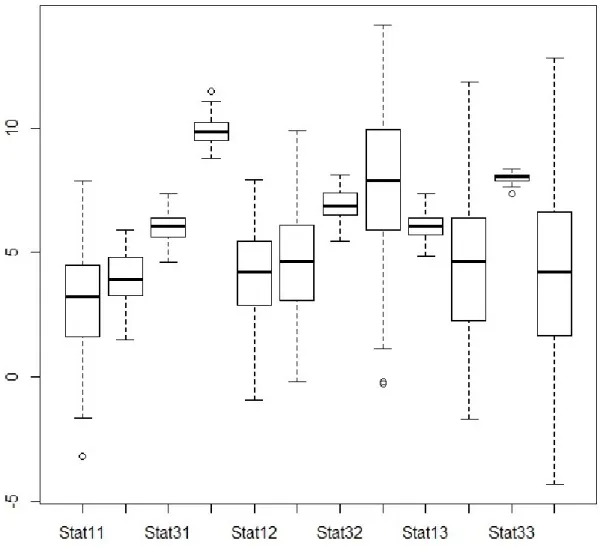
A box plot utilises standard techniques for presenting 5-number summaries, which consist of the minimum and maximum range values, the upper and lower quartiles, and the median (Frigge et al. 1989; Potter 2006). This technique is a quick way to summarize the distribution of data datasets. This, like many of the other techniques presented below, is described as a descriptive statistic that graphically depicts groups of numerical data through their quartiles. An example of a box plot is illustrated in figure 2.1.
Figure 2.1: Boxplot Example
2.6.2 Histograms Plot
A histogram is a type of graph that shows the frequency distribution of data within equal intervals (Freedman, David, Robert Pisani 1997). Histograms use a function 𝑚𝑖 that counts
38
the number of observations that fall into each of the disjoint bins. The mathematical representation of histograms (see equation 2.1) is as follows. Let 𝑛 be the total number of observations and 𝑘 be the total number of bins, the histogram 𝑚𝑖 count the number of observations. This technique has helped to visually illustrate the distributions of the selected features against the expected normal distributions estimated from the data.
𝑛 = ∑𝑘𝑖=1𝑚1 (2.1) Figure 2.2 provides a graphical example of a histogram plot.
Figure 2.2: Histogram Example
2.6.3 QQ Plots
A q-q plot is a plot of the quantiles of the first data set against the quantiles of the second data set (Population 2012). The theoretical QQ plot (see equation 2.2) examines whether or not a sample 𝑋1…,𝑋𝑛 has come from a distribution with a given distribution function 𝐹 (𝑥). The plot displays the sample quantiles 𝑋1…,𝑋(𝑛) against the distribution quantiles
𝐹−1 (𝑝