Does
k
-Anonymous Microaggregation Affect
Machine-Learned Macrotrends?
ANA RODRÍGUEZ-HOYOS1,2, JOSÉ ESTRADA-JIMÉNEZ1,2, DAVID REBOLLO-MONEDERO 2,
JAVIER PARRA-ARNAU 3, AND JORDI FORNÉ2
1Departamento de Electrónica, Telecomunicaciones y Redes de Información, Escuela Politécnica Nacional, Ladrón de Guevara, E11-253 Quito, Ecuador 2Department of Telematics Engineering, Universitat Politècnica de Catalunya, 08034 Barcelona, Spain
3CYBERCAT-Center for Cybersecurity Research of Catalonia, Department of Computer Science and Mathematics, Universitat Rovira i Virgili,
E-43007 Tarragona, Spain
Corresponding author: David Rebollo-Monedero ([email protected])
This work was supported in part by the Spanish Ministry of Economy and Competitiveness (MINECO) through the Anonymized Demographic Surveys Project under Grant TIN2014-58259-JIN, in part by the Proyectos de I+D+i para Jóvenes Investigadores Funding Program through the MAGOS Project under Grant TEC2017-84197-C4-3-R, the INRISCO Project under Grant
TEC2014-54335-C4-1-R, and the Sec-MCloud Project under Grant TIN2016-80250-R, and in part by the European Commission through the H2020 CLARUS Project and the CIPSEC Project under Grant 700378.
ABSTRACT In the era of big data, the availability of massive amounts of information makes privacy protection more necessary than ever. Among a variety of anonymization mechanisms, microaggregation is a common approach to satisfy the popular requirement ofk-anonymity in statistical databases. In essence,
k-anonymous microaggregation aggregates quasi-identifiers to hide the identity of each data subject within a group of otherk −1 subjects. As any perturbative mechanism, however, anonymization comes at the cost of some information loss that may hinder the ulterior purpose of the released data, which very often is building machine-learning models for macrotrends analysis. To assess the impact of microaggregation on the utility of the anonymized data, it is necessary to evaluate the resulting accuracy of said models. In this paper, we address the problem of measuring the effect ofk-anonymous microaggregation on the empirical utility of microdata. We quantify utility accordingly as the accuracy of classification models learned from microaggregated data, and evaluated over original test data. Our experiments indicate, with some consistency, that the impact of the de facto microaggregation standard (maximum distance to average vector) on the performance of machine-learning algorithms is often minor to negligible for a wide range ofkfor a variety of classification algorithms and data sets. Furthermore, experimental evidences suggest that the traditional measure of distortion in the community of microdata anonymization may be inappropriate for evaluating the utility of microaggregated data.
INDEX TERMS k-anonymity, microaggregation, machine learning, privacy, large-scale databases.
I. INTRODUCTION
With the advent of modern data-analytics technologies, the availability of massive amounts of information –the so-called big data era– has changed the landscape in a big manner: more data now means more useful data. The myriad of benefits these technologies can bring to private companies, public institutions and, in general, our society are innumerable. Healthcare, transportation, banking and marketing are just a few fields in which big-data analyt-ics is leading a profound transformation of the traditional models [26], [37], [38].
However, the availability of sheer volumes of personal data and the growing sophistication of machine-learning analytics
pose serious risks to individual privacy. Clearly, more data and better analytic capabilities increase the risk of reidenti-fication of the individuals to whom a database records refer. The increasing demand for data-sharing among different data collectors, besides, only exacerbates this risk.
To cope with this, when a data set is to be shared, the privacy of the individuals therein must be taken into account very seriously. The purpose of statistical disclosure
control (SDC) is precisely to ensure that only useful
macrotrends are learned by the recipients of such data and individual privacy is therefore protected.
Microdata are database tables whose records carry data concerning individual subjects. The typical scenario in
28258
2169-35362018 IEEE. Translations and content mining are permitted for academic research only.
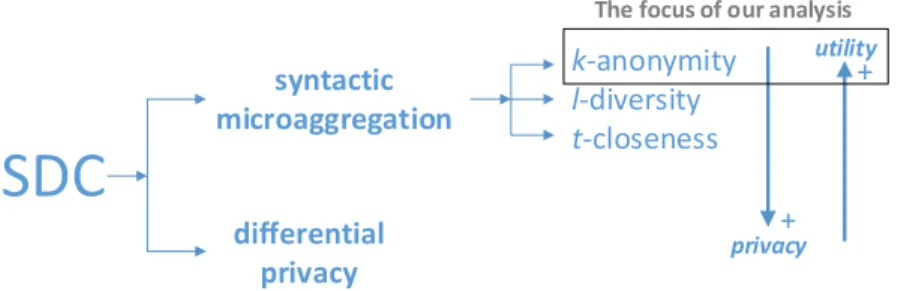
FIGURE 1. Our work focuses on high-utility SDC, involvingk-anonymous microaggregation, which has a direct application, e.g., in the health domain.
microdata SDC is a data curator holding the original data set and perturbing the so-called quasi-identifier attributes (i.e., attributes that, in combination, may be linked with external information to reidentify individuals in the data set), so that disclosure risk is kept as low as possible. One of the most common strategies to keep this risk under con-trol is the ‘‘privacy first’’ approach. Here, the data curator enforces a privacy model, which usually depends on a privacy parameter, to ensure an upper bound on the re-identification risk. Some of the best-known privacy models comprise
k-anonymity [43], [48] andε-differential privacy [18]. Although anonymization methods for microdata rely on a variety of mechanisms, the common denominator binding all them isdata perturbation. Essentially, all such mechanisms modify the original data set to guarantee the chosen privacy model, inevitably at the cost of some loss in data utility [44]. If the resulting utility of the anonymized microdata does not satisfy the data curator’s requirements, then a less stringent privacy parameter is applied or the privacy model is replaced. Examples of these mechanisms include microaggregation, suppression, generalization and noise addition.
When it comes to striking a balance between privacy and utility, appropriate and effective measures of the latter aspect are as important as the privacy model. In real practice, however, the standard measures of data utility employed by the SDC community may not capture the performance of a given data-analytics task, and therefore may not be use-ful in evaluating the anonymization mechanism in question. In SDC, the most widely used utility metric is the mean-squared error (MSE), while accuracy is the most popular one in machine learning.
A. CONTRIBUTION AND PLAN OF THIS PAPER
In the context of microdata anonymization, and particularly
k-anonymous microaggregation, strong privacy protection requires masking the original data significantly, thus reducing their utility notably. However, the impact on utility caused by microaggregation is typically measured in terms of the syntactic distortion introduced to data, and not in terms of the performance of the intended data-analytic task. Besides, traditional utility metrics ofk-anonymized data often neglect the statistical dependence of quasi-identifier attributes, and microaggregation algorithms tend to disregard the potential of confidential attributes as quasi-identifiers. All this makes
it difficult to determine the effect of microaggregation on the practical utility of protected data.
The leading object of this paper is to investigate the impact on the performance of machine-learning tasks caused by data perturbation in thek-anonymous microaggregation pro-cess. To the best of our knowledge, the effect of standard
k-anonymous microaggregation on the macrotrends learned from anonymized data has not been systematically studied, reported and discussed.
We apply a rigorous methodology for evaluating the spe-cific impact of microaggregated data on machine-learning tasks. Our methodology uses accuracy and F-measure as utility metrics. The two are standard measures of performance in machine learning and allow for the statistical dependence among quasi-identifiers. The impact of microaggregation on the utility of anonymized data is quantified, accordingly, as the resulting accuracy (or F-measure) of a machine-learn-ing model trained on a portion of microaggregated data and evaluated on a different portion of original data.
Since the utility extracted from data could depend on the learning algorithm used, we conduct an extensive, thorough evaluation of a wide range of machine-learning algorithms amply used in classification tasks. The results of utility we present correspond to the algorithms that obtain the greatest accuracy from each anonymized data set. Among others, our experiments investigate naïve Bayes, logistic regression, SVM, bagging and C4.5. As for microaggregation algo-rithms, we focus on MDAV, the SDC de facto standard for
k-anonymous microaggregation. The evaluation of MDAV and all those machine-learning algorithms is conducted in four data sets, three real and well-known data sets and one synthetic. We would like to stress that our analysis focus on high-utility SDC, which involves plain
k-anonymous microaggregation usingnumericalmicrodata. Although more strict privacy criteria exist, e.g., in the domain of syntactic microaggregation (such as t-closeness or l-diversity), or in the domain of semantic privacy (such as differential privacy), we examine those privacy mechanisms offering greater utility guarantees for anonymized data, which may be highly desirable in domains like health. We show the context of our analysis in Fig.1.
The remainder of this paper is organized as follows. SectionIIreviews the background onk-anonymous microag-gregation, reviews the state of the art in microaggregation
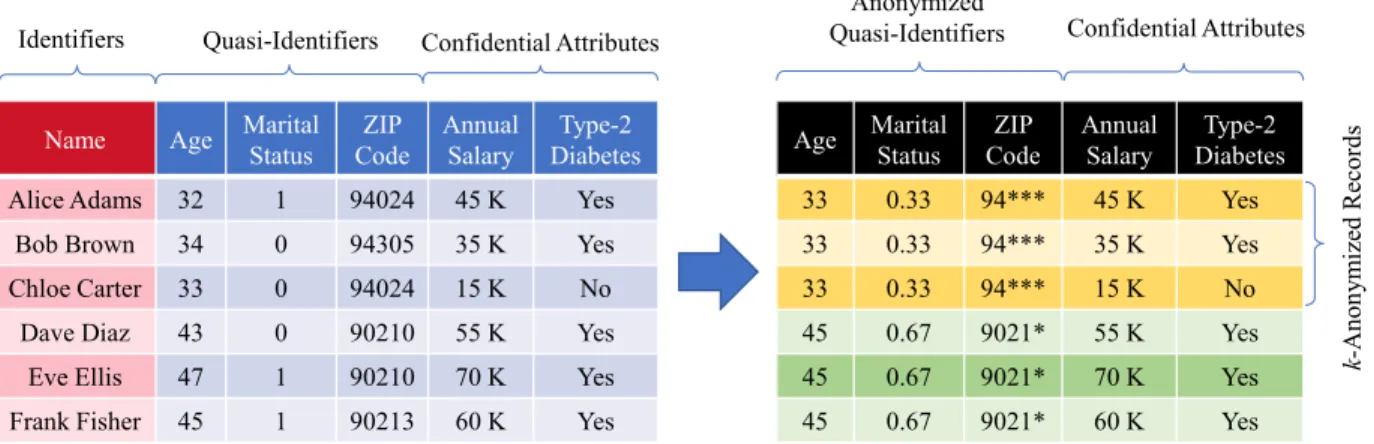
FIGURE 2. Example ofk-anonymous microaggregation of published data withk=3. Quasi-identifiers in the left table are anonymized on the right.
algorithms for SDC, and explores previous work evaluat-ing the impact on data utility caused by anonymization. Next, Section III describes our experimental methodology. Section IV shows the experimental results obtained for a variety of data sets and machine-learning algorithms. Lastly, conclusions are drawn in SectionV.
II. BACKGROUND AND STATE OF THE ART
The old polarized landscape of data transmission with only intended and non-intended receivers has changed due to big data. Nowadays, data is more prone to be shared with external parties or even openly, e.g., for research purposes, in order to better exploit its utility. Thus, malicious observers may illegitimately take advantage, since sensitive information might still be encoded within released data. Unfortunately, conventional privacy services against unintended observers and based on cryptography (such as confidentiality), fail to address the practical dilemma when the intended recipient of the information is not fully trusted.
As a first approach to protect the anonymity of individuals, it is common to just eliminate their identifiers. However, this practice was proved to be insufficient in [48], where it was shown that 87% of the population in the United States could be unequivocally identified solely on the basis of the triple consisting of their date of birth, gender and 5-digit ZIP code, according to 1990 census data. Due to the discriminative potential of a few combined demographic attributes, more sophisticated approaches have been proposed to obscure the identity of the respondents appearing in the released data set.
A. BACKGROUND ON k-ANONYMOUS MICROAGGREGATION
Privacy protection techniques usually focus on databases car-rying information concerning individual respondents (from a survey or a census). Said databases (also known as micro-data sets) contain a set of attributes that may be classified into identifiers, quasi-identifiers and confidential attributes. Firstly, identifiers, such as full names or medical record numbers, can single out individuals from a data set and are commonly removed in order to preserve the anonymity
of respondents. Secondly,quasi-identifiersorkey attributes
may include age, gender, address, or physical features, which combined and linked with other external information can be used to reidentify respondents. Finally, a data set may contain confidential attributes with sensitive information on the respondents, such as salary, health condition, and religion. In Fig. 2, we illustrate how a perturbed, and thus more private, version of a data set is obtained to be published instead of the original one. In the figure, the original data set combines attributes common in census and medical sur-veys. It has three quasi-identifiers, age, marital status and ZIP code, and two confidential attributes, annual salary and type-2 diabetes condition. The figure at hand shows how, in order to preserve the privacy of respondents, perturbation is applied to quasi-identifiers. This technique, called microag-gregation, is applied to enforcek-anonymity [48], a privacy model that guarantees that each tuple of key-attribute values is identically shared by at leastkrecords in a data set. Rather than making the original table available, a perturbed version is published where aggregated records of quasi-identifying values are replaced by a common representative tuple. The result is a microaggregated data set that may prevent reiden-tification attacks.
As illustrated in Fig.3, if tuples of key attributes in a data set could be represented as points in the Euclidean space,
k-anonymous microaggregation would consist in partitioning these points in cells of sizek, and quantizing each cell and its elements with a representative point. Perturbed key attributes would be characterized by the set of representative points. The de facto standard for numerical microaggregation is the maximum distance to average vector algorithm (MDAV). It was proposed in [20] as a practical evolution of a mul-tivariate fixed-size microaggregation method and conceived in [12]. We provide, in Algorithm 1, a simplified version of that given in [15] and termed ‘‘MDAV generic’’.
B. STATE OF THE ART OF k-ANONYMITY AND k-ANONYMOUS MICROAGGREGATION
Microaggregation is a technique aimed to protect the privacy of those individuals whose personal records are included in
FIGURE 3. k-Anonymous microaggregation as a minimum-distortion quantizer design problem with a constraint on the size of the quantizer cells [41].
Algorithm 1MDAV ‘‘Generic’’, Functionally Equivalent to [15, Algorithm 5.1] functionMDAV
inputk, (xj)nj=1 FAnonymity parameter k, quasi-ID portion(xj)nj=1of a data set of n records
outputq FAssignment function from records to microcells j7→q(j)
1: while2kpoints or more in the data set remain to be assigned to microcellsdo
2: find the centroid (average)Cof those remaining points
3: find the furthest pointPfrom the centroidC, and the furthest pointQfromP
4: select and group thek−1 nearest points toP, along withPitself, into a microcell, and do the same with thek−1 nearest points toQ
5: remove the two microcells just formed from the data set
6: ifthere arekto 2k−1 points leftthen
7: form a microcell with those and finish
8: else FAt most k−1points left, not enough for a new microcell
9: adjoin any remaining points to the last microcell FTypically nearest microcell
a released microdata set. With microaggregation, as with generalization and suppression, the distortion is applied to the key attributes to satisfy the k-anonymity privacy model [43], [48]. This model guarantees that each individ-ual’s information contained in a released data set cannot be distinguished from that of at leastk−1 individuals whose information also appears in the data set. The original for-mulation ofk-anonymity as a privacy criterion was modified into the microaggregation-based approach in [9], [12], [13], and [15].
Althoughk-anonymity is a very popular privacy criterion, it is not flawless. Since the criterion strictly operates with the key attributes, the statistical properties of confidential attributes (and thus their disclosure potential), both in the data set and in the entire population, are neglected. In general,
k-anonymity overlooks the knowledge a potential attacker may already have or obtain about the data set, giving rise to similarity, skewness or background-knowledge attacks [16], [40], [42]. In spite of its shortcomings, the application of
k-anonymous microaggregation does not only concern the publication of databases but also some variants thereof like search engine querying, online data collection and data streaming [5], [14], [54].
Additional criteria have been proposed that refine
k-anonymity and prevent some of the above-mentioned attacks. The former,p-sensitive [47], [49], requires that each group ofk-anonymized records contains at leastpdifferent values of each confidential attribute. In the same but broader spirit,l-diversity proposes that each group have at leastl well-represented confidential values. None of these criteria assures complete protection against skewness attacks, nor against similarity attacks when confidential attributes within a group are semantically similar.
Other privacy criteria dealing with similarity and skewness attacks pose requirements in the distribution of confidential attributes within groups. The aim is that con-fidential attributes in each group of anonymized records are stratified according to their distribution in the original data set. Depending on the discrepancy allowed between the within-cluster and overall distributions, these privacy criteria yieldt-closeness [27],δ-disclosure [4], and average privacy risk [39], [40].
To cope with the NP-hardness of multivariate microag-gregation, several heuristic algorithms have been pro-posed. These algorithms can be classified as fixed-size and variable-size. Among the former ones, we find the
maximum distance [12] (MD) and its variation, maximum distance to average vector [12], [15] (MDAV). Variable-size algorithms include, on the other hand, theµ-Approx [13], the minimum spanning tree [24] (MST), the variable MDAV [46] (V-MDAV) and the two-fixed reference points algorithms (TFRP).
In general, the implementations of microaggregation have been oriented to reduce the inherent information loss [10], [29], [35] due to perturbation, which commonly derives in more sophisticated and significantly costlier implementations in terms of computational time [41].
C. MEASURING THE IMPACT OF MICROAGGREGATION ON MACHINE-LEARNED MACROTRENDS
Usually, the impact of microaggregation is measured in terms of the distortion introduced in the data. MSE is commonly used to quantify such distortion in the case of numerical attributes. Equivalently, the utilityof microaggregated data is measured inversely as the distortion resulting from data perturbation.
Within a broader scope, in an effort to tailor anonymization mechanisms to the application domain of data (e.g., building classifiers to predict someone’s health condition), some pre-vious research work has also used other utility metrics. One of such metrics is the accuracy of machine-learned macrotrends built using anonymized data. A model built with perturbed data would be less accurate than another built with original data. Accordingly, a higher degree of anonymization would result in less accurate models. Surprisingly, to the best of our knowledge, this metric has not been used to systematically evaluate microaggregation-based anonymization algorithms, but other anonymization algorithms based on generalization and suppression of records, such as Incognito, Mondrian and DataFly.
In previous work, classification accuracy has been used to evaluate the utility of (or, equivalently, the distortion introduced to) anonymized data, just to compare the per-formance of adapted classifiers or anonymization mecha-nisms. One of these works is [45], where the effects of four microaggregation algorithms on the estimation of a linear regression is compared, when solely applied to simulated data sets. Other works propose improvements on machine learning algorithms and methodologies, to obtain higher utility (classification accuracy) from anonymized data. This is the case of [21], where the authors develop a method to increase the level of utility obtained from support vector machine (SVM) and k-nearest neighbor (kNN) machine learning
algorithms, when data are anonymized with the DataFly algorithm. By feeding these algorithms with statistics from original data, in addition to anonymized data, greater utility ensues from the latter. In the same line, [6] describes an adjustment to logistic regression that provides differential privacy [18]. Furthermore, decision tree learning methods are developed in [34] and [53] that enforcel-diversity and dif-ferential privacy, respectively, as privacy criteria and whose
accuracy levels approach those of a non-private decision tree. Using a different focus, [30] and [31] address the privacy risk resulting from the release of SVM and the anonymized data. Privacy preserving versions of SVM are proposed and their classification accuracies are used to compare them with the original SVM.
A great deal of research has also investigated adap-tations of anonymization algorithms that generate private data of ‘‘higher quality’’. In that context, the utility of anonymized data is evaluated in terms of classification accu-racy of machine learning models [22], [23], [25]. The cited works rely on generalization and suppression as perturbation techniques and include preprocessing steps such as selec-tive anonymization of attributes, to adapt the released data to machine learning applications, and hence preserve their utility. On the other hand, [7] proposes publishing syn-thetic microdata generated from differentially private models applied on original data. For that, machine learning tech-niques are integrated to improve utility.
Ironically, although enhancements in the utility of anonymized data are reported, it is not clear what the over-all impact of original anonymizing mechanisms in the first place is. Some approaches do attempt to evaluate the trade-off between privacy gain and information loss (measured as accuracy reduction) due to anonymization. However, various considerations should be done for such evaluation. To start, there is a variety of anonymization algorithms. For exam-ple, [19] focuses on a proprietary anonymization algorithm whereas [33] examines a non-standard one.
Other caveat is the variable application domain of the data. While classification is the most popular workload for anonymized data, machine learning algorithms would per-form differently depending on the particular data set used, so the utility would vary accordingly. This also applies to the number of records, or the size of the data set, which may affect the performance of anonymization algorithms, e.g., when
k-anonymity is applied, a given value of k shall affect the utility of small data sets more than the utility of bigger ones. A last limitation has to do with the baselines to measure privacy gain and utility loss. Utility, measured as the accu-racy of machine learning models, reaches its lower bound when all the key attributes are discarded; or, fork-anonymity, whenk equals the number of records of the data set. Util-ity’s upper bound is attained when no anonymization is applied.1
Even in this variable scenario, one thing is certain about how machine-learned trends are affected by anonymiza-tion: simultaneously satisfying various privacy criteria, e.g.,k-anonymity,l-diversity, and t-closeness, may make the data completely useless, as reported by [4], a study where not only syntactic but also semantic requirements of privacy are evaluated. Those privacy criteria, together with differ-ential privacy, are out of the scope of this work, since our
1Further considerations regarding baseline performance can be found in [28].
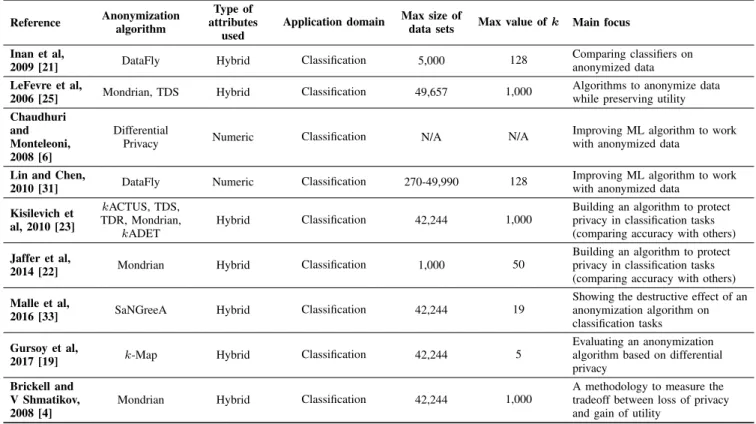
TABLE 1. Summary of related contributions.
target application is that of data release for general statistical analysis with a focus on data utility. Recall that differential privacy is conceived for online querying on predefined com-putations, and that in general it imposes stringent restrictions, both in terms of usability and data utility. Those restrictions, introductorily explained also in [36], render it useless for our purposes.
Last but not least, we would like to stress that our review of the state of the art in this section has been conducted from a strictly technological perspective. Legal and socioeconomic aspects are covered, for instance, in [8] and [17]. Table 1
summarizes the main conclusions of this section.
III. METHODOLOGY OF EVALUATION
Attack and Usability Model In this work, we assume the standard attack model of the SDC literature [32]. When a microdata set is released, it is assumed to be available to any privacy attacker. For research and statistical purposes, the released microdata contains key attributes (basically demographic data) that are correlated with another, probably confidential, attribute. In the k-anonymity model, besides, the attacker knows a target individual’s record –although microaggregated– is in the released data set.
To protect that individual’s privacy, an anonymized version of the microdata set is released. To keep the information usable, i.e., ‘‘truthful’’ [43], microaggregation is applied to the key attributes, while the confidential attribute is unper-turbed. Researchers may leverage the key attributes by build-ing classifiers on the microaggregated data, for example
to predict a given condition. Recall that classification is a machine learning task that aims to predict the class, or label, of a tuple of information. To do so, it requires learning a model from a group of labeled input samples. In our case, we can assume a large anonymized data set of patients that is publicly released so that researchers can build classifiers.
As another example of this model, suppose that the taxation authority publishes a microaggregated data set with 3 key attributes: gender, age, and marital status; additionally, a con-fidential binary attribute is published without being modified, specifying whether a respondent has paid taxes or not. Both perturbed key attributes and the confidential attribute could be used by researchers to develop algorithms that predict the propensity of other people to pay taxes. At the same time, the privacy of a specific individual would be preserved as a result of microaggregation. However, as commented in previous sections, the macrotrends embedded in the original data, which are necessary to get more accurate classifiers, might be affected by the perturbation of the key attributes values caused by microaggregation.
A. MEASURING PRIVACY AND UTILITY
To evaluate the impact of anonymization on the utility of a released microdata set, we need quantifiable metrics of privacy and utility. Since our experiments focus on microag-gregation as anonymization mechanism, we shall assume
k-anonymity as privacy criterion. In this manner, the identity of a respondent will be protected in a group ofktuples sharing the same key attribute values. Higher values ofkwill imply
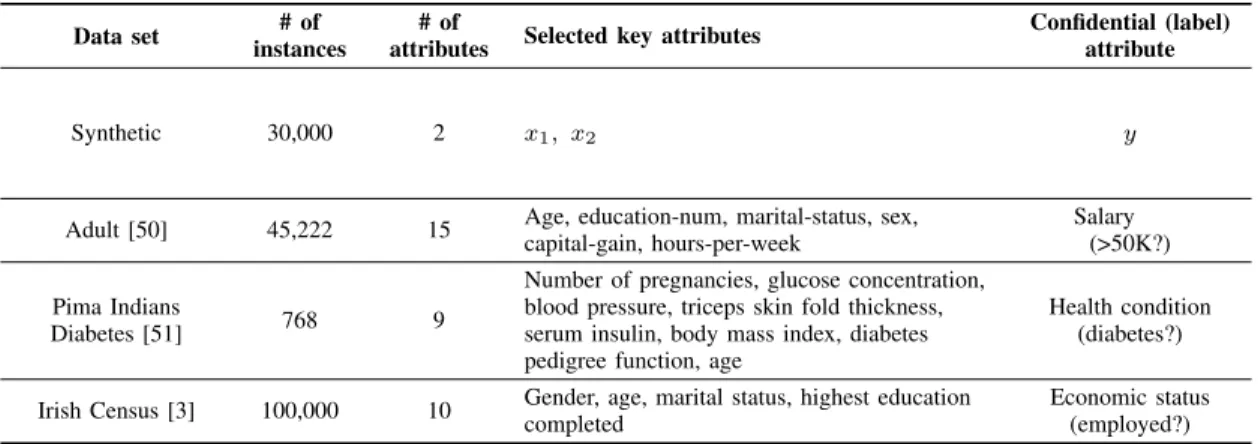
TABLE 2. Description of the data sets used to evaluate the impact ofk-anonymous microaggregation.
TABLE 3. Machine learning algorithms used in our experimental evaluation.
more anonymity and then more privacy, although, eventually, less utility.
To measure the utility of anonymized data, we must decide the application domain of such data. We choose binary classificationsince it is a very popular workload for released microdata sets. Accordingly, we measure utility through the performance of a binary classifier, when executed on anonymized data. Several metrics exist that measure the per-formance of binary classification tests. Next, we elaborate on them with a medical example.
Let D be a binary random variable (r. v.) representing whether a patient has a given condition (D = 1) or not (D=0). LetT be a binary r. v. representing the outcome of a medical test, beingT =1 a positive detection, andT =0 a negative detection. By the law of total probability,
P{T =D} =P{T =D|D=0}P{D=0}
+P{T =D|D=1}P{D=1}, and thus,
P{T =D} =P{T =0|D=0}P{D=0}
+P{T =1|D=1}P{D=1}. Specificity (true negative rate) and sensitivity (true positive rate) are two metrics of the performance of a binary classifier
and can be defined as P{T =0|D=0}and P{T =1|D=1}, respectively. In our evaluation, we follow the same approach as [23], [25], and [33] and measure utility as theaccuracyof a binary classifier. In our example, accuracy can be defined as the probability that the test and disease coincide, that is
A=P{T =D}. Accuracy can also be expressed in terms of specificity and sensitivity as the convex combination
A=(1−prevalence)×specificity+prevalence×sensitivity weighted by the prevalence, that is, the a priori probability of having a disease.
Although accuracy is a very popular metric, when the class of the data is significantly unbalanced this metric might incorrectly measure the goodness of a classifier. Fortunately, other stricter indicators are available such as F-measure, ROC curve and area under the ROC curve (AuC).
Accuracy quantifies how well a binary classifier performs, in terms of the rate of correctly classified (as positive or neg-ative) samples in a test set. For example, a binary classifier constructed to predict diabetes would be 100% accurate if, when applied on a test set of 600 samples, it correctly identi-fies the class of the 500 samples labeled with ‘‘no diabetes’’ and the class of the 100 samples labeled as ‘‘diabetes’’.
F-Measure (or F1 score) is a machine learning metric
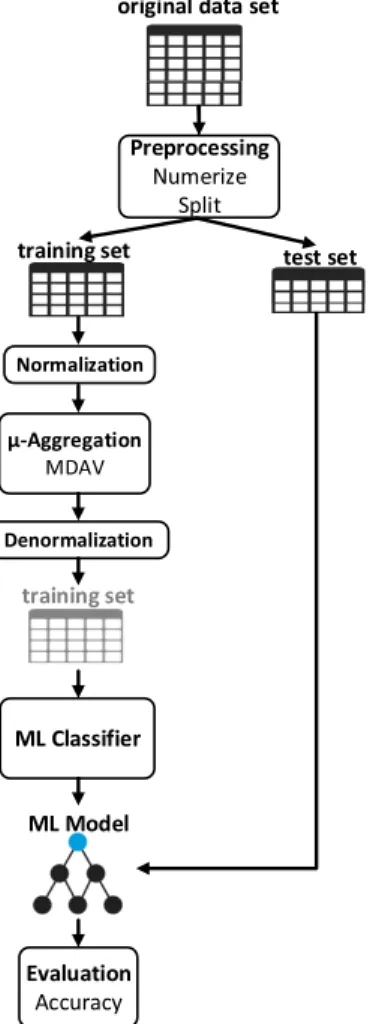
FIGURE 4. Experimental methodology followed to evaluate the impact of MDAV-basedk-anonymous microaggregation on the empirical utility of microdata.
In fact, F-Measure is defined as the harmonic mean of preci-sion and recall. Furthermore, another composed metric is the ROC curve, which measures the performance of a classifier based on the graphical representation of the sensitivity in function of the specificity.
For our application domain (binary classification), we first measure the utility of a microdata set before being microag-gregated. Since no perturbation is applied to the data, the clas-sifier built from that data set would yield the highest accuracy. The data would therefore give the best achievable utility, but the worst privacy.
In our experiments, we shall generate several microag-gregated versions of a data set, by varying the value of the privacy parameterkincrementally for a wide range. For each of these versions, we shall compute the corresponding classi-fication performance to observe the progressive degradation of data utility due to microaggregation. We use accuracy and F-measure to assess the performance of classifiers built with microaggregated data. Naturally, as k increases, we expect a lower data utility, but obviously in exchange for higher privacy. Note that, for binary classifiers computed over a set of data samples and their corresponding labels, the lowest
possible accuracy is not zero. To see this, suppose that ‘‘pos-itive’’ is the majority class (more than 50% of the training samples are labeled as ‘‘positive’’). Accordingly, the simplest classifier would classify any new input as ‘‘positive’’. Then, interestingly, a binary classifier should not have accuracy values lower than 50%.
B. EXPERIMENTAL SETUP
Next, we describe the algorithms, tools and data we use to quantify the impact ofk-anonymous microaggregation on the performance of machine-learned classifiers.
1) ALGORITHMS
With regard to microaggregation, our experiments employ MDAV [11], the de facto standard protocol described in SectionI. The specification of the MDAV algorithm used here can be found in [15]. The algorithm in question is referred in the cited work as ‘‘MDAV-generic’’.
With the aim of constructing classifiers from microdata, we use the Weka toolkit [52], a collection of algorithms extensively employed by the machine learning community. In the interest of fairness when measuring the impact of microaggregation, we assign each data set the machine learn-ing algorithm that extracts the greatest utility from it. Accord-ingly, we measure said impact with respect to the highest achievable utility. In order to find the corresponding algo-rithm for a data set, we tried on it a range of machine learning algorithms, including naïve Bayes, logistic regres-sion, SVM, bagging, and C4.5. The reasons for choosing this set is manifold. First, we include different algorithms to observe whether the effects of microaggregation are consis-tent along different utility extraction techniques. Moreover, we select naïve Bayes and SVM since in several previous works [7], [23], [25], [33] they have been adapted to obtain more utility from anonymized data. Additionally, logistic regression, C4.5 and bagging were considered to represent the main families of machine learning classifiers, i.e., regression, decision tree, and ensemble algorithms, respectively. For each data set, we choose the algorithm showing the best perfor-mance in the classification task, i.e., the highest accuracy. This way, we test the impact of microaggregation in the different utility contexts or domains defined by a variety of data sets and machine learning algorithms.
2) DATA
For the purpose of illustration, we shall evaluate the impact of microaggregation first on a synthetic data set. The effect of microaggregation on real scenarios will be assessed after-wards in data sets satisfying these four properties. First, we require data sets containing demographic attributes so that they reflect the typical characteristics of microdata. Secondly, we consider only data sets whose potential key attributes are correlated with a given sensitive (label) attribute, so the latter could be effectively predicted (classified). Thirdly, we need a relatively large number of records (e.g., more than 500) to have a better view of the overall effect of
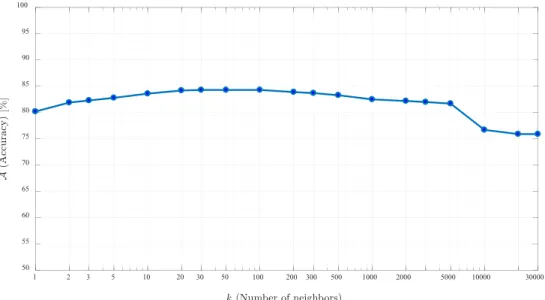
FIGURE 5. Accuracy of thekNN machine learning algorithm applied on the UCI Adult data set, for different values ofk(here,kis not related withk-anonymity).
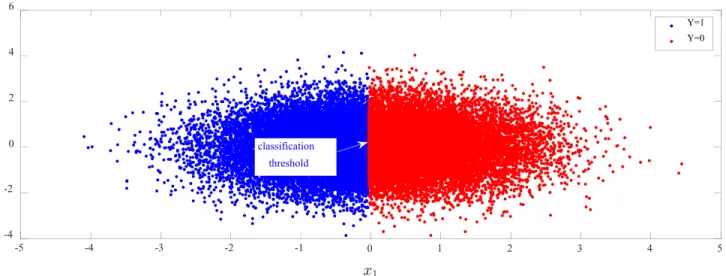
FIGURE 6. Depiction of the quasi-identifiers (x2vs x1) of our synthetic data set. Samples are colored according to their class,y; blue fory=0 and red fory=1.
microaggregation, using an incremental value of the privacy parameterk. Finally, we use standardized or already tested data sets so that our results can be easily reproduced. It is worth noting that predictive demographic data turned out to be a very restrictive condition when we searched for data sets to carry out the tests.
For the sake of simplicity and ease in its graphic rep-resentation, we build the synthetic data set with only two numerical attributes (x1,x2) resembling quasi-identifiers, and
a binary attribute (y) as the confidential attribute. The data set is generated so thatyis to some extent predictable fromx1and x2and has 30,000 records. In SectionIV-B, we describe in
greater detail the process by which the synthetic data set was generated and show a preliminary experiment to illustrate the effects of microaggregation.
Regarding the experiments on real data sets, we first employ the standardized ‘‘Adult’’ data set from the UCI
Machine Learning Repository [50], described in Table 2. The data set in question has been widely used to evalu-ate binary classifiers and privacy preserving mechanisms. Its 45,222 records are already split into two parts, for train-ing (2/3) and testtrain-ing (1/3) purposes. The data set contains 15 input demographic attributes and a binary label attribute, the salary, which is the attribute the machine learning algo-rithm will try to predict. In particular, the attribute specifies whether a person makes over 50K a year or not. The attributes we use as quasi-identifiers are age, education-num, marital-status, sex, capital-gain, and hours-per-week.
The second standardized data set is ‘‘Pima Indians Dia-betes’’ [51] which contains 768 records and 9 demographic attributes. Available at the UCI Machine Learning Repos-itory, this data set has been used in [22], [23], and [31]. The 8 key attributes we selected allow predicting whether an individual will be diagnosed with diabetes or not. The
FIGURE 7. Samples of our our synthetic data set, colored according to theirpredictedclass,y¯; blue fory¯=0 and red fory¯=1.
FIGURE 8. Cells of samples obtained afterk-anonymous microaggregation with MDAV on the quasi-identifiers of our synthetic data set (k=3000).
third real data set we consider in our experiments is the ‘‘Irish Census’’ [3], a synthetic version of the data from the 2011 Irish Census, which has been used in [1] and [2] to eval-uate and compare k-anonymization algorithms. It contains 100,000 records and 10 demographic attributes. Originally, it was not built with a predictive task in mind, but 5 of its attributes could be used to predict an individual’s economic status (employed or unemployed).
Table2describes the main characteristics of the data sets tested in our experiments, and Table 3 shows the machine learning algorithms employed for each data set.
3) ADDITIONAL TASKS
Since our implementation of MDAV only operates with numerical attributes, we conducted some preprocessing tasks on the data sets described in the previous subsection. Specif-ically, we converted some useful categorical attributes to numeric, where possible, and binarized the sensitive attribute,
where necessary, so that the application domain of data was binary classification.
C. EXPERIMENTAL METHODOLOGY
The steps we follow to evaluate the impact of microaggre-gation on the utility of microdata are in line with the attack and utility models described at the beginning of SectionIII
and are illustrated in Fig. 4. As a first data preprocessing step, we extract the key attribute information of our interest from each data set, according to the guidelines described in the previous subsection. Moreover, from the selected key attributes, we ‘‘numerize’’ the categorical data so that they are compatible with MDAV. Finally, we identify the key attributes that are then used as input samples and the sensitive label attribute that will serve as the class to be predicted by the classification model.
The next step splits each microdata set into training and test sets. As is common in the evaluation of machine learning
FIGURE 9.Degradation of the empirical utility (accuracy and F-measure) of our synthetic data set when microaggregated (using MDAV) for a wide range ofk.
FIGURE 10. Distortion, measured as MSE, introduced by MDAVk-anonymous microaggregation to our synthetic data set, considering a wide range ofk.
algorithms, a model is constructed from a training subset of the data and is evaluated on the test subset. Following such methodology, we use two-thirds of the data for training and one-third for testing. The splitting is done in such a way that the class attribute is stratified in each subset, according to its original distribution in all the data set.
After splitting the data into training and test sets, the microaggregation process is performed using MDAV over the latter set. To this end, previously we follow the common practice of normalizing each column of the data to have zero mean and unit variance.
With the microaggregated versions of each (training) data set, we then construct a classification model over each of those versions using Weka and 10-fold cross validation. The learning algorithms we use for each data set are listed in Table3. Finally, we evaluate the accuracy of the resulting classification models over the non-anonymized test subset, reproducing the application scenario where a database user would use the classification model to classify their original samples of data.
IV. EXPERIMENTAL RESULTS
Preliminary Experiment To get some intuition about the impact of microaggregation and its clustering capability on the empirical utility of anonymized data, we next make an analogy with the operation of some machine learning algo-rithms. Consider thek-nearest neighbors algorithm (kNN), a simple classifier, and assume a data set with n training tuples, each one assigned to a binary class label.kNN classi-fies a new tuple according to a majority vote of itskclosest ‘‘neighboring training tuples’’ in the feature space. Note that, in this context,khas nothing to do with anonymity. A smallk
implies considering few neighboring samples for classifica-tion, which would be the most representative ones, being the closest, but would not be so reliable in terms of predictability. On the other hand, a largek implies taking more (and not so close) neighboring samples, being demographically less representative, but predictably more reliable. This tradeoff is illustrated in Fig.5, where we measure the accuracy of
kNN on the original UCI Adult data set for several values of k. As depicted in Fig. 5, the classification accuracy of
FIGURE 11. Accuracy of thebaggingmachine learning model trained on our microaggregated synthetic data set, against the distortion due to MDAV.
FIGURE 12. Relevance of the cumulative number of selected attributes from the UCI Adult data set as predictors of the class attribute (Annual Salary).
kNN improves as groups rather than individual samples are considered to robustly infer what would effectively constitute a macrotrend.
We argue that microaggregation would be acting analo-gously to kNN when aggregating neighboring data points to construct cells, and computing averages to get repre-sentative centroids for each cluster. Such clustering could be regarded as a denoising process. In fact, the benefit of preprocessing data with unsupervised techniques based on clustering, prior to supervised learning, is known in the machine-learning literature. Therefore, it seems reasonable to
expectk-anonymous microaggregation to have a minor (and sometimes even positive) impact on the empirical utility of data, measured as the accuracy of machine learning models when deriving macrotrends.
A. MEASURING THE IMPACT OF MICROAGGREGATION ON A SYNTHETIC DATA SET
We begin our experiments by analyzing the effect of microag-gregation on synthetic data. To this end, we generate 30,000 samples of 3-dimensional Gaussian data. The first two dimensions are assumed to be quasi-identifiers, and the
FIGURE 13. Degradation of the empirical utility (accuracy and F-measure) of the UCI Adult data set when microaggregated (using MDAV) for a wide range ofk.
TABLE 4. Different utility metrics for the UCI Adult data set when microaggregated for a wide range ofk.
third dimension represents a binary confidential attribute. Since we require that the quasi-identifiers be predictors of the confidential attribute (as would be, e.g., the weight and height predictors of the existence or not of a dis-ease in an individual), we introduce in the data a learnable macrotrend or dependence among the quasi-identifiers and the confidential attribute.
Next, we describe how we generate this synthetic data set. Let X be a bidimensional continuous r.v. representing the two quasi-identifiers (x1, x2), and letY be a binary r.v.
indi-cating whether an individual has a disease (Y = 1) or not (Y =0). The data set is generated in two parts, each matched to a different value ofY. Accordingly,X is distributed as a unit-variance Gaussian distribution with meanµforY =1, and with mean−µ, forY =0. In Fig.6, we represent this data set by plotting the values ofXfor each record as coordinates of a point in a plane, coloring each point according to the
class to which it belongs. As expected, two clouds of points are obtained (the red one, forY = 1,slightly on the right; and the blue one, forY =0,on the left) where we can guess the optimal threshold to estimate the classYˆ of each point.
Let P{Y =1|x}be the discriminative model of this prob-lem. The prevalence p of a disease in this data set is the proportion of records matched to the classY =1. It is routine to represent this model, using logarithmic odds, as
L{Y =1|X=x} =2µx+ln p 1−p.
We denote the cumulative distribution function (CDF) of the zero-mean, unit-variance Gaussian distribution as8. The accuracyAof our model to find the estimated classYˆ can be expressed as
A=P{Y = ˆY} =(1−p)8(θ+µ)+p8(µ−θ), for a given threshold x = θ . It is straightforward to derive the optimal thresholdθ∗for maximum accuracy of our discriminative model, which is
θ∗= − 1
2µln
p
1−p.
In order to have a balanced data set, we usep=0.5, thus half of the samples are matched to each class. Consequently, the optimal threshold to classify both parts of the data set isθ∗ = 0. Additionally, we chooseµ = 0.125 so that the distribution of both groups of samples are close; evidently, the more overlapped the two groups are, the more difficult the classification task.
Next, we train a machine learning model over a stratified part of the synthetic data, using the C4.5 algorithm. Sinceµis low, the accuracy obtained from the classifier is 60%. Based on this model, we predict the class using the quasi-identifiers. Then, in Fig.7, we plot the same clouds of samples of Fig.6, but now we color them according to the predicted class. Accordingly, the classification threshold is evident.
To analyze the impact of microaggregation, we apply MDAV to the training set of this data set withk = 3000,
FIGURE 14. Distortion introduced by MDAVk-anonymous microaggregation to the UCI Adult data set, when microaggregated for a wide range ofk.
FIGURE 15. Accuracy of thebaggingmachine learning model trained on the microaggregated UCI Adult data set, against the distortion due to MDAV.
which is a very large value of cluster size. Accordingly, we get 7 cells that we plot in Fig.8with distinct colors; the classi-fication threshold is also plotted. Notice in the figure that, after the clustering applied by MDAV, the samples of 3 out of 7 cells might be misclassified with a higher probability since such samples are distributed on both sides of the classification threshold. However, the remaining 4 cells, which account for about 57% of the data, are clearly defined on one side of the classification threshold, so they would be correctly clas-sified. Hence, even after microaggregation, machine-learned macrotrends might not suffer a significant impact, i.e., the
accuracy obtained from original data is not harshly reduced, even for high values ofk.
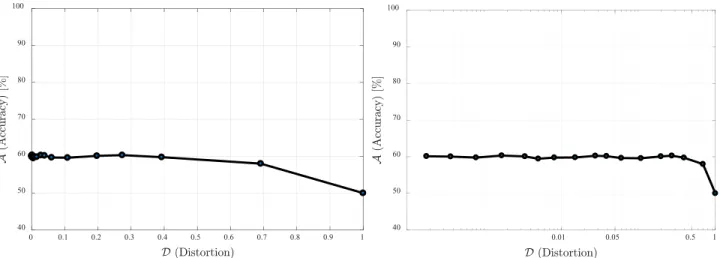
To illustrate more systematically this effect on data utility, we plot in Fig.9the accuracy and F-measure of the learning model obtained from our synthetic data, after anonymizing it with different values of k. Consistently with the previ-ous experiment, none of these utility metrics is drastically affected by the influence of microaggregation, for practical values of k. Another metric of the impact of microaggre-gation (not necessarily in terms of utility degradation) is also depicted in Fig.10. Here, we observe that distortion,
FIGURE 16. Degradation of the empirical utility of the UCI Pima Indians Diabetes data set when microaggregated (using MDAV) for a wide range ofk.
FIGURE 17. Distortion introduced by MDAVk-anonymous microaggregation to the UCI Pima Indians data set, for a wide range ofk.
measured in terms of MSE, increases withk. However, dis-tortion starts soon to increase significantly fromk = 100. This divergence between accuracy and distortion is evidenced in Fig.11, where the connection between both seems non-specific and nonlinear. A more detailed discussion regarding these results is presented in the next section, where real data is considered.
B. GENERAL RESULTS FROM REAL DATA SETS
We begin our first series of experiments by computing the relevance of the number of predictive attributes in each data set. The aim is to analyze how the accuracy of the classification task varies with the number of predictive attributes. To determine the order of the attributes employed,
we used sequential forward selection, which consists in sequentially adding attributes to an empty set until the addition of further attributes does not decrease the accuracy of the classification task. Fig.12illustrates the variation of accuracy with the number of predictive attributes for UCI Adult.
Although intuition could suggest that even small levels of data perturbation might yield important reductions in utility, riveting results are found in our experiments when using microaggregation. First, Fig.13shows how the accuracy and F-measure of the classifier degrades as the privacy parame-terkincreases, when anonymizing the UCI Adult data set. As expected, accuracy attains its highest value (about 85%) when no anonymization is applied (k = 1). Fork = 200, which is a relatively large value of cluster size, accuracy only
FIGURE 18. Accuracy of thelogistic regressionmodel trained on the microaggregated UCI Pima Indians Diabetes data set, against the distortion due to MDAV.
decreases up to 82%. We also note that, even for a value ofk
of 3,000, which implies a strong level of anonymity, accuracy is approximately 80%.
Fig. 13 also depicts a dotted line to represent the low-est accuracy achieved by the machine learning algorithm (76.37%) when no predictor attributes are used (suppression of all key attributes); this provides the highest level of privacy protection. Note that, when all key attributes are suppressed, the machine learning model always classifies a new instance depending on the majority value of the class attribute.
From the figure, we observe that a reduction in accuracy from 85% to 82% (attained for k = 200) when the key attribute (important predictor) ‘‘Capital Gain’’ is eliminated. Similarly, even whenk=3,000, we obtain a smaller impact on utility (accuracy of 80%) than when all predictors–except ‘‘Education Number’’– are suppressed. This are good news for microaggregation, since it suggests that we can still get useful microdata after applying more than reasonable levels of privacy. The reported values of accuracy and other metrics (F-measure and AuC) are shown, in more detail, in Table4.
The impact of MDAV on the UCI Adult data set is also measured in terms of the distortion introduced to quasi-iden-tifiers. We use MSE to quantify such distortion. In Fig.14, we can see how distortion increases from 0 (whenk =1) to 0.62 (fork=3,000). Specifically, we observe a pronounced growth fromk =100, although for values ofksmaller than 100, distortion does not seem significant.
In Fig. 15, we plot accuracy vs distortion. The most rel-evant conclusion that can be drawn from this figure is that accuracy stays relatively stable (greater than 80%) up to distortions of 0.7. Precisely, although MSE is conventionally used in SDC to compare the utility of microaggregation
TABLE 5.Different utility metrics for the UCI Pima Indians data set when microaggregated for a wide range ofk.
algorithms, we observe that this distortion metric says little about the impact on the performance of a machine-learning classifier. In other words, the data yielded by this figure seems to provide convincing evidence that MSE is not a suitable measure of utility for classification tasks.
In our evaluation of the UCI Pima Indian Diabetes data set in Fig.16, we note that the degradation margin of utility goes from 74.2% (whenk=1, thus without perturbation) to 65.23% (fromk =100). Microaggregation shows a similar behavior to that observed in the UCI Adult data set but, being 50 times smaller, it evidently degrades more quickly askincreases. However, a noticeable stability is appreciated in accuracy up to k = 30 and, in fact, this performance metric remains close to the upper baseline at around 74%. For values ofk between 10 and 30, accuracy is even improved, which could be explained by the denoising effect of averaging through clever clustering, that may positively contribute to
FIGURE 19. Degradation of the empirical utility (accuracy) of the Irish Census data set when microaggregated for a wide range ofk.
FIGURE 20. Accuracy of theC4.5machine learning model trained over the microaggregated Irish Census data set, against the distortion due to MDAV.
a more robust inference. This effect is illustrated in §IV-A
and §V. Interestingly, Fig.17shows a sustained increase in distortion askbecomes larger. To gain insight into this rela-tive stability in accuracy, we also plot accuracy vs distortion in Fig.18and confirm that, up to distortions of 50%, utility remains close to the upper baseline. The values of accuracy and other metrics (F-measure and AuC) obtained for this data set are also shown in Table5.
Finally, we examine the Irish data set in Fig. 19. Here, we observe a wide degradation margin since its label attribute has balanced classes. Specifically, accuracy goes from 72.62% to about 68.04% when the privacy param-eter k equals 3,000. Also, we can see, once again, that
accuracy remains quite high (more than 70%) and stable up tok=2,000. A similar behavior is observed for F-measure. Although the size of the data set at hand is relatively large (100K instances), the available evidence suggests that the reduction of empirical utility of the data due to microaggre-gation is not significant for a wide range of values ofk. Such effect is also noticeable in Fig.20, where we plot accuracy vs distortion. Table6shows the reported values of accuracy, as well as other metrics (F-measure and AuC), in greater detail.
Our experimental findings confirm that MDAV introduces sufficiently small levels of perturbation in the quasi-identi-fiers, so that the statistical properties of the published data
TABLE 6. Different utility metrics for the Irish Census data set when microaggregated for a wide range ofk.
can be preserved to a large extent, while satisfying a given
k-anonymity constraint. The upshot is that much of the empirical utility is retained within the microaggregated data. In fact, the results of our experiments suggest that such impact is often minor, since microaggregation preserves machine-learned macrotrends. We believe that the average operations performed by MDAV to find a centroid representative ofk
tuples are working as a noising removal filter that prevents the classifier algorithm from adjusting to the existing noise in the data.
Interestingly, although not explicitly reported in these terms, previous work surveyed in Section I appears to be consistent with our findings. For example, in [23], where different algorithms based on generalization and suppression are compared, the degradation in accuracy is certainly small in many cases. Other works in the literature give some clues about a potential ‘‘constructive effect’’ of anonymization mechanisms. In that sense, [25] mentions that anonymization might sometimes behave as a form of feature selection or con-struction. Moreover, Malleet al.[33] conclude that a selective anonymization may not be so destructive. Finally, using a less conclusive argument, [7] states that, while making no changes to existing tools and systems, significant utility can be extracted from anonymized data.
Testing a wide range of values of the privacy parameter helps to make visible the overall effect of anonymization on data utility. Doing so also assists in noticing the influence of other critical criteria such as the size of the data set and the absolute upper and lower bounds of utility. As shown in our experimental results, the utility of anonymized microdata, measured as classification accuracy, may not take values strictly from 0 to 100%. The intrinsic statistical properties of released data would already limit the capabilities of machine learning algorithms and, thus, the improvements they get over baseline methods (e.g., always predicting the most frequent class in the training set). Evidently, very little utility
can be maintained after anonymization if machine learning (classification) algorithms perform poorly, by default, with respect to the baseline. Unfortunately, these considerations are not always made when evaluating the performance of
k-anonymous microaggregation or, in general, of anonymiza-tion mechanisms.
V. CONCLUSION
With the advent of the Internet and the development of sophis-ticated data analytics, the availability of massive amounts of information has increased the demand for data sharing. In the context of structured data, microdata are an invalu-able source of information for their potential to reveal pat-terns or macrotrends about the population there represented.
Before these data can be made public or shared with external entities, data holders must ensure individual privacy is safeguarded. Perturbing quasi-identifiers attributes is the usual approach to prevent identity disclosure in microdata. Nonetheless, while perturbation may prevent reidentification attacks, it may have a large impact on data utility, particularly on the performance of machine-learning tasks. To cope with it, several works have proposed adapting data-anonymiza-tion or machine-learning algorithms to get more utility from anonymized data. We claim in this work, however, that the default operation of some anonymization mechanisms may not affect data utility significantly.
In this paper, we have investigated the high-utility SDC spectrum, implemented by syntactick-anonymous microag-gregation, which has a direct application on the health domain where utility is critical. Our experiments have shown, with some consistency, thatk-anonymous microaggregation implemented through MDAV does not have a significant impact on machine-learned macrotrends for multiple data sets and a wide range of machine-learning algorithms. Trying to consider the domain of data in or evaluation, we not only tested different data sets but also multiple learning algorithms to extract the maximum utility from the data. Then, these algorithms were selected to get the highest accuracy from each data set.
These excellent results on learning performance from microaggregated data deserve careful attention. As the lack of substantial degradation in classification accuracy for a generous range of microcell sizes k may be somewhat counterintuitive, we conducted further verification on such remarkable finding. Specifically, we applied the k-nearest neighbor algorithm (kNN) to the original, unperturbed data, in order to verify our working hypothesis that clustering effectively acts as a form of averaging and thus denoising. In our verification,kis the usual name for the parameter gov-erning the size of the cluster of thekNN algorithm, analogous to some extent to the anonymity parameter. Fig.5illustrates that the classification accuracy ofkNN improves as groups rather than individual samples are considered to robustly infer what would effectively constitute a macrotrend. We stress thatkNN was applied in Fig.5to the original data, with no alteration or protection, to shed light on this matter.
We contend that a similar denoising effect, akin to averag-ing through clusteraverag-ing, is the underlyaverag-ing cause of the strikaverag-ing utility of k-anonymous microaggregation. Conceivably, for reasonable values of the anonymity parameter k, microag-gregation should not substantially devalue the process of inference of macrotrends carried out by the machine learning algorithm. Moreover, high-utility microaggregation algo-rithms such as MDAV may, in some cases, positively con-tribute to a more robust inference by denoising through clever clustering of demographically similar individuals. The benefit of preprocessing data with unsupervised techniques based on clustering, prior to supervised learning, is known in the machine-learning literature. The lack of substantial degra-dation in classification performance due to k-anonymous microaggregation, and the occasional slight improvement in utility, is a novel result of strategic importance in the privacy arena.
Finally, our results provide confirmatory evidence that, while keeping a monotonicity relationship with accuracy, the traditional utility metric of SDC (i.e., MSE) is not an ideal metric to determine the impact on the utility of microag-gregated data, since there exists a non-specific non-linear dependence.
ACKNOWLEDGMENT
The authors are thankful to V. Ayala-Rivera for sharing the Irish Census synthetic data set. J. Parra-Arnau is the recipient of a Juan de la Cierva postdoctoral fellowship, FJCI-2014-19703, from the MINECO. Ana Rodríguez and José Estrada acknowledge the support from Escuela Politécnica Nacional (EPN).
REFERENCES
[1] V. Ayala-Rivera, P. McDonagh, T. Cerqueus, and L. Murphy. (Nov. 2013). ‘‘Synthetic data generation using Benerator tool.’’ [Online]. Available: https://arxiv.org/abs/1311.3312
[2] V. Ayala-Rivera, P. McDonagh, T. Cerqueus, and L. Murphy, ‘‘A systematic comparison and evaluation ofk-anonymization algorithms for practition-ers,’’Trans. Data Privacy, vol. 7, no. 3, pp. 337–370, 2014.
[3] V. Ayala-Rivera, A. O. Portillo-Dominguez, L. Murphy, and C. Thorpe, ‘‘COCOA: A synthetic data generator for testing anonymization tech-niques,’’ inProc. Int. Conf. Privacy Stat. Databases (PSD), Dubrovnik, Croatia, Sep. 2016, pp. 163–177.
[4] J. Brickell and V. Shmatikov, ‘‘The cost of privacy: Destruction of data-mining utility in anonymized data publishing,’’ inProc. 14th ACM SIGKDD Int. Conf. Knowl. Discovery Data Mining (KDD), Las Vegas, NV, USA, Aug. 2008, pp. 70–78.
[5] J. Cao, B. Carminati, E. Ferrari, and K.-L. Tan, ‘‘CASTLE: Continuously anonymizing data streams,’’IEEE Trans. Depend. Sec. Comput., vol. 8, no. 3, pp. 337–352, May/Jun. 2011.
[6] K. Chaudhuri and C. Monteleoni, ‘‘Privacy-preserving logistic regres-sion,’’ inProc. Conf. Neural Inf. Process. Syst. (NIPS), Vancouver, BC, Canada, Dec. 2008, pp. 289–296.
[7] G. Cormode, E. Shen, X. Gong, T. Yu, C. M. Procopiuc, and D. Srivastava, ‘‘UMicS: From anonymized data to usable microdata,’’ inProc. 22nd ACM Int. Conf. Inf. Knowl. Manage. (CIKM), San Francisco, CA, USA, Oct. 2013, pp. 2255–2260.
[8] G. D’Acquisto, J. Domingo-Ferrer, P. Kikiras, V. Torra, Y. de Montjoye, and A. Bourka, ‘‘Privacy by design in big data,’’ EU Agency Netw., Inf. Secur., Heraklion, Greece, Tech. Rep. TP-04-15-941-EN-N, Dec. 2015. [Online]. Available: http://doi.org/10.2824/641480
[9] D. Defays and P. Nanopoulos, ‘‘Panels of enterprises and confidentiality: The small aggregates method,’’ inProc. Symp., Design Anal. Longitudinal Surv., Ottawa, ON, Canada, Nov. 1993, pp. 195–204.
[10] J. Domingo-Ferrer and Ú. González-Nicolás, ‘‘Hybrid microdata using microaggregation,’’Inf. Sci., vol. 180, no. 15, pp. 2834–2844, 2010. [11] J. Domingo-Ferrer, A. Martínez-Ballesté, J. M. Mateo-Sanz, and F. Sebé,
‘‘Efficient multivariate data-oriented microaggregation,’’VLDB J., vol. 15, no. 4, pp. 355–369, 2006.
[12] J. Domingo-Ferrer and J. M. Mateo-Sanz, ‘‘Practical data-oriented microaggregation for statistical disclosure control,’’IEEE Trans. Knowl. Data Eng., vol. 14, no. 1, pp. 189–201, Jan./Feb. 2002.
[13] J. Domingo-Ferrer, F. Sebé, and A. Solanas, ‘‘A polynomial-time approxi-mation to optimal multivariate microaggregation,’’Comput., Math., Appl., vol. 55, no. 4, pp. 714–732, Feb. 2008.
[14] J. Domingo-Ferrer, A. Solanas, and J. Castellá-Roca, ‘‘h(k)private infor-mation retrieval from privacy-uncooperative queryable databases,’’Online Inf. Rev., vol. 33, no. 4, pp. 720–744, 2009.
[15] J. Domingo-Ferrer and V. Torra, ‘‘Ordinal, continuous and heterogeneous k-anonymity through microaggregation,’’Data Mining Knowl. Discovery, vol. 11, no. 2, pp. 195–212, 2005.
[16] J. Domingo-Ferrer and V. Torra, ‘‘A critique ofk-anonymity and some of its enhancements,’’ inProc. Workshop Privacy, Secur., Artif. Intell. (PSAI), Barcelona, Spain, Mar. 2008, pp. 990–993.
[17] ‘‘Opinion 05/2014 on anonymisation techniques,’’ Article 29 Data Protec-tion Working Party, Apr. 2014.
[18] C. Dwork, ‘‘Differential privacy,’’ inProc. 33rd Int. Colloq. Autom., Lang. Programm., vol. 4052. Jul. 2006, pp. 1–12.
[19] M. E. Gursoy, A. Inan, M. E. Nergiz, and Y. Saygin, ‘‘Privacy-preserving learning analytics: Challenges and techniques,’’IEEE Trans. Learn. Tech-nol., vol. 10, no. 1, pp. 68–81, Jan./Mar. 2017.
[20] A. Hundepoolet al.(2003).µ-ARGUS version 3.2 software and user’s manual, Statistics Netherlands, Voorburg, Netherlands. [Online]. Avail-able: http://neon.vb.cbs.nl/casc
[21] A. Inan, M. Kantarcioglu, and E. Bertino, ‘‘Using anonymized data for classification,’’ inProc. IEEE Int. Conf. Data Eng. (ICDE), Shanghai, China, Mar./pr. 2009, pp. 429–440.
[22] Y. Jafer, S. Matwin, and M. Sokolova, ‘‘Task oriented privacy preserving data publishing using feature selection,’’ inProc. Can. Conf. Artif. Intell., Montréal, BC, Canada, May 2014, pp. 143–154.
[23] S. Kisilevich, L. Rokach, Y. Elovici, and B. Shapira, ‘‘Efficient multidi-mensional suppression fork-anonymity,’’IEEE Trans. Knowl. Data Eng., vol. 22, no. 3, pp. 334–347, Mar. 2010.
[24] M. Laszlo and S. Mukherjee, ‘‘Minimum spanning tree partitioning algo-rithm for microaggregation,’’IEEE Trans. Knowl. Data Eng., vol. 17, no. 7, pp. 902–911, Jul. 2005.
[25] K. LeFevre, D. J. DeWitt, and R. Ramakrishnan, ‘‘Workload-aware anonymization,’’ inProc. ACM SIGKDD Int. Conf. Knowl. Discovery Data Mining (KDD), Philadelphia, PA, USA, Aug. 2006, pp. 277–286. [26] D. Li, X. Shen, and L. Wang, ‘‘Connected geomatics in the big data era,’’
Int. J. Digit. Earth, vol. 11, no. 2, pp. 139–153, Apr. 2017.
[27] N. Li, T. Li, and S. Venkatasubramanian, ‘‘t-closeness: Privacy beyond k-anonymity and`-diversity,’’ inProc. IEEE 23rd Int. Conf. Data Eng., Apr. 2007, pp. 106–115.
[28] T. Li and N. Li, ‘‘On the tradeoff between privacy and utility in data publishing,’’ inProc. 15th ACM SIGKDD Int. Conf. Knowl. Discovery Data Mining (KDD), Paris, France, Jun. 2009, pp. 517–526.
[29] J.-L. Lin, T.-H. Wen, J.-C. Hsieh, and P.-C. Chang, ‘‘Density-based microaggregation for statistical disclosure control,’’Expert Syst., Appl., vol. 37, no. 4, pp. 3256–3263, Apr. 2010.
[30] K.-P. Lin and M.-S. Chen, ‘‘On the design and analysis of the privacy-preserving SVM classifier,’’ IEEE Trans. Knowl., Data Eng., vol. 23, no. 11, pp. 1704–1717, Nov. 2010.
[31] K.-P. Lin and M.-S. Chen, ‘‘Privacy-preserving outsourcing support vector machines with random transformation,’’ inProc. ACM SIGKDD Int. Conf. Knowl. Discovery Data Mining (KDD), Washington, DC, USA, Jul. 2010, pp. 363–372.
[32] A. Machanavajjhala, J. Gehrke, D. Kifer, and M. Venkitasubramaniam, ‘‘l-Diversity: Privacy beyondk-anonymity,’’ inProc. IEEE Int. Conf. Data Eng. (ICDE), Atlanta, GA, USA, Apr. 2006, p. 24.
[33] B. Malle, P. Kieseberg, E. Weippl, and A. Holzinger, ‘‘The right to be forgotten: Towards machine learning on perturbed knowledge bases,’’ in Proc. Int. Conf. Availability, Rel., Secur. (ARES), vol. 9817. Salzburg, Austria, Aug. 2016, pp. 251–266.
[34] K. Mancuhan and C. Clifton. (Oct. 2016). ‘‘Decision tree classification on outsourced data.’’ [Online]. Available: https://arxiv.org/abs/1610.05796
![FIGURE 3. k-Anonymous microaggregation as a minimum-distortion quantizer design problem with a constraint on the size of the quantizer cells [41].](https://thumb-us.123doks.com/thumbv2/123dok_us/9903675.2483683/4.864.161.702.107.309/figure-anonymous-microaggregation-minimum-distortion-quantizer-constraint-quantizer.webp)