Radical Institutional Innovation: A Multilevel Framework
Nada Otman Basir
A dissertation submitted to the Faculty of Graduate Studies in partial fulfillment of the requirements
for the degree of Doctor of Philosophy
Graduate Program in Business Administration, Policy and Strategic Management Stream
Schulich School of Business York University Toronto, Ontario, Canada
September 2015
ABSTRACT
Prior research explores how knowledge brokers can bring about technological innovation and the structural and network features of brokers, yet little attention focuses on how these micro-level broker relations and processes can have significant macro-level consequences. This dissertation begins to fill this gap by examining the role of brokers in creating radical institutional innovation. Drawing on research in innovation and institutional field emergence, I explore how entrepreneurs create institutional building blocks through brokering and diffusing knowledge, resources and capabilities in an emerging field.
More specifically, I employ an ethnographic approach that uses semi-structured interviews, participant observation, and archival data over a 2-year period to examine Libya’s rapid emergence of civil society after the fall of a dictator regime. A multi-level process framework emerging from the findings highlights the important role institutional brokers, actors embedded in both established institutions and in the emerging institutional field, play in bringing about radical institutional innovation. These institutional brokers do more than link organizations and individuals; they also transform ideas as they are ideally positioned to receive new and previously uncombined ideas. The framework developed illustrates the dynamics and mechanisms by which these institutional brokers bring about innovation and how their social position mediates their relation to the environment in which they are embedded, and drives their access to the resources and capabilities that support innovation.
The findings supplement the rather static portrait of the role of knowledge brokers with a more in-depth understanding of the innovation process these individuals and organizations participate in as they create radical institutional innovation. The framework also extends current
views of institutional field emergence by revealing the important, but often missed dynamics of bottom-up strategic action and institutional brokerage as critical drivers of institutional emergence.
DEDICATION
To Mama and Baba, who took the training wheels off, gave a big push, and never let go.
And to my beloved Bashar. My greatest fortune is you.
ACKNOWLEDGEMENTS
From the moment I started my PhD I have always looked forward to writing this part of the dissertation. In writing these acknowledgements I cannot help but be moved with emotion. This dissertation is the result of an incredible amount of collective energy and support. It has been a privilege to work on this project and to learn and grow with a range of different people who have made this process a rewarding and productive experience. Whatever has come out of this work, I owe to my mentors, colleagues, friends and family - thank you.
I would first like to thank the members of my dissertation committee who have guided this work. My supervisor Ellen Auster, has become my mentor, my friend, and is the reason I pursued this challenging, but incredibly inspiring, research topic. I aspire to one day be as generous and giving as she is. Ellen, thank you for your radiant energy, time, and moral support while being incredibly attentive to the curve balls life throws at us sometimes. When Christine Oliver agreed to join my committee, I felt like I had won the dissertation-supervision lottery. She has been a source of intellectual stimulation, academic mentorship and moral support. Her comments and suggestions continue to stimulate my thinking. I was also most fortunate to have had the opportunity to have Brenda Zimmerman on my committee. Her departure from us is still a shock, but I will never forget her enthusiasm for my work, and her expertise in making the challenges and complexities of this context much more manageable. As I near the end of this dissertation journey, I cannot help but feel saddened that she is not reading what she so eloquently helped shape. I would also like to thank Mike Valente, who so generously stepped in. His incredible commitment to excellence in theoretical and methodological matters has greatly helped this dissertation and I am forever grateful for this. Financial assistance from the Social
Sciences and Humanities Research Council of Canada, and the Schulich School of Business is also gratefully acknowledged.
A dissertation is a long, and many times tiring process. It requires inspiration. My inspiration came from the people I met in Libya. Many who became my friends. Their work inspired this research and inspired me.
To Eunmi, Linda, Najia, Nura, Oliva, Oula, and Rania. I must have done something right in this lifetime to deserve such wonderful friends. You helped me remain sane in the most difficult of moments. I am so lucky to have you all in my life. To my dear colleagues at the Schulich School of Business thank you for your comradeship and intellectually stimulating discussions. I would especially like to thank Trish Ruebottom for her unwavering support, both as a friend and as a scholar, throughout this process.
Most importantly, thank you to my family. Mom and Dad - thank you for your love and support in this and all my endeavors. Mossab, Affra, Sohyb, and Mawadda, you kept me grounded and reminded me of how lucky I truly am for being surrounded by a loving and supportive family. I would not be able to complete this work without the support of my husband Bashar. He let me cry when I needed to, gave me a push when I needed some encouragement, and provided much joy and laughter, when nothing else could. Lastly, to my little boys, Layth and Aydin. Your curiosity and wonder at this world is inspiring. One day you will hopefully understand why I did this. But until then, may you never stop asking “why?” and “how?” Knowledge is light.
TABLE OF CONTENTS
ABSTRACT ...ii
DEDICATION ... iv
ACKNOWLEDGEMENTS ... v
TABLE OF CONTENTS ... vii
CHAPTER1:INTRODUCTION ...1
1.1 Theoretical Lens and Research Gap ...2
1.2. Overview of the Methodology ...7
1.3. Organization of the Dissertation ...8
CHAPTER2:THEORETICALMOTIVATIONANDLITERATUREREVIEW ...9
2.1. Civil Society ...9
2.2 Innovation and Institutions ... 14
2.2.1 Institutional Theory ... 15
2.3. Institutional Innovation... 19
2.4. The Dynamics of Radical Institutional Innovation ... 25
2.4.1. Triggers of Radical Institutional Innovation ... 26
2.4.2. Institutional Entrepreneurs and their Social Position ... 28
2.4.3. Recombination Institutional Work ... 30
2.4.4. Outcomes ... 34
2.5. Conclusion ... 35
CHAPTER 3: METHODOLOGY ...36
3.1. Empirical Setting ... 36
3.1.1. Historical Background: The Gaddafi Era ... 36
3.1.2. February Uprising ... 38
3.1.3. Post Revolution Libya: A Case of Extreme Institutional Innovation ... 40
3.2. Approach for this Study ... 40
3.2.1. Grounded Theory ... 41
3.2.2. Qualitative Research Design ... 44
3.3. Data Collection ... 45
3.3.1. Ethnographic Approach ... 45
3.3. 2. Ethics and Confidentiality ... 51
3.4. Data Analysis ... 51
3.5. Quality Criteria ... 54
CHAPTER4:FINDINGS-INSTITUTIONALFIELDANDBROKERS ...57
4.1. Institutional Field Characteristics ... 58
4.1.1. Civil Society as an Institutional Void... 58
4.2. Triggers of Institutional Innovation ... 64
4.3. Radical Institutional Innovation Actors ... 69
4.4. The “50” as Institutional Brokers ... 76
5.1. Entrepreneurial Bricolage ... 86
5.1.1. Mechanisms of Bricolage ... 90
5.2. Constructive Negotiation ... 102
5.3. Outcomes of Creative Translation ... 105
5.3.1. Legitimacy by Assimilation... 105
5.3.2. Institutional Building Blocks ... 106
5.4. Conclusion ... 108
CHAPTER 6: FINDINGS - NETWORK CULTIVATION ... 109
6.1. Network Enhancing Activities ... 111
6.2. Network Bridging ... 116
6.3. Outcomes of Network Cultivation ... 118
6.3.1. Network Level Outcomes ... 119
6.3.2. Organizational Level Outcomes ... 121
6. 4. Conclusion ... 127
CHAPTER 7: FINDINGS - COLLABORATIVE TRANSMISSION ... 128
7.1 Not Invented Here Syndrome ... 129
7.2. Collaborative Transmission... 132
7.3. Conclusion ... 136
CHAPTER 8: RADICAL INSTITUTIONAL INNOVATION - A MULTILEVEL FRAMEWORK ... 138
8.1. Overview of the Model ... 140
8.2. Conclusion ... 144
CHAPTER9: DISCUSSIONANDCONCLUSION ... 146
9.1 Discussion ... 146
9.2. Contributions to Theory and Practice ... 147
9.2.1. Contributions to Innovation Research ... 147
9.2.2. Contributions to Institutional Theory ... 150
9.2.4. Contributions to Practice ... 152
9.3. Limitations and Directions for Future Research ... 154
9.4. Conclusion ... 156
REFERENCES ... 158
APPENDIX A - Civil Society Organization Interview Guide ... 176
APPENDIX B - INGO Interview Guide ... 177
APPENDIX C - Government Interview Guide ... 178
APPENDIX D - Citizen Interview Guide ... 179
LIST OF TABLES
TABLE 1: Civil Society Diamond Overview
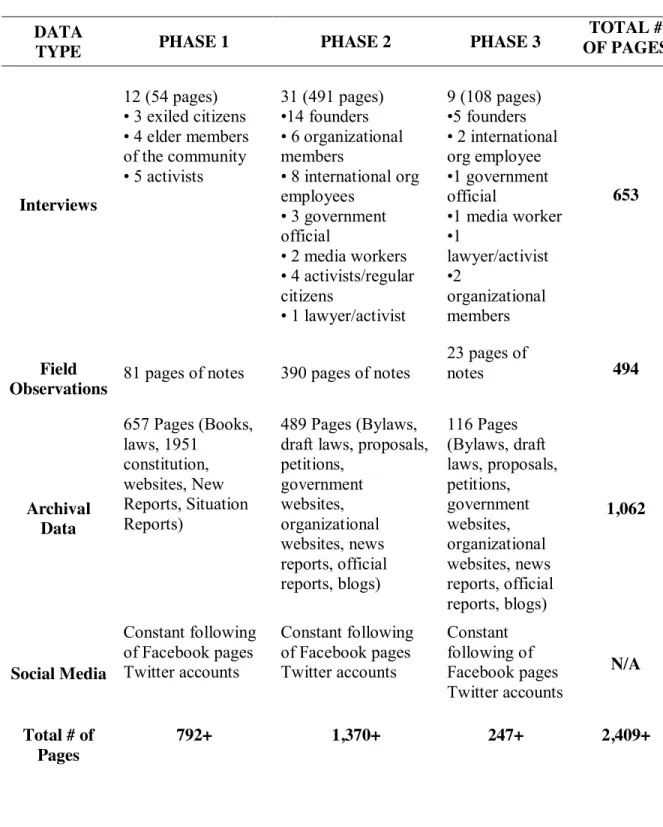
TABLE 2: Recent Grounded Theory Articles in Management Journals TABLE 3: Data Collection Phases and Subsequent Data
TABLE 4: Examples of Institutional Layers Missing in Libya’s Civil Society TABLE 5: Overview of “the 50”
TABLE 6: Overview of Institutional Building Blocks as Outcomes of Creative Translation TABLE 7: Civil Society Diamond for Libya
LIST OF FIGURES
FIGURE 1: Illustration of Civil Society Diamond
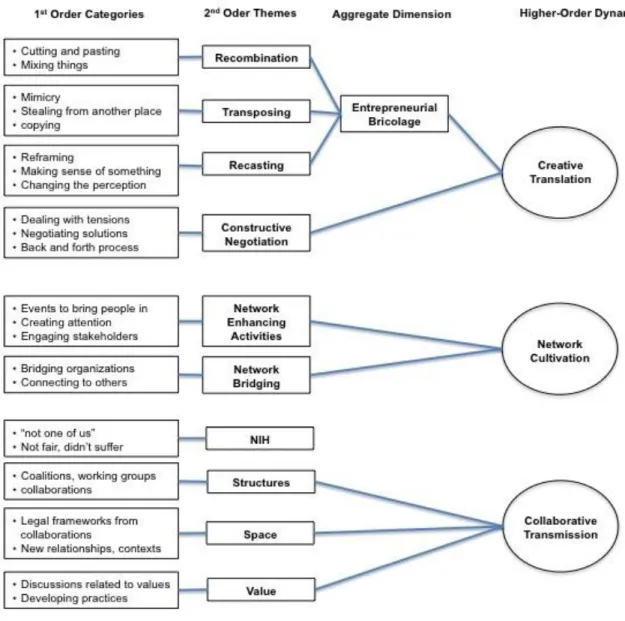
FIGURE 2: Radical Institutional Innovation: A Multi-level Process Framework FIGURE 3: Data Structure
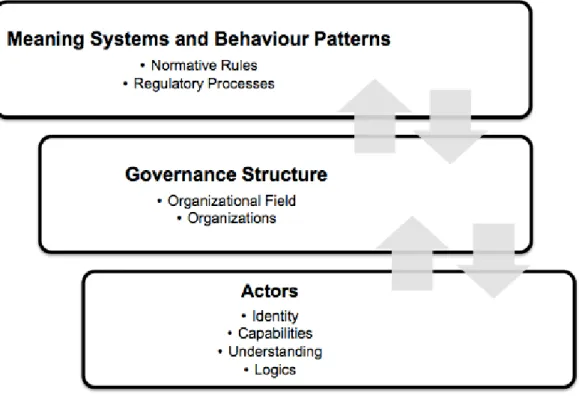
FIGURE 4: Layered Model of Institutions from Scott and Meyer (1994: 57)
FIGURE 5: Representative Headlines Focused on Emergence of Civil Society in Libya FIGURE 6: Creative Translation Dynamic
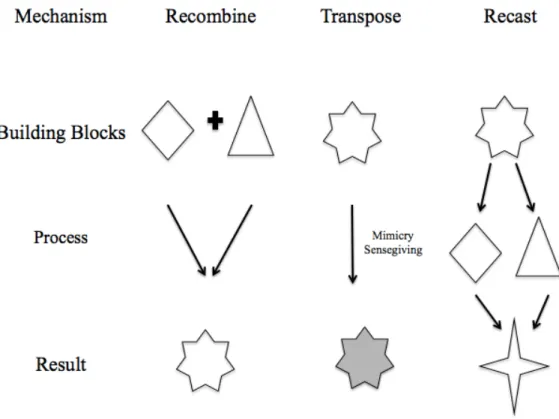
FIGURE 7: Differences in Bricolage Mechanisms
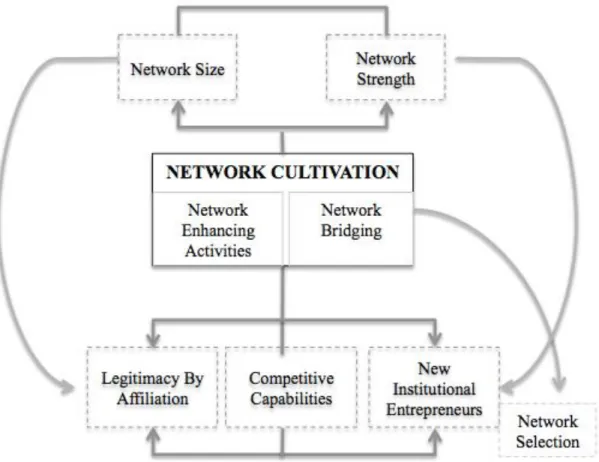
FIGURE 8: Facebook Post Discussion on Women’s Rights CSOs FIGURE 9: Network Cultivation Dynamic
FIGURE 10: Facebook post from the CLC – Meeting Names FIGURE 11: Facebook post from the CLC – Parliamentary Mention FIGURE 12: About Me Section of LFJL Website
FIGURE 13: Collaborative Transmission Dynamic
CHAPTER
1:
INTRODUCTION
This dissertation was motivated by a phenomenon. A phenomenon I saw. One I felt. A phenomenon that changed my life and continues to do so.
February 15, 2011. Fueled by the recent success of Tunisia and Egypt overthrowing their own dictators, protests against the Gaddafi regime emerged across Libya. By February 20, 233 deaths in Benghazi alone were reported by Human Rights Watch and videos had started to emerge showing Gaddafi forces and non-Libyan mercenaries using heavy artillery against civilians. War had broken out in Libya. By September 21, 2011, after seven months of fighting, Tripoli, the final city under regime control, was liberated. But the revolution had a heavy price. In the span of eight months over 30,000 Libyans had been killed, 20,000 injured, hundreds raped and thousands missing. During the war, over 400,000 civilians became displaced, including 55,000 left as refugees (UNHCR, 2011). A humanitarian disaster had unfolded.
Unlike other ‘Arab spring’ countries, such as Tunisia and Egypt, where even though there was authoritarian rule, opposition parties, civil society groups, and independent press existed, Libya was absent of such freedoms. Under the forty-two year authoritarian rule of Libyan leader Muammar Gaddafi, all institutions were government controlled, including all media, and non-government organizations. Civil society was non-existent. Gaddafi saw civil society as “a bourgeois culture and an imitation of the West that has no place here [in Libya]”1. But as the events of the revolution were unfolding, individuals, inside and outside Libya, were forming organizations, media channels, and setting up quasi-governments to deal with the crisis at hand. The first impromptu civil organizations had begun to appear, paving the way to the emergence of
civil society.
The unprecedented events following the start of the Libyan uprising provide a unique opportunity for research on organizational and institutional formation. The context represents an extreme case of institutional voids and the rapid creation of civil institutions, an extreme case of radical institutional innovation.
1.1 Theoretical Lens and Research Gap
Innovation, the “generation, development, and implementation of new ideas or behaviors” (Damanpour, 1991, p. 556) continues to be an important driver of competitive advantage, renewal, and social progress. Innovation ranges from minor changes to what already exists to breakthroughs in products, processes, business models, services or organizations, with unprecedented features or performance. It is a process for introducing the new, from ideation to dissemination. Research in this area continues to build our understanding of the various steps in this process. Most of the studies exploring innovation break down the process into two parts, generation, and outcomes. Innovation type, speed, radicalness and frequency are among dimensions of innovation outcome that are examined by innovation researchers, with type receiving the most attention. These include product innovation, service innovation, process innovation and business model innovation (Chesbrough, 2010; Daft 2001; Damanpour, 1991; Salunke, Weerawardena, McColl-Kennedy, 2013; Van de Ven, 1986). These outcomes are usually looked at from an organizational level of analysis with little research exploring macro level outcomes.
Additionally, innovation involves first an actor(s), either an individual, a team, or an organization, and second, the broader environment within which the actor(s) is embedded. The
actors and the environment they are embedded in, interact and affect one another continuously. Yet, innovation researchers tend to focus on one level of analysis, with little understanding of how variables at different levels of analysis influence each other (Anderson, Potocnik, & Zhou, 2014; Gupta, Tesluk, and Taylor, 2007). Innovation researchers are beginning to extend their work in search for a deeper understanding of theses multilevel dynamics of innovation (Anderson et al., 2014; Chen, Farh, Campbell-Bush, Wu, & Wu, 2013). Institutions are a nested system with various societal, field, organizational, and individual systems (Friedland & Alford, 1991; Thornton, 2002). Thus, multi-level processes are especially important for understanding institutional innovation. Although the outcomes are seen at the field level, the process to get there requires work at various levels. It is individuals or groups of individuals that see the need for innovation and champion the push to bring about change (Beckert, 1999).
If institutions are the level of analysis for institutional innovation, then we must have an understanding of institutions before we begin to conceptualize institutional innovation. However, there has been little connection between the innovation literature and institutional theory (Hargrave & Van de Ven, 2006; Munir & Phillips, 2005; Raffaelli & Glynn, 2015).
To deepen our understanding of institutional innovation, I bridge the innovation literature with the research in institutional theory and field emergence, a body of work that provides a more developed macro approach relevant to innovation at the institutional level.
Institutions emerge and evolve as products of social interaction. At times, they are the product of deliberate actions. Other times they arise by accident, as unintended byproducts of behaviours and logics that become routinized over time. Although researchers agree that institutions matter, there is still disagreement on how institutions are created and who are the critical actors involved. Research in the area of institutional field emergence tends to investigate
how fields are created, focusing on the role of institutional entrepreneurs in this process (David, Sine, & Haveman, 2013; Maguire, Hardy & Lawrence, 2004; Powell, White, Koput & Owen-Smith, 2005). However, much of the focus centers on the legitimization of new organizational forms, practices, and the conditions that create institutional entrepreneurs. This research primarily focuses on elaborating the characteristics of, and the conditions that, produce these actors. It is relatively silent about how they differ in various contexts (Lawrence & Suddaby, 2006; Maguire et al., 2004; Pacheco, York, Dean, & Sarsvathy, 2010). Less is known about the actions of those actors involved in field emergence (David et al., 2013). Thus, researchers have called for more empirical research into the relationship between field position and institutional entrepreneurship (Battilana, 2006; Greenwood & Suddaby, 2006; Wright & Zammuto, 2013). In addition, little work examines what types of resources are needed for these entrepreneurs to do their work, and how they gain access to these resources.
Also, notwithstanding the important recognition of previous work in this area, the literature has yet to give explicit and sufficient consideration to the emergence of institutions, especially in the context of institutional voids. More specifically, although a significant, and growing, stream of research focuses on how actors create, maintain, and disrupt institutions (e.g., DiMaggio, 1988; Oliver, 1991, 1992, Dacin, Goodstein & Scott, 2002; Lawrence & Suddaby, 2006; Greenwood, Oliver, Sahlin, & Suddaby, 2008; Wright & Zammuto, 2013), this research tends to elucidate micro fields, such as management consulting (Greedwood & Suddaby, 2006) and HIV treatment advocacy (Maguire et al., 2004) versus more macro or societal level innovation. A review on the work looking at institutional entrepreneurship by Pacheco, York, Dean, and Sarasvathy (2010) suggests that there needs to be an expansion of the types of institutions that are typically studied and the evolution of these institutions.
Finally, organizations typically existed before field emergence, thus much of the focus in the field emergence literature is on institutionalization of a field (Philips, Lawrence, & Hardy, 2000; Lawrence, Hardy, & Phillips, 2002; Dorado, 2013), and not particularly in the birth of new fields and the process to get to institutionalization. Consequently, significant questions regarding the origin and evolution of institutions are left partially unaddressed.
Furthermore, few empirical studies examine the interplay between more than two levels of analysis [see Wright and Zammuto (2013) for a recent exception]. Research looking at innovation at the institutional level has typically been seen as a macro process with change being initiated at the field-level. There is a neglect of bottom-up change with repeated appeals for scholars to give greater attention to the micro-processes of institutionalization (Smets, Morris, & Greenwood, 2012).
Finally, even when research does examine more than one level of analysis, the contexts chosen are typically more stable institutional fields (Purdy & Gray, 2009; Tracey, Phillips & Jarvis, 2011; Wright & Zammuto, 2013). Institutional innovation is a context dependent social process and therefore radical upheaval and transformation differs from changes in more developed and established institutional fields. Radical institutional innovation is the development of new institutions that transform the institutional field they are embedded in. In some contexts, like what was observed in Libya, radical institutional innovation creates a new institutional field. To understand how radical institutional innovation emerges, attention must also shift to the actors in the process. While some studies emphasize processes, there is little research on the detailed activities of institutional entrepreneurs and how these actors perform activities that lead to the rise and shift of institutions. Although there have been efforts to incorporate an increasing demand for strategic insight in neo-institutional theory (Beckert, 1999; David et al., 2013;
Fligstein, 1997), the focus has been mostly on power dynamics, and less so on the strategic actions these actors take. What is missing in the dialogue of institutional theory and entrepreneurship is the underlying phenomenon of strategic action in field emergence. Little is known about how individuals and organizations make strategic choices when confronting major institutional upheaval or large-scale institutional transitions. Finally, there is growing recognition that spatial systems connecting people and other institutions allow for positive interactions that result in successful knowledge transfer, creativity, and ultimately innovation outcomes (Fleming, Mingo & Chen, 2007; Hsu & Lim, 2013; Wang, 2014). Although these studies are not at the institutional level of analysis, they underscore the imperative role brokerage can play in innovation. A brokerage lens can bring valuable insight into the underlying processes of emergence in radical institutional innovation.
The assumption that innovation has many dimensions and cannot be treated equally in studies that treat innovation as a dependent variable, has fueled a great deal of research that explicitly defines the type of innovation within the innovation literature. However, little work has looked at innovation at the institutional level or taken a multi-level approach. Within institutional research, attention to institutional fields and their emergence has offered a better understanding of how fields evolve and the actors involved. However, a deeper understanding of strategic action, and how the processes and actors involve differ in various contexts is still required.
This dissertation begins to fill these gaps and heeds the call for “research on the different processes, antecedents, and micro and macro structures that generate collective action through which institutions are created and the causal mechanisms behind them” (Hargrave & Van de Ven, 2006, p. 866). More specifically, it seeks to answer the following questions:
• Who are the key actors that bring about radical institutional innovation?
• What characteristics do they hold that enables them to innovate in an institutional void? • How do they create radical institutional innovation?
1.2. Overview of the Methodology
I chose a grounded theory approach as an appropriate methodology for this study. This approach involves understanding prior research on the phenomenon under investigation and relevant concepts. Themes are abstracted and emerged from the data by making empirical observations in the field, and iteratively moving between data generation and data analysis. The ultimate goal of this type of approach is to organize and communicate the data through categories, typologies, or ultimately, new theory. This is appropriate as it allowed me to take note of existent themes and their limitations, to acknowledge recent developments in the field but also remain in close contact with the empirical phenomena while being theoretically flexible.
I employ qualitative research, as it is useful for building process theories because it is highly sensitive to the context and sequence of organizational events and actions with the ability to offer insight into complex social processes that quantitative data cannot easily reveal. More specifically, I use ethnographic methods and approaches to data collection and analysis by submerging myself in the field from the beginning of the phenomenon. I collected data using semi-structured interviews, participant observation, and archival data over a 2-year period to examine Libya’s rapid emergence of civil society after the fall of a dictator regime. This approach emphasizes the experiential, with an approach to knowledge that is both contextual and interpersonal thus allowing for data collection that takes into account the various forces and history surrounding the innovation.
1.3. Organization of the Dissertation
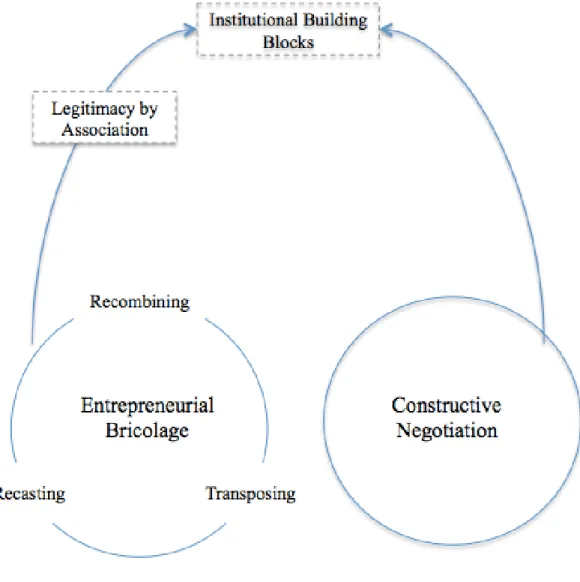
In chapter 2, I present a review of the relevant literature in innovation and institutional field emergence. I then present my conceptualization of institutional innovation by bridging work on technological innovation with institutional theory. Here I introduce and elaborate on the concept of radical institutional innovation. I then present my multi-level framework of radical institutional innovation that I developed to guide my research going into the field. Following this, chapter 3 details the ethnographic methodology used. I articulate the rationale for the choice of methodology and case study site. In Chapter 4, I introduce the resulting framework and explicate the antecedents of radical institutional innovation and the characteristics of the actors that were found to instigate the process. As a result of my data collection, the focus of this dissertation became a specific type of actors, whom I label institutional brokers. Chapters 5, 6, and 7 describe the three dynamics uncovered in the process – creative translation, network cultivation and collaborative transmission. Next, Chapter 8 integrates these three dynamics in a multilevel process framework. Finally, Chapter 9 offers a discussion of the findings and their implication for research in the area of innovation and institutional theory, and practice. I conclude with limitations and directions for future research.
CHAPTER
2:
THEORETICAL
MOTIVATION
AND
LITERATURE
REVIEW
This dissertation is grounded in two different streams of research; innovation and institutional theory. Since this study follows a grounded theory approach, I entered into the field with a general research question asking, “How does radical institutional innovation emerge?”
I start my literature review with a brief overview of civil society, how it is defined and its relationship to institutional innovation elucidating key elements that make up the civil society field. Following this, my literature review reflects my grounded theory approach examining institutional theory and innovation broadly first. I then bridge these two streams to develop the concept of institutional innovation. My underlying premise is that both the innovation and institutional theory literature are speaking past each other, however there is much that can be learned by bridging these two areas of work together. Finally, I present the process framework going into this research based on the extant research.
2.1. Civil Society
Civil society can be defined in many ways. I utilize the commonly used and broad definition proposed by Helmut Anheier;; “civil society is the arena outside family, government, and market where people voluntarily associate to advance common interests based on civility” (Anheier, 2008). This definition encompasses a vast array of organizations, both formal and informal, and includes; interest groups, cultural organizations, civic and developmental associations, issue-oriented movements, media organizations, and the social relations of mutual respect. Sievers (2010) proposes seven core concepts as the constitutive elements of a definition of civil society. These concepts frequently appear in the large body of civil society literature, and
incorporate the essential institutional and normative factors present that create the social framework needed for civil society to flourish (Sievers, 2010). Philanthropic organizations, legal frameworks, nonprofit and voluntary organizations, and a system of free expression reflect institutional structures. The other three, commitments to the common good, to individual rights, and to tolerance, reflect social norms. The elements that constitute the structure of civil society are the primary vehicles outside the state through which citizens interact and collaborate to achieve common purposes. The three normative elements are the values animating these institutions. Sievers (2010) argues that these elements are “constitutive and interactive components that together create the necessary and sufficient conditions for the successful functioning of modern civil society. They are mutually supportive and interdependent” (Sievers, 2010; 7). More recently, Anheier (2013) introduced a Civil Society Diamond (CSD) as a basic system to present and analyze the major contours of civil society in a systematic way. The framework is based on four dimensions, and when relative indicators are generated for each scale of the dimensions, a diamond is formed. Figure 1 provides an illustration of the CSD.
FIGURE 1: Illustration of Civil Society Diamond
The four dimensions include: structure, which describes the make-up of civil society, space, which looks at what legal and cultural climate civil society operates in, the values dimension refers to what values civil society represents and advocates, and finally, the impact dimension looks at what are the contributions of civil society. Table 1 provides an overview of these four dimensions incorporating the seven elements put forward by Sievers. This framework provides a backbone that facilitates understanding the context of this study and the outcomes of institutional innovation in the Libya context.
TABLE 1: Civil Society Diamond Overview2
Dimension Key Question Elements Example
Indicators Structure How large is civil society in
terms of institutions,
organizations, networks and individuals; what are its component parts; and what resources does it command?
Philanthropic organizations, nonprofit and voluntary organizations, and a system of free expression Number of organizations, memberships, share of philanthropic giving,
Space What is the legal and political space within the larger regulatory environment in which civil society operates; and what laws and policies enable or inhibit its
development? Governance and regulatory systems, legal frameworks Degree of enablement provided by regulatory environment
Values What values underlie civil society; what values, norms and attitudes does it represent and propagate; how inclusive and exclusive are they; and what areas of consensus and dissent emerge?
Commitments to the common good, to individual rights, and to tolerance Democratic inclusion (e.g. human rights values; democratic attitudes
Impact What is the contribution of civil society to specific social, economic and political
problems? Development and achievements Efficiency and effectiveness of the operations of civil society organizations, and
Although the CSD has its own major conceptual and methodological issues3, it provides a core set of characteristics and dimensions to describe the state of civil society in a given context.
Furthermore, these dimensions do not operate in isolation. Although civil society is referred to as the third sector, acting autonomously from the state and private businesses, there is an inherent tension present between the relationships of civil society and these other sectors. For example, even though civil society is considered to be separate from the state, it is regulated by it. The state is involved in shaping civil society organizations by means of financial instruments, accountability procedures, and performance management. Accordingly, civil society provides an enabling framework for democracy and state building. Similarly, the private sector is many times financiers of civil society organizations, while at the same time, civil society can shape the business landscape. One only needs to look at the sustainability movement and its affect on private businesses to see how important this relationship is. Sievers (2010; 2) writes:
“While civil society provides an enabling framework for democracy, at the same time it contains an intrinsic tension, a fragile balance between private and public interests. Maintaining this balance is essential to finding solutions to vital challenges in modern democracies that demand public resolution, challenges such as environmental degradation, deficient educational systems, ethnic and religious strife, and deterioration of public decision-making processes”.
This brief overview of civil society provides a context for this study and consequently, a springboard for the literature review. The rapid emergence of civil society institutions in Libya is a form of radical institutional innovation. In the following sections, I conceptualize institutional innovation. I begin by exploring previous thinking on the concept and then discuss two separate areas of very relevant research; innovation and institutional theory that provide the necessary basis for an understanding of institutional innovation.
3Some of these challenges include applicability across countries that may differ in terms of culture, economy, and
politics. And technical challenges in terms of data coverage, availability and measurement. Thus, the CSD should be considered a basic framework that continues to evolve and develop. However, it serves a vital starting point in
2.2 Innovation and Institutions
It is hard to imagine any issue more central to society than innovation (Drucker, 2006; Gupta et al., 2007; Schumpeter, 1942; Van de Ven, 1986). It is essential for society as a whole, and for all the subsystems that compromise it, including individuals, organizations, industries, institutions, and countries. It is the primary determinant of success, consumer welfare, and vital for evolutionary and revolutionary adaptation. For the purpose of this dissertation research, I view innovation consistent with Van de Ven (1986: 592) that “as long as the idea is perceived as new to the people involved, it is an innovation, even though it may appear to others to be an imitation of something that exists elsewhere”.
The rapid growth of research in this area has led to an abundance of findings regarding the facilitators, inhibitors, and the process of innovation. Despite the magnitude of research in this area and the importance of the topic, no dominant theoretical perspective has emerged to integrate theses multiple streams of innovation research (Drazin & Schoonhoven, 1996; Greve, 2003). What can be agreed on is that innovation is a multi-level phenomenon that involves actors at the individual, team, and organizational level, and an environment within which the actors are embedded in.
Institutional theory provides an anchoring theory and a useful lens to begin to understand and conceptualize how those levels interact and the role of context in the process when outcomes are seen at the institutional level. I first present an overview of institutional theory and relevant concepts before introducing the current conceptualizations of institutional innovation. Finally, I return to the innovation literature to discuss two premises of that work that are important in building a better understanding of radical institutional innovation. I then present the framework developed before going into the field.
2.2.1 Institutional Theory
There is a vast array of research stemming from institutional theory. These include studies on institutional change, institutional entrepreneurship, institutional fields, and institutional work amongst others. For the purpose of this dissertation, I present a brief overview of institutional theory and its evolution and then focus on institutional fields and institutional work.
Evolution of Institutional Theory
The literature on institutionalism suggests that the definition of an institution differs significantly depending on the author, the area of research, and sometimes even the context. The concept lacks coherence due to many approaches to institutionalism that are “united by little but a common skepticism toward atomistic accounts of social processes and a convention that institutional arrangements and social processes matter” (DiMaggio & Powell, 1991:3). In this thesis I follow North’s (1990) description, describing institutions as consisting of both informal constraints (e.g. norms of behavior, conventions, and self-imposed codes of conduct) and formal constraints (e.g. rules, laws, constitutions) and their enforcement properties. Based on this definition, institutions possess a number of features. First, they are “constructs of human mind” (North, 1994) and “products of human interaction” (Scott, 2001). Institutions in this view are evolving, stemming from human beings as the agents of a collective and evolutionary dimension of action. Second, institutions guide and govern human behavior in decision-making and interactions within society (North, 1990). Institutions create expectations that determine appropriate behavior (Meyer & Rowan, 1991) by defining what is appropriate and rendering other actions unacceptable (DiMaggio & Powell, 1991).
Scott (2001) formulates three forces that shape these behaviors; regulatory, cognitive and normative. Regulatory forces represent the laws and regulations that individuals and organizations must comply with. These are the conscious aspect of institutions. Cognitive forces stem from individual underlying beliefs, knowledge and skills. Normative forces are based on social obligations to comply that are rooted in social, professional and organizational interactions.
North (1993) describes institutions as “rules of the game” and organizations as “the players”. Organizations exist to secure and advance the interests of their members within the existing institutional framework, while constantly seeking to influence that framework so that they may achieve greater advantages and benefits (Scott, 2001). Thus, the intimate and dynamic relationship and interaction between institutions and organizations determines the terms of exchange and access to resources in a market, sector, and society as a whole.
The interplay of actors, agency, and institutions plays a dominant role in institutional research. Studies in this area began with neo-institutional writing focusing on cultural processes through which institutions affected organizational practices and structures (Hinings & Greenwood, 1988; Meyer & Rowan, 1977), which led to looking at patterns of isomorphism within fields of activity (DiMaggio & Powell, 1983). This early work was subsequently criticized for the lack of incorporations of agency into institutional theory and how actors can pursue their interests in the face of institutions, also referred to as the paradox of embedded agency (Holm, 1995;; Seo & Creed, 2002). Oliver’s seminal work (1991) offers an approach to this problem by combining strategic approaches with new institutionalism to analyze how actors develop specific strategies depending on their institutional environment. Others called for the incorporation of agency into institutional theory (Beckert, 1999; Hirsch, 1997; Hirsch & Lounsbury, 1997). Subsequent research started to focus on how actors affect institutional
arrangements (Greenwood & Suddaby, 2006; Lawrence & Suddaby, 2006; Suddaby & Greenwood, 2005). This work centers on institutional entrepreneurs, actors who have an interest in particular institutional arrangements and who mobilize resources to create new institutions or transform existing ones (DiMaggio, 1988; Lounsbury, Ventresca, & Hirsch, 2003; Rao, Morrill, & Zald, 2000; Thornton & Ocasio, 2008). These agents can be either organizations or groups of organizations (e.g. Garud, Jain & Kumaraswamy, 2002; Greenwood, Suddaby, & Hinings, 2002) or individuals or groups of individuals (e.g. Fligstein, 1997; Maguire et al., 2004) or institutions (Zilber, 2007). Much of the focus of these studies is on how these actors legitimate the formation of new organizations, industry sectors, and institutional fields (Lounsbury & Glynn, 2001).
Institutional Fields
Institutional fields are “a recognized area of institutional life” (DiMaggio & Powell, 1983: 148) in which “participants interact with one another more frequently and fatefully than with actors outside the field” (Scott, 2001: 56). More recently, scholars have expanded to a broader definition of a field, defining it as: “two constitutive elements: a set of institutions, including practices, understandings, and rules;; and, a network of organizations” (Lawrence & Phillips, 2004: 692). They are comprised of three key components: structured positions that are occupied by actors that make up the field (Maguire et al., 2004), understandings and meaning systems (Scott, 2001), and formal rules such as laws or professional standards that organizations must conform to (Greenwood & Suddaby, 2006; Maguire & Hardy, 2009).
The conceptualization of civil society embodies these institutional elements and forces. There are networks of non-profit and philanthropic organizations and individuals actively participating in this sector. There are meaning systems and understandings that encompass individual rights, the common good, and tolerance. Finally, there are also regulatory frameworks
governing civil society organizations including laws associated with the rules of funding, lobbying, and assembly. Therefore, the creation of fields is of particular importance for this research.
Researchers continue to explore how new fields are created. Prior research suggests that field emergence occurs through a process of isomorphism that is a result of interconnected and interdependent organizations (Dacin, 1997; DiMaggio & Powell, 1983; Greenwood & Hinings, 1988; Tolbert & Zucker, 1983). Fields are said to arise from structures of existing fields and are legitimized through the actions of actors in the field (Baron, Dobbin & Jennings, 1986; Tolbert & zucker, 1983). Fligstein (2001) argued that external environmental shocks give rise to significant institutional changes that are the main driver of field creation. Fields develop through network relationships (Galaskiewicz & Waserman, 1989, Lawrence & Phillips, 2004), conflict (Purdy & Gray, 2009), and the diffusion of shared understandings, beliefs and norms. These patterns of social action produce, reproduce, and transform the institutions and networks that constitute it (Lawrence & Phillips, 2004; Maguire et al., 2004). This process can be strategic as various groups seek to establish new fields (Beckert, 1999; Maguire et al., 2004; Perkmann & Spicer, 2007). Social movement theory emphasizes how new fields are created by mobilizing resources (e.g. McCarthy & Zald, 1987) and framing issues strategically to motivate and legitimate activities (Creed, Scully & Austin, 2002; Lounsbury et al., 2003). However, although these studies have provided explanations of how new fields are established, they do not provide a complete understanding of how fields actually form (Levy & Scully, 2007; van Bommel & Spicer, 2011).
2.3. Institutional Innovation
Where institutional theory explains homogeneity, innovation is a means of introducing heterogeneity. Attempts to develop an understanding of institutional innovation are limited. The concept has been used in some prior work on institutional change (for example Hargrave & Van de Ven, 2006; Rao & Giorgi, 2006), however there has been little connection between the innovation literature and institutional theory and scant conceptualization of the term (Hargrave & Van de Ven, 2006; Munir & Phillips, 2005). While some studies use the term institutional innovation interchangeably with institutional change (for example, Ruttan, 1984), Hargrave and Van de Ven (2006) offer a definition that distinguishes institutional innovation from institutional change. However, they do not elaborating on the actual dimensions that separate the two descriptions, arguing that change versus innovation is based on magnitude of divergence in a period of time;
We define institutional change as a difference in form, quality, or state over time in an institution. Change in an institutional arrangement can be determined by observing the arrangement at two or more points in time on a set of dimensions (e.g., frames, norms, or rules) and then calculating the differences over time in these dimensions. If there is a noticeable difference, we can say that the institution has changed. If the change is a novel or unprecedented departure from the past, then it represents an institutional innovation (Hargrave & Van de Ven, 2006: 866).
Recently, Raffaelli and Glynn (2015) argue that institutional innovation is located at the intersection of three dimensions: novelty, usefulness, and legitimacy. This is similar to other types of innovation in that innovation is typically conceptualized as new and useful. However, it differs in that they argue that legitimacy is essential to institutional innovation. They also broaden the concept to the field level. More specifically, Raffaelli and Glynn (2015) suggest that
institutional innovation is the “novel, useful and legitimate change that disrupts the cognitive, normative or regulative mainstays of an institutional field” (pp. 408).
Legitimacy is an important dimension in institutional innovation as “the creation, transformation, and diffusion of institutions require legitimacy, a condition whereby other alternatives are seen as less appropriate, desirable, or viable” (Dacin et al., 2002: 47). This is seen in Hargadon and Douglas’ (2001) study of Edison’s innovation factory where the authors illustrate how Edison’s innovation of electricity succeeded, in part, because he embedded it in familiar and legitimate systems. Other work in the entrepreneurship literature (for example Lounsbury & Glynn, 2001; Navis, & Glynn, 2010) recognizes how the institutional context binds entrepreneurial innovations as they cast them as being legitimate. A further contribution of Raffaelli and Glynn’s (2015) work is that it bridges institutional and innovation constructs. Raffaelli and Glynn’s work is useful for conceptualizing institutional innovation. Yet, how institutional innovation emerges and is legitimized has yet to be explored. Furthermore, there is the assumption that there are cognitive, normative and regulative forces already present for this process to take place. This overlooks contexts where institutional innovation is arising and being formed. There is still much to learn about how institutional innovation happens. Research stemming from past innovation research can help inform our understanding of institutional innovation.
2.3.1 Innovation – Process and Outcome
The fundamental outcome of innovation is the creation of something new. However, it is also a process. Decades of work have focused on building a better understanding of the process and outcomes of innovation. From this research, there are two key insights that are especially
relevant in understanding institutional innovation and help shed light on how radical institutional innovation emerges and evolves. The first insight comes from understanding the process of innovation. Although there is no definitive process of innovation, recombination is typically at the heart of innovation. Essentially, innovation is a process of recombining resources, whether that is technologies, business units, ideas, or business model with new things emerging by recombining what already exists in novel and unique ways. The second premise is based on the outcome of the innovation. Here, two broad forms of innovation, incremental and radical innovation, are generally recognized and used in innovation studies with researchers arguing that the processes, antecedents, and capabilities required differ depending on the type of innovation outcome (Damanpour, 1991; van Dijk, Berends, Jelinek, Romme & Weggeman, 2011). I now review these two insights and how they can inform our understanding of institutional innovation.
Types of Innovation
Innovation scholars tend to distinguish between incremental and radical innovation (Gopalakrishnan & Damanpour, 1997). Incremental innovations are typically extensions to current product offerings or logical and relatively minor extensions to existing processes (Benner and Tushman, 2003; Gatignon, Tushman, Smith, & Anderson 2002; Jansen, Bosch, & Volberda, 2006). They have minor impacts on existing products and services in the market. The strategic focus in incremental innovation rests on improving and expanding current products and services in a market within a short time (Abernathy & Clark, 1993; Ettlie, Bridges, & O'Keefe, 1984; Taylor & Greve, 2006). It requires the ability to reinforce and take advantage of existing knowledge resources (Danneels, 2002; Subramaniam & Youndt, 2005). Outputs of incremental innovations are slight variations of existing products, services, practices or approaches (Damanpour, 1991).
Radical innovation is referred to as ‘revolutionary’, ‘disruptive’, ‘discontinuous’, or ‘break- through’ (Freeman, 1974;; Garcia & Calantone, 2002; Tushman & Anderson, 1986). Radical innovation differs in that it seeks to meet the needs of emerging customers or markets (Benner & Tushman, 2003; Jansen et al., 2006) and involves the development or application of significantly new technologies or ideas into new markets or require dramatic behavioral changes to existing markets. These technologies then provide the foundation upon which future generations of products are manufactured. The magnitude of change for radical innovations is larger than incremental innovations and is based more on long-term strategy, where organizations attempt to disrupt the prevailing technological trajectory and create new designs, technologies, and distribution channels for new markets (Abernathy & Clark, 1993; Ettlie et al., 1984; Gatignon et al., 2002). Thus, radical innovation builds on knowledge resources that a firm does not yet have or that differs from existing resources (Danneels, 2002). It is more strategic in nature. In this case, exploratory learning becomes critical in that the firm needs to search a wide range of available knowledge to expand existing knowledge domains to novel or unfamiliar areas (Kang & Snell, 2009; Katila & Ahuja, 2002). These innovations have the ability to make prevailing technologies obsolete by transforming the old knowledge into new knowledge, thereby producing fundamental changes in an organization (Damanpour, 1991; Subramamiam & Youndt, 2005).
If we extend the idea of radical innovation to the institutional level, radical institutional innovation would involve the creation and design of institutions in a field where little or no institutions exist. It most likely occurs when new problems arise and there is no ‘focal’ institution readily available for selection or modification (Rittberger, 2012). A profound crisis or ‘substantial gap in the institutional status quo’ has likely occurred. The process is typically risky
and costly for the actors involved with the implications of the process often unclear. From a normative perspective, actors involved in radical institutional innovation tend to engage in deliberative and argumentative processes over the right and legitimate institutional order to govern a problem or solve a particular crisis (Blyth, 2002). Thus this process is highly creative.
If we extend this dichotomy of types of innovation and the use of ‘radical’ and ‘incremental’ to the institutional level, we can define incremental institutional innovation as occurring when and where there are existing institutions that do not satisfactorily address problems at hand due to them being ineffective or inappropriate in carrying out the designated actions. This process is situated in a more stable normative environment where standards of legitimacy already exist (Rittberger, 2012). In contrast, radical institutional innovation is defined as the development of new institutions that transform the institutional field they are embedded in or create new institutional fields.
Innovation as Recombination
Research on innovation has long sought to determine the sources of innovative breakthroughs. This concept dates back to Schumpeter’s (1942) perspective on innovation and creativity and was further emphasized by evolutionary economics (Nelson & Winter, 1982) and the knowledge-based view of the firm (Grant, 1996; Kogut & Zander, 1992). In much of this work the process of recombination is a primary driver of innovation (Henderson & Clark, 1990; Kogut & Zander, 1992; Nelson & Winter, 1982; Schumpeter, 1934). As Nelson and Winter (1982: 130) state: “the creation of any sort of novelty in art, science, or practical life-consists to a substantial extent of a recombination of conceptual and physical materials that were previously in existence”.
Research examining various new innovations, such as the making of the PCR technology (Rabinow, 1996), Henry Ford’s production line (Hounshell, 1984), much of Edison’s work (Hargadon, 2003), and the success of the product design company IDEO (Hargadon & Sutton, 1997) demonstrate that the processes of recombining existing elements are fundamental to explaining many successful innovative outcomes (Senyard et al., 2014). Much of this research draws from a ‘tension’ view of the relationship between knowledge and creativity (Weisberg, 1999). Here, deep knowledge in one domain is said to dampen creativity by entrenching individuals into one way of thinking. Recombination of different kinds of knowledge breaks these bonds to produce novel solutions (Ahuja & Lampert, 2001). On the other hand, a less tested theory of creativity comes from the ‘foundational view’ (Weisberg, 1999;; Taylor & Greve, 2006). This view suggests that in order to break out of existing constraints and advance a field beyond its current state, one needs to have a deep understanding of a particular area first. Therefore, recombination can be detrimental as the recombiner is combining elements without full understanding of what is being recombined (Kaplan & Vakili, 2014).
Regardless, recombination is inarguably at the heart of creativity, organizational success and economic growth (Hargadon, 2003;; Hargadon & Sutton, 1997;; Murray & O’Mahony, 2007). Although the importance of cumulative innovation is clear, we still do not fully understand the conditions that shape an innovator’s ability to build on the work of others. Furthermore, attempts to understand the sources of innovation have been frustrated by a lack of understanding of the process by which inventors create new innovations (Fleming, 2001, Kaplan & Vakili, 2014).
The process of radical institutional innovation versus incremental institutional innovation highlights different implications for the normative component of institutions. In radical institutional innovation, actors tend to engage in deliberative and argumentative processes over
the ‘right’ and ‘legitimate’ institutional order to govern a problem or solve a particular crisis (Blyth, 2002)4. Therefore this process is more creative and deliberate as actors attempt to define what constitutes as legitimate solutions to the problem(s) at hand. This requires a great deal of resources and creativity in recombination as actors struggle to make dramatic changes to institutional logics. Institutional logics are the organizing templates that govern institutional fields, defining appropriate means and ends, providing motivation and identity to individuals (Battilana, Leca, & Boxenbaum, 2009; Friedland & Alford, 1991; Thornton, 2002). This radical innovation process likely requires various actors from proximate fields to help bridge the gap in knowledge and to recombine this knowledge creatively to address the void that is present.
This section integrates and bridges literature on institutions and innovation to develop the concept of institutional innovation, both radical and incremental. In the next section, based on this foundation, a framework delineating the dynamics of radical institutional innovation is offered.
2.4. The Dynamics of Radical Institutional Innovation
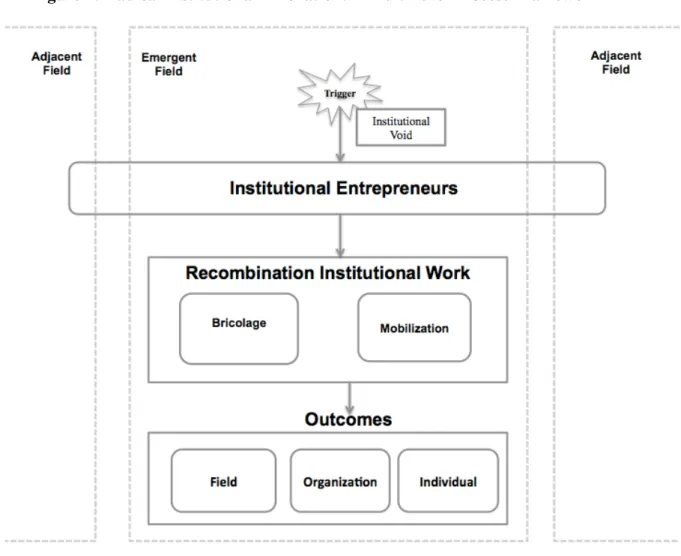
The conceptual framework presented in Figure 2 delineates the dynamics of radical institutional innovation developed based on the literature review before entering the field and collecting data. This framework weaves together the foundation established earlier in this chapter and provided a conceptual backdrop and springboard for the dissertation research.
Figure 2: Radical Institutional Innovation: A Multi-level Process Framework
2.4.1. Triggers of Radical Institutional Innovation
What leads to radical institutional innovation? Why does it happen? Simply stated, this dissertation proposes that radical institutional innovation occurs in response to a major environmental change or exogenous shock (Fligstein, 1997; Hoffman, 1999), and can be exaggerated in the presence of institutional voids.
I propose that field level conditions initiate the institutional innovation process. Field level conditions include jolts and crises that occur from social upheaval, technological disruption,
competitive discontinuity and regulatory changes that disrupt current logics in the field and introduce new ideas (Child & Tsai, 2005; Fligstein, 1997, 2001; Greenwood et al., 2002; Holm, 1995). When actors decide to engage in radical institutional innovation it often reflects a profound crisis or substantial gap in the institutional status quo, where any existing or relevant institutions are not adequate to deal with the crisis event at hand.
One possible field-level condition that enables radical innovation as shown in Figure 2 is the presence of institutional voids, a term originally coined by Khanna and Palepu (1997) to account for the macro-level “absence of specialized intermediaries, regulatory systems, and contract-enforcing mechanisms” (Palepu, Khanna & Sinha, 2005: 63). The term institutional void is used by scholars from different streams of research, particularly in the political sciences and sociology literature, which focus on how institutional voids hamper market development (Polanyi, 1944; Woodruff, 1999), in economics where researchers elaborate on how institutional voids prevent the efficient functioning of markets (Khanna & Palepu, 2000), and in entrepreneurship where researchers explore how actors maneuver around voids to develop their ventures (Luo & Chung, 2013; Marti & Mair, 2009). Marti and Mair (2009) examine the role of institutional entrepreneurs in the context of institutional voids and described institutional voids as “situations where institutional arrangements that support markets are absent, weak, or fail to accomplish the role expected by them (Mair & Marti, 2009: 419). The presence of voids can exaggerate shocks in the institutional environment as the lack of institutions to deal with problems and situations that come about due to these shocks creates a sudden demand for institutional innovation.
2.4.2. Institutional Entrepreneurs and their Social Position
Institutional innovation can be seen as a collective action process (Hargrave & Van de Ven, 2006). In this vein, the actors involved can include individuals or groups of individuals (Fligstein, 1997; Maguire et al., 2004), organizations or groups of organizations (Garud et al., 2002; Greenwood et al., 2002), or other institutions (Zilber, 2002). Their social position mediates their relation to the environment in which they are embedded (Emirbayer, 1997; Emirbayer & Mische, 1998) as it affects the perception of a field (Bourdieu, 1977) and their access to the resources needed to engage in institutional innovation (Battilana et al., 2009). Literature exploring the role of social positions in changing institutional arrangements finds conflicting results, where some studies suggest that organizations and individuals located in the periphery of a field, as shown in Figure 2, are more likely to act as institutional entrepreneurs (e.g. Garud et al., 2002; Kraatz & Zajac, 1996; Leblebici, Salancik, Copay & King, 1991; Wright & Zammuto, 2013), other studies find that those in the center of a field are more likely to act as institutional entrepreneurs (e.g. Greenwood & Suddaby, 2006; Greenwood et al., 2002). Battilana, Leca, and Boxenbaum (2009) argue that the observed variance seen may be due to differences in field characteristics such as the level of heterogeneity and institutionalization or due to differences in the type of change.
Building on this, I argue that an institutional entrepreneur’s position, or the type of institutional entrepreneur involved in the innovation process, also depends on whether it is incremental or radical institutional innovation that is taking place. More specifically, radical institutional innovation requires actors within the institutional field and those outside the institutional field. This allows for more unique combinations of resources that can be used to build the institutional field.
Research also indicates that the ability of institutional entrepreneurs to act is dependent on their willingness to act and their access to enough resources to do so. According to Bourdieu (1990), the social position of an actor determines their perception of the field, their views about the field, and the stand they take to maintain the status quo of the field. Therefore, the willingness of an agent to transform a field is dependent on their social position within that field. Recent work has explored how an individuals’ or organizations’ social position affects the likelihood for them to act as institutional entrepreneurs. For example, Dorado (2005) argues that the likelihood of an actor to behave as an institutional entrepreneur is dependent on the actors perception of the field, which is affected by the their social position in their social network. Similarly, Maguire, Hardy and Lawrence’s (2004) study on HIV/AIDS treatment advocacy in Canada suggests that the formal position of actors provides them with legitimacy in the eyes of stakeholders, and enables them to access various resources. Wright and Zammuto (2013) look at how actors situated in mature fields use their field positions to create opportunities for institutional entrepreneurship. They find that these actors leverage the resources (knowledge corridors, formal authority, social ties, and discursive resources) that accompany their position, and tactics to deploy these resources. These tactics include agenda setting, construction of narratives, empirical verification and entrepreneurial bricolage.
Just as technological innovation requires the recombining of previous innovations, institutional innovation can be seen as a combination of prior, or already present, institutions and institutional elements (Greenwood & Hinings, 1996; Hinings & Greenwood, 1988; Rojas, 2010). In a context of institutional voids these elements of recombining need to come from outside that field. To do this, institutional entrepreneurs located outside the field periphery must be involved. However, these actors lack legitimacy in the field. Thus, actors already in the field play a
bridging role to work with external actors to introduce innovation (Westley & Vredenburg, 1991). Both these groups are connected to already existing institutions and institutional frameworks that interact with both individuals and organizations (North, 1990; Powell & DiMaggio, 1991; Scott, 2001). Actors involved in any institutional innovation process are inherently affected by the formal and informal constraints of institutional frameworks they already belong to (North, 1990; Oliver, 1991; Peng & Heath, 1996). Organization members become institutional carriers by constructing social structures, enacting routines, and interpreting norms (Zilber, 2002). Due to the presence of institutional voids, these structures, routines, and norms are some of the possible elements actors may bring in to the emerging field.
2.4.3. Recombination Institutional Work
Institutional work describes “the purposive action of individuals and organizations aimed at creating, maintaining and disrupting institutions” (Lawrence & Suddaby, 2006: 215). Institutional work shifts the focus to understanding how action affects institutions and connects, bridges, and extends work on institutional entrepreneurship, institutional change and innovation (Lawrence et al., 2009). I incorporate institutional work into my framework because it highlights the more intentional and strategic actions taken by actors and thus avoids “depicting actors as ‘cultural dopes’ trapped by institutional arrangements, or as hyper-muscular institutional entrepreneurs” (Lawrence et al., 2009: 1). It provides a bottom-up approach to the creation of institutions (Zilber, 2013). Based on a comprehensive review of the literature, Lawrence and Suddaby (2006) present a description of nine forms of institutional work, they include; advocacy, defining, vesting, constructing identities, changing normative associations, constructing normative networks, mimicry, theorizing, and educating. Since then, a number of studies have produced other types of institutional work. For example, standardization work (Slager, Gond, &