University of Nebraska - Lincoln University of Nebraska - Lincoln
DigitalCommons@University of Nebraska - Lincoln
DigitalCommons@University of Nebraska - Lincoln
Public Access Theses and Dissertations fromthe College of Education and Human Sciences Education and Human Sciences, College of (CEHS)
4-2010
The Impact of Teaching Presence in Intensive Online Courses on
The Impact of Teaching Presence in Intensive Online Courses on
Perceived Learning and Sense of Community: A Mixed Methods
Perceived Learning and Sense of Community: A Mixed Methods
Study
Study
Elizabeth Laves
University of Nebraska - Lincoln, [email protected]
Follow this and additional works at: https://digitalcommons.unl.edu/cehsdiss
Part of the Educational Assessment, Evaluation, and Research Commons
Laves, Elizabeth, "The Impact of Teaching Presence in Intensive Online Courses on Perceived Learning and Sense of Community: A Mixed Methods Study" (2010). Public Access Theses and Dissertations from the College of Education and Human Sciences. 76.
https://digitalcommons.unl.edu/cehsdiss/76
This Article is brought to you for free and open access by the Education and Human Sciences, College of (CEHS) at DigitalCommons@University of Nebraska - Lincoln. It has been accepted for inclusion in Public Access Theses and Dissertations from the College of Education and Human Sciences by an authorized administrator of
1 THE IMPACT OF TEACHING PRESENCE IN INTENSIVE ONLINE COURSES ON
PERCEIVED LEARNING AND SENSE OF COMMUNITY: A MIXED METHODS STUDY By
Elizabeth Laves
A DISSERTATION
Presented to the Faculty of
The Graduate College at the University of Nebraska In Partial Fulfillment of Requirements For the Degree of Doctor of Education
Major: Interdepartmental Area of Educational Studies (Educational Leadership in Higher Education)
Under the Supervision of Professor Sheldon L. Stick
Lincoln, Nebraska May, 2010
1 THE IMPACT OF TEACHING PRESENCE IN INTENSIVE ONLINE COURSES ON
PERCEIVED LEARNING AND SENSE OF COMMUNITY: A MIXED METHODS STUDY Elizabeth Laves, Ed.D.
University of Nebraska, 2010 Advisor: Sheldon L. Stick
This mixed methods concurrent triangulation design study was predicated upon two models that advocated a connection between teaching presence and perceived learning: the Community of Inquiry Model of Online Learning developed by Garrison, Anderson, and Archer (2000); and the Online Interaction Learning Model by Benbunan-Fich, Hiltz, and Harasim (2005). The objective was to learn how teaching presence impacted students’ perceptions of learning and sense of community in intensive online distance education courses developed and taught by instructors at a regional comprehensive university.
In the quantitative phase online surveys collected relevant data from participating students (N = 397) and selected instructional faculty (N = 32) during the second week of a three-week Winter Term. Student information included: demographics such as age, gender,
employment status, and distance from campus; perceptions of teaching presence; sense of community; perceived learning; course length; and course type. The students claimed having positive relationships between teaching presence, perceived learning, and sense of community. The instructors showed similar positive relationships with no significant differences when the student and instructor data were compared. The qualitative phase consisted of interviews with 12 instructors who had completed the online survey and replied to all of the open-response
questions.
The two phases were integrated using a matrix generation, and the analysis allowed for conclusions regarding teaching presence, perceived learning, and sense of community. The findings were equivocal with regard to satisfaction with course length and the relative importance
2 of the teaching presence components. A model was provided depicting relationships between and
among teaching presence components, perceived learning, and sense of community in intensive online courses.
iv
iv
TABLE OF CONTENTS
CHAPTER 1: INTRODUCTION……….……….……... 1
Context of the Problem…………..……….. 1
Background……….. 1
Community of Inquiry Model……….. 6
Remedy for Deficiencies in Prior Research……….……… 9
Target Audience……….... 10
Research Questions……….………... 11
Definition of Terms………... 12
Delimitations………...…….. 15
Limitations………. 15
Significance of the Study………... 16
CHAPTER 2: REVIEW OF LITERATURE………... 18
Contributing Factors to Student Satisfaction and Learning in Intensive Courses….………...…..18 Student Characteristics………. 18 Interaction………. 28 Student-student interaction……….. 29 Student-instructor interaction……….. 33 Student-content interaction……….. 37
Contributing Factors to Student Satisfaction and Learning in Online Distance Education Courses……….………... 41
Student Characteristics………. 46
Interaction……… .50
Student-student interaction……….. 50
Student-instructor interaction……….. 56
Student-content interaction……….. 59
Models of Student Success in Online Learning………. 60
Community of Inquiry Model………..……… 60
Cognitive presence……….. 61
Social presence……… 63
Teaching presence………..………… 67
Online Interaction Learning Model………..………… 71
Studies of student satisfaction and perceived learning in online intensive Courses………. 74
Summary………..……….. 77
CHAPTER 3: METHODS………...……….. 80
Purpose statement and research questions………. 80
Mixed methods research……… 81
Philosophical assumptions………...……….. 83
Theoretical framework………... 85
Mixed methods research design………...……….. 87
Instrumentation……….. 88
Sampling procedures………...………….. 88
v
v
Pilot Study of Interview Guide……….. 90
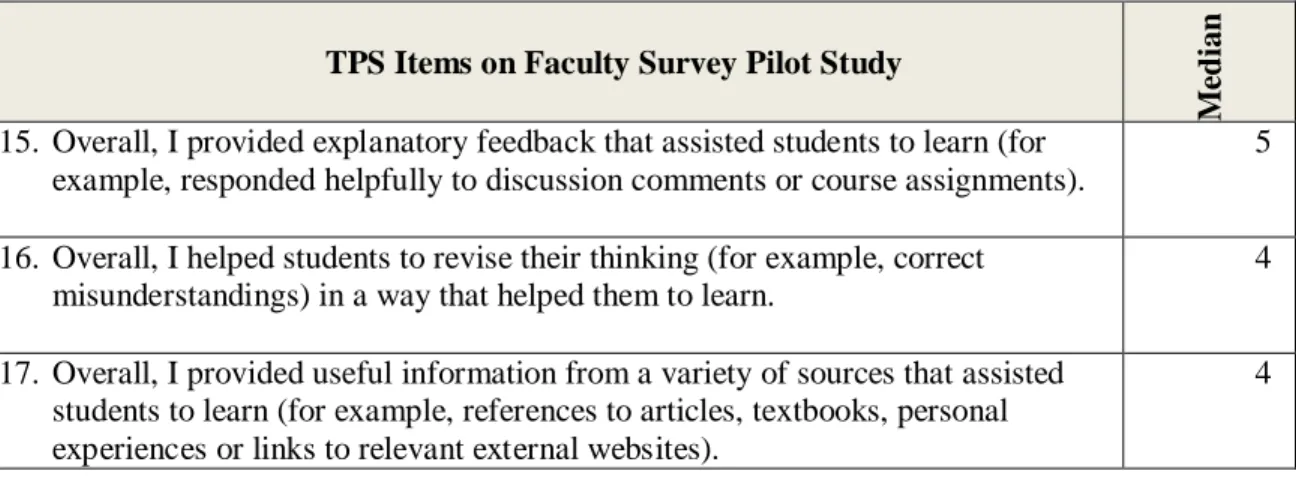
Pilot Study of Faculty Survey……… 91
Data collection………... 94
Quantitative Phase……… 94
Qualitative Phase……….. 94
Timeframe for Data Collection………. 95
Data analysis………...……… 95
Initial Preparation of Data……….95
Exploration of Data………... 96 Mixing………... 97 Legitimation……….. 98 Quantitative Phase……… 98 Qualitative Phase……….. 99 Ethical Considerations………..………... 101 CHAPTER 4: RESULTS……….………… 102
Student Survey Population………..………. 103
Gender……….……… 103
Age……….……… 103
Access, Employment, and Distance from Campus……….………... 104
Faculty Survey Population……….………. 105
Quantitative Analysis……….…………. 106
Factor Constructs of Teaching Presence……….………... 106
Reliability……….……….. 109
Interpretation of Quantitative Results……….………... 109
Research Questions……… 111
Quantitative Data from Faculty Surveys……… 117
Qualitative Analysis……… 117
Study Population……… 117
Quality Research Questions………... 117
Faculty Interviews………. 118
Themes Derived from Coding……… 120
Teaching Presence and Sense of Community Codes Connected……...……… 122
Components of Teaching Presence……… 124
Course Length………. 132
Student and Faculty Survey Open Responses……….…………... 133
Mixing of Quantitative and Qualitative Results………..………… 136
CHAPTER 5: DISCUSSION………...………… 140
Overview………. 140
Demographic Data………..…… 141
Quantitative Discussion………..……… 141
Summary of Quantitative Discussion……….. 148
Qualitative Discussion………. 149
Summary of Qualitative Discussion……… 152
Mixed Methods Discussion………. 154
Model of Students’ Perceived Learning, Sense of Community, and Teaching Presence Components in Online Intensive Courses……….. 159
Implications and Recommendations………... 162
vi
vi
CHAPTER 6: SUMMARY……….. 166
REFERENCES……… 168
APPENDICES………..……… 182
Appendix A: Visual Model for Multi-level Triangulation Design Study……..………. 183
Appendix B: Timeframe for Data Collection in Concurrent Triangulation Stud.……... 184
Appendix C: Student Survey………..………. 185
Appendix D: Faculty Survey………..………. 190
Appendix E: Interview Guide………..………… 195
Appendix F: IRB Approvals………..………. 197
LIST OF TABLES Table 2.1: Studies on Intensive Courses……….……… 19
Table 2.2: Studies of Online Courses……….……… 42
Table 3.1: TPS Items on Faculty Survey Pilot Study……….……… 92
Table 3.2: CSCI Items in Faculty Survey Pilot Study...……….………… 93
Table 4.1: Gender of Student Survey Participants……… 103
Table 4.2: Age of Student Survey Participants………. 104
Table 4.3: Access, Employment and Distance from Campus of Student Survey Participants…. 105 Table 4.4: Teaching Presence Item Correlation Matrix……….…..… 107
Table 4.5: Component Score Coefficient Matrix for Teaching Presence Items…………...…… 108
Table 4.6: Cronbach’s Alpha for Student Survey………..…….. 109
Table 4.7: Summary of Mean Scores of Teaching Presence, Sense of Community, Perceived Learning, and Course Length………...……… 110
Table 4.8: Correlations for Teaching Presence Components and Perceived Learning…...…….. 111
Table 4.9: Percent Variance Explained by Relationships between Teaching Presence Components and Sense of Community……… 112
Table 4.10: Regression Analysis Summary for Teaching Presence, Course Length, and Perceived Learning……….. 113
Table 4.11: Regression Analysis Summary of Teaching Presence, Course Length, and Sense of Community……….. 114
Table 4.12: Summary of Correlations of Demographic Variables with Teaching Presence, Perceived Learning, and Sense of Community……… 115
Table 4.13: ANOVA of Course Type with Teaching Presence and Sense of Community…….. 116
Table 4.14: Summary of Codes from Faculty Interviews……… 119
Table 4.15: Faculty Responses to Importance of Teaching Presence Components………..125
Table 4.16: Students’ and Faculty Responses to Sense of Community Open Response Question………... 134
vii
vi
i
LIST OF FIGURES
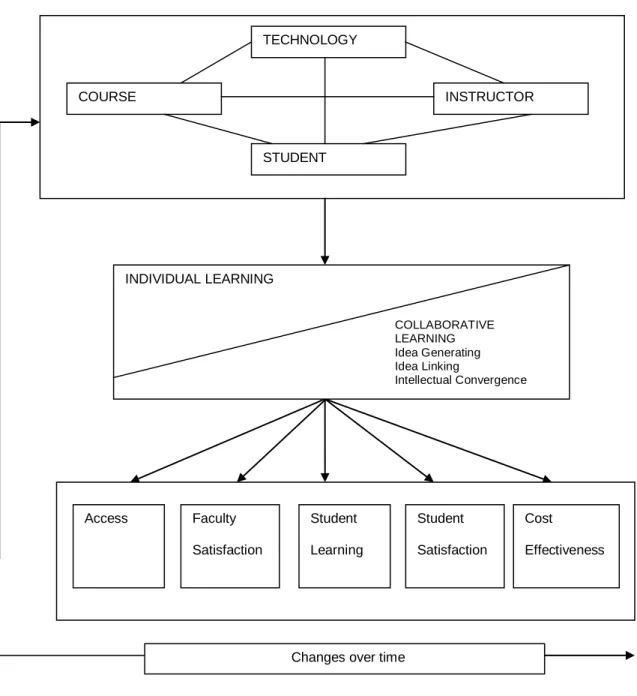
Figure 1.1: WKU Intensive online course enrollments from Summer 2004 to 2008………...…… 3 Figure 2.1: Community of Inquiry Model……….………. 61 Figure 2.2: Dynamic Model of Online Interaction Learning Theory……….……… 73 Figure 3.1: ComplimentarityModel for Validation of Mixed Methods Research ……… 98 Figure 4.1: Graphic Representation of Teaching Presence and Sense of Community Code…… 123 Figure 5.1: Model of Students’ Perceived Learning, Sense of Community and Teaching Presence
1
1
CHAPTER 1: INTRODUCTION
Context of the Problem
Compressed formats, intensive or short courses in conventional-like contexts, and online extended-learning, are two components of the learning environment that have been encouraged by administrators, demanded by students, and accepted by many instructors as viable alternative ways to increase student access to education. The evidence of this increasing popularity lies in the growth of both formats, with online intensive course offerings increasing from 22% to 36% of all summer courses offered, between 2007 and 2008 based on a survey of 67 public four-year institutions (Fanjoy, 2008). Each format, intensive and online, carries latent possibilities that potentially could impact a learning context deleteriously, and if such ingredients exist and become unified the potential emerges for uncommon and also unpredictable interactions. This study sought to understand how teaching presence was established by instructors engaged in one or both of these instructional formats, intensive or online, and the perceived impact on student learning and sense of community.
Background
Although heavily supported by federal and, in the case of public institutions, by state funds, postsecondary institutions increasingly are relying on tuition revenue and donor support to survive. This change in the balance between state-supported and state-assisted has becoming critically important as operational costs continue to spiral upward. State funding no longer is keeping pace with rising costs and the percentage of state funding in university budgets continues to show decremental changes. Western Kentucky University (WKU), in its 2009 published budget (Mead, 2009), showed only 25% of expected revenue coming from state funding while 40% came from tuition and fees. In marked contrast, the 2003 budget reported 42% was state funding and 26% from tuition and fees. Angelo Armenti, Jr. of California University of
2
2
without a plan”, and noted that the decline of state funding for Pennsylvania higher education over the last 25 years could be calculated to be as high as 30% if the increase in student enrollment was included in the computations. Armenti was alluding to the fact the per-student-spending had decreased markedly because the percentage of state support had not kept up with the number of matriculating students.
Facing circumstances of increasing demands for fiscal supports with decreasing sources of assured revenues, higher education institutions have been examining the potential for securing more money from sources such as tuition, research grants, technology transfer, and donor support. The American Association of State Colleges and Universities (AASCU) stated, “Increases in tuition at public colleges are directly correlated to declines in state appropriations; that is, when state appropriations decrease, tuition and fees must be increased – sometimes significantly – to make up for the shortfall” (AASCU, 2009, p. 27). In fact, the AASCU reported that when state appropriations dropped 2.3 percent in 2003-2004, tuition and fees increased 13.9 percent at public institutions.
Increased tuition rates, accompanied by concomitant increases in associated costs such as room and board, learning resources, etc., have been utilized by institutions to keep up with rising budgets. However, the state of Kentucky limited the biggest potential funding source, tuition increases, in 2008 when its Legislature passed the biennial budget. It called for a six-percent budget reduction for public higher education institutions and gave the State Council for Postsecondary Education (CPE) greater control over universities’ tuition rate increases
(Rodriquez, 2008). In May, 2009, the Kentucky CPE set tuition 2009-2010 caps for the public colleges in Kentucky with increases not to exceed three-percent for the community college system, four-percent for the comprehensives and five-percent for the research universities (Patrick, 2009). The state funding reduction coupled with the tuition cap resulted in operational
3
3
budget reductions and no salary increases for WKU in 2009; both were severe and unexpected blows to faculty and staff morale.
Efforts to counter the increasingly dire fiscal situation for higher education in Kentucky have led colleges and universities to consider alternatives to conventional learning opportunities, and simultaneously attract more students. Such efforts have been fraught with concerns about increasing access to postsecondary institutions while ensuring the educational experiences remain at a high level of quality and that matriculates move through the system efficiently in their efforts to earn degrees and certificates.
Juxtaposing intensive and online learning experiences has created instructional
environments that are novel, ostensibly effective, but lacking in scientific investigation. Even so, some areas of higher education have moved forward with novel delivery formats, and in some areas it has been done vigorously. For example, intensive online enrollments have more than doubled at Western Kentucky University during the past five-years, according to data released by the WKU Office of Summer Sessions (see Figure1.1).
Figure 1.1 WKU Intensive online course enrollments from Summer 2004 to 2008
Data retrieved from WKU Summer Sessions 2008 Annual Report (Laves, 2008).
Distance education/learning has been a part of higher education for over one-hundred years, beginning with courses conducted by mail around 1900, then by radio, by satellite and
2023 2226 2718 3501 4342 0 2000 4000 6000 2004 2005 2006 2007 2008 Co ur se E nr ol lm ent s
WKU
Intensive Online Course
Enrollments 2004-2008
4
4
public broadcast television in the 1960’s, compressed video in the 1980’s, and now with the explosion of the Internet, online (Moore & Kearsley, 2005, Simonson, Smaldino, Albright, & Zvacek, 2009). Distance education undoubtedly increases student access to education for students who, for a myriad of reasons, would not otherwise have the requisite time or financial resources to re-locate and take classes or be close enough for physical access to libraries and scholars. Online distance education has grown at Western Kentucky University from nineteen enrollments in 1999 to 9,440 in during the fall 2008 semester (Council on Postsecondary Education, 2008).
Allen and Seaman (2007) reported that online enrollments in postsecondary education have been outpacing total enrollment growth in a dramatic manner. “Almost 3.5 million students were taking at least one online course during the fall 2006 term; a nearly 10 percent increase over the number reported the previous year. The 9.7 percent growth rate for online enrollments far exceeds the 1.5 percent growth of the overall higher education student population. Nearly twenty percent of all U.S. higher education students were taking at least one online course in the fall of 2006” (Allen & Seaman, 2007, p. 1).
Intensive course formats have been utilized during the summers beginning at least in 1869 at Harvard, according to Schoenfeld (1967). That procedure has allowed primarily teachers and other educational professionals opportunities for continuing professional development and to complete degrees needed to continue in their positions. In the twentieth century, alternative intensive courses were offered during intercessions, between fall and spring terms, during May and August as microterms, and as short blocks during regular academic semesters. The first known intersession was offered by Eckerd College in 1961, starting a trend that has extended to most of higher education today (Scott & Conrad, 1992).
Intensive and traditional online courses have grown in popularity among many college students for a variety of reasons. At Western Kentucky University online summer enrollments
5
5
have grown 55%, from 2,671 in the summer of 2006 to 4,130 during the summer of 2008, while the overall summer enrollment dropped by 1.4% from 11,387 to 11,222 (Laves, 2008) during that same period of time. There are probably many reasons for this popularity, some of which may have to do with convenience and access rather than teaching and learning. But it needs to be acknowledged that the continued rise in intensive online course enrollments can be due to students finding that the courses meet their needs, however described, and instructors at WKU who have been designing and teaching courses to fulfill those needs.
There are similarities between intensive courses and distance education courses. When contrasted to conventional higher education learning, these alternative formats involve both a compression of time and distance. Both are viewed as outside of mainstream higher education because they use technologies and timeframes that are not part of the traditional classroom. Both are optional formats created to increase access, and both cause faculty and students to adjust to new ways of thinking about teaching and learning. Higher education administrators generally are willing to promote both formats because they allow for increasing student access, increasing enrollments, and often decreasing time to graduation without lessening the number of courses or credits required of students.
Unresolved is the question of equal or more favorable learning via the new formats, but heuristic reports claim such outcomes are comparable or even more desirous for the alternative platforms. In a meta-analysis of more than one thousand studies of online learning, analysts found that, generally, students in online distance education environments outperformed students in traditional face-to-face learning environments (U.S. Department of Education, 2009). Likewise, Scott and Conrad (1992) analyzed one hundred publications that dealt with intensive course research and concluded that students in intensive course formats are as successful as students in traditional scheduling, however they questioned whether differences in discipline had an effect on student success.
6
6
The variations in learning experiences (intensive and distance education) have fostered inquiries as to why some intensive courses and distance education courses are successful and others are not. Schlager (2004) said, “Distance education is rife with attempts to justify severely constraining pedagogical approaches, such as courses that are conducted entirely via
asynchronous postings or streaming video lectures, in terms of metacognitive (more reflective than…), social (more participative than … ), and motivational benefits (more feeling of presence than … ) when the systems they use were designed primarily to overcome practical constraints, not to satisfy theoretically grounded pedagogical goals” (p. 92). Such critiques have encouraged researchers and practitioners to study pedagogical goals and how aptly they fit with distance education and intensive courses. The goal, as with all learning experiences, is to find positive approaches and best practices that will benefit students maximally while being most parsimonious with resources.
Community of Inquiry Model
Garrison, Anderson, & Archer (2000) proposed a community of inquiry model of online learning. It was, a conceptual framework based on the idea that the community of learners’ success depended on the interactions between instructors and content, among students, and between students and instructors as evidenced by three factors: 1) cognitive presence, 2) social presence, and 3) teaching presence. In the community of inquiry model, teaching presence was defined as the instructional design and organization, facilitation of discourse, and direct
instruction that an instructor built into a course and used throughout a course.
Cognitive presence “is associated with the facilitation of critical reflection and discourse” (Garrison, 2003, p. 49). Internal cognitive processes such as reflective thinking, construction of knowledge, and external cognitive processes were believed to occur when critical discussions took place among students and between students and instructors. Those activities were deemed to be critical elements of cognitive presence and could not occur without interactions. The necessity
7
7
of the interaction component to the community of inquiry model is closely linked to Dewey and Vygotsky’s views on constructivist learning theories (Wertsch & Tulviste, 2005), where students interact with the content, with their thought processes, and with other students to construct meaning.
Garrison, Anderson, and Archer (2000) defined social presence as “the ability of participants in a community of inquiry to project themselves socially and emotionally, as ‘real’ people (i.e., their full personality), through the medium of communication being used” (p. 94). Those authors believed that the medium was not the most important factor in creation of social presence but that it could force participants to be more conscious of and adapt their behaviors in order to project social and emotional presences that facilitated interactions. Social presence was linked to cognitive presence because it facilitated the interactions necessary to produce cognitive processes, both internal and external, thus helping a community to construct meaningful learning outcomes that were facilitated by a teaching presence.
Teaching presence was the glue that held a community of inquiry together because it served to initiate and maintain an environment where social and cognitive presences could flourish. The three elements of teaching presence, instructional design and organization, facilitated discussion, and direct instruction, were aligned to support and grow social and cognitive presences, so that the three factors were seen as overlapping, intertwined, and equally important in developing a community of inquiry that facilitated learning.
Shea, Li, and Pickett (2006) found a “clear connection between perceived teaching presence and students’ sense of learning community” (p. 184) with 62% of the variance for classroom community explained by perceived teaching presence. Those authors followed the participation metaphor for learning rather than the acquisition metaphor; stating that successful learning was a process that involved students becoming members of a community, and being able to communicate and act successfully within that community.
8
8
In online courses the use of teaching presence to create well-designed, organized courses, where discourse is clearly understood and encouraged as well as having a feeling of the instructor being close through direct instruction, has been shown to directly correlate with students’
perceived learning and sense of community (Arbaugh, 2001; Shea, Li, & Pickett, 2006; Lu & Jeng, 2006; Arbaugh & Rau, 2007). Teacher immediacy behaviors, also called teaching presence strategies, have been shown (Scott, 1994; Scott, 1995; Collins, 2005) to be valued by students in intensive courses.
The factors most directly under the control of instructional faculty are those that make up the instructional design. Scott’s (1994) qualitative study on intensive courses allowed for
identification of several instructional design factors that impacted student satisfaction and perceived learning in what she called a process-oriented, connected approach to teaching and learning. Those factors included instructor traits such as being connected or engaged in the subject, excellent communication skills, use of organized, varied presentation skills, and use of multiple ways of teaching and engaging students with content.
Similarly, Shea, Li, and Pickett (2006) found factors of teaching presence that impacted students’ perceived learning in online distance education courses. Shea et al. (2006) extracted two factors, instructional design and organization and directed facilitation which was a combination of direct instruction and facilitated discourse, accounting for 78.18% of the variability of the teaching presence construct. Instructional design and organization factors included
communication of course goals, communication of due dates and course topics, and clear instructions. Directed facilitation factorsincluded participants felt connected to course, students were kept on track, a climate of learning was felt, the instructor diagnosed misconceptions, identified areas of agreement, and sought consensus, focused discussions, confirmed understanding, reinforced student contributions, injected knowledge, presented content, and demonstrated netiquette. Each study reportedly had striking similarity when considered in the
9
9
context of intensive and online courses and the need for teaching presence in each. These factors of teaching presence, knowledge of subject, creating an environment that allows students to feel engaged in the subject, with the instructor, and with each other are not unique to a single format but the ways instructors find to incorporate these factors into intensive courses, online courses, or intensive online courses are unique to the format. Instructors teaching intensive courses may use longer course lengths to incorporate multiple active learning activities facilitating student
discussions and growing sense of community.
Instructors of online courses use online discussions and small group projects to generate communication among students, facilitating the construction of knowledge rather than imparting knowledge through lecture formats. Instructors in intensive online courses may use these strategies in combination with others to capitalize on the intensive nature of courses and the interactivity capable in online courses. The goal of this dissertation study was not to develop a new model but to relate the teaching presence models found in intensive course studies and the Community of Inquiry Model to intensive online courses.
Remedy for deficiencies in prior research
Both intensive course research and online course research have built cases that these delivery formats are as effective as traditional semester-length face-to-face courses. Researchers focusing on the factors that presumably affected learning effectiveness in such courses reportedly were successful in their efforts (Scott, 1994, Scott, 1995, Garrison, Anderson, & Archer, 2000, Swan, 2003). Teaching presence has been argued by Garrison, Anderson and Archer (2000) to be critical in creating a community of inquiry that facilitated and nurtured learning, but there has not been much work on how instructional personnel create teaching presence, and there are no known studies that specifically targeted development of intensive online courses.
The findings reported from this research were scaffold on prior reported literature, recognizing the lacuna in relevant information. The emphasis was to understand teaching faculty
10
10
decisions in course design and implementation as it related to teaching presence in courses, as reported by students and compared to their perception of learning and satisfaction in intensive online courses. Thus there were three foci: instructional personnel intentions for creating a teaching presence; students’ reported perceptions of learning; and students’ reported satisfaction with courses.
The researcher proposed that teaching presence was more vital and integral to student learning in intensive online courses than in so-called conventional learning environments because the former imposed a fairly rigid time constraint upon participants. In intensive online courses, the use of teaching presence to create well-designed, organized courses, where discourse was clearly understood and encouraged as well as having a feeling of an instructor being close through direct instruction and feedback, was deemed to be vital for the learning experience to be successful.
Target Audience for this Study
Faculty and administrators in higher education interested or participating in online and intensive instructional practices, or other atypical learning contexts, likely will consider the reported findings and stated conclusions to have relevance in varying degrees. Persons who teach in such contexts might be able to juxtapose information to their work and perhaps make
adjustments, or possibly identify new avenues for research. Administrators with direct responsibilities over areas related to these environments possibly will realize the need to alter allocation of selected resources to foster greater emphasis upon selected skills that previously had not been addressed.
Purpose Statement
The purpose of this mixed methods triangulation design study was to understand how teaching presence, established by instructors at a southern comprehensive university, in intensive online distance education courses was related to student perceived learning and sense of
11
11
community. A triangulation multilevel design was used, merging survey data of students’
perception of teaching presence, perceived learning and sense of community, and qualitative data from faculty interviews and instructor-created course documents that reflected teaching presence through course structure and organization. The rationale for collecting both quantitative and qualitative data was to merge the results of two different perspectives in order to describe teaching presence strategies that could not have been found using only one method.
Research Questions
Central Research Question
How is teaching presence related to students’ perception of learning and sense of community in intensive online courses?
Quantitative Phase
The quantitative phase was driven by the following questions:
1. Which teaching presence components impact students’ perceived learning? 2. Which teaching presence components impact students’ perceived sense of
community?
3. What is the correlation between perceived learning and sense of community?
4. Is high perceived teaching presence predictive of high student perception of learning and sense of community?
5. Do the selected independent demographic variables of student age, gender,
employment, distance from campus, course length, and course type account for the variance in students’ perception of teaching presence, learning, and sense of community?
Qualitative Phase
12
12
1. What teaching presence components do instructors believe are important in intensive online courses?
2. Which teaching presence components do instructors perceive to correlate with student learning and sense of community?
3. Did course length influence instructors’ choice of teaching presence components to include in intensive online courses?
Definition of Terms:
Cognitive presence: A component of the Community of Inquiry Model of Online
Learning, cognitive presence is“the extent to which the participants in any particular configuration of a community of inquiry are able to construct meaning through sustained communication” (Garrison, Anderson, & Archer, 2000, p. 89).
Concentrated study: immersion or deep concentration for an intensive period of time
(Scott & Conrad, 1992).
Constructivism: “Constructivism is a poststructuralist psychological theory (Doll, 1993),
one that construes learning as an interpretive, recursive, nonlinear building process by active learners interacting with their surround – the physical and social world. It is a psychological theory of learning that describes how structures, language, activity, and meaning-making come about, rather than one that simply characterizes the structures and stages of thought, or one that isolates behaviors learned through reinforcement. It is a theory based on complexity models of evolution and development. The challenge for educators is to determine what this new paradigm brings to the practice of teaching,” (Fosnot and Perry, 2005, p. 34).
Collaborative learning: “learning together with one’s peers” (Benbunan-Fich, Hiltz, &
Harasim, 2005, p. 20). This pedagogical approach is based on constructivist learning theory and Vygotsky’s views on learning in a social and cultural as well as an individual context.
13
13
Intensive course: a credit course that is compressed into a smaller time frame than a
typical semester. For the purposes of this study, three-week intensive courses were studied.
Interference theory: “interference theory predicts that similar tasks preceding or
following a learning activity will ‘interfere’ with an individual’s long-term retention of the learned material” (Scott & Conrad, 1992, p. 417).
Interim or intersession course: Typically a three-week course that occurs between two
regular terms, such as in between fall and spring, or between spring and summer.
Massed versus spaced learning: A learning theory that gained much attention in the
1960’s and 1970’s by behavioral psychologists who believed there is a spacing effect that enhances learning, most often tested using vocabulary or numerical strings. Intensive courses have been labeled massed learning when so much takes place in a single day and also spaced learning since students take breaks every day. “[T]wo spaced presentations are about twice as effective as two (successive) massed presentations, and the difference between them increases as the frequency of repetitions increases. Moreover, achievement following massed presentations is often only slightly higher than that following a single shorter presentation” (Dempster, 1987, p. 9).
Model: A theoretical framework is the first step in generating a comprehensive theory for
a field. It models the key concepts, and the relationships among these concepts, that can be used to organize the knowledge and to generate hypotheses for empirical testing (Benbunan-Fich, Hiltz, & Harasim, 2005, p. 20). The Online Interaction Learning Model developed by Benbunan-Fich, Hiltz, & Harasim (2005) and the Community of Inquiry Model developed by Garrison, Anderson, and Archer (2000) are two models used in this research project to advance social constructivist learning theory in online intensive courses.
Moderating variables: The contextual factors or inputs related to the Online Interaction
14
14
and are contingent on some minimal level existing in order to be effective (Benbunan-Fich, Hiltz, and Harasim, 2005).
Online distance education course: A credit course offered over the web with two or
fewer face-to-face meetings.
Sense of community: A community of inquiry exists when learners feel connected,
cognitively engaged, and supported as they negotiate meaning through critical analysis and discussion. Measures of participants’ perception of the existence and successfulness of community have been correlated with learning effectiveness (Rovai, Wighting, & Lucking, 2004).
Semester-length course: In this study, a credit course that lasts fifteen weeks.
Social presence: A component of the Community of Inquiry Model of Online Learning.
“The second core element of the [community of inquiry] model, social presence, is defined as the
ability of participants in the Community of Inquiry to project their personal characteristics into the community, thereby presenting themselves to the other participants as ‘real people’” (Garrison, Anderson, & Archer, 2000, p. 89).
Student success: The outcome of successful intensive online courses may be measured
several ways. Two common methods are student learning and student satisfaction. Benbunan-Fich, Hiltz, and Harasim (2005) also include faculty satisfaction, access and cost effectiveness in this definition.
Teacher immediacy behaviors: Those behaviors that lessen the psychological distance
between students and instructors. “Educational researchers have found that both teachers’ verbal immediacy behaviors (such as giving praise, soliciting viewpoints, humor, self-disclosure) and their non-verbal immediacy behaviors (such as physical proximity, touch, eye contact, facial expressions, gestures) can lessen the psychological distance between teachers and their students, leading (directly or indirectly, depending on the study ) to greater learning” (Swan, 2003).
15
15
Teaching presence: A component of the Community of Inquiry Model of Online
Learning. According to Swan (2003, p. 24), “Anderson, Rourke, Garrison and Archer (2001, in Swan, 2003) have termed instructors’ ability to project themselves in online courses ‘teaching presence,’ which they define as ‘the design, facilitation and direction of cognitive and social processes for the purpose of realizing [students’] personally meaningful and educationally worthwhile outcomes.” Teaching presence has three components: design and organization, facilitating discourse, and direct instruction.
Transactional distance: Not just a physical separation of teacher and student, but a
pedagogical phenomenon involving dialogue between the teacher and student and course
structure, according to Moore’s Transactional Distance Theory (Moore & Kearsley, 2005). When dialogue between teacher and learners is high and structure is low the transactional distance is low, allowing for better communication between teacher and learners.
Delimitations
This study was limited to intensive online distance education courses at Western
Kentucky University. Because of the instructional faculty culture and development that might be unique to Western Kentucky University, the results should not be generalized to other universities or populations. Sampling was by convenience and not random since students self-selected into these courses. Instructors were chosen based on information gathered in the quantitative phase to get a purposive mix of instructors with variable amounts of teaching presence built into their courses, as identified by students.
Limitations
Data were gathered during one three-week winter term using a student survey, a faculty survey, and faculty interviews. Limitations of this study were:
16
16
1. Of the 1,213 intensive online students, 397 returned surveys, giving a return rate of 32.7%. Of 78 faculty teaching intensive online courses during this term, 32 responded, giving a return rate of 41%. This may have introduced a potential for bias in the quantitative phase.
2. Follow-up reminders were used but were restricted to email due to cost of printed reminders. This may have caused a bias toward those students who check and respond to emails more frequently.
3. Lack of randomization was an issue since students self-selected into intensive online courses, thus the sample may not be representative of the population.
4. The results of the qualitative phase were subject to the researcher’s potential bias and subjectivity and thus inhibit generalization beyond the population in the current study.
5. There was potential for bias in the research because the researcher worked with the faculty from this study in the role of director of winter and summer sessions.
6. There are many ways to measure learning effectiveness, none of which can be said to accurately reflect student learning. Perception of student learning was used as a measure of learning effectiveness because it fit with the survey format of quantitative data collection of the survey population.
7. In comparing student perceptions categorized by different types of classes, there may have been confounding factors due to student and instructor types and prior experiences.
Significance of the Study
This study may become significant in contributing to the body of research related to teaching presence and sense of community in online courses and to the body of research on intensive course formats. This study has extended the underdeveloped area of research into relationships between students and instructors in intensive online courses. The main contribution of this study lies in the fact that there are no existing studies that have explored teaching presence in intensive online courses in a mixed methods approach. The results from this study may help
17
17
instructional faculty design intensive online courses that will further enhance student satisfaction and success.
As intensive online courses continue to grow in popularity within the higher education community, more research is needed to better understand the myriad moderating variables that possibly impact the dynamics of student learning, and how to make such experiences maximally rewarding. While the body of online course research is growing, intensive online courses have not received adequate attention. Research such as this study is significant to all learners in intensive online study, particularly to adult and part-time students who tend to make use of alternate formats such as intensive sessions and online distance education to meet their
educational needs. Results of this study may also contribute to the body of knowledge useful to higher education administration in offering courses in alternate formats.
Examples of lacuna can be found through the scholarly efforts by Arbaugh and Rau (2007), Arbaugh (2001), Shen, Hiltz, and Bieber (2006), Lim (2001), and Powers and Mitchell (1997). These authorscontributed to the body of knowledge of teaching presence in online courses and even included data related to intensive courses, but more research is needed to inform those in higher education who plan, implement, teach, and learn through intensive online course formats. This study has built on the work of past research by using both quantitative and qualitative data to span the gap in understanding of intensive online courses. The quantitative phase of this study verified the results Shea, Li, and Pickett (2006) found regarding teaching presence and sense of community in online courses. Through the qualitative phase and
integration of the methods, this study built on the teaching presence studies cited above to expand knowledge and understanding of intensive online courses that have not been so extensively studied.
18
18
CHAPTER 2: REVIEW OF LITERATURE
This chapter presents a review of the existing literature relevant to intensive courses and online distance education courses. These studies cover an almost 40-year span of qualitative and quantitative analysis in alternative formats for teaching, and delve into topics including faculty and student perceptions, attitudes, dynamics, grades, and effectiveness. The review is organized according to the factors that may contribute to student satisfaction and learning in intensive courses, factors that may contribute to student satisfaction and learning in online courses, and selected studies that have included both intensive and online formats. Table 2.1 provides a listing of the studies reviewed that focus on the intensive course format and Table 2.2 provides a listing of the studies reviewed that focus on the online course format.
Contributing Factors to Student Satisfaction and Learning in Intensive Courses
The selected studies in Table 2.1 represent research into the factors that may contribute to student satisfaction and learning in intensive courses. These studies revealed two main foci: student characteristics including age, employment status, academic performance, and persistence; and interaction including student-student interaction, student-instructor interaction, and student content interaction. Each of these factors is discussed in the following section.
Student Characteristics
The student characteristics of age, employment status, academic performance, and persistence have been studied as factors that possibly contributed to student satisfaction and/or learning in intensive courses.
19
19
Table 2.1.
Studies on Intensive Courses
Researchers Date Method Studies Results
Parlett & King 1971 Qualitative Student attitudes toward intensive courses
Student responses indicated they believed concentrated study to be better or the same as distributed study.
Centra & Sobol 1974 Quantitative Faculty and student attitudes toward intensive courses
Students overall rated intensive courses as good or better than semester-length courses, with study abroad and off-campus study highest and lecture lowest. Humanities were rated highest in worthwhile status, business classes were rated lowest by both students and faculty.
Allen, Miller, Fisher & Moriarty
1982 Quantitative Faculty perceptions of interim courses
Faculty satisfaction with interim courses was higher than for semester courses, with interim courses characterized as similar to seminar courses.
Mims 1983 Quantitative Student perception of intensive art courses
Students showed a significant preference for intensive study over semester-length courses. Reasons given included time structure effectiveness, meeting personal needs, goals and educational standards, ability to arouse interest, and fostering teacher enthusiasm.
Grimes & Niss 1989 Quantitative Comparison of student learning in intensive and semester economics courses
Students in the intensive courses showed a higher gain in pre/post test scores than students in semester-length course.
Reynolds 1993 Quantitative Group dynamics of cohorts in intensive graduate courses
Students who moved through cohort programs showed group cohesiveness and interaction over students who did not participate in a cohort. Intensive or semester-length course length was not a significant factor in group cohesiveness or perceived interaction. Van Scyoc &
Gleason
1993 Quantitative Comparison of learning effectiveness in intensive and semester courses
Students in 3-week economics course scored as well or better than students in 14-week course in pre/post test and on course exams. No difference in retention of microeconomics knowledge was found between the two courses.
20
20
Table 2.1 (continued).
Studies on Intensive Courses
Researchers Date Method Studies Results
Buzash 1994 Mixed
Methods
Longitudinal study of student learning and perceptions in 2-week intensive French classes
Most students in the program gained at least one university level of language skills based on pre/post tests. Student perceptions included better understanding of language and culture and recommended program to other students.
Caskey 1994 Quantitative Comparison of grades of students in algebra and accounting intensive and semester-length courses.
No significant difference in GPA or class grades was found between intensive and semester courses.
Scott 1994 Qualitative Attributes of high quality intensive courses
Students experience intensive courses differently than semester-length courses, but their perceptions of that experience depend on the presence of certain attributes of high-quality learning. If those attributes are not present, students prefer semester-length courses more because they are exposed to that class environment for shorter periods of time with longer interim periods than intensive courses. Messina, Fagans, & Augustine 1996 Mixed methods
Student and faculty satisfaction and perceived learning for intensive weekend format
Student and faculty satisfaction and perceived learning were positive toward the 3-weekend intensive format. Students attributed perception of increased learning to the increase in interaction, the intensity of the learning process, variety of teaching methods, and level of difficulty of the courses. Rayburn &
Rayburn
1999 Quantitative Impact of course length and assignments on student performance in accounting classes
Study found that students in both course formats performed similarly on multiple-choice exams. Students in longer course performed significantly better on accounting problems. Fall 2001 Quantitative Adult student satisfaction
with intensive courses
Student satisfaction with course format decreased as number of intensive courses taken increased. Female students who took classes where individuality was emphasized in course design rated higher satisfaction with course format, while male students felt more satisfaction when emphasis was placed on academic performance.
21
21
Table 2.1 (continued).
Studies on Intensive Courses
Researchers Date Method Studies Results
Grant 2001 Quantitative Student satisfaction with 1-week block courses
Courses were geared toward adult part-time students. Overall students were satisfied with course length and course design. Wlodkowski,
Mauldin, & Gahn
2001 Quantitative Adult learner comparison study of traditional and accelerated programs
Internal community support as it related to persistence was more evident in longer courses. Perception of courses as supportive was directly related to higher GPA.
Burton & Nesbit 2002 Mixed methods
Student and faculty attitudes to intensive teaching 1-week block courses
Older students were not significantly more likely to prefer block courses. Students who had previously taken a block course and were enrolled in another were much more likely to prefer block courses. Preference of block courses centered on convenience. Faculty believed students in block courses learn at least as well as students in semester courses.
Homeyer & Brown
2002 Quantitative Academic effectiveness in varied course lengths
The study compared a course taught by one instructor in a 3-week, a 5-week, and a semester-length course format. No significant differences were found in pre/post test scores based on course length.
Collins 2005 Mixed
Methods
Cognitive development of adult students in intensive and accelerated courses
Adult student cognitive development is influenced more by cohort/noncohort nature of programs than a difference in intensive or accelerated. Factors such as instructor, interactivity, evaluative method, and classroom atmosphere contributed to cognitive development.
Kretovics, Crowe, & Hyun
2005 Quantitative Faculty perceptions of intensive courses
More faculty members generally believed that they established rapport with the intensive class more quickly and that students in intensive classes were more focused on learning, participated more in discussions, and attended more regularly.
Anastasi 2007 Quantitative Student performance in intensive and semester courses
Final grades of undergraduates in psychology courses offered in an intensive format in summer were found to be the same or better than the same courses offered in semester format.
22
22
Age: Caskey (1994) studied accounting and algebra classes, using a random sample of 30
subjects in algebra and 45 in accounting. Caskey used two-tailed t-tests to analyze class grades, overall GPAs and age. She found no significant difference in class grades or overall GPAs between the intensive course groups and the semester long groups. But she did find a statistically significant difference in the average ages; students who elected to take intensive courses
generally were older. She also found no difference existed in requisite class grades between students who took the prerequisite course in the intensive format versus the semester format. Caskey concluded “that students, particularly older students, can achieve in an intense format and perform as well in subsequent courses as students who elect traditional formats.” (Caskey, 1994, p. 26).
Scott (1994, 1995, 2003) conducted a qualitative comparison study of 29 students’ learning experiences in two intensive and two semester-length undergraduate courses (English literature and Marketing) at a single university. The same instructors taught the course content in both formats; four-week intensive and semester-long in an attempt to control for differences in instruction and content. Data were collected through participant observation, videotaped class sessions, paper survey conducted at the end of each course, course document analysis, field notes, and interviews of students and faculty. The author developed a list of attributes identified by students as important in high quality intensive learning environments, all of which directly or indirectly relate to qualities that an instructor may exhibit or design into a quality course, which she related to a process-oriented, connected approach to teaching. By process-oriented, Scott was referring to instructors’ focus on how students learn, and connectedness referred to students feeling connected to the material, to other students, to the instructor, and to the classroom. Scott (1994) concluded, after multiple observations and interviews, that students perceived a direct relationship between the intensiveness of a course and the need for the presence of those high quality course attributes identified by those students.
23
23
Importantly, Scott (1994) used the words “intellectual development” and referred to Perry (1970) who theorized that there were nine stages of intellectual development. However, she did not measure the students’ level of intellectual development. Instead, she estimated it based on observations, and she also made assumptions based on her qualitative observations of age and preference of attributes. In that study,Scott (1994) suggested issues that might alter such relationships including: teaching skill, the degree of intensiveness of the course, student distracters such as work and family responsibilities, students’ age, students’ intellectual development, subject matter, and an instructor’s ability to connect effectively with students.
Age and intellectual development were linked by Perry (1970) when he identified nine stages of intellectual development, ranging from simple dualistic thinking to what he called relative thinking; when students believed that they were responsible for their learning. In Perry’s study the higher level(s) of intellectual development took place in older college students. While Scott (1994) did not present evidence that those factors definitively affected the relationships between students’ perception of intensiveness and the presence of high quality course attributes, she believed that her study provided a step for future research into these factors.
Employment status: Scott (1993), in the study cited above, reported that students with
other responsibilities, such as work obligations, had more negative experiences in intensive courses than did students who did not work. A similar result came from a quantitative study by Fall (2001) of 95 graduate students taking intensive weekend format courses. Fall concentrated on adult students enrolled in the same course at a single university. She compared the syllabi from each of the seven sections taught in a three-weekend format at regional campus centers and found that the courses used the same textbook and comparable assignments and evaluations. Each student was given a questionnaire consisting of 34 items, 24 of them related to student satisfaction of intensive courses and the other 10 related to demographics. Principal component factor analysis with varimax rotation was used on the 24 items related to student satisfaction and
24
24
four themes emerged with alpha values greater than .60: format, individuality, study habits, and academic performance. Those themes were collapsed into factor scales with three categories, low, medium, and high, and subjected to chi-square analyses. From that sample, 89 students worked full-time, 4 part-time and 2 were unemployed. Fall (2001) found that adult students whose employers did not reimburse them rated their satisfaction with intensive courses, in terms of perception of format effectiveness, higher than did students whose tuition was reimbursed by their employers.
Burton and Nesbit (2002) reported on a survey of student attitudes about intensive block courses as compared to traditional courses by 62 of 63 students participating in an MBA program at Macquarie University in Sydney, Australia. Those block courses typically consisted of two intensive weekends with pre- and post-course work done independently. Most students in that program took a mixture of both block and weekly (traditional) courses. Data were collected on the number of block and weekly courses the students had taken and their format preferences. The researchers reported a weak but positive correlation (p=.059) between students who worked
full or part-time and satisfaction with intensive block courses, and concluded that students’ work situations were related to a preference for the intensive course format.
Academic performance and persistence: Wlodkowski, Mauldin, and Gahn (2001)
analyzed demographic characteristics, academic background, and persistence in two programs involving adult undergraduate students; 459 students in an accelerated program at Regis University and 370 in a traditional program at University of Missouri-Kansas City (UMKC). The researchers analyzed university student records between fall 1993 and fall 1999 semesters, and found that during the first three years (1993-1996) more students graduated from the Regis program than did from the UMKC program. But that difference was not statistically significant for six-year graduation rates (37% graduation rate from Regis and 32% from UMKC). The
25
25
authors reported that the grade point average for graduating students was statistically different (p<.001) with the average at Regis 3.46 and the average at UMKC 2.99.
Wlodkowski et al. (2001), discussed the differences between the two universities in terms of private (Regis) and public (UMKC), gender and racial/ethnic differences, as well as
admissions policies where Regis used an open enrollment policy compared to UMKC’s more restrictive policy of ACT minimum of 24 plus minimum high school rank of at least 47th
percentile. Prior study with such differences in student populations would lead to an empirical belief that the UMKC students would have better academic performances but the reverse was true in that study. Parenthetically, it needs to be recognized that the difference between the private (Regis) and public (UMKC) postsecondary institutions and their markedly different admission criteria would lead to variations in the quality of student attending each institution, and it is possible that there might have been a proclivity from the private school to provide greater encouragement to students. An alternative explanation could be that Regis sought to ensure students completed their programs of study because they generated needed tuition dollars.
Given those differences in student populations, the researchers conducted the second phase of the study through a survey of adult undergraduate students in the same accelerated and semester-length programs at UMKC and Regis during the spring and fall 2000 semesters. They used the Adult Learning Survey, developed by Wlodkowski, Mauldin, and Gahn (1999, as cited in Woldkowski, Mauldin, and Gahn, 2001). Their purpose was to compare motivational and demographic variables. The response rate from Regis University was 61% (N=328) and 58.8% from the UMKC students (N=260), with seven surveys discarded, leaving the resulting samples of 321 from Regis and 253 from UMKC. Ten motivational variables were measured; only two were significantly associated to grade point average for the students in the Regis accelerated program (self-regulation and faculty interaction, p<.05) while six were significantly associated
self-26
26
efficacy, intrinsic goal orientation, attitude and meaning, faculty interaction, and effort avoidance,
p<.01). The conclusion drawn was that students in the traditional program at UMKC seemed to
be more influenced by motivational factors than the UMKC students in the accelerated program. Those authors (Wlodkowski, Mauldin, & Gahn, 2001) also studied persistence and dropout rates in the same samples. Using a regression analysis, they found that: for the students at Regis being female, having transfer credit, higher grade point averages, and financial aid contributed to persistence in 78% of the cases. Among the UMKC students having similar but slightly different experiences (male, adult learners, higher grade point averages, transfer credit, receiving financial aid, and experience at a two-year institution prior to coming to UMKC) also had a favorable prediction on degree completion (86%).
At Regis, being older and having lower grade point averages predicted dropout after the first term in 87% of the cases; at UMKC, being female, having lower grade point averages, fewer or no transfer credit hours, and no prior institutional experience predicted 82% of the dropout cases. The influence of grades on persistence and first term dropout was prominent in both course formats.
Anastasi (2007), in a quantitative study of 506 students in 16 sections of three
psychology intensive and semester-long courses at Arizona State University, analyzed student records on enrollment, course grades, assignment grades, and exam grades. Each of the three psychology courses had sections in both formats; nine sections were semester length and seven sections were intensive summer courses. Anastasi used a 3x2 between subjects ANOVA to assess students’ final grades. He found the main effect in the differences in grades to be the type of course, but also reported that the mean GPA for summer session courses (M=83.1) was statistically higher than the mean GPA for semester long courses (M=81.1), F (1,499) =8.01,
MSE=84.68. In addition to grades, Anastasi analyzed teaching evaluations and found that students’ perceptions of summer courses compared similarly to those in semester courses. In
27
27
response to the statement that an instructor demanded high standards of performance during summer sessions, the students agreed more strongly (M=3.82) than did students in semester-length courses (M=3.70), t (15) =1.93, p=.07, d=.94.
The Burton and Nesbit (2002) survey of 62 graduate MBA students enrolled in a single summer course sought information related to students’ preferences for intensive block courses. Twenty-two of the students had taken at least one other intensive course earlier in their programs of study. The researchers found a strong significant positive relationship between students who had taken a previous block course and those who said they would have chosen to take another block course (p<.001). An ordinal logical regression revealed that having taken one block course
was a significant predictor for willingness to take another block course (p<.002). Persistence in
intensive block courses was not found to be correlated with age.
In summary, the selected research of intensive courses reported here studied specific student characteristics. Caskey (1994) and Scott (1994) discussed age as a demographic variable related to student success in intensive courses. The latter author reported that chronologically more mature students performed better academically. Employment status was addressed by a number of authors and the findings were equivocal. Scott (1994) and Fall (2001) said that students who worked tended to be distracted and did not have enough time to devote to intensive courses, while Burton and Nesbit (2002) reported a positive correlation between working students and satisfaction with intensive courses.
Fall (2001) said that students who paid for their tuition or received scholarships were more satisfied with intensive courses than those whose employers provided reimbursement. With these mixed results, employment status has proven to be a complex issue. Academic performance and persistence in intensive courses was studied by Wlodkowski et al. (2001), Anastasi (2007), and Burton and Nesbit (2002) with more consistent results, students in intensive courses had at least as good grade point averages and course grades as those in semester-length courses and
28
28
students who had experiences in intensive courses were more inclined to take additional intensive courses.
Interaction
This section is a review of studies of intensive courses and differences in interaction. Those interactions occurred between students, between students and instructors, and between students and content. Each of these types of interaction is discussed separately in this section, but one study by Scott (1994) was pivotal in defining all three types of interactions in intensive course formats.
Scott (1994) identified two themes, process and connectedness to teaching, and
developed a list of attributes students believed contributed to a positive learning experience when taking an intensive course. Scott approached the issue with a qualitative comparison study of intensive and semester courses using the two types of classes (English and Marketing) at a single university. Observations of student and instructor participation and then interviews of 29 students and the respective course instructors formed the basis for data collection and subsequent
conclusions.
The author (Scott, 1994) developed a list of factors she believed contributed to high quality learning experiences in both the intensive and semester courses: greater continuity of learning; greater concentration/focus on learning; non-prioritized learning; scheduling and planning; longer class sessions; mental investment and commitment; performance affected by fewer concurrent classes, short duration, retention and understanding, absences, procrastination; decrease in superfluous material, future learning and development; classroom relationships; student-teacher relationships; classroom atmosphere, instructor expectations; classroom diversity; and memorableness. Scott claimed that students preferred intensive course formats when the above cited learning experience attributes were present, but preferred semester length courses if those attributes were not present, because the stretched out time and shorter class periods of a
29
29
semester-long course minimized the poor classroom experience. It was concluded that, “[S]tudents experience intensive or semester courses positively or negatively depending on the presence of certain attributes. The greater the concentration of attributes within a class and the more process-oriented and connected the teaching and learning approach, the better the learning experience will be” (1994, p. 465-466). The attributes identified by Scott are embedded in the interactions between students, between students and their instructors, and between students and the content, and formed the basis for Scott’s claim that interactions were important to high quality intensive learning experiences.
Student-student interaction: Allen, Miller, Fisher, and Moriarty (1982) conducted a
quantitative survey of faculty and department heads’ perceptions of intensive interim courses. An unexplained random sample of 123 institutions was chosen from the 245 institutions offering January interims. The researchers received 53 response packets, but 12 no longer offered interim sessions and six others did not include course forms, leaving 35 schools that responded to both the departmental surveys and 82 individual course forms from faculty persons; a 43% return ratio that the authors apparently deemed to be adequate. All but one of the colleges were private institutions with a median FTE student body size of 1,338 (range from 480 to 23,500). Thirty offered bachelor degrees as the highest level and the median department size was three full-time faculty members (ranging from 1 to 65). The median number of interim courses offered per year was two (range of 1 to 18). Course data indicated that all 82 were undergraduate courses, 51 were categorized as innovative format, 19 as new offerings with traditional format, four were semester courses that were changed to fit the interim, and six were concentrated versions of semester courses. The courses for which instructors gave the most positive evaluations were structured most like seminars with special topics, projects and experiential learning that generated positive group dynamics. Those faculty participants also rated several characteristics as