IMPOSTOR PHENOMENON: A MULTI-METHOD EXAMINATION OF CONSTRUCT VALIDITY AMONG BLACK COLLEGE STUDENTS
Donte LeShon Bernard
A dissertation submitted to the faculty at the University of North Carolina at Chapel Hill in partial fulfillment of the requirements for the degree of Doctor of Philosophy in the
Department of Psychology and Neuroscience (Clinical).
Chapel Hill 2018
Approved by:
Enrique W. Neblett Jr. Anna M. Bardone-Cone Jessica T. DeCuir-Gunby Deborah J. Jones
© 2018
ABSTRACT
Donte LeShon Bernard: Impostor Phenomenon: A Multi-Method Examination of Construct Validity Among Black College Students
(Under the direction of Enrique Neblett)
The impostor phenomenon (IP), or negative self-perceptions of intellectual incompetence (Clance & Imes, 1978), reflects a maladaptive set of cognitions that has been established to significantly detract from positive psychological adjustment among Black emerging adults (Bernard, Lige, Willis, Sosoo, & Neblett, 2017). Despite this research, no attempts have been made to assess the construct validity of measures of IP within the Black community. For this reason, the purpose of this project was to investigate the construct validity of the Clance Impostor Scale (CIPS; Clance, 1985)— considered by many to be the gold standard measure of IP—among Black emerging adults. I utilized a multi-method design to investigate
construct validity using three studies that: a) examined the factorial and discriminant validity of the CIPS (N = 261); b) investigated the longitudinal invariance of the CIPS (N = 157); and c) elucidated the extent to which qualitative interviews relating to IP align with or diverge from the traditional theoretical conceptualization of this construct (N = 8). Study 1 found that none of the four empirical model structures previously identified within the literature
invariant over time (nor did any of the empirical model structures), thus challenging
assertions that the CIPS is a stable indicator of IP. Finally, while student interviews in Study 3 did lend credence to certain aspects of IP as theoretically conceptualized (e.g., discounting success, external attributions of achievement), additional information challenges previous work, suggesting that experiences related to one’s minoritized status (i.e., negative
stereotypes, isolation, nonrepresentation) may play a primary role in shaping cognitions of IP. The collective results of this project both challenge and support various components of construct validity of the CIPS and subsequently shed light on the strengths and limitations of this scale as an accurate and valid measure of IP among Black emerging adults. Implications, strengths, and limitations of the current study are discussed, and areas of future research for refining and extending our understanding and measurement of IP among Black college students are presented.
ACKNOWLEDGEMENTS
First and foremost, all glory to God for allowing me to reach this significant
TABLE OF CONTENTS
LIST OF TABLES ... xi
LIST OF FIGURES ... xii
LIST OF ABBREVIATIONS ... xiii
CHAPTER 1: INTRODUCTION ... 1
The Present Study... 3
Making the Case for a Multi-Method Design ... 3
Developmental Significance and Context ... 5
Organization of this Document ... 6
CHAPTER 2: LITERATURE REVIEW ... 8
Background of Impostor Phenomenon ... 8
Literature Review on Impostor Phenomenon... 10
Impostor Phenomenon Among African Americans ... 12
Quantitative Measurement of Impostor Phenomenon ... 15
Qualitative Investigations of Impostor Phenomenon ... 17
Limitations ... 20
Study Aims ... 22
Method ... 26
Participants. ... 26
Procedures ... 27
Measures... 28
Sociodemographic information. ... 28
Impostor Phenomenon. ... 28
Achievement Motivation. ... 28
Locus of Control. ... 29
Fear of Negative Evaluation. ... 30
John Henryism. ... 31
Minority Status Stress. ... 31
Perfectionism. ... 32
Self-esteem. ... 33
Social Anxiety. ... 33
Analytic Plan ... 33
Results ... 35
Dimensionality of the Clance Impostor Scale ... 35
Discriminant Validity of the Clance Impostor Scale ... 36
Discussion ... 37
Method ... 41
Participants. ... 41
Measures... 42
Impostor Phenomenon. ... 42
Data Analytic Plan ... 42
Results ... 44
Discussion ... 48
CHAPTER 5: STUDY 3 ... 51
Method ... 51
Participants. ... 51
Materials. ... 52
Procedure. ... 52
Analytic Plan ... 53
Interview data. ... 53
Transcription. ... 54
Preliminary data exploration and manual coding. ... 54
Identifying major themes. ... 56
Philosophical Assumptions... 56
Results ... 56
Meaning of Impostor Phenomenon ... 59
Feeling Lucky ... 59
Feeling Fraudulent ... 60
Discounting Ability ... 61
Making Sense of IP: “A Hard Balance” ... 63
“One of the Only”. ... 63
“The Looking Glass Effect”. ... 65
High Expectations: Refuting vs. Fear of Confirming Stereotypes. ... 66
Discussion ... 68
CHAPTER 6: DISCUSSION AND CONCLUSION ... 74
Factorial and Discriminant Validity of the Clance Impostor Scale ... 75
Longitudinal Stability of Clance Impostor Scale ... 76
Qualitative Considerations of Impostor Phenomenon ... 79
Limitations and Future Directions... 82
Generalizability limitations. ... 82
Analytic limitations. ... 83
Methodological limitations. ... 84
Strengths of the Study ... 85
Methodological Implications... 85
Clinical Implications and Recommendations ... 87
Conclusion ... 90
APPENDIX A: INFORMED CONSENT AND QUANTITATIVE SURVEY QUESTIONNAIRES ... 128
APPENDIX B: QUALITATIVE DEMOGRAPHIC FORM ... 156
APPENDIX C: IMPOSTOR PHENOMENON INTERVIEW GUIDE ... 157
APPENDIX D: QUALITATIVE VIGNETTES ... 160
APPENDIX E: SAMPLE TRANSCRIPT TEMPLATE ... 161
APPENDIX F: SAMPLE MEMO ... 162
LIST OF TABLES
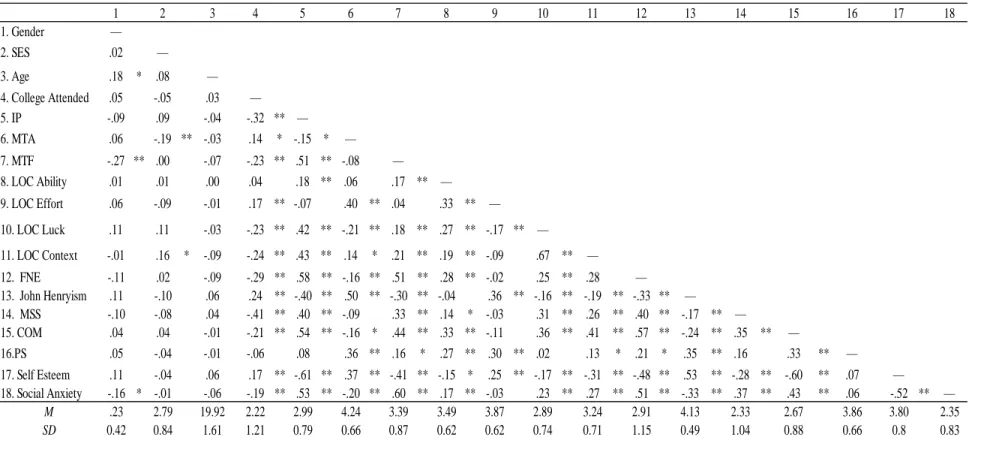
Table 1. Bivariate Correlations of Study Variables ... 91
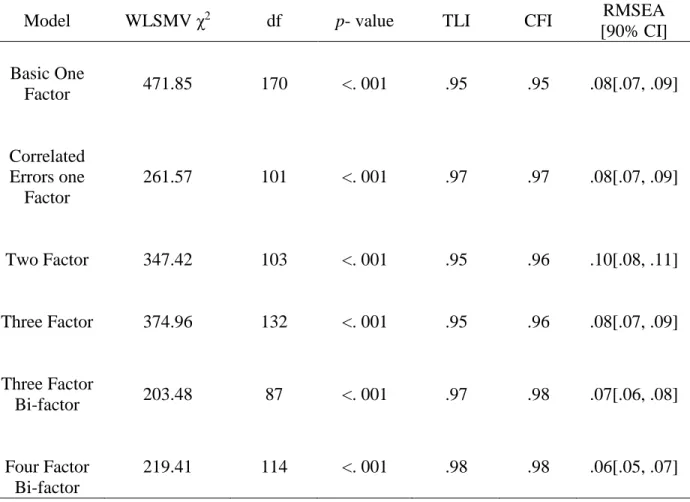
Table 2. Summary of Fit Statistics for Confirmatory Factor Analyses Across Factor Models .... 92
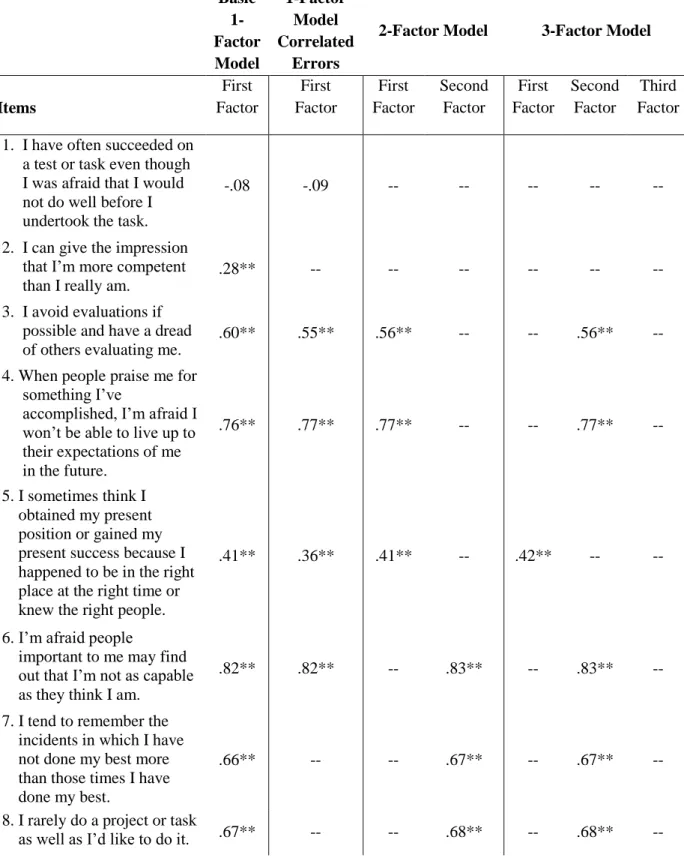
Table 3.Summary of Confirmatory Factor Analyses ... 93
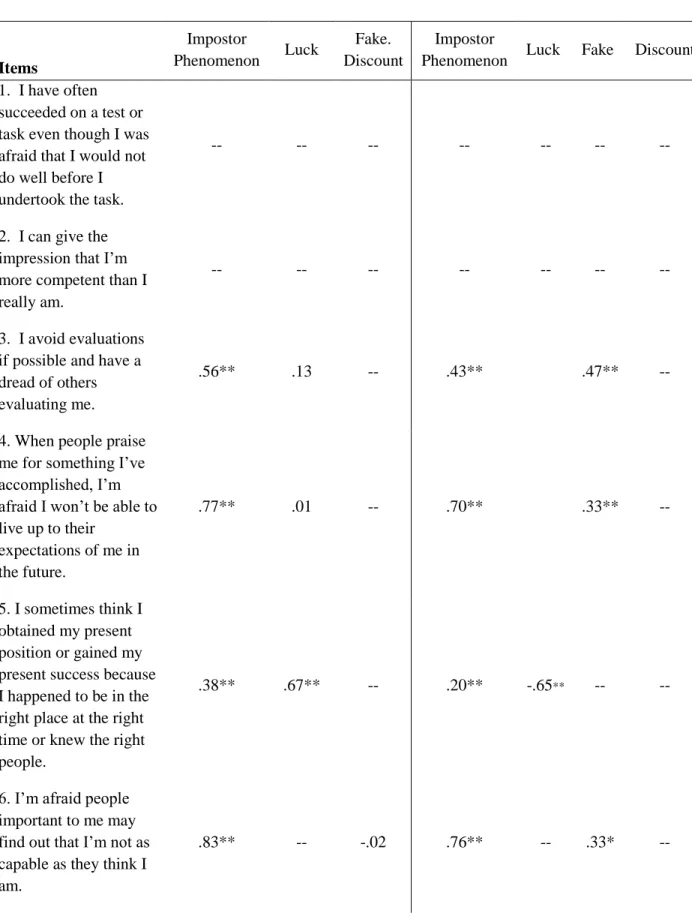
Table 4.Summary of Confirmatory Bifactor Analyses ... 96
Table 5. Discriminant Validity of Clance Impostor Scale (Bifactor Model) ... 99
Table 6. Summary of Four Factor Bi-factor Model Item Fit Over Time ... 101
Table 7. Summary of Confirmatory Factor and Bi-factor Model Fit Statistics Over Time... 106
Table 8. Summary of Exploratory Bi-factor Model Fit Statistics Over Time ... 107
Table 9. Summary of Four Factor Bi-factor Model Item Fit Over Time ... 108
Table 10. Summary of Exploratory Bi-factor Model Fit Statistics Over Time ... 112
Table 11. Summary of Four Factor Bi-factor Model Item Fit Over Time ... 113
Table 12. Summary of Four Factor Bi-factor Model Item Fit Over Time ... 117
Table 13. Qualitative Interview Participant Demographics ... 122
LIST OF FIGURES
Figure 1. Competing Factor Structure Models of the Clance Impostor Scale ... 125
LIST OF ABBREVIATIONS
Bi-EFA Bi-factor exploratory factor analysis
Bi-CFA Bi-factor confirmatory factor analysis
CFA Confirmatory factor analysis
CIPS Clance impostor scale
COM Concerns over mistakes
FNE Fear of negative evaluation
HBCU Historically Black college university
IP Impostor phenomenon
LOC Locus of control
MTA Motivations to achieve
MTF Motivations to avoid failure
PWI Predominately White institution
PS Personal standards
MSS Minority status stress
CHAPTER 1: INTRODUCTION
Despite the steadily increasing rates of enrollment among Black students within higher education, significant disparities remain in the number of Black students who are granted degrees among postsecondary institutions. In examining data from students who entered college in 2010, the National Student Clearinghouse Research Center found that within a six-year period, only 38% of Black students completed their degree compared to 62% of their White counterparts (Shapiro et al., 2017). Several factors may contribute to this disparity, as Black students are expected to negotiate a host of academic, social, and race-related stressors within collegial contexts in which they are often underrepresented (Greer & Brown, 2011; Neville, Heppner, Ji, & Thye, 2004). As articulated by Ford and Harris (1995) “…minority students are fighting a number of uphill battles” (p.198), which together can have significant negative implications for their developmental, psychological, and vocational trajectories.
Although originally conceptualized to capture feelings of high achieving White women (Clance, Dingman, Reviere, & Stober, 1995; Clance & O’Toole, 1987), recent research posits that identifying as a racial minority may serve as a “double shot” to feelings of intellectual incompetence (Peteet, Montgomery, & Weekes, 2015). That is, Black students may be more vulnerable to IP given that they must simultaneously navigate race-related stressors (e.g., culturally insensitive instructors, negative stereotypes, discrimination; Austin et al., 2009; Cokley et al., 2013; Franklin-Jackson & Carter, 2007; Utsey, Chae, Brown, & Kelly, 2002; Wei et al., 2010) and general academic related stress (e.g., academic stress, social stress; Arnett & Brody, 2008; Cokley et al., 2013). In support of this increased vulnerability, there is mounting evidence to suggest that feelings of IP among Black college students may be influenced by academic (e.g., academic survivor’s guilt) and race-related stressors (e.g., racial discrimination; (Austin et al., 2009; Cokley et al., 2013), significantly more so than that of peers from other racial groups (Cokley et al., 2017). In light of this compelling research, it is clear that IP represents an important construct to consider in the context of Black student well-being.
Despite the negative psychological implications of IP among Black emerging adults, few studies have taken steps to evaluate the validity of measurement tools utilized to capture
cognitions of intellectual incompetence among non-White samples. Rather, the majority of literature examining IP within Black samples has utilized measures created, normed, and validated to highlight the experiences of high achieving middle-and-upper class White women. This is particularly relevant for the Clance Impostor Scale (CIPS; Clance, 1985), which
represents the most popular scale used within impostor literature. Although this scale is considered by many to be the current gold standard of IP measurement (Chrisman, Pieper,
scale validation studies have produced inconsistent results related to its validity at both the item and factor level (Simon & Choi, 2017). As such, some scholars have begun to question its utility and validity (see Leary, Patton, Orlando, & Wagoner Funk, 2000). In addition to psychometric concerns, recent scholarship has posited that the CIPS may not fully capture the IP among Black students (Bernard, Hoggard, & Neblett, 2018; Ewing, Richardson, James-Myers, & Russell, 1996). In light of these critiques, it is surprising that extant work has yet to investigate the construct validity of the CIPS within Black samples. Such an oversight represents a significant gap in the literature that can have notable implications for the ways in which scholars
conceptualize, measure, and ultimately approach addressing cognitions of IP among Black emerging adults.
The Present Study
In order to address the aforementioned gap, the current project utilized a multi-study design to investigate the construct validity of the CIPS among Black college students. More specifically, construct validity of the CIPS was investigated through three separate, yet interrelated studies that: a) examined the factorial and divergent validity of the CIPS; b) investigated the longitudinal invariance of the CIPS; and c) elucidated the extent to which student narratives of IP align or diverge from the traditional theoretical conceptualization of IP. In line with scholarship calling attention to the shortcomings of the current conceptualization of IP (Leary et al., 2000; McElwee & Yurak, 2007), this study will be among the first to
contextualize IP within the lived experiences of Black students.
Making the Case for a Multi-Method Design
foundational understanding of IP. On the other hand, it is difficult to ascertain how Black students experience and make sense of cognitions of IP without incorporating their narratives into this process. Therefore, a more holistic approach, capitalizing on the strengths of both quantitative (e.g., survey data) and qualitative (e.g., interview data) methodologies is warranted to illuminate the construct validity of IP among Black emerging adults. The collection of quantitative survey data would facilitate the evaluation of the construct validity of current measurement tools using traditional statistical indicators (e.g., factorial validity, discriminant validity, measurement invariance). Further, the collection of qualitative data would provide much needed insight into how Black students discuss IP in the context of their own personal
experiences. The inclusion of student narratives represents an important component of this study, as it would provide an opportunity for Black students to discuss IP in their own words—
something seldom done within IP literature.
Developmental Significance and Context
Emerging adulthood represents a unique developmental period in which Black young adults are grappling with their identity and what it means to be Black in a society that commonly transits messages of racial inferiority (Graham, Sorenson, & Hayes-Skelton, 2014; Sue, 2010). This developmental period represents a particularly vulnerable period for many Black students given the increased salience and frequency of race-related stressors (Arnett & Brody, 2008), coupled with the increased autonomy, evolving social roles, and academic responsibilities characteristic of emerging adulthood (Arnett, 2000; Neblett, Bernard, & Banks, 2016; Roisman, Masten, Coatsworth, & Tellegen, 2004).
The college context represents a noteworthy setting in which these stressors and characteristics are most prominent, as the college experience signifies a transitional period in which youth navigate new experiences within novel environments, typically independent from that of familial contexts (Arnett, 2000; Negga, Applewhite, & Livingston, 2007). As alluded to above, this transition and period of self-exploration may be difficult for some Black students as many Eurocentric values emphasized within this context (e.g., independence, autonomy, and self-sufficiency) may conflict with more Afrocentric values (e.g., communalism, familial
support; Arnett, 2003; Neblett et al., 2016). In light of the independent and cumulative effects of these stressors, it is not surprising that the collegial experience has been argued to increase risk for IP (Bernard et al., 2017; Lane, 2015).
PWIs given that many of the stressors associated with increased endorsements of IP among Black individuals (e.g., race-related stress, experiences of racial discrimination) have been suggested to occur in environments that are less ethnically and racially diverse (Cokley et al., 2017, 2013). On the other hand, work by Austin et al. (2009) provided evidence to suggest that IP may also be an important construct to consider within predominately Black environments, as the authors found IP to mediate the relationship between academic survivor’s guilt (i.e., feelings of guilt related to high academic achievement relative to family members) and depressive symptoms within a sample of Black students attending an HBCU. Taken together, despite the markedly different stressors that Black students negotiate within PWIs and HBCUs (Negga et al., 2007), IP appears to represent a prevalent and deleterious set of cognitions within both contexts. Thus, while a comparative investigation of IP between students attending PWIs and HBCUs is outside the scope of this study, this literature makes a compelling case to incorporate a more representative sample in future investigations of IP in order to substantiate its occurrence within both settings.
Organization of this Document
CHAPTER 2: LITERATURE REVIEW
The goal of this chapter is to provide a critical review of extant research exploring IP. As such, this chapter will: 1) introduce the origin of IP, in addition to highlighting the unique characteristics of IP that make it distinguishable from other related constructs; 2) provide a presentation of correlates that have been linked to IP among predominately White and Black samples within both quantitative and qualitative studies; 3) discuss the utility and validity of IP assessment tools commonly used in the literature; and 4) articulate the limitations of the current state of IP literature. The chapter will conclude with a presentation of the study aims in addition to the respective research questions and hypotheses.
Background of Impostor Phenomenon
Coined by Clance and Imes (1978), IP was first observed during individual
psychotherapy sessions among high achieving women who described intense feelings of a self-perceived sense of intellectual fraudulence. IP represents a maladaptive set of cognitions that impedes on individuals’ ability to internalize their own success and take pride in their
(Ross & Krukowski, 2003) and negative evaluation (Chrisman, Pieper, Clance, Holland, & Glickauf-Hughes, 1995). As noted by Clance (1985), individuals struggling with IP have “extreme anxiety when they think they’ve made a mistake; they take drastic measures not to err or appear foolish in front of others” (p. 27). Yet, even in the face of objective success (e.g., high performance, awards, peer recognition), individuals high in IP commonly discount their abilities by attributing them to external factors (e.g., luck, happenstance) over and above that of internal faculties (Harvey & Katz, 1985).
Though certainly not without its criticisms (Leary et al., 2000; McElwee & Yurak, 2007), literature has provided evidence to suggest that IP represents a conceptually valid and distinct construct (Cozzarelli & Major, 1990; Kolligian Jr. & Sternberg, 1991). However, at face value, IP may appear analogous to that of other constructs shown to compromise feelings of
competence. For instance, IP and stereotype threat—the threat of confirming a negative social stereotype about one’s own group (Steele & Aronson, 1995)— appear to be similar in nature. Yet, upon closer examination, research suggests that stereotype threat operates to impair
performance when activated within specific evaluative settings and situations (Spencer, Logel, & Davies, 2016), whereas, IP has been conceptualized to permeate beyond any one particular setting (Clance et al., 1995). As noted by McClain et al. (2016), “the nature of IP as an emergent identity might allow IP to be present across contexts and, thus, may affect various
domains…”(p.103). Therefore, IP may represent a chronic and contextually pervasive experience, relative to the situationally activated nature of stereotype threat.
whereas an individual experiencing IP may feel incompetent in spite of objective evidence of competence (Lane, 2015; Leary et al., 2000). Thus, while self-efficacy may accurately map onto an individual’s performance on a particular task, feelings of IP are inconsistent and in conflict with their high levels of objective success. This distinction is in line with empirical evidence suggesting that achievement orientation is a risk factor for IP (King & Cooley, 1995), while being positively correlated with self-efficacy (Bell & Kozlowski, 2002).
Lastly, symptoms of social anxiety may also appear to have many commonalities with symptoms of IP (Leary et al., 2000). However, social anxiety is marked by significant fears of scrutiny from others, which causes considerable impairment in social, academic, or vocational contexts (American Psychiatric Association, 2013), whereas individuals endorsing high levels of IP are high achieving and excel (Kumar & Jagacinski, 2006), despite psychologically
disparaging cognitions stemming from internal beliefs of inferiority (Ross & Krukowski, 2003). As posited by Chrisman et al. (1995), IP experiences may serve as the impetus for social anxiety, as feelings of intellectual incompetence may undergird desires to be perceived by others in a positive light. In sum, while IP may appear to share characteristics of other conceptually related variables, it also has distinct elements that make it a unique and distinguishable construct.
Literature Review on Impostor Phenomenon
Over the past three decades, IP has received increasing empirical attention within a variety of different contexts (Bernard & Neblett, 2018; Sakulku & Alexander, 2011). While research has begun to elucidate the nature of IP within Black samples, the majority of work has been conducted within predominately White emerging adult samples. A general consensus within this literature is that IP represents a notable risk factor for negative psychological
(Kumar & Jagacinski, 2006), depressive symptoms (McGregor et al., 2008), low self-esteem (Sonnak & Towell, 2001), and decreased psychological well-being (September, McCarrey, Baranowsky, Parent, & Schindler, 2001).
In light of the harmful psychological implications of IP, several studies have sought to understand the myriad factors that may modulate feelings of intellectual incompetence. For example, gender differences in IP have been an area that has received a lot of attention. On the one hand, some research has found females to report higher rates of IP than males (e.g., Clance & Imes, 1978; McGregor et al., 2008). On the other hand, more recent scholarship has failed to find significant gender differences in IP (e.g., Cokley et al., 2015; Crawford, Shanine, Whitman, & Kacmar, 2016). As such, it appears that IP is important to consider among both males and females.
White college student samples (Cowman & Ferrari, 2002; Ferrari & Thompson, 2006; Leary et al., 2000).
Finally, a small body of literature has also catalogued various familial factors that may be associated with IP. For instance, King and Cooley (1995) found that family achievement
orientation (e.g., the emphasis a family places on achievement and competition) positively predicted IP among undergraduates. Furthermore, Sonnak and Towell (2001), illustrated that perceived parental control was the strongest predictor of IP aside from self-esteem. In addition, Castro, Jones, and Mirsalmi (2004) illustrated a significant positive association between IP and parentification, or the process by which a child assumes an emotional or supportive role for parents. These findings are consistent with literature that suggests that parenting styles that are overly protective or overly distant may deprive youth of their ability to adaptively develop feelings of competence (Li, Hughes, & Thu, 2014; Want & Kleitman, 2006).
Impostor Phenomenon Among African Americans
While the overwhelming majority of research conducted in relation to IP has occurred within predominately White samples, an increasing body of literature has begun to explore the relevance and implications of this construct among Black and non-White samples. A general theme within this literature is that there are race-related factors unique to the experiences of Black individuals (and other marginalized groups of color) that shape feelings of IP (Cokley et al., 2017; Peteet, Montgomery, et al., 2015). Scholars suggest that these factors may increase risk and susceptibility for IP (Austin et al., 2009), alter how Black individuals describe the IP
such, what follows, is a review of the growing body of literature that supports the rationale for examining IP among Black emerging adults.
Perhaps the most popular context in which IP has been explored among Black young adults is within the relationship between race-related stress and mental health. For instance, guided by Spencer’s Phenomenological Variant of Ecological Systems Theory (PVEST; Spencer, 1995), some studies have examined IP in the context of minority status stress and mental health. Minority status stress can be defined as “the unique stressors experienced by minority students, which may include experiences with racism and discrimination, insensitive comments, and questions of belonging on a college campus” (McClain et al., 2016, p. 102). Scholarship examining the associations among IP and minority status stress have found that these two constructs are positively associated, and that IP can have stronger or at least equivalent impact on the psychological adjustment of Black college students (Cokley et al., 2013; McClain et al., 2016).
In a similar vein, other studies have examined IP in the context of racial discrimination, considered by many to be among the most universal stressors that Black individuals must navigate throughout the lifespan (Pascoe & Smart Richman, 2009). Through multigroup path analyses, Cokley et al. (2017) found that the association between perceived discrimination and IP was stronger among Black and Latino/a American students in comparison to their Asian
American peers. Similarly, grounded within the integrative model (García Coll et al., 1996), Bernard and colleagues (2017) found a positive association between IP and decreased
Outside of race-related stress, scholars have also explored IP in relation to ethnic and racial identity. In one of the first empirical studies that sought to elucidate predictors of IP among Black students, Ewing and colleagues (1996) found that academic self-concept and immersion–emersion racial identity attitudes were negative predictors of IP. A more recent study found that higher levels of self-esteem mediated the association between racial identity and IP among Black college students (Lige et al., 2017). Furthermore, within a sample of Black and Hispanic college students, Peteet, Montgomery, and Weekes (2015) found that low ethnic identity and low psychological well-being positively predicted IP. Consistent with this cross-sectional research, longitudinal work has shown that certain profiles or patterns of racial identity significantly increased or decreased the extent to which individuals reported cognitions of IP over an eight month period (Bernard, Hoggard, et al., 2017).
Quantitative Measurement of Impostor Phenomenon
Since its inception, numerous scales have been developed to validate and capture cognitions of IP (Clance & Imes, 1985; Harvey, 1981; Kolligian & Sternberg, 1991). Harvey’s (1981)14-item self-report scale represented one of the first standardized scales used to measure IP. However, literature has established this scale to possess several shortcomings including its low reliability, inability to fully capture keystone attributes of IP (e.g., fear of negative
evaluation and concerns related to feeling less capable than peers), and language and sensitivity issues (Chrisman et al., 1995; Holmes, Kertay, Adamson, Holland, & Clance, 1993). In response to these limitations, the CIPS— a 20-item self-report measure, and the Perceived Fraudulence Scale (Kolligian & Sternberg, 1991)—a 51-item self-report measure were created. Psychometric validation studies comparing these scales suggests that the CIPS may be a superior measure, given its brevity, wording (which is intended to minimize socially desirable responses), and overall ease of administration (Chrisman et al., 1995; French, Ullrich-French, & Follman, 2008; Holmes et al., 1993). Subsequent investigations of the CIPS have documented this scale to possess strong reliability (i.e., internal consistency) and validity (i.e., discriminant, convergent validity; (Chrisman et al., 1995; Cozzarelli & Major, 1990; French et al., 2008) within
predominately White samples, which has led many to recognize this measure as the best and most reliable measure of IP.
Discount items measure thoughts about the inability to internalize and acknowledge good performance and praise. The Luck items highlight thoughts of having accomplished tasks due to luck, or chance, and not innate ability.
Seeking to confirm and build upon this work, Chrisman et al. (1995) conducted a psychometric validation study on the CIPS within a sample of 269 predominately White undergraduate students. The first goal of this study was to establish the concurrent and
discriminant validity of the CIPS. The authors found that the CIPS was positively correlated with another measure of IP (i.e., Perceived Fraudulence Scale) and could be “substantially
differentiated” from well-being measures of depression, social anxiety, esteem, and self-monitoring (Chrisman et al., p. 463). The second goal of this study was to elucidate the factor structure of the CIPS to confirm its factorial validity. Through use of exploratory factor analysis, Chrisman et al. produced similar findings to Ketray and colleagues, and concluded that a three-factor model (i.e., Fake, Discount, Luck) using 18 of the 20 items on the CIPS was the most parsimonious factor structure. From these findings, the authors suggested that construct validity for this tool had been established and that the factor structure of this measurement tool was stable.
More recent studies have continued to investigate the factor structure and psychometric properties of the CIPS with inconsistent results. In an investigation of the psychometric
properties of the CIPS, French et al. (2008) conducted a confirmatory factor analysis (CFA) to test the fit of the three-factor model, a two-factor model, and a one-factor model within a predominately White sample (87%) of 1271 undergraduate students. Findings revealed
deemed to best explain the factor structure of the CIPS. The two-factor model was comprised of a “Luck” dimension, and a “Fake.Discount” dimension in which the original Fake and Discount subscales were collapsed into one subscale. Conversely, using CFA Jöstl, Bergsmann,
Lüftenegger, Schober, and Spiel (2012) examined the factor structure of a16-item German version of the CIPS among a sample of Austrian doctoral students, finding that a one-factor model with specified correlated errors produced better fit statistics and was therefore more parsimonious than that of the three-factor model.
In light of the disagreement about the factor structure of the CIPS, Simon and Choi (2017) compared each of the previously identified factor structures (i.e., one-factor, two-factor, three-factor) against one another to identify the most parsimonious fit. More specifically, the authors utilized CFA to test the factor structure of the aforementioned one, two, and three-factor models using the 20-item CIPS among a predominately White college student sample (64%). Interestingly, their results revealed that all three models produced acceptable fit indices; however, the authors stated that the factors within the two and three-factor models were highly correlated (.84 or higher). Therefore, the one-factor model with specified correlated errors was concluded to be the most parsimonious model. Taken together, despite being considered to be the best measure of IP, there appear to be contradictory accounts of its factor structural and item composition. In considering the inconsistent dialogue related to quantitative measures of IP, it is important to highlight scholarship that has taken alternative approaches to refine and extend our understanding of this construct and its implications among emerging adult samples.
Qualitative Investigations of Impostor Phenomenon
White emerging adults (ages 18-25) entering into professional roles. Framed within a grounded theory design, this study was conducted in two phases in which participants first completed qualitative surveys, followed by a subsample of the participants providing in-depth individual interviews.
Results from the study revealed several interesting findings that mirror many of the results within quantitative investigations of IP. First, roughly 80% of the participants reported resonating with impostor experiences, including feelings of perceived fraudulence, discounting objective evidence of success, and self-doubt. Second, analyses revealed that participants reported that high motivation, perfectionism, and the inability to self-validate were three characteristics that increased risk for IP feelings. Participants also reported that comparative tendencies (e.g., comparing performance and perceived abilities with peers) and evaluative contexts strengthened feelings of IP. However, the more time an individual spent in a specific role, the more feelings of IP diminished. Thus, the authors suggested that gaining experience in a particular setting, context, or role appeared to reduce feelings of IP among emerging adults. Third, participants noted several performance (e.g., avoidance) and affective (e.g., anxiety, guilt) related outcomes associated with feelings of intellectual incompetence. Based on these findings, the author concluded that IP is a sequential process whereby participants first experience feelings of self-doubt when faced with a specific task, which is then followed by feelings of
incompetence when completing the task, and concludes by minimizing success following task completion.
Two participants identified as persons of color (i.e., African American, Latina, and Native American). Framed within a case-study design, this study first utilized individual interviews to gather data related to IP with each participant, and then collected supplemental data through use of a focus group in which all participants came together to speak about their experiences.
Through use of concurrent data analyses, cognitions of IP were found to be salient and common within the sample, influenced by self-perceptions of inadequacy and academic preparedness, fears of failure, and familial expectations. Furthermore, findings provided evidence to suggest that IP may be most prominent during the transition to a new role, as participants identified first year, first semester coursework and expectations as a significant source of IP. Many students were also found to report questioning the extent to which they belonged on campus, and attributed these doubts to their IP cognitions. Third, and perhaps most notably, was the emergent theme related to the awareness of racial minority status raised only by the students of color in the sample. More specifically, these students reported that not having adequate representation on campus and feelings of marginalization and isolation within their program were particularly significant in contributing to cognitions of IP. These statements are in line with research that suggests that an awareness of racial minority status may evoke a sense of “othering” that may exacerbate cognitions of IP (Lige et al., 2017; Peteet, Brown, et al., 2015).
beyond traditional close-ended quantitative techniques to add much needed contextualization and nuance to our understanding of IP among Black students.
Limitations
Though quantitative and qualitative studies have begun to shed light on IP among young adults, numerous shortcomings of the current state of the literature are worth noting. First, despite being widely considered to be the best measure of IP, psychometric investigations of the CIPS have struggled to produce consistent results. For example, while some studies suggest that the CIPS is multidimensional (Chrisman et al., 1995; French et al., 2008), others suggest that this scale is unidimensional (Jöstl et al., 2012; Leary et al., 2000; Simon & Choi, 2017). Moreover, there appears to be little consensus at the item level of the CIPS, as research has ranged in the extent to which they have used all 20-items, 18-items, 16-items, or even only 7-items of the CIPS within their analyses. Conversely, despite literature attempting to distinguish IP from conceptually similar constructs (Chrisman et al., 1995; Cozzarelli & Major, 1990), these abovementioned inconsistencies have led some to call into question the efficacy of the CIPS to distinguish as a unique construct (Leary et al., 2000; McElwee & Yurak, 2007). For this reason, Bernard and Neblett (2018) note that this conceptual ambiguity may cause IP to be perceived as a “fuzzy concept”, which Ziegler, Kemper, and Lenzner (2015) define as a concept with unclear or vague operational boundaries. With these concerns in mind, there is an immediate need to establish construct validity for the CIPS among non-White samples.
has yet to take steps to empirically investigate the construct validity of the CIPS among Black and other racial/ethnic minority samples. This oversight is striking considering that IP and subsequent measures were developed to highlight the experiences of high achieving White women roughly 40 years ago. Thus, with the exception of basic reliability reporting (i.e., Cronbach’s Alpha), the psychometric properties and validity of this measurement tool remains an unexplored area of research among Black samples. Given that research has begun to explore IP in more complex and nuanced ways among Black samples (e.g., as a mediator, moderator, and longitudinally; Bernard et al., 2017; Cokley et al., 2017; Lige et al., 2017), it is crucial for
construct validity to be established for the CIPS among Black people.
Third, the majority of research investigating IP has relied heavily on quantitative survey practices with the assumption that the traditional conceptualization of IP aligns with the
experiences of IP among Black samples. While these studies have certainly been vital in
2015), which is not the case for their non-Black counterparts. Thus, while we know that experiences unique to the Black experience may contribute to IP cognitions, what remains unclear is how reports of IP among Black individuals may be similar or dissimilar from that of their White peers. Therefore, additional work is needed to understand how Black emerging adults speak about IP and the extent to which their narratives align or diverge from our current conceptualization and measurement of this construct.
Study Aims
In considering the aforementioned limitations, the current study had three overarching aims that took the form of three separate studies, which together sought to investigate the construct validity of the CIPS among Black emerging adults. The first aim was to examine the factorial (i.e., the extent to which previously identified factor structures could be replicated; Piedmont, 2014) and discriminant validity (the distinguishability of a specific scale from conceptually similar, yet unrelated constructs; Campbell & Fiske, 1959) of the CIPS among Black college students. Therefore, two research questions guided the first study:
RQ1: What is the dimensionality of the CIPS among Black students?
RQ2: To what extent can discriminant validity be established for the CIPS among Black students?
Consistent with previous work that has established the CIPS to be a unique and valid construct within predominately White samples, (Chrisman et al., 1995; Cozzarelli & Major, 1990), I hypothesized that discriminant validity would be established for the CIPS among Black college students. Said differently, I predicted that the CIPS would be distinguishable from conceptually similar constructs including achievement motivation, locus of control, coping styles, perfectionism, self-esteem, fear of negative evaluation, social anxiety, and minority status stress.
The second aim of the study was to examine if the factor structure of the CIPS remained the same across multiple time points, otherwise known as longitudinal measurement invariance. Measurement invariance is considered a critical component of psychometric validation
(Meredith, 1993), and if established, provides evidence to suggest that changes in scores on a particular instrument (i.e., CIPS) reflect actual differences in the latent construct being measured (i.e., IP). However, if measurement invariance is violated, differences in scores over time on a particular measure may not correspond to actual changes of the measured latent variable, and instead may lead to limited or inappropriate conclusions related to the causes or factors that influenced such change (Fried et al., 2016). In light of the inconsistent dialogue and evidence surrounding the factor structure of the CIPS, invariance testing will provide much needed clarity on this matter through a longitudinal validation approach. The following research question guided the second study of this project, which investigated the measurement invariance of the CIPS.
As described previously, extant scholarship examining the factor structure of the CIPS within predominately White samples has resulted in inconclusive findings and disjointed conclusions. As such, the factor structure of the CIPS appears to be highly volatile and sample determinant. For this reason, it is difficult to believe that any particular factor structure will remain invariant when examined over time. As such, I hypothesize that the CIPS will violate longitudinal measurement invariance assumptions when examined within a sample of Black emerging adults.
Finally, the third aim of the present work sought to compliment the prior studies by using qualitative methodologies (i.e., in-depth interviews) to elucidate how Black students discussed and made sense of IP, with the goal of comparing student narratives to the traditional theoretical conceptualization of this construct. As noted by DeCuir-Gunby and Schutz (2016), “the attempt with qualitative research . . . is to explore how individuals understand and experience [a] topic of interest” (p. 36). As such, I was particularly interested in elucidating the extent to which Black student narratives of IP align or diverge from IP as traditionally conceptualized in the literature. I argue that integrating the narratives of Black students within investigations of IP would
substantially improve how IP is conceptualized and contextualized among non-White samples. Thus, findings from this study can substantially improve the precision of future explorations of IP among Black samples. The following research questions guided the qualitative exploration of IP which comprised Study 3:
RQ4: How does the way in which Black students speak about IP align or diverge with the original themes posited in its original conceptualization and measurement (e.g. feeling luck, fraudulent, and discounting of ability)?
CHAPTER 3: STUDY 1
This study investigated the factorial and discriminant validity of the CIPS. As stated by Dimitrov (2010), examining these forms of validity represent key steps in establishing the construct validity of any particular measure. Thus, the purpose of this study was to investigate the extent to which previously identified CIPS factor structures generalize to the current sample, and to establish the distinguishability of this scale from other conceptually similar measures.
Method
Participants. Participants were recruited to participate from four public institutions in the state of North Carolina. Two of these universities were PWIs, and two were HBCUs. The overall sample originally comprised of 272 African American/Black students. However, several cases were excluded from analyses due to being ineligible (e.g., outside of required age range), duplicates (e.g., same person completing data multiple times), or incomplete data. The final sample comprised of 261 students, 134 students attended PWIs (51%) and 127 students attended HBCUs (49%); 200 females (77%) and 59 males (23%), with an average age of 19.92 years (SD = 1.61). Notably, students attending PWIs reported significantly higher IP scores (M = 3.24; SD= .73) than students attending HBCUs (M = 2.73; SD = .77), t(259) = 5.51, p < .001.
Participants attending PWIs had an average age of 19.9 years (SD = 1.37; age range = 18–25). Approximately 34% of participants from PWIs were seniors, 31% were juniors, 23% were sophomores, and 10% were year students. The majority of students were not first-generation college students (70%), and self-reported cumulative average was a “B+” (Mgpa =
however, 7% reported their family SES as poor, 24% as working class, 47% as middle class, and 22% as upper middle class. Additionally, the majority of students endorsed heterosexual
orientations (84%), whereas, 8% reported bisexual, 4% reported gay or lesbian, and 4% reported unsure or other.
Participants attending HBCUs had an average age of average age of 19.97 years (SD = 1.37; age range = 18–25). Approximately 24% of participants from HBCUs were seniors, 32% were juniors, 28% were sophomores, and 15% were first-year students. The majority of students were not first-generation college students (58%), and self-reported cumulative average was a “B” (Mgpa= 3.03; SD = 0.61). The median report of socioeconomic status (SES) was “middle class,”
however, 4% reported their family SES as poor, 35% as working class, 44% as middle class, 15% as upper middle class, and 1% as wealthy. Additionally, the majority of students endorsed heterosexual orientations (88%), whereas, 7% reported bisexual, 2% reported gay or lesbian, and 1% reported unsure or other.
Procedures
Following institutional review board approval from each university in which data were collected, the project was advertised in several ways to garner interest (i.e., mass emails, flyers, word of mouth). To be eligible to participate, students were required to self-identify as African American/Black, be enrolled full-time as an undergraduate student at one of the four institutions in which data were collected, and be between the ages of 18-25. Individuals interested in
participants who completed the online questionnaire were compensated via a $10 Amazon gift card.
Measures (See Appendix)
Sociodemographic information. Students were asked to complete several
sociodemographic items including age, socioeconomic status, sex, race/ethnicity, grade point average, class year, major, racial composition of their institution, and first-generation status.
Impostor Phenomenon. Clance’s Impostor Scale (CIPS; Clance, 1985) is a 20-item self-report measure that assesses the extent to which individuals experience impostor feelings or worries (α = .92). Responses on the CIPS are rated from 1 = not at all true to 5 = very true, with higher scores reflecting more intense impostor feelings. Sample items from the CIPS include “At times, I feel my success was due to some kind of luck” and “I often compare my ability to those around me and think they may be more intelligent than I am.” Psychometric investigations of the CIPS document the scale to possess satisfactory internal consistency, in addition to concurrent and discriminant validity within White college student samples (Chrisman et al., 1995;
Cozzarelli & Major, 1990). Recent studies utilizing the CIPS within Black college student samples suggest that the CIPS has sound internal reliability. For instance, a recent longitudinal study reported the Chronbach’s alpha for the CIPS to be 0.93 at two time points, eight months apart (Bernard, Hoggard, et al., 2017).
I can find out how capable I am” and “I am attracted by tasks, in which I can test my abilities.” Sample items on the MTF subscale are: “I feel uneasy to do something if I am not sure of succeeding” and “Even if nobody would notice my failure, I’m afraid of tasks, which I’m not able to solve.” Total scores for each subscale are calculated from participant responses on a Likert scale (1 = “strongly disagree” to 4 =“strongly agree”). Higher scores on the MTA represent a greater focus on achievement and positive outcomes, whereas higher scores on the MTF correspond to greater concerns of negative outcomes and fears of failure. Extant literature using the AMS-R illustrates the subscales to be valid and internally reliable measures of
achievement motivation in both White and Black samples (Caldwell & Obasi, 2010; Lang & Fries, 2006). Moreover, the MTF subscale has been shown to positively correlate with measures such as fear of negative evaluation, worry, and test anxiety, while the MTA subscale has been documented to positively correlate with measures of flow, persistence, and task enjoyment (Lang & Fries, 2006).
Locus of Control. Locus of control was measured using the
Multidimensional-Multiattributional Causality Scale (MMCS; Lefcourt, 1981; α = .75). The MMCS is comprised of two separate sections that measure achievement and affiliation goals through four subscales that correspond to causal internal (i.e., ability, effort) and external (i.e., situation, luck)
attributions. For the purpose of the current project, only the achievement section of the scale was utilized. The achievement section of the MMCS is composed of four subscales that align with each of the respective internal and external attribution styles (ability, effort, situation, luck).
level (e.g., “When I get good grades, it is because of my academic competence”). Higher scores on this subscale represent higher levels of internal ability attributions. The Effort subscale (α = .73) measures the extent to which participants believe that their academic performance is due to active attempts to understand course content (e.g., “When I fail to do as well as expected in school, it is often due to a lack of effort on my part”). Higher scores on this subscale correspond to higher levels of effort-related attributions. The Context subscale (α = .61) measures the degree to which participants believe that their academic performance is a result of external factors outside of their control including the difficulty of a particular professor and ease of course content (e.g., “Some of my good grades may simply reflect that these were easier courses than most”). Higher scores on this subscale represent higher levels of contextual attributions. Finally, the Luck subscale (α = .74) measures the extent to which participants attribute their academic performance to chance (e.g., “Sometimes my success on exams depends on some luck”). Higher levels of this subscale represent higher levels of luck-based attributions. Several studies
examining the psychometric properties of this scale have established construct validity (e.g., discriminant and convergent validity), in addition to the multidimensionality of the MMCS (Hamilton & Akhter, 2002; Powers, Douglas, & Choroszy, 1983).
find fault with me.” Previous studies have demonstrated the BFNE to have strong internal consistency among Black individuals (Johnson & Anderson, 2014). Psychometric investigations of the BFNE have documented the BFNE to be a valid (e.g., discriminant validity) and reliable measure of fear of negative evaluation (e.g., test-retest, inter-item reliability; Collins, Westra, Dozois, & Stewart, 2005).
John Henryism. The John Henryism Scale for Active Coping (James, Hartnett, & Kalsbeek, 1983) was used to measure John Henryism, or the proclivity of an individual to actively engage a perceived stressor with a mindset that through persistent, hard work, and determination, stressors and demands can be overcome (α = .76). The John Henryism scale is a self-report measure that asks participants to rate the degree to which they agree with 12
statements that describe characteristics of active coping (1 = “completely false” to 4 = “completely true”). Sample items on this measure are “When things don’t go the way I want them to, that makes me work even harder” and “I don’t let my personal feelings get in the way of doing a job.” Higher scores on this scale correspond to more effortful coping in the face of difficult psychosocial stressors. Previous studies indicate that this scale demonstrates adequate reliability (Hudson, Neighbors, Geronimus, & Jackson, 2015) and construct validity (i.e., discriminant and convergent) among Black individuals (Fernander, Dura’n, Saab, Llabre, & Schneiderman, 2003).
more general stressors that may by intensified due to minority status (e.g., pressures to perform well in school). A sample item on the MSSS is “White students and faculty expect poor
academic performance from students of my race.” Previous investigations suggest the MSSS contains six subscales measuring environmental stresses, achievement stresses, race-related stresses, interpersonal stressors with White people, intrapersonal stresses, and interpersonal stresses among ethnic minority groups (Cokley et al., 2013). However, recent research suggests the total score may have a stronger internal consistency, as previous studies have reported Chronbach’s alphas ranging from 0.93 to 0.97 (Cokley et al., 2013; Greer & Brown, 2011; Greer & Chwalisz, 2007; McClain et al., 2016).
have established this scale as a reliable and valid measure of perfectionism (Hewitt, Flett, Turnbull-Donovan, & Mikail, 1991).
Self-esteem. Global self-esteem was assessed using the 10-item Rosenberg Self-Esteem Scale (Rosenberg, 1965; α = .89). Participants rated the degree to which they agree with 10 statements (e.g., “I feel that I have a number of good qualities”) on a 4-point scale (1 = “strongly agree” to 4 = “strongly disagree”). Higher scores on this measure represent higher levels of global esteem. This inventory has evidenced acceptable internal reliability (α = 0.76) when used among Black samples (e.g., Harris-Britt, Valrie, Kurtz-Costes, & Rowley, 2007).
Social Anxiety. The Social Interaction Anxiety Scale (SIAS; Mattick & Clarke, 1998) was used to measure symptoms of social anxiety (α = .92). The SIAS is a 20-item self-report measure that asks participants to indicate the degree to which they feel statements are
characteristic or true for them (1 = “not at all” to 4 = “extremely”). Sample items on this measure are “I worry about expressing myself in case I appear awkward” and “I find it difficult mixing comfortably with the people I work with.” Higher scores on this scale are indicative of greater symptoms of social anxiety. Previous studies examining the SIAS to have sound internal consistency among Black samples (Carter, Sbrocco, Tang, Rekrut, & Condit, 2014).
Furthermore, psychometric investigations of the SIAS have established construct validity (e.g., convergent and discriminant validity; Osman, Gutierrez, Barrios, Kopper, & Chiros, 1998).
Analytic Plan
two-factor model (French et al., 2008), and a three-factor model (Chrisman et al., 1995). Furthermore, in light of the increasing prevalence of bi-factor models, which evaluate general and domain specific factors underlying a particular measure (i.e., total score and subscore; (Reise, Moore, & Haviland, 2010), two bi-factor confirmatory factor analysis (bi-CFA) models were also examined for French’s two-factor and Chrisman’s three-factor model. If the bi-CFA revealed an improvement in fit above and beyond the previously discussed models, it suggests that a total score of IP in addition to subfactor scores can be meaningfully calculated and interpreted.
Factor structures were estimated using weighted least squares (WLSMV) estimation in place of Maximum Likelihood (ML) estimation, as the data in the current study are ordinal and violate assumptions of multivariate normality (Finney & DiStefano, 2006). Since factor models were non-nested, traditional comparative fit indices (i.e., Chi Square difference test) are
unavailable when using the WLSMV estimation framework. As such, for each model tested (including bi-factor CFAs), model fit was evaluated and compared using a number of goodness-of-fit indices—specifically, the Root Mean Square Error of Approximation (RMSEA; ≤ .08; Steiger & Lind, 1980), Tucker-Lewis Index (TLI; ≥ .95; Tucker & Lewis, 1973, and
Comparative Fit Index (CFI; ≥ .95; Bentler, 1990)
could be distinguished from theoretically related constructs using recommendations from David Kenny, that suggests that a correlation of .85 or larger indicates poor discriminant validity (Kenny, 2014). More specifically, the CIPS was compared to measures assessing achievement motivation, locus of control, fear of negative evaluation, John Henryism, minority status stress, perfectionism, self-esteem, and social anxiety. Covariates within these analyses included age, sex, and racial composition of college attended.
Results
Prior to examining the primary aims of the study, preliminary analyses included the examination of means and standard deviation of all study variables (Table 1).
Dimensionality of the Clance Impostor Scale
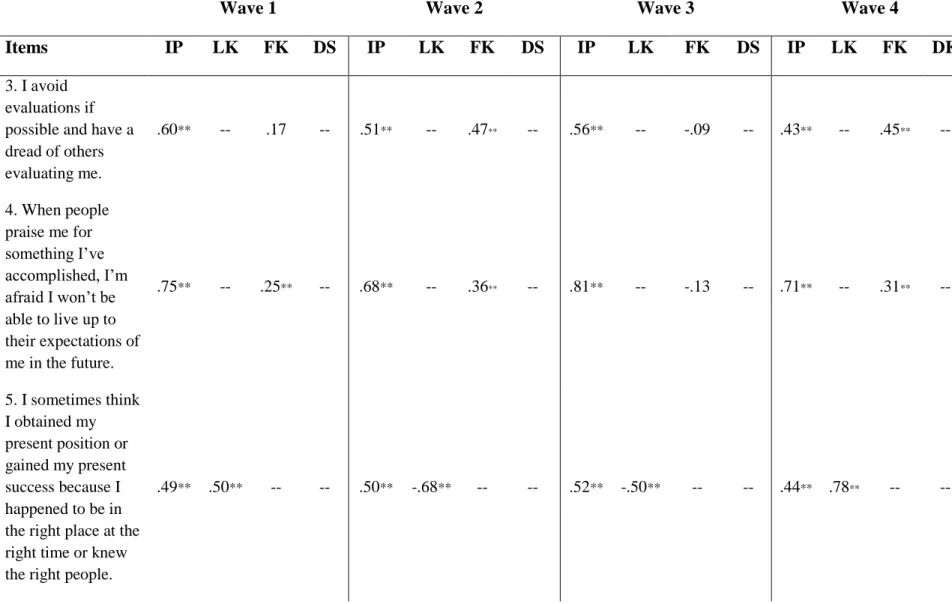
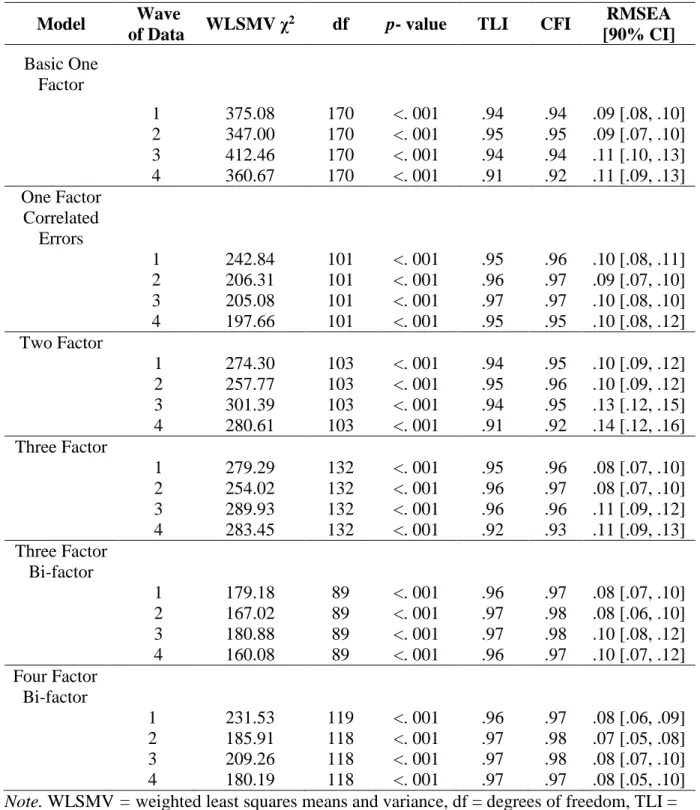
As seen in Table 2, the basic one-factor model with no correlated errors demonstrated adequate model fit: χ²(170) = 471.85, p < .001; RMSEA = .08; TLI = .95, CFI = .95. Similarly, the correlated errors one-factor model, demonstrated acceptable fit: χ²(101) = 261.57, p < .001; RMSEA = .08; TLI = .97, CFI = .97. However, within both of the one-factor models, item 1 was found to load negatively and non-significantly (bbasic= -.08, p = .19; bcorrelated errors = -.09, p =
.15). With respect to the two-factor solution, model fit produced fit indices that were outside of the acceptable range: χ²(103) = 347.42, p < .001; RMSEA = .10; TLI = .95, CFI = .96, and produced remarkably high correlations between the two-factors (r = .98). Finally, while results for the three-factor solution demonstrated acceptable model fit: χ²(132) = 374.96, p < .001; RMSEA = .08; TLI = .95, CFI = .96, the model evidenced high correlations between each of its factors (rs = .93). Table 3 provides a summary of item fit for each of the aforementioned models.
that may be more advantageous for examining the dimensionality of the CIPS (Reise et al., 2010). More specifically, a three-factor bi-CFA (i.e., one general and two subtype factors) and a four-factor bi-CFA (i.e., one general and three subtype factors) were conducted to investigate the multiple dimensions of the CIPS after parsing out item response variance from the general factor.
The three-factor bi-CFA model demonstrated good model fit: χ²(87) = 203.48, p < .001; RMSEA = .07; TLI = .97, CFI = .98. However, correlations between the latent subfactors remained high (.60). In comparison, the four-factor bi-CFA evidenced slightly better model fit: χ²(114) = 219.41, p < .001; RMSEA = .06; TLI = .98, CFI = .98, with subfactors being correlated less than the previous model (rs≤ .54) As shown in Table 4, all items loaded strongly on the general factor and no cross-loadings were identified between the three subtype factors.
Therefore, the four-factor bi-CFA was determined to fit the data best. The general factor which consisted of 18-items (items 3-20 on the CIPS) reflects IP more broadly (α = .93). In addition, as specified by Chrisman et al. (1995) the first subtype factor consisted of four items that reflect the Luck dimension of IP (α = .74; sample item: “At times, I feel my success has been due to some kind of luck”), the second subtype factor contained eight items that together capture the Fake dimension of IP (α = .90; sample item: “I’m afraid people important to me may find out that I’m not as capable as they think I am.”), and the third subtype factor was comprised of two items that together captured the Discount dimension of IP (α = .69; sample item: “If I receive a great deal of praise and recognition for something I’ve accomplished, I tend to discount the importance of what I’ve done”). See Figure 1 for a visual representation of the various factor structures tested.
Discriminant Validity of the Clance Impostor Scale
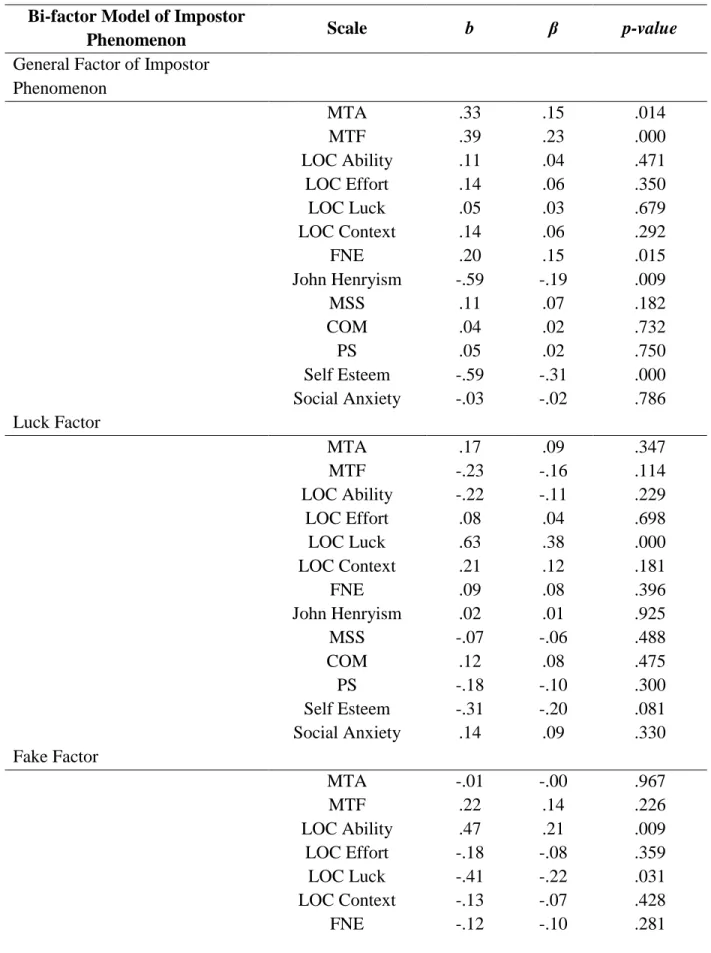
four-factor bi-CFA. As seen in Table 5, the general factor of IP was found to be positively associated with positive (i.e., hope for success) and negative (i.e., fear of failure) achievement motivations (b = .33, p = .014; b = .39, p < .001, respectively), and fear of negative evaluation (b = .20, p = .015). Moreover, the general factor of the CIPS was found to be negatively correlated with John Henryism (b = -.59, p = .009) and self-esteem (b = -.59, p < .001).
With respect to the subfactors, the Luck subscale was found to be positively associated with the luck specific locus of control subscale (b = .63, p < .001). Furthermore, the Fake subscale was positively associated with the ability specific locus of control subscale (b = .47, p = .009), and also negatively associated with social anxiety (b = -.47, p = .003) and luck-based locus of control (b = -.41, p = .031). Finally, the Discount subscale was positively associated with the ability specific locus of control subscale (b = .57, p = .015), and also negatively linked with indicators of social anxiety (b = -.69, p = .001).
Discussion
Within the past decade, increasing attention has been given to understanding the
relevance and implications of IP among Black individuals. Despite this literature, relatively little work has sought to establish the construct validity of popular scales designed to capture IP cognitions among Black samples. As a result, the factor structure and discriminability of tools such as the CIPS remain largely unexplored within this population. Thus, the purpose of this study was twofold. The first aim was to examine the factorial validity of the factor structure of the CIPS within a sample of Black emerging adults. Results partially supported the hypothesis of factorial multidimensionality, as bi-CFA revealed a four-factor model for the CIPS that
structure strongly resembles Chrisman and colleagues three-factor model, it is important to note that CFA analyses indicated that none of the previously identified one, two, and three-factor models generalized to the current sample.
Interestingly, when the multidimensional models were examined through a bi-factor framework, fit increased substantially. It is possible that this improvement may be attributed to the ability of the bi-factor model to parse out item response variance from a general factor (Reise et al., 2010). In support of this hypothesis, scholars posit that a strength of bi-factor models is their ability to account and partition the multidimensional variance of a construct (Chen, West, & Sousa, 2006). Thus, when considering the high correlation observed between the general factor of IP and its three subfactors, it makes sense that the both bi-factor models produced fit indices that were significantly better than the non bi-factor models.
Given the multidimensionality of the CIPS, the bi-factor model may offer a practical way of making sense of the heterogeneous ways in which IP may manifest among Black students. Said differently, a bi-factor approach may better capture individual differences in responses on the CIPS (Reise, Morizot, & Hays, 2007). As an example, while one individual may endorse high self-perceptions of fraudulence, he or she may not report other dimensions of IP (e.g., cognitions of luck or tendencies to discount their own abilities) as germane to their own
indicator, the CIPS could be used to catalogue general cognitions of IP as commonly used within the literature. As a domain specific indicator, the subscales of the CIPS could be used to
deconstruct if a specific set of cognitions related to luck, discounting success, or fraudulence have a greater impact in shaping IP.
Though there may be advantages of estimating the CIPS as a bi-factor model, the failure to find a consistently generalizable model structure represents a recurrent trend within the literature that may be indicative of larger psychometric problems for this tool. For example, every published study examining the validity or psychometric properties of the CIPS has
reported using less than all 20-items. This is concerning as it suggests that there are several items on this scale that may not be performing as intended. Analyses within the current work supported this assertion, as item 1 (“I have often succeeded on a test or task even though I was afraid that I would not do well before I undertook the task”) was found to explain very little variance (r2≤
.008) when included in models, and also appeared to load negatively or non-significantly. Though only included in one model, item 2 (“I can give the impression that I’m more competent than I really am”) also appeared to only contribute marginally, contributing to less than .08% of the variance explained. Moving forward, scholars should consider the utility of more item driven analyses (e.g., item response theory) to clarify item functioning on the CIPS.
be theoretical rationalizations for keeping these dimensions distinct, additional work is needed to clarify their differences, utility, and applicability.
The second aim of the study was to investigate the discriminant validity of the CIPS from other conceptually similar constructs. Consistent with predictions, the 4-factor bi-factor CIPS model was found to be considerably discriminable from achievement motivation, locus of control, fear of negative evaluation, John Henryism, minority status stress, perfectionism, self-esteem, and social anxiety. These findings both support and extend findings from previous research. For example, evidence of discriminant validity serves to clarify some of the conceptual boundaries noted within previous research (Bernard & Neblett, 2018), and also provides support to suggest that this is a conceptually distinct construct among Black emerging adults. Moreover, findings were consistent with literature that has identified an association between IP and
CHAPTER 4: STUDY 2
In establishing construct validity, longitudinal explorations of structural stability represent an important step yet to be utilized within IP literature. As such, very little is known about how this scale operates over time. Given the inconsistent dialogue surrounding the factor structure of this scale, and the increasing literature that has begun to examine IP within
longitudinal frameworks (Bernard et al., 2018, 2017), there is an immediate need to elucidate the longitudinal stability and accuracy of the CIPS. Accordingly, the purpose of this study is to determine the extent to which the CIPS remains invariant over time.
Method
Participants. Participants were drawn from a preexisting longitudinal dataset examining
Black health and life experiences. Participants who took part in this study were Black first-year students at a midsize, public, southeastern, predominantly White university in the United States who were recruited from a list of incoming first-year students provided by the university
registrar. To be eligible to participate, students had to be a college student at the university where the study was conducted, be at least 18 years of age, and self-identify as Black. Data were
collected from two successive cohorts of first-year students. This dataset consists of four waves of data with a semester-interval of approximately eight months between each wave.
whereas Cohort 2 consisted of 50 females (68.5%) and 23 males (31.5%). Cohort 1 was slightly older than Cohort 2 (p< .001), but the cohorts did not differ with respect to maternal educational attainment (indicator of SES), gender composition, or IP.
The median highest maternal educational attainment was “Bachelors or 4-year college degree,” and representation of self-reported family SES included 7.6% poor, 19.7% working class, 51.0% middle class, 21.0% upper middle, and 0.6% wealthy. Approximately 80% of students were in-state students, 91.7% were born in the United States, 29.9% were first-generation college students, and 68% described their family structure as “two parents.” Self-reported cumulative average was 2.81 (SD = 0.51). Family SES, first-generation student status, and family structure were similar between cohorts.
Measures
Impostor Phenomenon. The CIPS described in Study 1 was the primary measure used in this study.
Data Analytic Plan
Measurement invariance analysis was conducted in Mplus 8 to investigate the longitudinal stability of the CIPS factor structure identified in Study 1. Longitudinal
measurement invariance represents a common statistical technique employed to assess whether the structure and parameters of a measurement model are equivalent over time (Byrne,
Shavelson, & Muthén, 1989). Longitudinal factorial invariance is addressed in three stages using CFA and chi-square difference tests: configural factorial invariance, weak or metric factorial invariance, and strong or scalar factorial invariance.