“Not Ready for Prime Time”: The Commercialization of Nutrigenomic Services
Rene Sterling, MHA
A dissertation submitted to the faculty of the University of North Carolina at Chapel Hill in partial fulfillment of the requirements for the degree of Doctor of Philosophy in the Department of Health Policy and Management.
Chapel Hill
2008
ABSTRACT
RENE STERLING: “Not Ready for Prime Time”: The Commercialization of Nutrigenomic Services
(Under the direction of Felicia E. Mebane)
Nutrigenomic researchers hope to improve health through study of relationships among diet, genes, and disease, but many consider the sale of nutrigenomic services to be premature. Gaps in the oversight of genetic services increase the potential for harm to consumers who may use services without a full understanding of their benefits, risks, and limitations. Using nutrigenomic services as a case study, the goal of this dissertation was to inform policy development to improve oversight of genetic services. Research aims included: 1) identify and describe websites that sell or promote the use of nutrigenomic services, 2) identify what genetic professionals think consumers should know about nutrigenomic services, and 3) assess the adequacy of US FDA guidelines for the classification, pre-market review, and labeling of nutrigenomic services.
In October 2006, diverse organizations (N=64) hosting nutrigenomic websites were identified in a comprehensive search. Few websites presented information about important caveats associated with genetic testing. The vast majority of genetic professionals completing an on-line opinion survey (N=300), found the following attributes of nutrigenomic services very important to share with consumers: if consumer information or specimens would be shared with third parties; use and utility of recommended supplements; non-genetic factors impacting test accuracy; and laboratory
concerns about information overload. Using definitions established in FDA guidelines, three companies presented information on their websites classifying nutrigenomic tests as moderate risk medical devices in need of FDA review. Websites rarely presented warnings or precautions associated with test use, as recommended for the proper labeling of medical devices.
ACKNOWLEDGEMENTS
It takes a village to raise a PhD.
On the first day of class my academic advisor, Dr. Felicia Mebane, said to me, “now, Rene, keep in mind that the dissertation is an exercise. If it is the greatest thing you ever do, you will have failed as a researcher. I suggest you pick a dissertation topic today, get started, and see it through.” She set the tone for this journey. As my dissertation committee chair, she instructed me to be
extremely thoughtful and practical in my approach. Encouraged me to endure. For that, I am grateful. I also am grateful to Dr. Robert Millikan for introducing me to the topic of
direct-to-consumer genetic services. He provided me with my first doctoral research assistantship at the North Carolina Center for Genomics and Public Health, during which I did much of the background work required to solidify three specific aims for this dissertation. Dr. Millikan has been extremely responsive, patient, and generous with his time and expertise. His commitment to students and to interdisciplinary scholarship was greatly appreciated.
underscore the enthusiasm and support of Drs. Gail E. Henderson, Debra Skinner, Lynn Dressler, and James P. Evans. I am honored to join the CGS as a post-doctoral fellow this fall.
To the final two members of my dissertation committee, I express deep gratitude to Drs. Shoou-Yi Daniel Lee and Pam Silberman for never holding back their constructive critique of my work and for offering specific suggestions for adding depth and relevance to my analyses.
Although not a member of my committee, I am very appreciative for the time and expertise provided by Dr. Kurt Ribisl. His recommendations added rigor to the Internet search strategy and methods used to develop the on-line opinion survey. In regard to the survey, it would not have been possible without support from several professional societies including the Genetic Alliance, the National Society of Genetic Counselors, and the American Dietetic Association. I thank Dr. Joann Boughman (American Society of Human Genetics), Dr. Elizabeth Thomson and Professor Vence Bonham (National Human Genome Research Institute), Drs. Myra Roche and Tal Lewin-Wittle (UNC Chapel Hill) for their advice and connections to leaders in these groups.
Dr. Timothy Carey provided me with a second home and incredible academic and moral support during a two-year pre-doctoral fellowship at the UNC Cecil G. Sheps Center for Health Services Research. The feedback and encouragement I received from the entire NRSA Pre-Doctoral Program faculty, students, and staff were invaluable.
And to my rainbow-coalition comrades in the HPAA COUS (cohort of unusual size)—Talya Salz, Allison Gilbert, Virginia Wang, and Bhavna Pahel—with whom I shared fits of laughter, puddles of tears, trembling uncertainty, and exhausting study sessions, I say “Mazel Tov”, “Cheers”, and “Bottoms Up”! I could not have done it without you.
I would be truly remiss if I did not acknowledge the caring support of my Durham
PREFACE
(Written by Felicia E. Mebane, Dissertation Committee Chair)
In order to best prepare Ms. Sterling for a career of publishing in academic journals, her dissertation committee set a high standard for the approval of her dissertation. In addition to the “three-paper option” format allowed by the university (and described below), we asked her to choose specific journals and write her each of her papers according to the publication requirements for the target journal. This additional constraint encouraged Ms. Sterling to balance the literature reviews and in-depth explanations required to establish that she meets the qualifications of a doctoral degree with the parsimony demanded of actual journals. This dissertation is evidence that Ms. Sterling has the judgment, analytical and communications skills required to earn this degree and succeed in her research career. This dissertation is divided into six chapters and eight appendices:
• Chapter 1 provides a brief introduction to the evolving genetic research and policy environment
under which this dissertation was written.
• Chapter 2 provides background on the federal agencies involved in the oversight of genetic
services and the science behind nutrigenomic services. Basic premises guiding this research and this dissertation’s three research aims also are presented.
• Chapters 3, 4, and 5 are manuscripts for submission to peer-reviewed journals. Each manuscript
• Key findings and implications across the three manuscripts are reviewed in Chapter 6. This
chapter also offers a critique of premises guiding this research and reviews the strengths and weaknesses of this study.
• Appendices include additional detail on study methods and descriptive data not presented in the
TABLE OF CONTENTS
LIST OF TABLES ... xiii
LIST OF FIGURES ... xvi
Chapter 1. INFORMING POLICY DEVELOPMENT TO IMPROVE OVERSIGHT OF GENETIC SERVICES: THE CASE OF NUTRIGENOMIC SERVICES PROMOTED ON THE WEB ... 1
Nutrigenomic services ... 1
Genomic innovation and policy development ... 2
Dissertation overview ... 3
References ... 5
2. BACKGROUND AND SIGNIFICANCE ... 6
Growth in the visibility and accessibility of genetic services ... 6
“As is often the case, science is running ahead of public policy.” ... 7
The science behind personalized nutrition ... 10
“Right now, no one in their right mind would offer genetic testing.” ... 11
Marketing matters ... 14
Informing consumer decisions ... 16
Exploration of commercial websites for nutrigenomic services is needed ... 18
Purpose of this dissertation ... 20
3. THE ON-LINE PROMOTION AND SALE OF NUTRIGENOMIC SERVICES ... 35
Abstract ... 35
Keywords ... 36
Introduction ... 36
Materials and Methods ... 39
Results ... 41
Discussion ... 54
Acknowledgments ... 60
References ... 61
4. MANAGING GENOMIC OVERLOAD: A SURVEY OF GENETIC PROFESSIONALS ON WHAT CONSUMERS NEED TO KNOW ABOUT NUTRIGENOMIC SERVICES... 81
Abstract ... 81
Keywords ... 82
Introduction ... 82
Materials and Methods ... 86
Results ... 91
Discussion ... 97
Strengths and Limitations ... 101
Conclusions ... 103
Acknowledgments ... 104
References ... 105
5. THE CLASSIFICATION AND LABELING OF GENETIC SERVICES BY THE US FDA: APPLYING DRAFT RECOMMENDATIONS FOR IN VITRO DIAGNOSTIC MULTIVARIATE INDEX ASSAYS TO NUTRIGENOMIC SERVICES ... 118
Abstract ... 118
Keywords ... 118
Introduction ... 119
Study Data and Methods ... 125
Findings... 127
Strengths and Limitations ... 135
Conclusions ... 136
Acknowledgments ... 137
References ... 138
6. DISCUSSION... 154
Dissertation supports grand challenges to the integration of genomics into biology, health, and society ... 154
Diverse organizations promoting nutrigenomic services on-line often presented inadequate information ... 155
Industry has been working to increase the accessibility and visibility of nutrigenomic services despite their unproven validity ... 155
Few attributes of nutrigenomic services were rated unimportant to share with consumers raising concerns about to potential for information overload ... 156
Additional guidance is needed from the FDA about the pre-market review and proper labeling of nutrigenomic services ... 157
Dissertation findings have important implications for multiple stakeholders ... 157
Critique of guiding premises ... 162
Dissertation strengths and limitations ... 164
References ... 169
LIST OF TABLES
Chapter
2.1 Summary of US federal agency involvement in the oversight of genetic
Services, April 2008 ... 31 2.2 Examples of health conditions for which diet-gene interactions have been
established or are under exploration in peer reviewed literature ... 33 2.3 Adaption of Grove and Kilbourne’s (1994) Mertonian framework for
analysis of promotional materials for genetic services ... 34 3.1 Select organization and service characteristics mentioned on websites
promoting nutrigenomic (NG) services by host organization type, October
2006 (N=64) ... 68 3.2 Primary area of health evaluated by nutrigenomic tests promoted or sold
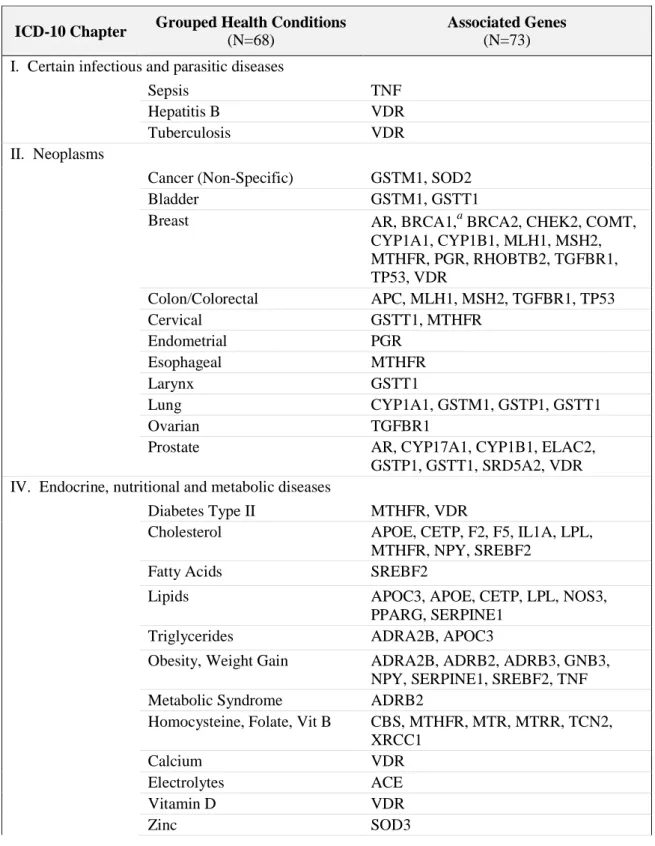
on-line, October 2006 (N=167) ... 75 3.3 Claimed associations between groups of health conditions and genes
mentioned in nutrigenomic test descriptions on-line by ICD-10 Chapter,
October 2006 (N=256) ... 76 3.4 Organizations providing information on website addressing caveats raised
in US Federal Trade Commission (FTC) fact sheet regarding at-home genetic
testing, October 2006 (N=64) ... 79 4.1 Survey respondent demographic characteristics by recruitment, March through
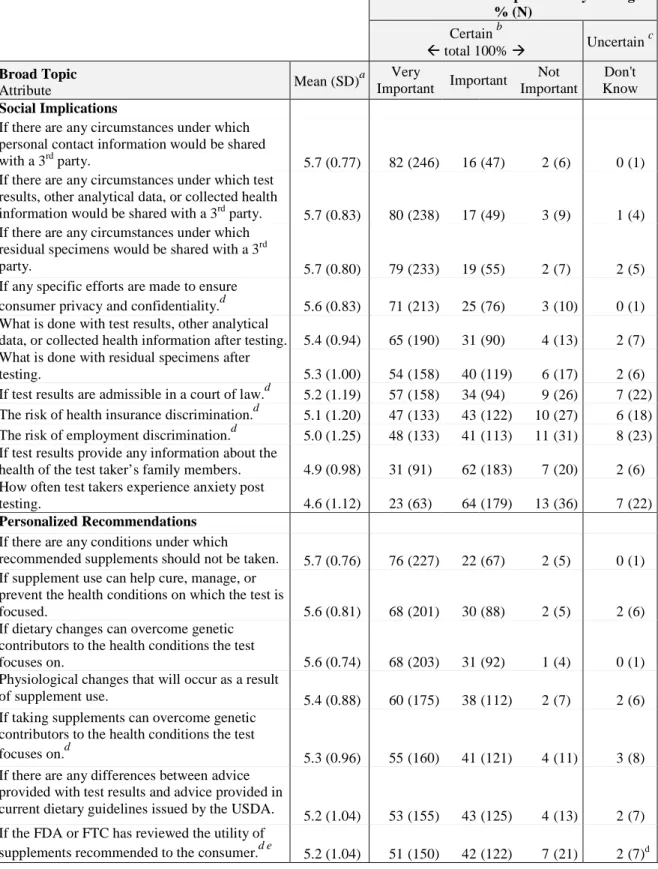
August 2007 (N=300) ... 109 4.2 Respondent rating of nutrigenomic service attributes for consumer decision-
making by broad topic, March through August 2007 (N=300) ... 112 4.3 Attributes rated “Very Important” for consumers to know about nutrigenomic services
by the majority of survey respondents, March through August 2007 (N=300) ... 116 4.4 Attributes rated “Unimportant” for consumers to know about nutrigenomic services
by more than 10% of survey respondents, March through August 2007 (N=300) ... 117 5.1 Language used in US Food and Drug Administration classification of
laboratory developed tests as In Vitro Diagnostic Multivariate Index
5.2 Examples of Class II medical devices approved by the US Food and Drug
Administration that use genomic technology ... 142
5.3 Nutrigenomic services offered by select companies identified in systematic search by companies identified in a systematic search by company type,
October 2006 (N=25) ... 143 5.4 Information provided by companies on commercial websites pertaining to
the classification of nutrigenomic services as an In Vitro Diagnostic
Multivariate Index Assay (IVDMIA), October 2006 (N=25) ... 147 5.5 Quoted text from company websites that met all three criteria for the
classification of medical devices as an In Vitro Diagnostic Multivariate
Index Assay (IVDMIA), October 2006 ... 148 5.6 Provision of information recommended for proper labeling of commercial
websites promoting nutrigenomic services, October 2006 (N=25) ... 150 5.7 Intended uses for nutrigenomic services mentioned on commercial
websites, October 2006 (N=25) ... 151 5.8 Warnings and precautions for nutrigenomic services mentioned on
commercial websites, October 2006 (N=25) ... 152 5.9 Information considered “Very Important” to share with consumers about
nutrigenomic services on commercial websites, October 2006 (N=25) ... 153
Appendix
1.1. Vendor characteristics coded ... 177 1.2. Nutrigenomic (NGx) service characteristics coded ... 193 2.1. Summary of reliability testing results using Kappa interpretations proposed
by Landis and Koch (1977) ... 201 2.2. Kappa values for candidate and research assistant website coding of variables
with defined values and open coding, March – May 2007 ... 202 3.1. Summary of search results for gene-health condition associations mentioned
in nutrigenomic test descriptions using the National Institute on Aging
Gene-Disease Association Database (GAD), February 2008 ... 208 3.2. Records in National Institute on Aging Genetic Association Database (GAD)
applicable to claimed associations between health conditions and genes mentioned in nutrigenomic test descriptions (October 2006), by International
5.1. Expert agreement with statements regarding nutrigenomic research and
services, August 2007 (N=300) ... 237 6.1. Chi-square test results for statistically significant differences by
demographic characteristics in rating for importance of nutrigenomic
service attributes for consumer decision-making, August 2007 (N=300) ... 239 6.2. Importance rating of attributes with statistically significant difference
by profession, August 2007 (n=13) ... 244 6.3 Importance rating of attributes with statistically significant differences
by opinions about the direct-to-consumer (DTC) marketing and sale of
nutrigenomic services, August 2007 (n=10) ... 247 7.1. Ranking of topics covered by attributes by demographic characteristics,
August 2007 (N=300) ... 250 8.1. Attributes of nutrigenomic services important to share with consumers
regarding nutrigenomic services reported by respondents in open-ended
LIST OF FIGURES Chapter
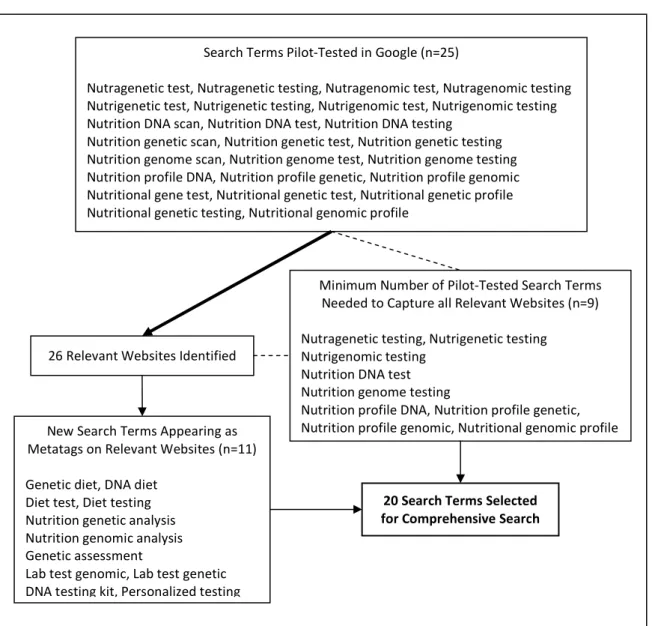
3.1 Pilot study to select search terms to identify websites promoting or selling
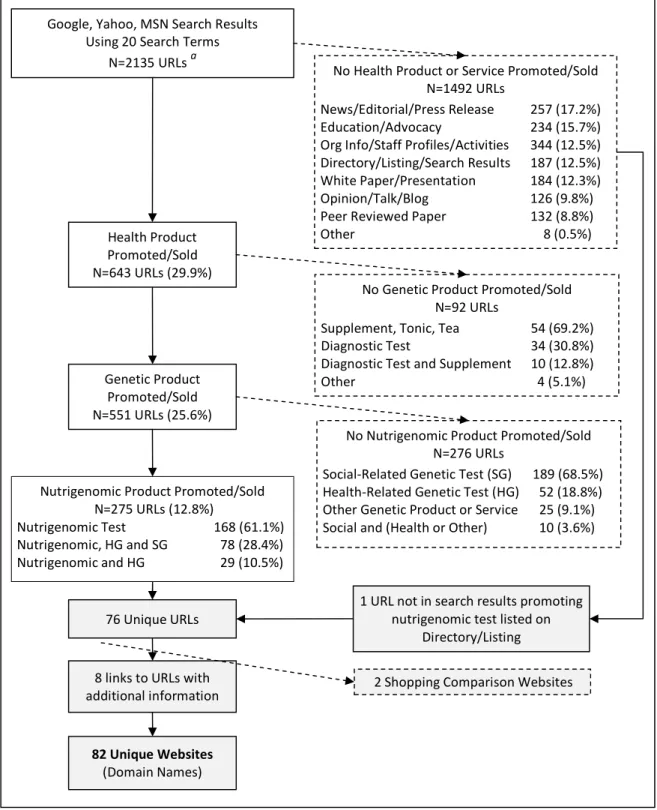
nutrigenomic services ... 66 3.2 Comprehensive search results for websites promoting and selling
nutrigenomic services and website selection, October 2006 ... 67 4.1 Background information appearing at start of on-line opinion survey titled,
“What consumers need to know about the on-line purchase and use of
nutrigenomic services,” implemented March through August 2007 ... 108 5.1 Pathways mentioned on commercial websites for delivery of nutrigenomic
services to consumers, October 2006 (N=25) ... 146
Appendix
1.1. Microsoft Access database main window ... 174 1.2. Microsoft Access data entry screen for vendor (website) characteristics ... 175 1.3. Microsoft Access data entry screen for nutrigenomic testing service
characteristics ... 176 2.1. List of organizations hosting websites coded by candidate and research
CHAPTER 1
INFORMING POLICY DEVELOPMENT TO IMPROVE OVERSIGHT OF GENETIC SERVICES: THE CASE OF NUTRIGENOMIC SERVICES PROMOTED ON THE WEB
Nutrigenomic services
Nutrigenomic (NG) services include genetic tests for variants in multiple genes associated with diet-related disease or other health conditions that have multiple causes, such as heart disease, diabetes, and osteoporosis. NG tests also focus on more nebulous health-related traits, such as detoxification, aging, or athleticism. Test results often include genotype-customized or personalized recommendations for diet or lifestyle changes to reduce risk of disease or improve overall health and wellness. Some companies also offer “nutraceuticals” or supplements whose formulations are designed to address identified predispositions.
NG services are largely marketed on the World Wide Web and have been sold directly to consumers on and off-line since early 2002. While there is growing evidence to support the influence of diet on gene expression and diet-related disease, NG researchers and policy makers have expressed substantial concern about the premature availability and use of NG services. An investigation by the US Government Accountability Office (GAO) in 2006 found the NG services offered by four
this report increased the salience of all health-related genetic services sold directly to consumers as a key policy issue.
Genomic innovation and policy development
Over the last two years, a growing body of gene-disease association research has encouraged the commercialization of new genetic services, including whole genome profiles (Feero et al 2008). These direct-to-consumer (DTC) “personal genomic services” provide results from the analysis of hundreds of thousands of gene variants associated with disease and other health conditions for which there may or may not be clinical intervention. Some companies offering personal genomic services tout their non-clinical benefits, such as establishing social networks with others of similar genotype, learning more about a family’s history of migration across continents, and understanding genetic contributors to non-health related traits such as baldness or bitter taste perception. Furthermore, companies argue that although the information they provide may not have established clinical utility, it is supported by findings in the peer-reviewed literature.
unwarranted stress or anxiety about future health, and a mistrust of genetic and genomic science (Hudson et al 2007, SACGHS 2008, Hunter et al 2008). Balancing an interest advancing genomic medicine with the need to ensure consumer safety has been cited as an important goal (Jones 2008).
In April 2008, the Department of Health and Human Services Secretary’s Advisory
Committee on Genetics, Health and Society released a report identifying 29 gaps in the oversight of genetic services (SACGHS 2008). The lack of evidence to demonstrate the validity and utility of DTC genetic services was considered of paramount importance. In the absence of adequate federal regulation, the health departments of New York and California called for a moratorium on the sale of DTC genetic services to state residents in June 2008 (Pollack 2008). Several professional societies have released position statements over the last year offering standards, guidelines, and other recommendations regarding the DTC marketing and sale of genetic services. Federal and state
agencies have released statements as well, advising consumers and health care providers to view DTC genetic services with a “healthy dose of skepticism” (US FTC 2006).
Dissertation overview
It is in this flurry of scientific discovery, technological innovation, stakeholder debate, and policy development that this dissertation was undertaken. The overarching goal of this dissertation was to inform genetic policy development through the collection of empirical data and the analysis of new guidelines regarding the marketing, sale, and labeling of NG services. Mixed methods were used to fulfill the three specific aims listed below and described further in Chapter 2.
1. Describe organizations involved in the promotion and sale of nutrigenomic services on-line. 2. Identify what genetic professionals think consumers should know when deciding whether or
not to purchase a nutrigenomic test on-line.
This dissertation is divided into six chapters, including this introduction. Chapter 2 provides additional background on the federal agencies involved in the oversight of genetic services and the science behind nutrigenomic services. Basic premises guiding this research also are discussed including the following: 1) marketing impacts consumer thought and behavior, 2) the lack of federal oversight increases the need for consumer education, and 3) genetic services have unique
characteristics that increase the potential for harm to consumers. The chapter ends with an overview of the three research aims.
References
American College of Medicine Genetics (ACMG). ACMG statement on direct-to-consumer genetic testing. Policy statement. April 7, 2008. Available at http://www.acmg.net/AM/Template.cfm? Section=Terms_and_Conditions&termsreturnurl=Section=Policy_Statements&Template=/CM/Conte ntDisplay.cfm&ContentID=2975 Accessed: June 4, 2008.
DeNoon DJ. Consumer gene tests: Help or harm? Experts, test makers battle over selling genetic tests to patients. WebMD Medical News, April 3, 2008. Available at http://www.webmd.com/news/ 20080403/consumer-gene-tests-help-or-harm?page=2 Accessed: July 30, 2008.
Feero GW, Guttmacher AE, Collins FS. The genome gets personal—Almost. JAMA 2008;299(11):1351-1352.
Hudson K, Javitt G, Burke W, et al. ASHG statement on direct-to-consumer genetic testing in the United States. Am J Hum Genet 2007;81:635-637.
Hunter DJ, Khoury MJ, Drazen JM. Letting the Genome out of the Bottle—Will We Get Our Wish? N Engl J Med 2008;358(2):105-107.
Jones M. “SACGHS to draft report on genetics education by next summer; Leavitt calls DTC testing debate a 'good struggle'” GenomeWeb Daily News, July 10, 2008. Available at
http://www.genomeweb.com/issues/news/148091-1.html Accessed: July 24, 2008. Pollack A. Gene testing questioned by regulators. NY Times, June 26, 2008: p C1.
Secretary’s Advisory Committee on Genetics, Health, and Society (SACGHS). US system of
oversight of genetic testing: A response to the charge of the Secretary of Health and Human Services. April 2008. Available at http://www4.od.nih.gov/oba/sacghs/reports/SACGHS_oversight _report.pdf Accessed: July 24, 2008.
US Government Accountability Office (GAO). Testimony before the Special Committee on Aging, US Senate. July 27, 2006. Available at http://www.gao.gov/cgi-bin/getrpt?GAO-06-977T Accessed: July 24, 2008.
US Federal Trade Commission (FTC). At-Home genetic tests: A healthy dose of skepticism may be the best prescription. July 2006. Available at http://www.ftc.gov/bcp/edu/pubs/consumer/health/ hea02.shtm Accessed: August 2, 2008.
CHAPTER 2
BACKGROUND AND SIGNIFICANCE
Growth in the visibility and accessibility of genetic services
New discoveries about relationships among genes, human characteristics, the environment, illness, and disease are common given success of the Human Genome Project. Over 1200 health-related genetic tests are now commercially available, with almost 300 additional tests under investigation (GeneTests 2008). Genetic tests and services marketed to consumers as providing health-related information (entirely or in part) include: 1) whole genome profiling; 2) genetic (single gene) and genomic (multiple gene) tests for disease or illness; 3) genetic tests to inform prescription drug use (pharmacogenetic); and 4) genomic tests to inform nutritional (nutrigenomic), cosmetic (dermagenomic), or other lifestyle improvements. Examples of services marketed to consumers as non-health-related include the more familiar tests for paternity and other familial relationships to the more novel ancestry profiling (Bolnick et al 2007), at-home DNA collection and storage to uncover infidelity and help find missing children (Associated Press 2006, Kesner 2006),and custom DNA artwork (Butler 2007).
consumers on the Web (Gollust 2003, Williams-Jones 2003, Berg and Fryer-Edwards 2008, Geransar and Einsiedel 2008). Genetic services are becoming easier to access (among those who can afford them) through both on-line direct-to-consumer (DTC) sale (i.e., no requirement for clinician involvement) and the diversification of US vendors. Sorenson Genomics introduced an over-the-counter paternity test kit in drug and retail stores in 2007 (Mui 2008), which may be used by some consumers to inform reproductive decisions and seek medical treatment or intervention (ACOG 2008).
Sciona, Inc., one of the first companies offering on-line DTC sale of nutrigenomic (NG) services, began selling its testing kits in mid-West drug stores in 2005 (Sciona 2005). More recently, the company established two new agreements for national distribution through fitness centers and health spas (Business Wire [1] 2008, Business Wire [2] 2008). In 2007, Interleukin Genetics, Inc. expanded its partnership with Alticor, Inc.—a holding company operating Amway (direct-sales), Quixtar (Web-based sales), and Access Business Group (manufacturing and logistics services)—for the development and distribution of genetic services for heart disease, general nutrition, and
osteoporosis (Biotech Business Week 2007). Through this partnership, Interleukin’s genetic services are being sold on-line alongside supplements, cosmetics, and a variety of non-health-related products including electronics, business supplies, apparel, and jewelry.
“As is often the case, science is running ahead of public policy.”
—Dr. Francis Collins, Former Director, National Human Genome Research Institute (Associated
Press 2005)
professional guidelines, do not adequately address raised concerns. The Department of Health and Human Services Secretary’s Advisory Committee for Genetics, Health, and Society (SACGHS) recently issued a report identifying 29 gaps in the oversight of genetic testing (SACGHS 2008). Federal agencies with jurisdiction over genetic services and a summary of major gaps in their oversight (noted by SACGHS) are listed in Table 2.1.
The majority of genetic services are sold as laboratory services or “in-house tests”, where by the laboratory uses an in-house, often proprietary, protocol to analyze specimens and report results. According to the Food, Drug, and Cosmetic Act, in-house tests are medical devices falling under the regulatory authority of the US Food and Drug Administration (FDA) (21 USC 321h). Most medical devices require FDA review and approval prior to commercial availability (i.e., pre-market review). The scientific and regulatory process of pre-market review is an important tool for ensuring the safety and effectiveness of medical devices, including their analytic validity (correct identification of the target when it is present and no identification of the target when it is absent), clinical validity (correct detection or prediction of disease or health condition), and clinical utility (effective use of test results in routine health care). However, fewer than 15 of the over 1000 genetic tests commercially available have been reviewed and approved by the FDA. The lack of pre-market review contributes to the availability of health-related genetic tests with inadequate evidence to demonstrate their clinical validity and clinical utility.
(i.e., not legally enforceable) recommendations proposed by the FDA in its draft guidance to industry include requirements for the classification, review, labeling and surveillance of in-house tests, but they have yet to be finalized (Huang and Javitt 2008).
The Center for Medicaid and Medicare Services (CMS) administers CLIA (with advisement from the Centers for Disease Control and Prevention), which requires all laboratories performing tests for health-related purposes (i.e., clinical laboratories) to meet quality standards (CMS 2004). Specific requirements for proficiency in the analysis of genetic tests are not delineated (e.g., performance measures for sensitivity and specificity, requirements for genetic counseling or informed consent). New York is the only state to issue genetic-test-specific laboratory requirements and a few other states are considering similar regulations (Sternesky 2002). In addition, several professional organizations issue best practices and offer non-compulsory certifications for laboratory services, such as the American Association of Blood Banks, College of American Pathologists, and American College of Medical Genetics.
New York and California have raised public debate about whether or not the potential for harm (actual or perceived) outweighs the potential for restrictions on DTC sale to curtail advancements in genomic research and medicine (Editorial Nature Biotechnology 2008, Jones 2008, Pollack 2008, O’Rielly 2008).
The science behind personalized nutrition
Among the various health-related genetic tests sold directly to consumers, NG tests and related services (here forward NG services) have a relatively long history of DTC sale (beginning early 2000). NG services include tests for variants in multiple genes associated with diet-related disease or other health conditions that have multiple causes (i.e., complex traits), such as heart disease, diabetes, and osteoporosis. NG tests also focus on more nebulous health-related traits, such as detoxification, aging, or athleticism. Test results often include genotype-customized or
personalized recommendations for dietary and lifestyle changes to reduce disease risk or improve overall health and wellness. Some companies also offer recommendations for the use of NG
supplements or “nutraceuticals.” Companies offering NG services base their claims on findings from the legitimate and growing field of NG research.
Nutrition research has been used to formulate dietary guidelines for the general public and to improve health for populations with special needs. While existing guidelines may be useful for determining population-level health outcomes in response to diet, they are less useful for predicting individual outcomes, in part due to genetic variability. NG research is “the study of how foods affect the expression of genetic information in an individual and how an individual's genetic makeup affects the metabolism and response to nutrients and other bioactive components in food” (Kaput and Dawson 2007).
study of inherited modifications to the genome), and several genomic technologies, including transcriptomics (the study of gene expression under specific conditions using microarrays and other
technologies), proteomics (the study of all proteins in an organism and their expression under specific conditions using mass spectrometric techniques), and metabolomics or metabonomics (the study of metabolites in an organism after specific dietary exposures using chemometric analysis) (Kitano 2002, Mutch et al 2005, Burton and Stewart 2005).Included among the aims of NG research are to: 1) identify genes and gene variants that may be significant to understanding genetic responses to diet, 2) identify genotypes associated with diet-related disease, 3) modify diet for the treatment or
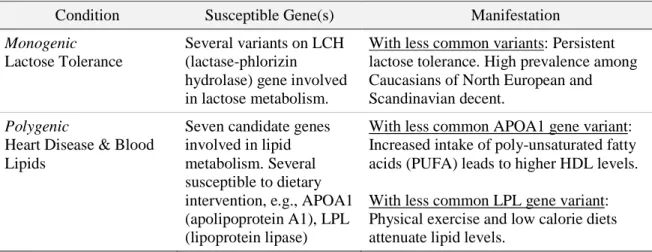
prevention of disease, and 4) improve dietary guidelines at group and individual levels (Muller and Kersten 2003, Ordovas and Mooser 2004, Kauwell 2005, Strover 2006). Two examples of NG gene-disease associations are presented in Table 2.2. Listed conditions include a monogenic condition or single gene contribution condition (i.e., lactose tolerance) and a polygenic condition where multiple genes, behavior, and environment impact the risk and manifestation of disease.
“Right now, no one in their right mind would offer genetic testing.”
—Dr. Muin Khoury, Director, Office of Genomics and Disease Prevention, Centers for Disease
Control and Prevention (Grierson 2003)
While there has been little scientific review of specific NG tests, researchers report several methodological challenges to the field which must be addressed before the goal of personalized nutrition can be achieved. These challenges contribute to inconsistent findings across gene-disease association studies and complicate the development of NG interventions to improve individual health (Hirschhorn et al 2002).
Defining and measuring diet. The complex and varied composition of food complicates NG
Mooser 2004). Any particular diet will contain a wide range of nutrients and other dietary chemicals, each with unique effects at different loci within an organism (Mutch et al 2005). Furthermore, organism nutrient levels are not always easily detectable and must be considered “in the context of chronic exposure” (Muller and Kersten 2002). Quantifying (or qualifying) dietary exposure is subject to considerable measurement error and inconsistency. In review of 26 studies regarding diet, genes and cardiovascular disease (CVD), Ordovas and Mooser found measurements of dietary exposure to vary widely across studies involving apolipoprotein E (APOE) gene, including one-time oral fat and glucose tolerance tests, dietary and behavioral interventions, controlled diets, and food frequency recall questionnaires (from up to 40 years into the past).
Integrating technologies. Unlike the “one drug and one target” paradigm often used in
pharmacogenomics (the study of how genes affect drug response), NGs requires consideration of multiple nutrients and other food components at various levels of concentration, and their differing effects on a number of biological processes within an organism (Mutch et al 2005 Chadwick 2004, Muller and Kersten 2003). Thereby, NG research requires an “unprecedented amount” of genetic, molecular, clinical, phenotypic, and dietary data posing substantial challenges to data analysis (Burton and Stewart 2005). The integration of various genome-related technologies is required for meaningful results; however, the majority of studies use only one approach and thereby fail to account for the full effects of food (Mutch et al 2005). In addition, genomic and related technologies currently are very expensive (although anticipated to decrease with wider use, Ordovas and Mooser 2004), and investments in NGs are unlikely to reach levels achieved in pharmacogenomics (Muller and Kersten 2003). The financial cost of NG research has lead to questions regarding its cost-effectiveness in reducing diet-related disease (Chadwick 2003).
Designing studies and establishing quality standards. Prospective study designs with large
(Ordovas Mooser 2004). The dependent variables used in NG research also have been subject to scrutiny. Ordovas and Mooser (2004) found in the previously mentioned review of diet, gene and CVD studies that researchers often use risk factors for CVD as opposed to actual disease or related events for dependent variables. Actual disease has been suggested as the more appropriate endpoint for NG studies. In addition, universal standards for quality in the processing and analysis of biological specimens in research laboratories have yet to be established and have a direct impact on study replication, comparability of findings, and specimen and data pooling (Burton and Stewart 2005).
Disseminating findings. Lack of consistency in “keyword” assignment and publication bias
also have been mentioned as challenges to the field in that pertinent information is hard to locate and negative findings (failure to reject the null hypothesis) are not published (Ordovas Mooser 2004). The bias toward positive findings is problematic across fields as published studies have a direct impact on the nature and direction of research (Hojat et al 2003). Publication bias also poses problems for literature reviews and meta-analyses (Misakian and Bero 1998). Researchers have noted publication bias as problematic in meta-analyses of gene-disease association studies (Sudlow et al 2006, Lewis et al 2005, Masson et al 2003).
Marketing matters
Advertisements and other promotional material for genetic services have appeared in various media. Gollust, Hull and Wilfond (2002) describe several examples of print advertisements for genetic services (i.e., paternity, cancer) appearing in community newspapers and popular magazines. Myriad Genetics, Inc., the company holding patents for BRCA1/BRCA2 gene sequencing for
inherited breast and ovarian cancer risk, was the first company to launch a traditional DTC marketing campaign for a genetic test (Myers et al 2006). During the five month pilot campaign (September 2002 to February 2003), BRACAnalysis® advertisements appeared in television, radio, and print in Atlanta, GA and Denver, CO. The campaign raised substantial concerns over the inappropriate wide-scale marketing of the test beyond groups for whom testing is considered appropriate (Myers et al 2006). Five years later, Myriad launched a second multi-media campaign for BRACAnalysis® in the Northeast US to “raise public awareness so [that women] will have a conversation with their health care providers” about their potential risk for cancer (Pollack 2007).
Relative to advertisements appearing in other media, the promotion of genetic services on the Web has been substantial. The on-line marketing of genetic services may have a greater impact on consumer attitudes than marketing via other media as the Web provides a “rich” product experience (Evans and Wurster 1999, Coyle and Thorson 2001). Furthermore, Internet users frequent the Web to obtain health and genetics-related information (Taylor et al 2001, Bernhardt et al 2002, Case et al 2004, Fox 2005, Saukko et al 2007), and have reported using on-line information to make decisions about specific treatments, when to visit a doctor, and when to get a second opinion (Fox and Rainie 2000).
As a largely unregulated forum, credible and unreliable or even harmful information are presented side by side on the Web. The accuracy of information is of growing concern as chat rooms, blogs, discussion lists, and electronic bulletin boards are used to communicate health-related
consumer-friendly website for information about genetics and health (http://www.ghr.nlm.nih.gov), is a recent example by the National Library of Medicine (NLM) of an effort to provide credible information and alleviate information overload through the Web (Mitchell et al 2006). While this and other
government efforts to establish reliable sources of information about genetics on-line are growing in number (Mitchell et al 2003), findings from a national survey suggest that when seeking health information on-line, Internet users visit private websites more than twice as often as government-sponsored websites (Miller and West 2007).
This dissertation focuses on the on-line marketing and promotion of NG services given the popularity of the Web among marketers of NG services and among Internet users seeking genetic and health-related information increases the importance of examining on-line promotional material for NG. While there are differences in length and format, the primary goal of advertisements and other promotional material is to sell—whether it is a particular product, service, image, or idea. By design, advertisements are informative, persuasive, and appealing to targeted audiences (Pollay 1986). Advertisements have direct and indirect benefits for consumers, such as saving consumers the cost of searching for information, and encouraging competitive pricing and innovation (Abernathy and Franke 1998). They also have an effect on consumers beyond, and regardless of, a purchase or “buy in.” As noted by Schudson (1984), advertising “surrounds us and enters into us, so that when we speak we may speak in or with reference to the language of advertising and when we see we may see through the schemata that advertising has made salient for us.” Where there is increased uncertainty, bewilderment, and confusion in the public (arguably characteristic of genomics and nutrition), advertising can have a stronger role in creating social meaning (Pollay 1986).
Advertising scholars have debated whether advertisements reflect social values and norms, or create them; whether or not advertising unethically coerces viewers into thoughts and behaviors they would otherwise evade; and whether or not advertising has deleterious or unintended effects
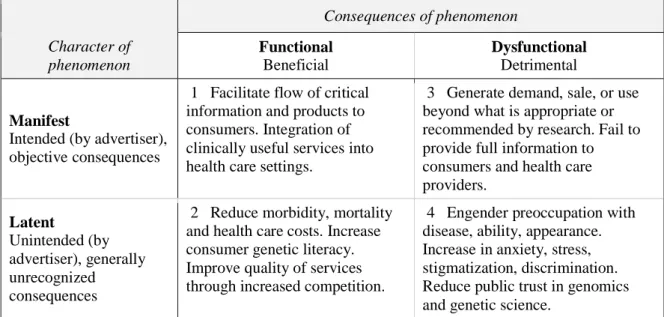
framework acknowledges that advertising may have both manifest (i.e., intended) and latent (i.e., unintended) effects that can be functional or dysfunctional in nature. Table 2.3 shows the Mertonian framework adapted to include both potentially beneficial and harmful outcomes relevant to
promotional materials for NG and other genetic services. Grove and Kilbourne (1994) argue that “primary among the manifest dysfunctions are intentionally deceptive advertisements and
advertisements knowingly promoting the use of products that are dangerous to consumer’s health or safety” (Table 2.3, cell 3).
While acknowledging the potential of DTC marketing to improve education and awareness about genetic services, the SACGHS report discussed the potential for harm to consumers, health care providers, and the general public. The potential for harm has been reiterated in position statements by several professional societies and in consumer fact sheets issued by government agencies. These harms include: 1) economic loss from the purchase of invalid tests or unnecessary care and health products (e.g., supplements, skin care), 2) adverse health outcomes due to inappropriate health care decision-making by consumers and health practitioners (i.e., ignoring family history when test results suggest no genetic predisposition for disease), 3) increased and unwarranted anxiety about the future health, and 4) decreased genetic literacy and public trust in genetics and genomics (Oehlke 2005, ACMG 2004, ACMG 2008, FTC 2006, NSGC 2007, Hudson et al 2007, NSGC 2007, SACGHS 2008, ACOG 2008).
Informing consumer decisions
NG and other genetic services may lead to “information overload,” a phenomenon whereby an individual receives more information than is useful to effective decision-making. Information overload is more likely to occur when information is “uncertain, ambiguous, novel, complex, or intense” (Herbig and Karmer 1994) as is the case with the ever evolving nature of genomic medicine and nutrition sciences. Marketing literature suggests that measuring information overload requires attention to the number of individual products available or being compared, the number of different attributes described for a product or a group of products, the importance of different product attributes to the decision-maker (information quality), and the complexity of provided information (Schneider 1987, Keller and Staelin 1987, Lee and Lee 2004).
Consumer preferences for information may differ in type and quantity; however, Ormond et al (2007) argue that a minimum amount of genetic testing information should be established and provided to all patients or consumers. Authors considered the use of standards in provided information especially important as consumers may not have the same opportunity, personal
empowerment, or skill set to ask questions of interest. Furthermore, consumers may not always know what additional information is relevant to their situation.
Exploration of commercial websites for nutrigenomic services is needed
As discussed previously, DTC marketing of NG services has largely been on the Web and many companies also allow consumers to purchase NG services on-line. The DTC sale of genetic services represents a shift toward individual responsibility in health care decision making. However, consumer decisions about the purchase and use of genetic services will only be as good as the information available to inform their choices. In the absence of pre-market review, proficiency standards for laboratories, labeling requirements for laboratory services, and ongoing monitoring for fraudulent and misleading advertising, genetic services and on-line promotional materials are likely to cover the quality spectrum.
In the case of NG services, attention should be paid to both genomic tests and recommended supplements or dietary modifications. Similar to genetic services, rapid growth in supplements and functional foods (manipulation or modification of one or more components to enhance health benefit) has outpaced government regulation and scientific review. Lack of oversight contributes to the dissemination of misinformation about nutrition and nutrition-related products, which over time may reduce consumer self-efficacy, trust in traditional providers of nutrition information, and attention to new findings in nutrition research (Wansink 2006). While NG services are marketed to simplify consumer decision-making around nutrition, health and overall wellness, integrating genetic services into the already overgrown field of non-genetic diagnostic tests, drugs, supplements, teas, diets, exercise regimens, and other lifestyle enhancements creates only an illusion of simplicity for those seeking to improve their health.
Purpose of this dissertation
The overarching goal of this dissertation was to inform genetic policy development through the collection of empirical data and the analysis of new guidelines regarding the marketing, sale, and labeling of NG services. The commercialization of NGs is an important case study for exploring how to improve the oversight of genetic services for several reasons. First, NG services have been on the market for almost a decade despite their unproven validity. Unlike other health-related genetic services, companies provide personalized recommendations for health improvement with test results, and often bundle NG tests with personalized supplements. The reporting of genotypic information and the subsequent use of genotypic data to issue personalized recommendations for health improvement raise interesting questions about what constitutes the “test system” in need of review and approval by the FDA. In addition, Internet users are likely to come across websites promoting NG services when searching for genetic services in particular or other health information such as diet, nutrition, supplements, or fitness. These topics are included among the most popular health topics searched for on-line.
As outlined above, this dissertation is guided by three main premises, including the belief that: 1) advertising for NG services can impact consumer thought and behavior regardless of purchase, 2) the lack of federal oversight increases the need for informed-decision making by
consumers about the purchase and use of NG services, and 3) unique aspects of NG and other genetic services increases the potential for harm to consumers and thereby warrants further analysis and policy development. The specific aims of this dissertation are described below.
Research Aim #1: Describe organizations involved in the promotion and sale of
nutrigenomic services on-line. NG services are largely marketed on the Web. Four studies have been
genetic tests by biotechnology companies and laboratories (here forward companies), some of which include NG services. Relatively less attention has been paid to the marketing and sales practices of other types of organizations that serve as intermediaries between consumers and companies or promote the use of NG services. In addition, previous studies have not focused on describing the types of NGs services promoted on-line (e.g., conditions and traits, genes profiled, recommendations provided) and the frequency of their promotion. To address these gaps, this aim answered the following questions: Who is involved in the on-line promotion and sale of NG services? What types of NG services are promoted? To what extent do websites provide information addressing important caveats about at-home genetic testing identified by the FTC?
Multiple search engines and pilot-tested keywords were used to capture the population of websites that sold or promoted NG services in October 2006. Relevant websites were archived establishing a cross-section of websites for analysis. Standard methods for the content analysis of media messages were followed. To capture variation in the promotion and sale of NG services, the unit of analysis was a NG test mentioned on a particular website. To assess health claims in test descriptions the following steps were taken: 1) health conditions were searched in the International Statistical Classification of Diseases and Related Health Problems, 10th Revision, Version for 2007 (ICD-10); 2) gene names or symbols were searched in the National Center for Biotechnology Information (NCBI) Entrez Gene database; and 3) published studies regarding claimed associations between health conditions and genes were searched for in the National Institute on Aging and the National Institutes of Health Center for Informational Technology Genetic Association Database (GAD). Study results will be published in the November 2008 issue of Genetics in Medicine, the official peer-reviewed journal of the American College of Medical Genetics focusing on the integration of genetics into the practice of medicine.
Research Aim #2: Identify what genetic professionals think consumers should know when
how to improve promotional and educational materials for genetic services. Government agencies and professional societies have identified several issues consumers should be aware of when thinking about purchasing genetic services. However, NG services are somewhat unique relative to other health-related genetic services in that they claim to provide personalized recommendations for the purchase and use of other products to improve health. The unproven validity and utility of NG services and their increasing visibility and accessibility underscores the importance of identifying information critical to informed decision-making by consumers about their use.
To identify what consumers need to know about the purchase and use of NG services, an on-line opinion survey was disseminated March through August 2007. A multi-phase process was used to develop this survey, including review of peer-reviewed literature and government reports to identify survey items, assessment of draft items by an interdisciplinary group of experts, and cognitive think-aloud pilot-testing of the on-line survey. Convenience sampling was used to recruit genetic professionals through three professional listservs and the CRISP (Computer Retrieval of Information on Scientific Projects) database of biomedical research. Respondents ranked the
importance of 10 broad topics and rated the importance of 55 attributes pertaining to genetic services in general and NG services in particular. Descriptive statistics, content analysis, chi-square tests, and Krusal-Wallis one-way analysis of variance tests were used to analyze survey responses. Study results were drafted for publication in Genetic Testing, a peer-reviewed journal publishing on all aspects of genetic testing, to include the clinical consequences of molecular genetics, and ethical and legal issues.
Research Aim #3: Assess the adequacy of FDA draft guidance on classification and
labeling of in-house genetic tests for improving the oversight of nutrigenomic services. The lack of
FDA issued a draft guidance stating its intent to classify genetic services offered by laboratories as In Vitro Diagnostic Multivariate Index Assays (IVDMIA) in need of pre-market review, labeling, and post-market surveillance.
This research aim assessed the adequacy of the FDA draft guidance on IVDMIAs for improving the oversight of NG services and ensuring consumers have access to quality information about their use. Commercial websites archived shortly following release of the guidance were reviewed to determine the extent to which: 1) NG services classified as IVDMIAs in need of pre-market review, and 2) websites promoting NG services provided information recommended for the proper labeling of IVDMIAs. Finally, recommendations for the improvement of future drafts of the guidance were proposed. Study results were drafted for publication in Food and Drug Law Journal, a peer-reviewed journal covering original research and commentary from multiple disciplines on a wide variety of health policy issues.
References
21 United States Code 321(h), Federal Food, Drug, and Cosmetic Act, Chapter 2, Definitions, December 31, 2004 Available at http://www.fda.gov/opacom/laws/fdcact/fdcact1.htm#fnt1back Accessed: July 19, 2008.
Abernathy AM, Franke GR. FTC regulatory activity and the information content of advertising. J Public Policy Mark 1998;17(2):239-256.
American College of Medicine Genetics (ACMG) Board of Directors. ACMG statement on direct-to-consumer genetic testing. Genet Med 2004;6(1):60.
American College of Medicine Genetics (ACMG). ACMG Statement on Direct-to-Consumer Genetic Testing. Policy Statement. April 7, 2008. Available at http://www.acmg.net/AM/Template.cfm? Section=Terms_and_Conditions&termsreturnurl=Section=Policy_Statements&Template=/CM/Conte ntDisplay.cfm&ContentID=2975 Accessed: August 4, 2008.
American College of Obstetricians and Gynecologists (ACOG). ACOG Committee Opinion No. 409: Direct-to-consumer marketing of genetic testing. Obstet Gynecol 2008;111:1493-1494.
American Dietetic Association (ADA). Position of the American Dietetic Association: Food and nutrition misinformation. J Am Diet Assoc 2006;106:601-607.
Associated Press. Home genetic tests for disease. March 6, 2005. Available at
http://www.cbsnews.com/stories/2005/03/06/health/main678386.shtml Accessed: July 9, 2008. Associated Press. ‘CSI’ parents swabbing kids for DNA: Testing kits provide samples in case child is kidnapped or injured. November 27, 2006. Available at http://www.msnbc.msn.com/id/15922270/ Accessed: June 5, 2008.
Berg C, Fryer-Edwards K. The ethical challenges of direct-to-consumer genetic testing. J Bus Ethics 2008;77:17–31.
Bernhardt JM, Lariscy RAW, Parrott RL, et al. Perceived barriers to internet-based health communications on human genetics. J Health Commun 2002;7(4):325-340.
Biotech Business Week. Officials at Interleukin Genetics announce latest news and research developments. June 18, 2007. Available at http://www.newsrx.com/newsletters/Biotech-Business-Week/2007-06-18/5061820071954BB.html Accessed: November 11, 2008.
Bolnick DA, Fullwiley D, Duster T, et al. The science and business of genetic ancestry testing. Science 2007:Vol. 318. no. 5849, pp. 399 – 400
Burton H, Stewart A. Nutrigenomics: Report of a workshop hosted by The Nuffield Trust and organized by the Public Health Genetics Unit on 5 February 2004. The Nuffield Trust: London, England. 2005.
Business Wire. CyGene Laboratories announces new Spanish-language website to promote genetic testing products to Hispanic market. September 13, 2006. Available at
Business Wire [1]. Sciona, Inc. and Spa Team International announce agreement for distribution of GenomicsRX DNA Analysis Kits into rapidly growing personalized genetics market. March 17, 2008. Available at
http://www.reuters.com/article/pressRelease/idUS151197+03-Mar-2008+BW20080303 Accessed: July 2, 2008
Business Wire [2]. Health engineering group teams up with Sciona to distribute the MyCellf(TM) DNA Fitness Program into 20,000 fitness & wellness facilities nationwide. March 6, 2008. Available at http://www.reuters.com/article/pressRelease/idUS165136+06-Mar-2008+BW20080306 Accessed: July 2, 2008.
Butler S. Making art from genetic code. Newsweek. October 22, 2007. Available at http://www.newsweek.com/id/43387 Accessed: November 11, 2008.
Case DO, Johnson DJ, Andrews JE, et al. From two-step flow to the Internet: The changing array of sources for genetics information seeking. J Am Soc Inf Sci 2004;55(8):660-669.
Caulfield T. Underwhelmed: hyperbole, regulatory policy, and the genetic revolution. McGill Law J 2000;45(2):437-60.
Center for Medicare and Medicaid Services (CMS). CLIA Program: General program description. Last modified September 2004. Available at http://www.cms.hhs.gov/clia/progdesc.asp Accessed: April 25, 2005
Chadwick R. Nutrigenomics, individualism and public health. Proc Nutr Soc 2004;63:161-166. Coyle JR, Thorson E. The effects of progressive levels of interactivity and vividness in web marketing sites. J Advert 2001;30(3):65-77.
Culver JD. Gerr F, Frumkin H. Medical information on the Internet: A study of an electronic bulletin board. J Gen Intern Med 1997;12:466–470.
Daynard M. FTC's regulation of the advertising and promotion of consumer products and its application to genetic technologies. Presentation at the second meeting of the Secretary’s Advisory Committee of Genetics, Health and Society October 22-23, 2003. Available at
http://www4.od.nih.gov/ oba/SACGHS/meetings/October2003/Daynard_tr.pdf Accessed: April 25, 2005.
Deen EW. Review of process and outcome of inter-meeting priority setting effort and presentation of 12 high priority issues. Presentation at the third meeting of the Secretary’s Advisory Committee of Genetics, Health and Society, March 1-2, 2004. Available at http://www4.od.nih.gov/oba/SACGHS/ meetings/March2004/SACGHS_Mar_2004.HTM Accessed: April 25, 2005
Editorial (no author). In need of counseling? Nat Biotechnol 2008;26(7):716.
Elias S, Annas GJ. Generic consent for genetic screening. N Engl J Med 1994;330:1611-1613. Eppler MJ, Mengis J. The concept of information overload: A review of literature from organization science, accounting, marketing, MIS, and related disciplines. Inf Soc 2004;20(5):325-344.
Fox S, Rainie L. The online health care revolution: How the web helps Americans take better care of themselves. Pew Internet & American Life Project. November 2000. Available at
http://www.pewinternet.org/pdfs/PIP_health_report.pdf Accessed: June 4, 2008.
Fox S. Health information online: Eight in ten internet users have looked for health information online, with increased interest in diet, fitness, drugs, health insurance, experimental treatments, and particular doctors and hospitals. Washington, DC: PEW Internet & American Life Project. May 2005 Available at http://www.pewinternet.org/PPF/r/156/report_display.asp Accessed: July 18, 2008 GeneTests: Medical genetics information resource (database online). Seattle, WA: University of Washington, Seattle. Copyright 1993-2008. Available at http://www.genetests.org Accessed: June 1, 2008
Geransar R, Einsiedel E. Evaluating online direct-to-consumer marketing of genetic tests: informed choices or buyers beware? Genet Test 2008;12(1):13-23.
Go VL, Butrum RR, Wong DA. Diet, nutrition, and cancer prevention: the postgenomic era. J Nutr 2003;133(11 Suppl 1):3830S-3836S.
Gollust SE, Hull SC; Wilfond BS. Limitations of direct-to-consumer advertising for clinical genetic testing. JAMA 2002;288:1762-1767.
Gollust SE, Wilfond SB, Hull SC. Direct-to-consumer sales of genetic services on the internet. Genet Med 2003;5(4):332-337.
Gray S, Olopade O. Direct-to-consumer marketing of genetic tests for cancer: Buyer beware. J Clin Oncol 2003;21:3191–3193.
Grierson B. Eat right for your genotype. First it was smart drugs. Now it's smart diets. The Guardian. May 15, 2003. Available at http://www.guardian.co.uk/life/feature/story/0,13026,955706,00.html Accessed: August 3, 2008.
Grove SJ, Kilbourne WE. A Mertonian framework for the analysis of the debate over advertising’s role in society. JCIRA 1994;16(2):19-27.
Hall A, Walton G. Information overload within the health care system: A literature review. Health Info Libr J. 2004;21(2):102-8.
Herbig PA, Kramer H. The effect of information overload on the innovation choice process. J Consum Mark 1994;11:45-54.
Hibbard JH, Slovic P, Jewett JJ. Informing consumer decisions in healthcare: Implications from decision-making research. Milbank Q 1997;75(3):395-414.
Hirschhorn JN, Lohmueller K, Byrne E, Hirschhorn K. A comprehensive review of genetic association studies. Genet Med 2002;4(2):45-61.
Holbrook MB. Mirror, mirror, on the wall, what’s unfair in the reflections on advertising? J Mark 1987;51(3):96-103.
Huang A, Javitt GH. Issue Brief: Who regulates genetic tests? Updated May 3, 2008. Available at http://www.dnapolicy.org/policy.issue.php?action=detail&issuebrief_id=10 Accessed: August 2, 2008.
Hudson K, Javitt G, Burke W, Byers P, et al. ASHG statement on direct-to-consumer genetic testing in the United States. Am J Hum Genet 2007;81:635-637.
Javitt GH, Hudson K. Federal neglect: Regulation of genetic testing. Issues Sci Technol. Spring 2006. Available at http://www.issues.org/22.3/javitt.html Accessed: July 26, 2008.
Jones, Matt. SACGHS to draft report on genetics education by next summer; Leavitt calls DTC testing debate a 'good struggle.' GenomeWeb Daily News. July 10, 2008. Available at
http://www.genomeweb.com/issues/news/148091-1.html Accessed: July 24, 2008.
Kaput J, Dawson K. Complexity of type 2 diabetes mellitus data sets emerging from nutrigenomic research: a case for dimensionality reduction? Mutat Res 2007;622(1-2):19-32.
Kauwell GPA. Emerging concepts in nutrigenomics: A preview of what is to come. Nutr Clin Pract 2005;20(1):75-87.
Keller K L, Staelin R. Effects of quality and quantity of information on decision effectiveness. JCR 1987;14:200-213.
Kerr A, Cunningham-Burley S, Amos A. The new genetics and health: mobilizing lay expertise. Public Understand Sci 1998;7:41-60.
Kesner J. Cheaters be warned. Forget lipstick on the collar: 'CSI'-style test can detect if your spouse is a louse. Daily News (New York), January 19, 2006, p. 37.
Kirkpatrick J. A philosophical defense of advertising. J Advert 1986;15(2):42-48. Kitano H. Systems biology: A brief overview. Science 2002;295(5560):1662-1664. Lee B, Lee W. The effect of information overload on consumer choice quality in an on-line environment. Psychology and Marketing 2004;21(3):159-183.
Lewis SJ, Ebrahim S, Smith GD. Meta-analysis of MTHFR 677CT polymorphism and coronary heart disease: does totality of evidence support causal role for homocysteine and preventive potential of folate? Br Med J 2005;331:1053.
Malhotra, NK. Reflections on the information overload paradigm in consumer decision making. JCR 1984;10:436-441.
Masson LF, McNeill G, Avenell A. Genetic variation and the lipid response to dietary intervention: a systematic review. Am J Clin Nutr 2003;77:1098-1111.
Misakian AL, Bero LA. Publication bias and research on passive smoking: comparison of published and unpublished studies. JAMA 1998;280(3):250-253.
Mitchell JA, Fomous C, Fun J. Challenges and strategies of the Genetics Home Reference. J Med Libr Assoc 2006 Jul;94(3):336-342.
Mitchell JA, McCray AT, Bodenreider O. From phenotype to genotype: issues in navigating the available information resources. Methods Inf Med 2003;42(5):557-63.
Mui YQ. With DNA tests for the masses, double helix reaps dollars. The Washington Post. March 30, 2008, p. A01.
Muller M, Kersten S. Nutrigenomics: goals and strategies. Nat Rev Genet 2003;4:315-322. Murphy P, Maynard M. Framing the genetic testing issue - Discourse and cultural clashes among policy communities. Sci Commun 2000;22(2):133-153.
Mutch DM, Wahli W, Williamson G. Nutrigenomics and nutrigenetics: the emerging faces of nutrition. FASEB J 2005;19(12):1602-16.
National Society of Genetic Counselors (NSGC), 2007. Position statement: Direct to consumer genetic testing. Available at http://www.nsgc.org/about/position.cfm#DTC Accessed: April 2, 2008. O’Rielly T. Should Personal Genomics Be Regulated? O’Rielly Radar. Available at
http://radar.oreilly.com/2008/07/should-personal-genomics-be-regulated.html Accessed: July 24, 2008.
Oehlke K. Chronic Disease Genomics Project fact sheet, Over the counter genetic tests and nutrition: What we know today. Minneapolis, MN: Minnesota Department of Health. August 2005. Available at http://www.health.state.mn.us/divs/hpcd/genomics/resources/fs/nutrigenomics.pdf Accessed: July 18, 2008.
Offit K. Genomic profiles for disease risk: Predictive or premature? JAMA 2008;299(11):1353-1355. Ordovas JM, Mooser V. Nutrigenomics and nutrigenetics. Curr Opin Lipidol 2004;15(2):101-108. Ormond KE, Iris M, Banuvar S, Minogue J, Annas GJ, Elias S. What do patients prefer: informed consent models for genetic carrier testing. J Genet Couns 2007;16(4):539-550.
Parens E, Asch A. Disability rights critique of prenatal genetic testing: reflections and recommendations. Ment Retard Dev Disabil Res Rev 2003;9(1):40-47.
Pollack A. Gene testing questioned by regulators. The New York Times. June 26, 2008, p. C1. Pollay RW. The distored mirror: Reflections on the unintended consequences of advertising. J Mark 1986;50(2):18-36.
PR Newswire. Sciona says DNA holds key to individual fitness; Launches MyCellf(TM) DNA Fitness Program. January 17, 2008. Available at http://www.reuters.com/article/pressRelease/ idUS169132+17-Jan-2008+PRN20080117 Accessed: July 27, 2008.
Sample I. Gene tests from shops and internet ‘waste of money’. Guardian Unlimited. January 30, 2006. Available at http://education.guardian.co.uk/higher/research/story/0,,1697964,00.html Accessed: August 3, 2008.
Saukko PM, Ellard S, Richards SH, et al. Patients' understanding of genetic susceptibility testing in mainstream medicine: qualitative study on thrombophilia. BMC Health Serv Res 2007;7:82. Schneider SC. Information overload: Causes and consequences. HSM 1987;7(2):143-153. Schudson M. Advertising as capital realism. In advertising, the uneasy persuasion: It’s dubious impact on American society. 1984; New York, NY: Basic Books, Inc.
Sciona, Inc. Sciona to conduct free seminar on 'Genes, Nutrition and You.' Press Release. November 17, 2005. Available at http://www.sciona.com/sciona-news-releases/2005/11/sciona-to-conduct-free-seminar-on-genes-nutrition-and-you.html Accessed: August 3, 2008.
Secretary’s Advisory Committee on Genetics, Health, and Society (SACGHS). US system of
oversight of genetic testing: A response to the charge of the Secretary of Health and Human Services. April 2008. Available at http://www4.od.nih.gov/oba/sacghs/reports/SACGHS_oversight_report.pdf Accessed: June 2, 2008.
Sternesky L. Genetics Policy Brief Issue No. XI: Oversight of genetic testing. January 2002.
Available at http://www.ncsl.org/programs/health/genetics/Oversight.pdf Accessed: August 3, 2008. Stover PJ. Influence of human genetic variation on nutritional requirements. Am J Clin Nutr
2006;83(Suppl):436S–42S.
Sudlow C, González NAM, Clark JKC. Does Apolipoprotein E genotype influence the risk of ischemic stroke, intracerebral hemorrhage, or subarachnoid hemorrhage? Systematic review and meta-analyses of 31 studies among 5961 cases and 17,965 controls. Stroke 2006;37;364-370. Taylor MR, Alman A, Manchester DK. Use of the internet by patients and their families to obtain genetics-related information. Mayo Clin Proc 2001;76(8):772-6.
Times OnLine. Prelude Trust PLC. Half yearly financial report: For the six months ended 30 September 2007. October 29, 2007. Available at http://timesonline.hemscott.com/timesonline/ timesonline.jsp?page=company-news-item&item=52587579580090&companyId=3252 Accessed: September 9, 2008.
US Federal Trade Commission (FTC). A brief overview of the Federal Trade Commission’s investigative and law enforcement authority.” July 2008. Available at http://www.ftc.gov/ogc/ brfovrvw.shtm Accessed: July 24, 2008.
US Federal Trade Commission (FTC). At-home genetic tests: A healthy dose of skepticism may be the best prescription. July 2006. Available at http://www.ftc.gov/bcp/edu/pubs/consumer/
US Food and Drug Administration (FDA). Draft guidance for industry, clinical laboratories, and FDA Staff: In Vitro Diagnostic Multivariate Index Assays. July 26 2007. Available at http://www.fda.gov/ cdrh/oivd/guidance/1610.pdf Accessed: July 19, 2008.
US Government Accountability Office (GAO). Testimony before the Special Committee on Aging, US Senate. July 27, 206. Available at http://www.gao.gov/cgi-bin/getrpt?GAO-06-977T Accessed: November 11, 2008.
Voegelin P. Interleukin Genetics reports 2006 year-end and fourth quarter financial results: Reports significant revenue increase over previous year and strong cash position. April 2, 2007. Available at http://www.ilgenetics.com/content/about-interleukin/newsDetail.jsp/q/news-id/111 Accessed: September 9, 2008.
Wallace H. Misleading marketing of genetic tests: Will the genome become the source of diagnostic miracles or potential scams? GeneWatch 2005;18(2). Available at http://www.gene-watch.org/ genewatch/articles/18-2Wallace.html Accessed: February 9, 2006.
Wansink B. Position of the American Dietetic Association: Food and nutrition misinformation. J Am Diet Assoc 2006;106(4):601-607.
Table 2.1. Summary of US federal agency involvement in the oversight of genetic services, April 2008 a
Agency Legislation/Programs Major Gaps b
Food and Drug Administration (FDA)
Administers the Food, Drug, and Cosmetic Act
Regulates medical devices for diagnosis, cure, treatment, and prevention of disease or health condition. Assesses accuracy, sensitivity, specificity, and complexity of test. Requires pre-market review and approval for medical devices sold as “testing kits” (in-vitro diagnostic devices) for use by multiple laboratories.
o Of the over 1000 genetic tests commercially available, less than 15 have received pre-market approval. o Most genetic tests are not testing kits
but “in-house” laboratory services over which FDA has jurisdiction, but has used “enforcement discretion”. o Recent guidance to industry regarding
pre-market review of laboratory services contains non-binding recommendations.
o No clear jurisdiction over laboratory communications regarding genetic tests, the sale of tests, or the provision of test results. Centers for Medicare and Medicaid Services (CMS)
Administers the Clinical Laboratory Improvement Amendments of 1988 (CLIA)
Regulates clinical laboratories, including personnel qualifications, quality control procedures, and proficiency testing programs
o No genetic testing specific proficiency standards or requirements for clinical validity or clinical utility, informed consent, or genetic counseling.
o No advertising standards (i.e., what labs can say in advertisements, to whom advertisements can be directed) o No obligatory communications
regarding genetic tests (i.e., meaning of test results, test limitations)
Centers for Disease Control and Prevention (CDC)
Coordinates the Evaluation of Genomic Applications in Practice and Prevention (EGAPP) Program Evaluates evidence base for
translating genetic tests and genomic technologies into practice. Advises CMS on CLIA implementation.
o Recommendations issued regarding genetic test validity and utility are not legally binding.
Federal Trade Commission (FTC)
Authorized by the Federal Trade Commission Act
Protects consumers against “unfair or deceptive acts or practices in or affecting commerce.” Prohibits false advertising or misleading material, including misrepresentations and omissions. Considers whether practice: 1) injures consumers, 2) violates established policy, or 3) is unethical or unscrupulous.
o Few resources available for monitoring of genetic services.